Debbie Terranova's Blog, page 8
May 20, 2016
Cosy up in autumn with 40% off
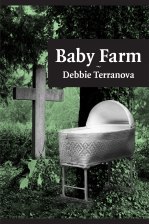 How much is a baby worth?
A who-dunnit crime mystery inspired by forced adoptions of the 1970s, designer babies and commercial surrogacy.
“A real page-turner. Couldn’t put it down.”
“Intelligent, fascinating and witty.”
SPECIAL this weekend only 21 and 22 May, 2016
One copy of Baby Farm ~ $15.00 (excl postage)
One paperback copy of ‘Baby Farm’ signed by the author (can be personalised)
Add $5 postage to anywhere in Australia.

Credit Card or PayPal. Email any special requests to terranovapublications@gmail.com.
Five copies, including postage within Australia ~ $95.00
5 copies of ‘Baby Farm’ signed by the author
Includes postage to one location anywhere in Australia.
Credit Card or PayPal. Email any special requests to terranovapublications@gmail.com.



May 13, 2016
The other stolen generation: forced adoptions
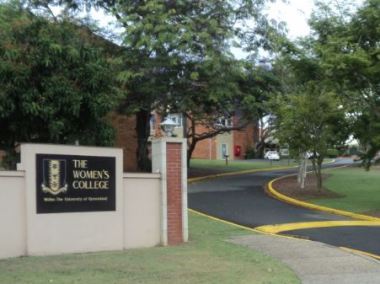 Address to The Women’s College, University of Queensland by Debbie Terranova, author of Baby Farm, on 10 May 2016.
When people talk about ‘the stolen generation’, they usually mean indigenous Australians who were forcibly removed from their families and raised to be white. They were most commonly the child of an Aboriginal mother and a white father. The practice occurred from the 1880s until the 1970s. Numbers are hard to quantify.
But there was another stolen generation, one that has not been talked about much until recently. They were the children of unmarried mothers – white Australians who were forcibly taken for adoption.
Startling statistics
According to the 2012 Senate Inquiry, 150,000 mothers relinquished their babies between 1950 and 1980. That means there were 150,000 fathers and 150,000 children, not to mention their grandparents (2) and siblings (2). Now do the maths.
In the decade of the 1970s, nearly 65,000 babies were legally adopted in Australia. That number would fill a football stadium one and a quarter times.
In Queensland alone, the peak was in 1972. During that year, 1774 babies were legally adopted. That number would fill a decent-sized performing arts theatre.
Not all babies adopted were ‘stolen’ and not all adoptions were recorded, so the numbers are estimates at best.
Now compare to 2015 when there were just 317 adoptions reported in the whole of Australia.
Why did this happen?
There are a number of reasons, but most of it boils down to one word: shame. With shame came blame and punishment.
When I look back, Australia in the 1970s was a very different place. Women were beginning to step out of the kitchen and into better education and careers. The Women’s Liberation movement was gaining momentum. They were fighting for equal pay for equal work and the end of gender-based discrimination in employment, access to basic living necessities such as finance and rental accommodation, access to income support and child care.
Until the late 1960s, marriage was not an expectation but a necessity. Women who didn’t marry were a bit of an embarrassment. They were referred to as spinsters and old maids, both with derogatory undertones. The possibility that a woman might not be heterosexual wasn’t even on the radar.
Without a husband to provide, women needed some way to support themselves. Some entered a convent, or stayed home and looked after their ageing parents, or became school teachers, or nurses, or public servants, generally as low-level workers. Until 1966 the public service had a so-called ‘marriage bar’ which meant a woman could only be employed while she was single.
There were benefits available to married women and sanctions for women who weren’t. This was particularly true when women got pregnant. Politicians preached a policy of ‘populate or perish’ – it was meant to save our country from invasion by non-white nations. Remember a ‘white Australia policy’ operated until 1965.
Childless marriages
For married women who weren’t able to have children, there were few options. IVF was yet to be invented and surrogacy was unheard of. For many childless couples, adoption was the only solution. But adoption was not openly discussed. In fact, during my travels promoting Baby Farm, several people spoke to me about their shock on discovering that the people they knew only as Mum and Dad weren’t their genetic parents at all.
Many hundreds of people told their stories in a Senate Inquiry in 2012. The Inquiry reports that some babies were secretly switched at birth by treating doctors. In some cases the married parents of a stillborn child were given a substitute baby (born to a single mother) to replace their dead infant.
Marriages were meant to last; divorce was viewed with shame. And for women who found themselves alone with children to care for, the options were few. Formal child care was non-existent, jobs for women were hard to find, the pay of a woman was two-thirds of the male wage for doing exactly the same work, and there was no government income support for sole parents.
Pregnant teens
Young single women who got pregnant received terrible treatment. Admitting being pregnant to parents was fraught. The first question was ‘who’s the father?’ followed by demands that he marry the girl before her condition ‘showed’ (the old shot-gun wedding).
Many tried to avoid the shame by going on an extended ‘holiday’ interstate or to New Zealand until their confinement. I’ve spoken to several Kiwis who came to Australia to have their babies so this was a two-way street.
Some were thrown out of home or sent off to ‘naughty girls’ homes’ to await the birth of the baby. The homes, run by churches and charities, made the girls work for their board and keep. Cooking, cleaning, commercial laundry services, farm work. They were punished if they didn’t pull their weight. They were shamed into believing they deserved to be treated badly because they’d done a wicked thing. There was no sympathy or counselling or information, only criticism and blame such as ‘play with fire and you get burnt’ and ‘you don’t deserve anything better’.
As their time drew near, the brainwashing ramped up. They were told they couldn’t possibly raise a child on their own, that they’d be terrible mothers, that they were doing the wrong thing by the child by not giving it to a good Christian home. When the baby was born, they were given little pain relief and were treated with contempt by the doctors and nursing staff. In many cases they were not allowed to hold or even see the baby before it was whisked away. Some were tricked into signing adoption papers, for example they were told to sign while under heavy sedation or that their signature was necessary so their infant could get lifesaving surgery.
Sexual revolution?
The 1970s were at the forefront of the sexual revolution, but young people went into it with little or no information about sex, sexuality, reproduction, STDs or contraception. As a topic, sex was taboo. The contraceptive pill became available in Australia around the 1960s. If you were married, you might have been able to get a prescription. However many doctors refused due to religious beliefs – some of Australia’s largest churches were diametrically opposed to contraception … some still are.
If you were single and under the age of 21, your parents were legally responsible for you. You would routinely be accompanied to the doctor by a parent – there was no way that you’d dare ask for the pill. In Brisbane the Family Planning Clinic in the Valley was a godsend. They had female doctors (a rarity) who didn’t judge or call you a slut. But getting the prescription filled at the pharmacy was another matter.
Mostly girls relied on the boy for contraception. That consisted of trusting him to pull out (highly unreliable), or using a condom. So, where did boys store condoms? In the glovebox of his car. It might stay there for a month or a year until he got lucky. Condoms were made of rubber which would perish in high temperatures. Hmmm. Did he know how to put it on properly so it wouldn’t break? Not likely.
Was it any wonder that girls got pregnant!
Further reading
If you’d like to know about this ground-breaking period in our recent social history, here are some reading recommendations.
The Senate Committee Report 2012: Former Forced Adoption Policies and Practices. Available for free download
Relinquished, Returned, Rejected by Brisbane author Jackee Ashwin is memoir of her experiences of forced adoption in 1974.
Baby Farm by Debbie Terranova features the life and times of the 70s, based around forced adoptions.


May 9, 2016
Interview with Jackee Ashwin
On her website, Jackee writes:
In 1974 I relinquished a baby boy as part of the adoption process. I faced the shame and ridicule of society of that era which sadly stayed with me until 2012 when my son found me and I was able to hold my head high and finally shout to the world, yes I am a mother, I have a son.
Jackee’s is the story of thousands of Australians, mothers of another stolen generation that was not defined by race or social status. Banished from their homes, many of the girls went on so-called ‘working holidays’ to hide their condition. For all concerned – biological parents, adoptive parents, and their babies alike – a blanket of silence stifled the release of information about the adoption process.
For the offspring, many remain unaware that they were adopted. Some are still trying to discover the truth of their origin, while others have been reunited with one or both of their original parents.
DEBBIE: Welcome Jackee and thanks for agreeing to this interview. First, can you tell me a bit about yourself and your writing journey?
JACKEE: Thanks Debbie, I am number four in a family of thirteen, a family of nine brothers and 3 other sisters. My family live in Tasmania, which is where I grew up. My husband and I left to seek adventures on the ‘big’ island over ten years ago deciding during that time to move on to a new destination every two years to experience different cities, meet new people and make lots of friends. We have travelled and lived up and down the east coast of Queensland during that time and only returned from Far North Queensland in June 2015. Our travelling days have finished and we find ourselves back in our home in Brisbane and feel very settled here. My writing however started in Cairns, my husband continually urged me to write my story for myself and for those affected by adoption and stillbirth.
DEBBIE: What gives you inspiration?
JACKEE: Inspiration to me is life events, especially those that are to help someone in need or a cause that is being managed to help a particular issue. Writing my book certainly gave me inspiration to ‘warn’ any adoptee or relinquishing parent of the potential pitfalls to be aware of should either party be considering searching for or reuniting with their lost family. I wish I had read my book before meeting my son. My other inspiration is my intended journey to meet the some of the other mothers who have experienced the shattering heartache of delivery a child already with the angels. I have been invited to meet with the CEO of Stillbirth Foundation of Australia in Sydney. I am truly inspired by this organisation and would love to be an ambassador for them.
DEBBIE: How did writing about such difficult times in your life affect you?
JACKEE: I found writing my memoir to be very very cathartic and also the process and journey of writing what was in my heart allowed me to finally open the door on the sadness of losing one son to adoption and my only other son to stillbirth. My emotional roller coaster was at an all-time high during the days and nights I put pen to paper, I had to relive all the emotions that for the last 40 years had been put into a closet in my subconscious mind. Thoughts and heartache of course was always there but by keeping that door closed helped me to keep moving forward.
DEBBIE: How has your book changed you personally and what impact has it had on your readers?
JACKEE: My book has finally allowed me to walk with my head held high and state to all and sundry that I was an unwed mother, that I did adopt out a son albeit not from my choosing and that the shame of that era I now refuse to acknowledge. I face the world as a proud person who has chosen to tell the world her journey. My book has connected (through social media) with many groups who are out there looking for their biological tree, seeking information on their natural mum and their families. Ironically adoptees tend to seek information on the natural mum more so than dad. I have learned that adoptees continue to hurt many years on even into middle age, so many are restless souls tirelessly looking for that cord that connects mother and child for life. I have read so many wonderful stories of reunions, some not so good, and some also where natural parents are too afraid to contact their child and vice-versa for fear of further rejection. A very sad fact.
My readers have sent so many emails and social media posts, each saying they too went through so many emotions whilst reading my story, from tears to laughter, from anguish to admiration. Some have forwarded the link to my book to loved ones they know are looking for their biological tree and hereditary line. Readers have left beautiful testimonies on my webpage also.
DEBBIE: Do you have other books in the pipeline?
JACKEE: I am now giving a lot of thought to helping with stillbirth families, information on how I conquered my darkest days with a view to working with the Stillbirth Foundation of Australia as a guide. Their website states categorically that 6 babies a day are born sleeping and never get to go home with mum and dad. That figure astounds me and that is the area I find I am being drawn to it.
DEBBIE: Thanks again for sharing your story, Jackee. To find out more about Jackee and forced adoption, buy a copy of Relinquished, Returned, Rejected from Balboa Press or www.jackeeashwin.com
JACKEE: Thanks Debbie for the interview, I have enjoyed being able to answer the questions.
Interview with author Jackee Ashwin
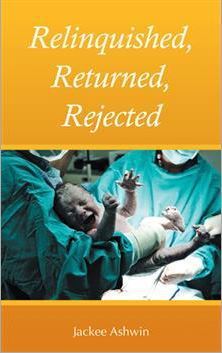 My guest today is Jackee Ashwin, author of Relinquished, Returned, Rejected, a true story about adoption and stillbirth. Firsthand, Jackee experienced being a young unwed mother in the 1970s. At the end of her pregnancy, she was coerced into relinquishing her newborn for adoption. Few other viable options existed at the time.
On her website, Jackee writes:
In 1974 I relinquished a baby boy as part of the adoption process. I faced the shame and ridicule of society of that era which sadly stayed with me until 2012 when my son found me and I was able to hold my head high and finally shout to the world, yes I am a mother, I have a son.
Jackee’s is the story of thousands of Australians, mothers of another stolen generation that was not defined by race or social status. Banished from their homes, many of the girls went on so-called ‘working holidays’ to hide their condition. For all concerned – biological parents, adoptive parents, and their babies alike – a blanket of silence stifled the release of information about the adoption process.
For the offspring, many remain unaware that they were adopted. Some are still trying to discover the truth of their origin, while others have been reunited with one or both of their original parents.
DEBBIE: Welcome Jackee and thanks for agreeing to this interview. First, can you tell me a bit about yourself and your writing journey?
JACKEE: Thanks Debbie, I am number four in a family of thirteen, a family of nine brothers and 3 other sisters. My family live in Tasmania, which is where I grew up. My husband and I left to seek adventures on the ‘big’ island over ten years ago deciding during that time to move on to a new destination every two years to experience different cities, meet new people and make lots of friends. We have travelled and lived up and down the east coast of Queensland during that time and only returned from Far North Queensland in June 2015. Our travelling days have finished and we find ourselves back in our home in Brisbane and feel very settled here. My writing however started in Cairns, my husband continually urged me to write my story for myself and for those affected by adoption and stillbirth.
DEBBIE: What gives you inspiration?
JACKEE: Inspiration to me is life events, especially those that are to help someone in need or a cause that is being managed to help a particular issue. Writing my book certainly gave me inspiration to ‘warn’ any adoptee or relinquishing parent of the potential pitfalls to be aware of should either party be considering searching for or reuniting with their lost family. I wish I had read my book before meeting my son. My other inspiration is my intended journey to meet the some of the other mothers who have experienced the shattering heartache of delivery a child already with the angels. I have been invited to meet with the CEO of Stillbirth Foundation of Australia in Sydney. I am truly inspired by this organisation and would love to be an ambassador for them.
DEBBIE: How did writing about such difficult times in your life affect you?
JACKEE: I found writing my memoir to be very very cathartic and also the process and journey of writing what was in my heart allowed me to finally open the door on the sadness of losing one son to adoption and my only other son to stillbirth. My emotional roller coaster was at an all-time high during the days and nights I put pen to paper, I had to relive all the emotions that for the last 40 years had been put into a closet in my subconscious mind. Thoughts and heartache of course was always there but by keeping that door closed helped me to keep moving forward.
DEBBIE: How has your book changed you personally and what impact has it had on your readers?
JACKEE: My book has finally allowed me to walk with my head held high and state to all and sundry that I was an unwed mother, that I did adopt out a son albeit not from my choosing and that the shame of that era I now refuse to acknowledge. I face the world as a proud person who has chosen to tell the world her journey. My book has connected (through social media) with many groups who are out there looking for their biological tree, seeking information on their natural mum and their families. Ironically adoptees tend to seek information on the natural mum more so than dad. I have learned that adoptees continue to hurt many years on even into middle age, so many are restless souls tirelessly looking for that cord that connects mother and child for life. I have read so many wonderful stories of reunions, some not so good, and some also where natural parents are too afraid to contact their child and vice-versa for fear of further rejection. A very sad fact.
My readers have sent so many emails and social media posts, each saying they too went through so many emotions whilst reading my story, from tears to laughter, from anguish to admiration. Some have forwarded the link to my book to loved ones they know are looking for their biological tree and hereditary line. Readers have left beautiful testimonies on my webpage also.
DEBBIE: Do you have other books in the pipeline?
JACKEE: I am now giving a lot of thought to helping with stillbirth families, information on how I conquered my darkest days with a view to working with the Stillbirth Foundation of Australia as a guide. Their website states categorically that 6 babies a day are born sleeping and never get to go home with mum and dad. That figure astounds me and that is the area I find I am being drawn to it.
DEBBIE: Thanks again for sharing your story, Jackee. To find out more about Jackee and forced adoption, buy a copy of Relinquished, Returned, Rejected from Balboa Press or www.jackeeashwin.com
JACKEE: Thanks Debbie for the interview, I have enjoyed being able to answer the questions.


March 26, 2016
If you love NYC, you’ll love this book.
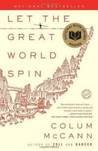 Let the Great World Spin by Colum McCann
My rating: 4 of 5 stars
As an Australian visiting New York for the first time, I wanted to purchase a book about NYC from the Barnes and Noble bookstore at Union Square. So why choose this one? I overheard two American uni students discussing it; one on them said it was great. What better recommendation?
The novel is a tribute to the terrorist strike on the Twin Towers in 2001, but not in the way you’d expect. It is low-key and personal, a collection of stories about interesting characters that are loosely linked. There’s a priest, some hookers, an artist, a judge, his wife who befriends the descendent of a Missouri slave, and on they go. The thread that links them is a cable stretched between the Twin Towers by a dare-devil tight-rope walker.
It is the quality of the writing that is the highlight of this book. Having been there, I can hear, see, smell, and taste NYC in all its amazing diversity, through Colum McCann’s beautiful choice of words. This is modern literature at its best. Not an easy read, but one whose import will linger after you’ve closed the back cover.


February 25, 2016
Review of ‘Mezza Italiana’
 Mezza Italiana by Zoe Boccabella
My rating: 4 of 5 stars
Zoe Boccabella has written a delightful account about finding her identity and of coming to terms with heritage, culture, and the burden of family expectations.
After experiencing racial prejudice and bullying at school in inner Brisbane, the author rejected her Italian-ness in order to be like all the rest. While she adored her grandfather, she swept the traditions of the old country under the carpet in order to fit in. After years of his urging her to visit the family home in Fossa in the mountainous centre of Italy and of her making excuses not to go, she finally makes the trek along with her Australian partner, Roger.
In the town of her ancestors she discovers her roots, and Roger falls in love with Italy.
This is a memoir that will stay with you long after the book is finished. It is well-written, funny in parts, and thoughtful. Her experience of being half-Australian and half something else applies to many people in this country. After all, every Australian who is not indigenous has a migrant past.


February 23, 2016
Review of “Joe’s Fruit Shop and Milk Bar”
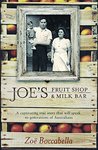 Joe’s Fruit Shop & Milk Bar by Zoe Boccabella
My rating: 5 of 5 stars
A thoroughly enjoyable memoir, written in honour of the author’s grandfather (Annibale Boccabella, also known as Joe) who migrated from Italy to Australia in 1939 at the age of 15. At the time, integration into this country was not easy, due to the onset of war and severe restrictions imposed on ‘enemy aliens’ by the Australian government. The book covers not only the life and times of Annibale and his family, but also the war and post-war eras in Brisbane and the Granite Belt to the west. In every part of the book, the author’s extensive research is in evidence. Yet she has successfully incorporated her findings into a story, showing rather than telling. Only on one or two brief occasions does the narrative become slightly contrived or slip into self indulgence. Highly recommended for anyone with a migrant background and an interest in wartime Australia.


February 19, 2016
Review of ‘Jacks and Jokers’
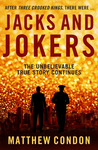 Jacks and Jokers by Matthew Condon
My rating: 3 of 5 stars
Having read ‘Three Crooked Kings’, the first in this series of three about systemic corruption in the Queensland Police Service, I was looking forward to book two, ‘Jacks and Jokers’. While the research is undoubtedly as comprehensive and methodical as in the first instalment, I found the sheer volume of names, events and places so relentless that the story became confusing and difficult to follow. Half-way through I gave up. In a year or two, I may have another try, as this period of our recent history is truly astounding. But for now I’ll settle for something lighter.


February 6, 2016
Left, Right, Left … Write. Do-it-yourself structural editing.
 What I love about writing crime mysteries is the constant interplay between the left and the right hemispheres of my brain. The trick is to make them work together.
The left brain gathers data, information and facts. For my current work in progress, I’m juggling three topics of which I have almost no knowledge. The greyhound racing industry, tattooists, and euthanasia. Hopefully, my left-brain research has come up with enough material to convince readers otherwise.
The right brain then takes all those facts and a large dose of imagination to come up with a cast of characters and the bones of a compelling story.
Character-driven is my preferred method of writing. For me it is important to know your characters as well as you know yourself. What they look like, how they live, what they like and don’t like, what makes them tick.
The best way of getting to know a character is to let him or her write their own story. This is great fun. It’s like being in an online chat room, except you are the only one who is there. The only drawback is that the story can get out of hand. Before you know it, you’re down a dry gully with no way back. Quite literally, you’ve lost the plot.
Re-enter the left brain.
Here’s today’s tip for ironing out a wayward storyline. Use your left brain and a left-brain tool. What could be more left-brain than Microsoft Excel?
Here are the steps:
1. Read and summarise the existing manuscript without line editing. This is the hard part, but it is essential. Most likely you’ll need to do some rewriting afterwards and your perfectly-crafted paragraphs may need to be trimmed.
2. Break your existing chapters into scenes. A scene is a sequence of action that moves the story forward. It isn’t a scene if you can’t pinpoint what happened, where it happened, when it happened, and who was there at the time.
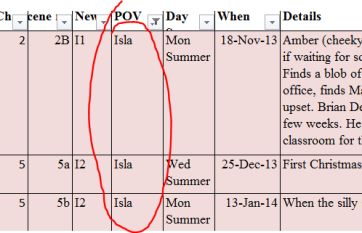
3. Put your scenes into a spreadsheet. Label your columns like this:
Chapter Number; Scene Number: Point of View (POV); Day/Season; Date; Details.
Once you’ve set it all out in the spreadsheet, you can use the magic of Excel to manipulate the columns. For example, turn on the data filter to view each character arc, check the timeline or the sequencing of the chapters. In the example above, I’ve filtered for POV and selected the character Isla.
4. When you’re happy with the rejigged outline, copy into a fresh Word document. Put one line of the spreadsheet at the top of each chapter. Then copy and paste the original manuscript into your new framework.
So there you are … ready to write in a structure that works.


December 30, 2015
My Writing and Publishing Odyssey: 2015 in Review
 New Year’s Eve 2015-16.
What a wonderful chance to reflect on the joys, dramas, tears and achievements of this crazy obsession called writing!
I thought I’d share some of the highs and lows of creative writing and of promoting my debut novel, Baby Farm.
In 2015 I became a social media tart.
Joined Twitter. After 253 tweets (yes, it’s still baby steps), I have 366 followers. Many are fellow writers or people who generally love books.
Started a writer’s page on Facebook (check it out at Terranova Publications).
Spruced up my Goodreads author site and wrote a few reviews.
Rejigged my WordPress website, combined my blogs, set up links to Paypal so that people can purchase books from the website direct. Do you have a copy yet?
Wrote 15 blog posts (not enough, I know), seen by people in 56 countries. Most were from Australia, closely followed by the US, the UK and Brazil.
Baby Farm went on tour.
Gave author talks at ten South-East Queensland libraries and met lots of fascinating people. Many shared personal stories about adoption with me, some for the first time ever. I hope that, in some small way, this has stepped you towards greater understanding and forgiveness.
Did book signings at six bookstores in Brisbane, where I chatted to scores of readers, writers, and would-be writers.
Ran a booklovers’ stall at a Christmas market in forty-degree heat. Even the bookmarks melted.
Sold lots of books and got lots of lovely feedback.
My new novel underwent a massive structural edit (sort of).
Sadly I didn’t get too far due to work commitments (yes, there’s a day job) and my efforts in promoting Baby Farm.
The new book is called Angel Tattoo and it’s another crime mystery.
My 2016 New Year’s resolution is to finish it.
Happy New Year … and happy reading!