Debbie Terranova's Blog, page 9
November 29, 2015
Why didn’t they want me?
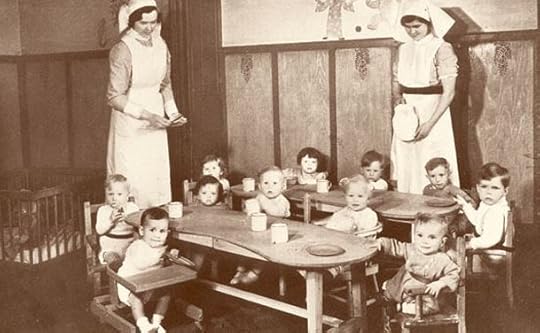
After my tour of South-East Queensland libraries and bookstores this spring, I am astonished by the number of people who have been touched by forced adoptions.
To this day the subject remains taboo. Some have discovered entire families – parents, siblings, aunts, grandparents – that they never knew existed. Here are a few examples. (All the names have been changed for reasons of privacy.)
Emily is a woman of thirty-something and the youngest of five. Last year (2014) she discovered that the eldest of the family was an unknown brother. Before her parents married, they’d had a child who’d been given up for adoption. No-one else knew because it was a closely-guarded secret. Emily is still trying to come to terms with her eldest brother’s existence. She says ‘my life has been a lie.’ Feelings of anguish and disappointment haunt her.
On the flip side is Candice, who always knew she’d been adopted. Recently she tracked down her genetic parents. After relinquishing her as a baby, they had gone on to marry and have other children. There was an entire happy family of younger brothers and sisters, when she’d been raised as an only child. Her anger is palpable. ‘Why they didn’t want me?’
Tom was in his forties when his parents passed away. At the funeral a close family friend dropped the bombshell. ‘Of course, you know you’re adopted.’ He did not. In fact the idea had never crossed his mind. Grief gave way to shock and frustration. Both (adoptive) parents were in their graves, so it was too late to demand an explanation.
Miriam began her life in an orphanage. Later she was adopted by foster parents and had ‘a wonderful childhood’. As an adult she embarked on a journey to find her other family. The story uncovered thus far has been a roller-coaster ride. Her birth mother, one of the ‘stolen generation’, had been raised in an institution and was sexually abused by a clergyman who was responsible for her care. Several other full and half siblings, who were also adopted, are spread across Australia. Miriam believes there are two brothers still unaccounted for. She is determined to find them both, and I wish her well in her search.
In writing Baby Farm I hoped to highlight the fallout from forced adoptions in the hope it might help those affected.
Silence needs to be broken. Experiences need to be shared. Only then can healing begin to happen.



October 26, 2015
‘Baby Farm’ and forced adoptions in Australia
 Since beginning my tours of South East Queensland libraries, it has amazed me just how many families have been touched by adoption. At every author talk, there is plenty of discussion – and sometimes revelations – about how government policy of the 1950s, 60s and 70s affected people’s lives.
Why was it secret, and why was it done at all?
For those who don’t remember the 70s, I’ll paint a little picture based on the experiences of others.
Parental expectations: Complete Junior certificate (Year 10), passing commercial subjects such as typing, bookkeeping, and shorthand. Work in an office until age 21, upon which marry a young man who has a trade. Have 2 children and stay at home to look after them. But most importantly, DO NOT GET PREGNANT.
Teenagers and sex education: Rely on stories told behind the girl’s dunnies about where babies come from and how to prevent them. These include not sitting on the toilet seat after a boy, jumping up and down or having a hot bath after sex to avoid pregnancy. Condoms, if used at all, came out of the boy’s glove-box. Sometimes they’d been kept there for years and the rubber had perished. If a single girl took the initiative and got a prescription for the pill (which was only widely available from the late 1960s), she was likely to be the brunt of ridicule from the pharmacist who filled the script.
Support for girls who got pregnant: Locked away in an institution or ‘naughty girls’ home’ before the baby bump showed. Parents lied about where their daughters were. Some girls went on ‘working holidays’ in New Zealand or other cities of Australia to avoid putting shame on their families. Many charitable institutions made them do unpaid work, such as hard labour in a commercial laundry, for their board and keep. There was no Supporting Parents Benefit, women earned two-thirds of the male wage for doing the same work, there was no child-care apart from informal arrangements between women.
Forced adoption: Unmarried mothers were told practically anything to get them to give up their babies, such as ‘How could you possibly support a child?’, ‘The only work you’ll get will be as a prostitute. That’s all you’re qualified for.’
Want to know more? Come to an author talk. I’ll be at the following locations:
Arana Hills Library on Thursday 29/10/15 at 2pm
Southport Library on Friday 30/10/15 at 10am
, a wonderful new bookstore at Pacific Fair on Friday 30/10/15 at 12 noon
Redcliffe Library on Friday 6/11/15 at 2pm
Deception Bay Library on Thursday 12/11/15 at 10am
Albany Creek Library on Saturday 14/11/15 at 10.30am
Dymocks Chermside on Saturday 21/11/15 from 10am till 12 noon.
I’d love to see you soon. Until then, happy reading.


October 15, 2015
A wee snippet from ‘Baby Farm’ to whet your appetite
 For your reading pleasure, an excerpt from ‘Baby Farm’ with my favourite character, investigative journalist and super-sleuth, Seth VerBeek.
Seth reversed out of the parking bay. On the street he lit a smoke, turned up the radio and revved the Jeep through the chicanes of Lamington Street. Straight home, or to his favourite bar? Whichever he chose, he needed to do plenty of thinking.
He took the scenic route, east along Kingsford Smith Drive to the old airport, back on the Gateway tailgated by a snarling B-double, left at the flyover to Sandgate, and left again into a quiet tree-lined street.
He pulled on the handbrake, cut the engine and lit another smoke. Without realising it, his homing instincts had guided him to his own apartment block in Clayfield.
Once inside, he rummaged in the fridge for a Corona. He snapped off the lid, pressed its frothing mouth to his lips and drank in the malty comfort.
The apartment was stuffy. The lingering odour of last night’s fry-up had been heightened by the hot day. He opened the balcony door and settled in a deckchair. The stars were pale specks, muted by light-sheen emitted by a city of more than a million inhabitants.
In the bush, the spangle of stars was dazzling. On a cloudless night each constellation was visible and clearly defined. When he was on bivouac with the army in the weeks before his youth was stolen by the Vietnam War, he’d marvelled at the vast expanse of night sky unblemished by pollution. Lying on his back in the dust he’d pick out Orion and the Seven Sisters and the Southern Cross while the other conscripts played poker or smoked weed or did other unmentionable things that would have brought them before a court martial.
What would he have done, had he known about his brother’s transgressions?
Want to know more? Come to a library talk in Brisbane this spring. First up is Capalaba Library on Saturday 17th October at 2pm. I’d love to meet you there.
Happy reading!


October 12, 2015
Characters in crime

Image by Mikhail Lavrenov
One of my greatest ah-haa! moments in learning to write creatively was realising that characters are the essential essence of a good story. Whether you are writing memoir or romance or fantasy, or (as I do) historical fiction and crime, it is the characters who do all the work. They hook in the interest of your readers and drive all the action.
Last week I read an enlightening article by author Katherine Howell, published in WQ Issue 250. In her treatise entitled ‘Crime and Character’, she notes:
The key is making the characters compelling enough that the reader can’t help but be drawn in. The reader has to care about the character and what happens to them, because the desire to find out what’s around the corner for this interesting person is what makes them read on.
The compelling character is the driven character. They need to have a goal they’re trying to achieve: something they want, and the more desperately the better.
I couldn’t agree more.
But before you can write a fascinating character, you need to know them as well as you know yourself. Getting inside your character’s head isn’t easy. You need to create a personal history and lots of irrelevant trivia about their ‘lives’.
One of my favourite characters in Baby Farm is investigative reporter and ladies’ man extraordinaire, Seth VerBeek. To write the story from his point of view, I had to understand where he’d come from and what had shaped his life. I also needed to like the character I’d created, so that I could write with compassion (and some passion as well).
So, without giving anything away, here is Seth VerBeek in a snapshot.
Raised in working-class Paddington in Brisbane, Seth was heavily influenced by his father, a tram driver who’d lost his job after the great tram depot fire of 1962. Seth left home as a late teen and did his training as a journalist in Sydney. At age twenty, he was conscripted and sent to fight in Vietnam. Afterwards he worked as a foreign correspondent in dozens of countries including the Middle East. Returning to Brisbane, he slipped into a comfortable rut until meeting the new love of his life, a woman who needed rescuing herself. His loves are: women in general; a good Scotch whisky; unravelling the mysteries of the world; and smoking which he’s valiantly trying to quit with mixed results.
Who is the favourite character in your work in progress? How well do you know them?
What do they like? What do they hate? What gets up their nose?
A piece of advice I was once given was this. Go out to the pub with your character and get roaring drunk. While I’m not advocating drinking irresponsibly, sometimes you just have to go with the flow. You’ll be pleasantly surprised what you find out … about both of you.
Like to hear more? If you’re in or near Brisbane (Australia) come to one of my author talks at the following libraries:
Capalaba Library on Saturday 17/10/15 at 2pm
Arana Hills Library on Thursday 29/10/15 at 2pm
Southport Library on Friday 30/10/15 at 10am
Redcliffe Library on Friday 6/11/15 at 2pm
Deception Bay Library on Thursday 12/11/15 at 10am
Albany Creek Library on 14/11/15.
Until next time, happy writing.


September 30, 2015
On the road … again

Author talks in libraries
Time to get spruced up, escape the garret and go forth into the wonderful world of readers. Getting out and about is a must-do for any writer. I know it takes you away from the activity you love … writing. But there’s nothing like talking with people who love the written word, be they readers or other writers, to regain your mojo and give you fresh inspiration.
So … I’m about to embark on a tour of public libraries in South-East Queensland, Australia. My topic is the story behind ‘Baby Farm’ and includes forced adoptions.
The presentation goes for an hour and I love answering your questions. You can pick up a signed copy of ‘Baby Farm’ for $20 – perfect gift for Christmas.
Here’s the schedule for 2015.
Capalaba Library: Saturday 17 October at 2pm
Arana Hills Library: Thursday 29 October 2015 at 2pm
Southport Library: Friday 30 October 2015 at 10am
Redcliffe Library: Friday 6 November at 2pm
Deception Bay Library: Thursday 12 November at 10am
Albany Creek Library: Saturday 14 November at 10.30am
Hope to meet you there.


September 3, 2015
Meet me at the Brisbane Writers’ Festival on Friday 4th September

Here’s looking at you, BWF 2015.
Fancy an informal chat with an author?
Want to ask how to write a novel and get published, but never had the chance?
This year the Brisbane Writers’ Festival is staging a ‘living library’.
What’s a living library? Authors featured in the Books from our Backyard 2014 catalogue, including myself, will be there walking the talk in the State Library. It’s an informal event where you can mingle and ask authors about their work.
As for me, I’m always excited to meet readers and other writers alike.
Baby Farm is a cosy crime mystery, based on the forced adoption policy of the 1970s and its present-day reincarnation as (illegal) commercial surrogacy. It never ceases to amaze me how many families were affected by a government policy that forced unmarried mothers to relinquish their babies at birth. And the shame and secrecy that accompanied it! If you are interested in the moral aspects of the baby trade, or if you’d like to share your own story of adoption, I’d love to meet you for a chat.
Baby Farm has given me the rollercoaster ride of a lifetime. What a thrill to see your book on a library shelf. Even better when fans contact you and say how much they enjoyed your work. If you’re thinking of indie publishing, come and talk. I’m more than happy to share.
Where is the living library? The Writer’s Lounge, Level 2, State Library of Queensland, Stanley Place, South Brisbane.
When? Friday, Saturday and Sunday this weekend (4th, 5th and 6th September, 2015).
My segment is between 1 and 2pm on Friday, 4th September.
On Friday you can purchase Baby Farm from the bookshop for just $24.99. Lots of plot twists and turns. I’m told it’s hard to put down right until the end. Set in beautiful Brisbane, it’s a great gift idea for Christmas. Bring it along to my session and ask to have it signed.
While you’re at the Brisbane Writers’ Festival, check out all the other events. Rub shoulders with famous authors (and those who might be one day) and indulge your passion for reading. Whatever your connection with the written word, the festival is a great way to meet new friends and get ideas.
If you haven’t already started your own writing journey, you might be inspired to begin.


July 9, 2015
Construct … deconstruct … reconstruct

An iron-clad structure
Writers often debate about the best way to write: plot-driven or character-driven.
Plot-driven implies vast sheets of butchers paper covered in post-it notes, or timelines nutted out on Excel or some other left-brain device. You know the story, you know the structure, you stick to it. Character-driven, on the other hand, implies unpredictability and writing by the seat of your pants, based on the whims of characters you’ve created.
Both approaches have strengths and weaknesses. So here’s the plan: why not do a bit of each?
For my first ever manuscript several years ago, I took the plot-driven approach. The piece was a sweeping family saga, based on extensive research, real people and real events. How else could I translate all that wonderful information into a story of hardship, migration, still more hardship, and eventual triumph? My timeline was my lifeline. I depended on it for everything. The plot was all there in perfect sequence, the way it actually happened. Nothing was left to chance. Nothing.
When I submitted the manuscript for professional feedback, here’s what I got.
Your characters are like cardboard cut-outs moving through a landscape. Your structure is so constricting, you’ve left yourself no room to move. Loosen up. Take your main characters out to the pub, get to know them, understand where they’re coming from.
Hoo-boy! All that hard work and I’d have to start again. (By the way, it’s still not finished. It will be, one day. It’s a piece I’m passionate about.)
For my second manuscript, which became Baby Farm, I tried the character-driven approach. Working with a group of other budding authors under the tutelage of a true professional, the writing experience was a sheer delight. What fun I had with those characters! I knew and loved them as if they were long-time friends of mine. We went to parties, got drunk, and on more than one occasion ended up in bed together.
So much for the first draft. When I read what I’d written several months later, there was no structure at all. Just three big characters who popped up willy-nilly, whenever and wherever they pleased. Back to the drawing board. Literally. I knew about timelines, I knew about structure. And this time I knew my characters.
The only thing to do was deconstruct the manuscript. On the computer I ripped it apart, cutting and pasting each character into a separate timeline. It hurt a lot, but it made it easy to see the problems. There were huge holes in the plot and times when major characters simply disappeared for chapters on end. Several weeks of rewriting later, I had three character stories of similar length that actually worked.
Reconstruction was the easy part. Take three strands of ribbon and plait them together.
My current work in progress is called Ruby Tattoo. The character-driven approach won me over, so that’s how it started. The problem with this piece is its one-eyed point of view. There’s no counter-balance. No yin and yang. I thought I’d finished until I attempted to do a character arc for my main female character. It was then I realised she doesn’t have one at all. Actually she’s dead (she dies in Chapter 1), yet the entire story is about her.
Tears of blood have fallen onto the keyboard this week. The entire thing has been pulled apart. Now there’s a structure that will work and several new chapters to write.
And I’m excited.


July 2, 2015
To market, to market … 5 tips for selling your book.

Please buy me … please.
Writing a book can be an absolute joy or a nightmare, depending on your outlook and the mood of your muse. But all those months (or years) of burning the midnight oil are for nought unless you can get your magnus opus out there for people to read.
Here is the conundrum: you are a writer not a bookseller. Writing is what you love and what you’re good at. The practice of writing means locking yourself away in solitude to concentrate on the inner world. You are a hermit in a garret, communing with no-one but your characters, ruminating on nothing but the twists and turns of your tale.
After a long and tumultuous gestation period, your labour of love enters the world. It’s silky and smooth and ink-scented. Perfect.
What happens next is truly shocking. It’s up to you – the author – to sell it.
Whoa! Selling means putting yourself out there, talking to people you don’t know, telling them about this awesome novel that you – boast, boast – just happened to write in your spare time. It means standing before a roomful of critics to reveal intimacies about your motivation or your inspiration or your determination to finish your mammoth task.
Have I scared you yet?
Selling your book isn’t easy. So here are five tips I’ve learnt along the way.
Talk to your local library. Most public libraries are extremely supportive of local authors. But be warned: there are long lead times if you want to arrange author talks. Many months in fact. Ask if the library allows you to sell your book to customers on the day. Check whether any fees or commissions are payable. In Australia you can register for royalties if you have books in public libraries. These are called Public Lending Right (PLR) and Education Lending Right (ELR).
Email everyone you know or have ever met. Even if no-one wants a book, it puts you in touch with a whole bunch of people you haven’t spoken to in ages. If you’re lucky, an old friend will pass the message on to someone who will buy your book and they will love what you write. That’s the whole point of writing, isn’t it? So that others can read and enjoy.
Ask your fans to write a brief review. I should explain that the sort of review you need is not the long and critical variety seen in the Sunday newspapers. The best review for this purpose is short and sharp and tells customers what a page-turner you’ve written. Ask for the review to be posted on websites such as Goodreads or online bookstores such as Amazon. Your reviewer will also need to give your book a ‘star’ rating – usually out of 5. It’s best to check that your reader actually likes the book before making this suggestion. One star out of five spells disaster.
Do the rounds of your local bookstores. Talk to them about taking books on consignment. Agree on conditions, such as commission and the length of time your book can remain on the shelves. Keep in touch with the bookseller. At the end of the agreed period, pick up any unsold copies and provide an invoice for your share of the sales.
Set up your website so that people can purchase electronically. This is not an easy task for someone like me who is technologically challenged. After much swearing and gnashing of teeth, I managed to put a ‘Buy Now’ button on my website that allows buyers to order and pay by Paypal or credit card. The buyer leaves their postal address and any special instructions (such as ‘please autograph’). You get a confirmation email the instant the purchase is made. When setting this up, be sure to cover the cost of postage. Remember, websites are global. Factor in the additional cost of international postage. Otherwise all your hard-earned cash will go supporting your friendly postal service.
The final word. The most frustrating part of the sales business is the enormous time commitment. Sadly there is little time or energy left for writing another bestseller. So put in a sunset clause and move on. At least you have a list of contacts for next time.
**** If you are in Brisbane, catch me Saturday 11th July 2015 from 9am at Mary Ryan’s Bookstore, 40 Park Rd, Milton for a chat and to buy your very own copy of ‘Baby Farm’. Hope to meet you there. ****


April 25, 2015
Location, Location, Location.
 In the spirit of Amelie, I’m embarking on a garden gnome tour of the city and surrounds, posting happy snaps onto Facebook and Twitter as I go.
To make it more interesting, I’m masquerading as … (drum roll) … a book.
But not just any book. My book. Baby Farm.
Yesterday, in the footsteps of politician and seeker of truth, Vann Willis, I ambled across a bridge that spanned the broad lazy river.
She was glad she’d allowed enough time to walk from the Parliamentary Annex across the Goodwill Bridge, for she hadn’t taken any exercise in months. The autumn weather was warm. The brown river was awash with golden light.
Yesterday at noon the autumn sun was strong, but not so strong it would curl my covers in anything less than an hour. The sky was that impossible cerulean blue of the sub-tropics. I propped myself up in on the railing with the cityscape behind me and snapped this gorgeous selfie.
Do you like it?
All of the locations in my tour de ville feature in Baby Farm, either directly or indirectly. In some cases, I’ve disguised actual places by changing the names or combining the features of several. The suburb of Riverdale, for instance, is not a real. It is based on a bustling street near the station where I worked for many years.
In the crush around the train station everyone conformed to unspoken laws. Like sheep, they followed the leader down the ramp to the platform. They kept to the left – always to the left – the same side as the traffic on the road.
Follow me as I glide through the sets of Baby Farm.
P.S If you know where I am, do leave a comment or a tweet. That would really ruffle my pages.


April 21, 2015
Lost in translation.

A bunch of stickybeaks.
Readers of Baby Farm have commented that my use of the Australian idiom is a cause of constant delight. In Australia we underrate ourselves a lot. Most of the stories we know and love – whether in print or on film – come from other countries. The US and the UK are the main ones. Not surprising since we share a common language.
Well, sort of.
When formatting the ebook version, I was amused to discover that Smashwords refers to Australian English as a ‘dialect’. When I stopped and thought about it, people from ‘Down-under’ have some interesting ways of expressing themselves. It also made me realise that being immersed in your own country puts blinkers on your ears.
For example, one of my writer friends unconsciously used a typical Australian-ism in her recent novel, along with the usual conversion of words like ‘lift’ to ‘elevator’, and ‘chips’ to ‘French fries’ in order to satisfy her American readers.
This is what she wrote: ‘I hopped in the shower.’ To an Aussie, it means ‘I stripped off and quickly got under the shower’. But, like so many of our colloquial phrases, the literal meaning is overlooked because we know the person isn’t hopping about on one leg, naked under a jet of water.
Another favourite of mine is ‘stickybeak’. The word can be used either as a verb or a noun. It means to pry into other people’s business, or a person who does. The woman who drew this unwitting gem to my attention was Canadian. ‘Oh, I just love your word stickybeak,’ she said. ‘Whenever I hear it, I picture a bird with a big hooked beak and yellow pollen stuck on it. Such a perfect analogy.’
In a Skype seminar Mark Coker (founder of Smashwords) was asked whether Australian authors should write in Australian or should they ‘translate’ their work into American to appeal to a broader audience. He replied that Australians should be true to their own language, as long as the meaning is clear from the context.
Thank you, Mark Coker.
I love our quirky colourful slang and would hate to lose it in the quagmire of a global English-speaking community.
Aussie, Aussie, Aussie … (you know the rest).