Debbie Terranova's Blog, page 6
April 28, 2017
A prison without prisoners
All that remains of Camp 9 today is this sign.
When war came to Australia.
This series of posts introduces my work in progress, a research-based historical novel due out later this year.
Camp 9, the oldest compound in the Loveday Internment Camp complex, was constructed nearly a year before the first Italian-Australian enemy aliens were captured and sent to South Australia. When Mussolini made an alliance with Hitler which sent Italy to war in June 1940, the Army was instructed to prepare secure accommodation ready for an influx of internees.
The site at Loveday in South Australia was compulsorily acquired through a five-year lease arrangement, with options to extend. It was chosen because of its location far away from the major cities, yet close to a railway line and the River Murray. Moreover the land had already been cleared and irrigation pipes had been laid.
Originally Loveday was to house 6000 internees from British Palestine and 400 so-called dangerous German-Aliens deported from the Dutch East Indies (now Indonesia). But this never eventuated. Instead, those prisoners were taken to other internment facilities such as Hay in New South Wales.
Camp 9 was diamond-shaped, twelve chains (240 metres) in diameter from north to south, with a double row of six-foot high (1.8 metre) barbed-wire fences around the perimeter. Four twenty-foot (6 metre) guard towers were strategically placed at each corner of the diamond. At night the perimeter wire was illuminated by floodlights, while the sentry boxes where armed guards monitored activities in the compound were kept in darkness. The total area of the compound was around 10.5 acres (42,000 sq m), the size of six rugby fields.
The buildings were set out symmetrically. There were 32 sleeping huts (each for 30 men), four mess halls, two kitchens, a canteen, a hospital, an office for the camp leader (an inmate elected to represent the internees), a hobbies workshop, ablutions and laundry blocks, and latrines. By December 1940 construction of a camp for 1000 prisoners was completed, but it lay empty until that first trainload of Italians from Far North Queensland arrived in June 1941.
Imagine how the men must have felt as they marched in from that lonely siding near Barmera. It was cold and wet, the start of winter. For days they’d travelled, cooped up in railway carriages. The motley mob of 500 – of all ages and all levels of fitness and health – had yet to walk four miles (6.5 km) through flat scrublands before they reached warmth and shelter.
Then, rising like pillars from the plain, were the guard towers. Army personnel would have opened the gates, allowing them into no-man’s land, the dangerous space between two rows of barbed wire fencing. Then a second gate would have opened into the compound itself. In one of the mess halls they would have assembled. Rolls would have been called, paperwork completed, sleeping huts allocated.
How long would they be held there? No-one knew. Their fate would be determined by what happened half-way across the world. Until then, they had a roof over their heads and food on their plates. They could choose to rebel or make the best of it.
I wish to acknowledge the following source: Loveday Internment Camp Archaeological Report (1992), by Austral Archaeology Adelaide for the State Heritage Branch, Department of Environment and Planning, S.A.



April 23, 2017
When War Came to Australia
Women’s Land Army, WW2. Photo from splash.abc.net.au
Mea culpa.
Yes, it’s been a while since I posted. The exciting news is that I’ve almost finished writing my new novel. Hey, there’s only so much a person can do in one day.
I’ve taken a short break from crime mysteries to make space for a story that has been bouncing about in my brain for around fifteen years. It started out as a family history: a story of migration, of the struggle to adapt to new ways, and finally of acceptance. My research journey took me to archives in four states, libraries, historical societies, museums, and of course the fabulous internet. It produced a mass of documents and gave me quite a few shocks along the way.
Then I realised a sad truth: who wants to read yet another family history?
Back to the drawing board, or rather the computer in the corner of my office.
After a complete rethink, all that material now forms the backdrop to a novel about World War Two in Australia. This was a fascinating period of our history: a time of innocence and wisdom and wild paranoia. For example, naturalized Australian citizens of German, Italian, or Japanese origin were arrested like common criminals, transported thousands of miles, and imprisoned for the duration of the war.
Just like that! No evidence, no proof, no trial.
The story is told from four perspectives: Delahunty, a state politician; Luigi, an Italian-Australian farmer; Edith, who runs the family farm in her husband’s absence; Ted, a guard at the Loveday Internment Camp. The action takes place in three separate locations: Far North Queensland, Brisbane, and the Riverland District of South Australia.
Researching the period from 1939 to 1945 has proven to be a joy. I did not live through those amazing years, but I’ve come to realise that the living history, the stories of first-hand experience that make names and dates come to life, will soon disappear. People who remember the headline PEACE! – printed in three-inch letters in the Telegraph on the 15th August 1945 – are now in their nineties. In a few years they will be gone.
What I’ve uncovered, I want to share … lest we forget.
So stay tuned. You’re in for a few surprises.


November 24, 2016
#Editing 101: the fine-tooth comb method for line editing
 If you’re a parent with a young child, you’ve probably discovered the joys of head lice. Pesky little beasties, they’re ridiculously hard to get rid of. Even when you’ve blasted them with a cocktail of chemicals and raked out their eggs with a fine-tooth comb, they’ll turn up again out of nowhere.
What, you might say, have head lice to do with line editing?
In my experience, ridding your work of cliches, repetition, banal words, limp similes, and typos is as painstaking as zapping head lice … only a whole lot harder.
If you’re scratching your head over the line editing process, give my never-fail, fine-tooth comb method a whirl.
Step 1: Save your manuscript as a new file.
Better still, back up all your files onto another device. Do it NOW. Computers have a habit of crashing or being stolen or otherwise coming to grief. If you don’t have a copy of your fabulous work, you will be doubly sorry.
Step 2: Make a list of the words you routinely overuse or know to be lame.
The words on my personal lame-list are ‘very’, ‘always’, ‘like’, ‘really’, ‘just’, ‘quite’ … and so on. You get the idea. Everyone will have a different list of feeble or threadbare words.
On my lame-list I always include the word ‘like’ because I tend to write in similes. While a smattering of strong relevant similes can be short-hand to communicate meaning, weak similes smack of lazy writing. The best way of tracking them down is to examine every phrase commencing with ‘like’. Be prepared to make substitutions or to delete if your simile is trite or adds nothing new to the characters, setting or story.
Step 3: On your computer, turn on the ‘find’ function and zap those suckers.
The ‘find’ function will open a navigation pane with a search bar at the side of your screen. Methodically comb through your manuscript, examining one lame word at a time. Make adjustments as necessary. This may take some time, but believe me it’s worth it.
To keep you motivated, take note of the number of times each lame word appears – before and after intervention. This is easy: the navigation pane automatically counts them. The target words are highlighted in yellow throughout the document. Use the ‘up’ and ‘down’ arrows to move sequentially through your manuscript.
After my comb-through of The Scarlet Key, the number of times ‘like’ appeared in my 76,000 word manuscript reduced from 326 to 171. That’s about half! Not all were similes: ‘like’ was also used as a verb or formed part of another word such as ‘businesslike’ or ‘likely’.
To show how this strengthens the writing, here is a sentence from an early draft of The Scarlet Key. ‘The shopkeeper looked like a hippie and spoke like a yobbo.’
After my nit-pick of the manuscript, the sentence was rewritten like this.
The fellow behind the counter was a refugee from the sixties with long white hair tied in a ponytail, faded jeans, and a string of love-beads around his wrist.
‘What’ll it be, mate?’ His Aussie accent was as broad as the Nullarbor Plain.
Okay, grab that fine-tooth comb. Search and destroy those lame words. Your manuscript will thank you for your trouble.


November 17, 2016
Words, precious words
 With a new novel out recently, I’ve been attending lots of writerly events to promote my work and hopefully sell enough books to cover costs.
This is what I love about the writing journey. This is when you meet all sorts of interesting people and hear all kinds of intriguing tales. It’s an opportunity to grab a hold of life as it really is, instead of communing with figments of your imagination.
Which brings me to the topic of today. Words, precious words.
The other day I had a conversation with an aspiring writer. We were talking about the editing process and how I’d rewritten my book several times before deeming it fit to be published.
On my companion’s face was an expression of complete dismay. ‘But how could I destroy all those precious words? It took me so long to write them.’
My answer is this. Editing is not an option; it is essential. If your work is to shine, you must eliminate words that don’t pull their weight. Words are the primary building blocks of writing. Every word must count. Good writing is clean: no repetition (unless for effect); no sloppy adjectives or lazy verbs; use similes and metaphors sparingly and only if they add flavour to the scene.
Here are three handy tips for self-editing.
Tip 1: Read your manuscript from beginning to end.
Print out the manuscript or use a reading device that does not have a keyboard.
As you read, take a note of the sections that need surgery. If you find yourself getting bored, or if nothing happens, or if the scene or character does not progress the story, then it has to go.
Tip 2: Separate your characters and read each part in isolation.
This should be done at your computer.
Step 1: Save your original manuscript as a new file.
Step 2: In your new file, identify all the scenes and give each a name to summarise, e.g lost and found. Think of scenes as if in a film: as a discrete piece of action, or an interaction between characters, that happens in a specific time and place.
Step 3: Identify the point-of-view character whose scene it is. The point-of-view character is the one through whose eyes the story unfolds. You should limit yourself to maybe three or four point-of-view characters. Too many and you will confuse the reader. ‘The Scarlet Key’ has three point-of-view characters: Seth, Isla and Claude.
Step 4: Use ‘Styles’ to mark your headings. Use Heading 1 for scene name; Heading 2 for point-of-view character; and Heading 3 for a timeline identifier, e.g. Monday, winter, or date.
Choose one point-of-view character. Use the navigation pane to move sequentially between their scenes. Does their story flow? Are there overlaps? Are there inconsistencies? What is missing? Has the character changed unintentionally as the story unfolds?
Step 5: Repeat with the other point-of-view characters.
Tip 3: Stick to a ‘search and destroy’ strategy until you are done.
This is the most important part. Make notes about what needs to change, but don’t change anything until you have finished your mission. If you jump straight into line editing, you will become lost in a maze of words.
Schedule your ‘search and destroy’ to be done within a short specified block of time. At this stage you must move from what’s in your head to what’s actually on the page. Remembering what you have written is critical for identifying inconsistencies. Check basic things such as eye colour, age, height, spelling of characters’ names and where they live.
In the final edit of ‘The Scarlet Key’, I’d said in Chapter 2 that Isla’s mother had died at the age of eighty-seven, yet at the end of the book I’d said that she’d died young. Luckily it was an easy mistake to rectify.
Now, methodically go through your notes and fix the mistakes you’ve identified.
Yes, you will lose some of your precious words. But in their place will be even better words … and your story will really shine.


October 30, 2016
‘Burial Rites’ by Hannah Kent

My rating: 5 of 5 stars
Artfully written, meticulously researched, a triumph of a debut for a young author. Although ‘Burial Rites’ is not an easy read – there are too many unfamiliar names and phrases derived from Icelandic for that – it is a delightful read. The descriptions are sensuous and kinesthetic. You feel as if you are right there with the characters, enduring the wind or rain or the snow.
As an example, let me share with you the scene of Agnes toiling at the harvest.
‘I let my body swing, I let my arms fall. I feel the muscles of my stomach contract and twist. The scythe rises, falls, rises, falls, catches the sun across its blade and flicks the light back into my eye – a bright wink of God. I watch you, the scythe says, rippling through the green sea, catching the sun, casting it back to me.’
Simply beautiful! I could read descriptions like that all day.


Debbie’s review of ‘Burial Rites’ by Hannah Kent
My rating: 5 of 5 stars
Artfully written, meticulously researched, a triumph of a debut for a young author. Although ‘Burial Rites’ is not an easy read – there are too many unfamiliar names and phrases derived from Icelandic for that – it is a delightful read. The descriptions are sensuous and kinesthetic. You feel as if you are right there with the characters, enduring the wind or rain or the snow.
As an example, let me share with you the scene of Agnes toiling at the harvest.
‘I let my body swing, I let my arms fall. I feel the muscles of my stomach contract and twist. The scythe rises, falls, rises, falls, catches the sun across its blade and flicks the light back into my eye – a bright wink of God. I watch you, the scythe says, rippling through the green sea, catching the sun, casting it back to me.’
Simply beautiful! I could read descriptions like that all day.
October 13, 2016
I’m excited: The Scarlet Key is out now
A scarlet key
A bittersweet secret
A corpse with cryptic tattoos
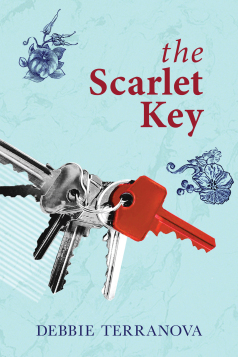 When an envelope with a key and address lands on his newsroom desk, Seth VerBeek is thrust into a thrilling new crime adventure. The reporter’s challenge is to identify the body of a tattooed lady. Why and how did she die? Above all, he must live up to his reputation: Seth VerBeek will know what to do.
The cast of unforgettable characters includes a psychic tattooist, a greyhound trainer, a retired art teacher with an outrageous plan, and a personal handyman who fixes matters of the heart. Each character’s story unfolds like a slow striptease. Layers of subterfuge come off one by one until all is laid bare.
The Scarlet Key is a page-turner that tackles themes of positive ageing, finding love, psychic healing, forgiveness, and end-of-life choices.
Get your copy as an ebook from all good online booksellers.
Buy a paperback in Australia from Terranova Publications.
Buy a paperback in Brisbane from the bookstores listed in Buy Books.


I’m excited: The Scarlet Key is out soon
A scarlet key
A bittersweet secret
A corpse with cryptic tattoos
When an envelope with a key and address lands on his newsroom desk, Seth VerBeek is thrust into a thrilling new crime adventure. The reporter’s challenge is to identify the body of a tattooed lady. Why and how did she die? Above all, he must live up to his reputation: Seth VerBeek will know what to do.
The cast of unforgettable characters includes a psychic tattooist, a greyhound trainer, a retired art teacher with an outrageous plan, and a personal handyman who fixes matters of the heart. Each character’s story unfolds like a slow striptease. Layers of subterfuge come off one by one until all is laid bare.
The Scarlet Key is a page-turner that tackles themes of positive ageing, finding love, psychic healing, forgiveness, and end-of-life choices.
Get your copy as an ebook from all good online booksellers.
Buy a paperback in Australia from Terranova Publications.
I’m excited: The Scarlet Key is out!
A scarlet key
A bittersweet secret
A corpse with cryptic tattoos
When an envelope with a key and address lands on his newsroom desk, Seth VerBeek is thrust into a thrilling new crime adventure. The reporter’s challenge is to identify the body of a tattooed lady. Why and how did she die? Above all, he must live up to his reputation: Seth VerBeek will know what to do.
The cast of unforgettable characters includes a psychic tattooist, a greyhound trainer, a retired art teacher with an outrageous plan, and a personal handyman who fixes matters of the heart. Each character’s story unfolds like a slow striptease. Layers of subterfuge come off one by one until all is laid bare.
The Scarlet Key is a page-turner that tackles themes of positive ageing, finding love, psychic healing, forgiveness, and end-of-life choices.
Get your copy as an ebook from all good online booksellers.
Buy a paperback in Australia from Terranova Publications.
July 26, 2016
‘Gone Girl’ by Gillian Flynn

My rating: 4 of 5 stars
Easy-to-read psychological thriller about married people behaving badly. Domestic noir at its darkest and most intriguing. Both characters of this one-time partnership are highly-flawed and headed towards self-destruction. But they are also clever and conniving. The theme of puzzles and riddles is woven throughout the book, adding twists to the twists and turns. Tried-and-true techniques of the genre are employed to compel you to read on. For example, the short sharp chapters mostly end with a cliff-hanger. Here are some classics:
‘Something bad was about to happen. My wife was being clever again.’
And this:
‘He opens his wallet and pulls out two twenty-dollar bills. Presses them gently in my hand. “There you are,” he says indulgently. I wonder then if I have made a very big mistake.’
Who could resist just one more chapter?