Megan Morgan's Blog, page 12
January 24, 2018
Knowledge vs. Drive
Last week, when I participated in the Author Toolbox Blog Hop, this blog post by Fanni Sütő really got me thinking about where the line is between a writer and a non-writer.
The posts asks: can writing be taught? Of course, this is meant in the sense, can you teach someone to be a writer? Or is it something innate that can’t be taught, and you either have it or you don’t? I want to expand on my thoughts about this concept, because they’re really quite multi-layered.
First of all, can the technical aspects of writing be taught? Absolutely. I don’t think anyone can argue with this. One of the first things we learn in school is how to write. We learn to recognize words and put them in sentences, and put sentences into paragraphs. As we get older, we learn about identifying the parts of a sentence and how to properly construct a paragraph. You can definitely teach someone all the grammar and technical aspects of writing a novel, from top to bottom. You can teach them the proper use of language and how it all fits together and where and when you can break the rules and so on and so forth.
Now, on to the next question. Can talent be taught? Well, the answer to this is a bit more complicated.
First, you have to define what talent is. Talent is having a knack for using those technical skills you’ve been taught. It’s knowing how to use words in a way that not only tells a story, but paints a picture and draws the reader’s interest. It’s being able to mold words like a sculptor molds clay. The sentence “The sun rose over the mountains,” is grammatically and technically correct. But, “The red sun rose like a blemish on the bleak sky above the mist-laden mountains,” is a different thing altogether. In one sentence you not only set the scene, but created a mood and conveyed an atmosphere, and probably even delved into your character’s mindset a bit (imagine instead the character viewed the scene as “When the pink sun rose, it brought a flash of cheerful color to the bleak sky and the mountains below, adorned in their fluffy frosting of morning mist.”) That’s where talent comes in.
Can talent be taught? My answer is a tentative…yes. You can teach somebody how to shape the technical into something more captivating. You can point out, as I did above, how adding detail to a sentence creates more flavor and conveys story aspects. You can break it all down and show someone how it gets strung together, and they can, of course, emulate it.
[image error]
But this is where a thing that can’t be taught becomes important. Passion. You can’t teach someone to be passionate about a skill, and the desire to turn the technical into talent often needs a good dose of passion to make it work. I can’t play any musical instruments, but you could definitely teach me the technical aspects of how to play a guitar. I could probably even, in time, learn how to play an entire song. But I will never be a guitarist because I have no passion and desire to be a guitarist. I can’t picture myself doing it, I have no ambition to do it, and it would bore me so I’d never practice or learn new things.
Passion for writing, or any creative endeavor, cannot be taught. You have it or you don’t. It’s passion that makes the writer, because from passion comes drive, discipline, and the desire to learn, grow, and do better. When you’re a writer you want those things with all your heart and you don’t let much get in your way. You figure out how to fit it into your life and you make room for it. When you don’t write it eats at you, and when you do write you feel a kind of satisfaction that nothing else gives you. That can’t be taught. It’s a spark that people–both creative and non-creative–happen to find in the thing that gives their existence meaning. It’s luck, it’s chance, it’s fate–whatever you believe in.
So yes, writing can be taught. But to change up a proverb, you can lead a writer to the keyboard, but you can’t make them type. The desire to write is something that comes from a place they don’t mention in school books.
What are your thoughts on this? Do you think writing and talent can be taught? What about passion, where do you think it comes from?


January 22, 2018
Writing Spaces
Where do you write? Do you have a “writing desk,” and if so, what does it look like?
I always enjoy cool articles like this, that show off the work spaces and writing desks of famous authors. I like to see where the magic happens, but also, I like seeing that they’re often just like me–they want comfort, they can be just as disorganized and cluttered as I am, and above all, the most important trait of creativity isn’t where you write, but the fact you show up to get it done at all.
Then of course, there’s Danielle Steel’s desk, and don’t we all hope to achieve this level of self-satisfaction in our careers someday?
[image error]The space where a writer writes varies by the writer (say that ten times fast). Some writers want a lot of space to spread out–room for their notes, research, coffee, and a place for the cat to sit, of course. Other writers don’t need a lot of space, as they keep the experience of writing minimal. Some writers want a window to look out of and let the air in, while others find scenery too distracting. Some want a nice cozy corner and some want a big, airy room. Some writers need silence so they can concentrate, with no one around, and some writers thrive on background noise and company while they write.
Of course, other things limit a writer’s space. Some of us don’t have the room in our house to carve out a space just for writing, and we don’t have the money to move to a bigger place, or buy a fancy (or even plain) desk. Some of us have physical limitations that don’t let us sit on certain kinds of furniture for too long, or hunch over a keyboard for extended periods of time. Some writers struggle to find the space and time in the normal world, let alone have a singular, holy space where it all gets done regularly.
As for myself, I have a confession–only during one period in my life did I have a dedicated space to write. When I was younger, and first married, there was a nook in our bedroom (I think it was meant to be a vanity) where I set up my writing space. It was nice, and cute, but rather small. However, there was space for my word processor and it had a drawer and it made me happy. Other than that (we only lived there about a year) I’ve always just wrote wherever the computer happens to be. Especially later on, when I got a laptop, that could be anywhere.
Nowadays, I simply sit on the couch in the living room and put my laptop on my lap (I have a lap desk for it) and write. I have a nice view out the balcony doors. I keep my needed items like notebooks and my planner on the second level of my three-tier coffee table. Sometimes when I’m really lazy, I just prop myself up in bed and write there. However, this arrangement works for me because of my lifestyle. I have no small children, and I’m divorced. My adult son and I are roommates and we work opposite shifts, so the apartment is quiet and nothing distracts me no matter where I am. Except, of course, when my cat decides I’ve been paying way too much attention to the keyboard and my fingers would be put to better use petting her. I’ve always been a “write anywhere” sort of writer, though. I actually put more focus on the writing software and computer I use (I like ease and simplicity, and I’m a bit of a tech head) than where I use it.
I could, I suppose, set up a desk in my bedroom, and I’ve given it fleeting thoughts, but why bother when the couch is so comfy?
Where do you write? If you have a picture of your writing space to share in the comments, please do! I always like to see where writers get it done.
January 19, 2018
Where did the time go?
Friday thought: how the heck is January half over already?! Wasn’t it New Year’s and Christmas just yesterday? I feel like time is going by too fast.
Try to take it slower this weekend, as I will–spring cleaning will be upon us before we realize! [image error]
[image error]
January 17, 2018
Author Toolbox Blog Hop: my first post!
[image error]Today is my first time participating in the Author Toolbox Blog Hop! The hop takes place the third Wednesday of every month (minus November/December) and focuses on the sharing of resources and learning tools for authors.
Stop by the hop page and check out all the participants and their posts this month! Also check out #AuthorToolboxBlogHop on Twitter.
Since this is my first time on the hop, and I’m just starting, today I’m going to talk about the hardest part of writing a novel: the beginning.
How To Start A Novel
A lot of writers, some much wiser than me, have joked that once you write the beginning of a book, the rest is easy. Of course, if you’ve ever written a book you know that’s a bit of an exaggeration–it’s never easy–but it’s true that you can’t finish a book unless you start it. Sometimes starting can be so daunting, or complicated, or confusing, that it discourages you before you even begin. Where do you start? What’s the best place? What will not only hook the reader but get the story chugging along right out of the gate? And what if you screw up and start in the wrong place?
I once read an editor say that you should write your first chapter and then get rid of the first three pages and start there instead. This may work sometimes, but it’s also particular to the story and it’s assuming that you used too much useless filler at the beginning, which you might not have done. Let’s look at some of the more practical ways you can decide how, and where, to start.
Start with action. This doesn’t necessarily mean a gun fight, or a car chase, or a burning building. Especially if you’re not writing a book that would have any of those things. Start with something going on, something dynamic and interesting, but most importantly, something that’s significant to the story. Lead off with an event that’s going to make the reader sit up and go “whoa, what’s happening here?” But again, it needs to be important, and appropriate to the story. Starting with overblown action that’s merely a hook and doesn’t connect to the rest of the story is fake, it’s bad writing, and it won’t get you far. The “action” can be as simple as an argument around the dinner table or as jarring as someone dumping a body in a lake.
Start with something at stake. It’s important right away that the reader is shown why they should care. What’s going on here, and what’s going to happen if our characters fail? Show right away what hangs in the balance, what needs fixing, and how everything is a big hot mess right now and needs to be sorted out. The sooner you let the reader know what they’re supposed to be cheering for, the better. This creates an emotional theme that you will weave through the rest of the story.
Start with a conflict-in-progress. Don’t start a story days before something important happens, just so you can build a character and make everything look idyllic before it all hits the fan. This can seem like a way to create tension and make people wonder what’s coming, but it can drag and meander really badly, too. Most readers don’t want a story to start slowly like this because it’s difficult for the writer to keep it interesting. Best to jump in with both feet, right away. In this case “throw out the first three pages” is good advice.
Let your characters be people. It’s okay for your characters to have quirks, interests, dislikes, and habits–that’s what makes them seem real. And it’s good to let some of these things show right away, so your reader can relate to them and they feel like people. Once you’ve set up your starting action, ask yourself how your characters would react in that situation based on their personalities, and let it shine through. Make sure you don’t start your characters out as nothing more than cardboard cutouts. Give them life, and color.
Introduce you main characters. This seems obvious, but some amateur writers still do it–not introducing your main characters, or at least the main character, right away, or letting them stay a mystery for a few chapters as some sort of artistic choice. This is very rarely going to work out for you. Imagine going to see a movie and ten minutes in the real characters show up, after you’ve already seen the start of someone else’s story. You’re going to be confused, to say the least. If you want your main character to “make an entrance,” you can do that on the first page.
[image error]
On the other hand, there are some things you should probably steer clear of at the beginning of a novel. I’m not saying you can’t do these things, if they’re done artfully, but as a general rule they’re going to make an agent or editor stop reading after page one.
DON’T:
World build right away. Especially in genres like sci-fi and fantasy, you might have created an entire world that the readers need to learn about. Don’t do this at the beginning, though. Give readers the minimum they need to know to understand what’s happening right now and spoon-feed the rest of your world to them over the course of the book. A good rule is: write a book as if the reader already knows everything about your world. You can tell them as you go, in the appropriate spots. If you do a huge info-dump on page one, you’re not telling a story, you’re writing a textbook.
Have a lot of internal reflection. Don’t have a character thinking about how sad/angry/happy they are on the first page. Show them crying, punching the wall, or dancing around their living room singing. Navel gazing is boring, especially if it’s someone we don’t even know and identify with yet.
Go overboard with physical descriptions. A passing reference to your character’s appearance is really all that’s needed at the beginning, if it’s needed at all. Readers are probably going to picture how they look anyway. There are some genres where appearance is more important and actually part of the narrative–like romance–but spending too much time describing a character from head to toe takes away from the story, especially at the all-important start.
Start with too many characters. If your book has an ensemble cast, having them all show up on page one is going to be really, really confusing for your reader. Try to focus on one or a much smaller group to start with. And make it abundantly clear from the first paragraph which one is the main character. Readers need to know very fast: who the story is about, what they’re up against, how things will fall apart if they don’t succeed, and why they (the reader) should care.
There is also a list of things many writers will tell you not to start with: dreams, flashbacks, the weather, prologues, exposition, clichés, people waking up, sounds (BANG BANG BANG)…the list goes on, depending on who you ask. However, I maintain there are ALWAYS exceptions to every rule, and not using (or using) these devices is dependent on the story itself.
So, that’s how you start a novel! Easy, right?! Now writing the rest should be even easier. Or, it could be the hardest thing you ever do. The important part is that you start at all, of course. And you can always go back and fix it, once you know the full story yourself.
Stop by the other blogs on the hop!
January 15, 2018
Deadlines and Dead Ends
If you’ve ever written a whole entire book, you know it’s a process–one that takes days, weeks, months, even years. You also know that not every stage of the process has the same fire fueling it. There may be parts of the book that you fly through in a happy rush of creativity, eager to get to the page every day and put down words, and find out what happens next. Other parts are like slogging through drying cement. They’re just huge hills to get over so you can hopefully, eventually see the end. There are days you turn out tons of words and then stretches of days where you don’t write at all.
However, if you finished writing a whole entire book, you know the effort such a thing takes, all total, is enormous. It also has to have some motivation behind it at all times, no matter how small that motivation is. Many things can move a writer to keep writing: desire to tell a story, hope for the future, wanting to see your work finished and complete. Those are internal reasons and they’re unique to each person. But today, we’re going to talk about one particular, outer motivation that can move you as well.
[image error]Deadlines.
Some writers shrink from the word. They hate the idea of putting a “due date” on their work. Other writers love deadlines, because they light a fire under them that they would otherwise have trouble kindling. Personally, I like deadlines. I like knowing I have to get things done, and that there are consequences for slacking, because it keeps me disciplined. As much as I want to screw around–and I love screwing around–I can’t, because I have a deadline.
There are two types of deadlines: external (someone else sets it, such as a publisher) and self-imposed (“I will get X done by DATE”). Let’s look at the pros and cons of each.
External Deadlines:
PROS:
Give you a clear date and time to finish something. This gives you a target, and you can adjust your writing schedule leading up to the deadline to make sure you hit it.
There are real-world consequences for not making your deadline–losing work, not getting a publication, not being able to enter a contest–and that keeps you focused.
Helps you take the writing and the task of finishing seriously. It feels more like a “real job” you have to perform for.
CONS:
The pressure to achieve something in a set period of time can actually paralyze you with anxiety, and you don’t get anything done as a result. Too much stress kills your creativity.
The work may be rushed and not the best you could do if you had as much time as you needed.
Repeated failures to hit deadlines can leave you feeling crushed and like you’re worthless and lazy, and make you reluctant to try again.
Self-Imposed Deadlines:
PROS:
Give you more time to do your best work and write carefully. Much more relaxing, much less stress.
Are flexible and can be changed if you need more time.
Can be tailor-made to fit your abilities and the pace you’re used to working at.
CONS:
Since no one but you is holding you responsible, it’s easy to go off track, not take it seriously, and not meet the deadline.
There is little challenge, since you can just change the deadline if you want. No need to push or stretch yourself, or sharpen your skills to get faster and better.
Just like there is no real consequence for failure, there’s no external reward for accomplishment, either.
Deadlines can be good or bad, depending on how you choose to utilize them. Some of us need structure, while some of us are just trying to do our best for ourselves. What about you? Do you like deadlines? Do you make your own, or seek ones outside you, such as submission deadlines, on-spec work, and contests? Tell us about it in the comments!
January 12, 2018
The Black Parade by Kyoko M.
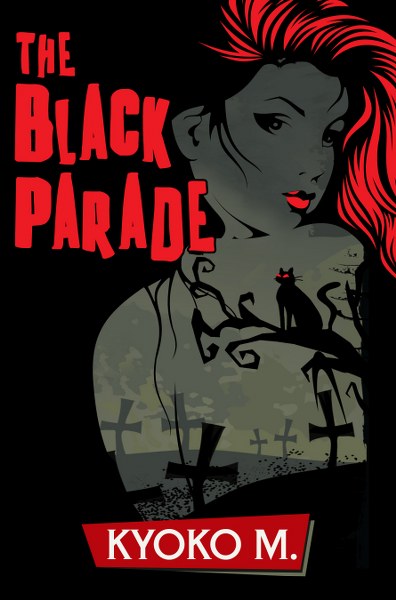
The Black Parade
The Black Parade Book 1
by Kyoko M
Genre: Paranormal Romance, Urban Fantasy
347 pages

Jordan Amador. 21. New Yorker. Waitress. Mild alcoholic. Murderer.
Two years ago, Jordan accidentally shot and killed a Seer: a person who
can see, hear, and talk to ghosts with unfinished business. Her crime
came with a hefty price, too. She has two years to help a hundred
souls cross over to the afterlife or her soul is bound for hell.
Tough break.
As if that weren’t bad enough, two days before her deadline a handsome
pain-in-the-ass poltergeist named Michael strolls into her life. His
soul is the key to her salvation, but the cost just might be more
than she can handle. Solving his death puts her right in the
crosshairs of Belial: a vain, bloodthirsty archdemon who won’t rest
until she’s his slave. Can she rescue Michael and save her own
soul, or will they both be dragged down into the clutches of the
eternal black parade?
Ranked
#5 in Amazon’s Top 100 Bestselling Novels in the Occult Horror
category and #9 in the Paranormal Demons and Devils category on June
19, 2014.
**FREE at all retailers!**
Add to Goodreads
Amazon * Apple * B&N * Smashwords
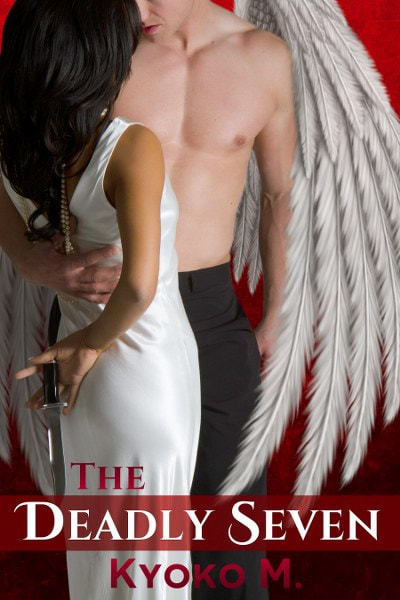
The Deadly Seven
Stories From the Black Parade Series
227 pages
Michael O’Brien. 24. New Yorker. Musician. Archangel in charge of Heaven’s army.
It’s been centuries since Michael stayed on Earth for an extended amount
of time. Now he’s here because of Jordan Amador–a Seer who helped
him restore his life and memories and thwart the archdemon Belial
from taking over the city. With Jordan on Belial’s hit list, Michael
decides to stick around and live out life alongside her as her friend
and temporary bodyguard. But as the days pass, he finds it harder to
resist the seven deadly sins that tempt all men. Especially as he and
Jordan grow closer fighting the demons that want her almost as much
as he does…
This collection takes place in the two month period in The Black Parade
between Chapters 15 and 16. She Who Fights Monsters is the second
novel in the series sequence.
Ranked at #3 in Amazon’s Top 100 Bestselling Free Books in the Paranormal
Romance Angels category and #9 in the Top 100 Free Books in the
Multicultural & Interracial on June 21, 2014.
Goodreads * Amazon
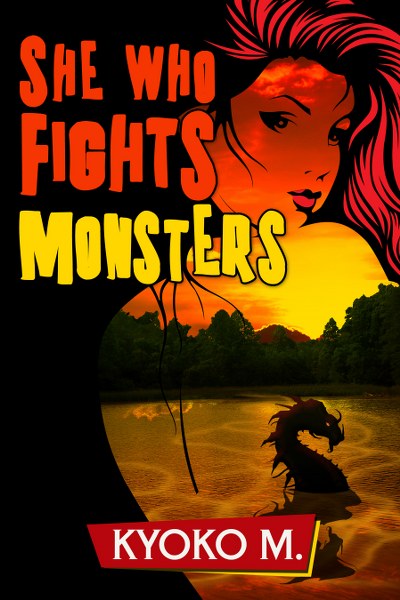
She Who Fights Monsters
The Black Parade Book 2
386 pages
The dynamic supernatural duo of Seer Jordan Amador and her husband the
archangel Michael is back in the sequel to the bestselling urban
fantasy novel, The Black Parade, trying to solve a deadly case.
Someone is methodically hunting down and murdering Seers one by one.
After six months with no leads on the killer, Jordan and Michael are
forced to work with their worst enemy—the archdemon Belial: a
self-professed Prince of Hell who is dead set on stealing Jordan for
himself. However, with the archdemon’s help, they pick up on the
trail of the serial killer and plan to stop him no matter what the
cost.
When the shocking truth behind the murderer’s identity is revealed,
Jordan begins asking herself if she is still fighting for the good
guys or has she become one of the monsters she is desperately trying
to stop?
She Who Fights Monsters is the second novel and third book in the Black
Parade series. It follows The Black Parade and The Deadly Seven:
Stories from The Black Parade.
Goodreads * Amazon
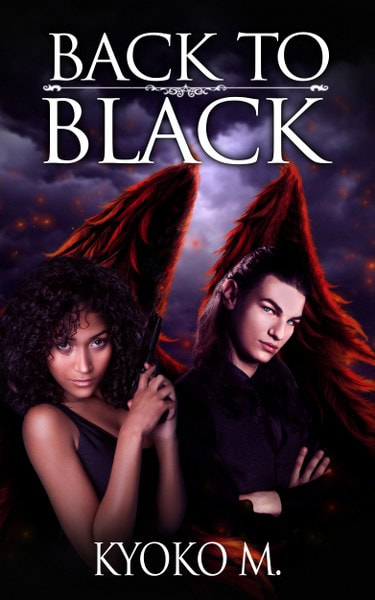
Back To Black
The Black Parade Book 3
153 pages
Seer and demon slayer Jordan Amador has had it rough lately: separated
from her husband the archangel Michael, hated by the angels who think
she betrayed them, hunted by demons who want her dead or enslaved,
and rejected by her friends and family for lying to them. Disgraced
and miserable, she’s all but ready to lay down and die until
another Seer named Myra Bennett saves her life. Myra gives Jordan a
new mission: to wipe out a nest of demons that are terrorizing her
family as well as the innocent people of Houston, Texas. Jordan goes
undercover to infiltrate the demons’ nest and figure out how to
eliminate them. Meanwhile, she’s locked in a deadly game with the
archdemon Belial, who constantly visits her night after night in her
dreams to convince her to give him her soul. Between the insanely
gorgeous, but dangerous archdemon poking around in her head and the
vicious creatures surrounding her, she’s not sure how much longer
she can survive.
Back to Black takes place between She Who Fights Monsters and
The Holy Dark in the Black Parade series.
Goodreads * Amazon
[image error]
CHAPTER ONE
Dying’s a bitch, and I would know.
To be fair, I didn’t actually remember what happened when I died. It was over a year ago, and the soul is a radically different entity from the mind. In case you’re wondering, yes, there is an afterlife, and no, I can’t tell you what it looks like. Sorry. Life is full of disappointments.
How then, Ms. Jordan Amador, you ask, can you say dying is a bitch if you don’t remember your own death? Well, I remember everything up until my death, and that was certainly a bitch. The archdemon Belial had kidnapped me with the intent of sacrificing me so that he could open a portal into the body of the archangel Michael, therefore allowing him unlimited power and access to influencing the innocent people of the world to do his bidding. Long story short, we stopped him, but I died in the process, and in excruciating pain, I might add.
Much like right now.
Ever had one of those out-of-body experiences? Not the kind that you’d see in the movie Ghost, but a true case of an otherworldly viewing of your own self. Detachment. Like someone plucked away the strings that connected you to yourself, and the byproduct was that you almost felt like the consequences of the world didn’t directly affect you.
That was me.
I was hanging from two thick, nasty braided ropes: each one at my wrist, cutting off circulation. A spotlight illuminated my body and its myriad of problems: broken ribs, fractured eye-socket, busted lip, cracked teeth, and what felt like severe internal bleeding. It hurt to breathe. It hurt to exist, really.
My current predicament came at the hands of a short brunette with matted curly hair, a pug nose, and pale skin courtesy of her father, Lamont Brooks. Mr. Brooks was a loan shark from Detroit who had swindled my estranged father and then tried to kill him. I took issue with that. My pseudo-brother, the archangel Gabriel—long story—and I busted Lamont and his whole operation several months ago, and sent her old man up the river.
And she took issue with that.
In my defense, these clowns got lucky. It was late at night, I was exhausted, alone, and under-prepared for six hulking guys in masks jumping me in the parking lot, beating me senseless, and dragging me into a van. I had no idea where we were, but I knew that no one was going to save me if I didn’t save myself.
I’d tried. The ropes were too tight and I had no use of my hands. Brooks’ daughter, Bridgett as I overheard one of the Mooks call her, worked me over for hours, and I had no energy left. Figures. I’d saved the world twice now and yet I was going to be delivered to fate by some snot-nosed bitch with Daddy issues. Life had a cruel sense of humor.
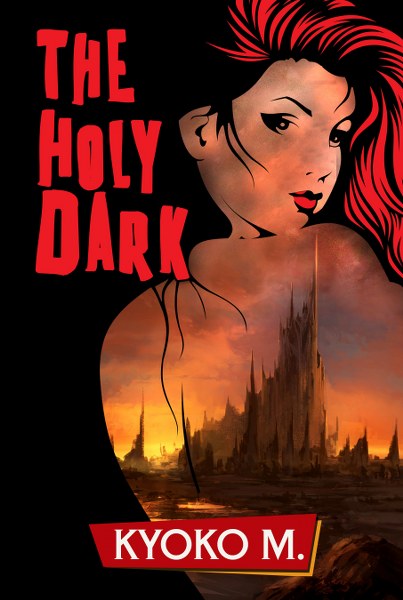
The Holy Dark
The Black Parade Book 4
463 pages
Sarcastic demon-slayer extraordinaire Jordan Amador has been locked in a
year-long struggle to hunt down the thirty silver coins paid to Judas
Iscariot. The mere touch of these coins is enough to kill any angel.
Jordan’s demonic opposition grows more desperate with each coin found, so they
call on the ultimate reinforcement: Moloch, the Archdemon of War.
Moloch puts out a contract on Jordan as well as her estranged
husband, the Archangel Michael. Now Jordan and Michael will have to
find a way to work together to survive against impossible odds and
stop Moloch’s plan, or else he’ll wage a war that will wipe out the
human race.
The Holy Dark is the third novel and fourth book in the Black Parade
series, following The Black Parade, The Deadly Seven: Stories from
The Black Parade series, and She Who Fights Monsters.
Goodreads * Amazon
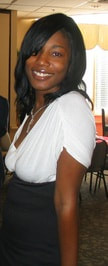
Kyoko M is a USA Today bestselling author, a fangirl, and an avid book
reader. She has a Bachelor of Arts in English Lit degree from the
University of Georgia, which gave her every valid excuse to devour
book after book with a concentration in Greek mythology and Christian
mythology. When not working feverishly on a manuscript (or two), she
can be found buried under her Dashboard on Tumblr, or chatting with
fellow nerds on Twitter, or curled up with a good Harry Dresden novel
on a warm Georgia night. Like any author, she wants nothing more than
to contribute something great to the best profession in the world, no
matter how small.
Website * Facebook * Twitter * Amazon * Goodreads

Follow the tour HERE
for exclusive excerpts and a giveaway!
a Rafflecopter giveaway
January 11, 2018
In a hundred years…
This week, I thought I’d do something funny. With a lack of blog post ideas in my head, I went over to HubSpot’s Blog Ideas Generator to see if it could help me come up with some topics. You have to input three nouns, so I chose “writing,” “authors,” and “books.” Most of the results actually gave me a laugh, so this week I’m going to make posts from the funniest ones on the list. Enjoy!
What Will Authors Be Like In 100 Years?
This one cracked me up. Let’s see if we can predict the future:
Given what writers were like 100 years ago compared to now, I’d say: pretty much the same. While technology changes, what makes people want to write, and all the joy, anxiety, and insanity surrounding it doesn’t change. The literary giants of 100 years ago were probably just as neurotic and self-doubting as you are. Maybe even more! Back then, the simplified way we can connect with editors and agents, and the ease of self-publishing, didn’t exist. Also, sadly, people read a lot more back then, and books were much more a part of everyday and popular culture, so you really had to shine to be part of that group known as “authors.”
I figure technology will continue to improve, making it easier to write. I know speech-to-text already exists, but I’m so awkward at having a normal conversation, I can’t imagine trying to speak my stories out loud in any coherent manner. Maybe they’ll invent a chip you put in your brain that turns your thoughts to text, but that could go wildly wrong, as well. I could just imagine all the other weird things that float through my head sneaking into the narrative. What a plot!
Or, maybe I’m completely wrong. Maybe in the future, all writers will be turned into robots and we’ll conquer the galaxy with our brilliant tales. Or at least, someone will write that story.
What do you think? How will things be different in 100 years?
[image error]
January 10, 2018
Myths: debunked!
This week, I thought I’d do something funny. With a lack of blog post ideas in my head, I went over to HubSpot’s Blog Ideas Generator to see if it could help me come up with some topics. You have to input three nouns, so I chose “writing,” “authors,” and “books.” Most of the results actually gave me a laugh, so this week I’m going to make posts from the funniest ones on the list. Enjoy!
20 Myths About Authors
The generator seems to think there’s a bunch of myths about authors out there. Let’s explore some of them!
We’re all rich. LOL
All our books are made into movies.
We all know each other. Imagine the parties.
We do all our writing in coffee shops. We can’t afford coffee shop coffee.
We all own a cat. Cats own us, this is known.
We’re all perfect at grammar and spelling. I dnt no wht u meen.
You have to be crazy to be a writer. This one is actually true.
Published authors never get rejected. If you think it hurts before you get your first acceptance, imagine how much it sucks when you already have a bunch of stuff published.
Writing is glamorous. I know I’m irresistibly hot in my coffee-stained pajamas with my unbrushed hair hunched over my keyboard like Quasimodo, but restrain yourselves, boys!
We type everything on old-timey typewriters because it looks cool. We also all smoke pipes and wear thick-rimmed glasses.[image error]
We plan what’s going to happen in our books ahead of time. Usually it surprises even us.
We killed your favorite character as a personal insult to you specifically. Yes, you.
We love reading our own reviews. I enjoy being told how stupid I am!
We have infinite free copies of our book to hand out to everyone.
We choose pen names because we’ve killed a man and we’re in hiding.
We’ve read all the books ever written as research. Even the ones that perished in the Library of Alexandria, we have copies of them hidden in vaults.
We make ritual sacrifices to the ghosts of Walt Whitman and Ernest Hemingway on Saturdays.
No books are published without Stephen King’s approval first.
Anyone can write a book.
We never, ever slack on getting our writing done.
Do you have any myths to add that I forgot? Let’s spill our secrets, authors!
January 8, 2018
Are you cut out for doing books? Take a quiz and find out!
This week, I thought I’d do something funny. With a lack of blog post ideas in my head, I went over to HubSpot’s Blog Ideas Generator to see if it could help me come up with some topics. You have to input three nouns, so I chose “writing,” “authors,” and “books.” Most of the results actually gave me a laugh, so this week I’m going to make posts from the funniest ones on the list. Enjoy!
[image error]
Think You’re Cut Out For Doing Books? Take This Quiz
This one made me laugh the most, so I’m doing it first. Take the quiz! Give yourself 3 points for every (1.) answer, 2 points for every (2.) answer, and 1 point for every (3.) answer.
How many words do you write in a day?
At least 2,000! Stephen King says you should write 2,000 words a day and he’s the President of Writing!
I don’t write every day, but I try to get a few hundred in when I can.
Does typing search terms into Netflix count?
Where do you get your character names from?
I’m very creative and they just come to me.
I check out baby naming sites and glean them from real life and stuff like that, but sometimes it’s difficult.
Everyone in all my stories is named Bob.
How many books/stories do you have published?
Tons! I’m a very busy and extensively-published author!
I haven’t published anything yet, but I’m submitting things to editors/agents.
Publishing? You mean like when I write rants on bathroom walls?
How do you handle rejection?
It’s disappointing, but I consider every rejection a learning experience!
It’s really discouraging, I still struggle with it.
Reject me? No one would dare reject me. The last editor who rejected me, well…let’s just say they got a special “fruit basket” for Christmas.
How do you feel about editing/revising?
I love it! I live fixing up my work up and making it the best it can be.
It’s not my favorite thing, but I know it’s an important part of the writing process.
Everything I write is perfect the first time. I send everything directly from Word to Kindle Direct Publishing without even running a spell check. Who has time for edits!
How long have you been writing?
I was born with a pen in my hand! (Ouch, my poor mother!)
I started writing in school and found out it made me happy.
Since yesterday, but I’m pretty sure this is my year to win a Pulitzer Prize.
How do you feel about the success of other authors?
I’m very happy for them. Their success doesn’t mean I won’t be successful too!
It makes me envious, but I try to use that to motivate me.
All other “authors” are going to retire now that I’m here.
Do you write in one genre?
I picked one genre and I’m building my brand in it.
I’m experimenting with different genres, still trying to find my niche.
I invented six new genres and I have the top book on Amazon in all of them.
Are you good at writing query letters?
I know all there is to know about query letters and I write the best ones! I’ve gotten so many offers from my great queries.
I try to learn all I can about querying, but it’s not easy to write an effective query letter.
Who has time for letters? I just show up at their office with my handwritten manuscript to add that personal touch editors love.
How do you construct a plot?
I write an outline, fill in details as I write, keep note cards, annotate my manuscript, and check with beta readers to make sure everything makes sense and I haven’t left any gaps.
I kinda just try to write and hope it works–I usually fix the plot up in the revision stage.
I just steal the plots of Stranger Things episodes and change the character names.
Okay, now add up your score and see how you did!
24-30 pts: Oh, look at Perfect Author over here. Go write your 2,000 words before Stephen King astral projects over your keyboard and curses you with weak plotlines and adverbs.
15-23 pts: You’re pretty much a normal writer. Congratulations! You’re full of anxiety and uncertainty like the rest of us, but you’re trying.
10-14 pts: Uh…I don’t think you’re cut out for doing books. You’d make a great politician, though.
How did you do?
January 5, 2018
How To Set Goals: Don’t
Most of your life, you’ve probably been told you need to set goals. Whether professionally or personally, the “experts” tell you that you’ll never accomplish anything if you don’t set clear goals for yourself and work toward them. Well, that’s not entirely true. I mean, it can help, and it can be true, but setting goals can actually be detrimental, too.
[image error]One of the big problems with goal setting is that human brains are dumb, easily-fooled creatures. When you imagine some dazzling future where all your dreams have come true, and you’re really able to see it, taste it, and feel it, it’s not a good thing. When we visualize something, strongly and in detail, we get a happy rush, and a sense of fulfillment–that’s because our dumb brain thinks it actually happened! This can lead to loss of motivation, rather than pushing us forward. Our brain is all “Why should we keep struggling? That’s no fun–we already got it!” It’s definitely okay to think about the future, but thinking about it too hard leads to just that: a lot of thinking and no doing.
Here are a few other ways goals can actually trip you up:
Keeping us single-minded. When we create a goal, and focus solely upon it, this doesn’t allow us to notice anything else in our field of vision. If your goal is to one day become a bestselling author, that’s a big goal, but it dismisses all the other possibilities. Even if you never become a bestseller, you could still make a respectable career out of writing, or even pay the bills with it. The best kind of goals are broad, not singular: I want to be a bestseller vs. I want to have a fulfilling writing career and attain a base of readers who enjoy my work. Detailed goals put intense pressure on us to get things exactly right, when there’s plenty of other like-minded things that would make us just as happy.
Not exploring other paths. This is an important lesson I learned recently. When we set goals, we tend to construct the path that leads to them, as well. “I’ll do this, and then this, and this, and then I’ll get what I want!” Except, if you’ve spent any time on this planet, you know what happens to the best laid plans. It’s important to stay open to possibilities that aren’t on your path. Instead of rigidly sticking to a game plan, you should keep your eyes open for surprises and unusual opportunities. These are the things that open doors for us, doors we weren’t even aware were there for us to walk through. For me, I started writing a book with a clear intention of where I’d send it when it was done–until a different kind of opportunity popped up out of nowhere. Instead of saying “no, that wasn’t the plan,” I’m giving it a shot. I’ll keep myself open to possibilities, instead of refusing to bend. Will it work out? Only time will tell.
Dismissing reality. When we set goals, we sometimes don’t think about our abilities. We want to achieve things that we don’t actually have all the skills or tools for. That doesn’t mean we can’t learn those skills or gain those tools, but fooling ourselves and being overly optimistic doesn’t do us any favors. Setting a lofty goal you’re not actually equipped to reach, and then refusing to confront that reality and put in the groundwork will make sure you never get anywhere near that goal. Ambition is good, but practicality is better. You have to set up the poles before you erect a tent.
Crushing us with defeat. When we set a goal, and it’s unmovable, unshakable, and we’re not willing to compromise on it, and then we don’t achieve it, what happens? We think we’re a failure, a loser, that we fooled ourselves and wasted time. Even if we got somewhere and learned a few things, because we didn’t take the whole kit and kaboodle, we consider it a disaster. This leads to depression, frustration, and self-hatred. It makes us not want to try again. Having broader goals and still celebrating the small victories is important–so is constantly changing your plan, when the world alters things for you. And trust me, it will. Single-mindedness leads to nothing but unhappiness when things don’t work out.
None of this means we shouldn’t have goals and strive for things we want. But clinging too hard, making the rules unbreakable, and only staring straight ahead is sure to sink you into a hole in the road you didn’t see coming. The best way to set goals, the way that won’t fool your dumb brain into thinking you already did it, is:
Keep them broad, instead of specific.
Be open to alterations in your plan and explore unexpected opportunities when they appear.
Enjoy and live in the satisfaction of progress instead of only staring at the goal posts.
Understand your limitations, and decide how much work you want to put in to break them.
Don’t turn failures into catastrophes.
Everyone has goals. It’s part of human nature, setting something up for ourselves. However, it’s important to remember that goals dwell in the uncertain future. The present is where you have to build the foundation you’ll need to stand on when you have that goal in hand–and we don’t have a blueprint for that foundation, but it’s okay. Just get to work. It will form, against all odds.
Filed under: Behind The Scenes Tagged: advice, creativity, tools, wellness, writing