David Williams's Blog, page 3
July 21, 2025
Itch and Thistle
 It was in the early spring of last year, reaching down to pluck a green bean, that I first got stabbed.
 It was an unexpectedly sharp pain in the pad of my thumb, not overwhelming, but decidedly unpleasant, like experiencing the ministrations of a nervous trainee phlebotomist.
I recoiled. Had I been stung? There was no swelling, no redness. I popped out my reading glasses and peered at my thumb. There was no evidence of a thorn, or a stinger. The jab hadn't even drawn blood.
I carefully investigated. Down in the dense foliage of the bed, amidst the fat and growing beans, I found the culprit. A thistle, girded round about with needle-sharp thorns. Next to it another, and another. Further recon revealed that they were suddenly everywhere, and that they'd spread to most of my raised beds.
I'd not seen them in my garden before, but it didn't take long to realize where they'd come from. We'd had a birdfeeder in our front yard, one we stocked and restocked with seed. Among those seeds: thistle. It had gone forth and multiplied.
Thistle is, viewed through a certain lens, a very desirable plant. It feeds pollinators, which is a good thing. With a whole bunch of effort and some heavy gloves, it can be eaten, particularly the roots. Most importantly, it is Indigenous, or at least Field Thistle is, and as we all know, Indigeneity is axiomatically magical and virtuous.
But believing all those things won't keep it from stabbing you. It has evolved to stab you, and any naive romantic notions of traipsing barefoot through grass where thistle is starting to establish itself will end in pain.
Poison Ivy is a vigorous Indigene too, as a recent trip to Urgent Care with my swollen-faced 86 year old mother reminded me. Toxicodendron Radicans also grows vigorously, feeds pollinators and birds, and slathers itself in urushiol, an oily compound that causes rashes, blistering, and anaphylaxis. Were it a human, it would be the sort of human who violated international treaties on chemical warfare.
The thistle is back this year, and I don't hesitate when I encounter it. Wherever I see thistle or poison ivy, I destroy them. I root up the thistle with heavy gloves and pointy metal implements. I poison the poison ivy. I give no quarter, and I hunt them down proactively.
There are always souls who'd find reasons these plants and other creatures of similar stabby toxicity should be tolerated. They're just being what they are, one might say. They're part of Nature in all Her Beauty! Live and let live! Let everything grow! Let a thousand poisonous, needle-sharp flowers bloom!
This seems peculiarly abstracted from the reality of life.
I am not such a soul, nor do I feel that's my purpose in this beautiful, dangerous world. I am as alive as they are alive, and our striving against one another is simply part of the order of God's creation.
I appreciate my opponents, their vitality, their energy, the honed foil of their thorns. But that doesn't stop me from rooting both itch and thistle from the garden of my tending.


July 11, 2025
A Diet of Desires
 I was walking the dog on a Sunday afternoon when the anxiety hit like a thunderbolt. Earlier that day, I'd preached on the omnipresence of marketing in American life, and how what we desire is a factor of powerful systems that manipulate our interests. It folded in neatly with a talk about my book on prayer and our desires, and how we must learn to unwant the things that we are taught to want so very badly.
I'd cited a dollar figure on the scale of the American advertising industry, and even though I'd found it multiply attested earlier in the week, I suddenly got a bad case of the yips. Did I get that number wrong? Had I erred? Maybe I'd mistyped it. Maybe I'd misread it.
If I had, my mistake was likely not a rounding error. Not off by two percent, not off by ten percent, but off by 100,000%. The number was the total 2024 spending on advertising, which came in, averaging from various sources, at just a smidge over $500,000,000,000.
America spent five hundred billion dollars on marketing in 2024, I declared publicly, while church folks shook their heads in amazement.
Surely that was wrong. It couldn't be right. It's a staggering figure, a preposterous figure, one that I presented with confidence. Had I made a mistake?
The dog did his business, and I slogged home, suddenly certain that I had catastrophically embarrassed myself. I checked the numbers again.
There'd been no mistake.
Five hundred billion dollars, more or less, against a global total of one point one trillion.
I didn't know whether to be relieved or re-horrified. In context, it does make sense. Americans see more advertising than any other culture. It's that money that feeds Facebook, that feeds X, that feeds Google. It's that money that fills our mailboxes with crap, that forces us to pause multiple times during a show, even if we've paid Bezos for the frickin' "privilege" of Prime. We've been taught that ads are fun, that ads are cool and great and creative, but Jesus Mary and Joseph, that's insane.
For that price, we as a nation could have Medicare for all, and a fully funded USAID, and retool our economy to actually compete with the Chinese, and have a MoonBase, and be going to Mars. But instead, we get...what? We get a cotton candy nothing. We're penned up and stuffed full of manufactured desires like foie gras geese or penned up veal calves.
None of it, not a bit of it, is necessary for the functioning of a healthy society. Would we not remember to eat? Would we forget that we need a roof over our heads? Would our doctors not recommend appropriate medications?
Of course not.
Imagine an authoritarian regime that spent that much on propaganda, where that amount of energy was spent manipulating the hearts and minds of an endlessly anxious populace.
How is that not what's happening?
July 8, 2025
A Fierce and Joyous Voluntarism
 Last year, my butternut squash really struggled.
Voracious chipmunks devoured the seedlings, necessitating multiple replantings. Deer savaged the spreading vines. It was a horticultural debacle. I got a quarter of my usual yield.
This year, things are different. I moved our bird feeder out of the front lawn, reducing the attraction for rodents. I've been more diligent about applying deer spray.
Out front, it's a riot of sprawling fan leaves and questing vines. The most vigorous of my butternuts this season is, as it happens, not one that I planted at all. It's a volunteer, one that came up early in a four by four raised bed where I'd intended to grow okra. I didn't, at first, even know it was a butternut. I could tell it was a squash of some sort, but that thumb-high sprout could have been zucchini, or perhaps a cuke. Cucurbits...that's the common name for that family of plant...all kinda sorta look the same early in their development, at least to my amateur eye.
I thought about rooting it up, as I often will with volunteers. I Had A Plan, after all, one that involved okra and not butternut. But I had okra growing elsewhere. Given the failure of my squash crop last year, I was inclined to give it a chance. That, and if it turned out to be a butternut, it would have room to run, and butternut does the best when you let it sprawl out wild and free.
It was a butternut, and Lord, has it run.
It quickly leapt out of the bounds of the raised bed, as every single day the tendrils extended their reach.

Its goal, best I could tell, was the sun, as it pressed due East towards the dawn. The plant is now about thirteen feet long, the striving vines and sprawling leaves inscribing the shape of a beleafed comet onto the green of my yard. Along those abundant vines, the glorious yellow blossoms have drawn a host of bumblebees, who will often fall asleep deep inside of the flowers, cozily cupped and pollen-drunk.
From the female blossoms, with the help of the bees, a half-dozen squash have begun to form and fatten. More than my entire harvest last year.
From just one plant, that showed up unexpected and was given the freedom to use its gifts. This feels, as so much gardening does, flagrantly metaphorical.
There's a tendency amongst Professional Jesus People to assume that our task is to set agendas and establish plans and be all Leadershippy and stuff. We are the prophets and the vision-casters! We dream the dreams! We know the knowledge! Without the byzantine complexities known only to us professionals, poor hapless amateur Christians would wander around like little lost lambs in the great deep darkness.
This is a spiritually dangerous assumption. It's why we pastors overfunction. It's why we're so prone to getting anxious, exhausted, and overwhelmed, as we take the entire weight of our local universe onto our shoulders. It's why we can become megalomaniacs in microcosm, and get prone to doing things we oughtn't.
Our pastoral task, instead, is mostly to encourage, inspire, and occasionally give some gentle redirection. The vital and creative energies that keep our communities healthy extend far beyond our egos. They rest within the souls who choose to give their time freely and joyously to music and mission, to service and care, to teaching and reaching out.
The best measure of a healthy church, as some of my choir folk so perfectly put it while chatting before the service this last Sunday, is that people want to be there together, pursuing a commonly held joy.
The heart of a vital and free society, as Alex of Tocqueville famously put it, is "..the art of pursuing in common the object of their common desires."
Without our fierce and joyous voluntarism, nothing good can stand.
July 7, 2025
The Big Beautiful Lie

The email came on the morning of the Fourth of July. It was from the Social Security Administration.
In it, folks like me with a social security account were informed that we should celebrate and rejoice in the passing of the recent budget bill. That bill eliminates taxes on a significant portion of social security benefits, which...according to Trump-appointed Social Security Commissioner Frank Bisignano, will do amazing things.
By significantly reducing the tax burden on benefits, this legislation reaffirms President Trump’s promise to protect Social Security and helps ensure that seniors can better enjoy the retirement they’ve earned.
Yay money back! Yay Trump! Promise kept!
Problem is, it's all a lie.
The Trump bill, as enacted, pretty much guarantees that the Social Security Trust Fund will run out of money by late 2032. That's seven years from now, kids. One year of solvency has been sliced away, giving us one less year to deal with the future America has been putting off for decades.
Remember what you were doing in 2018? For oldsters and my fellow middle-aged, that doesn't seem like that long ago. Heck, I've had both of my current cars longer than that.
That's how much time we have. In seven years, thanks to Donald J. Trump, Social Security runs out of money. Benefits for seniors will be slashed by 25%. There are ways around this, of course. I mean, the easiest solution?
Plan on being dead by then.
But those of us who are still alive and have spent our working lives contributing to Social Security will all be royally screwed. Don't believe me? Read this report from the leftist socialist communists over at FoxNews. Their opinion bull[horn] might be all in with the Big Beautiful Lie, but their business folk know what's coming.
Everyone knows it. All of us have known this was coming for years.
Even the liars and thieves who are trying to buy our favor with money they just stole from our future.
June 24, 2025
Beans and Berries and Sweat on the Brow
 This morning, as the sun crested the small rise to the East, I was out in my garden picking the last of the blueberries.
 The day was going to be fiercely hot, stinky sticky smothering hot, with humidity in the eighties and real temperatures potentially cresting one hundred degrees Fahrenheit. It's the sort of day when spending time outside is best done early, the sort of day when the heat doesn't dissipate with the setting of the sun.
The last of the succulent deep-purple berries hung fat on my bushes, though, and my greenbeans were poppin', so there was harvesting to be done. After walking the dog, drinking my coffee, and attending briefly to the daily mess of world news, I took a couple of shiny metal bowls out into the yard and started picking.
I'd already pulled a gallon and a half worth of berries off of our two bushes, and so there wasn't much left worth plucking. Just about a cup of ripe fruit remained, the berries perfect and ready, popping off their stems with only the very lightest of effort. The dull faint tink of each falling fruit against the bottom of the stainless steel bowl was pleasing to the ear, chiming to mark the sultry end of my blueberry season.
Then it was on to my four by eight bean patch, where I squatted and plucked again, pinching beans from stems with thumb and forefinger. My trusty old bush beans, seedsaved for nearly a decade, were starting to produce.
As I picked, the heat continued to rise, and sweat prickled across my forehead beneath the shade of my hat-brim. I felt the effort in my middle-aged thighs as I squatted, moving counterclockwise around the raised bed. I peered into the dense interwoven foliage, gently parting it with my hand, eyes moving from bean to bean, my mind sorting between those that are ready and those worth leaving for another harvest later in the week. About a half-gallon of beans today, filling my larger bowl.
It's simple work, physical and wholly engaging. For forty five minutes or an hour before the heat of the day becomes too much, it's no great burden. But for a whole day? For eight hours, even with breaks? It would be utterly exhausting, and the endurance required to work in the fields seems...to my flaccid suburban flesh...herculean.
Gardening, I reflected as I popped plump beans into my bowl, is a good reminder of what it takes to bring food to our tables. It's the most fundamentally necessary labor, but also the labor that we've chosen to ignore as a society. It's viewed as unworthy of our effort, as the most menial and lowly of tasks, to be performed by those at the very bottom of the economic food chain. It is the work of migrants and the imprisoned, not that there seems much difference between those two categories in America these days.
That such labor is disrespected is an abomination. That it is a thousand times less lucrative than dooping around with some AI-enhanced blockchain folderol seems a perversion of the order of things. It's an inhuman and unnatural misvaluation. As a substantial portion of our culture turns snarling against those whose sweat and strain feeds it, this seems a form of madness. Is it seething resentment at our dependence, that we rely utterly upon the work of others, and that our "superiority" is nothing but a mask for our weakness? Perhaps.
Or perhaps we're just fools.
Perhaps we are as brimming with hubris as the Spartans, who imagined that their monomaniacal worship of Ares made them stronger than their slaves. For without the humble helots who grew the crops and tended the livestock, all the martial disciplines of Leonidas wouldn't have kept him alive for a week. Or are we like Midas, perhaps? Are we about to break our teeth on grapes gone hard to our touch, feeling our thirst rise as we peer down at the unquenching metal of our Mammonists desire that now fills our glass?
A little less time in the false halls of golden delusion might clear our addled minds, and return us to right appreciation of the things that matter.
A little more time in our gardens, with the fruit of the earth before us and sweet honest sweat on our brow.
June 23, 2025
A Most Profitable War
 So here's a thought, one that I've not seen pitched out in the bizjournals or propagated by the business-oblivious American Left.
As America starts dropping bombs on Iran, and Iran inevitably chooses to retaliate in the only way it can, there'll be disruptions to Persian Gulf shipping. Iran's Houthi proxies will start lobbing antiship missiles at passing commerce. Shia Iran will pitch ballistics at the wealthy Sunni petrostates, and we'll see burning refineries and damaged or sunk tankers.
Even if we don't see that happen, the markets will price that potentiality into a barrel for a while.
So the cost of a barrel of oil will rise, as will the price at the pump. That's not collateral damage. I'm kinda sorta of the mind that this is a goal. Meaning, somewhere, someone knows that war with Iran is in America's financial interest.
I mean, the primary goal is advancing the interests of Bibi and the Arab Petrostates, who are largely now aligned. But as a secondary goal, rising oil prices are in the direct interest of American petroleum producers.
Because right now, the United States of America is sitting on a huuuuuuge reserve of shale oil. In Utah, Colorado, and Wyoming, we have the largest such reserve known to humankind. It contains within it trillions of barrels, enough resource to keep us all burning carbon unabated for nearly a century.
But using that oil is very resource intensive. It's a highly technical process, requiring substantial research and engineering, and thus has a far higher profit threshold than old-school oil drilling.
If the price of oil, per barrel, is less than sixty five to seventy dollars? Some production becomes unprofitable. The farther below seventy bucks a barrel it falls, the more the business model for shale starts to collapse. Below fifty bucks a barrel, it's time to shut down production. You're spending more to get it out of the ground than you're making.
Three months ago, oil was running at $58 per barrel, meaning production was getting right near the edge of viability.
Now?
Now it's soared, up to nearly $75 a barrel, comfortably above the point at which domestic shale is commercially profitable.
For OPEC nations that traditionally drill, some losses and damage to production will be more than made up for by soaring profits. For American production, this war could be a lifesaver.
Which is just such an odd, unpleasant business.
June 17, 2025
Nos Nunquam Movere
 Nos Nunquam Movere, or so our informal family motto goes. We Never Move.
This was not always the case.
As a Foreign Service brat, I moved every four years. From DC to Nairobi, when I was a toddler. From Nairobi back to DC, when I was about to go into first grade. From DC to London, when I was in fourth grade. From London back to DC, as I turned thirteen. At eighteen, I moved to Charlottesville and college at UVA. There, I shifted spaces every year. One year in a dorm, and then three different rooms in my fraternity house.After graduation, I moved to Williamsburg for a year to live with my fiance. Then back in with my parents in Northern Virginia, where we lived for six months after getting married. Then into an apartment in Arlington, followed by another three years later.
We bought our home back in nineteen ninety nine, and the whole process came to a halt.
Parties, or so Prince Rogers Nelson sang about the year we moved into Annandale, weren't meant to last, but we've lasted. Twenty six years, we've called the same little suburban rambler home. It was close to grandparents, when kids came along. It's close to aging parents, now that the offspring are grown. It's been right sized for us, cozy with four souls, spacious for two, walking distance to stores and restaurants, but kinda quiet. Around us, the faces have changed, as neighbors have moved out, new neighbors moved in, again and again. We remain. Rache and I have both sacrificed the arc of our careers to the comfort of place, choosing again and again to remain.
This isn't the standard for Americans. Here in this country, we move, on average, once every eleven years. More when we're young, less as we age, but we're always on the go. Always pulling up stakes, heading for better ground, always seeking greener pastures and new vistas.
If you live that way, there's much that you gain, but there are also experiences you do not have. There is much that you miss. Your sense of connectedness to the land, and your ability to see the world changing around you? That doesn't happen when you're in constant motion yourself.
When you set down roots, you see the wear of time, cast against longstanding memory. You know the ebb and flow of seasons. Sometimes change is for the good. Sometimes? Not so much.
There are a pair of towering poplars near our carport that simply weren't there when we moved in. I remember when they were saplings, twenty years ago. I considered cutting them down, but relented. They're not nuisance trees. They're indigenous and vital to the local ecosystem. Now they reach sixty feet skyward, casting shade in the summer and providing sustenance to the few remaining butterflies. They are good and lovely.
But across the street and at the top of a small rise, the seamless green canopy that graced the neighborhood two decades ago is now irregular, where a score of chestnut oaks struggled and perished. That was part of a mass die-off all across the Mid-Atlantic, one that played out over three-quarters of a decade. Changing climate, dontcha know, as our world shifts fast enough that if you hold still you can see it.
There are other benefits to remaining where one is. One can think longer term, and taste the fruit of seeds planted many years prior, seeds both metaphoric and actual. Thirteen years ago, I dreamed that my yard might one day be more than just an expanse of grass, and made my very first stab at growing a garden. Today, I sit out on my sheltered porch on a misty morning, and see flowers and beans, tomatoes and squash and okra and a panoply of herbs. Over three hundred square feet of raised beds, added in considered iteration over time. Time is so necessary for growing things, and some things take more than a season.
More than a decade ago, I planted a couple of blueberry bushes just to the right of our front door. Six years ago, I put two apple tree saplings into the ground in our front yard. Five years ago, I put some asparagus rootstock into the soil of a raised bed, just to the left of our driveway.
It took three years for the asparagus to produce. It took five for the berries to really start popping, and ten for me to figure out how to keep the birds away. One of the apple trees, this year, is heavy with reddening Fujis.
For the ancient Biblical prophets, the gift of patiently appreciating and harvesting from one's place was a mark of a just culture, and of the great blessings of God's purpose.
When times are hard, the prophets proclaimed, you let roots run deeper. Like Jeremiah, you buy that field, claiming a deeper stake in place and the potential of the future. I have, as the prophet Isaiah promised, planted my gardens, and stayed long enough to eat of them.
A crisis might change this, I know. The time will certainly come when mortality will move me to another shore. But for now, I'll remain, and enjoy the pleasures of holding fast to what is good.
Nunquam Movere

Nunquam Movere, or so our informal family motto goes. Never Move.
This was not always the case.
As a Foreign Service brat, I moved every four years. From DC to Nairobi, when I was a toddler. From Nairobi back to DC, when I was about to go into first grade. From DC to London, when I was in fourth grade. From London back to DC, as I turned thirteen. At eighteen, I moved to Charlottesville and UVA. There, I shifted spaces every year. One year in a dorm, and then three different rooms in my fraternity house.After graduation, I moved to Williamsburg for a year to live with my fiance. Then back in with my parents in Northern Virginia, where we lived for six months after getting married. Then into an apartment in Arlington, followed by another three years later.
We bought our home back in nineteen ninety nine. Parties, or so Prince Rogers Nelson sang about the year we moved into Annandale, weren't meant to last, but we've lasted. Twenty six years, we've called the same little suburban rambler home. It was close to grandparents, when kids came along. It's close to aging parents, now that the offspring are grown. It's been right sized for us, cozy with four souls, spacious for two, walking distance to stores and restaurants, but kinda quiet. Around us, the faces have changed, as neighbors have moved out, new neighbors moved in, again and again. We remain.
This isn't the standard for Americans. Here in the country, we move, on average, once every eleven years. More when we're young, less as we age, but we're always on the go. Always pulling up stakes, heading for better ground, always seeking greener pastures and new vistas.
If you live that way, there's much that you gain, but there are also experiences you do not have. Your sense of connectedness to the land, and your ability to see the world changing around you? That doesn't happen, not when you're in constant motion yourself.
When you set down roots, you see the wear of time, cast against longstanding memory. Sometimes change is for the good. Sometimes? Not so much.
There are a pair of towering poplars near our carport that simply weren't there when we moved in. I remember when they were saplings. I considered cutting them down, but relented. Now they reach sixty feet skyward, casting shade in the summer and providing sustenance to the few remaining butterflies. They are good and lovely.
But across the street and at the top of a small rise, the seamless green canopy that graced the neighborhood two decades ago is now irregular, where a score of chestnut oaks struggled and perished. That was part of a mass die-off all across the Mid-Atlantic, one that played out over three-quarters of a decade. Changing climate, dontcha know, as our world shifts fast enough that if you're hold still you can see it.
There are other benefits to remaining where one is. One can think longer term, and taste the fruit of seeds planted many years prior, seeds both metaphoric and actual. Thirteen years ago, I dreamed that my yard might one day be more than just an expanse of grass, and made my very first stab at growing a garden. Today, I sit out on my sheltered porch on a misty morning, and see flowers and beans, tomatoes and squash and okra and a panoply of herbs. Over three hundred square feet of raised beds, added in considered iteration over time. Time is so necessary for growing things, and some things take more than a season.
More than a decade ago, I planted a couple of blueberry bushes just to the right of our front door. Six years ago, I put two apple tree saplings into the ground in our front yard. Five years ago, I put some asparagus rootstock into the soil of a raised bed, just to the left of our driveway.
It took three years for the asparagus to produce. It took five for the berries to really start popping, and ten for me to figure out how to keep the birds away. One of the apple trees, this year, is heavy with reddening Fujis.
For the ancient Biblical prophets, the gift of patiently appreciating and harvesting from one's place was a mark of a just culture, and a mark of the great blessings of God's purpose.
I have, as the prophet Isaiah promised, planted my gardens, and stayed long enough to eat of them. When times are hard, the prophets proclaimed, you let roots hold deeper. Like Jeremiah, you buy that field, claiming a deeper stake in place and the potential of the future.
June 15, 2025
Father Timex
 It's been just under two years since Dad passed away, and I'm still wearing his old Timex.
I took it off his cool lifeless wrist on the day that he died, and put it on my own. It's told the time with reasonable accuracy ever since. A simple mechanical watch serves many purposes. Telling the time, of course, but other purposes that have value in our digital age. It reduces the number of times per day I feel compelled to look at my magic devil box, which is a blessing. It ticks audibly, as the mechanism physically marks away the seconds remaining in my own mortal coil. This feels real and tangible, an analog actuality in a vaporware age. It does one thing well, without distraction. These are good things.
That's not to say there aren't challenges with an old watch.
The watch will need a new battery soon, as the Timex IndiGlow (tm) feature for nighttime timekeeping has started to dim. It's started slowing down a little bit, requiring readjustment through the little twisty knob on the side. Again, a new battery is all that's needed.
The primary fail-point, though, has been the band. It's a simple leather thing, faded and worn. The watch lug loops have given way multiple times, the leather yielding to entropy, the machine-stitching well past its functional lifespan. I've been tempted, each time, to replace the band.
I mean, it's a band. Just a strip of cheap hide. It's not expensive.
But like everything that matters, the watch isn't just about function. It rested on my father's wrist for decades, and the band...being organic and slightly permeable...carries with it more of him than the metal watchbody itself. It's stained and suffused with his sweat. Some of his DNA, no doubt, is sequestered away in the folds and cracks of that old leather, as surely as it is in my own flesh.
Letting go of the band, or so my utterly illogical sentimentality dictates, is letting of a substantial portion of that intimate reminder of him. So what to do, when that band fails?
Given that my leatherworking skills are non-existent, I've taken the easy route, applying a classic Dad-fix to that memento of my own father: epoxy. Just glue it back together. It works, right up until it doesn't.
Last week, my most recent repair failed, and the watch fell from my wrist. Undamaged, thankfully, but the whole leather lug-loop was gone. There was nothing left to glue, nothing left to wrap around the bar of the lug. This, I thought ruefully, might finally be the end of the band. I let it set for a little bit, as I mulled my options.
A fierce sentimentality can be the mother of ingenuity, and time for reflection stirred a thought.
The band was two stitched pieces of leather, and were I to carefully slice them apart and trim away one half, I could construct a new lug-loop. Simply slice, apply epoxy, and boom. It'd be back on my wrist. Why not? If it failed, I'd just sigh and get a new band. If it succeeded, I'd still have that soft worn remembrance snug wrapped around my arm.
So I sliced it carefully, opening up the seams of the leather. I whittled about the edges with the blade, and then...with vise and glue and time...remade what had failed.
This Father's Day, that old Timex still rests on my wrist.
June 11, 2025
Our Father
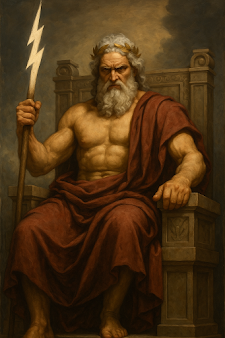 I was sitting at table with a group of fellow Presbyterians, where they were pitching out their reactions and thoughts around my recent book on reclaiming the Lord's Prayer. It was an engaging conversation, and their frank comments and thoughtful ponderings made for some delightful back and forth.
During the discussion, one of the folks around the table started chatting about the very first chapter of the book. It being a book about the Lord's Prayer and all, it tracks through that ancient prayer phrase by phrase, and the very first phrase is "Our Father." Pater Hemon, in the Greek of Luke 11 and Matthew 6, although without the italics or capitalization, because common Greek didn't roll that way.
One of the participants, an Older White Gentleman, had something to say about that. "I was struck," he said, "by that first chapter about fathers." "I didn't think," he continued, with a mischievous grin on his face, "that we were allowed to use that word any more."
This, I will confess, did occur to me in the writing of the book.
It is the strong preference of my comrades in the Presbyterian People's Front to avoid male pronouns in the evocation of God. Growing up in a very progressive church, this would typically manifest in prayer language that either centered the divine feminine or attempted to avoid gender altogether.
There's a strong and relevant truth to all of that effort, because YHWH ain't a male bipedal hominid. We're not talkin' Zeus here, not some towering white bearded dude in a robe glowering down from His Obviously Anthropomorphic Throne. Theological assumptions of male dominance or superiority rising from that language aren't to be tolerated.
I steer away from the use of gendered language to describe God myself, truth be told, and at no point in the book do I ever refer to God as "He." Not even in the chapter where I talk about God the Father. Not even once.
I also don't mind if folks want to use other terms to describe God. So many other words and images point to the Divine Nature. God is Love, of course. And Light. And a Consuming Fire. If Scripture's cool with God being like a mother hen with sheltering wings, or telling us the Creator of the Universe can manifest as an incandescent shrubbery, then all bets are off. You do you.
So in that spirit of inclusivity, I'm not of a mind to abandon the use of the word Father in prayer, because it, um, works. It ain't inherently broke. Is it perfect? No. Of course not. No human language, none, can bear the full weight of God's reality. We could theologically wordsmith until the end of time, and still not fully capture it. Our efforts to use our categorical semiotics more precisely just ends up creating a muddled, clumsy tangle.
Were I to reword the prayer to my own heretical idiosyncracies, I'd be forced to acknowledge that "Our Numinous Omnipassible Multiversal Panentheist Reality Engine" just doesn't flow off the tongue.
Father isn't that. It's not an academic abstraction. It's a concrete, actual, material relation that's comprehensible on a human scale.
And we human beings, with our propensities for overcomplicating our lives? That can be helpful.