J.B. Garner's Blog, page 47
February 2, 2015
Review – Indomitable

A fresh and honest review of one of my books. Always glad to see them!
 Originally posted on 501 Realizations:
I���ve decided to do another book review. Why? Because I wanted to read the book based on the blurb and offered to do it in exchange for a free book. The book in question is Indomitable, and it is the first in a series called The Push Chronicles. It is written by J.B. Garner. His webpage is here. A link to the book on Amazon is here.
Okay, first off, I have to say Indomitable is, by far, one of the coolest words in the English language. After reading the title, I wanted to read this book. Then I saw the cover. It���s friggen awesome!��I have to say, the cover made me want to read the book. All that said, I���m going to try not to spoil the story for you, but tread lightly.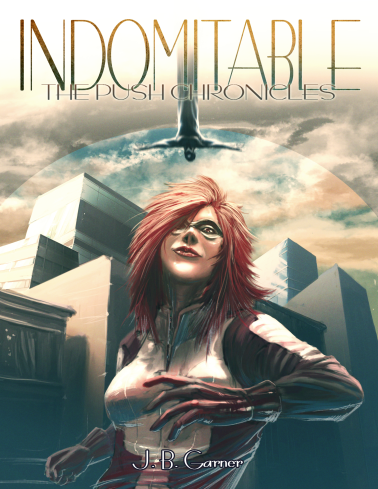
Irene Roman never wanted to be a hero, but when a strange betrayal���
View original 439 more words


Plot and Motivation: Exposition in Motion a.k.a. Smoothing the Info Dump
My apologies for the quietude around these parts for the last few days! ��There is a lot in the works for me at the moment. ��Incorruptible��is back from the editor’s so the last revisions and changes need to be made, I am still waist-deep in��The Twelfth Labor‘s first draft, I have more content to write for��Doppel, and there’s plenty of books to devour to try to catch up during my request hiatus.
Still, that won’t keep me from putting my hunger-addled mind to musing about more writing topics. ��Today’s Plot and Motivation is going to tackle an approach to exposition that might help keep the Info Dump blues away. ��So roll up your sleeves and let’s get to work!
Now, it is very easy to want to info dump. ��Especially if you’re working in a genre or world that is radically different from the real world, a writer can feel tremendous pressure to get the reader up to speed. ��After all, the plot is waiting and the readers need essential information to understand it, right? ��Best to get all this exposition out of the way as soon as possible and be done with it.
The thing is that excessive exposition ruins your pacing, shooting dramatic tension in the head before it even has a chance to build. ��It doesn’t matter where in the story you put an info dump, it almost always has this effect. ��So how can you get your information across without leading to large blocks of explanations?
The first vital step is figuring out what exactly your reader *really needs* to know. ��You would be surprised, perhaps, how little that can turn out to be. ��Again, it is all about giving the reader the benefit of the doubt that they are smart enough to pick up on inferrence and foreshadowing. ��You can get a lot across without directly saying every little fact.
Once you have distilled down the information to the bare essentials of what the reader needs, you can then distribute it into your plot. ��The point is not to dole out all vital information in one sitting but to instead weave those facts into the flow of the scenes. ��That isn’t to say you can’t bring up a factoid before it becomes vital. ��If you do that, it will make new revelations seem more and more like sudden writing inventions as opposed to planned parts of the story.
However, you can usually find a way to bring up facts and exposition in a more staggered manner than in one solid dump. ��It can certainly take time and several revisions to get it to where it needs to be, nuanced but not mystifying, but it’s well worth the work to do so.
Planning a staggered exposition like this not only helps to preserve pacing, it can also be used to heighten intrigue, raise reader interest in the story, and cause your readers to be more invested. ��It becomes obvious to them early on that there are more facts, more history, more insights hidden throughout the book instead of being bored with all the need to know all at once. ��They will want to dig deeper and continue to find out those facts, seeing if each new answer matches their own expectations drawn from the foreshadowing. ��That reader engagement will do wonders for the enjoyment of your book.
This isn’t even the only way to tackle this problem. ��What other avenues do you use to work in exposition in your writing? ��Feel free to share with us below!
Until next time, good luck and good writing!


January 29, 2015
General News: Another Upcoming Request Hiatus!
When I started off my Starving Reviews, I really didn’t think that many people would give two flips about my opinion about what are good and bad books. ��I mean, what do the thoughts of one more comically starved indie author really matter in the grand scheme? ��Well, I have discovered it matters quite a bite to the continual flood of authors who want me to review their book.
This is all very flattering. ��It is also very ‘GIANT CRUSHING BACKLOG OF BOOKS’ making! ��I do two to three reviews a week, which for one man who is also writing one book and editing another, seems pretty darn impressive, really! ��Even at that brisk rate, it would take me over four *months* of nothing but three reviews a week to catch up on my current backlog. ��Less if I only manage 2 books a week. ��You can probably figure the math and realize that I have quite a number of reviews to come!
For that reason, to try to clear out another chunk of this pile, I am going to have enforce regular breaks from accepting new requests. ��At the moment, I am thinking having a break from requests every other month will most likely be manageable, so that is what I am going to try to do.
What this means is that from Monday, the 1st of February, until March the 1st, I will be accepting NO new Starving Review requests. ��This period MAY extend, depending on what progress I can make on my backlog, but at most will only extend one additional month. ��I’ll announce an extension or a reminder later in February.
Good luck and good writing!


January 28, 2015
Starving Review: Big Fish (A John Rodrigue Novel) by Ken Grissom
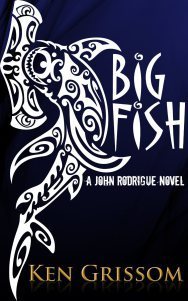
Big Fish��(A��John Rodrigue��Novel) by Ken Grissom (Amazon, Goodreads)
Ah yes, there’s something to be said about the earthy charms and old school flavors of the pulp novel. ��It brings one back to an earlier time, rich with mystery, action, and intrigue, with no less complexity than a more modern style. ��When��Big Fish��was added to my menu, my taste buds were intrigued. ��A period piece before Reganomics? ��High seas adventure? ��Something akin to those racks of pulps I only vaguely remember on my father’s bookshelf in my youth? ��Of course, nostalgia can only take you so far. ��Let’s see if this seafood combo platter had the right stuff to tantalize my taste buds!
As is tradition before we begin, let’s examine the Starving Review creed:
I attempt to rate every book from the perspective of a fan of the genre.
I attempt to make every review as spoiler-free as possible.
At its core,��Big Fish��is a strongly-character driven mystery dish and there’s one of its greatest strengths as a literary dish. ��The main character is certainly three-dimensional and written so strongly that he could walk off the page without causing too much alarm. ��One thing that Mr, Grissom does very well, though, is to provide very rich secondary and minor characters on top of the main protagonist. ��That can be a difficult thing to whip into a recipe that has such a strong central flavor and hat’s off to the author for pulling it off.
As for the plot itself, a vital element in a mystery, it’s solid. ��It has all the right hints to make such a recipe pop: crime, intrigue, betrayal, lies, murder, all that sort of thing. ��Most importantly, the ending, where all the loose ends come together, makes sense. ��There are enough contextual clues that, after the fact, I could figure out the plot. ��In other words, there were no ‘where did THAT come from’ moments that plague poorly-scripted mysteries. ��That being said, the plot isn’t truly mind-blowing either. ��Solid, serviceable, but not revolutionary.
The writing style itself is crisp and evocative of the time and the setting, both of which play roles in the overall story. ��While one may not pick up a pulp mystery to seek out expert wordsmithing, there were one or two turns of the phrase that really resonated with me. ��Though he doesn’t need to with the genre he’s working in, the author goes above and beyond when it comes to the style of the book and it adds a lot of value to the piece.
If there’s any one significant flaw I could point out, it’s our old culinary nemesis, pacing (dun dun DUUUUH!). ��I won’t harp on this much because��Big Fish��does avoid most of the worst offenses that can be done with pacing. ��Where it *does* trip up is in exposition. ��Some areas of exposition are well-done, flowing logically into the events and characterization. ��There are some, however, that feel a bit too detailed for what the reader actually needs to know and leads to those sections dragging a bit. ��There are also a few sections of bland flavor where Mr. Grissom bogs down the narrative with describing the occasional day-to-day activity in step-by-step detail. ��This is an inconsistent problem … often, these basic activities are simply mentioned, letting the drama flow freely, and every once in a while, it becomes a short stretch of time-wasting writing. ��In the end, though, these minor hiccups of flow don’t impact the overall narrative too much.
What we end up with is a classic seafood feast with a surprise twist of mystery flavor, solid, tasty, but with the occasional bland course. ��It’s never enough to put you off the meal, which in total makes for an enjoyable and fun pulp mystery read. ��If you love mysteries, thrillers, main characters with a hint of scoundrel in them, or the feel of old pulp novels, I would gladly recommend picking up this little treat.
FINAL VERDICT: **** (A nostalgic taste of the sea with a twist of mystery!)


January 27, 2015
Trope of the Week: Dead Queers
Paige’s Trope of the Week! I think this is an especially important one if you ever write LGBT characters. Just read this and follow the fix!
 Originally posted on break the system:
The queer romance is already so tragic: ostracized from society, dealing with internal prejudice, dealing with hatred from peers and family. But when the couple of the story finally gets together and might have a chance to be happy, let���s just add more tragedy by killing them!
Why this can be bad: There are literally pages and pages of dead queer characters in media. Just look at the TV Tropes article (beware spoilers). This trope started during the pulp fiction era of the 50s, and tragic death or insanity was the only way publishers were willing to risk having these stories under their labels. Lesbian pulp helped perpetuate the Civil Rights movement, but it also solidified the idea of no happy endings. Since then, more and more fiction has been released so that ���tragic gay romance��� has become an overwhelming subgenre in queer lit. While this might make for���
View original 231 more words


January 23, 2015
Book News: The Secret Project is officially begun!
For some time now, I’ve been collaborating closely with my cover artist and good friend, Felipe de Barros, on a SECRET PROJECT.�� The time has come for that project to be unveiled!
Doppel, a postmodern adventure of altered perceptions, societal controls, and what it means to be human, takes us into the near-now, the year 2025, into the seemingly perfect life of Dr. Alex Turing. Living in the Blue States, a seeming Utopia, a fateful decision and a chance encounter throw back the veil and plunge Alex into the midst of the plots of MARK, the supercomputer that controls the entire Blue, an adventure that will change the course of the world.
This graphic novel tale is from Felipe’s conceptions and ideas and combines his fantastic art with my writing.�� Check it out at Webtoons and please rate it based on what you see.�� The Prologue is now live with Chapter 1 to follow soon!


Starving Review: Seeking Dr. Magic by Scott Spotson
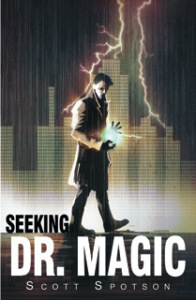
Seeking Dr. Magic by Scott Spotson (Amazon, Goodreads)
The problem with being a Starving Reviewer is that you don’t get to choose what you eat at each meal.�� Whatever literary cuisine is next on my ever-expanding menu list is what you get.�� After my last review, well, I had certainly wanted a palette cleanser so all I could do is cross my fingers.�� Like the song says, you might not get what you want but, if you try sometimes, you just might find you get what you need.�� As this next meal was plated for me, I could tell by the menu that it had potential at least.�� Promising to mix a mystery in a world with a sudden appearance of magic and the fantastic, Seeking Dr. Magic looked to have the potential for a fine fusion piece of literary cuisine.�� Would it fill me up happily or would I feel the need to starve myself once more?
Before we find out the answer, let’s review the Starving Review Creed:
I attempt to rate every book from the perspective of a fan of the genre.
I attempt to make every review as spoiler-free as possible.
Let’s take it from the top, then.�� Seeking Dr. Magic has a solid premise and it approaches that premise in a logical manner.�� No spoilers to say that, if something truly magical and inexplicable appeared in our modern world, it would be a disrupting experience.�� Though mostly a character-driven piece, Mr. Spotson covers all his societal bases as well and approaches the angles of such a supernatural incident with a solid outlook on events.�� Nothing seems contrived and the plot flows in a logical fashion.�� I especially appreciate that once the ground rules for the supernatural events are laid out, they are adhered to, both in regards to earlier events in the book and all subsequent events.�� One of the quickest things that can sour a fusion dish like this is when the author starts to break the rules he himself has laid out.
Now, as I mentioned, I consider this to be a dish flavored the most by its characters.�� The main protagonist and antagonist are very well characterized and it is their interactions that drive the plot and are the best parts of the dish.�� Properly seasoned and well-baked, they both are real treats.�� Seeking is at its best when it focuses on these characters, either singularly or together.�� Some of the secondary characters are touched up nicely, especially two sets of parents in the middle act, but, with so much focus on the main pair, there is a bit of a lack of attention on other secondary characters.�� They tend to be considerably flatter and the scenes with them tend to be a bit more of a generic mush.�� However, these scenes aren’t poorly written and, with so much focus on the main characters, they are serviceable enough and don’t collapse the story.
Stylistically, Mr. Spotson’s literary cooking is solid and in some parts, especially his dialogue, it really shines.�� However, to be fair, some parts suffer from an uneven pacing, generally any stretch where there isn’t significant dialogue.�� It’s a minor issue though, as the author seems to recognize his strengths and keeps his characters interacting as much as is logically possible.�� At the end, there are no truly badly written parts, just sections that are fairly vanilla, spiced up considerably by any dialogue scene.
Though I can speak little of it (spoilers and such), I would have to say that, unlike some literary dishes that have a great initial bite but sours by the end, the best parts of Seeking is the entire third act.�� Writing a proper ending, especially to a stand-alone piece, is as hard as writing that initial hook and Spotson delivers here in spades.�� It was emotional, logical, and set a proper note of finality to close the book’s story with no dangling threads.�� Definite bravo there.
Where does that leave us at the end of the meal?�� To be completely honest, while Seeking Dr. Magic is not perfect, it is still a very enjoyable urban fantasy/mystery fusion dish that delighted me with its fleshed-out characters and flavor-popping finale.�� If you love either of those genres (or simply enjoy a good piece of popcorn literature), I would suggest you check this book out.�� You won’t be disappointed!
FINAL VERDICT: **** (Some light, fluffy popcorn with a flavor that sings because of great characterization!)


January 21, 2015
Into the Action: Dressing To Impress And Hopefully Not Die!
Today’s writing article will be a brief one.�� No, not because I’m too busy (though I am) but because this topic is so common-sense and so straight forward that there is really little room to say anything other than the point itself.�� So, what action-related topic is up for grabs today?�� Well, I’m glad you asked!
Today, we are looking at costuming vs. action.�� I use the word ‘costuming’ but I mean, of course, whatever your characters are wearing in an action scene.�� Though often related to the characters themselves, it is still, essentially, ‘costuming’ as you, the author, have final control over it.�� However you want to look at it, what a character is wearing in an action scene can greatly alter the course of said action scene.
All it takes is a little forethought and common sense to understand how this can be important.�� High-heel shoes are horrible for movement and any kind of fighting.�� Baggy clothes may be easy to move in, but also present loose folds that can be grabbed or manipulated.�� Armor can have any manner of effects beyond raw protection: light armor is easier to move in but far less durable, heavier armors might be more protective but can be heavy and fatiguing to wear.�� Powered armor, like Iron Man, may be amazingly powerful but subject to energy concerns, bulkiness when unpowered, and vulnerabilities to anything that disrupts electronics.�� Masks can protect one’s identity or have built-in protective lenses but, depending on how they are worn and attached, can ruin peripheral vision and be easily manipulated to obscure vision further.�� Let’s not even start to talk about capes!
The point is that these are all possible factors you should consider in an action scene when describing your characters’ clothing.�� Not only can it provide all manner of hooks and sequences you can add to spice up your action but it can speak volumes about a character and their familiarity with a situation.�� An ex-military woman who has come to expect trouble around every corner won’t be wearing a tight dress and high-heels unless it’s a special occasion, for example.�� A laborer who is caught in a firefight will probably still be able to be physical, as he will be in sturdy work clothes designed for movement.�� A fantasy knight will be clad in head-to-foot armor when expecting trouble and probably still be in tough leathers or a mail coat in other situations, regardless of gender.
So, remember, the clothes do sometimes make the man.�� Remember to tailor your characters’ wardrobes to them and the situation and never forget how you can use what they do wear to add new twists to an action scene.
Until next time, good luck and good writing!


January 20, 2015
Trope of the Week: Sassy Black Woman
Time to pass along Paige’s Trope of the Week! Enjoy!
Originally posted on break the system:
Lively, loud, sexual, and Black, this woman is not afraid to tell you the way it is. She is not one to be spoken over, and if you dare to try, she will put you in your place.
Why this can be bad: This trope came into being during the Civil Rights movements in the 70s. This was a time when white writers were trying to include positive black characters in their works, but unfortunately, it didn���t work out great since this is the role most Black women were cast in��� forever. Even the Mammy could be pushed into the role, sassing her kids while trying to ���keep them in line.��� When Black women are constantly characterized in media as hypersexual and abrasive, it changes the way audiences view them in real life. This trope is also oversaturating media, and when young Black girls ��� and women ��� look���
View original 97 more words


January 19, 2015
Starving Review: Wyvern Diary (Ira Draconis Book 1) by Dahraan du Toit
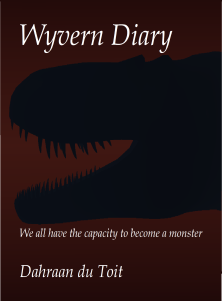
Wyvern Diary (Ira Draconis Book 1) by Dahraan du Toit (Smashwords, Goodreads)
This is it, my literary foodies.�� This was the book that did what no other ones have yet to do in my short but eventful review career.�� This was the meal I couldn’t finish.�� Like so many other hard-to-swallow morsels, I find it, in hindsight, horribly regretful because I truly wanted to love this book.�� Cut through the suffocating globs of fat, the underdone strings of meat, and the bits of choking spices, there are some neat concepts in the bones of this novel.�� But, well, it’s so very very deep.�� Let’s tackle this unfinished meal from the top and perhaps we can see why this terrible event happened to me.
Before we break out the silverware, let’s remember the Starving Review creed:
I attempt to rate every book from the perspective of a fan of the genre.
I attempt to make every review as spoiler-free as possible.
I have just taken a large sigh as I think of the depth of the task I face here.�� As any of you long-time readers know, I truly want my reviews to be helpful to both reader AND author.�� This means that often I must be mean to be kind … I simply won’t doctor or alter my reviews to spare feelings.�� So, this will be harsh, people, but hopefully out of this harsh critique a better crafted literary meal will come out of it.
Let’s simply start with the core elements of any novel: plot and character.�� Wyvern Diary has plot, of course.�� The problem is that the plot doesn’t follow any logical course of action.�� Events simply come barreling down the plotline with little visible cause and effect.�� They just happen and reader be damned if they can figure out precisely why.�� Perhaps, if I could have choked down all the gristle and fat, I could have made it to a point to where it all came together, but the sheer randomness of some things, especially character actions, make me doubt that.
Which leads me to characters (but don’t worry, we’ll address the comments on fat later).�� The author literally assaults us with a DELUGE of characters, many often appearing just a time or two, yet each gets more than their fair share of description and introduction.�� The problem being that, as these characters get almost no characterization, we learn nothing about them or how they act.�� Even more important ones get the barest whitewash of characterization, at best appearing as hollow archetypes.�� Maybe this could be salvaged if Steve, the main character and our first person viewpoint, was a well-developed and intriguing person.
Unfortunately, Steve just isn’t.�� His motivations are constantly shifting, as well as his feelings on any particular subject.�� He sometimes is impulsive, sometimes thoughtful, sometimes filled with a greater purpose, sometimes lazy and procrastinating.�� Each paragraph could bring a different Steve to the fore.�� There are entire plot points that hinge entirely on this, where Steve randomly decides to be lazy or be curious for no reason, such as seeing an open door and deciding, despite all common sense, to waltz right in and snoop around.�� What we are told about him never combines with how he acts and with the history that is laid out.�� Essentially, there are no really relatable characters because of this and that leaves readers disconnected from the plot.
So that fat.�� As a literary cook, I have one major flaw that my fellow chefs have to constantly remind me about: I love to add just too much of each ingredient, leading to bloated recipes that could really use a trim.�� So, speaking from that perspective, as a lover of big words and big sentences, Wyvern Diaries is so insanely bloated.�� There are SO MANY scenes that are completely pointless, enough literary fat, that I suspect most readers would get a heart attack from clogged arteries before they finished the book.�� This tremendous fat also kills the pacing, drawing out even simple tasks into long slogs of paragraph after paragraph.�� It gets worse as, over time, the reader starts to realize how pointless so much of the writing is and he/she is tempted to start skimming, just to cut through to actual plot.�� You, as a literary chef, NEVER want to the reader to do that.�� If they are doing that, you are losing them and losing them fast!
If only that were the end of it, I perhaps could have carried on and cut my way through this meal to the end.�� It isn’t though.�� The fat kills the pace and then that pace is kicked while its down by alternating periods of drudge and rapid-fire obfuscating action.�� There are considerable sections of ‘As You Know’ and Infodump that, unfortunately, linger lovingly on things that are not really important to the plot while glossing quickly through the things that actually ARE.�� There are entire events that looked to be important subplots (one regarding a supposed traitor who was actually framed and works still with the good guys) are literally resolved within a dozen pages of being introduced with literally one sentence of off-camera handwaving.�� There are action scenes where we literally do not know anything about who the characters are fighting, why they are doing so, and the purpose of said fighting.�� The state of the supposedly post-apocalyptic world is baffling: everyone keeps shouting that they need to reclaim what mankind lost, but this mankind has giant robots, magic, nanomachines, self-replicating bullets, teleportation technology, and hydrogen-fuel cell cars.�� Oh, and they still have the internet after the supposed breakdown of national governments and the like.�� What?
EVEN ALL OF THAT I could have forced myself to choke down but I was brought low, staring at the half-eaten meal with a dead glaze in my eyes, by something seemingly innocent enough.�� Certainly not something that should stop a mighty eater such as myself.�� I was stopped by … formatting.
Oh, you laugh now, sure, but there are literally NO scene breaks.�� Combine that with ponderous HUGE chapters (the first third of the book (almost 100k words) has only the prologue and *2* chapters), paragraphs that persist through multiple full pages of my e-reader, almost no indications of time or the passage of it, and the glacial pacing and you have a literal recipe for reader headache.�� Lines of text started to blur together in my eyes and I found myself constantly having to bounce back and forth to make sure I had my place.�� Combined with a bland and overly expository writing style (No, I do NOT need to know that you need to use the bathroom when you wake up!�� That’s standard human living stuff there!), it’s literally like trying to gargle semi-soft blocks of lard.
So really, that’s all there is to say.�� I was not brought down by explicit scenes or something horribly offensive or incomprehensible writing.�� I was brought down by something that was simply so bloated, so ponderous, and so poorly written on the stylistic level that I just couldn’t bring myself to cut through to the end.�� Again, as I said at the start, there is a deep-down core of interesting ideas that could, if you simply tore away all the fat and worked on toning up the literary muscle, could become a fantastic meal.�� However, I only see that happening if Wyvern Diary was torn down to the literal bone and rewritten with a brand new recipe.
FINAL VERDICT: * (Way too much fat, gristle, nonsensical characters, and glacial pacing for this Starving Reviewer to choke down.)