J.B. Garner's Blog, page 43
March 27, 2015
Political Writings: Boycott Indiana!
I’ll keep this shorter and sweeter than most of my (sparse) political ramblings.
Governor Mike Pence of Indiana and all of the close-minded, right-wing members of the Indiana legislative houses who made the Religious Freedom Restoration Act become law, you guys can go straight to Hell. ��Oh, wait, I don’t need to say that, because your bigoted actions have already written you a one way ticket there. ��Isn’t it great when my job gets done for me?
In an actual constructive aspect of this, let me say that, while not very impactful as I am one man, I will have nothing to do with any business that supports or enforces this law. ��I would encourage everyone else, especially if they actually live in Indiana, to do the same.
The one positive take-away from the immediate aftermath of this horrible, despicable Act is that it is heartening to see such a full-spectrum backlash against it. ��Hopefully, it will make the forces that enacted this law be wary not to try it anywhere else … though I understand similar legislation is being considered in a dozen other states. ��Do your research, friends, see if this is being brought up in your state’s legislative bodies. ��If it is, make your voice known. ��Maybe the next one will be dead on arrival.
So, to sum up:
Go to Hell, Mike Pence and friends.
Boycott Indiana businesses and groups that support these small-minded wretches.
Find out if they are trying this in your own neck of the woods.
Spread the word and fight back.


March 26, 2015
Writing Is A Bad Habit: Entertainment and Fiction, Siamese Twins?
My current Starving Review book is a long one and, while I intend to get a review up tomorrow, I can make no guarantees. ��In the meantime, let me regale you with a little bit of thinking I had over the past week.
What is the purpose of fiction? ��At its core, what is fiction ‘about’? ��What is the common thread that all fiction should share, do you think?
I can only speak for my interpretation, but I would propose to you that the core purpose, beyond any and all other things, of fiction is to entertain.
That isn’t the *only* thing a work of fiction can do, naturally. ��A good piece of fiction entertains, educates, enlightens, and many other words that start with ‘e’. ��However, and consider this carefully, why would you read a work of fiction if it didn’t also entertain you? ��If you aren’t also seeking entertainment, be it fun, thrills, comedy, mystery, drama, or a million other ways to find enjoyment, why are you picking up fiction?
Surely, if one wants pure education, spiritual enlightenment, or religious insight, wouldn’t that one be better served going straight to the factual or philosophical sources? ��Yes, I am taking the stance that religious texts are not ‘fiction’. ��They are very real for those of their faiths. ��Yes, I know that often stories and small pieces of fiction are often included in many otherwise ‘non-fiction’ works. ��However, those small fictional bits are not your draw. ��You don’t read a math book for the intriguing word problems, right?
By that line of thought, then, why write a piece of fiction unless you fully embrace the need to entertain? ��I have read pieces that overwhelm the actual fictional story with heavy-handed philosophy or political subtext or historical arguments, forgetting that crucial need to entertain first. ��It’s really annoying as I have also read fantastic, fun volumes that, while fictional, also deliver deep, meaningful insights and themes ALONG WITH their entertainment. ��It can be done!
If you ignore that need to entertain first, what most often results is the people you really want to reach with your message never get it. ��They never get far enough in the book to absorb it. ��They simply give it up, writing off your work as heavy-handed and overly preachy. ��If you do remember to properly weave your themes along with an entertaining yarn, however, you can have the world eating out of your hand and learning a bit in the process.
Until next time, good luck and good writing!


March 24, 2015
Trope of the Week: Offensive Characters

Laying the tropes on you.
 Originally posted on break the system:
In comedy shows especially, main characters can sometimes be written to be explicitly offensive. Whether they tell off-color jokes or are casual racists, they set the audience up for punchlines that probably won���t sit well with everyone. However, these off-color jokes have a tendency to go to the all-out offensive under the impression that it will be even more hilarious.
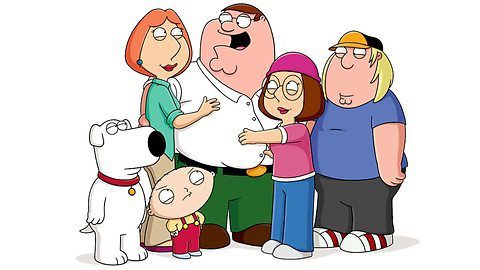 Why this can be bad: Offensiveness for the sake of offensiveness simply isn���t funny. Can it be part of humor? Definitely. But can it be purely humorous on its own? No. Humor isn���t about being as outrageous as possible. It���s about playing on expectations. So if your main character goes around spouting the n-word and laughing about it, that���s not funny. That���s just reminiscent of your racist grandfather. In recent years, Family Guy has gone down this road. It has left offensive humor for being just plain-old awful, and it���
View original 218 more words


March 23, 2015


March 22, 2015
Writing Is A Bad Habit: A Clear and Present (Tense) Danger!
I’ll be frank, folks. ��I’m not a fan at all of the present tense, at least for the purposes of fiction. ��That’s not to say that there can’t be a good piece of literature written in the present tense … it’s certainly possible … but it requires just the right premise to come off correctly and, in my opinion, works best for short stretches or, obviously, appropriately used in dialogue. ��So, with my own personal preferences put out there, let me then bring up the actual topic of this article, which is hopefully wiped clean of my own prejudices.
The point is that, if you do decide to extensively use the present tense in your works, be extremely careful to use it correctly. ��The clear and present danger I see on a regular basis in the books I review among those who use the present tense is a strange and unflinching need to write every clause, every sentence, every verb in the present tense. ��The problem with this should be glaringly obvious: even in a present tense piece, if the narrative speaks of future or past events��relative��to the time frame of the narrative, you still need to use the appropriate tense to have it make sense.
If you have a sentence that says ‘Bob goes to the store like he goes to the store last Saturday’, that is obviously wrong, right? ��Yet, I often see this sort of mistake done repeatedly in present-tense books so it’s a pitfall I feel I should spread the word about to those writers who use present-tense. ��Working in the present is a challenge, I won’t deny it, and its nature of each sentence living in the ‘now’ can make for difficulties in tense agreement. ��This is the most basic manifestation of that challenge and writers need to stay vigilant for it.
There are a variety of other challenges that present themselves for present-tense writers. ��The other one that I would say I have encountered the most is lack of continuity control, especially in a present-tense piece that shifts points of view. ��When you have a narrative that is continually set in the now, there is a certain extra edge of precision that comes up. ��You need to constantly keep in mind the exact order of operation of events so that you can keep up the proper tense usage moment by moment, as well as ensure that, for each sentence, your narrative doesn’t lose track of what has happened when.
Think of it as each action in the narrative as a tick of the clock. ��The next sentence or action is the next tick. ��In a past-tense narrative, you have a bit of ambiguity on your side, as all actions take place in the past. ��If you do make an error in order, it’s less likely to be noticed as you are less likely to make tense mistakes. ��In the present-tense, it’s easy to make a slip up and it’s far easier to be noticed. ��It can even cause an unintended chain-reaction of continuity flaws as you make one tense error, miss the mistake, and take it as the new continuity of action. ��Again, this can happen with all tense of narrative, but it is easier to make that mistake in present-tense narratives with their added complexity.
So, if you want to write your works in the present tense, be extra careful as you work. ��Be ever vigilant for tense agreement and continuity snarls or they will confuse and turn off your readers! ��Until next time, good luck and good writing!


March 20, 2015
Review: Indomitable by J.B. Garner [4/5]
An indie author can never have enough reviews, so I’m always pleased as punch to add another to the mix!
Originally posted on break the system:
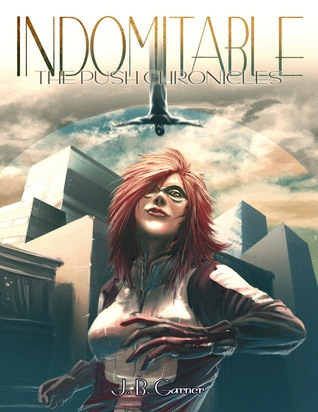 Title:Indomitable (Book 1 of The Push Chronicles)
Author: J.B. Garner
Genre: Superheroes, Science-Fiction
Rating: 4/5
Blurb:
Irene Roman never wanted to be a hero. She was a scientist living an otherwise normal life and that was enough. One fateful evening, though, Irene discovers a betrayal that undermines everything. One event that, in a literal blink of an eye, changes not only her life, but the future of the entire planet.
Now the world is inhabited by people with powers and abilities far above those of mortal men and women. The repercussions of superhuman battles on the Earth are great and terrible as lives are shattered, communities destroyed, and mankind���s destiny is plucked from its grasp. At the center of it all is Irene, who not only is one of two people on the planet who knows the cause of this unbelievable change, but is one of the few people���
View original 589 more words


Author’s Advice Pt. 15
I particularly like this. Writers are a passionate lot, especially about the characters they create. Learning to be able to take a step back is vital!
 Originally posted on The Creative Works of James Harrington:
Learning Separation
So you���ve created the perfect character or characters. They���re everything you wanted them to be. Their personalities are perfect, they���re well-liked��by your audience, and everything is going well. Then as you get deeper and deeper into your writing, you begin to feel like you���re living through their experiences with them. Suddenly, you���re protective of that character and your writing becomes far more cautious.
I���ve had this happen to me and wound up having to go back and rewrite a lot. At first I thought I was the only one, but over time, I���ve seen it a lot in young adult writers, and a lot of fantasy work. It get���s fairly obvious as the story goes on how the author feels over a particular character, either they aren���t allowed to grow as much as they could, or they���re coddled in the story.
Writers, if this is happening to you���
View original 335 more words


March 19, 2015
Into the Action: Don’t Look Too Close, It’s Just A War! a.k.a. Major Conflicts As Background
Hey folks! ��So, the most recent chapter I had to write included a massive action scene, involving a large number of characters in an extended fight scene. ��The big thing is there really was only one or two major characters whose actions and fates were vital to the conclusion of the plot. ��I sat back and took an hour to ponder the best way to go about this and I came to the epiphany that this was much like writing about a character in a war.
I know it sounds crazy but writing about one character’s fate in a war is much like writing about a person in a disaster when the primary conflict is not man vs. nature. ��The disaster is not quite the focus of the situation but at the same time constantly effects the actions of the character. ��In essence, a war or major conflict acts in much the same way: a continual background radiation that permeates the scene, no matter the focus.
So when you write this focused scene, you concentrate on what is in front of the character’s face. ��This giant conflict raging around becomes your background. ��It must be described and it must make its impact on the scene as anything given narrative time must, but the only parts of that background that should eat up your direct writing real estate should be the enemies and conditions in the character’s personal sphere.
In this way, you can have your cake and eat it too. ��You can have the gravitas of the conflict but only deal with the slices of it that you actually need to. ��It prevents the huge battle or big fight from overwhelming the important plot points you need to convey in the scene. ��The important thing is to keep your camera locked on that main character, just don’t be afraid to pull out your focus to get a glimpse of the bigger picture from time to time before focusing back in on what is vital!
Until next time, good luck and good writing!


March 17, 2015
Starving Review: This Shrinking World (The Lizard Queen Book 1) by H. L. Cherryholmes
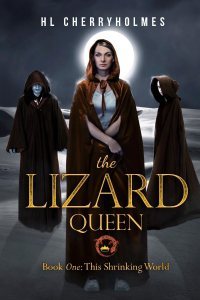
This Shrinking World��(The Lizard Queen��Book 1) by H. L. Cherryholmes (Amazon, Goodreads)
Some literary cooks delight in the art of recipe-making. ��They are filled with the passion for creating entirely new literary worlds, whipping up brand-new recipes, and painstakingly picking out and detailing every ingredient of that new recipe. ��It can turn into a wondrous meal, filled with startling new flavors, or turn into a mushy, half-baked mess with some ingredients over-used and others half-baked. ��This Shrinking World��is the first of nine books in a series dedicated to a new literary world in this fashion. ��Does it come out fully cooked or does it collapse like a poorly-execute souffle?
Before we find out, let us take to hear the Starving Review creed:
I attempt to rate every book from the perspective of a fan of the genre.
I attempt to make every review as spoiler-free as possible.
This Shrinking World��is dense. ��There’s no other word I can use to describe it. ��Let me add, though, that ‘dense’ is not ‘bad’. ��Still, to say anything else would be a lie. ��This book delivers ingredient after ingredient, one after another, all in service of an ambitious world-building recipe. ��The author is striving to create a truly new world, connected to our own but dramatically different and, in many ways, that work pays off. ��There’s a lot of material here and a lot of passion injected to make this new world a living, breathing one.
That’s fantastic, you may be wondering, but a beautifully crafted world does not a fantastic story make. ��It’s just one part of a blended whole that makes for excellent literary dining. ��Again, here, I cannot lie: the world is the best part of the book. ��Again, this isn’t to say the other elements are bad, but they don’t have the strength or the attention laid onto them that the core world-building does. ��Let me explain in depth …
The characters are, for the most part, interesting. ��The main characters are well-developed and intriguing and the author wisely chooses a very relatable viewpoint character, which allows we, the readers, to learn about this new world along with her. ��However, I found two quibbles on the character front. ��One is minor and that is the fact that the book, while written in a third-person limited perspective from our non-native’s point of view, is crafted using the terms of the alien world itself. ��This may not sound like a problem but I found it slightly distracting for the narrative to use terms that the viewpoint character doesn’t even begin to use until about 60% of the way through the book. ��It’s a minor point, but it still stuck in my head.
The second characterization issue dovetails with my largest issue with the plot itself. ��There is no antagonist. ��Yes, technically, there *are* antagonists in that there is an overall threat and opposition to the protagonists. ��However, they have no face, no focal point, at least none that show up in this first book. ��It doesn’t mean there is no conflict either. ��However, without a driving force or a relatable antagonist, there is no counterbalancing force in the narrative to the strongly-developed protagonists. ��In addition, between the lack of tension caused by this absence and the (sometimes) excessive descriptions lavished on the world and its people, the pacing of the plot becomes quite glacial.
Let me clarify this a bit more. ��Unlike many pacing issues that totally kill the plot,��This Shrinking World‘s plot continues to move along, even when it’s reduced to a crawl. ��It’s easy to forget that the characters haven’t really done anything for ten pages when the reader gets wrapped up in the intricacies of this alien world and that makes the proposition easier to forgive but, at the end of the book, it certainly left me feeling like I had eaten a very airy, fluffy creme pie. ��It was tasty, but it really didn’t fill me up very much.
It may sound like I’m being quite critical but let me be clear: ��there is a lot that is done right here. ��The plot is very logical and nothing seems contrived or out of place. ��The characters, as well, are well-developed and consistent. �� I liked all of the protagonists and do look forward to reading more about the alien world the author creates for us. ��However, while I think��This Shrinking World��is a great prologue to a fascinating series, it is weak as a stand-alone volume. ��It feels like the book ends just as the story really gets started and, while that may not seem like an immediate issue when you know there’s more to the series, it can leave your readers feeling empty and, perhaps, even a little cheated, especially if they paid as much for the start of a tale as they did for a full, complete story that ALSO starts a longer narrative.
At the end, I’ll say this:��This Shrinking World��is dense with a fascinating new fantasy world with great character, but light on actual plot. ��A brilliant introduction and an auspicious start of something but that is all that it is at the end of things: a start. ��I look forward to reading more though and, if it develops as I think it might, I may end a future review with the suggestion to the author to combine volumes to make for stronger individual tomes. ��If you don’t want to invest in a long-term series and are looking for a quick read, I would suggest you knock off at least 1 star, possibly 2, from my Final Verdict as I cannot suggest anything less than commitment due to the nature of this book.
FINAL VERDICT: **** (A flavorful start for a new series and a dense new world, but too light of a plot to stand alone!)


Trope of the Week: Dude Looks Like a Lady
Read this and follow the Bottom Line. All that needs to be said.
Originally posted on break the system:
Due to some mishap, a male character ends up accidentally in a dress, with makeup, or in something else that makes them resemble a woman. This is usually viewed as a comedic moment, resulting in the male character becoming embarrassed when he realizes what has happened.
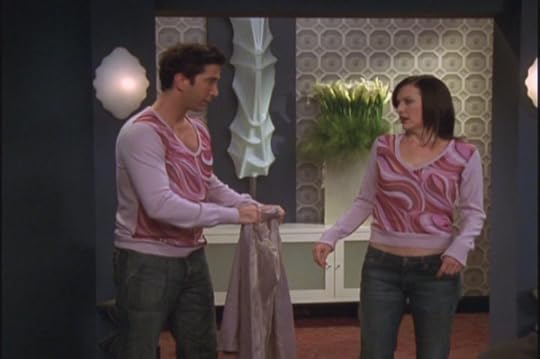 Why This Can Be Bad: This is transphobic. There is no way around it. It preys on the idea that men should dress like men and women should dress like women, and anything that causes a person to look the other gender is laughable. This undermines transpeople���s identities while at the same time mocking them for who they are. It���s like saying, ���If you don���t look woman enough, we���re allowed to laugh at you��� and ���You shouldn���t be dressing that way, anyway, so why shouldn���t we laugh at this?���
How You Can Fix It: Just don���t do it. There is actually no way to���
View original 81 more words