J.B. Garner's Blog, page 44
March 17, 2015
Book News: Another review for Indomitable!
Another nice, insightful review of the first book of��The Push Chronicles,��Indomitable has cropped up!. ��Check it out here!


March 15, 2015
Sneak Peek: The Twelfth Labor Cover Art by Felipe de Barros

Six chapters to go but the cover art is ready to go! ��Once again, my esteemed colleague and friend Felipe de Barros delivers with this stylized piece for the finale to��Three Seconds to Legend,��The Twelfth Labor. ��He really pulled out the stops here, in my opinion, combining the mythic elements in the series with the wrestling theme and the overall drama of the climax of the plot.
The Twelfth Labor��should be out by the end of April.


General News: Jury Summons Go!
Right, so got a jury summons last week or so and that is for Monday. ��I certainly won’t have any updates tomorrow and I won’t know until then how much of this week will be impacted as far as reviews, articles, and writing work. ��I will apologize ahead of time if my civic duty causes any setbacks, especially in this week’s Starving Review.
Expect an update sometime tomorrow when I should have a better idea of what impact my potential jury duty might have.


March 13, 2015
For the Love of Character Development, Don���t Just Make Her Clumsy

This should never have to be explained like this but, as there are still followers of this hackneyed trope, let the walls resound with our voices that say thee nay!
 Originally posted on BOOKSHOPPED:
Why Are So Many Female Characters Clumsy?
I was watching Tangled the other day on the Disney Channel, and they aired an interview with Anna Kendrick, who plays Cinderella in ���Into the Woods.��� ��When Kendrick was asked what made her Cinderella different than the Cinderella-figure we���re all familiar with, she answered that this Cinderella was more approachable and relatable because she was clumsy. This got me to thinking: why do we like making our female characters clumsy? Let���s see, there���s Anna from Frozen, Clary Fray from The Mortal Instruments, Bella from Twilight, Anna Steel from Fifty Shades, Sailor Moon, and, oh, everyone in this video.
View original 439 more words


March 12, 2015
Writing is a Bad Habit: Reviewing and Sharing Are Bad Habits! a.k.a. The Title is Sarcastic!
A quick bit of an article before I dig into Chapter 21 of��The Twelfth Labor but I think this is an important topic to not only talk about, but continually reiterate! ��Let’s talk about one of the most important forms of support an independent author can receive: word-of-mouth support.
Look, the fact of the matter is that there are tens of thousands of indie books out there. ��The e-book market especially is flooded with them. ��The saying goes that ‘everyone has a story in them’ and, now, everyone can get that story published and internationally distributed! ��Every indie book, good or bad, classic-to-be-discovered or affront to literature, is lost in that sea and who’s to say if any will ever be discovered.
That’s where the readers have to step in. ��If you read indie books and find one you truly enjoy, it really should be your duty as a responsible reader to rate it, review it, and share it with others who may be interested in it. ��Many people still attach a prejudice to the very idea of indie books, instantly connecting them to a lower quality than ‘professionally published books’. ��That critical ‘word-of-mouth’ endorsement can break through that prejudice. ��While someone may hold that bias, they will almost always listen to their friends’ opinions over it. ��Once their foot is in the door, the book itself will then carry the day.
The truth is that all the social media wizardry in the world (though not pointless, it has a place in this grassroots network) won’t get you that many readers without something to hold up to show them that there is a reason to take a chance, to leave that indie bias behind.
It comes down to this:
If you read indie books, rate them. ��Review them, even if it’s a simple paragraph. ��Share them.
If you are an indie author, encourage your readers to do number 1 above. ��Don’t just tell them to rate YOUR book. ��Try to encourage them to break the trend of inactivity for everything they read.
If you already do all of the above, well, kick back, crack open a cold drink, and enjoy the boons of responsible action!
Good luck and good writing … and good reading!


March 11, 2015
Starving Review: Death Defiant (Death Defiant Book 1) by Paige Reiring
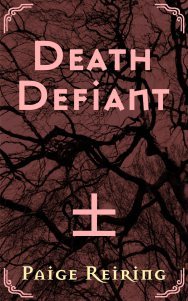
Death Defiant��(Death Defiant��Book 1) by Paige Reiring (Amazon, Goodreads)
Ah yes, the fresh smell of hot-and-ready modern urban fantasy! ��It permeates the air of any bookstore or online shop offering nibbles of monsters in the shadows, strange and fascinating secret histories, and all sorts of delights for all ages of reader. ��The truth is, unfortunately, like any other genre that catches the public’s fancy, that abundance means there is just as many sugar-coated mudpies that leave you choking and sick to the stomach as there are real delicacies out there. ��So where does that leave today’s dish,��Death Defiant?
As always, I can’t answer that question before we put our hands over our hearts to recite the Starving Review pledge:
I attempt to rate every book from the perspective of a fan of the genre.
I attempt to make every review as spoiler-free as possible.
To a readership that has had to struggle through so many bitter dishes in this genre lately, it’s understandable to approach this one cautiously. ��In fact, as with many first books in a series, it is the opening chapters that are the weakest. ��There is a precarious balancing act going on early between the need for reader information, necessary characterization, and an attempt to cling on to several mysteries beyond the exposition. ��This mixing of ingredients comes off a bit harried and uneven, as if the chef feared each element would be left out and kept adding dashes of each in succession. ��Still, as (SPOILERS!) the book is quite good, pointing the start out as the weakest element is far from damning. ��It’s vital to point out though, as an uneven start in a new series (something I speak from with some experience) can lead to diners not wanting to sit through the main course when it really gets good.
Once��Defiant��gets going, though, it’s truly a delightful meal. ��As with many of my favorite recipes, the book is grounded in its complex and likable characters. ��The main protagonists, no matter their origin, are strangely relatable. ��This relatability is something that Ms. Reiring mixes into the majority of the cast and it makes the plot and situations throughout grab you and carry you through the pages.
Speaking of the plot, it is a fairly solid set of situations and mysteries with some quite nice action scenes, something I was pleasantly surprised to bite into. ��Overall, there are only two plot inconsistencies, both of which are still stuck in my teeth, that struck me as important. ��Neither breaks the book by any means but I can’t help but continue to think about them. ��One is quite probably due to be explained later in the series but one (which I don’t think will be much of a spoiler) still sits with me and that’s the strange marginalization of humanity. ��Yes, it’s a book about supernatural creatures and some of that is to be expected. ��The climax, though, would seem to be the place for that to be reversed. ��However, it didn’t hurt��Defiant‘s taste much at all.
I would be remiss in talking about��Defiant‘s virtues and vices if I didn’t talk about the cherry swirl of romance baked into the loaf. ��Many of the current flood of urban fantasy/modern supernatural books feature romance prominently, often to the detriment of the plot. ��Death Defiant, however, bucks that trend. ��This recipe is about the characters and story first and foremost. ��There *is* a romantic subplot. ��It makes complete sense and feels completely genuine, growing over the course of the book instead of slammed into our face with a sledgehammer. ��Beautiful, subtle, and, while I was correct when I first picked up on the signs, I still let out a little whoop of joy when I finally bit down on the scene when it all comes together.
So, really, what else is there to say? ��Death Defiant��is a carefully-baked bit of urban fantasy with equal mixes of drama, levity, magic, and romance that only suffers from a few poorly-mixed ingredients at the start and the end. ��If you love fantasy, contemporary works, drama, or romance, you would be well-served to check out this book! ��I look forward to seeing the next book here on Starving Reviews when it’s finished.
FINAL VERDICT: **** (A well-baked urban fantasy cake with just a few bad nibbles at the start!)


March 10, 2015
Trope of the Week: Married… with Hatred
Trope of the Week time! This one I particularly like.
 Originally posted on break the system:
Three���s Company, Reba, Everybody Loves Raymond ��� there are tons of comedies that have fallen into this trope. The dysfunctional family isn���t just dysfunctional; everybody hates each other, too! For some reason, this keeps occurring in comedic sitcoms, cast with incompetent layabout husbands, nagging wives, rebellious teenagers, and snot-nosed kids. They might occasionally show that they love each other, but for the most part, it���s just hate, hate, hate.
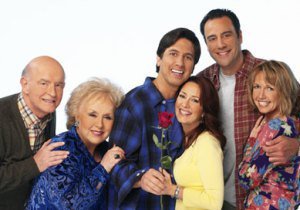 Look at that barely concealed rage and discomfort.
Why this can be bad: I honestly don���t know why people find this funny. Sometimes combined with the funny fat man, this trope capitalizes on dumb humor and hatred as a plot motivator. These families are toxic, unkind, and all-around awful to each other, and if you���ve ever been part of a family like that, you know that there���s nothing funny about it. Emotional abuse often runs rampant in these scenarios, too���
View original 121 more words


March 9, 2015
Plot and Motivation: No Plot Survives First Contact With The Enemy
Hey folks! ��Between writing chapters for my next book (the last book of��Three Seconds to Legend) and getting the next Starving Review ready, I’m behind on actual writing thoughts. ��However, today’s writing inspired me to fire off a quick article for you folks out there. ��Today’s Plot and Motivation deals with all of your hard work on plot and how it can all fall apart in a moment.
I think every writer would offer as advice that preparation and research is vital to writing. ��Just as likely, every writer will also suggest that it is also vital to be ready to shift your plot and preparation when it feels wrong or when the actual writing starts to trend away from the preparation you have already done. ��This is horribly contradictory advice to some and, on the surface, it is. ��We say ‘prepare and plot ahead’ and then say ‘ditch that work at the moment’s notice’. ��What does that actually me?
Experience in writing now makes me realize what this all really means. ��At least to me, what this means is that to write something properly, to write about things we don’t know about, we have to research it to give it truth and to make it understandable and believable. ��Also, for many writers, pre-plotting and figuring out a series of events before starting a longer piece can be very helpful in avoiding continuity and character problems later in the book.
However, with that said, the second bit of advice is critical as well. ��What *that* advice actually means is that it is very possible to start writing a novel and, in the course of the practical application of your outline or pre-plotting or what not, realize that there are errors and flaws in what you had originally planned. ��Was your original plot flawed? ��Maybe but possibly not. ��Things simply could have changed. ��You could have had inspiration that makes some of your old ideas seem out-of-date now. ��A character could seem different when written than your original conception.
When this happens, you are almost always going to be best off following that new inspiration or new idea. ��You have to be unafraid of your instincts and unafraid of being able to change when the needs of the piece demand it. ��The trouble some people have with this is that they are afraid of making changes that lead to a series of second-guesses that unravel their entire concept. ��Overturning even the best ideas they have when those bad ideas hit. ��It’s an understandable fear. ��As with all things though, there is a vital middle ground and here it is the place where you, as a writer, realize when a new flash of inspiration is for the best of your book and when that flash is just a sizzle in the pan.
Until next time, good luck and good writing!


March 6, 2015
General News: Starving Review Submissions Closed Until Next Month!
The doors��are now closed, folks! ��Though there is a small chance I will be accepting some requests next month (April 2015), it’s just as likely the inbox will be shuttered up until May. ��I now am back to around 80 books in my review queue and, dammit, I can only eat so fast!
Keep tuned for more updates as the days roll by and thank you for all of your support!


Starving Review: The Hatter is Mad (The Lillim Callina Chronicles Book 2) by J. A. Cipriano

The Hatter is Mad��(The Lilim Callina Chronicles��Book 2) by J. A. Cipriano (Amazon, Goodreads)
I have to wonder, fellow literary foodies, if you’ve ever had a page-induced sugar rush? ��It’s when you jam your face so full of sugary popcorn reading that you continue to maniacally wolf down more and more of the same book, regardless of any sense of literary health. ��The pages could be good or they could be horrible but they’re so candy-like that you just can’t stop yourself. ��The trick is, at the end of the book, was it good, bad, or just bland in the center? ��Welcome to my struggle with��The Hatter is Mad!
Before we cut to the core of this dilemma, let’s recall the Starving Author creed:
I attempt to rate every book from the perspective of a fan of the genre.
I attempt to make every review as spoiler-free as possible.
Now, long-time readers may recall this isn’t the first book of this series I’ve consumed. ��You can go back for a quick refresher here. ��In fact, much is the same in its follow-up than with the first volume of the tale. ��For the benefit of those of you who don’t want to do your culinary research (shame on you!), Hatter��is a tale of extreme high fantasy mixed with near-contemporary Earth. ��I say ‘near-contemporary’ because there are many points that show it to be altered but those points are mostly ignored. ��This is classic fusion genre work on its surface, a particular combination that makes for a solid framework for any tale.
The truth is, something I’ve realized since reading the first book, there is little connection to what most readers would consider traditional Western fantasy. ��No,��Hatter��gets far more of its recipe from the most over-the-top forms of modern Japanese fantasy found in anime and manga. ��The action is continual and frenetic, often with action scenes segueing into …. more action scenes. ��There’s little time to stop and few transitional periods. ��Just when you think you’ve managed to swallow the last swordfight with energy exploding everywhere, another one is about to be served up on your plate.
Is this bad? ��Maybe. ��Let’s be factual: Mr. Cipriano writes great action sequences. ��Even if they are too much for you as a reader, they are very well-written. ��Also, compared to his first book, this volume does slow down a hair more and provides some very critical exposition that starts to add some sense to the overall world and the characters involved in it.
Plot-wise, it all holds together a bit better (thanks to the critical exposition) than the first book (which wasn’t bad per se). ��There is a stronger sense of purpose and identity and that adds some thickening agents to gel the story together. ��This exposition does, however, present an issue.
A good thirty percent of the book is, essentially, back story. ��It’s not exactly an info dump but then again it kind of is. ��In as non-spoilery of a way to talk about as possible, the main character is granted a series of visions about the past and these fill in much of the vital bits of contextual flavor that muddied the first book for me. ��What we have, then, is no lack of action or activity, but we do have a large swath of the book where the main character (in a first person perspective book) essentially watches what’s going on.
I’m torn about this approach. ��It’s far more creative than a standard info dump and the information is vital. ��In fact, I’d argue that if someone wanted to read this series, it would almost be better to read the second one first for that very reason. ��However, it also leaves a clog in my throat when I tried to swallow it. ��It’s as sugar-coated crazy-action as the rest of the book but there’s a strange blandness at the center from the lack of character agency. ��The protagonist doesn’t even have any obvious choice as to have these visions or not.
Characterization is quite well done. ��Despite the insane power every single character seems to wield, they do have personality, personality that is really allowed to shine now that we see more of their histories and motivations. ��Strangely, the character that suffers a strange derailment early on is the protagonist. ��Her state at the beginning simply didn’t mesh with the epiphany she had reached at the end of the first book and I feel in many ways her character arc in this book was a retread of the first one, just going further along that path. ��It’s not enough of a problem to sour my tastebuds but it did seem a bit off.
Now, one final deliberation point before we make our final assessment: Does��Hatter��go too far over the rainbow? ��The last book, I summarized its core flavor as ‘Mary Sue Jumping The Shark With Micheal Bay Explosions’. ��If it can be believed, the sequel gives the shark cybernetics and frikkin’ laser beams while the world gets leveled with an orbital bombardment. ��I think this matter must be decided by the reader him/herself. ��You’ll see this in my final assessment but the fact either are a fan of this continual one-upmanship of power or you won’t. ��It’s not inherently good or bad.
So, this leaves us with an oddity. ��This is truly one of my first split decisions. ��The Hatter is Mad��is solidly written, filled with insane plots, over-the-top anime power levels, and non-stop action. ��If you love that kind of continual insanity and want to see it crafted by a quality author, this is the book series for you. ��If you need a bit more grounding to your fictional universes or don’t want multi-chapter fight scenes, you might want to give this a second thought. ��Now, as my final ratings are from the perspective of fans of the genre ….
FINAL VERDICT: **** (A second course that lays out an exposition cake with insane action cherries on top!)