J.B. Garner's Blog, page 40
May 27, 2015
Trope of the Week: Millennia-Old, but

Here’s your Trope of the Week and it’s a good one!
 Originally posted on break the system:
When the people talk of this world’s history, they speak of things that happened hundreds and even thousands of years ago, yet apparently their culture and technology have not changed at all.
Why this can be bad: It doesn’t make sense. Cultures evolve. Science evolves. So how has this world not? There are sometimes centuries where a culture or part of the world doesn’t advance, or even regresses (hello, Dark Ages), but these don’t last millennia. Humans are constantly changing, finding new ways to fix old problems, and learning. The idea that a culture would go five centuries without a single significant advancement is unbelievable. This is one of my few criticisms of A Song of Ice and Fire: a written language has existed a thousand years ago because there are actual thousand-year-old books, but yet somehow the known world’s culture never progressed farther than that. Not…
View original 103 more words



May 25, 2015
Monday Musings: To Be Remembered
It’s not uncommon for we mere mortals to worry about our impact on the future. Rare is the person that doesn’t worry about being forgotten when their time is done. In that anxiety, it is easy to forget how many ways we each impact the world, threads we weave through our relationships, and actions we may have dismissed but have instead reaped results we could never fathom.
This past Thursday marks the anniversary of my best friend, second-father-figure, and adopted-brother’s death. Jon was one of those people who fret, who always felt that they didn’t do enough, who knew for certain they would be forgotten. Like most of those people, Jon would be amazed as to the things, the memories, and the impact he has sown.
He saved lives without truly understanding it, saved families with simple indulgence, and found himself a sort of digital immortality in the pen of a writer he inspired to keep working. As with all people, Jon left an indelible mark on the world.
So, for anyone who starts to worry about the legacy they will leave behind, I would say, from my experiences, that in the act of trying to follow your conscience, to be the best person you can be, you will make your mark on the world.
Good reading, good writing, and good luck!


May 23, 2015
General News: Book Links Updates, All Revised Volumes Available!
Just a quick note to let you know that the My Books page has been updated with proper affiliate links *and* that all the revised editions of my books have gone through the process and should be available from all outlets. If you previously bought them, you can get the revised editions at your proper outlet, if it didn’t automatically update on your reading device.
Have a good weekend! Good reading, good writing, and good luck!


May 22, 2015
Starving Review: Prometheus Stumbles (Dreamworld Book 1) by Ed Gosney

Prometheus Stumbles (Dreamworld Book 1) by Ed Gosney (Amazon, Goodreads)
Time to crack the knuckles and dig into the pantry for this week’s Starving Review! For this week’s literary treat, we have a recipe mixed with fantasy, spiritualism, a slightly dystopian future, and blue plastic turtles. Mmm, more cooking from the fusion genre kitchen! Of course, we still need to peel away some layers of this pie to see if the filling is as good as it looks from the outside.
Before we start cutting, let us recite the Starving Review creed:
I attempt to rate every book from the perspective of a fan of the genre
I attempt to make every review as spoiler-free as possible.
Genre fusion is quite the craze these days and for good reason! It lets the chef rise above the limitations of any one genre to strive for that unique recipe, that tantalizing new treat to captivate their readers. In that regard, Stumbles doesn’t stumble. Mr. Gosney does an excellent job weaving in threads from the ever-popular dystopian future with an interesting dose of pure science fiction, otherworldly spirituality, and a healthy dollop of drama.
In its core components, Stumbles over-all is crafted well, though it isn’t quite perfect. Overall, the plot is well laid out and overall keep a solid pace. The characterization for most of the characters is also equally solid, though a few of them seem a bit bare-bones at times. Not enough to ruin the dish, but there are some that I would desire to get a better taste of. Maybe in further volumes!
Speaking of further volumes, that’s perhaps the biggest flaw I can find in an otherwise finely baked piece of cake like this. Though the twist at the end to continue the series isn’t completely fabricated, with some very early foreshadowing as to it, the book’s end tastes, to me, as if the cook switched ingredients at the end. Instead of finishing the story there, it felt like a sudden switch was added to set-up the next volume of the series. I simply felt as if there should have just been an extra chapter or two to better close the plot threads and simply end the tale there. Still, once again, this perceived flaw in my tastebuds doesn’t spoil the dish and I could be proven wrong in the next book!
Oh, while we’re talking about biggest, let me take also a moment to talk about the biggest virtue Stumbles has, incredible dramatic build. Though the story starts quickly and gets moving without skipping a beat, Mr. Gosney does a fantastic job at laying out the truths behind the story bit by bit, slowly raising the stakes and ratcheting up the dramatic tension in each scene. I think perhaps that this incredible build may contribute to my feelings above about the flaws. The tension is built so skillfully and so high that it seems like it would be a hard act to follow.
So, end of the day, Prometheus Stumbles is a well-baked pie of fusion goodness, combining dystopian futures with psionic sci-fi and a big dose of spirituality to form a dynamite whole! It has its stumbles and quirks, but overall it’s a great treat! Certainly take time to try it out!
FINAL VERDICT: **** (Well-baked dystopian sci-fi spiritual pie with just a few little foibles!)


May 20, 2015
Writing Is A Bad Habit: It’s A Kind Of Magic
Many kinds of genre fiction incorporate elements far beyond our normal, everyday reality. Whether it’s advanced technology, magic spells, psionic powers, or superhuman powers, extranormal abilities are a constant in many kinds of fiction. While essential to those genres, these elements can present numerous challenges for a writer. However, there is a way to cut off many of these potential problems before they can even take root: establishing the ground rules at the start.
It’s certainly tempting to leave these sorts of things open-ended. After all, it may seem like it leaves you, the author, with a convenient back-up to unforeseen plot holes. Paint your characters into the back of a valley with an army of monsters bearing down on them? No worries, you don’t need to rethink the scene. Magic can save them! Or the special super-tech device, or the hero’s new super power or … or … well, I’m sure you can see where this is going. It basically can lead to a series of ever-increasingly annoying deus ex machina that will alienate your readers.
The obvious way to avoid that is to bound yourself in, to establish ground rules to how these extranormal or super-futuristic systems work. Even if you never reveal these rules to the readers, keeping those rules in mind will add a sense of order and internal consistency to your tale. In addition, seeing and knowing that these systems are limited will add to the building of dramatic tension, as your readers will know that your protagonists don’t have an unlimited ‘Get Out Of Jail Free’ card in their back pockets.
There’s one potential trip-up to establishing a set of rules for your extranormal systems and that’s when you want to break them. Yes, it’s true that every rule is meant to be broken. Well, at least some people say so! I would say that it’s perfectly fine to break your world’s rules once in a while. There are always loopholes, there are always unknown exceptions, and no one knows everything about everything, right? So it is fine to break your world’s rules from time to time. The problem comes when you do so on a regular basis. Some authors have a habit of doing this and, again, it breaks your readers’ suspension of disbelief or even feel any dramatic tension. If the rules aren’t rules, why should the readers care or pay attention to them? If the rules may not constrain the heroes’ abilities, why should the readers worry about their survival when they could unleash an unknown new power to save their collective rears?
So, to sum up: genre fiction means cool supernatural stuff which needs rules, dude! You can break rules, but only once in a while or else it’s a bummer. *mic drop*
Until next time, friends, good reading, good writing, and good luck!
Oh, and support my writing, my reviews, and my blogging on Patreon! Get free stuff and Patron-only stories! Do it!


May 19, 2015
Trope of the Week: I Hate My Dystopic Job
Another excellent Trope of the Week!
Originally posted on break the system:
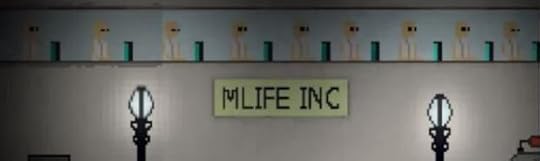 Screencap from the game DYSTOPIXELIA by Kvantpant.
Living in the hell-hole that is a dystopia — no matter if it’s capitalist or communist — means that your characters hates their job. They were forced into this position, but the government has been in control for so long that there’s no means of fighting it, so no one tries. Despite everyone hating their job, however, no one ever tries to rebel against even this small facet of the world. Well, not until your story begins, at least.
Why this can be bad: This doesn’t make a whole lot of sense. While of course the dystopic government doesn’t want its people to rebel and may use fear to control a populace, fear can only go so far. After all, the characters in the dystopia also tend not to have any happiness or leisure outside of work, either, and if they do, then…
View original 236 more words


Book News: A new review for The Tale of the Tape, Indefatigable revised, and OMG PATREON!
There’s a lot on the plate today!
First up, here’s another cool unsolicited review for The Tale of the Tape up on Amazon.com! Check it out here.
Second, I’m proud to announce that the full revised edition of Indefatigable is now published. This means that all of my books have now been cleaned up to the professional standards I have learned over this past year of blood, sweat, and tears. A big thanks to everyone who has been both supportive and critical over this time! Now I can move on to NEW BUSINESS!
Lastly and perhaps most importantly, I have now started a Patreon campaign to help support both my writing and my blogging. There will be some nice rewards for Patrons, such as a Patreon-only serial novel. The main thing that regular readers of this blog will see is that the last Starving Review each month will be Patreon-powered, reviewing a book chosen by Patreon supporters. These Patreon reviews will start in June for sure, but may start this month if there is sufficient patronage by then.
Check out the page and hopefully I can count on your support!
Good reading, good writing, and good luck!


May 18, 2015
Monday Musings: Finding A Spot In The Sun
There are many days where I wonder if all the work I’ve put out in the past two years have been worth the time spent. Writing novels has cost more than time, to be honest. It’s cost money, it’s caused tensions with friends and family, and it hasn’t precisely made my life any easier. Even with the writing done (for the immediate moment), the strain continues, though this time it is struggling to breakthrough to where there is even the slightest chance for someone to take notice of what I have accomplished.
How do you deal with being swallowed up by the darkness of so many other louder voices? How do you continue slugging onward, hoping to be that one-in-a-million writer who actually manages to make a hardscrabble living on the power of your words alone? It would certainly easier to give up on it, to take the satisfaction of the attempt made as reward enough. I doubt anyone would blame me for it.
I can’t say I have answers for those questions. I can see why many writers are crushed under the despair of their situation and simply give up. For some reason, though I keenly feel that darkness rushing in, I can’t help but stubbornly throw another rock at the wall blocking out the sun, hoping to chip a hole through. Every day, I tell myself, maybe this rock rolling around in my hands will be the one to bring the light in.
I’m probably deluding myself, I know. The amount of books I would have to sell each month to make a living is staggering, if you do the math. I think the inevitability is that I will be dragged down into the darkness, just like almost all the others. Deprived of my creative outlet, these best years of my life will fade out into the sepia-toned pictures of nostalgia.
Until then, though, I am going to pitch another rock at the wall.
Next month, I’ll start writing my seventh novel. Later this week, I’m going to finish setting up a Patreon system to hopefully gather more money for that process. Maybe this next one will do it.
Good luck, good reading, good writing, and may you find your spot in the sun.


May 15, 2015
Starving Review: The Fetish Collection by Paul Burns

The Fetish Collection by Paul Burns (Amazon, Goodreads)
So, loyal readers, you’ve seen the Starving Reviewer tackle everything from children’s books to high fantasy. This week, I’m expanding my taste selection to a new set of recipes, which is to say it’s time to take a taste of some erotica. The real taste test for this sort of food comes down to that razor-thin edge between erotica (the story drives the sexual content) and straight-out pornography (the sexual content drives the story). Does The Fetish Collection, a short-story anthology based around sexual fetishes, pass the erotica taste test?
Before we find out, it’s time to bring out the Starving Review creed:
I attempt to rate every book from the perspective of a fan of the genre
I attempt to make every review as spoiler-free as possible.
If we’re going to sample this exotic collection of recipes as erotica, then we obviously have to judge it by a high literary standard. Do these short stories match up in plot, characters, pacing, and all the other things that we hold dear? I am happy to report that, yes, indeed, Mr. Burns manages all of this with aplomb.
The writing here is spot on. As I mentioned above, for erotica to taste right, the plot of each short story in this anthology drives the sexual content of each tale. There are some stories that have no explicit content at all, simply focusing on psychological aspects of the fetishes examined. In fact, I must give proper praise to the chef here for focusing on the anthology’s theme of fetishes and the examination there-of. This theme is included in every recipe and is treated with all the proper respect and introspection the subject is due (NO THIS IS NOT IRONY!).
Pacing, grammar, characterization are all spot on for the short story format. Another polite nod to the reader is the use of the table of contents to both inform the reader of what fetishes each story examines as well as a rating of explicitness, allowing the reader to examine what they wish and also to be properly prepared for the sexual content of each story. In the realm of erotica, this is a good nod to the readership and also utilizes the functionality of e-books, allowing a reader to jump directly to a story from the table of contents as well as having links at the end of each tale to jump back to the ToC. Nicely done!
If these seems to be a short review, it’s because there is little critical to say! Mr. Burns is a talented writer and he takes his subject matter seriously. Each erotic tale is a well-baked literary bite, full of spicy tastes and erotic content. For a fan of proper literary erotica, I cannot recommend The Fetish Collection enough.
FINAL VERDICT: ***** (A box of spicy, tasty erotic treats baked with a skilled literary hand!)


May 13, 2015
Writing Is A Bad Habit: Seeing The World For The First Time
As a writer, your job is a hectic one. Not only do you need to create and characterize your cast, you have to script the plot, provide dramatic tension, and so on. One of the most important duties you face is the creation and description of the world surrounding your characters. After all, every actor needs a stage on which to perform!
There are many theories and styles of writing descriptive text, too many for such a humble article as this. What I want to focus on today is the balance of description with the action of the plot. Essentially, the effect that unbalanced description and exposition can have on the pacing of your story and how to work around this unbalance in a fairly natural way.
We all know what unbalanced description looks like. When every character is introduced with a paragraph of lovingly written description, from top to bottom and every bit of clothing, that is unbalanced. When every intricacy of the environment is laid out, that is unbalanced. When every action is laden with adverbs and adjectives, no matter how minor, that is unbalanced.
I’ve heard it said that the more senses you can engage with the reader, the more memorable your writing becomes. I don’t deny this, but it has to come in a natural balance. Trying to engage too many senses at once or simply giving in to purple prose causes the kind of unbalanced text blocks I talk about above. The detrimental effect this can have on your plot, especially the pacing of it, is obvious. Try swallowing huge chunks of mozzarella cheese between every bite of your pizza. The effect is similar, I promise you!
Worse yet, unbalanced description is not very natural when it comes to how we perceive the real world. When you meet someone for the first time, especially in passing, do you really pay that much attention to them? The human mind loves to generalize and categorize things to deal with the amazing breadth of input our sense provide. On first sight, most things in our environment are categorized and then put into a box, then otherwise ignored until we force ourselves to focus on them.
That’s why unusual things draw our attention so easily. They don’t fit in a predetermined category and our brain sends the signals that we need to focus on this thing closely. Even on things that we focus on, data doesn’t just come in like a computer readout. Different people focus on different aspects of people and objects. Not every detail is immediately apparent or important. On top of that, the situation the observer is in dictates a lot about where his/her focus will be. A character in a dangerous action sequence will have far different priorities and focus than one sitting at a bar, for example.
You can use this naturalistic approach to description and observation to balance out your descriptions. As we naturally pick up details over time as focus and perception change, you can likewise parcel out description over a scene instead of clumping it all up in one paragraph. Consider what a character’s focus might be and use that to describe the most important details at the time, bringing the rest out as they come to the fore.
You can even use this technique to add to your characterization efforts. What a particular character sees first in another can be a clue as to their priorities, background, and knowledge. How a character sees their world can be as insightful as how they interact with it.
So, how do you handle description? Do you have any tips or tricks for writers and readers alike? Discuss below!
Until Friday, good luck, good reading, and good writing!