J.B. Garner's Blog, page 50
December 25, 2014
Happy Holidays and Merry Christmas!
There isn’t too much for me to say this early Christmas day save for the title of this article. I want to thank all of you who read my feverish ravings for your support and wish you (and the rest of the world) all the best!


December 23, 2014
Trope of the Week: Not Like Other Girls

Another excellent Trope of the Week. My takeaway is above all else to write women as people above all else instead of ‘women’ first.
 Originally posted on break the system:
This girl? She likes to stay in on Friday nights, but she has pink hair because it shows her fun side. She’s clumsy, “plain-looking,” and loves reading books. She’s not like those girls who party and sleep around. While they’re talking about the clothes they bought that weekend, she’s discussing philosophy because she’s mysterious and intelligent. Yes, she’s not like other girls at all.
Why this can be bad: I hope you got the scathing sarcasm in the description above. There’s this popular narrative not only in media but in the world at large that women need to try to be “not like other girls.” It works on the assumption that women are, by and large, frivolous, vapid, and unintelligent, and that things women stereotypically like — fashion, parties, makeup — are testaments to those poor character traits. You can hopefully see where the misogyny lies in there.
The…
View original 594 more words


Up, up & away
This I like and I agree with.
 Originally posted on A Narcissist Writes Letters, To Himself:
One thing I love about comic books is when they try to teach kids that you don’t have to have all the crazy superpowers to be a superhero. Like, anyone could be The Human Torch, briefly.


Questioning My Identity as a Feminist
Well said, friend, well saidm
 Originally posted on Chapter TK:
I’m not sure a person must feel offended or discriminated against to join a movement. This seems obvious in that I support LGBT equality. Yet, I’ve been reflecting lately on my identification as a feminist. Maybe it’s that I have seen enough people complain that feminist are little more than scared, bitter, angry women, but I have found myself wondering in what ways I have been targeted or discriminated against for my gender. Where has the world not only wronged my gender, but myself? Do I need to be wronged in order to identify as feminist?

View original 920 more words


December 22, 2014
Starving Review: His Wonderful Curse by Zuhair Mehrali
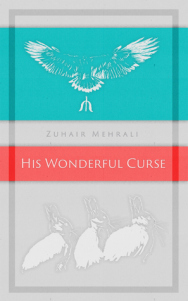
His Wonderful Curse by Zuhair Mehrali (Amazon, Goodreads)
Have you ever sat down to a meal where the chef promised you a meal filled with new flavors and sensations for you to interpret and experience for yourself? Now, imagine if during such a mysterious presentation, as you began to eat, the literary cook explained every dish, every ingredient, in depth as it was brought out. While it shouldn’t diminish the flavors of what you are eating, it still seems to as you become deflated and disinterested because of the lack of mystery. In many ways, that was my experience with His Wonderful Curse.
Before we delve into this particular repast further, we must recite the Starving Review creed:
I attempt to rate every book from the perspective of a fan of the genre.
I attempt to make every review as spoiler-free as possible.
Over the short course of literature that is His Wonderful Curse I mainly found myself wondering exactly the point that Mr. Mehrali was trying to make. Yes, there is a central message that the abrupt ending makes outrageously obvious but what I am driving at is what point there was for we the readers to eat the rest of the cake to get to that particular prize inside. Let me explain a bit more clearly, as for most books that would be an obvious question.
The primary issue I ran into during this short course is the need of Mr. Mehrali to explain every single unusual occurrence, plot point, and character motivation directly from narrator to reader. There is no allowance made for we, the readers, to make any interpretation of character, events, or plot what-so-ever. The ‘wonderful curse’ referenced in the title would make for a fantastic interpretive piece, letting the reader to try to decipher the meaning of each prophetic chapter to divine the course of the following ones. However, we are not allowed to do so because, just as you begin to mull over the flavors of that particular bite, Mr. Mehrali is in your ear, telling you exactly what this meant, what that meant.
What this made me, as a reader, feel like is that the author is, in essence, talking down to me. Obviously, I would make the wrong conclusions or misunderstand the situations, hence to preserve his carefully-crafted tale, the author feels the need to spell it out for me. This is grating and annoying. It leeches the amazing promise the core premise has (and I think that premise is fantastic) and turns it into something of a slog. That just shouldn’t be the case considering the light and breezy writing style in this book.
With all of that said, on a technical level, Curse shows no flaws or bad lumps of gristle to complicate matters. There is a sense of wit throughout most of the writing that would be entertaining if it wasn’t so often spent in unnecessary exposition. The grammar is clear and the sentences themselves, if taken alone, often quite thoughtful. There is a culinary diamond-in-the-rough here but there is a lot of time left in the oven to get this baked evenly.
There is one final major issue I have with this book: the ending. I have no issue with the content of it, it’s all of one actual line, as it puts a capstone on the obvious theme made throughout the book. What frustrated me horribly was the timing. I give nothing away when I say that the bulk of the books content is essentially exposition. The first true inklings of a plot don’t emerge until over 60% of the book is finished but it was finally then that I began to get invested, especially as the earlier expository tendencies started to back off some, allowing questions and mystery to form.
Then it was over. Essentially in mid-plot, with everything resolved in a rather final manner. This is especially worrisome to me because there was the sprouting of a potentially fascinating plot with interesting characters and it could have been let to grow, to play out, even if it had the same final resolution. It was as if the chef decided he wanted that cake out of the oven now, turned up the oven to full blast, then ripped the half-baked concoction out as soon as the outer crust seemed done.
As you reach the end of this review, you may think this reads as being harsh. You may be right. But if you have read my reviews in the past and started to understand my hunger-ravaged thinking, you know that nothing raises my ire more than anything is a fascinating concept that is treated shabbily. Something I wanted to like but had that meal ruined by a flurry of flaws that no reader could ignore. That’s what has happened here yet again. Still, unlike some other times this has happened, Curse remains a workable tale, just one that comes to far less than its full potential. His Wonderful Curse promises fascinating insights and a deep flavor that is blunted by constant unneeded exposition backed by a half-baked plot that is cut off just as it is reaching its potential.
FINAL VERDICT: *** (A promise of flavorful insights dulled down by constant exposition and a barely-cooked conclusion.)


December 19, 2014
Starving Review: The Tsunami That Reshaped America: A Novel by James W. Mercer
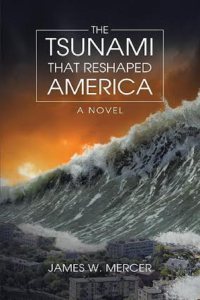
The Tsunami That Reshaped America: A Novel by James W. Mercer (Amazon, Goodreads)
A well-balanced literary diet is important for any lover of literature, even if this Starving Reviewer often has to take whatever he can scrape onto his plate. Today’s literary repast is the opposite of my last one in many ways. Rooted in the near-now with hard science, Tsunami strives to fill the reader’s belly with the spicy tastes of the techno-thriller while grounded down to earth with a focused political situation. Does Mr. Mercer match up to the master chefs of the genre or do things become muddled in the process? Let’s find out!
Before we break out the silverware, let’s recite the Starving Review Rules to Eat By:
I attempt to rate every book from the perspective of a fan of the genre.
I attempt to make every review as spoiler-free as possible.
There are three major core ingredients in Tsunami so taking a bite of each of those is a good starting place to this meal. We have the techno side of things, the thriller, and finally the large amount of American politics mixed into spice it up a bit.
The scientific end of things, the techno side, is executed superbly. The entire situation is rather well-grounded and believable. There is ample explanation (perhaps too much, something we’ll look at later) that never talks down to nor talks over the average reader’s head, leading to an interesting basis for the main plot that doesn’t breach that all-important suspension of disbelief. The few stretches of reality tend to be in association with the action scenes in the book, but those stretches play into the general action tropes associated with the genre and shouldn’t cause any problems with fans at all.
The thriller end of things, well, that’s where some lumps show up in the gravy. At the macro level, the plot is well planned and executed but the problems emerge at the micro-level, at the writing itself. Some scenes are well-paced but there are large sequences where the dramatic tension, the thrill of the thriller, is drained away as Mr. Mercer bogs down the narrative with minutiae. To provide a prime non-spoilery example, during the rush to the climax, the main characters are racing across the globe to stop Horrible Threat A. How long would you expect the travel itself to take, as nothing critical happens during it? A sentence? A paragraph at most? No, Mr. Mercer treats up to three pages of travel specifics, even making mention of the quality of the layover airport’s shopping, before we make it to the scene of the climax. That sort of thing KILLS the momentum of the action dead. It’s never completely lost but the thrills are greatly impacted by this sort of stop-and-start narrative.
Finally, politics. Here, the Starving Reviewer finds himself in a sticky spot, because his own personal politics is similar (at least in broad strokes) with the political narrative of this book. However, even a like-minded thinker has to say that Mr. Mercer’s approach to the politics of the protagonists and the antagonists has all the subtlety of dropping an anvil on the reader’s head. There is very little nuance in the world of Tsunami and political points are thrown at the reader on a regular basis, whether they are directly relevant to the story or not. At times, it really feels like the book becomes more of a political tract than a techno-thriller. It isn’t and that leads to Tsunami being the worse off for it.
When it comes to the writing itself, well, it’s a nice, plain white cake base. It tastes fine but it never thrills. Much like a recipe whipped up by a technically sound but uninspired chef, there’s almost no flaws in the grammar, style, or language, but there’s certainly nothing fascinating or dazzling about it. This isn’t a bad thing, simply a statement of fact. A solid style base is a Good Thing ™.
There is one flaw with the style, one that may be hard to mitigate given the style of the novel, and that is some fairly lengthy expository scenes mixed throughout the book. From explaining the science, the politics, or other important chunks of story, I don’t think these scenes can be precisely removed but I do think they could be diffused a bit better, woven through action sequences or better masked into other segments. Still, this is only a minor issue, as these scenes do move the plot forward, unlike the other filler scenes I mentioned earlier.
So, at the end of the meal, how did this reviewer feel about Tsunami? Ultimately, The Tsunami That Reshaped America is a very utilitarian techno-thriller with few things to make it rise above the pack and few things that really hold it back. The core premise is intriguing but held back by poor pacing that evaporates the dramatic tension. Even with its flaws, someone with a strong left-leaning political bent mind find some fun to be had here but between heavy-handed political views, a lack of thrills for a thriller, and a sudden, poorly executed finale, this Tsunami didn’t do much to reshape my literary landscape.
FINAL VERDICT: ** (Solid core writing erodes under a deadening pace, a weak resolution, and excessive political pandering!)


December 18, 2014
Good is the enemy of great.
Well said and well put!
Originally posted on break the system:
You may have heard this before. It’s a quote from Voltaire, and something my creative writing professor was fond of saying this semester. It is also probably the most motivating thing I’ve ever been told.
I’m a good writer. I know this. However, I am not a great writer, though I know I have the potential to be. My professor pointed this out to me many times over the course of the semester, showing me where my writing was lacking and where it was undoubtedly lazy.
When we know we’re good at something, we will undoubtedly go through a period of stagnation. After all, we’re good, right? And it’s easy to be good. It doesn’t take a whole lot of effort.
I’m here to tell you that Good is a conniving piece of crap keeping you from being Great.
Great takes effort, and Great takes time — more than Good…
View original 178 more words


December 17, 2014
Starving Review: Lifeforce Volume 1: The Lost Path by Govinda Rajah
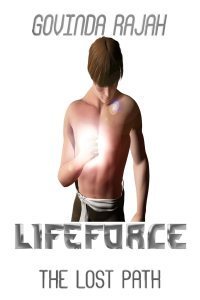
Lifeforce: The Lost Path (Lifeforce Book 1) by Govinda Rajah (Amazon, Goodreads)
All literary cuisine represents a work of passion from their authors. Often this passion leads to excellence in the wordsmithing kitchen or, at the least, allows the reader to overlook most minor oversights for love of the story, both their own and the love cooked into it by the authors themselves. However, sometimes, despite that passion, a literary meal can arrive on the reader’s plate half-cooked and no amount of love can overcome a meal in such a condition. You can never argue that Mr. Rajah is not passionate about his book and its subjects but does that passion lead to success?
Before we answer that question, let’s put our hands over our hearts and recite the Starving Review pledge:
I attempt to rate every book from the perspective of a fan of the genre.
I attempt to make every review as spoiler-free as possible.
The Lost Path represents another of those books I have come across in my short career sampling literary cuisine that are filled with tremendous passion, that I want so desperately to love, but unravels at a core essential level to the point that the food sours in my mouth. With that being said, let’s start off with what ingredients do hit the spot right before we take a look at how things went wrong. Obviously, the first thing right *is* the obvious love and investment the author has in his characters and the world he is writing. The main protagonists, especially, benefit from this and do feel to the reader as fully realized characters, for the most part.
On top of that, Mr. Rajah has, on the macro level, laid the tracks for an interesting world. He combines fringe scientific theories from throughout history with mythology to create an interesting alternate-history Earth with strange powers and exotic beings. As with his main characters, there’s a lot of potential in this world. There are a plethora of flavors hinted at and waiting to bust loose to fill the reader’s palate.
Where things go sour is in the writing, style, and execution of the recipe these characters and this world lay out.
Now I am not a Grammar Nazi. Small typos and occasional grammatical mistakes never make their way into my reviews. However, when taken to continual extremes, it rips the reader straight out of immersion as constant sour notes to their meal and this is certainly the case for The Hidden Path. Mid-paragraph dialogue shifts, sentence fragments, incorrectly used words, and the like run rampant in the text. All of that makes not only for a continual distraction but at times seem to actually fight the reader, making comprehension in spaces difficult.
What really brings the book down is a double-punch I have encountered before on my literary plate and it’s a particularly stomach-wrenching one: a combination of erratic pacing with a wide-ranging third person omniscient point of view. There are stretches where Mr. Rajah shows an excellent command of pacing, where the plot and action flow well, especially in the first act. However, once the main characters enter the second act and their scenery changes drastically (the best I can do with being Spoiler-free), the pace suddenly lurches to a slug’s crawl as we are given over to info-dump after info-dump. To Mr. Rajah’s credit, these info-dumps are integrated into a teacher-student environment but they are still very long and sluggishly paced with little action or characterization interposed between or during segments to liven them up. I am not a strict ‘show not tell’ fanatic (there are points where you need to tell, after all) but this is just far too much at once. It certainly doesn’t help that the big action finale has most of the action stripped away by cutting to another slow-paced series of info dumps during it.
The pacing issue is amplified by the wandering point of view. It is hard to build tension when the reader receives random insights from characters that hammers out their motivations before you even have a chance to doubt them. There are times when this wandering point of view breaks dramatic tension or suddenly slows the pace as we get sudden blurbs of information about characters that are either minor or that info is totally tangential to the current situation. It just breaks down the pace and, on top of that, the overall sense of reader immersion, something critical to build up when dealing with this kind of genre.
Where does this leave Lifeforce sitting in this reviewer’s stomach? To be honest, it wavered between the ‘acceptable but needs work’ and the ‘do not endorse’ category for most of the evening since I finished it. What made up my mind, what caused my gut to shift one way over the other, was the ending. Crafting an ending is as hard as making that initial hook at the start of a book and it’s harder when you need to segue into another book in a series. Unfortunately, The Hidden Path‘s ending is rushed and abrupt. A huge conflict central to the plot of the book and only coming into the limelight in the last act is essentially written off with exposition so that, I can only imagine, the next book can concentrate on the other huge conflict introduced in the final act. After how well-set up that first conflict was, it did it tremendous disservice to watch it evaporate, especially with the big action scene that was aborted in relation to it.
In the end of the day, Lifeforce: The Hidden Path strives to provide a passionate new set of flavors for the sci-fi and martial arts genres and, in some ways, it succeeds but ultimately hamstrings itself with a generally poorly crafted book. Intriguing ideas are held down by poor writing styles, erratic pacing, and ruined dramatic tension. Still, there is a diamond in the rough here and I would love to see Mr. Rajah refine and polish this recipe to become the top-notch meal it could be.
FINAL VERDICT: ** (A recipe bursting with potential held back by a trifecta of rough writing, bad pacing, and a flat finale.)


December 11, 2014
Book News: Some more sneak peeks on the horizon
Just a quick update here!
As you may have seen in earlier topics, I’m going to be out of town for the next two weeks doing holiday things with the family. It’s been twenty years since my last Christmas with them so I’ll be understandably preoccupied. Not to worry, there’s still going to be writing articles, Starving Reviews, and some other treats coming the weeks ahead, just not quite as many as usual.
Speaking of treats, expect some more sneak peeks into Incorruptible and The Twelfth Labor ahead. A peek at a table of contents, book cover art, and some chapter reveals, all of that is coming in the weeks ahead.
If you want to get your hands up to your elbows in the creative process, there’s still time and room for more beta readers. Just check out this post here for more information.
Good luck and good writing!


December 9, 2014
Starving Review: Dust and Sand (The Dust Series Book 1) by Sean P. Wallace
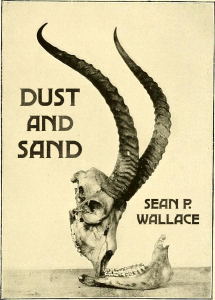
Dust and Sand (The Dust Series Book 1) by Sean P. Wallace (Amazon, Smashwords)
Literary genre fusion is much like culinary cuisine fusion. It can combine to make fantastic new delights, taking in the best concepts of two or more different sources, or it can ruin an otherwise tasty treat, mixing conflicting flavors until the whole thing is a muddled mess. Both of those possibilities wavered in my mind as I cracked open Dust and Sand, a book with fusion concepts from Westerns, horror, and fantasy, and sunk my teeth in. Did Dust and Sand deliver a wonderful new taste sensation or did it go down like its namesake?
Before I answer that question, let us remind ourselves of the Starving Review creed:
I attempt to rate every book from the perspective of a fan of the genre.
I attempt to make every review as spoiler-free as possible.
Let’s start with that answer in broad strokes. Tasty.
Hey! I said broad strokes, right?
The mixing of those three genres actually comes together quite easily in Mr. Wallace’s hands, which may be why I can so nonchalantly say that it was a good meal. The elements are all there, if you think about it. The Western and the fantasy often feature rugged heroes dealing with dangers both environmental and adversarial. The fact that the Wild West *was* untamed and unexplored provides the horror connection through the inherent mystery caused by such a vast untamed space. Horror and fantasy, then, complete the genre triangle with their shared love of supernatural content. Dust and Sand deftly connects those pieces and does so in a solid, imaginative fashion, weaving a well-thought alternate history and deviant United States.
Each ingredient of the genre mix gets its fair share of time in the pot and that leads to a well-blended mix of all three. A lover of any one flavor won’t go lacking and may even develop a taste for the others in the process. Aiding this mix is a solid cast of protagonists. Though the major players are certainly archetypical, they are not cardboard, being fully realized and stepping beyond their core archetypes. All of the main protagonists run a full character arc and the set-up for future tales is handled with aplomb, neither cutting off the first book’s plot prematurely while leaving a clear path to move forward (much like my last review Orconomics).
The action itself is well-paced and well-plotted, vital to an action-heavy piece like this. Also, the overall solid world-building leads to a fairly consistent set of rules in regards to what supernatural elements arise. All of that makes the integration of supernatural things and good old fashioned Western gunslinging come across smoothly and keeps the action moving hot and heavy. For all the action, though, Mr. Wallace isn’t afraid to slow down for important parts to build both character and plot for the next shoot-out, keeping a steady pace for a majority of the book.
Now, you may have noticed that I only mentioned protagonists above. While I did truly enjoy my dinner with Dust and Sand, there were some flaws and the biggest one would be in the antagonists. In big concept terms, the overarching antagonists as they are set up are quite intriguing and will certainly lead to fascinating future adventures. The problem lies in that the specific antagonists for *this* singular volume are fairly uninspired. Most of them are very stock and the one that shows some very intriguing promise doesn’t really follow through with that promise. I wanted to know more about him, about his character, and why he did what he did, but those things are only hinted at before the end of the book with no indication that they will ever be answered. The bad guys are certainly evil enough and threatening enough, but there really only exist as things to thwart and not as full-blown characters so far.
There is one other minor flaw in Dust and Sand, and I do stress this is fairly minor, that comes into play in certain expository sections. For the most part, Mr. Wallace handles the set-up and world-building smoothly, weaving it in with the rest of the story’s events. There are a few parts, however, when one of the characters feels inclined to have a moment of total introspection, info-dumping chunks of history and/or biographical data in a multi-page sequence. Now, these dumps aren’t handled as badly as they could be … while they do disrupt the pacing the couple of times it happens, they do make a degree of sense to have happen at those times, they remain personal remembrances, and still feel ‘in-character’. The fact remains though that, after how well all the other exposition is blended, those few moments stand out sorely.
So, how does Dust and Sand pan out in the end? The book was a delightful treat for me, filling my belly with a tasty blend of cowboys, monsters, and magic that would satisfy a fan of any of those elements. With only a few minor hitches, none of which ruin the book, Mr. Wallace has whipped up an excellent first volume for this book series.
FINAL VERDICT: **** (A delightful blend of Westerns, high fantasy, and horror, with just a few minor bland spots to work through!)