J.B. Garner's Blog, page 52
November 28, 2014
Review Requests Down For The Holidays
As you may have noticed on the Starving Review Requests page, requests for new reviews will be shut down from now until the first of the new year (January 1, 2015). I just need to take an extra responsibility off my shoulders for a month to spend time with my family. On top of that, I will be out of town with said family from December 14th to the 28th.
Blog posts will still happen. Starving Reviews will still be posted regularly though slightly slowed. I’m just not taking any NEW requests till the year’s end.
Thank you and hope y’all had a happy Turkey Day (if you celebrate such on that particular date)!


November 26, 2014
Book News: Beta readers. I need ‘em and you want to be one! Right?
No writer can work in an echo chamber or in a ‘yes’ factory. So, to that end, I have always tried to work with a core of beta readers and editors: people who like the project but are more than willing to tell me ‘that, that is stupid’ or ‘what the heck’ or many more colorful exclamations when I make a major misstep. I am eternally indebted to each and every one of them.
However, several of my top beta readers are out of action for the near future. Major personal obligations or familial emergencies have taken up their time and, despite any objections from them, I have given them my full support to ignore the reading and just take care of business. Their problems and futures are far more important than a few books.
So, long story still kind of long, I have a need for beta readers. I need people who aren’t afraid to be critical to help turn my last two books (for the short term) into masterpieces and, heck, I’m not afraid to publish new editions of old works if the input is sound enough. I need people who want to stick their arms elbow-deep into the creative process and turn good material into the best of end results.
Oh, you get free books! All three books of whichever series you wish to beta read … or both, if you want to read both. Also, obviously, you’ll get the last two books before their release and get every update along the way.
Interested? Send me an e-mail at jbgarner58@gmail.com and let’s talk.


Starving Review: Kill It With Magic (The Lillim Callina Chronicles Book 1) by J. A. Cipriano
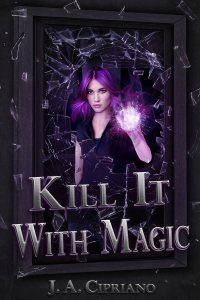
Kill It With Magic by J. A. Cipriano (Amazon)
I know I start many of my thoughts on literary consumptions with a question, so bear with me as I do it again.
Have you ever sat down to a grand literary banquet ready to really stuff your face only to have every course crammed at you before you’ve even had a bite of the last one? New flavors, new foods, soups, salads, puddings, meats, cheeses, each one is thrown down in front of your, begging you to consume. Try as you might to enjoy the whole thing, to savor each tempting bit of flavor, in the end you just wind up tired. You know there’s a lot of good bits on that table, things that you are sure you ate, but as you sit back at the end of that bewildering experience, you’re just …. tired. Welcome to my experience with Kill It With Magic!
Before we dive in further, everyone put your hand over your heart as we recite the Starving Review creed:
I attempt to rate every book from the perspective of a fan of the genre.
I attempt to make every review as spoiler-free as possible.
I’ve sampled many literary meals that moved slowly, like the wobble of a dense pile of Jell-O. That is infuriating certainly but Mr. Cipriano’s book is the first time I have literally felt tired at the end of. If previous books have been paced too slowly, this book was paced in overdrive. New events, new conflicts, and new characters are fired at the reader constantly, with old ones coming back in and out of the plot constantly. Explanations of events or the clues to figure them out are few and far between with some minor points getting deep explanations and some major points being brushed over casually. The whole thing almost explodes apart with plot overload. This is one book I would understand a reader wanting a cheat sheet of all the characters so they could keep track of it.
Now to give credit to the chef, much of the time, the constant action serves as a sort of self-sustaining chemical reaction, fueling the reader to keep going and keep their head up. It helps that the action scenes themselves are well-done, if amazingly over the top. That’s another thing: this meal is so rich, so dripping with creme and chocolate and other things to satisfy, it will give you diabetes at twenty paces. To put it in practical terms, this book is so over the top, the only words I can use to describe it is ‘Mary Sue Jumping The Shark With Michael Bay Explosions Going Off EVERYWHERE!’. This isn’t necessarily a bad thing, as I personally love authors with the guts to go over the top. However, it does contribute to that feeling of exhaustion at the end: You’re overstuffed and nauseous, filled up with rich food and wondering why, oh why did you do that.
All of this extreme action and rapid fire plot detracts mostly from the world-building. There is either a very complex and imaginative alternate Earth hidden somewhere under the explosions and sword fights or the intriguing ravings of a madman. Either one I want to know more about, but there just isn’t room. Major organizations get brief mentions. Heck, MAJOR GODS from mythology show up for a page or two and that’s that. You start off thinking this is a pretty normal ‘supernaturals hiding in the shadows’ sort of modern Earth and then find out (very minor spoilers as this really doesn’t effect the plot) that two major religious cities were nuked into radioactive rubble and that’s just the tip of the open changes to this Earth. You literally find yourself stopping and going …. what? Too many moments force you to stop and wonder what just happened and how does that fit into the bigger picture because, if you don’t stop reading to figure it out, it will be overwhelmed by the next big action sequence that’s about to start.
This insane pacing and the myriad problems it causes aside, there is quite a bit of good here. As I mentioned, Mr. Cipriano does whip up delightful action sequences, fluid and fast-paced. There is a lot of imagination put into the world itself and its own variations on classic supernatural creatures without deviating so far that it makes them unrecognizable. The main character herself is actually quite charming and surprisingly deep. Despite causing your average Mary Sue Litmus Test to be engulfed in burning flames just be being put near this character, her role in the plot defies the tests and she has a good character arc, coming to a final epiphany and seeming to make a decision she dances back and forth across over the entire book. The over the over the over the top elements (that repetition is on purpose) have enough ‘that is so cooooool’ moments that it decently counterbalances the parts where you just shake your head. The core plot itself is wrapped up nicely. In fact, the ending was the best paced part of the entire book. It was as if Mr. Cipriano realized I was about to throw up all over his nice linens from being over-stuffed and so made sure dessert was only a small cup of coffee and a thin slice of cake.
Right, so where does that leave us in the end? Kill It With Magic is an extremely over-the-top, insanely fast-paced, urban fantasy tale with EXTREME ACTION and there are quite a few things it does right. I certainly appreciate the author’s courage to have a main character that should by every right be a Sue yet isn’t one, just because he wrote the story right. However, the pacing goes way too far and the literally non-stop action crowds out too much of the world-building that is necessary for a world SO alternate from modern Earth. There is a lot of potential here though and it’s certainly possible that Mr. Cipriano will manage to slow down the pace and add that vital world-building to the next book in the series. In the end, there was a tremendous variety of strong flavors, but the fact the servers kept shoving it in my mouth like a Three Stooges movie soured what could have been a great literary meal.
FINAL VERDICT: *** (Intriguing, rich flavors but hard to taste when they are all shoved in your mouth at once)


November 25, 2014
And none could say they were surprised: on #Ferguson

All of this here.
 Originally posted on Infinitefreetime.com:
 I keep needing to remind myself of something: I have liked every cop I’ve ever known. The number’s not large, mind you; four, perhaps five people, one of whom’s faces I can remember clearly but whose name has escaped me. At least one is a Facebook friend who may read this. Alternate universe me actually is a police officer; if you Google search my real name most of the results you’ll get are for the other guy since I’m as diligent as I can be about keeping my name off the Web.
But as much as I want to generalize, I keep having to remind myself: I know cops. I am friends, or at least cordial acquaintances, with two of them. They aren’t all bad people, as much as it frequently seems like they are. They’re just embedded in a system that encourages them to be bad people, and if…
View original 1,197 more words


#GamerGate, meet #Ferguson; #Ferguson, meet #GamerGate
The sad proof that two horrible things can indeed morph into a Voltron of injustice and intolerance.
 Originally posted on we hunted the mammoth:

Not a video game
If you grit your teeth and do a search for #GamerGate and #Ferguson together on Twitter, you will find Tweet after Tweet from worried #GamerGaters earnestly imploring their comrades not to make any connections between the two hashtags. Why? Because they know that those who cross the streams are likely to Tweet things like the following.
This what happens when #GamerGaters try to make sense of what is happening in Ferguson.
View original 427 more words


November 24, 2014
Book News: A first review for The Tale of the Tape
Finally got a review for the second book in Three Seconds to Legend, The Tale of the Tape. It’s short and to the point but, hey, we don’t all blog book reviews for a living!
You can check it out here.


Plot and Motivation: The Big Payoff! a.k.a. Resolving Dramatic Tension
Hey folks!
So many reviews so little time, not to mention my own projects (one manuscript writing, one manuscript editing), eats into a man’s time, but never let it be said that it has kept me from my duties as a blogger. Grab a seat, folks, and make sure to sit on the edge of it because today’s Plot and Motivation is going to look at dramatic tension. Oh My God Drama!
So, Starving Author, what is dramatic tension and why should we care? Well, as most in the writing business know, dramatic tension is excitement and anticipation a person feels before the resolution of some action. In the case of writing, substitute ‘reader’ for ‘person’ and ‘some action’ with ‘a plot point’ and you’re good. In other words, it’s that anticipation and feeling built up that keep the reader reading and looking forward to the resolution of a plot point, be it a subplot or the main plot line. In essence, dramatic tension is one of the greatest motivating factors to read a piece of sequential fiction.
There are, in my eyes, two major components to dramatic tension: the Build and the Payoff. The Build is just what it sounds like. It is the rising action, the layers of mystery, the array of antagonists that help build excitement and doubt. It is the true definition of dramatic tension itself and that tension also often leads to the reader investing in the characters of the story as well. If they feel the need to see the end of the plot, it is likely they will feel an attachment to the characters involved in said plot as fellow travelers down the plot river.
The Build isn’t always easy. In fact, it’s a place where many writers make mistakes. Often, these problems can be found not so much in the plot itself but in elements of the plot, like poor characterization, unsympathetic characters, or poor pacing. Think about the words ‘drama’ and ‘tension’ in and of themselves. There have to be real stakes in a drama and tension implies a certain degree of stress. If you don’t provide consequences for the plot, you take the drama out of it. If you don’t communicate the stress and strain on the people in the plotline, you take the tension out of it. Finally, pacing in and of itself can instantly ruin the Build, even if you have the other two main factors covered.
If you’re having problems with the Build, those are the best places to start your introspection:
What are the stakes and consequences of this plot? Are they understandable and are the readers aware of them to be able to feel the drama of the situation?
Is there stress on the characters involved? Do they react appropriately to the stresses involved and the stakes as they are aware of them?
How is the pacing? Are events moving so quickly that the readers never really understand or see the stakes and stress? Are events moving so slowly that the readers simply get bored with the situation, loosing the sense of excitement they need?
I would wager that by looking hard at those three questions, you can clear up the biggest PLOT-related factors to the Build. Characterization, well, that’s another ball of wax.
Now, technically, that’s all there is to dramatic tension, the Build. I, however, believe that the Payoff is important as well, almost as important as the Build itself. Now, what is the Payoff? It’s the satisfactory conclusion of that plot line, a conclusion that fits the characterization, the plot, the situation, and the reality of the world of the story. What happens if you successfully pull off the Build, have your readers hanging on every page, and then conclude a plot line with a completely flat conclusion? Or better yet a conclusion that derails the characterization of the protagonists or antagonists or both or simply breaks the rules you’ve set up in your fictional world?
Riot in the literary streets, that’s what! More importantly, it makes the reader not want to read more of your works. They don’t like to be robbed of that all-so-important Payoff; they want to know their investment and that anticipation was worth the wait. Worse, if this happens in a subplot before the main climax, they might just walk away from the book before they even get a chance to think about anything else you’ve written.
So, like with the Build, here are some questions that might help you start examining a problematic Payoff:
Does the excitement of the Payoff match the Build? If you’ve built up an event, does the scene you have written match all the build up from the rest of the story?
Does the Payoff’s resolution match the characters? Do the actions the characters take in this climax match what they would do in that situation as shown by the rest of the story?
Does the Payoff actually resolve the plot points of the Build? If this is just the first of several Payoffs working towards a final climax (say part of an extended mystery in a series of books), does it at least provide some partial closure or a significant revelation to provide some reader satisfaction to reward them for future reading?
Dramatic tension and the big Payoff at the end are vital aspects to writing engrossing literature. You can have a fascinating plot, great characters, and the perfect writing style, but if you can’t get that proper build of tension and anticipation in your readers, it’s all for naught. They’ll never finish your book to appreciate your hard work.
Questions, comments? I’d love to see them! Until next time, good luck and good writing!


November 22, 2014
Showing vs. Telling
An excellent and concise piece about one of the important elements of good writing. Also, I appreciate Ryan remembered to say that sometimes you DO have to tell. A lot of people forget that when they make this sort of advice.
 Originally posted on A Writer's Path:

If there was one piece of writing advice I disliked most as a new writer, it certainly was “Show, don’t tell.” Initially, I had no idea what it meant. Self-help writing blogs often toss this phrase around without examples. I even had a critique done on my writing once, and the person critiquing said this phrase several times but offered no help on what showing actually meant.
Finally, I stumbled upon a quote that changed my outlook on writing forever.
View original 1,205 more words


Starving Review: The Shadow’s Relic (Book 1) by Sean Brogan
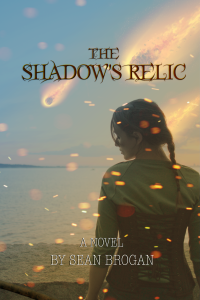
The Shadow’s Relic (Book 1) by Sean Brogan (Amazon)
Look, writing is hard. A literary cook has to have a good recipe, but be ready at a moment’s notice to improvise literary elements to produce just the right flavors to appeal to the reader. In essence, to produce a fine literary repast is both an art and a science, requiring keeping on top of the large picture as well as the ability to micro-manage every story point. If anything goes wrong, it can bring the whole meal down but if it all goes right, the writer creates something truly special. The Shadow’s Relic is an excellent example of this principle of the micro and the macro intermingling to produce brilliance or mediocrity. The question is … which does it produce?
Before we delve deeper, it’s time to recite the Starving Author rules:
I attempt to rate every book from the perspective of a fan of the genre.
I attempt to make every review as spoiler-free as possible.
The Shadow’s Relic has a lot of good ideas. Mr. Brogan has devised an intriguing plot at the macro level and certainly delivers on that … in the first and second acts. The first third of the book, especially, delivers strongly on the promise of an alternate Earth just a step out of tune with our own, set right after the American Revolution in one of the most adventure-packed areas of the world at the time, the Caribbean. Pirates, magic, adventure, and elements of horror and mystery are introduced early, making for a potent combination of flavors promising a fantastic repast to come.
The main two characters are fairly well depicted with fair characterization. I especially like that, for the most part, the female lead is shown to be exceptionally capable on her own. The major issue that crops up is that there is not much of a character arc for either protagonist, which is especially maddening in that there are secrets about each character that are introduced almost immediately and never really expounded on. Understandably, this is the first book of a series and some things must be saved for later installments, but there isn’t so much as a few small crumbs to try to tide over the reader until the next book. No real foreshadowing and only a few small points of information for the readers to think about until the next book.
Unfortunately, despite this strong start and relatively potent characters, the meal starts to sour and it is entirely the fault of execution. The overall story, if broken down to basic terms, remains strong and technically all the right points are hit in the right order. Each point, though, is unpolished. For example, let’s examine the pacing. Mr. Brogan’s style is that of short chapters and lots of them and there is nothing wrong with that. However, a common formula in the third act is ‘crisis is introduced in the protagonist’s path, crisis resolved after one chapter, next crisis comes up, repeat’.
What this leads to is a constant cycle of incidents that are depicted as serious danger simply evaporating after a page or three. After several of these, I found the flavor dulled, a constant assault of spices that somehow didn’t build drama but boredom. Even the dramatic confrontation with the antagonist lasts one chapter, though it was a long chapter. The rapid fire staccato of events that all resolve quickly for the protagonists totally shattered the pacing.
Add on to that a stream of other minor polish issues. There are a lot of anachronistic bits of dialogue. Nut-job, booze cruise, and tiki torches, among other things, just weren’t in the language in the 18th Century and every one of those just chips away at immersion. A main character becomes renowned throughout the entire Caribbean, a collection of islands during a massive disaster and with total lack of mass communication in that time period, within weeks. Certain terms are used continually by everyone with no pause (I strangely don’t think I want to hear the word ‘team’ for some time after this book) which detracts some from the individuality of the characters’ speech patterns. It’s all minor, but it all adds up to detract from the overall work.
Okay, so I’ve said some very good things and some not-so-good things about this historical fantasy meal I’ve just gobbled down. Obviously, you all want to know how to measured up in the end. Well, The Shadow’s Relic has some fantastic core ideas with an interesting plot and some well-imagined protagonists. However, it’s hobbled by horrific pacing in the last act, a lack of clues to the big mysteries of the series, shallow character arcs, and a general lack of polish. All of that said, the final meal isn’t bad, but it isn’t excellent. I would love to see Mr. Brogan go back to the kitchen and give the recipe some revisions, because there is real potential here waiting to come out. Until then, though, all I can really say is that this promising meal is, at best, average.
FINAL VERDICT: *** (A strong first course and imaginative concepts get bogged down by a rushed third act and a general lack of polish.)


November 20, 2014
Book News: Some more reviews for The Push Chronicles
Here’s some more good stuff posted to Goodreads!
Two fresh reviews, one for Indomitable and one for Indefatigable, which you can read here and here.
I encourage you, if you have read the books and like them, it only helps to give them a rating and review. Heck, if you read them and DIDN’T like them, I still encourage you to rate and review. We writers can’t grow and improve without honest criticism.