J.B. Garner's Blog, page 31
September 5, 2015
Critique Partners 101: Everything You Need To Know Before Pairing Up

Having more people for beta reading and critiques is a vital thing.
 Originally posted on A Writer's Path:

Pairing up with a critique partner or group is very useful in strengthening your writing and getting an opinion on your work in progress before it’s published. Here’s the 101 on what you should know before you find and work with a critique partner:
View original 515 more words



September 4, 2015
Starving Review: Otto Black (Through Old Lies and New Intrigue Book 1) by Alexandru Parvu

Otto Black (Through Old Lies and New Intrigue Book 1) by Alexandru Parvu (Amazon, Goodreads)
As any long-time reader knows, I love fantasy. It is a genre that holds a near-infinite variety of flavors on its spice rack, capable of combinations as varied as your imagination. Today’s pick from the pantry is from the ‘Dark Fantasy’ racks, promising blood, deceit, intrigue, and all the sharp flavors that genre entails. Is Otto Black as black as its title suggests or does it simply leave you feeling ‘meh’?
Before we dig deeper, let us recite the Starving Review creed:
I attempt to rate every book from the perspective of a fan of the genre
I attempt to make every review as spoiler-free as possible
Otto Black does indeed live up to its name in terms of the darkness of its themes and tone. The fantasy world it evokes is a dirty, gritty one, filled with racism, religious fanatics, manipulative rulers, hapless peasants, and all manner of foul deed and dirty trick. This is not a book for the young and could be probably have its black icing accented with a bright red ‘TRIGGER WARNING’ scrawl across it. This dark fantasy is evoked in a surprisingly realistic way, fortunately, taking notes from our own dark history, which saves it from diving into the cartoonish.
All that dark, bitter cake should be balanced by some sweetness and that is one of Black‘s flaws. There is no hint of sweetness, no brief moment of delight, no hint of happiness in this dark world. Again, it isn’t unrealistic … the events of the plot and the characters weave together in a way that this much sorrow, deceit, and treachery is just the logical result of things. Still, that unrelenting grimness hammers at you as you read it, leaving the reader in a vague malaise by the time he eats the last bite, the only part which leaves a glimmer of hope for the second book of the series.
As you may have noticed during these past few paragraphs, the plot, as it weaves its dark flavors and spices, is well-written, utterly logical in its bleakness. Each intrigue and betrayal makes perfect sense and interlocks with the rest, while a larger, mostly-unknown conspiracy plays out in the background, only revealed by cryptic hints and foreshadowing as we progress. The pacing, likewise, is overall solid, only suffering from the necessary burden of having to introduce key elements of this fantasy world and its society. If I have any criticism of this setup, it is simply that there are time where I think perhaps the reader is stuffed with more informative bites than is needed at one sitting, leading to a few clunky parts. Still, for a book needing to introduce so much, Mr. Pavru does a fair job overall.
Characterization is something of a mixed bag. The major players, especially the protagonist, are well-fleshed out. If I have a complaint, it is again the almost universal darkness of the cast. Redeeming qualities are few and far between, especially with any character in a position of power, which again, considering the overall moral climate of the world, may not be wholely unrealistic. It still seems a bit much, leaving me coughing from the bitterness of the recipe. Minor characters are fairly weak, but there are far more major characters than in many books, so it is not something often noticed.
There is one more point that made stretches of Black a hard read aside from the unrelenting darkness and that is the very uneven editing. Now, I am not what you would call a strict grammarian. Typos happen and even the best editor can let one slip through, so I almost never mention them. Unfortunately, Otto has more than its fair share of typos and stylistic twitches. It is never enough to make me want to push the meal away, but it certainly forced me at times to sit a moment to chew through the typo gristle to get back to the meat of it all. Most distracting past the typos would be instances of a forest of pronouns without proper agreement with nouns, leading me to trying to untangle a series of statements and actions to regain the flow of a scene.
Overall, Otto Black is an ambitious dark-fantasy cake that is close to greatness, hampered by editing issues and unrelenting bitterness. If it were fully edited, especially if its bout of pronoun issues were cleared up, this would be a solid recommendation if you love dark fantasy (definitely it would add a star). Even in its current state, it’s a worthwhile read for a dark fantasy fan, but be prepared to run into those editing issues. If you want even a hint of brightness in your fantasy, you should stay far away … you won’t find it here.
FINAL VERDICT: *** (An ambitious dark-fantasy cake that is close to greatness, hampered by editing issues and unrelenting bitterness!)


Starving Interview: Alexandru Parvu, Author of Otto Black
Good morning, friends! It’s Friday, which means it is time to welcome a new cook and his/her finest recipes into the dining room for review by our Starving Reviewer. First off, let us have a talk with Alexander Parvu, creator of Otto Black, about his book and his writing method.
Please introduce yourself to my literary foodies!
There is not much to say about me. I’m a 27 year old man, as you know my name is Alexandru Parvu, and most if not all people call me Alex. Other than that I’m just a regular guy with a regular day job.
Do you do any work outside of the writing kitchen? Any non-work interests?
Well I don’t actually make a living from writing and I honestly could not do that if wanted to, since most of what I write comes out of my interaction with people. Considering that work is the place where I interact most with people and manage to observe and learn the most about people’s behavior, writing without a day job would make for very poor writing on my part. It would certainly lead to series of bland and uninteresting charters even though the plots would be the same.
What is your latest dish to be served up? Are there any past pieces of literary cuisine you think we should take a bite out of?
My last and only book to be published so far is Otto Black, and if there is a Dark Fantasy fan out there, I would recommend that you go and pick up the book. Hopefully this will not be my last one. Currently I am working on the sequel to Otto Black. It will be called Field of Crows, and so far I have to say it is turning out well.
What made you want to put on the chef’s hat and whip up your own books?
Believe it or not my favorite types of books are not Fantasy Books. I enjoy reading Fantasy books and not a year goes by without me reading at least two of them. But my favorites are historical books. My interest in writing fantasy came from reading history, from imagining what would have happened if historical events would have taken a different path. A certain book that pushed me towards the writing path was “The Twelve Caesars” by Suetonius. The thing about this book is that it presented the human side, the way people in ancient Rome saw the emperors rather than as a series of actions that took place in history. Ever since reading that book I’ve wanted to read more books on history that are written in that way. Unfortunately those are few and far between. So I guess I decided to make up my own history and present the “historical charters” in the way I would like history books to present them.
Do you have a genre of specialty or do you dabble? Why?
Currently I am concentrating on the Fantasy Genre at least until I finish the Through Old Lies and New Intrigues series which will take at least 4 more years. But if I think I can tell a good story, and I would not write if would not think that, then I would tell that story regardless of what genre it falls into.
Style! Every literary chef aspires to have their own unique one! What do you think sets yours apart and why?
To be honest I never tried to be unique in the way you described. If I do have a unique style then it is by chance. Personally I just tried to tell the story in the way I would like to be told a story, in much the same way I would tell a story if I went out with my friends. I simply state the events as they are, add in all the details that I consider necessary, such as setting, background and so on, and let the person I am telling the story to, make his or her own mind in regards to those events. I generally like for people to form their own opinions rather than to impose my opinion on them.
Even the best of us find inspiration is the dishes of others. Do you have any literary inspirations, heroes, and influences?
As stated above most of my influences come from history rather than Fantasy and a reader with a good knowledge of history would probably spot the parallels. For example a girl at work, just from a short synapsis of my book, managed to figure out that one event in the book is inspired by a certain war in England’s history. I’d rather not say the name of that war since it might be considered a spoiler. However since I also read a lot of Fantasy Books there are some series out there and authors that I admire. My top two favorites are: Mark Lawrence known for the Broken Empire series and a closer to home author is Andrzej Sapkowski the author of The Witcher series. Both of these authors present a very gray world in which you would be hard pressed to point out the “Good Guy”. I like those sort of Fantasy books precisely because it is much the same with history.
Let’s get into the meat and potatoes: the art and craft of writing itself! Do you have a preference of points-of-view when you write?
What I like to do, when I write, is to present the point of view of the main character or of a character, it does not have to be the protagonist. I like to present to the reader how these individuals see the world then I like to contrast that with how the world actually is, usually via the point of view of a character of great authority and power. Thus I tend to reveal the ignorance and sometimes naiveté of those on which the story focuses.
Mind you this is not meant as an insult to any of the characters as in the end we all are ignorant of certain aspects of the world and this is what leads to us making mistakes and this is what leads to us having interesting lives. What I try to do is to let the reader know why a certain character made that mistake.
Sparse or wordy, how do you like your descriptions served up? Are you a Hemmingway man or do you like some saucy adjectives with your nouns?
I don’t have a fixed view on flamboyant descriptions, it is not that they are always bad or always good. It all matters on how they are used. So I try to keep my description on point. For that reason if I’ve put a description in my book you can bet cash money that that description was trying to make the reader aware of an important detail. So to summarize, I think balance is the key, use descriptions when needed and as flamboyant as they are needed. There is such a thing as “Too much of a good thing”.
Picking off the menu of base literary conflicts, what’s your favorite and why?
This is much like question nine. I can’t say I have a favorite, I like what works for the particular sense of circumstances that are presented. But if I had to choose, I’d say that “Man vs Society” is my favorite. Mainly because I think that a in a “Man vs Society” conflict, the “Man” isn’t in reality challenging society but rather another man or woman who is a representative or in most cases a ruler of that society. This, in my opinion, often leads to some very interesting plots.
What do you think is more important to your recipes, plot or characterization? Why?
I’m not a big fan of universal statements in literature. This choice would probably differ from book to book. But for what I write charters are very important because their ambition is what drives the plot. But then again there is probably a reader out there, screaming that it is the plot that has generated the charters, and I would have to agree. This leads eventually to the “Chicken and Egg” dilemma.
We all know that the first taste means the most! What do you do to get that first bite hook with your readers?
I’m just blunt and honest. This is what my book is about this is how it’s written and if you like this, this and that you would probably like my book. There is no point in promising something to a reader just to get him or her to read your book only to find out that what you promised is not in the book. This would just lead to frustration and anger on the side of the reader.
The most important of questions: Cake or pie?
None! I don’t like sweets. I like my dishes with salt and spices.
Finally, if you could give one piece of advice to aspiring literary chefs out there, what would it be?
I’m not exactly a famous author but for what it’s worth my advice would be to write what you like and what you know. Don’t write something just because you think that is what other people like. If you don’t like what you are writing chances are it’s not very good.


September 3, 2015
Starving Interview: Ian Clements, author of Terror Beyond Measure
I’m pleased with how many of my colleagues have taken the plunge back into the kitchen. Today, we welcome Ian Clements, the chef behind Terror Beyond Measure, back to have a chat about his cooking. Let’s take a look at the mind behind Norton Pumblesmythe!
Please introduce yourself to my literary foodies!
The name’s Ian Clements and I’ve been writing since I was sixteen, so that’s, hmm, twenty one years now. I had ambitions of being a serious, literary author, but thankfully realised in the past few years that I’m a fundamentally silly man; and I should embrace that. What that meant for me was sidelining my ponderous sci-fi efforts, and focusing on a character I created as a joke (after one too many Dickens novels) in College. The Norton Pumblesmythe series was born, and is a curious mix of adventure/farce/horror and fantasy (an advarceortasy, if you will), blending stretches of serious, fact based writing with outright lunacy.
Do you do any work outside of the writing kitchen? Any non-work interests?
Right now, not so much, as being ill for the past two years means I’ve become very familiar with my flat. Before that, I was learning Escrima (Filipino martial art), and enjoyed visiting antique markets. Plus the usual suspects of video games and movies, of course. Also, an irrational urge to drive a Segway. I blame Arrested Development for that one.
What is your latest dish to be served up? Are there any past pieces of literary cuisine you think we should take a bite out of?
So far I have just one story out, an introductory piece to the Pumblesmythe series called ‘Terror Beyond Measure.’ I had originally intended for this series to be comprised entirely of short stories, but the more I wrote the more I felt that Pumblesmythe deserved more space to really flourish (with the small market for short stories influencing me in no way, shape, or form. No Sir.) What this means is trying to learn the art of the novella, and that’s held things up, but I think it’s the right decision.
What made you want to put on the chef’s hat and whip up your own books?
I’d written short stories when I was a lot younger, and always responded enthusiastically to them as homework, but only became serious about it as a teenager. I have a very clear memory of enjoying Stephen King’s story “The Mist” and thinking ‘How hard can it be?’ The hilarious naivety of that question still tickles me even now. What followed were some truly dreadful short stories and three aborted novels. The internet wasn’t as ubiquitous back then, with the e-book revolution a long way off, and I thank god for both as I would’ve almost certainly self-published and gone down in flames. For the next few years I showed my work to friends and family, occasionally put it online for unbiased feedback, and read books on the craft (such as Dorothea Brande’s excellent “Becoming a Writer”), as well as continuing to devour books for pleasure. Something about the latter past time had changed, though, and I found myself analysing books for technique as much as enjoying them as stories. A very useful practice and simultaneously an enormous pain, as you feel like everyone else is lost in the movie while you’re noting each time a boom mic bobs into view.
Much of my twenties was spent trying to focus on a reliable career, but I never stopped writing entirely and wasn’t as good at anything else. Only in the past three years, after a diagnosis of Adult ADHD relieved me of an enormous burden by answering why I could never finish anything, did I start completing work.
Do you have a genre of specialty or do you dabble? Why?
For a long time I was exclusively a science-fiction writer, or rather everything I wrote seemed to land in that genre. I like some of those stories, but they were grim and serious efforts that caused way too much stress. It wasn’t until I mentioned the character of Norton Pumblesmythe at a writers’ group, and was encouraged to give him a new story, that I remembered writing could be fun. I don’t begrudge those years of writing in the “wrong” genre, as it was all helping my craft and gave me the experience to turn a 2D pun into a real person. Pumblesmythe was originally free wheeling mayhem, a man of pure ID who could do anything at any time. I kept that energy but added proper research, finding to my delight that the Victorian era was far more demented than anything I could conjure. The result is a sort of comedy/drama adventure, with the drama both placating my serious writer side and providing the reader with an occasional palate cleanser for any facetious antics.
I’ve also adjusted my view that writing comedy would be an easy way out. I no longer obsess over whether my stories will be timeless classics or warrant a Cliff Notes edition, but the pressure is still there. Only now I fear the “Dad in a nightclub” scenario: thinking I’m being cool, funny and hip while the world looks on in horror.
Style! Every literary chef aspires to have their own unique one! What do you think sets yours apart and why?
I’ve always been a verbose writer. Corny though this may sound, I just love words and so I use way too many. I think one of the things that I love about Pumblesmythe is that it inverts that weakness. When you watch shows like Deadwood, even the profanity comes out as poetry, and Victorian times were no different. To reflect that, I’ve really tried to marry funny, exciting situations with a very careful and deliberate description. Just as a good deal of any Pumblesmythe story may be historical fact, and the remainder outright fabrication. I think the Victorian era is still so prominent in our minds because we feel a certain longing for it. Not the low and lazy patriotism of ‘back in the day we ruled half the bloody world’, but the manners, the decorum, the sense of place and momentum which can be, paradoxically, easier and more difficult to feel in a global village.
It’s that sense of ‘yes, but no’ that fascinates me, the energy of putting opposite elements into your story and finding a way to make it work. Norton’s account of Victorian life may be unreliable, but it’s no more unreliable than our rose-tinted spectacles.
I also love similies, I love similies like…well, you get the idea.
Even the best of us find inspiration is the dishes of others. Do you have any literary inspirations, heroes, and influences?
I’ve sometimes felt a little odd that I don’t have a favourite author. Certainly there are authors I really enjoy, but nobody I’ve followed religiously. I love Raymond Chandler’s stories for their sense of rhythm and style; Richard Matheson for making the fantastic feel believable; Antony Beevor for showing that history can be as compelling as fiction. Authors like Joseph Conrad for his sense of place in “The Secret Agent” and his battle with depression. John Milton’s “Paradise Lost”; a work that’s incredibly evocative but also so incredibly dense that I’ve been wading my way through it for over a year! H.P Lovecraft for his ability to describe the vaguest outline of ancient evil and have it stick in your mind like a splinter. Charlie Brooker for being the funniest man I’ve ever read in print.
Let’s get into the meat and potatoes: the art and craft of writing itself! Do you have a preference of points-of-view when you write?
Second person perspective, so it sounds like one of those “Choose your own Adventure” books from the 1990s (weren’t they great?) Only joking. Actually, I write the majority of my stuff in first person perspective, which can be a divisive choice between writers. FPP (let’s abbreviate it for reasons of sanity; yours and mine) gets a bad rap because it’s very often the choice of a beginner. People start writing because they feel they have something to say, some emotion or issue that drives them, so the “I” of FPP is a natural choice when a lot of first works are semi auto-biographical.
Third person perspective is fantastic for broad plots with lots of different characters, but FPP provides an intimacy that I find really compelling. It’s one thing to have a silly character make an outrageous statement, but it’s another to see the mangled thought processes that led to that statement. When FPP is done well it can feel like spending time with an old friend, and even if very little happens you enjoy just hearing their thoughts. Also, given the blend of horror and comedy in the Pumblesmythe series, I’d say that FPP is helpful because it’s an easier transition between the two. I hope so, anyway!
Sparse or wordy, how do you like your descriptions served up? Are you a Hemmingway man or do you like some saucy adjectives with your nouns?
I can waffle with the best of them. Just look at how many adjectives I’ve already used in this Q&A. I try to trim the worst excesses of it in my work, as very often a small, singular detail can be more effective than pages of minute description; but I’ll always be a verbose writer. I do admire the terse style of authors like Hemmingway, as they create a world in the space between the words ( rather than using them as props to keep the ceiling up ), but I delight in the kind of indulgent description that makes you feel like you’ve just eaten a dessert.
Picking off the menu of base literary conflicts, what’s your favorite and why?
Probably the struggle to know who you are. Were you always going to be this person? To what extent do family and friends shape you? On first glimpse, Norton Pumblesmythe seems to have a very clear idea of who he is. His sense of spontaneity and entitlement give you little reason to doubt it. But a growing obsession with an ancestral ghost story shows there may be another side to his anti-social antics – that of someone drawing sparks in the hope of kindling a fire. He wants the world to react, violently if necessary, and impart something that’s hiding beneath the morals and manners of his time. I see it like the awkward kid who uses jokes to fit in, and then that becomes their identity; but the problem they became a comedian to escape was never addressed, and is only getting worse.
Blimey, that sounded a bit heavy, didn’t it? He does lots of funny stuff, too. Honest.
What do you think is more important to your recipes, plot or characterization? Why?
Definitely characterisation. If a character is strong enough then I can drop them into the most threadbare scenario and they create the plot. I’m the kind of writer that works best with a vague outline and a few definite scenes, or even scraps of dialogue, that I use as goalposts to work towards. What happens in the space between those goalposts is largely up to my character, and it’s wonderful to be able to say that. In the past I’ve felt like someone trying to breathe life into a puppet, but working with Norton is more akin to watching an ant farm – I just drop him in and things start happening. Sometimes I do wish I had more of a rigid timetable of events. There’s always that worry that you’re stepping out onto nothing, like the leap of faith sequence from Indiana Jones, but I think every writer suffers from it; even those of us with meticulous outlines.
I can’t remember who it was that said ‘Plot should bend to character, and not vice versa,’ but I’ve always found it to be sound advice. If your character isn’t interesting enough to create a plot, then are they someone we really want to be hearing from?
We all know that the first taste means the most! What do you do to get that first bite hook with your readers?
I usually begin in media res, or “In the midst of things.” This technique also has a bad rap as it’s a beginner’s favourite, and is easy to misuse. Too many think it means beginning with an explosion, or a Mexican standoff, but an amusing conversation is just as effective in hooking the reader’s attention. Pumblesmythe’s dynamism means I do sometimes start with a ridiculous and over the top situation, but try to avoid using them too often. It can create a sense of momentum that’s near impossible to sustain. Look at how many popular thrillers have tiny chapters, ending on perpetual cliffhangers, with revelations popping up like daisies on a lawn.
As I mentioned before, about FPP being like listening to an old friend, I try to follow that reasoning in my first words to the reader. If you’re sitting with a friend, sharing an easy silence, then they’re likely to break it with an amusing comment or interesting/odd observation. A segment that intrigues just enough. Think about when you can only hear stray words in a conversation, like a couple arguing in the flat above, and it drives you crazy because you don’t quite have enough to be able to dismiss it as routine or unimportant. Your logical brain knows it’s just a spat, but logic is no good because you’re already invested, you’re hooked.
The most important of questions: Cake or pie?
I like to think I’m a pie man, stocking my shelves with beard stroking and cerebral tomes, but the truth is I’m just as partial to cake. It’s certainly easy to eat too much cake, read too many fluffy page-turners, but our lives would be much poorer without them. But you know, when you have a steak and ale pie, it’s important to know that…I really have no idea where I’m going with this.
Finally, if you could give one piece of advice to aspiring literary chefs out there, what would it be?
Do not ever think you are above criticism. Actively seek it out whenever possible. There is no “ultimate level” that a writer can reach upon which they are free to disregard ideas for change and improvement. I know criticism is hard at first, especially if you’re just starting out because there’s so damn much of it, but don’t respond emotionally. You will always have that immediate, affronted sense of ‘Who the hell do you think you are?’ on reading a critique, so you need to step away and come back to it once your knee-jerk egotism has abated. In time you’ll be able to tell good advice from bad, and what is more of a reader’s personal preference, but thinking you can do all that from the off will kill your growth as a writer.
I used to bemoan only receiving form rejections from publications, and so was astonished when I learned that most editors don’t say more because their reward for doing so is often a stream of abuse. Imagine that for a second. You’re desperate, starving, for unbiased and professional feedback, but you are also very much in the minority. Nobody wants the pain of criticism, and most aspiring writers don’t see why they should endure it. Even a great deal of famous authors, once they rise above aggressive editors and gather a cushion of forgiving fans, lose the edge that made them great. Best Star Wars film? Empire Strikes Back. Why? George Lucas brought his old USC teacher, Irvin Kershner, on board. He was assisted by a man he respected, and in turn Kershner wasn’t intimidated by Lucas’ success; he kept his worst excesses under control. Finding that kind of critique partner, who never lets you slide, even if they love your work, is so essential for a writer.
Oh, and you’re probably doing this one already, but read. Read as much as you can, and don’t be afraid to dip into different genres. An author who doesn’t read is like a chef who doesn’t eat. You may never want to write a romance, but that doesn’t mean you shouldn’t check out how they’re written.


September 2, 2015
Writing Is A Bad Habit: Compatible Formats a.k.a. Style, Formatting, and You
Writing is like any other art form in that it has its accepted styles, its rules of composition, and, among all those rules, the emphasis to push beyond those boundaries to stake a claim on a unique style all one’s own. This can leave an author in a difficult situation, tossed between the stylistic conventions of old, codified for a reason, and the desire to be revolutionary in his/her writing. So what do you do? Is there a point where your press against the boundaries of style and formatting cease being unique and start being simply obfuscating?
There are no hard and fast rules when it comes to stretching the conventions of style and formatting. After all, there are critically-acclaimed volumes that throw almost all of those conventions out of the window. Such stylistic choices as stream-of-consciousness have gone so far beyond the realm of normal styles to essentially create new creative schools in the writing world. However, it is important to note that it is just as easy to run such a story completely off the rails as to ride them to critical success. Why is that?
Well, as I said above, the styles and formatting guidelines that exist exist for a reason. In communication and language, these rules are there to encourage clear communication of thoughts and ideas. The further you move beyond those guidelines, the more you cloud the true meaning of your words. It might fit the themes of your book to introduce some of this confusion, but it is important to measure it in the proper dollops.
To me, the guide posts, the line that I don’t want to venture beyond, is the point where the third-person voice, the voice of the narrator/God if you will, begins to lie to the reader. Use whatever extreme stylistic tools you like when the lens is focused through the eye of a character, essentially using the style and format to add to the unreliable narrator technique, but when it comes to that direct communication between writer and reader, trust must be complete.
Another thing to keep in mind is the ease of the read. Is the book you are creating still able to be read fairly easily by your intended audience? Yes, it is not an irrevocable sin to create a work that requires time and study to comprehend. However, keep in mind every ounce of effort required to crack the literary code you have created is an ounce of the reader’s patience you burn away. Wear too hard on the reader’s patience and you run the risk of having the reader decide to put your book down, deciding the fun of the story doesn’t hold up against the effort required to read it.
So be experimental! Try out new styles and new techniques! However, make sure you expose these new things to a variety of beta readers and an editor or two. They can help you find the fine line between innovation and obfuscation!


Trope of the Week: Depraved Bisexual
Another excellent Trope of the Week dealing with a touchy subject.
 Originally posted on break the system:
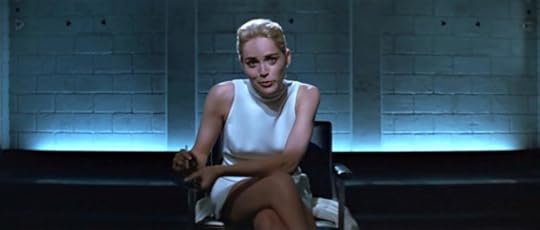
This person is insane and probably murderous — and they’re bisexual, the icing on the depravity cake! TVTropes.org points out
This is a very different phenomenon from the Psycho Lesbian trope. Whereas the Psycho Lesbian is usually violent or deranged out of unrequited love and/or jealousy, the typical Depraved Bisexual is bi because, well, why not? Their willingness to sleep with everyone they can is just one facet of their being Ax-Crazy.
And if they’re not murderous, then they’re still manipulative, mean, and vindictive.
Why this can be bad: This is essentially always bad, mostly because of what TVTropes.org says. Many writers make their depraved killers bisexual only because they want to show just how “bad” their villain is, and all that does is present bisexuality as something hypersexual and evil. Bisexuals already face their own brand of oppression, and they definitely don’t need you to add more…
View original 205 more words


August 31, 2015
New Cover, New Price!
An excellent book I have reviewed before, this is definitely worth getting at this discount.
Originally posted on break the system:
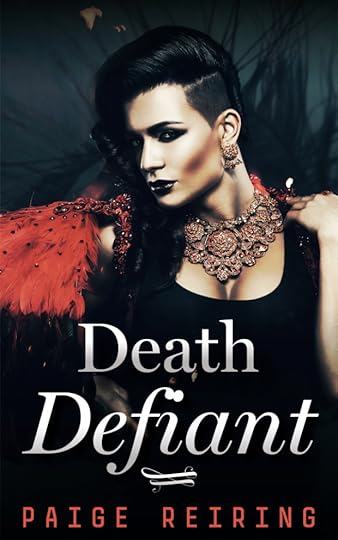
SALE!
To celebrate my new book cover for Death Defiant, I am hosting a Kindle Countdown Deal! Starting right now, you can get the Kindle version for just $0.99! It’ll only that cheap until September 2nd at 8AM (PST) when it will go up to $1.99, so get it soon!


Monday Musings: Sometimes It’s Right, Sometimes It’s Wrong a.k.a. The Importance of Context
Today’s Musings are going to hopefully be short and sweet. Of course, by stint of that statement, I’m probably going to ramble. Either way, today I found myself thinking about how much the context of a situation matters. In many cases, the rightness or wrongness of an action can be determined solely by the context and other situational facts surrounding said action.
That isn’t to say that there aren’t absolutes out there. I truly believe some things are wrong at their core. There may be mitigating circumstances to interject some white into the black, but never enough to completely wash it away. However, these things are surprisingly rare when it comes to the day-to-day existence of the average person. Most moral issues we run into over our normal lives find their resolution in the context.
What could be normally considered an immoral act might be so colored by other factors, other reasons, that at this moment it is a good and just thing. Likewise, a morally pure act might be so sullied by ulterior motives and cruel tactics that it twists the entire thing into something twisted. Yes, sometimes the path to Hell IS paved with good intentions … but sometimes those good intentions are enough to lead us back up to Heaven.
On a related subject are those things that are something of a muddle. Good and bad contexts, intentions, actions, and results turn an event into a moral grey area. In situations like this, one simply has to go with their conscience in their final judgement, but I think it’s important that, no matter what you decide to do in such a case, one never loses sight of the good or the bad of the situation.
Remember, most things in life are neither entirely good or entirely evil. Recognizing the streaks of grey is one way to help you stay centered and to stay away from letting yourself fall into the trap of inflexible, extremist thought and feeling. The best mind is a flexible one!


August 28, 2015
Starving Review: Heart of Earth (The Changing Hearts of Ixdahan Daherek Book 1) by Mark Laporta

Heart of Earth (The Changing Hearts of Ixdahan Daherek Book 1) by Mark Laporta (Amazon, Goodreads)
One of my long-time favorite menu items, science fiction will never get old for me. As I started my sci-fi binge at a young age, it was heartening to see more young-adult focused science fiction still being put together in literary kitchens across the world. Of course, the proof is literally in the pudding (sweet, sweet pudding) so let’s pick apart the menu for this YA sci-fi meal, Heart of Earth!
Before we get to the main course, let us never forget the Starving Review rules:
I attempt to rate every book from the perspective of a fan of the genre
I attempt to make every review as spoiler-free as possible
As nice as it would be to be able to peel back my memories to the start of the book and take it by the numbers, that is not to be in this case. Let me be upfront, my literary foodies, my tastebuds are of two very different minds in regards to this morsel and my review will reflect that. I just didn’t want you lovely people to think the Starving Reviewer had descended into hunger-induced madness as I bounced back between praise and criticism. As I strive to be positive, let’s start with some praise.
Many would argue that the core of any literary meal is the cast of characters and Mr. Laporta seems to take to that well … at least in terms of his protagonists. Certainly what I would consider the core three characters are well-thought out and quite relatable, even the alien one. Unfortunately, the antagonists, such as they are, don’t benefit from the same blend of herbs and spices, being particularly one-flavor creatures. Darnit, I told you this might seem disjointed … already bouncing to criticism!
To try to stay positive for a bit longer, the chef of Heart serves up a solid core writing experience and brings a certain wry humor to the entire experience. Solid stylistically, Heart went down smooth, remaining an easy read throughout. Also, Heart‘s menu certainly strives to be imaginative and for the most part succeeds. The sci-fi elements certainly have the marks of creativity on them, especially in its willingness to make aliens more than recolored humans, something that definitely deserves a nod of appreciation for having a new flavor!
Here’s where my evil twin has to take over though, because there are some problems in the menu. You have already noted where the main antagonists get the short end of the characterization stick above, and this weakness extends to the conflict and plot themselves. With only the most generic of motivations, it takes a certain something out of the drama of the plot, something that is already weakened by a scattered narrative that rarely connects all the dots to make it work.
It’s like baking a pie with an incomplete crust. You can cut a piece but have half the filling pour out where there isn’t the form of the crust to give it substance. There are multiple times where events happen, even critical ones involving the climax, where the reader isn’t told or shown why something happened or how. It just … happens. Some of the rationale behind these vital events are lightly implied, but as they sometimes involve the sci-fi elements that are never fully codified, drawing the right implication isn’t easy and often confusing. Several times I had to backtrack chapters to try to piece together the narrative, breaking the flow of the book and straining my suspension of disbelief.
That’s really the rub of things. There are things I loved about Heart of Earth and things that wanted me demand a refund for my meal. As measure of pure mathematical sums, I want to give this an average rating, but I also must put these provisos on it: This is a good read if you prioritize characters highly over plot. Likewise, if you consider the plot more important, avoid this as it will madden you. If you lie somewhere in between, you might want to consider giving this a read, but simply be aware that you are walking into a mixed bag of nuts.
FINAL VERDICT: *** (Flavorful characters and imaginative sci-fi with a half-baked plot!)


Starving Interview: Mark Laporta, Author of Heart of Earth
Friday means Starving Review, which also means it’s time to step into the kitchen with the chef of today’s main course, Heart of Earth, which so happens to be Mark Laporta. Let’s find out what makes our latest author tick by going over our usual menu of questions!
Please introduce yourself to my literary foodies!
I’m a writer, composer and science-enthusiast, with a love of languages, art, dance, film and theater.
Do you do any work outside of the writing kitchen? Any non-work interests?
When I’m not lightly toasting a page of prose I work in advertising and spend time with my family. In the margins, I write music.
What is your latest dish to be served up? Are there any past pieces of literary cuisine you think we should take a bite out of?
I’ve recently rounded off my trilogy The Changing Hearts of Ixdahan Daherek. Book 1, Heart of Earth came out last year. Book 2, Heart of Mystery will launch in September, and I expect to bring out Book 3, Heart of Time in the first quarter of 2016.
What made you want to put on the chef’s hat and whip up your own books?
No whipping! Not in my kitchen. Books are to be coaxed. You have to win them over to being written. I write because I have things to say that can’t be expressed any other way. And I must say them!
Do you have a genre of specialty or do you dabble? Why?
I specialize in Young Adult sci-fi. But my books are about characters and what drives them to new realms of self-awareness.
Style! Every literary chef aspires to have their own unique one! What do you think sets yours apart and why?
I won’t go so far as to say I think the word “style” is meaningless, but don’t tempt me. I do have goals, however. I write character-driven stories that share my observations about society and the crisis of sentience with a light dusting of humor.
Even the best of us find inspiration is the dishes of others. Do you have any literary inspirations, heroes, and influences?
Isaac Asimov’s fiction is a major influence. His stories are always great fun and full of insight about the rocky relationship between scientific theory and human culture. I’m also a big fan of Alastair Reynolds, Kim Stanley Robinson and Douglas Adams. Outside of sci-fi, there are, of course, Shakespeare, Anton Chekov, Gustav Flaubert, and Balzac among many others, including the humor of David Sedaris and the popular neuroscience of Oliver Sachs.
Let’s get into the meat and potatoes: the art and craft of writing itself! Do you have a preference of points-of-view when you write?
My personal preference is for third-person narrative. I find first-person too confining, but I do like to experiment with second person short stories. My third-person is a mix, however, of exterior and interior views of what my characters experience. I’m as interested in what they feel and think as I am in what they do, and seek stories that are a direct outgrowth of their feelings, personalities, strengths and flaws.
Sparse or wordy, how do you like your descriptions served up? Are you a Hemmingway man or do you like some saucy adjectives with your nouns?
I don’t think this is something you can have a policy about. As I see it, the best description is the one that moves the story forward. If I need sparse, I go sparse. If I need details and atmosphere I go there. To me, “writing like Hemingway” or like anyone other than myself is a waste of time. I believe that if various authors move you, their influence will be felt on your work. But if you “write like” someone else, you’re spinning out words like a machine. Why be a Hemingway knock-off when you can be the real you?
Picking off the menu of base literary conflicts, what’s your favorite and why?
I have no interest in literary cat fights. There’s no way to “win” literature, as if it were a game show. “Poignant metaphors for 2000, Alex” ? I don’t think so.
What do you think is more important to your recipes, plot or characterization? Why?
I don’t know of a definition of plot that isn’t intimately bound up with characterization. I work to make the storyline and characters interact dynamically. For me, what happens in a story is the end state of a fluid process that grows out of the characters’ desires.
We all know that the first taste means the most! What do you do to get that first bite hook with your readers?
There’s no one thing that “grabs readers.” But I pay attention to the way screen writers tend to start each scene as far into its storyline as possible. They leave out set-ups and frames and tiny details wherever possible to be more immersive. What I look for is the defining moment that sets the story in motion. If I can knock over the first domino, the rest will follow.
The most important of questions: Cake or pie?
Pie. Ever and eternally pie.
Finally, if you could give one piece of advice to aspiring literary chefs out there, what would it be?
Don’t waste any more time aspiring. Just write. Write until you have the confidence of your own voice and the facility to bring it out on paper. Write until the words disappear and you can feel the wind rustling through your character’s hair, taste their food, drink their wine and kiss their lovers. When you’ve written that, you’ll know—and know you’ve written well.