J.B. Garner's Blog, page 33
August 19, 2015
Writing Is A Bad Habit: The Eight Deadly Words a.k.a. Creating Character Investment
“I don’t care what happens to these people.”
These eight deadly words comprise the sentence you never want your readers to utter. It is the death knell of creative character-driven media of all kinds. If the readers don’t care about your characters, they won’t care about your narrative either. It’s important to note that ‘caring’ about characters does not always equate to ‘liking’ them. A reader might like a character, but not be invested in them and, to flip it around, a reader might hate a character but be totally entranced by their actions.
So how do we combat this and avoid those eight words? The first and most obvious step is character relatability. Again, a relatable character doesn’t have to be liked or disliked, just understandable. We’ve talked about this quite a bit, but it never hurts to reiterate this. Characters need to have motivations, thoughts, and feelings that make sense. If these things make sense to your audience, they will relate to the characters and, likely, become invested in them. It’s the classic ‘we like what we understand’ thought in action.
There are other things we should do to create this needed investment. Another way to create that ‘caring’ from the reader is to ensure that there is sufficient risk in the plot line, that there are stakes to the conflicts involved. Not just stakes, but stakes that fit the conflict involved. If there is no risk or stakes or drama connecting the plot and the characters, there’s no compelling reason for the reader to become invested in the plot, no matter how they feel about the characters. Yes, you can have a fully character-driven scene or story, with no real tension from the plot, but that won’t sustain a full-length novel very well.
I think the ‘appropriate stakes to the conflict’ part is something that is often a stumbling block. Not that you can’t sometimes overblow the stakes, hinging lives on a stand-up comedy routine as an example, but it’s usually best to keep them under wraps. You especially can’t understate the stakes. The stakes to a gunfight, for example, needs to, at the least, be the lives of the protagonists, if not more, otherwise there is no tension and no investment. Risk, sacrifice, and threat are all vital to creating that investment we all desire, be it physical, emotional, spiritual, or social.
What techniques and elements do you use to ensure that your readers care? If you’re just a reader, what do you look for in the characters that you do invest it? Let me know in the comments below!
Until next time, good reading, good writing, and good luck!



August 18, 2015
TROPE OF THE WEEK: Ruthless Leader

Some excellent points in this week’s Trope of the Week to keep your Big Bad fresh.
 Originally posted on break the system:
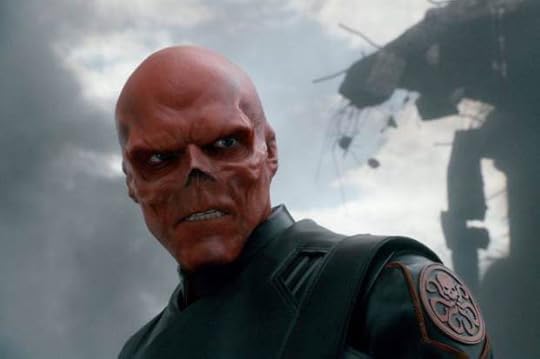
This big bad rules his flock with an iron fist. Anyone who dares step out of line serves to become an example for others on how not to behave. While sometimes stepping out of line can mean that you failed your mission horribly, the boss might also decide to kill you just because you looked at him the wrong way. This villain can rule a company, a country, a religion — as long as he’s got power and minions.
Why this can be bad: There is some truth in fiction here: from rulers like Josef Stalin and Henry VIII to people like James Cameron and Steve Jobs. While some are obviously more reprehensible than others, all of them found ways to abuse their lackeys. For some, it worked; for others, it didn’t. When it comes to fiction, however, leaders can sometimes be out of control in their tempers and…
View original 229 more words


August 17, 2015
Kickstarter News: A Star-Reckoner’s Lot … a Kickstarter to look at!
I made my second start at writing thanks to Kickstarter. It gave me the funds to move forward, to get my books written, and pushed me forward to be seen and picked up by my publisher. So when I was approached the other day by another author looking to do the same, I took the time to read through his writing to see if I should help.
Darrell Drake’s been doing some mighty fine cooking. I’ve read the first few chapters of his current draft and I want to read it all. I’m going to hold off … but that’s only because I want to save it for the final, clean, fully revised book. I’ve put some of my very few munnies down on the barrel for this project and I suggest you take a look at it yourself.
Here’s the link:
https://www.kickstarter.com/projects/darrelldrake/a-star-reckoners-lot


Monday Musings: Pay It Forward! a.k.a. Helping Your Favorite/Fellow Author
Today’s musings aren’t anything new. You see, this weekend past I was approached by a fellow author trying to get his book put together. He needs funding and has taken to the popular crowd-funding approach to do so. He wanted me to take a look at his book and then, if I liked it, to help him signal boost and help him out.
Now, if any of you ever look at my Twitter feed, you know that I’m not a fan of the mass retweeters out there, who fling constant advertisements about their books and retweeting other ads. There’s advertisement and promotion … then there’s that continual yelling in your ear. If I don’t like that, how is this sort of thing involving Kickstarter any different?
It’s the simple difference between a simple request done privately and massive unwanting annoyance. It’s also the difference between being given the choice, fully informed, to do what I want instead of constantly being tagged to ‘RT PLZ’ or the like. Helping to signal boost indie authors is one of the primary reasons I started my book reviews to begin with, after all, so backing this kind of approach is my bag of tea.
What this comes down to is that there are right and wrong ways to support your favorite authors. Should you tell your friends about them? Sure! Should you review and rate their books? Of course! But you don’t do them any favors by constantly signal-blasting about them. It’s like any other kind of nagging; it gets old fast. Instead of making your friends read this favorite author of yours, you will likely make them avoid it like the plague out of sheer annoyance!
Until next time, good reading, good writing, and good luck!


August 14, 2015
Starving Review: Tainted Energy (Energy Series Book 1) by Lynn Vroman

Tainted Energy (Energy Series Book 1) by Lynn Vroman (Amazon, Goodreads)
Ah paranormal romance! It’s a meal plan that should allow for a wide range of cuisines, story combinations that can plumb the darkest depths and brightest lights of the imagination. However, like many popular genres, so many chefs fall into tried-and-true recipes, digging a creative rut in the road so deep that it seems inescapable. Does Tainted Energy, with its promise of reincarnation and alien worlds, break out of the rut?
Before we find out, let’s remind ourselves of the Starving Review bylines, passed down to us from the Starving Reviews LLC corporate tower:
I attempt to rate every book from the perspective of a fan of the genre
I attempt to make every review as spoiler-free as possible.
I’m going to be upfront on this one. The answer to that initial question is a solid ‘maaaaaaybe?’. Before you throw discarded cupcake wrappers at me in protest, let me explain!
There are certainly some new and creative flavors Ms. Vroman introduces into the paranormal romance pot. Indeed, there are some interesting concepts involving evolution, alternate dimensions, and what serial immortality might do to a person emotionally and spiritually. When Energy delves into this creative new world, it is generally at its best in terms of world building.
Also, Energy is written a cut above the median level of the romance chefs. Generally quick pacing, smart writing, and overall solid style give the meal a good backing in the fundamentals department. If I have any stylistic quibble, it’s the chef’s strange decision to move to the third-person in any chapter told from the point of view of the main male lead, while retaining the first person for the female lead. It isn’t a meal-breaking issue, but it always struck me as a bit strange every time it happened.
The core characterization is well-done also … with a few small provisos. I liked our main protagonists and I especially liked Wilma, the lunch lady. The secondary characters were only lightly fleshed out, but serviceable. The main issues were with the antagonists. Though not completely cardboard, they were never truly fleshed out, especially the final antagonist. I will certainly grant they had motivations for their actions, but they were poorly utilized in the book itself, leaving the dramatic tension uneven at times, save for the drunken father. Despite being the most cardboard cutout of the antagonists, the realistic portrayal of his abuse made his scenes the most tense and chilling of them all.
So why the maybe? Things are looking good so far, right? Well, there is one major issue and that comes down to the plot. Energy, despite its creative jumps and solid writing, winds up following the YA paranormal romance recipe in most aspects of the plot. We have a love triangle, a mysterious and compelling male lead, an abusive home life, a hidden other world more important than our own, a mystery antagonist that doesn’t get shown in the flesh until the tail-end of the book, and, in my opinion the two big offenders, ‘love-at-first-sight’ and ‘female-lead-is-damseled’.
The first may be forgivable with the backstory of reincarnations and past lives but it still rang a little hollow. That could still be made up for with solid writing through the rest of the series, so that’s only a minor ding. The second, the classic Damsel/Dude in Distress, hurts. It especially hurts because the female lead showed a good deal of agency at various points in the book … not perfect, but certainly a step above the paranormal romance norm. It’s sad the see that deflate like a poorly cooked souffle at the end when she is SPOILERED SPOILER SPOILERS. Crap, I can’t say, but you can probably figure it out. Suffice it to say that for the climax of the book, all previous agency has been pretty much shorn away and it hurts that the chef felt the need to add that final deadly dash of romance spice to this mix.
So where does that leave us? Tainted Energy is a mix of both innovative new spices and tired flavors from the paranormal romance kitchen, waffling between excellent and stale. The rest of the series might be able to make up for those missteps in the first book and, regardless, Energy still has its solid parts and is well-written on a technical level. If you love romance novels, it’s a good representative of the genre and you’d enjoy it. If you don’t, there isn’t enough new spice here to be worth your money.
FINAL VERDICT: *** (A mix of innovative spices and tired flavors from the paranormal romance kitchen, waffling between excellent and stale!)


Starving Interview: Lynn Vroman, Author of Tainted Energy
Good morning, chowhounds! It’s Friday, which means it’s time for another Starving Review but, before we get to it, let’s step into literary chef Lynn Vroman‘s kitchen to get a peek into the mind behind today’s meal, Tainted Energy!
Please introduce yourself to my literary foodies!
Hi, Everyone! Thanks for having me, J.B.! My name is Lynn Vroman, and I’m a young adult writer of both speculative fiction and contemporary.
Do you do any work outside of the writing kitchen? Any non-work interests?
Well, I have four kids, ranging from ages 7-19, and husband to keep me busy, but outside of them? Man, I wish I could say I run marathons and am an amateur gourmet chef. Can I still say that even if not? I spend my days writing and my nights with the family, though they might disagree with me, especially when I’m in the middle of a project.
What is your latest dish to be served up? Are there any past pieces of literary cuisine you think we should take a bite out of?
I just handed in the last book of The Energy Series to my editor, and now I’m working on little projects here and there. Having spent almost five years mainly writing the series, I’m excited to venture into new worlds and explore other characters, so we’ll see which project wins most of my attention. As for other books, three of the four books from The Energy Series, Tainted Energy, Lost Energy, and Fractured Energy, are out now, and I have a YA LGBT contemporary, Summer Confessions, out, as well.
What made you want to put on the chef’s hat and whip up your own books?
I’ve always loved to write, since junior high—a long, long time ago. During college, I focused on short stories and flash fiction, and about six years ago, I gravitated toward novel writing. As for where I found my passion, I guess I would have to give most of that credit to my dad. We always had books in our house, and he always had a book in his hand while stressing the importance of reading. He even attempted his own novel, I remember, while raising four kids and working as a policeman. His passion was such an inspiration to me.
Do you have a genre of specialty or do you dabble? Why?
I like to explore certain genres, hone my craft. If I had to pick a favorite, it would have to be contemporary, as you get to spend so much time with characterization, really dig deep into the psyche. Fantasy and science fiction are great, and I truly love them, but with contemporary, it’s all about the character for me.
Style! Every literary chef aspires to have their own unique one! What do you think sets yours apart and why?
I honestly don’t know what sets me apart from others, or rather makes me unique amongst the masses. I can say that as much as I love lyrical prose, I wouldn’t classify my style as such. I try to find out who my characters are, and since many of my characters are blunt and flawed, I believe my style emulates that bluntness.
Even the best of us find inspiration is the dishes of others. Do you have any literary inspirations, heroes, and influences?
So, so many! I could take pages to answer this question! But to spare you my ramblings, I’ll just name a couple. First, my literary hero is James Baldwin. His prose sings, plain and simple! His voice is so fluid and flawless, and when he weaves a story, it’s subtle and completely gut wrenching. He was a writer way before his time. When I read Giovanni’s Room, it had such a profound impact on me. Such a bold, gorgeous story!
Another influence I would have to name is Thomas Paine. He wasn’t a novelist, but how he wrote his essays and the wording he used to inspire was brilliant. “Common Sense” and “Age of Reason” are two pieces I keep on my kindle at all times.
Let’s get into the meat and potatoes: the art and craft of writing itself! Do you have a preference of points-of-view when you write?
I can say there are points-of-view I’m most comfortable with, mainly first-person past tense, but I like to experiment with POV. I guess it depends on the character and how I hear him/her in my head. There are certain points-of-view I avoid, such as third omniscient, mainly because it’s tricky to pull off correctly.
Sparse or wordy, how do you like your descriptions served up? Are you a Hemmingway man or do you like some saucy adjectives with your nouns?
I love Hemingway, especially his short stories. “Hills like White Elephants” is just perfect! A whole story in dialogue? Genius. As for my style, I do tend to avoid a lot of adjectives, and adverbs are absolutely avoided if possible. As I grow as a writer, I’ve been working on strengthening my style, using Hemingway as an example. I think many of us, when we start writing, are drawn toward those purple prose, with adjective after adjective of description. It’s definitely not wrong per se, just something I try not to do.
Picking off the menu of base literary conflicts, what’s your favorite and why?
Man vs self I think is my favorite conflict. I love to see how a character can overcome his/her own issues and how they grow—or don’t—through adversity.
What do you think is more important to your recipes, plot or characterization? Why?
Characterization, definitely! Of course the plot is important, but it’s the characters readers fall in love with or begin to hate or become frustrated with. I love exploring characters and their flaws, and digging deep to see what they’re made of. In my humble opinion, you can have the best premise ever, but if you have flat characters, no one will want to come along for the ride.
We all know that the first taste means the most! What do you do to get that first bite hook with your readers?
This is so tough! It shouldn’t be, but it is. The best I can say is that I start books with the inciting incident, no beating around the bush. I introduce the main characters, put them right in the scene, and let them get to it. And it’s all about that first line! It’s gotta be good.
The most important of questions: Cake or pie?
Hands down, pie. Blackberry, to be exact.
Finally, if you could give one piece of advice to aspiring literary chefs out there, what would it be?
Read! All the time! And most importantly, never let anyone tell you that you can’t do it. Writing is a practiced skill, and we all are constantly growing, even the greats. If you don’t get it right the first time, just keep going because you WILL succeed.


August 13, 2015
Starving Interview: Jim Heskett, Author of ABANDONED
Good morning, diners! It’s time for another sit-down with a Starving Review alumni. Let’s pass through the usual menu of delectable questions with Jim Heskett, author of ABANDONED, previously reviewed here.
Please introduce yourself to my literary foodies!
Hello everyone. I’m Jim Heskett, author, podcaster, blogger, etc. I write the Five Suns Saga series, the Whistleblower series, as well as some other random things here and there, and I host the Indie Author Answers podcast.
Do you do any work outside of the writing kitchen? Any non-work interests?
Lately, it’s been playing with my ninth-month old son and chasing him around the living room, since he just learned how to crawl. I’m big into the outdoors, and living in Colorado gives me all kinds of chances to experience nature.
What is your latest dish to be served up? Are there any past pieces of literary cuisine you think we should take a bite out of?
My next work to come out is the first book in a new series about a man trying to put his criminal past behind him after entering Witness Protection, but trouble keeps finding him. Look for the book AIRBAG SCARS, coming soon.
What made you want to put on the chef’s hat and whip up your own books?
I’ve always been a storyteller. I used to write screenplays, but realized I didn’t want to be a Hollywood hustler. Fiction is more immediate and intimate.
Do you have a genre of specialty or do you dabble? Why?
I’ve dabbled, maybe a bit too much. While everything I write is in a general “suspense” kind of genre, I’ve written dystopian, mystery, regular thriller, plus some satire and comedy.
Style! Every literary chef aspires to have their own unique one! What do you think sets yours apart and why?
I just do my best to get out of the way and tell the story. I want to create great characters involved in unpredictable plots.
Even the best of us find inspiration is the dishes of others. Do you have any literary inspirations, heroes, and influences?
Many! Stephen King was my first love, with others such as Cormac McCarthy, Kurt Vonnegut, Max Barry, Neil Gaiman, and a list too long to mention.
Let’s get into the meat and potatoes: the art and craft of writing itself! Do you have a preference of points-of-view when you write?
3rd-person limited gives me the best option to create suspense. I love alternating viewpoints because you can let the readers in on details the characters don’t know yet. But that’s one thing I love about short fiction… being able to experiment with viewpoint and style without investing too much time.
Sparse or wordy, how do you like your descriptions served up? Are you a Hemmingway man or do you like some saucy adjectives with your nouns?
Generally sparse, and I try to avoid adverbs and adjectives unless necessary. A great simile or metaphor can paint a beautiful picture, but it’s best to use them sparingly.
Picking off the menu of base literary conflicts, what’s your favorite and why?
Not sure if I have a favorite. I love stories that make me care about the characters and put them in situations that make me worried they won’t succeed. If you can do that, I’ll love your story no matter what it’s about.
What do you think is more important to your recipes, plot or characterization? Why?
I think you need a solid balance of both. I won’t care about your brilliantly-conceived plot twists if your character is boring, and I won’t like your book if your awesomely awesome protagonist sits around and contemplates her navel for most of the book.
We all know that the first taste means the most! What do you do to get that first bite hook with your readers?
I like to give them something surprising early on in the story. I love a story with twists and turns, so I try to make the reader guess what’s going to happen next.
The most important of questions: Cake or pie?
Cake, and it’s not even a question.
Finally, if you could give one piece of advice to aspiring literary chefs out there, what would it be?
The more words you write, the better you get. Don’t get discouraged, just keep on writing. If you love it, don’t ever stop.


August 12, 2015
Writing Is A Bad Habit: A Fantastic Crash! a.k.a. A Writer’s Autopsy of Fantastic Four (2015)
Movies and books are sister media. While there are distinct differences and certainly a need for different techniques, both involve the art of story-telling and you can draw considerable connections between the two. That is especially true when looking at core story structure and characterization concepts. This brings us to today’s topic: the newest Fantastic Four reboot movie by 20th Century Fox.
This won’t be a review. No, this is more of a dissection. We’ll cut into the main course of the plot and various elements of both that and the characters of the movie and see what is wrong with these things, then apply that knowledge to the art of writing. For that reason, there will be no talk of the strength of the adaptation itself, no talk of the many known issues of the troubled production, and, unlike my Starving Reviews, there will be spoilers! If you wish to see the movie yourself with a clear mind, do not proceed!
The classic story, both in book and film, is divided into a three act structure, following the curve of exposition-rising action-climax-denouement that we have talked about many times before. Fantastic Four attempts to cleave to this in theory, but looking at the structure shows us the first major flaw of this story: there is no real ‘second act’. If we look at the exposition as the scenes starting from young Reed and young Ben creating that first matter shuttle and ending with that first spark of dramatic tension with the catastrophe on Planet Zero and the climax obviously being Doom’s rampage through Area 57 and the final battle, we are left with a very minimal section of rising action for our second act.
Look at the running times. For a movie right at 100 minutes, give or take, our exposition fills up close to an hour! That would be like a book taking half of its pages just to introduce the characters and situation before introducing any real conflict or drama! Most of our rising action is interrupted and cut short by the strange ‘1 year later’ time skip. We are TOLD what happened in brief sketches during that time, but the crime of ‘telling instead of showing’, bad in writing, is even more horrible for a film. It’s the classic sin of Info Dumping, which kneecaps the plot, but turns an already abbreviated characterization into something almost threadbare. Again, it is the classic faux-pas of having our characters defined mostly by exposition dumps and not by their interactions or actions.
The lessons to take away from this error are obvious. Ensure each act has time to reach its potential. Don’t rely on info-dumps, ‘As You Know’ speeches, or informed characteristics to define your plot or characters. If there is a major step taken in the character arcs of major characters, do not cut them off early or accelerate through them. Whenever you can, show, not tell.
The climax itself is even more truncated, with the final resolution perhaps being 10 to 15 minutes at most, and highlights one of the other major issues with Fantastic Four, and that is a severe thematic shift between the first two acts and the climax. Our major antagonist is suddenly introduced at this point. Doom, much like the Fantastic Four themselves, is given threadbare characterization and we never are given any insights, truly, onto his motivations or what happened to make him the character he becomes during the 1 year time jump. Within minutes of being brought back to Earth, he goes on a killing spree, then threatens the entire planet Earth, and we really don’t know why.
So a man who had been depicted earlier in the film as troubled but someone who formed a bond with the other three characters he worked with is now just a fairly mindless antagonist. LIkewise, the Fantastic Four seem to forget all of their previous character conflicts (thinly laid out as they were) to do the classic trope of ‘teamwork beats all’, defeating Doom in a very stereotypical comic-book punch-up. Now, you may say that this is a comic book movie and that is pretty much a standard climax, but it represents a total shift in tone from the rest of the movie.
In the first two acts, there was a great deal of emphasis on a ‘realistic’ world. Other than the science fiction elements introduced, the rest of the world was very normal and grounded. The superhuman abilities gained by the four are considered by most of them and the rest of the characters who know of them as physical anomalies or genetic damage to be cured, not as great and powerful gifts, despite the way the government was using them. The movie’s best scenes focus on this and the effects of these horrible changes on their recipients. Suddenly, though, instead of these real, disturbed, and altered individuals, the climax provides us with one-liner-spouting, corny-platitude-tossing generic superheroes ™.
Again, the lessons for the writer are obvious. The tone of your writing should have a certain logical consistency throughout a piece. That doesn’t mean it has to remain static, but there should be proper transitions to move from tone to tone, without abrupt shifts with no story reason. Incomprehensible shifts like this movie leave a mood whiplash in your audience and confusion as they try to put the two very different pieces of story together. It all funnels back into creating an understandable and consistent fictional world, filled with relatable characters.
Consistency is important in more places than tone. Keeping consistent story continuity is also important. To match the abrupt tonal shifts, there are also continuity issues as well. The most obvious one would be actress Kate Mara’s amazingly obvious wig. It’s a small thing, but watching a character’s hair change colors from a natural dirty-blonde to blazingly straw blonde and back between scenes is an obvious stand-in for providing inconsistent details as a writer.
Just like the effects department and prop men provide the details for a movie world, your descriptive words as a writer add details to your book’s world. Inconsistent description creates the same continuity errors as Sue Storm’s constantly changing hair and are just the tip of the iceberg of issues mishandling story continuity can cause.
Wow, there’s undoubtedly more lessons we can learn from the picked-over bones of this movie, but we will leave it at that for today. The ultimate lesson to take away from this is to understand that you can learn both do’s and don’t’s not just from other writers, but from all forms of media. In the end, we all strive to tell stories and some truths are universal.
Until next time, good reading, good writing, and good luck!


August 11, 2015
Trope of the Week: The Other Man Who Doesn’t Know he’s the Other Man
This Trope of the Week reminds us that the trope always cuts both ways.
Originally posted on break the system:
Cases of “the other man” are typically like the situation you’ve described: the man is rarely at fault for the adultery because he doesn’t know or misunderstands the woman’s situation.(Don’t confuse this with the cheating boyfriend, though)
Why this is bad: It’s not necessarily bad. It’s only bad in the sense that when you look at how men are viewed when in this situation and how women are viewed, there’s a stark difference. Lori and Shane from The Walking Dead are perfect examples. Lori, believing her husband Rick to be dead, begins sleeping with Shane, her husband’s best friend. While Lori was convinced Rick was dead, Shane was only pretty sure – because he left Rick to die seeing no way to save him. However, fans reacted violently against Lori while finding dozens of ways to excuse Shane’s behavior – even when…
View original 190 more words


Starving Interview: Ted Cross, Author of The Immortality Game
Hello again, folks! It’s time to crack out the pad and pen to get the views of another literary chef. Today’s alumni was previously featured during my Starving Review of The Immortality Game. Welcome to the interview chamber … Ted Cross!
Please introduce yourself to my literary foodies!
Hey there! My name’s Ted and I’m really happy to get to be here today. I write both fantasy and science fiction. I’d love to be a full-time writer, but so far I have to keep feeding my family, so I keep food on the table working as a diplomat, and I write when I can find the time. My dream is to retire early and be able to complete at least a book a year. I have a wife and two sons, who are both getting ready to head off to college soon.
Do you do any work outside of the writing kitchen? Any non-work interests?
Besides the work I already mentioned, I’ve also done a bit of acting. The worst movie I was in was A Good Day to Die Hard, and the best was The 100-Year-Old Man Who Climbed Out of the Window and Disappeared. I have way too many interests, which also interferes with my writing. I am a chess expert and hope to someday be a master. My tiny claims to fame are that I have played against four world champions, and I once tied for first place in the US Amateur Championships in Tucson. I also love guitar, photography, computers, gaming, travel, reading, and of course writing.
What is your latest dish to be served up? Are there any past pieces of literary cuisine you think we should take a bite out of?
I have a new book arriving on August 15. I will tell you about my older ones first and then get back to the new one. The first book I wrote was an epic fantasy called The Shard. I completed it in 2008 but only published it this past March. My inspiration for this one was my childhood love of Dungeons & Dragons. While I loved the game, I could never find any books that treated D&D with the seriousness that I craved. So The Shard is my attempt to write a D&D-style story without any gamey or cartoony feel.
While writing this first novel, I fell in love with the backstory that I created for the wizard character. That led me to write my sci-fi novel The Immortality Game, which I actually published first in November 2014. There is a long story about how the backstory for a wizard can be a cyberpunk thriller, and I hope to get around to telling that whole tale someday.
The new book, titled Lord Fish, is a set of four short stories. I’ve made it very cheap in order to try to draw in new fans who might then check out my novels. Three of the short stories relate directly to my novels, while one of them is a tale about young Vikings venturing into a dragon’s lair, a story that was originally published in the compilation called The Dragon Chronicles.
What made you want to put on the chef’s hat and whip up your own books?
Well, like I said, I wanted to read stories about Dungeons and Dragons that were told in a gritty, realistic manner, and no one was writing those, so I realized the only way it would ever happen was for me to write it myself. Writing that first novel gave me lots of other ideas, and now I have so many story ideas that I don’t know how I’ll ever get around to writing them all.
Do you have a genre of specialty or do you dabble? Why?
My favorite genres have always been fantasy and sci-fi. I do read other genres, especially horror, historical fiction, history, thrillers, and mysteries, but so far I have only been interested in writing fantasy and sci-fi.
Style! Every literary chef aspires to have their own unique one! What do you think sets yours apart and why?
My style is still a work in progress. I have a very simple, straightforward style that eschews a lot of description. I’d like to develop better skill with dialogue, and I really want to figure out how to add a touch more humor to the mix.
Even the best of us find inspiration is the dishes of others. Do you have any literary inspirations, heroes, and influences?
Most of my life my favorites were Tolkien and Ursula Le Guin, but the writer who actually convinced me to sit down and start typing was George R.R. Martin. His style was exactly what I wished to see in D&D books, so I essentially set out to try a trimmed down version of Martin’s style when writing my own.
Let’s get into the meat and potatoes: the art and craft of writing itself! Do you have a preference of points-of-view when you write?
So far I only do close 3rd person. That makes it difficult to get across certain things that I would like to impart to readers, since I am only allowed to tell what that POV character is experiencing or thinking. For example, in The Immortality Game I really wanted to tell the readers some back history of how things arrived at the date of 2138 the way they were depicted in the story, but there was no legit reason why any of the characters needed to think or talk about that history, so I really couldn’t say much about it. That’s a drawback of close 3rd, but the advantage is that you get a more intimate feel for that character’s point of view.
Sparse or wordy, how do you like your descriptions served up? Are you a Hemingway man or do you like some saucy adjectives with your nouns?
Actually, I don’t have a preference. I love all types of styles, as long as they are really good. I can love the beautiful prose of Tolkien or Rothfuss, or the more direct stylings of Martin or Stephen King. For some reason when I write I tend to go for simpler, though.
Picking off the menu of base literary conflicts, what’s your favorite and why?
My base motivations so far all seem to deal with mortality, or to be more exact with immortality. I think the desire to live much longer or even to live forever is one of the holy grails for humanity, so when thinking of the future I tend to think about technology that works towards this goal. I loved the Takeshi Kovacs novels of Richard K. Morgan, and when I saw his ideas on digital immortality, it made me think a lot about it. In the end what I really wondered most about was what that technology must have been like in its infancy, when it was first being developed, and that is how I came to write The Immortality Game.
What do you think is more important to your recipes, plot or characterization? Why?
I think I find both to be equally important. I tend to start with a few plot ideas, but those mean very little to me if I don’t have a compelling character or two to build the story around. I spend a long time working on these characters and making them feel real to me, so that they will feel real to the readers.
We all know that the first taste means the most! What do you do to get that first bite hook with your readers?
I’m not sure this is a strength of mine. With each book so far I have had to go back and write new intro chapters, and the original first chapters have always ended up being chapter three. I’ve read so much about how the first chapter, or even the first line, have to hook the reader instantly, that I think I have rebelled against that. I don’t like being told what I must do, and most of my favorite books didn’t have such hooks, so I tend to just start building the characters and introducing the world and the plot without exactly having to put a huge hook in right away.
The most important of questions: Cake or pie?
I like both equally. I don’t eat either very often, but when I can have a nice fresh pumpkin, cherry, or apple pie, I’m a happy man. The same thing for a really good cake.
Finally, if you could give one piece of advice to aspiring literary chefs out there, what would it be?
Patience! I think we all believe in our own talent, or we wouldn’t invest the huge amounts of time that we do in writing our stories. Yet despite what we think of ourselves, our first efforts are never quite as good as we want to believe them to be. I put aside my first novel for years and went to work on the next one, and each new story I write is clearly better than the ones that came before. I only pulled up the old story when I felt I had the skill to improve it enough to make it worthy of publishing. It’s really hard to force yourself to have the extreme patience that you have to have to allow years to go by while you improve your craft.