J.B. Garner's Blog, page 27
October 14, 2015
Writing Is A Bad Habit: Life Isn’t Fair Or Is It? a.k.a. The Karma Houdini
Life isn’t fair. That’s what we are told most often. Yet, many of us feel deep down in our hearts that there should be some inherent sense of fairness or justice in the universe, some balancing factor to make up the common injustices of human society. In many philosophies and religions, this takes on a more substantial, codified form, such as karma. We writers like to create worlds that are more fair or just than the real world, but every once in a while we come across a character that seems to dodge, duck, and weave the chains of justice and karma. Those would be the Karma Houdinis of the world.
As it says on the tin (or on the TVtropes page), a Karma Houdini is a character for whom karma and justice do not stick. They can cheat, lie, steal, and murder, yet they come out of the story clean as a whistle. All ill consequence rolls off of them like water off a duck’s back. There is no comeuppance, no final justice. The story ends and our Houdini skips away into the sunset.
Many times, there is a certain moral dissonance the Karma Houdini creates with the reader. It all comes back to that feeling most of us have that there should be justice in the world, even if there often isn’t much of one in our society. We want the evil oil baron to lose his fortune and the vicious dictator to be thrown out of power by the scrappy rebellion. When we don’t get that, we can feel that sense of righteous indignation we often feel in real life at such injustices.
However, when properly set-up and presented, the Karma Houdini can inject a certain degree of realism into a story. The sad state of affairs is that things do not always tie up nice and neat in real life. In fact, they rarely do. While a fiction reader is often looking for some escapism in their reading, they also like to feel as if the stories they read are connected to reality. The Karma Houdini can be used for this purpose. You see, the main clause of the Houdini contract isn’t that the Houdini has to succeed. It is that they do not suffer consequence for their actions.
So you can plot a book wherein you can have a classic sequence of the protagonists overcoming the antagonists, providing a high point for the reader’s sense of justice, but still have the antagonists evade all punishment for their crimes, perhaps even ending in a better place than at the start, giving a nod to the sad state of reality. I think an important step to make this sort of thing to work is to ensure that the method through which the Houdini gets away with his/her deeds is to ensure that it makes logical sense. Just like a poorly-created deus ex machina is bad form, the same is true for a poorly-handled Karma Houdini.
What do you think of this particular trope? Is there a good use for a character who gets away with it all? Leave your thoughts and insights in the comments below!
Until next time, good reading, good writing, and good luck!


October 12, 2015
Monday Musings: New Horizons! a.k.a. There’s a Side Project A-Brewin’
It’s been a very fatiguing Monday for everybody’s favorite Starving Author. Waking up at 4:30ish to get ready for the new part-time job, always busy with editing and writing and reviewing, plus spending some time helping out my elderly neighbors. Generally good stuff, but exhausting.
There is a double good thing though, and that is that I’ve gotten some quality advice from a friend, what to do while the fine folks at California Times work hard on promotional material for The Opening Bell. While I will be working on new volumes in both Three Seconds to Legend and The Push Chronicles, I’m taking a bit of a break to work on a new project. It’ll be fun, you’ll see! Just wait for more news to come shortly!
Until next time, good reading, good writing, and good luck!


Trope of the Week: Brat Prince

It’s time for another Trope of the Week. One thing to point out especially is the ‘don’t stop at the trope’ advice. It’s one of the best things to keep in mind when using tropes in general.
 Originally posted on break the system:
He’s entitled, spoiled, and an all around brat. This prince is constantly inconsiderate and rarely does anything for anyone but himself. If he does you a favor, expect to be indebted to him for a long time. And if you’re rude to him, expect him to raise hell.
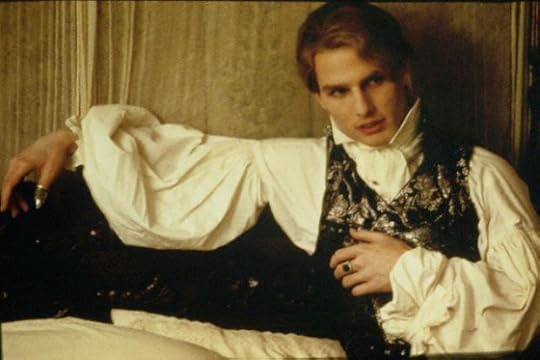 Why this can be bad: While this character type certainly has a place in reality, some writers will use this as the end-all, be-all for his personality. He’s a brat prince — that’s it. However, this is just generally poor writing. Without something to motivate him to act this way, your character is behaving in a two-dimensional manner.
How you can fix it: Don’t stop at brat prince when determining your character’s personality. Make sure you go about fully realizing him. Lestat (The Vampire Lestat) and Laurent (Captive Prince) are great examples of this trope being used well…
View original 61 more words


October 11, 2015
Another offer of ARCs!
I’m trying to keep my eyes open better when things like this come up, to try to help out my fellow authors a bit more than I already do.
 Originally posted on susannevalenti:
Hey guys! October has been a crazy month for me so far and it’s about to get a little crazier! The second book in my Cage of Lies saga is going to be released later in the week and I’m looking for anyone who would like an ARC
October 10, 2015
Review: Town of evening calm, Country of cherry blossoms
Every Saturday, I’m going to make it a new feature to reblog a great review I catch on one of the many other blogs I follow. So … here, begin!
 Originally posted on astrangersguidetonovels:

Title: Town Of Evening Calm, Country Of Cherry Blossoms
Author: Fumiyo Kouno
Genres: Sequential Art (Manga), Historical Fiction
My Rating: 3.75- 4 stars
Goodreads rating: 4.01
Summary ( Goodreads ):
What impact did World War II and the dropping of the atomic bomb have on the common people of Japan? Through the eyes of an average woman living in 1955, Japanese artist Fumiyo Kouno answers these questions. This award-winning manga appears in an English translation for the first time. Fumiyo Kouno’s light, free style of drawing evokes a tender reflection of this difficult period in Hiroshima’s postwar past. As the characters continue with everyday life, the shadow of the war and the atomic bombing linger ghostlike in the background. Kouno’s beautiful storytelling touches the reader’s heart but is never overly sentimental. A widely embraced best seller in Japan, where the work was also controversial, Town of Evening Calm…
View original 629 more words


October 9, 2015
Starving Review: The New Lease by John Stryder

The New Lease by John Stryder (Amazon, Goodreads)
I’ve been collecting literary tidbits in my pantry for long enough now to gobble up my fair share of political thrillers. I’ve had them spicy, flavorful, and bland, enough varieties that I suspected I had sampled everything the genre had to offer. That was awfully foolish of me, because Mr. Stryder has offered up a definitely different recipe with The New Lease. The question remains, though, if different is good.
Before we find out, let us remember the Starving Review manifesto:
I attempt to rate every book from the perspective of a fan of the genre
I attempt to make every review as spoiler-free as possible
There are some big ideas brought to the kitchen with Lease that definitely differentiate it. There is a certain focused supernatural/metaphysical element added to the otherwise starkly realistic modern world of the book, one that adds (dare I say it! I DARE!) a new lease on what can sometimes be a formulaic genre. Now, introducing a wild card element like this could still go wrong, but Mr. Stryder keeps it wrangled, carefully controlled by a set series of rules and built up to wonderfully in the book itself.
There’s more to it than this supernatural dash of spice. The structure and style of Lease is intriguing. The entire first half of the book is essentially split in twain, with alternating chapters building the backstory of the antagonist (though we don’t know it at the time), while working through the plot with the protagonist. While not a unique technique, it’s one that can be easily tripped over by an incautious chef, but Stryder pulls it off perfectly and it only serves to heighten the mystery and tension until we find out what these mystery chapters are actually about.
On a more conventional critical front, the characters, especially the protagonist and antagonist are built up extremely well. Especially our ‘antagonist’, because he is an excellent example of a kind of character that is often mishandled in other recipes: the character who has lofty, well-meaning goals, but contemplates horrific methods. Often, these character types are presented in a certain ham-handed …. mmm, ham … fashion, but Jonas’ arguments and approach are so nuanced, intelligent, and well-researched that he becomes a vague, gray area.
I have only two real criticisms of Lease. First, much like some of the other political thrillers I have nibbled on, Lease‘s pacing is a bit uneven at the beginning, as it requires a fair amount of exposition (very well researched exposition, I might add) to establish both the politics and the characters. This is somewhat understandable in this genre, so is only a minor concern.
Of a bit more concern with me was the last course of the meal, the denouement. This will be hard to speak of without being SPOILERY, but I can best sum it up as that this was the conclusion I would expect from a book series with a strong meta-plot, not the ending of a stand-alone novel such as this. It concludes the surface conflict, but leaves a tremendous amount of the real core conflict of the book wide open. While I respect that this is a book that could work with some threads open … in fact thematically it would demand it … it’s just TOO open. It doesn’t ruin the meal, but it left me feeling a bit hollow and definitely wanting at the end, not something I enjoy.
Still, despite a few rough edges, The New Lease remains as an excellent thriller souffle with a dash of supernatural spice, though it deflates a bit at the end. Despite that final chapter, I highly recommend this tasty treat to any fan of the thriller or anyone interested in something that looks deeply at the world as it is unflinchingly. I would still recommend it to others as well, just be forewarned that you might be a bit disappointed with the very end of the story. I look forward to more baking from Mr. Stryder’s kitchen!
FINAL VERDICT: **** (An excellent thriller souffle with a dash of supernatural spice, though it deflates a bit at the end!)


October 8, 2015
Starving Interview: Jake Danger, Author of The Einstein Pool
Good morning, friends! It’s Thursday, which means, as it often does, that we bring back a Starving Review alumni back to the kitchen. Today, let’s hear it for Jake Danger, the chef who whipped up The Einstein Pool!
Please introduce yourself to my literary foodies!
I was born in Hattiesburg, Mississippi but I grew up in Lexington, Kentucky chewing cud. I left home on my 26th birthday to study Mandarin Chinese and teach English in Taiwan, where I lived for five years. After law school in Kentucky and a few years as a lawyer in Tokyo and Shanghai, I opted for the much more exciting life of an international vagabond. I spend my time writing, composing psychedelic trance music on my computer, and tramping around Asia (mostly China, Thailand, Laos, Vietnam and Malaysia).
Do you do any work outside of the writing kitchen? Any non-work interests?
I spend my summers working as a high-priced gigolo on the French Riviera, and I spend my winters in a Siberian nudist camp. Seriously, though, I have spent the last three months in Guangxi province of China, making friends with the locals and writing music. My next stop is Manila (I think…). Intellectually, I am very much into social psychology and metaphysical philosophy. Try reading David Chalmers – it’ll blow ya mind.
What is your latest dish to be served up? Are there any past pieces of literary cuisine you think we should take a bite out of?
I’m still working on the sequels to The Einstein Pool (it’s going to be a five-part series called the iGod), so stay tuned. I’m also working on a religious parody about this guy who had a Near Death Experience and reckons he got sent to Doggy Heaven by mistake.
What made you want to put on the chef’s hat and whip up your own books?
My stories were simply screaming to come out of me, that’s all. If I hadn’t written them, they would have ripped their way out of my abdomen in a manner that might remind you of that famous horror scene in Alien. Also, my other personalities all threatened to strangle themselves to death if I didn’t.
Do you have a genre of specialty or do you dabble? Why?
My books run the gamut from science fiction to romance to philosophy to theology to drama to adventure. I don’t mean that I write many different kinds of books; I just mean that you can find elements of every one of these genres in each book that I write.
Style! Every literary chef aspires to have their own unique one! What do you think sets yours apart and why?
I like surprise endings that are so utterly unexpected, you have to go back and read the book again in light of the book’s last sentence. The Director’s Cut ending to The Butterfly Effect was an inspiration to me because it was so stunning that I still have a hard time grasping it. I also like to include an extremely smart-assed protagonist.
Even the best of us find inspiration is the dishes of others. Do you have any literary inspirations, heroes, and influences?
My literary influences are generally films, not novels. Films like The Truman Show, The Matrix and The Butterfly Effect (Director’s Cut ONLY) are right up my literary alley. I also like the Gospels, because the stories it recounts resonate so well with what I have observed of human nature.
Let’s get into the meat and potatoes: the art and craft of writing itself! Do you have a preference of points-of-view when you write?
I have a strong preference for the first-person point of view (largely because so much of my writing is autobiographical). I also like the personal journal format, so that the reader can keep up with the timing of events.
Sparse or wordy, how do you like your descriptions served up? Are you a Hemmingway man or do you like some saucy adjectives with your nouns?
I like sparse wording most of the time, but that’s just my style. I’ve seen writers work miracles with flowery wording.
Picking off the menu of base literary conflicts, what’s your favorite and why?
Man vs. woman, because it’s the defining conflict of our age.
What do you think is more important to your recipes, plot or characterization? Why?
Both are incredibly important, but if I had to choose one it would be plot. People open a book to read a story, not to psychoanalyze the protagonist. In addition, the action in the story can define the character of the protagonist with no need to delve deeply into his internal mental processes. The wisest, most succinct saying I have ever hear is “Decisions define us.”
We all know that the first taste means the most! What do you do to get that first bite hook with your readers?
Start off with an absolutely insane idea, and then make perfect sense of it before the reader has time to reject it. Leave ‘em gasping for air by the end of the first paragraph.
The most important of questions: Cake or pie?
Cake, because I can have my cake and eat it too.
Finally, if you could give one piece of advice to aspiring literary chefs out there, what would it be? Even fiction writers draw from their own experiences to create their stories. The typical advice given to an aspiring writer is to read, read, read. I disagree. Instead of spending your time reading about someone else’s experiences, get out there and have some experiences of your own. Ride a camel in Morocco. Join the Mile High Club. Become an expert in underwater basket weaving or ancient Egyptian master-slave poetry. Whatever feels funky to you, just do it. Remember that your creative mind is an oyster that needs a little irritation to create a pearl. You’ll know you’ve been successful when you have to present your autobiography as fiction because no one will believe that your experiences could have actually happened.


October 7, 2015
Writing Is A Bad Habit: Impress The Readers! a.k.a. Jotun Through a Writer’s Eyes

Jotun, from Thunder Lotus Games, is an amazing game, at least in my estimation. Now, I’ve mentioned before that I believe that video games are great and everyone should play them, but that doesn’t mean that all video games, even great ones, are of value to analyze to help a writer on their way. Jotun is not like most games though, so we are going to take a look at what it can teach us as writers today. We’ll take a look at the characters, plot, pacing, and style.
Jotun is a stark story with only a few characters. It’s the way those characters are fleshed out, though, that should be of interest to a writer. Thora, the main protagonist, is characterized through her actions and the feel of her dialogue as much as any information she herself provides. The vocal inflections have their writing counterparts and should serve to remind us that subtle clues about a character can tell as much if not more than the direct quotations themselves. We can feel Thora’s reverence for the Gods, the depth of her duty, and, simply through her knowledge displayed as she identifies her surroundings, her intelligence and knowledge. Meanwhile, Thora’s movements and actions in exploration and battle inform us of the rest we need to know: her skill at battle, her strength and endurance, and her bravery in the face of overwhelming odds. Just as in the game, a writer can show those same things in the dramatic sequences of a book, even without directly mentioning those qualities outside of said sequences.
The various exposition segments told to us directly by Thora, the equivalent of info dumps in writing, are also something for us to look at in terms of technique. She recounts her history before her death at an even pace throughout the story as opposed to dumped on the player all at once. This concept of a spaced-out backstory is a technique that can be used in writing to avoid the overclogged clumps of exposition I read all too often. It represents the idea of exposition presented on a ‘need-to-know’ basis, giving the reader all they need without overwhelming them.
As for plot and pacing, Jotun‘s story is relatively simple. However, it is the manner in which it tells its story and some of the gameplay mechanics around it that are of interest to we writers. The main flow of the gameplay involves Thora moving to one of five realms from Norse mythology, exploring until she finds various hidden runes. Once all the runes in a realm are discovered, she then progresses to challenge one of five jotun, massive giants and enemies of the Gods. This also seems simple, but the rub is in the details.
You see, unlike a pure action game, there is little direct conflict or combat in the exploration stages. The conflict and plot points are provided by various puzzles, challenges, and bits of backstory and information as Thora finds new vistas, creatures from myth, and altars to the Gods. In writing, these segments would be the various points of falling action between major dramatic conflicts. They are periods to cool down and reflect, allowing the player (or the reader) to learn more about the story and the characters and to wind down from the last height of dramatic tension. At the right time, the runes are collected and another gate to a jotun is opened, leading to a new height of tension as Thora is pitted against a huge, legendary creature of vast power. Defeating a jotun opens the way forward to new vistas and also signals another chapter of Thora’s own history to be revealed, furthering the key plot in multiple ways. It is an almost ideal curve of dramatic tension that any writer would be proud of and something to emulate for excellent pacing in a book.
Finally, let’s take a look at the artistic style of Jotun and how it applies to writing. Now, this may seem impossible, finding meaning from a visual medium to apply to a written one, but hear me out. What we want to focus on is the consistency of style here and how that consistent style generates a general atmosphere for the game. The hand-drawn art and immense scale of the world it depicts evokes a certain mythic/storybook/faerie tale quality, while each unique environment with their elemental extremes and lack of human life reinforces the theme of the harsh Viking world and the intensely personal nature of Thora’s quest to impress the Gods.
These stylistic techniques translate directly when it comes to writing. The style of our writing creates the same atmosphere that an artistic style does, and how we write informs of themes and feelings as much as it does when applied to visual medium. Keeping a consistent writing style reinforces that atmosphere you are trying to create in your writing, and it is essential in both art and writing for there to be no disconnect between the style you use and the feelings you are trying to evoke with your work.
I could ramble on for a while longer when it comes to Jotun, but I think that covers the major elements I think are especially applicable to good writing. If you have any questions or insights, drop them in the comments below!
Until next time, good reading, good writing, and good luck!


October 5, 2015
Book Review: A Notch In The Belt for The Twelfth Labor
A bit of solid praise for the third book in Three Seconds to Legend, The Twelfth Labor! While it’s currently out of print, it will be coming back, along with The Tale of The Tape, in the months to come! Check it out:
While you wait for the rest of the series, you can pick up the California Times edition of The Opening Bell and start from the beginning of the series!


Monday Musings: We Need Action Instead of Tears a.k.a. Common Sense and Guns
I’m tired. Like so many other Americans, like our President, like anyone who has a heart, I’m weary of the almost clockwork report of a mass shooting. Once again, someone has murdered nine and injured far more, laden with firearms … guns that the shooter’s father didn’t even know the gunman (who still lived with his father) had. So many lives have been lost in similar fashion over these past years, far more lives than any terrorist attack or the other conventional boogeymen dangled before us by our politicians on a regular basis.
Fatigue shouldn’t be used as a reason for inaction however and, while we should grieve for the fallen, our tears won’t be of much use either. Some kind of action needs to be taken, but common sense action. Much like fatigue and depression are of little use, wild reaction is pointless as well.
The United States has a long history of a gun culture that comes close to worship (and you could argue that there are regions where it truly is worship). By that very history, there is a tendency among people who want to shy blame away from the guns themselves, to focus all the blame for these incidents on the problems our nation has with mental health and dealing with those suffering from mental and emotional diseases.
They aren’t entirely wrong. We do have big problems in how we deal with and address the mentally ill. However, basic common sense tells us that a problem of this magnitude cannot be tackled by focusing on only one part of the problem. The shooter is one part of the equation, yes, but the firearms themselves present another part of the issue.
A gun has one purpose and one purpose alone: to kill. We have a lot of laws and licensing in place to be given the authority to drive a motor vehicle, right? Because of our American love of guns, the restrictions on gun sales, proper licensing for use, and gun education are treated horribly by our government.
Yes, there are some laws in place, but they can be circumvented easily in multiple ways and they are wildly inconsistent throughout the country. The simple fact that these various gunmen, often with known mental and medical issues, could stockpile so many firearms and other weaponry with not a single warning bell set off in the actual system has to tell us that the piecemeal protections we have in place are far from sufficient.
It’s just common sense to restrict devices meant purely for death to be more intensely monitored and regulated than our transportation.
Next time, we’ll be back to our usual, more light-hearted topics with Writing Is A Bad Habit. Until then, friends, good reading, good writing, and good luck!