Nicki Chen's Blog, page 26
October 9, 2016
Free to Paint My House Blue
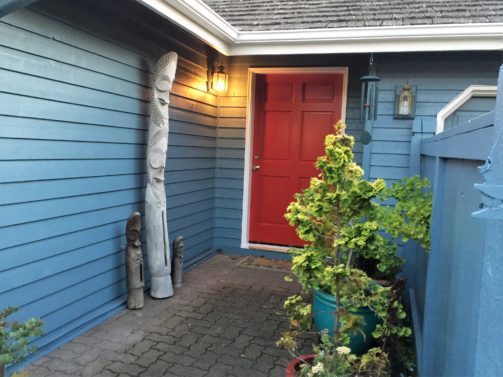
Thirteen years ago. I was in the market for a new house. Or a condo. I couldn’t make up my mind.
The houses I saw—much like the house I was leaving—had lawns and extensive flowerbeds and overgrown trees, and I was tired of weeding and mowing the lawn. The condos, on the other hand, were small, expensive, and too far from the ground.
Then one day I stumbled upon this house. It belonged to a thirty-six house development in a quiet, friendly neighborhood, walking distance from town. And the price was right. Perfect!
Every choice has its trade-offs, though. I would have to abide by the rules of the homeowners’ association. No political yard signs, no dogs running free, and all the houses must remain the color the developer painted them: Seashell.
Fine. Freedom is never absolute. And what does the color of my house matter in the larger scheme of things?
Years passed in my Seashell colored house. And then last year, the homeowners voted to change the rules and allow more colors. The Architecture Committee got to work and came up with a pallet of six acceptable colors: Gateway Grey, Barcelona Beige, Camelback, Curio Grey, Cardboard, and Seashell.
I spent a few months staring at my choices. Nothing jumped out at me. Gateway Grey? Barcelona Beige? Ho-hum. Before I could make up my mind, the news came out. We could paint our houses any color we liked.
What?
It seems someone had taken the time to read the rule book and found that there never had been a restriction on house colors. Go figure.
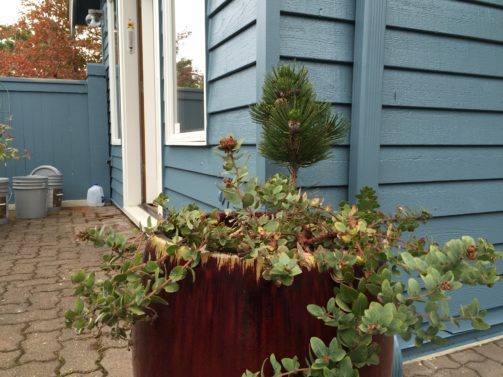
So … I visited the local paint store, poured over the colors in their extensive display, brought color cards home and held them up in sunshine and shade. The color I chose is called Blustery Sky, a shade of blue. It looks brighter on some days than others. I like the contrast with my Heavenly Bamboo.
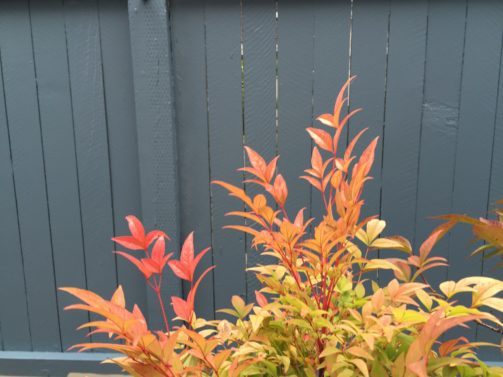
All those years I’d been fine with a monochromatic neighborhood. Now that we have a more colorful neighborhood, I’m really enjoying not only my new house color, but the combination of colors my neighbors and I have chosen.



September 25, 2016
Secrets and Revelations
The allure of secrets.
Keep something secret, and suddenly everyone wants to know what it is. I’m thinking now of John Wayne, an actor who became famous for his portrayal of the strong, silent type of cowboy.
Watching his movies, I always assumed that beneath his reticent surface there were secrets we would never know. And that seemed like a good thing. The cowboy had hidden depths.

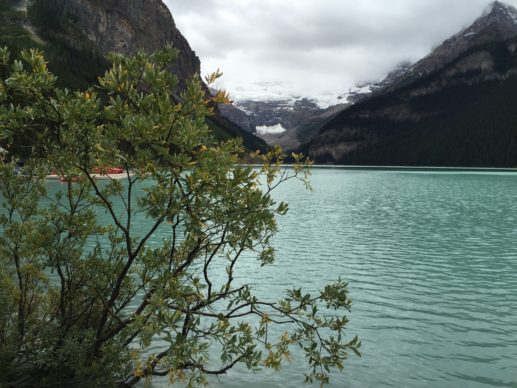
This August, we visited Lake Louise in Alberta, Canada, and if ever a beautiful spot benefited from the allure of its hidden depths, it was Lake Louise. Canoeing on it, my daughter and I couldn’t see a thing below the surface. The very phenomenon that makes it beautiful keeps its secrets hidden.
The lake’s water is one giant suspension of rock flour. The glacier melt that feeds it is filled with silt-sized bits of rock made so small by the grinding of glaciers on bedrock that they form a suspension in the cold lake water. That suspension of glacial flour absorbs all the colors of the spectrum except blue and green. Hence the lake’s beautiful color.

Fairmont Chateau Lake Louise
Though some of us were content to paddle on the surface of the lake, my friend, Perry, told me he caught a big trout deeper down.
When the water pulls back.
Following my theme of “Secrets and Revelations,” I’ll jump ahead from our trip to Banff and Lake Louise to the photos I took a couple days later near my home. We’d walked on the ferry to Kingston with the intention of skipping one ferry so my grandson could play on the beach before we sailed back for a big breakfast at Claires.
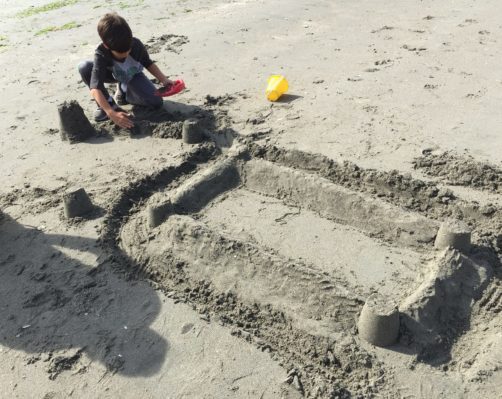
So while my grandson and son-in-law built an elaborate sand castle, my daughter and I walked down the beach to see what we could see.
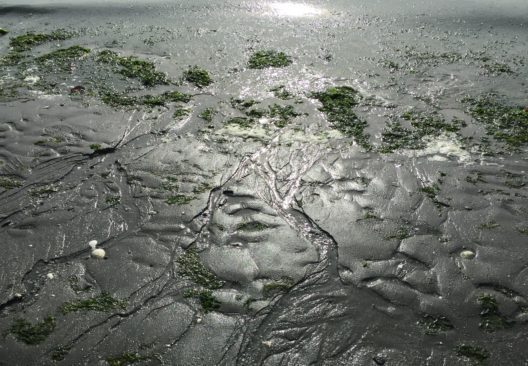
The little beach by the ferry isn’t a clam digging beach or a white sand beach. But at low tide, every beach has something to reveal.
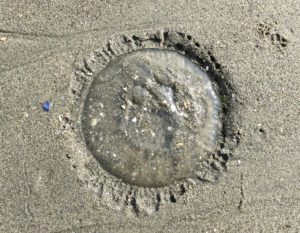
A stranded jellyfish …
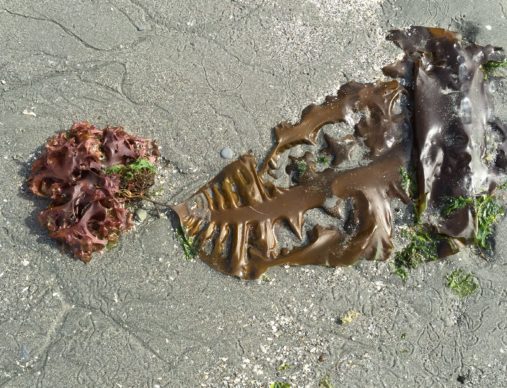
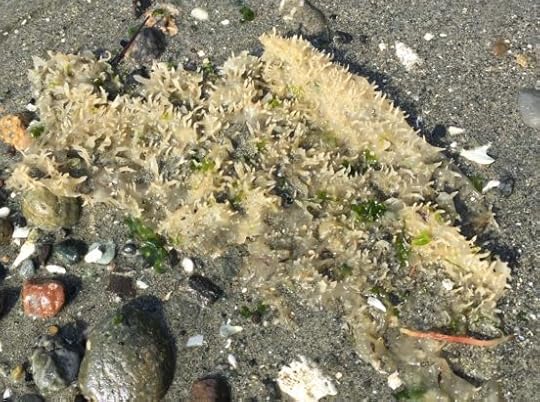
bits of seaweed …
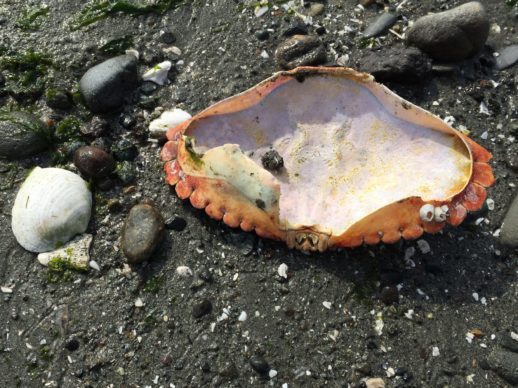
shells picked clean. Nothing special. But they looked pretty to me. Maybe it was the light … or maybe the fact that they’d been hidden until the tide went out.
I’m writing a novel now, so questions of secrets and revelation come up all the time. A character with secrets is more interesting. But what kinds of secrets? How much should I reveal and when?
My writer friends may be interested in this article by Heather Jackson: The Key to Writing 3-Dimensional Characters. The key to 3-dimensional characters, she says, is secrets.
Low tide probably isn’t the best metaphor for revealing secrets in novels. The tide goes out, and everything is revealed all at once. Heather Jackson uses the metaphor of an onion instead. You peel back the layers one at a time.
It’s like life. We say we want people to be open and transparent. And yes, in some circumstances we do. Most of the time, though, we enjoy getting to know people bit by bit. Layer by layer. We drop in a line and hope to catch a fish. We wait for the tide to go out and see what there is to see.
The interplay of secrets and revelations.
September 18, 2016
Aunts and Uncles: So How Are We Related?
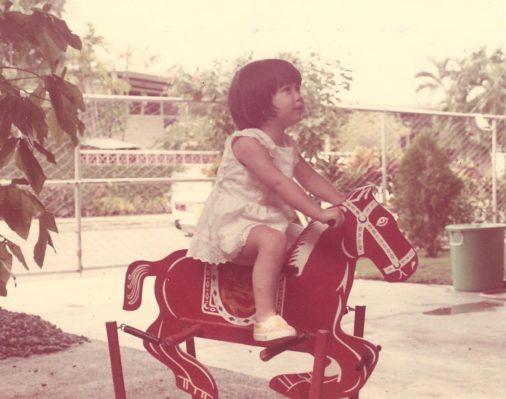
In all the stories my husband told me about his childhood in China and Taiwan and his teenage years in Japan and the Philippines, he never mentioned any aunts, uncles, or cousins. It seemed reasonable since neither of Eugene’s parents had siblings.
So when we moved to the Philippines, I was more than a little surprised to be met at the airport by a smiling, friendly group of people Eugene called “auntie” and “uncle.”
They stood around with us, talking—sometimes in Hokkien and sometimes in English—waiting for us to collect our suitcases, and finally walking us to where we would catch our ride. As soon as we’d said our goodbyes, I asked Eugene who they were.
“They’re from Amoy,” he said. “Good friends of the family.” I quizzed him again later, and he was still hazy on the details. They might be related, somehow, he said, maybe on his mother’s side.
To me, that seemed like an extremely casual attitude toward relationships. In my family we made a point of knowing exactly how we were related. Coming home from family gatherings, we would double check the names and relationships. Aunt Esther was the sister of my maternal grandfather, Mom’s aunt, my great aunt. Her daughters were my second cousins. Aunt Gertie was Grandma Rose’s aunt, my great-great aunt. It went on and on.
Now, looking back through the letters my mom saved, I see that what Eugene’s aunts, uncles, and cousins lacked in definition, they more than made up for in kindness.
The day after we arrived, Aunt Patricia took me and our oldest daughter to the supermarket and bought us our first supply of groceries, including a carton of sweet corn ice cream, Magnolia’s flavor of the month.
The following weekend Uncle Gregorio and Aunt Catherine took us to the Army Navy Club for swimming, fried chicken, potato salad, and, for the kids, American candy bars.
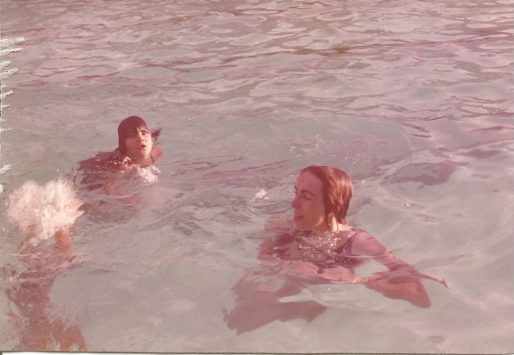
Uncle Luis treated us to dinner at the Elks Club.
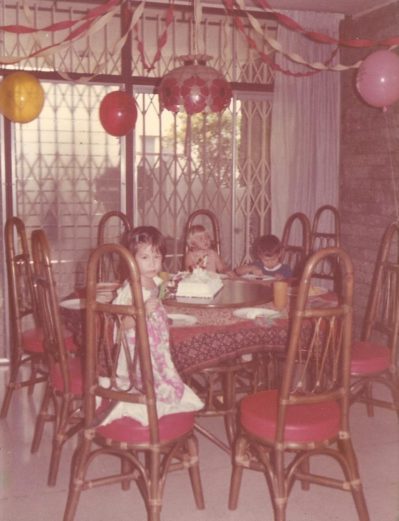
rattan table and chairs
A few weeks later, after we’d settled on a house to rent, Uncle Gregorio, who knew all the best places to shop in Chinatown, took us shopping for furniture. In my letters home I listed all the things we bought: an air conditioner, fan, gas range, and three beds. After that, we went to a rattan factory and ordered a rattan dining table with a lazy Susan, ten chairs, a bar server, sofa, two arm chairs, a foot stool, two end tables, a coffee table, rocking chair, and two lamps.
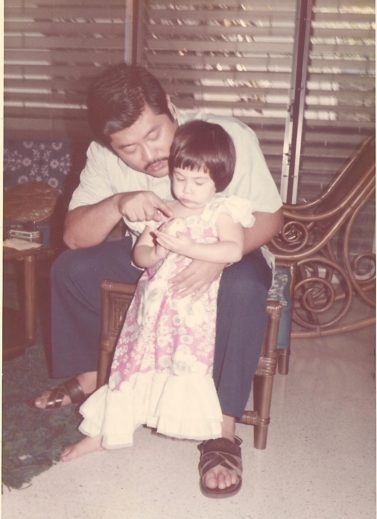
Eugene and R with rattan furniture
The cost for the rattan: $556. Money well spent for living room and dining room furniture we used for many years.
Over the next nineteen years we continued to spend time with Eugene’s aunts, uncles, and cousins. We never did pin down how they were related or whether they were simply close family friends. I guess it doesn’t matter.
Are some of the people you call “auntie” and “uncle” actually close family friends?
Related posts: The letters my Mom Saved
Everyone Has a Maid (or Two or Three.)
In the Days of the Dressmakers
**********************************************************
 Nicki Chen is the award-winning author of Tiger Tail Soup.
Emotionally charged and lyrical, Tiger Tail Soup captures the drama and suffering of wartime China through the eyes of a brave young woman.
Where to buy: Amazon.com, barnesandnoble.com, apple ibook
September 11, 2016
Blogging, Three Years and Counting
I started my blog on August 7, 2013, more than three years ago. Since then, I’ve published 177 posts–not many in comparison to some of my more prolific blogging buddies. Still, when I started, I couldn’t have imagined writing that many posts.
So why do I do it?
It’s funny; no one has ever asked. If you’d asked me three years ago, I would have said that everyone says writers should have a blog and/or an active twitter account. (I ignored the advice about twitter.) By starting a blog, I was just following advice I’d read and heard in every book and seminar on publishing and marketing I came across.
Before long, though, blogging took on a life of its own. I liked it. I liked turning on my computer every Sunday morning and seeing my finished post come up. I liked reading the comments readers left for me. Unlike writing a novel, which can take years, blogging provides an immediate reward. All I have to do is hit “publish,” and it’s out there.
One surprise was how much I’ve enjoyed the relationship with other bloggers. There’s an unspoken courtesy in the blogging community of visiting the sites of those who visit yours. It’s like reciprocating for a dinner invitation. A fun way to make friends all over the world.
Recently, Kate Crimmins, a blogging friend, explained it this way: “There are tons of people I’ve met (metaphorically) through blogging. Some of them I know better than my next door neighbors.”
From the beginning, I set myself the goal of publishing at least once a week. It’s a self-imposed discipline, but it forces me to find something interesting to write about every single week. Some weeks are harder than others, and I’ve missed a few. But challenges make us stronger. Right?
In college, one of my minors was Philosophy (the love of wisdom). I’ve always been intrigued by the search for the meaning of things. Blogging gives me an opportunity to slow down and reflect on everything I’ve seen and experienced, past and present.
As Socrates said, “The unexamined life is not worth living.” Blogging gives me a reason to take a second look.
Thank you so much for visiting my blog. And for those of you who feel so inclined, thank you for your comments.
I’ll leave you with some photos from a recent family trip to Banff in Alberta, Canada. During the last week of August, I met up with all three of my daughters and their families. Here’s the view from our vacation rental.
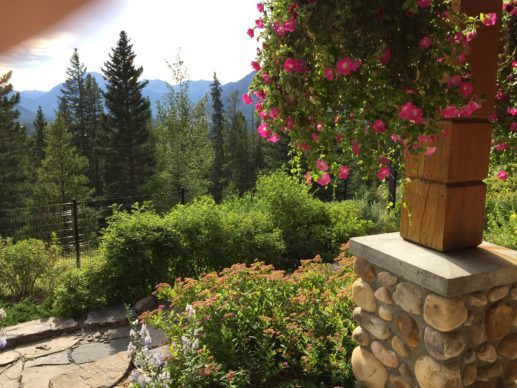
view from Hidden Ridge near Banff

view from top of Sulfur Mt. gondola
The gondola ride was scary and steep. Four of us rode it both ways; the other five hiked up–a two-hour, unrelenting, uphill climb.
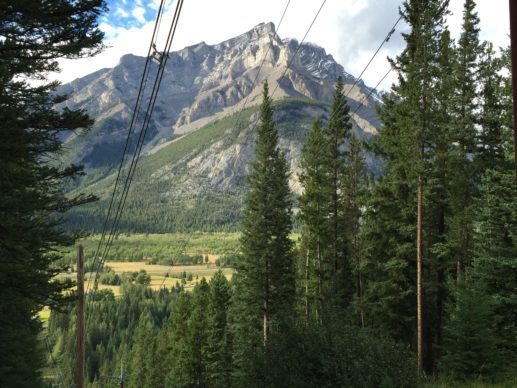
Mt. near Banff. The power lines get all the best views.
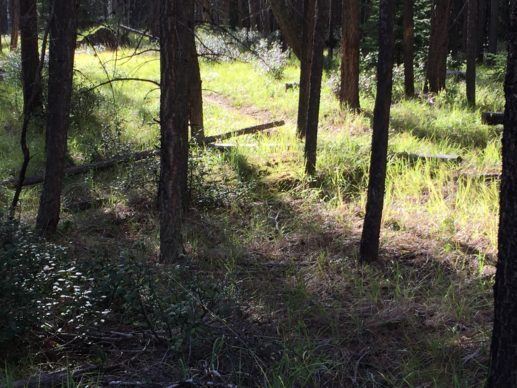
light and shadows in the woods
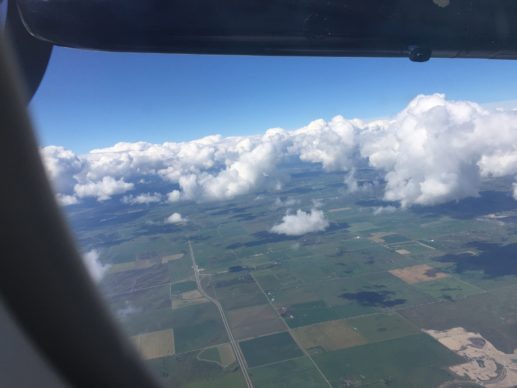
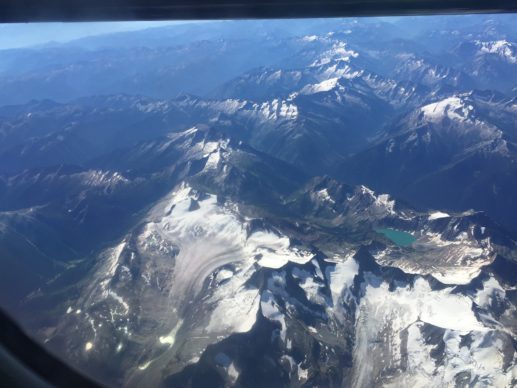
airplane view of fields nr. Calgary.
Do you have some thoughts on why you do some of the things you do?
Next post: “Aunts and Uncles: So How Are We Related?”
September 4, 2016
In the Days of the Dressmakers.
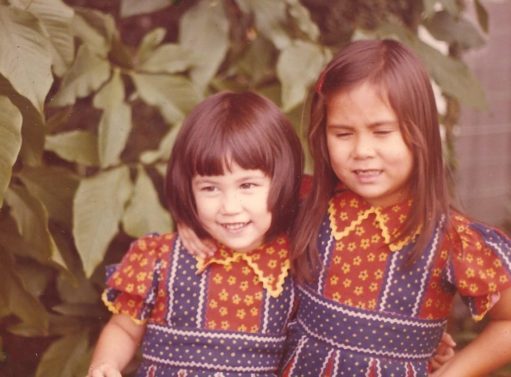
When you move halfway around the world, all the basics of everyday life change. The moment I stepped off the plane in Manila, the first, most obvious difference hit me in the face—a blast of heat unlike any I’d ever felt. No more cool, drizzly Seattle days for me. I was in the tropics now.
We were going to need new clothes. Almost everything we’d worn back home was going to be useless in the Philippines.
My husband was fine. His new job was in an air-conditioned office. But the girls and I needed something cool to wear, fast.
It was 1971. In a few years, the Makati Commercial Center across the street from our apartment would have department stores and fancy boutiques. In the meantime, it was a shopping desert, especially for big foreign women. (At 5’4”, I was considered big.) There were dressmakers, though, plenty of dressmakers. Every woman I met had one to recommend.
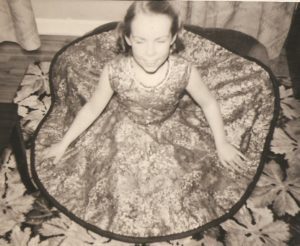 I had experienced working with dressmakers, I thought. When I was growing up, my mom made most of my dresses …
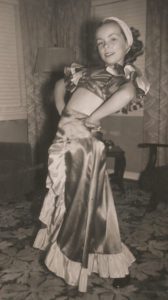 … and costumes.
My grandmother was also a talented seamstress. She made this little rabbit fur coat for me. According to my sister, she tanned the hide too.
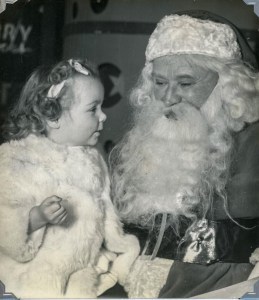
I even did a little sewing myself. (Two years of cooking and sewing in Home Economics classes was a graduation requirement in those days.)
So I was ready for the dressmaker. I even brought a stack of patterns from the States—Butterick, McCalls, Simplicity. I showed one to the dressmaker, and she just shook her head. She didn’t need a pattern. A simple sketch or description would do.
In one of my earliest letters home to my family, I described a fitting I had with the dressmaker. “She cuts all the dresses with a high round neck,” I wrote. “Then she asks me where I want the neckline, and she just cuts it on me.”
And what did she charge for making that dress? According to that same letter, $2.40. Or, in inflation adjusted dollars, $14.
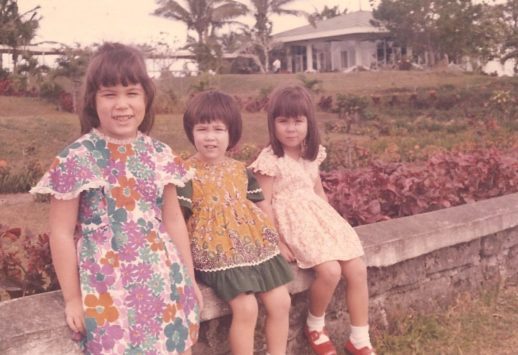
It was fun designing my dresses, even more fun designing dresses for our daughters.
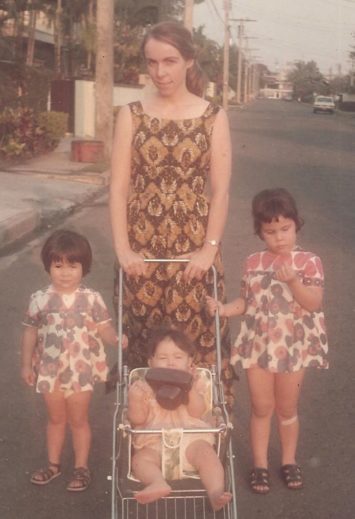
When my husband returned from his business trips, he often had fabric in his suitcase. Batik from Indonesia was perfect for this warm-weather dress.
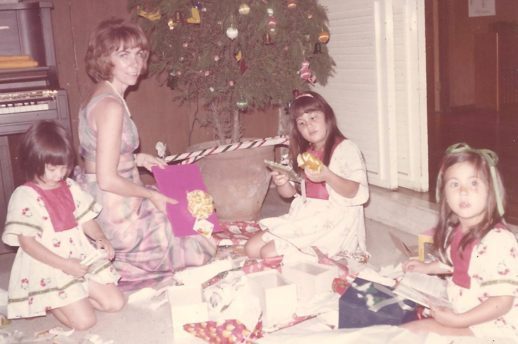 Matching Christmas dresses for the girls.
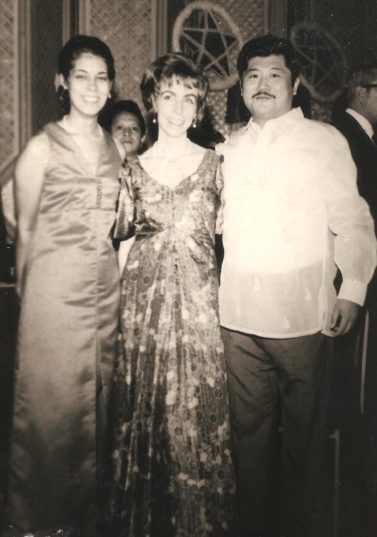
The Year End Party sponsored by my husband’s employer, the Asian Development Bank, was a fancy affair. In this photo, Eugene is wearing a barong Tagalog, the traditional formal wear for men in the Philippines. My dress is made of Chinese silk that Eugene bought in Hong Kong. I don’t have it anymore, but as I remember, it was a kind of pinky peach color.
Those “days of the dressmaker” are long gone. Now I buy my clothes at the mall or at a little store in Edmonds called Sound Styles.
Where do you get your clothes? Do you sew? What about your mom and grandma? Have you ever had clothes made by a professional dressmaker?
This is my fourth post in the series inspired by the letters my mom saved.
See also: The Letters My Mom Saved, “Everyone” Has a Maid (or Two or Three), and Two Maids? Really?
August 28, 2016
Crossing the Mts., Scenes of Eastern Washington
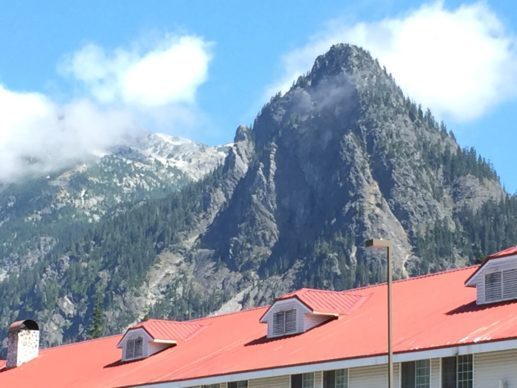
Snoqualmie Pass summit
When I visit my daughter, I start out on the cloudy, sometimes rainy, side of Washington State. The side of cedars and Douglas firs, salt water beaches, and skyscrapers.
I begin at sea level and head up into the mountains. The drive on I-90 takes me up 3022 feet to the summit at Snoqualmie Pass. From there, I drive into a whole different world.
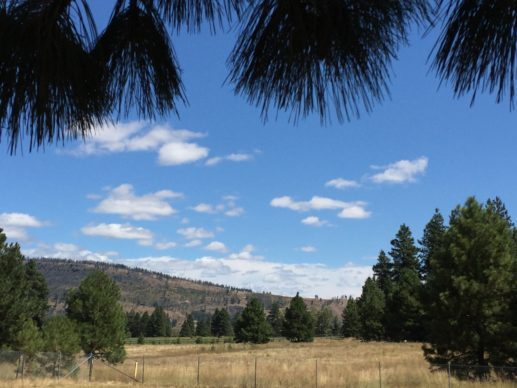 Almost immediately the firs and cedars of Western Washington give way to Ponderosa pine.
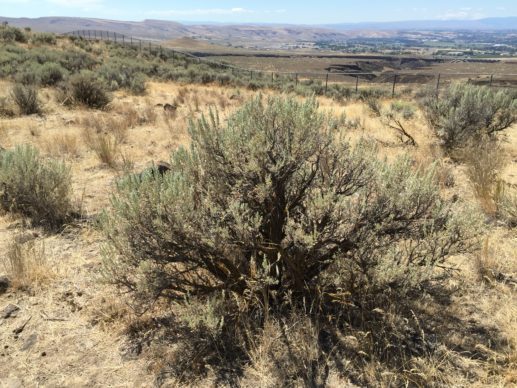 Before long, the forests are gone. Eastern Washington is farm country, sunny and dry, a land of deserts, rivers, and irrigation. Without the rivers and irrigation, sagebrush would be king.
I cross the beautiful Yakima River several times. But at 70 mph, I can only glance at its rapids and lazy places.

Columbia River
The biggest river, the one largely responsible for turning Eastern Washington green, is the Columbia.
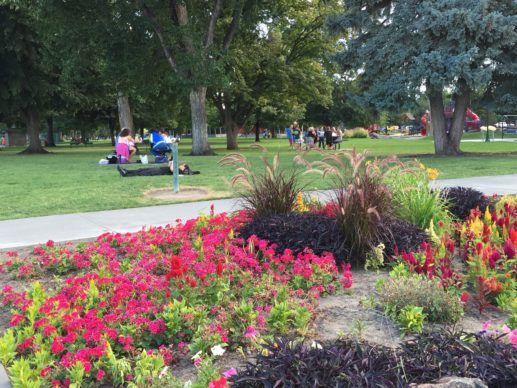 During my visit, my daughter and I took a couple of walks along its banks.
 After dinner one night we drove a a few miles from her house. This is some of what we saw.
A corn field, a cherry orchard. (These cherry trees had already been picked clean.)
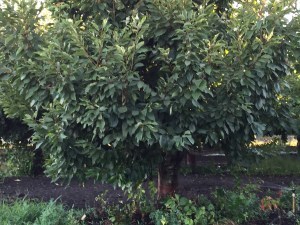
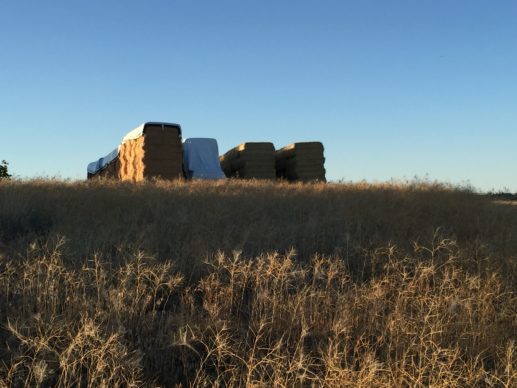
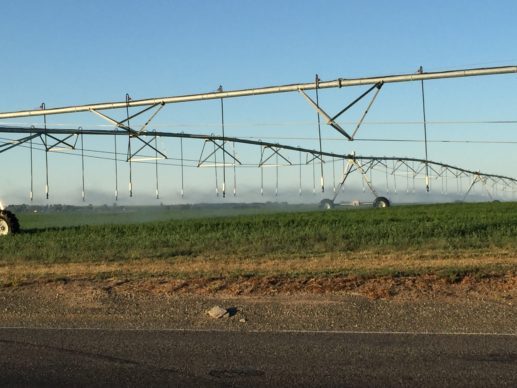
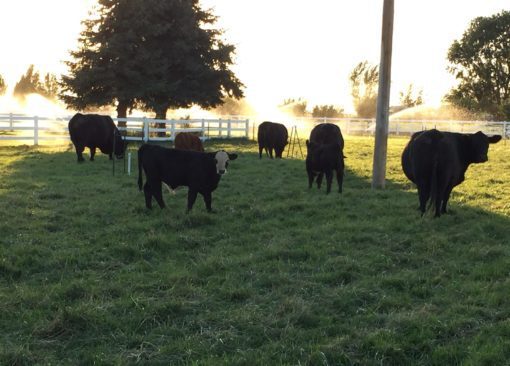
Hay stacks and irrigation and cattle …
And, of course, grapes for wine. Washington is the second largest producer of wine grapes in the United States, 99.9% of which are grown on the eastern side of the state.
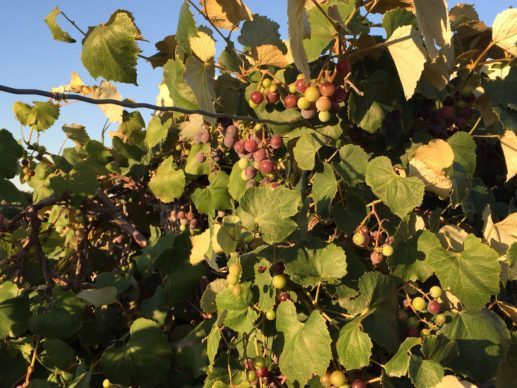
Going home, even with my cruise control set at seventy, it takes almost five hours–four if the traffic is good and I don’t stop for lunch. So even though the scenery cried out to be photographed, I just kept driving, storing the beautiful sights in my mind, wishing I could share them with you.
My next post, “In the Days of the Dressmakers,” will continue my series taken from the letters my mom saved.
August 14, 2016
Two Maids? Really?
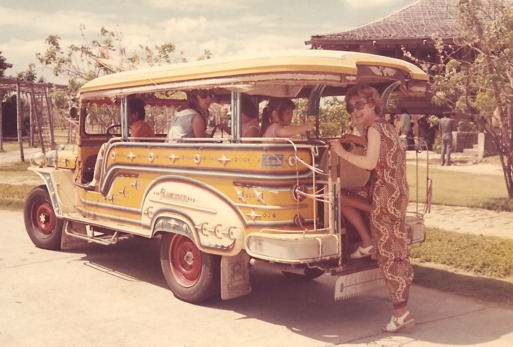 In the earliest letters I sent to my family after we moved to the Philippines, I wrote about all the touristy things: the hot weather, the juicy mangos, the ornaments on jeepneys. “We rode in one jeepney,” I wrote, “that had horses, Jesus, Mary, half-naked women, and Che Guevara on the hood.”
Right from the start, though, it was obvious that being an expatriate was not at all like being a tourist. Expats don’t just observe a culture different from their own, they become part of it.
The first big change in our lifestyle happened the day after our arrival when Nellie, our newly hired maid moved in with us. You’d think one maid would be enough, wouldn’t you? But there was one important thing I hadn’t counted on.
None of the houses we looked at had washers and dryers.
When I mentioned it to the real estate agent, I noticed a hint of impatience showing through her professional smile, “We hire lavanderas here in the Philippines,” she said. “Hand washing is much safer for your clothes, you know.”
Later I learned other reasons lavanderas were preferred over washing machines. Most appliances were imported and therefore costly. Electricity was expensive and unreliable. And, due to a high birth rate, labor was cheap and readily available.
Two-months later when we finally found a house. Like all the others, it lacked a washer and dryer. So we hired our second maid, Clarita.
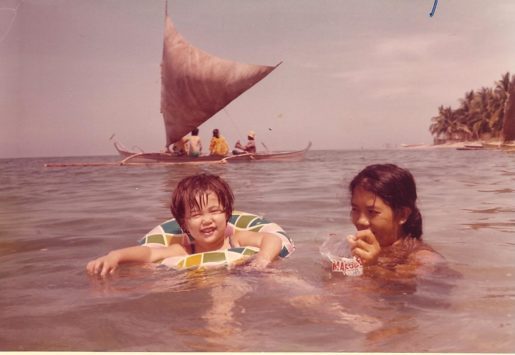
Clarita and R at the beach
I’d washed clothes by hand before. But washing the occasional sweater by hand had little in common with the job Clarita did. First she soaked the clothes together with bars of laundry soap in large plastic basins. Then she scrubbed and squeezed them, rinsed them in a sink in the breezeway, wrung them out, and hung them on the clothes line.
In the afternoon, she ironed aprons, dresses, T-shirts, my husband’s shirts and slacks, towels, cloth napkins, and even our underwear and the baby‘s diapers.
With five people in the family plus two maids, we always had lots of laundry. The baby, with her cloth diapers, was a big contributor. (It was 1971, and disposable diapers were still a novelty.)
I felt strange, maybe even guilty, about having two maids. Was I lazy? Was I taking advantage of the inequity that existed in the Philippines and the world? Or was it a good thing to provide jobs for these two young women?
Before we left the Philippines twenty years later, there were more washing machines and fewer lavanderas. Also, there were many Filipinos leaving their families to find work abroad.
That’s automation for you.
We’ve experienced similar results in the United States. When I was a new driver, pumping gas was a nice beginning job for young men. We drivers just sat in our cars while the gas station attendant pumped our gas, cleaned our windows, and checked our oil.
We weren’t lazy. That was the way it was done in those days. In fact, it’s still against the law to pump your own gas in New Jersey. In Oregon you can only pump your gas in rural areas at night.
Another example of automation leading to job loss: One of the jobs that helped pay my college tuition was driving a dump truck during the pea harvest. That job is gone now, along with the jobs of the tractor driver that cut the pea vines and the other tractor driver who spread the pea vines on the stack after I dumped them. Today an enormous machine drives slowly through the fields doing it all.
That’s automation. That’s life.
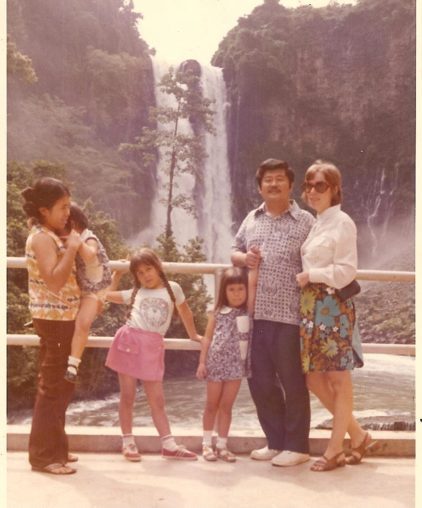
Clarita went to Mindanao with us.
But in the early 1970s, Clarita had a job and a home in our house. It was a good situation for me. I think it was also good for her.
Have you always had a washer and dryer? How about your mom and grandma?
This post is part of a series inspired by the letters my mom saved. See also: The Letters My Mom Saved and “Everyone” Has a Maid (or Two or Three).
Next post: Crossing the Mts., Scenes of Eastern Washington
July 31, 2016
“Everyone” Has a Maid (or Two or Three).
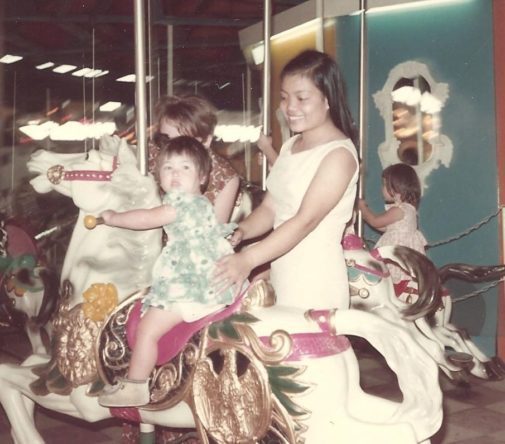
Nellie and R
Back home, I was an independent woman. I did my own house cleaning, washed the clothes, cared for the kids, weeded the garden, mowed the lawn …
No pizza delivery for us, no take-out, no supermarket deli food. We cooked our own meals. That’s just the way things were for an ordinary American in 1971.
Then my husband got a job in the Philippines. He’d lived there before, so he prepared me for some of the changes we were going to experience. For one thing, he said, almost everyone there has maids. So, yes, I was expecting we’d have one too … eventually.
The wife of my husband’s boss had another idea. In the hospitable way of many Asians, Dr. and Mrs. H met us at the airport and invited us to dinner at their house. After feeding us a home-cooked Chinese dinner, Mrs. H introduced us to her maid and her maid’s highly recommended cousin, Nellie. If we wanted to hire Nellie on a trial basis, she said, she could be at our apartment as early as the following morning.
We agreed. (We could hardly say no to the boss’s wife.) And the following morning the new maid joined us at our temporary residence, an apartment-hotel in Makati. You wouldn’t think anyone would need a maid in the confines of an apartment-hotel, and yet, all the apartments had maids’ rooms off the kitchens.
I liked Nellie. She was cheerful and cute, and though was only twenty-two years old, she’d been a maid since she was fourteen. She wanted me to know that she was smart, second in her sixth-grade class. But being the third of nine children, she had to work to help support her family.
I’d forgotten all these details about her age and education and the number of children in her family until I started going through the letters I sent home to my family, letters my mom saved and eventually gave to me.
I did remember my first day with Nellie, though, how I tried to get her to sit down and eat lunch with me. I couldn’t imagine us eating in separate rooms. It didn’t seem right.
For Nellie, on the other hand, it didn’t seem right for us to eat together. We could talk after lunch, but she would eat in the kitchen.
It took me a while to get used to our new way of life, one that was more normal for Nellie than for me.
Since our shipment wasn’t due to arrive for months, I had lots of shopping to do. With three young children—a month-old baby and a two- and a three-year-old— shopping in a strange, crowded, hot city without a car would have been a monumental task. Having an always-available babysitter made life a lot easier.
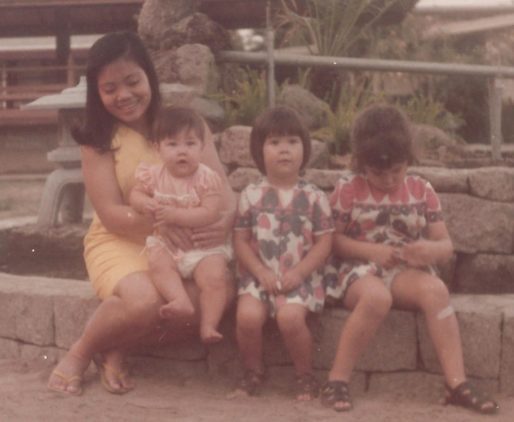
Nellie and the girls
Fortunately, Nellie loved kids, especially the baby. We had one point of contention, though. I wanted to nurse the baby; she enjoyed feeding her. Invariably, I’d return from an afternoon of shopping to find that the baby had already been fed—usually a raw egg stirred into hot rice gruel.
I can hear you young mothers gasping. Your pediatrician never would have allowed such a dish for a one-month-old. But R grew fat and healthy on it … maybe a little too pudgy.
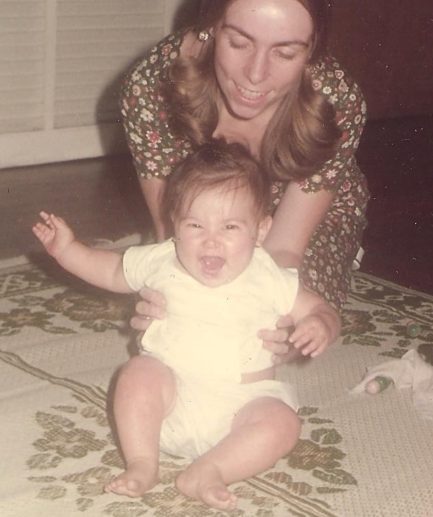 Next week I’ll explain why we decided we needed more than one maid. Really, we did. You’ll see why.
(See also: The Letters My Mom Saved and Live-in Maids.)
July 17, 2016
The Letters My Mom Saved.
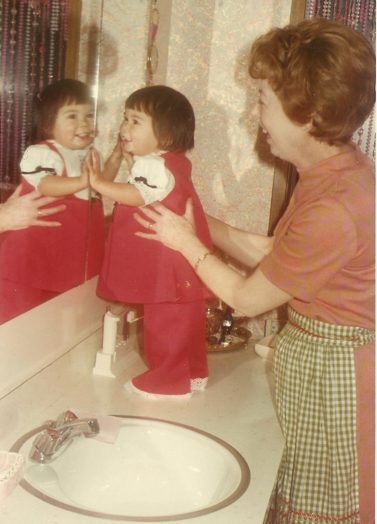
My mom with T
When we lived in the Philippines and later in Vanuatu, I wrote letters to my family every week. And every week after my parents read my letters, Mom filed them away. That’s a lot of letters. Let’s see, fifty-two weeks multiplied by twenty-two years … Hmm. That adds up to 1144 letters. Subtract a couple of weeks for home leave every two year, and you still have 1122 letters.
For the past few years all those letters have been sitting, untouched, in my storage room. So why should I read them now? I wrote those letters. I lived that reality.
Then it occurred to me that, since I’ve set the first part of my new novel in the Philippines, maybe I should look at them–just to refresh my memory.
I took a look, and come to find out, there were lots of things I’d forgotten.
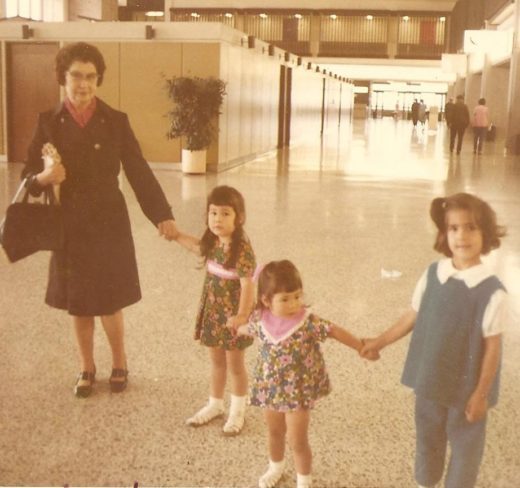
Vancouver airport, C & T heading for departure gate with great-grandma and Sarah
First of all, I’d forgotten exactly how much more pleasant airplane travel used to be. In my first letter home, I zeroed in on the third leg of our journey to the Philippines, the flight from Tokyo to Hong Kong. The JAL 747 we flew on was only about one-eighth full.
We had so much room that T, our one-year-old daughter, stretched out on two seats to sleep. C, our three year old, used two seats to play with the paperdolls the stewardess gave her. (That’s what we called flight attendants in 1971.) R, our baby, slept in a bassinet supplied by the airline and attached to the bulkhead. And my husband and I used one set of seats for eating and another when we wanted to look out the window.
I did remember that airplane food was better in 1971. The menu I described in my letter confirmed it.
Eye of beef tenderloin wrapped in bacon
Snow peas
Very fresh prawns with a lemon sauce
Green salad with tiny cucumbers
Roll
Mandarin orange pudding with pineapple sauce, and
Coffee
And this wasn’t first class or even executive. We were flying coach.
Another nice touch: They gave each of us warm wash cloths after we boarded, after we ate, and when we landed. They also passed out bamboo-and-paper fans.
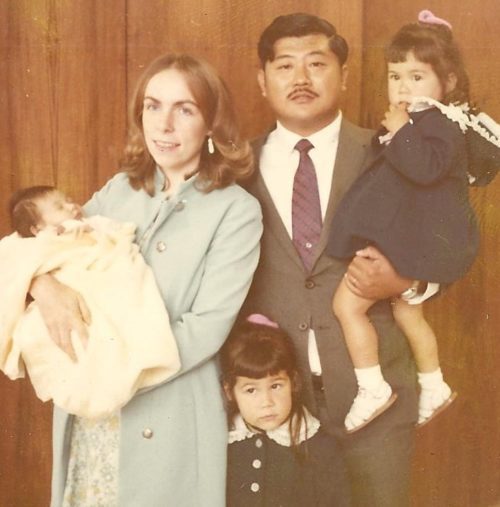
Eugene, Nicki and three daughters about to board the plane
The second thing I’d forgotten about the day we left the United States was how unsettling it was for our daughters. They were leaving the only home they knew and flying off to a strange land. The baby didn’t know any better, but after a few hours on the plane, the two older ones weren’t so sure they wanted to leave home.
We were leaving Anchorage where we’d stopped to refuel and were starting to cross the Pacific when C, our three-year-old daughter told me, “I want to go back to Grandma and Grandpa’s house because I don’t know what the Philippines looks like.”
T, our middle daughter who was almost two years old, also had something to say, but she held her counsel until we landed in Tokyo. Our trip from Vancouver, B.C., to Anchorage to Tokyo had lasted about twelve hours, and during the last hour of the flight it was bumpy because we were flying on the edge of a typhoon. When we de-planed, T assumed the trip was finally finished. “I want to go to my home now,” she said.
They must have been tough little girls, though, because I reported back to my parents that by the following day they were much better.
So there you are, insights and forgotten memories taken from my first letter home. Only 1121 letters left to read. What do you think? Should I keep on reading?
Has anyone saved your letters?
If you enjoyed this post, please share.
July 10, 2016
The Pleasures of a Summertime Farmers’ Market

Last weekend my daughter and I visited the Edmonds Summer Market. No grocery cart at the market. No checkout stands. Just fresh produce, crafts, music, and a festive atmosphere. This bakery table had some yummy looking cupcakes for sale, don’t you think?
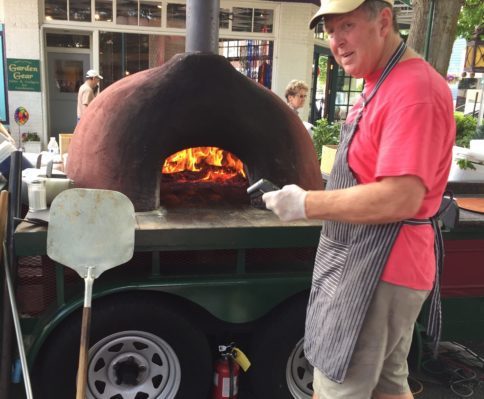
Who knew you could bring your own portable pizza oven and bake pizza in the middle of the street. It looked delicious, but I wasn’t hungry yet. Farther down, the tantalizing smells of freshly popped popcorn and then little donuts, deep fried while you watched, tempted me. But I resisted.
Finally, while I was browsing at a table filled with handmade jewelry, the hunger pangs hit, and I made a beeline for a stand that sold tamales. My daughter opted for a blackberry-ginger popsicle.
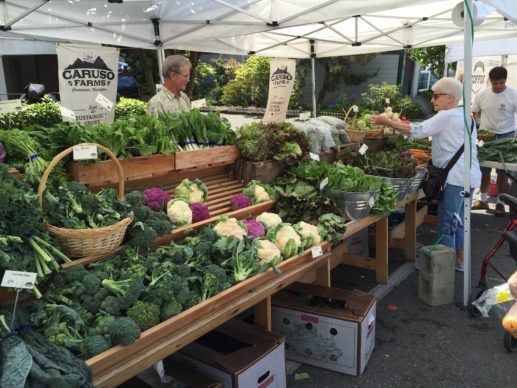
One of the veggie stands had pea vines for sale. I bought some to stir fry with garlic.
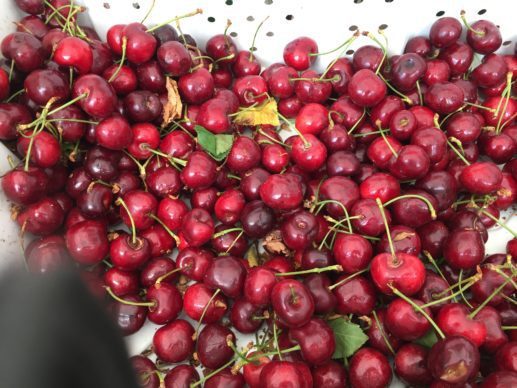
Summer fruit. Ahh!
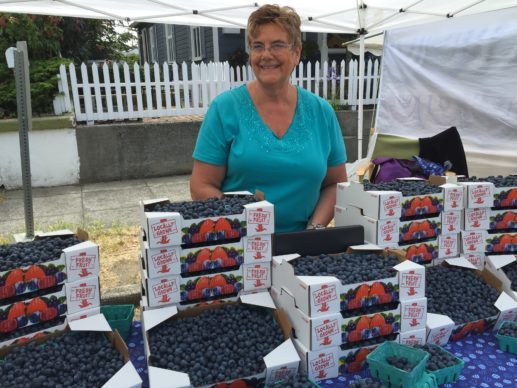
Blueberries have the added benefit of being super healthy.
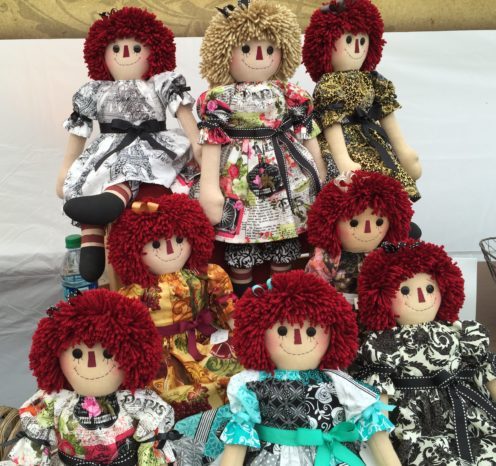 The market isn’t all about food, though. Raggedy Ann dolls anyone?
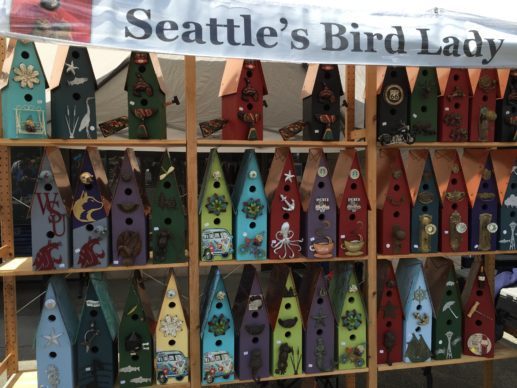 A bird house?
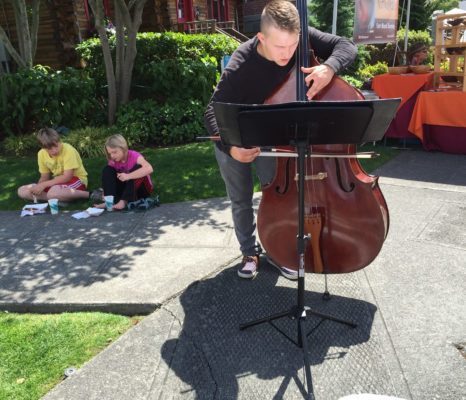
This young man playing classical music on his string bass is collecting money to help pay for college. His chosen major: music.
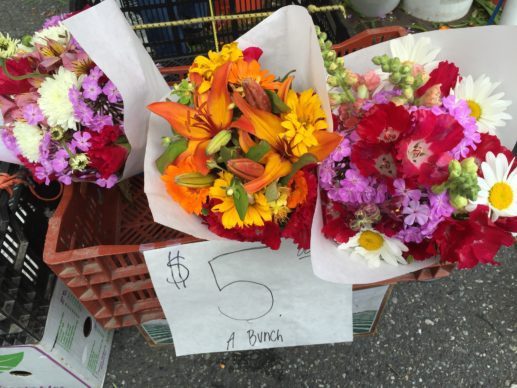
A day at the market isn’t complete without flowers.
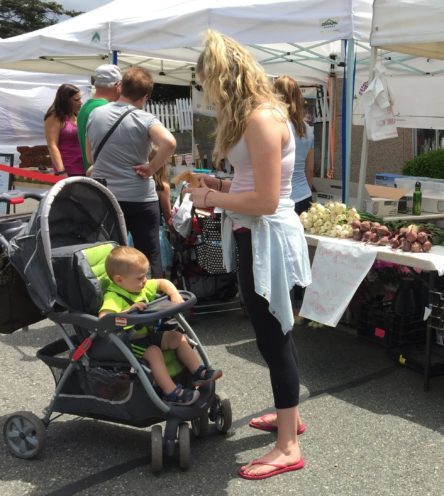
And babies. This little guy seems to have stashed something in his cup holder.
Outdoor markets have existed since ancient times, but they went out of style for a while in the United States. When I was growing up, farmers’ markets were nowhere to be found. Finally in the 1990s they made a comeback. According to Wikipedia, farmers’ markets in the United States grew from 1775 in 1994 to 8144 in 2013. A welcome improvement. Who said things were better in the good old days?
Do you shop at a nearby farmers’ market?