
Shevlin Sebastian's Blog, page 45
February 7, 2019
God is within you. Get in touch
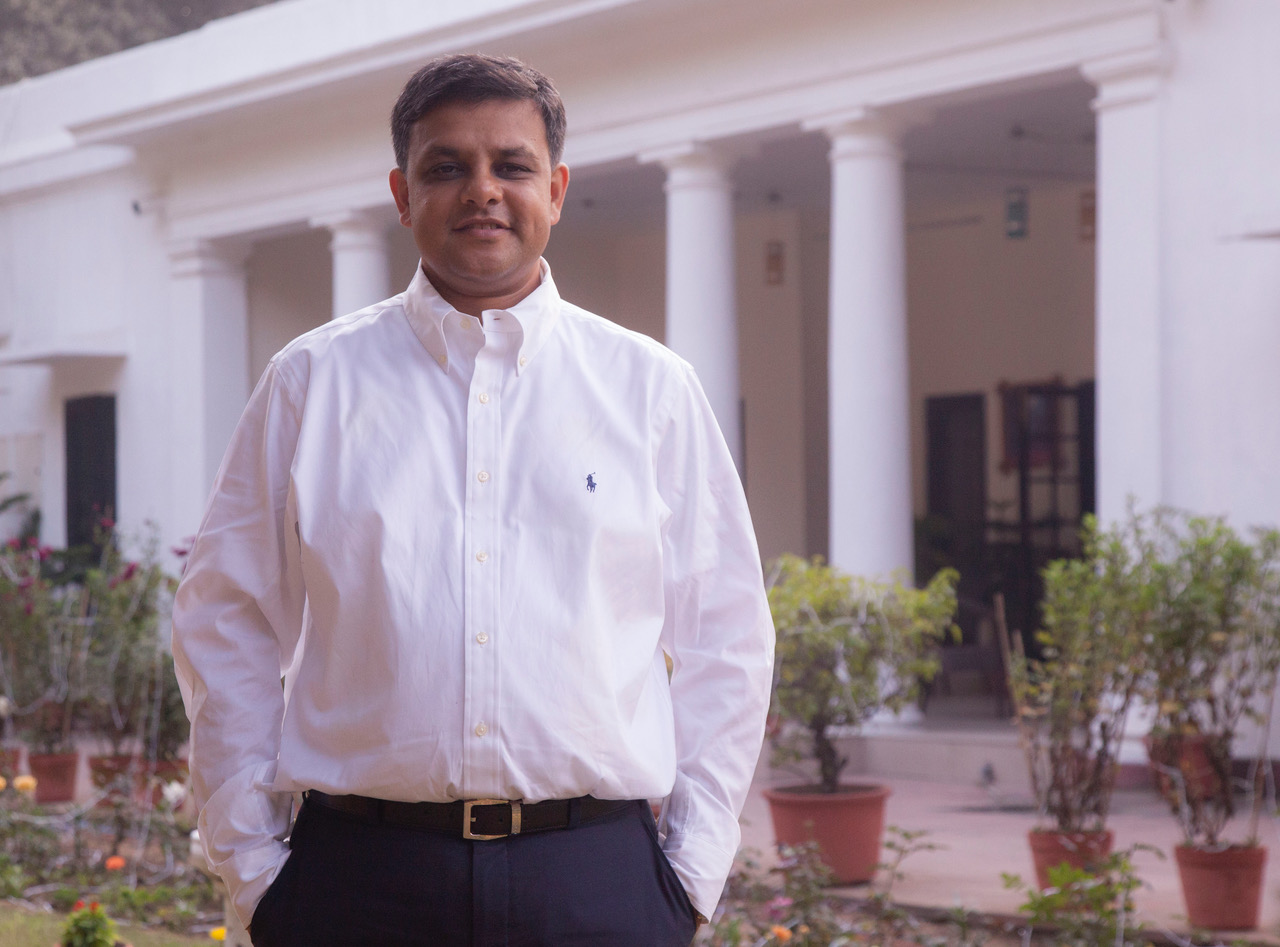
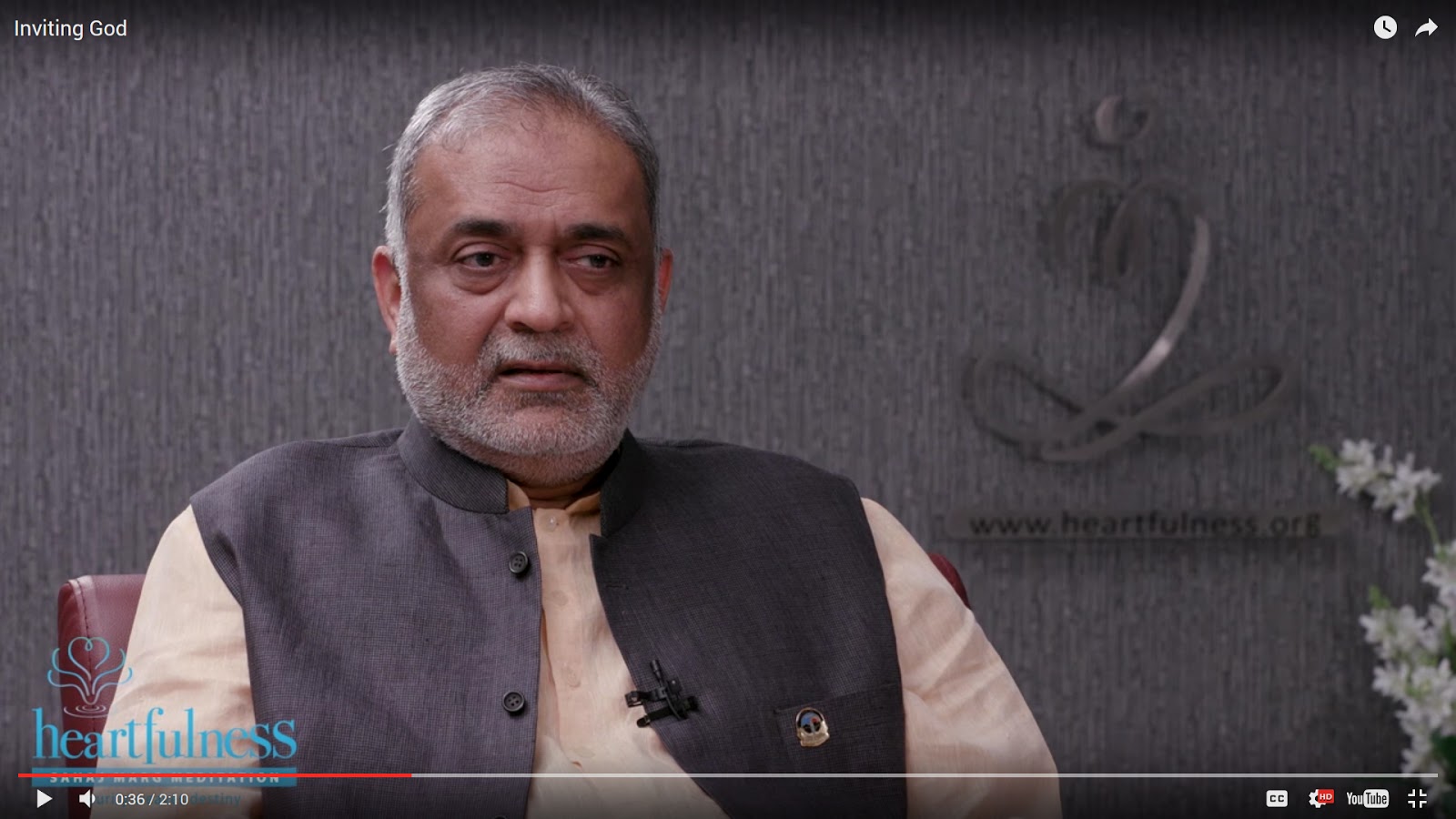 Entrepreneur Rishabh Kothari talks about how ‘Heartfulness Meditation’ changed his life
Photos: Rishabh Kothari and DaajiBy Shevlin Sebastian
At the Kerala Literature Festival at Kozhikode, held recently, entrepreneur Rishabh Kothari says, “So we are going to discuss an interesting subject, ‘Leadership and Self Management’. Rishabh was the moderator for an interaction with World Public Speaking champion Manoj Vasudevan and Joshua Pollock, co-author of the best-selling ‘The Heartfulness Way’.
Like Joshua, the Kolkata-based entrepreneur Rishabh is a proponent of ‘The Heartfulness Way’. Asked what it is, Rishabh says, “You sit in a comfortable position, either on a chair or on the floor and say to yourself, ‘There is a divine light in my heart’. You are not supposed to imagine or look for a light. Instead, you should try to feel the divine presence.”
But initially, the mind will always wander off. “When that happens, just bring it back gently to the heart. Our thoughts get their power from our attention. So, ignore them.”
And this simple practice, which Rishabh has been doing for one hour every morning, for 30 years, has changed his life. “It has changed the way I do business,” he says. “What happens is that when people meditate they become more focused. Your decision-making is clearer. There is a sense of purpose. The way you interact with your employees changes. I feel calmer and steadier, and at peace with myself.”
He says meditation has become an imperative in society. “If there is inner strife, it will reflect in outer problems,” says Rishabh. “When I look at my friends, colleagues or acquaintances, and I see the way they are reacting to their problems, I feel that I am very fortunate to have a process or a system which helps me to be centred and calm. In life, what will happen will happen, there is no choice. But what you can control is our reaction to it.”
To make sure that people are better equipped to deal with stress, Rishabh travels to different cities and holds meditation classes. He is one of 10,000 trainers globally. It is a volunteer service. And participants don’t need to pay also.
So far, the reactions have been varied. “Some people said they enjoyed it, others had tears in their eyes, and many felt as if they had just taken a dip into an ocean,” says Rishabh. “They felt so fresh.”
He remembers a 17-year-old boy Anand (name changed) who was not sure about which career path to take. “Anand wanted to do something but his father was saying something else,” says Rishabh. “His friends were advising something else.”
But after the 30-minute meditation session, Anand said, “I feel so confident. All my doubts have been cleared. I know now what to do.”
Like Anand, Rishabh was also confused about his life. Till one day, in 1988, when he was 15, his father took him to meet Parthasarathi Rajagopalachari or Chariji (1927-2014), who was the global head of the Heartfulness Way. It has its origin in the Spiritual Practice of Sahaj Marg offered by the Shri Ram Chandra Mission (srcm.org).
“At that age, I was convinced that spirituality and meditation were for losers and social dropouts, people who have nothing better to do,” says Rishabh. “But I read up about Chariji. He had joined the TTK Group as a sales person, but when he retired, he was the executive director. I realised that he had a very successful corporate career, so what was he doing with something like this?”
The first thing Rishabh found most remarkable was that Chariji was wearing a T-shirt and trousers. “I knew of Christian priests wearing white cassocks and Hindu holy men wearing saffron robes,” he says. “It was a culture shock for me.”
Again, when Rishabh bent to touch the feet of Chariji, the latter just shook the hand and said, “Hi, sit down.”
The subjects that Chariji spoke about was wide-ranging. “Chariji was talking about astronomy and planets,” says Rishabh. “I had just been reading ‘A Brief History of time’ by [British physicist] Stephen Hawking. That book was fascinating. And here was this man who was equally at ease talking about the Gita as well as astronomy. For the next hour-and-a-half, I remained fascinated. Every preconceived notion that I had was gone.”
Rishabh pauses and says, “It was a turning point in my life.” And Rishabh continues to propage Heartfulness Meditation with ceaseless vigour and energy.
-------Daaji -- the global guide
Entrepreneur Rishabh Kothari follows Kamlesh Patel, or Daaji as he is affectionately known, who is the present Global Guide of Heartfulness. “Daaji is an original voice in an ancient tradition,” says Rishabh. “His teachings arise from his personal experience on the path of Heartfulness, while reflecting his spirit of enquiry and respect for the world’s great spiritual traditions and scientific advancements.”
Born in Gujarat, Daaji showed an early interest in spirituality. In 1976, he met his Guide, Shri Ram Chandra, the founder and first President of the Shri Ram Chandra Mission at Ahmedabad.
Daaji moved to the US in 1980 but continued the Raja Yoga system of Sahaj Marg, with great devotion. Daaji became a follower of Parthasarathi Rajagopalachari (Chariji), the second President. Following Chariji’s passing on December 20, 2014, Daaji became the President of the Mission.
(The New Indian Express, Kochi, Kozhikode and Thiruvananthapuram)


February 5, 2019
The Assassination of Indira Gandhi

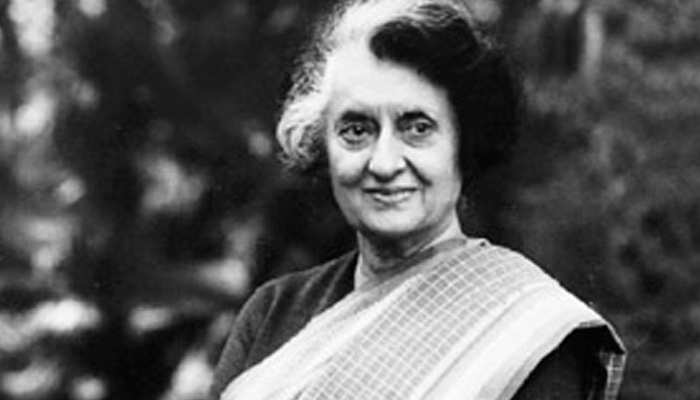
By Shevlin Sebastian
At 9.10 a.m. on October 31, 1984, Indira Gandhi stepped on the narrow path connecting her home, at 1 Safdarjang Enclave to her office at 1 Akbar Road. Just behind her holding a black umbrella was Constable Narayan Singh. And just behind him was Indira’s personal assistant RK Dhawan.
The Prime Minister, dressed in a saffron saree with a black border, was hurrying as she was late for an interview by Hollywood actor Peter Ustinov for a documentary on her for Irish television. She had also planned meetings with James Callaghan, the former prime minister of Britain as well as an official dinner for British Princess Anne, the only daughter of Queen Elizabeth II.
Indira turned to Dhawan and asked him a question just as she approached the wicker gate that connected the two houses.
On the right was her personal guard of ten years Sub Inspector Beant Singh. He had a .38 revolver. Interestingly, he was not in uniform. The one who was in uniform was Satwant Singh, who was standing on the opposite side and had a Sten machine gun.
Beant pulled out his revolver. Indra looked shocked and said, “What are you doing?” In reply, Beant fired three rounds at the Prime Minister’s abdomen. Satwant looked shocked. Beant shouted, “Fire.”
For a moment, Sawant was frozen. Then he shook his head and shot 30 bullets at Indira.
Indira collapsed on the ground and a line of crimson blood began to flow on the ground. It all happened in the span of a few moments. One bullet just missed Dhawan as he instinctively ducked.
Both the shooters threw their weapons on the floor. Then Beant said, "I have done what I had to do. You do what you want to do."
In the next few minutes, Indo Tibetan Border Force officers Tarsem Singh Jamwal and Ram Saran manhandled Beant and then shot him dead. Satwant was arrested.
In the meantime, Indira’s daughter-in-law Sonia rushed out saying, “Mummy, mummy.” Indira was put into a white Ambassador car. And she was rushed to the All India Institute of Medical Sciences hospital four kilometres away. In the car, apart from the driver and Indira, whose head was cradled in Sonia’s lap, there was Dhawan, and political secretary ML Fotedar in the front seat.
By this time, Indira had lost a lot of blood. So, the doctors used 80 bottles of blood but it was an uphill battle. Finally, at 2.23 p.m., they declared her dead. But the nation came to know, with absolute certainty, only when the news was read out on Doordarshan hours later.
It would seem Indira had an inkling of what was going to happen. A day earlier, during an election rally at Bhubaneshwar, she had said, “I am here today, I may not be here tomorrow. Nobody knows how many attempts have been made to shoot me, lathis have been used to beat me. In Bhubaneswar itself, a brickbat hit me. They have attacked me in every possible manner. I do not care whether I live or die. I proud that I have spent the whole of my life in the service of my people. I shall continue to serve until my last breath and when I die, I can say, that every drop of my blood will invigorate India and strengthen it.”
When she returned to Delhi on the night of October 30, she could not sleep. Later Sonia said that Indira Gandhi was awake till 4 a.m. That was when she got up to look for her medicines which she took for her asthma.
Meanwhile, on October 31, Indira’s son Rajiv Gandhi was campaigning in Contai, West Bengal. When he heard the news of his mother being shot, he was driven to Kolaghat (81 kms away) and boarded a helicopter, which was arranged by Cabinet Minister ABA Ghani Khan Chowdhury. He reached Kolkata at noon.
At 1 p.m. he was whisked off to Delhi in an Indian Airlines plane. Although by this time, he knew that his mother had passed away.
The background
Of course, there was a history behind the dastardly act. And it could be summarised with one name: Sant Jarnail Singh Bhindranwale.
Bhindranwale was the leader of the Damdami Taksal, a Sikh orthodox religious group. He was opposed to the Nirankaris, who believed in a formless God – Nirankar, which can be reached with the help of a guru. Sikhism, on the other hand, focused on the Guru Granth Sahib, the religion's Holy Book, which is considered to be a living guru. Jarnail ordered an armed group to go to a Nirankari function at Amritsar on April 13, 1978, saying that they should be cut to pieces. In the riots between these two groups, 13 Sikhs and three Nirankaris were killed.
Many pundits said that this was the start of militancy in Punjab. During this time, the Congress Party supported Bhindranwale because they wanted to weaken their chief rival, the Akali Dal.
In 1982, Bhindranwale launched a campaign for an autonomous state for Sikhs, to be called Khalistan. In June, 1983, to evade arrest, he took refuge along with his military cadres at the Akal Takht Shrine, the highest spiritual and temporal seat of the Sikhs in Amritsar and directed militant activities from there.
Things were going out of control. So, in June 1984, in order to bring normalcy to Punjab, Indira gave the go-ahead to the Army to launch Operation Bluestar, to flush out Bhindranwale and his armed outfit
But the army was taken aback when the militants used rocket-propelled grenade launchers. The Army had no option but to use heavy artillery as well as tanks to counter the attacks from the heavily fortified Akal Takht. After a 24-hour fight, the army wrested control. In the process, Bhindranwale was killed, among many others, and several buildings were damaged.
The Sikh public reacted with anger, They felt it was an assault on their religion. Many Sikh Army soldiers deserted their units. Sikhs also resigned from government jobs and returned national awards. And the anger reached its culmination when, a few months later, Indira was assassinated…
(The Martyrs' Supplement, The New Indian Express, South India)
February 4, 2019
A heart-breaking end to a tumultuous life

To take part in the 2008 parliamentary elections, former Pakistan Prime Minister Benazir Bhutto returned to the country, from a self-imposed exile in 2007. While campaigning in Rawalpindi she died in a bomb blast
By Shevlin Sebastian
On December 27, 2007, there was a festive spirit on the streets of Rawalpindi. People were waving placards. There were cheers and shouts of ‘Benazir Bhutto Zindabad’ The former Prime Minister was wearing a satiny blue salwar kameez, a white shawl around her head, and two thick flower garlands around her neck.
After a self-imposed exile of eight years, in Dubai and London, while court cases of corruption against her remained pending Benazir had returned to Pakistan to take part in the 2008 national elections.
Benazir was standing and waving to supporters through the sunroof of her bulletproof white Toyota Land Cruiser. John Moore, a Getty Images photographer who was standing nearby said that there were two gunshots and Benazir fell back inside. Very soon after that, there was a bomb blast.
Benazir’s close confidant Sherry Rahman, who was inside the vehicle, says, “I remember the vehicle shaking and the glass splintering.”
An unconscious Benazir was rushed to the Rawalpindi General Hospital. The time: 5.35 p.m. A team of doctors tried to save her. But her injuries were far too grave. And she passed away.
Expectedly, there was a violent reaction.
Supporters destroyed the hospital’s glass doors, vehicles were burnt, stones were thrown on the streets, the police were attacked, traffic was blocked, and billboards of military dictator General Pervez Musharraf was torched. Soon, the Pakistan Rangers announced shoot-on-sight orders.
At least 47 people died in the riots. Overall, 176 banks, 34 petrol pumps and hundreds of cars and shops were destroyed.
There was a debate about how she died. Her Pakistan People’s Party said she was shot by an unidentified gunman before he detonated the explosives he was wearing. But the Interior Ministry, in a statement, said, ‘Bhutto was killed when she tried to duck back into the vehicle, and the shock waves from the blast knocked her head into a lever attached to the sunroof, fracturing her skull.’ An anonymous Toyota official said Benazir could not have hit the lever based on its location in the car.
Farooq Naik, a senior official of the PPP said the Ministry’s statement was ‘baseless’ and ‘a pack of lies’. Meanwhile, a doctor at the hospital said that Benazir’s medical records were taken away immediately and they were warned not to talk about the killing.
Later, a nine-month investigation by the UN Commission of Inquiry, appointed by Secretary-General Ban Ki-moon at the request of the Pakistani Government, said, “A range of government officials failed profoundly in their efforts first to protect Ms Bhutto and second to investigate with vigour all those responsible for her murder, not only in the execution of the attack but also in its conception, planning and financing.”
Heraldo Munoz, Chile’s Ambassador to the UN and chairman of the commission said, “Responsibility for Ms Bhutto’s security on the day of her assassination rested with the federal government, the government of Punjab and the Rawalpindi district police. None of these entities took necessary measures to respond to the extraordinary, fresh and urgent security risks that they knew she faced.”
The Commission was also unhappy with the investigation in the immediate aftermath of the killing. “The collection of 23 pieces of evidence was inadequate in a case that should have resulted in thousands,” said Munoz. “Hosing down of the crime scene just two hours after the blast goes beyond mere incompetence. It is up to the relevant authorities to determine whether this amounts to criminal responsibility.”
Till now, nobody has been charged with the dastardly killing.
Background
Benazir Bhutto had been Prime Minister of Pakistan twice, from 1988 to 1990, and from 1993 to 1996. She is now regarded as the first woman to lead a democratically elected government in a Muslim majority nation. She was the daughter of Zulfikar Ali Bhutto who became Prime Minister in 1973. However, General Zia ul Haq ousted him in a 1977 military coup and subsequently, Zulfikar was hanged.
Benazir, who had studied at Harvard and Oxford Universities, along with her mother Nusrat, took control of her father’s Pakistan People’s Party (PPP) and launched the Movement for the Restoration of Democracy. She was jailed by Zia and then exiled to London in 1984. She returned in 1986. On August 17, 1988, Zia Ul Haq died in a plane crash. Thereafter, in the 1988 elections, Benazir led the PPP to victory.
As Prime Minister, her attempts at reform were stymied by conservative President Ghulam Ishaq Khan and the powerful military. Her administration was accused of corruption and nepotism and dismissed by Khan in 1990. Thereafter, Nawaz Sharif came to power. When that government was also dismissed in 1993, when Khan dissolved the National Assembly, Benazir led the PPP to victory in the 1993 elections.
During her second term, she advanced privatisation and women’s rights. But there were several controversies: the assassination of her brother Murtaza, and a bribery scandal involving her and her husband Asif Ali Zardari. As a result, President Farooq Leghari dismissed her government in 1996. The PPP lost the 1997 elections and in 1998 Benazir went into self-exile in Dubai.
(Martyrs' Supplement, The New Indian Express, South India editions)
February 1, 2019
Rasputin’s meteoric rise and macabre death


Grigori Rasputin, a monk, was a spiritual advisor to Czar Nicholas 11 and his wife Alexandra. The elite found his presence a menace. Soon, he was murdered
Photos: Rasputin; the monk surrounded by his admirers
By Shevlin Sebastian
On the night of December 16, 1916, Grigori Rasputin, a monk who was very close to Czar Nicholas 11 and his wife Alexandra, was invited to the Moika Palace at St. Petersburg, which belonged to Prince Felix Yusupov. Felix was regarded as one of the richest men in Russia and was married to Irina, the only niece of Czar Nicholas 11.
When Rasputin entered the palace he heard a gramophone recording of the American song, ‘Yankee Doodle’.
“What’s this?” said Rasputin. “Is someone giving a party?”
Felix said, “My wife is entertaining a few of her friends.” Owing to the bitter cold, Felix said, “Let’s have a cup of tea.”
Then he invited Rasputin to come to the basement. It had a fireplace. In front of it was a round table, with three wooden chairs. Rasputin sat on one of the chairs. There, according to Felix’s autobiography, ‘Lost Splendor’, (1928), he gave Rasputin cakes to eat, which had been laced with cyanide. Rasputin ate a couple. But, to Felix’s surprise, Rasputin remained normal. After a while, Rasputin asked for Madeira wine, which had also been poisoned. Again, Rasputin drank it and showed no signs of distress.
Felix’s co-conspirators were waiting upstairs. They included the Grand Duke Dmitri Pavlovich and the right-wing politician Vladimir Purishkevich.
Felix excused himself and went upstairs. He borrowed a revolver from Dmitri. Then he went down and shot Rasputin in the chest. Rasputin fell to the floor.
Thinking that he had died, the trio went over to Rasputin's apartment, with one of them wearing Rasputin's hat and coat, to show that Rasputin had returned home.
But when Felix returned to the basement, suddenly, Rasputin jumped up and attacked him. Felix was shocked but managed to flee upstairs.
In his book, Felix wrote, “This devil who was dying of poison, who had a bullet in his heart, must have been raised from the dead by the powers of evil. There was something appalling and monstrous in his diabolical refusal to die.”
Rasputin followed Felix up the stairs and managed to make his way out into the snow-banked courtyard. He staggered from side to side. But it was then that Purishkevich came out and shot him dead. The group then wrapped Rasputin’s body in a sheet of cloth, went to the Petrovsky Bridge and dropped the body into the Malaya Nevka River.
The next day an investigation was launched. When a couple of labourers noticed blood on the railing of the Petrovsky Bridge, they informed the police.
Rasputin’s body was found 200 metres downstream. Following a post-mortem by Dr Dmitry Kosorotov, a senior autopsy surgeon, he mentioned that there were three gunshot wounds to the forehead.
Eventually, Rasputin was buried on January 2. The funeral was attended by the royal family and a few others. Rasputin's wife, children and his mistress were not invited, although his daughters met the Royal family later that day.
However, when the Tsar abdicated the throne in March, 1917, Rasputin’s body was exhumed and burned by a group of soldiers so that his burial site did not become a rallying point for supporters of the old regime.
The Background
The reason for the murder was because there was a lot of resentment against Rasputin because of his undue influence with the Czar as well as Alexandra.
He seemed an unlikely person to reach the inner circle. Rasputin was born in 1869 in the village of Pokrovskoye, 433 kms from Moscow. When he grew up, he worked on his father’s farm. Later, he married a local woman Praskovya Dubrovina and had three children Maria, Dmitri and Varvara.
Rasputin’s life changed in 1892 when he spent a few months at a monastery. The monks observed that he had a religious fervour as well as a personal charisma. Soon, he met some Russian Orthodox clergymen as well as members of the Imperial Family.
Later, through the family members, he met the Czar. And the latter was impressed. The Czar wrote a letter to one of his ministers in 1906 in which he said, “A few days ago I received a peasant from the Tobolsk district, Grigori Rasputin, who brought me an icon of St. Simon Verkhoturie. He made a remarkably strong impression both on Her Majesty and on myself so that instead of five minutes our conversation went on for more than an hour.”
Soon, Rasputin became their spiritual advisor. But he had the most impact on Alexandra who was deeply anxious because her only son Alexei suffered from haemophilia.
He would regularly pray over Alexei. Author Douglas Smith, in his book, ‘Rasputin: Faith, Power and the Twilight of the Romanovs,’ (2016), wrote, “Rasputin’s assurances calmed the anxious, fretful mother and filled her with unshakeable confidence, and she, in turn, transferred this confidence to her ailing son, literally willing him back to health.”
One reason for Alexei’s improved health could be that Rasputin ensured that there were no doctors around him. And that turned out to be the right decision. Among the many medicines they used was aspirin which tended to thin the blood. As a result, Alexei improved rapidly. And Rasputin’s position became even more entrenched.
Soon, Rasputin was making recommendations for ministerial appointments and that angered the elite. His behaviour away from the court was nothing short of scandalous. He was often drunk and widely promiscuous, sleeping with prostitutes as well as society women. The press wrote about his affairs and it scandalised the public. There were rumours also that Rasputin was sleeping with Alexandra, too. It all became a bit too much. And finally, Felix and his fellow conspirators decided to finish him off.
When the Russian Revolution took place in 1917, Felix and his wife emigrated to France and lived a life of attending dance balls and the ballet. But he seemed to have no regrets about the killing of Rasputin. In 1967, just before he died, at the age of 80, a French TV interviewer asked him, “When you think about Rasputin, what sentiments come to your mind?”
“Disgust,” said Felix coolly.
-----------------Rasputin in modern life
For modern audiences, they became aware of Rasputin thanks to the 1978 disco superhit song by the pop group, Boney M.
Here are the lyrics:
There lived a certain man in Russia long agoHe was big and strong, in his eyes a flaming glowMost people looked at him with terror and with fearBut to Moscow chicks, he was such a lovely dear.
He could preach the Bible like a preacherFull of ecstasy and fireBut he also was the kind of teacherWomen would desire.
Ra Ra RasputinLover of the Russian queenThere was a cat that really was goneRa Ra RasputinRussia's greatest love machineIt was a shame how he carried on.
But when his drinking and lusting and his hungerfor power became known to more and more peoplethe demands to do something about this outrageousman became louder and louder.
"This man's just got to go!" declared his enemiesBut the ladies begged, "Don't you try to do it, please."No doubt this Rasputin had lots of hidden charmsThough he was a brute they just fell into his arms.
Then one night some men of higher standingSet a trap, they're not to blame"Come to visit us," they kept demandingAnd he really came.
Ra Ra RasputinLover of the Russian queenThey put some poison into his wineRa Ra RasputinRussia's greatest love machineHe drank it all and he said, "I feel fine."
Ra Ra RasputinLover of the Russian queenThey didn't quit, they wanted his headRa Ra Rasputin,Russia's greatest love machineAnd so they shot him till he was deadOh, those Russians...
(The Martyrs' Supplement, The New Indian Express, South India)
January 31, 2019
When the music died
 John Lennon, a co-founder of the Beatles pop group and one of the world’s most famous musicians, was shot dead by Mark David ChapmanBy Shevlin Sebastian
 It had been a long day for musician John Lennon and his wife Yoko Ono. They had spent many hours at a record studio at New York where John was working on a song by Yoko called ‘Walking on Thin Ice’, in which he played the lead guitar.
It was almost 11 p.m. when they returned to the Dakota building where they lived. A young man Mark David Chapman was standing silently in the archway. John nodded as he seemed to recognise Mark. A few hours earlier, John had signed the jacket leaf of his record, ‘Double Fantasy’, for Mark.
When the couple had walked a few steps ahead, Mark pulled out a .38 special revolver and aimed shot five times at John’s back. The singer staggered and fell into the reception area where he said, “I am shot, I am shot.”
The doorman at the Dakota Jose Perdomo as well as the concierge Jay Hastings immediately informed the police.
Mark threw the revolver to the ground and stood calmly at one side. He had also taken off his coat to show that he had no concealed weapon. Perdomo shouted at Chapman, “Do you know what you've done?". Mark said calmly, "Yes, I just shot John Lennon.”
When the police arrived they saw that Mark was holding a paperback of JD Salinger’s classic novel, ‘The Catcher In The Rye’. Mark was handcuffed and placed in the back seat of the police car. Another pair of policemen, officers Herb Frauenberger and Tony Palma saw John lying face down on the floor. Blood was gushing out of his mouth. Instead of waiting for an ambulance, with the help of first responders, they placed John in the back seat of the police car and took him to the St. Luke’s Roosevelt Hospital Centre.
By this time, John had no pulse. Several doctors and nurses tried to revive him but to no avail. Finally, in an act of desperation, surgeon David Halleran cut open Lennon's chest and did a manual heart massage but he soon gave up because there was far too much damage done by the bullets.
Finally, at 11 p.m., on December 8, 1980, John Lennon, who was only 40, was declared brought dead on arrival.
When the news spread, there was a sense of shock and outrage. As Jay Cocks wrote in Time Magazine: ‘The outpouring of grief, wonder and shared devastation that followed John's death had the same breadth and intensity as the reaction to the killing of a world figure: some bold and popular politician, like John F Kennedy or a spiritual leader like Martin Luther King Jr.’
John was the co-founder of the Beatles, one of the most successful pop groups of all time. He and fellow founder Paul McCartney had a successful songwriting partnership, which was one of the reasons why so many of their songs, like ‘Hey Jude’, ‘Penny Lane’, and ‘Ob-La-Di, Ob-La-Da’ became superhits. The other members included George Harrison and Ringo Starr. However, the group disbanded in 1970 and both John and Paul went on to have highly successful solo careers.
In 2002, Lennon was in the Top Ten of the 100 Greatest Britons in a BBC poll and in Rolling Stone magazine’s greatest singers of all time, he came in at No 5. In 1987, he was posthumously inducted into the Songwriters Hall of Fame as well as the Rock and Roll Hall of Fame.
Background
So who is Mark David Chapman? And why did he want to kill John?
Mark belonged to a middle-class family in Fort Worth, Texas. His father was a staff sergeant in the US Air Force while his mother was a nurse. As a boy, he watched his father being violent with his mother and that frightened him. When David was 14, he began taking drugs and missed classes at the Columbia High School in Georgia.
When a friend presented him with the book, ‘The Catcher In The Rye’, he was profoundly affected by it. He modelled himself on the teenage hero, Holden Caulfield. But at the age of 16, he became a born-again Christian.
A few years later, he joined the Covenant College, a liberal arts college in Georgia. But he did not do well. He had an affair which broke up. David felt suicidal. Soon, he dropped out of college. Then he went to Hawaii. One day, he attached a hose to his car’s exhaust pipe and led it inside the car. He wanted to kill himself by carbon monoxide asphyxiation. But the hose melted. Mark was then admitted to Castle Memorial Hospital because he was suffering from depression. When he was released, he got a job in the same hospital. At this time, his parents divorced and his mother joined him.
In 1978, Mark decided to go on a trip around the world. Soon, he fell in love with a Japanese American Gloria Abe and married her on June 2, 1979. They remain married to this day.
Meanwhile, Mark was a Beatles fan who idolised John. But he became angry when he read that John had said that the Beatles were more popular than Jesus Christ. Some members of a prayer group, of which Mark was a member, joked, paraphrasing John’s famous song, ‘Imagine’, by saying, “Imagine if John Lennon was dead.” And that was when Mark decided he would kill John.
Following his trial, Mark was sentenced from 20 years to life. Thus far, he has spent 38 years behind bars. His parole has been rejected 10 times since 2000. The latest was in August, this year. His next hearing will be in 2020. And in the past few years Mark has repeatedly said that he regretting killing John especially when he gets letters from the musician’s fans who ask him the reasons behind his dastardly act.
(The Martyrs' Supplement, The New Indian Express, South India)
January 30, 2019
The bullet shot that shook America


Five days after winning the American civil war against the Confederates, US President Abraham Lincoln was shot dead by John Wilkes Booth, an actor and Confederate supporter while watching a play in Washington
Illustrations: John Wilkes Booth shooting Abraham Lincoln; the vigil near Abraham Lincoln's bed as his life ebbs away
By Shevlin Sebastian
On April 14, 1865, when President Abraham Lincoln entered the Ford’s Theatre at Washington late to watch the play ‘Our American Cousin’, it was stopped while the orchestra played ‘Hail to the chief’. Around 1700 members of the audience stood up and applauded. Soon Lincoln and his wife Mary settled in their box even as the play resumed. The others in the box included a young army officer named Henry Rathbone and his fiancé, Clara Harris.
At one point when lead actor Harry Hawk said a funny line, the audience burst out laughing, including Lincoln.
At 10.15 p.m., a nationally known actor John Wilkes Booth stepped up behind Lincoln. Using a .44 calibre pistol, he shot at Lincoln. Later reports suggested that the bullet entered Lincoln's skull behind his left ear, passed through his brain, and fractured both orbital plates.
Lincoln slumped over and then fell backwards.
Rathbone immediately rushed at Booth but the latter stabbed him on the shoulder. Then Booth jumped onto the stage, from a height of 12 feet, and shouted the Latin phrase, “Sic Semper tyrannis!” (“Thus ever to tyrants!”).
The audience thought it was part of the play till Mary screamed. As for Booth, although he broke his leg, he managed to escape.
Meanwhile, Charles Leale, a young doctor, who was in the audience, rushed to the box. He saw that Lincoln was struggling to breathe. Then several people carried Lincoln to a boarding house on the opposite side. Sometime later, the Surgeon General Joseph K Barnes arrived and he, along with a few other doctors, including Lincoln’s personal physician Robert K Stone inspected Lincoln and concluded that he could not be saved.
There was a vigil. The Navy Secretary Gideon Welles and War Secretary Edwin M Stanton arrived. And many other officials and people’s representatives came to pay their respects. Just before 7 a.m. Mary sat at Lincoln’s side and kissed him and murmured sweet but despairing endearments. Finally, Lincoln was pronounced dead at 7:22 a.m. on April 15, 1865, at the age of 56.
The body was taken to the White House where an autopsy was done. Mary asked the surgeons for a lock of Lincoln’s hair which was duly given. As they were removing Lincoln’s brain, the bullet fell into a basin. Suddenly, the team stopped and stared at it in silence. It would be a bullet that would traumatise a nation for generations to come.
The killing took place just five days after the surrender of Confederate General Robert E. Lee and his army at Appomattox Court House, Virginia. It ended the four-year-old American Civil War.
All over the country flags flew at half mast and all the shops were closed. People reeled from the shock of the assassination.
On April 18, Lincoln’s body was placed in the Capitol rotunda. Thereafter, after three days, it was taken on a train to a cemetery in Springfield, Illinois, 2700 km away. Incidentally, Springfield was where Lincoln lived before he became president.
Many thousands of Americans lined the route. Along the way, the train would stop and bands would play and people sang hymns. Lincoln was buried alongside his son Willie, who died of typhoid fever in 1862.World leaders mourned his death. Lord Russell, the British Foreign Secretary said it was a calamity, while China’s Chief Secretary Prince Kung said, “I am shocked and startled.” The Ecuadorian President Gabriel Garcia Moreno was more vocal: "Never would I have thought that the noble country of Washington would be humiliated by such a black and horrible crime; nor should I ever have thought that Mr Lincoln would come to such a horrible end, after having served his country which such wisdom and glory under so critical circumstances.”Meanwhile, the search for Booth began in right earnest. More than ten thousand troops were involved. Huge rewards were offered: $50,000 (this was equivalent to $800,000 in today’s money). Booth had escaped on a horse. After being treated by a doctor Samuel A Mudd for his broken foot, he took refuge in tobacco farmer Richard H. Garrett’s house in Virginia by saying he was a wounded Confederate soldier.
But he was discovered on April 26. Soldiers surrounded the barn. But Booth refused to come out. He shouted, "I will not be taken alive!"
The barn was set on fire. Booth rushed out with a rifle and a pistol. But Sergeant Boston Corbett shot Booth in the back of his head, in a manner similar to the way Booth killed Lincoln.
He was taken to the steps of the barn. Booth, who was only 26 years old, told one of the soldiers, "Tell my mother I died for my country." He passed away two hours later.
The Background
The American Civil War was fought from 1861 to 1865. It was about the enslavement of black people. The secessionists of the South advocated for states' rights to uphold slavery. The loyalists of the North proclaimed their support for the Constitution.
War broke out in April 1861 when secessionist forces attacked Fort Sumter in South Carolina.
Among the 34 U.S. states, seven states said they were seceding, and formed the Confederate States of America. However, this was not diplomatically recognised by the US government or any foreign country.
The Union and Confederacy quickly raised volunteer and conscription armies that fought mostly in the South. The end result: 750,000 people dead, more than the number of U.S. military deaths in all other wars combined.
The war ended when General Robert E. Lee surrendered to General Ulysses S. Grant at the Battle of Appomattox Court House. Confederate generals in the southern states followed suit. Much of the South's infrastructure was destroyed, especially the transportation systems. The Confederacy collapsed, slavery was abolished, and four million black slaves were freed.
During the Reconstruction Era that followed the war, national unity was slowly restored, and the government expanded its power. Civil rights were guaranteed to freed black slaves through amendments to the Constitution and federal legislation.
(The Martyrs' Supplement, The New Indian Express, South India)
January 27, 2019
Shalom, a night to remember!


For probably the first time, in Kochi, Christians felicitated Jews at an event called ‘A Night To Honour Israel’
Photos: the girl's choir; the Jews of Kochi
By Shevlin Sebastian
The photo which social worker Abe Thomas Oommen of Kochi saw in the newspaper was heart-warming. It was of Dana Kursh, the Bangalore-based Israeli Consulate General, in charge of South India, standing on a truck along with two fellow officers, all holding cartons of drinking water bottles.
They were arranging to send relief supplies to Kerala during the floods a few months ago. “It touched my heart,” says Abe. “This must have been the first initiative by a foreign embassy to support Kerala. I felt the need to do something.”
And that wish came to fruition on January 20, when Abe and a few friends arranged ‘A Night To Honour Israel’, which was supported by 20 Protestant churches.
Abe says that Christians have not felicitated Jews in such a manner even though there have been close links for a long time. “Yes, this is the first time this has happened in Kerala,” says Josephhai Sam Abraham, a leader of the Jewish community.
Says Fr. Paul Karedan, spokesperson of the Ernakulam-Angamaly Archdiocese of the Syro-Malabar Church, “Though the Jewish community is very small in Kerala we have had cordial relations for a long time. But it is also a fact that we have not had many interactions.”
Even though, as Abe says, Jews are at the root of the Christian faith. “Jesus Christ was a Jew,” he says. “All the apostles were Jews. The prominent people in our faith, like Abraham, Joseph and Jacob have their roots in Judaism.”
Out of the 14 Jewish families living in and around Kochi, members from eight families attended. “The purpose was to remember and celebrate what the Jews have contributed to Kerala,” says Abe.
The chief guest was Ariel Seidman, the Deputy Consular General for the Israel Consulate in Bangalore. Among the 700 people present, there were judges, police officers, church leaders, businessmen, artists and writers.
During the programme, several Hebrew songs were sung by members of church choirs and also a dance to the tune of the evergreen Jewish folk song, ‘Hava Nagila’.
Abe’s wife, Deepa, a psychologist, who knows a bit of Hebrew provided the training over a period of one month. Incidentally, when a group of children sang, they wore white T-shirts with the line, ‘I Stand With Israel’ next to an image of the Star of David.
Then the Jews were presented with a hand-painted plaque with the word ‘Shalom’ written in Hebrew and English (‘Shalom’ means peace and this is how the Jews greet each other when they meet for the first time). The hand design was done by young artist Meghna Girish.
The Jews were very happy. “It was a unique experience,” says Josephhai Sam Abraham. “I was very much taken up by the perfect singing of the Hebrew songs by the children as well as the choir members.”
(The New Indian Express, Kochi, Thiruvananthapuram and Kozhikode)
January 21, 2019
A Pakistani, with curiosity


The London-based Rehana Zaman talks about her film which is being shown at the Kochi Muziris Biennale, as well as racism, and her views of India and Pakistan
Photos by Albin Mathew
By Shevlin Sebastian
When the London-based artist Rehana Zaman was walking down a road at Fort Kochi, a man approached her and said, “Are you from North India?”
“No,” she said. “I am Pakistani.”
Taken aback, it took a moment before the man broke out into a smile.
“Welcome to India,” he said.
Whenever she introduced herself as a Pakistani, the people smiled and some shook her hand.
A featured artist in the fourth edition of the Kochi Muziris Biennale, Rehana, in collaboration with the film collective, Liverpool Black Women Filmmakers, is showing a 25-minute film called, ‘How does an Invisible Boy Disappear?’ It shows a young girl Liyana who goes in search of a missing black boy Jamal Clarke.
“I wanted to show how black and brown women are portrayed negatively in the media,” says Rehana. “The film has archival footage of disturbances between the police and black and brown communities and the way the state dealt with racial unrest. Your background, gender and ethnicity can affect the way you are treated.”
Rehana says the official approach is disappointing. “In fact, there is a disproportionately larger number of black and brown people in the prisons,” she says. “I do feel like an outsider even though I am part of the system (she teaches fine art twice a week to undergraduate students at Goldsmiths, University of London). I have this double consciousness.”
Rehana is always aware that her name and Muslim background can have a negative impact. “However, I pass muster because I speak English well, and I am Westernised in my dress,” she says. “But my mother, relatives and friends are not treated in the same manner.”
There is an in-built racism. At her University, out of a staff of 40, there are only two Asian women. “They treat me well because it is a liberal arts institution,” says Rehana. “But when it comes to hiring practices or wages, it is not so good. The language used by the bureaucracy is very welcoming, but the structures can be very hostile. If you look at the statistics, and the people who are at the top of all institutions, you can see the bias.”
She says the London Mayor Sadiq Khan, who is of Pakistani origin, gets extreme criticisms and a powerful backlash. “He has to be seen to be doing more against terrorism,” says Rehana. “So, he encourages a greater police presence on the streets, an increase of ‘stop and search’ of young Asian and black men and asks Muslim community leaders to do more.”
Meanwhile, when asked to define India in one word, Rehana says, ‘Partition. I have relatives in North India. I also think of people, communities, colour and food.”
Rehana likes biriyani, dosas, appams and idiyapam. She is a regular visitor to the South Indian restaurants in London.
In London, she is friendly with Indians from Tamil Nadu and North India.“But mostly, I have friends among British and Kenyan origin Indians,” says the 36-year-old.
That may because Rehana is part of the diaspora. Her parents had migrated from Pakistan because of economic reasons in the late 1960s. So Rehana grew up in a town called Heckmondwike, around 300 kms from London.
She was always interested in art and after graduation from Goldsmiths, she has concentrated on her career as an artist. “I am interested in scripts, film history and politics,” she says. Her mode of expression is through films and she has participated in the Liverpool Biennale of Contemporary Art in 2018.
Meanwhile, when asked her views about Pakistan, where she does visit, Rehana says, “Pakistan is a beautiful place. In cities like Lahore and Islamabad, people can move with relative freedom. But that may not be the case in rural areas. However, a lot of my Pakistani women students express frustrations about the lack of freedom they have. If I go to Pakistan now, I don’t think I can travel alone. I will need the company of my brothers to go from place to place. The behaviour of the state can be authoritarian. If you have an encounter with the police, you can face a lot of difficulties.”
Rehana pauses and says, “That’s the case in many places in the world: freedom is being steadily taken away.”
(Sunday Magazine, The New Indian Express, South India and Delhi)
January 20, 2019
Made In India Heroes


Authors R. Gopalakrishnan and Dr Ranjan Banerjee explore the reasons behind the success of Indians in top global companies
Photos by Albin Mathew. R Gopalakrishnan (left) and Dr. Ranjan Banerjee; the cover of the book
By Shevlin Sebastian
It was lunchtime at the Cathedral and John Connon School in Mumbai. And expectedly, in a cosmopolitan city, there was a boy from Gujarat, another from Kerala, a third student from Rajasthan and a fourth from Bengal. Without much ado, they put their tiffins on the table and shared the food. “I remember that each cuisine was so different,” says Dr Ranjan Banerjee, Dean and Professor, Marketing, at the SP Jain Institute of Management and Research at Mumbai. “We learnt to respect each other and the food.”
Because Ranjan was studying in a Christian school, during Assembly, he would say the Lord’s Prayer. But at night, without any sense of contradiction, he would attend the Durga Puja celebrations. “The ability to deal with differences is deeply ingrained among us Indians,” says Ranjan. “So, when you go to a work environment abroad where there are people from several countries it is a logical extension of your childhood and you are able to adapt easily and accept everybody.”
Ranjan, along with his co-author R. Gopalakrishnan, a former Director, Tata Sons and Vice Chairman, Hindustan Lever, got thinking about this, when they came across a Global Leader Survey by the executive research firm Egon Zehnder which concluded that Indians led more Standard & Poor 500 companies than people of any other nationality, except Americans. The list included people like Vikram Pandit at Citibank, Indra Nooyi at Pepsico and Sanjay Jha at Motorola.
It pricked their curiosity. Was this an accident, they wondered. “To find out, we spoke to our batch mates who are in global positions, and said, ‘Did being brought up and educated in India make a difference to where you are today?’” says Gopalakrishnan. “And almost across the board we got replies like there was an element of resilience that we learnt, we grew up dealing with the unpredictable, and there was a competitive intensity. Soon, we saw a set of themes emerging.”
So, the duo, who are close friends, did extensive research and conducted numerous interviews, before they began writing. The end result is a 196-page book called ‘The Made In India Manager’.
So what qualities does one gain by living in India? Ranjan provides an example. “In many cities, after office hours, you will see people waiting at a bus stop,” he says. “When the bus arrives, somebody will throw a handkerchief in through the window to book a seat. That’s because the number of seats is significantly lower than the number of people who aspire for the seat.”
This competitive intensity is there from the start. “Anybody who is an executive in a multinational company or a top organisation has typically competed at some point of time with a ratio of 1:100, because of our huge population,” says Ranjan.
Apart from competition, there is a strong family culture in India and the values they espouse. Or, as Ranjan says: “Since we grow up in large families, we develop the quality of empathy. Also, there is somebody, either a father, uncle or grandfather, who plays a pivotal role in moulding a young person.” For Ranjan, it was his own parents who always encouraged him.
Indians have other advantages, too, like a culture of management education. “In fact, management education in India started soon after independence,” says Gopalakrishnan. “The Indian Institutes of Management were set up in the 1960s. We are the world’s largest producers of MBAs. Korea and Japan cannot match us. So, our management preparation factories have also played a distinct role of Indians emerging as good managers.”
Plus, Indians are very strong in English, the global language for business. As the book states, ‘Most Indian business executives receive all of their business training in English, exclusively read English papers, watch English news channels and quote from the ‘Economist’ and the ‘Harvard Business Review’. This has created a class of professional managers who turn to English when they want to articulate a complex thought.’ And that is a big advantage when you work for a global company.
All in all, this is a cogently-argued and lucidly written book, which can be read, with profit, by youngsters, at the beginning of their careers, as well as seasoned professionals.
(Sunday Magazine, The New Indian Express, South India and Delhi)
January 19, 2019
The charms and aches of the beautiful game

By Shevlin Sebastian
When The New Indian Express reporter IS Gopika posted a photo of a group of us office colleagues, on Facebook, just after we had played a hard-fought 60-minute six-a-side football match, on a Tuesday night, at Kochi, recently, my mind flashed to the past. To my student days at St. Xavier’s School, Kolkata.
And there I was, in Class four, running down the right flank, frail-looking, but fleet-footed, reaching the corner, stopping suddenly, half-turning towards the goalpost, and sending the ball floating across. What happened next I cannot recall. But I do remember the moment when I drifted to the middle, the ball coming to me, accidentally, and then I quickly swung my leg, and, bang, the ball entered the net. The first goal of my life! It seemed as if a bolt of lightning had struck me.
And today, years later, the charm of the game remains. The group I play with includes reporters, writers, designers, photographers, marketing and desk people. In other words, they are earning a living by expressing themselves. And that can be seen on the football field. A cohesion as well as a collision of strong personalities, and strong bodies, too, expressing themselves with vigour, confidence and the occasional foul.
In the past six months, ligaments have been torn, toenails chipped, backs have been hurt and muscle spasms have occurred. Sometimes, in the heat of battle, you don’t even know you are hurt. Once when I was having a shower, following a game, I felt a pain in my foot. When I looked closely, I saw two round stud marks. The blood had congealed but I was puzzled. When did this happen?
Twice I landed, as if in slow motion, on my back. Twice the ball hit my face but thankfully, no major damage was done. In another instance, when I battled for the ball, I felt a pain in my elbow. This lasted for a couple of days.
Still, there were sublime moments. During one such instance, an exchange of passes, between four players, and finally, I got the chance to deliver the coup de grace, with the goalkeeper out of position.
But not always. Gopika is the only woman in our group. She plays a goalkeeper and is improving game by game. In a recent match, she saved two certain goals. And she has an unflinching look even when a player is heading towards her with the ball.
So, this is what I have understood after playing several games: the body has been designed by Nature to be used to the maximum physically. So, the more you do so, the happier you feel.
(Published as a middle, The New Indian Express, South Indian editions)


