Wessel Ebersohn's Blog, page 11
August 24, 2017
Writing for a changing world
For decades serious South African writers wrote largely about the ways Apartheid affected themselves and their countrymen. It was such a singular system, it contained so many aspects and such powerful material emerged from it, that it was impossible to ignore.
Then came 1994 and for all of us everything changed. Not only did we see things differently, but the entire world saw us differently. Whereas we had been the polecats of the planet, led by men the rest of the world saw as dictators, we now had a president that all admired. Nelson Mandela had spent twenty-seven years in prison and emerged showing no bitterness towards those who had imprisoned him. When he travelled overseas, lunches were arranged when heads of state, political leaders, business moguls, movie stars, pop idols: all who could afford it paid to sit near the great man. And some of the glory rubbed off on all South Africans. The days, when on an overseas trip, you were shy to admit your nationality, were over.
After 1994, our writing had to reflect this new and entirely different world. Not only that, but you had to show overseas readers that, while Mandela was an immense gift to the country, things were not perfect and at least some of our writing was bound still to reflect elements of past subject matter. On the other hand, it sometimes seemed that those people from other countries who subscribed most strongly to the great liberal values that Mandela had come to represent, were slowest to understand that our country was less than perfect. After all, we had Mandela and we had a constitution that all the world admired, what challenges could possibly remain?
In The October Killings I sought to explore a world in which the villains can as easily come from the side of virtue as from the oppressors.
It turned out there were many. Some were echoes of the past and others, sadly, were introduced by elements of the new democratic regime. In this space we will look at both and how they affect South African writers.
The post Writing for a changing world appeared first on Wessel Ebersohn.


July 20, 2017
Writing a South African novel
Apart from only Klara’s Visitors, all my novels have been set in South Africa. This is not unusual among novelists from any country. Writers set their stories against backgrounds that they understand and have experienced.
Among South African writers this is particularly true. When you live in a country as full of drama, disaster, bravery, crime and other colourful subject matter, it is a hard to focus your attention anywhere else. The sheer extent of the material available to South African authors is overwhelming.
The result of this has been that South African fiction has probably attracted more attention in the period since the 1940s than that of any other country of similar size. South Africa’s most successful writers have all enjoyed wider readership in the rest of the world than they have at home.
The South African writer dare not claim ever to be suffering from writer’s block. Every edition of every newspaper, every news website or email portal: all are so filled with drama, intrigue and even romance that a shortage of material just does not exist. While much of our news falls into the category of tragedy, equally our current affairs are the source of farce. How the story eventually appears in print depends entirely on how the writer sees the world and his or her country.
The number of different peoples to which the country is home can be either an advantage or a burden to the writer. According to Apartheid’s overlords the country is home to more than twenty distinct peoples, much less than Nigeria’s two hundred-plus, but still plenty. In those days the so-called coloured community alone was divided into more than ten groups. In my novel, The Classifier, I decided to take modern readers into the strange world of race classification, where government established people’s races. Its effect on two young lovers, their families and the lingering marks on their personalities years later were based on real cases.
While it is not politically correct to harp on tribal differences these days, the fact is that we speak some twelve languages and the members of most of our tribes see themselves as something singular. For the writer whose book is going to cover a wide spectrum of his or her compatriots, getting a handle on these communities, their ways of speaking and their habits, is not an easy matter.
Nevertheless, there are not many countries that give you more to write about, happy and sad, interesting and exciting. South African writers have no grounds for complaint.
The post Writing a South African novel appeared first on Wessel Ebersohn.
Writing a South African novel
Apart from only Klara’s Visitors, all my novels have been set in South Africa. This is not unusual among novelists from any country. Writers set their stories against backgrounds that they understand and have experienced.
Among South African writers this is particularly true. When you live in a country as full of drama, disaster, bravery, crime and other colourful subject matter, it is a hard to focus your attention anywhere else. The sheer extent of the material available to South African authors is overwhelming.
The result of this has been that South African fiction has probably attracted more attention in the period since the 1940s than that of any other country of similar size. South Africa’s most successful writers have all enjoyed wider readership in the rest of the world than they have at home.
The South African writer dare not claim ever to be suffering from writer’s block. Every edition of every newspaper, every news website or email portal: all are so filled with drama, intrigue and even romance that a shortage of material just does not exist. While much of our news falls into the category of tragedy, equally our current affairs are the source of farce. How the story eventually appears in print depends entirely on how the writer sees the world and his or her country.
The number of different peoples to which the country is home can be either an advantage or a burden to the writer. According to Apartheid’s overlords the country is home to more than twenty distinct peoples, much less than Nigeria’s two hundred-plus, but still plenty. In those days the so-called coloured community alone was divided into more than ten groups. In my novel, The Classifier, I decided to take modern readers into the strange world of race classification, where government established people’s races. Its effect on two young lovers, their families and the lingering marks on their personalities years later were based on real cases.
While it is not politically correct to harp on tribal differences these days, the fact is that we speak some twelve languages and the members of most of our tribes see themselves as something singular. For the writer whose book is going to cover a wide spectrum of his or her compatriots, getting a handle on these communities, their ways of speaking and their habits, is not an easy matter.
Nevertheless, there are not many countries that give you more to write about, happy and sad, interesting and exciting. South African writers have no grounds for complaint.
The post Writing a South African novel appeared first on Wessel Ebersohn.
September 18, 2016
The Writing Of The Robben Island List
This is the story behind the writing Of The Robben Island List by Wessel Ebersohn
Pretty much in the centre of Table Bay, overlooked by Table Mountain, one of the seven wonders of the world, just ten kilometres from Cape Town, lies a small island with a sad history. Over the centuries it has been a leper colony, a military installation, a whaling station, an animal quarantine point, a regular prison used to keep bad guys off the streets, and, in more than one century, a place to isolate political prisoners.
This is the place where Nelson Mandela spent most of his 27 years in custody. Hundreds of others who shared his views, and some measure of his courage, spent time with him on the Island.
The name of the place means Seal Island, not a surprising name. The Cape Fur Seal, of which many thousands once inhabited the island, have since been driven up the West Coast by humanity’s intrusion into their territory, but can still be seen in the area, even in Cape Town’s harbour.
As a child, growing up in Cape Town, Robben Island was always a mysterious place. Standing on the upper slopes of the mountain and looking down on the bay, the Island looked to me like a leaf drifting on the surface of the sea. At that stage, the view was an innocent one. Only later were Mandela and the others brought there.
Escape from Robben Island is theoretically possible, but the sea is chilled by the cold Benguela current from Antarctica and strong currents from the Atlantic swirl round the bay. Those who have tried to swim it have all died.
Both the Island and the prisoners held there have fascinated me for many years. My visits to prisoners, both political and otherwise, my dealings with police officers, both before and after the advent of democracy, have given me insights that I believe the reader will find in this book.
The story of The Robben Island List is entirely fictitious, but the background, activists, island, security police, Pretoria’s prisons, the government departments and police: all are very much as you will find them if you go looking.
Yudel Gordon gets involved in the investigation into the killing of some former Robben Islanders, when Abigail Bukula of the Department of Justice asks him to interview the main suspect. The suspect is being held in Pretoria Local among other awaiting trial prisoners, giving Yudel access to him. The interview leads him on a trail that includes a major and painful element of self-discovery.
Wessel Ebersohn
201
The post The Writing Of The Robben Island List appeared first on Wessel Ebersohn.
The Writing Of The Robben Island List
This is the story behind the writing Of The Robben Island List by Wessel Ebersohn
Pretty much in the centre of Table Bay, overlooked by Table Mountain, one of the seven wonders of the world, just ten kilometres from Cape Town, lies a small island with a sad history. Over the centuries it has been a leper colony, a military installation, a whaling station, an animal quarantine point, a regular prison used to keep bad guys off the streets, and, in more than one century, a place to isolate political prisoners.
This is the place where Nelson Mandela spent most of his 27 years in custody. Hundreds of others who shared his views, and some measure of his courage, spent time with him on the Island.
The name of the place means Seal Island, not a surprising name. The Cape Fur Seal, of which many thousands once inhabited the island, have since been driven up the West Coast by humanity’s intrusion into their territory, but can still be seen in the area, even in Cape Town’s harbour.
As a child, growing up in Cape Town, Robben Island was always a mysterious place. Standing on the upper slopes of the mountain and looking down on the bay, the Island looked to me like a leaf drifting on the surface of the sea. At that stage, the view was an innocent one. Only later were Mandela and the others brought there.
Escape from Robben Island is theoretically possible, but the sea is chilled by the cold Benguela current from Antarctica and strong currents from the Atlantic swirl round the bay. Those who have tried to swim it have all died.
Both the Island and the prisoners held there have fascinated me for many years. My visits to prisoners, both political and otherwise, my dealings with police officers, both before and after the advent of democracy, have given me insights that I believe the reader will find in this book.
The story of The Robben Island List is entirely fictitious, but the background, activists, island, security police, Pretoria’s prisons, the government departments and police: all are very much as you will find them if you go looking.
Yudel Gordon gets involved in the investigation into the killing of some former Robben Islanders, when Abigail Bukula of the Department of Justice asks him to interview the main suspect. The suspect is being held in Pretoria Local among other awaiting trial prisoners, giving Yudel access to him. The interview leads him on a trail that includes a major and painful element of self-discovery.
Wessel Ebersohn
201
The post The Writing Of The Robben Island List appeared first on Wessel Ebersohn.
September 11, 2016
The Writing Of Divide The Night
This is the story of the writing Divide The Night.
This book, like almost all my books are based on fictionalised true events and real people. And this is the story behind the story.
A kilometre or less from the small apartment Miriam and I occupied in Joubert Park, Johannesburg, when we were first married, was an insignificant convenience store. It was situated on the corner of a busy road and a quiet tree lined lane and was owned by a certain Harry Sam. It was manned by himself, his wife and perhaps other family members. In the South Africa of those days such stores were commonly called corner cafés. They were not cafés, but the regulations were such that having one or two small tables with chairs and calling themselves cafés allowed them to sell fast food and cold drinks.
At that stage Sam must have been in his sixties, as insignificant as his establishment. He and his shop possessed just one remarkable aspect. His store room behind the shop had a door that opened into the quiet lane and this had been the scene of eight killings, all of them by Sam himself. In every case he told the police that the person he killed had been breaking into his store room. In every case he hid behind the provisions of the Criminal Procedure Act, which allowed the use of reasonable force to defend yourself against intruders. One of the cases involved an eleven year old girl who, in death, seemed to be clutching a hammer with which she had allegedly threatened Sam.
Other shop owners in the area did not experience anything like the same number of intruders. Some locals claimed that Sam left his store room door open to lure in the hungry and unsuspecting. The only penalty ever imposed, was that after one incident his gun was taken away for five years. The moment it was returned to him, the killings started again.
It was at this point that I decided to write the story and started to investigate the rumours. For about a week, every night at around nine o’clock, I parked in a dark spot, deep in the shade of a tree, about 50 meters away from the store room door and waited. On the last night I did not have to wait long. Around ten Sam opened his store room door and came outside. He looked up and down the street a few times and then went back inside. I noticed that there was a large dog with him. And sure enough, he left the door slightly ajar when he went back inside.
After a few minutes, I quietly got out of the car and strolled, what I thought was nonchalantly, to the door and peeped inside. All I could see was piles of Bakers biscuit boxes, I pushed the door to get a better look. It was a typical store room with boxes of groceries stacked on each other. Suddenly my eye caught a movement in the semi dark of the store room, it startled me and accidentally I touched one of the biscuit boxes, it fell to the ground. I realized that it was empty. Then I saw the dog, looking at me for just a second, without making a sound and then he left the store room and went quietly up the stairs to the apartment above the store where the Sams lived.
I was barely back in the car when Sam and the dog appeared in the doorway. In the faint light from the street lamp that filtered through the leaves it looked to me like he had a gun in his hand.
I was puzzled by the strange behaviour of the dog. I decided to investigate further.
The next day I returned to the shop and bought a cold drink. While there I noticed the dog and I said to Sam that it was a beautiful animal. He told me proudly how well trained his dog was and that he sleeps in the store room at night and he was trained to quietly come upstairs and wake him if there was a burglar. That way he can catch them in the act.
He also told me with great pride that he was married to a relative of JG Strijdom, the country’s second Apartheid prime minister, who had died a few years before. Strijdom was an educated man, an advocate of the Supreme Court, and was probably barely aware of Sam’s existence.
Many years later, Sam died, still a free man. In the place where his shop was there is a large office building today. I can’t help but wondering, how many people still remember those that he killed.
Wessel Ebersohn
2016
The post The Writing Of Divide The Night appeared first on Wessel Ebersohn.
The Writing Of Divide The Night
This is the story of the writing Divide The Night.
This book, like almost all my books are based on fictionalised true events and real people. And this is the story behind the story.
A kilometre or less from the small apartment Miriam and I occupied in Joubert Park, Johannesburg, when we were first married, was an insignificant convenience store. It was situated on the corner of a busy road and a quiet tree lined lane and was owned by a certain Harry Sam. It was manned by himself, his wife and perhaps other family members. In the South Africa of those days such stores were commonly called corner cafés. They were not cafés, but the regulations were such that having one or two small tables with chairs and calling themselves cafés allowed them to sell fast food and cold drinks.
At that stage Sam must have been in his sixties, as insignificant as his establishment. He and his shop possessed just one remarkable aspect. His store room behind the shop had a door that opened into the quiet lane and this had been the scene of eight killings, all of them by Sam himself. In every case he told the police that the person he killed had been breaking into his store room. In every case he hid behind the provisions of the Criminal Procedure Act, which allowed the use of reasonable force to defend yourself against intruders. One of the cases involved an eleven year old girl who, in death, seemed to be clutching a hammer with which she had allegedly threatened Sam.
Other shop owners in the area did not experience anything like the same number of intruders. Some locals claimed that Sam left his store room door open to lure in the hungry and unsuspecting. The only penalty ever imposed, was that after one incident his gun was taken away for five years. The moment it was returned to him, the killings started again.
It was at this point that I decided to write the story and started to investigate the rumours. For about a week, every night at around nine o’clock, I parked in a dark spot, deep in the shade of a tree, about 50 meters away from the store room door and waited. On the last night I did not have to wait long. Around ten Sam opened his store room door and came outside. He looked up and down the street a few times and then went back inside. I noticed that there was a large dog with him. And sure enough, he left the door slightly ajar when he went back inside.
After a few minutes, I quietly got out of the car and strolled, what I thought was nonchalantly, to the door and peeped inside. All I could see was piles of Bakers biscuit boxes, I pushed the door to get a better look. It was a typical store room with boxes of groceries stacked on each other. Suddenly my eye caught a movement in the semi dark of the store room, it startled me and accidentally I touched one of the biscuit boxes, it fell to the ground. I realized that it was empty. Then I saw the dog, looking at me for just a second, without making a sound and then he left the store room and went quietly up the stairs to the apartment above the store where the Sams lived.
I was barely back in the car when Sam and the dog appeared in the doorway. In the faint light from the street lamp that filtered through the leaves it looked to me like he had a gun in his hand.
I was puzzled by the strange behaviour of the dog. I decided to investigate further.
The next day I returned to the shop and bought a cold drink. While there I noticed the dog and I said to Sam that it was a beautiful animal. He told me proudly how well trained his dog was and that he sleeps in the store room at night and he was trained to quietly come upstairs and wake him if there was a burglar. That way he can catch them in the act.
He also told me with great pride that he was married to a relative of JG Strijdom, the country’s second Apartheid prime minister, who had died a few years before. Strijdom was an educated man, an advocate of the Supreme Court, and was probably barely aware of Sam’s existence.
Many years later, Sam died, still a free man. In the place where his shop was there is a large office building today. I can’t help but wondering, how many people still remember those that he killed.
Wessel Ebersohn
2016
The post The Writing Of Divide The Night appeared first on Wessel Ebersohn.
September 4, 2016
Wessel Ebersohn’s Top 10 books
Which are the Top 10 Books of the 20th Century, and do they measure up to the top books of all time? The answer is largely a matter of taste. There will never be agreement even of the criteria you should use in judging them. And judging itself is a pretty strange way of approaching any book.
Among the issues faced when making such selections are the nature of the books you consider. Many lovers of serious fiction would never consider a thriller to be among the best. It seems the plot devices used by thriller writers precludes them, but these same plot devices are used by other novelists – a bit more subtly perhaps.
As a thriller writer myself, I have difficulty seeing the division been thrillers and serious novels. To me, it all depends on the quality of the book. I see all my thrillers as serious novels, and on the other hand, I hope my serious novels thrill their readers. If a thriller is better book than a Tolstoy, it hardly matters how you categorise it.
But then this is really a matter of taste. It is also a matter of where your interests lie. We all prefer a novel that is about something that interests us.
Here then are, in my opinion, the top 10 books to read before you die. If you go looking for them, I hope you enjoy them as much as I have.
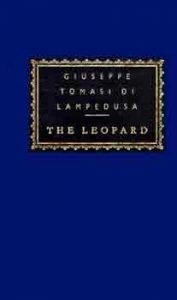 1 The Leopard by Giuseppe di Lampedusa
Superficially the story of the decline of the Sicilian aristocracy, it is really the story of the death of the prince. No novel has ever gripped me more.
Synopsis
The Sicilian prince, Don Fabrizio, hero of Lampedusa’s great and only novel, is described as enormous in size, in intellect, and in sensuality. The book he inhabits shares his dimensions in its evocation of an aristocracy confronting democratic upheaval and the new force of nationalism. In the decades since its publication shortly after the author’s death in 1957, The Leopard has come to be regarded as the twentieth century’s greatest historical fiction.
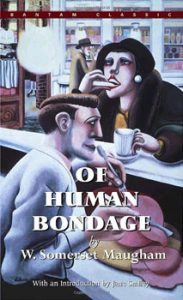 2 Of Human Bondage by W. Somerset Maugham
A brilliant description of the sexual bondage in which a young man finds himself.
Synopsis
The first and most autobiographical of Maugham’s masterpieces. It is the story of Philip Carey, an orphan eager for life, love and adventure. After a few months studying in Heidelberg, and a brief spell in Paris as a would-be artist, he settles in London to train as a doctor where he meets Mildred, the loud but irresistible waitress with whom he plunges into a tortured and masochistic affair.
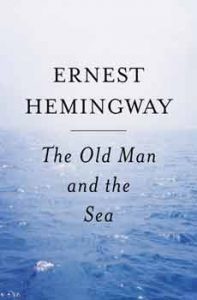 3 The Old Man and the Sea by Ernest Hemingway
Elemental and economical, it is one of those books where you feel it would be a sin to change even one word.
Synopsis
The Old Man and the Sea is one of Hemingway’s most enduring works. Told in language of great simplicity and power, it is the story of an old Cuban fisherman, down on his luck, and his supreme ordeal — a relentless, agonizing battle with a giant marlin far out in the Gulf Stream.
Here Hemingway recasts, in strikingly contemporary style, the classic theme of courage in the face of defeat, of personal triumph won from loss. Written in 1952, this hugely successful novella confirmed his power and presence in the literary world and played a large part in his winning the 1954 Nobel Prize for Literature.
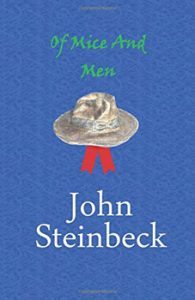 4 Of Mice and Men by John Steinbeck
A long short story about the flotsam of the 20th century’s great depression. It has been published in a great many editions, performed as a play on television, the movies, the stage and radio. Few novels have had so profound an effect on so many people.
Synopsis
Streetwise George and his big, childlike friend Lennie are drifters, searching for work in the fields and valleys of California. They have nothing except the clothes on their back, and a hope that one day they’ll find a place of their own and live the American dream. But dreams come at a price. Gentle giant Lennie doesn’t know his own strength, and when they find work at a ranch he gets into trouble with the boss’s daughter-in-law. Trouble so bad that even his protector George may not be able to save him….
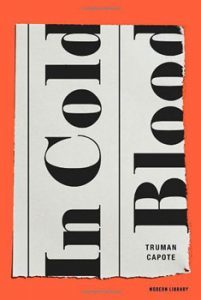 5 In Cold Blood by Truman Capote
Although this is a true story, it has always seemed to me at least as much novel as history. Its effect on the writer himself was so severe that he never afterwards completed a novel.
On November 15, 1959, in the small town of Holcomb, Kansas, four members of the Clutter family were savagely murdered by blasts from a shotgun held a few inches from their faces. There was no apparent motive for the crime, and there were almost no clues.
As Truman Capote reconstructs the murder and the investigation that led to the capture, trial, and execution of the killers, he generates both mesmerizing suspense and astonishing empathy.
In Cold Blood is a work that transcends its moment, yielding poignant insights into the nature of American violence.
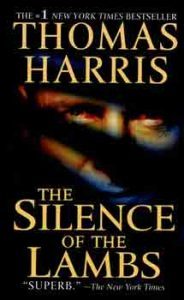 6 The Silence of the Lambs by Thomas Harris
This one is classified as a thriller by the wise people of literature. A damned good book, better written than almost any novel generally seen as being serious.
Synopsis
As part of the search for a serial murderer nicknames “Buffalo Bill,” FBI trainee Clarice Starling is given an assignment. She must visit a man confined to a high-security facility for the criminally insane and interview him.
That man, Dr. Hannibal Lecter, is a former psychiatrist with unusual tastes and an intense curiosity about the darker corners of the mind. His intimate understanding of the killer and of Clarice herself form the core of Thomas Harris’ The Silence of the Lambs–an unforgettable classic of suspense fiction.
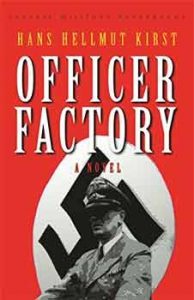 7 Officer Factory by Hans Helmut Kirst
This story falls into the category of a special favourite. In hundreds of movies and novels, we see the German soldiers of World War II as little more than caricatures. This fascinating study treats them as human beings. It has the ring of truth.
Synopsis
Officers aren’t born–they’re carefully molded. In Nazi Germany this training took place in a horrific “factory, ” where the men received both military and ideological indoctrination, preparing them to fight successfully for the fatherland. When a murder occurs in the school, however, underlying tensions begin to surface. Another unforgettable novel by the world-renowned author of” Night of the Generals (made into a film with an all-star cast) and an incomparable journey into the heart of wartime Germany.
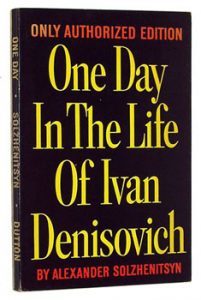 8 A Day in the Life of Ivan Denisovich by Alexander Solzhenitsyn
A deeply moving story of a man’s struggle with Russia’s Kafkaesque bureaucracy of the time.
Synopsis
First published in 1962, this book is considered one of the most significant works ever to emerge from Soviet Russia. Illuminating a dark chapter in Russian history, it is at once a graphic picture of work camp life and a moving tribute to man’s will to prevail over relentless dehumanization, told by “a literary genius whose talent matches that of Dostoyevsky, Turgenev, Tolstoy, [and] Gorky” (Harrison Salisbury, New York Times).
 9 The Celibacy of Felix Greenspan by Lionel Abrahamse
This is a South African novel that has never received the acclaim it deserves, so honest that I cringed at times while reading it, but it is a reading experience never to be forgotten.
Synopsis
Felix Greenspan is South African, Jewish and the victim of cerebral palsy — like Lionel Abraham himself. Even ordinary, everyday accomplishments are difficult for him. He has his own heroes, and he finds love, rarely — but he finds it, sometimes freely given, sometimes bought.
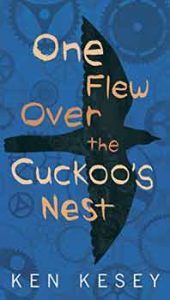 10 One Flew Over the Cuckoo’s Nest by Ken Kesey
Kesey’s parable about freedom and friendship is among both the most moving and the most entertaining reads ever.
Synopsis
An international bestseller and the basis for the hugely successful film, Ken Kesey’s One Flew Over the Cuckoo’s Nest is one of the defining works of the 1960s.
In this classic novel, Ken Kesey’s hero is Randle Patrick McMurphy, a boisterous, brawling, fun-loving rebel who swaggers into the world of a mental hospital and takes over. A lusty, life-affirming fighter, McMurphy rallies the other patients around him by challenging the dictatorship of Nurse Ratched. He promotes gambling in the ward, smuggles in wine and women, and openly defies the rules at every turn. But this defiance, which starts as a sport, soon develops into a grim struggle, an all-out war between two relentless opponents: Nurse Ratched, backed by the full power of authority, and McMurphy, who has only his own indomitable will. What happens when Nurse Ratched uses her ultimate weapon against McMurphy provides the story’s shocking climax.
That concludes my selection of the 10 Best Books of the 20th century. If you are interested in reading some of my novels you can find them here.
The post Wessel Ebersohn’s Top 10 books appeared first on Wessel Ebersohn.
Wessel Ebersohn’s Top 10 books
Which are the Top 10 Books of the 20th Century, and do they measure up to the top books of all time? The answer is largely a matter of taste. There will never be agreement even of the criteria you should use in judging them. And judging itself is a pretty strange way of approaching any book.
Among the issues faced when making such selections are the nature of the books you consider. Many lovers of serious fiction would never consider a thriller to be among the best. It seems the plot devices used by thriller writers precludes them, but these same plot devices are used by other novelists – a bit more subtly perhaps.
As a thriller writer myself, I have difficulty seeing the division been thrillers and serious novels. To me, it all depends on the quality of the book. I see all my thrillers as serious novels, and on the other hand, I hope my serious novels thrill their readers. If a thriller is better book than a Tolstoy, it hardly matters how you categorise it.
But then this is really a matter of taste. It is also a matter of where your interests lie. We all prefer a novel that is about something that interests us.
Here then are, in my opinion, the top 10 books to read before you die. If you go looking for them, I hope you enjoy them as much as I have.
1 The Leopard by Giuseppe di LampedusaSuperficially the story of the decline of the Sicilian aristocracy, it is really the story of the death of the prince. No novel has ever gripped me more.
Synopsis
The Sicilian prince, Don Fabrizio, hero of Lampedusa’s great and only novel, is described as enormous in size, in intellect, and in sensuality. The book he inhabits shares his dimensions in its evocation of an aristocracy confronting democratic upheaval and the new force of nationalism. In the decades since its publication shortly after the author’s death in 1957, The Leopard has come to be regarded as the twentieth century’s greatest historical fiction.
2 Of Human Bondage by W. Somerset MaughamA brilliant description of the sexual bondage in which a young man finds himself.
Synopsis
The first and most autobiographical of Maugham’s masterpieces. It is the story of Philip Carey, an orphan eager for life, love and adventure. After a few months studying in Heidelberg, and a brief spell in Paris as a would-be artist, he settles in London to train as a doctor where he meets Mildred, the loud but irresistible waitress with whom he plunges into a tortured and masochistic affair.
3 The Old Man and the Sea by Ernest HemingwayElemental and economical, it is one of those books where you feel it would be a sin to change even one word.
Synopsis
The Old Man and the Sea is one of Hemingway’s most enduring works. Told in language of great simplicity and power, it is the story of an old Cuban fisherman, down on his luck, and his supreme ordeal — a relentless, agonizing battle with a giant marlin far out in the Gulf Stream.
Here Hemingway recasts, in strikingly contemporary style, the classic theme of courage in the face of defeat, of personal triumph won from loss. Written in 1952, this hugely successful novella confirmed his power and presence in the literary world and played a large part in his winning the 1954 Nobel Prize for Literature.
4 Of Mice and Men by John SteinbeckA long short story about the flotsam of the 20th century’s great depression. It has been published in a great many editions, performed as a play on television, the movies, the stage and radio. Few novels have had so profound an effect on so many people.
Synopsis
Streetwise George and his big, childlike friend Lennie are drifters, searching for work in the fields and valleys of California. They have nothing except the clothes on their back, and a hope that one day they’ll find a place of their own and live the American dream. But dreams come at a price. Gentle giant Lennie doesn’t know his own strength, and when they find work at a ranch he gets into trouble with the boss’s daughter-in-law. Trouble so bad that even his protector George may not be able to save him….
5 In Cold Blood by Truman CapoteAlthough this is a true story, it has always seemed to me at least as much novel as history. Its effect on the writer himself was so severe that he never afterwards completed a novel.
On November 15, 1959, in the small town of Holcomb, Kansas, four members of the Clutter family were savagely murdered by blasts from a shotgun held a few inches from their faces. There was no apparent motive for the crime, and there were almost no clues.
As Truman Capote reconstructs the murder and the investigation that led to the capture, trial, and execution of the killers, he generates both mesmerizing suspense and astonishing empathy.
In Cold Blood is a work that transcends its moment, yielding poignant insights into the nature of American violence.
6 The Silence of the Lambs by Thomas HarrisThis one is classified as a thriller by the wise people of literature. A damned good book, better written than almost any novel generally seen as being serious.
Synopsis
As part of the search for a serial murderer nicknames “Buffalo Bill,” FBI trainee Clarice Starling is given an assignment. She must visit a man confined to a high-security facility for the criminally insane and interview him.
That man, Dr. Hannibal Lecter, is a former psychiatrist with unusual tastes and an intense curiosity about the darker corners of the mind. His intimate understanding of the killer and of Clarice herself form the core of Thomas Harris’ The Silence of the Lambs–an unforgettable classic of suspense fiction.
7 Officer Factory by Hans Helmut KirstThis story falls into the category of a special favourite. In hundreds of movies and novels, we see the German soldiers of World War II as little more than caricatures. This fascinating study treats them as human beings. It has the ring of truth.
Synopsis
Officers aren’t born–they’re carefully molded. In Nazi Germany this training took place in a horrific “factory, ” where the men received both military and ideological indoctrination, preparing them to fight successfully for the fatherland. When a murder occurs in the school, however, underlying tensions begin to surface. Another unforgettable novel by the world-renowned author of” Night of the Generals (made into a film with an all-star cast) and an incomparable journey into the heart of wartime Germany.
8 A Day in the Life of Ivan Denisovich by Alexander SolzhenitsynA deeply moving story of a man’s struggle with Russia’s Kafkaesque bureaucracy of the time.
Synopsis
First published in 1962, this book is considered one of the most significant works ever to emerge from Soviet Russia. Illuminating a dark chapter in Russian history, it is at once a graphic picture of work camp life and a moving tribute to man’s will to prevail over relentless dehumanization, told by “a literary genius whose talent matches that of Dostoyevsky, Turgenev, Tolstoy, [and] Gorky” (Harrison Salisbury, New York Times).
9 The Celibacy of Felix Greenspan by Lionel AbrahamseThis is a South African novel that has never received the acclaim it deserves, so honest that I cringed at times while reading it, but it is a reading experience never to be forgotten.
Synopsis
Felix Greenspan is South African, Jewish and the victim of cerebral palsy — like Lionel Abraham himself. Even ordinary, everyday accomplishments are difficult for him. He has his own heroes, and he finds love, rarely — but he finds it, sometimes freely given, sometimes bought.
10 One Flew Over the Cuckoo’s Nest by Ken KeseyKesey’s parable about freedom and friendship is among both the most moving and the most entertaining reads ever.
Synopsis
An international bestseller and the basis for the hugely successful film, Ken Kesey’s One Flew Over the Cuckoo’s Nest is one of the defining works of the 1960s.
In this classic novel, Ken Kesey’s hero is Randle Patrick McMurphy, a boisterous, brawling, fun-loving rebel who swaggers into the world of a mental hospital and takes over. A lusty, life-affirming fighter, McMurphy rallies the other patients around him by challenging the dictatorship of Nurse Ratched. He promotes gambling in the ward, smuggles in wine and women, and openly defies the rules at every turn. But this defiance, which starts as a sport, soon develops into a grim struggle, an all-out war between two relentless opponents: Nurse Ratched, backed by the full power of authority, and McMurphy, who has only his own indomitable will. What happens when Nurse Ratched uses her ultimate weapon against McMurphy provides the story’s shocking climax.
That concludes my selection of the 10 Best Books of the 20th century. If you are interested in reading some of my novels you can find them here.
The post Wessel Ebersohn’s Top 10 books appeared first on Wessel Ebersohn.
May 8, 2016
Those Who Love Night
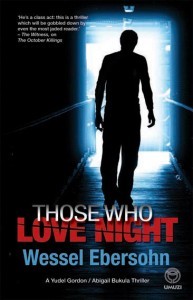 When Abigail Bukula, a young lawyer in the South African Justice Department, learns that the secret son of her aunt, who died in a massacre years ago, has been arrested by the Zimbabwean government, she races to his aid. She’s as determined as ever but perhaps a bit naive as well. Accused of being a part of the so-called Harare Seven, her cousin is being held as a political prisoner in the country’s most brutal prison.
With only an eager young lawyer as an ally and a director of the country’s intelligence agency either helping her or setting her up, Bukula will not leave without winning her cousin’s freedom and learning what really happened to her aunt so many years ago. By cunning, by bribery, by sheer audacity—and with the help of her friend prison psychologist Yudel Gordon—Abigail is determined to prevail in Those Who Love Night, Wessel Ebersohn’s explosive follow-up to his critically acclaimed series debut.
Booklist’s Joanne Wilkinson says this of The October Killings
Abigail Bukula, introduced in The October Killings (2011), returns in this intense story that reaches back into Zimbabwe’s violent past. An accomplished lawyer and rising star in the South African Justice Department, Abigail is shocked to learn that she has a cousin, Tony, whom she never knew existed and that he has been imprisoned in Zimbabwe as part of the activist Harare Seven. With the aid of an idealistic lawyer, she determines the best course of action to procure the young activists’ release from one of the government’s most notorious prisons, but government and prison officials claim they are not even holding the group. She is joined in her efforts by brilliant prison psychologist Yudel Gordon and seems to have gained the favor of one of the secret police’s high-level bureaucrats, Jonas Chunga. But what does Chunga really want from her, and why is she so willing to put her marriage vows aside? Like fellow South African Deon Meyer, Ebersohn excels at depicting the treacherous politics of an unstable country, one in which the search for justice is always fraught.
Get Those Who Love Night from Amazon.com | Amazon.co.uk | Amazon.ca
The post Those Who Love Night appeared first on Wessel Ebersohn.