Jennifer Lee's Blog, page 4
July 3, 2015
The Benefits of Whole Natural Foods
All living organisms need fuel. Each organism thrives consuming the types of food best suited to it. Dogs, cats, horses, trees and humans attain the highest standard of health when they are provided with the most suitable food for their individual species.
Can a deficient diet be overcome by supplying the specific deficient elements in the form of supplements?
If we reduce food into separate elements the health giving effects are not the same as consuming these elements in their natural state. Nutrients mostly work synergistically with other nutrients found in whole foods. For example, vitamin B12 and folic acid work together to synthesize DNA and red blood cells. A deficiency in either vitamin will have severe consequences. Both of these nutrients are found in liver and fish.
Whole foods are a source of a range of nutrients that can be minerals, vitamins, amino acids as well as other biological compounds that make up the complex system of benefits of whole foods. Because food is a such a complex network of nutrients in a natural web, it cannot be emulated by dietary supplements.
Beta carotene for example has at least 500 "siblings", collectively known as cartenoids. Many of them haven't yet been identified by science. New research has shown that beta carotene supplements are not at all effective as compared to consuming the nutrient from whole foods. It's this combination of complex properties found only in whole foods that contains the health giving benefits. Carnivores get beta carotene from whole raw eggs, liver and brain.
Over the last hundred years our carnivore companions have been eating foods that diverge from their natural diet. As they have separated more and more from their original and most suitable diet their health has gradually deteriorated.
Cooked, processed and adulterated foods coupled with other incorrect care have produced a sub-standard condition that is regarded as normal health. In order to relieve the unpleasant symptoms that accompany this state, our pets are prescribed toxic substances called medicines.
These poisons do give some relief from the symptoms, but the side effects produce still further and different kinds of illnesses. Instead of eliminating the cause - the unsuitable food - we have taken the path of least effort and relieved symptoms only. As long as the cause remains the symptoms will return and with greater force each time.
One important step to halting this cycle is to return our animals to a diet that they were made to eat. When the natural conditions have been returned the animal will likewise be able to return to a state of health.
Visit our consultation page today to begin your animals journey back to health.
Can a deficient diet be overcome by supplying the specific deficient elements in the form of supplements?
If we reduce food into separate elements the health giving effects are not the same as consuming these elements in their natural state. Nutrients mostly work synergistically with other nutrients found in whole foods. For example, vitamin B12 and folic acid work together to synthesize DNA and red blood cells. A deficiency in either vitamin will have severe consequences. Both of these nutrients are found in liver and fish.
Whole foods are a source of a range of nutrients that can be minerals, vitamins, amino acids as well as other biological compounds that make up the complex system of benefits of whole foods. Because food is a such a complex network of nutrients in a natural web, it cannot be emulated by dietary supplements.
Beta carotene for example has at least 500 "siblings", collectively known as cartenoids. Many of them haven't yet been identified by science. New research has shown that beta carotene supplements are not at all effective as compared to consuming the nutrient from whole foods. It's this combination of complex properties found only in whole foods that contains the health giving benefits. Carnivores get beta carotene from whole raw eggs, liver and brain.
Over the last hundred years our carnivore companions have been eating foods that diverge from their natural diet. As they have separated more and more from their original and most suitable diet their health has gradually deteriorated.
Cooked, processed and adulterated foods coupled with other incorrect care have produced a sub-standard condition that is regarded as normal health. In order to relieve the unpleasant symptoms that accompany this state, our pets are prescribed toxic substances called medicines.
These poisons do give some relief from the symptoms, but the side effects produce still further and different kinds of illnesses. Instead of eliminating the cause - the unsuitable food - we have taken the path of least effort and relieved symptoms only. As long as the cause remains the symptoms will return and with greater force each time.
One important step to halting this cycle is to return our animals to a diet that they were made to eat. When the natural conditions have been returned the animal will likewise be able to return to a state of health.
Visit our consultation page today to begin your animals journey back to health.


February 15, 2015
The problem with "scientific" studies...
When I first started feeding raw, I had wished there were controlled scientific studies that would present the benefits of a natural diet in a concrete way. A study that pet owners could trust in and rely on that would give them a sense of validation of their choices.
I don't have that wish any longer and I will explain why.
First I came to realize the extent of the problems concerning the accuracy of published studies.
Have you ever wondered why study findings are often contradictory? one article says coffee is bad for your health while another says the opposite? yet both are backed up by scientific studies. How can that be?
Here's how research data is often manipulated:
Researchers omit pieces of data that don't fit the desired conclusions of the study.Researchers will scrap an entire study because the results weren't the ones hoped for.Researchers keep re-analyzing data using different methods to achieve the desired results.
Other ways accuracy is undermined:
The vast majority of published research is never replicated or validated.Only a small percentage of research is ever published.Industry driven research is commonplace even though it is an obvious conflict of interest.The peer review process has political complications that do not promote honest evaluation.
Researchers at a Spain university reviewed data from 44 papers from the British Medical Journal and found statistical errors in 25% of the papers and in Nature, finding statistical errors at a rate of 38%.
Nicholas Steneck, PhD estimates there are 1500 cases of research fabrication every year in the U.S. with only about 20 ever being identified.
But why would a researcher risk publishing inaccurate or fraudulent results? Scientist's are under extraordinary pressure to have research papers published for reasons of:
Job securityGaining tenureSecuring grant money
Who is exerting all this pressure on scientist's anyway?
Pharmaceutical companies who can benefit by increased drug sales with positive research findings.Educational institutions who benefit by securing more grant money with impressive research studies.Competition for publication in science and medical journals is fierce.
'Gold star's' are given to the scientist who comes up with the most promising or scariest claim, seemingly without regard for authenticity. This is only promoting the compromise of integrity in science. Rewards are bestowed for sensational claims rather that solid factual research.
One survey revealed that over 70% of early and mid career researchers "agreed" or "strongly agreed" with the statement "The top people in my field are successful because they are more effective at 'working the system' than others". No, not because they are producing the best, innovative and well researched information. This is so wrong!
 You can see how an environment has been created where truth and accuracy have slid far down on the priority list.
Let's say I work for a pharmaceutical company (never going to happen!) who has spent billions on the development of a new drug and my job is to conduct the clinical trials for the drug. What do you think happens to me if I can't get the results the pharmaceutical company needs in order to go forward with FDA approval? My job is probably in jeopardy as well as any future career in the pharmaceutical industry. But I have a family to support, I cannot lose my job. You can see how much of a stake I would have in the research results.
Even if I am an independent researcher I will still have a stake in the results. If I conclude with favorable findings, chances are good that the pharmaceutical company will be likely to request my services again in the future. So it would be in my best interest to produce favorable findings if I want more research contracts. I might convince myself there was no harm in omitting a small amount of data that might have raised unwanted questions.
Now imagine that a raw food company could afford to fork out the money necessary to conduct a large scale study say on raw food vs. processed food and the impact upon health. Well, they are going to be just as biased as the processed food companies who conduct research on their product. It's human nature!
This has eroded my confidence in scientific studies and now I tend to take them with a grain of salt.
There is also anecdotal evidence, which is based on a person’s observations of the world. It can be very useful for disproving generalizations because all you need is one example that contradicts any given claim. Don't you think there has to be a point at which a large volume of anecdotal evidence becomes scientifically accepted and is no longer 'anecdotal'? A tipping point per se.
There are many of tools for getting to the truth about how best to care for our furry friends. Through observation, knowledge of their physiology and evolutionary history we will gain an incredible awareness of their needs. Often, we know what the right choice is if we simply listen to our inner voice.
I don't have that wish any longer and I will explain why.
First I came to realize the extent of the problems concerning the accuracy of published studies.
Have you ever wondered why study findings are often contradictory? one article says coffee is bad for your health while another says the opposite? yet both are backed up by scientific studies. How can that be?
Here's how research data is often manipulated:
Researchers omit pieces of data that don't fit the desired conclusions of the study.Researchers will scrap an entire study because the results weren't the ones hoped for.Researchers keep re-analyzing data using different methods to achieve the desired results.
Other ways accuracy is undermined:
The vast majority of published research is never replicated or validated.Only a small percentage of research is ever published.Industry driven research is commonplace even though it is an obvious conflict of interest.The peer review process has political complications that do not promote honest evaluation.
Researchers at a Spain university reviewed data from 44 papers from the British Medical Journal and found statistical errors in 25% of the papers and in Nature, finding statistical errors at a rate of 38%.
Nicholas Steneck, PhD estimates there are 1500 cases of research fabrication every year in the U.S. with only about 20 ever being identified.
But why would a researcher risk publishing inaccurate or fraudulent results? Scientist's are under extraordinary pressure to have research papers published for reasons of:
Job securityGaining tenureSecuring grant money
Who is exerting all this pressure on scientist's anyway?
Pharmaceutical companies who can benefit by increased drug sales with positive research findings.Educational institutions who benefit by securing more grant money with impressive research studies.Competition for publication in science and medical journals is fierce.
'Gold star's' are given to the scientist who comes up with the most promising or scariest claim, seemingly without regard for authenticity. This is only promoting the compromise of integrity in science. Rewards are bestowed for sensational claims rather that solid factual research.
One survey revealed that over 70% of early and mid career researchers "agreed" or "strongly agreed" with the statement "The top people in my field are successful because they are more effective at 'working the system' than others". No, not because they are producing the best, innovative and well researched information. This is so wrong!
You can see how an environment has been created where truth and accuracy have slid far down on the priority list.Let's say I work for a pharmaceutical company (never going to happen!) who has spent billions on the development of a new drug and my job is to conduct the clinical trials for the drug. What do you think happens to me if I can't get the results the pharmaceutical company needs in order to go forward with FDA approval? My job is probably in jeopardy as well as any future career in the pharmaceutical industry. But I have a family to support, I cannot lose my job. You can see how much of a stake I would have in the research results.
Even if I am an independent researcher I will still have a stake in the results. If I conclude with favorable findings, chances are good that the pharmaceutical company will be likely to request my services again in the future. So it would be in my best interest to produce favorable findings if I want more research contracts. I might convince myself there was no harm in omitting a small amount of data that might have raised unwanted questions.
Now imagine that a raw food company could afford to fork out the money necessary to conduct a large scale study say on raw food vs. processed food and the impact upon health. Well, they are going to be just as biased as the processed food companies who conduct research on their product. It's human nature!
This has eroded my confidence in scientific studies and now I tend to take them with a grain of salt.
There is also anecdotal evidence, which is based on a person’s observations of the world. It can be very useful for disproving generalizations because all you need is one example that contradicts any given claim. Don't you think there has to be a point at which a large volume of anecdotal evidence becomes scientifically accepted and is no longer 'anecdotal'? A tipping point per se.
There are many of tools for getting to the truth about how best to care for our furry friends. Through observation, knowledge of their physiology and evolutionary history we will gain an incredible awareness of their needs. Often, we know what the right choice is if we simply listen to our inner voice.
January 27, 2015
Raw diets are NOT too high in protein
For the record, raw diets do not contain too much protein. Raw animal products contain the ideal amount of protein to nourish our carnivore companions.
According to the USDA nutrient database:
A whole raw broiler chicken is 15.5% protein
Raw chicken liver is 15% protein
A whole raw turkey is 22% protein
A beef shank is 21% protein
Raw beef liver is 20% protein
Raw beef tripe is 12% protein
A whole raw egg is 12% protein
Keep in mind that the USDA nutrient database does not include the nutrients contained within the bone content because humans aren't generally eating bones.
A varied raw diet on average will be from 14 - 20 percent protein on an as fed basis.
As fed, meat is made up of mostly moisture. Think about it...the human body is made up of around 60% water. All mammals (which make up the majority of the components of a raw feeding diet) are similarly made up of a large percentage of water. This is also why cats and dogs eating a raw diet will drink much less water than their kibble fed counterparts.
A whole raw turkey for example is:
72.69% water
21.64% protein
5.64% fat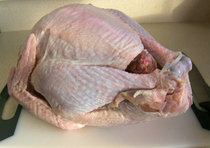 Besides protein and moisture, an all meat diet also contains fat, plus a small volume of fiber, minerals and vitamins. Any whole prey items fed with the fur will provide an increased fiber content.
Edible bones generally comprise 10% or more of a raw fed animals diet and contain little in the way of digestible protein. Bones contain 65 to 70% hydroxyapatite, which is a compound made of 10 parts calcium, 6 parts phosphorus, 26 parts oxygen and 2 parts hydrogen. Essentially...calcium and phosphorus (minerals).
The remaining one third of the bone is comprised of 95% collagen (a fibrous protein) which is poorly digested by cats and dogs. Besides being found in bone, collagen is also abundantly present in tendons, ligaments, skin, cartilage and stomach tissue (tripe). Whereas, there is high a digestibility of raw muscle meat (92%), organ meat (90%) and eggs (100%). The nutrients in foods are often analyzed and compared to one another with the moisture removed. This is what is referred to as on a "dry matter basis". When the moisture is removed from the equation, the percent of the other portions will rise considerably. Let's compare for example two Primal Pet Foods products both as fed and on a dry matter basis.
Raw Chicken Backs as Fed: Raw Chicken Backs on a Dry Matter Basis
Crude Protein (min) 10% Protein 19.6%
Crude Fat (min) 36% Fat 70.6%
Crude Fiber (max) 1% Fiber 1.9%
Moisture (max) 49% N/A
Raw Turkey Grind as Fed: Raw Turkey Grind on a Dry Matter Basis:
(meat, bone & organ)
Crude Protein (min) 14% Protein 51.8%
Crude Fat (min) 6% Fat 22.2%
Crude Fiber (max) 1% Fiber 3.7%
Moisture (max) 73% N/A
Ash (max) 4.6% Ash 17%
As you can see raw diets are certainly not "all protein" diets. Raw flesh, bone and organ is the time tested natural diet for for cats and dogs and the protein level is not harmful to the animal eating it. On the contrary it is required for optimal health.
This blog post was inspired by wrong information being proclaimed (where else) on the internet. It is very frustrating to see so much incorrect information flying around which is quite misleading to pet owners.
PLEASE
TRY BEING INFORMED
INSTEAD OF JUST OPINIONATED
According to the USDA nutrient database:
A whole raw broiler chicken is 15.5% protein
Raw chicken liver is 15% protein
A whole raw turkey is 22% protein
A beef shank is 21% protein
Raw beef liver is 20% protein
Raw beef tripe is 12% protein
A whole raw egg is 12% protein
Keep in mind that the USDA nutrient database does not include the nutrients contained within the bone content because humans aren't generally eating bones.
A varied raw diet on average will be from 14 - 20 percent protein on an as fed basis.
As fed, meat is made up of mostly moisture. Think about it...the human body is made up of around 60% water. All mammals (which make up the majority of the components of a raw feeding diet) are similarly made up of a large percentage of water. This is also why cats and dogs eating a raw diet will drink much less water than their kibble fed counterparts.
A whole raw turkey for example is:
72.69% water
21.64% protein
5.64% fat
Besides protein and moisture, an all meat diet also contains fat, plus a small volume of fiber, minerals and vitamins. Any whole prey items fed with the fur will provide an increased fiber content.Edible bones generally comprise 10% or more of a raw fed animals diet and contain little in the way of digestible protein. Bones contain 65 to 70% hydroxyapatite, which is a compound made of 10 parts calcium, 6 parts phosphorus, 26 parts oxygen and 2 parts hydrogen. Essentially...calcium and phosphorus (minerals).
The remaining one third of the bone is comprised of 95% collagen (a fibrous protein) which is poorly digested by cats and dogs. Besides being found in bone, collagen is also abundantly present in tendons, ligaments, skin, cartilage and stomach tissue (tripe). Whereas, there is high a digestibility of raw muscle meat (92%), organ meat (90%) and eggs (100%). The nutrients in foods are often analyzed and compared to one another with the moisture removed. This is what is referred to as on a "dry matter basis". When the moisture is removed from the equation, the percent of the other portions will rise considerably. Let's compare for example two Primal Pet Foods products both as fed and on a dry matter basis.
Raw Chicken Backs as Fed: Raw Chicken Backs on a Dry Matter Basis
Crude Protein (min) 10% Protein 19.6%
Crude Fat (min) 36% Fat 70.6%
Crude Fiber (max) 1% Fiber 1.9%
Moisture (max) 49% N/A
Raw Turkey Grind as Fed: Raw Turkey Grind on a Dry Matter Basis:
(meat, bone & organ)
Crude Protein (min) 14% Protein 51.8%
Crude Fat (min) 6% Fat 22.2%
Crude Fiber (max) 1% Fiber 3.7%
Moisture (max) 73% N/A
Ash (max) 4.6% Ash 17%
As you can see raw diets are certainly not "all protein" diets. Raw flesh, bone and organ is the time tested natural diet for for cats and dogs and the protein level is not harmful to the animal eating it. On the contrary it is required for optimal health.
This blog post was inspired by wrong information being proclaimed (where else) on the internet. It is very frustrating to see so much incorrect information flying around which is quite misleading to pet owners.
PLEASE
TRY BEING INFORMED
INSTEAD OF JUST OPINIONATED
January 23, 2015
Raw diets are NOT high in protein
For the record, raw diets are not high in protein. In fact they can be lower in protein than many processed kibble diets. Does this surprise you? How can an "all meat" diet not be high in protein?
Meat is made up of mostly moisture. This is also why cats and dogs eating a raw diet will drink much less water than their kibble fed counterparts.
Think about it...the human body is made up of around 60% water. All mammals (which make up the majority of the components of a raw feeding diet) are similarly made up of a large percentage of water.
According to the USDA nutrient database:
A whole raw broiler chicken is 15.5% protein
Raw chicken liver is 15% protein
A whole raw turkey is 22% protein
A beef shank is 21% protein
Raw beef liver is 20% protein
Raw beef tripe is 12% protein
A whole raw egg is 12% protein
A varied raw diet on average will be from 14 - 20 percent protein.
You might wonder what exactly makes up the rest of the raw product if it's not protein?
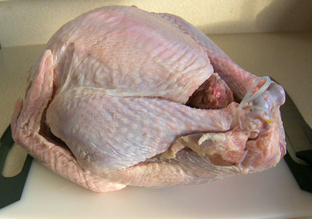
A whole raw turkey for example is:
72.69% water
21.64% protein
5.64% fat This blog post was inspired by wrong information being proclaimed (where else) on the internet. It is very frustrating to see so much incorrect information flying around which is quite misleading to pet owners. PLEASE
TRY BEING INFORMED
INSTEAD OF JUST OPINIONATED
Meat is made up of mostly moisture. This is also why cats and dogs eating a raw diet will drink much less water than their kibble fed counterparts.
Think about it...the human body is made up of around 60% water. All mammals (which make up the majority of the components of a raw feeding diet) are similarly made up of a large percentage of water.
According to the USDA nutrient database:
A whole raw broiler chicken is 15.5% protein
Raw chicken liver is 15% protein
A whole raw turkey is 22% protein
A beef shank is 21% protein
Raw beef liver is 20% protein
Raw beef tripe is 12% protein
A whole raw egg is 12% protein
A varied raw diet on average will be from 14 - 20 percent protein.
You might wonder what exactly makes up the rest of the raw product if it's not protein?
A whole raw turkey for example is:
72.69% water
21.64% protein
5.64% fat This blog post was inspired by wrong information being proclaimed (where else) on the internet. It is very frustrating to see so much incorrect information flying around which is quite misleading to pet owners. PLEASE
TRY BEING INFORMED
INSTEAD OF JUST OPINIONATED
January 14, 2015
Liver: The Original SUPERfood
Without a doubt liver is nature’s perfect super-food and an essential part of a healthy raw diet for cats and dogs. You might think about adding into your own diet too. Native American’s recognized the nutritional value of liver. In times of abundance muscle meat that today is highly sought after, would be discarded for scavengers (including dogs ironically), while the organ meats were always consumed by the people.
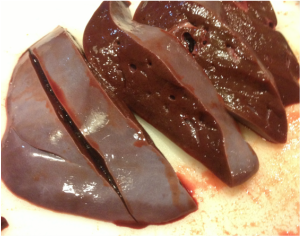 Liver is nutrient dense, containing between 10 and 100 times higher nutrients than muscle meats and higher levels of micro-nutrients than what is found in many fruits and vegetables.
An excellent source of high quality protein Contains all the essential amino acids A great source of fat-soluble vitamins A, D, E & K Has all the B Vitamins in abundance, especially B12 One of the best sources of folic acid Contains CoQ10, a nutrient that is crucial for energy production and heart function A highly usable source of iron Contains trace elements, such as copper, zinc & selenium
If we consider that the liver would comprise about 5% of the total consumable parts on average in most prey species, feeding liver as 5% of the total diet is recommended. For example, if a 50 lb dog is eating around 10 lbs of raw meat and bones per week, half a pound of his weekly intake should come from liver. Spread this portion out over a few days however, as feeding it in larger portions can cause diarrhea.
There is the mistaken belief that the liver stores toxins, and feeding it to your pet would be harmful. This is incorrect. The liver does not store toxins, it neutralizes them. In fact, the liver stores many valuable nutrients.
Primary liver functions:
Metabolizing fats, proteins, and carbohydrates Purifying and clearing waste products, toxins, and drugs Storing important nutrients (such as glycogen glucose, vitamins, and minerals) Metabolizing hormones, internally-produced wastes, and foreign chemicals
According to a paper published by Dr. Ershoff “eating whole liver has been shown to counteract the damaging effects of massive doses of a long list of toxic chemicals including rat poison and other known mutagens”. This is not surprising, knowing that the liver is responsible for removing toxic substances from the blood. Is there any better way to enhance your pet’s detox ability than to consume raw liver? Probably not!
Select sources of liver than come from pasture raised animals as they will contain the highest levels of nutrients. The liver from Cows and other large ungulates such as Elk, Bison and Deer have more nutrients per pound than from poultry sources. A liver from a healthy animal should feel firm, not mushy.
While many cats and dogs really like liver, I also know that many will turn their nose up to it. So what can you do if your pet doesn’t like liver?
You can cut the liver into small pieces or puree and mix in with a favorite food. Lightly searing the outside can change the texture and smell which could be more appealing to your pet. If neither of these tactics works, you can also try feeding it frozen. Lastly you can dehydrate it and make liver treats. Also consider that the older the animal was that the liver came from, the stronger the flavor will be.
Include wholesome raw liver in your pet’s diet and improve the function of their liver
The correction of hormonal imbalancesIncreased energyImproved immune functionBetter ability to detox chemicals, wastes, toxins and drugsIncreased ability to metabolize food
Liver is nutrient dense, containing between 10 and 100 times higher nutrients than muscle meats and higher levels of micro-nutrients than what is found in many fruits and vegetables.An excellent source of high quality protein Contains all the essential amino acids A great source of fat-soluble vitamins A, D, E & K Has all the B Vitamins in abundance, especially B12 One of the best sources of folic acid Contains CoQ10, a nutrient that is crucial for energy production and heart function A highly usable source of iron Contains trace elements, such as copper, zinc & selenium
If we consider that the liver would comprise about 5% of the total consumable parts on average in most prey species, feeding liver as 5% of the total diet is recommended. For example, if a 50 lb dog is eating around 10 lbs of raw meat and bones per week, half a pound of his weekly intake should come from liver. Spread this portion out over a few days however, as feeding it in larger portions can cause diarrhea.
There is the mistaken belief that the liver stores toxins, and feeding it to your pet would be harmful. This is incorrect. The liver does not store toxins, it neutralizes them. In fact, the liver stores many valuable nutrients.
Primary liver functions:
Metabolizing fats, proteins, and carbohydrates Purifying and clearing waste products, toxins, and drugs Storing important nutrients (such as glycogen glucose, vitamins, and minerals) Metabolizing hormones, internally-produced wastes, and foreign chemicals
According to a paper published by Dr. Ershoff “eating whole liver has been shown to counteract the damaging effects of massive doses of a long list of toxic chemicals including rat poison and other known mutagens”. This is not surprising, knowing that the liver is responsible for removing toxic substances from the blood. Is there any better way to enhance your pet’s detox ability than to consume raw liver? Probably not!
Select sources of liver than come from pasture raised animals as they will contain the highest levels of nutrients. The liver from Cows and other large ungulates such as Elk, Bison and Deer have more nutrients per pound than from poultry sources. A liver from a healthy animal should feel firm, not mushy.
While many cats and dogs really like liver, I also know that many will turn their nose up to it. So what can you do if your pet doesn’t like liver?
You can cut the liver into small pieces or puree and mix in with a favorite food. Lightly searing the outside can change the texture and smell which could be more appealing to your pet. If neither of these tactics works, you can also try feeding it frozen. Lastly you can dehydrate it and make liver treats. Also consider that the older the animal was that the liver came from, the stronger the flavor will be.
Include wholesome raw liver in your pet’s diet and improve the function of their liver
The correction of hormonal imbalancesIncreased energyImproved immune functionBetter ability to detox chemicals, wastes, toxins and drugsIncreased ability to metabolize food
April 1, 2014
Processed pet food and the almighty dollar
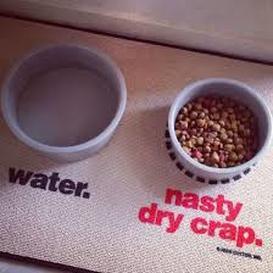 ANYTHING TO MAKE A BUCK would be the tag line for processed pet food if there was truth in advertising.
Companies produce "food" without regard for the health of the animals eating it. Big money is spent on advertising but not on quality control. Even though pets are dying from eating processed foods and treats the products continue to be sold.
Highly processed commercial diets contribute to the sickness of cats and dogs. Animals often make spectacular improvements in health when taken off all "junk" foods, and are instead fed diets appropriate for their species.
How many pet owners are aware that eating from cans and bags is what actually causes the most common ailments and diseases in our companion animals? No matter the quality of the starting ingredients the processing methods used render all life and natural enzymes from the final product.
Would you question your Doctor if they recommend YOU eat a diet of highly processed canned and packaged foods? I would sure hope so! Yet when a veterinarian recommends a similar diet for a companion animal it generally results in the product being purchased and fed to the animal, no questions asked. Why aren't more people seeing this is junk food??? To promote health all animals whether canine, feline or human REQUIRE a variety of fresh wholesome foods that meet their species specific nutritional needs.
The production and sale of commercial pet foods is a profitable industry. Unfortunately, these profits come at a big cost for the many animals that are eating them day in and day out.
Billions of dollars are spent on pet food. Companies go to great lengths to get as much of that pie as they can. The large corporate pet food companies provide considerable sponsorships to the veterinary associations and they have been granted access to come into the universities and provide "education" to veterinary students. This "education" can better be described as SALES as of course it is all about their own products. They provide a solution for the new graduates to pay off their big student loans...by receiving as much as 40% of pet food they sell in their clinics.
Round and round we go, where it stops nobody knows...
Processed pet food and the almighty dollar
 ANYTHING TO MAKE A BUCK would be the tag line for processed pet food if there was truth in advertising.
Companies produce "food" without regard for the health of the animals eating it. Big money is spent on advertising but not on quality control. Even though pets are dying from eating processed foods and treats the products continue to be sold.
Highly processed commercial diets contribute to the sickness of cats and dogs. Animals often make spectacular improvements in health when taken off all "junk" foods, and are instead fed diets appropriate for their species.
How many pet owners are aware that eating from cans and bags is what actually causes the most common ailments and diseases in our companion animals? No matter the quality of the starting ingredients the processing methods used render all life and natural enzymes from the final product.
Would you question your Doctor if they recommend YOU eat a diet of highly processed canned and packaged foods? I would sure hope so! Yet when a veterinarian recommends a similar diet for a companion animal it generally results in the product being purchased and fed to the animal, no questions asked. Why aren't more people seeing this is junk food??? To promote health all animals whether canine, feline or human REQUIRE a variety of fresh wholesome foods that meet their species specific nutritional needs.
The production and sale of commercial pet foods is a profitable industry. Unfortunately, these profits come at a big cost for the many animals that are eating them day in and day out.
Billions of dollars are spent on pet food. Companies go to great lengths to get as much of that pie as they can. The large corporate pet food companies provide considerable sponsorships to the veterinary associations and they have been granted access to come into the universities and provide "education" to veterinary students. This "education" can better be described as SALES as of course it is all about their own products. They provide a solution for the new graduates to pay off their big student loans...by receiving as much as 40% of pet food they sell in their clinics.
Round and round we go, where it stops nobody knows...
March 26, 2014
Health does not come from a bottle
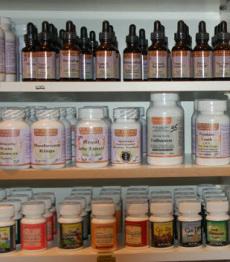 Are you looking for solutions to your pet's health problems in a bottle?
If so, you are barking up the wrong tree. You will not find health in a bottle, jar or packet. Natural or otherwise.
Health can only EVER be built by an appropriate lifestyle...species appropriate foods, pure clean water, exercise, mental stimulation, fresh air & sunshine, adequate rest and minimizing exposure to chemicals & carcinogens.
Without exception there is always a cause to every health issue. Determining and removing the cause is the key to good health and should be what pet owners focus on to improve the health of their animal companions. Identifying and removing the cause is the heart of naturopathic care.
Just like prescription drugs, many natural supplements only suppress symptoms. Supplements and remedies can be used to support the animal in it's healing efforts. After all it is the actual organism - when it has all the resources it needs that will heal itself. Healing comes from within. This is the way nature has designed all living creatures...with an intrinsic ability to heal.
External influences can either assist or hinder the bodies ability to heal.
First things first, make sure your animal's lifestyle is appropriate for their species. Second, give supplements that will support that animal's individual needs if necessary.
Health does not come from a bottle
Are you looking for solutions to your pet's health problems in a bottle?If so, you are barking up the wrong tree. You will not find health in a bottle, jar or packet. Natural or otherwise.
Health can only EVER be built by an appropriate lifestyle...species appropriate foods, pure clean water, exercise, mental stimulation, fresh air & sunshine, adequate rest and minimizing exposure to chemicals & carcinogens.
Without exception there is always a cause to every health issue. Determining and removing the cause is the key to good health and should be what pet owners focus on to improve the health of their animal companions. Identifying and removing the cause is the heart of naturopathic care.
Just like prescription drugs, many natural supplements only suppress symptoms. Supplements and remedies can be used to support the animal in it's healing efforts. After all it is the actual organism - when it has all the resources it needs that will heal itself. Healing comes from within. This is the way nature has designed all living creatures...with an intrinsic ability to heal.
External influences can either assist or hinder the bodies ability to heal.
First things first, make sure your animal's lifestyle is appropriate for their species. Second, give supplements that will support that animal's individual needs if necessary.
March 5, 2014
Tattoos not necessarily the safest option for pet identification
Would you be surprised to learn that there are no regulations controlling or even monitoring the ingredients of tattoo ink? The FDA currently does not regulate tattoo inks.
Most if not all of the pigments used in tattoo inks are manufactured for industrial use such as in printer ink and paint. Pigment manufacturers base their safety information on the assumption that the pigments are used for industrial purposes, not for tattoos.
A 2009 study analyzed 13 inks from a single supplier and found the heavy metals cadmium, cobalt, chromium and nickel in all of them. Most of the inks also contained mercury.
A 2010 analysis of black inks based on carbon found that most of them contained polycyclic aromatic hydrocarbons (PAHs) which are known to be carcinogenic.Black inks are most commonly used for animal tattoos.
Pigments that have been banned from use in cosmetics are still being used in tattoo ink. Substances that have been deemed unsafe to come into contact with the skin are being injected in the skin and no one seems to care?
Heavy metals, endocrine disruptor's and carcinogens…that’s what’s in the ink…
One of the chemicals found in black tattoo ink - benzo(a)pyrene - is a potent carcinogen that causes skin cancer in animals tests. The EPA has identified this substance as “among the most potent and well documented skin carcinogens”. So potent in fact that it is used in animal testing to purposely grow tumors on animals.
Ink can also be contaminated with dangerous bacteria, mold and fungi. There are no safety regulations to prevent this from occurring.
Where does the ink go when it fades from the skin? Previous studies on humans have shown that inks move into lymph nodes.
Permanent identification helps us keep care and control of our animals but the methods have consequences whether we like it or not. If you continue to use tattooing as the method to identify your animals try to learn as much about the ingredients by contacting the manufacturer. Never tattoo a pregnant animal. Consult with an animal naturopath to learn how to detox your animal from toxins and heavy metals caused by tattoos.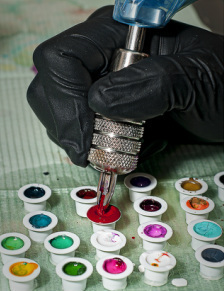 Many pet owners use tattoos or microchips to permanently identify their animals. If the animal ever becomes lost the identification improves the chance that they would be reunited with their families. To register pedigreed animals, kennel club’s require breeders to permanently identify their animals.
If you are up to date on pet health issues you know that there are reports of troubling side effects caused by implanting microchips under a pet’s skin. Faced with these reports, many health conscious pet owners are opting to tattoo their animals instead.
But don't assume tattooing carries no risk. There is a small chance of infection or allergic reaction, but what no one seems to be talking about are the actual ingredients of the ink that is injected into the body.
Most if not all of the pigments used in tattoo inks are manufactured for industrial use such as in printer ink and paint. Pigment manufacturers base their safety information on the assumption that the pigments are used for industrial purposes, not for tattoos.
A 2009 study analyzed 13 inks from a single supplier and found the heavy metals cadmium, cobalt, chromium and nickel in all of them. Most of the inks also contained mercury.
A 2010 analysis of black inks based on carbon found that most of them contained polycyclic aromatic hydrocarbons (PAHs) which are known to be carcinogenic.Black inks are most commonly used for animal tattoos.
Pigments that have been banned from use in cosmetics are still being used in tattoo ink. Substances that have been deemed unsafe to come into contact with the skin are being injected in the skin and no one seems to care?
Heavy metals, endocrine disruptor's and carcinogens…that’s what’s in the ink…
One of the chemicals found in black tattoo ink - benzo(a)pyrene - is a potent carcinogen that causes skin cancer in animals tests. The EPA has identified this substance as “among the most potent and well documented skin carcinogens”. So potent in fact that it is used in animal testing to purposely grow tumors on animals.
Ink can also be contaminated with dangerous bacteria, mold and fungi. There are no safety regulations to prevent this from occurring.
Where does the ink go when it fades from the skin? Previous studies on humans have shown that inks move into lymph nodes.
Permanent identification helps us keep care and control of our animals but the methods have consequences whether we like it or not. If you continue to use tattooing as the method to identify your animals try to learn as much about the ingredients by contacting the manufacturer. Never tattoo a pregnant animal. Consult with an animal naturopath to learn how to detox your animal from toxins and heavy metals caused by tattoos.
Many pet owners use tattoos or microchips to permanently identify their animals. If the animal ever becomes lost the identification improves the chance that they would be reunited with their families. To register pedigreed animals, kennel club’s require breeders to permanently identify their animals.If you are up to date on pet health issues you know that there are reports of troubling side effects caused by implanting microchips under a pet’s skin. Faced with these reports, many health conscious pet owners are opting to tattoo their animals instead.
But don't assume tattooing carries no risk. There is a small chance of infection or allergic reaction, but what no one seems to be talking about are the actual ingredients of the ink that is injected into the body.