Jennifer Lee's Blog, page 3
March 8, 2017
Removing Obstacles on the Path to Health
 The methods used to achieve improved vitality in our pets will consist of those modalities that the practitioner feels to be most appropriate under the individual circumstances.
A fully natural diet of suitable wholesome foods, exercise, relaxation, sunlight, fresh air, pure water and a positive atmosphere are the minimum requirements.
An obstacle to health can be thought of as anything in the environment that is not species appropriate or anything that otherwise blocks their physiological ability to attain health. If there are chemical, mechanical or emotional obstacles to healing these should be removed by appropriate techniques. Chemical obstacles may consist of drugs, unsuitable foods or environmental toxins. Mechanical obstacles may be structural by nature such as chiropractic subluxations. Emotional obstacles may be unhealed past trauma's expressed as fear or aggression.
You will find no remedies, whether prescription or natural based that have the power to cure where these obstacles to health are present.
First any obstacles to your animals good health must be identified, second they must be removed or corrected in a way that will allow the animals self-healing function to operate at peak efficiency. If your car has some water in the gas tank it's not going to function very well. This will impede acceleration and cause further damage over time. Remove the water and the vehicle will return to good running condition.
It is possible to travel down the path to health...full steam ahead once the obstacles have been removed. But the longer you wait to remove those obstacles the more irreparable damage will have been done.
If you require assistance to identify what is blocking your pet's health and vitality or guidance on how to remove them please see my consultation page.


February 19, 2017
The Link Between Bone Cancer and Fluoridated Water
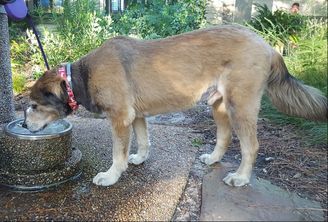 Water is an essential element to our pet's health. They require fresh clean water daily. But water can also be a source of harmful substances to us and our pets.
Fluoride is a naturally occurring mineral found in soil and water. In it's natural state it is harmless. But the fluoride that is added to water is a synthesized version, a byproduct of the aluminum and nuclear industries, categorized as a class 2 environment toxin. A study from 2009 indicates a link between fluoride in drinking water and increased rates of bone cancer in young boys and teenagers: https://www.ncbi.nlm.nih.gov/pubmed/16596294
There is strong evidence from numerous studies showing that fluoride damages bone strength and density and contributes to increased fracture rates.
Eighty-five percent of all major bone tumors in dogs and 70 percent in cats are osteosarcoma. Highly aggressive and metastatic in nature, over 90% of all clinically significant osteosarcomas have already metastasized by the time of diagnosis.
Fluoride has also made it's way into commercial pet foods. A study at the University of Montana indicated the average level of fluoride in leading pet foods to be 11 to 193 ppm, with canned food having the highest amount. A number of lower-grade dog foods may contain up to 2,000 ppm of fluoride. Tolerance levels have been identified for domesticated animals, with the lowest values for dairy cattle at 30 mg/kg feed or 2.5 mg/liter drinking water.
Other risk factors for osteosarcoma include rapid growth in large and giant breed puppies, and a 65% higher incidence for castrated males and 34% higher for spayed females. The probability of developing bone cancer was higher both in females spayed at less than one year of age, as well as males castrated when they were less than a year old, compared with animals that were not spayed or neutered.
To reduce the risk of bone cancer in your pets provide fluoride free water and foods, aim for slow and steady growth of large breed puppies and if you choose to spay/neuter, wait until maturity to do so.
June 3, 2016
Natural Pet Care: Why it is the ONLY path to true health
Anyone who has been reading my blog or Facebook page can see that I am an advocate for raising animals naturally. I have reached this standpoint because of many personal experiences and much questioning, research, evaluation and critical thinking. There are certainly many benefits to feeding raw, skipping the antibiotics, chemical flea preventatives and vaccines. But what is so important to understand is WHY these choices make such a difference in the health of our animals.  So what I want to delve into today is how we perceive the means by which our pet's maintain their health and also identify the mechanisms that allow them to regain their health after illness. The truth of the matter is possibly quite different than what you currently believe.
Now challenging someone's personal beliefs is often met with a defensive stance. This is actually quite a normal reaction. Most of us (most of the time) arrive at our beliefs for a variety of reasons having little to do with empirical evidence and logical reasoning. Rather, such variables as family beliefs, peer pressure, educational experience and social and cultural influences have led us to our beliefs. We sort through the body of data and tend to select those that most confirm what we already believe, and ignore or rationalize away those that do not. Unfortunately this normal process can allow us to believe things that just aren't true, even in the face of compelling evidence. For myself, I find that (for most subjects) I tend to place more value on the truth of the matter rather than holding on to my existing beliefs and therefore I think it has been easier for me to challenge my own beliefs. Once we are aware of this natural tendency we are better able to maintain an open mind and receive new information without feeling the need to automatically oppose it.
The essence of what I want to chat about today is in regards to suppressing symptoms vs. restoring health (aka curing). It is important to understand how to differentiate between the two as they may easily be mistaken for each other.
The temporary remission or modification of symptoms is a suppression of symptoms (not a cure) and an impairment of some kind will remain with the patient. In other words, the problem still remains but methods are used to artificially reduce or inhibit the symptoms. The definition of suppress is to end or stop something by force.
The meaning of the word cure is to get well again, to restore health and eradicate sickness. When a patient has been cured, their normal body function has been completely restored.
We can see how the use of prescription drugs is commonly used to suppress symptoms. A drug is given which alters the body’s normal function resulting in a repression of the symptom. Often when the drug is stopped the symptom returns. So you can see that the problem was not cured, it was still there. But the signs (symptoms) were forcibly absent due to the drug that was taken. This gives the false impression that the sickness has been cured.
In our mainstream healthcare model, the removal or modification of symptoms is heralded as a satisfactory result. In fact this is about the best result that can be expected using conventional medicine to treat an illness. Check out my past blog post Health Does Not Come From A Bottle for more on this topic.
In order to affect a cure the patient needs the appropriate resources and environment that it's species was designed for and removal of any conditions that are in opposition to the species requirements. Healing occurs automatically when the conditions within the body are favorable and the patient has enough vitality remaining to complete the healing process.
A simplified example is a fish removed from its required environment of water will perish quite quickly. Put the fish back its correct environment while it's vitality is still present and it's health is restored. A fish placed in water contaminated with chlorine will show distress. But if it is removed from the harmful chemical laden water and placed into uncontaminated water quickly enough then its health can be fully restored.
Only when the source of the illness has been remedied can the body begin to rebuild its health. Unlike when symptoms are suppressed, authentic healing can take time as the body is busy performing a great many functions to restore its health. As part of the process of returning to complete health the patient's symptoms will abate over time.
If a dog is diagnosed with a cancerous tumor and undergoes surgery to remove it the dog must be cured right? Sure, it may seem like the problem has been taken care of, the cancer is gone from the body after all. But the conditions that led to the cancer developing in the first place are still present. So the state of this dog's health has not really changed. Cutting the cancer out of the body only removes the immediate risk of sickness/death from that particular tumor. This is a perfect example of suppressing symptoms (stopping them by force) and since the conditions that allowed the tumor to form in the first place are still present there is a good chance the animal will be affected with cancer again in the future. This is not back luck or bad genetics, it's because the cause of the cancer has never been addressed! Illness does not just appear with no reason, there is always a cause, usually multiple causes.
Cutting out a tumor to get rid of cancer is like cutting off the dandelion flower to stop the plant from spreading seeds. You can keep cutting off the flower heads to stop further spreading but you will never get rid of the original plant this way. Then BAM one day you miss cutting the flower heads off and they all go to seed and you are over-run with no way to get them under control ever again. The situation could have been avoided if only you would have made the effort to dig up the first few dandelions that appeared and continue to do so from time to time.
Choosing to care for your animal in a way that provides for its species specific needs is how you build the foundation to good health. For our carnivore pets a raw food diet, exercise, fresh air, exercise, pure water and experiencing normal social encounters along with removing or minimizing exposure to toxins, chemicals and unnatural environments is a great place to start.
I choose to dig my dandelions up, how about you?
So what I want to delve into today is how we perceive the means by which our pet's maintain their health and also identify the mechanisms that allow them to regain their health after illness. The truth of the matter is possibly quite different than what you currently believe. Now challenging someone's personal beliefs is often met with a defensive stance. This is actually quite a normal reaction. Most of us (most of the time) arrive at our beliefs for a variety of reasons having little to do with empirical evidence and logical reasoning. Rather, such variables as family beliefs, peer pressure, educational experience and social and cultural influences have led us to our beliefs. We sort through the body of data and tend to select those that most confirm what we already believe, and ignore or rationalize away those that do not. Unfortunately this normal process can allow us to believe things that just aren't true, even in the face of compelling evidence. For myself, I find that (for most subjects) I tend to place more value on the truth of the matter rather than holding on to my existing beliefs and therefore I think it has been easier for me to challenge my own beliefs. Once we are aware of this natural tendency we are better able to maintain an open mind and receive new information without feeling the need to automatically oppose it.
The essence of what I want to chat about today is in regards to suppressing symptoms vs. restoring health (aka curing). It is important to understand how to differentiate between the two as they may easily be mistaken for each other.
The temporary remission or modification of symptoms is a suppression of symptoms (not a cure) and an impairment of some kind will remain with the patient. In other words, the problem still remains but methods are used to artificially reduce or inhibit the symptoms. The definition of suppress is to end or stop something by force.
The meaning of the word cure is to get well again, to restore health and eradicate sickness. When a patient has been cured, their normal body function has been completely restored.
We can see how the use of prescription drugs is commonly used to suppress symptoms. A drug is given which alters the body’s normal function resulting in a repression of the symptom. Often when the drug is stopped the symptom returns. So you can see that the problem was not cured, it was still there. But the signs (symptoms) were forcibly absent due to the drug that was taken. This gives the false impression that the sickness has been cured.
In our mainstream healthcare model, the removal or modification of symptoms is heralded as a satisfactory result. In fact this is about the best result that can be expected using conventional medicine to treat an illness. Check out my past blog post Health Does Not Come From A Bottle for more on this topic.
In order to affect a cure the patient needs the appropriate resources and environment that it's species was designed for and removal of any conditions that are in opposition to the species requirements. Healing occurs automatically when the conditions within the body are favorable and the patient has enough vitality remaining to complete the healing process.
A simplified example is a fish removed from its required environment of water will perish quite quickly. Put the fish back its correct environment while it's vitality is still present and it's health is restored. A fish placed in water contaminated with chlorine will show distress. But if it is removed from the harmful chemical laden water and placed into uncontaminated water quickly enough then its health can be fully restored.
Only when the source of the illness has been remedied can the body begin to rebuild its health. Unlike when symptoms are suppressed, authentic healing can take time as the body is busy performing a great many functions to restore its health. As part of the process of returning to complete health the patient's symptoms will abate over time.
If a dog is diagnosed with a cancerous tumor and undergoes surgery to remove it the dog must be cured right? Sure, it may seem like the problem has been taken care of, the cancer is gone from the body after all. But the conditions that led to the cancer developing in the first place are still present. So the state of this dog's health has not really changed. Cutting the cancer out of the body only removes the immediate risk of sickness/death from that particular tumor. This is a perfect example of suppressing symptoms (stopping them by force) and since the conditions that allowed the tumor to form in the first place are still present there is a good chance the animal will be affected with cancer again in the future. This is not back luck or bad genetics, it's because the cause of the cancer has never been addressed! Illness does not just appear with no reason, there is always a cause, usually multiple causes.
Cutting out a tumor to get rid of cancer is like cutting off the dandelion flower to stop the plant from spreading seeds. You can keep cutting off the flower heads to stop further spreading but you will never get rid of the original plant this way. Then BAM one day you miss cutting the flower heads off and they all go to seed and you are over-run with no way to get them under control ever again. The situation could have been avoided if only you would have made the effort to dig up the first few dandelions that appeared and continue to do so from time to time.
Choosing to care for your animal in a way that provides for its species specific needs is how you build the foundation to good health. For our carnivore pets a raw food diet, exercise, fresh air, exercise, pure water and experiencing normal social encounters along with removing or minimizing exposure to toxins, chemicals and unnatural environments is a great place to start.
I choose to dig my dandelions up, how about you?
April 26, 2016
Ditch the Toxic Household Products: Part 2 - CLEANING
Welcome to Part 2 of my blog series on ditching toxic household products. In Part 1 I gave you some recipes for making your own laundry products. In Part two we are going to focus on household cleaning products.
Cleaning is supposed to be all about maintaining a healthy home by removing allergens & bacteria and preventing pests. Plus having a clean home just makes us feel good!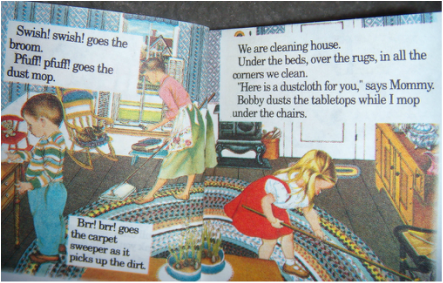 But if the products you are using to clean with are full of toxic chemicals you are defeating the purpose altogether! You may have noticed hazard symbols on some of your cleaning products. These symbols warn of acute health hazards that can occur from a single exposure.But there are no requirements for warnings about long term health effects. Researchers in the U.S.identified 133 unique volatile organic compounds emitted from a small sample of consumer products, including six cleaning products.
Unfortunately even the products labelled "green" and "eco-friendly" cannot be assumed to be safe to use. There is little regulation of cleaning products and virtually no labelling requirements. The only way to avoid all these nasty chemicals is by using simple and effective natural products to keep your home clean! Another bonus is the cost savings you will see by making your own cleaning products.
Here are my favourite DIY cleaning products:
All purpose cleaner:1/2 cup of white vinegar2 tablespoons of baking sodaSeveral drops of an anti-bacterial essential oil (such as tea tree oil)Several drops of grease cutting essential oil (such as lemon or orange)Spray bottlePour ½ cup white vinegar into a spray bottle (preferably glass) and add 2 tablespoons of baking soda. Put in a few drops of your chosen essential oils and then fill the bottle to the top with water. Give it a good shake before using. Test for color-fastness if you are using it on fabrics. This solution stores well.
Glass Cleaner: 2 cups of water2 tablespoons white vinegar10 drops of essential oil - I use lemon (optional)Spray bottleCombine ingredients in a spray bottle (preferably glass) and use as needed to clean window. Spray on windows and wipe clean with a microfibre cloth. This solution stores well, shake before each use.
Toilet cleaner:
Pour one cup of baking soda into the toilet and let it soak for at least an hour. Then pour in one cup of white vinegar, leave for 5 mins and flush. Unless the toilet is really dirty, this will clean it without scrubbing!
Urine stain cleaner:8 ounces hydrogen peroxide 3% (this can be found in a brown bottle in the first aid aisle of most pharmacies or stores)3 tablespoons of baking soda1/4 teaspoon of liquid castille soapSpray bottleMix all ingredients into the spray bottle, swish ingredients (do not shake) and use within 20 minutes. You should see the stain lift and disappear within 5-10 minutes. Once the solution dries, if a baking soda film remains, then simply wipe or vacuum it off.
All purpose scouring scrub:4 tablespoons baking soda2 tablespoons kosher salt2 tablespoons washing soda8 drops of orange essential oilGlass jarMix ingredients well, store in a glass jar. Use on sinks, tubs and tiles.
All purpose floor cleaner:4 litres of hot water1/8 cup of liquid castille soap 1/4 cup of washing soda 8 - 15 drops of essential oils for fragrance and or antibacterial properties (such as lavender & tee tree)Add all ingredients to your mop bucket. When cleaning wood floors also add in 1/4 cup of olive oil. For heavily soiled area's let solution soak for five mins before mopping.
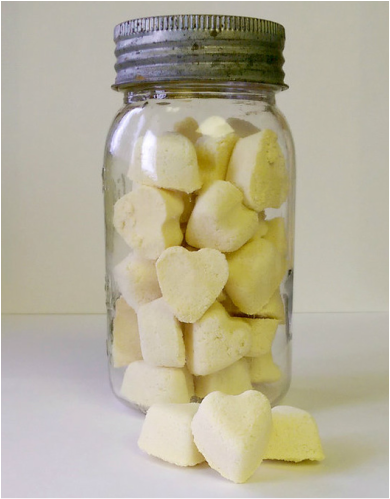
Dishwasher Tablets:1 & 1/2 cups washing soda1/4 cup baking soda1/4 cup kosher salt1 tablespoon baking soda1/4 cup white vinegar1/4 cup lemon juice8 drops of therapeutic grade essential oil
Mix all the dry ingredients together. Mix in the vinegar, lemon juice and essential oil (I like lemon). You can also add in the zest of one lemon into the mixture. Once mixed the mixture should stick together like wet sand. Spoon into a silicone ice cube tray or a mini muffin tray. Let dry for about 24 hours. Once dry pop the cubes out and store in an airtight container.
 Make your own citrus infused vinegar:
Fresh citrus, particularly lemons and lemon juice, are amazing natural cleaners. Lemons contain antibacterial properties which aid in fighting unwanted germs and bacteria in the home. Lemons also work to help brighten dull linens. Citrus provides an amazing fresh scent to home-made cleaners. Place any combination of lemon, orange and lime peels info a mason jar and cover with vinegar. Store for several weeks, then strain the peels out. Use this citrus vinegar in any of the above recipes for an wonderful citrus smell and additional antibacterial properties.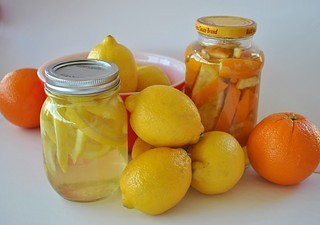
Properties of essential natural cleaning products:
Vinegar: An outstanding multi-purpose cleaner, vinegar is acidic and naturally antibacterial. It’s effective at removing mineral deposits, grease, mold, soap scum and rust. Use for cleaning glass, mirrors, and veggies.
Baking Soda: Has excellent scouring properties making it ideal for scrubbing surfaces such as stove-tops. It naturally removes odors of all kinds, as well as many stains. It cuts through grease because it reacts with fatty acids to form mild detergents.
Castile Soap: Castile soap is made out of a vegetable base such as olive oil, and it does not contain any animal fats.
Washing Soda: Is similar to baking soda with a sudsy twist. It’s found naturally in sodium rich plants and some seaweed, but is commonly made from salt and limestone. Washing soda is preferred for really tough stains like grease or oil stains. It can also be used as an effective heavy-duty cleaner for painted walls, hard floors and kitchen surfaces.
Lemon Juice: Is naturally acidic and works a lot like vinegar, and adds a great citrus smell when mixed with vinegar-based home cleaning recipes. It can be used to remove odors and lift stains and is a great de-greasing agent for dish-washing purposes.
Salt: Is a disinfectant and a natural, gentle abrasive. It is useful for clearing drains and cleaning stained kitchen utensils, cutting boards and fabrics. It cuts through grease when added to baking soda. It removes burns and stains from china ware. Happy Cleaning!!!
Cleaning is supposed to be all about maintaining a healthy home by removing allergens & bacteria and preventing pests. Plus having a clean home just makes us feel good!
But if the products you are using to clean with are full of toxic chemicals you are defeating the purpose altogether! You may have noticed hazard symbols on some of your cleaning products. These symbols warn of acute health hazards that can occur from a single exposure.But there are no requirements for warnings about long term health effects. Researchers in the U.S.identified 133 unique volatile organic compounds emitted from a small sample of consumer products, including six cleaning products.Unfortunately even the products labelled "green" and "eco-friendly" cannot be assumed to be safe to use. There is little regulation of cleaning products and virtually no labelling requirements. The only way to avoid all these nasty chemicals is by using simple and effective natural products to keep your home clean! Another bonus is the cost savings you will see by making your own cleaning products.
Here are my favourite DIY cleaning products:
All purpose cleaner:1/2 cup of white vinegar2 tablespoons of baking sodaSeveral drops of an anti-bacterial essential oil (such as tea tree oil)Several drops of grease cutting essential oil (such as lemon or orange)Spray bottlePour ½ cup white vinegar into a spray bottle (preferably glass) and add 2 tablespoons of baking soda. Put in a few drops of your chosen essential oils and then fill the bottle to the top with water. Give it a good shake before using. Test for color-fastness if you are using it on fabrics. This solution stores well.
Glass Cleaner: 2 cups of water2 tablespoons white vinegar10 drops of essential oil - I use lemon (optional)Spray bottleCombine ingredients in a spray bottle (preferably glass) and use as needed to clean window. Spray on windows and wipe clean with a microfibre cloth. This solution stores well, shake before each use.
Toilet cleaner:
Pour one cup of baking soda into the toilet and let it soak for at least an hour. Then pour in one cup of white vinegar, leave for 5 mins and flush. Unless the toilet is really dirty, this will clean it without scrubbing!
Urine stain cleaner:8 ounces hydrogen peroxide 3% (this can be found in a brown bottle in the first aid aisle of most pharmacies or stores)3 tablespoons of baking soda1/4 teaspoon of liquid castille soapSpray bottleMix all ingredients into the spray bottle, swish ingredients (do not shake) and use within 20 minutes. You should see the stain lift and disappear within 5-10 minutes. Once the solution dries, if a baking soda film remains, then simply wipe or vacuum it off.
All purpose scouring scrub:4 tablespoons baking soda2 tablespoons kosher salt2 tablespoons washing soda8 drops of orange essential oilGlass jarMix ingredients well, store in a glass jar. Use on sinks, tubs and tiles.
All purpose floor cleaner:4 litres of hot water1/8 cup of liquid castille soap 1/4 cup of washing soda 8 - 15 drops of essential oils for fragrance and or antibacterial properties (such as lavender & tee tree)Add all ingredients to your mop bucket. When cleaning wood floors also add in 1/4 cup of olive oil. For heavily soiled area's let solution soak for five mins before mopping.
Dishwasher Tablets:1 & 1/2 cups washing soda1/4 cup baking soda1/4 cup kosher salt1 tablespoon baking soda1/4 cup white vinegar1/4 cup lemon juice8 drops of therapeutic grade essential oil
Mix all the dry ingredients together. Mix in the vinegar, lemon juice and essential oil (I like lemon). You can also add in the zest of one lemon into the mixture. Once mixed the mixture should stick together like wet sand. Spoon into a silicone ice cube tray or a mini muffin tray. Let dry for about 24 hours. Once dry pop the cubes out and store in an airtight container.
Make your own citrus infused vinegar:Fresh citrus, particularly lemons and lemon juice, are amazing natural cleaners. Lemons contain antibacterial properties which aid in fighting unwanted germs and bacteria in the home. Lemons also work to help brighten dull linens. Citrus provides an amazing fresh scent to home-made cleaners. Place any combination of lemon, orange and lime peels info a mason jar and cover with vinegar. Store for several weeks, then strain the peels out. Use this citrus vinegar in any of the above recipes for an wonderful citrus smell and additional antibacterial properties.
Properties of essential natural cleaning products:
Vinegar: An outstanding multi-purpose cleaner, vinegar is acidic and naturally antibacterial. It’s effective at removing mineral deposits, grease, mold, soap scum and rust. Use for cleaning glass, mirrors, and veggies.
Baking Soda: Has excellent scouring properties making it ideal for scrubbing surfaces such as stove-tops. It naturally removes odors of all kinds, as well as many stains. It cuts through grease because it reacts with fatty acids to form mild detergents.
Castile Soap: Castile soap is made out of a vegetable base such as olive oil, and it does not contain any animal fats.
Washing Soda: Is similar to baking soda with a sudsy twist. It’s found naturally in sodium rich plants and some seaweed, but is commonly made from salt and limestone. Washing soda is preferred for really tough stains like grease or oil stains. It can also be used as an effective heavy-duty cleaner for painted walls, hard floors and kitchen surfaces.
Lemon Juice: Is naturally acidic and works a lot like vinegar, and adds a great citrus smell when mixed with vinegar-based home cleaning recipes. It can be used to remove odors and lift stains and is a great de-greasing agent for dish-washing purposes.
Salt: Is a disinfectant and a natural, gentle abrasive. It is useful for clearing drains and cleaning stained kitchen utensils, cutting boards and fabrics. It cuts through grease when added to baking soda. It removes burns and stains from china ware. Happy Cleaning!!!
October 29, 2015
Whole Cost Comparison
The cost of raw pet food can vary greatly. If you are buying pre-made small packages from a pet food store it will be a higher cost compared to sourcing food from butchers and buying in bulk. The cost you will pay depends a lot on the effort you put forth to locate affordable sources. In many instances raw food can actually cost less than a "premium" kibble.
But to gauge the true cost of a pet's diet there is more to measure than simply the price of the food. For a true picture the impact on the animal's health needs to be assessed and also how the animal's health affects their human family's: time, emotions, and financial resources.
Kibble/Can
Raw Meat/Organ/Bone
FOOD COST
DENTAL HEALTH
PARASITES
JOINT CARE
& ARTHRITIS
EAR CARE
DIARRHEA/
IBD
OBESITY
PANCREATIC
DISEASE
ALLERGIES/
SKIN
BODY ODOR
TOXINS
HYDRATION
MIND/
BEHAVIOR
OWNER
TIME
OWNER
CONVENIENCE
OWNER
MIND/
EMOTIONAL
Varies $.50 per day to $5.00 per day. Bargain grocery store brand to prescription/premium diets.
Dental cleanings yearly or bi-annually $300+ Plus the hassle of trying to brush your pet's teeth daily.
Parasites are able to thrive in/on a host with a weakened immune system. Parasite control products are $10 to $50 per month.
Pain medication to control the pain of arthritis $50-$300 monthly. Quality of life. Surgical correction of dysplasia $1500-$5000 or euthanasia.
Sedation to clean ears $200 to $500 per instance + medications
$100+ for exam and prescription drugs/products per instance. Special Prescription diet. Smelly, large stools. Chronic discomfort for the animal.
Processed foods promote obesity. Spray on flavorings encourage overeating.
Lack of enzymes found in kibble robs the body of enzymes, damaging the pancreas.
One of the most costly problems. Miscellaneous medications, exams, itching, runny eyes, listening to your pet chewing, hot spots, vomiting.
Grooming & odor eliminating products. Cleaning your clothing, upholstery, carpets & general household odors from a smelly pet.
Cancer, kidney & liver damage. Severe illness requires hospitalization, risk of death.
Lacking in moisture. Promotes chronic low level dehydration.
Dyes and additives can contribute to behavioral problems. Reluctance to eat/being picky.
Time is spent attending veterinary appointments, giving medications, brushing teeth, cleaning pet odors from the animal & the house, cleaning messy stinky stools in the yard.
Very convenient. Can be purchased at grocery store or pet store. No special storage requirements. Follow instructions on bag, no special knowledge required.
Worry & stress over recurring health issues, financial stress from veterinary fees, seeing your animal in discomfort. Reliance on pet food companies to provide healthy food.
Varies $.50 per day to $5.00 per day. Buy in bulk & source free items to keep costs down.
Consumption of raw meaty bones keep teeth clean naturally. Dental cleanings and brushing of teeth not needed.
Raw diets support a healthy immune system promoting a natural resistance to parasites.
Raw diets contain and abundance of bio-available sources of nutrients for joint health.
Raw meat and bone diets eliminate the consumption of yeast which is a major contributor to ear infections.
Raw meat and bones create a healthy gastrointestinal system, stools are well formed and have minimal odor.
Builds healthy muscle mass.
Contains an abundance of live enzymes promoting pancreatic health and optimal utilization of nutrients.
Much reduced incidence of allergies when appropriate unprocessed foods are fed.
The elimination of grain, dairy, additives, preservatives & cooked products will have a profound effect on the odor of your pet.
Significantly reduced amount of toxins are present in raw food. Organic products are preferred.
Naturally contains moisture.
Consumption of raw food and meaty bones is enjoyable and mentally stimulating for cats, dogs and ferrets.
Time is spent sourcing & preparing raw diet. Monitoring animals at feeding time is suggested.
Special trips may be required to pick up raw food. Home delivery is possible. Freezer space required for storage. Needs to be defrosted in advance of feeding. Knowledge or guidance on raw feeding required.
Content knowing you are providing an optimal diet to your pet. Happiness seeing your pet enjoying a good quality of life. Initial fear/worry when changing your pet's diet.
A species appropriate diet gives the body ideal fuel so the innate functions of all body systems can be carried out efficiently. Only when all systems are running in peak condition does health blossom. Infections can be halted, viruses are resisted, toxins are expelled, bones mend, cuts heal & parasites are unable to flourish.
But to gauge the true cost of a pet's diet there is more to measure than simply the price of the food. For a true picture the impact on the animal's health needs to be assessed and also how the animal's health affects their human family's: time, emotions, and financial resources.
Kibble/Can
Raw Meat/Organ/Bone
FOOD COST
DENTAL HEALTH
PARASITES
JOINT CARE
& ARTHRITIS
EAR CARE
DIARRHEA/
IBD
OBESITY
PANCREATIC
DISEASE
ALLERGIES/
SKIN
BODY ODOR
TOXINS
HYDRATION
MIND/
BEHAVIOR
OWNER
TIME
OWNER
CONVENIENCE
OWNER
MIND/
EMOTIONAL
Varies $.50 per day to $5.00 per day. Bargain grocery store brand to prescription/premium diets.
Dental cleanings yearly or bi-annually $300+ Plus the hassle of trying to brush your pet's teeth daily.
Parasites are able to thrive in/on a host with a weakened immune system. Parasite control products are $10 to $50 per month.
Pain medication to control the pain of arthritis $50-$300 monthly. Quality of life. Surgical correction of dysplasia $1500-$5000 or euthanasia.
Sedation to clean ears $200 to $500 per instance + medications
$100+ for exam and prescription drugs/products per instance. Special Prescription diet. Smelly, large stools. Chronic discomfort for the animal.
Processed foods promote obesity. Spray on flavorings encourage overeating.
Lack of enzymes found in kibble robs the body of enzymes, damaging the pancreas.
One of the most costly problems. Miscellaneous medications, exams, itching, runny eyes, listening to your pet chewing, hot spots, vomiting.
Grooming & odor eliminating products. Cleaning your clothing, upholstery, carpets & general household odors from a smelly pet.
Cancer, kidney & liver damage. Severe illness requires hospitalization, risk of death.
Lacking in moisture. Promotes chronic low level dehydration.
Dyes and additives can contribute to behavioral problems. Reluctance to eat/being picky.
Time is spent attending veterinary appointments, giving medications, brushing teeth, cleaning pet odors from the animal & the house, cleaning messy stinky stools in the yard.
Very convenient. Can be purchased at grocery store or pet store. No special storage requirements. Follow instructions on bag, no special knowledge required.
Worry & stress over recurring health issues, financial stress from veterinary fees, seeing your animal in discomfort. Reliance on pet food companies to provide healthy food.
Varies $.50 per day to $5.00 per day. Buy in bulk & source free items to keep costs down.
Consumption of raw meaty bones keep teeth clean naturally. Dental cleanings and brushing of teeth not needed.
Raw diets support a healthy immune system promoting a natural resistance to parasites.
Raw diets contain and abundance of bio-available sources of nutrients for joint health.
Raw meat and bone diets eliminate the consumption of yeast which is a major contributor to ear infections.
Raw meat and bones create a healthy gastrointestinal system, stools are well formed and have minimal odor.
Builds healthy muscle mass.
Contains an abundance of live enzymes promoting pancreatic health and optimal utilization of nutrients.
Much reduced incidence of allergies when appropriate unprocessed foods are fed.
The elimination of grain, dairy, additives, preservatives & cooked products will have a profound effect on the odor of your pet.
Significantly reduced amount of toxins are present in raw food. Organic products are preferred.
Naturally contains moisture.
Consumption of raw food and meaty bones is enjoyable and mentally stimulating for cats, dogs and ferrets.
Time is spent sourcing & preparing raw diet. Monitoring animals at feeding time is suggested.
Special trips may be required to pick up raw food. Home delivery is possible. Freezer space required for storage. Needs to be defrosted in advance of feeding. Knowledge or guidance on raw feeding required.
Content knowing you are providing an optimal diet to your pet. Happiness seeing your pet enjoying a good quality of life. Initial fear/worry when changing your pet's diet.
A species appropriate diet gives the body ideal fuel so the innate functions of all body systems can be carried out efficiently. Only when all systems are running in peak condition does health blossom. Infections can be halted, viruses are resisted, toxins are expelled, bones mend, cuts heal & parasites are unable to flourish.
August 21, 2015
Is Raw Food a Miracle Cure?
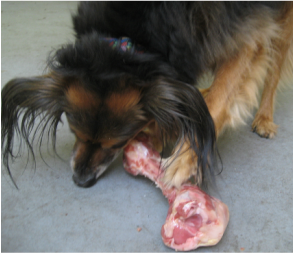 I see many people proclaiming that a raw food diet cured their dog of this or that. But raw food isn't really a miracle cure. It is however a powerful way to strengthen your pet's innate healing abilities.
 Nothing outside the body actually has any power to cure. The only cure comes from innate biological processes. Say for instance your dog gets a deep scratch. Chances are that the scratch will heal up on it's own. There doesn't need to be any special creams or sprays applied to the scratch in order for healing to happen. The dog's body undertakes all the needed biological processes to heal the scratch. In simple terms, the cut will first be coagulated, then white blood cells come on the scene to destroy any germs and then cell reproduction begins to replace the damaged skin. These processes are completely automatic and happen without any intervention.
As another example say your pet breaks it's leg. If you do absolutely nothing (I'm not recommending this course of action!) the bone will heal and fuse back together, although likely not straight. If the bone is first set and immobilized into the correct position when the bone begins to fuse back together it will heal straight. There are no special medications required to make bones grow back together. It is a natural and automatic process. This is how all healing takes place.
ALL living creatures are equipped with the capability to heal themselves.
When our pets are living unhealthy lifestyles their vitality will be reduced. If they are not receiving appropriate nutrition then their body will not have the resources to complete these natural healing functions. This results in what I call surviving, not thriving. This is when we start seeing the symptoms of dis-ease. If we make adjustments to the animals lifestyle to be more in line with it's species needs, it is possible to restore the biological functions and have an improvement in health.
Vitality is the key factor in determining health and a species appropriate raw food diet is the foundation of vitality. Anyone who has put a kibble fed pet onto a raw diet will tell you of all the wonderful changes they saw happen in their animal. It is the effect that optimal nutrition has upon the bodily processes that allows the animal to actually heal itself.
To ensure that our animals have vitality we must provide the living conditions that are ideal for their species. Please contact us for guidance on how to raise your animal's vitality!
August 14, 2015
Don't be just another zombie...
 Do you accept information at face value and find your views are generally reflective of the majority?
If you tend to "go with the flow" you are likely being unconsciously manipulated in the numerous choices we all make each and every day of our lives.
You can choose to make the unconscious conscious. A high percentage of our daily activity is based on subconscious programming that we have received throughout our life. Most of the decisions we make on a daily basis, we don’t even question. We make them based on our programming.
This programming comes to us from the media, from "experts" and our friends and family. When we go along with what we are told without ever questioning we become very easy to manipulate.
Are you aware that fear is constantly used by the media to manipulate your behavior? When we become fearful we revoke our own power becoming passengers in our own life.
“Fear is a darkroom where negatives develop.”
~Usman B. Asif
When doing consultations I often come across resistance which is stemming from fear that has been conditioned. It is really quite amazing how much affect this has on our lives. Once people become aware of this it becomes easier to step away from the fear and move back into the driver's seat. I was there once too. But seeing the effect from a difference perspective really makes you see how much fear can impact our lives if we allow it.
We need to stop living our lives on autopilot. Don't be a zombie! start developing awareness of your fear responses, question everything, and use critical thinking as part of your decision making process!
and please share with any friends you may suspect are zombies...
July 30, 2015
Ditch the Toxic Household Products: Part 1 - LAUNDRY
In today's world we are literally bombarded with toxins and so are our pets. In fact, they likely receive more exposure as their bare paws continually come into contact with whatever has been used to clean the floors, and pesticides/herbicides sprayed on grass. Harmful substances are absorbed by the skin through paw pads and plus our pets sometimes lick themselves, each other, the floor and objects.  Oh the joys of laundry! Do you know what is in your laundry soap, fabric softener, dryer sheets, and stain removal products? Are you aware these products could be compromising your family’s health, including your pets? We should be concerned with what is used to clean our fabrics as they directly contact our skin all day. We provide our pets with comfy beds and blankets to lay on without maybe realizing that what we chose to clean them with could be harmful to them.
Unfortunately, few of the chemicals used in laundry products have been thoroughly tested, particularly in combination with other chemicals, and some chemicals that have been shown to be harmful are still widely used.
Health effects of ingredients in common household products include:
Respiratory problems Eye irritation Skin irritationCancer Disruption of the endocrine system As we combine our laundry products with other cleaning products, air fresheners, personal care products, lawn care and so on we can start to see some of the many ways that we are exposed to chemicals in and around our home. The good news is that there are non-toxic options available to us!
Today I want to share with you how you can replace the toxic laundry products that you may be using in your home with safe and effective alternatives. Oh, and you can make them yourself for pennies! Because I was curious how the costs compared to store bought products I went ahead and calculated the cost for myself per batch and discovered I was also saving a lot of money by making my own laundry products!
Watch for my upcoming posts on other types of household products you can make yourself.
Ok, let’s start detoxifying our house!
Homemade Laundry Soap
16 cups of water
1 cup washing soda
1/3 cup of kosher salt
1 cup liquid Castile soap
20-40 drops essential oil
Take 2 cups of the water and put into a pot & heat to just below boiling. Add the washing soda and kosher salt stirring until both have dissolved. Mix into the remaining cold water and add liquid Castile soap. Add whatever essential oil you prefer. I make mine using purification essential oil as it neutralizes any odors and leaves a fresh scent. Mix it all together and store in a one gallon plastic milk jug or glass container. Shake or stir before each use. If using a plastic jug for storage make sure to use a new jug for each batch as the essential oils will break down the plastic over time (glass is much preferred).
Use ¼ to ½ cup per load depending on load size and soil level.
Cost: $7.70 per batch (34 – 68 loads)
If you are having difficulty finding washing soda I will give you a tip...baking soda (sodium bicarbonate) and washing soda (sodium carbonate) are nearly identical in their chemical composition. In fact, you can turn baking soda into washing soda simply by baking it. Spread the baking soda out on a shallow pan and bake at 200°F for an hour and viola…you now have washing soda!
Homemade Fabric Softener
6 cups water
¼ cup lemon juice
1 cup (3%) hydrogen peroxide
10-12 drops of lemon or orange essential oil
Mix all ingredients together. Use 1 cup per large wash load to whiten.
Let solution soak with laundry for about one hour.
Cost: $1.39 per batch (6 loads)
16 cups of distilled white vinegar
20-40 drops of essential oil
Mix together. Add ¼ to ½ cup to the rinse cycle to soften clothes.
Cost: $5.17 per batch (32-64 loads)
Homemade Bleach Alternative
Homemade Stain Remover
3-4 Tablespoons of Homemade Bleach Alternative
1 teaspoon of baking soda
½ teaspoon of kosher salt
2-4 drops of lemon essential oil
Apply mixture to stain and let soak. Scrub fabric gently. Rinse and repeat as needed.
Cost: less than 40 cents per application!
Homemade Dryer Sheets
Add 3-5 drops of essential oil onto a piece of fabric or a facecloth. Toss the cloth in dryer with clothes. Re-apply essential oils with each load. So easy!
Wool Dryer balls
The use of wool dryer balls will soften and fluff clothes, reduce static, and reduce the drying time.
For best results use 6 felted 100% wool balls. Add a drop or two of your favorite essential oil onto each dryer ball for great smelling laundry.
Static Stopper
Synthetic fabrics are especially prone to static. Attaching a small safety pin on the fabric will eliminate the static on that garment. Over drying fabrics will increase static. Try setting the timer for 10 minutes less than normal. I only use and recommend Young Living Essential Oils, due to their rigorous safety testing and because of their therapeutic qualities and high concentration level.
You can select the oil you use in your laundry products not only for a nice fragrance and cleaning properties, but also to benefit you and your pets physical and emotional health. Imagine that instead of using toxic products that harm your health you could be using products that offer therapeutic benefits!
Because therapeutic oils are very concentrated you only need a few drops for each use so it is extremely cost effective. Here are the costs per drop of the most common essential oils I use in my laundry:
Cedarwood 0.05/drop Citrus Fresh 0.07/drop Lavender 0.11/drop
Lemon 0.05/drop Orange 0.05/drop Purification 0.09/drop
Click here to LEARN MORE about Young Living Products
Click here to PURCHASE Young Living Products
If you have any questions about these products that I could answer please contact me at info@thenaturalcarnivore.com
Click below to download the Homemade Laundry Products instructions in PDF for easy saving & printing! [image error] nc_homemade_laundry_products.pdfFile Size: 134 kbFile Type: pdfDownload File Happy Laundering!!!
Oh the joys of laundry! Do you know what is in your laundry soap, fabric softener, dryer sheets, and stain removal products? Are you aware these products could be compromising your family’s health, including your pets? We should be concerned with what is used to clean our fabrics as they directly contact our skin all day. We provide our pets with comfy beds and blankets to lay on without maybe realizing that what we chose to clean them with could be harmful to them.Unfortunately, few of the chemicals used in laundry products have been thoroughly tested, particularly in combination with other chemicals, and some chemicals that have been shown to be harmful are still widely used.
Health effects of ingredients in common household products include:
Respiratory problems Eye irritation Skin irritationCancer Disruption of the endocrine system As we combine our laundry products with other cleaning products, air fresheners, personal care products, lawn care and so on we can start to see some of the many ways that we are exposed to chemicals in and around our home. The good news is that there are non-toxic options available to us!
Today I want to share with you how you can replace the toxic laundry products that you may be using in your home with safe and effective alternatives. Oh, and you can make them yourself for pennies! Because I was curious how the costs compared to store bought products I went ahead and calculated the cost for myself per batch and discovered I was also saving a lot of money by making my own laundry products!
Watch for my upcoming posts on other types of household products you can make yourself.
Ok, let’s start detoxifying our house!
Homemade Laundry Soap
16 cups of water
1 cup washing soda
1/3 cup of kosher salt
1 cup liquid Castile soap
20-40 drops essential oil
Take 2 cups of the water and put into a pot & heat to just below boiling. Add the washing soda and kosher salt stirring until both have dissolved. Mix into the remaining cold water and add liquid Castile soap. Add whatever essential oil you prefer. I make mine using purification essential oil as it neutralizes any odors and leaves a fresh scent. Mix it all together and store in a one gallon plastic milk jug or glass container. Shake or stir before each use. If using a plastic jug for storage make sure to use a new jug for each batch as the essential oils will break down the plastic over time (glass is much preferred).
Use ¼ to ½ cup per load depending on load size and soil level.
Cost: $7.70 per batch (34 – 68 loads)
If you are having difficulty finding washing soda I will give you a tip...baking soda (sodium bicarbonate) and washing soda (sodium carbonate) are nearly identical in their chemical composition. In fact, you can turn baking soda into washing soda simply by baking it. Spread the baking soda out on a shallow pan and bake at 200°F for an hour and viola…you now have washing soda!
Homemade Fabric Softener
6 cups water
¼ cup lemon juice
1 cup (3%) hydrogen peroxide
10-12 drops of lemon or orange essential oil
Mix all ingredients together. Use 1 cup per large wash load to whiten.
Let solution soak with laundry for about one hour.
Cost: $1.39 per batch (6 loads)
16 cups of distilled white vinegar
20-40 drops of essential oil
Mix together. Add ¼ to ½ cup to the rinse cycle to soften clothes.
Cost: $5.17 per batch (32-64 loads)
Homemade Bleach Alternative
Homemade Stain Remover
3-4 Tablespoons of Homemade Bleach Alternative
1 teaspoon of baking soda
½ teaspoon of kosher salt
2-4 drops of lemon essential oil
Apply mixture to stain and let soak. Scrub fabric gently. Rinse and repeat as needed.
Cost: less than 40 cents per application!
Homemade Dryer Sheets
Add 3-5 drops of essential oil onto a piece of fabric or a facecloth. Toss the cloth in dryer with clothes. Re-apply essential oils with each load. So easy!
Wool Dryer balls
The use of wool dryer balls will soften and fluff clothes, reduce static, and reduce the drying time.
For best results use 6 felted 100% wool balls. Add a drop or two of your favorite essential oil onto each dryer ball for great smelling laundry.
Static Stopper
Synthetic fabrics are especially prone to static. Attaching a small safety pin on the fabric will eliminate the static on that garment. Over drying fabrics will increase static. Try setting the timer for 10 minutes less than normal. I only use and recommend Young Living Essential Oils, due to their rigorous safety testing and because of their therapeutic qualities and high concentration level.
You can select the oil you use in your laundry products not only for a nice fragrance and cleaning properties, but also to benefit you and your pets physical and emotional health. Imagine that instead of using toxic products that harm your health you could be using products that offer therapeutic benefits!
Because therapeutic oils are very concentrated you only need a few drops for each use so it is extremely cost effective. Here are the costs per drop of the most common essential oils I use in my laundry:
Cedarwood 0.05/drop Citrus Fresh 0.07/drop Lavender 0.11/drop
Lemon 0.05/drop Orange 0.05/drop Purification 0.09/drop
Click here to LEARN MORE about Young Living Products
Click here to PURCHASE Young Living Products
If you have any questions about these products that I could answer please contact me at info@thenaturalcarnivore.com
Click below to download the Homemade Laundry Products instructions in PDF for easy saving & printing! [image error] nc_homemade_laundry_products.pdfFile Size: 134 kbFile Type: pdfDownload File Happy Laundering!!!
July 21, 2015
Animal nutrition...are you paying attention?
I'm not telling you anything you probably didn't know already when I say that veterinarians have negligible training in the area of animal nutrition, right? Most veterinary training programs contain a couple of days of nutrition education. Should nutrition counseling even be considered within their scope of practice if they have little training on the subject? Scope of practice is limited to that which the law allows for specific education and experience, and specific demonstrated competency. According to Wikipedia if requirements for practicing a skill or profession satisfy all three of the following requirements then it is within that persons scope of practice.
Education and training — Has the person been educated academically or on-the-job and have documentation proving education to do the item in question?Governing body — Does your state, district, province or federal government that oversees the skill or profession allow (or not explicitly disallow) the item in question?Institution — Does the institution allow a person or their profession to do the item in question?
So I guess the day or two of "nutrition education" (hosted by pet food companies) counts for the education piece in this case. How do you feel about that? Do you think this makes them qualified in animal nutrition?
First of all, why is nutrition not understood to be a key part of animal health with more education being given on the topic? Considering the lack of education in this area why do pet owner's follow their vet's nutritional advice? Being a licensed veterinarian does not magically make one knowledgeable about animal nutrition. Some veterinarians have furthered their education on the subject and are knowledgeable, but they are few are far between.
Would I take nutrition advice from my Dr.? maybe for very general questions, but if I wanted comprehensive nutrition guidance I would be consulting with a dietician. Someone who is educated on nutrition. Makes sense right?
Do I expect my Dr. to have an extensive knowledge of nutrition? No, that is not their area of expertise, they are GENERAL Practitioners. Do I see my GP if my muscles are sore and tense? (not unless I want to pop a pill and suppress my symptoms). Personally I go see my massage therapist who has the ability to mechanically work the tension out of my muscles.
We have actually placed a burden on veterinarians to dispense nutrition advice for which they have not been trained. A general practitioner cannot be expected to have expert knowledge on all things health related. This is why we may see many different types of practitioners regarding our own health needs. Even in animal care we have specialists, orthopedic, cardiologists, ophthalmologists and so on. But nutrition, one of the most basic needs that is the foundation to health in all species is sorely neglected.
It's like a black hole of big pet food business. Anything outside of scientifically formulated balanced pellets from a bag gets sucked into this black hole. These pet food companies are making billions of dollars from pet owners and at the expense of the animals whose health suffers because of poor nutrition. We refer to drug money as dirty money, I think commercial pet food money is pretty darn dirty. How many animals have had a poor quality of life or lost their life due to the food they ate? And the profits made go right back into advertising of these foods. They pour vast amounts of money attempting to discredit natural feeding methods so they can continue to rake in the money.
 But not to worry about the gap in knowledge veterinarians have regarding nutrition because the pet food companies have got it all figured out for all of us. They have scientifically created balanced formulas for you so you don't have to worry about what to feed your pet. They make it easy for Veterinarians, creating these scientifically balanced foods that will be their simple solution when clients ask about what to feed their pets. Not only will it be simple to recommend this product but they also make money on any sales as well. No thinking needed, clients just open the bag and scoop into their pets bowl. The kibble is sprayed with the attractive flavoring so the animals will want to eat it. It's a win win!
But it's NOT a win win...our pets are ill. They should not be having so many chronic health issues and at younger and younger ages. This is not normal. Their highly processed food is full of chemicals and toxins, is poorly digestible, promotes gum disease, contains species-inappropriate ingredients and so many other problems. Take a look at my book The Inner Carnivore for a detailed run down on how processed pet foods contribute to poor health.
But they do not have to live a life of poor health! Species appropriate diets are the only way to go. Stop paying out your hard earned money on products that are promoting disease in your animal, which costs you more money at the veterinarian and causes much heartache. Is it me or does this thinking makes absolutely no sense at all! Educate yourself on the topic. The resources are out there in books and websites. If you need personalized help please contact me for a nutrition consultation, I would be so happy to help you get your animal back to health!
Education and training — Has the person been educated academically or on-the-job and have documentation proving education to do the item in question?Governing body — Does your state, district, province or federal government that oversees the skill or profession allow (or not explicitly disallow) the item in question?Institution — Does the institution allow a person or their profession to do the item in question?
So I guess the day or two of "nutrition education" (hosted by pet food companies) counts for the education piece in this case. How do you feel about that? Do you think this makes them qualified in animal nutrition?
First of all, why is nutrition not understood to be a key part of animal health with more education being given on the topic? Considering the lack of education in this area why do pet owner's follow their vet's nutritional advice? Being a licensed veterinarian does not magically make one knowledgeable about animal nutrition. Some veterinarians have furthered their education on the subject and are knowledgeable, but they are few are far between.
Would I take nutrition advice from my Dr.? maybe for very general questions, but if I wanted comprehensive nutrition guidance I would be consulting with a dietician. Someone who is educated on nutrition. Makes sense right?
Do I expect my Dr. to have an extensive knowledge of nutrition? No, that is not their area of expertise, they are GENERAL Practitioners. Do I see my GP if my muscles are sore and tense? (not unless I want to pop a pill and suppress my symptoms). Personally I go see my massage therapist who has the ability to mechanically work the tension out of my muscles.
We have actually placed a burden on veterinarians to dispense nutrition advice for which they have not been trained. A general practitioner cannot be expected to have expert knowledge on all things health related. This is why we may see many different types of practitioners regarding our own health needs. Even in animal care we have specialists, orthopedic, cardiologists, ophthalmologists and so on. But nutrition, one of the most basic needs that is the foundation to health in all species is sorely neglected.
It's like a black hole of big pet food business. Anything outside of scientifically formulated balanced pellets from a bag gets sucked into this black hole. These pet food companies are making billions of dollars from pet owners and at the expense of the animals whose health suffers because of poor nutrition. We refer to drug money as dirty money, I think commercial pet food money is pretty darn dirty. How many animals have had a poor quality of life or lost their life due to the food they ate? And the profits made go right back into advertising of these foods. They pour vast amounts of money attempting to discredit natural feeding methods so they can continue to rake in the money.
But not to worry about the gap in knowledge veterinarians have regarding nutrition because the pet food companies have got it all figured out for all of us. They have scientifically created balanced formulas for you so you don't have to worry about what to feed your pet. They make it easy for Veterinarians, creating these scientifically balanced foods that will be their simple solution when clients ask about what to feed their pets. Not only will it be simple to recommend this product but they also make money on any sales as well. No thinking needed, clients just open the bag and scoop into their pets bowl. The kibble is sprayed with the attractive flavoring so the animals will want to eat it. It's a win win! But it's NOT a win win...our pets are ill. They should not be having so many chronic health issues and at younger and younger ages. This is not normal. Their highly processed food is full of chemicals and toxins, is poorly digestible, promotes gum disease, contains species-inappropriate ingredients and so many other problems. Take a look at my book The Inner Carnivore for a detailed run down on how processed pet foods contribute to poor health.
But they do not have to live a life of poor health! Species appropriate diets are the only way to go. Stop paying out your hard earned money on products that are promoting disease in your animal, which costs you more money at the veterinarian and causes much heartache. Is it me or does this thinking makes absolutely no sense at all! Educate yourself on the topic. The resources are out there in books and websites. If you need personalized help please contact me for a nutrition consultation, I would be so happy to help you get your animal back to health!
July 15, 2015
Return to Nature
Animals in nature are not free from disease. They are also not completely free of man's influence upon their environment, but generally their health and vitality is superior to animals cared for by people.
When animals are removed from nature to live under human controlled conditions, their health and vitality are lessened. Animals kept in zoo's generally do not thrive. They show physical and mental disturbances and are often unable to reproduce in captivity.
 Humans are intelligent, civilized (well mostly), and possess advanced technology, yet remain challenged to replicate the conditions that promote health for captive and domesticated animals.
Our domesticated cats and dogs suffer from many of the same ailments as their human caretakers. Similar types of animals that are left to fend for themselves do not develop the same problems. Wild species of dogs and cats do not have allergies, skin issues, chronic digestive problems, hot spots, hip dysplasia, cystitis, etc. How is it that animals not receiving any medical care, finding their own food and shelter do not develop the same conditions as our pets who receive extensive veterinary care, scientifically formulated food, shelter from the elements and so on? Is is possible that the living conditions of our modern pets has something to do with their health issues? I want you to think about that...really think about it.
Wild canines and felines face much harsher living conditions than their domesticated cousins. Yet they have thrived in spite of the dangers they must face daily. Our domesticated animals have replaced the harsh conditions of a life in nature to living with humans where we provide for all their requirements as we see fit. Our pets generally live longer than their wild kin, but they suffer terribly from chronic physical and mental problems.
The laws of nature are immutable. When these laws are defied poor health will be the result...without fail. On the positive side, a return to nature's tenets will equally always result in health benefits.
Today's medicine is "sick care" not health care. Are you ready to unlearn and step away from all of the false medical indoctrination and re-establish your connection with nature?
For general learning on natural pet health I recommend Total Wellness for Pets, an online class offered by The American Council of Animal Naturopathy.
For a personalized plan for your pet visit our consultation page and begin your animal's journey back to health.
When animals are removed from nature to live under human controlled conditions, their health and vitality are lessened. Animals kept in zoo's generally do not thrive. They show physical and mental disturbances and are often unable to reproduce in captivity.
Humans are intelligent, civilized (well mostly), and possess advanced technology, yet remain challenged to replicate the conditions that promote health for captive and domesticated animals. Our domesticated cats and dogs suffer from many of the same ailments as their human caretakers. Similar types of animals that are left to fend for themselves do not develop the same problems. Wild species of dogs and cats do not have allergies, skin issues, chronic digestive problems, hot spots, hip dysplasia, cystitis, etc. How is it that animals not receiving any medical care, finding their own food and shelter do not develop the same conditions as our pets who receive extensive veterinary care, scientifically formulated food, shelter from the elements and so on? Is is possible that the living conditions of our modern pets has something to do with their health issues? I want you to think about that...really think about it.
Wild canines and felines face much harsher living conditions than their domesticated cousins. Yet they have thrived in spite of the dangers they must face daily. Our domesticated animals have replaced the harsh conditions of a life in nature to living with humans where we provide for all their requirements as we see fit. Our pets generally live longer than their wild kin, but they suffer terribly from chronic physical and mental problems.
The laws of nature are immutable. When these laws are defied poor health will be the result...without fail. On the positive side, a return to nature's tenets will equally always result in health benefits.
Today's medicine is "sick care" not health care. Are you ready to unlearn and step away from all of the false medical indoctrination and re-establish your connection with nature?
For general learning on natural pet health I recommend Total Wellness for Pets, an online class offered by The American Council of Animal Naturopathy.
For a personalized plan for your pet visit our consultation page and begin your animal's journey back to health.