
 Sorry, you must be a member of this group to do that.
Leo X. Robertson's Blog, page 15
February 14, 2017
I’m in the process of setting everything up for the Losing the...
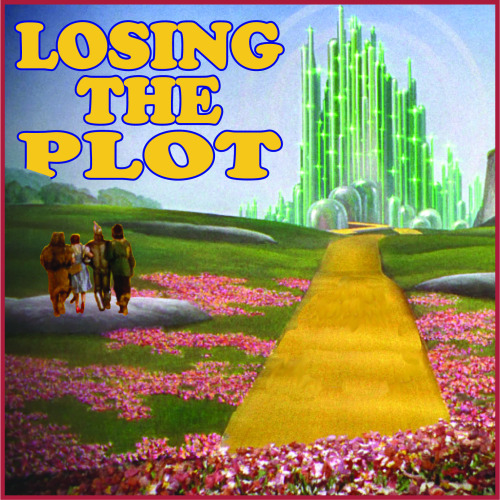
We're gonna try this one!!
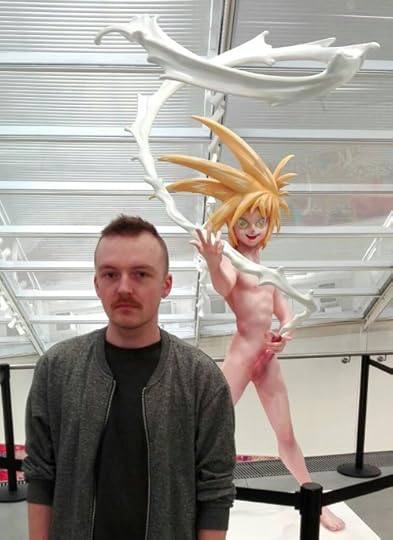
Provided without context.
I’m in the process of setting everything up for the Losing the Plot podcast so I can distribute it beyond Soundcloud to Overcast, Google Play Music, iTunes and others. For this I needed some artwork and reached out to frequent collaborator and all-round awesome guy Marc Molino, who provided the above. Isn’t it great?! I hope we get to use it :D
I also took in some art recently and wanted to show you that experience.
Hope you’re having a great week!!


February 13, 2017
Bettering yourself, part 7: making something
There is an epidemic of low self-esteem across the globe. It’s not endearing if you don’t do something because you’re underconfident—it’s just irritating. It’s failure by default, which means you reach the point where you would irritate people less by making the thing you’ve always wanted to make, even if it’s a fucking monstrosity, than by moping around with inertia.
I would say the real fear is not the quality of the product you haven’t made but whether or not you’re bothering people, by making them look at you or whatever.
I just received feedback for a short story I wrote about an artist. Another writer said it was interesting she wondered whether or not her art was doing anything at all, let alone about to receive an award. I thought, ‘An award? Why would he say that?’ Then I remembered that most people who make art probably imagine a big crowd of people cheering around them, some golden statuette in their hands, long before the piece is finished. I used to have that illusion, of course, and losing it was hard work, but it’s gone now. Instead, I simply think life is better when you do the thing than when you don’t, and I’m not saying that’s good enough for me; I’m saying it has to be. I have to accept the reality of the situation and use it to my advantage, rather than hide away from it and pretend it isn’t going on.
There are central truths about making art, and every artist must choose how they personally respond to the questions. What’s the point? What if it fails? What if no one notices? What if I don’t win the competition? What if I do but I’m far from the best anyway and I know it? Now, many people might comfort themselves by saying the realisation of these fears is unlikely. They might say, ‘But you never know! You might be the best, win the thing, make the point in the way it hasn’t been made before.’ Fair enough, but I think the more interesting answer is to the following question: Say the worst happens—how do you proceed anyway? Answering that question is what gives an artist persistence, which may well be their most important feature. And no talk of success or failure: I’m a firm believer in “You only fail if you quit”; and yet that doesn’t necessarily mean you succeed by persisting, does it? I don’t know.
I don’t mind how the artist answers the questions, but I will be concerned if they haven’t addressed the questions at all. I don’t have time for the art of someone who isn’t conscious of the world around them. But whether or not someone acknowledges these questions and chooses to find an answer to them—either explicitly or otherwise (if you paint a painting, it’s implicit that you think there is a purpose to its existence, for example, whether or not you sat and asked yourself if there is)—these questions still exist in the universe.
So say you make the thing: you could still fail to get it in the right hands of people. But how do you know whose hands it’s supposed to be in, given that we discount how complex other people are? You can’t fundamentally know one way or another, which means you always run the risk of pissing off a few people. I get it: but that doesn’t mean don’t try and find your audience afterwards. Maybe only every tenth person is a keeper, fine. Haruki Murakami said managing a bar prepared him for writing, because even if only every tenth customer returned, eventually he had enough of a clientele base to run a business. But rejection and the difficulty of securing an audience aren’t unique to the writing world.
The universe is 71.4% dark energy, 24% dark matter, and 4.6% STUFF. Physicists might be excited by what’s in that 95.4%, but not me, ahaha! I mean, you’re one in seven billion, occupying this little space on Earth, which is some infinitesimal percentage of the stuff we can see, which is only 4.6% of the stuff there is, and you’re so concerned with your own personal destiny, wrapped up in your everyday bullshit, miraculously, as I say, but way too much. Just make the thing, please. Just go, whoomp, there it is. A little less nothing in the universe. That’s pretty damn neat.
If you really can’t do it, who cares? No one asked you to do it anyway. Now doesn’t that thought suck? So don’t think it; just make the thing!
Interview with poet Andy Carrington!
As you probably know, I recently started the Losing the Plot podcast, where I interview writers readers and people in general about reading, writing and life at large—the plot is there to be lost!
So I got in contact with Andy Carrington, author most recently of the highly polemic and vitriolic poetry collection The Daily Fail, which covers fuckery of all varieties: politics, people and life. Andy preferred we stick to the textual realm, and so he was kind and patient as I sent a few rounds of questions to make sure we got to know everything I could think to ask about him. Truth be told, I chickened out with a few questions, but with any luck he will chat to us again, perhaps on the occasion of his next release :)
Hope you enjoy the interview!
Me: Did books play a role in your life growing up? If so, which ones?
Andy: Somewhere along the line I must’ve developed Bibliophobia from the all Shakespeare stuff they were forcing on us in school. I struggled with reading for years and barely went near books after that.
The books I did get through, I remember (Vurt, 1984, Sugar & Slate, Long Walk to Freedom, Guerrilla Warfare). I’ve held onto Harrison and Bukowski’s poetry books for time, but it was the music mainly that I was into growing up.
Who were the best writers for you and what did you learn from them?
I took a lot from the late ‘80s / early ‘90s rappers: Chuck D / KRS1 / Ice-T / Nasty Nas. [Good] Hip-Hop puts a lot of things into perspective.
Who are your favourite writers today and why?
MJ Black is on point. As is Harry Whitewolf and Rupert Dreyfus. Laura Taylor (from Liverpool) is fucking fierce; and Keiron Higgins is one of the best local poets I’ve seen round here.
Do you have any influences?
Those mentioned already.
And my Mum (I’ve never been the same after she died).
Do you like to return to books, or do you like your favourite books just to stay in your memories instead?
I re-bought Jurassic Park for 10p the other day. Am I gonna be disappointed?
Only if the book doesn’t have Jeff Goldblum in it (never read it myself)!! When did you start writing poetry, and when did you start performing it? What does it feel like to perform and what kind of response have you gotten from your performances?
2008 I put out the first book / first gig was 2012 on my doorstep (1 in 12 Club in Bradford). Probably started writing around 2003.
It can be daunting going up there with no music to back you up. Especially at Punk gigs (which I tend to do). People tend to hang onto your every word or go the other way and completely switch off. The biggest challenge is trying to sustain interest for the 20 / 30 mins when the bands have stopped playing and everyone goes off to get the beers in.
And bear in mind this is DIY. When it works, it works. When it doesn’t, well… you’ve only yourself to blame.
What gave you the idea to write poetry?
Not having the talent / patience / work ethic to do anything else.
Why it is the form for you?
It’s free / has no limits. I’m messy, and things always seem to come together in chunks at different times. So this is probably the one that works best for me getting shit off my chest.
What has your experience been with indie publishing, indie authors?
It’s a free for all. Everyone wants to be heard. A lot of people are just sitting on it in hope they find some big publishing deal. Some are just doing it for laughs.
But there’s more of a platform than there’s ever been for writers just wanting to get their work out there. It’s a slow process, but if you commit to it and the response is good, there are places you can go with it.
Have you thought of having your poems set to music? Are they closer to hip-hop or punk lyrics in your mind? If you could perform them with music, with which band would you most want to perform?
I stopped kidding myself about any sort of music career circa 2003. I leave that to the professionals (I just do the words).
What role does performance play when it comes to your poetry? Do you re-write following performances? Do you think your readers should read your poems out loud?
“Performance” is a bit much. DIY is mostly about the message and the motivations behind it. I tend to make it up as I go along and don’t encourage others to do what I do.
When was “The Artist / Just an Average Guy Born into Poetry” written? The content is different from what you choose to write about now. Do you feel you’ve changed as a person since writing this book, and if so, how?
That was 2012. I was ill and angry then; I’m still ill and angry now. The only difference is who I’m angry with.
In “The Artist / Just an Average Guy Born into Poetry”, there’s both introspection and a wariness about introspection. You acknowledge the difficulty of finding the moments that are important to us in life, what it is inside you is worth analysis, or would be of interest to someone else. But in other times you highlight certain scenes as important, but there’s also a feeling that you don’t know why they are important—I think this is widely relatable, and how we often think of our own lives. In your latest work, “The Daily Fail”, there is a more intensely focused rage, directed outwards. Can you comment on this, and also, do you think that now you have settled on a favourite topic, that your themes are clear to you, or do you expect your interests to shift in future?
The subject shift thing was never really deliberate. Artist was just me coming to terms with being dumped / spending months on a drip; while TDF was written during months of doing nothing, smoking weed / out of a job.
Whatever comes out, comes out in response to whatever provokes it (and whatever mood I’m in). Most poems tend to conclude nothing. I don’t write self-help books or how-to guides. What’s important / not important is for the reader to judge.
In what ways do you think being working class influences the way you see the world? What does it mean to you to identify as working class and can you expand upon the tensions you allude to in your poems of what it’s like to have friends with different socioeconomic statuses? I’ve experienced friction with some working class people, and many more times with people who have anxiety or guilt about never having attended university. Have you had similar experiences? How do we get beyond this? Can we, and if so, is there a point in doing it?
It’s not just working-class but any class. It relates to the culture and the people; the nature of work; income; language; etc. It’s what we identify with and feel a part of.
In Pontefract (the North), there wasn’t much to do but work and drink. No one really used the term “working-class” or expressed any pride in it. Everyone put in their time and just got on with it; it was more about surviving and grabbing bits of life with both hands.
Am I middle-class cause I ended up at Uni? If it’s any consolation, I only got there through my dead Mum’s support grant. And in my defence, it was at Aberystwyth…
What is it you think poetry does best?
I try not to overvalue poetry. It’s mostly just a conversation I have with myself. The words aren’t trying to be any more than what they are.
I suppose that’s why I rely on free verse and abuse it.
Andy Carrington, thanks for the chat!
February 9, 2017
Bettering yourself, part 6: taking less personally
Assume something isn’t about you. You assumed that was about you, didn’t you? Ahahah—how could it be?
You see how weird our wiring seems sometimes? We’re all too quick to assume most things are about us or involve us, even when we feel so excluded also. What the fuck?
Really it’s wonderful that the mind keeps the existential crises at bay for as long as it does, but at a price, sometimes. How could as much of the world around us be as about us as we tend to take it? Someone could come up to you now and scream in your face, and you don’t even know them, and you’d feel ashamed, shaken up, right? It wouldn’t be pleasant, but it wouldn’t be about you.
I remember teenage events more acutely than memories of adulthood I reckon because my mind has highlighted them for further analysis since some injustice was obviously done to me, but my mind at that time did not have the capacity it has now, so it wasn’t selective enough about what it retained. So little of all that stuff had anything to do with me, especially with everyone else’s minds misfiring at that time too.
I find it hard now to take the following personally: a friend had stopped talking to me. Another friend went up to him and asked him why and I heard him shouting (because he didn’t know I was there) ‘Maybe because Leo’s an asshole!’ Guess what? I was being an asshole though. That was no personal offence; that was an accurate description of what I was being. And the statement wasn’t made to offend me, because I wasn’t effectively “there”; the guy just couldn’t be bothered with me like he couldn’t be bothered with wasps or seagulls or whatever. I do not now and did not ever matter that fucking much. I can handle it, though.
Err on the side of not taking shit personally. You are now in the minority! There’s no bigger bummer than the person who, after a day’s quiet deliberation by themselves, bigging themselves up in the dark, takes you a side and is like, ‘I felt very hurt by…’ Aaaaahhhhh now if that accurately describes something you did? It wasn’t a statement about you! We all do that shit, and it sucks! Let’s all together try and do it less. By the way, in that example, I think it’s better to approach with curiosity, ie, rather than, ‘When you did X, you hurt me,’ you say, ‘Hey, what made you do X yesterday?’ ‘Why did you say Y?’ etc. Because we come up with assumptions quickly, but they so rarely have a correct basis behind them.
I was discussing this with a friend, and showed them this diagram.
Know what he said?
‘You think that’s me, don’t you?’
Bettering yourself, part 5: trying something new
Go to a different restaurant, be the first to a new art exhibition, read a new book before other people, see a new film.
The comfier the life, the smaller the risks that get taken, until people map out this bubble of enough stuff that they enjoy that they don’t need to try anything new. I went to a new restaurant a month ago and I’ve been dining the fuck out on it, so to speak, ever since!
Though you run the risk of being the source of new stuff all the time, and who wants to be that? I did you a solid and now you think that’s my job? Uhhhhh—this is one of the caveats I expand upon further later.
February 8, 2017
Bettering yourself, part 4: taking networking seriously.
Say you hear of a work opportunity that’s not for you, and are asked if you know someone who’s right for it, what are you going to do? Say no? You might, but it’s nice to help. Run a LinkedIn search or something? Probably not. Recommend someone you’ve met who is even tangibly applicable? I think so.
We like to think we know people, so it’s as much an opportunity for the networker to demonstrate networking as it is for the networkee to nab the job or whatever.
Human beings take connections to one another seriously. We need them to live. It’s not inherently bullshit that who you know helps. Who you know versus what you know is a mix, not a dichotomy—if you think it’s a dichotomy, I think you don’t know anyone or anything.
Here’s a very, very important point: having a personality is not a given. Creating a personality and maintaining it is hard work: it requires attention to one’s surroundings, pursuit of individual interests, personal humility, amongst many other factors. How many people do you know that I just described? Not that many, I’d guess. Proving you have a shred of personality puts you way ahead of the pack!
February 7, 2017
New episode of Losing the Plot with Cristina Palmer Romero!
Our guest this episode is Cristina Palmer Romero, author of “Secret Diaries of a Teenage…Nymphomaniac?” and producer with Twisted50, an anthology horror book series written by the most terrifying new voices in horror. We talk about feminism, sex, and the brilliance of Tony Robbins!
If you’re a reader, writer, or person with a story to tell, get in contact with me at losingtheplotpodcast [at] gmail [dot] com and let’s set something up!
Bettering yourself, part 3: speaking in public
It’s the number one fear above death, is it not? Yet when you watch a TED talk or whatever, how is it that you aren’t judging the person speaking in the same way you would judge yourself? People are paying attention to you, because you are a live thing in the universe, but they aren’t paying that much attention. So dial it down a bit and find an excuse to give a presentation or something, because it’s nowhere near as scary as it seems and few people are doing it. An easy way to rise up the ranks!
February 6, 2017
Bettering yourself, part 2: praising someone for something they did right
I picked that one up from this video: so true! There’s a reason for everything our mind does, but sometimes those reasons work against us; that’s not to say our brains are wired badly but that no system is perfect, I guess.
For example: it’s quite necessary for us to take things for granted, and I think our minds are immensely equipped to do this. If one day the “reason I do anything” circuit in your brain shorted, you would be totally fucked! Think how immensely unimportant everything in the world is. It’s almost unimaginably unimportant. But how do you wake up every day and manage to get irritated at the slightest things? A miracle of nature: that’s how! Our minds are experts at taking things for granted for very good reason, but sometimes we need to remind them of all the good that’s going on around us. So give thanks to someone you appreciate!
February 3, 2017
Bettering yourself, part 1
People are looking at you. They can see you. You exist in the world. You just have to accept it: as invisible as you’d like to be, as bothersome as you’d like to avoid being, there are limits. If you think you can adopt pseudo-invisibility, it’s just irritating: it seems passive aggressive somehow. It’s like telling people they aren’t good enough to observe you or something. I don’t know: a shorthand of understanding other people is: putting yourself in their head, stretching your imagination to discover reasons they might take personal offence, applying those reasons to the situation—you’re usually not far off ahaha.
Oh sorry: was that offensive?…See how that works?
Now apply it to shy people: as sorry as they feel for themselves, you could also see them as the un-fun kind of narcissist. People care that they’re here, but not as much as they make out.
With the advent of Susain Cain’s book, introverts had a small revolution of realising they weren’t crazy and that if others made certain provisions for them, they could operate normally. Then they did an overkill thing where loads of introverts tried to teach people how to handle them and people were like “Lol not doin that” and introverts were like “Oh: well what was the point in learning all that stuff about ourselves?” And the answer I think is so they can learn to adapt more effectively to the world around them, rather than expect the world to make provisions for them.
In that spirit, let me tell you that you are here, just like the rest of us. You can’t avoid being seen, but how can you change how you’re seen? How can you better yourself?
Over the next few weeks(!) we will look at some simple actions that will rise you up the ranks quick smart. There are also caveats to this that I’ll mention at the end.
Part 1: Compliment a man: for example, would you believe it, they do make choices about their appearance, which are easily overlooked. Look at the man nearest you: do you like some of those choices? Tell him! Surprisingly few people have done this. Unless you think he is privileged enough as a result of the patriarchy, in which case, let him forever question whether or not that tie goes with his shoes.
New tip tomorrow :)


