
Ronald E. Yates's Blog, page 53
June 5, 2021
A Note to ForeignCorrespondent Subscribers, Friends, and Visitors–Updated
Dear subscribers and friends of ForeignCorrespondent.
You may have noticed a few changes on our blog in the past week or so.
Here’s what has happened.
First, we have simplified the method by which you can comment on posts. In the past, you were required to comment through the Facebook interface. That is no longer the case.
Now, all you have to do is register by creating a free account. You do that by clicking on the red “Create a Free Account” link at the bottom of every post, such as this one.
This is a ONE TIME exercise and once you have created an account you are automatically registered as a subscriber/member of the growing ForeignCorrespondent community and can comment quickly and easily. After you create a free account, you will receive two emails—one welcoming you to ForeignCorrespondent and a second one asking you to verify your email address.
Once your email address is confirmed, you will receive a third email confirming that. You can then log in to ForeignCorrespondent using your newly created login and password. NOTE: Watch for these emails and if you don’t see them in your inbox, please check your spam folder in case they wound up there. Also, you may want to refresh or clear your cache, especially if you’ve visited ForeignCorrespondent before these changes.
The folks who administer ForeignCorrespondent and keep it running smoothly created a short video that demonstrates the sign-up process. It is a silent video, though you may hear some irritating hip-hop rapping way in the background. I apologize for that. Please ignore it if you do hear it—unless, of course, you are a fan of that genre. I clearly am not! Sorry, you rappers and hip-hoppers out there.
When you click on the link you will see a sample email inbox on the left of the screen. On the right side of the screen, you will see the ForeignCorrespondent website. The video shows you in real-time how to create an account and what happens next.
https://drive.google.com/file/d/1OAFURlEDrfRXIAxmIsiOgIG5FhpP16h7/view
Finally, if you go to the main page of the ronaldyatesbooks.com website, in addition to a couple of book trailers you will see under the heading “The Latest From My Blog” short previews of twelve of our most recent blog posts. Just click on any of these and you will be taken to the ForeignCorrespondent Blog page where you can read the post you ticked.
That’s it. It may seem complicated, but really it isn’t. This process makes commenting much easier while protecting the site (and you) from hackers, spammers, bots, and other attacks.
As always, please feel free to share any of our posts or content with your friends or the public at large.
Cheers!
Ron Yates


June 4, 2021
Tiananmen Square: A Massacre that Foretold China’s COVID-19 Treachery
As our battle against COVID-19, which began in Wuhan, China, in the fall of 2019, finally begins to wane, we are learning how the Chinese Communist Party purposely misled the world about the deadly virus—hiding the fact that it began in a Wuhan lab and is transmitted from human to human.
We are also learning that quite possibly Dr. Anthony Fauci’s National Institute of Allergy and Infectious Diseases shelled out a total of $7.4 million to the Wuhan Institute of Virology lab to conduct gain-of-function research. According to Health and Human Services, gain-of-function is research that improves the ability of a pathogen to cause disease in humans and warns that gain-of-function studies may entail biosafety and biosecurity risks. The National Institutes of Health, which oversees the NIAID, shut down all funding to the lab in April 2020, but the damage had already been done.
Most insidious, however, is the fact that the CCP then permitted the virus to spread worldwide when it allowed hundreds of thousands of people to leave Wuhan and seed the virus worldwide. To date, 189 countries are battling outbreaks of the coronavirus, and the death toll in the United States alone is almost 600,000, while worldwide, the death toll stands at almost 3.5 million.
The CCP says China has suffered just 4,845 Covid-19 deaths and only 102,000 cases nationwide–meager figures for a nation of 1.4 billion. I am not surprised by the lies and callous behavior of the Chinese Communist Party. I have personally seen the ruthless CCP in action.
I was in Beijing on June 4, 1989, when the Chinese government sent its army into Tiananmen Square to crush thousands of students, workers, and political opponents of the ruling Communist oligarchy.
What happened that night 32 years ago remains incomprehensible to me. Tanks and armored personnel carriers roared into the square, mowing down pro-democracy demonstrators. Battle-hardened troops brought in from the tense border with Vietnam opened fire on unarmed students in what can only be called a massacre.
Today, some American politicians, including Joe Biden, say that China is our friend—an affable but tough competitor in the global marketplace. In reality, I believe Biden is obliged (for multiple reasons) to cover up China’s deceitful behavior. But that’s a topic for another day.
The fact is, China is NOT our friend!
Any government that can murder its own children so indiscriminately and ruthlessly as it did 32 years ago cannot be trusted to act rationally or benevolently toward us or any other nation. We see that behavior playing out with the COVID-19 virus when the CCP purposely misled the world beginning in November 2019 about the severity of the deadly virus attacking Wuhan.
Why? The CCP reasoned that it should not suffer the scourge of the COVID-19 virus alone. If China’s economy was going to crash, then the rest of the world should crash also. That is exactly what has happened.
The China of 2021 remains a nation of iron-handed one-party rule replete with human rights violations and corruption. This is a nation fixed on global economic and political domination. I do not doubt that if hundreds of thousands of students and protestors were to occupy Tiananmen Square again today, the result would be the same as it was on that summer night 31 years ago.
The post that follows contains my recollections of that gruesome night in 1989—one that is indelibly etched into my memory. It’s a little longer than most of my posts, but that bloody night in Tiananmen Square was also one of the longest I ever spent. I hope you will read on.
At the end of my post, you can click on the link to an interview with National Public Radio for the 25th anniversary of the massacre. Feel free to comment.
Tiananmen Square Diary China was the world’s biggest story in the summer of 1989 when several hundred thousand students, labor leaders, and other dissidents occupied the five million square foot concrete piazza known as Tiananmen Square in the heart of Beijing. For seven weeks, as the world watched, some 500,000 “pro-democracy” demonstrators descended on Beijing’s most sacred site to protest corruption, human rights violations, and one-party rule.The protest would ultimately end in the early morning hours of June 4 with the deaths of thousands of demonstrators in what the world has come to know as the “Tiananmen Square Massacre.” The Chinese Red Cross puts the number at 3,000, with 12,000 wounded. Still, a recently declassified cable from then British Ambassador Sir Alan Donald just 24 hours after the massacre said at least 10,000 people were killed in and around the square, and perhaps as many as 20,000 were wounded or injured.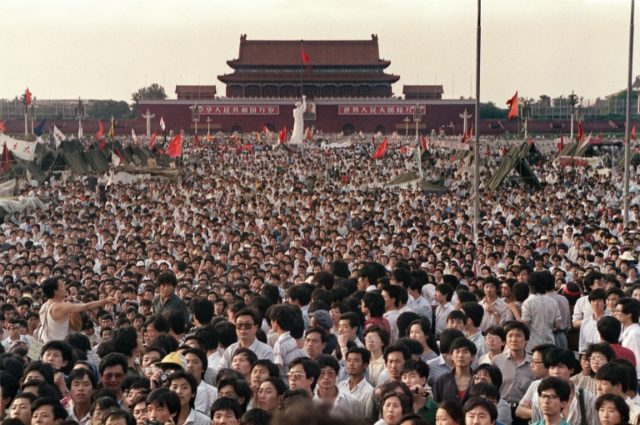 Demonstrators in Tiananmen Before the MassacreToday all evidence of that bloody night has been obliterated. Tiananmen Square is scrubbed and shimmering as it awaits the hundreds of thousands of summer visitors who will wander past the colossal portrait of Mao Zedong that hangs above the Forbidden City’s Gate of Heavenly Peace on the north end of the plaza and through the mausoleum that displays his waxy remains on the south end.Despite the scourge of the COVID-19 virus, China today is relatively sanguine and confident. Profits, not protests, are the driving force among most Chinese. However, that was not the case in 1989 when Tiananmen Square was turned into a squalid, fetid tent city of protestors.For many young Chinese, the tragedy that unfolded in Tiananmen Square 30 years ago is ancient history—an event that has been glossed over, covered up, and generally purged from the national consciousness by a nation eager to put forth its most dazzling and alluring face for tourists and the international business community.But on June 3, 1989, as I walked through what is generally regarded as the planet’s largest city square, the world was just a few hours from seeing China at its most ruthless and ugliest.The square that day was a hot, grubby place strewn with refuse, canvass tents, and other makeshift dwellings. Under the towering “Heroes of the Nation” obelisk demonstrators cooked rice and soup while others linked arms and sang a spirited rendition of the “Internationale,” the world socialist anthem. Thousands of others dozed under flimsy lean-tos or blasted music from boom boxes.Near the middle of the square, the 30-foot tall “Goddess of Democracy,” a pasty white statue constructed by art students and made of styrofoam and paper-mâché, stared defiantly at Mao’s giant portrait—almost mocking the founder of modern-day China. A truck swept by periodically spraying billowing clouds of insecticide and disinfectant over everything and everybody in its path.
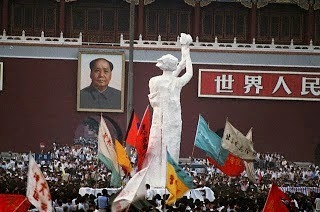 Goddess of Democracy StatueHawkers guiding pushcarts containing ice cream, soft drinks, rice cakes, candy, and film encircled the students doing a brisk business. Even if the students in the square had not been able to topple China’s ruling hierarchy, at least there were profits to be made.One enterprising entrepreneur raked in several hundred yuan within a few minutes after he began renting stepping stools for the hundreds of amateur photographers and tourists who arrived to have their pictures taken next to students or standing at the base of the “Goddess of Democracy” statue. Tiananmen, I wrote at the time, had evolved into a “Disneyland of Dissent.”By June 3, the number of students occupying the square had dwindled to about 20,000 as thousands had already packed up and headed back to their provinces. But some students I talked with that afternoon were not ready to leave, and a few shared an intense sense of foreboding.One of those was Chai Ling. Chai, who had been elected “chief commander” by the dissidents, was the only woman among the seven student leaders of the pro-democracy protests. As we sat cross-legged on the hot pavement, she talked about the protests and just what the students had accomplished during their 7-week-long occupation of Tiananmen.
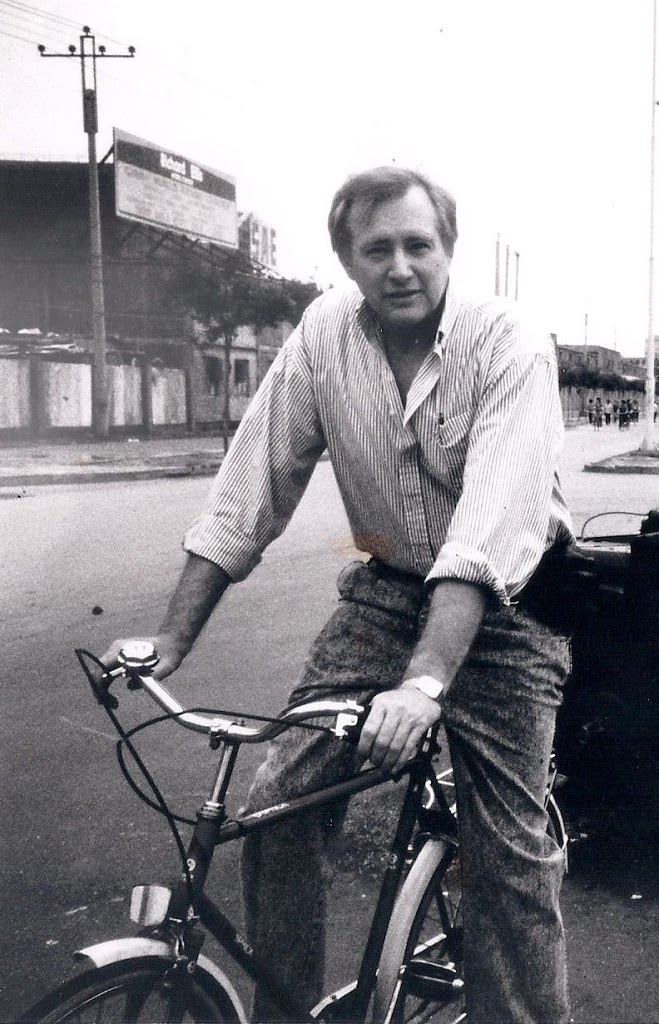
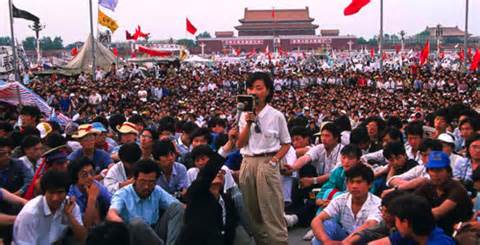 Chai Ling in Tiananmen Speaking to Students 1989 “There will be a price to pay for all of this,” the 23-year-old child psychology graduate warned, tears streaming down her cheeks. “Some people will have to die for democracy, but it will be worth it.”Chai, the object of a year-long nationwide search by the Chinese government after the violence in the square, would eventually escape China to Hong Kong sealed for five days and nights in a wooden crate deep in the hold of a rickety ship. She managed to elude capture in China by adopting a series of disguises, learning local Chinese dialects, and working variously as a rice farmer, laborer, and maid. Eventually, she would come to the United States, be nominated for the Nobel Peace Prize, and graduate from Harvard Business School.Barely eight hours after my conversation with Chai, her warning would become a reality. Late in the evening of June 3 and during the early morning hours of June 4, the lethargy of weary demonstrators and the cacophony of boom box music would be replaced by shrieks of terror, gunfire, and the guttural roar of tank and armored personnel carrier engines as the People’s Liberation Army rolled into the square, crushing tents and firing indiscriminately at protesters and anybody else who got in their way.A couple of hours before the violence erupted, a few of us foreign correspondents had enjoyed a quiet meal together in the venerable Beijing Hotel on Chang’an Avenue a few blocks from the square.While dining, we discussed the events of the night before when several thousand young unarmed military recruits were sent marching toward the students in Tiananmen Square. Before they got very far, an estimated 100,000 Chinese civilians poured from their homes near the square. They confronted the soldiers—berating them for even thinking of entering Tiananmen to clear it of the thousands of students who had occupied it since late April.This rather benign event was nothing more than a probe to determine what kind of resistance armed troops might face when they stormed the square. For several weeks some 200,000 Chinese troops—most from provinces far away from Beijing—had been massing on the city’s outskirts.As Beijing entered its 15th day of martial law, it was also obvious that the government was still unable to enforce that decree. The government admonished foreign media members to “observe regulations on news coverage” as they relate to martial law.“Foreign journalists must not talk with student protesters, and any news coverage of any kind in Beijing must receive prior approval,” said a statement by Ding Weijun, spokesman for the city.The statement also warned the hundreds of foreign reporters still in Beijing against inviting Chinese citizens to their offices, homes, or hotels to conduct “interviews regarding prohibited activities.” Several foreign reporters had been expelled from the country for violating those rules.Many of us ignored those edicts and talked to anybody who wanted to speak anywhere that was deemed away from government authorities’ prying eyes and ears. I also ignored the curfew, often riding my red and white Sprick bicycle down dark streets from my hotel to the Tribune’s offices located in a foreign housing compound a half-mile away. I got to know most of the Chinese police who were supposed to enforce the curfew. They would smile and wave as I peddled past.
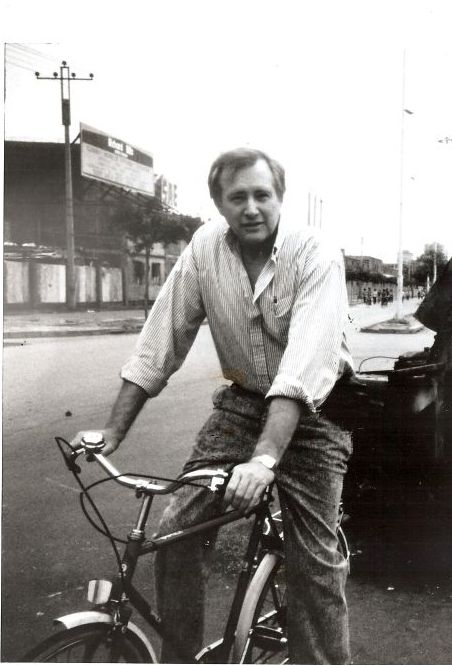 Aboard my Sprick BicycleThe morning of June 3, once again ignoring marital law rules, I took the Tribune car and my nervous Chinese driver, and we drove outside of the square and into several neighborhoods where streets leading toward Tiananmen had been shut down by angry civilians intent on keeping the Chinese Army from reaching the students. Dozens of intersections were blocked with buses, trucks, and makeshift barricades. Neighborhood leaders proudly showed me their arsenal of weapons—rows of gasoline-filled bottles complete with cloth wicks, piles of rocks and bricks, shovels, rakes, picks, and other garden tools.“We will protect the students,” a man named Liang Hong told me.“But how?” I asked. “The army has tanks, machine guns, and armored personnel carriers. They will kill you.”“Then we will die,” he replied. Several dozen others quickly echoed his words. “Yes, we will all die. These are our children in the square. We must help them even if it means death.”Several days after the attack on the square, when the authorities allowed people to travel once again in the city, I drove back to this same neighborhood. True to their word, I was told that Liang Hong and several of his neighbors had died or were wounded attempting to keep the army from entering the square.After dinner in the Beijing Hotel, I decided to take one more stroll through the square. As I rode into the square on the bicycle I had purchased after my arrival in Beijing from Tokyo two weeks before, I could see that many of the students were obviously spooked—not only by the unarmed incursion of the night before but by the intelligence pouring in from the neighborhoods surrounding the square that the army was on the move.“I think something will happen tonight,” one of them told me. “I am very afraid.”I stopped at the foot of the Goddess of Democracy. A couple of small spotlights illuminated the statue as it looked toward the Forbidden City and Mao’s portrait. On the edge of the square, I bought a bottle of Coca-Cola then pushed my bicycle toward the four-story KFC restaurant on the south end of the square. It was about 8:30 p.m. The restaurant (the largest KFC store in the world) was almost empty.I then rode the 2 miles down Jianguomenwei Avenue to the Jianguo Hotel where I was staying. I needed to file a story on the day’s events—specifically my conversation with Chai Ling and the other students that afternoon. I finished writing my story around 10 p.m. and decided, despite the curfew, to ride my bicycle back to the square for one more look around. I parked my bike on Xuanwumen Dong Avenue near the hulking Museum of History and Revolution on the square’s east side. I began walking toward the “Heroes of the Nation” obelisk, which became the students’ headquarters.I hadn’t gotten very far when the sound of gunfire erupted. The firing seemed everywhere, amplified by the massive buildings that surrounded the square. I ran toward my bicycle, not wanting to be trapped in the square should tanks roll in. Moments later, I ran into BBC correspondent Kate Adie, walking toward the square with her camera crew.“What’s going on,” she asked.“Looks like the army is making a move tonight,” I answered. I explained that I hadn’t seen any troops or tanks in the square at that point, but I did see muzzle flashes from the roof of the Great Hall of the People on the west side of the square. Several hundred troops had massed behind the Great Hall a day before, and I assumed they had been positioned on the roof.I rode my bicycle north toward Chang’an Avenue. I hadn’t gotten very far when I noticed a line of Armored Personnel Carriers moving toward the square flanked by hundreds of soldiers with fixed bayonets. Seconds later, the dark sky was interlaced by red and yellow tracer fire, and I could hear bullets ricocheting off of concrete. I turned my bike around and raced back toward the south end of the square. Like many of my fellow correspondents, I never thought the government would use deadly force against the students.As the firing intensified, thousands of more residents poured out of their houses and formed human blockades where streets entered the square. They quickly became targets for the machine gun and small arms fire. As the casualties mounted, the crowds became increasingly belligerent. They armed themselves with bricks, bottles, iron rods, and wooden clubs and attacked some military contingents, including tanks.An infuriated mob grabbed one soldier and set him afire after dousing him with gasoline. They then hung his still smoldering body from a pedestrian overpass. It was one of the many examples of instant justice meted out that night. The crowd accused the soldier of having shot an older woman to death.I watched the wounded and the dead being carted from the square and the area surrounding it on the flatbeds of three-wheeled vehicles. The stinging stench of tear gas hovered over the embattled city and burned my eyes.
 Carting the Wounded out of the Square“Tell the world!” the crowds screamed at other foreign journalists they saw and me. “Tell the United States! Tell the truth! We are students! We are common people-unarmed, and they are killing us!”Around 2 a.m., at the height of the armed assault, a maverick tank careened down Jianguomenwai Avenue in an attempt to crack open the way for troop convoys unable to pass through the milling crowds.The tank was bombarded with stones and bottles with its turret closed as it sped down the avenue. Young cyclists headed it off, then slowed to bring it to a halt. But the tank raced on, the cyclists deftly avoiding its clattering treads by mere inches.On the Jianguomenwai bridge over the city’s main ring road, where a 25-truck convoy had been marooned for hours by a mass of angry civilians clambering all over it, a tank raced through the crowd. It sideswiped one of the army trucks, and a young soldier who was clinging to its side was flung off and killed instantly.The worst fighting of the night occurred around the Minzu Hotel, west of the square, where grim-faced troops opened fire with tracer rounds on milling crowds blocking their access to the square. Bullets ripped into the crowd, and scores of people were wounded. The dead and wounded were thrown on the side of the road among a pile of abandoned bicycles as the troops moved on to take the square.
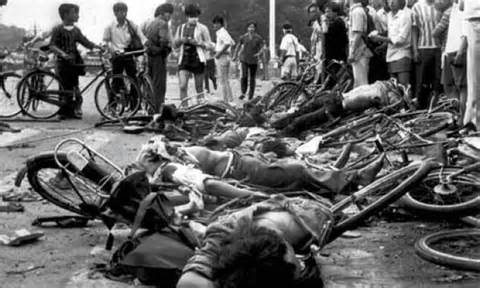 Dead and Wounded Amid Abandoned BicyclesOne tank ran into the back of another that had stalled on Chang’an Avenue. As they hurriedly bounced apart, the machine guns on their turrets began to train on an approaching crowd of about 10,000. The machine guns erupted, sending tracers above the heads of the crowd. Men and women scurried for cover, many crawling into the piles of dead and wounded along the side of the road.In my haste to return to the square, I had forgotten to bring my camera. Even though it was night, the square was illuminated by street lamps, and the sky above it was lit almost continuously with tracers and bright flares. I decided not to ride my bicycle to avoid becoming a larger target. At the same time, I didn’t want to lose the only form of transportation I had, so I pushed it wherever I went, sometimes crouching behind it. Finally, I found a small tree and padlocked it to the trunk.For most of the night, I found myself caught between trying to cover the tragedy unfolding in and around the square and watching my back. I didn’t want to be caught in the sites of some trigger-happy soldier.At one point, several hundred troops successfully occupied a corner of the square, and I watched as a crowd of some 3,000 howling unarmed students surged toward them on foot and by bicycle, intent on breaking through their line with their bare hands. A few in front of the main body rammed their bikes into the troops and were quickly beaten to the ground by soldiers using the butts of their rifles or clubs.
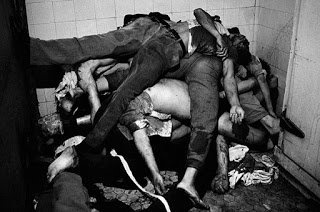 Dead Demonstrators Piled in a Hospital Hallway
“Fascists! Murderers!” the crowd chanted.
As the main body of the crowd got within 50 yards of the first line of troops, an army commander blew a whistle, and the soldiers turned and fired volleys of automatic rifle fire. Screams of pain followed.The protesters threw themselves and their bikes on the pavement of the Avenue of Eternal Peace. Dragging their bikes behind them, they crawled to safety, pursued by rifle fire and the throaty war cries of the soldiers.When the firing momentarily stopped, the crowd regrouped and slowly crept back toward the square. Then the volleys rang out again, more intense this time. Two lines of soldiers began to chase the mob, alternately firing tear gas and bullets. I watched several people stagger and fall to the ground.The acrid smell of tear gas triggered a paroxysm of coughing in the crowd. People ripped off shirt sleeves and used them as handkerchiefs over their mouths. The bodies of three women were laid out on the pavement of a side street to await transport. A crowd gathered around them, waving fists and cursing the government.“How many people did you kill?” they shouted at steel-helmeted soldiers who stood stonily with AK-47 assault rifles cradled across their chests.The fighting continued throughout the night as exhausted students and other dissidents engaged in hit-and-run battles with soldiers, tanks, and APCs. Some students, many of them wounded, scrambled aboard abandoned buses seeking refuge and aid. I watched soldiers pull them out and beat them with heavy clubs.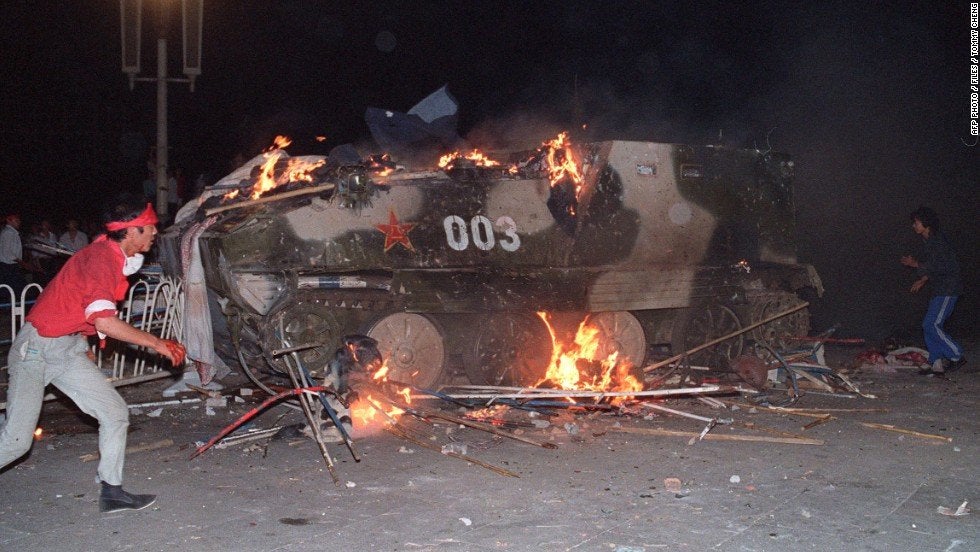 Students Confront APC’s in the SquareSeveral of the students, bleeding from head wounds, ran toward where I had taken cover behind a low stone wall. One of the students, a girl of maybe 16, had been shot through the shoulder and was bleeding profusely. She was falling in and out of consciousness and looked to be in shock. I looked behind me to see if there was some way to get her assistance.In the distance, I saw a man waving at me from a doorway of a brick wall. He was motioning me to bring the girl and other wounded students to him, all the while carefully watching for soldiers. With the help of another reporter, I pulled her up and dashed with her and several other wounded students to the gate. The man quickly wrapped a blanket around the girl and took her inside the compound with the other students.“Thank you,” he said. “I am a doctor. I will take care of them.”I jogged back to the low wall where I had been kneeling before. I recall thinking that if I were wounded, at least I now knew where I could go for help. For the next few hours, I moved from one location to another, trying to find a spot where I could see what was happening while ensuring I had an escape route should I come under fire.The square was finally cleared at dawn when four personnel carriers raced across it, flattening not only the tents of the demonstrators but the “Goddess of Liberty” statue. I looked at my watch. It was about 5:30, and dawn was breaking over the city.Ten minutes later, a negotiated settlement allowed the hard-core remnants of the democracy movement—some 5,000 students and their supporters—to leave by the southeastern corner of the square. As they left singing the Internationale, troops ritually beat them with wooden clubs and metal rods. The army had been ordered to clear the Square by 6 a.m, and it had done so but at a terrible cost.As daylight broke over the Avenue of Eternal Peace, dazed knots of Chinese, many of them weeping and all of them angry at their government, stood at intersections, reliving the events of a few hours before when tracer bullets and flares turned the black Beijing sky into a deadly torrent of crimson.Along the roadside leading into the square lay several wounded students, some perhaps already dead.“They murdered the people. . . . They just shot the people down like dogs, with no warning,” said a man whose shirt was soaked with blood. “I carried a woman to an ambulance, but I think she was dead.”“Please,” he said, “you must tell the world what has happened here. We need your protection from our government.”Perhaps the defining moment of the massacre came a bit later that morning when a student jumped in front of a column of tanks on Chang’an Avenue and refused to move. As yet still unidentified, this student shouted at the tank commander: “Get out of my city. … You’re not wanted here.” Each time the tank would attempt to maneuver around the student, he would jump in front of it. The column of tanks turned off their motors, and then several other students ran out and pulled the student to safety. To this day, nobody is sure who the student was or what happened to him. Most Chinese still refer to him as the “tank man.”
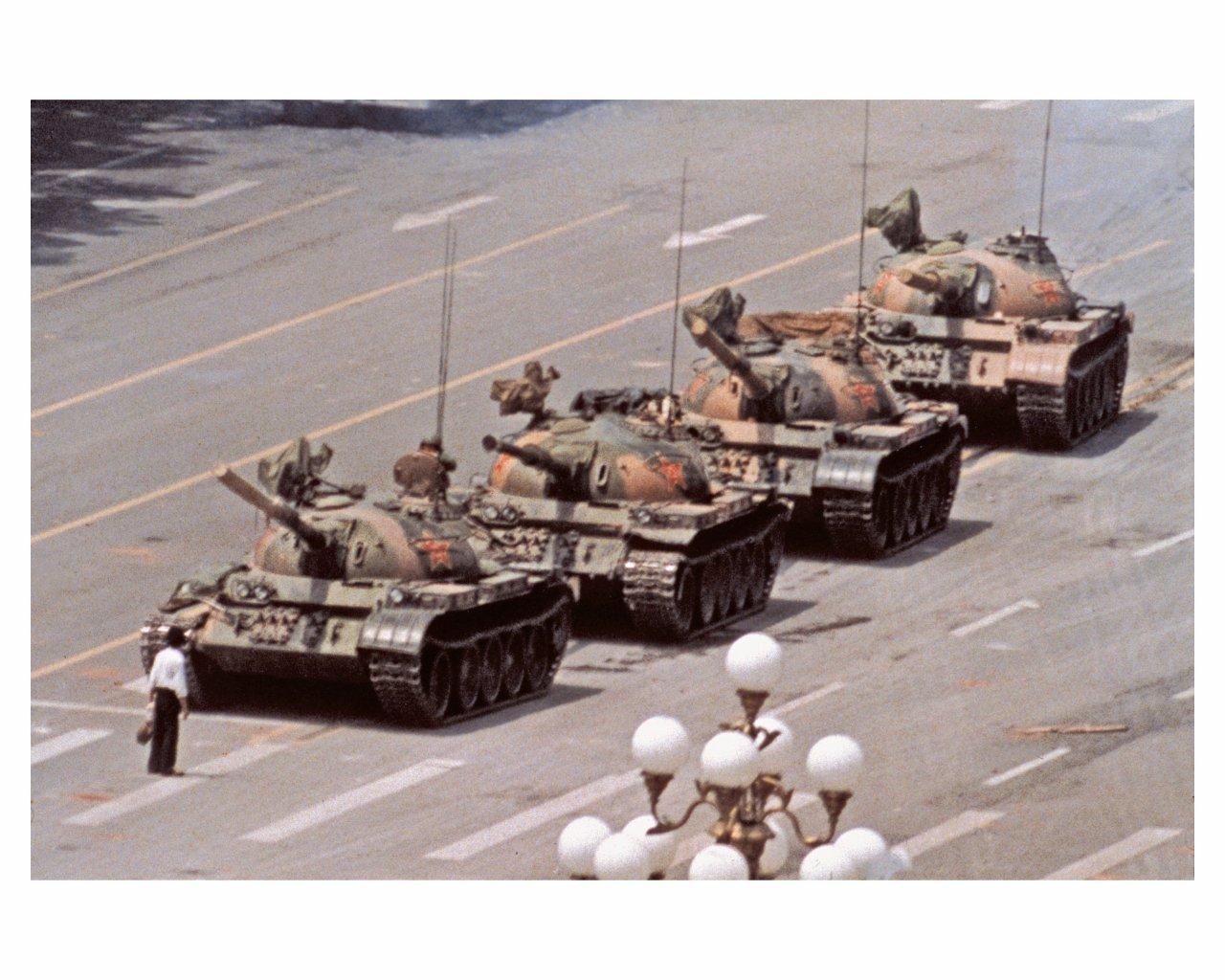 The Still Unidentified “Tank Man” Confronting TanksI walked back to where I had left my bicycle and rode to the Jianguo Hotel. As I peddled along mostly deserted streets, I tried to make sense out of what I had seen. With the students already dispersing from the square or planning to, the attack by the army was unnecessarily brutal.There was little doubt that what I had witnessed was an assault designed to punish the demonstrators for embarrassing China’s leadership—Premier Li Peng and Deng Xiaoping, the ailing leader of China’s Communist Party.China’s hard-line rulers, clearly in control after the bloodbath, issued a statement that morning that said:“Thugs frenziedly attacked People’s Liberation Army troops, seizing weapons, erecting barricades and beating soldiers and officers in an attempt to overthrow the government of the People’s Republic of China and socialism.”China’s leaders have not forgotten the pro-democracy demonstrations of 1989. Unnerved by turbulence among Tibetans and always nervous about the possibility of human rights protests in the heart of the capital, China barred live television coverage from Tiananmen Square during the 2008 Beijing Olympics—just as it had in 1989. It will probably do the same on the 30th anniversary of the slaughter.However, it remains to be seen whether or not such a ban will exorcise the ghosts of June 4, 1989, that still hangs over Tiananmen Square. There is little doubt that time has not healed the deep wounds inflicted on China’s people that terrible night 30 years ago.CLICK BELOW FOR MY SHORT INTERVIEW WITH NATIONAL PUBLIC RADIO ON THE 25TH ANNIVERSARY OF THE MASSACRE.https://will.illinois.edu/player/audio/tiananmen-square-diary
June 3, 2021
My Retrospective on the Tiananmen Square Massacre Tomorrow
Please join ForeignCorrespondent tomorrow, June 4, for my personal retrospective on the Tiananmen Square massacre in Beijing, China–a horrendous event that I covered on that date in 1989.
In light of the Chinese Communist Party’s (CCP) continued repressive behavior toward Hong Kong and its obvious responsibility and culpability in allowing the COVID-19 virus to spread from Wuhan and infect the rest of the world, what happened in Beijing’s Tiananmen Square 32 years ago shouldn’t surprise anyone, least of all the Biden administration. Sadly, it apparently does–or there is some reason Biden is unwilling to hold China accountable for its despicable behavior regarding the COVID-19 virus.
On June 4, 1989, there was no doubt about who was responsible for the massacre that took place in the square. The Chinese Communist Party–the same party that I believe has compromised Joe Biden and/or his son Hunter. But that is another story for another time.
Tomorrow, if you visit the ForeignCorrespondent blog, you will learn just how brutal and treacherous the CCP can be.
 Covering Tiananmen Square 1989
June 1, 2021
Does Our Diversity Portend Disintegration?
I recall interviewing a World War II-era Japanese admiral in 1975 about the war, which at the time had ended just 30 years before.
“The Japanese military felt confident it could defeat America on the battlefield and at sea because America was considered a “mongrel” nation—a nation of many races blended lacking Japan’s homogeneity and strong national spirit,” he told me. “That was wrong.”
But America in the 1930s and 1940s was nowhere near the “mongrel” nation it is today. In fact, America at the outset of WW II was close to 90 percent white. Today, as Pat Buchanan points out in the commentary below, it is barely 60 percent white.
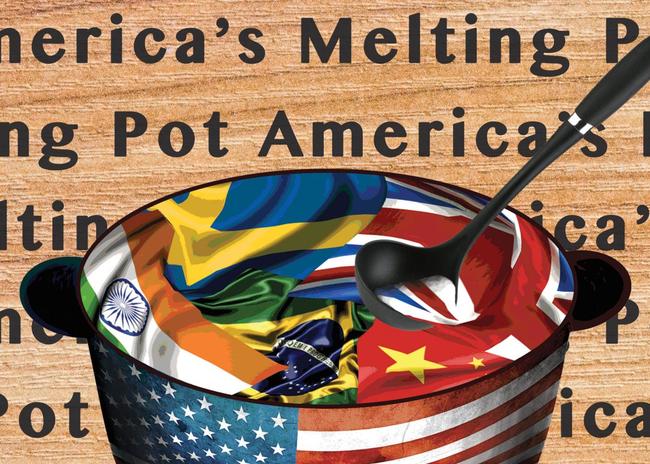
The idea of America being a “melting pot” was always considered its strength. But that idea emerged in a nation where racial and ethnic assimilation was the coalescing glue that held our diverse population together. Today, the concept of assimilation seems to have been abandoned in favor of tribalism, in which races, religions, ethnicities, and cultures prefer to segregate themselves into disparate, squabbling communities.
As someone who vividly recalls the enforced segregation in America in the past, I am disheartened by politicians, educators, activists, and community leaders who prefer to drive wedges between us and divide us further rather than bring us together.
For those who want to create partitions and wall us off from one another, such as Marxist organizations, including Black Lives Matter, ANTIFA, and the growing number of socialists in the Democrat Party, the melting pot is anathema. I wonder, as does Buchanan in his commentary if America will survive this destructive splintering.
Does Our Diversity Portend Disintegration?
By Patrick J. Buchanan
After nine people were shot to death by a public transit worker, who then killed himself in San Jose, the latest mass murder in America, California Governor Gavin Newsom spoke for many on the eve of this Memorial Day weekend.
“What the hell is going on in the United States of America? What the hell is wrong with us?”
Good question. Indeed, it seems that the country is coming apart.
In May, Congress, to address a spate of criminal assaults on Asian Americans, enacted a new hate crimes law to protect them.
May also witnessed a rash of assaults on Jewish Americans to show the attackers’ hatred of Israel and support for the Palestinians in the Gaza war.
 Political commentator Pat Buchanan
 The terms “racist” and “racism” are now commonplace accusations in political discourse and a public square where whites are expected to ritually denounce the “white privilege” into which they were born.
In the year since the death of George Floyd and the rise of the Black Lives Matter “Defund the Police!” campaign, the shootings and killings of cops and citizens in our great cities have skyrocketed.
In March and again in April, 167,000 immigrants were caught crossing our southern border illegally. The invaders are now coming from Central and South America, Africa, the Islamic world, and Asia.
And their destiny may be to replace us.
For as the endless invasion proceeds, native-born Americans have ceased to reproduce themselves. Not since the birth dearth of the Great Depression and WWII, when the Silent Generation was born, has the U.S. population experienced such a birth decline as today.
At the same time, a war of all against all in America seems to raise the question, to which recitation of the cliche — “Our diversity is our greatest strength” — no longer seems an adequate response.

Is there no limit to the racial, religious, ideological, political, cultural, and ethnic diversity the nation can accommodate before it splinters into its component parts?
In professions of religious belief, atheists, agnostics, and secularists have become our largest “congregation,” followed by Catholics and Protestants, both of which are in numerical decline.
Diversity of faiths leads to irreconcilable, clashing opinions about morality on our era’s most divisive social issues: abortion, homosexuality, same-sex marriage, etc.
Racial diversity, too, is bringing back problems unseen since the 1960s.
America was 80% white in 1960, but that figure is down to 60% and falling. In 25 years, we will all belong to racial minorities.
Are we Americans still united in our love of country? Do we still take pride in what we have done for our own people and what America has done for the world in the 400 years since Jamestown?
Hardly. Part of the nation buys into the academic and intellectual elites’ version of history, tracing America’s birth as a nation to the arrival of the first slave ship in Virginia in 1619.
We not only disagree about our history; some actually hate our history.
We can see that hate in the statues and monuments destroyed, not just of Confederate military heroes but of the European explorers who discovered America, the Founding Fathers who created the nation, and the leaders, from Thomas Jefferson to Andrew Jackson to Teddy Roosevelt, who built the America we became.
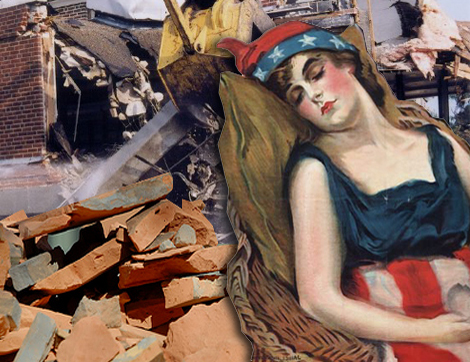
Yet, tens of millions from all over the world still see coming to America as the realization of a life’s dream.
Some look at Western civilization as 500 years of colonialism, imperialism, genocide, slavery, and segregation — practiced against people of color. This is the source of the West’s wealth and power, it is said, and that wealth and power should be redistributed to the descendants of the victims of Western rapacity.
For many, equality of opportunity is no longer enough. We must make restitution, deliver reparations and guarantee a future where equality of rewards replaces equality of rights.
Meritocracy must yield to equity. Elite high schools, such as Thomas Jefferson in Virginia, Stuyvesant in New York, and Lowell in San Francisco, must abandon their emphasis on grades, tests, and exams to gain admissions and prove progress.
And these schools must be remade to mirror the racial and ethnic composition of the communities where they reside.

And a new cancel culture has taken root in America.
Former U.S. Senator Rick Santorum, a CNN commentator, was fired for suggesting that Native American institutions and culture played no significant role in the foundation and formation of the American Republic.
“We birthed a nation from nothing. I mean, there was nothing here. I mean, yes, we have Native Americans,” Santorum said, adding: “There isn’t much Native American culture in American culture.”
Impolitic though this rendition was, was it wholly false?
Something is seriously wrong with a country that professes to be great but whose elite cannot abide the mildest of heresies to its established truth.
Patrick Buchanan has been a senior advisor to three Presidents, twice a candidate for the Republican presidential nomination, and the nominee of the Reform Party in 2000.
May 31, 2021
LONG AGO AND FAR AWAY, IN A LAND THAT TIME FORGOT
I have no idea who put this together, but it showed up one day in my mailbox and I thought I would share it with my followers. It talks about a different time in America. Some say it was a simpler time without the complications, apprehensions, divisions, and violence our country faces today. Possibly. But as a kid growing up back then, I recall that not everything was nirvana. We had problems, that’s for sure. Nevertheless, I do remember that, unlike today, it was a more innocent era with much more civility and benevolence. I think that is what the author of this nostalgic ode is saying.
LONG AGO AND FAR AWAY, IN A LAND THAT TIME FORGOT,
BEFORE THE DAYS OF DYLAN , OR THE DAWN OF CAMELOT,
THERE LIVED A RACE OF INNOCENTS, AND THEY WERE YOU AND ME,
FOR IKE WAS IN THE WHITE HOUSE IN THAT LAND WHERE WE WERE BORN,
WHERE NAVELS WERE FOR ORANGES, AND PEYTON PLACE WAS PORN.
WE LONGED FOR LOVE AND ROMANCE, AND WAITED FOR OUR PRINCE,
EDDIE FISHER MARRIED LIZ, AND NO ONE’S SEEN HIM SINCE.
WE DANCED TO ‘LITTLE DARLIN,’ AND SANG TO ‘STAGGER LEE’
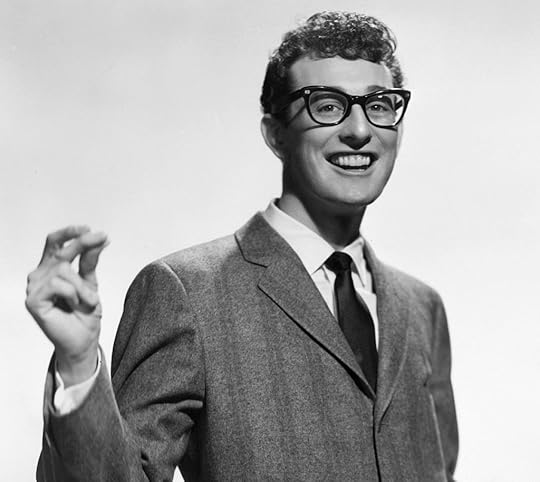
AND CRIED FOR BUDDY HOLLY IN THE LAND THAT MADE ME, ME.
ONLY GIRLS WORE EARRINGS THEN, AND 3 WAS ONE TOO MANY.
AND ONLY BOYS WORE FLAT-TOPS, AND ONLY IN OUR WILDEST DREAMS DID WE EXPECT TO SEE

A BOY NAMED GEORGE WITH LIPSTICK, IN THE LAND THAT MADE ME, ME.
WE FELL FOR FRANKIE AVALON, ANNETTE WAS OH, SO NICE,
AND WHEN THEY MADE A MOVIE, THEY NEVER MADE IT TWICE.
WE DIDN’T HAVE A STAR TREK FIVE, OR PSYCHO TWO AND THREE,
OR ROCKY-RAMBO TWENTY IN THE LAND THAT MADE ME, ME.
MISS KITTY HAD A HEART OF GOLD, AND CHESTER HAD A LIMP,
AND REAGAN WAS A DEMOCRAT WHOSE CO-STAR WAS A CHIMP.
WE HAD A MR. WIZARD, BUT NOT A MR. T, AND OPRAH COULDN’T TALK YET, IN THE LAND THAT MADE ME, ME.
WE HAD OUR SHARE OF HEROES, WE NEVER THOUGHT THEY’D GO,
AT LEAST NOT BOBBY DARIN, OR MARILYN MONROE.
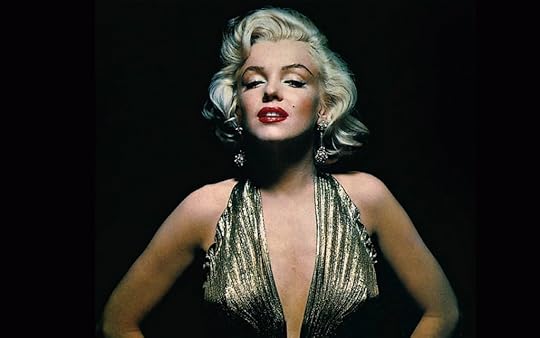
FOR YOUTH WAS STILL ETERNAL, AND LIFE WAS YET TO BE,
AND ELVIS WAS FOREVER IN THE LAND THAT MADE ME, ME.
WE’D NEVER SEEN THE ROCK BAND THAT WAS GRATEFUL TO BE DEAD,
AND AIRPLANES WEREN’T NAMED JEFFERSON, AND ZEPPELINS WERE NOT LED.

AND BEATLES LIVED IN GARDENS THEN, AND MONKEYS LIVED IN TREES,
MADONNA WAS MARY IN THE LAND THAT MADE ME, ME.
WE’D NEVER HEARD OF MICROWAVES, OR TELEPHONES IN CARS, AND BABIES
MIGHT BE BOTTLE-FED, BUT THEY WERE NOT GROWN IN JARS.
AND PUMPING IRON GOT WRINKLES OUT, AND ‘GAY’ MEANT FANCY-FREE,
AND DORMS WERE NEVER CO-ED IN THE LAND THAT MADE ME, ME.
WE HADN’T SEEN ENOUGH OF JETS TO TALK ABOUT THE LAG,
AND MICROCHIPS WERE WHAT WAS LEFT AT THE BOTTOM OF THE BAG.

AND HARDWARE WAS A BOX OF NAILS, AND BYTES CAME FROM A FLEA,
AND ROCKET SHIPS WERE FICTION IN THE LAND THAT MADE ME, ME.
T-BIRDS CAME WITH PORTHOLES, AND SIDE SHOWS CAME WITH FREAKS, AND BATHING SUITS CAME BIG ENOUGH TO COVER BOTH YOUR CHEEKS.
AND COKE CAME JUST IN BOTTLES, AND SKIRTS BELOW THE KNEE,
AND CASTRO CAME TO POWER NEAR THE LAND THAT MADE ME, ME.
WE HAD NO CREST WITH FLUORIDE, WE HAD NO HILL STREET BLUES,
WE HAD NO PATTERNED PANTYHOSE OR LIPTON HERBAL TEA
OR PRIME-TIME ADS FOR THOSE DYSFUNCTIONS IN THE LAND THAT MADE ME, ME.
THERE WERE NO GOLDEN ARCHES, NO PERRIER TO CHILL,
AND FISH WERE NOT CALLED WANDA, AND CATS WERE NOT CALLED BILL
AND MIDDLE-AGED WAS 35 AND OLD WAS FORTY-THREE, AND ANCIENT WERE OUR PARENTS IN THE LAND THAT MADE ME, ME.
BUT ALL THINGS HAVE A SEASON, OR SO WE’VE HEARD THEM SAY,
AND NOW INSTEAD OF MAYBELLINE, WE SWEAR BY RETIN-A.
THEY SEND US INVITATIONS TO JOIN AARP,
WE’VE COME A LONG WAY, BABY, FROM THE LAND THAT MADE ME, ME.
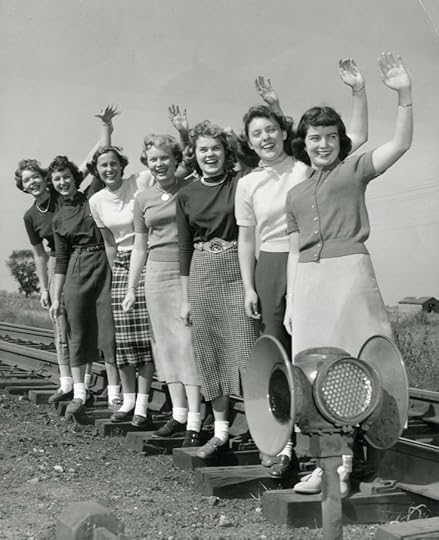
SO NOW WE FACE A BRAVE NEW WORLD IN SLIGHTLY LARGER JEANS,
AND WONDER WHY THEY’RE USING SMALLER PRINT IN MAGAZINES.
AND WE TELL OUR CHILDREN’S CHILDREN OF THE WAY IT USED TO BE,
LONG AGO AND FAR AWAY IN THE LAND THAT MADE ME, ME.
If you didn’t grow up in the 1950s, you missed one of the greatest eras in history. I hope you enjoyed this read as much as I did.
May 29, 2021
The Democrats are Right: There are Two Americas
A while back Bob Lonsberry, a Rochester talk radio personality on WHAM 1180 AM, said this in response to Democrats’ opinions about Income inequality and the fact that as a result, there are two Americas.
It bears repeating and reposting, so here it is. In addition to his radio show, Lonsberry is a columnist and veteran.
Two Americas
By Bob Lonsberry
The Democrats are right, there are two Americas.
The America that works, and the America that doesn’t.
The America that contributes, and the America that doesn’t.
It’s not the haves and the have nots, it’s the dos and the don’ts.
Some people do their duty as Americans, obey the law, support themselves, contribute to society, and others don’t. That’s the divide in America.
It’s not about income inequality, it’s about civic irresponsibility.
It’s about a political party that preaches hatred, greed, and victimization in order to win elective office.
It’s about a political party that loves power more than it loves its country. That’s not invective, that’s truth, and it’s about time someone said it.
The politics of envy was on proud display a couple of weeks ago when President Biden pledged the rest of his term to fighting “income inequality.” He noted that some people make more than other people, that some people have higher incomes than others, and he says that’s not just.
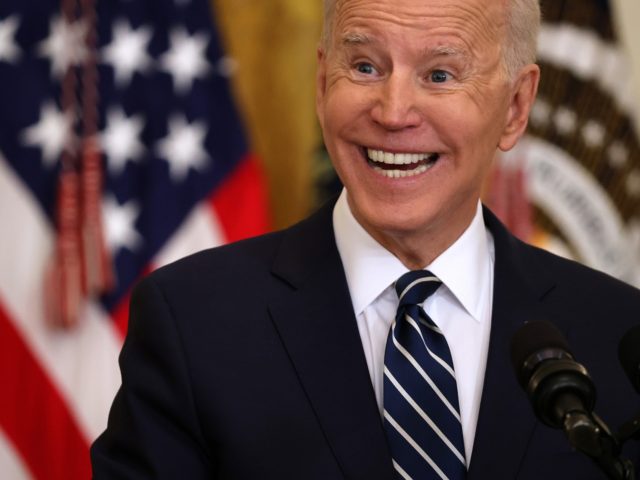
That is the rationale of thievery. The other guy has it, you want it, Biden will take it for you. Vote Democrat.
That is the philosophy that produced Detroit. It is the electoral philosophy that is destroying America.
It conceals a fundamental deviation from American values and common sense because it ends up not benefiting the people who support it, but a betrayal.
The Democrats have not empowered their followers; they have enslaved them in a culture of dependence and entitlement, of victimhood and anger instead of ability and hope.
The president’s premise – that you reduce income inequality by debasing the successful – seeks to deny the successful the consequences of their choices, and spare the unsuccessful the consequences of their choices. Because, by and large, income variations in society are a result of different choices leading to different consequences. Those who choose wisely and responsibly have a far greater likelihood of success, while those who choose foolishly and irresponsibly have a far greater likelihood of failure. Success and failure usually manifest themselves in personal and family income.
You choose to drop out of high school or to skip college – and you are apt to have a different outcome than someone who gets a diploma and pushes on with purposeful education and/or employment.
You have your children out of wedlock and life is apt to take one course; you have them within a marriage and life is apt to take another course.
Most often in life, our destination is determined by the course we take.
My doctor, for example, makes far more than I do. There is significant income inequality between us. Our lives have had an inequality of outcome, but, our lives also have had an inequality of effort. While my doctor went to college and then devoted his young adulthood to medical school and residency, I chose another avenue.
He made a choice, I made a choice, and our choices led us to different outcomes. His outcome pays a lot better than mine. Does that mean he cheated and Joe Biden needs to take away his wealth? No, it means we are both free men in a free society where free choices lead to different outcomes.

It is not inequality Joe Biden intends to take away, it is freedom. The freedom to succeed and the freedom to fail. There is no true option for success if there is no true option for failure. The pursuit of happiness means a whole lot less when you face the punitive hand of government if your pursuit brings you more happiness than the other guy. Even if the other guy sat on his arse and did nothing. Even if the other guy made a lifetime’s worth of asinine and shortsighted decisions.
President Biden and the Democrats preach equality of outcome as a right, while completely ignoring inequality of effort. The simple Law of the Harvest – as ye sow, so shall ye reap – is sometimes applied as, “The harder you work, the more you get.” Biden would turn that upside down. Those who achieve are to be punished as enemies of society and those who fail are to be rewarded as wards of society.
Entitlement will replace effort as the key to upward mobility in American society if President Biden gets his way. He seeks a lowest common denominator society in which the government besieges the successful and productive to foster equality through mediocrity. He and his party speak of two Americas, and their grip on power is based on using the votes of one to sap the productivity of the other. America is not divided by the differences in our outcomes, it is divided by the differences in our efforts. It is a false philosophy to say one man’s success comes about unavoidably as the result of another man’s victimization.
What Biden offered was not a solution, but separatism. He fomented division and strife, pitted one set of Americans against another for his own political benefit. That’s what socialists offer. Marxist class warfare wrapped up with a bow.
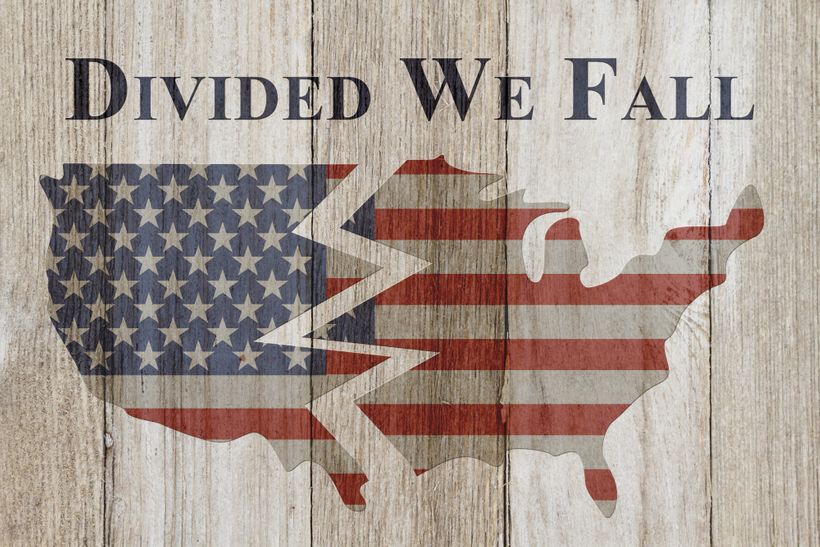
Two Americas, coming closer each day to proving the truth to Lincoln’s maxim that a house divided against itself cannot stand.
May 28, 2021
‘Survival itself is no small achievement’
This is a re-post of a story I posted in 2019 about legendary Chicago Daily News foreign correspondent Keyes Beech, one of the most respected and ethical journalists I have ever known. If you didn’t see this the first time around, I encourage you to take a look now. You won’t be disappointed.
Keyes Beech, who won a Pulitzer Prize in 1951 for his Korean War battlefield coverage, was based in Hong Kong when he wrote the essay below for The Chicago Daily News centennial edition in 1976. A renowned correspondent for The Chicago Daily News Foreign Service until it was closed in 1977, Beech died at age 76 in 1990.
Keyes Beech was a wonderful role model for any newly-minted foreign correspondent, which is what I was in 1974 when I was sent to Tokyo as the Chicago Tribune’s Far East Correspondent. We crossed paths often in places like Bangkok, Saigon, Taipei, Manila, and Hong Kong, where Keyes lived for many years. Like me, he was in Saigon on April 29, 1975, when the city fell to Communist North Vietnamese troops; and like me, it was not an even that he was proud of.
And even though he worked for a competing newspaper I never really saw him as a competitor–just a fellow foreign correspondent doing the best he could to keep his readers informed. Keyes was not a great raconteur. In fact, he was a pretty quiet guy who let his writing do his talking. And his writing was exemplary and had a lot to say.
I recall after the Chicago Daily News folded Keyes had just moved to San Diego. I was based in Los Angeles with my office in the Los Angeles Times building. One day a friend from the L.A. Times came to my office and told me the Times had just hired Beech. He would be going back to Asia–specifically, Bangkok.
When I asked Keyes about it he told me: “I was hanging up a picture when the phone rang and the Times offered me the job. I think I wavered about 30 seconds and then said yes.” He stayed in Bangkok until 1983, when he finally decided he had had enough.
Even though I was based in Los Angeles, my “beat” was all of Asia and Latin America–which meant I was traveling about 60 percent of the time. One week I might be in Singapore or Hong Kong and the next I could be in Mexico or Chile.
“Ridiculous,” Keyes told me one day when we were having lunch in Bangkok. “What the hell are the editors at the Tribune thinking?”
I didn’t have an answer. But in his essay below Keyes said what a lot of foreign correspondents think about when they look back on their careers of covering war and mayhem.
When asked what we have to show for years of slogging through jungles, racing for planes, running for cover, eating putrid food, and sleeping in fleapit hotels, many of us will answer as Keyes did in this 1977 essay.
‘Survival itself is no small achievement’
By Keyes Beech
HONG KONG — I went to the Far East for The Daily News for a year’s tour of duty.
That was nearly 30 years ago. And I’m still out here.
It has, with a few exceptions, been a happy relationship. I still hold a grudge against the bookkeepers for refusing to pay $25 for a pair of glasses I broke on a Chinese Nationalist ship while dodging a piano that had gone berserk in turbulent seas in the Formosa Strait in 1958.
On a loftier plane, I can still work myself into a towering rage at my editors’ refusal to allow me to go into Communist China in 1957 when Peking had granted me a visa. I finally got back in — 18 years later.
I’ve always said that if I ever lost my capacity for indignation, I would get out of this business. The difference is that today I am more selective in what I get angry about. Which means, I suppose, that I am older, sadder and, I hope, wiser.
I didn’t really mean to stay in Asia so long, but things kept happening and I kept staying on because I wanted to be where the action was.
Of course, there were all those wars. I’m sensitive about covering so many wars: Some of my friends have suggested that I’m a warmonger. I should like to point out that I didn’t start those wars. I merely reported them. On my 25th anniversary in Asia, I was having dinner with a friend in Bangkok. He asked me, only half-jokingly, what I had to show for all those years.
“Well,” I said defiantly, “I survived.”
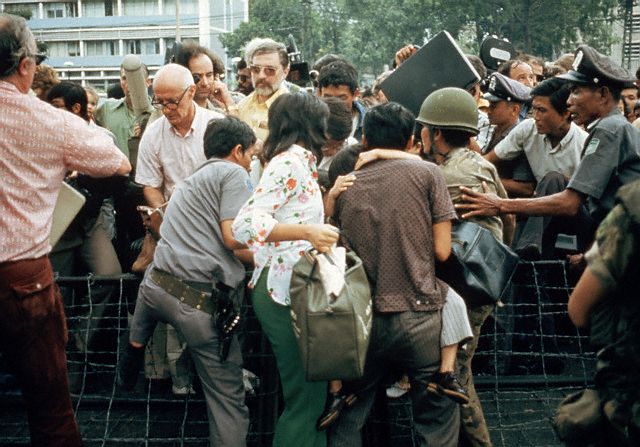 Beech, April 29, 1975, in Saigon, on the left in a white short-sleeved shirt and glasses looking down.
That in itself is no small achievement for anyone who has spent nearly 30 years of his life in this part of the world, racing for airplanes, jumping out of helicopters, dodging bullets now and then, sometimes wondering if your next step was going to come down on a land mine.
When I stop to think about it, more of my friends are dead than alive. And a shocking number of them died violent deaths in Korea and Vietnam. Yet during all those years, I have never been seriously ill. And the only injury I suffered during the better part of a decade in Vietnam was breaking a heel bone while hanging a curtain in my house in Saigon.
I wonder who’s living there now?
A staggering amount of history has been written since I arrived in Tokyo in May 1947. I was not long out of the Marine Corps as a combat correspondent and a rather cocky reporter who was soon to be humbled by how much he did not know and how much he would never know about the “mysterious Orient.”
I watched people starve in Shanghai and Peking as the Communist armies tightened their grip on the cities and the weary Nationalists disintegrated under the weight of their own corruption and incompetence.
I escaped from Seoul by the skin of my teeth in 1950 as the North Koreans rolled in. I watched the Japanese rebound from defeat to become the world’s third greatest economic power. I watched the newly independent countries of Southeast Asia grope for a form of government that would suit their needs.
In the process, I learned two things that should have been obvious to begin with. One was that there is no Asia, only Asians. “What do I have in common with an Indonesian?” a Japanese cabinet minister said coolly.
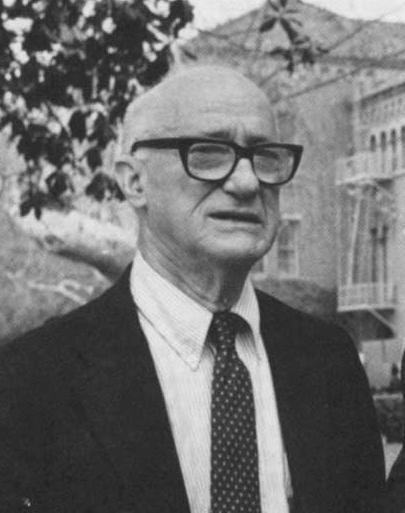 Keyes Beech ca. 1980
The answer was nothing, except that they both belong to the human race.
The other thing I learned was that democracy is at best a fragile export when transplanted to Asian soil. The only democracy left in Asia today is Japan, which alone among Asian nations had the machinery to make it work.
Over the years, I have seen the American stature in Asia steadily diminish. We emerged from World War II bright and shiny and noble — or so it seemed to many Americans and a great many Asians.
But time and attrition have damaged that image beyond repair. The myth of American omnipotence was shattered in the rice paddies of Vietnam.
Perhaps it was inevitable. Perhaps it was even healthy. But for one who remembers those heady days when Americans thought they could do anything, it takes a little getting used to.
One of the proudest moments of my life was the day in 1960 when hundreds of thousands of South Koreans cheered the American flag as the corrupt, tyrannical Syngman Rhee regime came to an end.
The saddest and most shameful day was April 29, 1975, when I left the American embassy roof in Saigon by helicopter as thousands of frightened Vietnamese clawed at the embassy gates. It was not a nice way to go.
May 27, 2021
Anne Keegan: An Original Lost to the Ages
The other day I was thinking about some of the most interesting people I met and worked with during a 27-year-career as a reporter and foreign correspondent with the Chicago Tribune.
One of the first names that popped into my head was Anne Keegan, a one-of-a-kind reporter and columnist for the Tribune. Anne and I worked together for several years before I was posted to Tokyo as the Tribune’s Far East Correspondent.
She was a true original. When she passed away at 68 10 years ago, after a lingering illness, it was still a shock. That same day I posted about Anne on my blog.
Since then, the Chicago Headline Club has created the Anne Keegan Award for distinguished journalism about ordinary people in extraordinarily well-reported and well-written prose–an Anne Keegan specialty.
Some of you may not have seen it, so I thought I would post it again. At the end of my post is a short YouTube video produced by Anne’s husband, Len Aronson. Take a look. I think you will enjoy it.
Thursday, May 19, 2011
Anne Keegan: An Original Lost to the Ages
Today I learned that Anne Keegan, a friend and colleague from my days with the Chicago Tribune, passed away. What a loss to Chicago journalism.
How can I describe Anne Keegan? She was a walking, talking paradox. She could be tough, with an ability to display, at a moment’s notice, the vocabulary of an angry truck driver or Marine drill sergeant. But she could also be sensitive and pliable, almost nun-like in the deep-felt emotions she (occasionally) wore on her sleeve.
She was what some people call a jelly bean. Hard on the outside, soft on the inside.
It was those qualities that made Anne Keegan a first-rate reporter and a great writer. In fact, she was one of the greatest writers I ever had the pleasure of working with at the Chicago Tribune–which once upon a time, was a truly great newspaper.
The 1970s and 1980s were Anne Keegan’s prime years at the Tribune–though they could have stretched on into the 1990s and even 2000s had the paper’s editors made an effort to understand her and find a way to use her enormous and unique talent. As it was, Anne left the paper the same year I did (1997) when it became clear that the Tribune had long ceased to be a writers’ paper in favor of one that encouraged predictable and formulaic journalism that made the bean counters and stockholders happy at the expense of originality.
During the 1970s and 1980s, Anne was given a front-page column at the Tribune–testimony to her talent at storytelling, which at its heart is what great journalism is all about. I first learned of Anne’s wonderful talents when I was working as the paper’s weekend city editor under managing editor Bill Jones.
Jones had an eye for talent and he knew how to encourage it and nurture it. Later editors at the Tribune seemed mystified by anybody who was the least bit iconoclastic, which is what Anne definitely was. Jones was not afraid of iconoclasts.
On Saturdays and Sundays when the paper was essentially in my hands I was blessed to have a group of reporters on the City Desk who were some of the best to ever wield a notebook and pen in Chicago. There was Mike Sneed, now a successful columnist at the Sun-Times. There was Jack Fuller, who went on to become the Tribune’s editor and then president and CEO of the Chicago Tribune. There was Bill Gaines, who would go to win two Pulitzer Prizes for investigative reporting. And there was Anne Keegan.
My job was easy. I would come in on Saturday morning and announce that we needed a good local story for the front page of the Sunday paper. After everyone had finished their coffee and read through the Sun-Times, Chicago Daily News, and Chicago Today (in those days there were four competing dailies in Chicago–not to mention City News Bureau and the Chicago Defender), I would simply say: “Go find me a good reader for the front page.”
Keegan and Sneed would be out the door in flash. And invariably, one of them would return with just what was needed.
I recall once when Keegan was on assignment to do a story on truckers who were angry about something–it may have been the 55 mph speed limit imposed during the first oil crisis in 1973. She called the office from a payphone at a truck stop to dictate a story. After she had finished one of the truckers she was writing about grabbed the phone and asked:
“What kind of girl reporters does the Tribune have? This one can out-swear all us!”
Then, I heard Keegan’s unmistakable voice in the background: “Don’t call me a girl, you asshole!”
I laughed out loud. That was Anne Keegan, alright. She could hold her own with any potty-mouthed truck driver.
The story she wrote belied her skills with Anglo-Saxon expletives. It was fair, provided context, and was even, by Keegan’s tough standards, a little sympathetic.
In the mid-1970s I was posted to Tokyo as the Tribune’s Far East Correspondent and Anne and I never really worked together again.
However, I followed her career and she followed mine. A few times Anne came to Asia to write stories about a range of topics such as S.E. Asian refugees.
Invariably, as she did in Chicago, Anne would unearth characters who found their nirvana in places like Bangkok.
Her stories about some of these people were wonderful studies of the human condition and spirit–people such as A. J. “Tiger” Rydberg, a gruff, rough and tumble construction worker who built airstrips all over South Vietnam during the war.
In the 1970s and early 1980s Rydberg operated a watering hole in Bangkok called the “Tiger’s Den” for former CIA Air America pilots, off shore oil riggers, itinerant hacks and various and sundry soldiers of fortune. Anne discovered “Tiger” and told me about him.
“Look him up, Yatsie,” she said. (She always called me Yatsie, never Ron). “You’ll like him.”
I did look him up and she was right, I did like him.
“You work with Anne Keegan?” Rydberg asked me when I introduced myself to him in his Tiger’s Den. “What a broad! She can out-cuss me and I thought I knew every swearword in the English language.”
She also did a wonderful story on a Chicago priest, Father Raymond Brennan, who operated an orphanage for Thai children in the Thai coastal city of Pattaya, some 120 miles southeast of Bangkok. Her powerful story, along with Tribune photographer Val Mazzenga’s riveting photographs, resulted in an avalanche of donations for the orphanage that housed about 150 homeless children.
After Anne left the Tribune she continued to write. In 2007 she published “On the Street Doing Life,” a book about former Chicago cop Mike Cronin who spent years working on Chicago’s rough, gang-infested West Side. It is a gritty story about a cop walking a fine line between toughness and fairness. Eventually, Cronin rose through the ranks to head two of the Chicago Police Department’s top units: Narcotics and Gangs. Cronin did all of this despite the fact that he lost a leg in Vietnam and had to convince the Chicago Police Department to hire him despite his disability.
Anne also wrote a children’s book called “A Cat for Claire” that, at first glance seems like a significant departure from the kinds of stories she was famous for. In fact, however, that book displays Anne’s “soft” side–a side of her character that she was very careful about sharing. In this case, the book was written for her granddaughter.
Another side of Anne Keegan’s disposition was her almost total lack of ego–a rarity in newsrooms then and now. She never boasted about her work or sought celebrity from her ground-breaking stories; never blew her own horn; never allowed herself to become the story, the way so many journalists do today in this self-absorbed era of tweeting and ubiquitous social media.
As she once told the Chicago Reader: “I may have led a very interesting life, but there are people whose stories are far more fascinating than mine.”
And nobody told them better than Anne Keegan did.
Happening Now: The Marxist Conspiracy to Transform America
In 1958 a man named W. Cleon Skousen published a book entitled “The Naked Communist,” which examined the goals of Communism in the United States. In his book, Skousen revealed the strategies the Communist Party in America was using to destroy American society and its constitutional form of government.
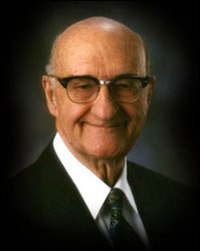 W. Cleon Skousen
Today, 63 years later, the Communist/Marxist objectives to overthrow the United States that Skousen forewarned and cautioned us about have almost all been achieved—or are about to be.
The transformation of America from a free republic into a totalitarian socialist nation is moving right along— impelled by Marxist organizations such as Black Lives Matter, Antifa, and the increasing number of avowed socialists who currently inhabit a significant segment of the Democrat Party, Congress, and even the White House.
The goal of these America-haters is to institute “cultural Marxism,” an offshoot of western Marxism that is different from the failed Marxist-Leninist ideas of the old Soviet Union. It is more commonly known as “multiculturalism” or, less formally, Political Correctness.
The advocates of cultural Marxism discovered that they could be more effective if they concealed the true Marxist nature of their ideas under the cloak of “multiculturalism.” Their goal is not only to destroy capitalism, but to build a socialist order through subversion of established American morality, history, and culture, as well as the eradication of the traditional biological family. And it is happening right now, while most Americans seem oblivious to it.
Don’t believe me? Take a look at this list of Communist goals from Skousen’s 1958 book. (Note: comments in parenthesis are mine)
Promote the U.N. as the only hope for mankind. If the U.N. charter is rewritten, demand that it be set up as a one-world government with its own independent armed forces. (God help us if the America-loathing United Nations ever attains THAT kind of power over us)Capture one or both political parties in the United States and establish one-party rule. (In David Horowitz’s book The Shadow Party, he shows how the Democrat Party is now under the control of what he calls the “Shadow Party of Socialist-Communist” influences. At the same time, “woke” Democrat leaders in Congress are intent on destroying the Republican Party by branding its members “domestic terrorists” and worse.) Get Control of the Schools. Use them as transmission belts for socialism and current Communist propaganda. Soften the curriculum. Get control of teachers’ unions and associations. Put the Party line in textbooks. (Think, Critical Race Theory and the 1619 Project).Infiltrate the press. Get control of book-review assignments, editorial writing, policy-making positions. (Journalism today is no longer about presenting unbiased and accurate news. It’s all about the leftist “narrative.”)Gain control of key positions in radio, TV, and motion pictures. (Once again, it’s all about the leftist narrative)Continue discrediting American culture by degrading all forms of artistic expression. Eliminate all good sculptures and historic statues from parks and buildings, substitute shapeless, awkward, and meaningless forms. Promote ugly repulsive, meaningless art.Eliminate all laws governing obscenity by calling them “censorship” and a violation of free speech and free press.Break down cultural standards of morality by promoting pornography and obscenity in books, magazines, motion pictures, radio, and TV.Present degeneracy and promiscuity as “normal, natural, and healthy.”Infiltrate churches and replace revealed religion with “social” religion. Discredit the Bible and emphasize the need for intellectual maturity which does not need a “religious crutch.”Eliminate prayer or any phase of religious expression in schools on the ground that it violates the principle of “separation of church and state.” (A.C.L.U. lawyers accomplished this goal in four short years after the publication of “The Naked Communist.”)Discredit the American Constitution by calling it inadequate, old-fashioned, out of step with modern needs, a hindrance to cooperation between nations on a worldwide basis. (In 2012, Supreme Court Justice Ruth Ginsberg said exactly this while visiting Cairo, Egypt.)Discredit the American founding fathers. Present them as selfish white aristocrats who had no concern for the “common man.” (Refer to them as racists whose only reason for fomenting the American Revolution was to preserve the institution of slavery, not to achieve freedom from Great Britain, which is the idiotic argument of the 1619 Project)Belittle all forms of American culture and discourage the teaching of factual American history (Think once again about deceitful Critical Race Theory and the dishonest 1619 Project, both of which are being rammed down children’s throats today in thousands of American schools.)Support any socialist movement to give centralized control over any part of the culture, education, social agencies, welfare programs, mental health clinics, etc.Infiltrate and gain control of more unions.Infiltrate and gain control of big business. (Then move the jobs overseas to stifle the American economy. Import goods from other countries in order to create a damaging imbalance of trade.)Discredit the family as an institution. Encourage promiscuity and easy divorce.Emphasize the need to raise children away from the negative influences of parents. Attribute prejudices, mental blocks, and retarding of children to suppressive influence of the parents.Create the impression that violence and insurrection are legitimate aspects of the American tradition; that students and special-interest groups should rise up and use “united force” to solve economic, political, or social problems. (Think about the BLM and Antifa riots, and the burning and looting that infested American cities in 2020 and which could return in 2021)
 Repeal the U.S. Connally Reservation which amended the U.S. ratification of the United Nations charter to bar the International Court of Justice from having jurisdiction over domestic matters “as determined by the United States.” (The Connally Reservation prevents World Court jurisdiction over nations and individuals alike. It also protects the U.S. from the overturning or delegitimizing of the U.S. Constitution by the World Court.)
So, where does all of this leave our country?
It leaves us in a precarious position in which many of our rights, such as the First and Second Amendments, as well as the Constitution as a whole are under constant threat from leftist radicals, anti-white racists, and “woke” America haters such as the fatuous and anti-Semitic “squad.”
Most of all, it leaves our nation divided—which is exactly the strategy Communists have employed in every nation they have dominated and oppressed.
Divide and conquer works.
You generate tribes of politically, socially, and racially disparate people. Then you do whatever it takes to keep them apart and at each other’s throats, thereby maintaining control of the nation.
I don’t know about you, but THAT is NOT the America I want to live in. I spent four years in the U.S. Army Security Agency performing top-secret tasks antithetical and hostile to the Socialist and Communist enemies of the United States.
I see no reason why I, or any other military veteran, should now countenance and permit the same treacherous socialists and Communists we battled during the “Cold War” to take control of our democratic republic.
At least in 1958 when “The Naked Communist” was written, we knew who and where our enemies were.
Today, they are among us, masquerading as elected members of Congress and unelected government bureaucrats.
And some even inhabit the White House.
May 26, 2021
THE LITTLE KNOWN STORY OF LEICA & GERMANY’S JEWS
Given the explosion of antisemitism in the United States and much of the world today, I thought I would re-run the following post that I published on ForeignCorrespondent in 2019. I think it has significant relevance in today’s political climate. I hope you find it as interesting as I did. Please read on.
I ran across this story not long ago and put it aside until I could do some of my own reporting. It tells of how Ernst Leitz II who headed E. Leitz, Inc., designer and manufacturer of the Leica Camera, Germany’s most famous photographic product, defied the Nazi’s and saved scores of German Jews. As with most of the public, I wasn’t aware of the story. Now, I am pleased to share it.
The Leica was the first globally popular 35mm camera. It’s a German product – precise, minimalist, and utterly efficient. Behind its worldwide acceptance as a creative tool was a family-owned, socially oriented firm that, during the Nazi era, acted with uncommon grace, generosity, and modesty. E. Leitz Inc., designer, and manufacturer of Germany’s most famous photographic product saved its Jews.
 The Original 1927 Leica
And Ernst Leitz II, the steely-eyed Protestant patriarch who headed the closely held firm as the Holocaust loomed across Europe, acted in such a way as to earn the title, “the photography industry’s Schindler.”
As soon as Adolf Hitler was named chancellor of Germany in 1933, Ernst Leitz II began receiving frantic calls from Jewish associates, asking for his help in getting them and their families out of the country. As Christians, Leitz and his family were immune to Nazi Germany’s Nuremberg laws, which restricted the movement of Jews and limited their professional activities.
To help his Jewish workers and colleagues, Leitz quietly established what has become known among historians of the Holocaust as “the Leica Freedom Train,” a covert means of allowing Jews to leave Germany in the guise of Leitz employees being assigned overseas.
Employees, retailers, family members, even friends of family members were “assigned” to Leitz sales offices in France, Britain, Hong Kong, and the United States, Leitz’s activities intensified after the Kristallnacht of November 1938, during which synagogues and Jewish shops were burned across Germany.
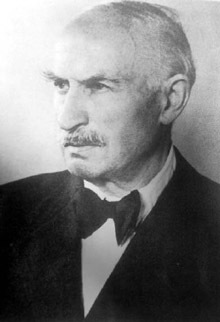 Ernst Leitz II
Before long, German “employees” were disembarking from the ocean liner Bremen at a New York pier and making their way to the Manhattan office of Leitz Inc., where executives quickly found them jobs in the photographic industry Each new arrival had around his or her neck the symbol of freedom – a new Leica camera. The company paid the refugees a stipend until they could find work. Out of this migration came designers, repair technicians, salespeople, marketers, and writers for the photographic press.
Keeping the story quiet The “Leica Freedom Train” was at its height in 1938 and early 1939, delivering groups of refugees to New York every few weeks. Then, with the invasion of Poland on Sept. 1, 1939, Germany closed its borders. By that time, hundreds of endangered Jews had escaped to America, thanks to the Leitzes’ efforts.
How did Ernst Leitz II and his staff get away with it? Leitz, Inc. was an internationally recognized brand that reflected credit on the newly resurgent Reich. The company produced cameras, rangefinders, and other optical systems for the German military. Also, the Nazi government desperately needed hard currency from abroad, and Leitz’s single biggest market for optical goods was the United States.
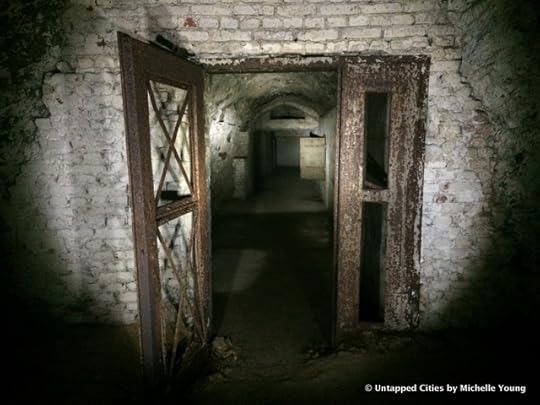 The Leica “Freedom Train” tunnels in Wetzlar, Germany through which Jews escaped.
Even so, members of the Leitz family and firm suffered for their good works. The Gestapo jailed a top Leitz executive for working to help Jews and freed him only after the payment of a large bribe.
Leitz’s daughter, Elsie Kuhn-Leitz, was imprisoned by the Gestapo after she was caught at the border, helping Jewish women cross into Switzerland. She eventually was freed but endured rough treatment in the course of questioning. She also fell under suspicion when she attempted to improve the living conditions of 700 to 800 Ukrainian slave laborers, all of them women, who had been assigned to work in the plant during the 1940s. (After the war, Kuhn-Leitz received numerous honors for her humanitarian efforts, among them the Officier d’honneur des Palms Academic from France in 1965 and the Aristide Briand Medal from the European Academy in the 1970s.)
Why has no one told this story until now? According to the late Norman Lipton, a freelance writer, and editor, the Leitz family wanted no publicity for its heroic efforts. Only after the last member of the Leitz family was dead did the “Leica Freedom Train” finally come to light.
Several years ago Frank Dabba Smith, a California-born Rabbi living in England penned a book about the Leitz family’s efforts entitled: “The Greatest Invention of the Leitz Family: The Leica Freedom Train.”
After World War II Leitz refused to talk about his efforts on behalf of his Jewish workers, and the story remained unknown for decades.
As the late radio commentator Paul Harvey used to say: “Now you know the rest of the story.”


