Ronald E. Yates's Blog, page 112
May 20, 2014
Q & A With Ron Yates (Part 3)
During a recent virtual book tour with a book blogging website I was asked the following questions, which I endeavored to answer honestly. I hope you find this Q & A interesting and helpful.
Do you have any advice for aspiring authors?
Don't let anybody discourage you from pursuing this work if it is really what you want to do. Don't be discouraged by rejection. You must believe in yourself, your ideas, your stories. If you don't, who will? Certainly not that dense editor or literary agent who couldn't see your potential or grasp your book's story line.
Is being a writer a curse or a gift?
It is a wonderful gift if you allow the process to come to you and don't force it. However, don't let anybody tell you it is not damned hard work. It is. The joy of writing for me is telling a good story. I don't care about imparting a "message." Nor do I care about creating any hidden "meanings" that some literature professor will hold forth about in a writing class when I am no longer around to rebut him/her. I just want to tell a good story. That, to me, is the ultimate gift of writing. The curse is that writing can take over your life, isolate you from family and friends and turn you into a kind of sophistic recluse if you are not careful. Writers need to take breaks from working. If they don't I believe they run the risk of becoming stale, self-absorbed, and misanthropic.
Where do you write?
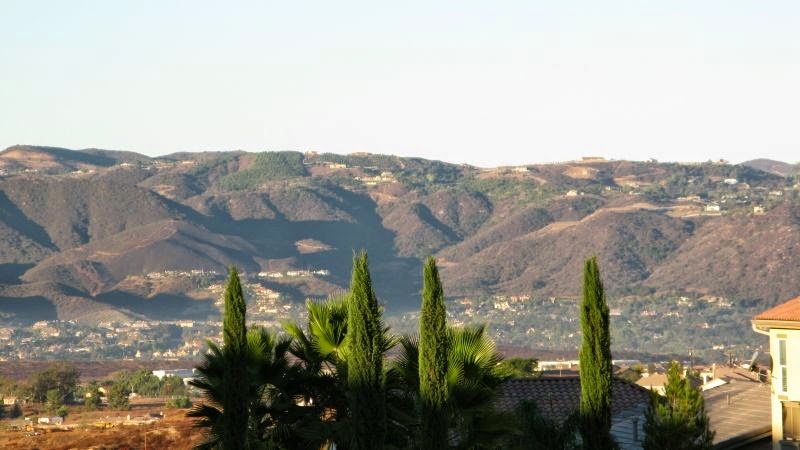 My Room with a ViewI have taken over the upstairs bonus room in our house. It is about 500 square feet. In it I have my rather prodigious library, a good sound system for playing classical music, a large screen TV for watching sports, the Discovery, History, and National Geographic channels when I need a break from writing. My window looks out onto a plant and boulder-strewn foothill that rises in front of my house. Another window looks down onto the Temecula valley some 2,000 feet below. It is quiet and soothing. Couldn't have a better place to write.
Do you prefer silence or some noise while you write?
I like to listen to music when I write. Most often I listen to Mozart, Haydn, Telemann, William Boyce, and Beethoven. Classical music brings out my muse. However, I also like the jazz of Dave Brubeck, Oscar Peterson, The Modern Jazz Quartet, George Shearing, etc. and I will on occasion switch from classical to that.
What do you typically drink while writing?
Very cold iced tea.
What challenges have you had in regards to your writing life?
When I was a working journalist for the Chicago Tribune and then a Dean and professor of journalism at the University of Illinois, I could never find large enough blocks of time to write consistently. Writing requires HUGE amounts of time and long periods of seclusion--things most of us don't have. So time to write has always been the biggest challenge. Now that I am no longer teaching or working full-time as a journalist I am blessed to have a lot more time to write than I ever thought I would have.
When did you first start and when did you finish your book?
I started the first book in the Finding Billy Battles trilogy in 2010, but I wasn't consistent in working on it. I really buckled down in the spring of 2013 and probably wrote 60% of it in about five months. I plant to finish Book #2 in six months.
What does your protagonist think of you? Would he/she want to hang out with you?
I think Billy Battles and I would be good friends. We are both journalists and we both like going to new places and experiencing new challenges. And we both enjoy a good cold beer after a long hard day.
How do you market your book? What avenues work best?
I am still learning how to use the vast universe of social media to market my book. In addition to Amazon and Barnes and Noble, of course, my book is on Goodreads, Smashwords, Google Books, Createspace, NetGalley, Independent Book Publishers Association, as well as the Historical Novel Society, my blog, my author page on Facebook and the book's website, ronaldyatesbooks.com http://www.ronaldyatesbooks.com
What has been the toughest criticism so far?
None, so far. Though it is still early in the process. Someone did say they didn't like the fact that the book is part of a trilogy because now they have to wait for Book #2. I like THAT kind of criticism.
What has been the best compliment?
There have been several, but I will list just four here. You can find these and other reviews on the book's Amazon page:
"The is easily the best work of fiction I have read in some time."
"There is something about this book that is almost impossible to explain, but it takes it from being a *good* book to a GREAT one."
"Move over Elmore Leonard and Pete Dexter--there's a new deputy sheriff in town."
"Ever have a book that takes over your days and nights - that's what Finding Billy Battles did for me."
Is anything in your book based on real life experiences or purely all imagination?
That's tricky. I call my work "Faction," because it is both fact and fiction. Some of the events in the book--especially those dealing with real people, did happen. Was my character directly involved in them? No. But members of my family were native Kansans and some of the experiences I write about did happen. Of course, I have woven some of my own experiences into the story line also.
How did you come up with the title?
I had been trying to think of a title for years. I didn't like any of them. Then one day, this one just jumped out of my brain and into the computer and Finding Billy Battles was born.
Will there be a sequel?
This is the first book in a trilogy of books that deal with Billy Battles life story. Book One is centered in Kansas, Colorado and other places in the American West. Book Two takes Billy to the Far East--French Indochina, The Philippines, Hong Kong, Singapore, etc.--places I spent a lot of my life. Book Three will find Billy in Latin America, Mexico and Europe--all places I have lived and worked in.
Any upcoming events, book fairs where we can meet Billy Battles?
Yes. I was honored to be invited to be Presenting Author at the Kansas Book Festival Sept. 11-12 in Topeka, Kansas. This is especially meaningful to me because Kansas is my home state and I am a graduate of the University of Kansas just east of Topeka.
What project are you working on now?
Book #2 in the Finding Billy Battles series AND I am getting together reams of notes for when I finally decide to write about my own life as foreign correspondent.
Please fill in the blank: Keep Calm and___________:Laugh--a lot! It's good for the mind and body.


May 16, 2014
Q & A with Ron Yates (Part 2)
If you could have dinner with 1 person, dead or alive, who would it be and why?
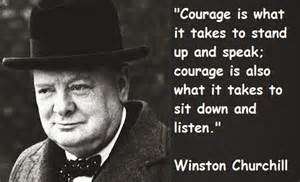
Winston Churchill . He was absolutely brilliant and I would hope by the end of dinner some of that brilliance would have rubbed off on me, though I seriously doubt it.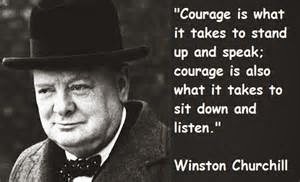
One food you would never eat?
Monkey Brain Sushi (yes, it is a real dish in China and I won't tell you how it's prepared). It is considered a cure for impotence (what isn't?).
Another dish I will continue to eschew is Balut, which is a delicacy in The Philippines. It is fertilized chicken or duck eggs in which the developed embryo is boiled and eaten from the shell. Yum!Which brings me to some advice an old Chicago Tribune copy editor named Spokely gave me when I was getting ready to leave Chicago for my first posting as a foreign correspondent. "You are going to places that serve strange food and you will be tempted to say 'no thank you,' when it is offered. Don't do that. It will be an insult to your host. When somebody offers you something to eat that looks or smells horrible, just remember Spokely's law: Everything tastes more or less like chicken."
What were the last couple of movies you watched?
Labor Day with Kate Winslet and Josh Brolin & Philomena, with Judy Dench.
What was the scariest moment of your life?
There have been several. One was during the evacuation of Saigon in 1975. The last day was chaos incarnate. Russian made 122mm rockets were slamming into buildings, 130mm mortars were hitting Tan Son Nhut airport, and the U.S. Embassy was surrounded by frantic South Vietnamese desperate to get out of the country because they had worked for the American military or some U.S. agency. The city was in full panic mode. Several of us made our way to the sprawling Defense Attache Office building at Tan Son Nhut and we were finally evacuated by a U.S. Marine CH-53 Sea Stallion helicopter. It was a relief until the door gunner told me later aboard the U.S.S. Okinawa that the pilot apparently had to drop a flare to misdirect a SAM-7 (surface to air missile).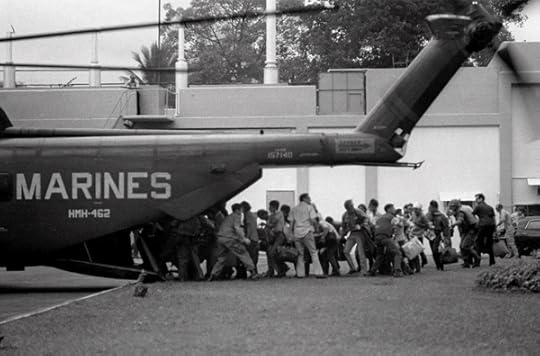 Evacuation from Saigon aboard a Marine CH-53
Another was during the 1989 Tiananmen Square massacre when I and several Chinese students were pinned down near the square for 30 minutes or so by Chinese soldiers shooting in our direction. Several students near me were wounded and we were helping them get to a doctor's house nearby so he could treat them. I was convinced I was going to wind up dead in the square. Then suddenly the shooting stopped and I was able to get my Red and White Sprick bicycle that I had chained to a lamp post and peddle like crazy for the Jinghau Hotel where I was staying and from where I was filing my stories to the Tribune.
Yet another memorable moment was during the revolution in El Salvador when I and two German correspondents were stopped in our car near the town of Suchitoto by Communist guerillas. They put cloth bags put over our heads and forced us to kneel alongside the road. We were sure we were going to be executed. But suddenly the "jefe" (leader) showed up and we were set free. "Don't kill journalists--unless they are armed," he yelled at his troops. I was greatly relieved that I had left the 1911 Colt Pistol I had purchased a few days earlier back in the hotel in San Salvador. I believe it is still there.
Ahhh yes, the life of a foreign correspondent...never a dull moment. But I still believe I had the best job in the world and I wouldn't trade my career for anything.
What books have most influenced your life?
Scoop , by Evelyn Waugh; The Grapes of Wrath, John Steinbeck; The Quiet American, Graham Greene; The Jewel in the Crown, Paul Scott; Kim,Rudyard Kipling; Huckleberry Finn, Samuel Clemons (Mark Twain); A Passage to India, E.M. Forster; Sister Carrie,Theodore Dreiser; The Naked and the Dead, Norman Mailer.
What do you do to unwind and relax?
What else? I read. I find reading a good book helps me escape from my own writing, which I need to do on occasion. Right now I am reading Lawrence In Arabia by Scott Anderson; The Bully Pulpit by Doris Kearnes Goodwin and A Drink Before the War, by Dennis Lehane.
Do you have a Website or Blog?
Yes, I have both. My website is called ronaldyatesbooks: h ttp://www.ronaldyatesbooks.com and I am constantly updating it. My blog, ForeignCorrespondent, can be found at: http://j-hawker.blogspot.com. I try to post to it at least once or twice a week. I also have an Amazon Author Central page at: http://www.amazon.com/-/e/B001KHDVZI, and an Author's Page on Facebook called Ronald E. Yates Books. It is located at: https://www.facebook.com/pages/Ronald.... What is your favorite line from a book?
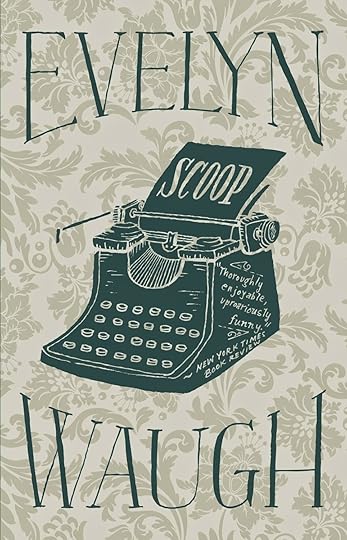 I have a couple and they are both from Evelyn Waugh: “Feather-footed through the plashy fen passes the questing vole." It is a line from Waugh's Scoopwritten by nature writer William Boot for the London Daily Beast just before he is mistaken for a famous foreign correspondent and sent off to the fictional African country of Ishmaelia to cover a war.
AND from Waugh's book Vile Bodies comes this great line: “I know very few young people, but it seems to me that they are all possessed with an almost fatal hunger for permanence.”
If it was mandatory for everyone to read three books, what books would you suggest? Huckleberry Finn ; The Grapes of Wrath; Sister Carrie. Not only are these classics, they are wonderful stories about the human spirit, its resiliency and strength, and its deficiencies and weaknesses.
Winston Churchill . He was absolutely brilliant and I would hope by the end of dinner some of that brilliance would have rubbed off on me, though I seriously doubt it.
One food you would never eat?
Monkey Brain Sushi (yes, it is a real dish in China and I won't tell you how it's prepared). It is considered a cure for impotence (what isn't?).
Another dish I will continue to eschew is Balut, which is a delicacy in The Philippines. It is fertilized chicken or duck eggs in which the developed embryo is boiled and eaten from the shell. Yum!Which brings me to some advice an old Chicago Tribune copy editor named Spokely gave me when I was getting ready to leave Chicago for my first posting as a foreign correspondent. "You are going to places that serve strange food and you will be tempted to say 'no thank you,' when it is offered. Don't do that. It will be an insult to your host. When somebody offers you something to eat that looks or smells horrible, just remember Spokely's law: Everything tastes more or less like chicken."
What were the last couple of movies you watched?
Labor Day with Kate Winslet and Josh Brolin & Philomena, with Judy Dench.
What was the scariest moment of your life?
There have been several. One was during the evacuation of Saigon in 1975. The last day was chaos incarnate. Russian made 122mm rockets were slamming into buildings, 130mm mortars were hitting Tan Son Nhut airport, and the U.S. Embassy was surrounded by frantic South Vietnamese desperate to get out of the country because they had worked for the American military or some U.S. agency. The city was in full panic mode. Several of us made our way to the sprawling Defense Attache Office building at Tan Son Nhut and we were finally evacuated by a U.S. Marine CH-53 Sea Stallion helicopter. It was a relief until the door gunner told me later aboard the U.S.S. Okinawa that the pilot apparently had to drop a flare to misdirect a SAM-7 (surface to air missile).
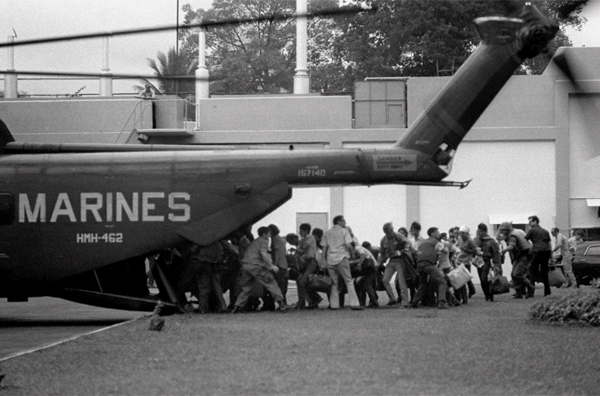 Evacuation from Saigon aboard a Marine CH-53
Another was during the 1989 Tiananmen Square massacre when I and several Chinese students were pinned down near the square for 30 minutes or so by Chinese soldiers shooting in our direction. Several students near me were wounded and we were helping them get to a doctor's house nearby so he could treat them. I was convinced I was going to wind up dead in the square. Then suddenly the shooting stopped and I was able to get my Red and White Sprick bicycle that I had chained to a lamp post and peddle like crazy for the Jinghau Hotel where I was staying and from where I was filing my stories to the Tribune.
Yet another memorable moment was during the revolution in El Salvador when I and two German correspondents were stopped in our car near the town of Suchitoto by Communist guerillas. They put cloth bags put over our heads and forced us to kneel alongside the road. We were sure we were going to be executed. But suddenly the "jefe" (leader) showed up and we were set free. "Don't kill journalists--unless they are armed," he yelled at his troops. I was greatly relieved that I had left the 1911 Colt Pistol I had purchased a few days earlier back in the hotel in San Salvador. I believe it is still there.
Ahhh yes, the life of a foreign correspondent...never a dull moment. But I still believe I had the best job in the world and I wouldn't trade my career for anything.
What books have most influenced your life?
Scoop , by Evelyn Waugh; The Grapes of Wrath, John Steinbeck; The Quiet American, Graham Greene; The Jewel in the Crown, Paul Scott; Kim,Rudyard Kipling; Huckleberry Finn, Samuel Clemons (Mark Twain); A Passage to India, E.M. Forster; Sister Carrie,Theodore Dreiser; The Naked and the Dead, Norman Mailer.
What do you do to unwind and relax?
What else? I read. I find reading a good book helps me escape from my own writing, which I need to do on occasion. Right now I am reading Lawrence In Arabia by Scott Anderson; The Bully Pulpit by Doris Kearnes Goodwin and A Drink Before the War, by Dennis Lehane.
Do you have a Website or Blog?
Yes, I have both. My website is called ronaldyatesbooks: h ttp://www.ronaldyatesbooks.com and I am constantly updating it. My blog, ForeignCorrespondent, can be found at: http://j-hawker.blogspot.com. I try to post to it at least once or twice a week. I also have an Amazon Author Central page at: http://www.amazon.com/-/e/B001KHDVZI, and an Author's Page on Facebook called Ronald E. Yates Books. It is located at: https://www.facebook.com/pages/Ronald.... What is your favorite line from a book?
 I have a couple and they are both from Evelyn Waugh: “Feather-footed through the plashy fen passes the questing vole." It is a line from Waugh's Scoopwritten by nature writer William Boot for the London Daily Beast just before he is mistaken for a famous foreign correspondent and sent off to the fictional African country of Ishmaelia to cover a war.
 AND from Waugh's book Vile Bodies comes this great line: “I know very few young people, but it seems to me that they are all possessed with an almost fatal hunger for permanence.”
If it was mandatory for everyone to read three books, what books would you suggest? Huckleberry Finn ; The Grapes of Wrath; Sister Carrie. Not only are these classics, they are wonderful stories about the human spirit, its resiliency and strength, and its deficiencies and weaknesses.
May 11, 2014
Q & A with Ron Yates (Part 1)
During one of my virtual online book tours, a blogger asked to do a Question and Answer interview during our session. What follows are her questions and my answers. I hope you find them useful.
Q. What was your inspiration to write Finding Billy Battles?A. I grew up in Kansas and was always fascinated by what life was like there in the 19th Century when the state was still pretty wild. At the same time, I spent a lot of time in the Far East as a foreign correspondent and I was equally intrigued by what life must have been like in the 19th Century colonial period in places like French Indochina, The Philippines, Malaysia, Singapore, Hong Kong, etc. Then one day I got the idea to blend the two using a character from 19th Century Kansas who goes to the Far East in search of himself.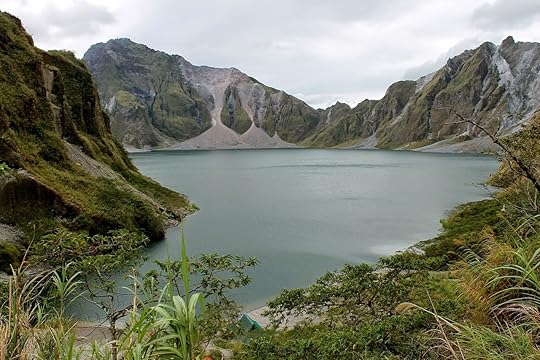 The Philippine Highlands Q. When did you first realize you wanted to be a writer?
A. Probably when I was in the sixth grade. I loved writing stories and I had a teacher (Mrs. Gooch) who encouraged me. My mother also bought me books and took me often to the library--a place that I found mystical and magnetic. She often read to me and I could "see" the story unfolding before me. When I could, I began to read everything I could get my hands on. As I used to tell my journalism students at the University of Illinois, if you want to be a good writer, be an avid reader.
Q. What advice would you give to someone who wants to become a published author?A. Try to write as much as you can from your own experiences. They are real and uncontrived and if you incorporate those experiences in your fiction your work will have a truthful ring to it. Beyond that, KEEP AT IT! Don't let anybody (editors, agents, etc) discourage you. At the same time, be willing to accept constructive criticism from those who have experience as authors, editors, agents, etc. Notice I said CONSTRUCTIVE criticism. Some people criticize just to be criticizing--or to be malicious. You must believe in yourself, your work, your vision and your story. If you don't, who will?
Q. What do you think makes a good story?A. A good story needs a strong plot and even stronger characters. Otherwise it falls flat. The writer needs to be first and foremost, a good storyteller. If you build a good story, THEY WILL COME, to paraphrase Field of Dreams. Make readers care about your protagonist. Make readers empathize, cry and laugh with them. At the same time, keep them off balance. Don't be predictable and don't be afraid to do terrible things to your favorite characters. Have you ever known anybody who has sailed through life without some turmoil, some pain, some suffering? I haven't.
Q. Do you have any writing projects you are currently working on?A. I am currently working on Book Two of the Finding Billy Battles trilogy. I expect to be finished by late fall 2014. Then I will start on Book Three. After that, who knows. I may finally get around to writing about my own life as a war correspondent. Ron & Vietnamese "Boat People" 1979
Q. If your book became a movie, who would be your first choice to play the lead roles? A. Clint Eastwood as the elderly Billy Battles; Clive Owen as the middle aged Billy Battles and Ashton Kutcher as the young Billy Battles. I would pick Saffron Burrows for Billy's first love, Mallie McNab and Famke Janssen for the widow Katharina Schreiber who Billy meets on the boat to the Far East. (Why these choices? They are all tall. Billy is 6'3" and Mallie is about 5'10," as is the statuesque widow Schreiber).
Q. Do any of your characters have qualities/characteristics that are similar to yourself?A. I think Billy Battles and I are a lot alike. I mean, aren't most novels a bit autobiographical? He is a restless sort, he enjoys traveling, going to new places and experiencing new things. Like Billy, I couldn't wait to get away from Kansas (though I love the place dearly). And like Billy, I am a happy wanderer. How else could I have survived and thrived as a foreign correspondent for 25 years? We are both journalists. At the same time he is a pretty dependable guy who is loyal to his friends and to those he chooses to keep close to him. Above all, Billy respects two traits in people: Honesty and Kindness. We are alike in that way.
Q. Tell us about your next release.A. The next book will be Book #2 in the Finding Billy Battles trilogy. This chapter in Billy Battles' life takes him to the Far East of the 1890s and places like French Indochina, The Philippines, Hong Kong and Singapore. This phase of Billy's life finds him mixed up with political opportunists, spies, revolutionaries and an assortment of malevolent and dubious characters of both sexes. In short, Book #2 in the trilogy takes Billy far away from his Kansas roots and out of his comfort zone. How will Billy handle those people and the challenges they present? It's a question that you will have to read Book #2 to find the answer to.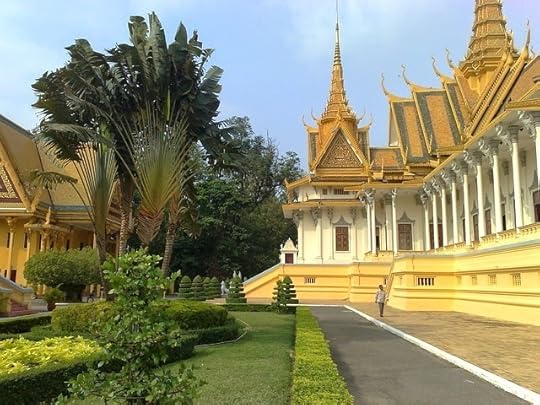 Phnom Penh, Cambodia
Q. Do you listen to music while writing? If so what?A. Yes. I listen to Mozart, Haydn, Telemann, and Boyce when I am in a classical mood. When not, I listen to good "cool" jazz by people like Oscar Peterson, Dave Brubeck, George Shearing, Bill Evans, etc.
Q. How do you develop your plots and your characters? Do you use any set formula? A. I write from the seat of my pants. I don't outline my books and I don't write down plot scenarios. I just start writing and see where the story and my characters lead me. It's a lot like life itself. We may have a goal in mind, but the route to it is often strewn with obstacles, surprises, and sometimes tragedy. I usually write 3,000 or 4,000 words a day and I edit as I go. In other words, I may write a few paragraphs and then rewrite them within a few minutes of creating them. I don't write a First Draft. For me, that seems like a waste of time. When I finish writing a book it is finished. I may make a few tweaks with the plot here and there, or alter a little dialogue, or some action by a character, but there is no second or third draft. I know some authors write a draft and put it away for weeks or months and then go back in look at it with fresh eyes--OR they send it out to be critiqued by professional "readers" or "critiquers." Those strategies may work for some people. They don't work for me. I guess it's my journalistic training: see it, report it, organize it, write it and then move on to the next story.
Q. Say your publisher has offered to fly you anywhere in the world to do research on an upcoming book, where would you most likely want to go?A. Back to Vietnam, Cambodia and The Philippines--three countries I worked in as correspondent in the 1970s, 1980s, and 1990s, and three countries where Billy Battles is going to wind up living during the 1890s. While I know a lot about those places, having lived and worked in them, I would love to dig deeper into their colonial periods and learn more about life during that era.
Q. What was your inspiration to write Finding Billy Battles?A. I grew up in Kansas and was always fascinated by what life was like there in the 19th Century when the state was still pretty wild. At the same time, I spent a lot of time in the Far East as a foreign correspondent and I was equally intrigued by what life must have been like in the 19th Century colonial period in places like French Indochina, The Philippines, Malaysia, Singapore, Hong Kong, etc. Then one day I got the idea to blend the two using a character from 19th Century Kansas who goes to the Far East in search of himself.
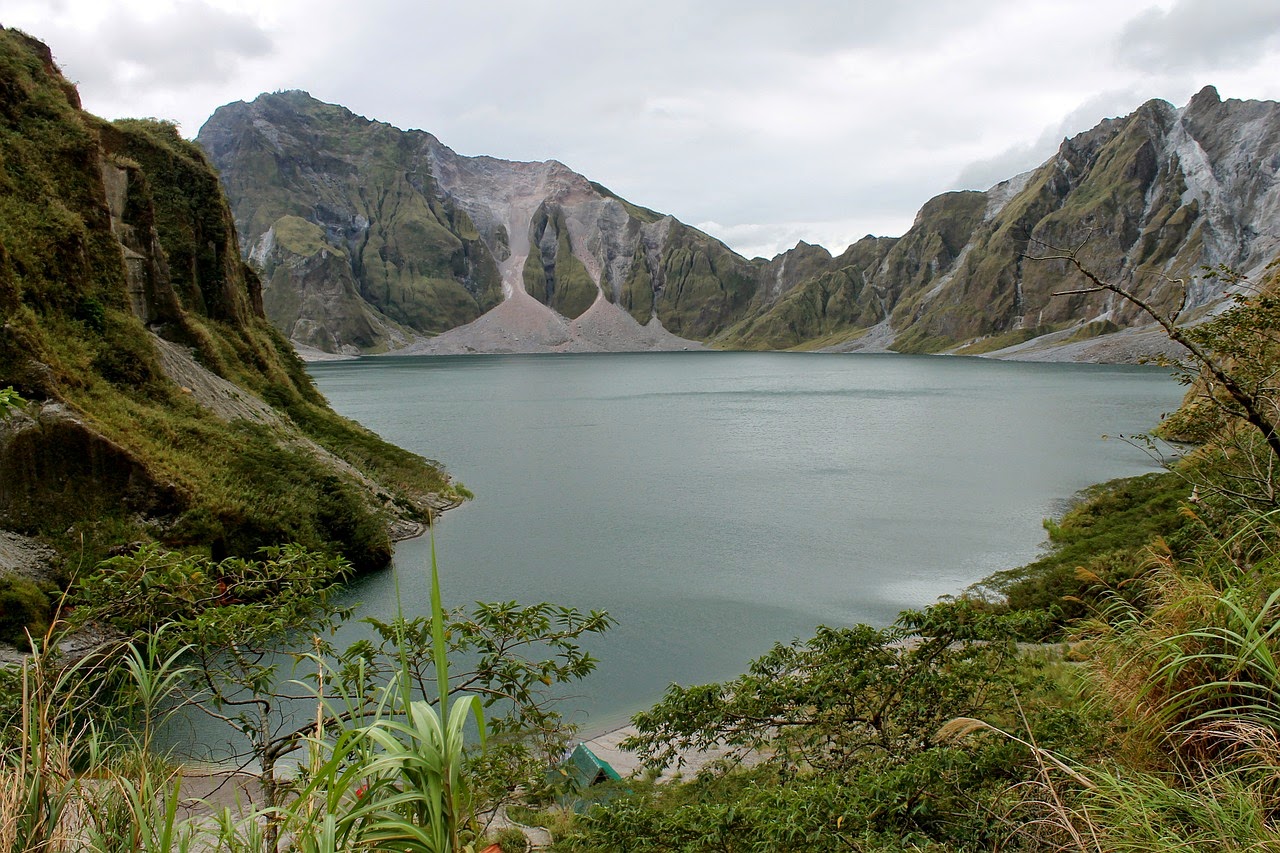 The Philippine Highlands Q. When did you first realize you wanted to be a writer?
A. Probably when I was in the sixth grade. I loved writing stories and I had a teacher (Mrs. Gooch) who encouraged me. My mother also bought me books and took me often to the library--a place that I found mystical and magnetic. She often read to me and I could "see" the story unfolding before me. When I could, I began to read everything I could get my hands on. As I used to tell my journalism students at the University of Illinois, if you want to be a good writer, be an avid reader.
Q. What advice would you give to someone who wants to become a published author?A. Try to write as much as you can from your own experiences. They are real and uncontrived and if you incorporate those experiences in your fiction your work will have a truthful ring to it. Beyond that, KEEP AT IT! Don't let anybody (editors, agents, etc) discourage you. At the same time, be willing to accept constructive criticism from those who have experience as authors, editors, agents, etc. Notice I said CONSTRUCTIVE criticism. Some people criticize just to be criticizing--or to be malicious. You must believe in yourself, your work, your vision and your story. If you don't, who will?
Q. What do you think makes a good story?A. A good story needs a strong plot and even stronger characters. Otherwise it falls flat. The writer needs to be first and foremost, a good storyteller. If you build a good story, THEY WILL COME, to paraphrase Field of Dreams. Make readers care about your protagonist. Make readers empathize, cry and laugh with them. At the same time, keep them off balance. Don't be predictable and don't be afraid to do terrible things to your favorite characters. Have you ever known anybody who has sailed through life without some turmoil, some pain, some suffering? I haven't.
Q. Do you have any writing projects you are currently working on?A. I am currently working on Book Two of the Finding Billy Battles trilogy. I expect to be finished by late fall 2014. Then I will start on Book Three. After that, who knows. I may finally get around to writing about my own life as a war correspondent. Ron & Vietnamese "Boat People" 1979
Q. If your book became a movie, who would be your first choice to play the lead roles? A. Clint Eastwood as the elderly Billy Battles; Clive Owen as the middle aged Billy Battles and Ashton Kutcher as the young Billy Battles. I would pick Saffron Burrows for Billy's first love, Mallie McNab and Famke Janssen for the widow Katharina Schreiber who Billy meets on the boat to the Far East. (Why these choices? They are all tall. Billy is 6'3" and Mallie is about 5'10," as is the statuesque widow Schreiber).
Q. Do any of your characters have qualities/characteristics that are similar to yourself?A. I think Billy Battles and I are a lot alike. I mean, aren't most novels a bit autobiographical? He is a restless sort, he enjoys traveling, going to new places and experiencing new things. Like Billy, I couldn't wait to get away from Kansas (though I love the place dearly). And like Billy, I am a happy wanderer. How else could I have survived and thrived as a foreign correspondent for 25 years? We are both journalists. At the same time he is a pretty dependable guy who is loyal to his friends and to those he chooses to keep close to him. Above all, Billy respects two traits in people: Honesty and Kindness. We are alike in that way.
Q. Tell us about your next release.A. The next book will be Book #2 in the Finding Billy Battles trilogy. This chapter in Billy Battles' life takes him to the Far East of the 1890s and places like French Indochina, The Philippines, Hong Kong and Singapore. This phase of Billy's life finds him mixed up with political opportunists, spies, revolutionaries and an assortment of malevolent and dubious characters of both sexes. In short, Book #2 in the trilogy takes Billy far away from his Kansas roots and out of his comfort zone. How will Billy handle those people and the challenges they present? It's a question that you will have to read Book #2 to find the answer to.
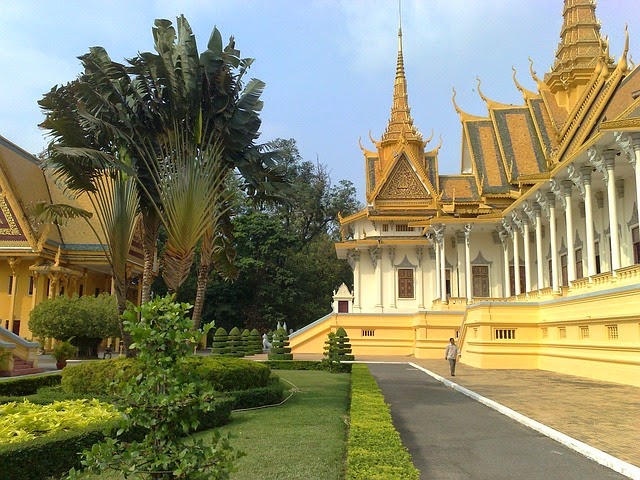 Phnom Penh, Cambodia
Q. Do you listen to music while writing? If so what?A. Yes. I listen to Mozart, Haydn, Telemann, and Boyce when I am in a classical mood. When not, I listen to good "cool" jazz by people like Oscar Peterson, Dave Brubeck, George Shearing, Bill Evans, etc.
Q. How do you develop your plots and your characters? Do you use any set formula? A. I write from the seat of my pants. I don't outline my books and I don't write down plot scenarios. I just start writing and see where the story and my characters lead me. It's a lot like life itself. We may have a goal in mind, but the route to it is often strewn with obstacles, surprises, and sometimes tragedy. I usually write 3,000 or 4,000 words a day and I edit as I go. In other words, I may write a few paragraphs and then rewrite them within a few minutes of creating them. I don't write a First Draft. For me, that seems like a waste of time. When I finish writing a book it is finished. I may make a few tweaks with the plot here and there, or alter a little dialogue, or some action by a character, but there is no second or third draft. I know some authors write a draft and put it away for weeks or months and then go back in look at it with fresh eyes--OR they send it out to be critiqued by professional "readers" or "critiquers." Those strategies may work for some people. They don't work for me. I guess it's my journalistic training: see it, report it, organize it, write it and then move on to the next story.
Q. Say your publisher has offered to fly you anywhere in the world to do research on an upcoming book, where would you most likely want to go?A. Back to Vietnam, Cambodia and The Philippines--three countries I worked in as correspondent in the 1970s, 1980s, and 1990s, and three countries where Billy Battles is going to wind up living during the 1890s. While I know a lot about those places, having lived and worked in them, I would love to dig deeper into their colonial periods and learn more about life during that era.
April 27, 2014
From Journalist to Writer: How Difficult is the Transition?
In a recent interview with several book bloggers about my book Finding Billy Battles, I was asked if the transition from journalist to writer was difficult. Here is how I answered:
It was not as difficult as some people might think. For one thing, journalists ARE writers. In fact, writing compelling nonfiction is in some ways even more difficult than writing fiction. For one thing, you are constrained by the facts, the people you talk with and the events you cover, whereas authors of fiction are allowed to invent facts, people and events.
Some of the writing I am most proud of during my days as a foreign correspondent with the Chicago Tribune were my longer form cover stories I wrote for the Chicago Tribune Sunday Magazine. These were 3,000-5,000 word profiles of people and events and places.
For example, I once did a cover piece on Bangkok's Klongs (canals) and the people who live and work along them. I did another on the Amazon River basin and yet another on late Total Quality Management guru W. Edwards Deming. I still look at those pieces and marvel that I even wrote them.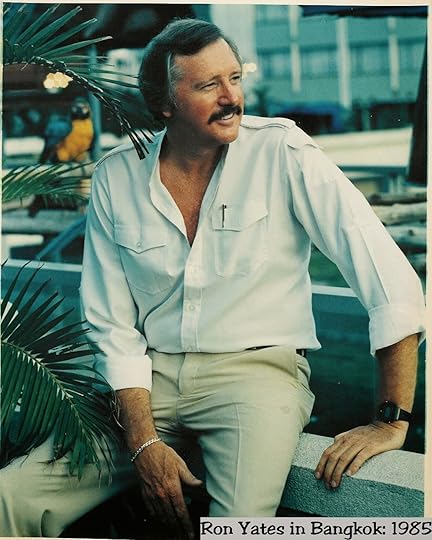
I consider my 27 years as a journalist the best training ground I could have had for writing fiction. I learned how to gather information, how to organize it and how to write it compellingly. Reporting is the journalist's word for Research.
And research is critical to anybody who writes historical fiction--or any fiction for that matter, even science fiction. If you don't have a command of some science, scientific theory, physics, or some other facet of scientific thought when attempting to create an imagined world or universe, your readers will not be able to suspend belief. For one thing, they won't trust you.
As I learned during my life covering war, revolution and other forms of mayhem from S.E. Asia to China to El Salvador and Nicaragua, trust is critical for a journalist. It is a key measure of one's credibility. Without credibility a journalist is nothing more than a hack.
Today hundreds of thousands of hacks populate the blogosphere spewing forth whatever they want with little or no credibility to back them up. Many have no idea how to do accurate news gathering and instead grab whatever they can from secondary or tertiary sources to support whatever political agenda they may adhere to or are intent on promoting.
That is NOT journalism. That is "Hackery." I think the same can be said for lazy authors who fail to do requisite research for their books.
So, for me the transition from journalist to author of fiction was fairly seamless. Granted, writing fiction requires a different form of creativity. You are, after all, creating people, events, places, conflict, etc. from some inner place.
In my case, I have attempted to do my creating not only from my inner muse, but from my own experiences and interactions with the broad array of both good and bad but always fascinating people I came to know during my days traveling the world for the Chicago Tribune. That is why I call my book a work of "Faction."
It was not as difficult as some people might think. For one thing, journalists ARE writers. In fact, writing compelling nonfiction is in some ways even more difficult than writing fiction. For one thing, you are constrained by the facts, the people you talk with and the events you cover, whereas authors of fiction are allowed to invent facts, people and events.
Some of the writing I am most proud of during my days as a foreign correspondent with the Chicago Tribune were my longer form cover stories I wrote for the Chicago Tribune Sunday Magazine. These were 3,000-5,000 word profiles of people and events and places.
For example, I once did a cover piece on Bangkok's Klongs (canals) and the people who live and work along them. I did another on the Amazon River basin and yet another on late Total Quality Management guru W. Edwards Deming. I still look at those pieces and marvel that I even wrote them.
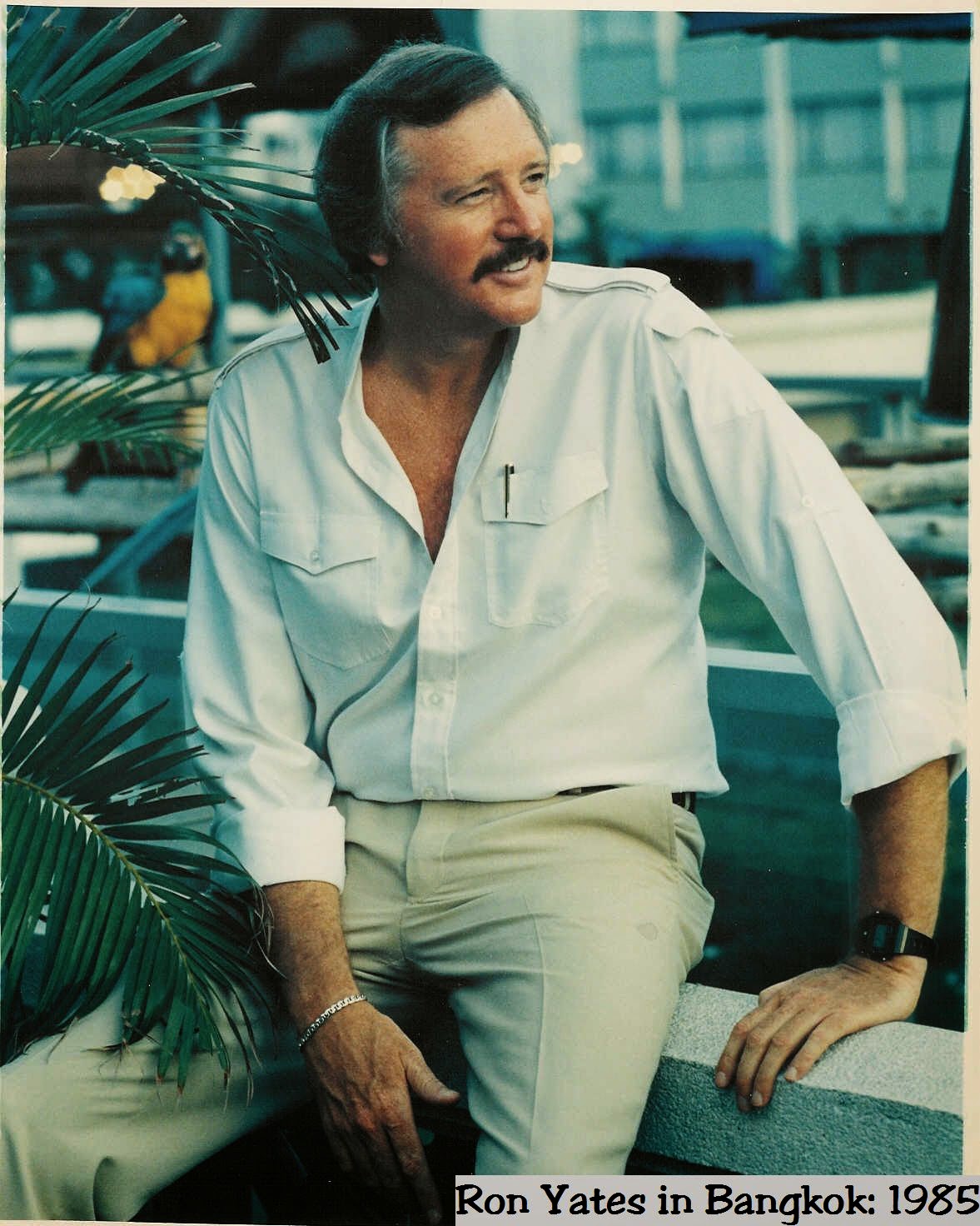
I consider my 27 years as a journalist the best training ground I could have had for writing fiction. I learned how to gather information, how to organize it and how to write it compellingly. Reporting is the journalist's word for Research.
And research is critical to anybody who writes historical fiction--or any fiction for that matter, even science fiction. If you don't have a command of some science, scientific theory, physics, or some other facet of scientific thought when attempting to create an imagined world or universe, your readers will not be able to suspend belief. For one thing, they won't trust you.
As I learned during my life covering war, revolution and other forms of mayhem from S.E. Asia to China to El Salvador and Nicaragua, trust is critical for a journalist. It is a key measure of one's credibility. Without credibility a journalist is nothing more than a hack.
Today hundreds of thousands of hacks populate the blogosphere spewing forth whatever they want with little or no credibility to back them up. Many have no idea how to do accurate news gathering and instead grab whatever they can from secondary or tertiary sources to support whatever political agenda they may adhere to or are intent on promoting.
That is NOT journalism. That is "Hackery." I think the same can be said for lazy authors who fail to do requisite research for their books.
So, for me the transition from journalist to author of fiction was fairly seamless. Granted, writing fiction requires a different form of creativity. You are, after all, creating people, events, places, conflict, etc. from some inner place.
In my case, I have attempted to do my creating not only from my inner muse, but from my own experiences and interactions with the broad array of both good and bad but always fascinating people I came to know during my days traveling the world for the Chicago Tribune. That is why I call my book a work of "Faction."
April 22, 2014
Three things I learned while writing "Finding Billy Battles"
During a recent "virtual book tour" with several book bloggers, I was asked what three things I learned while writing Finding Billy Battles. It was a good question because it caused me to stop and think about the fiction-writing process in a way I never had before.
Here are the answers I provided...
NUMBER ONE: When I was teaching journalism as a Dean and Professor at the University of Illinois, I learned more from teaching than I ever thought possible. The same goes for writing fiction. I spent most of my professional life as a foreign correspondent for the Chicago Tribune in Asia and Latin America. That work required me to deal with facts, real people, real events and real human emotion. I couldn't make up what I was reporting. I had to stick to the what I saw, what I heard, what people told me, etc. And I had to do my best to write compelling stories using only those facts. I generally succeeded, but it was often hard work.
When I began writing Finding Billy Battles, I found myself in a strange new world where I could create the facts, the people, the events, the human emotion. At first it was a wonderful sense of freedom--especially for a journalist previously confined to a life of non-fiction. Then I realized that with freedom comes a need for discipline in one's writing. You need to keep the story "real" even as you make it up. In historical fiction, which is what I classify my book as, you need to understand the boundaries of the time and place in which you are writing. Otherwise, you are forcing your readers, many of whom may be more knowledgeable about the time and place in which you have set your story, to suspend their beliefs beyond what they should.
NUMBER TWO: So I learned that if I was going to do this correctly, I needed to do the kind of research that would allow me to create accurate representations of people, places, events, as well as the senses that all authors need to engage readers with when writing--smell, sound, sight, touch, and taste. I spent a lot of time trying to get 19th Century Kansas, Colorado, New Mexico, etc. right. I worked hard on getting the lingua franca of the time and place right. I used a lot of the colloquial speech I grew up hearing my great-grandparents, my grandparents and my parents use. I incorporated a lot of the idiomatic expressions that were intrinsic to Kansas and the American West of the 19th Century.
 NUMBER THREE: Finally, I learned that writing the book is the least of the job. Once the book is finished you have to get it out to potential readers, reviewers, etc. Marketing your book is quite possibly even more difficult than writing it. I have learned that there is an enormous universe out there of book bloggers, reviewers, book websites like Goodreads, Smashwords, Independent Author Network, Historical Novel Society, Createspace, NetGalley, Story Cartel, Book Daily, Authors Den, iAuthor, etc.

I have spent 85 percent of my time engaging with book bloggers, reviewers and the aforementioned websites and only about 15 percent of my time actually writing. So marketing your finished work is a colossal investment in time--and money. My previous books have been with traditional publishers so I didn't get involved in the marketing process.
I like the Indie route simply because you have more control over the way the book looks, the content and the various venues for selling it. However, it does take time and if you are not ready to make that kind of investment of time, you need to think twice before going the Indie publishing route. As for me, I plan to continue along the Indie path now that I know the lay of the new publishing landscape.
Here are the answers I provided...
NUMBER ONE: When I was teaching journalism as a Dean and Professor at the University of Illinois, I learned more from teaching than I ever thought possible. The same goes for writing fiction. I spent most of my professional life as a foreign correspondent for the Chicago Tribune in Asia and Latin America. That work required me to deal with facts, real people, real events and real human emotion. I couldn't make up what I was reporting. I had to stick to the what I saw, what I heard, what people told me, etc. And I had to do my best to write compelling stories using only those facts. I generally succeeded, but it was often hard work.
When I began writing Finding Billy Battles, I found myself in a strange new world where I could create the facts, the people, the events, the human emotion. At first it was a wonderful sense of freedom--especially for a journalist previously confined to a life of non-fiction. Then I realized that with freedom comes a need for discipline in one's writing. You need to keep the story "real" even as you make it up. In historical fiction, which is what I classify my book as, you need to understand the boundaries of the time and place in which you are writing. Otherwise, you are forcing your readers, many of whom may be more knowledgeable about the time and place in which you have set your story, to suspend their beliefs beyond what they should.
NUMBER TWO: So I learned that if I was going to do this correctly, I needed to do the kind of research that would allow me to create accurate representations of people, places, events, as well as the senses that all authors need to engage readers with when writing--smell, sound, sight, touch, and taste. I spent a lot of time trying to get 19th Century Kansas, Colorado, New Mexico, etc. right. I worked hard on getting the lingua franca of the time and place right. I used a lot of the colloquial speech I grew up hearing my great-grandparents, my grandparents and my parents use. I incorporated a lot of the idiomatic expressions that were intrinsic to Kansas and the American West of the 19th Century.
 NUMBER THREE: Finally, I learned that writing the book is the least of the job. Once the book is finished you have to get it out to potential readers, reviewers, etc. Marketing your book is quite possibly even more difficult than writing it. I have learned that there is an enormous universe out there of book bloggers, reviewers, book websites like Goodreads, Smashwords, Independent Author Network, Historical Novel Society, Createspace, NetGalley, Story Cartel, Book Daily, Authors Den, iAuthor, etc.

I have spent 85 percent of my time engaging with book bloggers, reviewers and the aforementioned websites and only about 15 percent of my time actually writing. So marketing your finished work is a colossal investment in time--and money. My previous books have been with traditional publishers so I didn't get involved in the marketing process.
I like the Indie route simply because you have more control over the way the book looks, the content and the various venues for selling it. However, it does take time and if you are not ready to make that kind of investment of time, you need to think twice before going the Indie publishing route. As for me, I plan to continue along the Indie path now that I know the lay of the new publishing landscape.
April 13, 2014
The Challenges of Writing Historical Fiction (Part Two)
At the Los Angeles Times Festival of Books this past weekend where I was signing my book Finding Billy Battles, I was asked several times about the research process for writing historical fiction novels. I explained that researching the first book in the Finding Billy Battles trilogybegan with my own memories. I grew up in Kansas listening to the way my great-grandparents, my grandparents and my parents spoke. Everybody in my family grew up in Kansas, so it is no stretch to say that I was immersed in "Kansas-speak" from an early age.
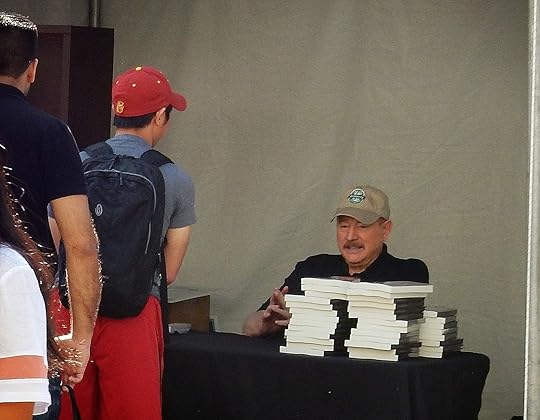 Signing Books at the L.A. Book Festival
Nevertheless, even though I grew up in Kansas and I know the places where my characters live and work very well, I didn't know what those places were like between 1878 and 1894--the time span in which the first book in the Finding Billy Battles trilogy takes place. So I had to do significant research and I am glad I did. It helped me write a book that I believe is historically accurate.
Luckily, I was able to do a lot of research online. I spent a lot time mining the website of the Kansas Historical Society as well as the Ford County and Douglas County Historical Societies. There were many other places I found useful information of the period, including the Atchison, Topeka and Santa Fe Railroad.I am a relentless researcher. That comes from my 27 years as a journalist with the Chicago Tribune. During that time I learned how important accuracy is for the credibility of a journalist and the news organization he or she works for. Your stories MUST be accurate in every detail, otherwise it, you and the company that employs you lose credibility.Similarly, I believe authors who write historical fiction owe it to their readers to be accurate about the time and place they have put their characters in. That means you MUST do good research. You cannot rely on watching a movie about Bleeding Kansas in the 1850s and 1860s and then write a book based on how that film depicted the time, the places and the events. As I mentioned, you can do a lot of that research on line, but NOT all of it. Libraries are still the best places to find the kind of books that will tell you what a place looked and sounded like in the 1890s. Luckily for me, I have amassed a large library of books during the past couple of decades on 19th Century America, Asia and Latin America--the main locales for my characters in the Finding Billy Battles trilogy. I have old maps of countries, cities and territories that have proved invaluable in creating accurate settings in the book. Another challenge was getting the patois or the dialect of the time and place right. People spoke differently in 19th Century Kansas than they do today. They dressed differently. They interacted with one another differently. It was a time of face to face communication. Telephones were a rarity and of course social media back then meant meeting at church, at a barn dance--or, in the case of some people--in a saloon. Curious Readers Lined up for Billy Battles
Transportation was an adventure. Trains were the fastest way to get from point A to point B--IF there were tracks. Horses were the most common means of moving about. I had to get all of that right down to the sounds, the smells, etc. Historical fiction demands accuracy. Otherwise your readers will not believe your story. We all suspend belief when we read fiction, but even when we do, we want the story to have a true ring to it. You cannot achieve that if you aren't accurate with the construction of your setting, the behavior of your characters and the vernacular of the era. Those were all challenges I faced, but I enjoyed facing them--just as I enjoyed facing the long line of curious readers who came to have their Billy Battles books signed at the L.A. Times Festival of Books.In book two of the Finding Billy Battles trilogy, I will face even more challenges because Billy finds himself in French Indochina, The Philippines, Hong Kong and Singapore of the 1890s--and those places were a veritable paradise for polyglots, miscreants, spies, and people running away from something, just as Billy Battles is.I cannot emphasize enough how important accuracy is in developing the historical novel. Readers need to trust you when you describe a place, a city, an event. They almost want you to have been there so you can present them with an accurate picture of the place and time. For me, recreating 19th Century Lawrence, Denver, Chicago, New Mexico, etc. was part of the fun of writing. I want my readers to "see" what I am seeing and what my characters are seeing, hearing, feeling.As I said in Part One of this blog topic, I like to call my writing "Faction." It is a blend of the journalist's ability to gather accurate information and the fiction writer's ability to imagine and create compelling characters and stories. (Next: (Part Three) Three Things I Learned While Writing Billy Battles)
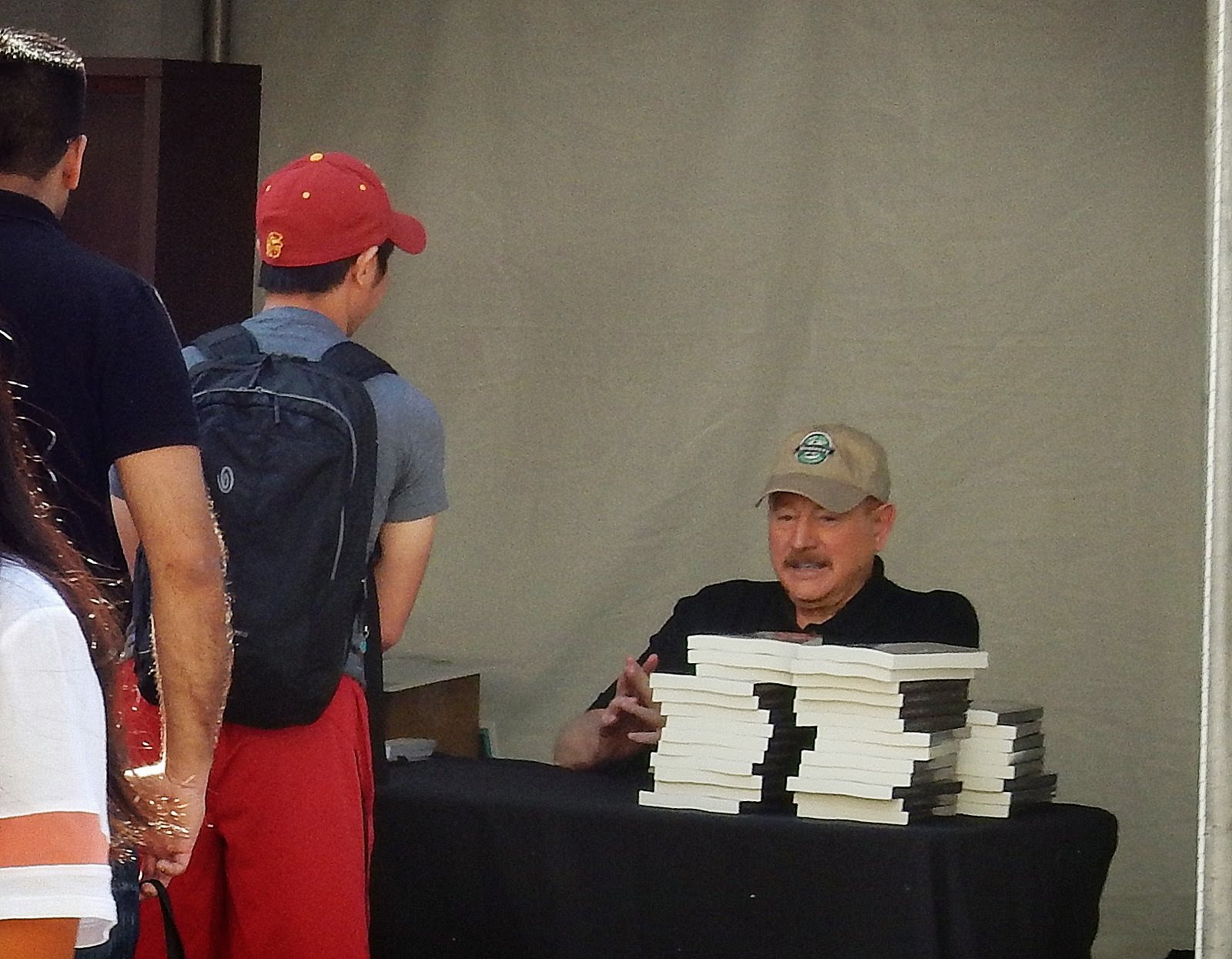 Signing Books at the L.A. Book Festival
Nevertheless, even though I grew up in Kansas and I know the places where my characters live and work very well, I didn't know what those places were like between 1878 and 1894--the time span in which the first book in the Finding Billy Battles trilogy takes place. So I had to do significant research and I am glad I did. It helped me write a book that I believe is historically accurate.
Luckily, I was able to do a lot of research online. I spent a lot time mining the website of the Kansas Historical Society as well as the Ford County and Douglas County Historical Societies. There were many other places I found useful information of the period, including the Atchison, Topeka and Santa Fe Railroad.I am a relentless researcher. That comes from my 27 years as a journalist with the Chicago Tribune. During that time I learned how important accuracy is for the credibility of a journalist and the news organization he or she works for. Your stories MUST be accurate in every detail, otherwise it, you and the company that employs you lose credibility.Similarly, I believe authors who write historical fiction owe it to their readers to be accurate about the time and place they have put their characters in. That means you MUST do good research. You cannot rely on watching a movie about Bleeding Kansas in the 1850s and 1860s and then write a book based on how that film depicted the time, the places and the events. As I mentioned, you can do a lot of that research on line, but NOT all of it. Libraries are still the best places to find the kind of books that will tell you what a place looked and sounded like in the 1890s. Luckily for me, I have amassed a large library of books during the past couple of decades on 19th Century America, Asia and Latin America--the main locales for my characters in the Finding Billy Battles trilogy. I have old maps of countries, cities and territories that have proved invaluable in creating accurate settings in the book. Another challenge was getting the patois or the dialect of the time and place right. People spoke differently in 19th Century Kansas than they do today. They dressed differently. They interacted with one another differently. It was a time of face to face communication. Telephones were a rarity and of course social media back then meant meeting at church, at a barn dance--or, in the case of some people--in a saloon.
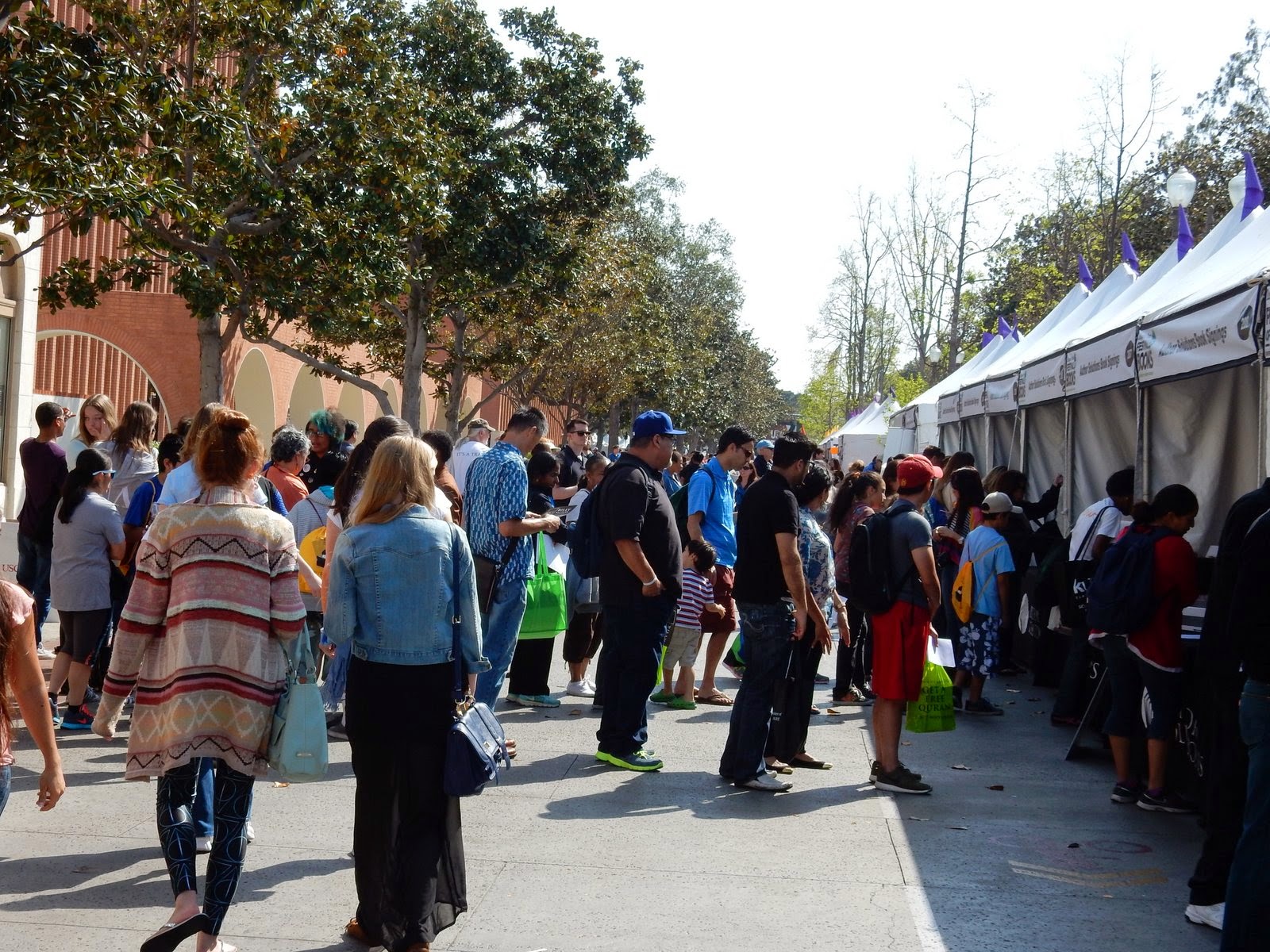 Curious Readers Lined up for Billy Battles
Transportation was an adventure. Trains were the fastest way to get from point A to point B--IF there were tracks. Horses were the most common means of moving about. I had to get all of that right down to the sounds, the smells, etc. Historical fiction demands accuracy. Otherwise your readers will not believe your story. We all suspend belief when we read fiction, but even when we do, we want the story to have a true ring to it. You cannot achieve that if you aren't accurate with the construction of your setting, the behavior of your characters and the vernacular of the era. Those were all challenges I faced, but I enjoyed facing them--just as I enjoyed facing the long line of curious readers who came to have their Billy Battles books signed at the L.A. Times Festival of Books.In book two of the Finding Billy Battles trilogy, I will face even more challenges because Billy finds himself in French Indochina, The Philippines, Hong Kong and Singapore of the 1890s--and those places were a veritable paradise for polyglots, miscreants, spies, and people running away from something, just as Billy Battles is.I cannot emphasize enough how important accuracy is in developing the historical novel. Readers need to trust you when you describe a place, a city, an event. They almost want you to have been there so you can present them with an accurate picture of the place and time. For me, recreating 19th Century Lawrence, Denver, Chicago, New Mexico, etc. was part of the fun of writing. I want my readers to "see" what I am seeing and what my characters are seeing, hearing, feeling.As I said in Part One of this blog topic, I like to call my writing "Faction." It is a blend of the journalist's ability to gather accurate information and the fiction writer's ability to imagine and create compelling characters and stories. (Next: (Part Three) Three Things I Learned While Writing Billy Battles)
April 7, 2014
The Challenges of Writing Historical Fiction (Part One)
I am often asked what challenges I face when writing historical fiction. There are many challenges to writing historical fiction and to deal with them all in one post would be too much.
So I will break the challenges down into several parts which I will share with you over the next several blog posts. I hope you find these posts interesting and if you do, PLEASE FEEL FREE TO COMMENT. I would love to know what you think.
This first post deals with one the greatest challenges when it comes to writing historical fiction: How to balance accuracy and artistic license.
I spent 27 years as a foreign correspondent, national correspondent, metro and national editor for the Chicago Tribune. Working as a journalist taught me some basic skills regarding reporting, which is the journalist's word for research. Journalism is an empirical discipline. That means, like science, it is a search for truth and you use trial and error, observation and analysis to find that truth.
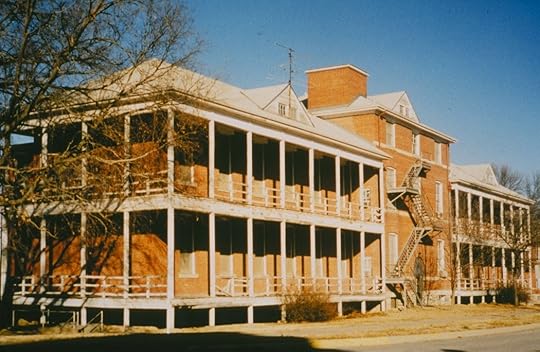 A Dormatory of the Wadsworth Old Soldiers Home
where Billy Battles meets his Great GrandsonFor the scientist or scholar or historian, empiricism means arriving at a truth via observation and experimentation. For the journalist the empirical tools are: Observation and Interviewing. I believe any successful journalist, author or scholar must master both of those skills--along with the ability to respect the language and write compellingly.
If you are using the empirical tools of observation and interviewingcorrectly and skillfully, you will find that the information you are gathering is mostly accurate.
Accuracy when writing historical fiction is critical. That may sound like a paradox. It is not. A critical element in historical fiction is the way people communicate with one another. You want to make sure your characters, if they are in the 19th Century (as mine are when the Finding Billy Battles trilogy begins) are using the correct lingua franca.
You don't want your protagonists and antagonists using 21st Century colloquial speech or slang in 1880s Kansas. For one thing that destroys the sense of time and place and for another, it reveals to the reader that the author simply has not researched the era enough or is too lazy to have characters speaking in the vernacular of the time. I see this mistake all the time especially in American films that are set in earlier periods.
When a character in a book or film set in the 19th Century says something like: "This sucks" or "Are you nuts?" or "Give me a break." I am immediately turned off to the story. Yet it happens all the time--maybe not as obviously as those examples, but you get what I mean. I am sure you have heard or read similar out of time and place comments.
So that is a big issue for me. Another is in making sure places are properly described. For example, in writing Finding Billy Battles I had to describe both Lawrence, Kansas and Denver, Colorado as they looked in the 1880a and 1890s. I used the Kansas Historical Society to find old maps of Lawrence. I did the same with an historical group in describing Denver. I also had to describe the Wadsworth Old Soldiers Home in Leavenworth, Kansas where Billy Battles first meets his great-grandson.
I think it is important to establish historical credibility with readers. Once that is done, then you can allow fiction to run rampant in your story. I believe readers are willing to suspend belief in things that a character does IF the author has nailed the time and place of an event accurately.
People, for the most part, behaved differently in the 1880s and 1890s. Having them do and say things that people do and say in 2014 is to ignore accuracy and precision. Relationships between men and women were very different (at least in public) in 1890 than they are today. Men--at least most men--demonstrated a certain deference toward women. It was simply the gentlemanly thing to do. Those that didn't observe such conventions were regarded as cads, brutes or beasts--to use the patois of the time.
Women did not wear pants in 1890--at least not on the streets of places like Denver or Lawrence, Kansas. They did not carry handguns and shoot villains on sight--at least not frequently. In fact, most women who wanted to dispatch an abusive man did so with poison--at least that is what my research of 19th Century crime records found--the legend of Lizzie Borden notwithstanding.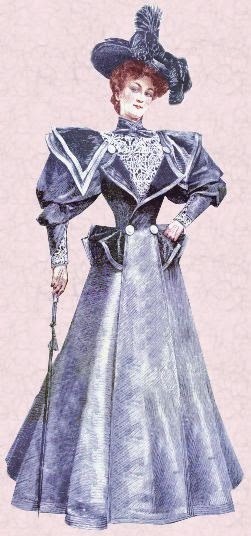 Haute Couture in the 1890s
Yet, if you want your heroine or female antagonist to blow the brains out of a brutish man or to give him 40 whacks with an ax, you can certainly write it that way IF you have established historical accuracy and trust with your reader.
In my mind that is how you balance accuracy and artistic license in historical fiction. The reader must trust that the time, the place, and the conduct of your characters are all consistent with the era you are writing about. Can your protagonist or antagonist act out of character within the epoch in which your book is set? Absolutely. But if they do it is seen as an anomaly and not something the reader (or people alive at that time) would expect.
That is not a bad thing. It can give your story tension, even texture. But you must use it sparingly because you don't want it to become commonplace throughout the story.
Another area that is critical to good historical fiction is the way things smelled, they way things felt and the way things sounded in the period you are writing about. For example, when describing Dodge City, Kansas when Billy Battles arrives there as an 18-year-old newspaper apprentice, I wanted to make sure the reader knew how the place smelled because of the thousands of Texas cattle in pens on the outskirts of town waiting to be loaded into boxcars for Kansas City and Chicago. Then there were the stinking buffalo hides that were piled 30 and 40 feet high south of the Arkansas River. Streets in those days were not paved and were usually littered with horse apples, garbage, stagnant water and road kill.
Not a very pleasant sight--or smell.
Clothing in the 19th Century, especially women's clothing, was often uncomfortable. Cloth was abrasive, irritating and heavy; buildings were often unpainted and built from coarse wood; and food was not always fresh or prepared with the greatest attention to sanitation and safety. In my book, Nellie Cashman (a real Irish woman who operated the Russ House Restaurant) runs an ad in the Tombstone Epitaph that proclaims to her potential customers: "My kitchen is clean and free of cockroaches." I found that ad looking through old copies of the Epitaph.
All of these things, and I am sure I haven't included everything here, need to be considered when balancing accuracy with artistic license. For me, this is kind of second nature. Paying attention to accuracy is what I did for a quarter century as a journalist. Artistic license didn't come into play until just recently when I began writing fiction--or what I like to call "FACTION."
So I will break the challenges down into several parts which I will share with you over the next several blog posts. I hope you find these posts interesting and if you do, PLEASE FEEL FREE TO COMMENT. I would love to know what you think.
This first post deals with one the greatest challenges when it comes to writing historical fiction: How to balance accuracy and artistic license.
I spent 27 years as a foreign correspondent, national correspondent, metro and national editor for the Chicago Tribune. Working as a journalist taught me some basic skills regarding reporting, which is the journalist's word for research. Journalism is an empirical discipline. That means, like science, it is a search for truth and you use trial and error, observation and analysis to find that truth.
 A Dormatory of the Wadsworth Old Soldiers Home
 where Billy Battles meets his Great GrandsonFor the scientist or scholar or historian, empiricism means arriving at a truth via observation and experimentation. For the journalist the empirical tools are: Observation and Interviewing. I believe any successful journalist, author or scholar must master both of those skills--along with the ability to respect the language and write compellingly.
If you are using the empirical tools of observation and interviewingcorrectly and skillfully, you will find that the information you are gathering is mostly accurate.
Accuracy when writing historical fiction is critical. That may sound like a paradox. It is not. A critical element in historical fiction is the way people communicate with one another. You want to make sure your characters, if they are in the 19th Century (as mine are when the Finding Billy Battles trilogy begins) are using the correct lingua franca.
You don't want your protagonists and antagonists using 21st Century colloquial speech or slang in 1880s Kansas. For one thing that destroys the sense of time and place and for another, it reveals to the reader that the author simply has not researched the era enough or is too lazy to have characters speaking in the vernacular of the time. I see this mistake all the time especially in American films that are set in earlier periods.
When a character in a book or film set in the 19th Century says something like: "This sucks" or "Are you nuts?" or "Give me a break." I am immediately turned off to the story. Yet it happens all the time--maybe not as obviously as those examples, but you get what I mean. I am sure you have heard or read similar out of time and place comments.
So that is a big issue for me. Another is in making sure places are properly described. For example, in writing Finding Billy Battles I had to describe both Lawrence, Kansas and Denver, Colorado as they looked in the 1880a and 1890s. I used the Kansas Historical Society to find old maps of Lawrence. I did the same with an historical group in describing Denver. I also had to describe the Wadsworth Old Soldiers Home in Leavenworth, Kansas where Billy Battles first meets his great-grandson.
I think it is important to establish historical credibility with readers. Once that is done, then you can allow fiction to run rampant in your story. I believe readers are willing to suspend belief in things that a character does IF the author has nailed the time and place of an event accurately.
People, for the most part, behaved differently in the 1880s and 1890s. Having them do and say things that people do and say in 2014 is to ignore accuracy and precision. Relationships between men and women were very different (at least in public) in 1890 than they are today. Men--at least most men--demonstrated a certain deference toward women. It was simply the gentlemanly thing to do. Those that didn't observe such conventions were regarded as cads, brutes or beasts--to use the patois of the time.
Women did not wear pants in 1890--at least not on the streets of places like Denver or Lawrence, Kansas. They did not carry handguns and shoot villains on sight--at least not frequently. In fact, most women who wanted to dispatch an abusive man did so with poison--at least that is what my research of 19th Century crime records found--the legend of Lizzie Borden notwithstanding.
 Haute Couture in the 1890s
Yet, if you want your heroine or female antagonist to blow the brains out of a brutish man or to give him 40 whacks with an ax, you can certainly write it that way IF you have established historical accuracy and trust with your reader.
In my mind that is how you balance accuracy and artistic license in historical fiction. The reader must trust that the time, the place, and the conduct of your characters are all consistent with the era you are writing about. Can your protagonist or antagonist act out of character within the epoch in which your book is set? Absolutely. But if they do it is seen as an anomaly and not something the reader (or people alive at that time) would expect.
That is not a bad thing. It can give your story tension, even texture. But you must use it sparingly because you don't want it to become commonplace throughout the story.
Another area that is critical to good historical fiction is the way things smelled, they way things felt and the way things sounded in the period you are writing about. For example, when describing Dodge City, Kansas when Billy Battles arrives there as an 18-year-old newspaper apprentice, I wanted to make sure the reader knew how the place smelled because of the thousands of Texas cattle in pens on the outskirts of town waiting to be loaded into boxcars for Kansas City and Chicago. Then there were the stinking buffalo hides that were piled 30 and 40 feet high south of the Arkansas River. Streets in those days were not paved and were usually littered with horse apples, garbage, stagnant water and road kill.
Not a very pleasant sight--or smell.
Clothing in the 19th Century, especially women's clothing, was often uncomfortable. Cloth was abrasive, irritating and heavy; buildings were often unpainted and built from coarse wood; and food was not always fresh or prepared with the greatest attention to sanitation and safety. In my book, Nellie Cashman (a real Irish woman who operated the Russ House Restaurant) runs an ad in the Tombstone Epitaph that proclaims to her potential customers: "My kitchen is clean and free of cockroaches." I found that ad looking through old copies of the Epitaph.
All of these things, and I am sure I haven't included everything here, need to be considered when balancing accuracy with artistic license. For me, this is kind of second nature. Paying attention to accuracy is what I did for a quarter century as a journalist. Artistic license didn't come into play until just recently when I began writing fiction--or what I like to call "FACTION."
March 23, 2014
What do you like most about the historical fiction genre?
Historical fiction is one of the most popular forms of fiction being written today--along with young adult, zombies, romance novels and sci-fi.
I am interested in learning why people like historical fiction books. I have a few theories, but I would like to know what others think.
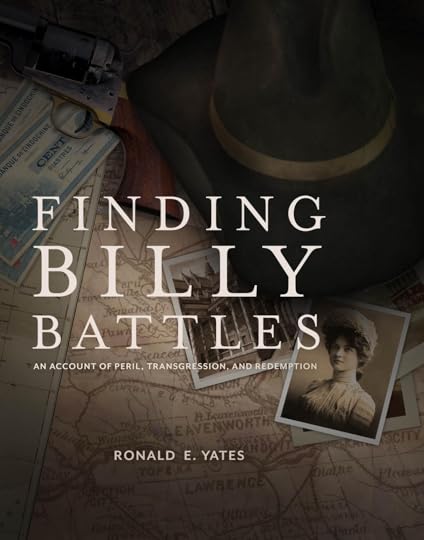 As an author, I enjoyed writing a book that is set in 19th Century Kansas and then moves (in book 2 of the trilogy) to the colonial Far East. As a reader (or writer) what is it that draws you to this kind of fiction?
I enjoy doing the research necessary to create an accurate portrayal of the people, places and events of other eras, such as the 19th Century. I like "slowing" down the pace of life.
What I find appealing about eras BSM (before social media), smart phones, i-pads, etc. is that you actually had time to THINK rather than simply react
As a foreign correspondent I can recall telling my office (via telex) when I was covering Vietnam, Cambodia, El Salvador etc. in the 70s & 80s that I would be out of touch for several days. Then I would go to some remote area and spend time talking with people, analyzing what I was hearing and what I was seeing and then return to write a story that wasn't filled with "instant wisdom" as we so often see today with journalists who "parachute" in to cover a story.
Writing about the 19th Century, as I am doing now in my trilogy, allows me to slow the pace down, provide historical context and give my characters time to think.
Today, we are all in such a hurry to do things, to pack in as much as we can in a single day. When I think about my characters in Finding Billy Battles, I envy the fact that they were not sped up by "galloping technology" as we are so often today.
Feel free to comment
I am interested in learning why people like historical fiction books. I have a few theories, but I would like to know what others think.
 As an author, I enjoyed writing a book that is set in 19th Century Kansas and then moves (in book 2 of the trilogy) to the colonial Far East. As a reader (or writer) what is it that draws you to this kind of fiction?
I enjoy doing the research necessary to create an accurate portrayal of the people, places and events of other eras, such as the 19th Century. I like "slowing" down the pace of life.
What I find appealing about eras BSM (before social media), smart phones, i-pads, etc. is that you actually had time to THINK rather than simply react
As a foreign correspondent I can recall telling my office (via telex) when I was covering Vietnam, Cambodia, El Salvador etc. in the 70s & 80s that I would be out of touch for several days. Then I would go to some remote area and spend time talking with people, analyzing what I was hearing and what I was seeing and then return to write a story that wasn't filled with "instant wisdom" as we so often see today with journalists who "parachute" in to cover a story.
Writing about the 19th Century, as I am doing now in my trilogy, allows me to slow the pace down, provide historical context and give my characters time to think.
Today, we are all in such a hurry to do things, to pack in as much as we can in a single day. When I think about my characters in Finding Billy Battles, I envy the fact that they were not sped up by "galloping technology" as we are so often today.
Feel free to comment
February 14, 2014
Why Am I Giving My New Book Away For Free?
It's a good question. But the answer is simple. Giving away my book, Finding Billy Battles, is an excellent marketing strategy.
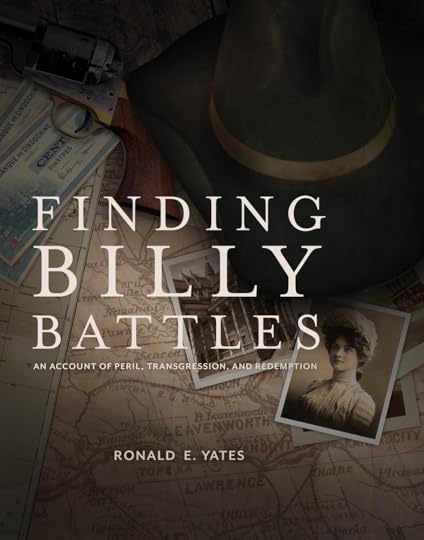
It is also the way things work in today's hugely competitive book universe.
For example, in return for a free book via Story Cartel:
http://storycartel.com/books/847/finding-billy-battles
I am asking that recipients write an honest review of the book at one of the following online book retailers Amazon, Goodreads, Barnes & Noble, etc. These don't have to be exhaustive--just a couple of hundred words is fine.
Of course, if you want to write more, there is no limit on length.
Since my book hit Amazon http://www.amazon.com/Finding-Billy-Battles-Transgression-Redemption-ebook/dp/B00H7TSBSK/ref=la_B001KHDVZI_1_1?s=books&ie=UTF8&qid=1392423370&sr=1-1 and other retail outlets in early December, I have discovered there is no better form of advertising than the comments provided by satisfied readers.
And so far, those readers have been satisfied, which is, I can tell you, a wonderful feeling for an author! It means that the story is connecting to readers, that readers have empathy for one's characters and that they find the story line compelling enough to read to the end.
Authors cannot ask more than that unless of course, they ask (as I do) for an honest review of the book.
I think if you were to ask most authors why they write most would tell you it is NOT to make money.OK, earning a nice return on the immense investment of time that writing takes out of your life; the agonizing bouts of writer's block; and the fear that one's work will face universal rejection by the reading public, is not a bad thing.
But I believe most writers of fiction want their books to excite readers and give them pleasure. After all, who wants to read a novel that gives us a headache or indigestion?
We want a book that pulls us along into the story, that establishes credibility with readers and allows them to identify with its characters.
In short, readers want a good story. And good stories are produced by good storytellers, which is what successful writers are.
So, if you haven't read Finding Billy Battles yet, here's a chance to do so for free. All Story Cartel and I ask is that you dash off an honest review and post it on the book's Amazon, or Goodreads or Barnes & Noble page.
It's as simple as that.
Now I have to get back to writing the second book in the Billy Battles trilogy. Thanks for reading.
It is also the way things work in today's hugely competitive book universe.
For example, in return for a free book via Story Cartel:
http://storycartel.com/books/847/finding-billy-battles
I am asking that recipients write an honest review of the book at one of the following online book retailers Amazon, Goodreads, Barnes & Noble, etc. These don't have to be exhaustive--just a couple of hundred words is fine.
Of course, if you want to write more, there is no limit on length.
Since my book hit Amazon http://www.amazon.com/Finding-Billy-Battles-Transgression-Redemption-ebook/dp/B00H7TSBSK/ref=la_B001KHDVZI_1_1?s=books&ie=UTF8&qid=1392423370&sr=1-1 and other retail outlets in early December, I have discovered there is no better form of advertising than the comments provided by satisfied readers.
And so far, those readers have been satisfied, which is, I can tell you, a wonderful feeling for an author! It means that the story is connecting to readers, that readers have empathy for one's characters and that they find the story line compelling enough to read to the end.
Authors cannot ask more than that unless of course, they ask (as I do) for an honest review of the book.
I think if you were to ask most authors why they write most would tell you it is NOT to make money.OK, earning a nice return on the immense investment of time that writing takes out of your life; the agonizing bouts of writer's block; and the fear that one's work will face universal rejection by the reading public, is not a bad thing.
But I believe most writers of fiction want their books to excite readers and give them pleasure. After all, who wants to read a novel that gives us a headache or indigestion?
We want a book that pulls us along into the story, that establishes credibility with readers and allows them to identify with its characters.
In short, readers want a good story. And good stories are produced by good storytellers, which is what successful writers are.
So, if you haven't read Finding Billy Battles yet, here's a chance to do so for free. All Story Cartel and I ask is that you dash off an honest review and post it on the book's Amazon, or Goodreads or Barnes & Noble page.
It's as simple as that.
Now I have to get back to writing the second book in the Billy Battles trilogy. Thanks for reading.
January 21, 2014
New Direction for My Blog
It has been way too long since I lasted posted on my blog. One reason is that I have spent most the past 90 days working out the fine points of publishing my new book,
Finding Billy Battles.
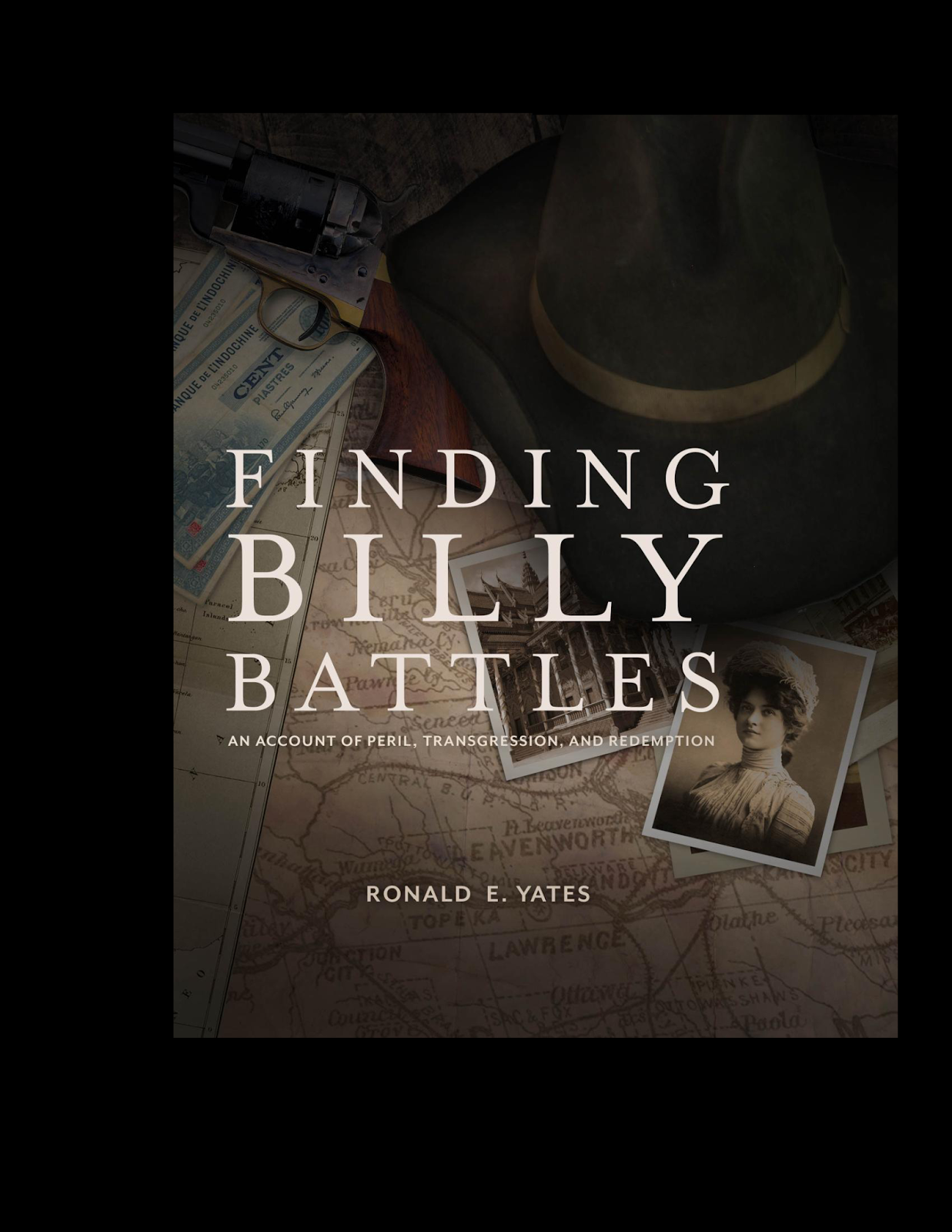
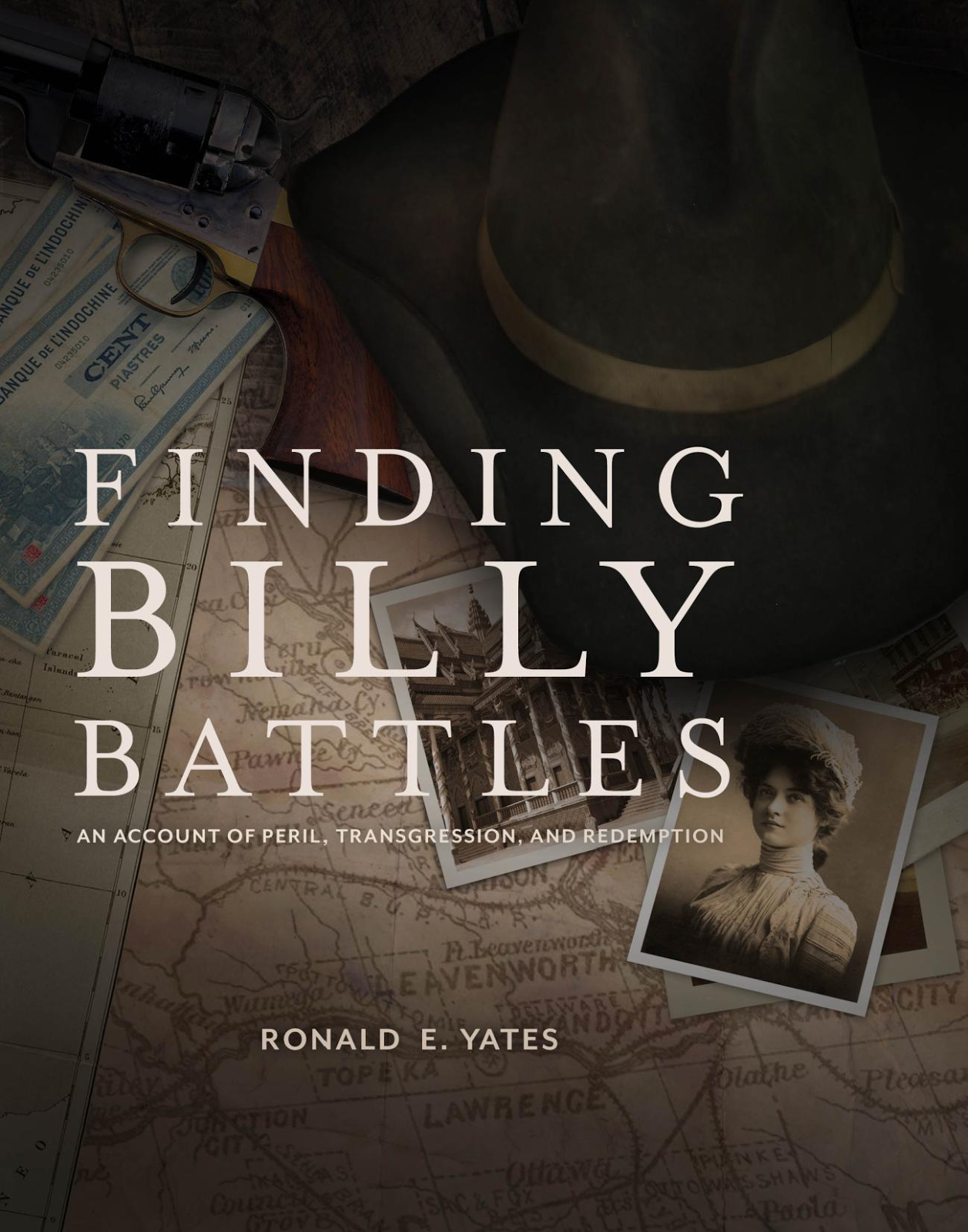
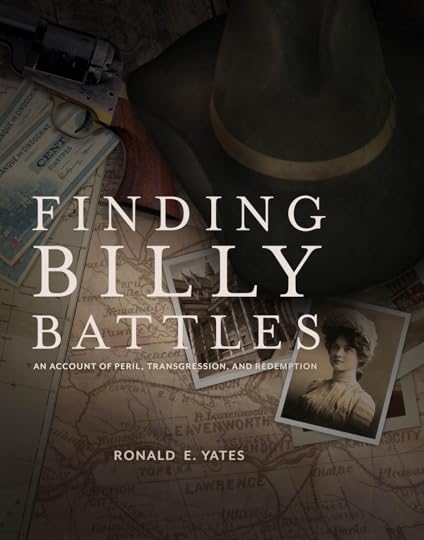 Cover of my new book
Then, there was the marketing! As I learned with my last book, which was published with a traditional publisher, marketing is critical for a book's success if your name isn't a household word like Snooki, Barack Obama or Martha Stewart. Marketing for my last book began with a whimper and ended with a whimper.
For this book I used an independent publisher (Xlibris) and took control of the marketing myself. Well, at least I thought I took control of the marketing. What I discovered is that there is a vast universe of book sites (Goodreads, Smashwords, Createspace, Google Books, and of course, the big gorillas: Amazon and Barnes & Noble) where books are sold.
But that isn't all. I then discovered another parallel universe of thousands of book bloggers--book lovers and avid readers who maintain websites where new books are featured, reviewed and authors are taken on "virtual book tours."
'Wow,' I thought to myself, 'this is really impressive." (My virtual book tour begins Feb. 3 and runs til Feb. 14. Here is a link to it in case you want to join the tour)
http://junipergrovebooksolutions.com/finding-billy-battles-ronald-e-yates/
As it turned out, I was only scratching the surface of this new publishing universe. As I lurched ahead through this seemingly infinite book publishing and marketing cosmos I discovered other places where my book could be marketed, reviewed and discussed.
Places such as BookBub, NetGalley, the Independent Book Publishers Association, the Historical Novel Society, Story Cartel, Books and Writers, and Kirkus Reviews, to name a few. (I am discovering more of these websites everyday).
In the good old days, authors and publishers would seek reviews in newspapers. They still do. There is nothing like a review in the Sunday New York Times or Publishers Weekly to kick start sales of a book.But the fact is, many newspapers have either killed their book sections or simply stopped reviewing books all-together. Initially I contacted perhaps 8-10 newspapers--many located in the locales where my book takes place. Only three have responded with any interest. The rest informed me they don't run book reviews unless they are syndicated.
At first this seemed like a crushing blow. Then I realized that newspapers are no longer the best places to get your book reviewed.
In today's interconnected world of social media (Facebook, Twitter, Google-plus, Linkedin, Wayn, etc.) and that cosmic universe of book bloggers an author can reach millions of potential readers without every talking to a newspaper book reviewer.
You can talk to readers directly about everything from your books to how you write. You can discuss new titles that you will be publishing and most of all, you can create a loyal following of readers.
You can do all of this PLUS, you will have control over the way your book looks--its cover design, its interior layout and even the font you want to use.
Finally, YOU, not the publisher set the price for your book as well as the formats you want it published in: traditional hardback, soft cover or e-book.
In case you were not aware of this, e-books account for almost 70% of Amazon's books sales these days. Why? For one thing they are much less expensive than printed versions.
For example, the hardback version of Finding Billy Battles sells for $26.99 on Amazon, while the soft cover version is priced at $13.49 and the Kindle e-book version sells for $3.99.
I realize there are still a lot of people out there who want to hold a real book in their hands and not a digital version inside of a Kindle, Nook or I-pad. My question, however, is why pay $22.00 more for a hardback or $9.50 more for a soft cover version when you can download the book for just $3.99?You might think an author would earn more by selling a book for $26.99 or $13.49 than for $3.99. In the short term, perhaps that is true.
However, if a book takes off and acquires a large global readership of several hundred thousand, which hundreds of e-books that sell anywhere from 99 cents to $5.99 do, the author normally earns 70% of the sales price.
I will let you do the math. But let's say your e-book which is priced at $2.99 gets 100,000 digital downloads globally (not too far-fetched, but definitely not the norm). That means you, the author would walk away with $2.10 per book, or $210,000 BEFORE taxes.
As places like Costco, Sams Club, Wal-Mart, Target, etc. have discovered, you can earn more selling cheaper and with a higher volume than you can selling your merchandise at higher prices with a lower volume of sales.
So there you have it. The new world of book publishing. It is still evolving, to be sure. And traditional publishers are getting in on the act. Many have spun off what are known as "indie" publishing houses to gain access to this huge market in digital and publish on demand books.
As for me. Well, I have noticed a downside to this new universe of book publishing and marketing. Because I have spent the past two months or so getting my book to press and on all of these digital book sites, blogs, etc. I have hardly written a word on the next book in the Finding Billy Battles trilogy.
And then there is this blog which I allowed to sit fallow for far too long--a cardinal sin for any serious blogger or author. The upside is that my blog will now incorporate a lot more new about books and book publishing. I hope you will like it.
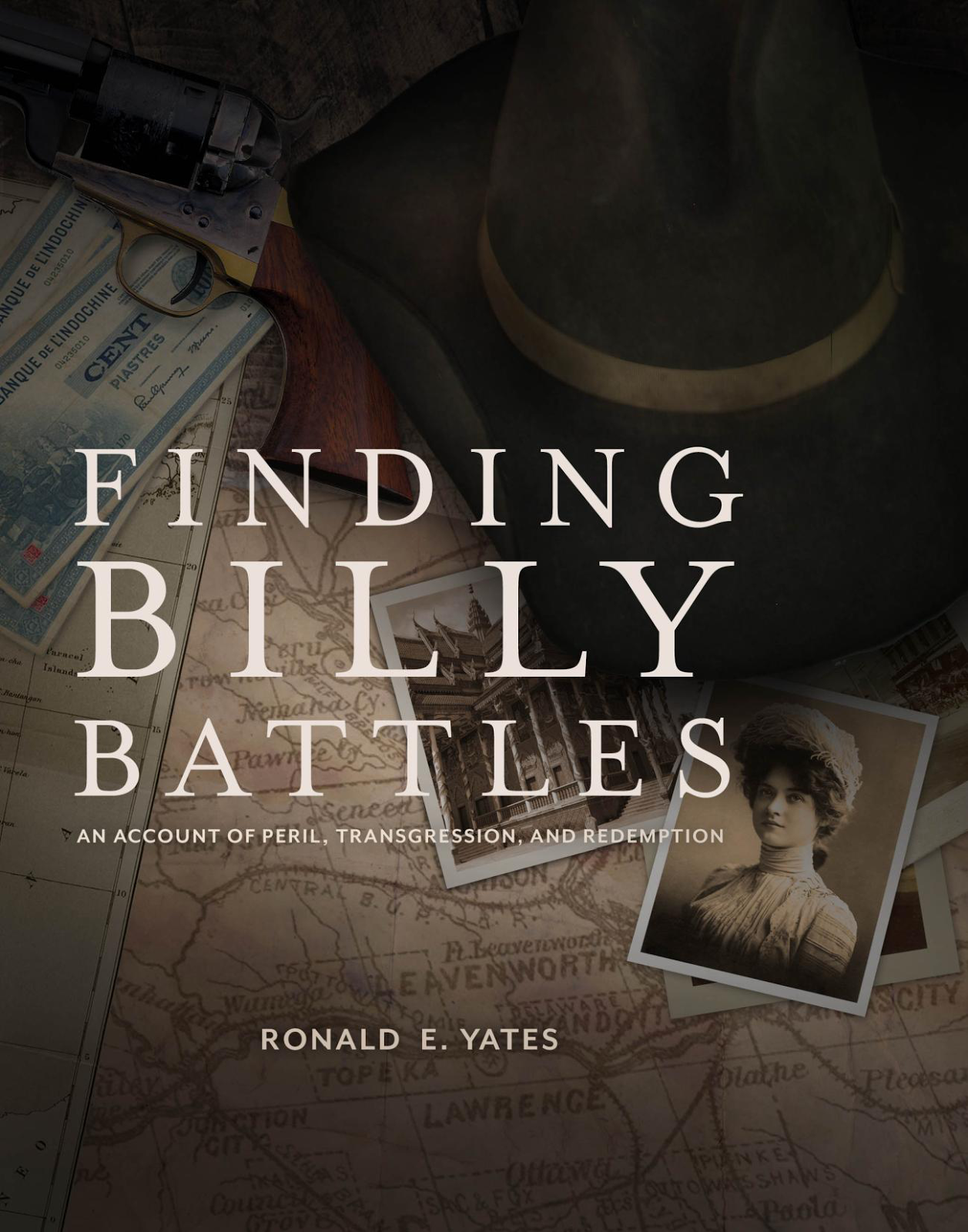 Cover of my new book
Then, there was the marketing! As I learned with my last book, which was published with a traditional publisher, marketing is critical for a book's success if your name isn't a household word like Snooki, Barack Obama or Martha Stewart. Marketing for my last book began with a whimper and ended with a whimper.
For this book I used an independent publisher (Xlibris) and took control of the marketing myself. Well, at least I thought I took control of the marketing. What I discovered is that there is a vast universe of book sites (Goodreads, Smashwords, Createspace, Google Books, and of course, the big gorillas: Amazon and Barnes & Noble) where books are sold.
But that isn't all. I then discovered another parallel universe of thousands of book bloggers--book lovers and avid readers who maintain websites where new books are featured, reviewed and authors are taken on "virtual book tours."
'Wow,' I thought to myself, 'this is really impressive." (My virtual book tour begins Feb. 3 and runs til Feb. 14. Here is a link to it in case you want to join the tour)
http://junipergrovebooksolutions.com/finding-billy-battles-ronald-e-yates/
As it turned out, I was only scratching the surface of this new publishing universe. As I lurched ahead through this seemingly infinite book publishing and marketing cosmos I discovered other places where my book could be marketed, reviewed and discussed.
Places such as BookBub, NetGalley, the Independent Book Publishers Association, the Historical Novel Society, Story Cartel, Books and Writers, and Kirkus Reviews, to name a few. (I am discovering more of these websites everyday).
In the good old days, authors and publishers would seek reviews in newspapers. They still do. There is nothing like a review in the Sunday New York Times or Publishers Weekly to kick start sales of a book.But the fact is, many newspapers have either killed their book sections or simply stopped reviewing books all-together. Initially I contacted perhaps 8-10 newspapers--many located in the locales where my book takes place. Only three have responded with any interest. The rest informed me they don't run book reviews unless they are syndicated.
At first this seemed like a crushing blow. Then I realized that newspapers are no longer the best places to get your book reviewed.
In today's interconnected world of social media (Facebook, Twitter, Google-plus, Linkedin, Wayn, etc.) and that cosmic universe of book bloggers an author can reach millions of potential readers without every talking to a newspaper book reviewer.
You can talk to readers directly about everything from your books to how you write. You can discuss new titles that you will be publishing and most of all, you can create a loyal following of readers.
You can do all of this PLUS, you will have control over the way your book looks--its cover design, its interior layout and even the font you want to use.
Finally, YOU, not the publisher set the price for your book as well as the formats you want it published in: traditional hardback, soft cover or e-book.
In case you were not aware of this, e-books account for almost 70% of Amazon's books sales these days. Why? For one thing they are much less expensive than printed versions.
For example, the hardback version of Finding Billy Battles sells for $26.99 on Amazon, while the soft cover version is priced at $13.49 and the Kindle e-book version sells for $3.99.
I realize there are still a lot of people out there who want to hold a real book in their hands and not a digital version inside of a Kindle, Nook or I-pad. My question, however, is why pay $22.00 more for a hardback or $9.50 more for a soft cover version when you can download the book for just $3.99?You might think an author would earn more by selling a book for $26.99 or $13.49 than for $3.99. In the short term, perhaps that is true.
However, if a book takes off and acquires a large global readership of several hundred thousand, which hundreds of e-books that sell anywhere from 99 cents to $5.99 do, the author normally earns 70% of the sales price.
I will let you do the math. But let's say your e-book which is priced at $2.99 gets 100,000 digital downloads globally (not too far-fetched, but definitely not the norm). That means you, the author would walk away with $2.10 per book, or $210,000 BEFORE taxes.
As places like Costco, Sams Club, Wal-Mart, Target, etc. have discovered, you can earn more selling cheaper and with a higher volume than you can selling your merchandise at higher prices with a lower volume of sales.
So there you have it. The new world of book publishing. It is still evolving, to be sure. And traditional publishers are getting in on the act. Many have spun off what are known as "indie" publishing houses to gain access to this huge market in digital and publish on demand books.
As for me. Well, I have noticed a downside to this new universe of book publishing and marketing. Because I have spent the past two months or so getting my book to press and on all of these digital book sites, blogs, etc. I have hardly written a word on the next book in the Finding Billy Battles trilogy.
And then there is this blog which I allowed to sit fallow for far too long--a cardinal sin for any serious blogger or author. The upside is that my blog will now incorporate a lot more new about books and book publishing. I hope you will like it.