Libby Fischer Hellmann's Blog, page 45
October 6, 2013
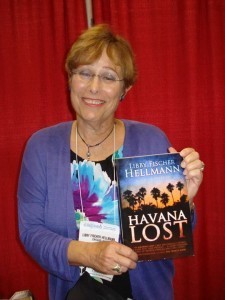
BookReporter.com Reviews Havana Lost
 What a thrill to get a review from BookReporter.com for Havana Lost! I’ve condensed it below, but you can click
 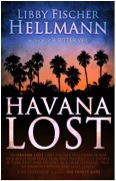 here for the full review.
“(An) absorbing tale that will immerse readers in the culture and history of Cuba… As in… A BITTER VEIL, Libby crafts a well-researched story that brings 1958 and recent Cuba to vivid life. Details from food to fashion to class culture are well woven. The love stories of Frankie and her son add emotional layers to the history and politics. The revolution storyline and generational span read like a Mario Puzo story, but a strong and war-battered female ends up running the family in this intriguing saga.” Reviewed by Amy Alessio
.


October 5, 2013
Strong Women Characters: Is “Likeable” Necessary?
 I guest post (okay, it might be a slight rant) about strong female protagonists and whether they have to be “likeable” over at Poe’s Deadly Daughters. Hope you’ll take a look.
.
October 4, 2013
The Cuba Files: Book publishing in Cuba
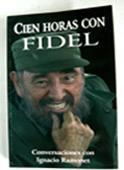
 Cuba’s book selling world is almost wholly state-controlled. And politics sells the best, no surprise when the government controls the books available. Take 100 Hours with Fidel, an incredibly lengthy interview with Fidel Castro. Or Che Guevara’s Bolivian diary, another big seller. If you live in Cuba and want to broaden your reading, you face significant challenges.
Despite a few signs of change, there are very few independent bookstores. Literature is curated and published by the government, which means it toes the political line. Exiled Cuban writers’ work isn’t available. And books by popular Latin American writers like Mario Vargas Llosa are more or less impossible to find. Why is the Cuban government so frightened of books? Because they might jeopardize the Revolution, a sure sign they are not confident in their ability to keep their people under control. But the US embargo doesn’t help either, hindering Cuban publishers’ ability to sell books abroad. So money, as well as politics, plays a part.
Cuba’s literary underground
 A few brave members of the country’s literary underground are creating private libraries. And the ebook revolution means it’s possible to share electronic copies of books—discreetly, of course. Some readers receive books from other parts of the world. And tourists bring them in, too.
However, if they’re considered “inappropriate,” (Either politically, socially or human rights-wise) the government still confiscates them. When they find them. Back in 2003 the Cuban government cracked down and jailed 75 of the most rebellious owners of private libraries and readers. But while the government still wants to prevent its people reading what it sees as seditious literature, foreigners keep bringing books in.
Contemporary writing survives against the odds
 Having said all that, Cuba does have some well-known contemporary writers. Take Leonardo Padura. He’s very popular. But until recently Havana’s state-run bookstores haven’t stocked his work, which was only available in tiny print runs anyway, produced by his Spanish publisher.
Luckily you can buy his books at the Havana International Book Fair. This year, the 1000 copies he brought along sold out in minutes. Which highlights the Cuban people’s appetite for great literature, whether or not it has a political or social message.
What’s available now, officially, for Cubans to read?
Once upon a time Cuba’s publishers turned out more than 50 million books a year. The good news, for those authors who were published, was that a copy of each author’s book was required to be bought and indexed at every library on the island, of which there are (or used to be) over 5,000. But now, like so many other industries in Cuba, production has plummeted. Cuba would like to publish more but, according to Cuba’s official Book Institute, they just don’t have the money.
While there are countless dry political books available, novels and poetry sell best. Sadly, last year, two thirds of the 25 million books published officially were textbooks. Contemporary foreign titles can be found but they’re rare because their publishers have to pay for the right to sell in Cuba, which is expensive. As a result a lot of Cubans would do almost anything to get hold of a really good read. That’s why the Havana book fair draws such enormous crowds, who love to browse and buy the few foreign novels allowed there. Books by exiled Cubans like Zoe Valdes are still banned. And even though Pedro Juan’s Dirty Havana Trilogy h as been published in 22 languages to great acclaim, Cuban editors are not allowed anywhere near it.
On the other hand, the poet Heberto Padilla’s work will soon be published in Cuba for the first time since he was thrown in prison in the ‘70s. Sadly he didn’t live to see it. It just goes to show that when you’re deprived of a freedom, its importance is thrown into high relief.
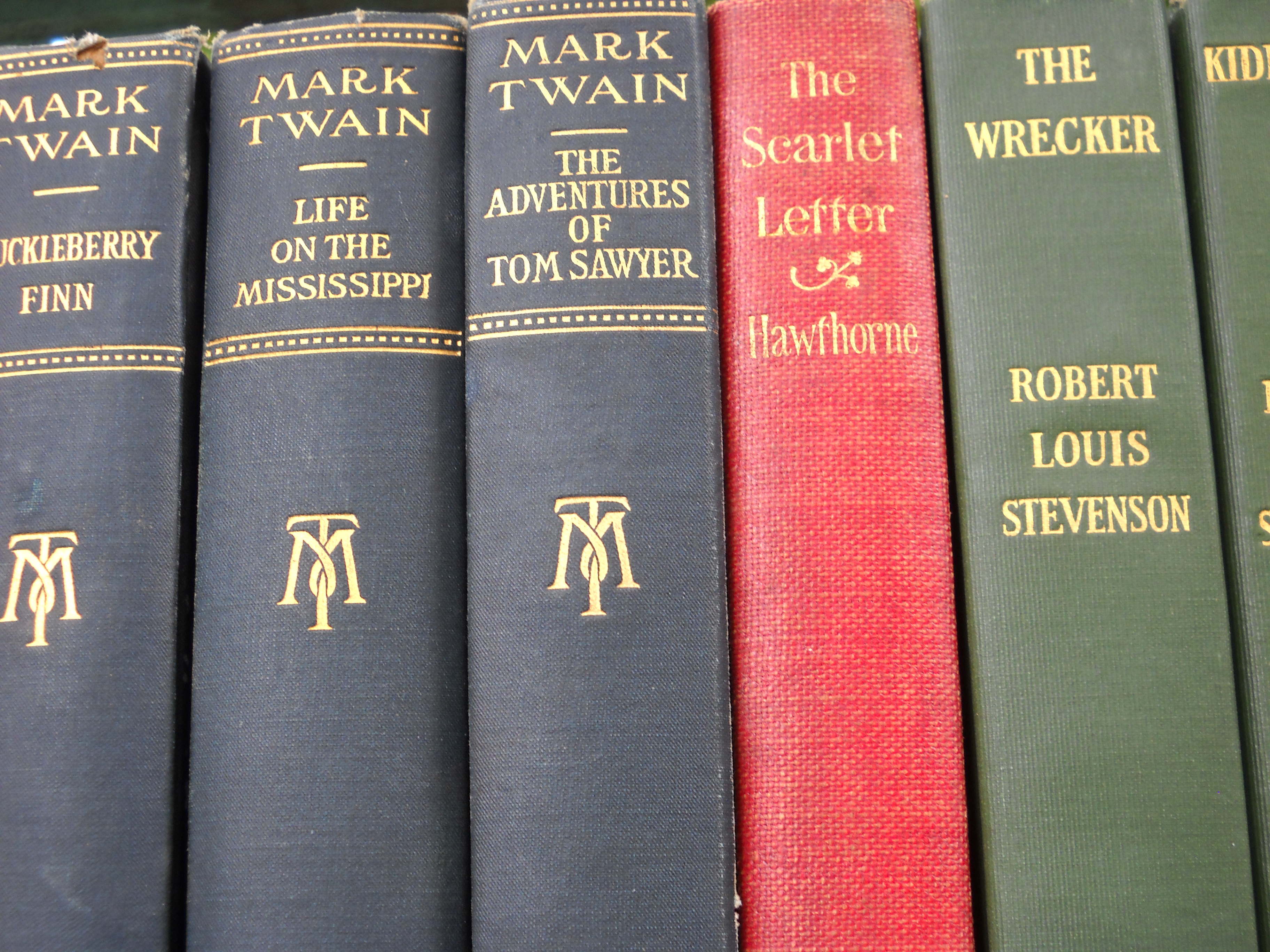 Which, of course, gives me the opportunity, once again, to encourage tourists to bring their gently used English language books on their next trip to Cuba. You can drop them off at Cuba Libro, the first English language bookshop in Havana to open since the revolution. PS I’ll be posting a list of titles they would especially appreciate in the next day or two.
.
October 1, 2013
The Cuba Files: Cuba’s Special Period
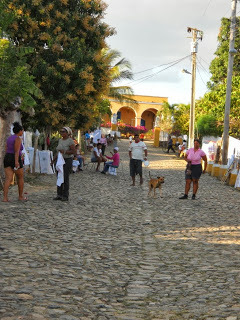 I call it the “Depression Nobody Knows About” — at least here in the U.S.
Cuba suffered a severe depression in the early Nineties that makes our “Great Recession” look like a walk in the park. Some say the Cuban economy still hasn’t recovered, and there is some truth to that. Today I talk about Cuba’s Special Period over at the wonderful blog, “Murder is Everywhere.”
.
September 26, 2013
Mystery Scene Reviews Havana Lost
Delighted to link to Mystery Scene Magazine’s Fall edition and their review of Havana Lost here.
An excerpt:
“A many layered adventure… smart writing done in accomplished style by an author who never talks down to her readers.”
.
September 25, 2013
“The Cuba Files: Che Guevara”
 As I’ve been out and about talking about Havana Lost, it’s struck me how little people really know about Cuba. As a result, I thought it might be a good idea to write a few blog posts about the island. I’m not an expert, but I have read a lot about Cuba’s history, culture, and I spent ten days there. If you haven’t read Havana Lost yet, perhaps these posts will give you some background that will make the book more enjoyable. So, welcome to “The Cuba Files.”
A short history of Che Guevara
For the first “Cuba File,” I’m taking a quick look at Ernesto Che Guevara, the man who personifies Cuba for many people, and a true legend, especially for the Radical Left during the late Sixties.
Curiously, Che is from Argentina, not Cuba, and he was educated and trained as a doctor. As a young medical student he traveled through South America, a journey which radicalized him as he experienced first-hand the region’s endemic poverty, hunger, and disease. This led him to eventually become a Marxist revolutionary, author, guerrilla leader, and military theorist.
He met Fidel and Raul Castro in Mexico City where, as Wikipedia says:
(He) joined their 26th of July Movement, and sailed to Cuba aboard the yacht, Granma , with the intention of overthrowing US-backed Cuban dictator Fulgencio Batista.[10] Guevara soon rose to prominence among the insurgents, was promoted to second-in-command, and played a pivotal role in the victorious two-year guerrilla campaign that deposed the Batista regime.
In fact, Che is essentially credited with winning the revolution. In Havana Lost, I talk about how he derailed a train that was filled with military troops and ammunition in the city of Santa Clara. Even though Che and his band of rebels were outnumbered, the army basically surrendered rather than fight. This prompted Batista’s flight out of Cuba on New Years Eve and allowed Fidel to ride victoriously into Havana a week later.
Today, sixty years later, Che is treated with the reverence of a patron saint. In a country where there’s very little commercialism, Che’s likeness is EVERYWHERE… on  buildings,
  billboards, postcards,
  walls, books. They even sell his signature beret on the streets.
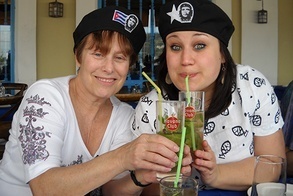
His image is almost more hallowed than Fidel, of whom you rarely see photos in Cuba, probably because Che is dead and Fidel isn’t… yet.
Che, post-revolution
After the Cuban Revolution, Che held key roles in the new government, which included signing death warrants (by firing squad) for “convicted” war criminals. He also drove agrarian land reform as Minister of Industries and took on roles as Cuba’s National Bank President and Instructional Director of the country’s armed forces. He married a Cuban, for the second time, and had four children. His daughter, btw, has since written a book on being the daughter of Che.
But Che’s fame had repercussions. He and Fidel, along with Camilo Cienfuegos, had been considered the “Three Musketeers” of the revolution, and they were soul mates. After the revolution, though, things changed. Cienfuegos died in a mysterious plane crash a few months later, and Che and Fidel grew apart. In fact, it’s said that Che became disillusioned with Fidel ad his brand of leadership, to the point of contemplating an insurrection.
That never happened, but Che grew increasingly restless. In 1967 Fidel decided to get him out of Cuba, and decided he should go on a mission to export Cuba-style revolution and Marxism to other countries. Che went to Bolivia, where— gee, wouldn’t you know it—he was caught and executed in the jungle by CIA-assisted Bolivian forces. I wonder how they knew where he was. Did Fidel betray his best friend in order to consolidate his own power? Who knows? Maybe the conspiracy theorists have it right.
Or maybe not.
Che’s desire to overturn what he saw as the capitalist exploitation of Latin America by the US could have been his undoing. Which is when he, even more than Fidel, became an icon of the radical left in the US and beyond. I’ll never forget when I worked at an underground newspaper in Washington, D.C. The editorial staff always spoke his name with awe. And millions in Cuba still seem to do the same. Che pervades almost every area of Cuban life.
Your turn now. When you hear the words “Che Guevara,” what comes to mind?
.
“The Cuba Files– Che Guevara”
As I’ve been out and about talking about Havana Lost, it’s struck me how little people really know about Cuba. As a result, I thought it might be a good idea to write a few blog posts about the island. I’m not an expert, but I have read a lot about Cuba’s history, culture, and I spent ten days there. If you haven’t read Havana Lost yet, perhaps these posts will give you some background that will make the book more enjoyable. So, welcome to “The Cuba Files.”
A short history of Che Guevara
For the first “Cuba File,” I’m taking a quick look at Ernesto Che Guevara, the man who personifies Cuba for many people, and a true legend, especially for the Radical Left during the late Sixties.
Curiously, Che is from Argentina, not Cuba, and he was educated and trained as a doctor. As a young medical student he traveled through South America, a journey which radicalized him as he experienced first-hand the region’s endemic poverty, hunger, and disease. This led him to eventually become a Marxist revolutionary, author, guerrilla leader, and military theorist.
He met Fidel and Raul Castro in Mexico City where, as Wikipedia says:
(He) joined their 26th of July Movement, and sailed to Cuba aboard the yacht, Granma , with the intention of overthrowing US-backed Cuban dictator Fulgencio Batista.[10] Guevara soon rose to prominence among the insurgents, was promoted to second-in-command, and played a pivotal role in the victorious two-year guerrilla campaign that deposed the Batista regime.
In fact, Che is essentially credited with winning the revolution. In Havana Lost, I talk about how he derailed a train that was filled with military troops and ammunition in the city of Santa Clara. Even though Che and his band of rebels were outnumbered, the army basically surrendered rather than fight. This prompted Batista’s flight out of Cuba on New Years Eve and allowed Fidel to ride victoriously into Havana a week later.
Today, sixty years later, Che is treated with the reverence of a patron saint. In a country where there’s very little commercialism, Che’s likeness is EVERYWHERE… on buildings, billboards, postcards, walls, books. They even sell his signature beret on the streets.
His image is almost more hallowed than Fidel, of whom you rarely see photos in Cuba, probably because Che is dead and Fidel isn’t… yet.
Che, post-revolution
After the Cuban Revolution, Guevara held key roles in the new government, which included signing death warrants (by firing squad) for “convicted” war criminals. He also drove agrarian land reform as Minister of Industries and took on roles as Cuba’s National Bank President and Instructional Director of the country’s armed forces. Eventually he travelled the world as a diplomat and representative of Cuba’s unique brand of socialism.
But Che’s fame had repercussions. He and Fidel, along with Camilo Cienfuegos, had been considered the “Three Musketeers” of the revolution, and they were soul mates. After the revolution, though, things changed. Cienfuegos died in a mysterious plane crash a few months later, and Che and Fidel grew apart. In fact, it’s said that Che became disillusioned with Fidel ad his brand of leadership, to the point of contemplating an insurrection.
That never happened, but Che grew increasingly restless. In 1967 Fidel decided to get him out of Cuba, and decided he should go on a mission to export Cuba-style revolution and Marxism to other countries. Che went to Bolivia, where— gee, wouldn’t you know it—he was caught and executed in the jungle by CIA-assisted Bolivian forces. I wonder how they knew where he was. Did Fidel betray his best friend in order to consolidate his own power? Who knows? Maybe the conspiracy theorists have it right.
Or maybe not.
Che’s desire to overturn what he saw as the capitalist exploitation of Latin America by the US could have been his undoing. Which is when he, even more than Fidel, became an icon of the radical left in the US and beyond. I’ll never forget when I worked at an underground newspaper in Washington, D.C. The editorial staff always spoke his name with awe. And millions in Cuba still seem to do the same. Che pervades almost every area of Cuban life.
Your turn now. When you hear the words “Che Guevara,” what comes to mind?
.
September 23, 2013
Booklist Reviews Havana Lost
 Booklist has reviewed HAVANA LOST, and it’s a great review! (Be still my heart). Thank you, thank you…
The Cuban Revolution is the rich backdrop for this riveting historical thriller. In the days just prior to the revolution, life in Cuba is difficult. Spies are everywhere. Poverty and hunger are rampant. But for American Francesca Pacelli, life is easy. Her Mafia-boss father owns a luxury hotel and casino in Havana, where they live. When Francesca meets Luis Perez, a rebel fighter, she falls in love fast and runs away with him. Her father tracks her down and sends her back to the States, where the brokenhearted and pregnant Francesca is pushed into an arranged marriage. All their lives are changed by these events, and the story follows these characters from 1950s Cuba to present-day Chicago, where Francesca is now head of the family and is as ruthless as she needs to be. Meanwhile, Luis ends up in South Africa, where he stumbles upon a crew mining coltan, a rare mineral necessary in the production of computers, and finds himself in serious danger: blood diamonds aren’t the only export causing brutal violence in South Africa. This multigenerational page-turner is packed with intrigue and shocking plot twists.
— Stacy Alesi
.
September 22, 2013
Digital Book Today Reposts “English language bookstore in Havana”
 Just a note to let you know that Digital Book Today has reposted my news about the English language bookstore opening in Havana.
Which gives me another opportunity to urge any and everyone who might be going to Cuba in the next few months to take an extra bag with gently used or new books and drop them off at the store.
Btw, I misspelled Conner’s name in the first post. Sorry.
.
September 18, 2013
Want to read the best crime fiction? First, choose your type…
If you thought crime fiction was just Agatha Christie and Hercule Poirot, it’s time to think again. The crime fiction genre splits into a variety of overlapping sub-genres, each different and each appealing to different kinds of readers. Which are you?
Cozies – The softer end of mysteries
You love a good plot. But you don’t enjoy buckets of blood, gore, and violence They might make you sick, or you might prefer to fill in the gaps with your own imagination. Whatever your reason for steering clear of the red stuff, the mystery seduces you more than the action.
Cozy crime novel victims are shot, stabbed, or poisoned. But all of the rough stuff happens “off the page,” and the detective or her friend discovers the body afterwards. The detectives themselves are usually amateur sleuths and tend to have “quirky” professions. Cozies are often set in small towns and villages. In fact, the term “cozy” comes from the cover that is put over a teapot to keep it warm. Agatha Christie’s work is a good example of a cozy mystery. She is more about clever detection and intricate plots, less about the nightmarish realities of murder. So is Miss Marple. You get the picture.
Traditional Mysteries
Traditional mysteries follow the classical conventions of a mystery: commission of the crime, finding a leading suspect, complications (the suspect himself is killed), climax, and denouement. Much, but not all of the violence, is also “off the page,” but the detective, whether amateur or professional, can slide into danger anyway. Misdirection and complicated plots are common. Btw, traditional mysteries can be quite suspenseful. Nancy Pickard and Margaret Maron come to mind.
Hard boiled thrillers
Hardboiled thrillers are tense, tough and cynical, written from a place where good and evil are not always clear cut. In some novels of this sub-genre the legal system is as corrupt as the criminal activity it is supposed to be fighting. The heroes tend to be anti-heroes, made that way by constant exposure to the cycle of endless violence in which they operate. The heyday of hard-boiled crime novels featured private detectives from the 1930s to 1950s, courtesy of writers Dashiell Hammett and Raymond Chandler, but plenty of novelists today, including Sara Paretsky and Sue Grafton, keep the tradition alive.
Police procedurals
Police procedurals attempt to show the inner workings of police forces as they investigate crimes. Sometimes readers know the perpetrator from the start, and the story is the search to prove his or her guilt, but often the police detective, and thus the reader, doesn’t know who committed the crime. While police procedure varies from state to state and country to country, certain conventions are universal, and novelists who write this subgenre must know the forensics and procedures of the setting they’re writing about. They also need a fairly sophisticated knowledge of the court system. It’s said that many police officers read police procedurals, and they know in a heartbeat which authors know their stuff vs. those who don’t. The best police procedurals focus on forensics, describe autopsies, and look at the detail of how evidence is gathered. Michael Connelly, Ian Rankin, Peter Robinson, Louise Penny and some of the Scandinavian authors fit neatly into this sub-genre.
Noir fiction
Noir fiction, also called roman noir, sails close to hardboiled thrillers but the main protagonist can also be the victim.  Chicago’s Gillian Flynn is a great example, with her anti-heroes and heroines the stars of the show and the police playing less of a part, if any. The protagonist can be self-destructive or dysfunctional, and the system is usually just as dysfunctional and corrupt. If you love a lose-lose ending, this particularly dark sub-genre is for you.
Thrillers
Whether it’s legal, medical, political, espionage or crime, thrillers are hot on shocks, thrills, excitement, tension, anxiety, surprise and terrifying unexpected developments. Thrillers can be spy novels, psychological thrillers, crime thrillers, historical (like Havana Lost), erotic, or mystery thrillers. They can tell tales of terrorism, corruption and conspiracy. In a thriller, the plot always includes plenty of suspense designed to trigger an adrenaline-pounding rush as you watch the hero or heroine overcome nasty obstacles and threatening situations. Think The Bourne Identity, anything by Dan Brown, Tess Gerritsen, Gillian Flynn again, and Stieg Larsson.
Historical crime
If you love mysteries by Lindsey Davis, Rhys Bowen, or Tasha Alexander, you are likely to be a historical crime fan. And if your favorite novel is set in ancient Rome, during World War Two (which is its own sub-sub-genre), or anywhere else in the past, like The CWA Ellis Peters Historical Dagger 2012 Winner Aly Monroe’s world war two crime book Icelight, you love historical thrillers. There’s less technology, more legwork and brainwork behind solving crimes in the past, and they have a special appeal because of all the meticulous research required.
Why does it even matter?
So what is the point of listing all these sub-genres? It’s because they all come with a fundamental benefit, a serious reason for reading crime fiction. No matter what the sub-genre, I believe crime novels are an excellent vehicle to explore issues without beating a reader over the head. Most of the really good writers I know start with a social, political, or economic issue they want to explain or explore. Add a fascinating story, people it with complex characters, weave it subtly around the issue, and the reader is in for a treat. And they learn something too. What a concept.
What’s your favorite crime fiction sub-genre… … and why? Feel free to leave a comment.
.