Libby Fischer Hellmann's Blog, page 41
March 6, 2014
Who Says Corporations Don’t Listen?
One of the best things to come along in a long time is the result of a corporation taking stock of a situation and making things better. At least for us bloggers.
I wager one of the things you’ve done at least once is use a photo for which you really didn’t have the rights. I have. Sure, I’ve searched the “Commons” on Flickr, but sometimes they just don’t have the image I need.
But stock photo companies often do. And one of the largest, Getty, has just made over 35 million of their photos free. Really. All you have to do is use their embed code and you can legally and ethically use an image!! With all the proper attribution. Who knew?
Need an image of Lake Michigan in winter?
How about an audiobook?
Cate Blanchett at the Oscars?
It’s free… it’s legal… and I think it’s way cool. Thanks, Getty. Click here to find out more about how it works.
OK… some of you cynics out there can probably tell me what the catch is. But as long as I can find images for my posts, I’m apt to keep doing it.
The post Who Says Corporations Don’t Listen? appeared first on .


February 26, 2014
Movies or books – Which wins?
[image error]The Oscars are coming. (Here are the nominees and some trailers).
When I was a little girl, watching the Oscars was a special event. It was about the only time I was allowed to stay up late to see who won. After years of watching, the spectacle had its effect. You may not know this, but I started my career with a Master of Fine Arts in film production from NYU. I had no plans to be a writer. Not even a Plan B. I was going to be a “film-maker,” the Lina Wertmuller of the United States, actually. After writing and directing a host of acclaimed, well-reviewed, profitable films, I would dance into the sunset with Ingmar Bergman.
Unfortunately, life had other plans. I had to decide early on whether I wanted to starve in a garret writing screenplays until I was discovered or wait tables for a living. I didn’t want to do either. So goodbye feature films. Hello, TV News. Which, after eight years, led to public relations. Which then led to spokesperson training.
But I digress.
One thing never changed. I have always loved going to the movies. I still do. There’s something magical when the house lights dim, the curtains open, and I hear the click of the projector (or at least I used to). I know from that moment onwards, for the next two hours, I will be transported to another place and another time. I will enter someone else’s world with such intensity that it feels like I’m there in real life, experiencing the story at a visceral, emotional level.
Even though I love reading almost as much as watching films, it’s not the same. Film provides a gut-wrenching immediacy. It’s all show, in your face, sometimes shocking. Reading is a different experience. So which is better?
Reading versus Films
With reading comes exposition. You get backstory. But most of the fine detail in settings, appearances, and expression is left to the reader’s imagination. Some authors make it a dramatic experience, and I’m often moved to tears or laugh out loud while reading. But film demands that kind of response. When it’s done well, the film-goer has no choice but to dive in. And unlike reading, where a distraction now and then might be welcome, any distraction in a film is grounds for murder.
Books allow for a more subtle interpretation of moods, values, and events. In film it’s all laid out in front of you. In that sense a book can show and tell. But a movie just shows. And because the point of view in a film is usually the camera rather than a character’s head, it can be a challenge to portray a subtle character on film. In a book, we have inner monologue to help define a person. In film, not so much. It’s down to the actor to define the character clearly. Which is more difficult.
Film from a writer’s perspective
However, one thing that doesn’t change for me, regardless of the medium, is my approach. Because I learned it in film school, I approach each scene or chapter in my books as if I’m writing a screenplay. I need to see it like a movie, complete with pans, establishing shots, edited close-ups, and dolly shots. If I can’t see it, I can’t write it, and I often find myself re-jiggering a scene until I can actually see it.
The other thing that film has taught me is pacing. After many years I have a film maker’s innate sense of when to cut in and out of a scene, and how to vary the action with contemplation, dialogue, or exposition.
As a film goer, however, it’s not a good thing if I become conscious of the process the first time I’m watching a film. If I start noticing the camera angles, the editing, or even the acting, it means the story telling hasn’t captured me and I am not having the visceral experience I crave.
Which brings us back to the Oscars. Which films will win this time around? Hopefully, they’ll be the films that grab you from the first frame, make you forget you’re watching a screen, and don’t spit you out until you emerge, blinking and dragging yourself back to reality. In fact, I think the longer you keep that strange sense of post-movie unreality, the better the film.
So… Which is your favorite?
Are you a dedicated film fan, do you prefer reading… or does any medium do it as long as the story’s worth telling?
The post Movies or books – Which wins? appeared first on .
February 21, 2014
Our First Google Hangout
So we did it — the Top Suspense Group (of which I’m a member) conducted our first Google Hangout On air last night. All in all, I think it went pretty well. We tried to focus on techniques of suspense (imagine that), although we got side-tracked a lot. But it was fun. I hope you agree. And I finally figured out how to use the Q&A app, so next time we’ll be even more polished. (cough, cough).
Here you go… enjoy!
The post Our First Google Hangout appeared first on .
February 18, 2014
What Is Suspense?
Here’s a transcription of the first video in my Writing Lite series. In anticipation of the Top Suspense Group’s Hangout this Thursday, 20th February 2014, I think it’s timely. We’d love to have you join the hangout, btw, and you can do it by clicking here or on the link below.


Secrets to Writing Top Suspense
Thu, February 20, 7:00 PM (central)
Take one neighbor, tie their hands, get your gun…
Imagine this. You invite your neighbor round for coffee. You don’t like them much, they’re kind of irritating, not really your type. But you start up a friendly conversation anyway. Nothing particularly revolutionary, elaborate or interesting. Just a pleasant, enjoyable chat.
So far, so dull.
While you’re chatting, you casually get a roll of duct tape out of the kitchen drawer. You know, the one you keep for fixing stuff around the house? You come back and tie your neighbor’s hands and feet against the chair. Then I want you to take out your .38 revolver from your closet, release the cylinder, put one bullet in the gun. Just ONE. Then close it up.
Now I want you to put the gun against your neighbor’s head. Nothing has changed. You are still making pleasant, inconsequential conversation. Except once a minute, every minute, you pull the trigger.
I guarantee you that conversation will be the most riveting, suspenseful conversation you and your neighbor will ever have. Because suspense isn’t so much what is happening, but what might happen. It’s a situation in which the outcome is in doubt. You’re asking questions not immediately answered. Posing posing a threat that isn’t being immediately resolved. Raising concerns that are not addressed. The longer you stretch those questions, the longer you delay, the longer you parcel out information without providing answers, the more suspense you generate. Bear that in mind for every sentence you write and you will be able to put suspense at the heart of your work.
Next time I’ll transcribe the second video in my series of twelve videos, which explores how to craft that all important first line.
Your Turn
So what do you think? How important is suspense in your writing?
Click here if you want to watch the video instead.
The post What Is Suspense? appeared first on .
February 16, 2014
I Moved To Chicago For The Weather
About six months ago, the Mystery Readers Journal edited by Janet Rudolph (Btw, if you don’t get these quarterly magazines, you should) released a “Chicago Mysteries” edition. An essay I wrote—well, actually it’s a love letter—was included. I’m reprinting it here, so you understand my love affair with this city. I’m also including the video trailer for the Chicago Blues Anthology. Ben LeRoy and I shot, produced, and edited the trailer waaay back in 2007. Again, if you haven’t read the stories in the anthology, you should. They rock.
I moved to Chicago for the weather.
Um… actually, that’s a lie.
The truth is I moved to Chicago for a job. However, the weather is never far from Chicagoans’ minds. In a word, it’s frightful, especially from November through March, when the sun rarely shines and snow piles up higher than parked cars (or used to before climate change). It’s also pretty lousy in July when summer punishes the prairie with hot, arid days and nights. Nelson Algren said it best:
“Chicago is an October sort of city even in spring.”
Chicago: City on the Make
It’s an apt metaphor. Chicago is an inherent paradox: all bluster, business, even bombast on the surface; underneath, though, it’s a place where darkness creeps in around the edges. June may be busting out all over Chicago during the day, but you don’t want to be in the wrong place on a cool June night. Even during Chicago’s fleeting midsummer, there’s an uneasy recognition that as the days get shorter and the nights blacker, the dark can swallow you whole.
I’m not sure I understood the depths of that darkness when I moved here thirty-five years ago. At the time I thought Chicago was the best-kept secret in the country: a city with a stunning lakefront nestled in the shadows of skyscrapers… a terrain so flat you could ride a bike for miles… a place where the Blues poured out of bars as freely as the beer. I loved the city’s beauty, its bluntness, its energy, even its hokey parochialism, seen on TV news via Bill Kurtis’s raised eyebrow, Fahey Flynn’s equanimity, or Walter Jacobsen’s perpetual fury. The city boasted two baseball teams, a decent football team, and Michael Jordan. Second City began here. Work was king, and people got up early. They stood in line, and when you went into Marshall Field’s, someone actually asked, “May I help you?”
It’s one of the only big cities through which it’s easy to drive, and the view of the skyline driving into town from the north or south is still magnificent. For me Chicago was a place of possibilities. Despite the Old Boy’s network, I had the sense that if someone had a good idea and was willing to work for it, they could make it here. And on clear, crisp days with the city spread out before me, it seemed like a sure bet.
It wasn’t until I ventured out of my geographical comfort zone that I began to hear and see the stories Chicagoans don’t like to talk about: the despair and isolation in Uptown where diversity may be king, but most of the people are paupers… the ruthless segregation on the South Side that breaks Chicago into two separate cities… the homeless curling up in cardboard boxes on Lower Wacker Drive… the never-ending cycle of graft and political corruption that, while it has put four governors in jail, still underlies everything that gets done or doesn’t get done in Chicago.
I have felt that hopelessness first-hand, tutoring eight and nine year olds, all the while knowing that a year or two hence, the girls will be selling their bodies and the boys their souls to the gangs. Chicago can break your heart that way. People who arrive here optimistic and eager never get the break they need. Others come seeking refuge but find only terror. People with good intentions see those intentions thwarted and manipulated.
Crime-fighters are supposed to protect the vulnerable, but there’s a thin line between law enforcers and law breakers. Everyone knows someone who can fix a ticket. And most know someone who’s connected. People understand that you can indict a ham sandwich in Chicago if necessary. Everything is political, even the pizza.
Is it unique to Chicago, this struggle between the light and the dark? Of course not. Most urban areas face the same issues. But Chicago is bigger and louder and more brazen than other cities, so its struggle seems more intense, more consequential.
In fact, the noir soul—or should I say soulessness—of Chicago has settled in my soul, and I feel compelled to peel back its layers like the onion for which the city was originally named. Why? Because the struggles that define Chicago make for extraordinary conflict. And conflict is the essential ingredient of good fiction.
So my Muses lurk below the surface in the back alleys, blue-collar haunts, and dive bars of Chicago. I gravitate toward settings and time periods where dreams fail, lovers cheat, and money is short. I am drawn to the fear, the despair, the shards and detritus of those who tried and failed, and those who never had a chance. And when I hear about the heartbreak and desolation, or, occasionally, the dazzling redemption, I try to work them into my writing.
Since 2002 I have published ten novels and at least a dozen short stories that are set in Chicago. My first four crime novels, the Ellie Foreman series, are set on the affluent North Shore of Chicago, where darkness hides underneath the soccer fields and manicured lawns. But each of Ellie’s stories also takes place in a Chicago neighborhood you don’t want to end up in after dark. My subsequent three thrillers, featuring PI Georgia Davis, begin in Chicago but one ends up in Wisconsin and Arizona. My three stand-alone thrillers are largely set in Iran and Cuba, as well as Chicago in 1968, but even the foreign-set novels use Chicago as a “home base.”
It’s strange. I moved here from Washington, DC where I worked in broadcast news. Over the years I would meet transplants from Chicago who invariably told me how much I’d love it here. That I was the kind of person who would appreciate and thrive in the city. At the time I thought they were just full of hometown braggadocio, and I didn’t take them seriously. But it turned out they were right. I know without a doubt that had I not moved here, I would never have become a writer. Chicago has sucked me into its maw. It’s my kind of noir.
The post I Moved To Chicago For The Weather appeared first on .
February 11, 2014
Espionage Movie Classics (IMHO)
Since the cold weather will be with us for a while longer, I’m planning to re-watch some of my favorite spy thriller films. I’d even call them “classics.” But which ones? Excluding James Bond films, here are a few of my all-time favorites, mostly because of their excellent use of suspense techniques. In fact, if you want to know more about suspense in general, be sure to tune into the Top Suspense webcast, Thursday, Feb. 20 where authors Lee Goldberg, Joel Goldman, Paul Levine, and I will be talking about just that. In the meantime, take a look at these, especially the trailers. Who’s got the popcorn?
The Hunt for Red October – Tom Clancy
As many of you know, The Hunt for Red October was Tom Clancy’s 1984 debut novel. The story follows the intertwined adventures of Soviet submarine captain Marko Aleksandrovich Ramius and Jack Ryan, former Marine turned CIA analyst. The film came out in 1990 starring Sean Connery as Captain Marko Ramius and Alec Baldwin as Jack Ryan. The story, set during the Cold War, involves a rogue Russian naval captain who wants to defect to the United States, and an American CIA operative who suspects that’s the case, unlike his superiors who think the sub is poised to attack. Ryan has to prove his theory to the U.S. Navy in order to avoid a violent confrontation between the two nations.
This is one of Sean Connery’s best performances, and the suspense, more psychological than most thrillers, is exquisite. Great supporting cast, too, including James Earl Jones, Scott Glenn, and Sam Neill.
Marathon Man – William Goldman
Marathon Man is a 1976 thriller directed by John Schlesinger. It was adapted by William Goldman from his novel of the same name and stars Dustin Hoffman, Laurence Olivier, Roy Scheider, William Devane and Marthe Keller. Goldman was paid a reported $500,000 for the film rights to his novel and to do a screenplay. Goldman says John Schlesinger only agreed to do the film because he had just finished The Day of the Locust and was “terrified he was dead in Hollywood”. Olivier was cast early on. However he had health issues and at one stage it was uncertain whether he would be able to do the film. Richard Widmark auditioned for the part, but Olivier eventually recovered and was able to make it. Good thing too, because the scenes between Olivier and Hoffman in the dentist chair are unforgettable.
Three Days of the Condor – James Grady
Three Days of the Condor is a 1975 American political thriller film directed by Sydney Pollack and starring Robert Redford, Faye Dunaway, Cliff Robertson, and Max von Sydow. And who doesn’t like a Robert Redford film? The screenplay was adapted from the 1974 novel Six Days of the Condor by James Grady. Set mainly in New York and Washington, D.C., the film is about a bookish CIA researcher who comes back from lunch and discovers his co-workers are all dead. So he goes underground until he can figure out who he can trust.
The film (which came out right after Nixon resigned) unsurprisingly explores the moral ambiguity of the government during the early 1970’s. Faye Dunaway plays a vulnerable photographer who ends up helping the Redford character. I still remember her “November” photographs. Great film in which the suspense builds to an explosive climax.
The Odessa File – Frederick Forsyth
The Odessa File, by Frederick Forsyth, was first published in 1972, about the adventures of a young German reporter trying to discover the location of a former SS concentration-camp commander. The name ODESSA is an acronym for the German phrase “Organisation der Ehemaligen SS-Angehörigen”, which translates as “Organization of Former Members of the SS”. The novel alleges that ODESSA is an international Nazi organization established before the defeat of Nazi Germany for the purpose of protecting former members of the SS after the war. The film came out in 1974 film adaptation starring Jon Voight and Maxmillian Schell was pretty faithful to the book.
The Bourne Identity – Robert Ludlum
The Bourne Identity is a 2002 film adaptation of Robert Ludlum’s novel of the same name. It stars Matt Damon as Jason Bourne, suffering from extreme memory loss, who attempts to discover his true identity amidst a clandestine conspiracy within the Central Intelligence Agency (CIA). The first in what is turning out to be a series, it was followed by The Bourne Supremacy (2004), The Bourne Ultimatum (2007), and The Bourne Legacy (2012). But I like the first Bourne film the best, mostly because Ludlum shows Bourne becoming increasingly isolated from the people he used to trust, and relying on his wits rather than brute force to figure out his way forward. Both are staples of suspense, and they work beautifully in this film. My only quibble is the ending where he walks off into the sunset with his girlfriend. Ho-hum. In this day and age, can’t we do better than that?
The Day of the Jackal - Frederick Forsyth
Probably my all-time favorite thriller is The Day of The Jackal, the 1971 novel by Frederick Forsyth, which was made into a film originally in 1973 with Edward Fox. It was reprised not too long ago with Denzel Washington, but I never saw that version. However, I can tell you the original film was the only film I’ve ever seen where you know the ending before you ever walk into the theater, and yet you’re on the edge of your seat the entire time. It’s probably one of the most suspenseful films I’ve ever seen. In fact, I use it as an example in my own suspense workshops. The intercutting between the detective and the assassin is superb, and the tension just keeps building until the very final scene. A wonderful book, an even more wonderul film… NOT to be missed.
All the Others
I know I’ve left out a lot of thriller films, like Le Carre’s The Spy Who Came In From the Cold, and The Little Drummer Girl, which I wanted to like because a woman took center stage, but it fell flat. There are many more, like The Ipcress File, Black Sunday, and the film adaptation of Restless by William Boyd which is one of my all time favorite espionage novels, because the main characters are women. In fact, I just discovered Restless is on Netflix! Guess what I’ll be doing tonight?
Your turn now. What are your favorite spy novel movies?
The post Espionage Movie Classics (IMHO) appeared first on .
February 10, 2014
BookBuzzr Facebook Guide is Really Good!
 Hi, all. I was given an Advanced Readers Copy of Book Buzzr’s upcoming How-to-Use-Facebook effectively, and I have to say it’s one of the BEST “how-to’s” I’ve ever read. The 2014 Facebook Marketing Guide for Authors is up to date, easy to understand, and it has a comprehensive section on Facebook ads and how to use them properly.
If you only have time for one book to read this season (and who has time for more?), this is the one to read. The best part? It will be updated regularly on BookBuzzr’s FB fan page and blog.
So a big

to Bookbuzzr! Not sure when it’s coming out, but I’m sure you can find out from BookBuzzr.
The post BookBuzzr Facebook Guide is Really Good! appeared first on .
February 5, 2014
Twisted Love (and Crime) – Valentine Reading for Cynics
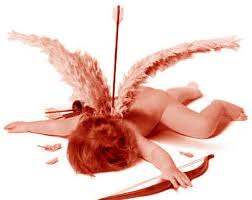 Confession: I am a Valentines Day cynic. Not for me the cards, roses, candy, and romantic dinners. In fact, for me Valentine’s Day is a Hallmark holiday that breaks up winter. It’s also a merchandising opportunity for florists, candy stores, restaurants, and jewelers.
I mean, really, why do we only express our love on February 14th? As decent human beings we’re supposed to do the love, support, and devotion bit every day, not just once a year. And who invented Valentine’s Day anyway? What’s so bad about being loved-up on the third of May, or the fourteenth of June? No doubt someone has the answer.
But that’s not the point of this post. If you’re a fellow cynic, this one’s for you. Call it a twisted Valentine’s Day gift if you like: a list of novels that combine love and crime. None of them are typical love stories, and there’s no mushy stuff. These are books with twisted or tainted love at their heart. So if you’re looking for a HEA (Happily Ever After), it’s time to leave the room…
You’re still here. So let’s go. Btw, this is just a small sample. I’ll need you to fill in what I’ve missed.
Troubled Daughters, Twisted Wives edited by Sarah Weinman
I love this collection of short stories by female suspense writers who were once prominent but have fallen out of fashion in the past fifty years. All mini-masterpieces in ‘domestic suspense’, they weave stories of murder and betrayal centering around crimes committed in ordinary homes by ordinary people. No gangsters, criminals, spooks or spies, just a look at the dreadful deeds normal folk carry out when their safety, peace of mind, home or family, or clean kitchen is threatened.
Double Indemnity – James Cain
Double Indemnity, written in 1943, is by the journalist-turned-novelist James M. Cain. That was REALLY twisted, so I am giving a tip of the hat to noir with him. As you may already know, insurance agent Walter Huff falls truly, madly and deeply in love with Phyllis Nirdlinger, a married woman who comes to him to buy accident insurance for her husband. He’s basically a decent man. But his passion leads to his seduction, and he ultimately helps Phyllis her kill her husband for his insurance money. Tainted love at its best.
There Once Lived a Girl Who Seduced Her Sister’s Husband, and He Hanged Himself – Love Stories by Ludmilla Petrushevskaya
Described as “sly and sweet, burlesque and heartbreaking” Petrushevskaya’s twisted love stories have been compared with the work of Chekhov, Tolstoy, Angela Carter and Stephen King. Expect one-night stands, awkward couplings, office romances, crushes, elopements, courtships, and infidelity, all luridly violent and about as dark as it gets. She has also written also another anthology, There Once Lived a Woman Who Tried to Kill Her Neighbor’s Baby: Scary Fairy Tales. Nasty… but in a good way.
A Temporary Matter by Jhumpa Lahiri
“A Temporary Matter” is a short story that was originally published in The New Yorker but then folded into Lahiri’s anthology, Interpreter of Maladies.
The story is about Shoba and Shukumar’s spiral into darkness as they confess parts of themselves to each other during a recurring power black-out. They begin with rather superficial admissions, but as the black-out continues, their confessions turn much darker. The story has been billed as one of the most “quietly disturbing” modern love stories ever. The anthology as a whole won a Pulitzer Prize for Fiction and a Hemingway Foundation/PEN Award in 200. Since then it has sold a remarkable 15 million copies, was chosen by the New Yorker as Best Debut of the Year, and featured in Oprah’s Top Ten Book List.
Killing Me Softly by Nikki French
Here’s part of what Publishers Weekly said about this tale of sexual obsession by the best-selling UK husband and wife team.
Alice Loudon has a wonderful boyfriend; a nice apartment in London; good friends; and a satisfying job… On her way to work one morning, she locks eyes with a handsome man dressed in black, and cannot get him out of her mind. Later that day, she finds him waiting for her and she plunges into an affair of such intensity that she leaves Jake, neglects her friends and her health and even puts herself in great danger. However, after she meets… women from Adam’s past, she pieces together his secrets, and sees his overwhelming love for her in a more sinister light…Every decade or so a psychological thriller appears that graphically recounts an intelligent woman’s willing sexual subjugation; this gripping novel joins that group.
What about your favorite anti-romance?
I’d love to know which twisted love and crime stories get your juices flowing, and why. Feel free to comment – let’s get a discussion going.
The post Twisted Love (and Crime) – Valentine Reading for Cynics appeared first on .
January 29, 2014
Espionage Thrillers and Women
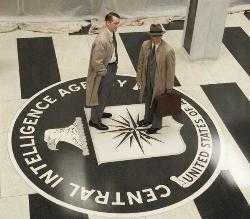 I started reading spy thrillers around the time of Watergate (Hmm… think there’s a connection?). The first two I read were The Wind Chill Factor by Thomas Gifford and The Eye of the Needle by Ken Follett, and I was blown away by them both.
The Wind Chill Factor – Thomas Gifford
I love this political thriller with a difference, centered around a group of Nazi survivors who viewed their WW2 defeat as a temporary setback rather than the end. They have plans. They have people waiting to spring into action in powerful corporations and capital cities across the world. And the world will soon be theirs… unless someone can stop them. Enter John Cooper, who holds a secret too explosive to be kept as he races against time to redress the balance of good against evil. Classic political suspense from an excellent storyteller.
Eye of the Needle – Ken Follett
Eye of the Needle is a spy thriller without equal. It’s set during WW2 again, this time the story of an enemy spy who knows about the Allies’ greatest secret, a ruthless aristocratic assassin called The Needle, who holds the key to Nazi success. One Englishwoman stands in his way, and she’s in danger of falling for the killer who has entered her life. Suspense, intrigue, love and danger… what else could a nice girl who does noir girl want?
All the L’s
Inspired by these two novels, I worked my way through most of the good old household name standards like John Le Carre, Robert Ludlum and Len Deighton… whom I call the “L’s”. Unsurprisingly, all the authors I read were men except for the marvelous Helen MacInnes (who is definitely not an “L”).
After a steady diet of these authors, though, they all started to sound the same: the world was about to blow up, the hero saved the world from blowing up, then he walked into the sunset with his girlfriend. Looking back now, after publishing ten books of my own, the writing—except for Le Carre—wasn’t especially gripping, either.
So I stopped reading them, and broadened my reading to include mysteries.
But that was then.
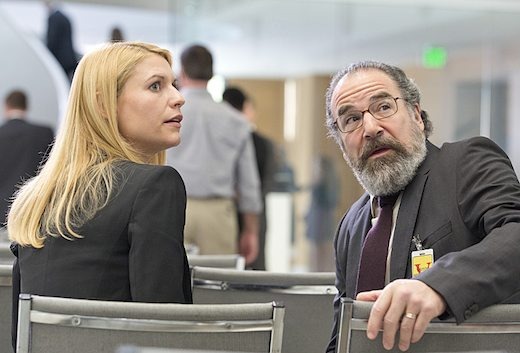 Things have changed. Like the TV show “Homeland,” thriller authors have learned to appeal to women in their stories. It’s about time—we make up 80% of the reading market. As a result, the espionage authors I enjoy most today feature strong women as protagonists and/or major characters. These protagonists do everything (and more) that men do, and there is often a complicated romantic thread that makes the stories even more compelling. Here are just a few of the authors I’m loving now.
Daniel Silva
I’ve mentioned him before, but Daniel Silva is so good it’s worth repeating. If you’ve read all his excellent Gabriel Allon books, we’re on the same page. But have you checked out his earlier novels featuring Michael Osbourne and his lawyer wife Elizabeth? They’re a bit wordier, but still excellent stories. And since the introduction of Chiarra and Dina, his women characters play more prominent roles. Frankly, he still has a way to go on that score. But his plots are grounded in reality, his prose is elegant and easy, and Gabriel Allon is a hero we can admire. His novels tend to come out in July (can you tell I’m ready now?). Here’s a link to Silva’s books on Amazon.
Christopher Reich
Christopher Reich is new to me, but he’s a seriously good New York Times best-selling writer who creates top notch stories. I’ve only read two of his so far, The Prince of Risk and Rules of Betrayal—yes, I know I read out of order—so I’m excited to dive into the rest. His pacing is excellent, his prose as well, and I enjoy the twists and switchbacks in his plotting. Most of all, though, I am fascinated by his female characters. His “Rules” series is practically a role-reversal, as you can see in Amazon’s synopsis of Rules of Deception:
“Doctor Jonathan Ransom thought he knew everything about his wife Emma until she was killed in a tragic skiing accident in the Swiss Alps. They had been married for eight years, eight blissful years in which they had travelled the world together. But the day after her death a mysterious letter addressed to her arrives at their hotel. When he opens it, his beliefs begin to unravel — fast. .
In the envelope is a railway baggage check to a suitcase that reveals an Emma far removed from the down-to-earth nurse who has been his constant and loyal companion all those years. In it he discovers the clues to a double life. Was she having an affair? When is your wife not your wife? And when she is not your wife, who is she?
In The Prince of Risk, his latest novel, a female FBI agent takes center stage. Talk about difficult to put down! Here’s a link to Christopher Reich books on Amazon.
Jason Matthews
Jason Matthews wrote the superb novel Red Sparrow, his first so far, and it has just been nominated for an Edgar. Like Reich, Matthews gives us both a male and female protagonist who, of course, become lovers. But just to throw in a major obstacle, the man is a CIA agent, but the woman is a Russian spy, who may or may not be a double agent by the end of the story. Can you say “suspense?”
Here’s what Goodreads says about it:
The two young intelligence officers, trained in their respective spy schools, collide in a charged atmosphere of tradecraft, deception, and inevitably, a forbidden spiral of carnal attraction that threatens their careers and the security of America’s valuable mole in Moscow. Seeking revenge against her soulless masters, Dominika begins a fatal double life, recruited by the CIA to ferret out a high-level traitor in Washington; hunt down a Russian illegal buried deep in the U.S. military and, against all odds, to return to Moscow as the new-generation penetration of Putin’s intelligence service.”
But where are the female thriller writers?
Even though women are featured more prominently, there’s still a problem. As you have undoubtedly noticed, all the authors I’ve mentioned are male. So where are the female thriller writers? And are they writing strong female characters?
There’s Gale Lynds, who fell cracked the genre’s mostly-male bias when the female president of a New York publishing house agreed to buy her debut spy thriller, Masquerade, then changed her mind because “No woman could have written this novel”. This was despite the fact that Lynds used to work at a Government think-tank and had Top Secret security clearance. She eventually found another publisher for Masquerade, which became an instant bestseller. Here’s a list of her books:
The Book of Spies (2010)
The Last Spymaster (2006)
The Coil (2004)
Mesmerized (2001)
Mosaic (1998)
Masquerade (1996)
There’s Stella Rimington, the first ever Director General of MI5 who worked there between 1992 and ’96 and based her books on her experiences. And how about Leslie Silbert, a Harvard graduate whose debut novel The Intelligencer connects Christopher Marlowe’s 1500s spying with an international conspiracy set today? She works as a private investigator in New York, guided by a former CIA officer mentor. Like Lynds, she walks the walk as well as talking the talk.
Sure, there are female thriller authors like Jamie Freveletti, Zoe Sharp, and yours truly, but it says something that I’m having trouble finding female authors who write spy novels. And it’s even more interesting that the three women I did mention have all worked in the field, living the life before writing about it.
Your turn
What about your favorite espionage or spy novels? Especially those who feature women in key roles? I know I’ve missed some.
The post Espionage Thrillers and Women appeared first on .
January 26, 2014
Two Special Valentine’s Day Events

OK… here’s the thing. I am not a Valentine’s Day person. Never have been. Think it’s a Hallmark holiday designed to fleece—er—line the pockets of florists, candy companies and jewelers. (Thanks to artist Dan Cooney and author Noel Hynd for use of the image)
But Valentine’s Day Specials focused on books? Well that’s a different kettle of fish, Ollie. Happily, I’m a part of two exciting events, both of which are offering some pretty cool things when you sign up.
The Valentine’s Date Giveaway

Interested a $250 or $150 prepaid MasterCard plus a Kindle Paperwhite? If so, sign up for this event. It’s sponsored by the Kindle Book Review and Digital Book Today, two of my favorite websites. All you have to do is click here and follow the directions, which ask you to follow certain authors, sign up for their newsletters, and check out their books. As one of those authors , my request is that you sign up for my newsletter. When you do, you’ll also get a free copy of “Your Sweet Man,” which is probably my favorite short story. So, money… Paperwhite… new books and stories … That’s my kind of Valentine’s Day! Again, click here to enter.
Be My Valentine Event

If you’re an audiophile, here’s an opportunity to win free audiobooks. It’s a Facebook event , created by the incredibly talented Uvi Poznansky, that you need to “join” in order to win. Just click here… that’s all there is to it. Winners will be announced (and emailed) Sunday, February 9th, at 8:00pm PST. Btw, excerpts of all the eligible audiobooks will be played during that weekend. I’m giving away audios of A Shot to Die For and Havana Lost. Who said you can’t mix love and romance with crime?
Hmm… I guess it is possible to mix love and crime. Hope you’ll take advantage of these events. And have a (bah, humbug) sweet Valentine’s Day.
The post Two Special Valentine’s Day Events appeared first on .