Libby Fischer Hellmann's Blog, page 46
September 13, 2013
Book GiveAway for HAVANA LOST
Goodreads Book Giveaway

Havana Lost
by Libby Fischer Hellmann
Giveaway ends October 10, 2013.
See the giveaway details
at Goodreads.
Check it out… and enjoy!
.


September 11, 2013
Five Rules for a Successful Writers’ Group
 I’ve been in a writing group for 16 years. I joined way before I was published, and they deserve most of the credit for the fact that I did get published. It was in my group that I learned most of the craft of writing crime fiction as well as what works and what doesn’t. And while there are certainly times I haven’t brought my best thinking to the group, it has become a good way for me to ‘give’ back to other members in the group.
Why? You see, most of the members in our group have had exceptional success. After being with us for several years, over 75% have inked publishing deals on their own. Of course, some leave the group after they publish their first book, but others stick around for decades. I can say this: If you stick with us, you probably will get published.
Still, a writing group isn’t for everyone. How do you decide whether or not to join an existing writing group or even form your own? The most important question to ask yourself honestly is whether you can take constructive criticism.
If you have a chip on your shoulder, or you think your prose is perfect, don’t join a group. It won’t go well. The following is a true story. When I first joined the group, It became quickly evident how little I really knew about the craft of fiction writing.
Our group works like this: everyone brings 8-10 double spaced pages, usually sequential, and we read them to the rest of the group. Everyone takes turns reading, and while one writer is reading, the rest of us take notes.
I’ll explain later why we read out loud. Anyway, after I finished reading my pages, the group started in on me. EVERYONE had something critical to say, and usually two or three different somethings. When they were finally finished and I’d finished furiously noting down everything they said, I thumbed through my pages and said, “I don’t think you guys missed a single line.”
Sensitive types might find that daunting or upsetting. Others might find criticism makes them angry. But I loved it. How often do you get a personalized service like that? The group members took the time and effort to listen and comment in fine detail. Weeks of the same process eventually helped make me a much better writer. I learned point of view, why to delete adverbs, the way to transition between chapters, the basics of police procedure, and much, much more.
[image error]On the other hand, when, two years later, after three unpublished novels, I finally discovered Ellie Foreman and brought in the first chapter of what would become AN EYE FOR MURDER, there was absolute silence after I finished reading. I was sure I’d done something wrong. This was it, I was thinking. They’re going to kick me out. Instead, as I looked around, the woman who’d been hardest on me, said, “That was amazing. You found your voice.” Her comment is still the most flattering thing anyone has ever said to me about my writing.
So, in the spirit of all of us becoming better writers, here’s what our group does, and why. As long as you can take the rough with the smooth, I think these guidelines will provide the foundation for a long-lived strong writing group.
1. Create a good mix of writers but in the same genre
A mix of men, women, different ages and occupations works best. But, and this is important, all the writers in a group should be in the same or similar genre.
Why? First, a mix of different types of people means you will get a variety of opinions, which is more useful than one-dimensional criticism from a bunch of people who all think the same way. We have a criminal defense lawyer in our group who lets us know when we get court procedure wrong. We also have a former priest, a police officer, an environmental lawyer, and a former bus driver.
Second, while I continue to think crime fiction is one of the most flexible, and interesting genres around, there are conventions in a mystery or a thriller that are unique to the genre. Mixing science fiction and horror in would muddy the waters a bit— their conventions are slightly different. And romance? Well, that would change the dynamics even more. So I recommend you stick to the mystery, crime, and thriller genres for your group.
2. Read aloud
Reading aloud brings a story dramatically to life. It helps you spot areas that don’t flow as well as others, and it helps identify inconsistencies—there’s no place to hide. Plus, there should be a built-in rhythm that surfaces when you read aloud that you might miss if you’re reading on the page. If it’s not there, you need to tend to your prose. For example, run-on sentences are clearly “outted” when you read aloud. If you can’t finish a sentence in one breath, it’s too long.
Finally, reading from fresh material means the listener experiences them for the first time, and can react honestly without any preconceptions. In other words, you benefit from people’s gut feelings.
3. The basis of critiquing should be “What Stopped Me…”
Often when you start out in a group, you know something someone reads is wrong, but you don’t know why. That’s okay. Usually someone in the group will know why, but if no one does, who cares? We just know that it stopped the reader. And that is an excellent starting point. Any time a reader is taken out of the story, whether it’s due to purple prose, point of view mistakes, or run on sentences, the writer needs to know that. If not, the writer may lose the reader permanently.
So we tell our members, just say “A and B stopped me.” If you know why, great. If not, it’s still a valuable tool.
Btw, if more than one member of the group calls attention to the same thing by saying “I have that too” or “that was what I was going to say”, it’s a pretty good indication the writer SHOULD revise that passage.
4. The person being critiqued should NOT defend themselves
You’re not in a group to defend your writing. You’re in the group to improve it. So becoming defensive or trying to convince other members why the passage was there or why it should remain isn’t going to help your writing. It’s only going to produce tension and stress. As the person being critiqued, you are totally free NOT to take other members’ advice. It’s your book. But listen to what they are telling you. They’re not trying to sabotage you. They’re trying to nurture you. They may not express themselves as nicely as we might want, but arguing just isn’t productive. Sometimes the writer will say “Thanks. I’ll take it under advisement.” That usually means they don’t want to change the passage. OK. As we say, it’s your book.
5. Park your prejudices at the door
You need an open mind. You might not like female detectives, hate too much violence and gore or dislike it when people write in the first person. You might love legal thrillers or hate serial killers. But you are not there to express your personal prejudices, you’re there to help other writers become the best they can. In fact, if your writing group is working as it should, everyone will feel safe to put forward their ideas and opinions without being shot down, or shooting the author down in flames.
Do you belong to a writing group?
Are you in a writing group? If so, what is your most important tip for success? And how do you find the experience?
.
September 5, 2013
Mini Book Tour – Michigan and Kerrytown
 By the time you read this I’ll be on my way to Michigan for a mini-book tour with two other authors. Which seems quite counter-intuitive these days, since so many readers buy electronic versions of my books. As the ebook revolution continues, you’ve undoubtedly heard others bemoan (or cheer, depending on your perspective) the disappearance of the book tour, and I was right there, too. Yet here I am out on the road again. So, what’s the deal? Are book tours a thing of the past? My answer: yes and no.
Book tours – is the writing on the wall?
Once ebooks started to explode, I honestly thought the writing was on the wall for book tours. I didn’t think I’d tour again. After all, ebooks are convenient, lower priced than print books, easily available from anywhere with the tap of a finger. Why should anyone take an hour or more out of their busy schedules to come see an author, buy the book, and have it signed?
And what’s so special about a signed book anyway? I’ll tell you the truth here: I didn’t know signed books were more valuable than unsigned when I started writing. So having a signed book was never a priority for me, and probably to others, as well. Add to that the fact that it’s hard to get people to come to a signing these days, unless the author is a superstar. And when people do come, it’s rare to sell more than a handful of books.
Combine that with the ensuing chaos in the industry, in which bookstores disappeared, Borders went away, and Barnes and Noble is teetering, and the result is that publishers subsidize fewer and fewer tours, preferring to throw money at their best-selling stars rather than mid-list authors.
For all those reasons, it seemed like book tours were a dying breed. So I hung up my spurs and figured my days of touring were over.
Except they weren’t.
Printed books are still king
In July 2013 the latest Rasmussen research was released. It’s easy to get caught up in the whole e-publishing phenomenon, but, in fact, most people still prefer print books.
The poll showed an impressive 75% of American adults would rather read a printed book than an ebook. Just 15% claimed to prefer ebooks, and 10% couldn’t decide. The previous year, in 2011, 23% of readers said they preferred the ebook format. Which hints that readers’ initial love affair with ebooks might be on the wane. Even more revealing, this year’s results showed more people buying books from a brick and mortar store (35%) than online (27%). Which I find astonishing, because I keep hearing that 50% buy their books, print and ebook online now. Indeed Amazon is said to sell 25% of ALL print books in the market. I guess it’s a case of dueling statistics.
However, if Rasmussen is accurate, and they probably are in their overall stats, paper books still make up the large majority of book purchases. And while signings in bookstores may be on the way out, book Festivals and Fairs aren’t. In fact, they are hugely popular.
The book fair scene is alive and kicking
Almost every state in the US has a book fair. So do cities. And most places still have libraries where you have what I call ‘qualified’ customers. Unlike Borders or B&N where, when you’re signing, someone asks you where the bathroom is or if you could order a book for them, library lovers tend to be obsessive readers. They want to read more. And they love meeting the people who write the books they enjoy. That’s why I made sure Havana Lost is available in print as well as ebook and audio.
It seems to be paying off because I’m going to be touring a lot more than I expected. But there’s a slight but significant difference. Now I base my tours around book festivals. This weekend is Ann Arbor’s Kerrytown Festival, in its eleventh year and still going strong, a popular free event that attracts thousands of readers.
Along the way I will be stopping at two bookstores and a library. I will be traveling with probably my two closest friends in the business, Cara Black and Kent Krueger. Together we three slightly dishevelled Musketeers will be heading to Ann Arbor, Michigan, to flog our new books. And it doesn’t stop there. November is the Miami Book Festival, and March is the Tucson Festival of Books.
So are book tours really dead?
Maybe bookstore tours are. But the thriving Book Fair scene might well preserve author tours for a while, maybe even a long while. It will be interesting to see what happens.
In the meantime, if you’re in Ann Arbor this Sunday, I’ll see you at Kerrytown.
Image Credit: David Sanders/Arizona Daily Star
.
Mini Book Tour – Michigan
By the time you read this I’ll be on my way to Michigan for a mini-book tour with two other authors. Which seems quite counter-intuitive these days, since so many readers buy electronic versions of my books. As the ebook revolution continues, you’ve undoubtedly heard others bemoan (or cheer, depending on your perspective) the disappearance of the book tour, and I was right there, too. Yet here I am out on the road again. So, what’s the deal? Are book tours a thing of the past? My answer: yes and no.
Book tours – is the writing on the wall?
Once ebooks started to explode, I honestly thought the writing was on the wall for book tours. I didn’t think I’d tour again. After all, ebooks are convenient, lower priced than print books, easily available from anywhere with the tap of a finger. Why should anyone take an hour or more out of their busy schedules to come see an author, buy the book, and have it signed?
And what’s so special about a signed book anyway? I’ll tell you the truth here: I didn’t know signed books were more valuable than unsigned when I started writing. So having a signed book was never a priority for me, and probably to others, as well. Add to that the fact that it’s hard to get people to come to a signing these days, unless the author is a superstar. And when people do come, it’s rare to sell more than a handful of books.
Combine that with the ensuing chaos in the industry, in which bookstores disappeared, Borders went away, and Barnes and Noble is teetering, and the result is that publishers subsidize fewer and fewer tours, preferring to throw money at their best-selling stars rather than mid-list authors.
For all those reasons, it seemed like book tours were a dying breed. So I hung up my spurs and figured my days of touring were over.
Except they weren’t.
Printed books are still king
In July 2013 the latest Rasmussen research was released. It’s easy to get caught up in the whole e-publishing phenomenon, but, in fact, most people still prefer print books.
The poll showed an impressive 75% of American adults would rather read a printed book than an ebook. Just 15% claimed to prefer ebooks, and 10% couldn’t decide. The previous year, in 2011, 23% of readers said they preferred the ebook format. Which hints that readers’ initial love affair with ebooks might be on the wane. Even more revealing, this year’s results showed more people buying books from a brick and mortar store (35%) than online (27%). Which I find astonishing, because I keep hearing that 50% buy their books, print and ebook online now. Indeed Amazon is said to sell 25% of ALL print books in the market. I guess it’s a case of dueling statistics.
However, if Rasmussen is accurate, and they probably are in their overall stats, paper books still make up the large majority of book purchases. And while signings in bookstores may be on the way out, book Festivals and Fairs aren’t. In fact, they are hugely popular.
The book fair scene is alive and kicking
Almost every state in the US has a book fair. So do cities. And most places still have libraries where you have what I call ‘qualified’ customers. Unlike Borders or B&N where, when you’re signing, someone asks you where the bathroom is or if you could order a book for them, library lovers tend to be obsessive readers. They want to read more. And they love meeting the people who write the books they enjoy. That’s why I made sure Havana Lost is available in print as well as ebook and audio.
It seems to be paying off because I’m going to be touring a lot more than I expected. But there’s a slight but significant difference. Now I base my tours around book festivals. This weekend is Ann Arbor’s Kerrytown Festival, in its eleventh year and still going strong, a popular free event that attracts thousands of readers.
Along the way I will be stopping at two bookstores and a library. I will be traveling with probably my two closest friends in the business, Cara Black and Kent Krueger. Together we three slightly dishevelled Musketeers will be heading to Ann Arbor, Michigan, to flog our new books. And it doesn’t stop there. November is the Miami Book Festival, and March is the Tucson Festival of Books.
So are book tours really dead?
Maybe bookstore tours are. But the thriving Book Fair scene might well preserve author tours for a while, maybe even a long while. It will be interesting to see what happens.
In the meantime, if you’re in Ann Arbor this Sunday, I’ll see you at Kerrytown.
Image Credit: David Sanders/Arizona Daily Star
.
September 2, 2013
Writing Lite #11 — The Rhythm of Language by Libby Hellmann
Hi, all. I managed to squeeze in another Writing Lite over the weekend. In this segment, I wrap up my discussion of language with one of my favorite passages from Raymond Chandler. Enjoy!
.
September 1, 2013
Chicago Tribune Reviews Havana Lost
I was thrilled to get this review of Havana Lost in today’s Chicago Tribune… in Rick Kogan’s Literary Saloon. Btw, the photo was taken at 90 Miles, Chicago’s best Cuban restaurant, in front a a mural depicting the restaurant owners in Havana Vieja. If they could go back.

Libby Fischer Hellmann, author of the new novel “Havana Lost” at 90 Miles Cuban Cafe, 2540 W. Armitage Ave., Thursday, Aug. 8, 2013. (Michael Tercha, Chicago Tribune)
Libby Fischer Hellmann paints vivid portrait of a long-lost Cuba
August 30, 2013
An intriguing note came tucked into the copy of Libby Fischer Hellmann’s latest novel, “Havana Lost.” The note explained, tersely, that this is Hellmann’s first fully self-published book. This is a bold step for Hellmann, the author of 10 previous successful novels. But such is the rapidly changing nature of the publishing business.
“Frankly, with the exception of the production of ‘Havana Lost,’ which I delegated out to a great cover artist, and an interior book designer as well, there has not been any difference in the way I’ve approached publication,” Hellmann says, expanding on her note. “It’s been the same amount of pre-marketing, distribution of advance copies, ads and promotion. But the difference is that I’m in charge.
“And you know what? I like it. I’ve always been a Type A personality anyway, and I’ve always been interested in the business of books, so this was a natural evolution. Plus, I’ve been amazed (and flattered) at the acceptance so far. Fingers crossed it continues. It’s been quite a ride. The most fun I’ve had in ages.”
And so, here it is. “Havana Lost,” surely Hellmann’s most ambitious book, a sprawling novel that spans more than six decades and a number of countries and comes peppered with passions, love affairs, kidnappings, conspiracies, CIA and Outfit thugs, and, naturally, a pile of dead bodies.
It begins in 1958 in Havana, the country on the brink of revolution and Francesca “Frankie” Pacelli on the brink of womanhood. Her mobster father runs La Perla, a casino resort that “dripped luxury.” She is engaged to a decent college kid until (in the first of the love/lust-at-first-sight encounters punctuating the book) she falls for a young revolutionary named Luis, flees from her parents, becomes pregnant and hides out in the hinterlands. But before the child arrives, she gets whisked back to the U.S. (Chicago, specifically) by her father’s goons. Luis is lost to her forever.
Then, in a flash we are in Angola in 1989, Luis is a general in Castro’s army and is part of his foolish attempt at international diplomacy. He is “a bit stooped, flecks of gray were threaded through his hair, and he needed glasses to read” but capable of drawing a map to a place of untold riches deep in the jungle; a map that will propel the book’s final sections.
Hellmann keeps a relatively complicated plot moving swiftly, even finding time to comment, or have her characters comment on, geopolitical matters.
The third and final chunk of the novel takes place in contemporary Chicago, where Frankie has long been the first female head of a major crime family, the Godmother, if you will. Her daughter-in-law is a doctor here, and her granddaughter a spirited, socially conscious grad student.
Hellmann, a Chicagoan for more than three decades, is on very solid footing here, but her sections on Cuba are surprisingly and satisfyingly vivid.
“Yes, I did go to Cuba, for 10 days, and I’m glad I did,” she says. “I loved being there. It was almost Proustian. I felt at home as soon as I deplaned. I’m not sure why, but possibly because I saw glimmers of the past in Cuba that weren’t so different than life in the U.S.: tangles of electrical wires, abandoned plants and factories. She traveled there with her daughter and says, “I would love to go back. I felt as if I belonged.”
She certainly belongs in the top ranks of Chicago writers and has long been among the most giving. She is mentor to many and is now eager to share her experiences in self-publishing (see libbyhellmann.com/six-steps-of-self-p...).
She puts so much into “Havana Lost” that she deserves all the success she can get.
Rick Kogan is a Tribune senior writer and columnist.
“Havana Lost”
Libby Fischer Hellmann, The Red Herrings Press, 300 pages, $16.99
.
August 28, 2013
Havana Found – A new English language bookstore in Havana
I like that my latest release, Havana Lost, hit the shelves around the same time a little miracle happened. After decades without an English language bookstore, one has opened in Havana. It’s the first one since the revolution.
 Does the new store, aptly named Cuba Libro, mark the start of Cuba’s eventual re-entry into the English-speaking world? Or is it just a coincidence? Only time will tell. But I was floored and excited by the news.
A mini Cuba Libro revolution
The new bookstore, which incorporates a café and literary salon, is run an expat originally from New York, Connor Gorry, who is married to a Cuban and has lived there for years. She confirms that Cuba Libro does not offer counter-revolutionary literature, but points out that the books currently in the store do include views not usually expressed on the island, where almost all the media output is controlled by the government.
Controversial literature?
As well as back issues of the New Yorker and Rolling Stone magazine, the controversial ‘Dancing with Cuba’ by the Mexican journalist Alma Guillermoprieto is on the shelves, a warts and all memoir of her experiences as a ballet dancer in 1970s Cuba. Just one example of a book that, not so long ago, would probably have been considered too dangerous to be read.
Supported by a used book sales license
Cuba Libro operates on a special used book sales license and runs as a kind of co-operative, selling donated books, and because of laws both in the US and Cuba, it is owned by Cubans, not Ms. Gorry.
 Cuba has a 100% literacy rate, and literally millions of Cubans flock to the annual Havana Book Festival each February to buy Spanish-language books. (I was there in 2012 with my daughter). But English is becoming increasingly important for Cubans where it is essential for careers in computing, medicine and tourism.
English classes and library services
The new store plans to hold English classes, and people who cannot afford to buy books will be able to borrow them. And because it’s so difficult to import books into Cuba, Connor’s team are asking diplomats, tourists, and other foreigners in the country to help her build the store’s stock through donations, focusing on quality literature.
Dream on…
I have already exchanged emails with Connor, and have sent her a copy of Havana Lost – it seemed appropriate. But it takes forever for something to get to Cuba, and then there are the inspectors. The book might arrive safely, it might not. Either way, I’ve started to daydream about going back to the Havana Book Fair one day to sign copies of my book at her booth.
Good luck, Connor!
.
August 20, 2013
Revolution noir – The darker side of conflict
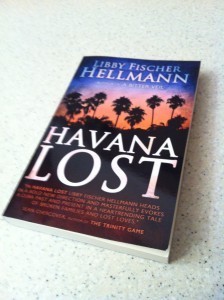 Havana Lost has launched at last. Feedback has started to roll in. And I’m fascinated by how many readers say they are ‘disturbed’ by Frankie Pacelli’s transformation from a young vulnerable likeable girl into—well (spoiler alert averted), what she ultimately became.
My response? She had to.
When you lose the things you love most, it turns your life into a completely different direction. It changes the way you feel about your world. One day the future looks clear and rosy, the next day all hell lets loose and your dreams are destroyed. Today you have a home, a family, a lover, support, freedom. Tomorrow it’s all gone. One minute you’re good. The next day your world falls apart and you’re on the road to something else.
The noir side of revolution
 In that sense Havana Lost is the noir version of A Bitter Veil. Everyone who reads Veil loves the fact that Anna is brave, courageous, clear-sighted, and tolerant. In other words, she is a heroine. Some of the other characters in the novel, characters whom you’d least expect, turn out to be heroic as well. In Havana Lost, however, it’s the opposite. People you might want to root for turn ugly. And misfortune claims some of the “good guys” who are or could be heroes.
The unpredictable effects of extreme conflict
That was no accident. The whole point of my so-called ‘Revolution Trilogy’ (Set the Night 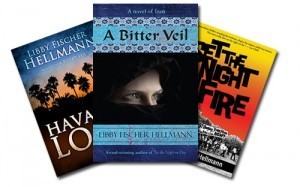 on Fire, A Bitter Veil, and Havana Lost) is that extreme conflict turns some people into heroes, others into cowards… even evil-doers. That’s what revolution does. It’s not a tidy package where the men (and women) in white hats overcome the black-hatted oppressors and everyone rides into a Technicolor sunset. However noble the cause, however positive the eventual outcome, the revolutionary process is messy, ugly, chaotic, brutal.
People aren’t clear cut either. Very few of us are wholly evil or wholly good. Most of us come in shades of gray: we respond well to some challenges, badly to others. We make good and bad judgment calls. We choose the wrong and right sides, love the wrong and right people, make mistakes, change our minds, change direction, fall by the wayside, commit random acts of cruelty, as well as bravery, honor and valor.
At the same time, some of us are more resilient than others. Some bend, others break. Most of us muddle along, doing our best to cope with a completely unpredictable future. And we never really know how we react to disaster until it strikes. Would you stay strong or go under? How much pain, danger and loss would it take to drive you to acts of which you’re not proud?
Are you ‘disturbed’?
Actually, I am pleased people are disturbed by Frankie’s evolution, and I’m glad readers are disturbed by the behavior of other characters in Havana Lost who don’t react as expected. I enjoy surprising readers, and they seem to enjoy being surprised. In my view that’s what thriller writing is all about. The unpredictable is more thrilling than the predictable.
If you want a predictable thriller whose characters behave consistently throughout the story arc, step away from the ‘buy’ button! But if you want to read a thriller whose characters are as flawed and human as you or I, you can pick up a copy of Havana Lost here and lose yourself in something subtler.
How would you react if you were Frankie?
Let’s do a straw poll. How do you think you would react in Frankie’s circumstances – would you change and if so, how?
.
August 15, 2013
Book launch nerves – Havana Lost finally hits the street
 My latest book, Havana Lost, goes live on Amazon this Friday. And I can’t help comparing what it used to be like launching a book with my traditional publishing head on to what it’s like releasing a self-published novel.
The traditional publishing book launch experience
As a traditionally published author, it’d go something like this: wait for PW (Publishers Weekly), Kirkus, Booklist, and Library Journal reviews to come in, which my publisher would forward on to me. If they remembered. Bite nails.
Hope that the publisher had paid for some coop advertising, which would give my book a front-of-the-store ‘real estate’ display, and that the book stores would stock the book attractively. Bite nails.
Put the finishing touches on the launch party plans. Bite nails. Finalize the book tour schedule. Bite nails more. Make sure my banners, book marks, and any other paraphernalia I’d paid for were ready. Send out postcards to everyone in the known and unknown universe about the book and my tour schedule. Bite nails.
The self-published book launch experience
Now, as a self-published author, I wait for Amazon, Goodreads, and bloggers’ reviews. Bite nails. Hope that a load of popular book websites will feature it. Bite nails. Put the finishing touches on the launch party and book the tour schedule (I didn’t plan on touring this time around but the bookstores said sure, come on up or down… so I am). Send emails to key people in the cities I’ll be visiting on tour. Bite nails more.
Make sure the websites I’m running paid promotions on have everything they need. Bite nails. Find lists of librarians and compose an email to them. And somehow strike a tone of quiet optimism amidst all the rampant feelings of panic.
Happy to be a Type A control freak!
They don’t sound so different, do they? Either way, my nails get bitten down to the quick days before the actual launch date. And a lot of the marketing and promotional activities are similar. But there is a fundamental difference – it’s all about control.
When I decided to self-publish HAVANA LOST I took full control of my books’ promotion. And the money I’ve invested is my own, not part of a traditional publishing deal. It’s my green, which I earned, and I need to make it work as hard as I can. This time, it’s personal.
OK, as an individual I don’t have the same personal marketing punch as a big name publisher. But on the positive side, I can do things my way. I don’t have to rely on a third party, who may or may not be up to speed on my work, or allows something crucial to slip through the cracks.
On balance, despite the less-than-attractive manicure, the peace of mind I get is priceless. Yes, I’m still panicked. My fingertips are still chewed ragged. I still can’t sleep nights during launch week. But at least I’m in control of my own sleepless, raggedy-nailed destiny.
What about you?
Do you like to hold onto full control or are you happy handing over your entire launch to a traditional publisher? Which do you prefer, and why?
PS The fine folks at The Word Nerds did a lovely interview with me about Havana Lost and more. You can find it here.
.
August 6, 2013
Why I Started Writing
One of the most common question writers are asked is, “what made you start writing crime fiction?” For years I always answered the same way: I can tell you how and when I started writing, but I wasn’t exactly sure why.
 I didn’t plan it. I was going to be a film-maker. I have an MFA in Film production from NYU and had visions of becoming the American Lina Wertmuller, riding into the sunset with Ingmar Bergman. Unfortunately, life had other plans.
A stint in broadcast journalism
I ended up working in broadcast journalism, mostly in Washington DC, but also in New York. Which was fine. I was raised in Washington, which, as I say in my bio, means when you’re sitting around the dinner table gossiping about the neighbors, you’re talking politics. And I had been a history major in undergraduate college, always aware that current events are history in the making.
The big move came when I was put on the overnight shift at NBC News in DC. I couldn’t handle it. I hated working on the wrong end of the clock, although, curiously, I think I’d love it now. So I ultimately left TV, moved to Chicago, and worked in PR for eight years producing industrial videos, films and audio-visual programs. I also trained executives for speeches, presentation, and media interviews. I got married, had kids, and eventually started my own business doing the same thing. Still, I had no plans to write.
Change in the wind
However, I had always been a voracious reader, reading everything I could get my hands on. Especially thrillers. My mother was – and still is – a dedicated mystery reader, and she hooked me on them, as well. Despite this, I still had no reason to write. Life carried on. Then, in February 1996, my father died.
We went to the funeral in Washington and when we got back, I went into the basement and started writing. Four months later I’d finished my first mystery. It was a police procedural about the murder of a female judge who was also president of her synagogue. Of course, I thought it was the best thing since sliced bread. The rest of the world didn’t agree. It was never published (and it didn’t deserve to be). But I persevered, and a few years later started publishing books I could be proud of.
Why I became a writer
Now for the why. At first I thought the catalyst might have been my father’s death, my way of dealing with it, working through the grief. But it really didn’t resonate. Then I decided I was writing because my father had been such a practical businessman that his death, in a strange way, way freed me to pursue activities that didn’t have a measurable goal, money or closure. Nice and neat. But that didn’t ring true either.
It was only about six or seven years ago, after I’d written six novels, that I finally got it. In fact, it was one of those smack-yourself-on-the-forehead, how-could-I-have-been-so-stupid moments. It was OJ Simpson.
The greatest show in town
Back in 1995 I was free-lancing, and I had a flexible schedule. So I was able to watch a lot of his murder trial. I remember being glued to the TV, and what I remember most was the theater: a hideous crime, a compelling story, eccentric characters, drama, conflict… in other words, everything you could want or need in a crime novel.
First there were the characters. Central Casting couldn’t have come up with a better collection: the earnest but scattered female prosecutor, the urbane, witty defense lawyer, the dullard judge who yielded control to everyone. The racist cop. There was even a California surfer dude, the requisite expert witnesses, and the avuncular king of defense lawyers.
[image error]Then there were the forensics. I knew nothing about police procedure, and less about forensics. DNA tests, blood spatter, the bloody glove, the footprints. I was fascinated by the way crimes could actually be investigated in a systematic way, with all sorts of (at the time) hi-tech gadgets. I was mesmerized by the concept, even though the prosecution botched the job. And when the defense suggested that some of the evidence had been mishandled – maybe even manipulated – it played to all of my latent conspiracy theories.
Finally, of course, there was the denouement in October 1995. How absolutely noir an ending! The victims are denied justice. The bad guy goes free. Chandler or Ross McDonald couldn’t have done it better.
Remember: OJ was acquitted in October, 1995. My Dad died February 1996. You connect the dots.
[image error]Curiously, it wasn’t until 2007, when O.J. was arrested in Vegas for trying to steal his own memorabilia, that the light bulb flashed. THAT’s why I’m writing crime fiction. Because he got away with it! The injustice, the unfairness of it all, had percolated up from my subconscious.
In a way, I’ve been hesitant to own up to this, because who wants to give the devil his due? At the same time, though, I have to admit that OJ changed my life.
.