Robyn Hugo McIntyre's Blog, page 5
May 31, 2015
The Barrel Murder by Michael Zarocostas – A Book Review
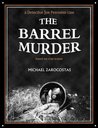 THE BARREL MURDER – a Detective Joe Petrosino case by Michael Zarocostas
My rating: 3 of 5 stars
This book involved a lot of research because it is based on real events and real New York City detectives at the turn of the century.
A swarthy man who could be Italian or Middle Eastern is found murdered, his body bent double and stuffed into a wooden barrel on a New York street. These are the days when the NYC police force is dominated by Irish immigrants and there is considerable and open prejudice in the ranks against Italians and Jews, among others. Detective Joe Petrosino has been lucky; he was smiled upon by Teddy Roosevelt, who appointed him the first Italian American detective in the Central Bureau. Teddy was intent on removing graft and stamping out Tammany Hall and Joe is an honest cop. But Teddy has moved on to Washington, and Joe Petrosino can see the Tammany ways are back. He and other cops who stood for Reform are on the outs. This is not a good time to be fighting with the Irish cops over the murder of an unknown man in a barrel. But Joe just can’t help himself. And from there, things can only get worse.
Was it a crime of passion by a mentally disturbed doctor or was it really a message from a gang of drug dealers and counterfeiters who moved over from Sicily? And are they working on their own or with others? And might those others be people Joe knows and works for? Adding to his problems are a couple of muckraking journalists and an uncertainty about whether his big Jewish partner, Inspector Max Schmittberger, is really reformed from taking graft.
Michael Zarocostas does a good job of telling the facts and giving the reader just enough flavor of the times to stay engaged without getting bogged down. He is also faithful to the thinking of the times in that he does not pull any punches when it comes to the kind of talk people in Joe’s position may have both heard and engaged in, including racial slurs that are made more shocking by the offhand way in which they are uttered. Zarocostas’s prose itself is a little on the terse side. The connections between sentences and paragraphs is not always a smooth one, which makes the read a little bumpy.
The book is sprinkled with pictures of many of the main participants as well as photos of newspaper articles printed about them and the case as it unfolded which add to the sense of witnessing the events.
The only true disappointment in this book lies in the ending. It’s obviously the first book in a series, but it should have been able to stand alone. By the last chapter, Schmittberger has taken a leave and Joe has promised to talk to his lady friend’s father about marriage. But these relationships are not addressed. Further, Joe’s decision to take a risky action related to his career is only asserted, not depicted. We don’t know whether it succeeded, partially succeeded, or failed. No doubt readers will discover the answer in the second book, but it would have been nice to have some things made a little clearer.
Tagged: book review, creative nonfiction, detective, History, Murder, mystery


May 27, 2015
Tapped Out?
 Image via Wikipedia Commons
I’ve been working on a short story. It’s supposed to be slightly horror – that is, it should unsettle the reader, though won’t likely scare anyone. A horrific thing happens and you can see the lead up to it, but because of the viewpoint, the reader never gets all the information and when the story concludes, they’re likely to have more questions than answers.
I’ve never written one like this before, and that was the point of it. I wanted to stretch myself, challenge myself as a writer, and so I came up with a few ideas that I thought might help me do that.
Problem is, I haven’t been working on it.
This may mean nothing – I haven’t been working on anything lately. I have a painting on my easel, just waiting for me to get back to it, a watercolour planned, a diorama kit of an abandoned gas station I’d like to get to, and some felt soft sculptures that need finishing. Instead, I’ve been thinking about other people’s writing, trying to make some room in my tiny cottage by going through three boxes of long unplayed LPs, gardening, and working on my family’s history.
This isn’t unusual for me. My creative output is always low because I’m easily distracted by all of the other things that interest me – volcanoes, history, political science, mind science, and everything I’ve never heard of before. Lately, I’ve had a near-obsession with Ancestry.com and working my way up and down the family tree in every direction. This is complicated by the fact that I’m also working on my late husband’s family tree at the same time.
But getting back to the story.
So distraction is part of the problem, but I try to at least write 200 words a day. Very little, considering I have done upwards of 3-4K a day, when I’m on writing fire. Which I’m not with my writing lately. In the olden days, and with most of the very short fiction I post here, the writing sort of took off and I was just along for the ride. Hasn’t been like that with my longer works – I struggle to feel my way through as though I’m blindfolded rather than the helter-skelter gallop I have been used to and got high off of.
That’s obviously another part of the problem.
Distraction I can – and have – dealt with. But it’s not a problem, when I’m fully invested in the work. Yep, there’s the real issue – I’m not fully invested in the work. And I don’t know why. Other stories I’ve told were just as complicated and I had no difficulty starting or continuing. If anything, I had difficulty turning off the flow at any point.
The only thing that comes to mind is that maybe I’m overthinking. Trying to infuse what I write with as much literary goodness as possible might have sucked all the fun out of the process and caused the tap to close. And while the desire to open the tap is there, the handle seems to have been mislaid.
How I can fix this, I’m not sure. But I know that, in the meantime, I have to work on finding the discipline I need to continue putting the words down, even if they’re only 200 at a time. If I let myself off the hook for one day, getting back to it the next day is harder and the temptation to skip another day is easier.
One day, I hope I can find the handle for that tap and see my words flowing freely again. Until then, I’ll have to savor each drop I get.
Tagged: faucet, flow, output, tap, Writing

April 22, 2015
The Rook – A Book Review

My rating: 4 of 5 stars
Imagine that you are a high-ranking member of a super-secret, quasi-governmental, paranormal agency in the UK with a long, long past. Now imagine that one of other top members is trying to kill you, but you have no idea who. Lastly, imagine that you’ve just come to your senses with bodies all about you and no memory of how you got there. Or who you are. The only help available to you are some letters your previous self wrote to you before her memories were destroyed and those, along with her meticulous preparation for this moment, are all that can keep you alive. Well, that and your ability to kill people with a touch. If you can get yourself to use it.
The Rook is the title of both the book and the main character. Myfanwy (to rhyme with Tiffany) Thomas is one of two Rooks in the secret organization she works for, called Chequy. The other one is a super-soldier called Gestalt who shares one mind between four bodies. She has lived most of her life among people like Gestalt, people who can spit bugs, make metal into different shapes by thinking about it, gorgeous vampires hatched from eggs and a boss who can walk through your dreams whenever she wants to.
Among these talented and often assertive paranormals, Myfanwy is a lesser-valued asset. Though she has a scary power, she’s reluctant to use it. Most things and people upset her and she prefers to work behind a desk, which is actually good for the organization, since Myfanwy is a super bureaucrat. And fortunately for her, both her ability with touch and her administrative acumen remain when all of her memories are destroyed. She will need them and more to discover her enemies and preserve Checquy. In the meantime, she will also have to cope with the usual business of migrating forests, psychic ducks, and learning to run a military operation while worrying about others noticing she isn’t the same old Myfanwy.
This is Daniel O’Malley’s debut novel and it’s a better than average start. He blends frightening ideas like people with heavily-modified innards with comedic elements like the psychic duck without hurting the pace or pushing you out of the story. This is likely because the narrative is conversational throughout, especially when reading the letters Myfanwy I writes to Myfanwy II. Through the narrative and letters, we get to know and like both Myfanwys. By the end of the book, I was really sorry that Myfanwy I couldn’t avoid her transmutation into Myfanwy II and developed a big appreciation for her talents as an organizer. Without them, Myfanwy II would never have made it.
There are mysteries within mysteries in The Rook, some of them connected to those inimical to Checquy and some just crazy things that have to be dealt with. The world in which they happen has a very real feel with history, grudges, silly traditions, and enemies. Though O’Malley has done some fantastic world-building here, Myfanwy’s story is ultimately about how others see us and how we see ourselves and what we might do if we had the chance to remake ourselves without the baggage of our memories.
All of the characters were well-drawn; enough so that I felt the loss when some of them didn’t survive. But there was never any confusion on who the story was about. There were also no dead-spots; everything included in the story was there for a reason, including those small breaks where something funny happened that pointed up just how absurd such a life could be even while it gave you a breather from the action.
If you like to lose yourself in a well thought-out world with layers of interesting things to think about in the plot and you like a touch of humor with your dark fantasy, then The Rook may be for you.
NOTE: There is a sequel Stiletto which has just been released, but The Rook pretty much stands alone.

February 27, 2015
Why We Grieve

Leonard Nimoy created many firsts on ST. The Vulcan Salute, Live Long and Prosper, Mind Melds, the nerve pinch. He ‘sneaked’ Jewish culture into mainstream television in what was already a groundbreaking series featuring the first competent black woman officer, the Prime Directive, and so much more.
Those who never watched it or weren’t old enough to see it when it was launched will never know the excitement ST engendered in we who were already fans of science fiction and how much of a game-changer it turned out to be for television and film in its 3 short seasons.
Star Trek, the original series, is kind of like the Beatles. If you weren’t there at the time, you won’t be able to comprehend the fuss. But if you were, you know all the reasons we grieve today.
Tagged: live long and prosper, nimoy, star trek

February 25, 2015
Crowdfunding – Begging or Investing?
After a few jobs as this and that, I finally found my niche as a technical writer of user manuals in the new field of computer software. It was a wild and wooly time and the stories I could tell… Not too long after starting this career, I was found to have a knack for copywriting as well as user manuals, so I found myself dividing my time between working with engineers and working with marketing. I also helped out designing materials for trade shows and working the shows themselves. So I was not only writing to serve the purpose of informing the customers about how to use what they had purchased, but also writing to invite them to invest in what we had to offer – to become a customer.
And this experience has shaped how I see crowdfunding for creative projects.
I moderate #LitChat on Writing Wednesdays on Twitter, and recently we talked about funding the writing life.
Most writers work full-time jobs. They have to because most of us have mortgages, kids, and an unfortunate desire to eat regular meals and having a job makes all of these easier. Some of us have retired (or been retired) and though our pensions aren’t lavish, they allow us the freedom to write without a lot of worry. Some of us (as I used to do) write nonfiction (articles, papers, marketing materials) as a regular job and fight against writing fatigue at the end of the day to get in a few hundred words on our fiction.
And some of us turn to crowdfunding.
A couple of the writers on the chat today surprised me by equating crowdfunding with begging and one stunned me by calling it degrading.
Begging, I tweeted, is saying please give me money. Crowdfunding is saying I have a great idea. Join in if you think it’s great, too.
There’s no begging going on in projects presented on sites like Kickstarter or Indiegogo, or the site I heard of just today, Pubslush. I’ve helped fund several creative projects on Kickstarter and Indiegogo, including a graphic novel, a film, and a web series. The same writer who called crowdfunding degrading also said that if “funding” was needed, it was not a job. In a sense that’s true. But you’re not asking people to support a job – you already have a job, finding funding for your project and then producing it. What you’re looking for in crowdfunding is investors – people who view your pitch and decide whether or not they like the idea enough to put money into it. It’s give and take on both sides, while begging is a one-way transaction: you give, I take.
When you give money to someone who’s begging, you give it in the hope they will use it wisely – for food, for shelter (please note that there are sites, like GoFundMe, for funneling cash to people with a problem, but those are different from crowdfunding a project). When people invest in a crowdfunded project, whether it’s a graphic novel or installing solar powered lights in homes without electricity, or a museum, the investor knows what they will get in return for their money. It’s a contract, even if the contract isn’t written out on paper. And, like every investor ever in the history of time, you put in your money with the hope the project will be successful. That’s it. Sometimes you win, sometimes you lose and your reasons for investing are your own.
With crowdfunding, the rewards are spelled out and generally not big – one of the products once it goes into production, your name in the credits, a tee-shirt. Of course, the bigger the investment, the bigger the reward, like being flown to Italy for the opening.
Two good things about crowdfunding: One is that you almost always get the reward you expect, whether the project does well over the long run or not, and you don’t have to be rich to invest. You find a project that interests you and you throw a little money at it, then you sit back and see how it does. And you do get regular updates on that.
Not begging. Definitely not begging. And nowhere near degrading.
Obviously, I’m very puzzled by the attitude that it might be. I don’t understand how anyone could possibly get that impression, unless they’ve never checked out a crowdfunding site. They’re not charities, although charities are not beggars, either. Every nonprofit I know goes to a lot of trouble to tell you how they use your donated monies.
Nope. I just don’t get it, and I think that writers with a great idea for a series or a graphic novel or screenplay or anything else creative who won’t consider crowdfunding are cheating themselves of an opportunity.
NOTE: I don’t like the term ‘begging,’ anyway. Individuals sometimes have problems they can’t solve by themselves and they ask for help from family, from their community, and it’s usually to help them get going again on their own. I’ve heard that some people can make a living from begging, but I’ve never met anyone who has.
Update: Crowdfunding is also a way to market your brand
Tagged: art, creative, crowdfunding, investment, Writing

February 18, 2015
Flesh Not Flesh

Flesh and Bones V2 by Jack Skarma on DeviantArt
She was raw meat. Her emotions covered her outside like defleshed skin, streaky fat showing through the abraded muscle. She was under no illusion that anyone else saw the ghastly, gory mess she had become, but certainly anyone with half an inner ear tuned would hear the constant jangle of her sorrows as they hit against her exposed nerves and pitted bones.
Tagged: bones, flesh, identity

February 5, 2015
Marketing Your Book – What’s in a Voice?

Yikes. I like to support other writers. Not out of tit for tat, but just because it makes me feel good. If I don’t think well of a book, I either don’t review it, or I am very specific about what I didn’t enjoy about it and I am always aware that taste is subjective.
These days, selling a book involves more than courting reviewers and doing book tours. With social media and self e-publishing, there are more voices than ever and short video is one way authors are promoting their works.
I got a video recommendation through my daily Medium feed. It was about an artist’s reinterpretation of a classic on military strategy. It was something I had read because when it came out – or maybe, when it was rediscovered – it made a big noise with all of the yuppie stockbrokers in their suspenders, who probably read it in between yelling over the phone and power lunches.
I’ll leave the obvious questions alone – why do an artistic reimagining of what is now a not-as-popular book at this stage, for example, and just go on to the video itself.
Yikes again.
The artist made a good point about applying these military strategies to life problems other than trying to conquer a nearby province. And laying out those strategies in a graphic format to make them easier to grasp is another good idea. But the voice.
I am going to guess the artist did the voiceover herself. For some reason, she chose to apply an echo effect that made the whole thing sound like it was recorded in a public bathroom at the beach. Bad enough. But the voice.
No doubt the artist is a woman, not a child, a professional and productive visual artist. But her voice did not say that. Instead, it said to me, “I’m a somewhat ditzy teenager and I want to show you my sparkly, sparkly new thing.”
Her voice in the video was youthful in the extreme, with all the squeaks and high tones that implies. There was very little range and very little depth. Certainly not enough range or depth to cover a subject like military strategies as applied to life problems.
Someday, perhaps, people will be able to overlook squeaky voices applied to serious subjects, but right now, they don’t. Study after study shows that little girl (and little boy) voices are not taken seriously. You may have the best mind in the world, but if you sound as though you’re a Belieber, you will have to put in some extra effort to get your thoughts across.
It isn’t fair. True. But life isn’t fair. Also true. Actors spend a lot of time learning to use their voices – learning to project, to expand their range, to give richness -depth – to them and to consciously choosing where to place emphasis and how to use silence. Most professional singers – those who want to be able to use their voices well into old age – do the same.
Because well-trained voices are a pleasure to listen to. We lean into them, we trust them more, we find them more believable. Voices that squeak, that bottom out like a boat on a riverbed, that constantly end on a question mark rise, that have popular culture inflections that take one back to high school days, are not trustworthy, are not believable.
And if you’re trying to sell a book, you should take that into consideration.
Tagged: marketing, video, voiceover

January 28, 2015
In The Night, She Dreamed

In the night she dreamed of domed cities with bright skies and cliffs that embraced the frantic waves.
Again and again she walked its streets and knew them to be teeming with the energies of others, yet she never saw anyone.
She was looking for something. Always looking for something. Even in that place with its golden roofs and arched pathways that led to the ocean, the red and yellow flowers spilling from the arms of the earth, the blue skies holding the grey and white clouds, she was searching. Always searching.
This felt like home and it was so beautiful that one could forget everything else in just being there, but she could never stay still long enough. She walked the avenues and wondered about the buildings rooted to the hills above, and though she opened no doors and climbed no stairs, her eyes were always searching.
When she woke up, her life folded about her like the wrinkled sheets and while she was returned to a world where the people could be seen, touched, talked with, she felt more lost than ever and in the back of her eyes she could see only golden domes.
Tagged: alone, domed city, dream, lost, searching

January 17, 2015
The Silence

She felt unusually cut off from the rest of humankind today. Even a short trip to the grocery store, where she might trade comments with others standing in line, did nothing. She had gone too late in the evening and the aisles were quiet, the lines very short. She had bagged her own groceries without help from the register clerk, who had offered her only the mandated corporate greetings and otherwise ignored her.
Usually, she could count on at least one short conversation to remind her of her own humanity, but the exchanges she had after the market, at the drugstore, the filling station, were devoid of anything real, just the normal and deplorable small talk between strangers that left her feeling less and less tethered to the planet.
She could choose to eat out and hope the waitress was more conversational. She could choose to call friend or family member, but she suddenly lacked the energy. No doubt it was her own fault; she tended to stay much to herself, maybe too much to herself, so others tended either to avoid imposing themselves upon her, or they let her slip from their everyday minds.
The daily silence was a blessing. The silence was a curse. So it was with everything; there was no either/or, everything blended, was connected, was part of the same organism. How strange then, that one part of that interconnected life should sometimes feel so un-connected.
She returned home, returned to the silence.
Tagged: loneliness, silence

Kick – a Book Review
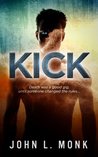 Kick by John L. Monk
My rating: 4 of 5 stars
As a college student, Daniel killed himself over love lost. But his existence didn’t end there. Stuck in a limbo he calls ‘The Great Somewhere’, he finds he can exit through a kind of gate and spend 3 to 4 weeks in the body of a living man. The good thing is, he can enjoy pie again. The bad thing is, the guy he’s inhabiting is a nasty killer. Unable to access any of his host’s memories, he must use his wits to navigate the living man’s life, friends, and foes, to discover what he has been brought out of limbo to do. But when he does, his accomplishment becomes confused wonder as he’s given a ticket out of limbo again and again and usually to deal with the same sort of conscience-less killer. Connections to his life as Daniel occasionally come up and he understands them as small tests; ones he often fails. Then one day, he finds himself in the body of someone not a psychopathic predator. What is he meant to do?
This is the second book in one month I have read that deals with the idea of a personality piggy-backing on a living person (the other being A Warm Place to Call Home by Michael Siemsen). But where the protagonist in Siemsen’s book does not know exactly what he is, Daniel has all of his memories of life as a human man, even if he would rather not. Where A Warm Place speculates on the meaning of identity, Kick is about self-understanding, forgiveness, and redemption. It’s also about becoming a grown-up, something that Daniel did not allow himself to do.
With a young man’s passion, Daniel is frequently ruthless with his hosts, whom he refers to as ‘rides,’ though his ruthlessness is often anger on behalf of their victims. He is clever and resourceful, but he’s also aware that limbo hasn’t seemed to have made a real dent in his callowness. (He killed himself, after all, to make sure the girl who dumped him never forgets him.) But when his latest ride turns out to be a decent guy, he recognizes it as the opportunity it is. If he can make use of it.
It’s a difficult thing to balance self-examination while simultaneously trying to find your way through dangerous situations and author Monk does a good job of making Daniel’s struggles interesting. Likewise, his alternately carefree and introspective turns are never awkward or inhibit the pace of the book, which is brisk. There is violence, but seen from Daniel’s perspective, it becomes darkly humorous rather than off-putting; it’s easy to get caught up in Daniel’s brazen actions and wonder what crazy thing he will do next as he veers from avenging angel to junk food gourmand while trying to make the most of things before the next *Kick* that tells him his host is repossessing his ride.
Tagged: book review, fantasy, paranormal, urban fantasy