Robyn Hugo McIntyre's Blog, page 4
July 22, 2016
Three Tips for Writers Making the Transition From FanFic
Oh, so simple.
Do not substitute the word orb for eye. Just don’t. It’s horrible. Saying you looked into a person’s orbs is equal to saying you have little experience with perceiving or understanding any emotions besides your own.
Do not have characters plop down. It makes them sound like twelve year olds.
Do not have characters storm into, out of, or around anything. It’s cliché and lazy writing.
When you spend a lot of time with a particular friend, you’ll find yourself picking up some of their verbal habits. The same thing can happen in writing. Don’t let it. Think about what you’re saying and don’t always use the first word that comes to mind to describe it. Chances are, it will be the wrong word.
Tagged: advice, fanfic, writing tip


July 7, 2016
Yard Sale
Author’s Note: This is the first satisfactory draft of a new story.
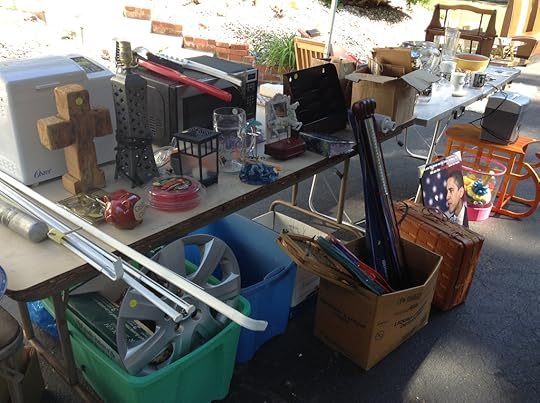
They were in a neat stack on top of a hospital table, one of those things on wheels that roll sideways to fit under your bed so you can eat your bland hospital food while you watch the television and try to ignore the beeping equipment, announcements, harsh light coming in through the windows.
Six boxes of them. Men’s Super Plus. Maximum Protection. Adult diapers.
Most of the things at the yard sale seemed like a man’s things to Claire. Sports magazines, tools, a small television. Individually, they were all things that a woman might also like, but taken together, they said ‘man’ to her. Older man.
There were a couple of stuffed and mounted trout, a scarred, near-shapeless baseball glove and a bat so dry it looked ready to splinter. There were maybe half a dozen hard cover books, mostly biographies, a rack of plain and sturdy shirts and pants in browns and blues. A stack of vinyl record albums, a moustache cup.
Claire imagined the man watching a baseball game, wearing one of the blue shirts, drinking a beer. His fish trophies were on the wall, the stack of sports magazines near to hand. The vision seemed so familiar somehow, as though it was a dusty memory rather than something of her imagination.
She fingered a box of dominoes. Next to it was a narrow wooden game board with a lot of little holes and numbers marked on it. Cribbage. She remembered her father had played it . Like many of the games he had played with his friends, it involved cards and beer and quick calculations made among high shouts and laughter.
Further down the table was a man’s jewelry box. Plain, dark brown vinyl colored to look like leather, then stamped with gold to try to make it look rich and exclusive. It was a drugstore item from the days when drugstores sold jewelry, had lunch counters and candy counters. The gold stamping was worn away in spots. Inside was a tired watch that wasn’t running, a few mismatched cufflinks of silver and gold with large fake gemstones of aquamarine and tiger’s eye. And one gold tone tie clip with a set of initials engraved into it. It had tiny spots of rust on it.
Next to the jewelry box there was a small collection of ceramic coffee cups with various inscriptions: “World’s Greatest Dad”, “World’s Greatest Fisherman”, “#1 Dad”, etc. They were the kind of gift you got when no one knew what to get you. He had probably had a lot of Father’s Day ties, too, and been the sort of guy who hated to wear a tie.
Suddenly Claire stopped, stood still in the too-long grass of this man’s front lawn.
He was likely dead, this man she had been imagining, or in a condition where he no longer needed what was being sold off. The realization struck her like a slap and sent her heart beating faster. She pivoted, the grass squeaking under her shoes, and she did not know what she was looking for. But then words curled underneath her tongue, seeking exit.
At a table next to the street, a tired looking woman was collecting money, smiling and thanking people. Claire imagined herself walking up and asking the question she now inexplicably wanted the answer to: Did he like his life – had he been content?
To keep herself from doing just that, she looked again at the tables and forced herself to concentrate on what she saw. He had kept the coffee mugs; one or two had even been mended. So there had been meaning for him in even these generic gifts. Unless he had just been frugal. Her own father had been raised by someone who had lived through the Great Depression and Claire remembered how he had hated to throw something useful away, especially if it could be repaired.
The tables said he had had hobbies. He had had family. He had been acknowledged by them. But none of tables held the answer to her question. Had he been content? She would not expect happy, not many people had truly happy lives. But satisfaction that work had been done, that responsibilities had been fulfilled, that affection – love – had been present… had he had that?
She looked around again, feeling oddly off-balance, attempting to find her footing in a new perspective. About her, people moved to pick up and put down, to verify a price, to ask for a lower one. Cars pulled up to the curb and left again.
She took a deep breath and let it out, feeling something tight in her throat ease a little. Saw the hospital table and the boxes. Took another breath. She walked to the woman who was managing the sale and said, “I want to buy all of the men’s diapers.”
Light brown eyes, which had been looking somewhere over Claire’s right shoulder, suddenly snapped to her face. For a moment they just looked at one another, then the other’s expression became something Claire did not care to see and she busied herself getting out her wallet and counting out the cash. When she handed over the bills, their fingers brushed and Claire pulled back from the touch, but the money had been taken.
“Thank you,” the woman said to her quietly. “And good luck.”
Claire nodded and turned away to go gather the packages into her arms to take home.
Six boxes. Men’s Super Plus. Maximum Protection. Adult diapers.
Tagged: contentment, family, illness, memories, regret, yard sale

January 12, 2016
Love Enough

You were there when I came home
Smiling, but distant and uncertain
What was it that made me end the play
Bring down the final curtain?
We never knew that it would end
But each silence was a clue
I cried when you said you knew it was done
It was all I could do for you.
Chorus:
Sometimes love isn’t quite enough
You gave and I gave
But the taking was rough
Sometimes love’s not enough
When we met we knew there were rifts
That we though our love would cross
But what do you do when the rifts remain
And compromise is lost?
You were gone when I got back
From your bittersweet note I could see
That you meant us never to meet again
It was all you could do for me.
Chorus:
Sometimes love isn’t quite enough
You gave and I gave
But the taking was rough
Sometimes love’s not enough
Tagged: goodbye, lost love, love, song lyrics

Bird Dog
(Gutsy, bluesy, sung with humor)

We made it like rabbits
Time before there was Time
Thumping along in the wet grass.
We had a deal in those days
About never trying
To make it Real
Make it Feel
Make it Steel
But just to Make It.
Why couldn’t you leave well-enough alone?
The rabbits in the grass
Have thumped away into the past
Because you couldn’t leave a good thing alone.
I don’t want no peacock
Who struts his stuff at work then
Drags his technicolor tail home
Haven’t you said,
“Domestic bliss is a language
That is Dead
Never Read
Bad in Bed
It’s a fable”
Why couldn’t you leave well-enough alone?
Boy, you know birds in a cage
Always get to look their age
If you’d only left a good thing alone
I want to find me a bird dog
A happy wet-nosed woofer
We would roll in the hay
Letting it lay
Making it play
And just Making It.
Tagged: disillusion, romance, sex, song lyrics

January 5, 2016
The Tale
I got nothin’ to say to you, man.
I walked around in front of him and pushed my index finger into his chest. He stopped as though I had pushed a button and his eyes flicked my way then off again. He stepped back. Then he stepped to the side and moved away. I started toward him and his walk became a trot and then a full-on run. He was gone.
I stood there a moment, confused. I had needed to tell him something vital, but he just wouldn’t hear it. What was I supposed to do now?
I turned back to my original direction. And here he came. Here he came.
He was the one. The one who would listen.
I stepped forward to tell him.
Tagged: alone, mental illness

September 30, 2015
The Master Executioner by Loren D. Estleman
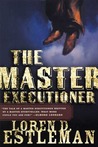 The Master Executioner by Loren D. Estleman
My rating: 4 of 5 stars
These days it is popular to tell people to work and what they love and success will be sure to follow. The Master Executioner is about a man who takes this advice and its impact on his life.
This is not my grandfather’s western. It is a modern novel that happens to take place in the years just after the Civil War and before the turn of the century, when people were migrating in hordes from east to west and industrial innovations were happening so fast the landscape could change from year to year.
Oscar Stone is a pragmatist. After abandoning his father’s farm and serving in the Union army during the war, he decides to leave the east completely and travel to Missouri. He reasons that with a building boom going on, carpenters will be in short supply, so he apprentices and becomes an excellent carpenter. From his master he receives advice, which he takes to heart about being a craftsman and being meticulous and knowledgeable about your work. During his last months in the war, he sees a lynching, badly handled, and this affects him profoundly.
While apprenticed, Oscar meets a young woman and applies his formidable honesty and persistence in winning over her reluctant father and they take a wagon train west. But they are late to the party. There is a surfeit of carpenters and Oscar has a hard time finding work. Finally, he takes a temporary job building a gallows and meets Rudd, a master hangman. Rudd tells Oscar the young man has a gift and would likely make an excellent hangman. It is steady employment, and best of all, a chance to experience satisfaction in a job well done. Rudd offers to teach him everything he knows, and eventually, over his own misgivings, and his wife’s flat opposition, Oscar becomes the hangman’s apprentice. It is an experience and occupation that is both more satisfying and more unforgiving than he could ever have expected. He loses his wife over it and the majority of the book covers his subsequent career and attempts to locate her.
This is not a book of self-examination. Though generally more honest with himself than most people, Oscar Stone is not that kind of man. And Estleman deliberately confines himself to Oscar’s actions and conversations, leaving it open about what the man actually feels which makes it ironically easier to understand him.
Though the novel is full of criminals, each walks the stage for a short time only, which makes it all the more remarkable that Estleman’s clear writing can make them all so human and mostly pitiable. Oscar, however, remains the star, a man of neat habits who looks more like a banker than a hangman, a problem-solver, and a man who takes pride in providing each client with a swift and painless death.
Eventually Oscar finds his wife again and once more his life is altered permanently. The ending is one of those which seems inevitable and is therefore satisfying, but you don’t anticipate it because Estleman’s writing is like setting yourself afloat in a briskly moving creek – you go with the flow and are content to do so. In their ways, so did Rudd the hangman, and his apprentice Oscar Stone.
Historical novels about the old west are not a usual choice for me, but the subject and the sample I read made me want more so I bought the book. I am very glad I did.
Tagged: fiction, historical, western

September 22, 2015
Tasting
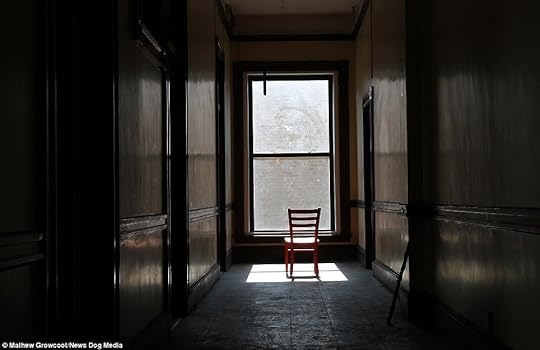
Sometimes I can almost taste a different life
Where foods that never touched
my tongue
are familiar
Where smells I can’t
remember are
nevertheless
remembered.
I can taste the still, busy air
layered with lives
soaked with labor’s sweat
washed with cheap soap
floating down hallways in
crowded buildings
Fatigue and love and someone else’s
hate are buried
in the old wood of the door frames above
the flaked thin carpet
where I never walked
Tagged: hallways, like poetry, memories, other lives

August 20, 2015
August Writing Challenge
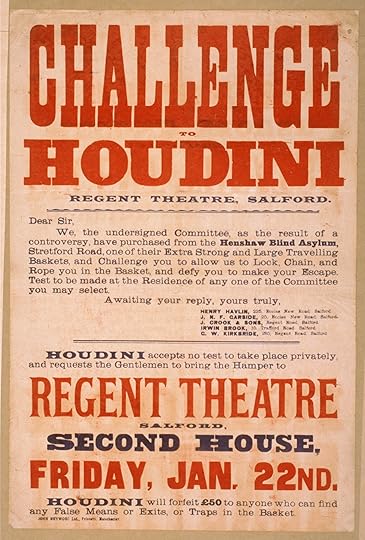
Via Wikimedia Commons
Earlier this month, I was invited to participate with three other writers in a 100 words a day challenge. Though we are free to write more than 100 words, I wanted to stay as close to the minimum as possible, since finding words has never been my problem, pruning judiciously is.
Here are the first week’s snippets, not including the first day, because I started later in the month.
Day 2 – Wednesday, August 05, 2015
It was a broken smile. Though the corners could still turn upwards, there was a shadow in each preventing the mouth from moving beyond simulated to heartfelt. One shadow was disappointment. The other was resignation. The lips themselves held a minute tremor, as if at any moment, they might give up trying to smile and collapse into a default position of ugly weeping. Above them, the eyes closed, imploring the brain for a distraction. But the brain was not listening; it had abandoned the present for the past. And underneath them all, the heart continued to pace madly in its cage, wanting nothing so much but to stop caring.
Day 3 – Thursday, August 06, 2015
She took his heart like the keys to a new house, exclaiming over its virtues; the vaulted ceilings, the spacious chambers. She went through every room, hanging new pictures and painting the walls in combinations of colours he had never seen before. She placed new furniture and pulled off the old drapes to let in expanses of sunlight. Through the open windows he saw parklands filled with laughing families; there was a breeze that smelled of Sunday pancake breakfasts. She worked with certainty, aligning memories to a gentle alphabet and when she was finished, his heart had become a home for them both.
Day 4 – Friday, August 07, 2015
Outside, I saw a dead rat. He looked alive: his small, round black eyes shiny, his brown-ticked fur clean and groomed. Was he dead?
There was no blood; no deformity that argued for death by car. What he could have died of; be dying of?
I brought my shovel and dug a hole. Had he died slowly? Killed by something I couldn’t see? If I left him, could he recover or might his body poison another animal? Was he dead?
I put him into the hole and watched him. After a while, I shoveled in the loose dirt, stamped it down and walked away. Was he dead or only soon to be dead? I wondered.
Day 5 – Saturday, August 8, 2015
“Dammit! Dammit! Dammit!” She pushed herself away from him and slid along the wall to the door of the classroom, where she stood, pounding a fist against the frame. “You have no idea how much I hate you at this minute. How much I wish I could just let myself go and kill you. It would be such a relief to stop trying to be reasonable, stop trying not to interfere. I want to interfere with you. I want to use a knife and interfere with you in a big way.” Her black eyes were stark in her white face. “I think killing you would give me an orgasm.”
Tagged: writing challenge

July 29, 2015
Bone Song by John Meaney
My rating: 4 of 5 stars
I’m really glad I picked this one up. The mystery being investigated in the book is pretty standard fare, but the worldbuilding!
Meaney has created a society that runs on bones – all of the energy in Tristopolis comes from a necrofusion center where the bones of tortured souls are fuel. Bound spirits also exist in everything else: furniture, elevators, cars… you name it and there’s likely someone’s soul inhabiting it. As you might guess, some people treat those spirits better than others, like Detective Lieutenant Donal Riordan, who is friendly with the guy at HQ’s front desk – or rather the guy who is HQ’s front desk, the huge police wolves, the #7 elevator, and even zombies.
Riordan’s world is a dark one literally – the sky is always dark purple in his city – and figuratively – only the really wealthy are able to bury their dead in catacombs; everyone else is fuel. There’s the usual class divide and corruption, but now something new has been added: bone collectors. These people don’t want to wait until an artist or performer dies to bid on the memories their bones hold. Instead, they’ve created a conspiracy to kill them before their time and steal the bones.
In trying to stop them, Riordan will join a special task force headed up by a beautiful zombie, become friends with some of the most respected forensic bone listeners, and fight against powerful dark mages.
Bone Song is like Raymond Chandler was recreated using some genetic material from Brian Lumley and Tom Clancy. It’s fast moving, entertaining, and dark without noir’s usual cynicism.
I was so enthralled by the world Riordan lives in that I bought the sequel, Dark Blood the same night I finished reading Bone Song. Fascinating world, interesting characters.
Tagged: John Meaney, noir, paranormal mystery, worldbuilding

July 28, 2015
The Musings of PontiViro
I haven’t been posting here much partly because I got trapped in the alternate universe that is Ancestry.com, trying to find an elusive ancestor (I did!) and also because without feedback, posting feels pretty lonely. I’ll try to post more here, but I promise nothing. Ha.
***
I’m considering a new novel, in its very early stages now, and as usual for me, this trying out begins with a conversation with a character. Pontiviro or ‘Viro as his friends call him, showed up one day and just started talking. I still don’t know where he lives, exactly, and what may be going on, but here’s what he had to say to me:
[image error]
The Musings of PontiViro
You might say that since I fell in love with Cadio Barbet, I’ve done and seen more than any compact person might have done and seen. But it being an unrequited love tends to take a little of the sheen off of the accomplishments. At least I have him to myself, since there’s not a chance in a frozen hell that he would ever be interested in anyone else, man or woman, compact or full-size.
Sometimes I think things could be improved if Cadio would allow for a sexual relationship, if not a mutually-doting one. But when I brought it up, he considered me through his spectacles for a long minute, so that I knew he was taking my request seriously, then said, “No. No, thank you” and resumed reading.
I knew it wasn’t a reflection on me. Some folk would have an aversion to thinking about lovemaking with a compact man – otherwise known pejoratively as midgets – alright, probably most folk in this country. But not Cadio. He is the least prejudiced person I’ve ever met. He’s also the least interested person I’ve ever met.
Notice that I didn’t say he was uninteresting. Because he isn’t, and I’ve got a few scars to prove just how interesting he can be to others.
If Cadio is his real name and who he might otherwise be, I’ve no idea. And not for lack of trying. But he won’t talk about himself. Oh, once in a while, he’ll say something that seems to be a clue, but then at another time, he’ll say something that contradicts the first something. I used to keep a journal of the somethings, but it got tiresome once I became aware that anything he says about himself is likely a lie of some sort and that he does it on purpose. Probably. I’m not even sure about that.
I suspect him of purposely giving false information despite that I think that, without me to watch out for him, he would probably have been eaten by a beast or drowned crossing a river while trying to read a book. He can’t tell the honest from the dishonest and is clumsy enough with others that it would be hard to attribute any ability to dissemble to him at all. He depends too much on his magical abilities to get him out of trouble he should not have fallen into in the first place, but his magical talents are very great and lately I’m wondering if he didn’t also come out of the womb painted with a very wide lucky streak. Certainly, one of the luckiest things to happen to him is me.
It should be obvious that I am not from here. Where I am from, everyone is about my size. In this place, I choose to let everyone think that I am an oddity – one of their own that came out slightly different. Knowing what I now know, I will not tell anyone the name or location of my people and I pray that the difficulties I went through arriving here will prevent anyone else from doing so anytime soon. An army of people ten and twelve of my hands taller than the mild – and somewhat boring – inhabitants of my home would be disastrous for my people, I think. Better they should continue to live their quiet, isolated lives than be caught up in the chaos that is living in Verch among the Verchers.
———-
Lately, I’m beginning to wonder if Cadio is as oblivious as he seems. Recently, I caught him looking at one of those traveling liars – people who sell an idea of something instead of the real thing – like a cure for baldness. This one did not seem particularly fresh to me; his idea was one I had heard frequently in the past month of traveling, becoming faster or stronger or smarter through focusing on a special stone for a set period of time each day. I was about to move on, certain Cadio had done, but he was still beside me, looking at the liar and there was something very like someone had mashed a sneer and a smile together on his face and then tried to hide it. His spectacles gleamed as the sun caught them, so I could not see his eyes, but that look – one I had never seen before – startled, and yes, unnerved me.
At that moment, the liar was juggling the stones he was selling and lying about how he had become quicker and more adroit because of his focusing. The stones seemed to go faster and faster, and the liar’s expression went from confident to delighted to uncertain then passed into nervousness and careened headlong into fear. He called out and a woman joined him on his improvised stage and he exhorted her to take the stones from his hands. She tried, but they only moved faster. No matter what that two did or how they moved, the stones continued their arc, flying round and round, faster and faster, until sweat began to pour from the liar’s face and the woman herself looked frantic.
Cadio walked off and perforce I followed him. When we returned that way some time later, the liar was on his back in the street, his face covered in sweat and his eyes haunted. There was a crowd around him. The woman was crying into her apron and a burly man was swinging with a cudgel at the stones, which evaded the wood and kept going round, while several people in the group made bets on whether the liar would die before the stones stopped and what the stones would do if that happened.
Cadio did not turn his head to look, nor did his hands make any gestures that I could see, and as a sometime picker of pockets, I think I would notice. But the stones suddenly came tumbling in a heap on the liar’s chest. The man took one long breath and sighed it out, then went unconscious. Those with bets settled them. The rest of the crowd looked disappointed at the entertainment’s tame closure and strode away back to their own business.
I looked at Cadio, who seemed to be talking to himself, as he sometimes did. “Stones,” I heard him say. “One has to have stones to sell stones.” Then he chuckled.
“Pardon?” I said, just to hear his reply.
He glanced at me, his grey eyes with a sort of light in them and said, “Maybe he needed more focus.” That is what passes for humour with him.
Tagged: novel, planning, PontiViro