Robyn Hugo McIntyre's Blog
March 2, 2024
Inch by Inch
 By Sparkie on Flickr
I’ve been out of it for quite a while. The explanation is simple: some life stuff happened. But I joined a writing critique group and am trying out a new (to me) tool called AutoCrit. I’ve signed up for a class where you focus on getting in-depth on a POV and I’m looking forward to using it to get a short story idea written out.
I’m hoping that this tool will help me with my plotting problems when I’m writing novels, keeping the pace and not bogging down with too much detail.
In the meantime, I’ve been focusing on short stories, which I don’t seem to have a problem with. Writing a novel chapter is like sweating blood, but writing a short story – for me, at least – is being in the zone and it always comes together fast and I’m always happy with it. Part of me is wondering if writing short stories is what I should focus on. And I have to say that’s a big fat maybe. That’s because I’m stubborn and it takes a lot of repeated fails before I give up on anything that interests me.
There was an old Vaudeville routine that the 3 Stooges revived in the 50s, where Moe told the story of the man who stole his gal and how he got revenge at Niagara Falls. And every time someone said “Niagara Falls” Moe would advance on Curly, saying “Slowly I turned, and step by step, inch by inch…” and then Curly would have the stuffing beat out of him, only for it to happen over and over again. So the Writing Life has been a little like that for me the last couple of years. Nobody’s saying “Niagara Falls” but life has been beating the stuffing out of me for a while and I figure what I have to do is turn that around. So step by step, inch by inch, that’s what I’m trying to do.


July 14, 2022
Willpower and Persistence
 David Allen, via Flickr
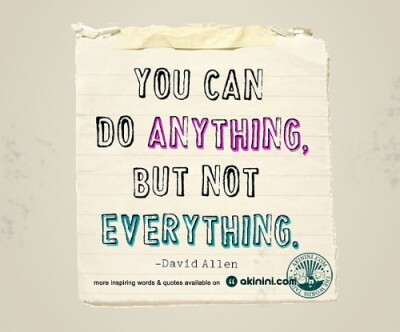
I’m always seeing posts about how you should strive to be this or that. I wonder how much research has gone into whether it’s always possible to “become” something entirely by willpower and persistence; by an unwavering belief in yourself.
We like to believe in this country that all you need is willpower and persistence to achieve the top of anything. I have come to believe that is not the whole story. You also need ABILITY. Without ability, you cannot become a good singer. Without ability, you cannot become a successful artist or writer or dancer or cook or scientist. Without ability, willpower and persistence can only take you so far. So yes, you can become something you want to be by persistence and belief, but only to an extent, unless you have the ability to do more.
When we tell others they only need to work harder at something that does not match their ability, I think we do them a disservice. Not everyone can be brave, or smart, or talented to the levels they would like to be. Or that we might want them to be.
To use a game analogy, as long as you can honestly say you’re leveling up, then keep going. But remember that the 20 year old who wants to be a famous rapper has probably made his life about the pursuit of the dream rather than living the dream if he turns 70 and hasn’t made it. And yeah, it’s never too late to achieve a dream while you live, but you’re probably going to have to scale it back a bit because – here’s that word again – your ABILITY to achieve it has to be taken into account.
My childhood dream was to be a famous writer. At 70, I have to admit I’m not even close to being famous. I don’t even have a published novel. It’s still possible for me to complete and publish a novel, but it would have to be a hell of a novel to make me famous. In addition, my lifelong depression and anxiety issues sometimes keep me from writing at all.
So I have had to come to terms with realizing that though I am a writer, I will never be famous and that my production will never be on a par with say Neil Gaiman. But I can continue to level up as a writer. I can use my willpower and persistence to work at becoming better at writing and at writing as often as I can.
I would never tell people they can be anything they want to be just by willpower and persistence. I would tell them they CAN be anything they want to be – within limits. And that’s really not a bad thing. Not everyone can be rich and famous or insanely talented, but we can all be the best us possible.
June 5, 2022
The Daughter of Time by Josephine Tey
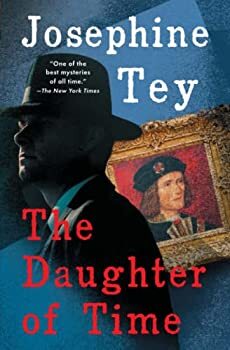
Until very recently, I had not heard of Josephine Tey (1896-1952). She was an extremely popular English mystery writer whose early death from cancer prevented her from creating the kind of canon writers like Margery Allingham and Agatha Christie did.
This book features her detective inspector Allan Grant, who is laid up in hospital with a severely fractured leg as a result of a fall while in pursuit of a criminal. He’s a very rational man, who prefers fact to fiction and is finding forced confinement, with the kinds of books people are sending him, to be difficult indeed. But, factual though he is, he has the quirk of being drawn to faces. Early in his career he discovered that he could use what he saw in one to help him determine who was lying, who was guilty. But in a hospital bed, in the years before television everywhere and decades before the internet, the only faces he sees on a regular basis are the cute but bullying tiny nurse he calls The Midget and the tall and comforting nurse he calls The Amazon.
Then actress friend Marta brings him a sheaf of prints of portraits and he suddenly finds himself obsessed with the portrait of a man who – at first glance – everyone he shows it to takes for a judge or some other upright person. But when they learn who he is, their judgement always turns harsh and he’s perceived as a monster: Richard III, last of the Plantagenet kings of England.
Grant, with the help of his actress friend’s “woolly lamb” Brent Carradine, an American doing research in London to be near his actress girlfriend, begins trying to untangle the mystery surrounding Richard III – and to determine if he really was responsible for the deaths of his two young nephews, the “princes in the Tower.”
Several mystery writers have assayed the detective-solves-old mystery-while-in-hospital plot, but seldom as well as Tey. Her writing is straightforward but filtered through the droll mind of Inspector Grant, it is charming. In Robert Barnard’s introduction to the recent edition by Scribner’s he says she always had “control of her reader’s sympathies,” and I can attest to that.
By the time he’s ready to go home, Grant has solved the mystery to his satisfaction and discovered that though Richard III is still in the history books as a villain, historical scholars had already amassed more than enough factual evidence to show he was not the hunchback with a withered arm desperate for power that he had been portrayed as for nearly 5 centuries after his death. It was his public reputation that needed rehabilitation.
After I finished this novel, I looked up the news articles on the finding of Richard III’s remains in the Leicester parking lot and his subsequent reburial at the cathedral. Even at this point, the observers were reluctant to bring up his still controversial reign, instead focusing on the surprise of finding such a monumental English historical personage in the way Richard had been found and on the acknowledgement of his status as an anointed king of England.
This brought me back to Tey’s novel where at one point Grant and his friend Marta have a conversation about why it is that people confronted by facts tend to dig in their heels and get angry when those facts contradict their long-held beliefs. And this too was one of Tey’s strong points as a writer: she could weave an observation about our cultural foibles into her story that transcended the story itself, but without being either offensive or obtrusive.
I will certainly read more of her work.
January 8, 2022
When Death Came For Me
 Via Public Domain Images
When Death came for me, I was looking through old pictures. Old pictures from when people actually printed their photos and pasted them into unwieldy books where they turned yellow from being under plastic and stuck to the paper when you tried to move them.
Of course, I knew Him. It. She. I’d been expecting Them. That didn’t mean I was ready to go, though.
He just appeared in my apartment living room. Well, like a locked door would keep Him out, anyway. I was still in my pajamas, but if that didn’t bother Him (Her, It, They), it didn’t bother me.
Death was like static. Like you hadn’t tuned in right to the radio frequency or like one of those channels on the TV that didn’t work – in the olden days, I mean, when people watched a cathode ray tube.
There wasn’t any noise – just whatever-it-was on top of the body couldn’t settle; it cycled through appearances. If I had to guess, I’d say they were all the different ways all the different cultures saw Finality. Different genders, even different species. Yama, angels, a death bat, the requisite skeleton. There were others I didn’t recognize, including some that might not have been from an Earth culture.
That was interesting but looking at Them was making my eyes hurt. I went back to staring at photos and turning the pages.
“How do you do that?” I asked, keeping my eyes on the photos. Funny to be worried about getting a headache when Death was waiting for you. Patiently, I hoped.
“Do what? The aspects?” Her voice was like a mishmash of a lot of voices, and I could hear under-voices speaking in other languages. Had to concentrate a bit to hear the voice speaking to me.
“No. I mean, you must have to get around a lot,” I said. “How do you manage that?”
“Obviously, there’s more than one bit of me,” It replied. “Though some of me haven’t been used in centuries. Some Death incarnations and Deities don’t have living believers anymore, but they did, so what they believed in still exists. To an extent.”
I grunted and turned another page.
“So,” They said. “Ready to go?”
I snorted. “Is anybody?”
I heard the rustle of fabric as He shrugged. “Some, but it’s not a big deal.”
My eyebrows went up. “How’s that?”
They moved over to one of the chairs and sat down. Not sure if They walked or glided. Hard to tell when my eyes stayed on the photos.
I heard the chair cushion sighing under Death’s weight and more rustling as though He was making Himself comfortable. Weird.
“The process,” It informed me, “takes as long as it needs.”
I risked a quick glance up. The head was still cycling through aspects. I looked away again. “What does that mean?”
“We are between moments, I guess you’d say. In one moment you are alive, in another you are not. We can stay here for as long as it takes you to accept the next moment.”
I leaned back on the sofa and crossed my arms, thinking that over.
“Okay,” I finally said. I patted the cushion next to me. “Would you like to see my photo albums?”
As They got up to move closer, I remembered my manners. “I have tea. Or coffee. Which would you like?”
The End
November 21, 2021
It Isn’t Just the Body
 Getting Older – Reza Kazemi – Flicker – Creative Commons
I had a bit of a scare the other morning. It turned out to be nothing but it made me think once again about my age.
These days the news seems to be full of those my age or a bit older – especially the icons of my youth – who have died. Those kinds of stories have always been news, but my younger self only clucked over them in an abstracted way because they were not my contemporaries. The older me finds them disturbing in a “you’re moving up in the queue” kind of way.
As I move up in the queue, I no longer have the luxury of eating what I like and being cavalier about the amount of rest and exercise I get. More than that, I now find myself considering new conditions of my body, evaluating new pains to determine whether they are transitory or some harbinger of an oncoming health concern. I’m fortunate that the ailments I have are manageable using current medicine. But not all ailments are that amenable and the longer I’m alive, the more the odds tip in their favour.
Stories about how younger people are refusing their elders’ treasured antiques made me blink. I had not considered this at all and I’m left wondering what will happen to the things I have collected over the years. I don’t even have to consider whether my children or grandchildren will want them or not because I have no descendants. Everything I own will have to someday be sold, given away, or consigned to the trash.
I have already given or thrown away a great deal out of the understanding that no one but me or my late husband could find anything in them. I have tried to keep only what still matters to me; what I find beautiful and uplifting or what – like my dog Rufus’s leash or my dog Buffett’s collar or the pictures of people long gone from my life – I cannot bear to part with, though I know items like these will eventually be disposed of. They will have no sentimental or artistic value to anyone else.
Growing older has also affected my consideration of new things. My decision to acquire is often coloured less by cost than the item’s possible future with me. And I’m mindful of the burden that will fall on whomever is unfortunate enough to have to deal with what’s left of my life once I am dead.
For the present, I will continue to take pleasure in the art I have, the music I have collected, the full set of china I own and use on a daily basis. I will continue to add things I desire because of the way they call to me and I will enjoy them for as long as I can.
I have seen many articles asking “What would your older self tell your younger self if it could?” I’m not sure that my younger self would listen, but I would tell her not to get hung up on the idea of getting older as becoming physically diminished.
Younger people tend to think of advancing age wholly in terms of the body. But aging is really an evolving condition – one that taxes the mind and spirit, too. You will still need to make decisions that affect not only your present but your future. But when you are older, there is less future to consider. And that, in itself, becomes another thing to consider.
September 30, 2021
Memorizing Buffett
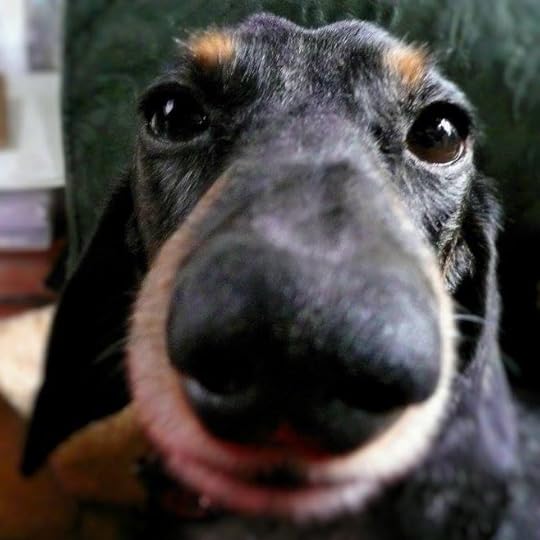
On Tuesday I had to say goodbye. Today, I found this. I wrote it in 2014.
The walnut trees next to my driveway are in bloom. Tiny yellow flowers make a mosaic on the concrete and there is the warm buzz of bees in the air.
Buffett ignores all of this in favour of the dark, leaf covered strip between the trees and the drive where he sniffs, blows, sniffs again and repeats the process until he has found just that perfect spot or, more likely, he cannot wait any longer. I know he delays his body functions as long as he can to make the walk last.
What interests him is largely invisible to me. Not everything, of course. I see the large piles of dog waste left by other dog walkers that Buffett finds curiously inviting. He loves to get right up close, his black nose leather within millimeters of it. What he learns about that dog, I don’t know. What I do know is that it is instinct (a somewhat amusing word to use here) that makes him so curious. After all, it’s not as though he will come home and write in his journal about what he discovered.
Dear Nose Diary:
Today I smelled the pre-fossilized coprolite of a Labrador Retriever. The aroma was complex, including the tang of marrow, by which I am led to believe that his parents feed him a raw diet. This was a large contrast to the Corgi droppings of yesterday where it was obvious he was getting into the cat food.
We move along to the rutted dirt running alongside the paved street and he hops past the flattened earth where I buried the juvenile skunk I found some days ago, only to stop at a point in the wire fence where there is a depression as though something has dug underneath. Maybe the skunk’s mother or another skunk, finding it easier to dig than to climb. I’ll never know, but it’s likely I could be surprised, if I did. A little further on, the wire fence crosses over a creek bed and I once saw a doe fold herself down into that space to emerge on the other side of the fence. That was definitely surprising.
Buffett never minds if I stop to look at birds, squirrels, trees, or clouds or listen to the breeze in the leaves. It’s kind of him, considering that since – as a dachshund – he’s very low to the ground and things taller than my kneecap are generally out of his radar range. Usually, he will attempt to find something invisible to smell or, if possible, start eating grass.
I have no idea why he does this. Again, I assume it’s something to do with the parts of the modern dog still connected to the prehistoric ones. I don’t let him eat much – when my cats did it, they usually threw up. Bleh. Though he is as stubborn as any other dachsie, he responds well to my “Leave it!” command. He can be obstinate about the invisible things, though. If he finds something interesting, he will stop cold to investigate and will not want to leave until he is satisfied he knows everything about it. In these situations, he ignores my commands and will be dead weight if I pull on the leash. And nothing looks worse than a grown woman dragging a little dog by a lead. Sometimes I wait for him and sometimes I’m forced to pick him up and physically move him to another spot. He never holds a grudge or attempts to return to the whatever-it-is. Once the scent is out of his nose, he’s quite willing to forget about it.
Sometimes when we’re out, we meet other dog walkers. In particular is a woman around my age who has two very elderly dogs. I don’t know if the Shepherd started out white or gradually got that way; it’s hard to tell. She’s very friendly, and I am always careful when I pet her because she’s so wobbly, I’m afraid I’ll knock her over. Her eyes are bright and happy, though. Her friend is another blonde, a mutt who always seems to be impatient to get back home. Sometimes they’re joined by other walkers – a mostly-silent young woman and her perky corgi, and a talkative young man and his Afghan Hounds. The Hounds are beauties and their owner and I were surprised when one let me touch him and even came up to sniff my face. Afghans are notoriously aloof so it was a mark of special favour.
Buffett is interested in other dogs, but only mildly. How he reacts to meeting them depends entirely on me. If I am loose and relaxed and talk in a friendly voice, then he is welcoming. If I am anxious for some reason, he will be on his guard and prickly in his manner. An exception is with un-spayed young females. With them, he has short dog syndrome and barks and growls and tries to dominate them. Seeing him trying to discipline an oblivious six month old Golden Retriever who is three times his size if not more can be either inspirational or serve as a warning.
To Buffett, anything that isn’t dog or human but is alive, is prey. This isn’t usually a problem – not a lot comes into his limited viewing range. But he will chase whatever he sees – cats, squirrels, birds, wild turkeys, mice, and the list goes on. I am not afraid of him catching something; he has been within nose touching distance of some of these and done nothing but bark. I think he’s impelled by his genetics to chase, but too modern to know what to do once he’s got there. There is no thinking involved, just pure reaction. I don’t worry that he will hurt the other animal, but I don’t like him to frighten them and I worry they will hurt him in their fear. Partly for this reason, he’s not allowed to be off-leash except in the house or a fenced yard.
Another reason he’s not allowed off-leash outside is his insatiable curiosity. He can get lost in sniffing and wander away without realizing it. This is a danger with all dachshunds – they are scent hounds, after all, and it may be the reason he was found wandering the streets of San Jose. He watches cars carefully when they go by, but it’s more possible than not he could follow a scent right into the street and be surprised by a truck. That ability to not be distracted from a trail is good for hunting badgers – a dachshund’s original job – but there aren’t too many badgers where most dachshunds live these days.
A big reason I don’t let him outside off leash and by himself is that he loves people. If he sees someone come out of their house, half a block away, he starts pulling me in that direction. People entering or exiting their cars, getting mail from their mailboxes, or waiting for a bus – they are all new friends to be greeted. He doesn’t fawn on them or jump on them or bark. He just does a fast trot up to them with his tail wagging, smiling, waiting for them to pet him. Sometimes I wonder if he is looking for someone in particular. If so, he never seems disappointed not to have found them.
He knows I’m his human; when I fill up the gas tank, he swivels in his car seat to keep an eye on me. If he was distracted when I went into another room, he will come looking for me. I’ve been told by others that if I leave him with someone else for a few minutes, he cries. Dachshunds are noted for being loyal.
But Buffett is also used to humans telling him what to do. If he ran up to a stranger and they put a leash on him, he would not complain. If they put him in a car, he might look out the window for me and whine a bit, but he wouldn’t struggle. He would definitely go without a fight.
And if I lost him, I would be lost.
Now that he is nine, I search for signs of a greying muzzle. I watch his hip-hop run for hints of difficulty or pain. His bowel movements are more important than mine.
Dachshunds have a life-span of approximately 12-14 years. Although some have lived as long as 20, that’s rare. I figure I might have Buffett another 4 to 7 years and some of that will be spent adjusting to a senior dog who may develop cataracts or even diabetes. My last Dachsie developed both of these things and probably a brain tumor as well. I had to send her over the Bridge when she had a seizure that left her limp and unable to react to anything.
At this moment Buffett is in good health, and I treasure that. He is too precious for me to take for granted. So when I look at him, I really look. I see the way he looks back at me as though he’s trying to understand what I’m telling him. I love how he comes to the kitchen doorway and puts his head around the corner with his ears up. I love how he grunts as he curls up to sleep, how he pushes against my thigh with his paws when he’s trying to get more comfortable on the chair. I love how he occasionally says, “wha-roo?” when I’m taking too long with his dinner and then does a little tap dance when I give it to him. I love the way he seems to undulate and hop, pushing off with his back feet, when he’s running, his ears bouncing up and down and how his black and tan butt waddles when he’s walking. I even like the way he looks at me when I try to get him to play; his expression that says something like, “Should I be worried about your sanity?” I tell him other dogs chew toys or play tag with their owners. He huffs and gives me a little lick. “I don’t. Stop it now.”
I’m memorizing him. I’m stockpiling those memories in anticipation of future drought. They will share space with the memories of others that came before him and will be squeezed by memories of those that will come after.
I feel his breath going in and out by the movements of his chest against my leg on our chair. I pet him and he stretches and looks up before yawning and laying down again. In a moment, I will pick up his body, which will stay limp in trust and I will hug him to me as I do several times a day and kiss him where I love best, right on one tan spot below his left eye.
And because he loves me back, he’ll let me.
September 20, 2021
Horse. Look It Up.
 Via Pixabay
Hey kid.
It may seem quaint and exotic to you now, but it was just my life to me. And what goes around, comes around, you know. If you don’t know what that means, ask some historian of slang.
We didn’t stop in the middle of a birthday celebration and think about why it might look like to posterity. We bought our groceries, complained about our jobs and our mates and our kids and the government. You probably complain about other stuff, but trust me, underneath the words, it’s all the same thing.
Still, I’d give you all of what’s left if I could sit again in a traffic jam and play air guitar to the radio while I waited. Look it up. Traffic. Air guitar. Radio.
It was in 2062 that things really went to Hell. Most people these days say ‘literally’ when they just mean to emphasize something. Crap, it’s all hyperbole now. And who cares? The truth became a commodity like everything else and was bought and sold and arbitraged. After a while, only the rich could afford it, if they even wanted it. The rest of us, if we wanted to live, had to feed ourselves and our families lies and more lies. They weren’t nourishing, but they could make you feel full for a while. If you were real lucky, you could lose your mind and then the truth could be whatever you wanted it to be. You might live on a street corner under a piece of plastic, or in an asylum, but being insane was still a step up.
I would be depressed, but medication is the one thing that’s free. Use it to calm yourself or kill yourself. Your choice.
I heard the Minute ManEaters were getting it over on the Tea Party Hearties. No doubt that will switch around next week. In the meantime, juice is cheap, so all of us are stocking up. When things go vice-versa again, we’ll all be so loose we won’t care and we’ll easily coast until the next faction takes over. They say there will be elections, but who would go to them? The districts are so ragged now, there isn’t anybody who knows if they can vote or where. If there are elections, it would be good, though. Then the cops would be so busy rocking the ballots that they won’t have time to come down and beat up the surface dwellers near the Chutes. And these days, none of them will actually go into the Chutes. Not for love or money or a ticket to the Mayor’s house for cocktails. Cocktails. Look it up.
I’m glad you’re keeping up with your studies. I keep thinking that someday knowing stuff will be a good thing again. But I live here, so what do I know?
Whatever you do, DON’T COME BACK. You’re safer where you are – these idiots will never invade because they think everyone where you are is diseased. They run scared of everything and disease scares them the most, now that they’ve killed everything else, I mean. If you don’t have real doctors, you don’t have much of a chance controlling something like a disease or stopping it. And most of the doctors got disgusted and left long ago, except for the ones that own their own medical schools. Got the cash or the stash? You too could punch medies to the rich and famous!
Oh well, I’d better try and get this out to you. Hard to say whether or not it will reach you. Any means of communication that you don’t pay a subscription for is a bad gamble. Like betting on a three legged-horse.
Dad
PS: Horse. Look it up.
September 10, 2021
Why I Don’t Post (Bad) Reviews on Goodreads Anymore

Image via Creative Commons
There’s been a kerfluffle of sorts about Goodreads lately. Maybe you’ve read about it. People using book reviews to punish authors or extort them and since GR is owned by Amazon and Amazon doesn’t police its own reviews, they’re unlikely to do anything about the bad actors on GR. It’s especially bad because authors depend on good reviews, especially when their books are not NYT bestsellers. There’s also a bot problem. These are pretty crappy things to have happen when you’re just trying to enjoy books, but they’re not why I stopped writing unfavorable reviews on GR.
I stopped writing them because I’m a writer. I know how hard it is to create a book and how difficult it is to find a readership for it. So I don’t want to add to an author’s imposter syndrome or general anxiety by dumping on their work.
I’ve read some works this year that may have appeared for a while on my TBR or (am) Reading list. But they don’t appear on my (have) Read list because I didn’t like them or couldn’t finish them. I still have a shelf marked “Abandoned” but I haven’t added a title to it in a long while.
I’m not the kind of person to shy away from saying I don’t like a book. There are several that have won critical approbation and awards and I hated them. Even after reading reviews about why they are wonderful books and why I should like them, I still hated them. Everybody gets that, right? There are just some books you love and some you hate and a great many that fall in between.
But often I could tell those books were well-written. I just didn’t like the plot or the characters or the theme or the author’s viewpoint. And they’ve done just fine without my reviews.
But there are other books that aren’t written as well. They have major problems with plot or the grammar is so all over the place that it’s distracting or the characters are uninteresting or even annoying. I used to write reviews that said so. But I asked myself what purpose that served? The book is already out there. The time to have pointed out those problems was before publication. Does hearing it after the fact really help the author? I don’t know, but I’m guessing not too much. In any case, whether you love or hate a book is somewhat subjective. Not completely, but somewhat, depending on your criteria for good – which is itself subjective.
So currently, I may write a review if I really liked the book. If I thought it had some good points and I was able to finish it, I give it 3 stars and eschew the review. The ones I didn’t like? I don’t talk about those titles and I remove them from my lists.
I don’t know if I’ll continue this or come up with something different. In the meantime, I figure anyone who was able to actually finish a book and get it published (whether by Big 3 or self-pub) deserves not to have me stomp on their accomplishment because it didn’t happen to suit my definition of good reading.
July 8, 2021
What Will the World Look Like?
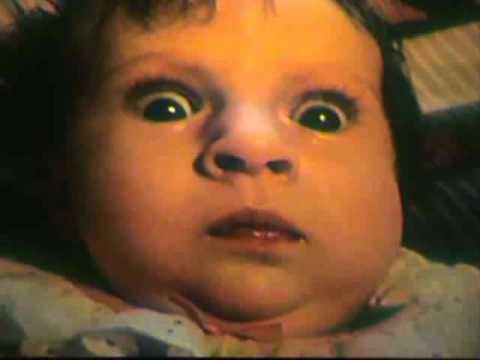 My current expression
Sitting in my living room darkened to keep the heat at bay, I can’t help but think about how climate change is affecting our world. And as that goes on, here we are dealing with the threats to democracy on our own soil while thousands die of Covid in South America and Africa. Political turmoil, poverty, and corruption are wrecking Haiti and South Africa imprisoned one of their foremost leaders against apartheid because of personal greed. The fighting because of religion and land and ethnicity in the Middle East is driving thousands to seek shelter in countries that don’t want them. In many African countries there is no medical help, no government help, only disease, warlords, kidnapping, and murder.
The real world now seems to be tipping in favour of dystopia. How will we writers document it? And how will we write about the world that this one will become?
We are 21 years into this century. How much worse will it get before it starts to get better? Because I KNOW it will get better. Nothing lasts forever. Not good. Not bad. But how long will it take, I wonder. How long? And what will the world look like then?
May 13, 2021
Stayin’ Alive
I’m not going to spend any time on what’s been going on during 2020 and the first half of 2021 – we’ve lived through some horrible stuff already and many of us are still waiting for the other shoe to drop, hoping that it won’t. A lot of us have lost friends and family to Covid and however much the public health situation improves, the pain and grief will linger, making its impact on our future which will continue to include Covid, since it isn’t likely to be eradicated, just mitigated.
I know there are quite a few people out there who don’t want the vaccine. If you’re worried about its effects, talk to your doctor or another health professional. If you’re not getting a shot because you think Covid is a hoax or you believe you are entitled to not wear a mask or get vaccinated regardless of how it impacts your family or friends or even strangers, then plainly you’re an idiot and I hope you don’t kill someone else with your stupidity (hey, my blog, my rules).
Now off the soapbox and onto the subject of writing.
This year I did something I haven’t done in years: I was invited to join a writing group and I did. Best thing I’ve done for myself in a long time.
Some of you may know that I have often struggled with writing. I seem to have two speeds: words flowing like water through a spigot or nada, zilch, nuttin’. For years I’ve tried to figure out why that seems to be so and have not been in any way successful. (Ideally, I’d find out why and turn the spigot on and leave it on.)
The writing group hasn’t helped me with that. And some of the critiques I frankly ignore because why should I care if my grammar or spelling is off if a sentence or paragraph might not make it to the final cut? For me, spelling and grammar are something to be addressed in the polishing, when I’m satisfied that the story itself is all it can be.
Where the writing group has made a difference for me is in learning how I write, what’s important to me, why I’ve made the choices I have in terms of setting, character, perspective. This has come out of listening to my colleagues ask me questions about the story and them telling me where they had difficulty understanding what was going on. Explaining it to them was explaining it to myself. And that has been exciting.
Asking the same kinds of questions of my colleagues about their own work is also exciting. Writers, like other types of artists, love talking about the craft. It’s fun to talk to another writer about their work, to try to understand what they’re getting at, to help them refine their vision. And you often learn something about your own work in the process.
The excitement then spills over into writing and editing. After our weekly session, I’m often eager to get back to my work. Eager to incorporate the insights I’ve had. Eager to edit to clarify the presentation of my viewpoints (I’ve always liked editing. So sue me, I’m weird.). Even if nothing of mine was discussed at the meeting, I still come away energized by the conversation. It’s like fog breaking in front of me and suddenly I see more clearly than I had the day before and I can’t wait to move forward.
So even if I haven’t learned how to turn the word spigot full on, my excitement has helped get a trickle going that I hope will last.
Writers are loners. Even those who co-author books can’t write each other’s words. We each have to sit down and put our fingers on the keyboard. But there is more than one way to collaborate. And for me, the writer’s group has been the collaboration I needed.
As you might expect, all writer’s groups are not equal. Some get bogged down in petty crap and some have members who may not be so great at being able to ask the questions that can help you make your work better. In that sense they’re like any other type of help: doctor, therapist, teacher. If it’s not a fit, don’t try to force it. Find another group or make your own and invite writers you think will mesh.
Whether you have works coming out the ying yang or struggle to get 500 words a day done, a writer’s group could be just the help you need to find your equilibrium.
Note: also for the first time in years, I’ve submitted fiction to a national magazine. I’ll let you know the result when the email comes.