
Lolly Daskal's Blog, page 102
June 21, 2017
10 Thought Leaders You Should Be Following to Be More Successful
People are spending an enormous amount of time each day checking social media. A recent study showed teens are spending as much as nine hours a day, and the average person is spending roughly two hours.
In today’s fast-paced, content-saturated world, who you choose to follow is massively important to your development as a professional.
Instead of trying to change your behavior by checking social media less, you’ll be better served to take a lesson from Tony Robbins: “Who you spend your time with is who you become.” If you are spending two-plus hours online, people you follow online are influencing you, whether you like it or not.
Here are 10 thought leaders you must be following online in order to be more successful:
As seen on INC. Written by John Eades: Author, podcaster and CEO of LearnLoft
The post 10 Thought Leaders You Should Be Following to Be More Successful appeared first on Lolly Daskal.


The Seven Archetypes Of The Most Successful Leaders
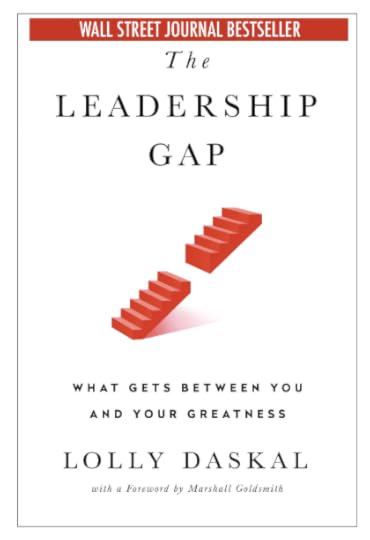
I spoke to Lolly Daskal, author of the national bestselling book The Leadership Gap: What Gets Between You and Your Greatness, about the seven archetypes of the most successful leaders, what happens when leaders rely too much on their current skills, the Millennial leadership dilemma and her best career advice.
Dan Schawbel: Can you describe what the leadership gap is and why you decided to write a book on this topic?
Lolly Daskal: The Leadership Gap is based on seven leadership styles that have been personified into archetypes, which I created based on the wisdom and works of Victor Frankl, Joseph Campbell and Carl Jung. Over the years, as I immersed myself into studies of human behavior and psychology, I found that in order to succeed you must first understand yourself. Likewise, if you can understand what makes someone up, what drives them, even what makes them think, it can help you help them unleash their greatness.
Article on Forbes written by Dan Schawbel.
The post The Seven Archetypes Of The Most Successful Leaders appeared first on Lolly Daskal.
Discover Your Leadership Archetype To Lead With Strength

Are you a rebel? A hero? A navigator? Or someone else?
If, as a leader, you’ve ever had a moment of self-doubt or uncertainty, then you may have accessed one of your archetypes. In any given situation, we can spring into action and either try to “fix” the problem or take control, neither of which are beneficial to leading a team. Finding your archetype can help you approach your weaknesses and address them head on.
Lolly Daskal is the founder of Lead From Within, a global leadership coaching and consulting firm. Her new book is The Leadership Gap: What Gets Between You and Your Greatness. I recently interviewed Lolly on the LEADx podcast, and delved into her thoughts on archetypes and how to approach them. (The interview below has been lightly edited for space and clarity.)
As seen on Forbes written by Kevin Kruse
The post Discover Your Leadership Archetype To Lead With Strength appeared first on Lolly Daskal.
7 Habits All Great Leaders Share

One of the best ways to grow in your professional life is to study great leaders. And there’s no better way to understand the best leaders than looking at their habits. After all, our disciplines reflect our priorities, and it’s the things we do every day that shape us.
As seen on Thrive Global written by Lolly Daskal
The post 7 Habits All Great Leaders Share appeared first on Lolly Daskal.
Understanding the 7 Leader Archetypes of Leadership

Andrew was a top executive working for one of the world’s largest multinational companies. A specialist in organizational design, he was renowned throughout the industry for successfully revamping his company’s culture. When the CEO of a major competitor approached him with a promotion offer and the opportunity to play on a bigger stage, he jumped at the chance. His mission was to develop and launch a complex and important organizational redesign that the company’s CEO hoped would vault the company far ahead of its competitors.
At his last job, Andrew had thrived on top-down leadership. He was used to leading without involving his employees, and—at least for a while—that had worked out fine. But his new company was less bureaucratic. Its leaders were more open and transparent, and employees were used to being involved in decision-making.
As the stress and responsibility of his new position mounted, Andrew doubled down on what had worked for him in the past. He defaulted to commanding his people instead of engaging them.
But Andrew’s command-and-control tactics were beginning to create discord. Complaints started trickling up to the CEO, and she brought me in to help ensure that Andrew’s leadership style didn’t interfere with the project’s success.
Article posted on SHRM
The post Understanding the 7 Leader Archetypes of Leadership appeared first on Lolly Daskal.
Recommended Summer Reading for Leaders

With summer unofficially underway here in the United States, you might soon find yourself with some extra time on your hands either as the normal pace of business slows down or as you take a vacation from the office. As a result, summer is a fantastic time to take a breath, recharge, and carve out time for personal and professional development, like enhancing your leadership skills.
We know that leaders are made, not born. And, we know that the best way to acquire leadership skills is through real-world experience. But, we also know that it can be helpful — and truly inspirational — to read first-hand accounts of trials, tribulations, and successes from great leaders who have boldly gone before us and are eager to share their stories.
So, before you head to the beach or the pool, be sure to pick up a book (or two) from our list of Recommended Summer Reading for Leaders below.
To compile our summer reading list, we polled our team members, clients, and master trainers. These are the books that they’ve turned to over and over again throughout their careers for inspiration. These are the books they consistently recommend to colleagues looking to enhance their leadership skills.
Be ready to be motivated, energized, and inspired. Click on the book cover to read a full description or purchase on Amazon. Happy reading!
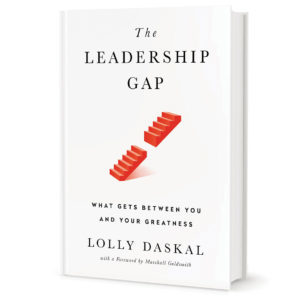
The Leadership Gap made it to the recommended summer reading list for Leaders.
The post Recommended Summer Reading for Leaders appeared first on Lolly Daskal.
June 20, 2017
INC: It’s Lonely at the Top — Here’s How to Know if Your Stress Is Business or Personal

It can be lonely at the top. That’s why so many leaders seek out someone who can help them see things in a more objective light. In decades past, psychiatrists held this position — but admitting to seeing a shrink can still carry some stigma in the C-suite. Likewise, the counsel gained from conversations with subordinates, or even peers, can be tinged with political agenda. It’s for these reasons that the business of executive coaching has become such a significant staple of leadership development…..
“Therapists are usually oriented around talking and going deeper with dialog. They are very effective at helping people identify patterns and get them from the past to the present,” explains Lolly Daskal, author of the new book The Leadership Gap: What Gets between You and Your Greatness.
By Karen Leland on Inc
The post INC: It’s Lonely at the Top — Here’s How to Know if Your Stress Is Business or Personal appeared first on Lolly Daskal.
INC: 1 Surprising Thing That Keeps Good Leaders from Becoming Great

A great leader possesses strengths and qualities that stand out to those who wish to achieve greatness in their own right. Steve Jobs placed no limits on imagination and fearless innovation. Richard Branson believes in his people, values integrity, and embraces life with a passion. These are undeniable assets, but something equally important lies in the gap between the admirable qualities and the weaknesses that put a leader’s greatness at risk.
By Marla Tabaka via Inc.com
READ MORE
The post INC: 1 Surprising Thing That Keeps Good Leaders from Becoming Great appeared first on Lolly Daskal.
Why Heroic Leadership Is Needed Now More Than Ever

Recently I was at an event at the Princeton Club talking about my new book, The Leadership Gap: What Gets Between You and Your Greatness. Someone there asked me an intriguing question: “With all the work you do with leaders around the world, who are the leaders you most admire?”
I thought about it for a split second before answering to the room, “If you are living bravely and leading courageously, you are my hero. Those are the leaders I admire the most.”
That kind of courage has become sadly endangered. More than ever before, we have a real gap in our leadership.
The climate of leadership these days is laced with distrust and skepticism. We hold our leaders in doubt and their actions in mistrust. And the worst of it is knowing that what’s happening in leadership today is going to end up costing all of us in the years to come.
In the past, the leaders we looked up to had character we could value, traits we could admire, values we wanted to emulate.
But when so many examples of contemporary leadership are laced with ego and distrust, you have to wonder where we’re heading. The only way to salvage today’s leadership is to find the heroic leaders who are courageous enough to lead us in the right direction.
Heroic leaders are always in high demand—and that’s more true than ever now, when they’re in such short supply. We all have what it takes if we’re willing to do the work.
Here are some simple but profound things you can do to advance your own brand of heroic leadership:
End passivity. To get anything done, a heroic leader must move the status quo, end mediocrity and be brave enough to do things that matter even when they’re difficult or may cause conflict. It means not only talking but backing your words up with action.
Don’t allow the new to become the norm. Heroic leaders are brave enough to remind us not to accept what we don’t value or respect. Faced with declining standards, too many of us are willing to tolerate a “new normal.” But heroic leaders habitually step back to think about how they can work for positive change—in themselves, in their organization and in the world. They have the courage not to normalize or accept bad behavior or bad leadership.
Break down the silos. Leadership is at its worst when it’s carried out from silos—isolated towers that make collaboration and communication impossible. Great leadership is a “we” message, not a “me” message. A heroic leader understands that true power of leadership is unity—knowing we’re all in this together. When one person tells others what to do and how to do it and everyone else has to keep quiet and listen, you have a dictatorship, not a democracy. The way to take back leadership is not with ego or power but with humility and collaboration.
Lead with EQ instead of IQ. Many of us put a lot of emphasis on IQ—that is, skills and thought. And those are important, but they’re not enough on their own. Heroic leaders know that it’s important to connect with others emotionally and to make sure they know you have their back. They have a high degree of emotional intelligence.
Set the standard. Heroic leaders set high standards for themselves and others. It’s about giving people something compelling to grasp on to and work for while making sure they feel heard and seen and understood.
Use straight talk. Heroic leaders have nothing to hide. They are brave enough and smart enough to keep the lines of communication open, even when they don’t know all the answers. They know how to use straight talk and are not afraid to say, “I don’t know.” They’re strong enough to share information instead of hoarding it.
Encourage pushback. Many leaders feel pressure to have all the answers. But heroic leaders encourage constructive dissent and healthy debate. They reinforce the strength of others and demonstrate that in the tension of diverse opinions lies a better answer. It’s not about who is right or wrong but about what can we learn from each other.
Don’t confuse authority and power. The key to heroic leadership is influence, not authority—because authority isn’t power. If you are a heroic leader who has the ability to change someone’s perspective, never waste that gift. It’s one of the most powerful abilities you can have—especially when you use it on behalf of those who have no influence.
Start accountability with yourself. The role of heroic leadership is to set the expectations that everyone can commit to and be responsible for. Accountability starts with you—you must hold yourself responsible for modeling the behaviors and actions you want others to follow. People naturally emulate those who lead them, so stay aware that others are looking to you.
Lead from within: You are here to make a difference—to either improve the world or worsen it. And, whether or not you consciously choose to, you will accomplish one or the other. Choose courage, choose bravery, choose to be a hero. We need you now more than ever.
Learn more about The Heroic Leader in my Wall Street Journal Bestseller book:
The Leadership Gap: What Gets Between You and Your Greatness
After decades of coaching powerful executives around the world, Lolly Daskal has observed that leaders rise to their positions relying on a specific set of values and traits. But in time, every executive reaches a point when their performance suffers and failure persists. Very few understand why or how to prevent it.
buy now
Additional Reading you might enjoy:
The Remarkable Power of the Truth Teller
The Test Every Great Leader Must Pass
12 of The Most Common Lies Leaders Tell Themselves
4 Proven Reasons Why Intuitive Leaders Make Great Leaders
The One Quality Every Leader Needs To Succeed
The Deception Trap of Leadership
Photo Credit: Getty Images
The post Why Heroic Leadership Is Needed Now More Than Ever appeared first on Lolly Daskal.


