
David Morley's Blog, page 24
August 1, 2011
Matt Merritt reviews Enchantment with panache by David Morley
Writing about web page http://polyolbion.blogspot.com/2011/07/enchantment-by-david-morley.html
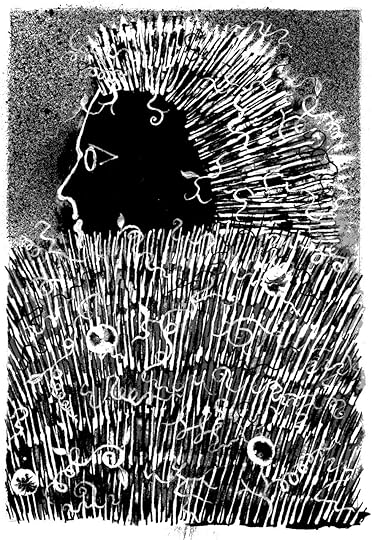
Enchantment, by David Morley
Carcanet, 2010, £9.95
Recent years have seen David Morley mining a rich seam of inspiration from his Romany background – the results, in terms of both quality and quantity, have been enough to make any poet envious. This latest volume shows no sign of a drop-off in either department.
Enchantment does exactly what it says on the cover, fully living up to every sense of that word. In the modern sense, it draws the reader in immediately, delights and intrigues, and doesn’t stop doing so until you put it down.
To do so it draws heavily on worlds of myth and magic (as in the Latin incantare), and most importantly, it sings (cantare). The straightforward simplicity of the title is reflected in poetry that’s serious, ambitious and challenging, but never wilfully obscure.
Its early poems celebrate both friendship and the natural world, and as you’d expect from an ecologist, Morley has a sharp eye and a knack for exact, economical phrasing to conjure it up for the reader.
He also has a gift for evoking nature in a far more impressionistic way, though. In Chorus, a favourite at recent readings, there’s a sparrow sorting “spare parts on a pavement” for every turnstone doing “precisely what is asked of them by name”.
Enjoyable as they are, though, these poems are merely the warm-up before the main event, the “lit circle” in which Romany myths and circus stories are unfolded in sparkling, shimmering language.
This section contains the highlights of the collection, for me. There’s Hedgehurst, telling the story of a half-human, half-hedgehog creator-king, The Circling Game, in which a blacksmith creates a girl from fire, and Spinning, which considers the whole process of story-telling and translation of experience into words, bristling with lines such as:
What’s fabulous might be a hedgehog spiny with rhyme
or a bride born from gnarled nouns. What’s fabulous might be
darkness drowsing over a woman of words beside a waterfall
of words. What’s fabulous might be an anvil hammered white-hot
with hurt, or Lippizans held or hurtling on the harness of a verb.
Now while the Romany background is much in evidence, for me these pieces also recalled Anglo-Saxon poetry and (appropriately enough for the Midlands-based Morley) the Gawain poet in their heavy use of alliteration and their physicality. That’s a difficult knack to pull off – however much I like it, I’ll admit that in some Anglo-Saxon poetry, the metre makes it very difficult for the language to really take flight – so all the more credit to Morley for keeping his lines so supple. Passages such as this, from The Circling Game, beg to be read aloud for the sheer pleasure of the sound:
The masters stank of rancid bank-notes. Their palms were plumy.
Their palms were planed purple with done deals and sure things.
John played a circling game with the horse masters, sending
himself off when wanted most, shying on the end of a lunge line
of their flattery, letting himself be talked back to the fair with a drink
before coming back and laying out the tackle and terms of his trade.
It adds up to an intoxicating brew, and I’ll go back to that word ‘fabulous’ that’s so crucial to the passage quoted from Spinning. As with his collection’s title, Morley’s good at getting you to consider a word’s whole lineage – he takes you back to an older meaning while keeping all its current connotations alive.
I’ll be surprised, and disappointed, if this book doesn’t end up in the running for one of the big awards this year, but regardless of whether or not it does, it’s a superb piece of work. Read it.


July 18, 2011
The Boston Review on Enchantment by David Morley
Writing about web page http://bostonreview.net/BR36.2/david_morley_paul_daniel_franz.php
Review of David Morley's Enchantment - Paul Daniel Franz, Boston Review, April 2011
Enchantment is the final installment of a trilogy which David Morley introduced with 2002's Scientific Papers. Like its predecessors, Enchantment combines the interests of a naturalist - Morley trained as a zoologist - with themes and language derived from Morley's Romani heritage. Though less overtly experimental than The Invisible Kings - the second installment, which arrived in 2007 - Enchantment exhibits a range of formal interests, especially in the recursive properties of anaphora and the pantoum, as well as an increasingly Swinburnian phonemic playfulness: 'Cockerels were volleying vowels from valley to valley.' In another poem, this style seems to echo in aural effects what poets as ancient as Lucretius have imagined in matter, 'particles / that swerve through this under-space like quiet comets.' Cognate with such imagery of dissolution and recombination is the book's focus on the ongoing history of the Roma and their language, which have both long depended on their readiness to transform. Inevitably, the book's catalogue of particles includes ashes - recalling both the genocides of World War II and Romani funeral custom. But, in this world of quasi-fantasy, where historical suffering can be reclaimed through folklore, the emphasis is on restitution. The book's emblematic fairy tale shows a blacksmith reviving a girl by working her ashes on an anvil, explaining, 'Love's the craft of it.' The love of language displayed throughout these poems makes Enchantment live up to its name; its limits are often merely the limits of charm.
Another Excellent Review of Enchantment by David Morley
Writing about web page http://www.bookgeeks.co.uk/2011/02/25/enchantment-by-david-morley/
Enchantment, by David Morley
By Ben Parker on February 25, 2011

David Morley’s poetry collection opens with a sonnet-sequence, written in memory of a friend of his. Although they have the requisite 14 lines Morley’s sonnets depart from tradition in a number of ways with line-lengths of around 15 to 20 syllables, and lacking end-rhymes, but building internal patterning with assonance and half-rhyme. The quality of the writing in these short pieces is particularly striking and they are poems which the poet’s background as a naturalist shows through to good effect. The evocation of, for example, an Alaskan Salmon, is as powerful and fully realised as the faunal observations of Ted Hughes or Alice Oswald, while his specialist knowledge prevents the pieces from slipping into the all-too-easy Romanticism of ‘nature poetry’. This is also true in the poem which follows the sonnet-sequence: ‘The Lucy Poem’. The title alludes to Wordsworth’s famous Lucy poems, but the eponymous subject in this case is not a young girl but rather the 3.2 million year old Australopithecus afarensis skeleton. In content, these opening poems are far from typical of the collection, with the majority of the pieces in the collection concerning the world of Romany gypsies, both their day-to-day experiences and their myths, with the line between the two becoming intriguingly blurred at many points.
The Romany section of the book begins with ‘Hedgehurst’, based on a traditional story concerning a being which is half hedgehog and half human. The poem is spoken by the Hedgehurst in an incantatory tone which at times recalls Geoffrey Hill’s earlier work: “I was space between an axe-edge / and the oak’s white wound.” This is the most lyrical of the Romany poems, the others becoming at times more narrative in tone, at others more directly spoken. The sequence ‘A Lit Circle’, for example, uses monologues by a series of circus workers to take us behind the scenes of that aspect of Romany life in which we are most likely to have encountered them; from ringmaster, to clown, to strongman. The poems do not shy away from the darkness behind the circus, and feel authentic in their blend of pride and realism. In fact, darkness is the presiding hue of the Romany poems. Tradition is celebrated, but Morley is keen to remind us of the hatred many have felt towards gypsies both historically and through to the present day. As with Morley’s previous two books (Scientific Papers and The Invisible Kings) in this loose trilogy, the oral roots of poetry are fore-grounded. The poems remind us of their connection to both magic and to making, as the mythic intertwines with the artisan. In language and in content these are startling creations and a powerful conclusion to the sequence.
July 12, 2011
Excellent Reviews of Enchantment by David Morley
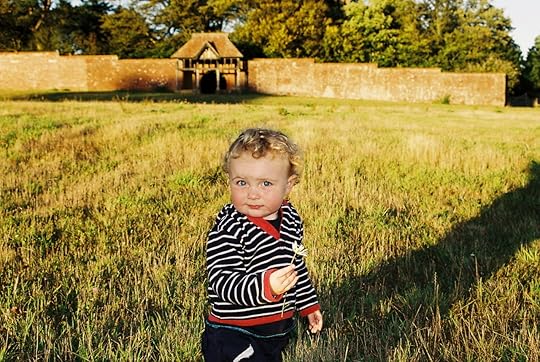
Order copies of Enchantment at http://amzn.to/qJJIWm
By Nisha Obano in Poetry Review, 101: 2, Summer 2001
‘Morley’s poetry evokes with enormous skill and sensitivity the many ways in which ecological changes affect our economic and social lives…Enchantment is a profound and tender work which confirms Morley’s place at the helm of British poetry today’.
By Julia Bird in Magma, Vol, 50, Summer 2010
‘David Morley[‘s]…inheritance and ongoing research has given him access to stories, histories and language which are unfamiliar to most of his non-Romani readers and, in writing them up for us, he offers us a genuine thrill of discovery. Too many times, I’ve seen poets with Three Book Gravitas turn for the first time to the Greek myths in order to sub out their current disquiets to those overstretched archetypes. Sometimes, I don’t want another retelling of Diana and Actaeon, I’d rather read for the first time about The Hedgehurst. He’s half human, half hedgehog, and he’s a powerful figure…
I judder awake as jays bounce
and strut about my body.
I rise, I shout, and they scatter.
They jump screaming into the sky.
It is time to call everything to life
for I am king of this and this is my kingdom.
…with much to tell us about self-determination and statecraft. His spines prick us and demand our attention.
…Morley has a professional stake in the outdoors; his background is in ecology and naturalism. His nature poems read like diagrams of food chains and water cycles; no on element in the web of life has precedence over another. In ‘Fresh Water’, humans, horses, midges and salmon are equally important, yet all of them are subject to a greater power – ‘the energy system / cindering softly under us, slow-cooking the marshlands.’
Whether giving a representation of Romani culture, or weighing up the balance between the natural and the human world, Morley’s lyric “I” is dropped well back. It does not crash about in the undergrowth, drawing attention to itself. Instead, he finds fresh alternate voices and personas to articulate his concerns. The subject of ‘The Lucy Poem’ is – while tipping her hat to Wordsworth’s Lucy-muse – the 3 million-plus-year-old Australopithecus afarensis, whose fossilised remains were found in Ethiopia in the 1970s. Imagining Lucy’s search for water is a way for s to talk about climate change in a way that privileges sensory experience above manipulable stats and science-lite…
When the waterhole went
wolves ran with their thirsts
higher than fur could manage:
they loped the dry courses
to their source, lapping parched
stone where water buried its song
…its persuasive effects unavoidable.
Morley’s language is gorgeous, slubby and dense, demanding a slow-paced reading and recitation. ‘Chorus’ is a patterned, refrain-rich poem for a newborn – ‘The heron hangs its head before hurling down its guillotine. / The tern twists on tines of two sprung wings. The dawn is the chorus’ – which is as much a lullaby as a powerful cradle spell. His tales are told strongly enough to ‘draw readers into a lit circle’ even if the closest they get to a Gypsy campfire is a chalet at Centre Parcs. If I had been anywhere near the shortlisting panels for last year’s poetry prizes, I would have nudged this collection and its newly delivered worlds to the top of the pile.’
June 17, 2011
Don Paterson's 'The Dark Art of Poetry' by David Morley
Writing about web page http://www.poetrylibrary.org.uk/news/poetryscene/?id=20
This lecture by Don Paterson is available publicly and in full from the South Bank Centre website tagged above. I reproduce excerpts here for poetry students at Warwick - or for any passing migrants settling here for an evening. I urge readers to dive into the full version.
from THE DARK ART OF POETRY by Don Paterson. The TS Eliot Lecture, commissioned by the South Bank Centre, and delivered as part of Poetry International on Saturday 30 October 2004.
...
There are dangers involved in committing bad things to memory: about a hundred years ago the mathematician Charles Hinton devised a series of three-dimensional geometrical objects, known as Hinton's Cubes. The idea was that once memorised they could be mentally reassembled into a 3D net, and then infolded to produce a 4-dimensional model; this, he claimed, would allow you some conception of 4-space. Bizarrely, it actually seemed to work. There were two unforeseen consequences, however: four-space is not a happy thing to carry around in your head when you have to have to wake up every day in 3-space, put your clothes on in the right order, use the toilet accurately, and place your breakfast in the right holes. But much worse, Dr Hinton had devised no mean by which, once 4-space was memorised, it might be forgotten again. A few folk went irrecoverably insane, and the cubes were quietly withdrawn from public sale.
I've said this so many times it's beginning to sound a bit self-satisfied - but a poem is just a little machine for remembering itself. Whatever other function a rhyme, a metre, an image, a rhetorical trope, a brilliant qualifier or stanza-break might perform, half of it is simply mnemonic. A poem makes a fetish of its memorability. It does this, because the one unique thing about our art is that it can carried in your head in its original state, intact and perfect. We merely recall a string quartet or a film or a painting, actually, at a neurological level we're only remembering a memory of it; but our memory of the poem is the poem. A poet exploits this fact, and tries to burn their poems into your mind, and mess with your perception. Its most primitive (and so we can probably assume its earliest) function is as a system for the simple storage and retrieval of information, and sometimes its concealment; the poets of certain nomadic Saharan tribes are charged with memorising the location of the waterholes, in way that will not betray them to others. No wonder that poetry, from the earliest so deeply connected to the world and our own survival in it, was quickly invested with magical properties, and soon took the form of the spell, the riddle, the curse, the blessing, the prayer. They are - and poems remain - invocatory forms. Prose evokes; the well-chosen word describes the thing. But poetry invokes; the memorable word conjures its subject from the air.
So that's the occult part; but I also believe that poetry is a science, and that poetic composition can be studied in much the same way as music composition. But I think the language of verse composition has been lost, or at least disfigured to the point of uselessness. Poets no longer feel confidently expert in their own subject. The language of academic versification studies and 'poetics' is only appropriate for something that describes the result, not the working practice; the noun, not the living verb. This language always makes the error of talking about the messy, insane process of verse-making as if it were a clean operation. Our business is not with rhyme, but with rhyming; not with metaphor but with metaphorising, the active transformation of the image; and there is as much difference between the two as there is between checking a watch, and building one.
Such description as exists of the real composing process is couched in the language of the beginner's workshop, with its nonsensical talk of show-not-tell, and 'good subject matter' - or the language of self-help. Incidentally, the systematic interrogation of the unconscious, which is part of the serious practice of poetry, is the worst form of self-help you could possibly devise. There is a reason why poets enjoy the highest statistical incidence of mental illness among all the professions. Your unconscious is your unconscious for an awfully good reason. If you want to help yourself, read a poem, but don't write one. Then again I think maybe 5% of folk who write poetry really want to write poetry; the other 95 are quite safe, and just want to be a poet. If they knew what the dreams were like, they wouldn't.
Only plumbers can plumb, roofers roof and drummers drum; only poets can write poetry. Restoring the science of verse-making would restore our self-certainty in this matter, and naturally resurrect a guild that, I believe, would soon find it had some secrets worth preserving.
But the main result of such an empowerment would be the rediscovery of our ambition, our risk, and our relevance, through the confidence to insist on the poem as possessing an intrinsic cultural value, of absolutely no use other than for its simple reading...
...
Publication - by which I simply mean 'someone else reading your poem' - directly unites the reader and poet, and to read out a line someone else has written in your own voice is to experience a little transmigration of souls. A glorious example of direct publication is Poems On The Underground. The means is the end. In a radical subversion of the mechanism of corporate advertising - Postmoderns take note - a short good poem is placed in huge type before a person with ten minutes to do nothing else but read it three times, targeting a wide enough audience to find that one-in-six receptive to the high frequency of the art form.
...
I've always felt that every morning the poet should stand at the window and remember that nothing that they see, not a bird or stone, has in its possession the name they give it. That seems a reasonably humble starting point. It also might have serious consequences - something very important for a mammal within and without it - for our orientation in addressing the world, our prepositional stance.
Whether you take this seriously or not - all this, for the poet, is much more than a little perceptual game. When we allow silence to reclaim those objects and things of the world, when we allow the words to fall away from them - they reassume their own genius, and repossess something of their mystery, their infinite possibility. Then the we awaken a little to the realm of the symmetries again, and of no-time, eternity. The poet's specific talent: when the things of the world (in which we should very much include our own feelings, ideas, and relations with one other) that we have contemplated in this wordless and thoughtless silence reenter the world of asymmetrical concept, of discrete definition, of speech and language - they return as strangers; and then they declare wholly unexpected allegiances, reveal wholly unsuspected valencies. We see the nerve in the bare tree, we hear the applause in the rain. These things are, in other words, redreamt, they are reimagined, they are remade. This I think is the deepest meaning of our etymology as maker. One more point: the poem having been translated from the silence, as my friend Charles Simic puts it, it has briefly kept the company of everything, of all natural things, and its desire to then declare a kinship with those things - to become a beautiful manmade natural object, with the integrity, symmetry and rhythm of the natural - should be no surprise.
So the first thing the poet in the act of composition should always observe is silence. Observe, almost in the religious sense: it's a matter of honouring the silence - of which the white page is both a symbol and a means of practical invocation - in which the poem can ultimately reverberate to its deepest reach. (Space sings: this is why the secret guild of guitarists used to place a horse's skull in the corner of the room, as a sympathetic resonator.) We do this by balancing that unity of silence by a reciprocal unity of utterance; the latter actually has the effect of invoking the former. Poetry is the art of saying things once. After all your other skills are in place, our only task is to avoid understatement and overstatement. It sounds an easy matter, but it's a lifetime's study.
...
It is our riven condition, though - which Rilke refers to as the double realm (that of a living creature with foreknowledge of its own death, part-ghost) that makes us creatures that continually connect between the two worlds, are in fact driven to connect; and I believe poetry is the highest form of that negotiation, from the tiny narrow aperture of the Adamite back to the wide-field Edenic. Poetry, then, remystifies, allows the Edenic innocence, the symmetrical and unified view, to be made briefly conscious and re-entered via the most perverse (but perhaps only) tool for the job: language. Poetry is the paradox of language turned against its own declared purpose, that of nailing down the human dream. It uses new metaphors against the dead ones that form our speech. It attempts to conjure up, invoke, those states and those deep connections that have been excluded by the narrowness of the dream, and so cast out of our language. Poets are therefore, paradoxically, experts in the failure of language. Words fail us continually, as we search for them beyond the borders of speech, or drive them to the limit of their meaning and then beyond it. No wonder we need a club.
...
The object of a poem is to place a new unity in the language (an exploded view, if you like, of a new word) that results from the love affair between two hitherto unconnected terms: two words, two ideas, two phrases, two images, a word and an image, a phrase and a new context for it, so on. One thing is sterile and will result perhaps in some pretty description - but nothing the poet did not know before they started. These are the poems that are made up. If two things don't exist, there will be no discovery in our process, and hence absolutely no surprise for the reader. (I'll give you a more specific formula: the process of the poem is that of a unifying idea being driven through the productive resistance of the form proposed by the marriage of two previously estranged or unrelated things.)
...
Our defining heresy as poets is that we know that sound and sense are the same thing. Everyone else thinks them merely related. We need not connect what is already joined; to unite things again, we so often have to remove our own clumsy connections, our own redundant mediation. The acoustic and semantic properties of the word are not even interchangeable for us; they are wholly consubstantial. They arose together, and to talk of one is to talk of the other. We allow our ear to think for us.
...
June 9, 2011
A Creative Writing Workshop at Warwick University with A.L. Kennedy and an Austringer by David Morley
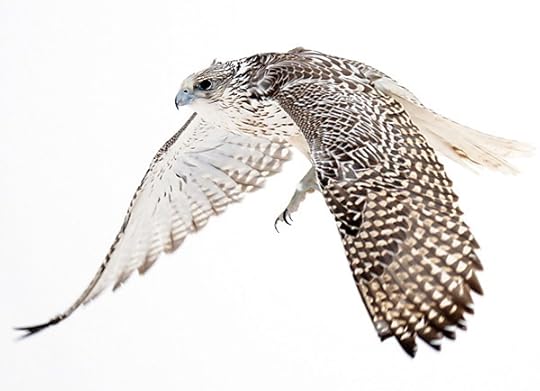
About two years ago, Alison Kennedy and I talked about bringing a falconer to Warwick to talk about falconry and birds and prey. The connections between writing and flying and preying concern being unselfconscious in action, focussed on a target without distraction or apprehension, and about confidence and craft in movement and life. Two days ago, Brian arrived with his partner Gill along with a borrowed Gyrfalcon, his Scops Owl, his two Harrier Hawks and a Peruvian Barn Owl. The seminar covered the behaviour and life cycle of these birds, and the elements of falconry and bird craft and lore. Brian is an Austringer, not a Falconer, a distinction as important as between being a Poet and a Playwright...
May 10, 2011
Nothing is Real by David Morley
Writing about web page http://www.bbc.co.uk/news/uk-england-merseyside-13344102
Beatles' Strawberry Fields gates removed
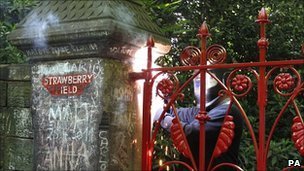 The new fake gates replaced the worn-out originals
 The ornate iron gates of a children's home which inspired John Lennon's psychedelic Beatles anthem Strawberry Fields Forever have been removed.
The Salvation Army, which owns the former home, is putting the red Victorian gates into storage.
It means Beatles fans who pass the Woolton site on bus tours will now be met with 10ft (3m) high replicas.
May 4, 2011
Marriage Vows of a Rom to a Gadji by David Morley
Writing about web page http://www.guardian.co.uk/books/2011/apr/23/wedding-carol-ann-duffy-poetry
I was recently invited by the Poet Laureate Carol Ann Duffy to write a poem on the subject of wedding vows. I decided to open the subject to Romani language and culture. The poem was published in The Guardian before the Royal Wedding, alongside a number of other poems which can be found here. Enough time has passed now since the wedding and publication for me to reproduce the poem and notes below, and also to show some of the source material from the Patrin website. If anybody has a copy of the actual Guardian in which the poems appeared I would love to have it as I was away walking the Pembrokeshire Coast Path when it was published...
Marriage Vows of a Rom to a Gadji
To all of you at this pliashka, we are one
Until the shadows steal our horses home.
To thee, romni, lightest lace across thy kocsh,
For the treasures of lon and gold marò.
Break the bold marò, Borì – salve it
In the blood and salt upon thy knee.
Share this salt, this bread, this blood.
Let us leap low over the candles' glow.
Mi dèhiba, I feed thee and thou will feed me
Even as our hearts slow, our tresses sewn with suy.
Our unlike hands will untangle. We shall
Gather up kookoochìn for your balà.
Sorì simensar sì mèn, we cry as one.
All who are with us are ourselves.
Rom: Romani man; Gadji: Non-Roma woman; pliashka: Romani ceremony preceding the 'abiav' or wedding (see below); romni: wife; kocsh: knee; lon: salt (n); marò: bread; Borì: bride; mi dèhiba: my beloved; suy: grey; kookoochìn: snowdrops; balà: hair; Sorì simensar sì mèn: We are all one; all who are with us are ourselves.
Romani vows: At the pliashka the symbol of celebration is a bottle wrapped in a coloured silk handkerchief, brought to the ceremony by the man's father. Gold coins on a necklace are looped on the bottle. The future groom's father takes the necklace of coins and puts it around the future bride's neck. In the subsequent Roma marriage rite, the bride and groom might each take a piece of bread and place a drop of their blood on the bread. They then exchange and eat each other's bread. Sometimes a small amount of salt and bread is placed on the knees of the bride. The groom takes some of the bread, puts salt on it, and eats it. The bride does the same. The recent depictions of 'Gypsy weddings' on television are a travesty of what happens at these occasions.
April 5, 2011
I was reading Corso's poem 'Marriage'when a wasp dropped on to my keyboard & I jumped out of my skin by David Morley
Should I get married? Should I be good?
Astound the girl next door with my velvet suit and faustus hood?
Don't take her to movies but to cemeteries
tell all about werewolf bathtubs and forked clarinets
then desire her and kiss her and all the preliminaries
and she going just so far and I understanding why
not getting angry saying You must feel! It's beautiful to feel!
Instead take her in my arms lean against an old crooked tombstone
and woo her the entire night the constellations in the sky-
When she introduces me to her parents
back straightened, hair finally combed, strangled by a tie,
should I sit with my knees together on their 3rd degree sofa
and not ask Where's the bathroom?
How else to feel other than I am,
often thinking Flash Gordon soap-
O how terrible it must be for a young man
seated before a family and the family thinking
We never saw him before! He wants our Mary Lou!
After tea and homemade cookies they ask What do you do for a living?
Should I tell them? Would they like me then?
Say All right get married, we're losing a daughter
but we're gaining a son-
And should I then ask Where's the bathroom?
O God, and the wedding! All her family and her friends
and only a handful of mine all scroungy and bearded
just wait to get at the drinks and food-
And the priest! he looking at me as if I masturbated
asking me Do you take this woman for your lawful wedded wife?
And I trembling what to say say Pie Glue!
I kiss the bride all those corny men slapping me on the back
She's all yours, boy! Ha-ha-ha!
And in their eyes you could see some obscene honeymoon going on-
Then all that absurd rice and clanky cans and shoes
Niagara Falls! Hordes of us! Husbands! Wives! Flowers! Chocolates!
All streaming into cozy hotels
All going to do the same thing tonight
The indifferent clerk he knowing what was going to happen
The lobby zombies they knowing what
The whistling elevator man he knowing
Everybody knowing! I'd almost be inclined not to do anything!
Stay up all night! Stare that hotel clerk in the eye!
Screaming: I deny honeymoon! I deny honeymoon!
running rampant into those almost climactic suites
yelling Radio belly! Cat shovel!
O I'd live in Niagara forever! in a dark cave beneath the Falls
I'd sit there the Mad Honeymooner
devising ways to break marriages, a scourge of bigamy
a saint of divorce-
But I should get married I should be good
How nice it'd be to come home to her
and sit by the fireplace and she in the kitchen
aproned young and lovely wanting my baby
and so happy about me she burns the roast beef
and comes crying to me and I get up from my big papa chair
saying Christmas teeth! Radiant brains! Apple deaf!
God what a husband I'd make! Yes, I should get married!
So much to do! Like sneaking into Mr Jones' house late at night
and cover his golf clubs with 1920 Norwegian books
Like hanging a picture of Rimbaud on the lawnmower
like pasting Tannu Tuva postage stamps all over the picket fence
like when Mrs Kindhead comes to collect for the Community Chest
grab her and tell her There are unfavorable omens in the sky!
And when the mayor comes to get my vote tell him
When are you going to stop people killing whales!
And when the milkman comes leave him a note in the bottle
Penguin dust, bring me penguin dust, I want penguin dust-
Yes if I should get married and it's Connecticut and snow
and she gives birth to a child and I am sleepless, worn,
up for nights, head bowed against a quiet window, the past behind me,
finding myself in the most common of situations a trembling man
knowledged with responsibility not twig-smear nor Roman coin soup-
O what would that be like!
Surely I'd give it for a nipple a rubber Tacitus
For a rattle a bag of broken Bach records
Tack Della Francesca all over its crib
Sew the Greek alphabet on its bib
And build for its playpen a roofless Parthenon
No, I doubt I'd be that kind of father
Not rural not snow no quiet window
but hot smelly tight New York City
seven flights up, roaches and rats in the walls
a fat Reichian wife screeching over potatoes Get a job!
And five nose running brats in love with Batman
And the neighbors all toothless and dry haired
like those hag masses of the 18th century
all wanting to come in and watch TV
The landlord wants his rent
Grocery store Blue Cross Gas & Electric Knights of Columbus
impossible to lie back and dream Telephone snow, ghost parking-
No! I should not get married! I should never get married!
But-imagine if I were married to a beautiful sophisticated woman
tall and pale wearing an elegant black dress and long black gloves
holding a cigarette holder in one hand and a highball in the other
and we lived high up in a penthouse with a huge window
from which we could see all of New York and even farther on clearer days
No, can't imagine myself married to that pleasant prison dream-
O but what about love? I forget love
not that I am incapable of love
It's just that I see love as odd as wearing shoes-
I never wanted to marry a girl who was like my mother
And Ingrid Bergman was always impossible
And there's maybe a girl now but she's already married
And I don't like men and-
But there's got to be somebody!
Because what if I'm 60 years old and not married,
all alone in a furnished room with pee stains on my underwear
and everybody else is married! All the universe married but me!
Ah, yet well I know that were a woman possible as I am possible
then marriage would be possible-
Like SHE in her lonely alien gaud waiting her Egyptian lover
so i wait-bereft of 2,000 years and the bath of life.
The Xenotext Experiment of Christian B
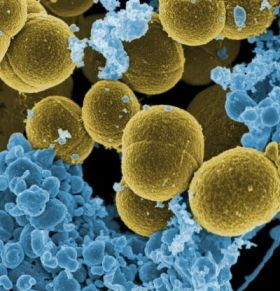
An Interview with Christian Bök [PDF]. Explanation of project Video 1 , Video 2 . More Videos.
"I have conceived of The Xenotext Experiment, a literary exercise that explores the aesthetic potential of genetics in the modern milieu, doing so in order to make literal the renowned aphorism of William S Burroughs, who declared “the word is now a virus.” In this experiment, I propose to address some of the sociological implications of biotechnology by manufacturing a “xenotext” – a beautiful, anomalous poem, whose “alien words” might subsist, like a harmless parasite, inside the cell of another life-form...."
I propose to encode a short verse into a sequence of DNA in order to implant it into a bacterium, after which I plan to document the progress of this experiment for publication. I also plan to make related artwork for subsequent exhibition.
I plan to compose my own text in such a way that, when translated into a gene and then integrated into the cell, the text nevertheless gets “expressed” by the organism, which, in response to this grafted, genetic sequence, begins to manufacture a viable, benign protein – a protein that, according to the original, chemical alphabet, is itself another text. I hope, in effect, to engineer a primitive bacterium so that it becomes not only a durable archive for storing a poem, but also a useable machine for writing a poem."
David Morley's Blog

- David Morley's profile
- 13 followers

