
Jonathan Clements's Blog, page 399
October 21, 2018
Garbage In
IN THE MID-1990s, Federal Express had a problem. Though the company’s safety record was exemplary, regulators had proposed new rules that would have posed an operational nightmare for the giant shipper.
The company flew Boeing 727 air freighters that each accommodated eight containers. Though they had never had a problem, the government’s concern was that if two heavier-than-average containers were loaded next to each other, it could cause the plane to become dangerously unbalanced.
To assess the risk, the company hired a statistician to estimate the probability of a “double-heavy” situation. According to his analysis, the risk was extremely low—about 3%. Then the company asked the statistician to analyze a sampling of actual container weights. What he found surprised everyone: While the probability was indeed 3% virtually everywhere, it turned out to be much higher in one place: Austin, Texas. There, double-heavies occurred nearly every day.
The company took a closer look at Austin and quickly found their answer: A fast-growing local company was mailing an increasing number of heavy boxes each day. The company in question: Dell Computer, which is based in nearby Round Rock. This was in the days before lightweight laptops and flat-screen monitors. As a result, all those Dell shipments ended up pushing the frequency of double-heavies flying out of Austin far above 3%.
I heard this story, when I was in school, from the expert who solved the puzzle. Though he was a professional statistician, he liked to share the story with students as a cautionary tale that illustrates the limitations of statistics. His message: While textbook statistical methods often approximate the real world, you need to be awfully careful with those cases that don’t. Statistics might tell you that package sizes will be evenly distributed in most places, and that might be a reasonable assumption most of the time. But as the Dell case proves, you always need to look beyond the numbers.
In my view, there’s a popular corner of the investment world where it’s also important to look beyond the numbers: high-yield junk bonds. In recent months, investors have been piling into junk bonds, according to mutual-fund industry data. But while the numbers suggest that junk bonds are an attractive investment, I would urge caution.
Here’s what the statistics say: Over the past 15 years, high-yield bonds have delivered returns virtually on par with the S&P 500 Index of large-cap stocks, but with much lower volatility. Better still, in recent years, the default rate on high-yield bonds has averaged just 2% a year, compared to an historical average closer to 4%. In bond parlance, a “default” occurs when a bond issuer fails to make a scheduled payment.
In short, high-yield bonds appear to offer attractive returns with modest risk. But in my opinion, we need to look beyond these rosy statistics. I see three issues:
1. It’s true that recent high-yield bond default rates have been around 2%. But it makes no sense to assume that the recent past will predict the future. Go back 10 years, to 2008, and you’ll find that annual default rates suddenly quadrupled, inflicting double-digit losses on investors. Go back to 2001, and you’ll find that 11% of junk bond issues defaulted. And the 1980s were particularly bad for junk bonds. Nearly 50% of the junk bonds issued between 1980 and 1985 eventually defaulted. The fact that default rates are currently low doesn’t mean that they will always be so.
2. Since 1980, we’ve seen three major hiccups in the high-yield market. It could be even worse the next time. The period since 1980 has been unusually favorable for bonds, because of the nearly nonstop decrease in interest rates over that stretch. But today, we’re in uncharted territory. Because high-yield bonds barely existed prior to the 1980s, no one knows how they’ll perform if rates increase for multiple years in a row.
3. The amount of junk-bond debt is far larger than ever before. According to the credit rating agency Moody’s, the proportion of companies now in junk status has increased by nearly 60% since 2009, to its highest level ever. In fact, in an ominous statement, Moody’s warned that “a number of weak issuers are living on borrowed time while benign conditions last.”
The bottom line: I would be skeptical of the rosy statistics—and steer clear of high-yield bonds.
Adam M. Grossman’s previous blogs include All Too Human, Stepping Back and When to Roth . Adam is the founder of Mayport Wealth Management , a fixed-fee financial planning firm in Boston. He’s an advocate of evidence-based investing and is on a mission to lower the cost of investment advice for consumers. Follow Adam on Twitter @AdamMGrossman .
The post Garbage In appeared first on HumbleDollar.


October 20, 2018
Newsletter No. 34
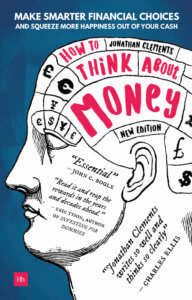
HOW CAN WE GET the most out of our income and savings? Two years ago, in a slim volume called How to Think About Money, I offered my answer. Earlier this month, a new edition of the book came out, geared toward a global audience. To mark the new edition’s publication, I’ve devoted HumbleDollar’s latest newsletter to How to Think About Money’s 12 key recommendations.
The newsletter also includes a promo code that can save you money, if you order the new book direct from the U.K. publisher. In addition, the newsletter has brief descriptions of HumbleDollar’s latest blogs, along with links to those articles.
Follow Jonathan on Twitter @ClementsMoney and on Facebook . His other new book, From Here to Financial Happiness, can now be ordered from Amazon and Barnes & Noble. Jonathan’s most recent articles include The Other Half, A Good Life and Jack of Hearts.
The post Newsletter No. 34 appeared first on HumbleDollar.
Thinking About Money
I HAVE SPENT 33 YEARS writing and thinking about money. I’m not sure it’s the most uplifting way to spend one’s life, but it’s kept me busy and—for the most part—out of trouble.
Two years ago, I took some of the financial ideas that have especially intrigued me over the past three decades, and I brought them together in a slim volume called How to Think About Money. The book proved surprisingly popular, so I recently updated it for a global audience.
 How to Think About Money touches on topics such as happiness research, our rising life expectancy, behavioral finance and the importance of our human capital—and then teases out the implications for our financial lives. Here, pulled from the book’s final chapter, are 12 suggestions for how to get the most out of our money:
We favor possessions for their lasting value, but often we get greater happiness when we spend our money on experiences. Forget the new car. Instead, take the family to Paris.
We should use our dollars, pounds or euros to create special times with friends and family. Take the kids to a sports event and your spouse to the theater. Have dinner out with friends. Book a trip to see the grandchildren.
We should design a life for ourselves where we can spend our days doing what we love. To that end, we should save every penny we can early in our adult life, so we quickly buy ourselves some financial freedom. In our 40s or 50s, we might use that freedom to switch into a career that’s perhaps less lucrative, but which we may find more fulfilling.
We should worry less about dying early in retirement, and more about living longer than we ever imagined. Faced with that risk, most of us should delay Social Security to get a larger monthly check, and also consider buying immediate annuities that pay lifetime income.
Our investment time horizon is measured not in months and years, but in decades and decades. We should strive to look beyond the market’s short-term turmoil and instead aim to collect the staggering gains that can accrue to those who hold globally diversified stock portfolios for 30 or even 50 years. Indeed, while a long bear market can impoverish retirees who don’t have enough in bonds and cash investments, it can be a great gift to young adults who are good savers, because it offers the chance to buy stocks at bargain prices.
We should hold down our fixed monthly costs, such as the sum we devote to mortgage or rent, cars, utilities, groceries and insurance premiums. Those low fixed costs will give us additional financial breathing room, which can ease our sense of financial stress, leave us with more money for discretionary “fun” spending—and allow us to save voraciously.
Good savings habits don’t come naturally, so we need to make socking away money as painless as possible. That means signing up for payroll contributions to our employer’s retirement plan and setting up automatic investment plans, where money is pulled from our bank account each month and invested directly into the funds we choose. It also means adopting easy-to-follow financial rules, such as always adding $50 or $100 to the monthly mortgage payment and always saving financial windfalls, including tax refunds and income from a second job.
The harder we try to beat the market, the more likely we are to fail, thanks to the hefty investment costs we incur. To avoid that fate, we should stop trying to outsmart other investors and instead embrace humility—in the guise of a globally diversified portfolio of low-cost index funds.
We should never forget that stocks have fundamental value. For a diversified stock portfolio, that fundamental value will change much more slowly than market prices. To keep ourselves grounded, we should focus on the dividends and earnings we buy with every dollar, pound or euro invested, we should have a handle on the market’s likely long-run return, and we should think like shoppers, viewing market declines with the same enthusiasm that we view a sale at the local department store.
Chronologically, retirement might be our life’s final financial goal, but we should always put it first. Retirement is the most expensive of our goals, and hence we need to save and collect investment gains for many decades to amass enough money. Retirement is also distinctly different from other goals, like buying a home or paying for our children’s education. What’s different? Retirement won’t be optional for most of us and we can’t expect to pay for it out of our paycheck, because at that point we won’t have one.
We should take a broad view of our finances—and the unifying notion should be the income from our human capital, or the lack thereof. The paychecks we collect over our lifetime are like a bond that generates 40 years of fairly steady income. That income stream can diversify a portfolio that’s heavily invested in stocks, provide the savings we need to set aside for retirement, and allow us to take on debt early in our adult life and then repay it by the time we retire. We also need to protect our human capital, by ensuring we have adequate health coverage, and sufficient disability and life insurance.
The goal isn’t to get rich. Rather, the goal is to have enough money to lead the life we want. We shouldn’t put that at risk by incurring excessive investment costs, straying too far from a global indexing strategy and failing to buy insurance against major financial risks.
 Pounds Lighter
WANT A COPY of the new international edition of How to Think About Money? You can purchase it directly from the U.K. publisher, Harriman House, for £12.99, equal to around $17.
Problem is, if you’re outside the U.K., Harriman will likely charge you £4.50 for international shipping. To offset that cost, I asked Harriman for a special discount for HumbleDollar readers. If you buy from the Harriman website, you can use this promo code during checkout: H2TAMoffer. That’ll save you £4.50. The promo code is good through Nov. 5.
Latest Blogs
“I know of a retiree who says he’s quite happy living in a trailer on $1,300 a month,” writes Richard Quinn. “How does that square with the conventional wisdom that, once retired, you need 80% of preretirement income?”
Should you convert your traditional IRA to a Roth? As you wrestle with the question, Adam Grossman suggests working through five key steps.
“I think of my low fixed expenses as a wall protecting me from disaster,” says Dennis Friedman. “Reducing expenses can be a first responder that saves you in a financial emergency.”
Volunteers for charitable organizations can deduct their unreimbursed out-of-pocket expenses—though there are limits to the IRS’s generosity, warns Julian Block.
“Is the giant turkey leg you’re chomping on, while waiting in line for that next Disney attraction, really worth paying 20% interest?” asks Richard Quinn.
Half of Americans—and likely more—are at risk of failing to maintain their standard of living once they retire. What to do? Here are five super-simple strategies that everybody could benefit from.
“My co-workers knew I had a financial background, so they often came to me with their statements,” recalls Tony Isola. “High-fee variable annuities and loaded mutual funds littered the crime scene.”
Crisis? What crisis? John Lim argues that bear markets offer three huge financial benefits.
“If you conclude that a change is in order for your portfolio, don’t worry that it’s too late,” says Adam Grossman. “Yes, stocks are down from where they were trading in recent weeks. But recognize that those were all-time highs.”
Jiab Wasserman calculated that she and her husband could retire in Spain on just $30,000 a year. So they packed their bags and went for it.
“I kept thinking that someday I’d come around to more bonds, but not now,” writes Dennis Quillen. “The years went by. I took early retirement at age 62 and still had zero dollars in bonds.”
It’s difficult to recognize progress, including our own financial progress. Ross Menke’s advice: Keep reminders of your achievements, find an accountability partner—and track your net worth.
“While the market is still near its all-time high, check your asset allocation,” advises Adam Grossman. “Even if you have a view on the way things will turn out, make sure you’ll be okay if it goes the other way.”
Follow Jonathan on Twitter @ClementsMoney and on Facebook . His other new book, From Here to Financial Happiness, can now be ordered from Amazon and Barnes & Noble. Jonathan’s most recent articles include The Other Half, A Good Life and Jack of Hearts.
The post Thinking About Money appeared first on HumbleDollar.
October 19, 2018
Slow Going
HAS THE PERCENTAGE of individuals across the world living in extreme poverty remained the same, doubled or halved over the past 20 years? If you answered halved, give yourself a pat on the back. According to Gapminder.org, you’re among just 9% of respondents who answered the question correctly. Despite what you hear on the news, the world is gradually becoming a better place.
It’s difficult to recognize progress, including our own financial progress, when it happens slowly over long periods of time. We want to see progress right away, but it’s the incremental progress over the years that adds up to the big improvements we seek.
Want a better handle on the progress you’re making? Try these four steps.
1. Track key indicators. When I think about improving my financial situation, I focus on my net worth. Every month, I update my net worth using a basic spreadsheet that lists my personal assets and liabilities. Without this regular tracking, I would guess that my net worth hasn’t changed over the past three years, as I don’t feel any wealthier today than I did then. In looking at the spreadsheet, however, I see that my net worth has more than doubled over that time, thanks to regular saving and investment gains.
2. Increase your knowledge. What’s the last book you read? Warren Buffett is known as a voracious reader, viewing knowledge as another form of compound interest. I have adopted this practice and read upwards of 25 books per year in a range of genres. I keep track of all the books I read, so I can recognize this steady progress.
One book may or may not change my life, but 100 books over a few years will make a difference. In particular, The Millionaire Next Door by Thomas Stanley and William Danko was formative in helping me appreciate the importance of living below my means and living a financially sound life.
3. Find accountability partners. Your personal finances may not be a topic you want to discuss with everyone. But having someone you can confide in goes a long way. The massive progress you’re trying to make over the course of your career can seem daunting. The help of an objective individual may be what you need to stay the course. I share my financial priorities with my mentor, so he can keep me accountable to my stated goals. Others to consider include a friend, family member, your significant other or a financial planner.
4. Keep reminders of your progress. I live a fairly minimalist life and am quick to throw things away. But I hold on to signs of progress and achievement. For me, these include graduation cards, “thank you” notes from clients and colleagues, and diplomas from college and advanced certifications. When I feel like I’m not improving, I’ll look through these items and recognize the progress I’ve made over the past decade.
We all have goals we’re trying to achieve—and long-term financial goals can be among the most discouraging, which is why it’s important to recognize the slow and steady improvement in our lives. Progress may be hard to feel in real time. But regular reinforcement can help you appreciate the massive improvement you’re actually making.
Ross Menke is a certified financial planner and the founder of Lyndale Financial, a fee-only financial planning firm in Nashville, Tennessee. He strives to provide clear and concise advice, so his clients can achieve their life goals. Follow Ross on Twitter @RossVMenke.
The post Slow Going appeared first on HumbleDollar.
October 18, 2018
Won in Translation
RETIREMENT IN America can be like plodding through a long, dark tunnel, with seemingly no light at the other end. I found, however, that if one looks sideways, there’s an escape hatch: retiring abroad.
For my husband and me, our search led us to Spain, having heard it had a low cost of living, excellent health care and a good climate. We visited a few times and fell in love, particularly with the city of Granada. The next logical step: determining if we could swing it financially.
I used Numbeo.com to compare the cost of living in the U.S. and abroad. It’s the world’s largest database of user-contributed data about cities and countries, and it provides timely information on general cost of living, housing, health care, traffic, crime and pollution. Numbeo provides six indices: cost of living (excluding rent), rent, cost of living plus rent, groceries, restaurants and local purchasing power.
The overall index is relative to New York City, which is set at 100. If another city has a rent index of 120, it means that city’s rents are an average 20% more expensive than New York’s. Conversely, if a city’s rent index is 70, that means the city’s rents are an average 30% lower than New York’s.
I was particularly interested in the cost of living plus rent index—not counting health care—using our then-resident city of Dallas as a comparison point. The Numbeo indexes showed New York at 100, Dallas at 55 and Granada at 33. Granada was thus 67% cheaper than New York. Even comparing Granada and Dallas was astounding. Consumer prices including rent in Dallas were 67% higher than in Granada, even before factoring in health care.
I dove further into the details and used Numbeo’s cost-of-living estimator for Granada. There are quite a few detailed questions one has to answer, including about one’s household (rent/purchase, members), spending habits (clothes, gym, cars and travel) and entertainment spending (movies, clubbing and alcohol consumption). My results showed that we would spend $2,100 per month living in Granada—and that included the traditional tapas bar hopping.
Next, we had to figure out health care. Spain has one of the best health care systems in the world. It’s ranked No. 7 by the World Health Organization. By comparison, the U.S. comes in at No. 37. We would have to shop for private insurance for our first year. But after that, we could sign up for public health insurance, which would cost us—wait for it—zero. Thanks to a recent change in Spanish law, all residents receive free health care.
We decided to go with one of the most highly recommended health insurance companies in Spain for expats. The plan is $193 per month for both of us. This is a comprehensive plan, even considered an expensive one, with no copay, no deductible and includes basic dental services. The plan also includes worldwide emergency coverage of up to $14,000. We pay an extra $1.75 a month to increase emergency coverage in the U.S. to just over $35,000.
Putting it all together, using a combination of our actual numbers and Numbeo’s estimates, I calculated that it would cost just over $30,000 per year for us to live comfortably in Granada. Bottom line: The numbers said we could potentially retire immediately, in our early to mid-50s, and live very well.
We didn’t want to spend our healthiest years planning for the future, always saying “someday,” while our lives passed us by. We would have to give up things, like cars and a large house. But we would gain so much more: walks in the mountains, fresh Mediterranean food, siestas.
So we packed our bags and went for it.
Jiab Wasserman recently retired at age 53 from her job as a financial analyst at a large bank. She and her husband, a retired high school teacher, currently live in Granada, Spain, and blog about financial and other aspects of retirement—as well as about relocating to another country—at YourThirdLife.com.
The post Won in Translation appeared first on HumbleDollar.
October 17, 2018
Reality Check
CAN YOU LIVE on Social Security alone? The answer is a big fat “it depends.”
I was recently taken to task by a reader, who stated he and his wife live just fine on their combined $30,000 in Social Security benefits. I also know of a retiree who says he’s quite happy living in a trailer out west on $1,300 a month. How does that square with the conventional wisdom that, once retired, you need 80% of preretirement income, let alone with my unconventional wisdom that you should strive for 100% income replacement?
It all boils down to how you want to live. If you say you can live comfortably on just your monthly Social Security check, you’re saying that, on the day you retire, you can absorb a 60% cut in income for the rest of your life. The reason: Social Security is designed to replace 40% of income, and for many it’s less.
The median income for seniors age 65 to 74 is $36,320. If you’re over 74, that drops to $25,417, according to the U.S. Census Bureau. Indeed, 12% of those 65 and older are living at the poverty level.
I could not survive on $30,000 a year. My property taxes alone are more than half that amount. But even if I could make do with $30,000, paying for basic necessities with nothing left over sounds grim. Even most hobbies cost money.
So what are the components of “it depends”?
Are you willing and able to relocate to a less costly area?
Do you have assets to fall back on, if only for a financial emergency?
How modestly are you willing to live? Is it just a matter of surviving—or do you seek more from retirement, such as travel?
Will you be debt-free at retirement, especially from a mortgage and any credit card debt, or will you need additional income to cover your borrowing costs?
Even if you figure you can get by on Social Security alone, you should probably ask yourself two additional questions:
If you live on just Social Security and you’re married, could the surviving spouse live on perhaps two-thirds of that income?
Are you comfortable leaving your entire income to the whims of the folks in Congress?
The Social Security Administration estimates 21% of married couples and 44% of single seniors count on Social Security for 90% or more of their income. Clearly, people do manage to live on Social Security alone, but it can’t be much fun.
For the vast majority of Americans, there’s no reason to do so. Even modest saving and investing can make a big difference to your retirement years. If you’re still in the workforce, get time on your side. Save whatever you can and leave it to grow. Your future, retired self will thank you.
Richard Quinn blogs at QuinnsCommentary.com. Before retiring in 2010, Dick was a compensation and benefits executive. His previous blogs include Under Construction, Get Me the Doctor and Mini-Golf, Anyone. Follow Dick on Twitter @QuinnsComments.
The post Reality Check appeared first on HumbleDollar.
October 16, 2018
Cutting the Bonds
I DON’T WANT bonds in my portfolio—or, at least, not to the degree traditionally recommended in financial planning guidelines.
For years, I had accepted the premise that bonds should be included in a serious investor’s portfolio. Not that I necessarily followed that dictum. But I accepted the idea that young people should have a low percentage in bonds, and increasingly greater percentages through middle age and retirement.
I kept thinking that someday I’d come around to more bonds, but not now. The years went by. I took early retirement at age 62 and had zero dollars in bonds. Still relatively young, I felt. I’ll definitely think about those bonds down the road. Four years later, after my divorce was finalized, I purchased a blended stock-bond fund. That raised my bond allocation from zero to 1.7%.
Ten years later, my bond allocation reached a lifetime high of 8.7%. About that time, I noted that my blended fund, with both higher fees and lower annual returns, was a drag on my portfolio. I moved two-thirds of the fund into more productive pure stock funds. I accepted the idea of diversification, but chose diversity in large, mid and small cap funds, in both growth and value funds, and in total market funds.
“Later” finally came in 2017, after being reminded for the umpteenth time that I was low on bonds. I moved some money from my cash position into a total bond market index fund. My bond holding quickly moved from 5.3% to 8.6% by early 2018. Now, I’m getting with program, I thought.
Well, this euphoria didn’t last long. I did some serious thinking about my risk tolerance and my annual income, and began to question why I had made the long-postponed move to bonds in the first place. I’ve now reverted to a lower bond component. Bonds are down to 8.2%, with full confidence I’ll get to my new bond target in the sub-5% range.
By no means am I advocating that all, or even most, retirees follow my example. But some readers may feel like “cheating” a bit on their bond allocation. To “gamble” on a low or zero bond component, you should probably possess most of the following qualities:
High risk tolerance. It’s basically a “self-insurance” mentality—a willingness to suffer temporary losses yourself, rather than relying on the buffer provided by bonds. You should be comfortable with market corrections of 20% and perhaps much more. If you’ve been rattled by the stock market volatility of recent weeks, a stock-heavy portfolio probably isn’t for you.
Large holdings of bond-like instruments, such as a pension, Social Security and cash reserves, including money market funds, savings accounts and interest-bearing checking accounts.
Little need to dip into investments. That means your annual living expenses, including reserves for car costs and home maintenance, should be substantially covered by income from working, Social Security, pensions, income annuities and investment income.
No problem leaving an estate that’s temporarily depressed. Beneficiaries, as well, should be comfortable waiting for a market rebound.
Conviction that stocks substantially outperform bonds over the long run, recognition that they’re generally taxed at lower rates than bonds—and a firm belief that the cushioning benefit offered by bonds is greatly exaggerated.
Dennis E. Quillen is a retired economic geographer and university professor. In addition to blackjack, he loves long-term investing. His previous blogs were Bouncing Back, Starting Over and Getting Comped.
The post Cutting the Bonds appeared first on HumbleDollar.
October 15, 2018
All Too Human
THE STOCK MARKET this year reminds me of one of those Rorschach inkblot tests. The broad U.S. market has gained more than 4%, including dividends, but it’s difficult to know what to make of it. Bulls point to this year’s tax cuts and believe that the market’s gain makes complete sense. Bears, on the other hand, note that the market has quadrupled in less than 10 years and conclude that it’s at an unsustainably high level.
In other words, it’s very much in the eye of the beholder. At times like this, we can be susceptible to biases in how we think—and that can impact how we respond. Below are three common investor biases, along with some recommendations for how to manage them:
Availability Bias. The internet today gives us access to thousands of economic statistics and market indicators. But no one—even a fulltime investor—has the time to sift through all this data. As a result, we tend to rely on the information that’s most readily available or that comes to mind most easily. While the information might be correct, the danger is that it’s also incomplete.
Recently, for example, when the government announced that unemployment had hit a multi-decade low, The New York Times reported, “The current economic expansion is already one of the longest on record, and there is no sign that it is losing steam.” CNN put it in these enthusiastic terms: “The last time the roaring American jobs market was this strong, astronauts were still going to the moon.”
But on the same day, the Tampa Bay Times ran an article headlined, “As corporate debt rises, so do worries about it triggering the next recession,” and cautioned that, “By some measures, companies have more debt than at any time in history….” Depending upon which of these stories happened to cross your desk, you might reach very different conclusions about the economy’s health. That’s availability bias.
Confirmation Bias. A close cousin of availability bias, confirmation bias occurs when you already have a point of view on an issue and then place disproportionate weight on data that supports that existing view, while downplaying data that doesn’t support it. Today, market bulls would cite record high corporate profits, while bears would point to market valuations that are, by some measures, at near-record levels. Both facts are accurate—and yet, thanks to confirmation bias, people on both sides of the debate will find their views reinforced.
Recency Bias. In New York yesterday, it was 60 degrees. If I asked you to forecast how hot it’ll get today, you would probably make a guess somewhere in the neighborhood of 60 degrees, and that would probably end up being about right. In many realms, it makes sense to extrapolate from recent data and assume that current trends will continue.
When it comes to the economy and the stock market, however, that doesn’t work. In fact, there’s an old joke that economists have predicted 15 of the last 10 recessions. Despite our best efforts, no one can reliably predict when the next bump in the road will come or what it will look like.
Investing, I believe, requires a constant balancing act. Yes, you want to be aware of where the economy stands and what the market is doing. But you also want to work hard to avoid letting biases cloud your view. On top of that, you want to keep in mind that all the data in the world still present a picture that’s incomplete. As the investor and author Howard Marks notes, “much of risk is subjective, hidden and unquantifiable.”
The bottom line: I believe that the most productive step you can take at this point, while the market is still near its all-time high, is to check and recheck your asset allocation. Even if you have a view on the way things will turn out, make sure you’ll be okay if it goes the other way.
Adam M. Grossman’s previous blogs include Stepping Back, When to Roth, Not for You and Off Target . Adam is the founder of Mayport Wealth Management , a fixed-fee financial planning firm in Boston. He’s an advocate of evidence-based investing and is on a mission to lower the cost of investment advice for consumers. Follow Adam on Twitter @AdamMGrossman .
The post All Too Human appeared first on HumbleDollar.
October 14, 2018
Stepping Back
AS YOU NO DOUBT noticed, the stock market took investors on a wild ride last week. On Wednesday, the Dow industrials dropped more than 800 points. On Thursday, the Dow lost another 546 points. Friday was better, up 287 points, but there was still plenty of stomach-churning volatility.
At times like this, I’m reminded of Warren Buffett’s motto: “You want to be greedy when others are fearful, and you want to be fearful when others are greedy.” While that certainly sounds logical, Buffett is also a multi-billionaire. He can afford to be serene when others are stressed. What should ordinary investors be doing? Here are five thoughts:
1. Don’t let the headlines scare you. Since 2009, the U.S. market has quadrupled in value, delivering positive performance every single year. We are now in the longest bull market on record, and this has experts like Nobel Prize winner Robert Shiller cautioning that the market is dangerously overvalued. Things might indeed get worse.
But be careful when listening to market prognosticators. It’s still anyone’s guess which way things will go from here—and one piece of news could easily change the market’s direction. While the U.S. stock market has ended each of the past nine years on a positive note, it experienced a midyear decline of more than 10% in six of those nine years, before rallying once again.
2. Don’t react, but do reassess. Because of the market’s unpredictable track record, I would avoid reacting to its short-term movements. But I would use it as an opportunity to reassess your portfolio’s risk level—not just from a financial standpoint, but also from an emotional one. While your financial situation might suggest you can weather short-term losses, you also need to sleep at night—and those aren’t necessarily the same thing. My suggestion: If you’re feeling rattled by last week’s headlines, spend some time revisiting the makeup of your investment portfolio.
3. It isn’t too late to make a change. If you conclude that a change is in order for your portfolio, don’t worry that it’s too late. Yes, stocks are down from where they were trading in recent weeks. But recognize that those were all-time highs. In fact, the market is still in positive territory for the year to date. It is hardly too late.
4. If you have any loans, this is a good time to revisit their terms. As you may have read, last week’s slide in the stock market was triggered, in part, by the Federal Reserve’s decision to raise interest rates. This means that any debt with a variable rate is becoming more expensive. This includes home equity lines of credit, adjustable-rate mortgages, brokerage account margin loans and, of course, credit cards.
My advice: Take an inventory of any variable-rate loans you might have. Understand when the rates can adjust and by how much. If possible, look for ways to pay these down or to restructure them into fixed-rate loans. Just as the stock market is still near all-time highs, interest rates are still near all-time lows. Yes, borrowing rates have gone higher, but they are still extremely attractive relative to any other time in the last 50 years.
5. If you have cash or bonds, avoid long-term commitments. When you’re a borrower, you want to lock in low rates for the long term. But when you’re on the other side of the transaction—when you’re the one receiving interest—you want to do precisely the opposite: You want to avoid long-term commitments at low rates.
If you’re buying bank CDs, I would stick to one-year terms or shorter. If you’re buying bonds, I would choose maturities well inside of three years. Why? The Federal Reserve has indicated its intention to raise rates several more times over the next few years. If that happens, you’ll be able to earn more on new bonds next year than you can on the bonds you buy this year. That doesn’t mean I wouldn’t buy bonds today; it just means I would keep your options open by avoiding long maturities.
Adam M. Grossman’s previous blogs include When to Roth, Not for You and Off Target. Adam is the founder of Mayport Wealth Management, a fixed-fee financial planning firm in Boston. He’s an advocate of evidence-based investing and is on a mission to lower the cost of investment advice for consumers. Follow Adam on Twitter @AdamMGrossman.
The post Stepping Back appeared first on HumbleDollar.
October 13, 2018
The Other Half
THIS WEBSITE is devoted to personal finance—and I try to keep it that way, avoiding partisan political pontificating. Still, as we’ve learned from the 2016 presidential election and its aftermath, the U.S. is a country divided between those prospering in today’s economy and those who feel shortchanged.
In reality, of course, it’s more of a spectrum than a sharp divide: Most folks neither live below the poverty level nor count themselves among the one-percenters. Nonetheless, there are plenty of signs that many American families are having a rough time financially.
A Federal Reserve study found that 44% of Americans either couldn’t cover a $400 financial emergency or, to do so, would need to borrow or sell something. Among households headed by someone age 55 and older, 29% have neither retirement account savings nor a defined benefit pension plan, according to a 2015 Government Accountability Office study.
But perhaps the most revealing indicator is this: 50% of Americans are at risk of failing to maintain their standard of living once they retire, according to Boston College’s Center for Retirement Research. This assumes that, once retired, Americans will generate income by taking out reverse mortgages and purchasing income annuities—something few do. In other words, the portion of the population at risk of a belt-tightening retirement is likely much higher than 50%.
What’s it like to be among the have-nots? Like many others, I had some sense when I was in my 20s and starting out in the work world. I had credit card debt from college that I struggled to erase. On the day before I got paid, I was often left with just a few dollars in my bank account. On the day I was paid, I’d stick the rent check in the mail—and hope it arrived before the landlord noticed I was late.
But I was brought up to expect lean times in my 20s and I assumed things would get better, which they did. For the past three decades, I’ve had the pleasure of a gradually rising standard of living. The 50%-plus identified by Boston College’s Center for Retirement Research aren’t so fortunate: They’re facing the grim prospect of spending their final decades living less well than during their working years.
I’m not saying you need lots of money to be happy or that more money guarantees happiness. But if used thoughtfully, I believe money can potentially buy happiness, not least by eliminating that gnawing sense of anxiety that comes with living paycheck to paycheck—or Social Security check to Social Security check.
I’ve written occasionally about how diligent savers, upon retirement, often struggle to turn themselves into happy spenders. That’s a topic that resonates with regular visitors to this site. But it’s a notion that would be baffling to many, and perhaps most, Americans.
Indeed, HumbleDollar’s audience tends to be more affluent and more financially self-disciplined than the broad population. You won’t find much written here about digging yourself out of debt, repairing your credit score or which bills it’s okay to pay late. But those are topics that many Americans worry about and which get discussed extensively on other sites.
 It’s tempting to declare that everybody, no matter what they earn, should be able to save for the future—and, indeed, I’ve caught myself saying that a few times. And while it’s true, it’s also important to have empathy. To save for the future, we need both self-discipline and extra cash, and many folks fall short on both counts.
What can those of us, who are in better financial shape, do to help? You could donate to one of the charities focused on financial literacy, like Operation HOPE and Moneythink. But how about getting involved yourself? My modest suggestion: Make it a point to talk to others about money. Try to understand the financial reality they face—and mention strategies that could help them to do better. You might start with your children, nieces, nephews and other family members. But also engage folks you meet in everyday life. What strategies should you suggest? Here are five super-simple strategies that everybody could benefit from:
1. Pause before buying. When we make impulsive financial decisions—especially spending decisions, but also when investing—we often end up regretting it. Tempted to buy something you can’t really afford? Try walking out of the store for 10 minutes and you’ll likely make the decision with a far clearer head.
2. Keep your fixed living costs low. If your rent or mortgage, car payments and other fixed monthly costs are devouring a large chunk of your income, your financial life will always be a struggle, no matter how determined you are to save money, keep up with the bills and pay down debt. My rule of thumb: Fixed living costs should be no more than 50% of pretax income.
3. Pay more than the minimum. If you have a credit card balance or other high-cost debt, always pay more than the required minimum payment. Each month, if you send off a check for more than the interest you’re incurring and the new purchases you’ve made, the balance will start to shrink and—fingers crossed—you’ll be inspired by the early signs of progress to work even harder to rid yourself of debt.
4. Open a high-yield savings account. Thereafter, automatically add $25 or $50 every month. As your financial cushion grows, your sense of anxiety should wane, because you know you have the cash to deal with unexpected expenses.
5. Invest in a target-date fund. While a savings account will help you take care of today, a target-date fund will give you hope for tomorrow. If your employer offers a 401(k) plan, you’ll likely find a target-date fund on the menu of investment options. That target-date fund will give you a globally diversified portfolio in a single mutual fund.
If you don’t have a 401(k), consider buying a target-date index fund directly from Fidelity Investments or Charles Schwab. In both cases, there’s no required minimum investment. Again, arrange to add automatically to the account every month. You might even purchase your target-date fund in a Roth IRA, assuming you qualify. That’ll give you tax-free growth. An added bonus: If you find yourself in a financial pinch, you can always withdraw your contributions at any time—with no taxes or penalties owed.
Follow Jonathan on Twitter @ClementsMoney and on Facebook . His new book, From Here to Financial Happiness, can now be ordered from Amazon and Barnes & Noble. Jonathan’s most recent articles include A Good Life, Jack of Hearts, Budget Busting and All Better.
The post The Other Half appeared first on HumbleDollar.


