
Rob Bell's Blog, page 22
December 16, 2016
Three reasons why SMART goals are stupid

I completley failed the first time as a young Sport Psychology coach.
I started working with the a University baseball team. I had my mental toughness session all planned out and we were going to set S.M.A.R.T. goals. The word still makes me cringe.
Of course the team session went well, we did the song and dance, wrote them out, shared them and even had specific team goals.
Well, one of the goals the entire team agreed upon was no errors for the upcoming weekend series. The very first play was a ground ball to 3rd base, which he bobbled and bam, there goes that S.M.A.R.T goal down the drain.
Goals are exactly like fitness. We ALL know it is important and want to do it, but the first time we miss a workout, our goal now becomes a gut wrenching reminder about why we hate goals.
Goal-setting works, but S.M.A.R.T goals are stupid.
Shockingly, Some companies or teams still use this outdated method to motivate and hold you accountable for production? Are you kidding me? Do people still drive to Blockbuster to rent movies?
Three reasons why SMART goals are stupid.
Imagine if Martin Luther King Jr. said ” I have a mission statement” Or “I have a realistic goal?”
First, SMART Goals do not offer any type of plan. Second, they inherently make you set goals that are “realistic or achievable.” Third, they fail because there is no emotional connection to the goals.
1: SMART goals are apathetic.
They offer no plan, sort of like the gym teacher who just rolls out the balls at class time. These teachers simply have different things on their mind. SMART goals are bumpers for bowling. They don’t actually help you become better. As Mark Murphy posts in his blog, only 13% of people think their goals will help them maximize their full-potential.
2: They make you put a ceiling on the goal.
If we reached our goal in the past, (which we did, because we are achievers) then the goal just moves a bit further out next time. It produces an assembly line of goal setting, not a way to actually make a difference. For instance, Improve your market share for the year by 5%. How is that creative or inspiring? Set Top Gun Goals Instead…
3: There is no emotional connection.
SMART goals are similar to packing for the vacation, there is a precise to-do list and set time to get them done. However, real goals are instead all about the vacation itself and what you want to do there.We need to make an emotional connection to that goal and vision about our why, our passion. Your why has to make you cry, if it doesn’t, it’s not your why. Check out Gia Ganesh importance of the “why.”
Here’s what to do instead:
Step #1- Set a vision.
Who do you want to become? Not what do you want to achieve, but who do you want to become? There’s room there for only 1 or 2 goals, everything else just becomes a distraction.
Watch the 12- minute Michael D. Pollock video
Step #2- Develop habits.
First we create habits, then our habits create us. We are what we repeatedly do, so begin forming routines and beliefs that align with your vision of who you want to become.
Check out the Time Management Chef template
Step #3- Focus on the now.
Become a Millionaire is your goal; great. But, you only made $85k last year? Focus on the short-term objectives you have for your vision. These shorter-term goals are needed for momentum. When we ride a bike, we don’t need to pedal all the time, we need momentum. These short-term goals need to be delved into deeper and set for us to be pleased not satisfied along our journey.
Check out Peter Economy’s notion of CLEAR Goals
Step #4- Look at them.
Look at your vision everyday. They have to be places where we can see them and reinforce our vision. Tanya Patrice writes about the importance of looking at the goals every day and even posting motivational quotes alongside.
Obstacles and adversity will emerge along your process of becoming who you want to become. Don’t worry about the details of SMART goals, instead make the commitment that nothing will keep you from it, no matter what it takes.

Dr. Rob Bell is a Sport Psychology Coach. His company DRB & associates is based in Indianapolis. Some clients have included: University of Notre Dame, Marriott, and Walgreens. Check out the most recent book on Mental Toughness- Don’t Should on Your Kids: Build Their Mental Toughness


December 15, 2016
SPORTS PARENTS: 6 ways you’re doing it wrong…


(Photo: Kidspot.com.au)
I love my kids more than anything. So, I get it, how they perform is important to me. But their performance is not a reflection of my parenting, just a shadow. The most important mental skill of athletes reaching their full potential is passion- the love for their sport! Each of the following is related to nurturing their passion, not the parents. Remember, sport teaches whatever we want it to teach…
Click Here for Bonus Video that I Guarantee Will Help!
Here are 6 ways that sports parents are doing it wrong.
1. Wanting it more than them- I get calls every single week from parents wanting our mental coaching for their son/daughter. I have to screen each parent, and one question I ask them, “Is this something your child wants?” Whatever the situation they have to want it, period. No matter the sport, the best athletes have that passion. They don’t have to be asked to work at it, because they love it.
2. Not allowing them to fail- Losing hurts and it should hurt. The pain eventually subsides, but if we remove the failure, setbacks, and allowing them ownership of their mistakes, than we actually cheapen the joy of winning. How can we truly appreciate winning and improvement if we have never lost? The safety net for children has become dangerously close to actually touching them. They know mom or dad will take care of it… Example: “I forgot my glove, my gatorade, jersey, goggles, putter, etc, Mom and dad will pick it up for me.”
Click Here for Bonus Video that I Guarantee Will Help!
3. Traveling too early- It’s the gateway drug to specialization. Anything before late middle school is too early. A few travel tournaments or matches here and there is great, its fun! But even for young kids, the trips have become every single weekend. Here’s the danger, it becomes expensive and once they start traveling, it’s too easy to buy the idea that they now have to pick a sport and stay with it. Specialization isn’t all that either because the specific movements with different sports actually transfer. Jumping, running, throwing, all transfer across sports! Playing a variety of sports achieves that goal of skill development. Plus, each sport offers a unique advantage, competitiveness. When they learn to compete in many different sports, they will eventually transfer that skill of competitiveness to their favorite!
4. Not emphasize & reward effort- Effort is everything. But, if we only emphasize the outcome, athletes will learn and internalize “all that matters is winning.” Players that are good will win early and often, until they no longer win. If parents only emphasize rankings, final scores, and talent, then taking risks, addressing weaknesses, and competing become afterthoughts. At some point, they are no longer the best, and they can become stuck in limbo between past expectations and low confidence. Question for sports parents: shouldn’t the best 12-year old in the nation almost always be one the best 18-year olds? Rarely happens because winning and outward appearance was rewarded instead.
5. Blame coach, system, or refs- I was sitting next to a parent of a future DI basketball player whose brother had made it to the NBA. This sport parent was miserable and every single play or refs call that did not go his son’s way, was heard by everyone including his son. I cried on the inside, because there is no way that this kid was happy either. A little league coach once told me when he knew parents were talking about him because the kids would no longer look him in the eye. Sad…It’s about progress not perfection. It’s not your role to call or blame coach about playing time, change coaches or schools, or get a lesson every time they play bad.
Click Here for Bonus Video that I Guarantee Will Help!
6. Over-communicating with them– There are good opportunities to talk about their performance and not good ones. During the game is NOT the appropriate time. However, all the time, parents are communicating with their son/daughter. Body language doesn’t talk, it screams, and they can see your negative behavior. Also, the stands can be packed with hundreds or thousands of screaming people, and the ONE voice they will recognize is yours! Why are you trying to coach them during their performance?
I get it, no one has an ugly child, but if he/she becomes great, then they will get noticed. Really want to be a good sport parent? Just tell them, “I love watching you play.”
Dr. Rob Bell is a Sport Psychology Coach. His company DRB & associates is based in Indianapolis. Some clients have included: University of Notre Dame, Marriott, and Walgreens. Check out the most recent book on Mental Toughness- Don’t Should on Your Kid: Build Their Mental Toughness
December 2, 2016
(Infographic) 6 Mental Toughness Hacks for Injured Athletes

6 Mental Toughness Hacks for Injured Athletes
Injuries are unfortunately a part of the world of being an athlete, even a corporate athlete. I feel bad however when I witness so many athletes having the wrong experiences through their injury and especially returning to injury.
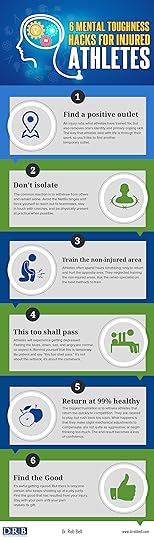
Athletes will experience getting depressed. Feeling the blues, down, sad, and angry are normal, so expect it. Remind yourself that this is temporary. The Mental Toughness Hacks include being patient and say “this too shall pass.” It’s not about the setback; it’s about the comeback.
Dr. Rob Bell is a Sport Psychology Coach. His company DRB & associates is based in Indianapolis. Some clients have included: University of Notre Dame, Marriott, and Walgreens. Check out the most recent book on Mental Toughness- Don’t Should on Your Kids: Build Their Mental Toughness
6 Mental Toughness Hacks for Injured Athletes
6 Mental Toughness Hacks for Injured Athletes
Injuries are unfortunately a part of the world of being an athlete, even a corporate athlete. I feel bad however when I witness so many athletes having the wrong experiences through their injury and especially returning to injury.
Athletes will experience getting depressed. Feeling the blues, down, sad, and angry are normal, so expect it. Remind yourself that this is temporary. The Mental Toughness Hacks include being patient and say “this too shall pass.” It’s not about the setback; it’s about the comeback.
Dr. Rob Bell is a Sport Psychology Coach. His company DRB & associates is based in Indianapolis. Some clients have included: University of Notre Dame, Marriott, and Walgreens. Check out the most recent book on Mental Toughness- Don’t Should on Your Kids: Build Their Mental Toughness
November 25, 2016
An Attitude of Gratitude is a Myth
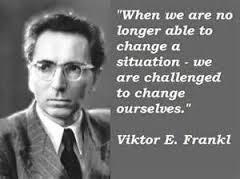
An Attitude of Gratitude is a Myth
Viktor Frankl was a holocaust survivor. His immediate family died in the concentration camps, but he survived. He talks at length in the amazing book- Man’s Search for Meaning -about how he survived while others did not.
He concluded that we actually find meaning through our suffering. Frankl stated it did not really matter what we expected from life, but rather what life expected from us.
It was through his suffering as a prisoner that he was obligated to find meaning, to focus on the smallest of gratitudes, like a a sunset, or a memory.
It was NOT his Attitude of Gratitude. It was his ACTION of Gratitude.
He would have a virtual conversation every morning with his wife even though he didn’t know if she was still alive.
Prisoners who were starving would give their last pieces of bread to another to help them survive.
His freedom came as a result of his refusal to give up hope, even though survival was thin.
His attitude of gratitude was a result of his action.
We need to take certain action steps to exercise our attitude muscle.
Some of us have a greater sense of thankfulness than others, just as some of us are faster or better-looking but, what matters is are we willing to take certain steps?
Here’s some ACTION of gratitude steps:
Write out as gratitude list-
Once we start listing our blessings, it gets tough to stop. It is too easy to focus on where we lack, or where we come up short. Basically, all advertising focuses on telling you that you need this product in order to be happy. It’s not enough to think about our gratitudes, we need to write them out.
Keep a Gratitude Jar-
On our dining room table, we have a jar that fills up with small pieces of paper from the week. We express our gratitude for someone in the house when they do something we are thankful for.
Change the way you treat somebody-
Want to change the way you feel about somebody, change the way you treat them. This is difficult if you have an anger or resentment toward someone, so start small, send a message, email, or ask them a different question.
Forget the weather-
We could have a cold, brutal winter and not after a month of warming up, people will start complaining about how it’s too hot. Really? Simple action step is to find the benefit in the weather, no matter the condition. I’ve trained my family that we are mudders. We LOVE the poor weather, because we play better.
Pray and if that doesn’t work, Pray again-
There are three kinds of prayer, 1. God- Help Me! 2. God- Give Me! and 3. God- Use Me.
Prayer is an action. Pray as if God has already given you the gift that you want, give thanks for that, and ask God to help you help others. God, Thank you for the patience that you have given me so I can be a good father and husband.
Find The GOOD-
Basically, here’s the way to approach all challenges and obstacles….Check out the video by GOOD by Jocko
Dr. Rob Bell is a Sport Psychology Coach. His company DRB & associates is based in Indianapolis. Some clients have included: University of Notre Dame, Marriott, and Walgreens. Check out the most recent book on Mental Toughness- 50 Ways to Win: pro Football’s Hinge Moments
There was an issue loading your timed LeadBox™. Please check plugin settings.
November 18, 2016
It is what it is


It is what it is
I yearn for the day that someone holds up the trophy with tears in their eyes and says “it is what it is!”
NO CHANCE. They’d be condemned. NO ONE says it is what it is when something good has happened! I’ve got a sick sense of humor.
So it’s cool when we hear “it is what it is” because we love misery?
It means something bad has happened and this person, leader, or team has accepted the circumstance. Or worse, they’ve accepted the setback, the defeat and turned their circumstance into a condition. I can’t get better, Hey, It is what it is…
Except, mentally tough people actually use it is what it is as a starting point, not an ending point.
It’s temporary and it’s part of the process.
You lost, so what are you going to do about it? Stay Bitter or Get Better?
Some coaches after winning a championship actually have come close to the It is what it is mentality. They have sold out to the process that success is merely a byproduct, an outcome. Not soon after their pinnacle of the season, they are back to the grind and the process. It is what it is….
It is what it is either stops us or starts us…
Dr. Rob Bell is a Sport Psychology Coach. His company DRB & associates is based in Indianapolis. Some clients have included: University of Notre Dame, Marriott, and Walgreens. Check out the most recent book on Mental Toughness- 50 Ways to Win: pro Football’s Hinge Moments
There was an issue loading your timed LeadBox™. Please check plugin settings.
November 11, 2016
(Infographic) Use This CAR to Drive Your Team’s Motivation

Use This CAR to Drive Your Team’s Motivation
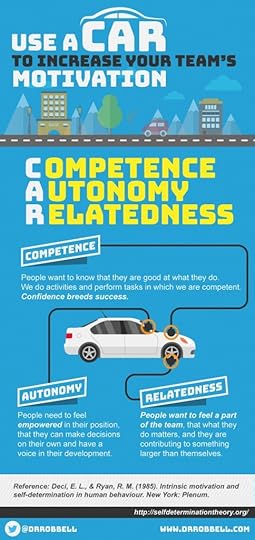
Most coaches, executives, and owners want their team to be more self-driven and internally motivated. However, the measures that leaders employ are usually all externally driven. We often refer to outside measures to help facilitate change, namely rewards for good results or punishments for poor effort or outcomes.
If you are searching for more internal drive from your team, here are three metrics to examine.
Dr. Rob Bell is a Sport Psychology Coach. His company DRB & associates is based in Indianapolis. Some clients have included: University of Notre Dame, Marriott, and Walgreens. Check out the most recent book on Mental Toughness- 50 Ways to Win: pro Football’s Hinge Moments
There was an issue loading your timed LeadBox™. Please check plugin settings.
November 4, 2016
(Video) Mental Toughness is built off of the field?

Mental Toughness is built off of the field?
Not only does our best change as we get better, but Mental Toughness also becomes more about what takes place off the field than on the field. We are who we are when we are alone.
What happens when the door comes off the Hinges? If you hear a creaky door, it’s not the door at all, it’s The Hinge. Here is a story about the athlete that you know because he/she is simply the best athlete in town.

Dr. Rob Bell is a Sport Psychology Coach. His company DRB & associates is based in Indianapolis. Some clients have included: University of Notre Dame, Marriott, and Walgreens. Check out the most recent book on Mental Toughness- 50 Ways to Win: pro Football’s Hinge Moments
There was an issue loading your timed LeadBox™. Please check plugin settings.
October 22, 2016
Are We Testing OR Training Mental Toughness?

Are We Testing OR Training Mental Toughness?

On a run the other day, I passed two people and asked them for what race that they were training. She said a half-marathon, but hedged her statement with, “as soon as I can get through my speed work.”
I gave her unsolicited advice and told her she was ready and just to sign up that night instead.
I’m not sure she agreed. I felt like an idiot so I ran faster.
She was basically doing what we all do. She was testing herself for the race instead of training for the race. She was playing the if/then game. If her runs were good enough, then she would sign up.
Testing, testing, 1…2…3…
We test the microphone. Bands do a sound check. Plays and weddings have rehearsals. The difference is that they’ve committed to the event, they are preparing. Imagine instead if a band did a sound check weeks before the event and only if that went well, then they would do the gig. However, that’s often what we do.
Teachers in school don’t give a test and then prepare you later. That’s what life does, life gives you the test first and then the lesson comes after.
When we test ourselves, we are operating under the mentality of, “Am I good enough right now?” or “If today was the event, would I be ready?”
Testing ourselves is brutally flawed thinking and it adds undue stress. The flawed thinking is that the event isn’t here yet, so while it would it be nice if we were ready, we don’t have to be. When we are testing ourselves, we are also in constant comparing mode, comparing ourselves to our future and ideal self, the one that is near perfect. Comparing ourselves to our future self also means taking us out of the moment, which is dangerous.
There’s a difference between training ourselves as opposed to testing ourselves for an event. This small shift makes a huge impact on training mental toughness.
Our preparation matches our commitment.
Instead, when we are training ourselves instead of testing ourselves, our mindset changes. When we train, we no longer evaluate if we are ready, but approach it more as if “what do I need to work on?” Yes, we will still think about the event and compare ourselves, but now there is a context and a backdrop. Instead of testing ourselves, we are now training mental toughness.
We operate in training mode by first recognizing when we actually need to be ready. A poor training session can then be learned from because the event isn’t here yet, so we are still preparing. We are training ourselves. We are also training mental toughness by staying in the moment and not thinking too far ahead, which again adds undue stress.
Someone asked the other day if I was ready for a talk I was to give in a few days. I said,”NO, I’ll be ready then.” I wasn’t speaking at that exact moment, so I didn’t need to be ready. No need to test myself, I was still training.
I went home and prepared some more.
Dr. Rob Bell is a Sport Psychology Coach. His company DRB & associates is based in Indianapolis. Some clients have included: University of Notre Dame, Marriott, and Walgreens. Click Here to check out any of his books on Mental Toughness.
There was an issue loading your timed LeadBox™. Please check plugin settings.
October 14, 2016
How to Deal with Stress of the Election

Every four years, it happens, someone in your circle of relationships makes a joke about a liberal or a right-wing conservative and the gloves come off….It’s Election time!! Nowadays, all it takes is a facebook or twitter post!
I work with athletes, coaches, and teams helping build mental toughness and much of what is learned in sport can be applied to life. Frankly, the national election season brings out the worst in all of us, because it’s polarizing. There is little middle ground. It can create undue stress, and debates amongst co-workers, fiends, and family.
We may even find ourselves more anxious and argumentative during this time of year. Who knows, maybe you the one who understands it all and that is your thing. Personally, I have never enjoyed the drama that the media creates and I get pulled in. I would rather focus my energies and attention on my relationships.
Here are a four simple, but not easy, techniques to help deal with the upcoming elections and political season.
Be Prepared- We need to be aware that for the next 30 days, political discussion or arguments may arise from anywhere, (our clients, friends, etc.) We should simply have our guard up to NOT be argumentative and be hyper vigilante when in certain circles.
Acceptance- Know that you will not change anyone’s point of view. In actuality, when discussions start, we just dig in our heels. If if you “win” you are more likely to just ruin a relationship or business. So accept people for their viewpoint and better yet, acknowledge their “take.” Saying something like “that’s interesting” or “can you tell me more” will go a long way in diffusing any disagreements and allowing that person to be heard.
Relax- Do you believe that no matter who is elected, the U.S.A will still operate and thrive? It is what we do. I believe in this country and it’s ability to persevere. I trust that it all works out whether republican or democrat in office. Want proof that it does, it has so far. So, relax!!!!
Listen to Johnny Cash– The one on the right is on the left, It’s a tale of how politics can really get in the way.
Dr. Rob Bell is a Sport Psychology Coach. His company DRB & associates is based in Indianapolis. Some clients have included: University of Notre Dame, Marriott, and Walgreens. Check out the most recent book on Mental Toughness- Don’t Should on Your Kids: Build Their Mental Toughness
There was an issue loading your timed LeadBox™. Please check plugin settings.


