Kay Kenyon's Blog, page 16
January 16, 2015
My great big new fantasy novel
Publishing a new book is always a cause for celebration, and especially for this one.
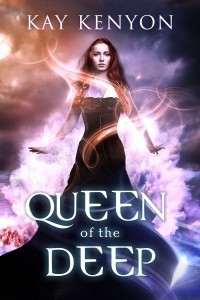 Queen of the Deep is a book that was seven years in the writing, and seeing it in print is quite a thrill; I believe it’s the first time that I’ve laughed with pleasure on seeing one of my books. Today I’m reflecting on the long journey it made from the first kernel of an idea to a 348 page novel.
Beginnings
I sat on this very couch seven winters ago and wondered where my story would take place. For me, a story usually begins with place, because of the allure I find in world building. I love stories set in an intriguing world, a wondrous, even numinous, locale. But where would I go next? Then I imagined an ocean, and a great ocean liner like the Queen Mary. Or you know, the one that sank.
I began to explore the Palazzo, a palace of a ship . . . on an alien ocean . . . with a theatrical cast of characters conjured from the mind of a child raised in Minnesota who had to play in the basement when there was too much snow. . . That would be Janet Zabrinski, later the aspiring actress Jane Gray, or possibly a SF writer who almost became an actress.
Wandering
This was actually my first fantasy novel, after ten science fiction books. With Queen, I was testing the waters of fantasy, seeing where I could take an untraditional story with magic at its core. Some of you may remember me reading from this novel at cons past. Yes, I was testing it out! I listened to feedback, and I kept shaping the story. Months became years as I turned my attention to other projects, always circling back to Queen with fresh insights. When I finally finished the story, I looked around to find that the publishing world was undergoing a profound change.
Indie publishing looked like it had a place in the changing ecology of publishing. Traditional publishing was still a force of nature–but other life forms clearly existed and were thriving. Certainly the economics of indie publishing were intriguing to me. But would readers find my new novel if I put it out there myself? I decided to experiment with this novel. But how do you even begin?
Heroics and Helpers
You begin by vowing to learn how indie publishing works. You tiptoe into the new landscape and see what others are doing. You keep your eyes wide open, knowing that nobody knows where this new wild west of publishing will end up. No guarantees. But then, were there ever?
Despite all the talk about eBooks, e-retailing and book discovery, I was a rank beginner. No longer, I must say! But I did rely on fellow authors for outright favors and pointing the way. They recommended stuff, critiqued covers, proofread, and answered endless questions about things like keywords, pricing, ISBNs and marketing. Thank you, Trish McCallan! And Sharon Shinn, David Marusek, Amy Atwell, Terry Persun, Jim Thomsen, Leeann Smith, Elaine DeCostanzo, and Mike Resnick. And Frauke Spaneth, for my gorgeous cover. Thanks for believing in me and helping this book go out on its journey into the world!
Celebration
So, today I’m celebrating. The book is available in trade paper and, for a limited time, an exclusive Kindle edition. Raise a toast! To um. . . well, how about to Jane Gray, who started out as make-believe and became real in fiction, and who learned about love, perseverance and the stars?
For more details, including story description, please click here.
Best to you all. And happy reading, whatever the books may be!
–Kay
PS: the Write on the River Conference in Wenatchee on May 15, 16 and 17 will have several sessions on indie publishing. Watch for the line up here. Registration opens January 20 for members, February 1 for nonmembers. Agent Editor appointments available!


January 14, 2015
Character Through Line
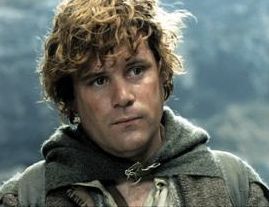
Sean Astin as Sam Gamgee.
Can you describe your character’s essence or their raison d’etre, in a short phrase? How about Sam Gamgee’s “Some things are worth fighting for.” Or Scarlett O’Hara’s “I’ll never be hungry again!”
Often we think of our characters as being so complex we need a whole novel to flesh them out. And we probably do. But what do they want above all else? What limitation do they always fear and fight against? What gives their lives meaning, in their own  estimation? Can’t such things be stated simply? We’ve always been told to know these things about our characters, but the dictum proved most valuable for me when I turned it into dialogue.
Although it does take many pages to bring these fears and aspirations to light in a novel, the author must know them more directly. For this reason, it may be helpful if a writer creates a visceral handle for central characters, to keep their through line clearly in view. Something the character would say.
Recently I tried boiling down my words to one phrase for each of eleven characters in my paranormal novel of the interwar years in England. I was surprised at how quickly the essence of each important character came to me.
Here was the product of that exercise:
Kim (protagonist): For the innocent.
Julian: Never again.
Martin (a teenager): I always screw up.
Antagonist: Revenge is sweet.
Rose: I have my part.
Gustaw: Fight them in the shadows.
Owen: We will out think them.
Lloyd: I got screwed.
The spymaster: My hands are tied.
Elsa: Appearances deceive.
Walter: I’ve got your back.
I keep coming back to these lines and relying on their wisdom and clarity. Now I just have to write these characters onto the page!
I think it works best not to labor over it, just write quickly and see if your subconscious “knows” these people. You may find that there is a sentence, a defining line of dialogue, that you can imagine them saying with passion and even heart-breaking honesty.
December 31, 2014
Kay’s Best SF/F/H Reads of 2014
Here’s my list. The SF/F/H books I enjoyed the most out of the–um, hundreds?–of books I read this year! Not all published in 2014.
We Are All Completely Fine. Daryl Gregory. Delicious horror, carried off with such a deft touch, all you can say is, “Well, damn. I’m yours.” A completely spooky and believable story, both deeply human and gorgeously entertaining.. Gregory defies description. Just read it.
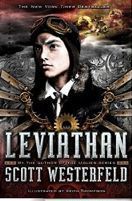
Leviathan. Scott Westerfeld. Highly entertaining and satisfyingly intricate, even though for a YA audience. Highly imaginative, gorgeous steam-punky milieu, World War I historical setting, and fun characters set this one very much apart from the pack.
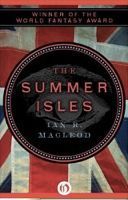
The Summer Isles. Ian McLeod. Gorgeously written World War I alternate history novel. Dark and elegiac in tone, it sweeps you into the claustrophobic reality of a gay protagonist in a dystopian world. Must read more by this author!
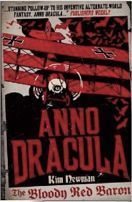
Anno Dracula: The Bloody Red Baron. Kim Newman. Smart, original, and fast paced story that positions vampires in a unique manner: neither an alienated creature nor monster, but a vampire as an alternative, ambiguous human. And in World War 1, no less. Intriguing read.
I admit I was on a World War I tour of the literature this year. For a great read on the World War I you never understood, read:

To End All Wars. Adam Hochschild. Brilliantly delivered summation of what led up to the Great War, and the story of the war told in larger context and that of fascinating individuals. If you aren’t an historian, and wonder about World War I and what it was about, this is the only book you need to read.
October 29, 2014
Favorite Places of England, 2
There are some trips that you look forward to all your life, and some that end up being unforgettable. This trip was both. After World Science Fiction, my husband, myself, and our friends spent 3 days in Yorkshire, 4 near Oxford and Bath and five days in London. Here are the last few highlights.
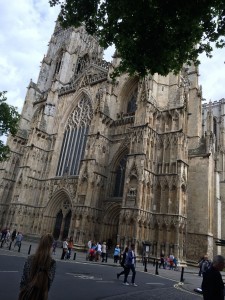
The famous Minster in York. Underneath it, in undercroft, Roman soldier artifacts!
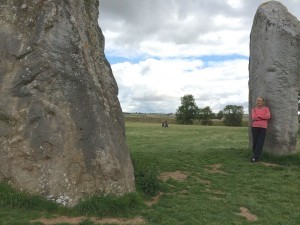
The standing stones at Avebury, a much larger neolithic site than Stonehenge.
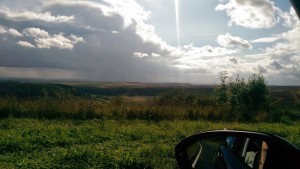
The North York Moors, spare and vast and redolent of lavender and Bronte stories.
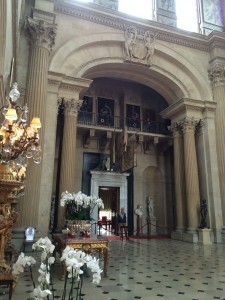
Blenheim Palace. This is the mudroom.
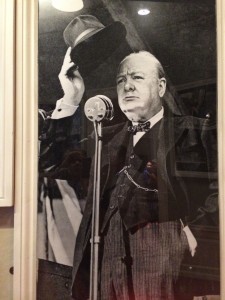
Blenheim was Churchill’s birthplace. “We shall NEVER surrender!”
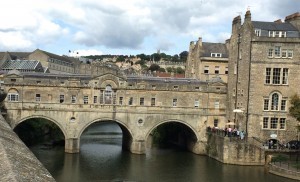
Pulteney Bridge, that spans the Avon River in Bath.
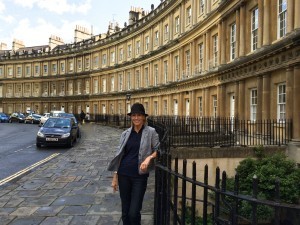
The Circus (circle) in Bath. Gorgeous townhouses in the Georgian style.
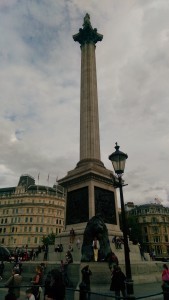
Nelson’s plinth in Trafalgar Square, as tall as the main mast of the HMS Victory.
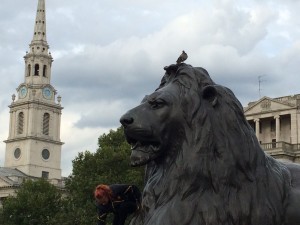
One of the Trafalgar lions (that came alive in A Thousand Perfect Things!) St Martin’s in the Fields church in bkg.
For more on England, please friend me on Facebook and check out photos there.
October 3, 2014
Favorite places of England
In mid-August, I toured England with my husband and two dear friends. The trip included Worldcon in London, and then off we went for fun and . . . research! My work in progress is a paranormal novel set in England, and I was excited to really take in and experience the places I am writing about.
England did not disappoint. As in all travel, we encountered unexpected marvels and mishaps. Trying to get to London from Bath we nearly ended up in Portsmouth, except for the kind intervention of a bunch of rowdy guys sitting in back of us who, when they learned we were heading to London, said “Oh no you’re not!” But not to worry, they worked for the railroad and told us not only where to get off but how to make the right connection, and when. Whew.
Arriving at what I hoped would be the highlight of the trip, the ruined Rievaulx Abbey on the North York Moors, the gate came down. They were closing! Our schedule did not permit us to drive the long way to come back, but the man kindly let us through, and we had this fabulous ruin to ourselves. The climactic scene of my WIP takes place there, and I would have been heartbroken to have missed it.
Here are some highlights, and more in a future post.

Arrival from Heathrow at Paddington Station. Beware, travelers, you need British coin to use the bathrooms!
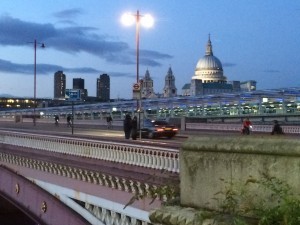
St Pauls at dusk from Blackfriars Bridge.
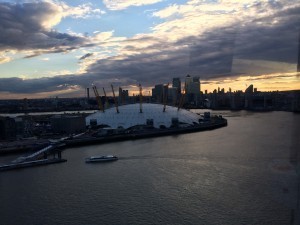
The Thames from the Arab Emirates gondola.
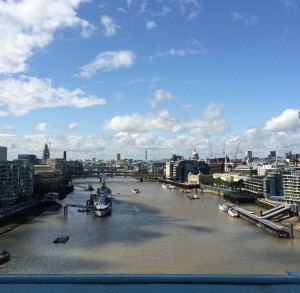
The Thames from the upper walkway of the Tower Bridge.
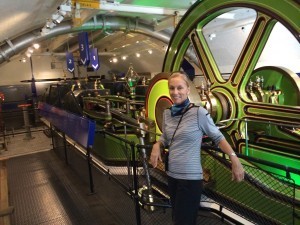
Machine Room at Tower Bridge with Victorian apparati to raise the bridge.
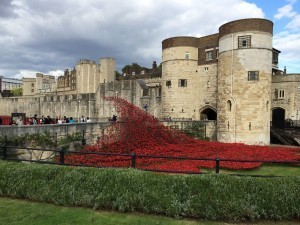
At Tower of London, poppies memorializing each of the fallen from the Great War.
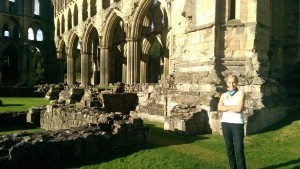
The fabulous Rievaulx Abbey on the North York Moors. A Cistercian Abbey so far from towns that it is preserved much better than most. A haunting, numinous place.
September 5, 2014
Loncon report
 Back from Loncon and a very long trip to England. Unpacking always seems to take as much time as packing; plus I have organized the many momentos and items of research that I collected for my work in progress, and also came home to a cat who was feeling poorly
  and seemed blameful for my having abandoned him for three weeks, despite the fact that he had a perfectly lovely housekeeper waiting on him. You cat owners will know what I mean.
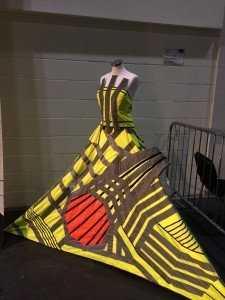 Loncon? A blast. The venue was the ginormous Excel center in the Docklands, so huge that there was a train stop at each end (I am not lying.) But the con was actually tucked into one end, so it was even easier to navigate than some smaller Worldcons I’ve been to. (I think 8,000 or so attended in London.) While I liked the venue, it was quite a long haul into central London, with the need to either cab it or take the light rail to a tube station. And one Did have to get into London, of course! The dealer’s room had all the excitement of a world con, including this amazing dress.
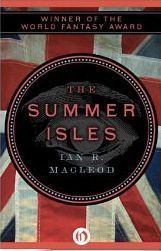 Best of all, there were thousands seductive SFF books, with an emphasis, naturally, on British authors, and I loaded up, with an eye to how much I could get in my suitcase considering that I was then going to travel through north and south England . . . I made judicious choices, including this wonderful book by Ian McLeod, a winner of the world fantasy award. Dense, stunning prose, elegaic in tone, it’s an alternate history of 1940′s England, meticulously
  drawn. I was privileged to be on a panel on alternate history with Ian MacLeod, and also several other authors including Jon Courtenay Grimwood, author of the wonderful Assassini books, and a smart, articulate panelist.
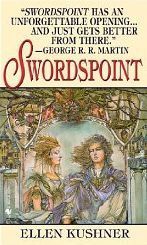
I moderated a panel on Imagining the City, a celebration and inquiry into how authors create cities of the imagination. Panelists were Kathleen Ann Goonan, Scott Lynch, Ellen Kushner, and Simon Spanton, publisher at Gollancz. It was great fun to hear a bit about how the magic happens an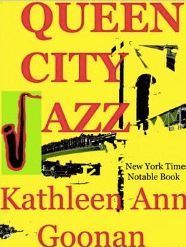 d take a closer look at their iconic cities, such as Kushner’s unnamed town in the world of Swordpoint. And then there is Kathleen Ann Goonan’s stunning Cincinnati of Queen City Jazz, a classic, perhaps the best city in SF.
Tom and I took in as much as we could of the con, and snuck out to central London to see St Paul’s, the Tower Bridge, the West End . . . and then at the end of another two weeks of travel, we came back to London to see even more. Next post, more pictures!
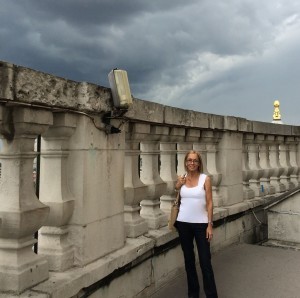
Me at St Paul’s stone gallery, 376 steps up from the nave.
June 10, 2014
Interview on latest book
This interview, slightly revised below, appeared recently on The Wonderings of One Person blog.
Please tell us a little bit about you.
Recently, after 10 science science fiction novels, I developed an interest in historical time-periods and decided to try my hand at historical fantasy. I have been a great admirer of Michael Moorcock’s Glorianna and Naomi Novik’s Tremeraire series as well as the American history fantasy novels of Orson Scott Card (Alvin Maker) and D.B. Jackson’s Thieftaker Chronicles. At a time in my career when I was feeling the need to branch out from science fiction, I found myself with several intriguing ideas for quasi-historical settings laced with magic. I’m very energized by this new direction!
My first fantasy novel, A Thousand Perfect Things came out last August. It combines the reason of the Victorian Age with the magic of an alternate India. I’ve had some lovely comments and reviews on this book. Including these:
“A smart, engaging fantasy.” — Milwaukee Journal Sentinel, 100 best books of 2013
“A heady mix of romance, history, action and adventure–a real mélange of both exotic and domestic flavors, blended like a fine imported tea.” — The Sleeping Hedgehog
“Beautifully written, emotional, full of adventure, scandal and intrigue with a host of seriously cool, original monsters and exciting scientific ideas.” — Adventures in SciFi Publishing
My only series (so far) is the sci-fantasy quartet, The Entire and The Rose. Book One, Bright of the Sky, was one of Publishers Weekly’s top books of 2007. I’ve been a finalist for a number of awards in this genre — and last, but not least, I’m going to the World Science Fiction Convention in London in August!
Why did you choose to pursue the art of writing?
This may be an odd answer, but I think it was the last possible thing left for me. That is, I don’t think there’s anything else I’m very good at. I do love writing stories, fortunately!
What was the inspiration for AThousand Perfect Things?
The British Raj in India. I happened to pick up a book on that subject, and was fascinated with India’s beauty and resiliance. I had already decided that I would write a Victorian-era novel, but it was at that point that it shifted to a Victorian woman in India. What I love about fantasy mixed with history is that I can create unusual worlds that are still recognizable, and even famliar. Using the ground of history anchors the reader to something “real.” We can sink into, say, an 1857 English countryside manor, and feel that we know the place. From those recognizable surroundings we can then enjoy the slow unveiling of indigenous magic and extra-normal events. It’s not all totally new.
What kept you going throughout the writing process?
An outline. That sounds so ordinary, but honestly, on page 220 a writer is thankful for a path through the forest, even if it requires some adjustment as you get familair with the territory.
Is there a singular character that really touched your heart and why?
Tori Harding, my main character. She was the reason I wrote the story. I wanted to explore the ambitions and growth of a young woman of high (but thwarted) ability who found her way out of the maze of Victorian restrictions. Since I was also interested in the question of “having it all” and the way ambition can twist people, I was moved by Tori’s choices and her decisions. What do we do when we are offered ultimate power?
Can we expect to hear more from these characters in the near future?
I have two novels coming up that will not be set in the Victorian age. (One is set in a quasi-rennaissance milieu; another takes place in the 1930s.) So I have no plans for another Tori novel at this time.
How has this story touched your life?
As an author, you have to come to terms with your love of writing, the lottery-like chances of selling well, and your longing to create a great story that might turn out to be just a bit beyond your grasp. It is a crazy-making business if you’ve been around publishing long enough. How much success is enough? Why isn’t each novel as powerful as you first imagined it would be? How do recognize when it’s time to shift paths and take creative risks? These questions haunted me while writing A Thousand Perfect Things. At the end, I felt that I had been on a deep personal journey.
#SFWApro
May 1, 2014
Got Conference?

New York Times bestselling author, Jess Walter
Two weeks until the fab writers conference in Easter Washington, Write on the River. Join us May 16-18 in Wenatchee for workshops, chats with authors, agent/publisher appointments and a keynote by the amazing Jess Walter!
Conferences like this one can instruct, inspire and impact your writing life. And in Wenatchee, the weather is warm, and wine country beckons for an extended stay.
We’ll have our usual emphasis on fiction and nonfiction, along with key workshops on self publishing. Our guest agent is Andrea Hurst. Special sessions from Larry Brooks, one of the most sought-after writing teachers in the country. He’ll teach a class on Saturday and a half day master class on Sunday. Fifteen workshops to choose from, all in the beautiful campus setting of Wenatchee Valley College.
Write on the River Conference
May 16 (evening keynote) and May 17-18
Register here. Info on workshops/faculty: WOTR website.
Our lineup of workshops includes:
FICTION
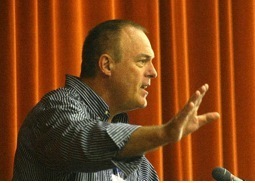
Larry Brooks
Characterization
The structure of the novel
Short stories
Poetry
YA writing
an evening with Jess Walter (Friday, May 16)

Wendy Call on creative nonfiction
NONFICTION and PUBLISHING:
Creative nonfiction
The nonfiction book: how to begin
Agent and editor appointments
Internet marketing
Publishing: what traditional publishers are looking for
New publishing: hybrids and do-it-yourself

Jason Brick on self publishing
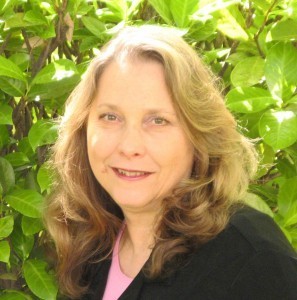
Agent Andrea Hurst
March 31, 2014
My Victorian World
What does a Victorian world look like? Science fiction and fantasy authors have created a rich variety, from Gail Carriger’s Parasol Protectorate to Mark Hodder’s Burton & Swinburne series, just a couple random picks from that great range of steampunk offerings.
Here is a glimpse of my own Victorian world, in A Thousand Perfect Things.
 On the surface . . . my Victorian world is a recognizable one, with elegance, manor houses, and women seeking good matches. It is a world of carriages and colonialism, matchmaking and manor houses. My alternate England is a land where science reigns supreme, but where a woman, no matter how brilliant, cannot be admitted to the realm of science.
On the other hand . . . not all is so calm. England’s men of science are so enthralled by logic and engineering that they condemn an alternative way of knowing that is very real: magic. The continent of Bharata (an alternate India) is a kingdom of the most powerful magics. Tired of the colonial yoke, Bharata’s mages send attacks of magical terrorism to England, such as enlivening iron statues and sending them on killing rampages. A 500 foot high cobra made of water rises out of the Thames and wreaks destruction. As the plot unfolds, we find that young Tori Harding, a brilliant aspiring scientist, is lured to Bharata, followed by a shape-shifting avian creature who wants something from her. But what?
Crossing to a magical place . . . Using a fantastical and dangerous road, Tori makes the journey to Bharata, seeking out magic to aid her quest for freedom and scientific discovery. There she will encounter things beautiful, terrifying, and strange. It is a land of ancient ghosts, demon birds, fire dreams, kraken, a god with the head of an elephant, and the legendary golden lotus. Amid these magical splendors she will find the glittering court of a raja, silver tiger allies, mutiny, competing suitors, betrayal, spiritual truths, death, reconciliation, and finally, love and wonder.
I invite you into my Victorian world!
#SFWApro
March 22, 2014
Twenty feet from being Stephen King
Today’s offering is a guest post from Louise Marley, an award-winning author of historical fiction as well as science fiction and fantasy. Her musings on the writing life and the reach for stardom are generous and profound. Enjoy!
___________________________________
“There’s never a level playing field,” says Sting, in the brilliant documentary Twenty Feet from Stardom. You can skip this little essay and go straight to your television to watch that film if you like. It speaks for itself. As a metaphor for the show-biz aspects of writing, or indeed of any artistic endeavor, it has no equal. And it comes accompanied by spectacular music.
The documentary traces the lives and careers of back-up singers, those gifted and hardworking artists who  stand twenty feet from the “star” and whose names hardly anyone outside the industry knows. Some of them made substantial, long-lasting careers. Some even had glimpses of stardom. Others, through no lack of talent or discipline or effort, remained—and remain—obscure. The great Merry Clayton made a life in music, and won the respect of everyone who worked with her, but she’s hardly a household name. Darlene Love tried a solo career, was betrayed and marginalized, and only succeeded after she had been in the business for more than twenty years. The incomparable, mesmerizing Lisa Fischer is the most perplexing. Hers is a voice of enormous range and beauty, and she possesses an enviable musicality, but again, hers is not a name the man on the street could call to mind.
Stephen King is a very, very famous writer, and he has legitimately earned his stripes. Even his nonfiction memoir is a compelling read. He also seems to be a thoroughly nice man, and a generous one. To my knowledge, no one resents his success, but is he that much better than all the other writers in his genre? Or does he possess that elusive and indefinable something that makes him a “star”?
Perhaps he does, like the artists Clayton and Love and Fischer backed up on stage and on recordings. King himself has said, with admirable modesty, that no one has control over being a great writer. There is a certain magic to success of the highest, or perhaps simply the most visible, order. There is also magic in catching the zeitgeist, the spirit of the times, which is either circumstantial or accidental. There’s no formula for stardom.
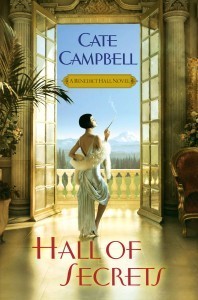
Book two of the Benedict Hall series.
One of the takeaways from the interviews with these amazing women, and also with stars like Sting, and Bruce Springsteen, and Mick Jagger, is that the work is the reward. Merry Clayton talks about the spirit in the music. Lisa Fischer says that the music is what her life is about. No doubt none of these singers ever made the kind of money, or garnered the same attention, as the stars they worked with, but there is no sense, in their thoughts about their careers, of having failed because of that. They speak of having spent their lives doing what they wanted to do, and I would guess, if asked, they would admit that many an aspiring singer would be thrilled to stand twenty feet from Bruce Springsteen in front of thousands of fans.
The idiosyncratic view from my own little corner of the universe is that most writers have more in common with Clayton and Fischer and Love than they do with Stephen King. King is a star. A superstar, even. Most of us would find it difficult to get within twenty feet of him, metaphorically speaking. But if we’re allowed to write stories, and if we are blessed with publishers and readers, we’re achieving something many yearn for but never attain. We’re not standing twenty feet from the Boss, but we see our work on bookshelves and in libraries, and that is an achievement to be celebrated.
Watch the film. Rock out a little. Smile at the nostalgia! And I hope, if you’re a singer, a writer, a dancer, or whatever, you’ll see the joy in the work, even if it seems the glory falls on someone else.
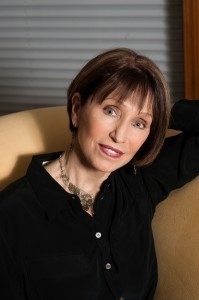 Louise Marley writes science fiction and fantasy, and is the author, under the pseudonym Cate Campbell, of the historical series BENEDICT HALL, set in 1920s Seattle. Her websites are www.louisemarley.com and www.catecampbell.net.