
Adam Fenner's Blog, page 24
September 13, 2024
Grenadier
Alfred Edward Housman
The Queen she sent to look for me,
The sergeant he did say,
Young man, a soldier will you be
For thirteen pence a day?
For thirteen pence a day did I
Take off the things I wore,
And I have marched to where I lie,
And I shall march no more.
My mouth is dry, my shirt is wet,
My blood runs all away,
So now I shall not die in debt
For thirteen pence a day.
To-morrow after new young men
The sergeant he must see,
For things will all be over then
Between the Queen and me.
And I shall have to bate my price,
For in the grave, they say,
Is neither knowledge nor device
Nor thirteen pence a day.
Every day I select a war poem, and respond to it, generally in poetic form. But perhaps not. Each poem grabs at something a little differently. Sometimes the themes blend together, sometimes they contradict. Many poets, were veterans themselves, others not. Their perspectives vary, and the poetry does in response. I’ll continue to do this as long as I keep finding poetry that explores novel or meaningful themes. You know, until the well runs dry.
A bonus
Traded my body and four short years
For a paycheck and some benefits
A signing bonus too, can you believe
College money, if I’m so inclined
A new set of clothes, and a roof
Taught some skills, and discipline
A new family too, can you believe
This rifle is pretty cool, real cool
The war is over, and now I’m home
My brothers moved away, me too
Skills don’t translate, can you believe
Professor thinks I’m crazy, maybe
Lists on lists of resources, I find
Loads and loads of requirements
Limiting exclusions, can you believe
Maybe I’ve been duped, probably
A bureaucrat’s bargain, fine print
Brightly colored posters, marketing
Benefits in fast food, can you believe
A list, to get on the list, these benefits

Photo by Wilhelm Gunkel on Unsplash


September 12, 2024
As I gird on for fighting
Alfred Edward Housman
As I gird on for fighting
My sword upon my thigh,
I think on old ill fortunes
Of better men than I.
Think I, the round world over,
What golden lads are low
With hurts not mine to mourn for
And shames I shall not know.
What evil luck soever
For me remains in store,
�Tis sure much finer fellows
Have fared much worse before.
So here are things to think on
That ought to make me brave,
As I strap on for fighting
My sword that will not save.
Every day I select a war poem, and respond to it, generally in poetic form. But perhaps not. Each poem grabs at something a little differently. Sometimes the themes blend together, sometimes they contradict. Many poets, were veterans themselves, others not. Their perspectives vary, and the poetry does in response. I’ll continue to do this as long as I keep finding poetry that explores novel or meaningful themes. You know, until the well runs dry.
One last patrol
Brushed and oiled, locked and loaded
Safety on, strapped, tapped, ready to go
Pistol holstered, rifle slung, blade sheathed
Patrol preparations, one more, always one
Someday none, one way or another
Doc says, the bleeding always stops
It does, one way or another, always
One final patrol, or another, and another
Until, it stops. Or I stop, it can’t stop
Patton said, don’t die for your country
Another bastard should, and they did
Or will, better bastards, than this one
One last patrol, today, or someday past
Housman and his athlete dying young
Better bastards, see the end of war
Will I? or will I watch, our sons patrol
If anyone reads this, and thinks I started with the intention of circling back to A.E. Housman, that is a coincidence. I didn’t realize that his poem To an Athlete Dying Young was his, until I looked up the author. I made the choice between him and Billy Joel, Only the Good Die Young. And the connection was too good to pass up.

Photo by Bernd Hippler on Unsplash
September 11, 2024
A dead boche
Robert von Ranke Graves
To you who’d read my songs of War
And only hear of blood and fame,
I’ll say (you’ve heard it said before)
“War’s Hell!” and if you doubt the same,
Today I found in Mametz Wood
A certain cure for lust of blood:
Where, propped against a shattered trunk,
In a great mess of things unclean,
Sat a dead Boche; he scowled and stunk
With clothes and face a sodden green,
Big-bellied, spectacled, crop-haired,
Dribbling black blood from nose and beard.
Every day I select a war poem, and respond to it, generally in poetic form. But perhaps not. Each poem grabs at something a little differently. Sometimes the themes blend together, sometimes they contradict. Many poets, were veterans themselves, others not. Their perspectives vary, and the poetry does in response. I’ll continue to do this as long as I keep finding poetry that explores novel or meaningful themes. You know, until the well runs dry.
The sum of a man
For those who’ve heard the song of war
Seen it strip a man, to his brittle parts
Testing, pushing, grinding to the bone
Waterloo turned men to fertilizer
Fed Europe, their bloody supper
Found abandoned friends or foes
Last meals feed rebellious guts
Devoured host, bloated vessel
Sun baked husk of what was
Perverted reminder of what is
Strangers turned to brothers lost
Battles shared, common cause united
A battlefield gift, from a gored womb
Lifetime of anguish, memories anchor
War horns bellow, ringing in the ears
Photo by Jill Dimond on Unsplash
September 10, 2024
Hate not, Fear not
Robert von Ranke Graves
Kill if you must, but never hate:
Man is but grass and hate is blight,
The sun will scorch you soon or late,
Die wholesome then, since you must fight.
Hate is a fear, and fear is rot
That cankers root and fruit alike,
Fight cleanly then, hate not, fear not,
Strike with no madness when you strike.
Fever and fear distract the world,
But calm be you though madmen shout,
Through blazing fires of battle hurled,
Hate not, strike, fear not, stare Death out!
Every day I select a war poem, and respond to it, generally in poetic form. But perhaps not. Each poem grabs at something a little differently. Sometimes the themes blend together, sometimes they contradict. Many poets, were veterans themselves, others not. Their perspectives vary, and the poetry does in response. I’ll continue to do this as long as I keep finding poetry that explores novel or meaningful themes. You know, until the well runs dry.
Us and them
It isn’t about you, me, us, but them
A mother, sister, brother, father, home
Maybe a girl, she doesn’t know me…yet
Sometimes it isn’t about them, or you
But them, beside me, my brothers and sisters
Us against you, you chose today, and us
We, this, you could have waved hello
Shared chai, laughter, but not you, or us
You chose us, RPG, AK, IED, we chose us too
We would again, choose our brothers, sisters
Here and home, not you, we never choose you
We did choose here, or they did, because of you
They chose us, offered us, recruited us, those they’s
Pushed us forward, to meet you, now us, together
Always us, never they, without them, no us

Photo by Kalen Emsley on Unsplash
September 9, 2024
The Dead Drummer
Thomas Hardy
I
They throw in Drummer Hodge, to rest
Uncoffined – just as found:
His landmark is a kopje-crest
That breaks the veldt around;
And foreign constellations west
Each night above his mound.
II
Young Hodge the Drummer never knew –
Fresh from his Wessex home –
The meaning of the broad Karoo,
The Bush, the dusty loam,
And why uprose to nightly view
Strange stars amid the gloam.
III
Yet portion of that unknown plain
Will Hodge for ever be;
His homely Northern breast and brain
Grow up a Southern tree.
And strange-eyed constellations reign
His stars eternally.
Every day I select a war poem, and respond to it, generally in poetic form. But perhaps not. Each poem grabs at something a little differently. Sometimes the themes blend together, sometimes they contradict. Many poets, were veterans themselves, others not. Their perspectives vary, and the poetry does in response. I’ll continue to do this as long as I keep finding poetry that explores novel or meaningful themes. You know, until the well runs dry.
A patch of dirt
At nineteen, it is just a patch of dirt
A world away, on a map, or globe
Insignificant as all the others
It is only a piece of paper, signed
Legalese, for something, not sure
What use is a Will, at nineteen
This truck, lined up, marked bumper
The only distinguishing feature
His chair, in the back, tattered
That narrow stretch of road
Unmarked, as good as any
A mound of dirt, roadside bomb
It could have been on a beach
Salty to taste, here it blows bitter
Grating at the eyes, gathering blood
His brothers would drive past
This same spot, every day and see
That mound of dirt, gathering blood

Photo by Anubhav Saxena on Unsplash
September 8, 2024
Arms and the boy
Wilfred Edward Salter Owen
Let the boy try along this bayonet-blade
How cold steel is, and keen with hunger of blood;
Blue with all malice, like a madman’s flash;
And thinly drawn with famishing for flesh.
Lend him to stroke these blind, blunt bullet-heads
Which long to muzzle in the hearts of lads.
Or give him cartridges of fine zinc teeth,
Sharp with the sharpness of grief and death.
For his teeth seem for laughing round an apple.
There lurk no claws behind his fingers supple;
And God will grow no talons at his heels,
Nor antlers through the thickness of his curls.
Every day I select a war poem, and respond to it, generally in poetic form. But perhaps not. Each poem grabs at something a little differently. Sometimes the themes blend together, sometimes they contradict. Many poets, were veterans themselves, others not. Their perspectives vary, and the poetry does in response. I’ll continue to do this as long as I keep finding poetry that explores novel or meaningful themes. You know, until the well runs dry.
The boy and his rifle
The length was cold in his hands
Alien but familiar an extension of himself
Polymers, steel, blued and blackened
Care for it they said, this is your lover
He had prepared, all his short life
Playful wrestling, backyard tag
The bad guys, get them, stories taught
Men protect, defend, destroy, your turn
Waving flags, triumphant music
Bands, songs, poetry, colorful ribbons
Dress violence in gallantry, cover darkness
Offer a warm blanket, for a child to hide
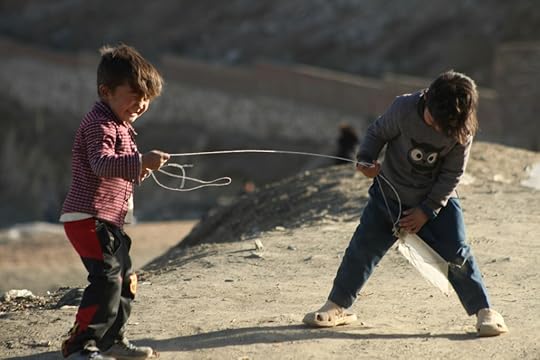
Photo by Farid Ershad on Unsplash
September 7, 2024
The Dead
Rupert Brooke
Blow out, you bugles, over the rich Dead!
There’s none of these so lonely and poor of old,
But, dying, has made us rarer gifts than gold.
These laid the world away; poured out the red
Sweet wine of youth; gave up the years to be
Of work and joy, and that unhoped serene,
That men call age; and those who would have been,
Their sons, they gave, their immortality.
Blow, bugles, blow! They brought us, for our dearth,
Holiness, lacked so long, and Love, and Pain.
Honour has come back, as a king, to earth,
And paid his subjects with a royal wage;
And Nobleness walks in our ways again;
And we have come into our heritage.
Immortality
An eager drive, recruit the willing, eager, opportunistic
But not mine, ours, we have means, opportunity
Why should our home sacrifice legacy, immortality
Good years, grandchildren, budding shoots pruned
Scarred remains, damaged husk returns wounded
Social battles remain, limited market skills
What for? For the greater battle, national pride
Community takes, but offers what in return?
Service, honor, legacy, brotherhood, pride
Noble, valorous, hero, courage, nothing
National gratitude, shameful secret
Everything asked, nothing exchanged
Words, weak gusts, inflated currency
A mouthful of air, for immortality

Photo by Urban Vintage on Unsplash
September 6, 2024
There will come soft rains
Sara Teasdale
There will come soft rains and the
smell of the ground,
And swallows circling with their shimmering sound;
And frogs in the pools singing at night,
And wild plum-trees in tremulous white;
Robins will wear their feathery fire
Whistling their whims on a low fence-wire;
And not one will know of the war, not one
Will care at last when it done.
Not one would mind, neither bird nor tree
If mankind perished utterly;
And Spring herself, when she woke at dawn,
Would scarcely know that we were gone.
She is right, you know.
I woke up, ready to read and work through another piece. Respond to a poem. Sara took the wind out of my sails on this. For all the words we fling at something like war, the earth doesn’t care. Neither does the universe, it is a social creation, for our own means. If we stopped singing songs, telling stories and writing poetry, the battles we fight would be forgotten.
Something about what we are though, we would still fight, that is how we are wired to challenge one another, and ourselves. And our leaders, tend to not participate in the literary traditions that are often framed as a warning.

Photo by Tiago Ferreira on Unsplash
September 5, 2024
Does it matter?
Siegfried Sassoon
Does it matter? – losing your leg? …
For people will always be kind,
And you need not show that you mind
When the others come in after hunting
To gobble their muffins and eggs.
Does it matter? – losing your sight? …
There’s such splendid work for the blind;
And people will always be kind,
As you sit on the terrace remembering
And turning your face to the light.
Do they matter? – those dreams from the pit? …
You can drink and forget and be glad,
And people won’t say that you’re mad;
For they’ll know that you’ve fought for your country,
And no one will worry a bit.
Sassoon, is fast becoming my favorite war poet.
Pity our veterans
Thank you for your service.
It’s too bad about your, you know
So brave, such sacrifice
We can’t thank you enough
It is too bad you weren’t
Smart enough for college
Good enough at sports
No other opportunities
Like me, us, we, not you
Your sacrifice, bravery
Heroism and gallantry
Disability, scars of war
We support our veterans
Enough, not too much
Never an inconvenience
We honor your sacrifice
Photo by Thomas Ashlock on Unsplash
September 4, 2024
Beat! Beat! Drums!
Walt Whitman
Beat! beat! drums!–Blow! bugles! blow!
Through the windows–through doors–burst like a ruthless force,
Into the solemn church, and scatter the congregation;
Into the school where the scholar is studying;
Leave not the bridegroom quiet–no happiness must he have now with his bride;
Nor the peaceful farmer any peace, plowing his field or gathering his grain;
So fierce you whirr and pound, you drums–so shrill you bugles blow.
Beat! beat! drums!–Blow! bugles! blow!
Over the traffic of cities–over the rumble of wheels in the streets:
Are beds prepared for sleepers at night in the houses? No sleepers must sleep in those beds;
No bargainers’ bargains by day–no brokers or speculators–Would they continue?
Would the talkers be talking? would the singer attempt to sing?
Would the lawyer rise in the court to state his case before the judge?
Then rattle quicker, heavier drums–you bugles wilder blow.
Beat! beat! drums!–Blow! bugles! blow!
Make no parley–stop for no expostulation;
Mind not the timid–mind not the weeper or prayer;
Mind not the old man beseeching the young man;
Let not the child’s voice be heard, nor the mother’s entreaties;
Make even the trestles to shake the dead, where they lie awaiting the hearses,
So strong you thump, O terrible drums–so loud you bugles blow.
Dogs of war
Cry havoc!, and let slip. Careful now
We are modern, civilized, better than
This is no war, this is a…not a war
Fierce hunger cries, vengeance, peace
National rage, global outcry,
Bureaucracy tames, wild beast
Journalists, traders, politicians thirst
Investments, contracts, moral outrage
We must do something, not our children
Violent calls, not for blood, cameras off
Humane society, non-lethals and drones
Not our hands, our bombs, foreign nationals
Release the hounds, quietly, somewhere else
Yoga in the morning, football game tonight
Barbecue memorials, heavy traffic holiday
We must remember, always on guard
Never inconvenient, nation of heroes
Don’t ruffle the citizenry, havoc’s cry
Photo by Oleg Moroz on Unsplash


