Josh Langley's Blog, page 5
December 15, 2020
The way 2020 panned out for me …… (in pictures)
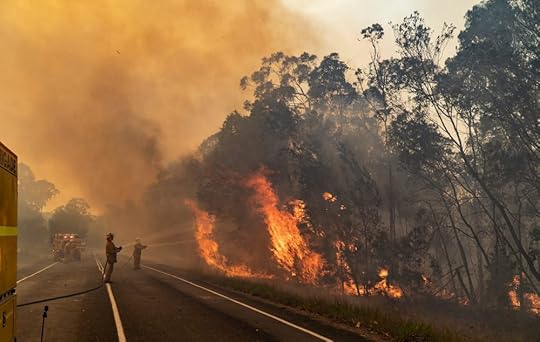 I started 2020 watching a friend broadcast live as he and his family fled one of the hundreds of bushfires that were burning around the time of New Years Day. He returned to find is house completely destroyed. With the rolling news coverage and the escalating disaster and lack of empathy from the Prime Minister (Scott Morrison) and the government, I was bundle of anxiety and anger for most of January. Where was a chamomile tea when I needed it? (the photo is from Google Images)
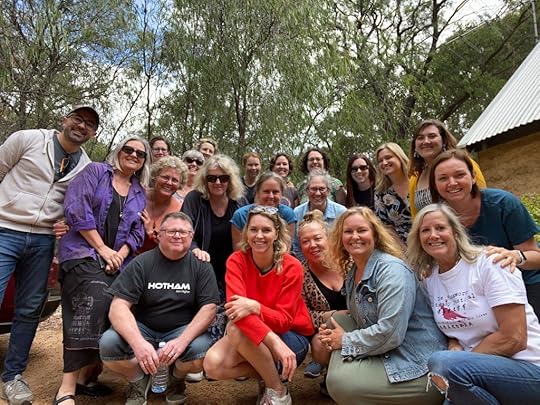 In February, I put my big boy pants on and went on a 3 day retreat with fellow WA children’s authors and illustrators to Margaret River. Yes, I felt like the new kid in school, but it was great to meet so many talented creators and learn about their creative process. I also learnt that children’s authors can put away a few bottles of wine too! I was in good company.
 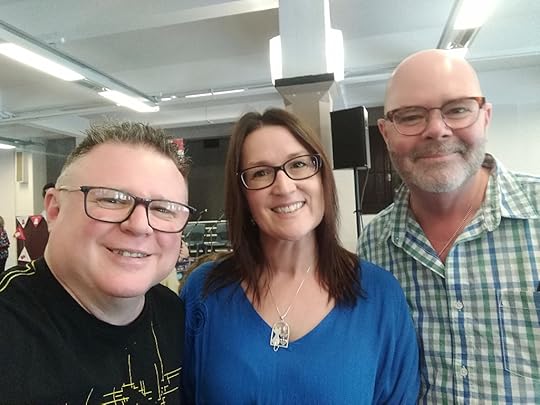 All smiling faces with fellow author Monique Mulligan at the Perth Literature and Ideas Festival in February. Little did we know that would be the last of the smiles for a while.
 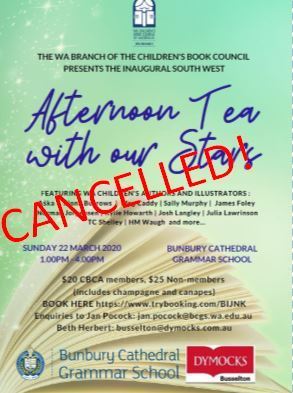 It was March and due to COVID19 events that had been planned since 2019 where now being cancelled faster than I could share the sad news. About 6 events including launch events for
Magnificent Mistakes
were cancelled and I lost a big chunk of income. Read my blog post from around the time.
It was March and due to COVID19 events that had been planned since 2019 where now being cancelled faster than I could share the sad news. About 6 events including launch events for
Magnificent Mistakes
were cancelled and I lost a big chunk of income. Read my blog post from around the time.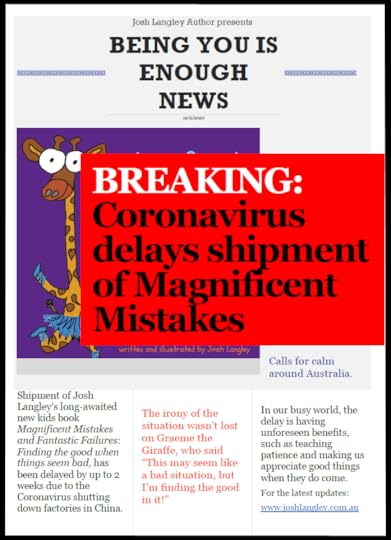 I tried to make light of the massive delay in the shipment of Magnificent Mistakes, but nothing could take away from the fact that no-one knew when the books would be in bookshops let alone in the country. My anxiety was rising. Trust me to try and release a book about mistakes and failures in the middle of a pandemic!
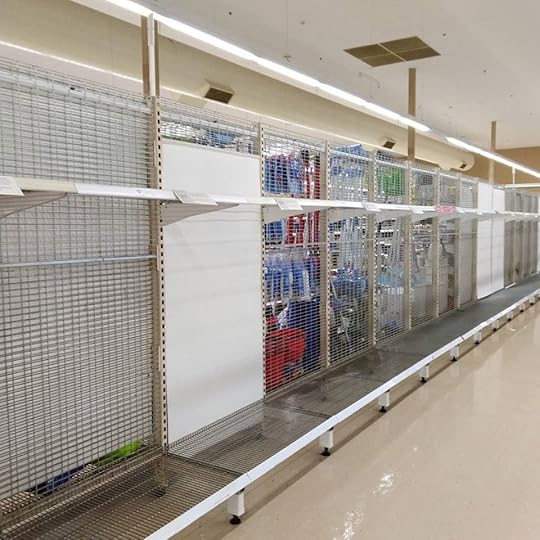 After watching the dunny paper and food hoarding madness on the news, I finally saw it for myself. It was really unsettling. The world had gone mad. This is where the dunny paper should have been at Coles in Bunbury.
 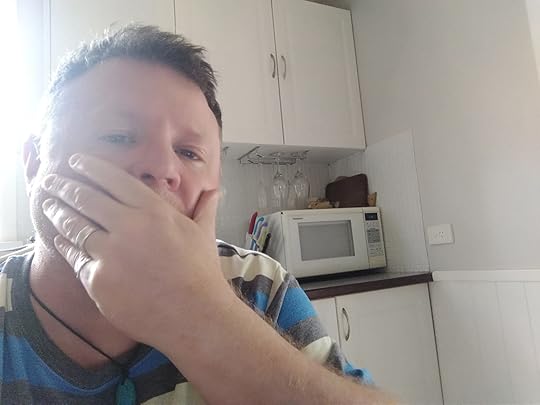 The meltdown that was waiting to happen, finally happened and I had a couple of nasty anxiety attacks that left me physically ill and I vomited all over our cherry tomatoes in the veggie garden… twice!. Our copywriting business (our main income) had also been smashed with radio clients pulling their spends and work dried up fast. Read more about that fun time in this blog piece.
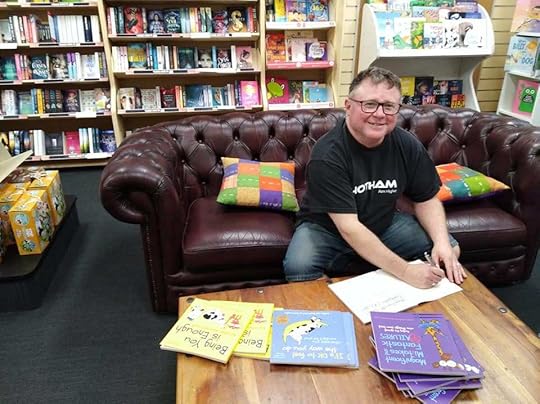 The relief was palatable as stock of Magnificent Mistakes finally started to arrive in bookshops, libraries and in people’s mailboxes.
  With in person events cancelled, I shifted focus and did live launch events on Facebook and Instagram, which was a steep learning curve. I watched what other people were doing and did the same as you couldn’t afford to be left behind. I think my Corona Cut helped lighten the mood.
 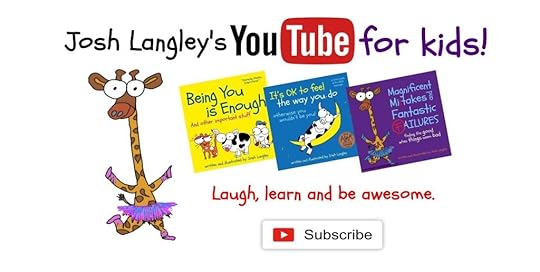 With kids being locked down at home, I also started a kid’s Youtube Channel so they could have something else to watch apart from online school lessons.
 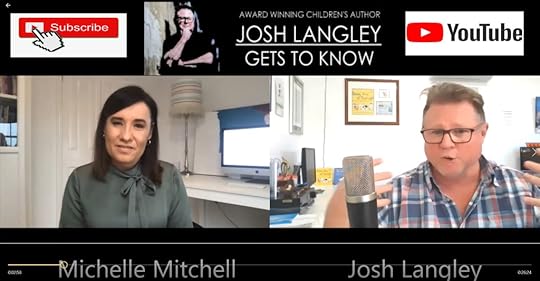 A conversation with my publicist about broadening my audience inspired me to start my own chat show, Josh Langley Gets to Know. I’ve done about 25 interviews so far.
  I continued to do live events while still not knowing what the hell I was doing.
 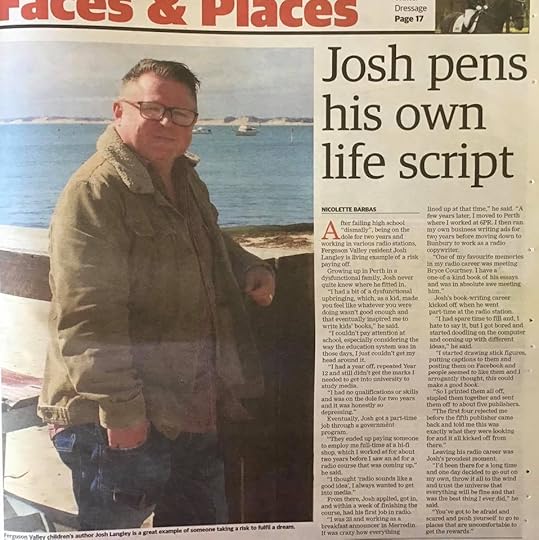 A feature in the South Western Times in August. The headline has become my new motto.
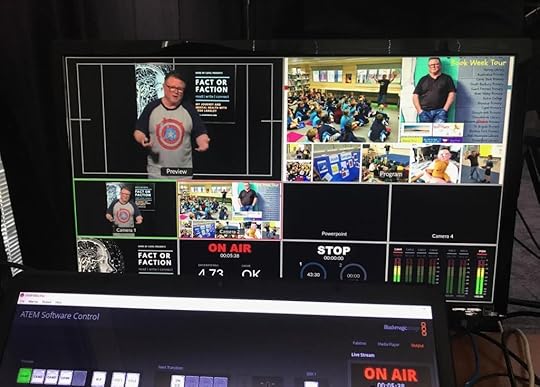 More live events, this time Capel Shire’s Fact or Faction talk where I talked about my anxiety meltdown earlier this year and the importance of good mental health strategies.
 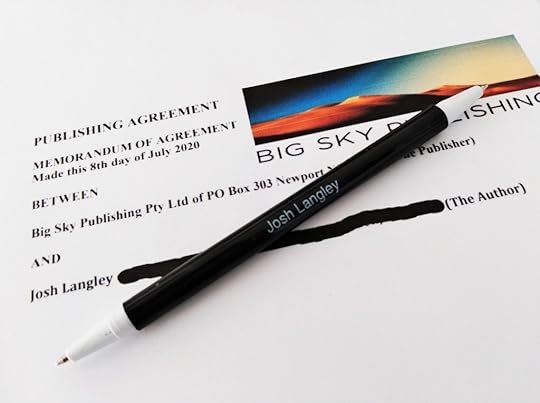 I signed the contract for my new kid’s book,
Being Wildly Kind
.
I signed the contract for my new kid’s book,
Being Wildly Kind
. 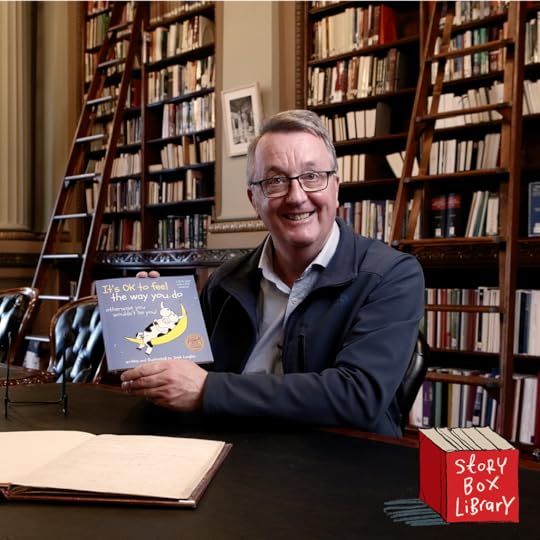 I was blown away when Allison Patterson from Big Sky Publishing contacted to tell me that It’s OK to Feel the Way You Do will be added to the popular online reading site Story Box Library. Magnificent Mistakes will be added in 2021.
 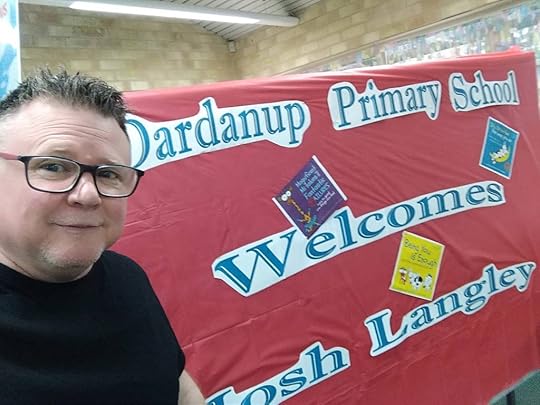 Thanks to living in WA, in school visits were back on again and Dardanup Primary was the first cab off the rank.
 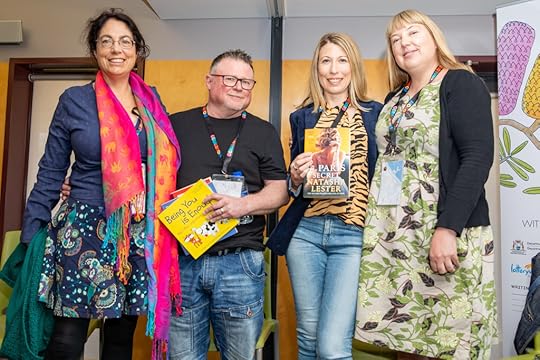 Andy and I were invited to the Big Sky Readers and Writers Festival in Geraldton in October, where we presented the Find Your Creative Mojo workshop and I did several events for kids and was on a panel with Jo Jackson King, Natasha Lester and Annabel Smith. Andy rocked as the host of the Poetry on the Green Event. BTW He’s just released his debut book of surrealist poetry. Read it aloud, it’s great for anxiety!
 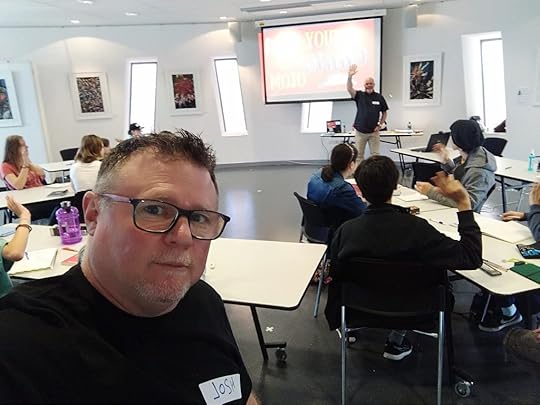 Some events really stick with you and the Find Your Creative Writing Mojo for homeschooled teens in October was one such event. The workshop was about helping young people find their creative voice and given that most of the audience where either LGBTQI+, ASD or marginalised for whatever reason, the workshop was even more significant. I hope these guys go on and do awesome things.
 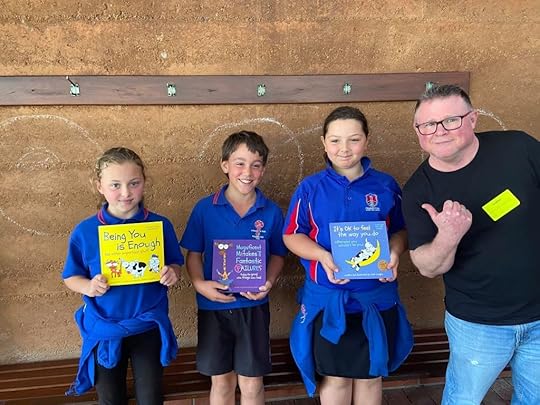 12 schools, 600 students and 4 towns for CBCA Children’s Book Week through the Shire of Manjimup. It was great to be back on tour and doing the motel living thing. #rocknrollkidsauthor
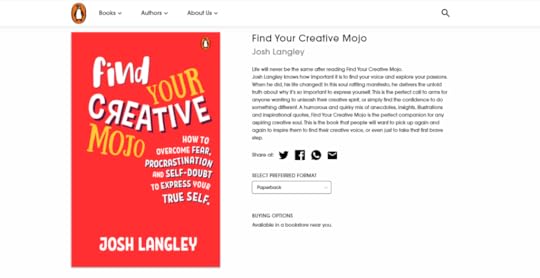 Find Your Creative Mojo was released throughout South East Asia by Penguin Random House.
 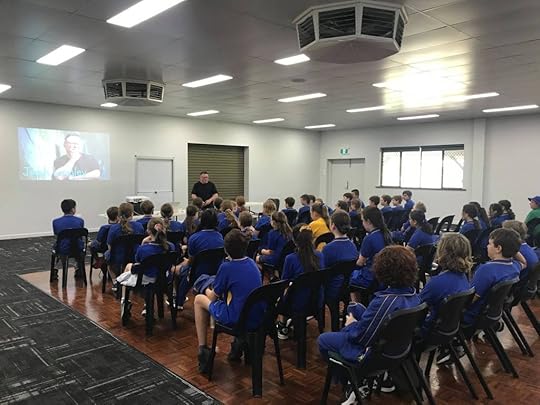 The talk about leadership and resilience to Year 5s at Leschenault Primary School in November also involved a beatboxing jam session with one of the students. That’s how we roll!
 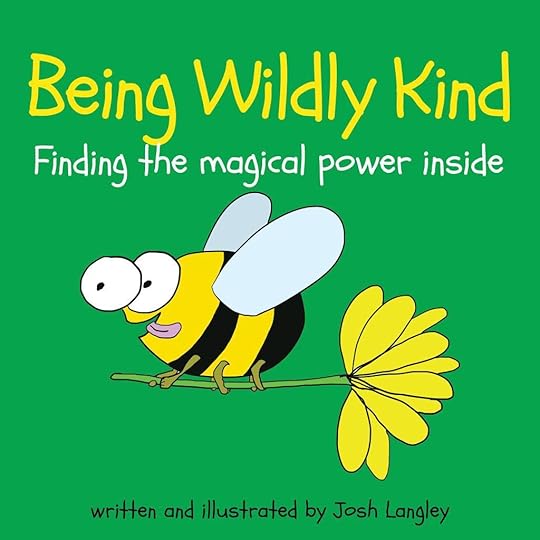 After quietly spending 2020 writing and illustrating Being Wildly Kind in the background, I was able to do the big cover reveal in November. The book should be out in May 2021, barring anymore pandemics.
 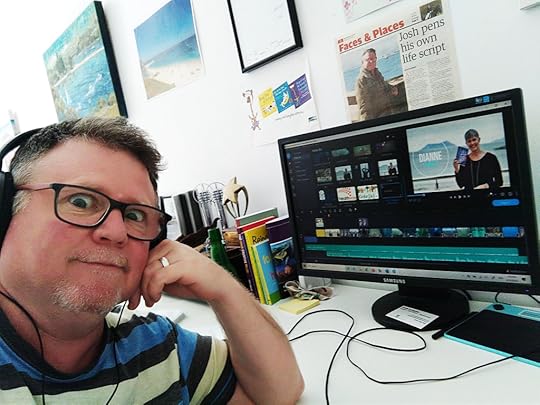 After seeing my Josh Langley Gets to Know chat show, I was approached by the Children’s Book Council of Australia WA branch to help develop content for some awesome WA kid’s authors as part of a new project involving libraries across WA.
 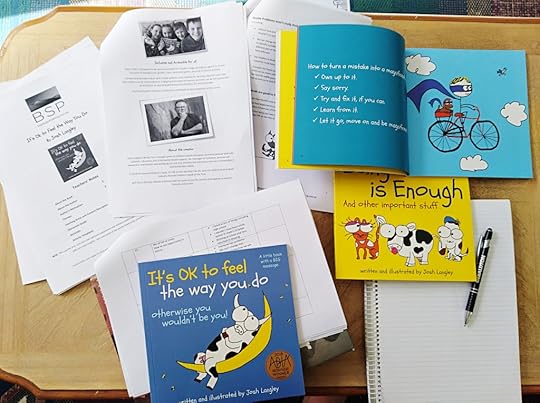 Filming starts in January for my online self confidence course for kids. Here’s a brief description
 “An online course and toolkit to help kids build self-esteem and accept themselves for who they are. The course focusses on developing self-acceptance, emotional and mental resilience, creative expression, and empathy. More like an empowering video series than traditional course, The course is run self-paced online then used as an on-demand resource and toolkit once finished.
The course is different in that it uses storytelling and creativity to convey the key messages, so it doesn’t feel like schoolwork or homework. The entire course is based on my Being You is Enough series of books and will be launched March 2021.”
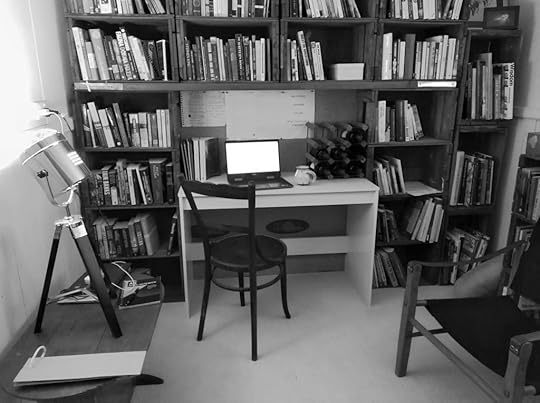 I’ve started to write a new book for adults. I’m about 10,000 words in. More to come!
 The Turning Point of 2020
While I have to preface that I was lucky enough to be living in WA, fairly isolated from the most damaging affects of COVID19, in the early stages it took it’s toll on me emotionally.
However, I had a lightbulb moment about half way through the year.
I was feeling weighed down by lots of anxious thoughts, self doubt and fears about everything that was happening in the world, however something made me stop and look at my desk.
It was covered in grant application forms, a new book contract ready to sign, a sketch pad filled with illustration ideas for the new book and a pile of my kids books ready to sign and post off.
I shook my head and swore under my breath, ‘For f**k’s sake Josh, you’re living the writers life you’ve always dreamed of!’
It was powerful moment. I realised I wasn’t showing up for the life that was happening right in front of me, the one that I always wanted. I was being a victim to my anxiety.
So I challenged it there and then and told it “Not here, not now, not today, I’ve got stuff to do”.
I’m Josh Langley and this is my show. Let’s get on with it.
It’s showtime.


November 23, 2020
How to get published – the basics (updated 2020)
(Estimated reading time, 2 glasses of wine)
So you’ve written a book or want to write a book and have no frigging idea of what to do next. Well hopefully over the next couple of glasses of wine I’ll help fill in some gaps and give you the motivation and knowledge to share your work with the world.
Disclaimer: This information is based on my own experience of getting published along with reading countless blog posts, websites and books and by talking to other authors, publishers and agents. So I’ve done a lot of the boring research for you. However, this is no way a definitive guide but it can demystify the publishing process and get you started.
I went from having no idea about publishing, to traditionally publishing 9 books, winning a major book award and becoming an in demand speaker on mental health at primary schools and writers festivals, all because I was brave enough to submit a manuscript. The same can happen for you.
Read the remarkable story about how I got published
Now pour a glass of wine and read on.
[image error]
Show me the money!
Publishing is a business designed to make money. Agents and publishers don’t just publish books to make people feel good, they want to know if your book will sell and make money. It’s that simple. Always keep that in the back of your mind when going through this process.
How traditional publishing works – a thumbnail sketch
A publishing house will work with you to help get your book finished, printed and into bookshops (both online and bricks and mortar).
The publisher will create a ‘sales’ pitch for your book and use a distribution company to warehouse and promote and sell the book to bookshops, retail outlets, libraries, schools etc.
Author ——- publisher ——– distributor —— bookshop
or
Author ——- agent —— publisher ——- distributor ——– bookshop
A bookshop will buy a certain number of copies and if after a set number of months, there are any copies left, they can send the books back to the publisher and get a refund. Some distributors will charge a ‘return postage fee’ which may affect how many books the bookshop will initially order.
The publisher will also:
Pay and arrange for everything, including manuscript review and advice, editing, spellchecking, cover design, typesetting, distribution, promotion and publicity. (This is good if you’re a tight arse like me)The publisher / agent will help you build an author platform that runs complimentary to promotion and publicity from the publisher. You get paid a royalty (percentage) of each book sale. Usually 10%, paid twice yearly. You also get other royalties such as ebooks, overseas rights and subsidiary rights ie audio books, film rights etc.The publisher will offer you a contract on their terms and if you don’t have very good negotiating skills and you don’t know what you’re doing you could get diddled. Check out the Australia Society of Authors for more information about author contracts.
How much do writers really earn?
Do I need a Literary Agent?
Having a literary agent is like having your own manager. They champion you and your books to publishers and have your best interests in mind.
They make their money by taking a percentage of your royalties (around 15%), yet they can usually help negotiate a better percentage with a publisher than what you could have done yourself, so it all balances out.
If more than one publisher is interested in your book, your agents puts it up for auction, meaning you get the best deal, even a crazy arse deal!
Plus an agent will help you build your author brand and career.
All the top authors have a literary agent, however, unfortunately they are very reluctant to take on unpublished authors or unsolicited manuscripts. There are also only a handful of Literary Agents in Australia which makes it almost impossible to get one if you’re not known or even moderately known.
So you have to decide if you either want to start with a Literary Agent or go straight to a publisher.
NOTE: If you go to the publishers first and they reject you, you can’t go and pitch to an agent, because if the publishers reject your work, then an agent won’t able to ‘sell’ it to the publishers if they’ve already rejected it. It’s complicated. Top up your wine.
Check out Virginia Lloyd for how to pitch to an agent.
What about Self Publishing / print on demand?
With this model, you have to arrange everything (editing, cover design, printing, ISBN etc), however you get to keep most of the cash!
You could either pay thousands to get your books printed and fill up your garage or do POD (Print on Demand) via Amazon etc. Unfortunately it’s much harder to get your books into bricks and mortar retailers and it’s pretty soul destroying walking into a bookshop with your book baby only to be told ‘No, sorry we don’t accept self published books’ and ushered out quickly.
If your book is only text, you may want to look at doing an ebook and uploading straight to Amazon and other ebook sites.
There are some incredible success stories of authors publishing straight to Amazon and then being offered a publishing contract with a traditional publisher. AG Riddle is a perfect example.
Check out the videos on Youtube videos that take you through the process of publishing to Amazon.
However with this model, you have to do all the publicity and promotion yourself which is time consuming and may cause you to consume lots of wine. There are some great books out there on self promotion such as Emma Noble’s book, The DIY PR guide.
Legitimate Assisted Self Publishing Companies
There are some good companies out there who will ‘coach’ or guide you through getting your book published. They are upfront about costs and will offer different package options for different levels of service.
I recommend the below two companies as I know people who have had positive experiences with them.
Book Reality (example: Suzi Faed – Fighting Spirit)
Vivid Publishing (example Karalee Katsambanis – Step Parenting with Purpose)
[image error]
Vanity Publishing
Vanity Publishers look and feel like a traditional publisher, yet they expect you to pay some (if not all) of the costs.
They may not have a relationship with a distributor, so it’s harder to get your book into bookshops, if at all. I know of a few people that have been burnt or have been left disappointed by going down this path. Some people have been completely ripped off, with their ‘publisher’ skipping town, running off with all their cash and not a book to be seen.
Look out for words like ‘Hybrid Publisher ‘, ‘assisted publishing’ and the like. It can be a minefield and some vanity publishers may be genuine and give your manuscript the attention and criticism that any self respecting traditional publisher would give, but most don’t. They just want your money and will often accept any manuscript no natter how good or bad.
This is an example of how sneaky vanity publishers can be. This was buried deep on the ‘About us’ page on Austin Macauley’s website and not mentioned anywhere on the submission page. (I haven’t linked them for obvious reasons)
From the very beginning we have worked with the ‘hybrid’ model of publishing contracts, which has become increasingly popular in recent years. This means that while we look at every new manuscript with a view to offering a traditional mainstream publishing deal, we also have the option of offering a partnership agreement instead, where the author may be asked to cover part of the cost of publishing the book.
Don’t confuse hybrid publishers with hybrid authors. Hybrid authors use a combination of traditional and self publishing. Research the topic well. It may involve more wine, but it’s worth it in the long run.
[image error]
Getting started
Know your book
It’s important to know where your book fits into the scheme of things. Is it fiction or non fiction? What genre does it fit into? What other books are out there like yours? Visit book shops to see what’s already on the shelves. (Any excuse to go to a book shop is a good one!) Also do a Google search for similar genres and categories.
It’s about learning how to describe your book in a quick and easy fashion, similar to an elevator pitch. Imagine you’re at a party and you’re meeting someone for the first time and they ask you what your book is about. You only have 30 seconds to describe it! What do you say?
Read about elevator book pitches.
Submitting a manuscript – what you need
If you want to go down the Traditional Publishing route, it’s best to Google the publishers in Australia who publish your genre. Read their submission guidelines and stick to them! I can’t stress this enough. READ THE SUBMISSION GUIDELINES AND DO AS THE SAY! Otherwise they will throw your manuscript in the bin before it’s even read. It’s tough love I know.
The guidelines usually involve (but not always) 4 things:
1. An introductory letter. This is very brief, less than one page and you have to sell your book, and yourself, in only a couple of paragraphs. Google how to write a killer intro letter.
2. The Book Pitch. This is the most important aspect of the whole process. You may have a sensational manuscript, but if the pitch is boring as cold porridge, then it’s not going to do you any favours. Google about how to write a book pitch or just email me bookings@joshlangley.com.au and I’ll email you what I’ve done for non fiction so you can see what one looks like. A book pitch usually includes: genre, synopsis, target audience, word count, similar titles to yours, why your book is different and your writing experience.
3. An Author Bio. Again Google the best way to write an author bio. These are the hardest to write as they have to be in 3rd person (Josh is a prolific writer having published 9 books and drinks too much wine etc) and you have to talk yourself up (which most people find hard to do). Once you’ve written several versions, run them past your partner or a friend and get their thoughts. You’ll usually need write 3 different versions: short (one paragraph), medium (3 paragraphs) and long (up to a page). See my examples here
4. Sample chapters: Again depending on the submission guidelines, usually you’re requested to send the first 3 chapters so they can get an idea of whether the book is remotely interesting, if it’ll be would profitable, and it gives them an idea of your writing style. If they’re interested they’ll request the rest of the manuscript to read and consider. It’s important that this is your best work! Check it for spelling and grammar and make sure there are no typos.
Once you have done all that, you’ll have a ‘submission pack’ ready to go and all you’ll need to do is alter it as per each agent / publisher’s submission guidelines – cut and paste!
Also set up a spreadsheet so you can track which agents / publishers you are submitting to with dates, submission criteria, contact details etc. Often it can get confusing and you might end up accidently submitting to the same publisher twice and you’ll look like a doofus.
Once you have to your ‘submission pack’ ready to go, then start hitting up the publishers and go to their submissions page.
Often the big ones like Harper Collins, Random house etc, don’t take unsolicited manuscripts (meaning you can’t send to them direct) as they only accept submissions from agents or their submissions window maybe closed and may not reopen until 2028 by which time you could be dead.
Yes I know; if agents don’t take unsolicited manuscripts and neither do the big publishers, how the hell are you going to get your foot in the door?
Where there’s a will, there’s always a way.
Allen and Unwin has the Friday pitch:
Hachette has it’s submission window open:
Walker Books (Childrens books) has Walker Wednesday
And many smaller cool indie publishers are quite happy to take unsolicited manuscripts, like Big Sky Publishing, Echo Publishing, Pantera Press, Text Publishing, Fremantle Press and many more. Google Publishers in Australia and work out which ones publish your genre of book.
Also follow their Facebook, Instagram and Twitter pages etc and start to engage with them by liking and commenting on their posts and tweets. However don’t be an annoying twat.
I found my publisher by responding to a post they had made on Facebook where I asked who the person was to send a submission to. I got a name and an address, Bingo.
Pitching
You pitch the same way as you do to an agent as you do a publisher. However triple check the submission guidelines.
Don’t pitch to more than 4 or 5 publishers at a time as it’s considered rude if you make a submissions editor get excited about your work only then to tell them that another publisher has already offered you a contract.
And with Agents only do one or two at a time. Wait for the rejection / acceptance and then hit up another one. Most agents take between 4 and 12 weeks to consider your submission. Yes that makes it a very lengthy and bloody boring process and you could most probably get married and have 2 kids by the time one finally accepts you.
[image error]
For a full list of Literary Agents in Australia check out https://austlitagentsassoc.com/
If you’re looking for a specialist Children’s book lterary agent, then check out Justine Baker at Mayfair Literary Agency
The author platform
Ok, pour another glass of wine.
I’ll only briefly touch on this one as it could make another blog post altogether. It’s not enough to rely on your publisher to promote you unless you’re JK Rowling, Stephen King or Jimmy Barnes, so you have to develop your author platform and work it like a boss.
Basically an author platform is about how you interact with your readers.
How personable are you? Are you friendly? Are you easy to work with? Do you like people? (I’ve heard horror stories of authors who have been rude and acted like little prima donnas to not only staff at writers festivals but also to their fans and readers) Social media. What platforms are you working? Facebook, Twitter, Instagram? How many people to do you reach and how well do your interact with them? Do you interact with other authors and people with similar interests to your book?Public Appearances. Do you do book signings, talk at festivals, do radio , TV and press interviews? I’ve heard of people who refuse to do any of that and still expect their book to sell. I don’t think so! Blogs / websites: Do you have a website or blog where people can easily interact with you? Are you blogging and commenting on other people’s blogs? This blog post is an example of working the author platform. It’s important that you have at least a basic website with your bio and contact details as you never know who maybe wanting to get in contact and give you money!Other websites / news outlets and blogs. Do you contribute stories or articles to other outlets and blogs?Check out the front page of my website to see how I integrate my social media, blog posts and books together.
Any publisher or agent will be Googling your name like some crazed stalker to see if you already have a ‘presence’ and if your author platform is something they can work with.
There is so much more I could talk about but I’m sure your glass is getting nearly empty.
Now the positive ending
Persistence (and a little bit of luck) is the key to getting traditionally published.
Keep trying, trying and trying. If one avenue doesn’t seem be working, then try another one. Be humble accept feedback and criticism. Take it on board and use it to improve your work and your methods.
A wise thing to do is have a manuscript assessment done so you’re putting your very best work forward. Also think about getting a publishing mentor like Virginia Lloyd
You are going to be rejected, over and over again. It happens, it’s a fact of life. Use the rejection to inspire and motivate you.
You will not die because you got rejected by a publisher. So push on.
Tweet
[image error]
Go to writers festivals and ask other authors how they got published. Stalk them on Facebook as well and be that curious but not that too annoying fan that just wants to know everything. Authors secretly love being asked these questions as it makes them feel like they contributing something back.
That’s enough for now and your glass might need topping up, so if you have any other questions or want to tell me what a load of crap this is, then feel free to email me at bookings@joshlangley.com.au
I want to see your name on the cover of a book, and I’m sure you do too.
It need more more motivation then read Find Your Creative Mojo.
You’ve got this!
[image error]
Also checkout the links below:
Writers resources for each state: http://www.austwriters.com/AWRfiles/groups.htm
Australian Writers Centre: http://www.writerscentre.com.au/
Australian Society of Authors: http://www.asauthors.org/
Society of Children’s Book Writers and Illustrators. East https://australiaeastnz.scbwi.org/scbwi-near-you/
Society of Children’s Book Writers and Illustrators West https://australiawest.scbwi.org/
Just Write for Kids – an online support group for writers and illustrators of children’s books to focus on achieving goals and connecting with others.
Creative Kids Tales – provides resources to empower aspiring children’s authors on their journey to publication:
November 9, 2020
The Courage to Stand Up
He was big for an 11 year old. He sat at the front of class, just off to the side, by himself. It was the second day of my school workshops for Children’s Book week and the last school I was visiting for the day.
We were up to the activity part of the session and the kids were working on their inventions, coming up with wild and weird ideas and colouring in furiously.
But there was the big kid off to my left, whom I’m guessing would have been on the receiving end of bullying through his school life. He sat there with a blank sheet of paper.
‘Stuck for an idea?’ I said.
He looked up and then looked shyly back down, ‘Nah, but I’m filling in the corners’.
‘That’s a good start, What kind of invention do you want to create?’
He looked back up, ‘I could draw a door.’
‘And where would you go if you went through the door?’
His eyes brightened, ‘anywhere!’
‘So it’s a portal then? If you could go anywhere, where would you go?’
‘Paris! I’d go to Paris!’
‘I like that, I’d like to go there too, when Covd19 is done with.’
‘Yes!’ and he returned to adding more elements to his invention with a new enthusiasm.
As I started to get students up to talk up what they invented, I noticed my new friend wasn’t putting his hand up. But towards the end, he’d tentatively raised his hand, so I called him up to the front.
Instead of going straight to talk about his idea, he looked directly at a boy who was sitting with some friends in the second row who had been a little boisterous during the session, and I suspect could have been the cause of the taunts and bullying for him.
But what he said next, was more powerful than any invention.
Shifting from one foot to the other, he held his gaze at the boy and said “You said that I wouldn’t have the guts to get up here. Well Blake, here I am. Here I am!”
Here I am.
October 27, 2020
The little girl who wouldn’t speak.
I love going to writers festivals and doing school visits. I get to meet so many amazing people and there are always moments that rest gently in my heart, reminding me why I’m lucky to be doing what I’m doing.
Last weekend was no exception. I was doing a Magnificent Mistakes workshop for primary school aged kids as part of Big Sky Readers and Writers Festival in Geraldton and I had encouraged parents to stay and join in.
A dad had brought along his young daughter and I noticed she didn’t answer any questions or talk whatsoever. Whenever I looked in her direction, she looked shyly downwards and brought her hands into her chest. It was like she was retreating into herself, shy and scared of the world. I then tried to strike a balance between not making her feel uncomfortable, but still making her feel included.
I’d passed around copies of my kids books so the kids and parents could flick through as we went along and when the young girl stumbled upon the ‘even cool kids have to poo’ page in Being You is Enough, I saw her grin widely and eagerly point to the picture of the kid on the toilet. She became animated, but still didn’t talk.
[image error]
At the end of the workshop her dad (almost as shy as his daughter) asked me to sign a copy of Being You is Enough and when I asked the young girl’s name, she still didn’t speak. Her dad, gentle and patient didn’t push her, just offered a few encouraging words. She continued to look downwards and retreat into herself. He then told me her name.
I signed her copy of Being You is Enough, with ‘You are wonderful just the way you are” and handed it to her. She clutched it to her chest and smiled while still looking down. Her dad put his arm around her and gently asked if she wanted to say anything.
She whispered ‘Thank you’.
September 20, 2020
Big News! My books are on Story Box Library!
I’ve been wanting to share this awesome news for a while and now I can!
In a fantastic acknowledgement of the growing importance of children’s emotional and mental health, The ABIA awarding winning It’s OK to Feel the Way You Do is now part of popular children’s educational website Story Box Library.
“Story Box Library is a subscription based educational website, created for children to view stories by local authors and illustrators, being read aloud by fantastic, predominantly Australian and New Zealand, storytellers.”
I was very happy to see that Story Box Library enlisted Victorian Minister for Mental Health, Equality, and Creative Industries, Martin Foley MP. to read the book.
[image error][image error][image error][image error]
Watch Martin Foley discuss the importance of talking about mental and emotional health with kids. He recorded it just before he read from It’s Ok to Feel The Way You Do.
Watch the teaser reading of It’s Ok to Feel the Way You Do
SUBSCRIBE to Story Box Library to watch the full video of It’s Ok to Feel the Way You Do.
BUT!
There’s more good news. Martin also read Magnificent Mistakes and Fantastic Failures at the same session. The new video and reading will be released late 2020 or early 2021.
[image error]
I feel there’s a groundswell of interest in taking children’s mental and emotional wellbeing more seriously and it’s not just from teachers and mental health experts. It’s now from politicians, different education sectors, the children’s literature community and more so parents themselves. I feel very confident for the future.
Big thanks to Allison Patterson at Big Sky Publishing for helping to make it happen and also to the team at Story Box Library for believing in my books.
September 12, 2020
How to start your own chat show with no experience – a step by step guide
I started a chat show in the middle of the Covid19 pandemic with no experience and only basic equipment and it saved my sanity. It gave me something to focus on while the madness of lockdowns etc. swirled all around and also helped me reach a new audience for my children’s books.
But what made me realise that, as a children’s author, I could have my own chat show? It was as simple as realising I could record my Zoom conversations. That was it.
I’d heard people say that to even start a Podcast you needed lots of special equipment, outsource the editing to the Philippines and then have different platforms to make it with.
Stuff that. I wasn’t making a Podcast anyway, I was making a chat show!
I did my first interview and shared it on Facebook. The next day I sat on the front verandah with my husband and a glass of wine and we set about coming up with a name for the show. He suggested ‘Josh Langley Gets to Know’ as he knows I’m a curious person and likes to interrogate people and that was it!
[image error]
I’m now up to my 20th show and I have a stream of people contacting me wanting to be on.
Start small and grow from there
I have a philosophy. Don’t let the size of something or not knowing how to do something stop you from starting. You learn as you go and your skills sets develop with each interview you do. But you have to start somewhere. I had a laptop, Zoom, a microphone (my husbands), Windows 10 video editor and a list of people I wanted to get to know. That was it.
Here’s a 3 minute montage showing the evolution of the show, the number of guests and some outtakes.
What you’ll need:
Laptop with camera Microphone. I have a M –Audio USB mic that cost around $100. You could use the mic on the laptop but it can sound a little tinny and could make your viewers ears start to bleed. Basic editing program. I started out using the free video edit software that comes with Windows 10. Mac users, you’ve already got iMovie so rejoice in that. I ended up buying Movavi Video Editor Plus for around $65 AUD. (It says free on the website but it’s the trial version). You can see I switched to Movavi by around Episode 12 with Heidi Anderson and I’ve since added music to the intro by Episode 17. Background. Think about what people are going to see behind you when you’re on camera. Please make sure it’s clean and tidy. No-one wants to see your dirty nickers hanging over the end of the bed, the cat squatting in the litter tray or a poster of a scantily clad lady on the wall. Zoom. I used the free version.
[image error]
Let’s get started
Write down a list of who you’d like to interview. Start with people you may know or you have a slight connection with as it’ll be easier to get these people onboard straight away. Don’t aim for Oprah first off, she might be busy. Reach out to them and explain what you’re doing and why you’d like to interview them. Also detail that it’ll be prerecorded over Zoom and how long it’ll take. Mine usually go for 30 minutes as people have short attention spans. Get them to send you a bio about themselves and do a bit of your own research as well. Write a list of 5 questions and send them the questions so they won’t be surprised by what you ask. I used the free version of Zoom. As long as it’s just you and them, you can talk for as long as you like. 10 minutes before the scheduled interview time, I email my guest the Zoom link and wait for them to come on. I don’t do any introductions or biography of the person while they’re on screen, I record that at the end after they have left the chat. I find it boring to have them sit there looking uncomfortable while I ramble off a list of their achievements. Let them know you’re about to start recording (really important) and hit record (even more important). Now say to them. “Just give one second.” Take a pause and then start the interview. It gives you a nice clean edit point. It’s Ok to refer to your notes or to lose your spot or have a blank moment. Avoid thinking that you need to edit it out, just keep going and act natural. Now you want to do the interview in one take as it’s much easier to edit. But if you do stuff up. Pause and count to 3 and start again. Don’t stop the recording. When you finish the interview, say thank you and goodbye and wait for their reply. THEN PAUSE. Don’t say a thing for 3 seconds. Now you can stop recording. This will give nice end edit point. When you exit Zoom, it’ll automatically convert into a media file. Before you get up and walk off to pour yourself a stiff drink, record your intro. I use the laptop’s camera and make sure I’m in the same position (and same clothes) as the interview. I keep the intro very short! Try and talk about how much the interview meant to you or what what you got out of it or something else that makes it personal.
[image error]
Editing
Edit using your chosen program. The more you do the easier it gets and obviously the better the program the fancier it’ll look. Watch one of my earlier ones to see how simple it can be using the Windows 10 Video editor. Also here’s a tutorial on how to use it. Don’t forget to add titles and name of guest.
[image error]This is a screenshot of my latest interview using Movavi. Windows 10 video editor doesn’t let you save the session so I can’t show you the what that looks like. Don’t be freaked out the image above, I had to work up to this level of editing program!
Sharing the Interviews
You can upload direct to facebook. Or you can set up a YouTube account and upload to there.Write your show notes and key points of the interview in the description. Then add the tags for YouTube. It can be a bit of a crazy science to work out what tags to use, but I found a good rule is to think about what people would type into the YouTube Search bar and how it relates back to you, your guest and the topic you’re talking about. ie “How write a book in 2 hours”, or “Best was ways to use snails in cooking”. Personally I upload the video to Youtube, write show notes and add tags. Then I share the video on my weekly newsletter, Facebook Author Page, Linked In, Twitter and on my own website. For Instagram I use a screenshot from the interview and then link back to the Josh Langley Gets To Know page on my website in the bio on Instagram.
Expectations
When you post your first interview to social media don’t expect thousands of likes and your video to go viral. People instinctively watch it first before clicking like and may not return to the page to click like anyway. Judge engagement by the number of views on YouTube. Even then it’s still not completely accurate. Keep in mind, you’re really doing this for your own interest and to develop your skills, both as an interviewer, video editor and marketing person.
If you do want to make a Podcast from your interviews, you’re in luck as Zoom records the audio track separately. Then all you do is research how to create a podcast and go from there.
Spend a while watching some of my interviews here and take away what you need to to.
Good luck on your new venture and I hope you enjoy learning new skills and being the star of your own chat show.
NEW! EP20 ADAM WALLACE – HOW TO MAKE A LIVING FROM WRITING KID’S BOOKS.
Can you make a full time living from writing kid’s books? I get to know New York Times bestselling kid’s author, Adam Wallace to find out how he swapped an engineering career to be a full time kid’s author.
He’s just created an online course package that gives all his secrets, tips and advice on how you can possibly turn your side hustle writing kids books into a full time gig including how to create awesome school presentations.
September 1, 2020
Show up
Even if you don’t know what you’re doing.
Show up.
If you don’t know where to start or how to do something… ask.
Show up.
Don’t post or write about your anxiety or how bad life is unless you’ve pushed through or learned something from it that day.
Show up.
Your fears, doubt and anxious thoughts will want you to hide, but instead……
Show up.
Even though it may not seem like it, you have a choice.
Show up.
Life is messy, mangled, confusing and wonderful all at the same time.
Show up.
Regardless of what your mind tells you, you are brave, strong and confident. We all are.
Show up.
Life doesn’t wait for when you think you’re ready.
Show up.
Stuff up, fail, stuff up even more, make your mistakes magnificent.
Show up.
Talk and write about the lessons learned and insights gleaned.
Show up.
Don’t scroll your life away.
Show up.
This is your show.
So show up.
August 22, 2020
The courage to find your tribe
As any artist, writer or creator knows, its hard to believe in yourself and imposter syndrome always looms large in the background.
And while you struggle to fit into your new identity, not everyone will want to come along for the ride and cheer you on. And that’s OK. We have to let these people go so they can live their own life.
[image error]
As you change, so does your energy and you will start drawing more like minded people to you and your endeavours. These people will be your allies and you theirs.
You’ll support and love each other because you see the same courage in them as they do in you.
Find your tribe of allies and have the courage to let old ones go.
This is your show.
[image error]
Discover Find Your Creative Mojo
June 9, 2020
The case for a 4 day work week
If there is anything this Covid19 lockdown, shutdown, meltdown has shown us, it’s the importance of slowing down and appreciating the little things in life. By not being able to stray too far from home and with most people working from the kitchen table in their undies, we’ve been able to notice life can run at a slower pace.
[image error]
And most people I’ve spoken to say they’ve being more productive during this time than they would have being working from the office. Annika from accounts no longer rushes past your cubicle brandishing a clip board making you feel guilty that you’re not as busy as her and there are no inane meetings over whether the new stapler in sales needs a risk assessment to operate. Plus you’ve been able to sneak afternoon naps and knock off at 2pm to walk to the dog followed by a quiet tipple on the verandah.
Apart from productivity, it’s shown us something even more important. The positive mental health benefits of having more time for yourself and the ones you love.
Space to be
At my last real job, I negotiated a work / life balance package where I worked 4 days a week, Monday to Thursday and it was the best thing I did. It changed my life.
Having the one extra day a week allowed me to explore things I didn’t previously have time to do or was too bloody tired to do.
[image error]
Firstly, I could use my Friday to get the washing and housework done, leaving the weekend free for projects around our 7 acre property or day trips to visit friends and family.
Then I was able to explore my creative side.
My Frog and the Well books and my kids books were born from that one extra day a week. I literally started my writing and illustrating career by having an extra day to myself.
That one day gave me space. Space to breathe, to destress, to explore creative ideas, to learn new things, to chill and even to be bored. The space to be me.
And after a 3-day weekend, I was more refreshed and willing to face the following Monday in the office. It was a bonus for everyone.
[image error]
The new normal?
As we tentatively emerge from Covid19 lockdown, this is the perfect time to change the way we think about work, life, play and creativity. They shouldn’t be mutually exclusive. We’ve seen how it can actually work and we’d be mad to go back to the way it was.
Do we want to reinforce the old work paradigm that fuels anxiety, depression and a sense of purposelessness?
Hell, no. Now is the time to create change and it’s in your hands.
If you had an extra day for yourself, how would you spend it?
If you want to a more expert insight into the 4 day work week concept and what organisations and businesses are already doing, check out this article from the ABC. https://www.abc.net.au/news/2020-06-08/four-day-work-week-could-learn-from-working-mums/12326078?
May 8, 2020
How launching a book during a pandemic made me sick
I celebrated the launch of my latest kid’s book head down in the veggie garden, vomiting my guts up and I promise it wasn’t because of too many cupcakes and fairy bread.
It was anxiety.
Not the amazing butterflies in the tummy nerves you get before you step on stage and present to 100 or so kids. This was horrible, gut wrenching anxiety caused by not feeling in control and a lifetime of nervous energy having nowhere to go except out of my mouth.
When I was diagnosed with Generalised Anxiety Disorder last year, I thought I had pretty much made friends with it and only every now and then my anxiety would get the better of me. Apart from that I was in control.
But it seems Convid19 had other ideas.
[image error]
My latest kids book, Magnificent Mistakes and Fantastic Failures, was due out Mid-March, but the virus shut down the factories in China, creating a massive delay in printing and shipment. Then as the virus spread to Australia and shutdowns and restrictions started spreading faster than the virus, I could feel my book slipping from my reach.
As one book launch event was cancelled after another, I was facing an even worse prospect; bookshops would be closed, and postal services restricted.
The mad rush to get online
But there was no time for a pity party as the rush to move everything online had begun. I launched my Kid’s Youtube Channel, went live on Facebook and Instagram for the first time and reached out to libraries offering to read my new book on their social media feeds. My mind was a blender of ideas and strategies. I had to keep the ship afloat no matter what.
[image error]
I was still in control.
All the while my radio copywriting business had taken a kick in the guts as well. But still no time for a pity party there either as I needed to help the sales team keep clients on board and find new ones.
This was all happening around more bad news coming after more bad news on both TV and social media. People fighting in supermarkets, empty shelves of dunny paper, pasta and soap, radical social distancing rules, booze restrictions, border closures, massive queues outside Centrelink and worse of all, no hugging.
But I was still in control.
The date for the release of Magnificent Mistakes was put back even further and I became that annoying author pestering my publisher for information on where the book was at. Had the shipment even arrived in Australia?
I decided to apply for JobKeeper assistance so I could keep my business afloat, but my head exploded trying to navigate the red tape and I’m still waiting to hear if I am successful or even if I filled the forms in correctly.
But I was still in control.
Everything lets go
Then one morning I wasn’t.
After I’d sat at my desk and opened the computer, I felt a tight knot form in my solar plexus and it squeezed tighter and tighter. Completely bemused by what was going on, I pushed through until the waves of nausea forced me to hurl my guts up.
But I was still in control.
I carried on as normal for the following week trying to keep the ship afloat and doing my best to make sure I launched the book and kept my business going. There was contradicting information on whether the books had arrived at the distributers warehouse and whether they had started to send them out. I couldn’t wait and I went ahead with my online launches anyway. I also felt personally responsible that the early orders where still no where to be seen.
Then it happened again.
I’d come home from a morning walk and was thinking about what I needed to get onto for the day and the tightness returned. It quickly turned to rising nausea and it was only a matter of minutes before I was in the veggie garden vomiting over the cherry tomatoes.
I was no longer in control and I finally had to admit it.
My husband urged me to phone my therapist.
Society has got it wrong
One of the characteristics of Generalised Anxiety Disorder is needing to feel in control in every situation otherwise the fight or flight instinct kicks in. The brain says that if you’re not in control, you’re in danger.
So you can see how trying to stay in control, when it was impossible to do so, was literally making me sick.
Something had to give.
And the sad thing is that according to our modern society, I would have been deemed a failure for letting my mental health get the better of me.
I couldn’t cope.
I wasn’t strong enough.
I was weak.
And how could I be successful if I lose the plot like that?
However society has got it completely wrong and it’s killing people. We’re not meant to be winning all the time. We’re not meant to be in control all the time. We’re not meant to be in charge all the time.
We’re meant to show weakness and as Brene Brown keeps going on about, we’re meant to show vulnerability. We’re meant to fall down and get up again. That’s how we learn to be more real and authentic.
It is time to let go of expectations that no longer nourish our complete selves. It’s time to down tools.
Time to play.
I’ve taken the advice of Magnificent Mistakes, (which helps kids find inner resilience) and discovered new ways to be OK with not being in control. To play, take more photos, get my hands dirty in the veggie garden. Making time to mess around, to read, to cook, wander, dawdle and sit.
[image error]
I’ve also turned off audio notifications on my phone, so I don’t react to every ding, bong, dong and whistle alerting me to another inane video someone shared on Messenger. It’s incredible the difference it makes.
It doesn’t mean I let go of what I need to do, it means I’m just going to be better at balancing it all.
Failing is actually growing
It seems that regardless of all the money and resources poured into mental health awareness programs around the world, society still doesn’t make you feel that it’s OK to fail.
But it is.
Don’t be embarrassed if you feel you’ve lost the plot and found yourself chundering over the cherry tomatoes like me. It’s a sign we need to listen to our bodies and step away from everything for a while. Talk to someone about how you’re feeling. Get some perspective and get out of your head.
You’re not a failure, neither am I.
We’re human and we’re magnificent.
[image error]
Post Script
The books finally arrived and were sent out to the people who ordered early. The bookshops and online stores are now full of stock and the amazing reviews and feedback from readers is coming through. I also got accepted for JobKeeper and mentally…. I’m going great guns.
Thank you to everyone.
PS Don’t eat my cherry tomatoes.
Magnificent Mistakes and Fantastic Failures is available now through your local bookstore, Booktopia and Book Depository (for Outside of Australia)
If you, or anyone you know, needs support, please call a helpline such as Lifeline 13 11 14; beyondblue 1300 224 636; Suicide Call Back Service 1300 659 467