Josh Langley's Blog, page 4
July 28, 2021
5 songs that let me know it’s OK to be me
I know how powerful it is to accept yourself for you who you are, warts and all.
To take off your internal boxing gloves and lay down all your swords.
To let out that big breath you’ve been holding in all your life and to throw your arms up to the world and shout, Here I am!
Well, these songs help me do that.
If you’ve ever felt different for whatever reason and struggled with self acceptance, then it hope they help you too.
Self AcceptanceI Am What I Am – Walter Charles from La Cage Aux FollesYes, this is what drag looked like in the 70’s! But stay with the beginning of this clip from the musical La Cage Aux Folles (the Hollywood version was The Birdcage with Robin Williams), as it sets up for the big moment of self acceptance by the main character at 2 minutes in. Then it’s a belter!
2. This is me – The Greatest Showman Cast
I don’t need to say anything about this apart from turn it up!
Finding my voice3. Roar – Katy Perry
Whenever I feel I’m not worthy of having a voice, I listen to this. I’m not a big fan of the video, but the song is great.
To renew my faith in the world and know it’s safe to be me4. AOK – Adrian Eagle
This song is full of tingly feel good vibes from the power of kindness to the courage to be yourself.
5. Don’t You Worry – Electric Fields
This is all about trusting yourself and knowing that you have everything inside you to be awesome.
The Spotify PlaylistWhat songs help you in moments of self acceptance crisis? Leave a comment, I’d love to know.
While the above songs help me with self acceptance, my Here I am! inspirational video series is designed to help primary school aged kids develop their own self-acceptance with my unique positive mental health messages.
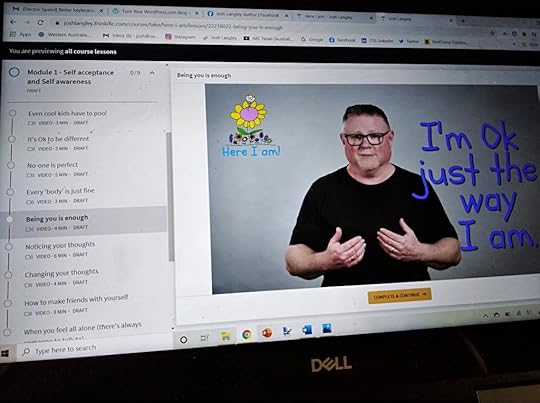
What would I tell my 8 year old self about how to accept himself? Then that’s what the video series is all about. Check out Here I am!


July 19, 2021
One important way to help your child’s mental health during lockdown
I’m hearing of so many stories about kids doing it tough during lockdown at the moment and I feel so much for them, but I also feel for parents.
Even though I don’t have kids, lockdown last year in WA (and everything that went with it), sent my anxiety into overdrive and I fell in a big heap. So, I want to really acknowledge what parents, grandparents and caregivers are having to go through, all the while trying to keep their kids on an even keel too.
There’s one thing I know that helped me and I know it would be important for your kids to know as well, and that’s being comfortable enough to talk about how they’re feeling and what issues are coming up for them during this time.
They may be busy with online learning, chatting with friends on Messenger Kids, Snapchat or while playing Roblox or Minecraft, but are they really able to put a voice to or even feel comfortable enough to talk about big stuff that’s coming up for them?
And with no sports, scouts, ballet classes or playdates etc, they may be feeling even more isolated and unsure of what’s going on.

As an adult, even I found it hard to reach out for help, wanting to keep a sense of normalcy while a mess of stuff swarmed around my head. But talking really helped. In fact, it saved my sanity.
And it could save your child’s sanity too, (and in fact yours as well). When you know what’s going on inside your child’s head and heart, you feel less anxious, and you’re more empowered because you can then work out what to do. It’s the not knowing that can be the most stressful.
Helping them open up
I feel so passionately about this, I included a bunch of videos where I talk to kids about the importance of talking about their feelings and worries as part of my online video series, Here I am!
I want all kids to be able to talk about what’s going on inside their heart and mind, so they can hopefully avoid any serious mental issues later now on. Also, I want talking about important stuff to become a skill and a habit they can carry through life.
It’s about building mental wellness in your kids now and putting this awful Covid time to good use to teach them lifelong skills. Skills that not only includes talking about thoughts and feelings, but also building resilience, emotional wellbeing, self-regulation, creative expression and empathy.
I’m also hearing the wait time to see child psychologists is painfully long and some of my psych friends are even recommending Here I am! so kids can get positive mental health messages in the meantime.

If you’re worried about too much screen time already, with the Here I am! video series, it means they’ll be watching something that’s not only entertaining, but it’s good for their mental health.
Your kids will get through this and so will you (along with the rest us), but we can’t do it alone. And that’s they key aspect here, with all that’s going on, how can we create a safe space for kids to open up? Maybe the Here I am! video series might be the perfect way to do that.
June 26, 2021
Releasing the shame of being gay
It’s coming to the end of 
 Pride Month , so I wanted to share a small part of my story in the hope it may help others.
When I came out as gay to my parents in my 20’s, I was accepted with open arms. Mind you my dad had to take a long drive to let it all sink in and my mum nearly drove her car off the road, but apart from that it was all good. Neither of them had any inkling I was gay; I was very good at hiding it.
But while my parents, family and most of my friends accepted me, I didn’t. To have the acceptance of others is one thing, but to accept yourself is another thing altogether.
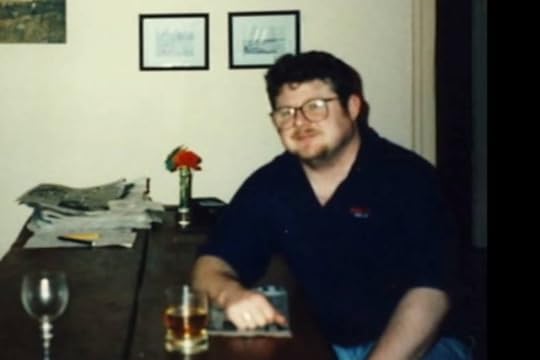 Me in my early 20’s.
I was crippled by an internal shame for who I was. I’d spent so long burying a traumatic childhood, I didn’t want to contemplate the ramifications of being gay as well, yet I still absorbed everything that society and religion said about it.
‘Limp wristed poofters’, ‘pansies’, ‘perverts’, ‘disgusting’, ‘they live sad and lonely lives’, ‘they’d be better off dead’, ‘they should burn in hell’.
Really was that me? Am I intrinsically a bad person? A lesser person?
Yes… and I told myself that for decades. And I hated myself for it.
I also hated living in fear of being rejected, fear of being judged, fear of being beaten up or even killed for who I was. You live in a constant state of fear and anxiety, and as people with anxiety know, it’s bloody exhausting.
But it’s the deep shame that corrodes your soul like a cancer, weakening the core of you as a person. Shame forces you to hide the truth of who you are, even from yourself.
And you can’t just cure it with feel-good positive affirmations or a postal vote.
But thankfully things are changing. It fills me with joy to see so much acceptance and celebration of the LGBTQI community these days, that my heart bursts.
But it also hurts.
It hurts for all those people who still live with the shame (that thankfully many of today’s young people won’t experience), but for my generation and older, it’s still there.
But there’s one place where shame can’t hide.
In truth.
Justice Michael Kirby wrote in his memoir, A Private Life, “Even if it involves difficulties and dangers, we should stand up for ourselves, as we are for who we are. It is the path of truth that we must ultimately pursue…… It is the truth that sets us free”.
Free from the shame.
This is my truth.
And I’ve finally spoken it.
Here I am.
June 13, 2021
6 resources to help boys talk about their feelings
I recently wrote a very personal blog post about how I was never taught to express my emotions as a kid. It resonated deeply with lots of people, especially parents and landed me an interview on ABC Radio
I was inspired to share my story up after watching the SBS doco series “See What You Made Me Do” about domestic violence in Australia. I thought I knew the stats and how bad it was, but hearing the personal stories, it really brought it home. I felt powerless to know how I could effect change with such a deep systemic problem.
However one thing I noticed was that most of the male perpetrators interviewed said they were never taught how to express their feelings growing up and I’ve heard that again and again over the years. I watched grown men break down crying, because they’ve finally been able to let go of the toxic masculinity message that’s being drummed into them from an early age.
I don’t want today’s boys to grow up like that. Not on my watch.
I may not be able to fix the damage already done, but I can help today’s kids to be more in touch with their emotions and thus be kinder on themselves and the people around them.
My philosophy is simple
While I don’t have a psychology or education background, I always come from the point of view of ‘Knowing what I know now, what would I go back and tell my 8 year old self’. Everything I do is based on that premise and for hundreds of parents and child mental health professionals I talk to, they know the value of that too.
I also want my work to be accessible to people from all walks of life, so I don’t use terminology like ’emotional regulation’, ’emotional intelligence’ or ‘zones of regulation’, as I leave that to the professionals. I keep it simple and real.
So below you’ll find 5 of my resources to help parents talk to their kids about emotions and feelings, especially boys and one from Children’s Book Blogger Megan Daley with a list of books to help dispel the toxic masculinity message that boys often are exposed to.
Resource 1
Talking to boys about anger
How to have an important conversation with your child about anger. (This is what I’d go back to tell my younger self to help him understand and express his anger.)
1.
Tell them it’s Ok to be angry. It’s a natural emotion, it’s part of being human. You’re not a bad person for being angry, we all get angry.
2.
Ask them to notice what it feels like to be angry. How does your body feel? Are you hot or cold? Can you think properly? Is there lots of wild energy running around your body? I know when I get angry I get really hot and I can’t think properly.
3.
Then talk about safe ways they can release the energy. There are lots out there, but I suggest in my work, either running around like a chicken or deep breathing for a few minutes. You can do it with them if you like.
4.
Once the initial energy has passed, then get them to talk about what has made them angry. Because the reason is still there, but now they can think clearer so they can explain themselves better. They’ll feel more in control.
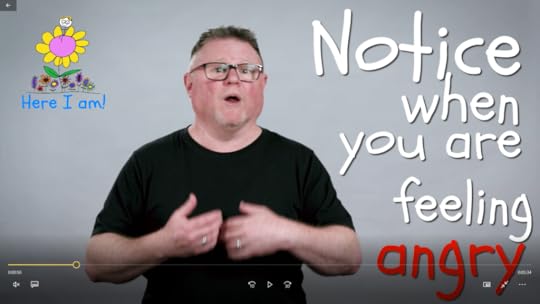 You can watch me describe it in my video on anger at the bottom of this blog post. (The video is part of my Masterclass course for kids ‘Here I am!‘ and also from my mini video course ‘Growing Emotionally Resilient Children’- see below.)
 Obviously every family situation is different, but the earlier you can empower your kids to notice when they start to feel angry, the more self aware they’ll be and they’ll be more in control over how they respond. The key here, is your time and patience in helping them to do this. You’re their guide and support.
(If there are any bigger anger issues, then it’s important to seen professional help)
Resource 2
A guide book for starting conversations about feelings
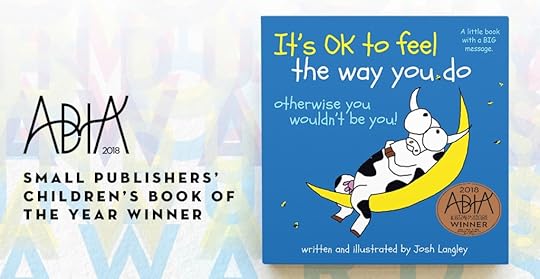
This book has been a game changer for many parents, helping them open up important conversations with their kids. It provides a safe space for them to know that it’s important to talk about their feelings and what’s worrying them.
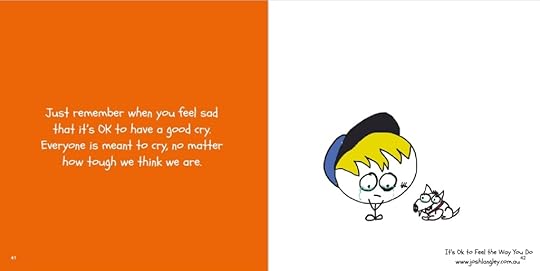
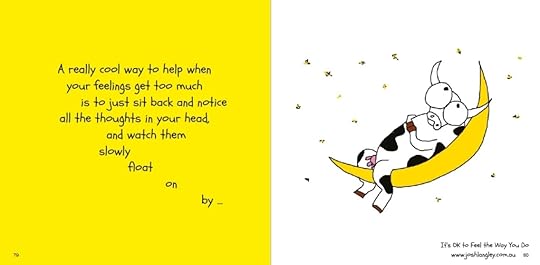
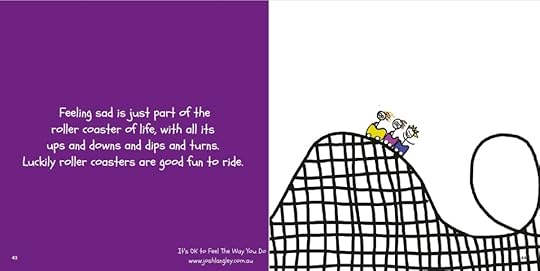
By opening up this dialogue he no longer has separation anxiety, his outbursts are less and he has tools to deal with his anger. – Melissa
“There is a little man in my life with some sensory issues and on the spectrum, this ‘blue book’ has become a constant source of inspiration for him, helping him to cope and manage every situation, when anxiety strikes at such a tender age, this very important ‘blue book’ has been able to facilitate an answer and solutions for him to deconstruct his emotions and move on with the rest of his day. You are empowering tender little people. So important.” – Julie
“One of the best books I have read about feelings and it opened up some wonderful conversations between myself and my son” – Jnr Bookworms
Buy signed copies from me (Australia only) or buy direct from Booktopia or Book Deposity (worldwide)
Resource 3
A short online video series with me explaining feelings and emotions to kids.
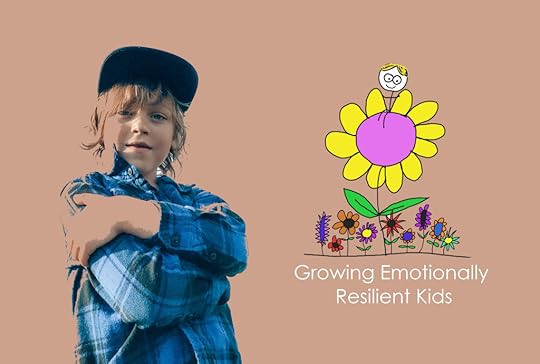
Growing Emotionally Resilient Kids is a mini 5 video series where I help kids to:
Notice when their emotions and feelings ariseMake friends with their emotions and feelingsHave strategies on what to do when they feel angry or anxiousKnow how important it is to talk to someone about how they’re feelingDiscover the power of gratitudeEach video comes with an optional fun activity to help reinforce what I’m saying. It can be done in under 2 hours or be self paced.
The video series is only $29.95 and you get unlimited lifetime access so they can watch it over and over again. Access here
Resource 4
FREE Downloadable PDF conversation starter guide.
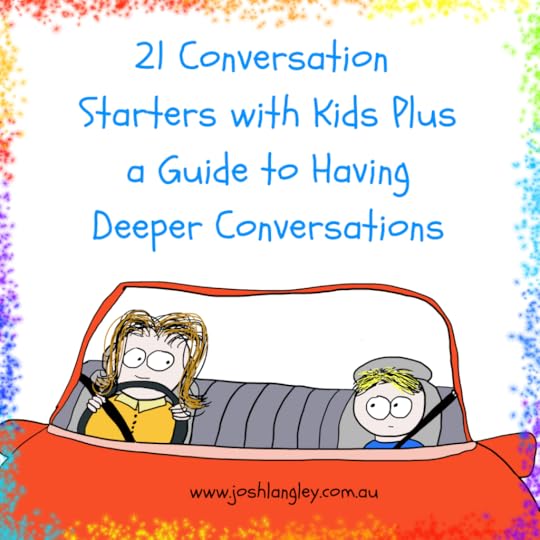
You can download this FREE conversation starter guide PDF direct to your phone and have it handy for those awkward moments! However the main point here is that I’ve added a guide to having deeper conversations with your kids.
These are suggestions that parents and child mental experts have shared with me over the years.
Download the PDF and Parent Guide PDF
Resource 5
School Visits
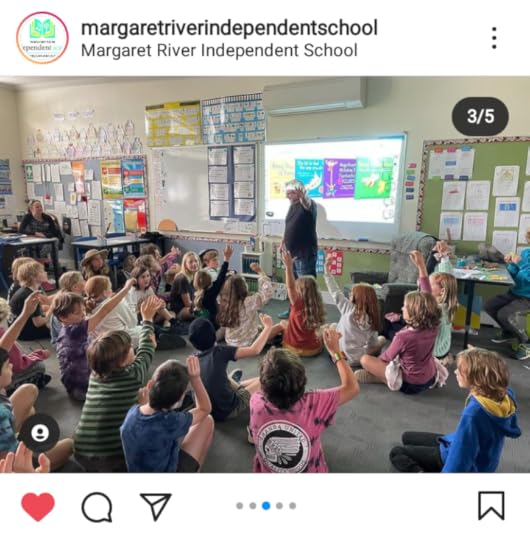
As part of my Being You is Enough Primary School Presentations, I reinforce to the kids how important it is to talk to someone about how their feeling. It’s a message I repeat throughout the presentation, and especially stress to boys.
We also have lots of fun talking about resilience, kindness, it’s ok to be different and the power of daydreaming and imagination.
Book an in person or Zoom visit for your school.
Resource 6
More books: 15 BOOKS ALL BOYS SHOULD READ BEFORE AGE TEN

This is a list complied by amazing librarian and popular Children’s book blogger, Megan Daley and Lana Hallowes. To quote Lana from the article, “Thankfully there are some FANATSTIC children’s books out there which may or may not address toxic masculinity directly, but all help to gently guide our boys* to grow from brilliant boys into the magnificent men we need in our world.”
Click the pic above check out the books.
Let these books and resources be a starting point for bigger and ongoing conversations with your boys. There’s a long way to go until we get rid of toxic masculinity, but if we focus on what we can do right here and now, it’s simply letting kids (and importantly boys) know it’s important to talk about their feelings.
I’d love to know what other resources you’ve found to be effective. Leave a message below.
June 6, 2021
Why boys need to talk about their feelings…. now!
A few years ago, I kicked a huge dent in my washing machine.
I’ve also destroyed a pedestal fan.
I’ve thrown coffee cups, thrown chairs, punched walls, and screamed obscenities until my throat hurt.
I’ve punched myself in the back of the head and even bitten myself on occasion.
Thankfully, I only ever did it when I was by myself, not wanting to involve anyone else in my rage.
However, I’ve regretted and felt ashamed of my anger for years.
That’s not the happy go lucky Josh Langley most people know, but it was.
Thankfully not anymore. I’ve had therapy and I now understand myself and where that anger comes from. I understand what’s going on inside me.
The ‘happy’ child
I was never encouraged to talk about my feelings or taught how to express them safely when I was young. I wasn’t allowed to show anger or frustration because it only fueled my parents’ anger, so I pushed it all down. Smiled and carry on.
I couldn’t openly talk about feeling sad or disappointed. I couldn’t whinge or complain. I soon learned not to cry. I could only smile and carry on.
And that is the case for a lot of adults today, especially men – they’ve become emotionally munted.
And we know what that looks like in 2021.
It’s it in the headlines of newspapers, it’s played out in family courts and criminal courts, and even worse, women’s refuge shelters, prisons and graveyards are filled with the tragic results.
I won’t let today’s kids grow up like that. Not on my watch.
It’s a priority that kids are encouraged to talk about their feelings and given simple strategies on how to work with big and difficult emotions.
If we normalise talking about feelings and what’s going in our heads and hearts, especially for boys, then you don’t need to be a psychologist to work out how positive the results would be.
Conversations that change lives
I had a mum contact me after reading my book about feelings to her 5 year old son and she said she discovered things he was thinking and feeling she wouldn’t have otherwise discovered. The book created a safe space for her son to open up and talk about what was making him angry. They could then put simple, yet safe strategies in place so he could feel some semblance of control and understanding of what was going on.
When I tour primary schools with my Being You is Enough school presentation, I implicitly say to the kids, especially to the boys, that as human beings we’re not meant to keep our thoughts and feelings inside us. We need to find someone we trust to talk them out with, that way we feel lighter and better.
“Don’t keep pushing your feelings down and down, as one day they’ll build up and you’ll eventually explode and it won’t be pretty”.
I then look around the room at the boys and I can feel they instinctually understand what I’m saying.
I know boys and girls express themselves differently, with girls being more able to talk about their feelings, but who’s to say that boys can’t do the same? If we encourage them from an early age to feel safe talking about what’s troubling them, then it’ll be more normal for them to keep doing it as they get older. It makes sense.
Maybe I’m being simplistic, but I don’t care.
It doesn’t have to be complicated
I always bring it back to me. If someone had said to me when I was 9, that it was ok to be angry and then helped me recognise what it felt like and showed me how I could express the energy safely, I would be a different person now.
That’s why I included a video about anger as part of my short video course, Growing Emotionally Resilient Kids and Here I am! Masterclass course for kids. I walk kids through how they can notice when they feel angry, how they can safely release the energy and then find someone to talk to about what’s made them angry.
It’s simple, it’s direct and it’s essential for every child’s emotional wellbeing.
Free to watch
We need a seismic cultural and societal shift in attitudes to how boys express their feelings and emotions. Thankfully there are some amazing people already leading the change and I want to play my part too, no matter how small.
That’s why I’ve included the video on anger below, so you can watch with your child together. It’s only 6 minutes and could be a life changer. Feel free to share it with other families too.
And as adults we could learn a thing or two as well. It’s not too late.
More resources to help build emotional and mental resilience in kids. https://joshlangley.thinkific.com/collections
April 13, 2021
Why self acceptance is more important than success
When I failed high school for the second time, I thought my life was over. And when the only job I could get, was hosing out dog shit in the kennels at the local dog’s refuge home, everything I feared was confirmed.
Bad grades = I’m a failure.
No education = I’ll only ever have meaningless and menial jobs.
But something quietly inside of me called that out for what it is.
I had grown up in a dysfunctional family and strangely that had taught me to see things differently, to see opportunity where there was none and to value creativity, curiosity and self-reliance.
In time I realised that learning to accept myself as I am, and following my own journey was more important than being traditionally ‘successful’. When you’re only focused on outward rewards, you become a victim to everyone’s idea of what you should be and then the mental health issues that can arise from that.
That is why self-acceptance is such a big part of my Here I am! video course for kids. If we can get kids to begin to develop their own internal validation system and sense of self-worth, it gives them a greater foundation on which to be braver in the world.
And society will be better for it.
Module 1 of Here I am! features 9 inspirational videos about self acceptance, including the popular, ‘even cool kids have to poo’ message.
As an aside, Module 4 is about building kindness and empathy, which is based on my new kid’s book, Being Wildly Kind which is available for preorder now through Booktopia.
April 6, 2021
Why it’s more important than ever to let kids daydream
When I was a kid, daydreaming was almost a punishable offence.
“STOP WASTING TIME, PAY ATTENTION, SIT UP STRAIGHT! LEARN TO SPELL, LEARN TO COUNT – YOU’LL NEVER GET ANYWHERE IN LIFE IF YOU’RE OFF WITH THE FAIRIES!!”
But now we realise how important daydreaming and imagination are in helping to problem solve and think creatively. While I may not have been academically gifted, using my imagination has helped me create a life that I’m thoroughly enjoying living.
When I tell kids, I get paid to stare out the window and come up with ideas, they don’t believe me, but it’s true and I want every kid to know they can do the same and how important using their imagination is.
Everything that’s being invented or created has started out in someone’s imagination.That includes scientific discoveries, medical breakthroughs, great ideas, philosophies, works of art, books, TV shows and computer games.We teach empathy by imaging what it would be like in someone else’s situation.It’s in our imagination we can start to create what kind of life we’d like to live.
When we allow space for kids to daydream and give them permission to follow their ideas, they have a skill set that they can carry with them through life. And it’ll also help them thrive in a fast-changing future where AI and machine learning will kill off many white and blue collar jobs.
That’s why I made imagination and creativity a big part of the ‘Here I am!’ course, showing kids that life isn’t all about tests, scores, assessments and winning and losing. It’s about equipping them with useful skills to make their life really awesome right now and into the future.
February 21, 2021
The story behind my online course to help kids with self acceptance
Last year I shared with you a moment when a young boy stood up to his bullies. Little did I know at the time, that moment would go on to inspire the name of one of the world’s most unique and important online courses for kids.
The course is called Here I am!
Since August, I’d been applying for government grant funding to build the course but after two attempts and two rejections, I decided to bootstrap the project myself and I’m glad I did. It’s given me total control to create the course that truly reflects what I want to say and how I want to say it. This is a Josh Langley course in every aspect.

I even faced my fear of talking to camera and hired professional media company Lomax to film me. I’ve only just finished editing the 28 videos which includes a blooper reel for the kids to watch at the end. Now the course building starts using Thinkific.
Course highlights
Here I Am! helps kids accept themselves for who they are. The course focusses on developing self-acceptance, emotional and mental resilience, creative expression, and empathy.28 videos x 4 minute videos + plus fun and easy writing or drawing activity. Watch one video per day (in morning preferably) for the duration of the course. Once course is finished, all the videos will be free to access and can be used as an emotional and mental tool kit. I’ve designed the course to be inclusive for all kids regardless of background, life circumstance, neurodivergence, disability or LGBTQI identity. Preferable age is 5 to 12. Based on my Being You is Enough children’s book series. Price; TBAReleased April 2021I’ve trawled the internet for similar courses that focus on self acceptance and resilience, I’ve yet to find one. Maybe you know of one? Let me know with a comment below.

What kids will learn from Here I am!
They are enough the way they are.
It’s Ok to be different and how their difference can be a superpower.
They are important to the world.
How to work with anxiety, anger and other big feelings, resulting in less meltdowns.
How to find an outlet for their creative expression and to use their imagination.
Empathy and compassion for themselves, other people, animals and the planet.
Inner resilience, helping them to bounce back from setbacks.
Mistakes and failures can be opportunities for learning and growth.
Techniques to avoid over thinking.
That no-one is perfect.
Develop a sense of gratitude.
I can’t wait to share Here I am! with the world and help as many kids embrace themselves for who they are and hopefully reduce the rates of depression, anxiety and suicidal thoughts these young people have.
Sign up to receive updates about Here I am! and when it’s launched
Sign up for my newsletter
By clicking submit, you agree to receive updates, and other emails from Josh Langley. Use the unsubscribe link in those emails to opt out at any time.
Processing… Success! You're on the list. Whoops! There was an error and we couldn't process your subscription. Please reload the page and try again.January 30, 2021
Why it’s important we all learn about Aboriginal history
It was 1979, I was in grade 2 and the school curriculum was infused with everything Way ’79, the 150th celebration of the founding of Western Australia by Britain.
Most of it is a fuzzy memory, but I do remember we learned about Captain James Stirling rowing up the Swan River and being aghast at seeing a Black Swan. We learned about the Parmelia almost shipwrecking herself near Rockingham with the first bounty of eager colonists on board.

We learned about John Septimus Roe, Mrs Helena Dance, the Dutch smashing into our coastline by the roaring 40’s (and murdering each other) and how the British government only thought about claiming WA, because the French were eyeing us off.
But we learned nothing about Aboriginal history except for a passing mention of friendly ‘natives’ who greeted Captain James Stirling.
65,000 years of history, culture, tradition, stories and knowledge relegated to a simple meet and greet.
I know the curriculum has changed a lot since then, however there’s a still a painful void in our awareness, education and knowledge of the people who were here thousands of years before colonisation.
And it’s that void which allows the people like John Howard to dismiss reconciliation with a statement like (I’m paraphrasing here) ‘It wasn’t me who did it, so why should I say sorry?’
And it’s the void that leaves the The Uluru Statement from the Heart go ignored by most of the population including the current government, when it could be the single most important document to make us a better country.
And it’s the void that allows normal everyday people to dismiss the intergenerational trauma of an entire people to a simple, ‘it’s only a date, get over it’.
If we all knew about aboriginal history, we maybe more understanding, compassionate, less frightened and more willing to come together and heal as a nation.
I realise as I sit here, steeped in white privilege, on Nyungar Boodjar land near the boundaries of Pindjarup, Wiilman and Kaneang regions of the Nyungar people, I know nothing about these people and their stories, yet I get to benefit.
I’m here and most of them are not.
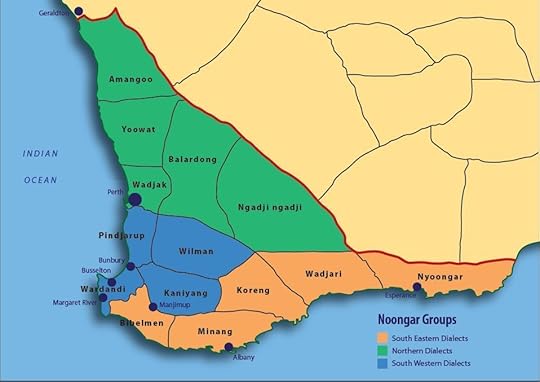
I don’t know the answers and certainly don’t want to be tokenistic, but I need to listen more, understand more and be more open….. And so does this country.
Thankfully places like the WA Museum Boola Bardip, the indigenous storytellers section of Paper Bird Children’s Books and Arts and The YAWG (Young Aboriginal Women and Girls) research website are helping us to do that. (BTW The YAWG site is a snapshot of the experiences of a sample of young Aboriginal women living in Perth, talking candidly about their lives and their experiences with reaching out for support.)
Sources: Boodjar Nyungar Place names – Dr Len Collard Nyungar Placenames in the South-West of Western Australia https://www.boodjar.sis.uwa.edu.au/index.htm
January 6, 2021
7 Ways to get your creative mojo back in 2021
Sure, you may have taken up macramé or taxidermy while in lockdown, but I’m guessing your enthusiasm has waned due to the sheer emotional toll that 2020 has taken. Now that 2021 is here, it’s time to get your creative mojo rocking again.
Let’s get started!
Don’t overthink stuff.
“Thinking is the enemy of creativity. It’s self-conscious, and anything self-conscious is lousy. You can’t try to do things. You simply must do things.” — Ray Bradbury
We expend too much energy worrying about everything, I do it all the time (thanks anxiety). But there comes a time when you have to say, ‘stuff it’ and just jump into something regardless of what other people think, what you think or even if you don’t know what you’re doing. Just get in and get messy. You can always change your mind.
2. Piss off perfection.
‘Have no fear of perfection, you’ll never reach it.’ – Salvador Dali.
Perfection is someone’s idea of a cruel joke. I’ve seen so many people’s mental state destroyed by trying to achieve some crazy idea of it. It’s not worth it. Remember, your idea of perfection is completely different from someone else’s and you’ll never match your own, let alone theirs, so give up now. Allow yourself to do something average or even a bit shit. It’ll help shake off the perfectionist blues.
3. You’re gonna die someday.
“Life is short, make art and love while you can” – me.
You could choke on a blueberry muffin while singing happy birthday to Carol in accounts at the office morning tea. So don’t put off writing the memoir about your trip through the Himalayas on a small goat or wanting to learn to play a left handed Oud. Time is running out, make it happen. Live a life of no regrets… as much as you can.
4. You don’t need talent to get started.
“Practice any art … no matter how well or badly, not to get money and fame, but to experience becoming, to find out what’s inside you, to make your soul grow.“— Kurt Vonnegut
Creativity comes from the heart, so do you really think your heart wants to be ‘talented’ before it starts something? Does loving someone or something require talent? Does going to your first writing class or picking up a crochet hook for the first time take talent? No. It’s takes bravery to step out of your fear and embrace your creative side. Talent has got nothing to do with it. Bravery does and you’ve got that in abundance.
Every ‘talented’ artist started out where you are now. Keep that in mind and keep going.
5. There are no rules to making art.
“Thank goodness I was never sent to school; it would have rubbed off some of the originality.”- Beatrix Potter
We think we need to know how to paint before we pick up a brush or need to take a writing course before we can write or we have to follow the rules of photography to be a great photographer. No you don’t.
Just start where you are, with what you’ve got and make it up as you go.
You don’t need to follow the rule of 3rds to take a great photo, geez, it doesn’t even need to be in focus! Poems can be whatever you want them to be, even one word! If you want to use chicken and sage gourmet sausages to create an installation piece highlighting the imbalance between social classes, then go right ahead. This is your show!
If you want to then take a class or course to hone your skills, then go for it.
6. Live a curious life
“Art enables us to find ourselves and lose ourselves at the same time.” — Thomas Merton
While you’re busy getting outraged over something on social media, it’s valuable time you’re missing out on being inspired by something. Inspiration is the perfect antidote to outrage and outrage drains you of creative energy. Instead, look for things to inspire you instead of outrage you.
Open up and be curious about life. Ask ‘why’ more often and try and live in a state of wonder. Open your mind, open your heart and open your windows and let the breeze blow through.
7. Rest.
“Rest and be thankful.” William Wordsworth
You won’t get any good ideas or feel like doing anything creative if you’re tired, run down and feel like crap. Rest, sleep, take a nanna nap, disco nap or siesta or just stare out the window daydreaming. Your soul will thank you later.
One last thing
I can’t emphasis enough how important it is to let your creative spirit out and wave it arms in the air like it just doesn’t care! It’s vital for your mental health and for your overall wellbeing to express yourself creatively.
And because this is your life, you get choose how that happens.
If you want further inspiration, grab a copy of Find Your Creative Mojo from Booktopia