
Barnabas Piper's Blog, page 94
April 20, 2016
The Best Quotes from “Rooted”
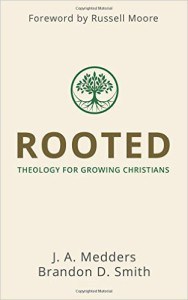
Brandon Smith and Jeff Medders are pastors, theologians, and friends of mine. This week they released a new book, Rooted: Theology for Growing Christians. Some books we read for pure pleasure. Other books are resources, tools to shape our minds and hearts. This is the latter. Brandon and Jeff have put together a concise, foundational, accessible book to introduce a reader to the study of theology. It’s almost a defense of theology which is necessary in our day of self-defined truth and loose handling of scripture. Rooted is an ideal little book for group study and discussion or for personal benefit. Church leaders should keep a few close at hand to help hungry, curious congregants with their questions.
Here are some of the best quotes from it.
“The aim of theology is worship: meeting with God, living with God, and living for God.”
“He doesn’t simply want you to have good theology; he wants all people everywhere to have good theology. As his disciples who are called to make more disciples, it is important for us to tell people about him in a proper way. We don’t want them just to know about God, but to know God as he has revealed himself.”
“God is more than some sort of cosmic conqueror, ordering his minions to do as he pleases. He cares for his people and does not hide it. In the triune God we have a Father, a Brother, and a Helper.”
“The Word of God is living, active, and armed like an atomic bomb of grace to change our lives for God’s glory and our joy (Heb. 4:12). Come to the Bible not to just learn the data, facts, and figures, but to behold the Prince of Peace, the King of Kings, the Word made flesh (John 1:14). Come to the Bible because Jesus invites you to come and sit awhile.”
“The Word is most certainly alive, not like a puppy or houseplant—provide it moderate attention and you’ll derive pleasure from keeping it around. It doesn’t eat or drink, require walks, or rest. Rather, the Bible itself is food. The Bible takes us on walks, and brings us rest.”
“Sin is a disease that makes the bubonic plague seem like a common cold. Sin is deadly, in every sense of the word. It’s the real Black Death. It brings not only physical death, but also spiritual death.”
“[Jesus’s] miracles are not baptized party tricks. They are neon signs or flare guns announcing that the kingdom of God had arrived.”
“The cross of Christ, though it killed him, didn’t end him. He died and he rose again, heart and lungs pumping, brain firing on all cylinders, for the justification, the pardoning of sinners.”
“If eschatology is not encouraging and life-redirecting, it’s not biblical.”
“Death isn’t the final nail in the coffin. There is a glorious eternity on the other side of a non-beating heart because Christ conquered death on its home court. One day there won’t be enough nails in the coffin to hold you in.”
“Heaven is not our eternal home. We may be there for a time, in the presence of God, but he has more for us. We don’t spend forever in the clouds with God in some fanciful dream world, shedding our earth-suits, leaving this world an empty shell. Rather, heaven and earth will come together in one physical, concrete place. We’ll experience the answer, the promise, of the Lord’s Prayer.”
“When we rise again, we will take the most natural breath of air we’ve ever inhaled.”


April 18, 2016
New Happy Rant – T4G Recap, Singles Ministries, and What We’re Working on Next”
In this episode of the Happy Rant podcast Ted and Barnabas rant about the following while Ronnie is off fretting for his life and hoping to survive a week from conference hell.
Barnabas offers an on-site recap of Together for the Gospel, sartorial stylings and all.
The humor and awkwardness of singles ministries, not to mention some fantastically awful names for them
What is each host working on now? A book? A screenplay? A new album?
Like every week, we want to offer a big thank you to Resonate Recordings, the fine folks who make us sound
listenable. If you are looking for great people to help your church put out recorded sermon audio or help you with a podcast they’re your people.
Feel free to hit us up on Twitter at @HappyRantPod or on Facebook or via email at HappyRantPodcast@Gmail.com with any topic suggestions or feedback. We love hearing from listeners!
To listen you can:
Subscribe in iTunes.
Listen on Stitcher.
Leave us a rating in iTunes (it only takes 1 click and it really helps us).
Listen using the player below.
Episode #83
April 15, 2016
10 Terrible Vacation Bible School Themes
Spring has sprung and that means churches across the country are hard at work preparing for Vacation Bible School and Backyard Bible Clubs this summer. Generally churches select a theme for these so that all the lessons and games and activities can fit together seamlessly. Well, here are some options churches could choose, but I would suggest going with a different option.
The Hunger Games
One lucky family will get their child back at the end of the week! But no worries – you can watch the whole week on closed circuit cameras piped directly into your home whether you like or not.
The Exodus
For this morning’s activity we’re going to paint a doorpost in blood! After that we’ll play “avoid the flaming serpents.” For snack we’ll have pheasant . . . every day.
Game of Thrones
Nobody is a good guy, everyone dies, but hey, there be dragons. Also, don’t leave the premises or the white walkers will get you.
The Life of Paul
Monday: shipwrecked
Tuesday: beaten with rods
Wednesday: robbed
Thursday: imprisoned
Friday: martyred
Breaking Bad
For the afternoon craft we’ll make crystal meth in our underwear, but don’t worry we have masks so nobody gets asphyxiated.
Foxe’s Book of Martyrs
Ok, all the 1s go to that corner; you’ll be burned at the stake. All the 2s go to that corner; you’ll be fed to lions. All the 3s go to that corner; you’ll be crucified.
The Reformation
Team One, you’re the papists. Your goal is to eliminate team two with all prejudice.
Team Two, you’re the reformers. Your goal is print as many Bibles and tack up as many lists of theses as you can before dying. The winner will be determined by history.
Make America Great Again
Let’s go back in time to when women were expected to stay in the kitchen, racial segregation abounded, and the Bible was used to defend both. Wasn’t it grand, boys and girls?
Common Core Bible Teaching
We’ll take every Bible story you’ve ever learned, apply new and opaque vocabulary, try to make it a metaphor, and refuse to let you memorize anything. Then we’ll do a scantron test at the end of the week.
Reformed Conference
Every attendee must wear either a plaid shirt or a blazer. We need at least 13 boys for every girl in attendance. Bible lessons will last for 50-60 minutes. Criticism will be heaped upon attendees and teachers via social media.
April 12, 2016
Be Grateful Without Comparing
“There are starving children in Africa who would love your dinner! You should be grateful and eat it.”
“Just be glad you don’t have to dress like her.”
“I’m just glad I don’t have things as bad as him.”
Familiar sentiments? I suspect most of us have heard or uttered something very much along these lines. Maybe we said them to our kids or heard them from our parents. They are ideas aimed at assisting in gratitude. Right? That’s what they do?
While there is a sense in which we should be jarred into gratefulness by the reality that others have it worse than we do, these kinds of statements are a pretty horrid kind of instruction on gratitude. They teach comparison more than gratitude. And what about the kids in Africa? How are they supposed to grateful in this set up?
Building gratitude on the foundation of comparison is a structure doomed to crumble. All the mortar between the bricks isn’t, in fact, thankfulness. It’s superiority. I have something someone else doesn’t. I am something someone else isn’t. It is implicit arrogance that is being created and a false kind of gratitude. Your kids become thankful, not for the dinner served, but that they aren’t starving in Africa . . . which is right close to thinking they are better than those from Africa.
Gratefulness can’t be based on any sort of comparison between one person and another. It must be based on the reality of right expectations. What is reasonable to expect?
In truth, nothing. We deserve nothing. Everything we get is beyond what we deserve. And this is the reality which children need to grasp (along with the rest of us, who still get angry when we don’t get what we expect). We need to keep in mind our state as sinners and teach our children the same.
Gratefulness for something lends itself to comparison. But gratitude for something to someone changes the equation. All of a sudden our focus is on the goodness of the giver, and often on our dependence on him or on the undeservedness of the gift. And this is where we want our children to be: focused on the giver’s goodness.
April 11, 2016
Episode #82 – Bro Code, Gender Reveal Parties, and Silly Sermon Titles
In this episode of the Happy Rant podcast Ted Kluck, Ronnie Martin, and Barnabas Piper rant about the following:
D’Angelo Russell, a Los Angeles Lakers rookie, has been blasted in the media for breaking “bro code” by recording a video of a teammate admitting to cheating on his fiancee. But which is the real brach of code – filming, cheating, or both?
In recent years pregnancy announcements and gender reveal parties have become a cottage industry. What is this insanity?
Why do churches – especially mega churches – feel the need to come up with pithy sermon titles and clever promotional plans?
Like every week, we want to offer a big thank you to Resonate Recordings, the fine folks who make us sound
listenable. If you are looking for great people to help your church put out recorded sermon audio or help you with a podcast they’re your people.
Feel free to hit us up on Twitter at @HappyRantPod or on Facebook or via email at HappyRantPodcast@Gmail.com with any topic suggestions or feedback. We love hearing from listeners!
To listen you can:
Subscribe in iTunes.
Listen on Stitcher.
Leave us a rating in iTunes (it only takes 1 click and it really helps us).
Listen using the player below.
Episode #82
April 8, 2016
Top Quotes on Leadership Pipeline
In early March the 5 Leadership Questions Podcast, which I co-host with Todd Adkins as part of our work with LifeWay Leadership, did a five episode series on leadership pipeline. We were joined by Eric Geiger and introduced the concept of pipeline and walked through the four main components – systems, structure, people, and content.
While it might sound a bit dry or heady, this content is a profoundly important resource for churches. It sets up a means that churches of any size can put in place a culture and system of developing leaders at every level. It looks at the scriptural mandate that church leaders equip and train people and offers a helpful means to do that. It recognizes that every person in the church is both uniquely gifted and called to serve and provides a means for them to do that. Leadership pipeline isn’t a silver bullet or quick fix or magic growth strategy. It’s a method and system that churches of various sizes and polities and implement to help both the leaders and the congregants for the sake of the ministry.
Here are some of the key quotes from those podcasts.
“A leadership pipeline is a simple tool that shows how an organization develops its own leaders.”
“The role of a pastor is to equip. You have one job – to equip the people for the work of the ministry.”
“It’s important to have a map for people, not just a menu.”
“Without a pipeline you’re going to have a hard time scaling leadership and maintaining your culture.”
“Systems help create culture.”
“Often times when people say they have an organic approach it means they have no approach.”
“When you think about ‘organic’ remember that nature is full of systems.”
“It’s hard to do anything excellently without a system.”
“Pilot new things with the highly competent and energetic people.”
“Structures are the kinds of things that don’t get anybody excited, but if you don’t have them everything falls apart.”
“We’re called not just to be disciples, but to make disciples. Systems and structures are how we can do that.”
“Leadership Pipeline is simply creating a system so that the organic, Spirit-led, Bible-driven kinds of things can happen in a healthy way.”
“If you want to keep up with leadership development you need to get ahead of it.”
“Leadership development and leadership placement are two very different things.”
“By the simple act of volunteering and serving in the church people are leading.”
“Developing leaders in a pipeline is developing them for all arenas of life.”
“Don’t think that you’re recruiting volunteers. Think that you’re recruiting leaders.”
“The reason churches have leadership deficiencies today is that they never built a leadership development culture before.”
“Every organization needs a pipeline. Every person needs a pathway.”
“Training content must contain knowledge, experience, and coaching.”
“Competency is having a displayed proficiency in something.”
You can listen to the podcasts here:
Introduction to Leadership Pipeline
Leadership Pipeline: The Systems
Leadership Pipeline: The Structures
Leadership Pipeline: The People
Leadership Pipeline: The Content
Other Leadership Pipeline Resources
If leadership pipeline is something you’d like to learn more about or team at LifeWay Leadership is putting on a conference in October called Pipeline: Developing Leaders at Every Level. It won’t be like typical pastors conferences because Pipeline is centered around training so that attendees, ideally church leadership teams, can walk out with a plan to implement at their churches. It won;t just be a series of sermons that leave you inspired but relatively directionless (like so many conferences). You can find out more at MyLeadershipPipeline.com. Be sure to take advantage of their early bird discount which runs through July and is especially good if you are bringing a group.
Be sure to download our free app (available on all mobile platforms) and this free ebooklet called Developing Your Leadership Pipeline by Todd Adkins too.
April 7, 2016
6 Lessons I learned From Writing Weekly Columns for Four Years
I wrote my first article for WorldMag.com in January of 2012. I had been blogging for about six months at that time, and they took a flyer on me. It worked out pretty well. Every week since then with only three or four exceptions they have published a 500-word sports commentary piece of mine. Last week I turned in my final article for World. I am grateful for the chance to write for them and for the opportunities it afforded. But I am especially thankful for the writing lessons I learned over four years and two hundred and twenty articles.
Lesson 1 – How to Hit a Deadline
Every week I had a deadline. Every week I needed to write something that was better than terrible by the end of Wednesday. The consistency and constancy could be oppressive, but they were precisely what a procrastinator like myself needed. It provided the structure I needed to be productive. I learned that I always need deadlines to complete projects so if one is not assigned to me I must assign it to myself.
Lesson 2 – How to Find a Story
Some weeks not much happens in sports. Or something happened that is a thing I wrote about just a few weeks earlier. Sometimes there isn’t a new controversy or mega-event. I was a commentator, not a reporter, so I had to find a message and a perspective – not just tell stuff that happened. I had to learn to keep my eyes and ears open, to listen to broadcasters and commentators keenly, to read columnists with a curious eye, and to examine even the mundane from as many perspectives as I could think of. Over time I learned to see and hear connections between seemingly disparate or mundane events and meaningful ideas.
Lesson 3 – How to Write Within a Structure
Five hundred words – that was my word count. Make a point to help people think or live differently. That was my aim. So every week I had to structure a story with enough details for the uninformed and enough thought to make it meaningful into a five hundred word bucket. More often than not I had to go back and cut what seemed like pertinent details or ideas in order to tighten the piece. Sometimes I resented the word count; I wanted to rant or explicate or explore ideas. In the end I came to appreciate it. Five hundred words – how to ebb and flow an idea, how it looked on a page – became almost instinctive. As a young writer having that limit was a boon for me.
Lesson 4 – How to Write for An Audience
World reaches a relatively defined demographic. I am not in that demographic, though I am familiar with it, so I learned how to write in such a way as to connect with the audience (I think. I hope?) but also stretch them. My inclination as a writer is to pay little attention to audience and simply write the idea, the story, the concept. So to have a proto-reader in mind challenged and improved me.
Lesson 5 – How to Trust the Process
Some weeks I would sit down on a Wednesday evening, my allotted writing time, and have no ideas, no outline, no story, and no energy. Those were panic moments, at least for a couple years. What would I write? How would I finish? Would it be terrible? Inevitably, though, I would find an idea and grind it out. Over time the panic instances diminished. Then the worry diminished. I realized I had found a process I could trust. No matter how empty my brain or my page, I knew I could find five hundred words worth writing on sports and faith. Week in and week out I followed the same steps, developed and worked the same mental muscles, and practiced the same skills. The process worked.
Lesson 6 – How to Gauge My Own Work
Nobody gets a hit in every at bat. The trick, as a writer, is to recognize your swings and misses and your foul balls. It took me a long time to start getting the hang of this, to realize that some pieces weren’t my best work. I used to get offended and defensive when my editor would send a piece back with questions or suggestions. (I still do too often.) But I began to recognize, even predict, when this would happen. I began to respond a little better with a little more humility. This is a big step for a writer – a big step toward getting better.
April 6, 2016
The Right Kind of Code for Men to Live By
The locker room is a haven, a safe place for athletes. It’s an exclusive, members-only club of sorts, and what happens there between teammates generally stays locked away. For the most part this is fine, and it’s definitely necessary for athletes in an age when every publication, website, and TV network wants to know their personal business.
Sometimes, though, this code of secrecy goes off the rails. This week, a video taken by D’Angelo Russell of the Los Angeles Lakers was released publicly, showing his teammate Nick Young talking about various flings he’s had with different women. Young is engaged to pop star Iggy Azalea, and the video release was the first she’d heard about his infidelity.
A man cheating on his fiancée is bad enough, but what followed has taken a horrible situation and made it exponentially worse. Russell claims the video was released without his consent, and he’s not sure how. It has caused significant tension among the Lakers. Russell broke the “bro code” and brought the world into the locker room, and it will be no small feat to undo that damage.
. . .
If we could assume the “code” was to protect the privacy of a broken relationship it would be respectable, but that’s not what it is. When expressions of friendship and manhood mean covering up the misdeeds of another, especially from the one being wronged, it is neither friendship nor manhood—it is twisted cowardice.
This isn’t simply a matter of upholding a code; it’s a matter of a twisted sexual ethic, one that grants men the right to do whatever they want with whomever they want, regardless of the collateral damage.
. . .
A real man—a brother, not a “bro”—wouldn’t air someone else’s dirty laundry, especially not through the tabloids. But a friend would say, “Tell her, or I will.” A friend would risk the friendship for the sake of what is right and out of respect to the woman. A friend would be willing to go face the uncomfortable and push for things to be made right, to uphold the real code to which all men should hold themselves.
Read the full article HERE.
April 4, 2016
New Happy Rant: Egg Hunts and Helicopter Drops and Did Driscoll lead to Trump?
In this episode of the Happy Rant Ted, Ronnie, and Barnabas rant about the following life-altering topics.
What’s the deal with church doing huge, expensive “helicopter drops” and Easter egg hunts in celebration of Easter? Do they actually work for getting people to attend?
DRISKY BUSINESS – John MacArthur claimed that Mark Driscoll paved the way for Donald Trump? Is this crazy or crazy like a fox?
Can Christian comedians really be funny or does the need to be edgy and controversial rule them out?
Like every week, we want to offer a big thank you to Resonate Recordings, the fine folks who make us sound
listenable. If you are looking for great people to help your church put out recorded sermon audio or help you with a podcast they’re your people.
Feel free to hit us up on Twitter at @HappyRantPod or on Facebook or via email at HappyRantPodcast@Gmail.com with any topic suggestions or feedback. We love hearing from listeners!
To listen you can:
Subscribe in iTunes.
Listen on Stitcher.
Leave us a rating in iTunes (it only takes 1 click and it really helps us).
Listen using the player below.
Episode #81
March 31, 2016
6 Things New Parents Need to Hear
These aren’t really good news, but at least they’ll set the bar a little more accurately. Most of us spend a lot of time comparing ourselves to other parents, seeing what everyone else posts on social media, and thinking we’re doing a pretty awful job. New parents want to grab the world by the tail and avoid all the mistakes their parents made and all their friends are making. Hopefully these six words of “wisdom” will offer some perspective and maybe a little boost. If they don’t now file them away.
1) You will feel like a failure every day
Just buckle up and get ready for it. If you do not feel like a failure you probably don’t care enough. If you care you will disappoint yourself. You will fear that you’re screwing your kids up. You will beat yourself up for not being patient enough or listening well enough or reading enough stories or kicking enough soccer balls. You will wonder if you’re pointing your kids the right way. You will be exhausted and that will compound everything else.
Just remember – parenting is not a formula so your mistakes will not irreparably damage your children or your relationship with them. If you want to know why and get a bit of a boost skip to #s 4 and 5.
2) Kids are dumb
Puppies can be trained in a matter of weeks. Kids can’t. Kids take 18 years and then you release them into the world without a fully formed frontal lobe and with a hope and a prayer they won’t botch things. They do not listen (but they hear everything). They do not think before acting (but they can argue their case like Jake Brigance to get out of trouble or get cookies). They pay no attention to anything around them (and yet they somehow notice everything). They will frustrate the fire out of you with the sheer amount of stupid they produce on a given day. You will find yourself asking them “why did you do that?” so often the words lose all meaning. SO just don’t ask. The reason is this: they are kids and they are dumb.
3) Because of #2 you will repeat yourself endlessly making #1 even more of a certainty
Given the lack of listening and the overall dumbness you will say the same flipping things over and over and over and over and over and over and over and over and over and over and over and over and over and over and over and over and over and over again. And then it will be lunch time. After a while you will enter a different dimension from which you will observe a haggard parent saying for the 274th time that day “put that down, clean that up, stop making that noise” and you will wonder why they don’t quit. And then you will realize it is you and you will feel, once again, like a parenting dunce.
4) Kids are freakishly resilient
Some good news. All your failures, or perceived failures, as a parent will not ruin your child. Maybe it’s a positive side effect of being kind of dumb, but kids forget and move on from a parent’s blow-ups and collapses in mere minutes. It takes a truly poisonous atmosphere to ruin a child, and if you love them and try they will be just fine. Kids were designed by God to charge ahead, leaving behind the crap you’re wallowing in. They fall and get up literally and figuratively. If they know you have their back and some regular hugs nothing keeps a kid down. And you should take your cues from them. If they bounce back, so should you.
5) Kids have capacity for love and trust that outdoes any adult
Despite your many failures your child will always have a hug for you. They will always be happy when you come home from work or a trip. They will practically break their face grinning when you come to get them out of the crib in the morning. They will run right to you when they are hurt or excited. A parent’s kiss is magic medicine for a bruise or scrape of both knee and spirit. Even a reserved child is a fountain of affection for dad and mom. They will assume that your judgment is correct, your word is true, and your presence is faithful. All dumbness you feel about yourself will never, ever cross their minds (before adolescence).
Aside: The only time this isn’t true is if parents are truly awful. Awfully distant. Awfully abusive. Awfully absent. Awfully dishonest. Your child can forgive you and trust you for all your human failings. But if you choose to live a life that actively hurts them you will find their limits. And that is the saddest thing.
6) Say you’re sorry every time
Never be ashamed or afraid to say you’re sorry. Many of the times your children may look at you like you’re talking French because they didn’t think anything of your forgetfulness or outburst. But every time you apologize and ask for forgiveness you reinforce their love and trust. You model how to handle mistakes and poor judgment – which they will exhibit in abundance. You show them humility and reinforce the course you hope to set them on. A parent who doesn’t apologize sets her kids up to distance themselves as they grow in awareness and sensitivity. A parent who does apologize creates realistic expectations and an environment for her kids to always be close.


