
Barnabas Piper's Blog, page 34
January 7, 2022
Why Churches and Church Leaders Need Curiosity
Humans are unique. God did not make anything else in His image. No other mammal is an image bearer. Even the angels are not even made in God’s image.
As on author put it, “Being made in God’s image is a vocation, something that we are called by God to do and to be.” A vocation, a calling, a work we are to dedicate out lives to. That means it is on purpose and with a purpose, not just a state of being. Our vocation will not be done by accident or with passivity any more than your to-do list at work will complete itself while you take a nap or your infant will feed himself while you watch TV. We must reflect God intentionally each day.
The Curious Vocation of the ChurchWhat this means for the Church, and for churches, is profound. We are a community of image-bearers, each uniquely gifted and tasked to reflect something particular of God. Curiosity is how we do this.
God is an eternal, infinite being with a nature and characteristics we can never emulate, but our reflection of God is not passive. Our echoing is not inactive. We do not echo like a canyon wall, still and static while noise bounces off of us. We echo like town criers, taking up the message and passing it along clearly and loudly. We reflect on purpose, with intention, by taking action.
One of those actions is discovery – about God Himself. In order to represent God to the world we must know Him, and to do that we must learn. We must search for truth about His nature, His character, and His work. We must explore both His Word and His world. We absolutely must be curious if we are Christians. Without it we cease to grow and we become incapable of fulfilling our purpose in life.
If we start by growing in this divine curiosity we will then be prepared to begin exploring and impacting this weird, complicated messy world. Together. As a church.
How Church Leaders Model CuriosityFor most Christians curiosity is either merely a nice concept or a frightening one, either nebulous or questionable. We need someone to teach us and show us what it means to live in godly curiosity. That is the job of church leaders.
It starts with being curious. Are you fascinated with the depths of God and the breadth of His world? Do the people you lead see you exploring big questions and significant relationships? Do they see you trying new things to grow in faith and to strengthen your ministry? Do you step outside the mundanity of your daily life to engage needs or encounter cultures and experiences other than your own? Are you modeling curiosity? After all, behaviors are caught much more than taught.
But this isn’t one of those “strong silent type” situations. You must teach curiosity and explain it. People will see what you model and will catch it, but you must teach them the why and the how. Teach them what you have discovered in your explorations of God and His world. Teach them what you have learned from your failings in relationships and crossing cultures. Teach them what is true and what the standard is for their curiosity – scripture. And give them a vision of where curiosity can take them – deeper into relationship with God and people and further than they ever imagined in knowledge and care for the world.
When church leaders model and teach curiosity, built on the profound truths of scripture, the culture of an entire local church can change. When the culture changes, even subtly, the impact of that church changes too.
A Curious Church and Its WorldLikely the church would be a more caring place, deeply aware of people’s needs and challenges. It would be a safe place for those struggling because people would take the time and ask the questions to understand their difficulties. Tension and infighting would diminish because people would be curious enough to learn what others really said and really meant instead of construing meaning and creating drama or conflict.
It would move toward being more diverse racially, socioeconomically, and educationally because people would be deeply interested in those different than themselves instead of frightened of them or intimidated by them. And more than anything it would be a church full of people in rich relationship with God because they would be searching and asking and looking for what more there is about His character and person and work and word. They would be seeking truth, reality as God intends it to be.
Church members will connect with neighbors and co-workers by being genuinely curious about their lives, so those people will have a chance to see something of Jesus in their lives because of how they ask questions and learn and care. People in that community might begin to see Christianity as a belief system that changes lives and loves deeply – not just old time religion or bigoted conservatism – because it clings to and reflects a God who changes lives and loves deeply.
The fruit of godly curiosity is a bold, bright, clear image of God shown to the world. It is visible in individuals and unmistakable in a body of believers. Curiosity is not a mere trait that some quirky people have but rather the fuel that should drive spiritual disciplines, relationships, mission, and all forms of ministry. It brings vivacity to spiritual life and that makes our lives attractive to the world around us, inviting them to find out more about this infinite, majestic object of our curiosity.
 For more on curiosity, ministry, life, and faith check out my latest book, The Curious Christian: How Discovering Wonder Enriches Every Part of Life.


December 31, 2021
Deconstruction, Destruction, and Faith
Deconstruction has become one of those terms that is equal parts bogeyman, cliche, badge of honor, and theological shiny object. Some decry it with spite. Some claim it as something akin to their identity. Some observe with attempted neutrality.
But the term “deconstruction” is only as helpful as an agreed-upon definition. Some people use it to mean “apostasy” while others use it to mean “reconsidering.” The former definition means deconstruction is bad, morally and biblically so. The latter definition establishes deconstruction as necessary and often virtuous. Most debates or discussions about deconstruction don’t even get off the ground because they can’t agree on what they’re actually debating about.
The word “deconstruction” implies intentional process, a disassembling of something, in order to examine its parts. It is different than “destruction” or “dissolving.” To deconstruct is to take something apart piece by piece rather than smashing it to bits or passively letting it devolve into a mess. Much of what is called deconstruction today actually falls into the destruction or dissolving categories (which is why many people view it as apostasy). Actual deconstruction allows for something to be examined and reassembled or remodeled (hopefully better and stronger). Destruction or dissolving leave wreckage or mere fragments of what was previously present, a need for total replacement.
Questioning (and even doubting) is not the same thing as deconstructing, though questioning might lead to deconstructing. A question seeks understanding, if it is an honest question. It seeks truth. Just as we cannot call all deconstructing evil, we also cannot accuse all questioners of deconstructing.
Some things need deconstructing, like many man-made traditions, structures, or systems within the Church or society at large that are no longer helpful or are downright harmful. These things ought to be disassembled for the sake of diagnosing the weaknesses and failures and then a fair bot if replacing or remodeling.
What Can’t Be DeconstructedOne thing we must remember is that those traditions and structures that are of God, ordained and commanded by Him, are not at risk from deconstruction. Idols can be deconstructed, but anything imbued with the living Word cannot. They can be rejected and rebelled against, but not disassembled. Of course, we often mistake man-made traditions or structures for God-ordained ones and in so doing seek to sanctify and canonify our preferences. Then we feel threatened by deconstruction.
Genuine faith in Christ is not a system or structure, so it cannot be deconstructed. It is a gift from God through the work of Jesus Christ, secured by the Holy Spirit. It can be destroyed willfully and rebelliously. It can dissolve and decline if it is neglected over time. But it cannot be deconstructed. “Deconstructing” faith would be like deconstructing a human life. A life transformed by the work of the Holy Spirit has been fully, miraculously recreated. It is not constructed but breathed into existence by God. It cannot be pulled apart piece by piece for improvement or diagnosis.
So to talk of “deconstructing faith” is rarely helpful. It either misdefines deconstruction or diminishes faith to something less than a miracle of God. Yes, some people are destroying their faith by rejecting biblical realities. Others are seeking a truer faith by deconstructing the trappings of religiosity-posing-as-faith that have actually hindered the Spirit’s work in their life. And others are wading through the waters of difficult faith related questions seeking firm footing but deconstructing nothing.
It is understandable and defensible when people who have been badly hurt by churches or church leaders deconstruct the systems and traditions that allowed hurt to happen. In fact, we all ought to join them in pulling down the ramparts that have protected sin in our religious institutions and examining the foundations on which these houses of horror have been built. We ought to join them in their raw, pained asking, “If they claimed to believe ____, how could they do ____ to me?” That is no threat to the faith. It is destroying the threat to the faith.
It is heartbreaking when these situations lead someone to abandon their faith. But I don’t think “deconstruction” is the most helpful term to describe these departures. It is more like erosion of one person’s faith by the sins of another. Consider Jesus’s words: “Whoever causes one of these little ones who believe in me to sin, it would be better for him if a great millstone were hung around his neck and he were thrown into the sea.” A victim’s stumbling in faith should break our hearts and move us toward tenderness rather than judgment, while anyone causing someone to stumble should stir up righteous indignation in us.
A Response to DeconstructionDeconstruction isn’t new. People have been reconsidering how organized Christianity should work since its inception. It has gone poorly (various heresies and apostasies) and it has gone well (various church counsels, mostly responding to heresies, and awakenings). The Reformation was a deconstruction of sorts. Pretty much every new denomination or church network stemmed from a deconstruction of sorts. The rise of liberal theology was a deconstruction of sorts. The Emergent church was a deconstruction of sorts. The young, restless, reformed movement was a deconstruction of sorts. The exvangelical movement is a deconstruction of sorts. The move by many Christians toward more liturgical churches is a deconstruction of sorts. The value, or harm, in deconstruction depends on what is being deconstructed, what is being retained, and what is being reconstructed after that.
It seems to me a few questions can help us as we encounter claims (or accusations) of deconstruction so that we are fair, gracious, and don’t lose our minds.
Is this deconstruction or simply questioning/exploring?Is this deconstruction or destruction?What is being deconstructed and what is being retained?If I am threatened by perceived deconstruction, why? What am I seeking to defend, and is that of God?What is being reconstructed after the deconstruction?December 30, 2021
Normal Doubt and the Nature of God
From its very first words scripture sets up a relationship between God and man that shows his infinity and our limitations. He is the creator, we are the created. He existed before time began and we exist within time. He is eternal and we have a life span. He always has been and we came into existence at a specific time and our bodies will pass away at a specific time. He created everything from nothing and we are part of that, spoken into existence with words.
To understand God and to understand our own doubts it is vital that we grasp this relationship. We tend to go through life with the assumption that we can learn, discover, and comprehend anything if we truly want to. We see ourselves as the masters of our domain with the world at our fingertips. We have technology and science and cultural advancements on our side. We build lives of ease and efficiency with the aim of security and comfort. And we rarely, if ever, consider our limitations or God’s lack of them.
Genesis one reminds us of reality. God was, is, and will be forever. God spoke all things into existence that do exist. God created our very ability to learn, create, think, solve, build, and make. Despite all our hustle and efforts and self-trust we are finite and will reach the end of our abilities. We will max out our understanding. In short, we live within a defined time frame and a limited capacity for understanding. We are not infinite; God is.
The Breaking PointGenesis three is where everything breaks. Adam and Eve choose to pursue being gods rather than trusting the infinite creator God. They want God’s knowledge for themselves. They want his deity, his infinity, so they break his explicit command. In doing so they introduce sin to the world and they doom themselves and every person to follow to death. In one bittersweet bite of fruit the world went from paradise to graveyard.
The consequence for their sin is a curse. It is not a spell or a fairy tale curse that can be broken by a kiss or a quest. It isn’t limited to a person or place. It is pervasive, touching every person everywhere for every moment of all time. The curse taints every aspect of life: relational, physical, spiritual, emotional, intellectual.
This means that every thought we have, every discovery we make, every advancement in society, every invention – they’re all flawed. They’re all incomplete. And it means that our view of ourselves is broken too.
We too want to be like Adam and Eve. We want knowledge like God. We want to be the god of our own lives, and we often don’t even realize these sinful impulses. One of the major effects of the fall and the curse is blindness. We simply cannot see what is true and real as true and real. We love things we shouldn’t, believe things we shouldn’t, and are skeptical of things that are true and good.
When we consider God’s perfect holiness, the curse becomes that much bleaker. Before we were limited in our understanding of God by being finite. Now we are sinful, blind, self-worshiping, and finite. We are further removed, in our natures, from true understanding of God than ever.
We’ve seen two significant realities that shape how we see and understand God. First, God is infinite and we are finite. Second, God is perfect, and we are sinful. It seems obvious, then, that we would struggle to understand God. With our limitations and weaknesses and His infinity and holiness we are bound to reach the borders of our understanding. We simply do not have the capacity to fully understand an infinite God.
Where Doubt Comes FromNow we are at the core of where doubt comes from. Doubt, in its most basic form, is when we say “I don’t know.” It is simply being unsure. It is when we do not understand so we struggle with confidence. For finite sinful people like us, of course we will experience doubts about God.
He is infinite and holy, and that means he is constantly thinking and doing things at a level beyond our comprehension. At every moment God is sustaining the entire universe, knowing every thought, weaving every life, and working His perfect plan for all creation. He never stops. We cannot possibly comprehend even a minuscule fraction of God’s perfect knowledge and wisdom.
As you reflect on these truths something should begin to stir in your mind: doubt is not necessarily a sin. We are sinners. We think wrong thoughts about God all the time. We rebel against and reject God just like Adam and Eve. But our doubts are not necessarily sinful.
To doubt is human. It is natural. It is a direct result of being who we are – finite creatures seeking to understand things beyond ourselves. It is inevitable that we will doubt. It is inevitable that we will question and wonder and be unsure.
Scripture is full of people with questions and doubts. Gideon asked God for a sign because he was afraid (Judges 6). Hannah pled with God for a son with the kind of pain and emotion that only comes from fear and doubt (1 Samuel 1). Job lost everything and wondered aloud why such a thing would happen. The Psalms overflow with prayers asking where God is, when he will return, has he forgotten his people, and more. The prophets lament and mourn and wonder when God will rescue. Thomas did not know how to believe in Jesus’ resurrection until he saw him in the flesh (John 20).
To doubt is human. It is how we respond when we doubt that determines whether it is a sin. You can doubt in a way that draws you closer to faith in God or you can doubt in a way that undermines and dissolves your faith.
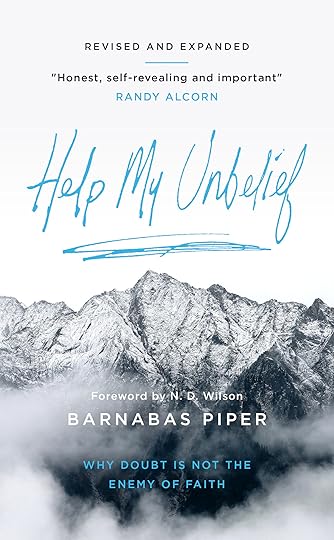
 This is an excerpt from my small group study titled Help My Unbelief: Why Doubt is Not the Enemy of Faith. Learn more about the study, additional resources, and how you can use it with your group at lifeway.com/helpmyunbelief.
 For more on the subject of faith and doubt check out my book
Help My Unbelief: Why Doubt is Not the Enemy of Faith
.
For more on the subject of faith and doubt check out my book
Help My Unbelief: Why Doubt is Not the Enemy of Faith
.
December 23, 2021
New Happy Rant: Christmas Movies, Carols, and 2022 Predictions”
In this episode of The Happy Rant Ted, Ronnie, and Barnabas wander to and fro through a variety of topics:
Diehard, the Christmas movie: our takesChristmas carol discussions and disagreementsFinding consensus on good Christmas moviesThings we expect to look back on at the end of 2022Be sure to visit Our Website where you can:Listen to past episodesOrder Happy Rant MerchandiseSponsors We’re excited to be partnering with Visual Theology. They offer resources for studying, teaching, and better understanding scripture that are of amazing design and quality while being deeply faithful to the Bible. Ranging from books to curriculum to posters to apparel, Visual Theology’s materials are a wonderful way to see realities of God’s Word in a new way. It’s so easy to miss so much of what the Bible says because we can’t envision it, but they offer resources to help you, your kids, your students, and your congregants to do just that. Visit Visual Theology today and be sure to use the code happyrant at checkout to get a 20% discount.
 Be sure to check out Dwell Bible App. Dwell is a Bible listening app that we love! If you are looking for a convenient, fresh way of spending more time in God’s word Dwell is ideal. Go to https://dwellapp.io/happyrant to get 10% off your annual subscription or 33% off your lifetime subscription.
 We’ve joined forces with Redbud Coffee, based out of Auburn IL, to bring you deliciously roasted and beautifully packaged coffee. Check out their variety of roasts and be sure to use the code HappyRant at checkout to get a 10% discount off your purchase.
December 20, 2021
A 5-Word Prayer for Every Christian
How far can a five word prayer really take you? It seems like it might use up its meaning fairly quickly. Or maybe it will turn into a mantra and just be rotely repeated. We can get bored with whole books of the Bible, so what chance does a prayer like “I believe; help my unbelief” stand in staying pertinent, fresh, and applicable?
This is not like any other prayer, though. It is a paradigm as much as it is a request. It is a framework for faith and belief in the midst of, well, anything. And for that reason “I believe; help my unbelief” is always pertinent, fresh, and profoundly true.
We see in this story an instance of when this prayer can be prayed, at wit’s end when all else has been tried and proved wanting and there are no more answers except Jesus. It is a prayer for desperate times when your faith is on the brink of failing. It is a prayer for exhausted times when you are not sure you can hold on to belief much longer. It is a prayer for those times of fog when you simply cannot see the truth of God’s word or sense his presence. It is a prayer for times of temptation when sin seems so appealing and you just aren’t sure it’s worth resisting.
And it is a prayer for when things are good and you are grateful because in those moments you should celebrate “I believe” and acknowledge that there is still unbelief in your heart. Especially because good times are when we are most prone not to rely on God. Remember, the prayer is a double confession, one part a proclamation of what we believe and the other an admission of where we have need.
Consider what you are saying when you pray these few words. The first two, “I believe,” are a statement to God that you do trust Him. You do trust His word. You do trust His character. You do believe he keeps His promises. You do believe He is who He says He is. To pray this you don’t have to believe all of this perfectly (in fact, you never will this side of heaven). You just need to believe it as well as you can in the moment. To pray this prayer at all is an act of belief because it shows you believe there is a God who hears you and just might act on your behalf. That is a seed of faith.
The last three words, “help my unbelief,” are a plea for help. None of us ever believes as we ought. And often we barely believe at all. We struggle to see the truth of God’s word or to trust that He will do what He says He will do. We struggle to understand what the Bible says and that can make it difficult to believe. We are tempted to believe lies and walk headlong into sin. We are tempted to just plain give up and walk away from Christianity all together. So we need the prayer “help my unbelief.” We need it today, tomorrow, the next day, and the day after that. We need it when we wake up, when we get coffee, when we meet a friend, and when we get home after work. We need it constantly because that is when we struggle with unbelief.
Earlier I called this prayer a paradigm or a framework of faith. Part of what that means is that it relieves the pressure of having all the answers. Often we feel like we must know what to think, how to think, or what to do in every situation. We feel we must be able to explain every mysterious thing about God or complex passage from scripture. Faith says that not only do we not have to do these things we are not able to. We can’t have all the answers because we are not God. So we have faith. And so we have this prayer. It is our answer when we face an unanswerable situation or question.
When we pray “I believe; help my unbelief” we are doing the most faithful thing a person can do. We are expressing the assurance and confidence we have in God–sometimes much, sometimes little–and we are confessing that we are limited, sinful, and need the help of Jesus. What else is there for a Christian? We believe, and we need Jesus. Constantly, in all situations and in every struggle. And so God gave us this prayer and showed us how it can be spoken to Jesus whenever and wherever we need.
This is an excerpt from my small group study titled Help My Unbelief: Why Doubt is Not the Enemy of Faith. Learn more about the study, additional resources, and how you can use it with your group at lifeway.com/helpmyunbelief.
For more on the subject of faith and doubt check out my book Help My Unbelief: Why Doubt is Not the Enemy of Faith .
December 15, 2021
35 of the Most Important Quotes from “Hoping for Happiness”
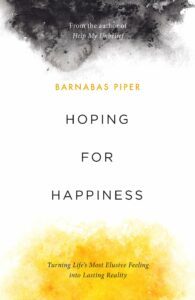 In October of 2020 I released my latest book, Hoping for Happiness: Turning Life’s Most Elusive Feeling into Lasting Reality. Releasing a book on happiness in a terrible, horrible, no good, very bad year was more a matter of unfortunate timing than mad genius. However, with another year under our belts since then, maybe we’ve come to a place of reconsidering what it is to truly be happy in this messed up world. If so, this book could be a significant help. My whole aim was to help people who feel guilty for feeling happy (usually conservative Christians) find some freedom and to help those tired of the hamster wheel of chasing happiness find something grounded buy offering a biblical framework for living a grounded, hopeful, and genuinely happy life.
Here are 35 of the most important quotes from the book.
If happiness is so attainable why are our lives marked by such a desperate search for it? Why are we so often unsatisfied, grasping at what is next, groping for what is better, and racing after what is new and undiscovered? Why is it that even while we are in the midst of pleasure we are thinking of the next pleasure? It’s an exhausting way to live.
The grander our dreams get and the more they turn inward the less happy we seem to be. Our response to this unhappiness is to pursue harder or to pursue another version of the same dream—another job, another cause, another relationship. If the definition of insanity is trying the same thing repeatedly and expecting different results, well, we have just diagnosed ourselves.
God didn’t put us in this world to be miserable. Quite the opposite—the world is overflowing with good things, pleasurable things, things that deliver happiness. And they are created by God. He intended us for happiness.
Dreams are the wishes our hearts make, but our hearts are not reliable guides. Our hearts have taken good things from God and conjured up fever dreams of them as things in which we can find our identity and on which we can build our lives. But these objects of happiness were not created to bear that burden.
So much of maturity is learning the value of delayed gratification and realizing that greater happiness can be had by waiting and persevering.
Every disappointment is an unmet expectation.
To live a life with small expectations is to live a life with small joys and little gladness. Expectations set us up for disappointment, sure, but they give us motivation and direction too.
The real crux of our problem is that we expect temporal things to deliver lasting happiness
Happiness is found in expecting the right things of the right things.
Because we are finite beings confined to an earthly life span and limited knowledge, we seek the entirety of our happiness in things we can wrap our minds around, things that are readily available. We struggle to trust that God really will deliver a happiness that’s beyond the scope of our imaginations on the other side of the grave.
We are not strong enough hooks to hold the weight of our own happiness. Not in our own strength, at least. As in every other example of misplaced hope, the expectations we put on ourselves are often born out of what we think is best, not what God has said is best.
Adam and Eve thought they knew better than God. They put their hopes in the lies of the devil and in their own decision making ability. And we have been doing the same thing ever since.
When we follow our feelings we will be perpetually abandoning things God wants us to commit to because we hope for and expect the wrong things in the wrong timing from the wrong objects.
Reality just is. We don’t get to define it. To attempt to do so is to step right into the shoes of our father Adam and our mother Eve. They decided that the reality God had created wasn’t to their liking and sought to create a new “truth.”
Rather than trying to shape reality with our expectations, we need to shape our expectations around reality as God has revealed it. That way we’ll be saved from the misplaced expectations that lead to disappointment and profound unhappiness.
To have healthy expectations means disposing of “my truth” and living according to the truth that God has revealed in his word.
Sin corrupted the good, but the world still has God’s fingerprints all over it and tendrils of Eden woven through it. Nothing is completely as it should be, but neither is the world utterly corrupt. The good that once defined all of creation still shines throughout it.
To glorify God in my eating and drinking (or whatever I do) doesn’t necessarily mean I need to be serious. It means I need to be purposeful. It means that I need to pay attention to the goodness in this world, because “the earth is the Lord’s, and everything in it”. It means eating “with thankfulness” and embracing joy, which glorifies God.
Evangeliguilt is the bane of some of us, but idolatry is the bane of all of us. We have a tendency to take temporal things and elevate them to objects of worship and hope.
Many of us who feel that sense of suspicion at enjoyment do so precisely because we know our propensity for idolatry. We know we can turn good things into objects of worship, so we are skeptical of enjoying the good things. But this is the wrong response. It’s true that God is not honored by us idolizing his gifts—but nor is he honored by our ignoring them.
There is no room for idolatry if we constantly come back to the giver—acknowledging that God gives life, gives food, gives enjoyment—and to eternity. These good gifts are for our pleasure now, but we’re fools if we depend on them to fulfill our eternal hopes.
The victory of Jesus matters for a Tuesday afternoon when the baby won’t sleep, a Friday night of anxious insomnia, a Sunday service crushed by the tonnage of shame, or a holiday when the absence of a loved one feels like an amputation. When it feels like everything else is spiraling out of control, we trust that Christ is on his throne, weaving the threads of our lives into the pattern he sees fit.
The Bible reframes happiness for us by complexifying it. We tend to think of being happy or sad, but Scripture depicts a sort of happiness in the midst of sadness.
Death is the set of borders that contains our lives. Sometimes borders feel like captivity, like a prison wall. Sometimes borders are for our own good, like lane lines on the road. And sometimes borders are just the rules of the game, like a Monopoly or Scrabble board. Death defines the rules of the game of life.
When we live in light of death, especially with an eye toward eternity, we see life as something given to us, not as something to use. In this way death actually increases our gratitude, and gratitude increases our enjoyment.
Our lot in life—what we’ve received, what we’ve become, what direction our life is going—is not the hands of time or fate or bad luck but in the hands of a personal and sovereign God.
A brief definition of holiness is: growing in Christ-likeness through the Holy Spirit’s work in our lives so that we pursue the things of God. So, if it’s true that God wants us to be happy, then pursuing the things of God cannot be in opposition to happiness.
The only way happiness and holiness can be put at odds is to misdefine them both.
Once we reduce happiness to something that is opposed to godliness, we end up seeing holiness as a dry husk; a matter of suppressing our desire for the sake of what is right. . .If we remove happiness from holiness, pursuing the things of God is drudgery.
Pursuing holiness is the pursuit of happiness, in this life and the next. Nobody should be happier than a follower of Jesus.
God never has to repent because he never sins or fails. He doesn’t have good days and bad days. He never changes or goes back on his word. And that means that every word God says about himself carries a promise in it.
God’s promises define reality. They draw the lines of hope and happiness. So we must ask ourselves whether our expectations, our pursuits, our definition of happiness aligns with what God has said.
You can have a version of happiness without joy, but you cannot have genuine joy without happiness. . .A professed joy that lacks happiness is nothing but an articulated belief system, and it is hypocrisy.
Appreciate good gifts as God intended. Savor the delicious things. Laugh at the humorous things. Thrill at the exhilarating things. Enjoy the entertaining things. Cheer at the joyous things. Ponder the deep things. Rest in the peaceful things. Reflect on the somber things. Wonder at the beautiful things. Cherish the precious things. And share them all, for happiness is multiplied when gifts are experienced together.
Repent often and eagerly. . . .We can either let our sins drive us from God, or we can remember the work of Christ and take our sins to God, our good Father, who stands ready to forgive and is generous with good gifts.
December 14, 2021
New Happy Rant: Hallmark Thinkpieces and Cruise Ship Vibes
In this episode of the Happy Rant podcast Ted, Ronnie, and Barnabas wander to and fro through a variety of topics:
The perks of ruddinessRonnie’s think piece on Hallmark Christmas MoviesTed’s tenure and Taylor Swift takesCruise ship experiences and vibesRiver CruisesBe sure to visit Our Website Where You Can:Listen to past episodesOrder Happy Rant MerchandiseSponsorsWe’re excited to be partnering with Visual Theology. They offer resources for studying, teaching, and better understanding scripture that are of amazing design and quality while being deeply faithful to the Bible. Ranging from books to curriculum to posters to apparel, Visual Theology’s materials are a wonderful way to see realities of God’s Word in a new way. It’s so easy to miss so much of what the Bible says because we can’t envision it, but they offer resources to help you, your kids, your students, and your congregants to do just that. Visit Visual Theology today and be sure to use the code happyrant at checkout to get a 20% discount.
Be sure to check out Dwell Bible App. Dwell is a Bible listening app that we love! If you are looking for a convenient, fresh way of spending more time in God’s word Dwell is ideal. Go to https://dwellapp.io/happyrant to get 10% off your annual subscription or 33% off your lifetime subscription.
We’ve joined forces with Redbud Coffee, based out of Auburn IL, to bring you deliciously roasted and beautifully packaged coffee. Check out their variety of roasts and be sure to use the code HappyRant at checkout to get a 10% discount off your purchase.
December 3, 2021
New Happy Rant: Taylor Swift, Sound Guys, and Everyone is Anglican
In this episode of The Happy Rant Ronnie and Barnabas Wander to and fro through a variety of topics:
Ronnie’s new musicMiddle aged men fanboying over Taylor SwiftTaylor Swift, the Beth Moore of pop musicThe sound guy personaWhy is everyone becoming Anglican?Quick hitter questions: soup vs. stew, drive thru vs. go inside, holiday foodsBe sure to visit Our Website Where You Can:Listen to past episodesOrder Happy Rant MerchandiseSponsorsWe’re excited to be partnering with Visual Theology. They offer resources for studying, teaching, and better understanding scripture that are of amazing design and quality while being deeply faithful to the Bible. Ranging from books to curriculum to posters to apparel, Visual Theology’s materials are a wonderful way to see realities of God’s Word in a new way. It’s so easy to miss so much of what the Bible says because we can’t envision it, but they offer resources to help you, your kids, your students, and your congregants to do just that. Visit Visual Theology today and be sure to use the code happyrant at checkout to get a 20% discount.
Be sure to check out Dwell Bible App. Dwell is a Bible listening app that we love! If you are looking for a convenient, fresh way of spending more time in God’s word Dwell is ideal. Go to https://dwellapp.io/happyrant to get 10% off your annual subscription or 33% off your lifetime subscription.
We’ve joined forces with Redbud Coffee, based out of Auburn IL, to bring you deliciously roasted and beautifully packaged coffee. Check out their variety of roasts and be sure to use the code HappyRant at checkout to get a 10% discount off your purchase.
November 26, 2021
Finding Peace, Security, and Happiness in God’s Promises
Each night when I tuck my kids into bed (or send them to bed, as is the case more often as they get older and are in less need of tucking) I tell them I love them. They tell me they love me too, I turn the lights off, and I head to my easy chair to grab a few moments of quiet. Sometimes they stop me before I make it out the door to ask a question about the mysteries of life or a particularly knotty theological issue because they know full well I can’t ignore such questions. But most of the time it is a simple exchange of “I love yous” and then sleep.
You know what never happens when I put them to bed? It never happens that I tell them I love them, give them a hug and kiss, turn to leave their room, and hear “Do you still love me now?”—as if my love somehow changed or departed in those few seconds. They know that my statement of love was not just true in the moment I said it, but that it was a statement of how I always am toward them. They know that it will be true in the middle of the night, the next morning, and when they are grown and moved on. Yes, they need assurances and reminders, especially when they screw up. But what they hear in the phrase “I love you” is “I have loved you, I do love you, and I will love you.”
How much more should we hear God’s words in that way. My love for my children is flawed, incomplete, and demands that I repent to them often for my failures. Sometimes they need reminders that I love them because I failed to show it well. God never has to repent because he never sins or fails. He doesn’t have good days and bad days. He never changes or goes back on his word. And that means that every word God says about himself carries a promise in it.
So when God says something about himself in his word, it is assured to be true, to have been true, and to always be true. When he describes himself, it is a promise. When he speaks of his deeds, it is a promise. When he declares his love or protection or presence, it is a promise. And when he says he will keep his promises, it is a promise.
And it is God’s promises, found in Scripture, that are the source of true happiness, direct our hopes, and shape our expectations—or at least they should.
So let’s take a look at some of them.
Promises for the PresentWhat promises has God given us for right now, as we live in this in-between place full of conflicting joys and pains? These words of God shine light into dark days and are bringers of happiness of the purest, rightest, most holy kind.
While God’s promises are too deep and profound to be placed neatly into buckets addressing different needs, he does care about our present struggles and his words are for those moments when life is difficult. So here are just some of God’s “promises present” for whatever it is we’re feeling or facing.
FearfulWhile most of us don’t go through life fearing for our well-being because of enemies, we all fear people. We fear gossip. We fear injustice. We fear the consequences of doing what’s right in the face of injustice. We fear looking foolish and being humiliated. And we need this sort of reminder of just who is in charge and who holds our lives.
God promises:
The Lord is on my side; I will not fear.
What can man do to me? (Psalm 118:6)
WorriedWe worry about our health or our children’s future. We worry about how we’ll pay off debt or whether our new business will succeed. We worry that our country is going to hell in a handbasket and taking us all with it. And some days we wake up with a general sense of dread and fear. We control so little of our lives, and it can be paralyzing when we begin to think about all that could happen. God promises:
Confused6 Do not be anxious about anything, but in everything by prayer and supplication with thanksgiving let your requests be made known to God. 7 And the peace of God, which surpasses all understanding, will guard your hearts and your minds in Christ Jesus. (Philippians 4:6-7)
When life is difficult and we are suffering, the first question we ask is “Why?” Why would God ordain things to happen like this? Most of the time we won’t get a complete answer to that question. But God does tell us of at least one purpose for every difficulty, and in purpose there is clarity and hope. God promises:
3 Blessed be the God and Father of our Lord Jesus Christ, the Father of mercies and God of all comfort, 4 who comforts us in all our affliction, so that we may be able to comfort those who are in any affliction, with the comfort with which we ourselves are comforted by God. 5 For as we share abundantly in Christ’s sufferings, so through Christ we share abundantly in comfort too. (2 Corinthians 1:3-5)OverwhelmedWhen everything has hit the fan and life is too much, God gives us what we need for that too. We can find safety in his strong presence. He gives us pictures of security for us to envision, like this one:
Shame, guilt and doubt
The name of the Lord is a strong tower;
the righteous man runs into it and is safe. (Proverbs 18:10)
Some of us need present promises for another sort of struggle—one interior to our souls. It may be a battle with shame and guilt, the feeling you can never be forgiven for sins you have committed. Or a struggle to feel that God is there at all. Or a feeling of being unworthy, not good enough to be God’s child, and wondering if you are really saved. God speaks to us in these struggles as well.
The Lord is merciful and gracious,
slow to anger and abounding in steadfast love. Psalm 103:8
AloneIf we confess our sins, he is faithful and just to forgive us our sins and to cleanse us from all unrighteousness. 1 John 1:9
One of the most powerful realities for Christians is that Jesus is advocating for us. He is on our side. He has won us through his death and resurrection and will not let us go. He is with God, talking to God on our behalf. He is interceding with God, in his own name, for us. And he tells us this so we will know we can be close to God in freedom and peace and happiness.
One final, catch-all promise15 For we do not have a high priest who is unable to sympathize with our weaknesses, but one who in every respect has been tempted as we are, yet without sin. 16 Let us then with confidence draw near to the throne of grace, that we may receive mercy and find grace to help in time of need. (Hebrews 4:14-16)
If you are in a spiritually dark place then Romans 8 is a wonderful place to rest and meditate and pray. You could live in this chapter for days and weeks at a time and never plumb the depths of its goodness for your soul. Here’s the culmination of the chapter:
Promises Future38 For I am sure that neither death nor life, nor angels nor rulers, nor things present nor things to come, nor powers, 39 nor height nor depth, nor anything else in all creation, will be able to separate us from the love of God in Christ Jesus our Lord. (Romans 8:38-39)
When we think of promises, this is likely the category that comes to mind most readily—the ones that look ahead at better things to come.
So here is the picture one particular passage in Revelation paints of what we can gladly look forward to:
Then I saw a new heaven and a new earth, for the first heaven and the first earth had passed away, and the sea was no more. 2 And I saw the holy city, new Jerusalem, coming down out of heaven from God, prepared as a bride adorned for her husband. 3 And I heard a loud voice from the throne saying, “Behold, the dwelling place of God is with man. He will dwell with them, and they will be his people, and God himself will be with them as their God. 4 He will wipe away every tear from their eyes, and death shall be no more, neither shall there be mourning, nor crying, nor pain anymore, for the former things have passed away.”
5 And he who was seated on the throne said, “Behold, I am making all things new.” Also he said, “Write this down, for these words are trustworthy and true.” 6 And he said to me, “It is done! I am the Alpha and the Omega, the beginning and the end. To the thirsty I will give from the spring of the water of life without payment. 7 The one who conquers will have this heritage, and I will be his God and he will be my son. 8 But as for the cowardly, the faithless, the detestable, as for murderers, the sexually immoral, sorcerers, idolaters, and all liars, their portion will be in the lake that burns with fire and sulfur, which is the second death.” Revelation 21:1-8
Reflect on some of these phrases and truths.
And I saw the holy city, new Jerusalem, coming down out of heaven from God, prepared as a bride adorned for her husband. This shouts of beauty and newness and expectation and joy. We should read it with the anticipation of a groom bouncing on his toes, unable to contain his smile at the woman walking down the aisle to marry him.
“It is done!” On this day God will have finished his perfect work. All the hoping will be behind us because everything will be a fully-realized certainty from that day forth and forever.
He will dwell with them. No more will God seem distant—not that he ever was, but we will see him and know it with certainty. His home will be with us and we will be his people.
He will wipe away every tear from their eyes, and death shall be no more, neither shall there be mourning, nor crying, nor pain anymore, for the former things have passed away … I am making all things new. What else could we ask for? All the things that sully or snatch away our happiness will be gone, erased forever. What will replace them will be what was lost at Eden: perfection. We will at last know total, untainted happiness.
But as for the cowardly, the faithless, the detestable, as for murderers, the sexually immoral, sorcerers, idolaters, and all liars, their portion will be in the lake that burns with fire and sulfur, which is the second death. For seven verses God pours out promise after promise of glory and newness and perfection. But then comes this verse. Why? Because we need this kind of “warning promise” We need the reminder that eternity is for all, but glory is only for those who are Christ’s—and so we need to keep going in trusting in him. And we need the reminder that God’s glory and power is perfect in judgement and mercy alike.
What a promise this passage holds. What a portrait of perfect happiness. What a hope to cling to in the midst of anything we face now.
Promises and Happiness
God’s promises define reality. They draw the lines of hope and happiness. So we must ask ourselves whether our expectations, our pursuits, our definition of happiness aligns with what God has said. When a child yanks out of his parent’s grasp in a crowd, runs away, gets lost, and consequently becomes terrified did the parent’s presence and care fail him? Not at all. His actions led him away from peace and happiness in pursuit of what he thought was better. Similarly, when we feel unhappy and hopeless it is not because God’s promises failed us or because God abandoned us but because we distanced ourselves: we forgot.
True happiness lies in remembering what God has said and done, so that we can rest in the hope of what God will one day do. And we remember by returning to his promises, his words, day after day, for as long as it is called today (Hebrews 3:13).
 This an excerpt, modified from Hoping for Happiness. A biblical framework for living a grounded, hopeful, and genuinely happy life, this book helps us to throw off both the unrealistic expectations that end in disappointment and the guilty sense that Christians are not meant to have fun.
November 24, 2021
New Happy Rant: New Website, Khaki Pants, and Downton Abbey
In this episode of The Happy Rant Ted, Ronnie, and Barnabas wander to and fro through a variety of topics:
Our brand new website and merchandiseA silk shirt weekend with Josh McDowellBlazers and Khakis, the academic uniformThe ethos of khaki pantsPiper’s introduction to Downton AbbeyBe sure to visit Our Website Where You Can:Listen to past episodesOrder Happy Rant MerchandiseSponsorsWe’re excited to be partnering with Visual Theology. They offer resources for studying, teaching, and better understanding scripture that are of amazing design and quality while being deeply faithful to the Bible. Ranging from books to curriculum to posters to apparel, Visual Theology’s materials are a wonderful way to see realities of God’s Word in a new way. It’s so easy to miss so much of what the Bible says because we can’t envision it, but they offer resources to help you, your kids, your students, and your congregants to do just that. Visit Visual Theology today and be sure to use the code happyrant at checkout to get a 20% discount.
Be sure to check out Dwell Bible App. Dwell is a Bible listening app that we love! If you are looking for a convenient, fresh way of spending more time in God’s word Dwell is ideal. Go to https://dwellapp.io/happyrant to get 10% off your annual subscription or 33% off your lifetime subscription.
We’ve joined forces with Redbud Coffee, based out of Auburn IL, to bring you deliciously roasted and beautifully packaged coffee. Check out their variety of roasts and be sure to use the code HappyRant at checkout to get a 10% discount off your purchase.


