Michael May's Blog, page 22
December 7, 2021
AfterLunch | Bond Novels – Moonraker
 I'm solo again with a short episode about the third James Bond novel, Moonraker. It's a unique entry in the Bond series, offering a glimpse at Bond's daily life while also sending him to solve a murder at a remote country estate where he meets one of the most remarkable women of his career.
Download or listen to the episode here.


“Come In! And Know Me Better, Man!" | Marvel Classic Comics #36 (1978)
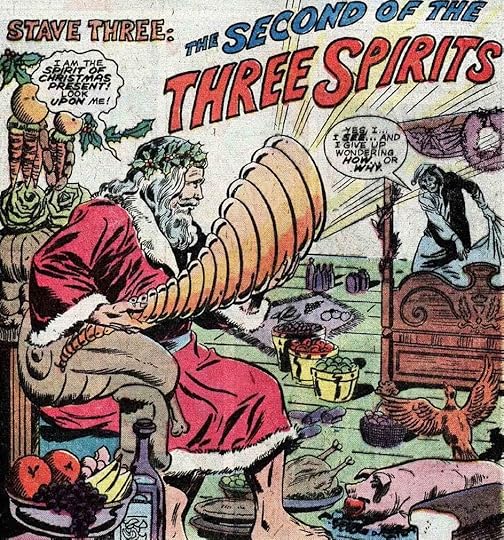
Like the Classics Illustrated version, Marvel's adaptation also wastes no panels on having Scrooge nervously anticipate his next visitor. As soon as the clock tolls one, Scrooge is awake and the Ghost is beckoning him into the next room.
It's not as lavishly decked out as the Classics Illustrated story. There's plenty of food scattered around, but the floor isn't exactly covered in it. It certainly doesn't mound to form the Ghost's seat, though I like that his throne is carved to represent food.
The Ghost is giant-sized. Just how much doesn't become clear until they hit the street later, but he's huge. He also has the cornucopia torch, represented as an enormous horn of plenty that the Ghost has to hold two-handed, with light pouring from it's large opening. That's not how I imagined it, but I'm probably influenced by movie adaptations (particularly the George C Scott one). This is a valid way to represent it and I like it.
Instead of a green robe with white fur, Marvel's Ghost has a red robe with white fur, probably to suggest Santa Claus. That likely also explains why the Ghost's long hair and beard are snowy white when Dickens specified that they were dark brown. The drawings are vague enough that it's hard to tell if he's bare-chested or wearing a shirt under his robe, but he is barefoot. The holly crown has no icicles and the sheath without a sword is also missing.
This version includes the line about Scrooge's learning a lesson the night before, which is nice to see because I've been worried about this Scrooge. He began the story almost maniacal, but seemed to settle down under the influence of Christmas Past. He's making progress and I hope he doesn't relapse.
The Ghost invites Scrooge to touch his robe, which Scrooge does, and the room immediately disappears.
December 6, 2021
“Come In! And Know Me Better, Man!" | Classics Illustrated #53 (1948)
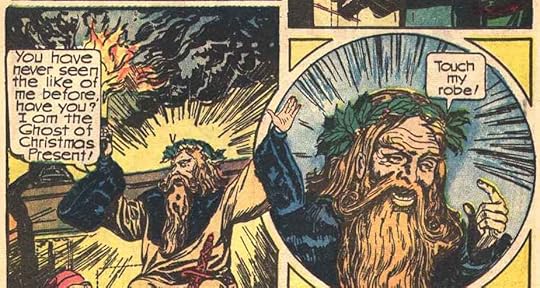 The Classics Illustrated adaptation starts this scene with Scrooge's waking up in bed and immediately seeing a light in the next room, so Scrooge doesn't have to pull back his curtains and wait nervously for whatever's about to happen.
He spends the next panel opening the door to the other room and then the bottom two-thirds of the page are taken mostly with the grand depiction of the new Ghost in all his glory.
The sumptuous feast from the book is there, but I can't tell if the Ghost is sitting on a throne of food or if he's brought his own chair. He's certainly giant-sized and has the long hair and holly crown of the literary version, but there are no icicles on the crown and the adaptation takes other liberties with his appearance.
He has a torch, but it's just a regular old torch and not cornucopia shaped. He has the sheath, but there's actually a sword in it, which directly contradicts Dickens. The Ghost's beard covers his chest, so we can't know for sure, but we can imagine that he's shirtless under there. Likewise, his long robe covers his feet and there's no telling if he's barefoot or not. But he could be.
The most noticable change is the color of the Ghost's robes. Rather than being green with white fur trim, they're light orange with black fur trim. They're pretty striking and I love the black fur trim, but they're not very Christmasy.
Scrooge hasn't shown strong signs of change up to now, but - true to Dickens' text - he tells the Ghost that he learned a lesson the previous night and he's willing to profit by whatever this Spirit wants to teach him. This version of Scrooge was especially mean and businesslike early in the story, so it's nice to see that the small hints of change that he let show throughout Past's visit are signs of something bigger going on in Scrooge's heart.
This version of the Ghost of Christmas Present does invite Scrooge to touch his robe. We don't see Scrooge do it, but we can assume that Scrooge takes that action since the narrative text tells us that "immediately the room vanished and they stood on the city streets on Christmas morning."
December 5, 2021
AfterLunch | The Cure, Part 1
 My brother Mark returns to the podcast along with third brother Matt to talk about one of our favorite '80s bands. Starting with The Cure's debut Three Imaginary Boys album and covering up through 1985's The Head on the Door, we talk about our own experiences with the band, favorite and not-so-favorites songs, the group's evolving sound, and the three "genres" of music that the group tends to make. It's a different sort of episode for AfterLunch, but whether you're already a Cure fan or merely Cure-ious, I hope you'll enjoy this detailed look back at the early days of Robert Smith and Company.
Download or listen to the episode here.
“Come In! And Know Me Better, Man!" | Dickens
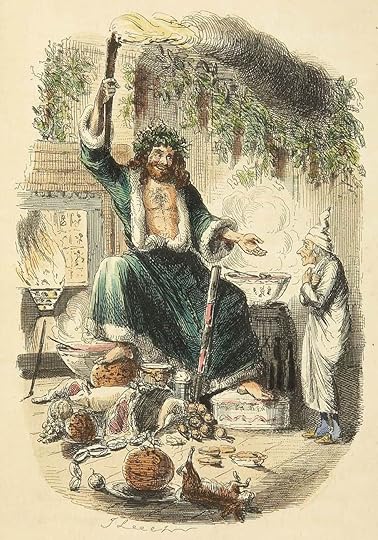
As I talk about Dickens' original version of the scene, I'm going to copy the entire text in bold italics and insert commentary in plain type. That'll help identify elements that we want to pay attention to in the adaptations.
Awaking in the middle of a prodigiously tough snore, and sitting up in bed to get his thoughts together, Scrooge had no occasion to be told that the bell was again upon the stroke of One. He felt that he was restored to consciousness in the right nick of time, for the especial purpose of holding a conference with the second messenger despatched to him through Jacob Marley’s intervention. But finding that he turned uncomfortably cold when he began to wonder which of his curtains this new spectre would draw back, he put them every one aside with his own hands; and lying down again, established a sharp look-out all round the bed. For he wished to challenge the Spirit on the moment of its appearance, and did not wish to be taken by surprise, and made nervous.
The bell is "again upon the stroke of One," because in the book, it's now 1:00 am on a second night. Since Marley showed up on Christmas Eve the Spirit of Christmas Past would have arrived at 1:00 am on December 25. That makes this 1:00 am on December 26. At least, that's what Marley's Ghost said would happen, but as we'll see at the end of the story, there's not really a point to following this too closely.
Dickens reminds us that the Spirits are being sent to Scrooge "though Jacob Marley's intervention." That's what Marley told Scrooge earlier, but it's a quick line of dialogue that no one ever remembers. Scrooge's getting this warning and second chance is Marley's doing.
I like that Scrooge tries to regain some control by pulling back his bed curtains so that he can see when the Spirit arrives. If he's going to be visited, he wants it to be on his terms as much as possible. Curious to see if adaptations show this.
Gentlemen of the free-and-easy sort, who plume themselves on being acquainted with a move or two, and being usually equal to the time-of-day, express the wide range of their capacity for adventure by observing that they are good for anything from pitch-and-toss to manslaughter; between which opposite extremes, no doubt, there lies a tolerably wide and comprehensive range of subjects. Without venturing for Scrooge quite as hardily as this, I don’t mind calling on you to believe that he was ready for a good broad field of strange appearances, and that nothing between a baby and rhinoceros would have astonished him very much.
According to Michael Patrick Hearn's The Annotated Christmas Carol, a "free-and-easy" was a kind of gathering place that offered smoking, drinking, singing, and gambling. So a "free-and-easy sort" was the kind of guy who would go there. To "plume yourself," is simply to "pride yourself" in something silly that you really have no control over, like a bird showing off its plumage.
Being "acquainted with a move or two" is just a fun way of saying that they're worldly and "equal to the time-of-day" just means that you're able to take things as they come. You're ready for whatever may happen.
Pitch-and-toss was a Victorian street gambling game that more or less involved tossing pennies at a target with the person closest collecting the loser's coins.
This is all to say that Scrooge was ready for anything and I love the line that "nothing between a baby and rhinoceros would have astonished him very much."
Now, being prepared for almost anything, he was not by any means prepared for nothing; and, consequently, when the Bell struck One, and no shape appeared, he was taken with a violent fit of trembling. Five minutes, ten minutes, a quarter of an hour went by, yet nothing came. All this time, he lay upon his bed, the very core and centre of a blaze of ruddy light, which streamed upon it when the clock proclaimed the hour; and which, being only light, was more alarming than a dozen ghosts, as he was powerless to make out what it meant, or would be at; and was sometimes apprehensive that he might be at that very moment an interesting case of spontaneous combustion, without having the consolation of knowing it. At last, however, he began to think—as you or I would have thought at first; for it is always the person not in the predicament who knows what ought to have been done in it, and would unquestionably have done it too—at last, I say, he began to think that the source and secret of this ghostly light might be in the adjoining room, from whence, on further tracing it, it seemed to shine. This idea taking full possession of his mind, he got up softly and shuffled in his slippers to the door.
I love that Dickens basically shames horror movie fans who ridicule characters for not behaving completely logically.
The moment Scrooge’s hand was on the lock, a strange voice called him by his name, and bade him enter. He obeyed.
It was his own room. There was no doubt about that. But it had undergone a surprising transformation. The walls and ceiling were so hung with living green, that it looked a perfect grove; from every part of which, bright gleaming berries glistened. The crisp leaves of holly, mistletoe, and ivy reflected back the light, as if so many little mirrors had been scattered there; and such a mighty blaze went roaring up the chimney, as that dull petrification of a hearth had never known in Scrooge’s time, or Marley’s, or for many and many a winter season gone. Heaped up on the floor, to form a kind of throne, were turkeys, geese, game, poultry, brawn, great joints of meat, sucking-pigs, long wreaths of sausages, mince-pies, plum-puddings, barrels of oysters, red-hot chestnuts, cherry-cheeked apples, juicy oranges, luscious pears, immense twelfth-cakes, and seething bowls of punch, that made the chamber dim with their delicious steam. In easy state upon this couch, there sat a jolly Giant, glorious to see; who bore a glowing torch, in shape not unlike Plenty’s horn, and held it up, high up, to shed its light on Scrooge, as he came peeping round the door.
Most adaptations do their best to convey this huge redecoration of Scrooge's sitting room, but it'll be interesting to see if any don't. Same with the cornucopia torch. I'm thinking of a couple of adaptations that include it, but I don't know how many. I don't know if I ever made the connection before that this Ghost's torch replicates the light given off by the flame-like Christmas Past. And will be contrasted with the darkness of the Ghost of Christmas Yet to Come. The past and present both illuminate, but the future is hidden and unknowable.
"Brawn" is apparently some kind of pork product and "twelfth-cakes" are large pastries made with honey, ginger, and pepper, then frosted and decorated and served on Twelfth Night, the last official celebration of the Christmas season in England (in early January). There's a whole thing about baking a bean or coin into the cake and whoever finds it gets to be the king or queen of the feast. It reminds me of the Mardi Gras King Cakes with their plastic babies that serve a similar function.
“Come in!” exclaimed the Ghost. “Come in! and know me better, man!”
I love this line and its double-meaning. The Ghost welcomes Scrooge into the room, but he also welcomes him into a relationship with Christmas itself.
Scrooge entered timidly, and hung his head before this Spirit. He was not the dogged Scrooge he had been; and though the Spirit’s eyes were clear and kind, he did not like to meet them.
I had to look up "dogged," because I was associating it with "hang-dogged," which means dejected or shamed. I knew that didn't fit Scrooge here, because his lack of eye contact suggests that he is dejected and ashamed. "Dogged" by itself refers to someone who's persistent and tenacious like a hunting dog. That describes Scrooge's feistiness earlier in the story, but that's not him any more.
“I am the Ghost of Christmas Present,” said the Spirit. “Look upon me!”
Scrooge reverently did so. It was clothed in one simple green robe, or mantle, bordered with white fur. This garment hung so loosely on the figure, that its capacious breast was bare, as if disdaining to be warded or concealed by any artifice. Its feet, observable beneath the ample folds of the garment, were also bare; and on its head it wore no other covering than a holly wreath, set here and there with shining icicles. Its dark brown curls were long and free; free as its genial face, its sparkling eye, its open hand, its cheery voice, its unconstrained demeanour, and its joyful air. Girded round its middle was an antique scabbard; but no sword was in it, and the ancient sheath was eaten up with rust.
I've often wondered why the Spirit is shirtless and open-robed, showing off a lot of chest. According to Hearn, since the chest was the home of the heart, Victorians would have associated a large, bared chest with an overflowing of compassion. Let's see how many adaptations are willing to show off this Ghost's chest.
We'll also keep an eye out for the green robe with white fur, bare feet, long hair, the iconic holly wreath (and will it have icicles?), and the rusted, sword-less sheath. And of course, the Ghost's generally jolly and unselfish demeanor.
A note on the rusted sheath, because I like this: This Spirit's appearance obviously borrows a lot from Father Christmas, the formerly pagan, but now-Christian symbol of the winter holidays. The Ghost's giant size and cornucopia are both references to his pagan origins. Along with armor, the sword was often an element of Father Christmas pictures, symbolizing the conquering of pagan traditions. Dickens' ghost conquers not with a sword though, but with love and generosity.
“You have never seen the like of me before!” exclaimed the Spirit.
“Never,” Scrooge made answer to it.
Another double-meaning. Scrooge has never encountered the kind of generosity that the Spirit represents. Or if he has, he's ignored or misunderstood it.
“Have never walked forth with the younger members of my family; meaning (for I am very young) my elder brothers born in these later years?” pursued the Phantom.
Again, Scrooge has no relationship with Christmas.
“I don’t think I have,” said Scrooge. “I am afraid I have not. Have you had many brothers, Spirit?”
“More than eighteen hundred,” said the Ghost.
Eighteen hundred and forty-three, if the story takes place in the year it was published.
“A tremendous family to provide for!” muttered Scrooge.
The Ghost of Christmas Present rose.
According to Hearn, there was a deleted section here where the Ghost's rising revealed the claw-like feet of Ignorance and Want who appear later in the story. Scrooge asks about it and the Ghost compliments him for even caring that much, but the Ghost doesn't yet reveal who's under the robe. I kind of like the foreshadowing, but I understand why Dickens thought it better to keep that part a surprise for later.
“Spirit,” said Scrooge submissively, “conduct me where you will. I went forth last night on compulsion, and I learnt a lesson which is working now. To-night, if you have aught to teach me, let me profit by it.”
Scrooge acknowledges that he's taken the first steps toward change. Curious to see what versions still try to make him curmudgeonly at this point. We should be starting to see changes in him by now.
“Touch my robe!”
Christmas Past invited Scrooge to passively accept its touch on his heart as protection. Christmas Present needs Scrooge to be more active.
Scrooge did as he was told, and held it fast.
So here's what we're on the look out for this year:
Does Scrooge pull his bed curtains back before the new Ghost arrives?How has Scrooge's room been redecorated? How lavish and generous is it? Is there a throne of food?The Ghost's appearance. Does it have the following?Giant sizeCornucopia torchGreen robe with white furBroad, bare chestBare feetLong, loose hairHolly wreath hat with iciclesRusted, swordless sheath.Is Scrooge showing signs of changing by now?Does the Spirit invite Scrooge to touch his robe?December 4, 2021
The Christmas Carol Project | “Come In! And Know Me Better, Man!"
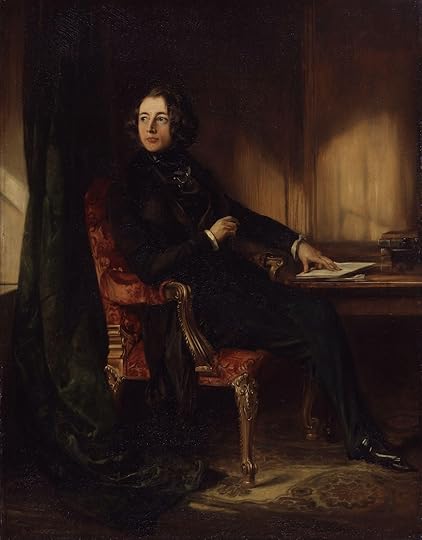 Christmas time is here, so once again it's also time for my long-standing tradition of covering A Christmas Carol scene-by-scene, paying attention to the way the story has been interpreted and adapted to other media over the years.
 My podcasting schedule has gotten really heavy. Which is how I like it, but it means that I've cut way back on blogging. I even skipped participating in the annual Halloween Countdown this year, focusing instead on the Crestwood House podcast and spooky-themed episodes of other shows. And to be candid, I thought about maybe not committing fully to the Christmas Carol project this year either. But I just couldn't cut it out of my schedule. I love doing it and this year's scene is one that I've been looking forward to for a long time.
For anyone not familiar with how this works, I’ve broken the story into scenes (or sometimes parts of scenes) and each year I look at the adaptations of one of them to the following comics, TV shows, and films:
• Classics Illustrated #53 (1948)
• Marvel Classics Comics #36 (Marvel; 1978)
• A Christmas Carol: The Graphic Novel (Classical Comics; 2008)
• A Christmas Carol (Campfire; 2010)
• "A Christmas Carol" in Graphic Classics, Vol. 19: Christmas Classics (Eureka; 2010)
• Teen Titans #13 (DC; 1968)
• A Christmas Carol cartoon (1971) starring Alastair Sim
• The Stingiest Man in Town (1978) starring Walter Matthau
• Mickey’s Christmas Carol (1983) starring Scrooge McDuck
• A Christmas Carol (2009) starring Jim Carrey
• A Christmas Carol (1910) starring Marc McDermott
• Scrooge (1935) starring Seymour Hicks
• A Christmas Carol (1938) starring Reginald Owen
• Scrooge (1951) starring Alastair Sim
• "A Christmas Carol" episode of Shower of Stars (1954) starring Fredric March
• Scrooge (1970) starring Albert Finney
• A Christmas Carol (1984) starring George C. Scott
• The Muppet Christmas Carol (1992) starring Michael Caine
• A Christmas Carol (1999) starring Patrick Stewart
This year, we finally get to meet my favorite of the three spirits: the Ghost of Christmas Present.
December 2, 2021
Filthy Horrors | The Masque of the Red Death Board Game
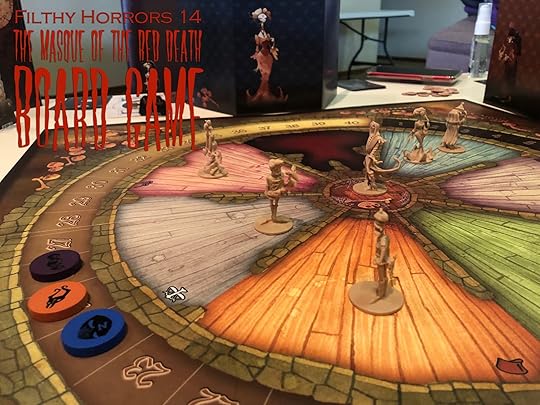 Darla supported the board game version of Masque of the Red Death (based on the Edgar Allan Poe story, illustrated by Gris Grimly, and published by IDW) on Kickstarter. So now she, Jessica, special guest Chandra Reyer, and I are playing it to determine who will be the most popular noble left in the castle after the blood-spattered specter comes to visit.
Download or listen to the episode here.
November 28, 2021
AfterLunch | KieferThon, Part 1
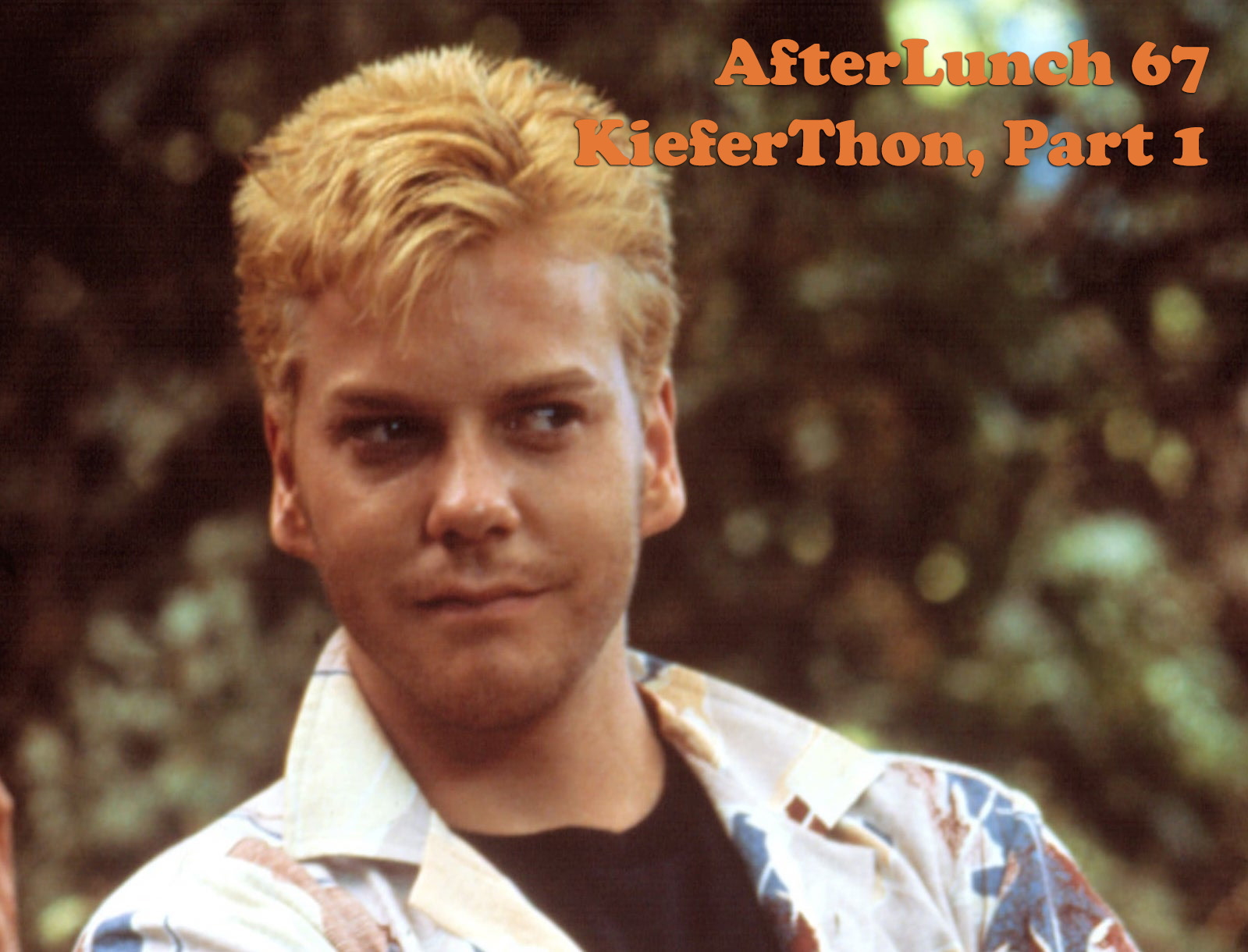 I'm joined by my brother Mark to start a journey through the filmography of one our favorite actors, Kiefer Sutherland. In this first episode, we cover Sutherland's career from his first jobs in Max Dugan Returns (1983) and The Bay Boy (1984), his revelatory 1985 performance in Steven Spielberg's Amazing Stories, and all four of his 1986 movies, including his blink-and-miss-it part in At Close Range, the wildly varying-in-quality TV films Trapped in Silence and The Brotherhood of Justice, and finally his breakout role as Ace Merrill in Stand By Me.
Download or listen to the episode here.
November 25, 2021
Hellbent for Letterbox | Buck and the Preacher (1972)
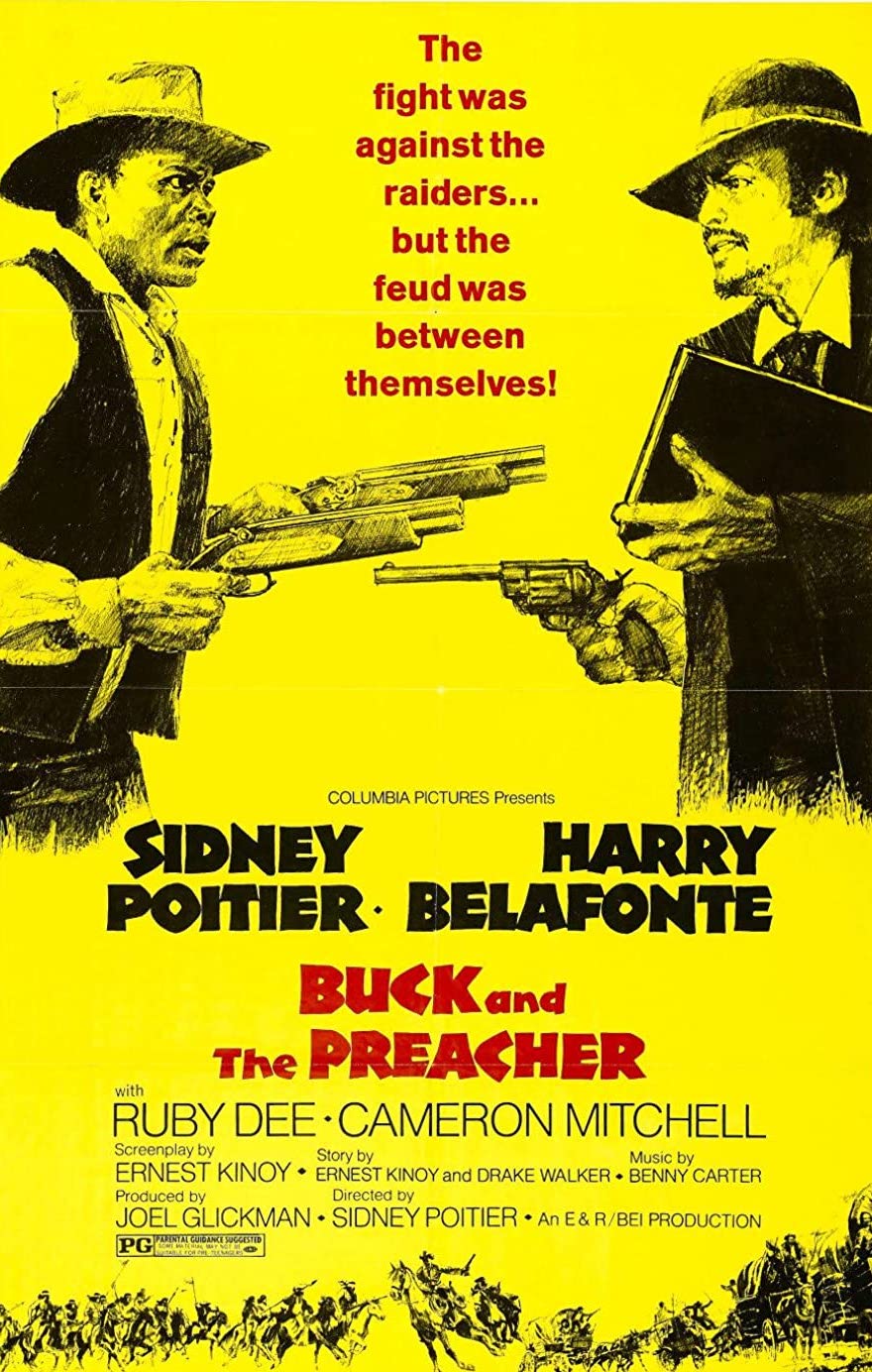 Pax and I welcome back Evan Hanson to talk about Sidney Poitier's directorial debut, Buck and the Preacher, starring himself as well as Harry Belafonte and Ruby Dee.
Download or listen to the episode here.
November 23, 2021
AfterLunch | After Dinner Lounge – Put That Friend in That Box
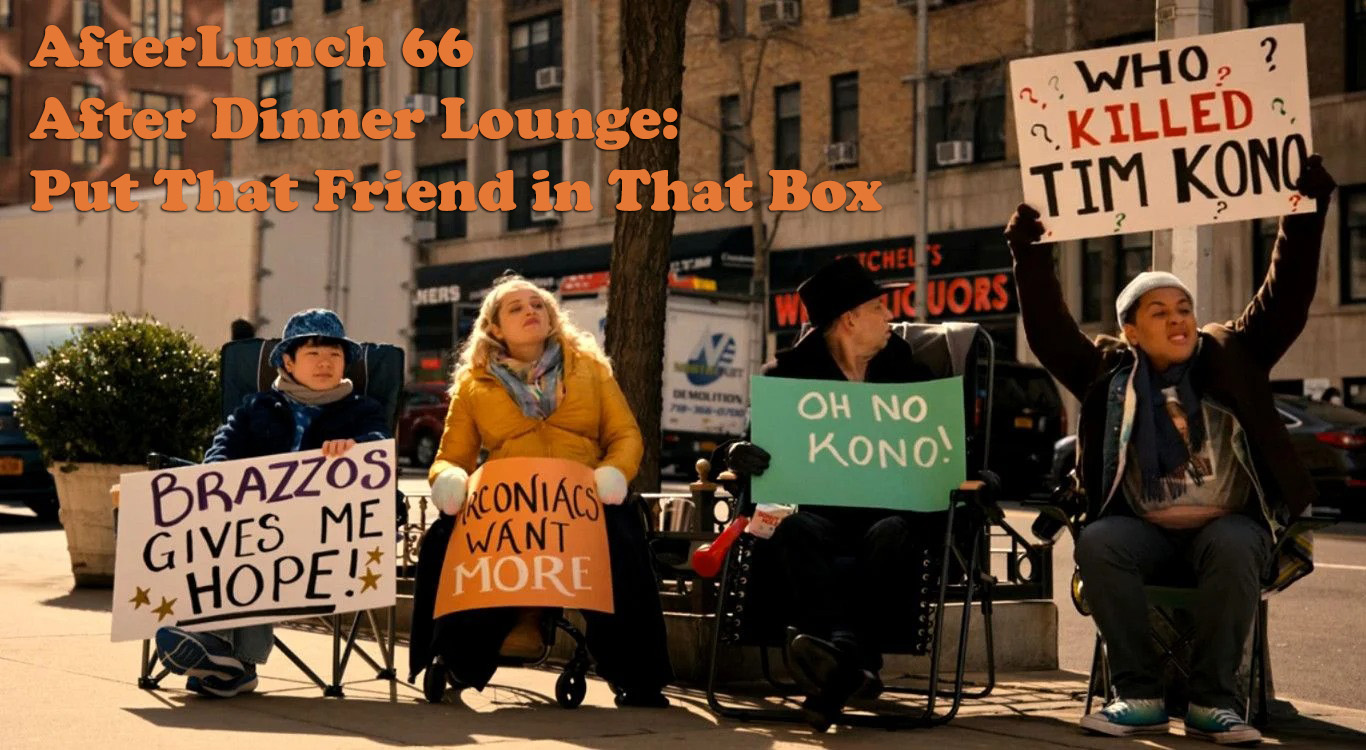 Rob, Evan, Pax, and I continue our ramble through various topics spurred by what we've been watching and thinking about. Discussions include big, spoilery discussions of Ted Lasso's second season and the first of Only Murders in the Building as well as deep thoughts about holiday travels, the importance of Thanksgiving, and celebrity crushes.
Download or listen to the episode here.