
R.J. Blain's Blog, page 71
June 12, 2015
Movie Review: Jurassic World
I don’t watch much tv. I don’t watch many movies either. In fact, when it comes to common, popular entertainment… doohickeys… I’m about 20 years behind the curve.
When I was a little girl, my all-time favorite movie was Jurassic Park. Who he fuck am I kidding? it’s still my all-time favorite movie. (I got to see it in theaters not too long ago, and it was amazing. It was a private showing, and I screamed so many times.)
I love the original one the most, although I did enjoy the two sequels. But, in 1993, I fell in love with Raptors. (Utah Raptors… I know they have a proper name, but screw it. Utah Raptors. I don’t mind them calling them Velociraptors in the movies, but the real ones were about knee high, although they did share many similarities to what is portrayed in the movie.)
I love Raptors. I love them with the fiery passion of a thousand supernova. I love them so much that I’m seriously considering finding raptor plushes and scattering them around my kitchen as a warning against other predators near my primary source of food.
I also seriously adore Chris Pratt as an actor, so, Jurassic World has been one of the best things to happen since, I don’t know, my marriage and the first film.
 Just look at this beauty. What is there not to love? Sure, that gorgeous eye will examine you to identify your vitals and proceed to eat them, but… that’s okay, right?
I went into Jurassic World figuring I would love it. I mean, it’s one of my favorite franchises ever. I like Jurassic Park more than I like Star Wars and Guardians of the Galaxy. I’ve been waiting for the park to open since 1993.
The movie surpassed my expectations.
The human leads were fantastic–but the real stars of this movie were the dinosaurs, just as it should be. The plot is what you want from a Jurassic Park film. Dinosaurs are supposed to eat people. Dinosaurs are supposed to start eating people pretty quickly. Really cool dinosaurs eating people is why I wanted to see this film.
I was not disappointed. If anything, I was blown away by the fact that these dinosaurs weren’t just hungry predators. They were intelligent and hungry predators. There was no humans being ultra smarter than the dinosaurs. The dinosaurs were legitimate.
They had feelings. Well, some of them did. Some just want to kill you and eat your internal organs. Those are feelings, right? They are!
The Raptors were my favorite part of this movie. They have names. Each one has a distinctive personality.
At one point, I was shrieking raptor names in the theatre. I am going to make the assumption my friends were embarrassed to have any association with me, especially at that one point when that one thing happened.
The movie was true to the original movie in so many ways. There are hundreds of easter eggs in the film. There are references to all three movies. There are tiny little details that will make you walk down memory lane, if you’re observant and look for them. There were moments where the film simply paused, allowing for those wows to kick in. There were moments where the entire theatre burst into giggles and woos and similar things, all because we got to see something really fucking cool or that we were caught by surprised–or taken on a trip on the Way Back When machine.
And the first time they play the original Jurassic Park theme, it is glorious. You might want to conduct with the music.
The Park is Open.
Buckle in, it’s a wild ride. This movie is fun. It’s ridiculous. It only takes itself so seriously, marrying the comedic wonders of the original with the thrills and chills of really cool dinosaurs eating people.
I am leaving you with one spoiler and one spoiler alone. The movie ends with the T-Rex roaring.
I think I’ll go see it a couple of more times before it leaves theatre. Then I’ll buy it and watch it over and over and over again.
Because dinosaurs. And Chris Pratt. And Chris Pratt being awesome with dinosaurs.
P.S.: Blue is my favorite raptor.


May 22, 2015
Delving into the World of Short Stories

(c) JordyR (Creative Commons – Flickr)
I have always been interested in writing novels over short stories. I’m pretty convinced that my brain is wired for long, convoluted stories with a vast sandbox for me to play in. Instead of a pond, I chose the oceans–and I’ve loved every minute of it.
Over the past few weeks, I’ve decided to take a stab at the art of writing short stories and novellas. I’ve decided I will write one story a month at a minimum, with other work being done on novellas as I have time. To facilitate this, and keep myself on track, I’m utilizing patreon as a way to give fans and readers access to these short stories as I write them.
They won’t be perfect, and I know that. I expect there will be types, ways the story could have been worded better, and stories that just don’t quite live up to my hopes and expectations for them.
Once a month, I will be sharing a story with my patrons. Some months I may include more than one story in the patron pack. Some months, I may release two different stories.
If you have been wondering how you can support my writing career beyond buying my books, Patreon is a great way you can contribute. We both win!
Since I don’t know a whole lot about writing short stories, I’ve decided to dive in and learn by doing. Today, I did rough outlines of four different stories. I think one is likely a novella while the other three will fall within the 5,000 to 10,000 word range, which is well within threshold for a short story.
The first thing I’ve learned from the process is that I have to be careful to only focus on one major theme and one story arc; it isn’t a novel. I don’t have the room to ripple the backstory in or the extra plot elements. But, I still need to include some of it, because a character is not just about who they are now. Who they were in the past matters, as their current now is a reflection of their past self, while their future self is a reflection of their present self.
I want to capture that in short story form.
I have no idea how well this will work. I don’t know how good I’ll be at writing short stories…
… I just hope that I’ll entertain my patrons, readers, and fans. Wish me luck. I’ll need it.
If you’re not interested in obtaining the stories via patreon, I will be releasing them in e-book (and possibly print) format once a year, give or take a few months. Novellas will be released to Amazon within a month or so after release to patrons.
Thanks, folks!
May 21, 2015
Random Rambles: Adventures in Financing

(c) Jo Naylor (Creative Commons License – Flickr)
Money. Hate it or love it, it’s something almost all of us have to deal with. The transition from child to adult involves the inevitable conflict of wanting things and realizing that nothing comes for free.
Maybe you have the supplies to build or grow what you need, but you need to invest your time. Your time is valuable, so this isn’t a free investment. (Don’t undervalue yourself; your time is valuable, no matter what the assholes say.)
Maybe you want to skip the time investment, so you have to pay for what you want. (Maybe you lack the skills to make it, or maybe you’re just lazy and don’t want to spend the time–that’s all right. I’m lazy too.)
When I was younger, money was magical. My mother (wisely) bribed us kids into working by dangling rewards for us. However, despite the introduction to basic bartering and finances, I never was really ready for life outside of the nest. Let’s face it, financing, budgeting, and general life skills weren’t taught in school. I watched my mother fight with her taxes, but it was frustrating and intimidating for her, therefore it was something I wanted absolutely nothing to do with.
At my school, we learned how to vote, but we weren’t taught how to actually balance a checkbook–we were, however, taught how to write checks. We were taught how to spend money, but we weren’t taught how to save it, how to plan ahead, and how to live anywhere other but in the moment.
As many of you are probably aware, my husband was laid off from his job after more than twelve years of employment at the same place. He found a new job, which he really likes, doing things that interest him. He’s far, far happier now than he used to be.
However, he’s a contract worker now. This comes with a variety of issues. First, taxes aren’t withheld. That’s our responsibility. Second, his employer is the in US, which adds some complexity to our situation.
Most importantly, we only get paid once per month instead of every two weeks. That’s a huge adjustment. Instead of living pay to pay, I have to live in the moment and thinking a year in advance.
If I don’t save the tax money, I won’t be able to pay the government on time. That’s not good. That means I have to think ahead, withholding enough for taxes, all while juggling our various bills.
This is not a skill set I was taught in school. Planning a year in advance for anything? Pft. I don’t know about everyone else, but I grew up in an instant-gratification society.
There’s nothing instantly gratifying about managing a budget. It’s hard work.
So, here’s how I’m doing it–manually. There are programs you can use to help, but I have opted not to use them. There’s a reason for this: I am a hands-on learner. If I want to make a budget that works for me and my family, I need to see the numbers, play with them, prod at them in their devilish home in excel, and really get an understanding of what I’m looking at–and how I’m spending my money.
It’s more work, but going over the financials bit by painful bit is how I learn what I’m doing right and wrong.
Please note: I am not recommending you do these things for yourself. I am not responsible for your financial decisions. What I do with my household finances works for exactly one financial situation: mine.
Please consider all of the information as a sharing of a single strategy.
You’re welcome to use my strategy if it fits your situation, but nothing in this post constitutes as legal or financial advice. I’m not responsible for your choices.
Before I begin, I’m going to discuss some of the challenges my husband and I are facing, which are playing a huge role in our monthly and yearly finances.
Challenge #1: Sewage Flood.
Yeah, I’m still in debt from that. No, I still don’t have a basement. One day, however, I will have a basement. But, for now… I need to pay off all of the debt from related expenses. (These include replacement of the furnace, replacement of the entire breaker box, and the rewiring of the pool. These three items cost in excess of $10,000 and weren’t covered by insurance.) Insurance covered the cost of cleanup and materials for the replacement. However, because the basement wasn’t to code, things outside of the cleanup sphere of influence needed to be addressed, we ended up with far more spent than insurance covered. That rode my credit cards–some is still riding my credit cards.
Plus interest. Can’t forget the interest. Interest is the killer of souls.
Challenge #2: Withholding Taxes
We aren’t sure how much the tax man is going to yank from us, but I’m anticipating the number falling somewhere between 39-49%. The lowest I’ve ever seen our taxes was 31%. The highest I’ve seen it has been 54%.
This year, I’m looking at an estimated 47% tax rate for my husband with provincial and federal taxes combined.
Challenge #3: Credit Card Debt
This ties to Challenge #1, but it is a problem in and of itself. Credit Cards are dangerous things. Sure, they can save your bacon when shit goes to hell–but once hell starts, it is excessively difficult to climb out of credit card debt. Of all of the challenges I’ll face this year financially, this one takes the cake and the cherry on top.
Now, with the background established, I’ll go into my method of addressing the problems.
Step One: Realistic Expenditures.
Most people think budgeting is about saving money and cutting costs.
Wrong.
It is about identifying and understanding what you are actually spending your money on. If you base your budget on idealistic situations, it won’t work.
Budget based on what you’re actually spending. That stops the surprises before they happen. But, here’s the problem.
Most people (myself included) spend more than they have. That leads to the situation of debt, debt, and more debt. Step one, however, shouldn’t change.
Identify what you’re spending your money on. Know your income. Know your expenditures. Know what you’re doing right.
Learn what you’re doing wrong.
Step Two: Identify Critical Expenditures
My budget is broken into several different categories, including wants, needs, monthly bills, and yearly bills. So, in order to form my baseline budget, I took a close look at what I was actually spending and identified the items that were critical.
Critical is just that–you absolutely can’t live without it.
For my household, this includes things like the mortgage and certain bills. (The internet and cell phone bills count for us, because my husband cannot do his job without them.)
This becomes the foundation of the budget.
If you’re going to try looking at your finances in this way, here are some items you will want to consider for your critical expenditure list:
Mortgage/Rent
Minimum Credit Card Payments
Electricity/Hydro
Bills required for work
Food (Basics)
Taxes
Step Three: Identifying Luxury Expenditures
Life’s stressful enough without luxuries, but you really need to know how you’re spending your money. Learn to identify what you can live without. Luxuries are just that: things you can live without.
Make a list of these things. Order them by priority. How important are they to you?
Go ahead–make notations on the things you could trim out of your budget, but don’t trim them out, not quite yet.
Step Four: Add it up. Weep.
This is the weeping phase, probably when you look at your total income versus total expenditures and realize they don’t add up. You’re probably spending more than you have.
I’m not going to say it’s okay because it isn’t–it’s not good. Money worries are a huge stress factor. Finances have ruined many a marriage and will ruin many a marriage in the future.
This is the time to acknowledge and accept your actual financial situation.
For me, it’s also the time to start making a game plan. After the weeping, cursing, and burning desire to burn things with fire. Coherency will typically take a leave of absence at this point, and that’s okay.
It’s normal.
The problem is, from my past experience, is people stop at this step. They don’t move forward. They don’t find ways to get beyond the current situation to a better one.
Some people are in the situation where they simply can’t.
I was hoping to be out of debt in a couple of months, but it isn’t happening. In our situation, the tax percentage we have to pay prevents us from being able to really attack our credit card debt and eliminate it from the picture.
Can I do it? Yes. It will take a long time and will require a lot of willpower to accomplish it, however. This leads me to the next step…
Step Five: Problem Solving, Brainstorming, and Fitting Square Pegs into Round Holes.
I know the tax bill next year will be devastating. However, I also know that credit card debt and interest is equally devastating. So, I decided to compromise.
I’m taking a risk. This is not advice or recommendations to do this. It’ll either pay off or it won’t. If it doesn’t, I’ll be in even more financial problems come next year. If it pays off, we’ll be far more stable. It’s a calculated risk. If I play the numbers just right, it’ll work.
I know that my tax rate will be around 47% come April of 2016. So, in order to accelerate the repayment of my credit card debt, I am withholding 24% of the taxes and tracking the yearly withheld percentages and amounts. By withholding half of what I’ll actually owe the government, I’m paying down credit cards faster; this lowers my interest payments and minimums each month.
In 3 months, once I have done some damage to the credit card bills, I will withhold extra taxes until my yearly tax withholding is at 47%. I’ll have to slow down how much I pay back my credit cards, but at the same time, I will be able continue paying down the cards because my interest rate and minimums will be lower.
The calculations are a bit complicated, but it works out at the end of the day. I might be able to do accelerated tax payments for 4 months.
This is a bandaid and it comes at a cost. But, the bandaid will help the wound heal faster, even though it isn’t an instant fix. What it does do is let me fit that square peg into a round hole. There’s a fine line between being able to pay down credit card debt versus being trapped in an endless cycle of just paying off the interest accruing from the debt.
The goal of this is to balance the scales in the right direction. The ultimate goal is this:
Each month, I am able to pay off the following for each credit card:
Interest Charged
All New Charges/Bills/Etc
Minimum Payment
A Little Extra
So, here’s an example, taken directly from one of my credit cards. This card is charged for a lot of our monthly bills.
Statement balance:
$3,948.66
Statement closing date:
05/05/2015
Credit limit:
$X (It’s a secret.)
Minimum payment due:
$107.01
Minimum payment due date:
05/26/2015
Interest Charged:
$68.00
Interest ($68) plus Minimum Payment ($107.01) equals Baseline Payment ($175.01)
This card is charged roughly $800 a month for bills and various other reoccurring payments.
So, current payment for the card, factoring in 1-3 on the list is: $975.01.
I have actually paid $1,040 on the card in the month of May. That means I paid 64.99 more than the minimum, which classifies as a little more.
Some of you might be questioning my math at this point. Why pay off the interest and the minimum payment on top of the reoccurring bills? The minimum payment would be sufficient to cover the new interest and pay down the card a bit. Why the little extra overtop of this?
The idea is to eliminate all sources of debt from the card. Interest appears as a charge on the card. It’s money you’re spending each month. Therefore, it needs to be accounted for. That means it falls under “New charges” technically. I separate it as a way of seeing how much money I’m wasting each month simply because I’m carrying credit card debt. It motivates me to get rid of the debt.
The minimum payment amount is actually the baseline paying down the card amount. Each time I pay the minimum amount, I’m whittling away that much from the actual debt. The little extra is just a cherry on top.
I do this for each and every credit card I have with the exception of one card. This card is a financial card; it gets charged once a month for a service. (It’s sort of like a loan.) I pay off what’s charged each month for this card.
Now, here’s a consideration: If I do not have any new charges going to a card, I will pay off the new interest and the minimum payment plus a little extra. The little extra might be a lot extra, if I have the money to work with.
If I don’t, the little extra is something like $10.00. I have three rainy day credit cards with balances. They aren’t getting new charges, so I pay off the minimum amounts plus interest plus a little extra to pay them off while I focus my attention on the card with the largest active balance and interest rate.
By doing it this way, the interest payments and minimum payments will shrink each month. That gives me more room to work. But, if I have the money to afford the previous month’s higher minimum payment and interest charges, I pay that amount.
It prevents me from having to recalculate all of the math plus has the added bonus of paying off the cards faster.
If I do have a rainy day, I can then recalculate my actual minimum payments and interest charges and pay down the cards appropriately, thus saving a little money each month.
That’s essentially it in a nutshell. It took me about four hours to go through the past few months and identify bills, but if you have banking software that does that for you, great! I needed to dig in and do it manually because that’s how I think.
But, I walked away with a game plan, a method of crawling out of debt, and a realistic budget–one I can actually adhere to because it is no different than the reality of my expenditures.
Phew. Long post was long. Sorry about that.
Good luck with your finances. Money sucks.
May 19, 2015
RJ’s Misadventures: Formatting for Print
 About a month or so ago, I promised myself that I would bring Requiem for the Rift King and Witch & Wolf back into print. I also promised myself that I would learn how to format for print on my own, setting up the print interior exactly as I wanted it.
This is a record of my misadventures as I am working on preparing Storm Without End for print.
I will be breaking this up into a lot of pieces. While this isn’t a traditional guide for formatting for print, this will highlight everything that has gone wrong with the process.
Selecting a Trim Size
One of the hardest choices I had to make when deciding to format for print was the trim size. Createspace has many options for trim size. My previous print run had an unusual trim size.
This time I went with a standard trim size. I want to enroll my novels into extended distribution for a chance to get them in bookstores and in libraries. I decided on 5.25 by 8, primarily due to the fact it is relatively close to the original trim size. The benefit? I can fit more in the book. Fewer pages translates to a lower cost.
I also selected cream paper, as I like the color better than in-your-face white. For the exterior cover stock, I went with Matte, which looks really lovely.
Getting Started
Up until this point, I have hired someone to handle the interior formatting for me. I’ve been a coward, I’ll admit it. Learning something as complicated as print formatting is scary!
However, it only looks complicated. I’m now shaking my head at how easy it is once I took the time to figure out what was going on. So, here’s how I got started:
I logged into CreateSpace and I clicked the link stating: How to make an interior PDF
I also, from my project’s setup screen, used this:
Download a Word® Template
Start with a blank template or formatted template with sample content designed for this trim size.
I opted for a formatted template. I removed the links to them, since the blank and formatted templates are tied to the trim size you select for your project. Go get your own template! If you use the one generated for me, it won’t work–not unless you’re using the same exact trim size I do.
Once you have your formatted or blank template, you will be ready to begin.
Setting Up the Template
Open your template, save as a different file, and create your master print file for your book. You’ll want to keep the blank/formatted template preserved so you don’t have to download it again later.
In the template, you’re going to see a bunch of chapters (ten of them, in fact) that you can use to format your text.
Create the Appropriate Number of Chapters
For reference, my novels range from 18 to 30+ chapters.
Adjust the Headers
Just as a friendly word of advice: Adjust your headers / footers before you begin this process. Just double click on the header or footer and modify them to your liking.
Warning: Yes, you will have to do this for each template chapter if you do not like how the page numbers are formatted. Author Name and Book Title should auto-populate across all chapters.
Copy/Paste Template Chapters
To begin, highlight the contents of one chapter. Copy it to your clipboard. Make sure you get the blank spaces above “Chapter Number” since it does make a difference.
Go the last chapter of the document. Click on the last character in the chapter. In word, you will need to create a page break. However, you need to use a very specific version of the page break function.
In Word 2010+, there will be a little drop arrow where it says break under page setup in the layout tab. Select Next Page from the list.
This will create a new page for you to copy/paste your next chapter. Rinse and repeat until you have the appropriate number of chapters for your novel.
Note: I use Scrivener with my novel broken up into chapters as individual text files. This makes it extremely simply to do.
Populate Your Chapters
There are several ways you can do this. Here is how I do it:
Click before the first word of the chapter. (In the CreateSpace Template, this is actually a number.
Paste.
Highlight the template text.
Delete the template text.
This preserves the formatting of my text. This won’t work if you’re using Word, as Word wants to preserve the paper size in addition to formatting. So, if you’re using word as your primary text editor, you will have to find a different method of populating your chapters, sorry!
Justify the Text
Text justification is really important. Books look terrible in print without it. So, highlight all of your chapter text and click “justify.” It is the last option in the text layout buttons. (Right, Left, Center, Justify.)
Adjust Your Margins
Amazon has strict rules on what the margins are for printing. You can find them on the link I gave above.
Check your current number of pages. Open up the margins field (Layout, Margins–>Custom Margins.)
Follow the instructions on the page. If the inside margin says 0.75, put that in the field. Outside margin should be set to 0.50.
Once you have confirmed your margins are correct, you hunt and slay orphans.
Hunt and Slay Orphans
Once the text is justified, it is time to hunt and kill orphans. Orphans are single words or sentences on a page. I also have to recenter any scene break glyphs/markers at this point.
In order to slay orphans, I will shift a line from one page to the next (or two lines… very rarely three) from the previous page. Sometimes you can’t avoid a line with a single word on it–but you can always backtrack and add a carriage (hard) return here and there to make certain you don’t have an orphaned line right before a scene/chapter break.
I prefer 3+ lines whenever possible.
I also shift scene breaks to the next page whenever possible. (This is only done if the scene break is the last thing on a page.)
Use your judgment and figure out what you think looks best.
Some people prefer to fiddle with line spacing on individual pages in order to shift a line to the next page. I don’t like this because I can’t stand slightly offset text when looking at two pages. I’d rather have an uneven number of lines on a page, which is why I made the choice I did.
That said, if you can adjust the line spacing, it’s probably the most elegant method of doing it. I went with easy rather than complicated and persnickety. That was a personal choice.
It’s entirely up to you on how you slay your orphans–just make sure you do it. Orphans are horrific.
Populate Your Front Matter
Front matter is the title page, dedication, acknowledgements, copyright page, and so on. Make sure this is all filled out. Also fill out your back matter, which is the About the Author page–and anything else you want to shove at the end of the book.
Table of Contents
Now that you have finalized your print layout, it is time to fill in your table of contents. Try to keep it on one page (or you’ll screw up the page numbers!)
Let it Sit & Double Check it Later
Put it down for a few days. Come back and check the work later, when you haven’t spent the past 2-4 hours frying your brain on the persnickety nature of print formatting.
So, how did I screw it up the first few times?
I did everything wrong.
I tried hunting orphans before I confirmed my margins, thus creating odd gaps in my novel, which needed to be removed. I didn’t adjust the header/footer prior to copy/pasting a lot of templates, which meant I had to fix them all manually.
I added 2-3 extra hours of work just because I didn’t know how changing one thing would make other things break.
May 12, 2015
Editorial Process: Blood Diamond
 In order to take a more systematic, thorough approach to my editorial, I have changed how I work.
Change is a pretty common theme in my life at the moment.
I use Scrivener as my writing tool of choice. I like the layout, I really appreciate the compiling abilities of the program, and there are many useful features.
Because I have gotten a new computer–one that actually works–I have completely changed how I work. Unlike Windows, Mac OS X has a special way of handling programs in full-screen mode. By swiping three fingers across the track pad (or two across the magic mouse), I can switch between windows easily. This has let me focus my concentration quite a bit; I don’t get distracted by shiny things, including IM messages. (I hear them ping, but I ignore them until I finish what I’m working on.)
It has also done away with my side-by-side editorial practices. While it slows my editorial pace a bit, it has had a lot of fringe benefits.
One of the consequences of this change is the fact I have to pay more attention to what I’m doing. That’s a good thing. As I am constantly swapping between screens, I have to take better notes on what I’ve done to each chapter.
That’s where Scrivener comes in.
In order to polish Blood Diamond, I am doing multiple passes on each and every chapter. I am recording the passes as I do them. Here’s a list of editorial work I’m doing:
Implementing Rachel’s Edits
MS Word Grammar/Spelling Check
Reread/Line Edits/Proofing Edits
MS Word Grammar/Spelling Check
Reread/Line Edits/Proofing Edits
MS Word Grammar/Spelling Check
Implementing Proof Reader Edits
MS Word Grammar/Spelling Check
Re-Read/Proofing Edit
Proof Reader / Rachel Edit Implementation is pretty straightforward: I read over their notes, confirm the correction, implement the correction, and triple-check it.
MS Word Grammar/Spelling Check might come across as a little silly to you; it’s actually quite helpful. Here’s the thing: computers aren’t great at grammar checking, but there are some rules that simply shouldn’t be broken. Its vs It’s is a great example.
Word is actually very good at catching errors of this nature. I’ve seen it correctly identify passive voice–and even make suggestions on how to rewrite the sentence. It isn’t always right, but it is a really good starting point for fixing a lot of little things.
The green, red, and blue squiggles in MS Word are my friend, and I am absolutely not ashamed of admitting this. Any tool that can help me catch an error is a good tool. MS Word flags things–sometimes it flags the wrong thing. That said, it’s my job to go through each and every thing it flags, confirms whether a fix is needed, and fix it if it is.
Computers aren’t a substitute for a human… but a computer is also a neutral party.
If it sees an error, it’ll tell you–even if the error is not legitimate for fiction. What it does is force me to look at the sentence, at the phrasing, and at the specific words. This allows me to make an editorial decision.
You’ll notice I do this quite often.
Editing always runs the risk of introducing a new mistake when any change is made. So, after every round of editorial, the chapter or section I’m working on is run through MS Word again.
This significantly helps me catch mistakes.
Now, you’ve probably noticed that my list has a lot of repeated work. One pass isn’t enough. However, here’s something really important: I am not going back and making changes for the sake of making changes. I’m only making necessary changes. If there is a sentence that is awkward, I need to fix it.
If there’s a word that isn’t used appropriately, I need to fix it.
Changing a sentence for the sake of changing the sentence isn’t what this phase of editorial is for. So, when I say Line/Proofing edits, I mean I am making necessary adjustments to the book.
While I will sometimes rewrite a sentence because I can, I shouldn’t. If I can make the sentence substantially better, I should.
My goal is to write a good story my readers will enjoy.
Fiddling for the sake of fiddling usually does one thing and one thing alone: it sucks the life out of the story.
Over-editing is a real risk, and it’s one I’m trying to avoid.
So, while I am going to be doing a lot of passes and recording them as I finish (on a chapter by chapter basis), I am perfecting what is there, not changing it for change’s sake.
It’s a challenging line to toe without belly flopping. Here’s hoping I can refine the story and make it a tale people want to read.
I’m excited. I can see my self-editing skills improving, and that’s a huge thing for me.
May 11, 2015
Random Rambles: Changes

(c) JordyR (Creative Commons – Flickr)
As many of you are aware, my husband and I have been dealing with a lot of changes in our lives recently. Today starts week two of my husband having a new job.
It is 9:07 AM. My husband has already left for work. He was up and about, going through his morning routine at 9:00 AM. I watched him in bemused wonder, trying to figure out who the ruggedly handsome man occupying my house was.
In the years we’ve been married, my husband hasn’t been a morning anything. But, for the vast majority of our marriage, he’s worked at the same place with a rather long commute. It used to be 30 minutes on a good day at our first apartment/second apartment/condo. At our house, on a bad day, he’d be in the car for an hour and a half each way.
We both knew this sort of drive was stressful, but just how much of an impact it was making was hidden under the piles of other crap thrown at us from all directions.
My husband losing his job was perhaps one of the best things to happen to us since we got married.
With the severance money, he bought me an early birthday present–a new laptop for me to work on. We’ve been talking about replacing my computer for a while, but it had been set aside as a potential present for a Christmas or some such down the road. My desktop hasn’t been nice to me lately; if anyone or anything touched the case, something will short circuit, cutting out all of my USB ports. It was excessively frustrating to say the least–and a worry of epic proportion. (Would it short circuit the entire board? Would it go on a murderous rampage and kill my novels?!)
Because of the severance, my husband decided to give me a Macbook Pro. I’m thoroughly in love with it. With how I use the system (a browser with a couple of tabs and Scrivener), I am getting a 18+ hour battery life on a single charge. My lap isn’t frying, either!
We’re both adapting. This may sound weird, but positive change can be difficult to cope with. Doubt plays a factor. Between the commute and being pushed out of a job he had worked at for more than twelve years, doubt was a big problem. Starting something new is frightening. Would he like it? Would he fit in? Would he be okay with going in earlier? Could he handle being on call 24/7?
He was out of bed at 9:00 AM this morning, and I didn’t even have to resort to stealing his covers. It’s raining, and the weather didn’t chain him to bed, hiding under the covers in his effort to hide from it.
Last night, he was wandering the house, talking to himself and the cats as he made certain he had everything he needed for work in the morning.
He’s happy, and in turn, that makes me happy.
It takes him ten minutes to get to work. If he has to run an errand, he can; 20 minutes total commute around lunchtime means he can come home and visit me if he wants–or go to the bank to deal with all of the things needing to be dealt with. (That’s what he’ll be doing today.)
Today, I’m hoping to finish the transcription of Blood Diamond. If I do, I’ll begin the many rounds of rereading, editing, rereading, proofing, rereading, proofing again, rereading, more proofing, and even more proofing.
The end of May for release is still a potential possibility. The cover art isn’t ready yet. I’m hopeful everything will come together.
I’m also hopeful that sometime this year, maybe I’ll be the one who catches the break. I could use some good luck.
It turns out that the silver lining in the black supercell of job loss was actually made of platinum and could be harvested for personal use. Who would have thought?
Sometimes, making the most of a bad situation can make all of the difference in the world.
May 4, 2015
Short Stories, Novellas, and Novels, Oh My!
I’ve been busy the past while trying to get Blood Diamond ready for publication. I’m really pleased with my progress. While I doubt it’ll be ready in May, it’ll be out in June or July for certain. (Editorial work needs to be finished and I need cover art, which is something I have no control over at this point in time.)
Things have been really tough lately, but I feel like I’m finally getting a handle on all of the things going on in my life. That means I can really focus on my work, something I feel has really suffered in the past week.
In addition to my novels, I’m branching out into writing novellas and short stories. These are side projects, things I will be doing for my entertainment (and yours.) I have started a patreon to help support this hobby. The patreon is designed to give a platform for me to share these stories with patrons.
How it works is pretty simple: You pick a reward level. Each time I release a short story (or novella), you will pay for your reward. I’m planning on releasing a short story once a month, along with some extra material. I might do more than one short story each month, but that depends on time. On the side, I’ll be working on novellas.
Each year, I will release an anthology of all of the short stories I wrote for the patrons.
I think it’ll be a good thing for me to practice writing shorter stories–and really rewarding.
Being completely honest, it’s very frustrating to spend a quarter of a year working on a novel just to watch it flop on release. I think by having another outlet for my creativity–one that doesn’t have such high demands on me–I will really be able to broaden my horizons and have a lot of fun at the same time.
It’ll be good for me.
In other news, I have started working in earnest on Project Zeta, Zero, and Rider of the Sun Horse. I have no idea when these projects will release. Project Zeta is also dependent on cover art. (It might even be next year until Project Zeta is ready, as my artist might not be available to do the work until then.)
 Zero’s cover is pretty much done. After these projects are finished, I will be working on Royal Slaves and City of Clocks. This lineup will carry me until mid next year, which is when my cover artist should be available again for work.
Beyond that, my husband found a new job, which he started today. He seems to really like it. I’m very happy for him. With the uncertainty lately, I’m going to be working even harder at upping my novel-writing game. I want to produce more novels and I want them to be of higher quality than ever.
I want to tell stories people want to buy.
That’s all. I’ll be in my bunker working if you need me.
April 19, 2015
Bang for your Buck: Coffee, Books, and Cash
A barista spends 3 minutes making you a $6 cup of coffee, you tip her. A writer spends a year writing a book, you complain $4.99 is too high
— Robert Swartwood (@RobertSwartwood) October 4, 2012
I saw this a while ago. It resurfaced in early April, and I’ve been thinking about it ever since. It impacts every aspect of my professional life. My new releases are $4.99. It used to be $5.99, but I ultimately settled on $4.99.
Why?
 Robert Swartwood’s tweet illustrates it perfectly. As a society, we’re willing to pay a barista to make us a coffee for $6–and we’ll drop change in her tip jar, all because we appreciate the work she put in for us.
Usually, this work is no more than 3 to 5 minutes.
It takes me at least a quarter of a year to write a novel. Sometimes I write one faster, if I’m pushing really hard at it. I work 9+ hours a day, churning out words in the hopes of making something out of my career.
Some days, that barista makes more in tips than I do in sales on my novels. That’s what society has deemed as important, and I don’t know how to bust through that wall.
I want people to look at my months of hard work and effort and believe it is worth more than that 3 minute cup of coffee.
My novels take longer than 3 minutes to read, too. It usually takes a reader longer than it times to drink that cup of coffee to finish one of my titles. Even if you speed read at 1,000 words per minute, you’ll looking at an hour and twenty minutes to read my shortest novel.
Some of you may claim that it’s possible to return that cup of coffee if it doesn’t take good.
Trust me on this one–you can with books, too. It happens to me all of the time, almost always in the first two weeks of a novel’s release. You know, when people want to read the book but don’t want to pay the author for their hard work. It’s pretty frustrating looking at the returns in the first two weeks of a release, knowing that a title is either in progress of being pirated or someone just doesn’t feel like paying. Of course, there are those who genuinely bought by accident due to one click buying, but… after a while, you get used to the fact that people aren’t in that later category.
It sucks–especially when you realize that a cup of coffee is worth more than the hard work and effort spent writing and editing a novel.
Is that a whine?
You can bet your bacon that it’s a whine. (Or you can just give your bacon to me, because I like bacon a lot.)
Go ahead and judge me if that’s up your alley. From where I’m sitting, it really sucks knowing that my novels can’t compete with a cup of coffee. It’s a real kick to the self-esteem. Many authors (myself included) have battered self-esteems. I’m okay admitting that. It’s the truth.
Many authors have second jobs. I’m not one of them. I’m stupid, crazy, have probably made the worst financial decision of my life, and I refuse to give up my career choice, which makes me irresponsible, too.
If you can afford to buy a $6 cup of coffee, please don’t tell your author friends you can’t afford their book. Just be honest with us and tell us why you don’t want to buy the book. Your honesty goes a lot further than empty promises and lies.
At least we learn something when you’re honest about it. We learn what sells our books and what doesn’t sell our books. That’s almost as valuable as the golden egg of being paid for our gold work–almost.
And if that answer is that you enjoy your coffee more than you do literature, that’s all right. Seriously, it is.
Not everyone is a crazy book hoarder.
If only cash were not a finite resource. If it weren’t, I could have my $6 cup of coffee and all of the books I want.
And yes, I skip the coffee to buy the books… or I twist a friend’s arm and have them buy me a coffee. And yes, I’m totally guilty of this.
April 11, 2015
Work Ethic and Word Counts
 Fans of my Twilight and Fifty Shades play by play series have been disappointed lately due to my lack of play by play posts. (They’re coming back, don’t worry–when I have time.)
This year has been a roller coaster, and not necessarily in a good way. My husband found out at the beginning of the year that he was being laid off at the end of April. He’s lined up for a bunch of interviews, but he doesn’t have a new job yet.
My writing work, at current, doesn’t pay our mortgage. The effort I put in now may not pay off for months, which doesn’t help us with our current situation, one that could become exceptionally unpleasant exceptionally fast. That said, he’s in line for a bunch of interviews, so there’s hope for a bright future–and a better paying job my husband will like.
One of the jobs is ten minutes from the house. (And would involve him working from home a lot, which really pleases him.)
But it got me to thinking. This week, I’ve written almost 40,000 words of novel. That’s a lot–that’s almost half of an entire book. I’ve been tracking my work this week, because I need to be productive and getting all of the things done.
There’s nothing quite like the breadwinner changing jobs to shunt things into perspective. I haven’t always been a hard worker; that was a habit I developed when I decided I really wanted to be an author. Generally, I can be a very lazy creature. Developing a strong work ethic was more than just sitting down and deciding to get work done. It was a complete turn around from my normal behavioral patterns.
This week, I learned something–something that may very well change how I approach my work from this point forward.
If I am working for 9 hours a day, I can consistently write 5,000 words by hand or 10,000 words if I am typing up what I’ve already written. In the 9 hour day, I’m actively working for 50 minutes and taking 10 minute breaks over the hour. Sometimes I work 9 hours straight, sometimes, like yesterday, I sneak two naps over the course of the day and spread it around in shifts.
But I’ve come away learning something extremely valuable for myself.
My writing is a job. 5 days a week, minimum, I need to be sitting at my desk, shutting up, and doing my work. My husband is expected to go pay the piper for his pay, and the same applies to me.
This won’t work for everyone, of course. There are a lot of people who just can’t do that sort of thing–be it because after a few hours, the brain just gets tired. (Mine does, too… thus the naps.) My method of writing works for me, because I think differently when I’m copying and editing what I’ve already written versus writing by hand. My handwriting is substantially slower than my copying into the computer, and not because I write slower. There’s a lot of thinking involved when I write.
But here’s the thing: If I want to classify myself as a professional, I need to act like one.
Professional programmers are expected to go into work and do their jobs for 8+ hours a day.
Professional doctors are expected to go to work and do their shifts.
Professional anythings, be it hamburger flipper, waitress, secretary, and so on… they all are expected to go to work and put in their hours.
As an author, I am holding myself up to the same expectation.
I often write fewer than 1,000 words an hour. (This week has been exceptional for me, with an average rate of 1,200 per hour.)
My word count isn’t what is impressive here.
My work ethic, however, is.
I work at home. It would be exceptionally easy for me to get distracted by the internet, go find something to watch on tv, play a computer game, or otherwise waste time and goof off. I could go clean the house. (It needs it, too… ack.)
But I made the conscious decision to sit my ass down and work.
Writing is my job.
Almost every other career choice ever requires a certain number of hours per day invested. Not showing up or slacking off can mean being fired.
I have simply decided that I will treat my work as a job–and that not showing up and slacking off isn’t acceptable behavior.
If you want to survive as a full-time author, consider that very carefully. You will only get paid for your finished product. That’s fact. You can’t expect anyone to invest in you typing or playing or daydreaming.
Readers want finished books.
Finished books take a substantial amount of time to write.
If you aren’t working, your book won’t get done. That’s a hard truth, so get used to it. To illustrate this point, I’m going to do some math. I’m intimately aware of how much work time I’ve invested in Blood Diamond. I’ve had a fantastic time working on this title, which has made it much easier to put in the hours each day.
For the sake of this discussion, I write approximately 1,200 words an hour by hand, including staring-at-the-page time. I originally though I wrote at half this pace, but after considering when I started Blood Diamond to now, and doing some math, I’ve figured out I write 2 pages per hour consistently. I transcribe approximately 1,100 words an hour, using this week’s word count achievements as the baseline. It seems I copy into the computer slower than I hand write for some reason…
I think it is because I’m doing a great deal of editorial work as I’m copying it into the computer. I’m just going to tell myself that so I feel better.
I have had hours where I’ve (hand) written only 100 words in an hour, mainly thanks to flipping back and making notes and figuring out how to address things.
I’m a very slow worker compared to other writers, so keep that in mind. There are those who can accomplish what I do in 3-4 hours. Great for them! I’m not them. (You’re also not me, but all I can do is tell you what I do, how I do it, and how long it would take me. It’s up to you to decide what you do with the knowledge.)
Writing a novel isn’t just about the number of words put down on the page or into the computer. Here’s an example of some of the time invested that didn’t make words appear on the page.
Outlining
Every novel in the Witch & Wolf series had an outline created before I started drafting. Inquisitor’s outline was the shortest, and primarily featured information on the various ways I killed people in the book. I was feeling a bit bloodthirsty when I was working on the book.
Winter Wolf had an extensive outline, which took me almost two weeks to write and was almost 20,000 words long.
Blood Diamond likewise had an extensive outline–it’s right around the 20,000 word mark as well.
For both Winter Wolf and Blood Diamond, I substantially strayed from the original outlines. However, it was not time wasted. The outlines gave me a feel for the characters, what they would do, and their limits. How far would they go for what they wanted?
I learned that in the outlines. I view those outlines as very rough drafts.
It took me over a week to outline Blood Diamond, working 6 hours, approximately, a day at it. (I mean a 7 day week, not a 5 day week.)
That is 42 hours of time invested in the novel so far.
First Draft
I’m still not done the first draft of Blood Diamond. I’m rotating drafting and transcription work. I couldn’t tell you how far into the novel I am at this point; I have a lot of ground to cover, but at this stage in the book, a lot is going on at one time. It’s impossible for me to guess when the ending is going to sneak up on me. That’s not uncommon with the way I write novels.
The story ends when the story ends. I don’t worry about the length. I worry about telling the story I want and need to tell.
That said, I’ve figured out that one handwritten page is roughly 550-600 words on my computer when using the one type of moleskine journal. For sake of argument, I will use 575. I have figured out I can consistently write 1,200 words by hand an hour, with spikes up to 2,000 words in an hour if I’m on a roll.
(I have clocked myself at being able to write 4 pages in an hour if I am able to focus just on drafting and know where I’m going–but I have also clocked myself spending hours flipping back and forth, taking notes, and only writing a few lines here and there. I am not consistent all of the time.)
Anyway, if I clock in at a page an hour, so far I have invested 80 hours in the first draft stage of writing Blood Diamond. That’s two solid weeks of regular work-day drafting. I have taken longer than that accomplishing what I have, mainly because I have been transcribing while drafting.
Transcription
As I mentioned in the First Draft phase, I transcribe at roughly 1,100 words an hour, using this week as a baseline for the numbers.
That means I have currently invested 70 hours of effort into the transcription of Blood Diamond.
So what?
Including outlining, first drafting, and transcription, I have invested 192 hours of time working on Blood Diamond so far. That’s over a month of solid work on this book. I’ve been spreading that work out since January, as I have also been working on Storm Surge.
If you want to become a professional author, think about these numbers carefully. No matter how you decide to work, there are a few simple facts you must face. Writing a book takes time. Editing a book takes time. If you approach your professional job with a half-interested view point, you probably aren’t going to get very far.
I’m not paid until I have a finished product ready for my readers. So far, I have a month’s investment on Blood Diamond–without pay.
There’s no guarantee I will have sales even after investing another month of time into the novel… which is approximately what it will take for me to finish the book.
I am expecting at least another 80 hours of first draft and transcription time–maybe more. (I work faster as I get near the end of a novel; momentum helps carrying me and whips me into working faster.) To be safe, I’ll call it at 3 weeks, which is 120 hours. (Using 40 hour work weeks.) My work weeks are a bit longer, but that’s okay.
Editing is a faster process than the drafting and transcription–mainly because my transcription process is part of my editing process. I’ll set aside 40 solid hours of reading, re-reading, implementing editor’s notes, and re-re-reading–at a minimum. It could be more, it could be less.
In theory, I could be finished the book in a month, if the stars align and everything goes right.
And, of course, if I sit my ass down and work like I mean it.
No matter what your approach, there’s one thing that is shared by all authors: it takes time to write a book.
How are you choosing to use your time?
And yes, it is a choice in your control because the only person who dictates how you use your time is you. Think about that. You can make 15 minutes a day to write. Anyone can. It is a choice.
If you choose not to make those minutes, that’s your fault. Don’t use your work, your kids, your spouse, or your circumstances as excuses. Last time I checked, it was a law to give workers 15 minute breaks at their jobs.
There is your 15 minutes you could be working. You could sacrifice 15 minutes of sleep.
But if you take those 15 minutes and apply them to your writing, you will eventually finish your book. That’s just how it works. You put in the time, you’ll finish the book.
But it is up to you to make the time and put in the effort. No one is going to hold your hand and help you through it. Your work ethic is a conscious choice.
I have chosen to make the most out of those 8-9 hours a day. So, to those who are amazed at how productive I am…
… I’m not.
I just have a work ethic I have chosen to stick by. Any person who chooses to use this same work ethic will see similar results.
But in order to have the results, you need the work ethic, and that takes effort and a lot of elbow grease to accomplish. So, ask yourself this:
How badly do you want it?
Prioritize your life accordingly.
That’s what I did.
March 27, 2015
An Open Letter to the Reader Who Can’t Read Filthy Books Without Clean Reader
Dear Reader Who Can’t Read Filthy Books Without Clean Reader,
You don’t know me. I’m 99% sure you’ve never read one of my books, and I’m 100% sure I never want you to read one of my books. I do, however, have something to say to you and to all of those who are just like you.
You’re not a reader I would ever want as a fan.
At this point, if you’re overly sensitive and can’t handle a very direct expression of opinion, I suggest you look at the below image and walk away while you can. I’m about to do my very best impression of Chuck Wendig.
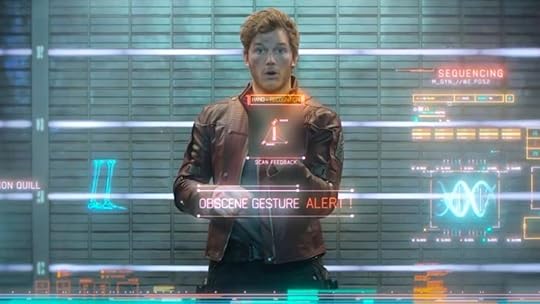
Dear Reader Who Can’t Handle Filthy Books Without Clean Reader,
Please take your fucking hard-earned dollars and shove them directly up your tight virgin ass. With luck, this act will help you loosen up a little bit, although you might want to digest some laxatives first to make the experience a little easier on you. If you don’t have any laxatives available, you may wish to visit your local pharmacy to purchase some personal lubricant. If this embarrasses you too much, seeing as they’re located near condoms and other similar products, wear a fucking paper bag over your head.
For the record, I’m not against the idea of you using an app that blocks out the filthy words you’re incapable of handling like an adult. I am against some third party individual changing the words of my story and selling them to readers who view the titles as filthy. If you can’t understand the meaning of a sentence because a word is missing, guess what?
That word was used for a fucking reason. Get the fuck over yourself.
I am proud to be an author.
I am proud of the words I have written.
If you buy a physical copy of my book and deface it, it’s your property–that’s not my problem. But I will never, ever, ever give you or Clean Reader permission to sanitize my book because you can’t handle a few bad words. I will never give anyone permission to take my novel and turn it into something it is not.
My characters use the language they do for reasons. When they’re pissed the fuck off and are telling some motherfucking cocksucker to go suck his balls, there’s a reason for it.
In case you were in doubt, if this applies to you, I don’t want your money.
I don’t want you reading my books, frankly. I’m filthy, and I’m proud of it. I’m an author who has made some gloriously filthy choices. I have characters who curse. I discuss brutal rapes and murders in one of my novels–things that are uncomfortable and move the story forward.
These things are difficult to read–and that’s the entire motherfucking point! It isn’t supposed to be easy. It’s supposed to make an impact. And I will never, ever, ever grant anyone the right to alter those words.
Each and every last one of them is important.
If you need a censorship block to read my book, you are not my audience. My works are not for you. I don’t want you reading them, because you can’t handle what is within those pages.
Please do us both a favor and fuck off. I don’t want your business, and you probably don’t actually want to read my filthy fucking book anyway. I have exactly one fuck to give you, which will be used to refer you to you, your cash, and the presence of your cash placed firmly up your uptight ass.
When I first read your rant about how you needed Clean Reader to buy and consume our filthy books, I wanted to punch you in the face. Not only that, I wanted to take my bottle of hand sanitizer and squirt it in your eyes. I wanted to do a lot of really mean things to you.
That’s not nice of me, but neither is calling us filthy because you can’t handle what we wrote.
There are millions of books in the world. Go find a title written for you. There’s surely some ultra prissy book written by someone just like you, waiting for you to buy it.
If you can’t handle the big, bad motherfucking words, go home. Either embrace the book for what it is or don’t. Don’t like that sex scene? SKIP IT. That’s your choice. See a bad word? Avert your eyes and skip over it. Own a physical copy of the book? You can rip that page.
Digital books aren’t physical copies, and it’s time you opened your fucking eyes to that fact. You have been given a single copy of the book to read. You have not been given this book to change. Sorry, you weren’t given editorial rights to the book. A program that puts a block over bad words and leaves the word intact is perfectly fine. The words aren’t being changed.
But the instant you change my fucking words because your pure little virgin eyes can’t handle them, I will fight to the death for my book. That is my hard work, my hard effort, and my words–and I certainly did not give you motherfucking permission to shit on them.
That is my career, my life, and my dreams in those pages. I picked those words for that book–and I will stand by them.
You may not like my filthy words, and that is fine.
Take your money, take your time, and take your innocence elsewhere. You’re not my audience.
You’re not a person I want reading my book. You won’t appreciate the experience. You won’t be entertained. You will not walk away satisfied.
And before you cry out that I’m here for the money… guess what? I don’t want your money.
I want to be paid by people who will genuinely enjoy my stories. I want to be paid by readers who are fans. I want to be paid by those who want to laugh with characters, cry with characters, and hold their breath with my characters. I want readers who feel like they’ve come away with a connection with me as an author through my words–all of my words.
Okay, sure, maybe I’d love to be ultra rich because all of the people!!! bought my books, but I play the game fair, you know? I got this thing called ethics–and my ethics are not your ethics.
Frankly, I don’t give a flying fuck if you can’t handle a few naughty words. You aren’t my audience. Go find another author–one who thinks more like you do.
That person ain’t me, sweetheart. Frankly my dear, I don’t give a damn. You have had your one fuck from me–right up your ass.
Have a good night, and don’t let the door hit you as you waddle out with your money shoved up your anal orifice.
Yours,
RJ Blain


