
Lisa Niver's Blog: We Said Go Travel, page 471
September 4, 2013
Australia: Meeting the Min Min Lights
There was no one for at least 50 kilometers in any direction; Lockie, and I had searched the entire day for a Perentie. We didn’t find anything during day but that evening, after supper, we decided to check part of the escarpment we had missed. It was the middle of winter and temperatures drop to 35-40 F at night so Perenties would usually find refuge from the cold in caves and burrows. There would also be some incredible creatures we could potentially find at night. We left camp around 5 PM with sun just starting to set.

We found two species of gecko, a snake skeleton and a King Brown snake shed skin, but no Perentie. Night eventually took hold and by 8 PM we decided to head back to camp. I followed Lockie as we made our way back, but suddenly he turned around and asked if we were going the correct way…I had lost all sense of direction.
We took a short break at an enormous rock. After 5 minutes or so a car passed along the horizon, close to 2 kilometers away. We set out for the road in an attempt to make a fresh start. When we found the road we assumed it would be a fairly straight forward walk to return to the ute and our camp but we soon realized that we were again on the wrong path.

Suddenly and quite out of nowhere we saw a bright orange light through the trees. I thought, as soon as we saw it, it looked extremely odd. It resembled the beam of a flashlight and seemed to respond when we flashed ours. We assumed it was the owner of the property so we began to walk towards it in the hope of rescue. Although the light looked as though it moved forward and up and down hills and around trees, it never actually made it any closer to us. After a half hour or so of walking towards it without gaining ground we decided it couldn’t be the land owner.
We again set out for the road and when we found it we broke down our desperate search military style. Lockie remained on the top of the escarpment, no more than 50 meters away and I stayed at the bottom. We shouted back and forth at intervals announcing that we still had the ridgeline because we knew that camp was along that ridge somewhere.
It was all to no avail. I rejoined him at the top of the ridge and admitted we had better start looking for a cave to sleep in. Our flashlights, we suspected, would soon be extinguished and it would better to be out of the cold and wind before they did. While we were walking back to a series of caves we had just passed, the orange light suddenly appeared again. We were more hesitant this time and waited, watching it move.
The light shifted again as though it were being carried by someone. I began shouting to it to see if it responded. It flashed at us a few times but made no noise. It looked as though it were coming closer yet stayed a fair distance away. We watched for about 20 minutes, finally relenting and began walking for the cave. The light followed us as we did, seemingly dancing just beyond our reach.
We bedded down in a small cave, barely big enough to fit the two of us. I didn’t sleep a wink and we were devoured by mites, fleas and any number of other parasites. First light came painstakingly slow, but as soon as it arrived we again began our search for camp. It was only about half a kilometer away. We were so close and yet camp could have been in Europe by the way we felt that night.
Lockie and I talked about the eerie light for the rest of the trip, trying desperately to ascertain what it could have been. It wasn’t until the day after we returned that I received a text from Lockie’s housemate. He explained it was the Min Min Light and couldn’t believe I had yelled at. The light is supposedly a spirit that follows travelers in the outback. The indigenous people used to tell their children it would take them away if they acted up. We had encountered something beyond our understanding and emerged on the other side, but we were keen to learn more from that arid environment.
Click here to read more from Hunter including the rest of this series.
The post Australia: Meeting the Min Min Lights appeared first on We Said Go Travel.


September 3, 2013
Periyar Tiger Reserve: Exploring Kerala’s Jungle
Kerala is a travel destination with a lot going for it. It was the breadth of landscape in this one small South Indian state that constantly surprised me and filled my one month there with such variety even though I wasn’t clocking thousands of travel miles. Bus journeys of only a few hours will take you from ocean waves bashing against dramatic cliffs to lush backwaters, from charming port cities to the undulating landscapes of the hill stations.
When visitors to Kerala ascend into the mountains they usually head to Munnar for a spot of trekking, as well they should. But an equally lovely and equally hilly part of the state is Periyar/Thekkady/Kumily (which all seem to refer to the same place as far as I can tell – I’ll let the geography fans amongst you spar it out). This region is home to Periyar Tiger Reserve, an area of green loveliness that is spread out across 925 square kilometres. I’m no maths wizard, but I can tell you that it’s really bloody big. Flora and fauna fans will be happy as Larry within the Tiger Reserve as it is home to all of that good leafy stuff, and all kinds of local wildlife also call the park home – from elephants to monkeys, squirrels to tigers.

And the trekking begins…
I was really gagging to see an elephant out there in the park because I had never seen an elephant in its natural habitat before, but the owner of the guesthouse where I was staying lowered my expectations and told me that people rarely see them. Less than an hour into the trek and I didn’t just see an elephant, I saw a whole bunch of them, including babies. It was *the* most heart filling thing. I have seen elephants in zoos before, but to see them in this environment just being together and getting on with their lives gave me a very different feeling, and it was something that I was quite unprepared for. Alas, I didn’t get to see any of the tigers in the park, but even seeing their claw marks against the tree bark throughout the jungle gave me shivers. I can be guilty of getting absorbed in my own little world, and this experience in Periyar Tiger Reserve totally took me out of myself and made me feel the sheer scale of the world and all of the variety that it inhabits. A definite positive about travel for me has been how small these kinds of experiences can make you feel – there is nothing like watching a mother elephant feeding her baby in the wild to make you stop worrying about what the humidity is doing to your hair.

Those blobs are elephants. Pinkie promise.

A spot of rafting…
And even if you don’t get to see an elephant or a tiger, the area is so beautiful that the trip will be well worth your money and time regardless. I recall first setting my eyes on the gargantuan lake for the first time and inhaling deeply at the sheer enormity of it. While rafting through this beautiful area I felt a complete sense of calm, and as one of life’s worriers that’s not something that happens to me very often. I guess it’s just a little difficult to feel stressed out when the landscape of Periyar unfurls in front of you.
In summary: Periyar Tiger Reserve, elephants, monkeys, tigers, rafting, heart filling, GO THERE.
The post Periyar Tiger Reserve: Exploring Kerala’s Jungle appeared first on We Said Go Travel.
Australia: Heading West – Windorah Bound
We left the Sunshine Coast at 3:30 AM with the headlights of the truck slicing through the thick fog and darkness engulfing the highway. Our destination was the little town of Windorah in western Queensland, nearly in the heart of the continent. Actually, we were headed to the bushland that laid over 50 kilometers to the west of town. Our goal was to find two of Australia’s iconic reptilian fauna: the Perentie, Australia’s largest lizard, and the Inland Taipan, the world’s most venomous snake.
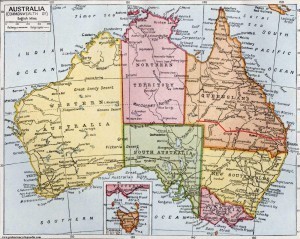
There were three habitats we would encounter on our trip, huge red sand dunes dotted with silvery spinifex grasses, treeless plains with cracked earth and towering escarpments littered with caves and boulders. Each habitat contained animals perfectly adapted to dealing with the harsh and arid climate of central Australia. The trip organizer was a good friend I had worked with at Australia Zoo, Lockie, whose insurmountable knowledge of Australian fauna painted a bleak interior full of life.
As the habitats outside the windshield changed from lush coastal forests, rich in hills and endless fields of grass to flat red dirt scattered with sparse and bushy Mulga trees I became more enthralled with the natural world of Australia. Nowhere else on the planet had species so unique and perfectly adapted to a variety of habitats as Australia; it was the land of reptiles and marsupials, parrots and finches, ghost gums and spinifex.
Emus, goofy looking birds that stand as tall as a man, pecked aimlessly on the roadside in surprising numbers. Their thick black legs occasionally kicked up clouds of red dust as they ran off, startled by the sound of our ute pounding along. Spinifex scrubland dotted with Mulga trees harbored mobs of kangaroos and the roadside showed the fateful results of their nightly escapades. Long white bones, skulls wearing ghastly smiles and Crows, Wedge-tailed Eagles and Black Kites feeding on the unfortunate fresh macropodian specimens took up vast stretches of the red-hilled roads.
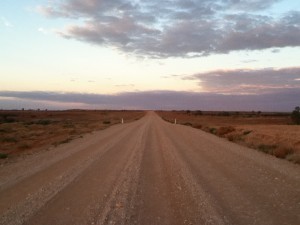 Unfenced cattle ranges that reached out to the distant horizon were dotted with knee-high spinifex grass and the steel cattle grids that stretched along the small highway rumbled heavily as Lockie continued the drive.
Two dancing silhouettes in a field moved slowly along the road’s edge. A pair of Brolgas were searching for their evening meals as the sun sank in the sky. Their red crowned heads kept a wary eye on us as we slowed and their long bills proceeded with their persistent search for food between the grass tussocks. We continued on into the dark night in the Australian outback; the stars slowly emerged like diamonds on a velvety black sky. With no light pollution one could see almost every band in the Milky Way. The headlights made the Mulga trees eerily silver as their branches swayed in the evening breeze.

Feral cats fed on the carcasses of unfortunate kangaroos and emus, their eye shine reflected brightly from the darkness. The cats were wreaking havoc on the Australian environment, consuming indigenous animals at extraordinarily high levels and reproducing at even higher numbers. They, along with feral pigs, goats and dogs, put excessive strain on fragile ecosystems across the continent.
After many more hours on the road, we finally made it to the caravan park in Windorah. We unrolled our swags and fell into a deep sleep under a blanket of stars. The next morning we awoke to bickering of the Apostle Birds on a nearby tree.

Windorah looked like a quintessential western town, with dust being carried down the main road on a warm breeze. There were a few houses and even fewer business, two gas stations, no traffic lights or stop signs, and, if you stood in the right spot in the town center, you could see its beginning and end. The day was already warming so we quickly packed up camp and headed out into the bush, stopping near a series of massive escarpments after a lengthy drive.
The red land stretched out before us interrupted only by more escarpments in the distance. The cliff faces rose high off the flat ground and were dotted with caves and cracks. Boulders were scattered about their bases and unstable red rocks about the size of a fist lined the steep inclines leading to the precipices.
We began our search in earnest for a Perentie, delving into every cave, searching every crack, following every trail. They inhabit a variety of habitats in the arid regions of Australia from western Queensland all the way to the coast of Western Australia and a few islands in the Atlantic. I had worked with a few Perenties at Australia Zoo and knew their habits, but to see where they come from helps one to understand their importance in the wild and can light passion to conserve such a beautiful creature.
Fresh slides from a large Perentie could be seen in a few places and we even located fecal samples from the giant monitor, including one that contained the claws from a feral cat and another that contained the remnants of another lizard resident of the area: the Central Bearded Dragon.
Click here to read more from Hunter including the rest of this series.
The post Australia: Heading West – Windorah Bound appeared first on We Said Go Travel.
Winners: Independence Travel Writing Contest

Thank you to all our writers from our 2013 Independence Travel Writing Contest!
One hundred and eighty-eight writers from thirty-one countries participated to write about seventy-three countries for our contest!
The writers are from Australia, Austria, Canada, France, Germany, Greece, Hungary, India, Indonesia, Ireland, Israel, Italy, Kenya, Netherlands, New Zealand, Nigeria, Pakistan, Philippines, Portugal, Republic of Moldova, Romania, Singapore, Slovakia, South Africa, Sri Lanka, Sweden, Uganda, UK, Ukraine, USA, Vietnam.
Click here to read all the entries.
AND THE WINNERS ARE:
Our First Place Winner is Jillian Gotfredson who was born in South Korea but grew up in Kansas City, Missouri. Enjoy her article, “Myanmar, Ferry Mothers.”
Our Second Place Winner is CC Xander who is one of America’s elite tennis coaches and travelers. Enjoy his article, “Tulum, Mexico.”
Our Third Place Winner is Esther K. Meyers who born in a DP camp at the close of the war to holocaust survivor parents. Enjoy her article , “Poland: The Magic of Discovering Legacy.”
Honorable Mention:
Fatimah Abdulmalik “Shackles Released in Sudan“
Chris Palmer: “Tanzania: Freedom in Motion”
Asia and Russell Nichols: “Indonesia: Wooden Pole in the Village“
Congratulations to our winners! Thank you to everyone who participated!
We especially thank our esteemed judges: Richard Bangs and Amy Friedman.
We really appreciate everyone who shared, tweeted, promoted and participated in our Independence Travel Writing Contest.
We hope you will join in our Gratitude Travel Writing Contest with $1,000usd in cash prizes; enter from September 11 until November 28, 2013.
We look forward to reading more of your stories in our next contest! Credly Badges will be arriving soon for all writers and winners!
Happy and Safe Travels.
The post Winners: Independence Travel Writing Contest appeared first on We Said Go Travel.
September 2, 2013
Myanmar: Biking Inle Lake (video)
WATCH: 37 Biking Inle Lake Myanmar (Burma)
Our first stop was to figure out our transportation back to Mandalay. We met friendly five year-old Mimi. On the road, we saw a group practicing their leg rowing. The ride was beautiful—we saw red lotus flowers, fields and many animals. The road was not so good so everyone went slowly. I liked that.
After visiting the Thupin resort, we took a boat across. EIGHT of us with EIGHT bikes in one BOAT! It was a bit crowded but memorable. We ate lunch with Claire and Bruno from France. Together we visited the monastery—a true cacophony of voices. The best part of the local Red Mountain Estate winery was the view from the top of the hill. When we returned to town, they had built a platform next to our hotel for the upcoming ceremony. We ate dinner at Everest restaurant. We are planning to go to Nepal later in our journey. Will I be a good trekker? I am a much better biker now! Maybe I will be a good trekker. We ate Dal Baat and talked about our plans for the future.
This movie is from our 28 days in Myanmar (Burma) from September 28, 2012 to October 26, 2012 and our year TRIP in South East Asia, see all the videos from our trip. October 21, 2012
Our memoir, Traveling in Sin, is available at Amazon; it is a HOT NEW RELEASE!
Traveling in Sin is a HOT NEW Release on Amazon! from Lisa Niver Rajna
Traveling in Sin is a true tale of TRANSFORMATION thought LOVE and TRAVEL! After meeting online (on two different sites), George and Lisa travel internationally, give up their jobs, condo, ice cream and toilet paper in search of adventure and love. Along the way, Lisa sheds over 60 pounds and the couple gets engaged underwater in Thailand. There are tears, twists and true love!
Recent Press:
By Amy Sommer on Westside Today
By Dani Stone on Diets in Review
The post Myanmar: Biking Inle Lake (video) appeared first on We Said Go Travel.
They Said Isola Bella, Italy: Reflections About How Travel Brings You Home
My husband and I were finally able to indulge in that long-awaited sojourn to Italy this past summer. One of the most captivating places we were fortunate enough to visit was Isola Bella, an island located in Lago Maggiore in the resort district of Northern Italy. Isola Bella is renowned for its historic baroque palace and adjoining formal gardens which have belonged to the famous Borromeo family since the 1600s. In fact, Charles Borromeo named Isola Bella, which means “beautiful island,” in honor of his wife, Isabella. Today the Borromeo family maintains their major residence in Milan, but they do spend a few weeks on Isola Bella every summer.

View of Lago Maggiore and surrounding mountains from the island of Isola Bella in northern Italy.
The palace boasts historic significance. One of the rooms was the site of the 1935 Stresa Conference in which Italian dictator Benito Mussolini met with British and French diplomats in their united attempt to intimidate Germany out of launching World War II. The endeavor failed when Mussolini double-crossed his fellow diplomats, attacking Ethiopia and joining forces with Hitler. Napoleon Bonaparte and his wife Josephine add another historic dimension to Isola Bella. They were once guests at the palace during the French emperor’s reign. In fact, tourists can visit Napoleon’s bedroom, which purportedly contains the very bed in which the imperial couple slept. Unfortunately, the bed is the only piece of furniture in the vast, vacant, echoing bedroom space. Just about the only other feature of the room is a picture window which, although relatively insignificant by itself, draws the eye to a spectacular view of the glistening lake below and the verdant Italian mountainsides in the distance.

Hal enjoys the beautifully landscaped gardens of the Borromeo palace on Isola Bella.
Which brings me to an observation. Despite the owners’ annual pilgrimage to their impressive palace on their picturesque island, the house does not feel at all like a home. Its stone walls and floors and sparsely furnished rooms do not convey the slightest feeling of hospitality or comfort. The tourist wanders from one cold, empty, echoing space to the next throughout the structure. Why invite the public in to view an interior so uninviting? I can only speculate on the Borromeos’ reasons, but the visit generates in me the hope that our own home, although not nearly so

Exotic white Chinese peacocks inhabit the gardens of Isola Bella.
palatial, is at least a place of warmth and comfort to those who visit us. Every home, even if sparsely furnished, should convey convivial intentions. And while we’re meditating on lessons learned, let’s hope that the family history created in our homes is more noble than that of a duplicitous Italian dictator.
The tour of the palace eventually leads the visitor to expansive and magnificent formal gardens. The well-manicured lawns, meticulously pruned shrubs, and intricately-designed hedge patterns are truly a delight. And the profusion of brilliant flowers—not to mention the very exotic Chinese white peacocks—dazzle the eye. It’s all so precise, so controlled. But then, baroque is all about controlling nature, isn’t it? But what a contradiction, to find so much strict design embedded squarely in the middle of the abundant natural beauty of the crystal blue lake and the uncultivated mountains. But, I reflect, isn’t that the very purpose of every man’s castle? To provide an island of our own preferred construction and arrangement, where we can take refuge from the sometimes uncivilized environment that surrounds us? Lastly, I feel compelled to add a comment about the copious statuary erected throughout the gardens. Too many statues! Flora, whether growing naturally or by controlled design will always create a comforting sense of serenity. This is true whether the greenery consists of a few potted plants on an urban patio or expansive lawns and gardens. Too many man-made objects, on the other hand, create a discordant sense of clutter. I carried away from the gardens on Isola Bella a resolve to make my own modest little estate as attractive as possible, but to avoid imposing an order so strict or so cluttered that it negates the natural beauty of the surroundings.

The expansive gardens of Isola Bella are impressive, but there are too many statues!
I apologize if it appears I am too critical about a place that truly is so charming. But I would assert that travel is supposed to enlarge and enlighten. My sojourn to the palace and gardens of Isola Bella has certainly enlarged my personal perspective on the essence and substance of home. Because, perhaps, we might all agree that, east or west, home is best!
The post They Said Isola Bella, Italy: Reflections About How Travel Brings You Home appeared first on We Said Go Travel.
Bhutan: Seduced By A Country
I’ll admit it’s unusual, but have you ever flirted with a country? Been tempted to toss everything and start over, by a sovereign nation? Felt weak in the knees, butterflies in the stomach and knew that you were smitten, all by a place and not another person? In my case, the tiny seductress is the Kingdom of Bhutan, and she is now one of the most important parts of my life. I’ve seen Bhutan make grown men and women cry, when upon departure at the airport they hug their Bhutanese guides, tears welling up in their eyes and say “I will never forget you or your country.” I see this time and time again, and the only reason I am not crying about Bhutan is that I’ve arranged our love affair so that I repeatedly return. Yes it’s a long distance relationship, but it works, and here’s how it began.
Some six years ago my travel agent friend arranged a trip to Bhutan. One fine spring morning seven of us met at Bangkok’s Suvarnabhumi airport, boarded the Drukair, Royal Bhutan Airlines flight, and hours later stepped onto the tarmac in Paro, Bhutan. First-timers to Bhutan are noticeable as they do not walk to the terminal, rather they twirl about as they take in the view, including the Paro Dzong, a 17th-century fortress/monastery to one side and the snowy peaks beyond this; tree-covered mountains and enormous stone and timber houses in other directions; and the small terminal itself, a mostly white building, partially clad in timbers with elaborate carvings and embellishments, arrestingly compelling upon first sight, though one soon learns this is the Bhutanese architectural vernacular seen throughout the country.

Chortens at Dochula
We were met by Dorji our guide, he draped white prayer shawls over our shoulder, and greeted us with the words “welcome to Bhutan.” Then we climbed into a van, and set off for downtown Paro, Bhutan’s second largest city, home to 20,000 people. The buildings—mostly two and three-story structures and all made of rammed earth painted mostly white and interlaced with timbers all ornately carved and painted— looked vaguely Tudor, though the walls with painted dragons, Garudas, and giant phalluses erased any notion of Tudor England. None of this made any sense, though this is the wonder of travel, seeing sights so different they delight with their strange beauty. The pedestrians on these streets were red robed monks, heads shaved and feet clad in sandals, and women in ankle length skirts and men in what appeared to be knee-length dresses, the traditional clothing, kira for women, gho for men. Most of the garments were made in colors and patterns that you’d see when gazing into a kaleidoscope, an eruption of color, yet neither gaudy nor garish. Our group appeared dull and drab next to the Bhutanese.
I love to travel, just the idea gets me excited, and the actual process is one of the most thrilling activities I can imagine. After a few days I could easily say Bhutan was the most remarkable place I’d visited. Everything was so different and unusual, an aesthetic so foreign yet so comfortable. Towards the end of our trip a sad thought appeared in my mind: we’d soon be leaving. The Bhutanese government limits the number of visitors by adopting a policy of high-end, low-impact tourism, making an extended stay in Bhutan costly.
Did you ever have one of those proverbial light bulbs goes off in your head? I had my first one in Bhutan. It went like this: “I’ll start a business bringing people to Bhutan.” I ran this idea by Dorji, and his comment was: “No problem, just find the people and tell me where you want to go.”

Monks in Trongsa
Since then, I have led sixteen trips to Bhutan and I will be departing for trip number 17 in two weeks. After all this time, my love affair with Bhutan has not diminished, only grown stronger. Dorji is now my business partner, and all those that I’ve brought to Bhutan have only fond memories of the country and its people, and many left with tears in their eyes.
ABOUT THE AUTHOR
John Leupold owns and operates Champaca Journeys, offering small groups cultural tours to Bhutan, Laos, Cambodia and Mexico. Mr. Leupold worked as a landscape designer until the travel bug took over his professional life, now his commute to work takes much longer, though he has absolutely no regrets about life as a tour operator.
The post Bhutan: Seduced By A Country appeared first on We Said Go Travel.
September 1, 2013
Purple Clover: Our Sabbatical Adventure
Thank you to Purple Clover for publishing my story about Our Sabbatical Adventure.

Five years ago, Apple’s App store opened, Kindle was brand-new, Skype was not yet a verb, and my then-boyfriend/now-husband George and I flew to Tahiti to start a one-year sabbatical adventure.
I chose to leap for love and was unsure how a year on the road would play out. George and I met online and had an instant connection, in no small part due to a mutual passion for exotic travel. George said very early on in an email exchange, “We will at least be friends,” knowing that he had found a kindred spirit of wanderlust.
After several months of dating, we traveled for three weeks to Fiji and Vanuatu during summer holidays. Visiting a local village on Espiritu Santo meant this Princess (yes, I worked for Princess Cruises) had her first bucket bath. I liked it so much, I told George, “I am going to buy a bucket for my shower in Los Angeles. All the soap came right out of my hair.” Later that week, the former Peace Corps worker asked me to join him on this dream to travel for a year in Asia. Thank goodness, I had really liked the bucket!
During the next school year, many of our friends continually asked us, “How can you leave for so long?” Others said, “Just go for the summer and come back to teach in the fall.” They couldn’t imagine being uprooted for a full year. But, I had to ask myself, “If George goes on this year-long adventure without me, how will I feel?” I knew the answer in my heart. I had to go with him.
Under the moonlight in Fiji, when I had first agreed to join George’s dream trip, we had been together for six months. My 40th birthday was fast approaching and I missed the time when I traveled full-time.
Read the full article: Click here.
The post Purple Clover: Our Sabbatical Adventure appeared first on We Said Go Travel.
A Place I Love – Inside the Heart of Bruges
Inside the Heart of why I Love Bruges. Ever since I watched the movie ‘In Bruges’ I’ve always wanted to visit the town itself. Fairy tales are part of most people’s childhoods because of what we watch on TV, or read in books. Most of us have an idea of a stereotypical Fairy tale. It could be how we experience them in an ideal situation such as the perfect wedding or romantic reconciliation. In this case it was the surroundings and way of life that made me think that this was a Fairy tale town. It was almost like a Disney movie, nothing went wrong for too long.
This trip was a road trip, a new place and it actually signalled the beginning of travelling in hostels for me. Our adventure elapsed from late December 9th 2012 and concluded back at home Monday the 12th.We arrived in Belgium on December 10th around lunchtime after a 10 hour journey, 5 hours through empty motorways from the North to South England, followed by a 5 hour mundane and sleepy ferry ride.

We got to Bruges in the early afternoon. Christmas time was in full flow, decorations in shopping windows, market stalls with themed toys and bakeries traditional Christmas characters. The ice rink was out and in full access with locals skating around in enjoyment. We wondered through the alleyways then arrived to our first hostel. I decided to stay in 2 hostels, so I could experience different areas and to indulge with more people. The first hostel we stayed at was St Christopher’s Inn Hostel; it had a few backpackers there and had numerous rooms full of dorm beds. We checked in. It was now late afternoon so food was calling along with some White (Blanche) beer I’d heard much about. We went to a place called Bar Salon, socialised with some Flemish locals. The surrounding Grote Market aka Markt Square was alive with people. It was a floating sort of atmosphere, a cool breeze and it had a clear feel to it. That night was pretty short, it was spent most from taking it all in. That first visual you get of a new place, the novelty, everything seems just colours and shapes, well we focused on concentrating our eyes on adapting these new colours and sights into places we could remember.
The first image of the morning woken in my dorm bed was of my important belongings. A typical needs for a backpacker I guess. I remember waking up feeling I only needed these items and I was set.

When showering the shower door covered half the area of the shower when open. It was uncomfortable but all part of the experience. Once at breakfast, mingling with the other people there it was pretty obvious a lot were solo backpackers; That perception of a traveller was easily fitted, the way they looked with their unique way of dressing, their sociable but tired persona, their different accents and ages. It was good to have a connection with them, to feel like one of them, and have a sense of meaning and freedom. I remember thinking to myself, we are all alone, but we are one together, right now, in this place. Us against the world in some respects.
Our new hostel for the night was called The Passage Hotel & Hostel. I met a French girl called Marion. She was a dancer of some sort. Maybe a form of ballet if my memory serves me right. A very elegant girl, well spoken but looked exhausted. She was travelling to Paris to audition for a show, typically a poor dancer trying to make the big time. At that time, I thought she was the most interesting person I’d ever met in my life.
The Groeninge Museum had many 15th century paintings which were very odd and interesting. Paintings which were extremely detailed, which had meaning and myth to them. The one I remembered the most was The Last Judgement which was my favourite, showing the end of the world symbolised by crazy sized animals, objects and fatal predicaments. We strolled around the town over the canal bridges which were delightful; there were taxi canoe boats for passengers to circuit around Bruges, looking at the monuments, inhaling in the fresh smell of the canal water. It remembering it feeling like it w as before 8am. That peacefulness where there is no TV or music, car engines or market traders, that peace which just automatically soothes the mind opens up the body and mind for the day.
The iconic Belfry Tower was a lot more challenging than I thought to climb. All 366 steps I climbed, and towards the top I was on my hands and feet to make sure I didn’t dwindle. It was a nice journey up, very medieval old fashioned steps, the walls, the space was very limited. When I got to the top it was quite euphoric. I looked over Bruges and it was beautiful. The quirky buildings, the sun setting, the Ice rink from a bird’s eye view, the breeze of the wind cooling down my now sweat in juiced eyebrows. It was peaceful, until the bell went off. Wow that was loud, deafening! However it was a new experience, I was just happy to be there and up at the top.
Towards evening time and our last night, back again in the Grote Market area. We ate at Café Des Arts. The mussels and frites were great and a Tower beer all 25 euros! The atmosphere was cosy but vibrant, the bars were old fashioned but modern and the people were odd but friendly. It was a nice end to a new sort of vacation.

Why do I love Bruges? It was wonderfully eye opening, almost like I was time travelling through an un-touched past time. Tourism wasn’t huge, so it wasn’t spoilt. Things were cute, canny and cosy. At the time, , it was quite an odd place to me, but Bruges offered history, unusual views, a different culture, a peacefulness, a freshness about Europe. It provided me with the kick start to want to sacrifice my comforts to see different things in the world. It opened my mind to a whole new world. It opened my mind to travelling. I love Bruges.
The post A Place I Love – Inside the Heart of Bruges appeared first on We Said Go Travel.
Athens, Greece: A Walk in Anafiotika
 Finding hidden gems in the places we visit has been a hobby of mine since I started traveling independently. There is a certain magic in finding places which are not on the tourist beaten track. And the best persons to show you these places are the locals.
I met my friend L. via Twitter and when I started to plan my trip to Athens I really wanted to get a chance to see the city from a local’s perspective. I was lucky enough to be guided to see…Anafiotika.
Perched on the slopes of Acropolis, high above the new city, is a very interesting area which makes you believe you’ve somehow ended up on a Cycladic Island, not in the capital of Greece.
The houses are white-washed, the windows are protected by blue or purple shutters, cats walk freely and flowers enchant the eyes. It’s Anafiotika, an area created by workers from Anafi – a Cycladic island – in the 1800s, who came to Athens to work as construction workers. Today only 45 houses are left in this charming area.
The view from above is amazing. You can see Mount Lycabettus , part of the archeological part near Acropolis and part of the new city.
Tips on visiting
 First of all, make sure to wear comfortable shoes which deal well with the uneven and sometimes slippery terrain. If it rains, it’s very slippery. Also, if you decide to come to Athens during summer, the area is very busy.
If you want to have Anafiotika to yourself, then plan a visit in winter or early spring. I’ve been to Athens in March and although it was a bit cold and windy, it was a delight not to run into tourists (the city had its fair share of visitors). With a bit of luck you might end up meeting a local lady, who is also a writer and who walks in Anafiotika hoping to sell her book.
Don’t make any plans. Just grab your camera and a bottle of water. Sooner or later you’ll end up near a taverna where you can enjoy some of Greece’s great food.
How to get to Anafiotika
From Monastiraki square, start walking towards the Acropolis (northeastern side). Follow the narrow streets and keep going up. At some point the streets become so tiny that only one person can walk on them.
Going down, you are most likely to end up in Plaka.
By the way: maps are really useless here as the streets don’t have names. It’s a charming area which invites you to get lost. Eventually you will find your way to a square, or a taverna or the Acropolis.
The city of Athens is served by an airport which receives flights from all over the world. It might be worth it to fly into a larger European hub and hop on a low cost flight to Athens.
Photos by Traveling Cricket and cannot be used without permission.
The post Athens, Greece: A Walk in Anafiotika appeared first on We Said Go Travel.
We Said Go Travel

- Lisa Niver's profile
- 57 followers

