
Lisa Niver's Blog: We Said Go Travel, page 467
September 26, 2013
Oahu: Oct 3rd Travel Talk Story
 Travel Talk Story with We Said Go Travel:
Living without Regret
Travel Talk Story with We Said Go Travel:
Living without Regret
Have you dreamed of long-term international travels across Asia? Considered quitting your job to become a travel blogger and book writer? Want to connect with travel-minded community members?
Festival of the Pacific is a celebration of travel and transformation hosted by We Said Go Travel. The theme, “Living Without Regret: Travel, Love and Success: Make your Dreams a Reality”, presented by the founders of We Said Go Travel, Penn graduate Lisa Niver Rajna (C’89) and her husband George Rajna, will give an inside look into long-term exotic international travel across Asia. They will share their travel expertise, read an excerpt from their new memoir, “Traveling in Sin,” and provide information about We Said Go Travel’s writing contest, and upcoming community.
Join us for an evening of Travel Talk Story with Lisa and George, network with the travel community, and enjoy hosted pupus and drinks. There will be goodie bags for all attendees and raffle prizes.
Mahalo to our Sponsors:
Lotus Honolulu for providing the venue space. Book your stay at Aqua Lotus Honolulu for a peaceful retreat steps away from the beach, Kapiolani Park, and Diamond Head. The hotel decor is Bali-fusion inspired with Hawaiian warm hospitality. Aqua Lotus Honolulu amenities include in-room high speed Internet & WiFi, safe, complimentary coffee and tea service in the lobby, daily local newspaper, valet and concierge services, banquet/meeting facilities and complimentary use of beach items such as sand chairs, umbrellas and mats for the beach just steps away. Lotus Honolulu’s Facebook Page / @LotusHonolulu
Park Restaurant for hosting pupus. Park Restaurant uses fresh local ingredients. The food will take you on a culinary journey of infused flavors borrowed from French and Italian, to Greek and Egyptian influences. Chef Collantes’ menu promises a dining experience that is as much adventurous as it is comforting. Park Restauurant Waikiki’s Facebook Page / @ParkHawaii
Zaratez Mexicatessen for donating to the raffle prizes. Dine at the restaurant for home style taqueria including tacos, burritos and quesadillas. Zaratez Mexicatessen’s Facebook Page / @zaratez
Uber Honolulu for providing sleek black car service for attendees to this event. Sign up for Uber by downloading the app (on iPhone and Android) and request your black car service on the event day. Uber’s Facebook Page / @Uber
Gogobot Oahu for collaborating with We Said Go Travel. Download the Gogobot travel app (on iPhone and Android) and join the millions of travel community members in reviewing and sharing travel experiences and postcards. Gogobot Oahu’s Facebook Page / @GogobotOahu
PLEASE RSVP: CLICK HERE

The post Oahu: Oct 3rd Travel Talk Story appeared first on We Said Go Travel.


September 25, 2013
Thailand: Have You Been Spotified?
 Before departing to Asia for the year, I dutifully loaded my ipod with hundreds of songs to accompany me overseas. I deemed my decision prudent, in that I would be armed with a variety of music from genres diverse as heavy metal, bebop jazz, and hip hop music. However, three months into our trip, I began to find it difficult to find tunes that I was excited about, and two months later, I barely listened to my ipod at all. Not only was I growing tired of my playlist, but I yearned to listen to music that I heard while traveling. I did not wish to haul around CDs or purchase a CD-ROM drive so I could upload purchased songs onto my computer hard drive.
I wasn’t until Langtang, Nepal during a trek in the high Himalayan mountains did I learn of Spotify. We reached a small family run guesthouse with only two total rooms available and one shared outdoor bathroom. The other room was occupied by three Swedes. One of them listened to music on his phone that blared from a mini speaker. When I asked how many songs he could store on his phone he explained that he had downloaded some of his songs from Spotify but the majority of his collection was simply cloud based. I learned that a mere $5usd investment per month would permit me to have new music at my fingertips. I couldn’t wait to sign-up for the premium Spotify service and begin downloading my favorite tunes. However, I had to be patient. We were in the high mountains over 3,000 meters in elevation where wifi and Internet access were absent or severely limited.
When we returned to Nepal’s capitol, Kathmandu, I immediately attempted to download Spotify. To my dismay a message indicated that I was unable to use Spotify in my country of origin. I was once again forced to wait until we reached Malaysia ten days later. In Kuala Lumpur, I was able to download the application and within minutes I enjoyed songs on my computer and mobile devices; the software was simple and intuitive to operate. Within days I had hundreds of new songs to listen to on my devices. My wife even set up a separate “disco playlist” that she listened to while hula hooping.
Within a month, I had downloaded well over 1,500 songs onto my Spotify account that easily transferred to all of my mobile devices. Not everything was perfect, however. I could not find a band from the 1990s named “Adorable” and a few major artists such as “The Beatles” and “Pink Floyd” are not readily available although some of their songs can be listened to when they appearing on multi-artist CD compilations. In addition, some songs are poor quality demos and mediocre live recordings rather than the original recordings; still, these lesser tracks are rare in occurrence, in less than one percent of total available recordings.
All in all I am an extremely content member of the Spotify community. Spotify has become my main source of music where I daily download tunes from a variety of genres. In fact, I have been reading Pete Townsend’s new autobiography where he lists many of his earlier influences and I have used Spotify to download his recommendations in real time as I read the book. So if you have not yet been Spotified, take the free 30-day trial and you will be instantly hooked!
WATCH: Koh Samui Rock Island House Band where George played twice a week!
George Rajna, MBA, MS Communications Disorders, is a bilingual speech therapist who has traveled to 100 countries across six continents. He composes music on the guitar and ukulele, and spent two years working in rural education for Peace Corps Paraguay. He is a Huffington Post Blogger and is currently editing the tales of their first sabbatical while in Asia on sabbatical #2. His favorite region is South East Asia and he recommends Bagan (Burma/Myanmar), Koh Lipe (Thailand/engagement), Angkor Temples (Cambodia), Langzong (China), diving in Sipandan (Malaysia), and trekking in Nepal. Learn more about George at Wikipedia-click here.
The post Thailand: Have You Been Spotified? appeared first on We Said Go Travel.
Cambodia: Three Days in Phnom Penh
 Three Days in Phnom Penh
Even the weather was perfect-cloudy skies, a cool breeze and little rain. As the plane flew over the rice fields of Cambodia, dipping through clouds and finally emerging over the confluence of the Mekong and the Tonle rivers over Phnom Penh, I gazed at the flying countryside and city below, not just a little amazed at the fact that I was actually here.
No one really thinks of Phnom Penh as a tourist destination in itself-a city with essentially no landmark sights and a reportedly high crime rate. The city, however, had come alive for me just a few days into reading its history and its place in the Khmer Rouge Revolution of 1975-1979. Riveting accounts of the events of April 1975 had geographical references to the city that still exist. And of course, there was the torture prison known as S21 and the related “Killing Fields” of Choeung Ek, both symbols of the Khmer Rouge and now museums in the city. As I read more about the Cambodian Holocaust, it became obvious to me that practically every living Cambodian is either a direct or indirect victim of the Khmer Rouge era.
I came with simple plans of seeing S21 and Choeung Ek but I ended up with a glimpse of the soul of a country and a people I had read much about. I went to relive history but I also ended up falling in love with a city and the warmth, genuiness and smiles of practically everyone I met. As the Sun dipped below the horizon, I sat on a waterfront bench and gazed out at the banks of the mighty Mekong where many a battle had been fought and just saw a normal city, a people going about their lives-children playing by the waterfront, bars and pubs open for business, a beggar sitting by the roadside, monks emerging from a Wat.
Thun-an unfailingly polite, always punctual, gentle man, was my tuk tuk driver on all my little trips in Phnom Penh. On many occassions, as we passed the sights, back roads and boulevards of a city once called “Paris of the East”, I could not escape the feeling that the two of us were in a cocoon, looking at a city and a culture from the outside in. I felt myself changing into a privileged observer, interacting with the people and the institutions that define them and then respectfully withdrawing, and Thun was my unwitting partner, waiting patiently by his tuk tuk, while I took my time and indulged my fantasies.
Over the course of my three day trip, I discovered a warmth that once was-before war and politics tore Cambodia apart and I saw that in Thun, in the staff of my hotel who made me feel like family and in the many ordinary Cambodians I was previlged to interact with- living normal lives, trying to forget a past that may be impossible to move away from. I felt the sorrow of those years still alive in an old roadside bookseller whose handshake and smile are indelible memories, in my guide at S21 who shared her tragic life story and in the S21 survivors whose lips part in an obligatory smile for a photo but whose eyes cannot hide their pain.
When you get stuck in traffic in Phnom Penh, imagine the city completely abandoned, empty and quiet. Pass by the Gate of the French Embassy and while you swerve to avoid incoming traffic, try to imagine the desperation and chaos of April 1975. Ask yourself why you hardly see anyone who looks older than 50. And when you do, don’t think too much about what they were doing for the worst four years anywhere in recent history.
On my last evening in the city, I walked across to a nearby roadside cafe, right across the road from Wat Lanka. Sitting there, my mind empty of thoughts, I heard the chime of bells from the temple. The evening was cool and subdued rock played on the stereo. Some mild traffic passed by, mainly tuk tuks looking for a ride. I sat alone next to a group of “barangs” (expats) and watched as a small girl skipped in with a bunch of flowers. And I watched transfixed as the girl and the barangs bonded and chatted in pure Khmer like old friends. They did not buy the flowers but the girl’s smile never left her face.
These are the memories I carry and the images that play on my mind.
I went as a tourist and returned with sheer respect and gratitude for a country that must be visited to be truly appreciated.
Cambodia will not be a one time visit but it was a once in a lifetime experience.
About the Author: Nishikanta Verma: I am an Indian doctor currently residing in Malaysia. I am passionate about all things related to Cambodia and also have current interests in World History, Buddhism and Quantum Physics. I am married with one daughter and another on the way. Twitter: @jipmerdays.
The post Cambodia: Three Days in Phnom Penh appeared first on We Said Go Travel.
September 24, 2013
Sri Lanka: The Footprint Atop the Earth
 In 2009, shortly after my seventeenth birthday, I found myself at the top of the world gazing over Eden.
I was living in Sri Lanka, and on being asked if I wanted to climb Sri Pada (also known as Adam’s Peak), I was never going to say no. Sri Pada is a mountain with a history and religious significance appreciated around the world. It is specifically renowned for the giant footprint, nearing six feet in length, embedded at its peak, the origin of which is disputed but widely revered. Buddhists believe it to be the footprint of Buddha, Hindus of Shiva, and Christians and Muslims believe it to be the footprint of Adam when he first stepped onto Earth.
On the day of our climb, I got home from school, packed my bags and was ready to make the four hour drive to Muskeliya, from which we would head on to the foot of the mountain. I was accompanied by my close friend, George, who had done this trek twelve times before. We set off at two thirty in the morning, leaving about four hours to make it up the mountain before sunrise. I was nervous. I had stupidly not slept or eaten before embarking on this endeavour and I was not an especially fit person. The steps were steep and seemingly endless and I was repelled by the idea of not being able to make it up; of having to sit on the stairs, shame-faced, waiting for the others to return. But George was my veteran and stuck by my side the whole way, promising I would make it up before sunrise, no doubt. And in the end, I did.
We found a place to sit atop an old derelict building, squashed between tourists and pilgrims alike, and awaited the sunrise together in the cold, crisp air. Music blared out of speakers; the sounds of prayer and homage. When the sun peaked over the far distant hills and lit the valleys below, I felt the breath catch in my throat. It was beyond what I had expected, and after that miserable upward journey, I had expected a lot. The lakes shone silver and the clouds burst into flame. There was a total calmness to it, an absolute tranquillity. I felt detached from reality, like I finally understood T.S. Eliot’s line about being ‘at the still point of the turning world.’
Now admittedly, I’d spent the majority of my life declaring myself entirely faithless, but when I was up there, watching the sun rise over the mountains and gazing down at the valleys and lakes so far below me, I believed every one of those stories. It was more than possible to me that I was standing in Eden and that I was viewing the world from the point where the first human viewed it. That the giant footprint had indeed been made by Buddha and by Adam and by Shiva. That Sri Lanka was the garden of Eden and the birthplace of all humanity. Nothing seemed so plausible.
When we finally tore ourselves from the sunrise, we turned to the North-West side of the mountain to experience Sri Pada’s other famous landmark; it’s shadow. The shadow of Sri Pada is unique in that it no way resembles the shape of the mountain. It falls across the forests as a perfect pyramid, its two sides forming eerily straight lights tapering to a point that doesn’t exist on the actual mountain, which is rounded and misshaped. Scientists don’t understand it, nobody seems able to explain it. Yet somehow it just fits into the overall mystique and miraculous atmosphere of the ancient mountain.
With the sunset, the shadow and the footstep behind us, we turned to the last site Sri Pada had to offer; the bell that travellers can ring, once for every time they’ve made the climb. I rang it once proudly, feeling it was an apt representation of the triumph I felt. Then my friend George went and rang it thirteen times, much to the surprise of the crowd who couldn’t believe he had climbed the peak that many times and thought he had simply misunderstood the bell’s meaning.
Then, the descent. Most of the people I know informed me that going down was far more painful than going up as it’s harder on your leg muscles. Well, I pretty much ran down that mountain without feeling a thing. I was elated. Ecstatic. I’d made it to the top, I’d seen the sunrise and the shadow, and I felt in-vinc-ible. Sadly, this mentality died almost the second I reached home. My legs turned to jelly and I was literally unable to stand for two days. But oh well. No matter. I’d seen the face of Eden… and it was glorious.
About the Author: Angeleen Renker is a 20 year old aspiring writer. She plans on spending the rest of her life drinking gin, travelling to far off lands and trying to read as many books as humanly possible. She also hopes you have a truly splendid day.
The post Sri Lanka: The Footprint Atop the Earth appeared first on We Said Go Travel.
September 23, 2013
Is Flying Always Preferable to Overland Travel?

Lumbini, Nepal
Is Flying Always Preferable to Overland Travel?
by George Rajna
When traveling abroad, the majority of travelers fly between locations with the obvious advantages of speed and convenience despite the far higher costs associated with air transportation. Even though air flights have advantages, going overland between countries can lead to visiting locales that are often overlooked because they are inconvenient to travel to from airports of capital cities.
My wife, Lisa Niver Rajna, and I have been traveling in Asia since July 2012 for well over a year. During our travels throughout countries such as Indonesia, Thailand, Malaysia, India, and Nepal, we use public land transport to meet the majority of our transport needs. As a general rule, we avoid air transport if the trip by land is less than eight hours. The reasoning is that quite a few preparatory hours are necessary to be able to fly. Airports are generally located far out of town both in the departing and arriving cities. Also, people flying must arrive to the airport at least two hours in advance. Therefore, the minimum time necessary to prepare to fly and transfer to the arriving city hotel will take a minimum of four hours, not including flight time. Hence, it makes sense to fly only when land travel time substantially exceeds the time it takes to prepare for and take the flight.
However, even when travel time by land is extensive, the reward of visiting sites and remote towns can easily outweigh the convenience of a flight. For example, while traveling from India to Nepal, we were easily able to reach Buddha’s place of birth, Lumbini, since we arrived by land rather than the distant airport in Kathmandu. A structure that houses a stone marks the spot where Buddha was actually conceived. From Lumbini, we headed to Tansen – an authentic, non-touristy town – situated near a variety of day hike trails. The friendly local people were sincere and curious about international travelers. School children and young adults frequently struck up conversations at restaurants and other establishments that cater to both locals and tourists.

Don Det, Laos
Another example of advantageous overland travel occurred when we traveled by land between the countries of Laos and Cambodia in South-east Asia. The Laos side boasts beautiful scenic jungle islands including Don Det.; this remote island is home to lush jungle, water buffalos and friendly children. In the tropical climate, floating downriver in inner tubes is a pleasant way to spend the afternoon. Not far from the Cambodian side of the boarder is the town of Kratie, famous for viewing the pink river dolphin.
In addition to opening possibilities of traveling to out of the way destinations when traveling overland, travelers are literally able to feel the change from one country to the next as it actually occurs. For example, when we departed India after having traveled there for three months, our arrival by land to the Nepali boarder town Bhairawa located only perhaps ten kilometers from India, was a world away in the manner that people interacted, with an evident and tangible change in the local culture.
Of course, flying between destinations using air transportation has its place in both domestic and international travel. However, with an open mind, time, and a sense of adventure, travelers can take advantage of cheaper land transport to save money and see worthwhile sites at the same time.
The post Is Flying Always Preferable to Overland Travel? appeared first on We Said Go Travel.
September 22, 2013
Asia: A Traveling Chalkboard Champion
 Lisa Niver Rajna: The Chalkboard Champion Who Teaches Her Students That Science and Geography Isn’t Scary
Lisa Niver Rajna, an elementary science teacher from Los Angeles, California, is an amazing chalkboard champion. Lisa was born in Boston, Massachusetts in 1967, and earned her master’s degree in education from the University of Pennsylvania. In addition to her career as a professional educator, she is also a sought-after motivational speaker, travel agent, and travel writer.
Lisa is well-known in science teacher circles for her instructional strategies that emphasize her students use technology and real world connections to explore their passions and to work towards solving today’s most complex issues. She has also developed a successful summer science camp for students and maintains a science-based web site entitled Science Isn’t Scary. In 2009, Lisa founded the Los Angeles Science Teachers Network (LASTN), a professional development network that by May, 2012, involved over seventy teachers and forty schools. The effort has been praised by the Bill and Melinda Gates Foundation.
Lisa Niver Rajna has published many articles in online and offline magazines, includingNational Geographic, The Huffington Post, The Guardian, and The Jewish Journal. She was a 2012 nominee for the Presidential Awards for Excellence in Math and Science Teaching.
Here is a link to her educational web site: Science Isn’t Scary
Here is a link to her travel web site: We Said Go Travel
The post Asia: A Traveling Chalkboard Champion appeared first on We Said Go Travel.
12 Must-Experience Tonga Moments, Part 1
Brass notes hit us before the heat, rushing loudly through the opened airplane door.
“Who called out the band?” I asked my boyfriend. Polished tubas and trumpet bells glinted under the airport floodlights. Above the instruments, locals cheered and waved frantically from a second-story deck.
Smiling graciously, I felt like a celebrity, not a tourist.
The authenticity of this gesture was distinctly Tongan. It didn’t matter that, three weeks later, we discovered the ceremony was not a personal welcome; instead, the crowd had gathered to receive King Topou VI, who had flown first class on our flight from New Zealand.
Here, hospitality is extreme. Big meals and good music are genuine acts of appreciation. Rugby matches and church services are community celebrations. Though the airport’s Tourist Information kiosk is empty and the capital of Nuku’alofa feels like a ghost town, a guidebook is unnecessary in this under-developed nation. In Tonga, it is the simplest opportunities that bring the greatest pleasure.
To become a part of this South Pacific kingdom, these are the moments you must experience:

1. Spot a green streak at sunset.
Strung along the International Dateline, Tonga claims to be the first country to witness each new sunrise. While waking up at dawn gives you a rare feeling of survival, watching a sunset is equally special. You are the first person to say goodbye to the moment, staring fixedly across the ocean’s flat horizon. With the national beer, Mata Maka, in one hand and a camera in the other, watch carefully for that illusive green streak, the stuff of sailors’ tales, as the sun disappears over the Pacific.

2. Swim with humpback whales.
The Dominican Republic is the only other country that allows and encourages visitors to enter the water with these giant sea creatures. From July to October, they migrate through Tonga’s rich coastal waters to give birth and raise their young. Most professional operations are run by expats and can cost a bit of pa’anga, the national currency. A cheaper alternative is simply to barter a trip with one of the local fisherman. Tongans tend to know the ocean like a brother, and many seem wary of the international outfits that are luring tourists to their shores. Do your research before you hop into the waves; and remember, sightings are just as common from shore. As one shopkeeper explained, “If you can see the ocean, you can see the whales.”
3. Befriend a spider.
It’s impossible to imagine that these bulbous, bright yellow arachnids are harmless. Waiting ominously in webs strung between electricity wires and low tree branches, their opulent bodies and nimble legs seem to imply something dark and dastardly. But they are, locals assured us, non-venomous. And if one should deign to creep down upon your shoulder? Well, that’s just plain good luck.
4. Drink the coffee.
What began as a 1900s government demand for all landholders to grow coffee plants is now a privatized industry with some of the smallest – but most flavorful – bean harvests in the world. Just as good in a French press or an espresso shot, the distinctive taste is said to come from the nearby salt water of the Pacific Ocean. This coffee is so good, rumor has it that when the King visits other foreign dignitaries, the only gift he shares is a bag of roasted beans.
5. Listen to a church choir.
No hymn books, no instruments, no visible choir director; only one softly played pitch, and the sudden eruption of an entire congregation into eight-part heavenly accord. Decades of Christian missionary influence have created a strongly religious population. Many families attend two or three mass services on Sundays, and refrain from drinking or swimming. If you express an interest in the music, most will be pleased to seat you in a front row pew for a church choir performance.

6. Go snorkeling.
Perhaps a safer alternative to swimming with whales, snorkeling off any of Tonga’s islands is like diving into The Little Mermaid. The country has yet to devastate a majority of its vibrant coral reefs with dynamite fishing or water pollution. So, while environmental experts wonder how increased development will affect its natural underwater kingdoms, there are still pristine coral gardens to explore.
Ticked off all these opportunities on your To-Do Tonga list? Check out even more Must-Experience Moments in Part 2. View all of my posts on We Said Go Travel here.
The post 12 Must-Experience Tonga Moments, Part 1 appeared first on We Said Go Travel.
Australia: Experiencing a Land Down Under
 Australia is an amazing, natural wonder. From exploring the world beneath the waves in the Great Barrier Reef to road tripping on the Great Ocean Road, there’s an adventure to be had whatever your interests.
I’ve travelled Australia a couple of times. White water rafted down the East Coast, surfed in Sydney, broken down in a beaten up camper van just outside Melbourne and paddled with dolphins in Perth. But the place that always stands out in my memory most vividly is the outback. The vast, overwhelming isolation of that immense part of the land fills me with fear and intrigue, and is home to one of the best travel experiences I have ever encountered.
I was absolutely blown away by the enormity of, well, to put it as dramatically as it felt at the time, the enormity of oblivion. I’m from a country where you cannot drive for a long period of time without seeing a building, let alone another human being, so the concept of all of this nothingness was alien to me from the start. After three days spent camping with a small group close to Uluru (Ayers Rock), I quickly embraced this foreign space and ended up with an unforgettable trip.
My short stay started out in the small, dingy city of Alice Springs. After a surprisingly long drive which included a stop off at a camel ranch in the middle of the outback which still kind of confuses me to this day, I arrived with my group at Uluru-Kata Tjuta National Park. We eagerly digested all of the historical information about the sacred aboriginal landmark and watched the sunset over the iconic rock itself.
After a pretty exhausting day of travelling, walking and getting our initial taste of the great Australian Outback, we headed back to a makeshift campsite. We were given something called a Swag. A swag is like a heavy duty, hard-core sleeping bag and sleeping mat all rolled into one. It’s super warm and protective, and surprisingly comfortable. This is certainly not the most glamorous place I’ve ever slept, but who needs glamour? Roughing it to get as authentic an experience as you can without endangering yourself is an incredible feat, and something I will never forget.
The next couple of days were jam packed with activities. Hiking, trekking, walking, travelling far and wide in our little truck. An active day spent in the heat is, needless to say, exhausting, and after BBQ’s and beers in the evenings, it was getting easier and easier to slump into unconsciousness around the campfire each night and forget about the threat of spiders, insects, dingo’s and other various species of unwelcome outback visitors.
Although exhilarating, sleeping under the stars and really living a piece of Australia that has been relatively untouched by civilisation definitely wasn’t easy. From the sheer amount of travel involved to the physically draining aspects, it was hard at times. But the seeing the sun slowly creep over the infamous rusty orange of Uluru, and then sweep back down hours later, nestling into a big bunch of hardened material and being completely exposed yet totally safe and learning about an indigenous culture almost forgotten to the rest of world outweighed the effort. Like most things in life, nothing that is worth doing is ever going to be easy, and the tough journey up there just makes it more worthwhile. I couldn’t be more grateful that I did it.
About the Author: Gemma Fottles, an English travel addict. My passion in life is to follow my passion in life; exploring the world and penning the experience one country at a time. Learn more on my blog.
The post Australia: Experiencing a Land Down Under appeared first on We Said Go Travel.
September 21, 2013
Myanmar: Mandalay Traffic at 26th and 83rd (video)
WATCH: 41 Mandalay Traffic at 26th and 83rd, Myanmar (Burma)
There are no traffic lights or stop signs. There are so many cars, motorbikes and vehicles. It is not so easy to cross the street. The traffic at the intersection of 26th and 83rd was incessant. I actually enjoyed it like a show! This is the longest continuous video I shot in 27 days in Myanmar. Someday I think there will be a traffic light here.
This movie is from our 28 days in Myanmar (Burma) from September 28, 2012 to October 26, 2012 and our year TRIP in South East Asia, see all the videos from our trip. October 24, 12.
Our Memoir, Traveling in Sin, is available on Amazon.
Traveling in Sin is a HOT NEW Release on Amazon! from Lisa Niver Rajna
Traveling in Sin is a true tale of TRANSFORMATION thought LOVE and TRAVEL! After meeting online (on two different sites), George and Lisa travel internationally, give up their jobs, condo, ice cream and toilet paper in search of adventure and love. Along the way, Lisa sheds over 60 pounds and the couple gets engaged underwater in Thailand. There are tears, twists and true love!
Recent Press:
By Amy Sommer on Westside Today
By Dani Stone on Diets in Review
The post Myanmar: Mandalay Traffic at 26th and 83rd (video) appeared first on We Said Go Travel.
Vanuatu is What?
I can barely open my eyes without squinting as hours passed as I lay in almost a complete daze of whiteness. A rhythmic crashing keeps lulling me in and out of consciousness as life on Champagne Beach in Vanuatu passes me by.
“Vana what?”
“What country is that in?”
“Oh, it’s a country?”
“Where is that?”
Those are the typical responses when we’ve told people we spent six weeks in the Pacific Island country of Vanuatu. Prior to living in Australia I had not heard of Vanuatu either, but what a country to know about! An island archipelago of about 82 small islands, Port Villa is the national capital and the main entry and exit point for travelers. If you have never been, grab your bags and prepare for some sun and culture, here is a brief glance on life in Vanuatu.
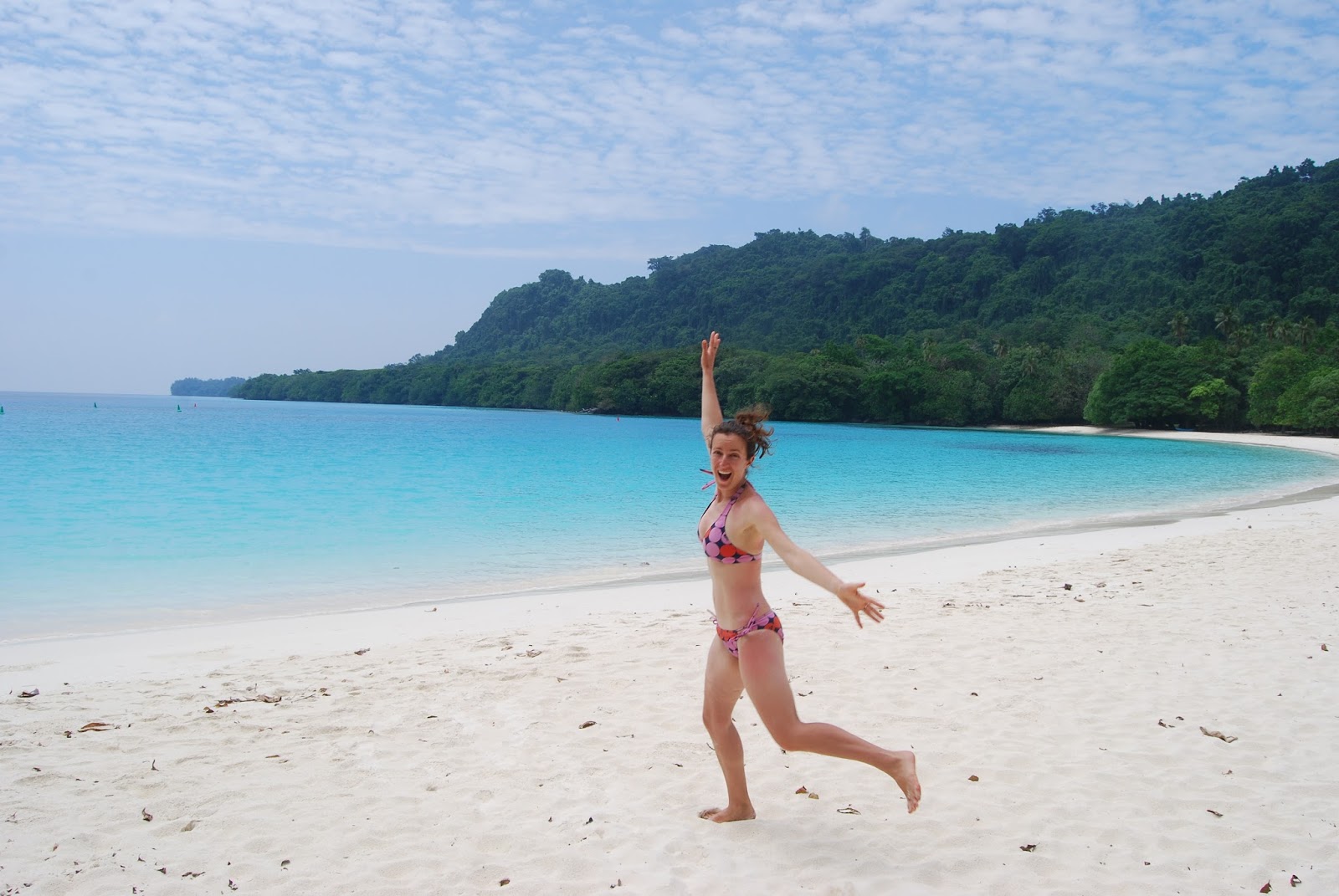
Welcome to Vanuatu.
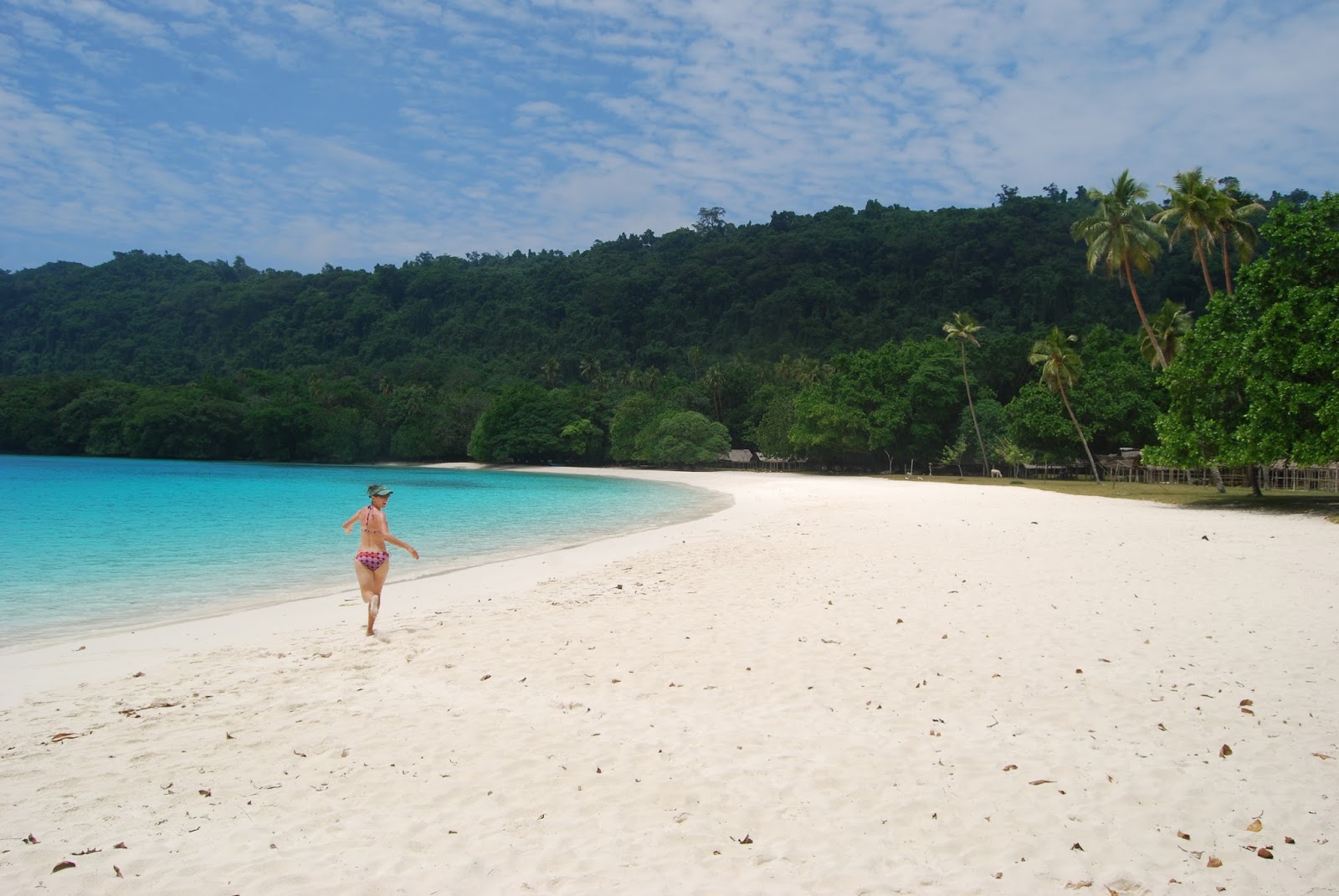
Considered to be one of the mot beautiful beaches in the world, Champagne Beach is on the island of Espirito Santo. Unbelievably, we often had Champagne Beach all to ourselves.
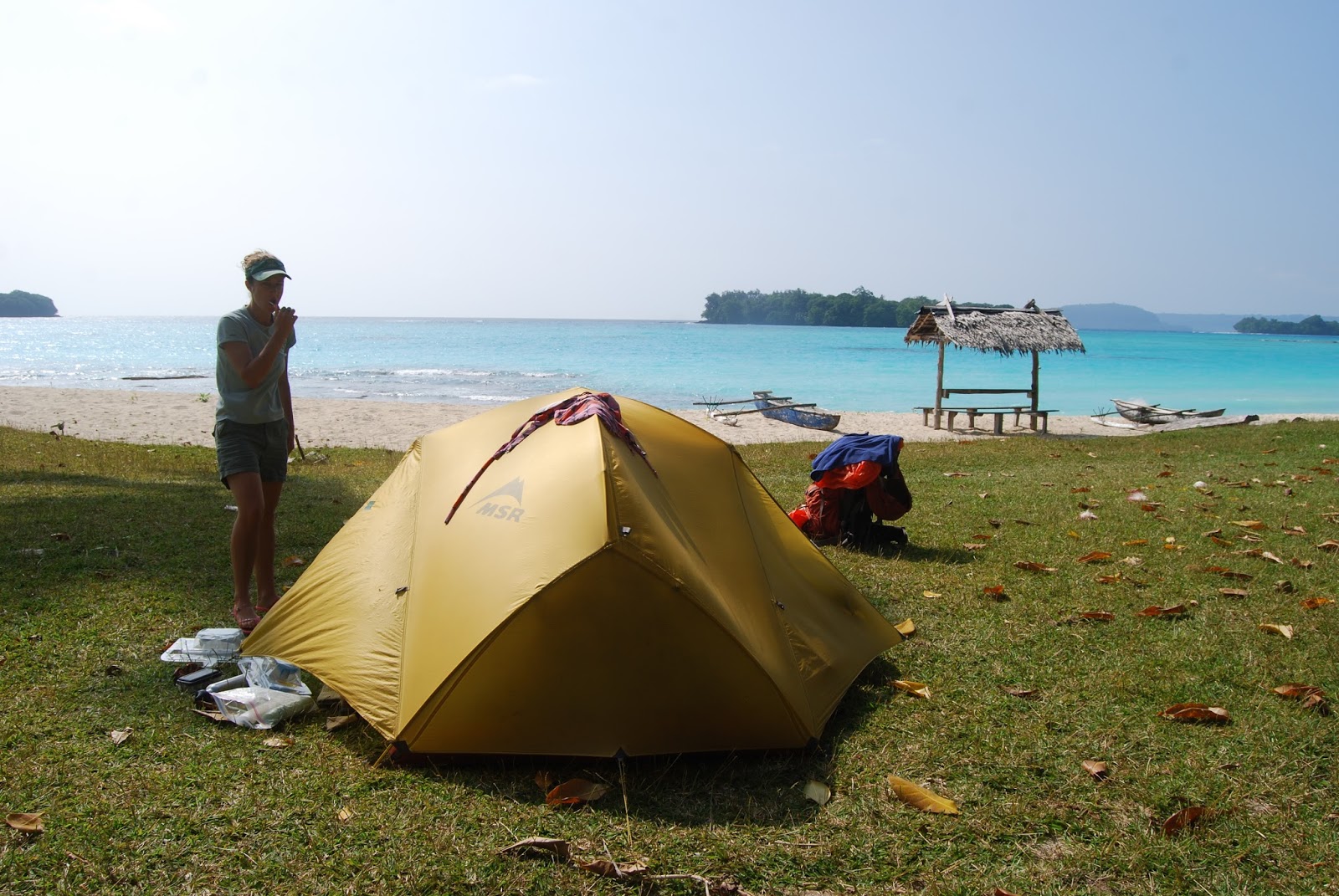
We camped much of the time we island hopped around the country – which made accommodations much more budget friendly.
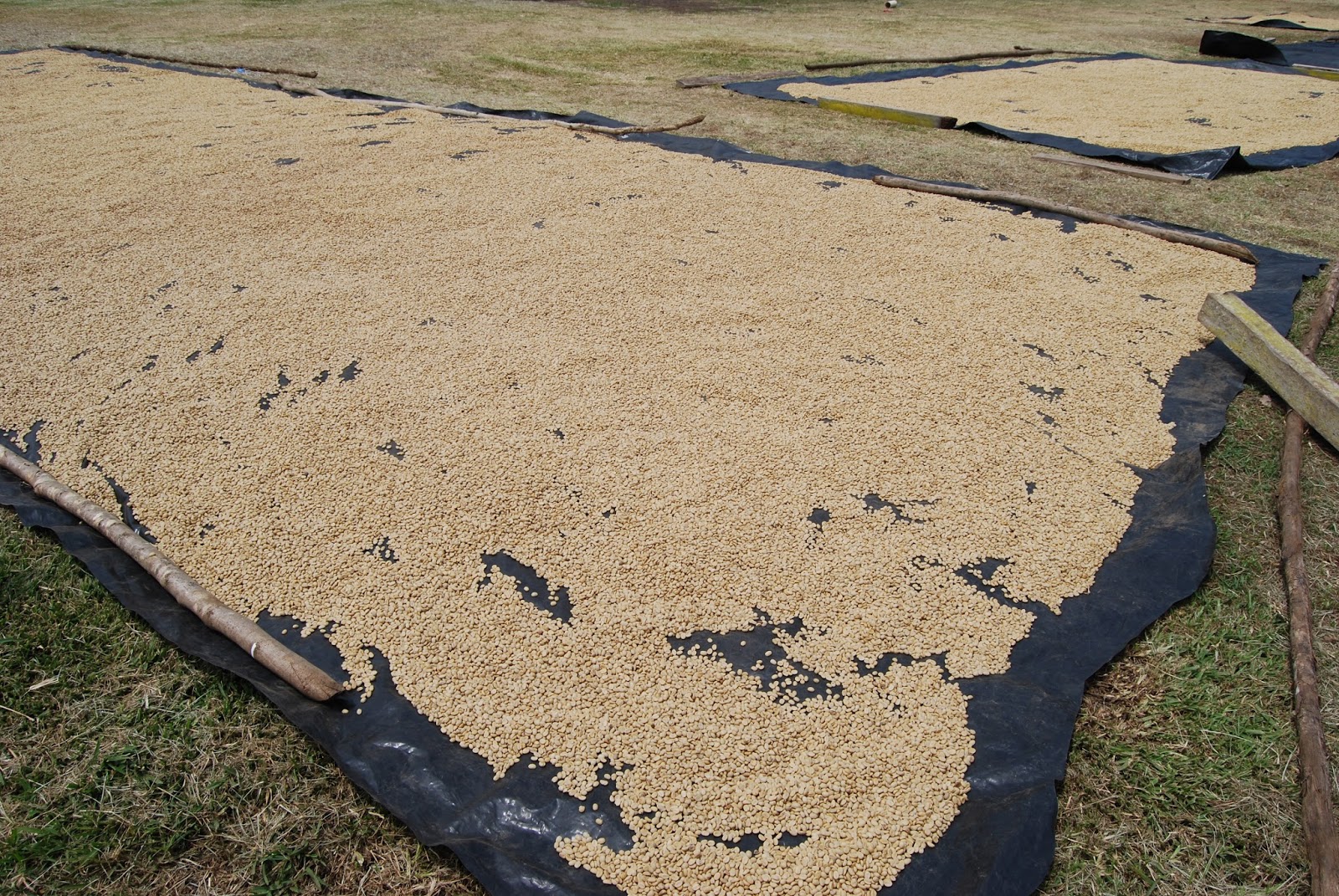
The islands have rich soil making Vanuatu a heavy agricultural society.
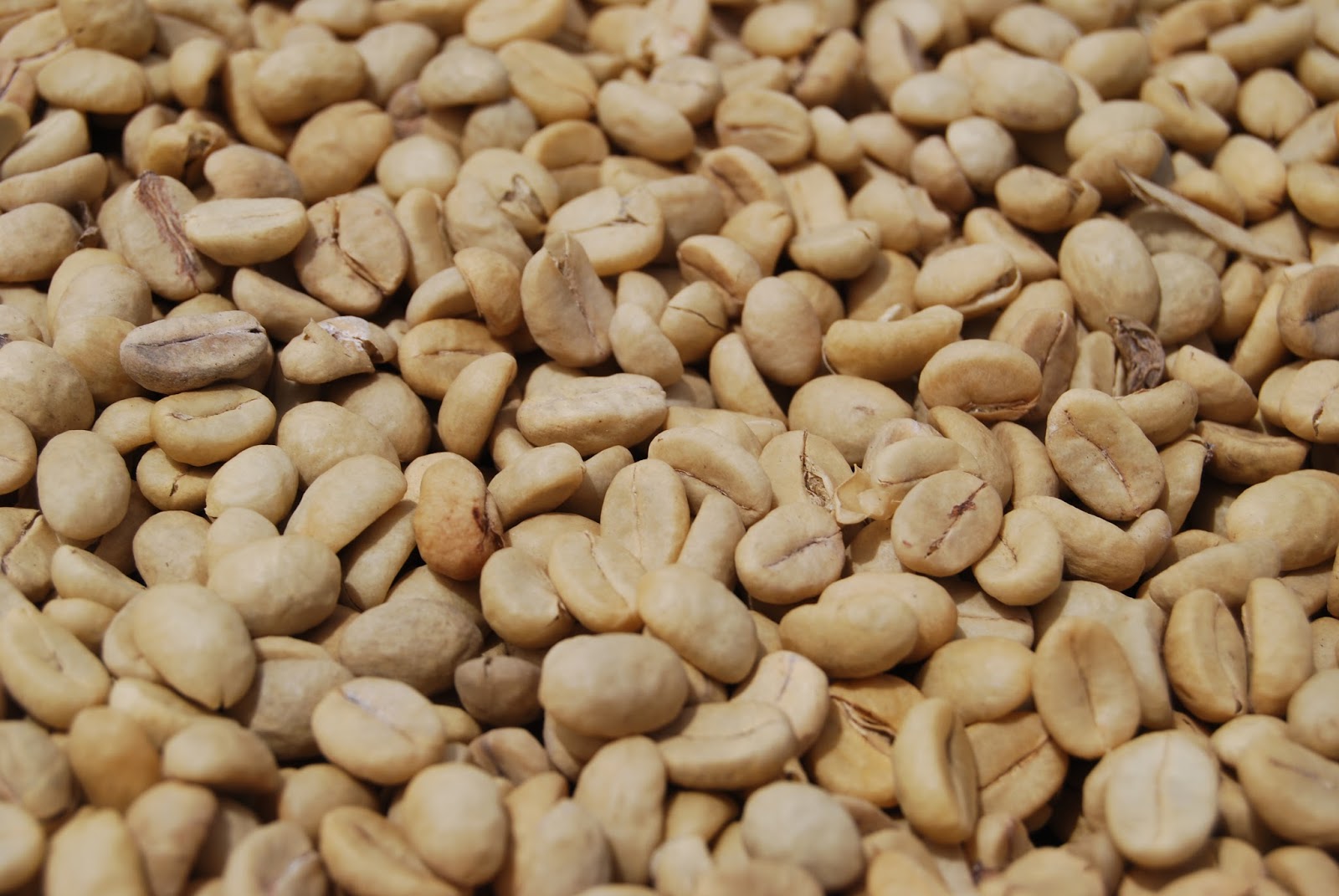
On the island of Tanna, volcanic ash in the soil creates a great environment for farming. A must for visitors is to try the organic Tanna coffee.
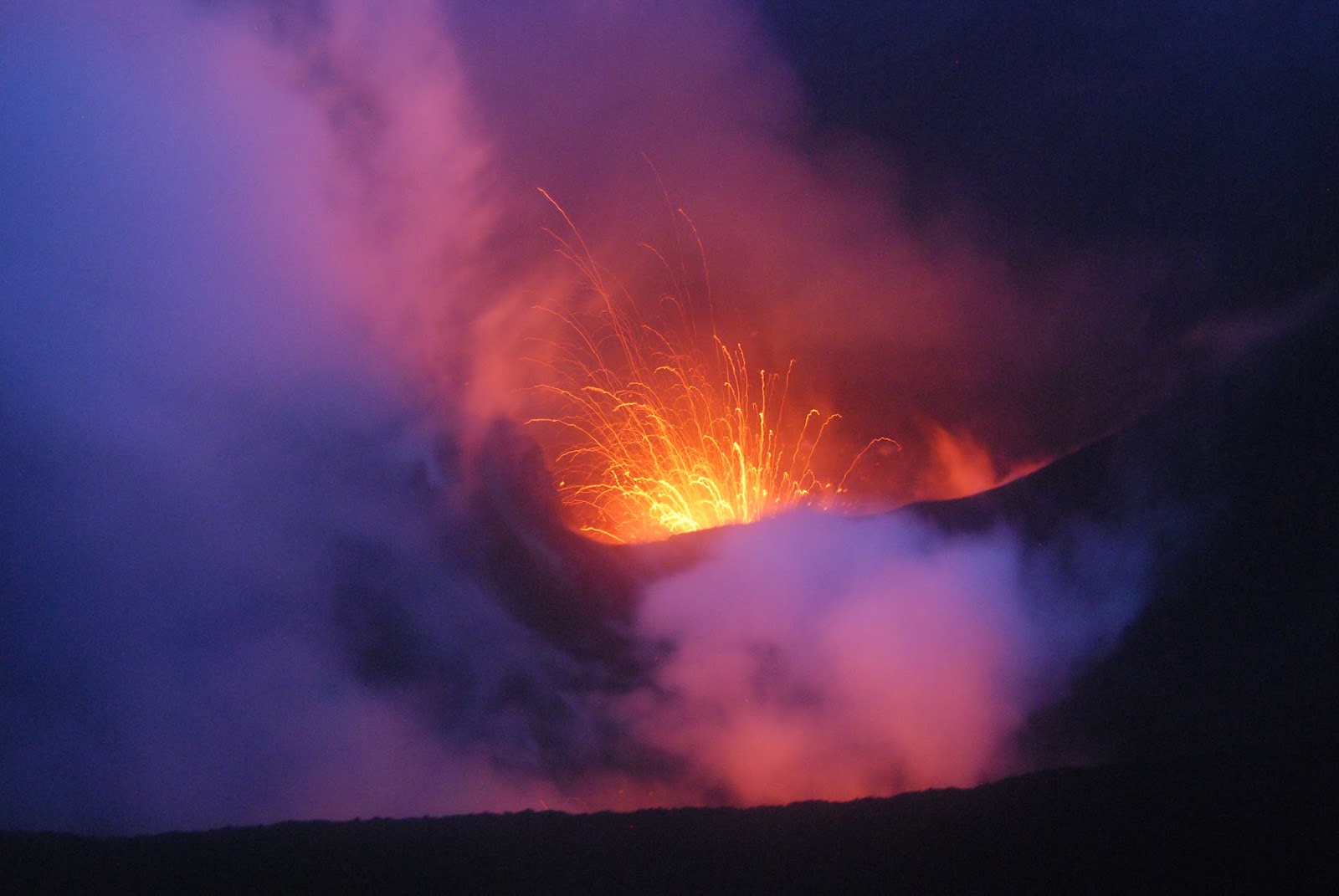
Speaking of volcanoes, Mount Yasur is one of the most accessible and active volcanoes in the world.

We were able to walk up to the rim and look right in.

Walking the steep trek to the top we stayed late into the night to see all the different phases of lighting with spewing hot lava.

Vanuatu is packed full of various natural wonders like these Blue Holes, which are natural springs showcasing different aquatic life. Bring your snorkel to see lots of fish in the crystal blue waters.

With an excitement and welcoming, Vanuatuans will openly share their culture with you. They know that visitors have traveled a long way to their country and they want to share their lifestyle with guests. Here a guide is painting Chris’s face before entering Millennium Cave to grant us safe passage through the cave.
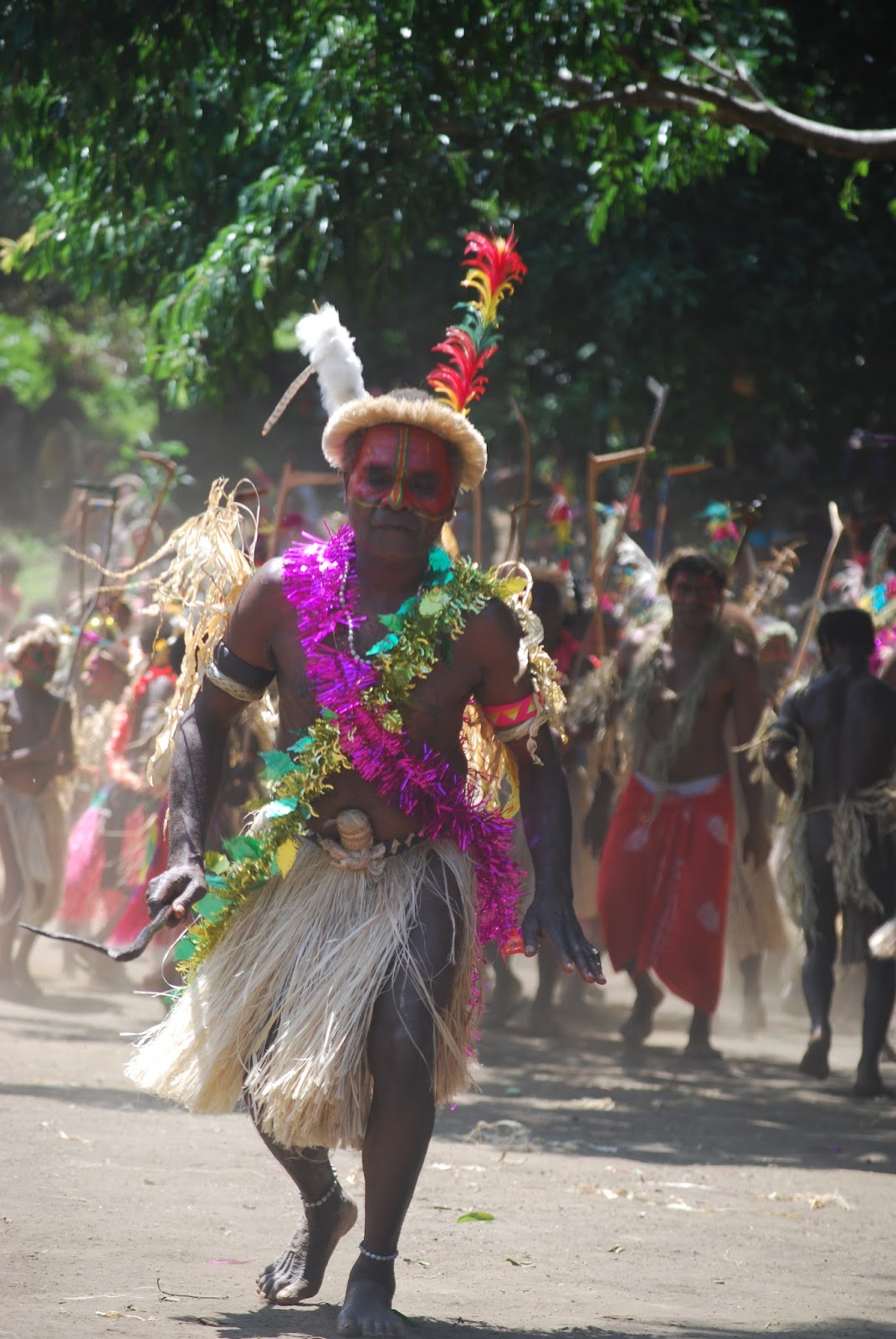
Every four years on the island of Tanna they have a Toka Festival. Uniting the villages for a three day celebration, all the chiefs talk and forgive any wrong doings. It’s nearly impossible to pin down an exact date, but the next celebration should be in October 2016. It is a festival worth going out of your way to experience.

Hundreds of people participated non-stop for three days celebrating their culture. It was one of the best and unique festivals I have ever been to.

If you have never been to an island Pacific country and want to have a true cultural experience, I would jump at the chance to go to Vanuatu. If you want to go some place that’s not full of resorts, shopping malls and paved roads, Vanuatu should fill your quest for adventure. We felt safe and at ease traveling around the islands. It’s a county that’s ready to share itself with travelers who don’t mind getting a little dirty to experience their way of life.
The post Vanuatu is What? appeared first on We Said Go Travel.
We Said Go Travel

- Lisa Niver's profile
- 57 followers

