
Amanda Meredith's Blog: Writer's Ramblings, page 9
December 19, 2013
Naming Your Characters - December 19, 2013 - Thursdays with the Author
Before I get going with this post I'd like to wish you all a very Merry Christmas! The big day is only 6 days away! My kids are literally bouncing off the walls waiting for Santa to come. My favorite part of the holidays is making it absolutely magical for my kids. My second favorite thing is being able to spend time with my family and in-laws. We always have a great time and the food is, to put it mildly, amazing. :)
I hope you all have a great Christmas!
I'd also like to remind everyone that my next book, Irish Strength, The Irish Treasures Saga Book One, is being released January 1, 2014. It will be available through the CreateSpace store, Amazon and through bookstores and libraries.
Now for the Thursdays with the Author post! ;)
Reader Question:
When thinking of names for your characters, what inspires you? How do you come up with unique and original names for so many characters?
Answer:
Names are hard. Sometimes even harder than writing the actual book.
When I started Dark Mountains, I was young, only 18, and I definitely hadn't seen much of the world. The majority of the book was written while I was pregnant with our first child and as we were waffling on names for our baby boy, I was doing the same thing with the characters in my book. Dark Mountains takes place in Eastern Kentucky so I had to use names that would fit the region as well as the characters. We named our son Colton (Cole for short) and I wanted to share his name with the hero of my book. Cole (in the book) is a young man who is very loyal, puts the well being of others above his own, sacrificed to serve his country and married the woman he loved. I wanted my son to grow up with the same morals and character as the hero in my book so I decided to keep their names the same. I have no idea if my son will appreciate this when he's older though!
Another name I used was my mother's (Sheri). She is Cole's mom in the book. The only other name I settled on that had a direct link to my life was using Heinrich as the last name of the German doctor that takes care of Cole after he's injured in the war. Hopefully my brother-in-law doesn't mind the use of his surname but I couldn't resist since it needed to be a German sounding name and his is conveniently just that. ;)
In my next book, Irish Strength, the names were even harder. The majority of the book takes place in Ireland and names from other countries and cultures are extremely different than common names here in the heartland of the US. So not only did I have to find names that fit the culture and country, I wanted my names to mean something.
For example: In book one, Morgan (the modern version of Morrigan) is the heroine. She's fleeing from an abusive marriage and finds shelter and safety in Ireland with family she's never met. She discovers that she's actually a witch and a descendant of one of the first high kings of Ireland. Because of that heritage, she is pulled into a mythological war against an ancient Celtic monster. Morrigan means 'Great Queen' in Irish. In Celtic mythology, Morrigan was the goddess of war, death and fertility.
Also in book one, Quinn (short for Quinton), is also a witch and descendant of one of the original high kings. He is also next in line as head of his family. He is destined (with Morgan) to be the protector of one of the Irish treasures. Quinn means 'wise counsel' in Gaelic.
When writing fantasy, an author has much more freedom with names. Since you're making up the majority of the book, you can also make up the names. But at the same time, you have to be careful. A reader isn't going to enjoy taking five minutes to try and pronounce the name. Fantasy name builders tend to draw their inspiration from old names that are no longer used. Latin, Greek, Hebrew, Old English, Scandinavian, etc. Today we use the anglicized, easy-to-pronounce versions. Use the older versions of the name, even tweaking them a little.
So some tips for naming your characters:
(FYI these are just TIPS, not RULES)
1) Try to draw inspiration from the personality of your character
2) Names tend to have different meanings to different cultures. Check the meanings and find one that fits
3) Don't pull names from only ones familiar to you. Check out the top 100 names for specific countries, look up old-world languages, common names used hundreds or thousands of years ago, etc.
4) Don't go overboard with spelling and pronunciation. Readers hate not being able to say a name in their head, or read it a certain way through the whole book only to find the glossary in the back saying it was wrong.
5) Names can always be changed in the editing process. If you're stuck and can't find a good fit, finish your novel with a generic name and go back and read through it. Look for the characteristics, attitude, physical attributes of each character throughout the book then find a name that fits.
6) Read other books from your genre. DON'T use the same names as another author, especially in the same genre.
7) If you're writing in a certain culture, country or time period, the names NEED to match where and when you're writing your story in. A LaKeesha isn't going to be a common name in Sweden. Agnes isn't going to be normal in the Caribbean. Su Ling isn't Canadian. The same goes with the time period. If you're writing historical romance names like Axel, Zahara, North, etc. are not names that would be used 200+ years ago.
I hope you all have a great Christmas!
I'd also like to remind everyone that my next book, Irish Strength, The Irish Treasures Saga Book One, is being released January 1, 2014. It will be available through the CreateSpace store, Amazon and through bookstores and libraries.
Now for the Thursdays with the Author post! ;)
Reader Question:
When thinking of names for your characters, what inspires you? How do you come up with unique and original names for so many characters?

Answer:
Names are hard. Sometimes even harder than writing the actual book.
When I started Dark Mountains, I was young, only 18, and I definitely hadn't seen much of the world. The majority of the book was written while I was pregnant with our first child and as we were waffling on names for our baby boy, I was doing the same thing with the characters in my book. Dark Mountains takes place in Eastern Kentucky so I had to use names that would fit the region as well as the characters. We named our son Colton (Cole for short) and I wanted to share his name with the hero of my book. Cole (in the book) is a young man who is very loyal, puts the well being of others above his own, sacrificed to serve his country and married the woman he loved. I wanted my son to grow up with the same morals and character as the hero in my book so I decided to keep their names the same. I have no idea if my son will appreciate this when he's older though!
Another name I used was my mother's (Sheri). She is Cole's mom in the book. The only other name I settled on that had a direct link to my life was using Heinrich as the last name of the German doctor that takes care of Cole after he's injured in the war. Hopefully my brother-in-law doesn't mind the use of his surname but I couldn't resist since it needed to be a German sounding name and his is conveniently just that. ;)
In my next book, Irish Strength, the names were even harder. The majority of the book takes place in Ireland and names from other countries and cultures are extremely different than common names here in the heartland of the US. So not only did I have to find names that fit the culture and country, I wanted my names to mean something.
For example: In book one, Morgan (the modern version of Morrigan) is the heroine. She's fleeing from an abusive marriage and finds shelter and safety in Ireland with family she's never met. She discovers that she's actually a witch and a descendant of one of the first high kings of Ireland. Because of that heritage, she is pulled into a mythological war against an ancient Celtic monster. Morrigan means 'Great Queen' in Irish. In Celtic mythology, Morrigan was the goddess of war, death and fertility.
Also in book one, Quinn (short for Quinton), is also a witch and descendant of one of the original high kings. He is also next in line as head of his family. He is destined (with Morgan) to be the protector of one of the Irish treasures. Quinn means 'wise counsel' in Gaelic.
When writing fantasy, an author has much more freedom with names. Since you're making up the majority of the book, you can also make up the names. But at the same time, you have to be careful. A reader isn't going to enjoy taking five minutes to try and pronounce the name. Fantasy name builders tend to draw their inspiration from old names that are no longer used. Latin, Greek, Hebrew, Old English, Scandinavian, etc. Today we use the anglicized, easy-to-pronounce versions. Use the older versions of the name, even tweaking them a little.
So some tips for naming your characters:
(FYI these are just TIPS, not RULES)
1) Try to draw inspiration from the personality of your character
2) Names tend to have different meanings to different cultures. Check the meanings and find one that fits
3) Don't pull names from only ones familiar to you. Check out the top 100 names for specific countries, look up old-world languages, common names used hundreds or thousands of years ago, etc.
4) Don't go overboard with spelling and pronunciation. Readers hate not being able to say a name in their head, or read it a certain way through the whole book only to find the glossary in the back saying it was wrong.
5) Names can always be changed in the editing process. If you're stuck and can't find a good fit, finish your novel with a generic name and go back and read through it. Look for the characteristics, attitude, physical attributes of each character throughout the book then find a name that fits.
6) Read other books from your genre. DON'T use the same names as another author, especially in the same genre.
7) If you're writing in a certain culture, country or time period, the names NEED to match where and when you're writing your story in. A LaKeesha isn't going to be a common name in Sweden. Agnes isn't going to be normal in the Caribbean. Su Ling isn't Canadian. The same goes with the time period. If you're writing historical romance names like Axel, Zahara, North, etc. are not names that would be used 200+ years ago.


Naming Your Characters - December 19, 2013 - Thursdays with the Author
Before I get going with this post I'd like to wish you all a very Merry Christmas! The big day is only 6 days away! My kids are literally bouncing off the walls waiting for Santa to come. My favorite part of the holidays is making it absolutely magical for my kids. My second favorite thing is being able to spend time with my family and in-laws. We always have a great time and the food is, to put it mildly, amazing. :)
I hope you all have a great Christmas!
I'd also like to remind everyone that my next book, Irish Strength, The Irish Treasures Saga Book One, is being released January 1, 2014. It will be available through the CreateSpace store, Amazon and through bookstores and libraries.
Now for the Thursdays with the Author post! ;)
Reader Question:
When thinking of names for your characters, what inspires you? How do you come up with unique and original names for so many characters?
Answer:
Names are hard. Sometimes even harder than writing the actual book.
When I started Dark Mountains, I was young, only 18, and I definitely hadn't seen much of the world. The majority of the book was written while I was pregnant with our first child and as we were waffling on names for our baby boy, I was doing the same thing with the characters in my book. Dark Mountains takes place in Eastern Kentucky so I had to use names that would fit the region as well as the characters. We named our son Colton (Cole for short) and I wanted to share his name with the hero of my book. Cole (in the book) is a young man who is very loyal, puts the well being of others above his own, sacrificed to serve his country and married the woman he loved. I wanted my son to grow up with the same morals and character as the hero in my book so I decided to keep their names the same. I have no idea if my son will appreciate this when he's older though!
Another name I used was my mother's (Sheri). She is Cole's mom in the book. The only other name I settled on that had a direct link to my life was using Heinrich as the last name of the German doctor that takes care of Cole after he's injured in the war. Hopefully my brother-in-law doesn't mind the use of his surname but I couldn't resist since it needed to be a German sounding name and his is conveniently just that. ;)
In my next book, Irish Strength, the names were even harder. The majority of the book takes place in Ireland and names from other countries and cultures are extremely different than common names here in the heartland of the US. So not only did I have to find names that fit the culture and country, I wanted my names to mean something.
For example: In book one, Morgan (the modern version of Morrigan) is the heroine. She's fleeing from an abusive marriage and finds shelter and safety in Ireland with family she's never met. She discovers that she's actually a witch and a descendant of one of the first high kings of Ireland. Because of that heritage, she is pulled into a mythological war against an ancient Celtic monster. Morrigan means 'Great Queen' in Irish. In Celtic mythology, Morrigan was the goddess of war, death and fertility.
Also in book one, Quinn (short for Quinton), is also a witch and descendant of one of the original high kings. He is also next in line as head of his family. He is destined (with Morgan) to be the protector of one of the Irish treasures. Quinn means 'wise counsel' in Gaelic.
When writing fantasy, an author has much more freedom with names. Since you're making up the majority of the book, you can also make up the names. But at the same time, you have to be careful. A reader isn't going to enjoy taking five minutes to try and pronounce the name. Fantasy name builders tend to draw their inspiration from old names that are no longer used. Latin, Greek, Hebrew, Old English, Scandinavian, etc. Today we use the anglicized, easy-to-pronounce versions. Use the older versions of the name, even tweaking them a little.
So some tips for naming your characters:
(FYI these are just TIPS, not RULES)
1) Try to draw inspiration from the personality of your character
2) Names tend to have different meanings to different cultures. Check the meanings and find one that fits
3) Don't pull names from only ones familiar to you. Check out the top 100 names for specific countries, look up old-world languages, common names used hundreds or thousands of years ago, etc.
4) Don't go overboard with spelling and pronunciation. Readers hate not being able to say a name in their head, or read it a certain way through the whole book only to find the glossary in the back saying it was wrong.
5) Names can always be changed in the editing process. If you're stuck and can't find a good fit, finish your novel with a generic name and go back and read through it. Look for the characteristics, attitude, physical attributes of each character throughout the book then find a name that fits.
6) Read other books from your genre. DON'T use the same names as another author, especially in the same genre.
7) If you're writing in a certain culture, country or time period, the names NEED to match where and when you're writing your story in. A LaKeesha isn't going to be a common name in Sweden. Agnes isn't going to be normal in the Caribbean. Su Ling isn't Canadian. The same goes with the time period. If you're writing historical romance names like Axel, Zahara, North, etc. are not names that would be used 200+ years ago.
I hope you all have a great Christmas!
I'd also like to remind everyone that my next book, Irish Strength, The Irish Treasures Saga Book One, is being released January 1, 2014. It will be available through the CreateSpace store, Amazon and through bookstores and libraries.
Now for the Thursdays with the Author post! ;)
Reader Question:
When thinking of names for your characters, what inspires you? How do you come up with unique and original names for so many characters?
Answer:
Names are hard. Sometimes even harder than writing the actual book.
When I started Dark Mountains, I was young, only 18, and I definitely hadn't seen much of the world. The majority of the book was written while I was pregnant with our first child and as we were waffling on names for our baby boy, I was doing the same thing with the characters in my book. Dark Mountains takes place in Eastern Kentucky so I had to use names that would fit the region as well as the characters. We named our son Colton (Cole for short) and I wanted to share his name with the hero of my book. Cole (in the book) is a young man who is very loyal, puts the well being of others above his own, sacrificed to serve his country and married the woman he loved. I wanted my son to grow up with the same morals and character as the hero in my book so I decided to keep their names the same. I have no idea if my son will appreciate this when he's older though!
Another name I used was my mother's (Sheri). She is Cole's mom in the book. The only other name I settled on that had a direct link to my life was using Heinrich as the last name of the German doctor that takes care of Cole after he's injured in the war. Hopefully my brother-in-law doesn't mind the use of his surname but I couldn't resist since it needed to be a German sounding name and his is conveniently just that. ;)
In my next book, Irish Strength, the names were even harder. The majority of the book takes place in Ireland and names from other countries and cultures are extremely different than common names here in the heartland of the US. So not only did I have to find names that fit the culture and country, I wanted my names to mean something.
For example: In book one, Morgan (the modern version of Morrigan) is the heroine. She's fleeing from an abusive marriage and finds shelter and safety in Ireland with family she's never met. She discovers that she's actually a witch and a descendant of one of the first high kings of Ireland. Because of that heritage, she is pulled into a mythological war against an ancient Celtic monster. Morrigan means 'Great Queen' in Irish. In Celtic mythology, Morrigan was the goddess of war, death and fertility.
Also in book one, Quinn (short for Quinton), is also a witch and descendant of one of the original high kings. He is also next in line as head of his family. He is destined (with Morgan) to be the protector of one of the Irish treasures. Quinn means 'wise counsel' in Gaelic.
When writing fantasy, an author has much more freedom with names. Since you're making up the majority of the book, you can also make up the names. But at the same time, you have to be careful. A reader isn't going to enjoy taking five minutes to try and pronounce the name. Fantasy name builders tend to draw their inspiration from old names that are no longer used. Latin, Greek, Hebrew, Old English, Scandinavian, etc. Today we use the anglicized, easy-to-pronounce versions. Use the older versions of the name, even tweaking them a little.
So some tips for naming your characters:
(FYI these are just TIPS, not RULES)
1) Try to draw inspiration from the personality of your character
2) Names tend to have different meanings to different cultures. Check the meanings and find one that fits
3) Don't pull names from only ones familiar to you. Check out the top 100 names for specific countries, look up old-world languages, common names used hundreds or thousands of years ago, etc.
4) Don't go overboard with spelling and pronunciation. Readers hate not being able to say a name in their head, or read it a certain way through the whole book only to find the glossary in the back saying it was wrong.
5) Names can always be changed in the editing process. If you're stuck and can't find a good fit, finish your novel with a generic name and go back and read through it. Look for the characteristics, attitude, physical attributes of each character throughout the book then find a name that fits.
6) Read other books from your genre. DON'T use the same names as another author, especially in the same genre.
7) If you're writing in a certain culture, country or time period, the names NEED to match where and when you're writing your story in. A LaKeesha isn't going to be a common name in Sweden. Agnes isn't going to be normal in the Caribbean. Su Ling isn't Canadian. The same goes with the time period. If you're writing historical romance names like Axel, Zahara, North, etc. are not names that would be used 200+ years ago.
December 12, 2013
Creating a Cover for Your Book - What NOT to do - December 12, 2013 - Thursdays with the Author
I always check out my new Twitter followers and one of my newer ones this week was a website that will let you promote your book for free (donations accepted) which I think is a great resource for writers.
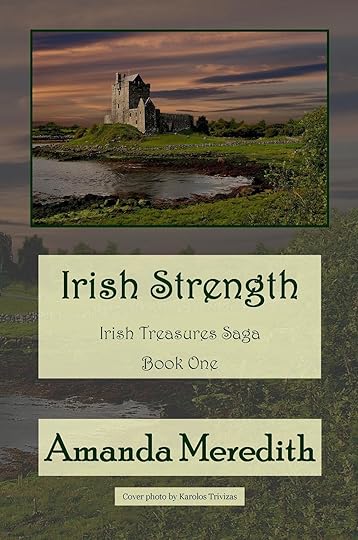 The cover for my next novel
As I was browsing their website I saw perfect examples of what self publishing and indie press authors should absolutely NOT DO when it comes to designing a cover for your book.
There are some good covers on this page (which I will feature further down in this post {with the author's permission}). Of the good ones, seen below, I read the blurbs after the cover caught my eye. And I will most likely purchase all of them because I like how they sound. But the first thing that caught my attention as a reader were the covers.
Some of these good covers were done with publishing companies and design companies. If you have the money and/or means to go this route, please do. They know what they're doing. But if you don't, the list of do's and (mostly) don'ts found below can help you make a great cover on your own.
I won't post individual pictures of the 'what not to do's' at the risk of being sued by someone so you'll have to check the website out for yourself. It'll be pretty easy to understand what I'm referring to. Take a look and see what you think: http://coverscroll.com/
Here's a few tips I have for designing a cover. They are mostly, well practically all of them are, what NOT to do:
1) Do NOT use a friend or family member as your model just because you needed someone to pose for a picture. Having an obese woman in lingerie trying desperately to look sexy and failing badly while holding a giant carving knife between her bare legs is a BAD IDEA. This is NOT the cover you want to have unless you main character is a overweight serial killer that has some strange sexual fantasies, then the cover might fit but it still won't get anyone to read your book.
2) Do NOT use a crappy, pixelated picture that looks like it was taken by your five year old child. Pictures should be clear with a high DPI (most sites recommend 300DPI). That means a very high resolution shot if you didn't know.
3) Do NOT take a picture you found off a Google search engine and slap it on your book then paste some really crazy looking graphic on top of it with your book's title and your name squeezed in the only free space. Just don't. Also see #12.
4) Do NOT use a hand-drawn image/picture as your cover. The ONLY exceptions to this would be if you are an amazing artist (professional schooling is a big plus here) or your book is a children's book. I will be so distracted wondering what the heck you even drew on your cover that I won't even read your blurb or check out your reviews. Books ARE judged by their covers so don't make the mistake of putting a elementary school quality picture as your cover. Books are secondly judged by their blurbs. Your cover will get them to read your blurb so make sure it is good too!
5) Do NOT put a small/confusing fonts, subtitles or small blurbs on the front cover. This goes for cover images as well. Most people will be looking at a thumbnail image of your book's cover. If it doesn't look good or can't be seen in a thumbnail, you need to change it.
6) TEXT: I have a few points on this topic.
A) Make sure all the words and letters can be CLEARLY seen and EASILY read. Images and backgrounds should not be cutting into lettering or obscuring them from vision.
B) FONT: One example I can give is the word Aunt looks like the word Cunt in certain fonts. Seriously. (For those of you outside the US, here the word cunt is a very derogatory word, usually directed towards women. Not the word you want in your title or in thanking your Aunt on the dedication page.)
I saw a few titles with the letter 'D' in a font that appeared to be dripping blood. It made the 'D' look like a 'P'. This makes the word Deed look like Peed and Doubt look like Pout. It would look bad if your title read 'Without a Pout'. DOUBLE CHECK to make sure your font isn't causing these type of issues. This also ties in with #5. Some fonts cannot be read as thumbnails. Check your fonts.
C) DO NOT use the shadow effect on your title. A lot of the books on this site had the words being mirrored underneath. This is distracting and looks amateurish.
7) Titles. Please don't have your title be fifteen words long. JUST DON'T. Also, titles should also have something to do with your book. Foreshadowing or theme. But not so literal as the reader wants to do a face palm. Example: Your book is about a serial killer who dresses up as Santa and murders Christmas shoppers. DO NOT call your book Serial Killer Santa. Killer Christmas is cliche (also: will probably cause an eye roll or face palm) and it's STILL better than Serial Killer Santa.
8) Unless you are writing a children's book or certain types of non-fiction, your cover should NOT look like a cartoon.
9) If there are multiple authors, it might be best not to name every single one of them on the cover of your book. Try: 'A collaboration' or or something like that and list the authors/contributors in detail inside the book.
10) If you're going to have half naked, mostly naked, scantily clad, suggestive, provocative, etc. person(s)on your cover, make sure you do the following:
A) The scene actually has something to do with your book. A tropical paradise complete with ocean waves and palm trees with bathing suit clad hotties rolling in the sand should not be on your cover if the book takes place in Minnesota... in the winter.
B) The people are at least somewhat attractive. Let's be honest here. We know men and women in real life are not perfect. Most of us don't even care what our significant other looks like (well maybe we care a little). But we read to escape reality and that escape isn't a man with a beer belly who's too lazy to shave or a woman with more chins than fingers. We want to see six pack abs and a hint of a five o'clock shadow on a sculpted face or legs (preferably shaved) that go for miles and perfect boobs. Reading is fantasy so it's okay for us to indulge in our unrealistic and stereotypical fantasies.
C) The pose is somewhat attractive and age appropriate. A reader isn't going to want to read your 'steamy erotica' if they're too busy laughing at a ridiculous cover. Example: A grandma-aged woman with her legs spread out and the title of your book barely covering the part of her body we really don't want to see. A reader is also not going to want to read about someones 'biggest hustle' yet the person on the cover doesn't look old enough to even know what a hustle is.
D) This ties in to #1 and #2. The picture needs to be good quality. The models need to be professional.
E) Just because it's a romance novel doesn't mean you have to have two half-naked people making out or tearing each other's clothes off on the cover. Don't get me wrong, that doesn't stop me from reading romance novels but cover after cover of horny couples gets a little old. This doesn't mean that you shouldn't put two hotties getting it on for your cover, just don't go overboard with it and try not to let it look too cliche.
11) Check the color! Especially with the cookie-cutter templates some self publishing companies give you to choose from. If the background is pale/white, all that may show up on your cover may be the title and image. Make sure the color is dark/different enough to see the entire cover regardless of the background color of a website or make sure you have a thin border around your cover to distinguish it's lighter background from the web site's color.
12) For those of you completely new to publishing/self publishing, the biggest thing you need to know is that you absolutely have to have permission to use someone else's image. This may seem like a no-brainer but some people don't realize this fact. Just because you found a great image on a Google search doesn't mean there's no copyright. Most images on the Internet are copyrighted. Using a copyrighted image without permission from the original owner is ILLEGAL. Sometimes getting permission is as simple as asking the owner of the image to use it. Sometimes it's impossible to even find the owner. Sometimes the owner wants compensation (aka $) or credit in your book. If you can't get permission, DON'T USE IT. You don't want to risk getting sued. Even in this blog, I found the author's to all the books listed below and asked for permission to use their images and names before posting.
Here's an example: For my next book, which is being released in a few weeks, I found an AMAZING shot of an Irish castle. After scouring the Internet for the original owner of the image, I found him (in Greece, no less) and asked what I'd need to do to obtain permission to use his photo on the cover of my book. A lot of international emailing later and the deal was made. In exchange for using his photo (for my book cover and marketing for said book ONLY) I needed to give him credit on the back cover of my book for the photo, send him a copy of the cover for pre-approval before publishing and send him 2 copies of the book after publishing. I got lucky finding a very polite and generous owner to negotiate with. I did go a little overboard and ask for a signed 'contract' just to cover my butt in the future and he graciously complied.
Another example: My cover of Dark Mountains is just a background image of mountains. I had found this picture that I absolutely loved, of a marine kissing his girlfriend's forehead. It was a sweet and beautiful B&W image and completely fit the theme of my story. There was no skin or suggestive situations, only a soldier in uniform saying goodbye with a innocent kiss. (Not saying my novel didn't have sex in it but it follows the main character's love story from childhood best friends and the sweetness fits the overall theme better. Also I have a thing against every romance cover having half naked-people on it. See #10.) But I digress. I emailed the blogger where I found the picture and asked if she could direct me to the original owner. She emailed me back saying that she had obtained permission to use the photo on her blog but could not find her info on the picture's owner (the cynic in me was screaming B.S.). But regardless, I couldn't find the original owner and couldn't get permission so the picture that I absolutely loved couldn't be used. I still haven't found an image that I love like that one which is why Dark Mountains still has a somewhat plain image as the cover. I'd rather have a great, non-distracting background image than a picture that doesn't fit my book.
When it comes to finding owners and gaining permission, it won't always be that easy and sometimes it won't even be that hard. But if you want the image on your cover, you have to do what it takes to get permission.
13) If you can, if you have the right program and expertise, DO design your own cover from scratch. Cookie cutter templates from sites like CreateSpace, SmashWords, Kindle Direct, etc. are just that. Cookie Cutter. Regardless of how many choices they offer you, someone else will have the same looking image or template. Even with the 2 million + titles (and that is just in the Kindle store) someone will use the same template, colors, etc.
If you can create your own cover from scratch you have much more freedom with color, fonts, layout, etc. But it's also harder. You have to know exactly how big your book is, page count, size, bleed, spine width, etc. There's even a math equation to figure out exact dimensions. It's all very confusing. But if you take your time and learn as much as you can BEFORE trying it, it isn't as scary as it first appears. I personally use Microsoft Publisher but there are MANY other programs you can choose from.
14) DO get opinions from as many people as you can before publishing with your cover. Friends and family are great but be honest with yourself, they may not be up front in their opinions because they are family or a friend. Facebook, Google+, twitter, Community boards on the self publishing sites: All of these are good places to get opinions on your covers. Now keep in mind, just like with your actual book, you won't please everybody. But if the majority likes it, then they're probably right. If the majority hates it, don't get too upset. Use it as a chance to learn. Ask for honest critiques and advice and take it when given.
The great thing about being an author is that it isn't a cut-throat business. Authors aren't out to sabotage each other. We help each other. We learn from each other. Remember that fact when someone tells you your drawing is pretty bad and you shouldn't use it. Don't get pissed. Try looking at it like it isn't yours and you may find they were right.
15) Series: If your book is part of a series put the order somewhere on your cover. This rule isn't always best, especially if it distracts from your cover or the series has a long name etc. Some of the authors below chose to leave the series number off their covers. Keep in mind, if it's not listed on your cover that your book is part of a series, make sure you have it listed in your book's description. From personal experience I can tell you that reading a book and finding out half way through it that it's the second, third or whatever in a series is very aggravating.
So those are some of my do's and (mostly) don'ts for creating a cover for your book. I am, by no means, an expert. Just another author who has learned some lessons the hard way and would like to help you avoid doing the same. :)
Here's some of my picks (from the above mentioned website) of well-made covers and why I like them. The Author's Name, Book Title and Covers all have links to the author's various websites. Please click on them and check out these authors and their books!
Chelsea Dorsette- Match Point
 I love black and white images. This cover doesn't have too much going on, which is good. Hot guy, not too risque or cliche with the pose. Tennis racket ties in well with the book title. Title and Author name clearly visible and easy to read. I read the blurb for this book and the title and cover fits perfectly with the description. I don't read erotica but this cover and blurb has me thinking about changing my mind.
Chelsea's Blog
John Blumenthal - Three and a Half Virgins
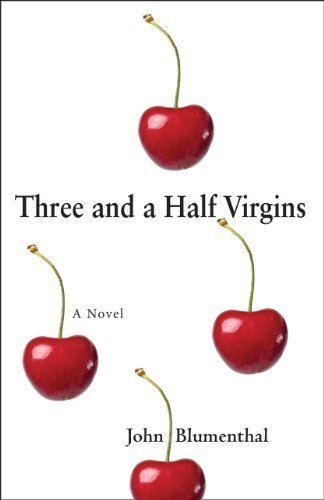 Another well made cover. Simple in design with only a little bit of color but fits the book perfectly. Title and author easily seen and read. This author got it right while still using a pale/white background color. There's a thin edge around the cover, leading to a clear break-up between the cover and the background image on the web page it is on. Without this thin border, the white background image could have easily been lost and the 'pop' of the cover along with it. See #11. This well designed and eye-catching cover led me to read the blurb and add this novel to my To Be Read list.
www.threeandahalfvirgins.net Facebook
Elisabeth K. Corcoran - Unraveling
(Publisher Abingdon, Cover design by Gearbox)
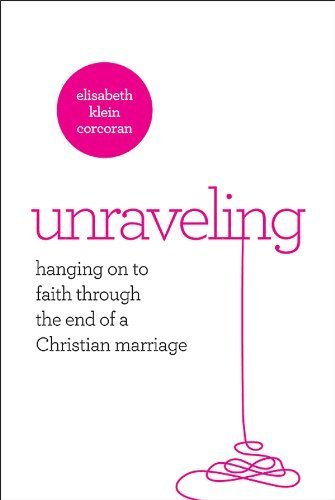
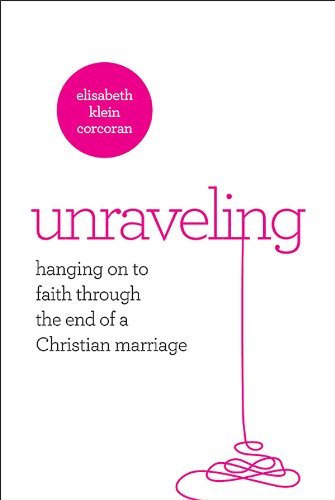
The Title and also the main image of this cover really caught my eye. What a clever concept! Everything is easily read, even in thumbnail. As a reminder, like I mentioned above (See #11), you have to be very careful when using light/white backgrounds so the edge of your cover isn't lost in translation. This author did a great job having a thin border around her cover. I don't normally read Christian fiction/non fiction and the subject matter doesn't really apply to me but the blurb and cover are so well-done that I will probably read it anyway. Maybe it will teach me what to avoid so my marriage doesn't 'unravel'. ;) (yes I just went there. lol)
www.elisabethcorcoran.com
Nora M. Garcia - The Lightbearers
(Cover design by Iconisus)
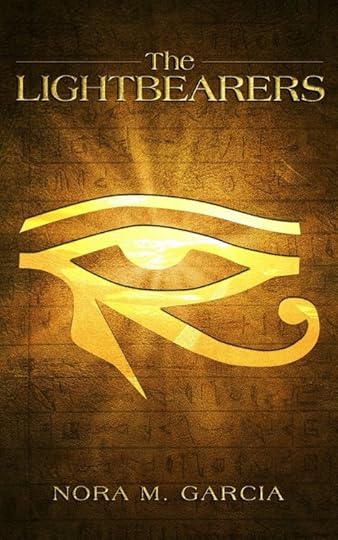
I guessed that this book had an Egyptian theme and was right. Another author who got it right with a cover that fits the book. The background image is beautiful and doesn't distract from the central and eye catching main image or the title and author. This is another author who chose not to list that this book is part of a series on the cover. Adding more text to this cover would have ruined it. The author was very clear in the description that this book is part of a series. After reading the blurb, I am adding this series to my To Be Read list.
Facebook Goodreads
Kealohilani Wallace - Half-Hearts Trilogy Book One
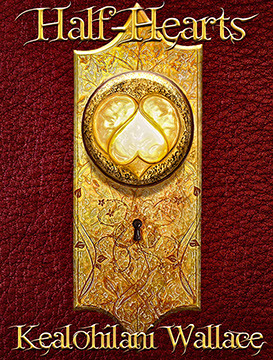
This book isn't even being released until May 2014 but it's colorful, well-designed cover had me wanting to find out more about it. After reading the synopsis I've decided that this book is going in my To Be Read list and I don't even normally read fantasy type novels very often. The title and author's name are clearly and easily read, even though Kealohilani's Hawaiian name is a bit hard to pronounce. (She does provide a how-to-pronounce section on her website.) I also love how this particular author wasn't afraid to get personal in her author bio. I think her story and subsequent inspiration for her Half-Hearts Trilogy will be very helpful, healing and inspiring to her readers.
www.HalfHearts.com
John J Blenkush - Solstice Black Moon Rising
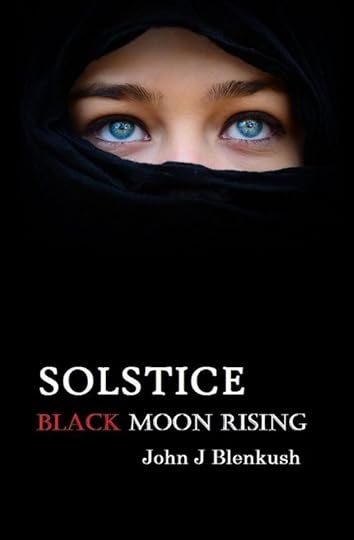 This book is great simply because of the lack of images. The black background makes the image, title and author's name very eye-catching. I assumed in the wrong direction on what the book might be about but after reading the blurb, the cover does fit the theme. Also, it's the third book in a series and after seeing this title and reading the blurb, I'm putting all three books on my To Be Read list. For this particular novel, adding that it's book 3 on the cover would've taken away from it's gorgeous simplicity but the author is very clear that it's book 3 in the description. :)
www.jblenkush.com Facebook Twitter
Anthony Whitt - Hard Land To Rule
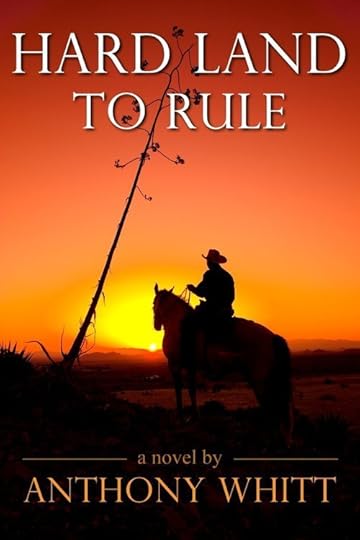 This cover really caught my eye. Normally I skim over anything that looks like a western since I don't really read westerns. Adding to my general avoidance are the usual cliche western covers with a half naked cowboy on them. This cover is anything but cliche. The image lends to the book's title. A bare landscape, scraggly tree, hot sun and a lone cowboy (refreshingly fully dressed) looking out over it. The title and author are clearly seen and easily read. This well-made cover led me to read the blurb which was also well-done enough for me to put this post-Civil War western on my To Be Read List, which is not an easy accomplishment, especially for a western. ;)www.anthonywhitt.com
SL Lewis - The Guardian and the Rogue Shadow
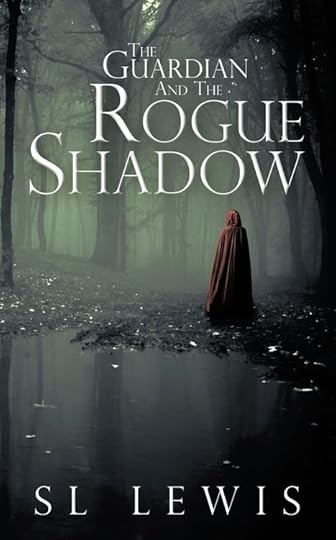 I must say, I absolutely loved this cover. It's dark and mysterious. The lack of color brings your eye very quickly to the figure in the red cloak. The title and author name are easily read. I'd like to thank this author for not making his words have shadows underneath them. As seen in #6C, some authors think they HAVE to have shadowed words so they'll look cool and many wouldn't hesitate to shadow the word 'shadow' for obvious (but very wrong) reasons. This author is another that did not state this book was in a series on the cover but got it right. More words on this cover would've distracted from it's eye-catching appeal. The author clearly states it is book two in the the description. I liked the sound of this series so much that I added it to my To Be Read list.
Author's Amazon Page
So hopefully you've gotten the idea when creating the cover for your book. There are LOTS of mistakes you can make and hopefully this blog post will help you avoid them! :)
Special thanks to all the authors who gave me permission to use their great covers in this post! (could only link ones with Google+ profiles here)
+Chelsea Dorsette
+S. L. Lewis
+John Blenkush
+Kealohilani Wallace
+Chelsea Dorsette
 The cover for my next novel
As I was browsing their website I saw perfect examples of what self publishing and indie press authors should absolutely NOT DO when it comes to designing a cover for your book.
There are some good covers on this page (which I will feature further down in this post {with the author's permission}). Of the good ones, seen below, I read the blurbs after the cover caught my eye. And I will most likely purchase all of them because I like how they sound. But the first thing that caught my attention as a reader were the covers.
Some of these good covers were done with publishing companies and design companies. If you have the money and/or means to go this route, please do. They know what they're doing. But if you don't, the list of do's and (mostly) don'ts found below can help you make a great cover on your own.
I won't post individual pictures of the 'what not to do's' at the risk of being sued by someone so you'll have to check the website out for yourself. It'll be pretty easy to understand what I'm referring to. Take a look and see what you think: http://coverscroll.com/
Here's a few tips I have for designing a cover. They are mostly, well practically all of them are, what NOT to do:
1) Do NOT use a friend or family member as your model just because you needed someone to pose for a picture. Having an obese woman in lingerie trying desperately to look sexy and failing badly while holding a giant carving knife between her bare legs is a BAD IDEA. This is NOT the cover you want to have unless you main character is a overweight serial killer that has some strange sexual fantasies, then the cover might fit but it still won't get anyone to read your book.
2) Do NOT use a crappy, pixelated picture that looks like it was taken by your five year old child. Pictures should be clear with a high DPI (most sites recommend 300DPI). That means a very high resolution shot if you didn't know.
3) Do NOT take a picture you found off a Google search engine and slap it on your book then paste some really crazy looking graphic on top of it with your book's title and your name squeezed in the only free space. Just don't. Also see #12.
4) Do NOT use a hand-drawn image/picture as your cover. The ONLY exceptions to this would be if you are an amazing artist (professional schooling is a big plus here) or your book is a children's book. I will be so distracted wondering what the heck you even drew on your cover that I won't even read your blurb or check out your reviews. Books ARE judged by their covers so don't make the mistake of putting a elementary school quality picture as your cover. Books are secondly judged by their blurbs. Your cover will get them to read your blurb so make sure it is good too!
5) Do NOT put a small/confusing fonts, subtitles or small blurbs on the front cover. This goes for cover images as well. Most people will be looking at a thumbnail image of your book's cover. If it doesn't look good or can't be seen in a thumbnail, you need to change it.
6) TEXT: I have a few points on this topic.
A) Make sure all the words and letters can be CLEARLY seen and EASILY read. Images and backgrounds should not be cutting into lettering or obscuring them from vision.
B) FONT: One example I can give is the word Aunt looks like the word Cunt in certain fonts. Seriously. (For those of you outside the US, here the word cunt is a very derogatory word, usually directed towards women. Not the word you want in your title or in thanking your Aunt on the dedication page.)
I saw a few titles with the letter 'D' in a font that appeared to be dripping blood. It made the 'D' look like a 'P'. This makes the word Deed look like Peed and Doubt look like Pout. It would look bad if your title read 'Without a Pout'. DOUBLE CHECK to make sure your font isn't causing these type of issues. This also ties in with #5. Some fonts cannot be read as thumbnails. Check your fonts.
C) DO NOT use the shadow effect on your title. A lot of the books on this site had the words being mirrored underneath. This is distracting and looks amateurish.
7) Titles. Please don't have your title be fifteen words long. JUST DON'T. Also, titles should also have something to do with your book. Foreshadowing or theme. But not so literal as the reader wants to do a face palm. Example: Your book is about a serial killer who dresses up as Santa and murders Christmas shoppers. DO NOT call your book Serial Killer Santa. Killer Christmas is cliche (also: will probably cause an eye roll or face palm) and it's STILL better than Serial Killer Santa.
8) Unless you are writing a children's book or certain types of non-fiction, your cover should NOT look like a cartoon.
9) If there are multiple authors, it might be best not to name every single one of them on the cover of your book. Try: 'A collaboration' or or something like that and list the authors/contributors in detail inside the book.
10) If you're going to have half naked, mostly naked, scantily clad, suggestive, provocative, etc. person(s)on your cover, make sure you do the following:
A) The scene actually has something to do with your book. A tropical paradise complete with ocean waves and palm trees with bathing suit clad hotties rolling in the sand should not be on your cover if the book takes place in Minnesota... in the winter.
B) The people are at least somewhat attractive. Let's be honest here. We know men and women in real life are not perfect. Most of us don't even care what our significant other looks like (well maybe we care a little). But we read to escape reality and that escape isn't a man with a beer belly who's too lazy to shave or a woman with more chins than fingers. We want to see six pack abs and a hint of a five o'clock shadow on a sculpted face or legs (preferably shaved) that go for miles and perfect boobs. Reading is fantasy so it's okay for us to indulge in our unrealistic and stereotypical fantasies.
C) The pose is somewhat attractive and age appropriate. A reader isn't going to want to read your 'steamy erotica' if they're too busy laughing at a ridiculous cover. Example: A grandma-aged woman with her legs spread out and the title of your book barely covering the part of her body we really don't want to see. A reader is also not going to want to read about someones 'biggest hustle' yet the person on the cover doesn't look old enough to even know what a hustle is.
D) This ties in to #1 and #2. The picture needs to be good quality. The models need to be professional.
E) Just because it's a romance novel doesn't mean you have to have two half-naked people making out or tearing each other's clothes off on the cover. Don't get me wrong, that doesn't stop me from reading romance novels but cover after cover of horny couples gets a little old. This doesn't mean that you shouldn't put two hotties getting it on for your cover, just don't go overboard with it and try not to let it look too cliche.
11) Check the color! Especially with the cookie-cutter templates some self publishing companies give you to choose from. If the background is pale/white, all that may show up on your cover may be the title and image. Make sure the color is dark/different enough to see the entire cover regardless of the background color of a website or make sure you have a thin border around your cover to distinguish it's lighter background from the web site's color.
12) For those of you completely new to publishing/self publishing, the biggest thing you need to know is that you absolutely have to have permission to use someone else's image. This may seem like a no-brainer but some people don't realize this fact. Just because you found a great image on a Google search doesn't mean there's no copyright. Most images on the Internet are copyrighted. Using a copyrighted image without permission from the original owner is ILLEGAL. Sometimes getting permission is as simple as asking the owner of the image to use it. Sometimes it's impossible to even find the owner. Sometimes the owner wants compensation (aka $) or credit in your book. If you can't get permission, DON'T USE IT. You don't want to risk getting sued. Even in this blog, I found the author's to all the books listed below and asked for permission to use their images and names before posting.
Here's an example: For my next book, which is being released in a few weeks, I found an AMAZING shot of an Irish castle. After scouring the Internet for the original owner of the image, I found him (in Greece, no less) and asked what I'd need to do to obtain permission to use his photo on the cover of my book. A lot of international emailing later and the deal was made. In exchange for using his photo (for my book cover and marketing for said book ONLY) I needed to give him credit on the back cover of my book for the photo, send him a copy of the cover for pre-approval before publishing and send him 2 copies of the book after publishing. I got lucky finding a very polite and generous owner to negotiate with. I did go a little overboard and ask for a signed 'contract' just to cover my butt in the future and he graciously complied.
Another example: My cover of Dark Mountains is just a background image of mountains. I had found this picture that I absolutely loved, of a marine kissing his girlfriend's forehead. It was a sweet and beautiful B&W image and completely fit the theme of my story. There was no skin or suggestive situations, only a soldier in uniform saying goodbye with a innocent kiss. (Not saying my novel didn't have sex in it but it follows the main character's love story from childhood best friends and the sweetness fits the overall theme better. Also I have a thing against every romance cover having half naked-people on it. See #10.) But I digress. I emailed the blogger where I found the picture and asked if she could direct me to the original owner. She emailed me back saying that she had obtained permission to use the photo on her blog but could not find her info on the picture's owner (the cynic in me was screaming B.S.). But regardless, I couldn't find the original owner and couldn't get permission so the picture that I absolutely loved couldn't be used. I still haven't found an image that I love like that one which is why Dark Mountains still has a somewhat plain image as the cover. I'd rather have a great, non-distracting background image than a picture that doesn't fit my book.
When it comes to finding owners and gaining permission, it won't always be that easy and sometimes it won't even be that hard. But if you want the image on your cover, you have to do what it takes to get permission.
13) If you can, if you have the right program and expertise, DO design your own cover from scratch. Cookie cutter templates from sites like CreateSpace, SmashWords, Kindle Direct, etc. are just that. Cookie Cutter. Regardless of how many choices they offer you, someone else will have the same looking image or template. Even with the 2 million + titles (and that is just in the Kindle store) someone will use the same template, colors, etc.
If you can create your own cover from scratch you have much more freedom with color, fonts, layout, etc. But it's also harder. You have to know exactly how big your book is, page count, size, bleed, spine width, etc. There's even a math equation to figure out exact dimensions. It's all very confusing. But if you take your time and learn as much as you can BEFORE trying it, it isn't as scary as it first appears. I personally use Microsoft Publisher but there are MANY other programs you can choose from.
14) DO get opinions from as many people as you can before publishing with your cover. Friends and family are great but be honest with yourself, they may not be up front in their opinions because they are family or a friend. Facebook, Google+, twitter, Community boards on the self publishing sites: All of these are good places to get opinions on your covers. Now keep in mind, just like with your actual book, you won't please everybody. But if the majority likes it, then they're probably right. If the majority hates it, don't get too upset. Use it as a chance to learn. Ask for honest critiques and advice and take it when given.
The great thing about being an author is that it isn't a cut-throat business. Authors aren't out to sabotage each other. We help each other. We learn from each other. Remember that fact when someone tells you your drawing is pretty bad and you shouldn't use it. Don't get pissed. Try looking at it like it isn't yours and you may find they were right.
15) Series: If your book is part of a series put the order somewhere on your cover. This rule isn't always best, especially if it distracts from your cover or the series has a long name etc. Some of the authors below chose to leave the series number off their covers. Keep in mind, if it's not listed on your cover that your book is part of a series, make sure you have it listed in your book's description. From personal experience I can tell you that reading a book and finding out half way through it that it's the second, third or whatever in a series is very aggravating.
So those are some of my do's and (mostly) don'ts for creating a cover for your book. I am, by no means, an expert. Just another author who has learned some lessons the hard way and would like to help you avoid doing the same. :)
Here's some of my picks (from the above mentioned website) of well-made covers and why I like them. The Author's Name, Book Title and Covers all have links to the author's various websites. Please click on them and check out these authors and their books!
Chelsea Dorsette- Match Point
I love black and white images. This cover doesn't have too much going on, which is good. Hot guy, not too risque or cliche with the pose. Tennis racket ties in well with the book title. Title and Author name clearly visible and easy to read. I read the blurb for this book and the title and cover fits perfectly with the description. I don't read erotica but this cover and blurb has me thinking about changing my mind.Chelsea's Blog
John Blumenthal - Three and a Half Virgins
Another well made cover. Simple in design with only a little bit of color but fits the book perfectly. Title and author easily seen and read. This author got it right while still using a pale/white background color. There's a thin edge around the cover, leading to a clear break-up between the cover and the background image on the web page it is on. Without this thin border, the white background image could have easily been lost and the 'pop' of the cover along with it. See #11. This well designed and eye-catching cover led me to read the blurb and add this novel to my To Be Read list. www.threeandahalfvirgins.net Facebook
Elisabeth K. Corcoran - Unraveling
(Publisher Abingdon, Cover design by Gearbox)
The Title and also the main image of this cover really caught my eye. What a clever concept! Everything is easily read, even in thumbnail. As a reminder, like I mentioned above (See #11), you have to be very careful when using light/white backgrounds so the edge of your cover isn't lost in translation. This author did a great job having a thin border around her cover. I don't normally read Christian fiction/non fiction and the subject matter doesn't really apply to me but the blurb and cover are so well-done that I will probably read it anyway. Maybe it will teach me what to avoid so my marriage doesn't 'unravel'. ;) (yes I just went there. lol)
www.elisabethcorcoran.com
Nora M. Garcia - The Lightbearers
(Cover design by Iconisus)
I guessed that this book had an Egyptian theme and was right. Another author who got it right with a cover that fits the book. The background image is beautiful and doesn't distract from the central and eye catching main image or the title and author. This is another author who chose not to list that this book is part of a series on the cover. Adding more text to this cover would have ruined it. The author was very clear in the description that this book is part of a series. After reading the blurb, I am adding this series to my To Be Read list.
Facebook Goodreads
Kealohilani Wallace - Half-Hearts Trilogy Book One
This book isn't even being released until May 2014 but it's colorful, well-designed cover had me wanting to find out more about it. After reading the synopsis I've decided that this book is going in my To Be Read list and I don't even normally read fantasy type novels very often. The title and author's name are clearly and easily read, even though Kealohilani's Hawaiian name is a bit hard to pronounce. (She does provide a how-to-pronounce section on her website.) I also love how this particular author wasn't afraid to get personal in her author bio. I think her story and subsequent inspiration for her Half-Hearts Trilogy will be very helpful, healing and inspiring to her readers.
www.HalfHearts.com
John J Blenkush - Solstice Black Moon Rising
This book is great simply because of the lack of images. The black background makes the image, title and author's name very eye-catching. I assumed in the wrong direction on what the book might be about but after reading the blurb, the cover does fit the theme. Also, it's the third book in a series and after seeing this title and reading the blurb, I'm putting all three books on my To Be Read list. For this particular novel, adding that it's book 3 on the cover would've taken away from it's gorgeous simplicity but the author is very clear that it's book 3 in the description. :)www.jblenkush.com Facebook Twitter
Anthony Whitt - Hard Land To Rule
This cover really caught my eye. Normally I skim over anything that looks like a western since I don't really read westerns. Adding to my general avoidance are the usual cliche western covers with a half naked cowboy on them. This cover is anything but cliche. The image lends to the book's title. A bare landscape, scraggly tree, hot sun and a lone cowboy (refreshingly fully dressed) looking out over it. The title and author are clearly seen and easily read. This well-made cover led me to read the blurb which was also well-done enough for me to put this post-Civil War western on my To Be Read List, which is not an easy accomplishment, especially for a western. ;)www.anthonywhitt.comSL Lewis - The Guardian and the Rogue Shadow
I must say, I absolutely loved this cover. It's dark and mysterious. The lack of color brings your eye very quickly to the figure in the red cloak. The title and author name are easily read. I'd like to thank this author for not making his words have shadows underneath them. As seen in #6C, some authors think they HAVE to have shadowed words so they'll look cool and many wouldn't hesitate to shadow the word 'shadow' for obvious (but very wrong) reasons. This author is another that did not state this book was in a series on the cover but got it right. More words on this cover would've distracted from it's eye-catching appeal. The author clearly states it is book two in the the description. I liked the sound of this series so much that I added it to my To Be Read list.Author's Amazon Page
So hopefully you've gotten the idea when creating the cover for your book. There are LOTS of mistakes you can make and hopefully this blog post will help you avoid them! :)
Special thanks to all the authors who gave me permission to use their great covers in this post! (could only link ones with Google+ profiles here)
+Chelsea Dorsette
+S. L. Lewis
+John Blenkush
+Kealohilani Wallace
+Chelsea Dorsette
December 5, 2013
Writing a Convincing Villain - December 5, 2013 - Thursdays with the Author
Question: How do you put yourself in the villain/monster/antagonist shoes and write it convincingly?
Answer: This is actually one of the harder parts of writing for me. I don't see myself as a bad person and I try my hardest to be kind. So having to think like a 'bad guy' while writing one is very difficult. In my last book, Dark Mountains, I had to write a convincing villain who was physically and emotionally abusive and actually went as far as murder. Have I ever murdered? No. Have I ever physically abused someone? No. Have I ever emotionally abused someone? I sure hope not. But I had to write about a character that made it feel like I had first hand knowledge.
The research was the hardest part. I scoured sites on domestic abuse, read posts from murderers and abusers, interviewed victims of violence. Anger, judgement and revenge filled my thoughts when reading perspectives of horrible people. Sympathy, pain and the desire to help and comfort all sprung up in me when speaking to abuse victims. I had to push all those feelings away. I couldn't let them cloud my thoughts when I had to put on the mental shoes of the bad guy. I had to hate, seek revenge, give into psychotic thoughts. I had to be greedy, full of hate and anger. Be driven by unknown demons.
While I was writing that villain, I had to mentally become him. I sure didn't like it. In Dark Mountains, Jackson Michaels was ugly. Horrible. Dangerous. Scary. And so was I while I wrote it. I almost felt dirty when I was done. Tarnished by the thoughts I had to think and use to create the character.
But when I went back through the book in editing I read what I wrote and I hated him. Which is exactly what I wanted the reader to do. By the end of the book, as the villain finally got what was coming to him, I rejoiced. As did the readers that have reviewed my book so far. My villain was hated and despised enough for some readers to actually cheer for his demise. I had to go to some ugly places in my head to create him but he made the reader feel and that is the whole point.
In my next book, Irish Strength, the major villain is an actual monster. An ancient race Celtic faeries coming back for revenge after thousands of years of silence. The things this monster does during the course of the Irish Treasures saga, makes my last villain look like a playground bully.
Researching a mythical monster is much harder. There are no interviews with victims, no first-hand accounts to go by. I did a lot of research on myths, movie monsters, etc. But all of those reasons that make research harder makes the actual writing easier. Since monsters are myth, fantasy, completely fiction, I have a lot more creative license. Since I have no first-hand accounts, I can make my monsters truly terrifying without feeling the guilt or sorrow when writing about real-life events. Of course the effect on my characters and their reactions has to be realistic regardless of the extremes the monster goes to.
Another kind of villain or antagonist are the ones who are a main character in the story. They can even end up being the hero or heroine. These bad guys/girls can be pretty bad at times but the key to writing them, especially in romance, is that they are redeemable.
Readers see this a lot in historical romance: rakes being reformed, arrogant lords being humbled, bandits earning respectability, overly macho Scott's finding sensitivity. All of these characters start out making the reader annoyed. They think: Yeah he sounds gorgeous but what an ass!Then by the end of the story the bad boy is tamed and love conquers all. That may sound cliche but if you make your bad guys deep and their redemption even deeper, the reader doesn't see a cliche. The reader sees a hero.
Of all the different types of villains you can write about, all of them have to be special to your novel. They can't be simple, stupid, easily defeated. They have to be complex, chilling, not easily overcome. What makes the villain tick? What are the reasons behind the bad behavior? For human villains, there's usually always a reason. Even psychotic killers get pushed in that direction by something.
Don't be afraid to let your mental dark side out of the cage when writing bad guys. Just remember that the reader has to connect to the characters, even the villains. That doesn't mean they will like every character. They may hate the character. But they connected enough to care and that's what matters.
Answer: This is actually one of the harder parts of writing for me. I don't see myself as a bad person and I try my hardest to be kind. So having to think like a 'bad guy' while writing one is very difficult. In my last book, Dark Mountains, I had to write a convincing villain who was physically and emotionally abusive and actually went as far as murder. Have I ever murdered? No. Have I ever physically abused someone? No. Have I ever emotionally abused someone? I sure hope not. But I had to write about a character that made it feel like I had first hand knowledge.
The research was the hardest part. I scoured sites on domestic abuse, read posts from murderers and abusers, interviewed victims of violence. Anger, judgement and revenge filled my thoughts when reading perspectives of horrible people. Sympathy, pain and the desire to help and comfort all sprung up in me when speaking to abuse victims. I had to push all those feelings away. I couldn't let them cloud my thoughts when I had to put on the mental shoes of the bad guy. I had to hate, seek revenge, give into psychotic thoughts. I had to be greedy, full of hate and anger. Be driven by unknown demons.
While I was writing that villain, I had to mentally become him. I sure didn't like it. In Dark Mountains, Jackson Michaels was ugly. Horrible. Dangerous. Scary. And so was I while I wrote it. I almost felt dirty when I was done. Tarnished by the thoughts I had to think and use to create the character.
But when I went back through the book in editing I read what I wrote and I hated him. Which is exactly what I wanted the reader to do. By the end of the book, as the villain finally got what was coming to him, I rejoiced. As did the readers that have reviewed my book so far. My villain was hated and despised enough for some readers to actually cheer for his demise. I had to go to some ugly places in my head to create him but he made the reader feel and that is the whole point.
In my next book, Irish Strength, the major villain is an actual monster. An ancient race Celtic faeries coming back for revenge after thousands of years of silence. The things this monster does during the course of the Irish Treasures saga, makes my last villain look like a playground bully.
Researching a mythical monster is much harder. There are no interviews with victims, no first-hand accounts to go by. I did a lot of research on myths, movie monsters, etc. But all of those reasons that make research harder makes the actual writing easier. Since monsters are myth, fantasy, completely fiction, I have a lot more creative license. Since I have no first-hand accounts, I can make my monsters truly terrifying without feeling the guilt or sorrow when writing about real-life events. Of course the effect on my characters and their reactions has to be realistic regardless of the extremes the monster goes to.
Another kind of villain or antagonist are the ones who are a main character in the story. They can even end up being the hero or heroine. These bad guys/girls can be pretty bad at times but the key to writing them, especially in romance, is that they are redeemable.
Readers see this a lot in historical romance: rakes being reformed, arrogant lords being humbled, bandits earning respectability, overly macho Scott's finding sensitivity. All of these characters start out making the reader annoyed. They think: Yeah he sounds gorgeous but what an ass!Then by the end of the story the bad boy is tamed and love conquers all. That may sound cliche but if you make your bad guys deep and their redemption even deeper, the reader doesn't see a cliche. The reader sees a hero.
Of all the different types of villains you can write about, all of them have to be special to your novel. They can't be simple, stupid, easily defeated. They have to be complex, chilling, not easily overcome. What makes the villain tick? What are the reasons behind the bad behavior? For human villains, there's usually always a reason. Even psychotic killers get pushed in that direction by something.
Don't be afraid to let your mental dark side out of the cage when writing bad guys. Just remember that the reader has to connect to the characters, even the villains. That doesn't mean they will like every character. They may hate the character. But they connected enough to care and that's what matters.
November 28, 2013
What I'm REALLY Thankful For This Year - November 28, 2013 - Thursdays with the Author
Happy Thanksgiving to everyone here in the states!
This week, instead of doing a Q&A with my readers, my post will be focusing on the holiday we are celebrating today. The spirit of Thanksgiving is all about the name, giving thanks.There's been a lot of social network buzz about thanksgiving with a November status drive called 30 days of thanks. Every day in November, users are encouraged to list something they are thankful for.
I chose not to participate as I feel we should be thankful EVERY day for what we have.I think the world we live in has grown pretty selfish. Materialism, money, fame, it's all gotten way out of hand. Especially here in the US. We tend to worry about what we DON'T have instead of counting the blessings of what we DO have.
Don't get me wrong, I've been guilty of this myself. All the time. But the last few weeks have been somewhat of a wake-up call for me in this department.
You see, less than two weeks ago, on Sunday, November 17, I was going to church with my daughter in a city 30 minutes from home. My son was staying home with my husband to help him work on his truck. It was an odd weather weekend for Illinois in November. Usually we have temperatures in the 30's and snow flurries. This particular weekend, the temps were in the high 60's and severe weather had been predicted for the afternoon.
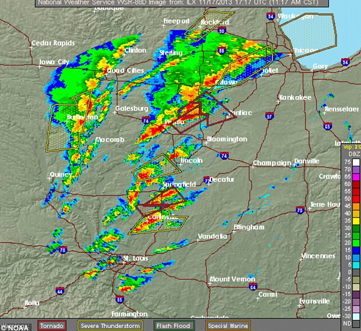
Half way through 2nd service Sunday School, the alert on my phone went off. A tornado warning had been issued for home. I frantically text my husband, asking if he was aware of the weather situation. He text back quickly, somewhat unusual for him, saying that the sirens were going off and he and my son were in the basement with some of our pets. He told me he was trying to get our son calmed down before going back upstairs to gather our other animals. This was also unusual behavior for him. Normally when there's severe weather (mostly in the Spring and Summer), we gather in the basement when the weather turns nasty and my husband never takes it seriously. He'll say he wants to stay upstairs and watch and will come down if it looks serious. Thankfully today he took the warnings seriously and got to safety.
Moments after getting a hold of him, someone came rushing in the room from the service, saying the church was being evacuated to the basement right as my phone alert went off again saying the area we were in was also under a tornado warning. I quickly found my daughter (the children's Sunday school classes were the first to be evacuated) and desperately tried calling my husband again. The cell service in our church's basement left a lot to be desired and my calls kept failing. Then it would ring and I would get no answer.
I'm sure most parents and spouses can understand that at this point, I was freaking out. I called my mother (who happens to live between our church and home) for an update since my radar wasn't working. She informed me that there was a large cell with rotation over the church and a cell over our hometown area that had confirmed tornadoes. She assured me she would try calling my husband and reminded me to stay in the basement until the weather cleared. Minutes later, a member of the church came down to the basement with a chunk of hail as big as his palm. He reported there was damage and flooding outside but it looked like we had missed anything major.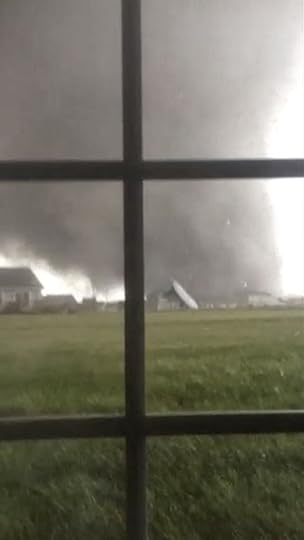
The next phone call was from my sister telling me that Washington, IL had been hit, part of it being completely wiped out. My town is only ten miles from Washington. Normal weather patterns usually affect my house and Washington. I was sure at this point, that something had happened to my family. Until my husband called. I almost cried when I read his name on the screen. He assured me that they were fine, he'd managed to get all the animals to the basement and the weather had cleared. As far as he could tell there had been no damage to our property though he swore he heard what he described as 'a freight train passing over the house after the sirens had gone off a second time'.
When our senior pastor gave the all clear I hurried home as fast as I could. Other than straight-line wind damage near our church, I was relieved to see no other damage on the 30 minute drive home. When I got home, I hugged my husband and son and tried to let go of the fear I had been feeling for the last two hours. My son excitedly told me how Daddy had brought his lizard down to the basement, dragged the reluctant dog down the stairs and searched the house for our cat before getting him a kennel and bringing him down while he objected indignantly. My family was safe and I was beyond thankful.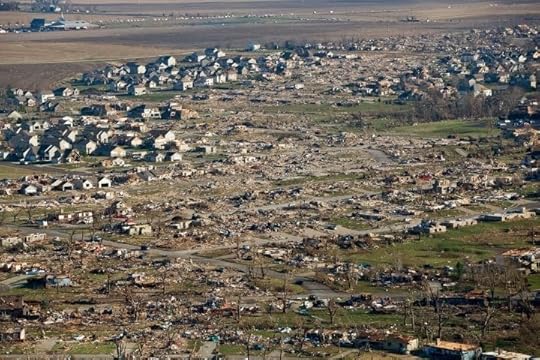
Then I turned on the TV. All the local stations, even CNN and the major networks were showing pictures and videos from the city next to our small town. I couldn't believe what I was seeing. A town that I had shopped and dined in, driven through countless times lay destroyed. An EF4 tornado, as we found out in the coming days, had touched down in the heart of town. In the coming days we found out that over 1000 homes had been destroyed, over 75 people had been injured and 1 man had died. My family could have been among the injured. My house could have been destroyed. My life could have been forever changed by a freak, fast-moving storm only ten miles from home.
The things I worried about suddenly seemed so small. My family was safe. This thanksgiving I have a lot to be thankful for. I'm thankful that I'm not planning a funeral for a loved one. I'm thankful that I'm not spending this holiday sifting through the rubble of what's left of my home. I'm thankful that my family was spared from having our lives turned upside down. I'm thankful that the surrounding communities here have come together to support the towns affected by the November 17 storms. I'm thankful that people who couldn't afford to give, gave anyway. I'm thankful that a house is just a house and things can be replaced. And I'm thankful that I know what always has and always will matter most. The people I love.
This week, instead of doing a Q&A with my readers, my post will be focusing on the holiday we are celebrating today. The spirit of Thanksgiving is all about the name, giving thanks.There's been a lot of social network buzz about thanksgiving with a November status drive called 30 days of thanks. Every day in November, users are encouraged to list something they are thankful for.
I chose not to participate as I feel we should be thankful EVERY day for what we have.I think the world we live in has grown pretty selfish. Materialism, money, fame, it's all gotten way out of hand. Especially here in the US. We tend to worry about what we DON'T have instead of counting the blessings of what we DO have.
Don't get me wrong, I've been guilty of this myself. All the time. But the last few weeks have been somewhat of a wake-up call for me in this department.
You see, less than two weeks ago, on Sunday, November 17, I was going to church with my daughter in a city 30 minutes from home. My son was staying home with my husband to help him work on his truck. It was an odd weather weekend for Illinois in November. Usually we have temperatures in the 30's and snow flurries. This particular weekend, the temps were in the high 60's and severe weather had been predicted for the afternoon.

Half way through 2nd service Sunday School, the alert on my phone went off. A tornado warning had been issued for home. I frantically text my husband, asking if he was aware of the weather situation. He text back quickly, somewhat unusual for him, saying that the sirens were going off and he and my son were in the basement with some of our pets. He told me he was trying to get our son calmed down before going back upstairs to gather our other animals. This was also unusual behavior for him. Normally when there's severe weather (mostly in the Spring and Summer), we gather in the basement when the weather turns nasty and my husband never takes it seriously. He'll say he wants to stay upstairs and watch and will come down if it looks serious. Thankfully today he took the warnings seriously and got to safety.
Moments after getting a hold of him, someone came rushing in the room from the service, saying the church was being evacuated to the basement right as my phone alert went off again saying the area we were in was also under a tornado warning. I quickly found my daughter (the children's Sunday school classes were the first to be evacuated) and desperately tried calling my husband again. The cell service in our church's basement left a lot to be desired and my calls kept failing. Then it would ring and I would get no answer.
I'm sure most parents and spouses can understand that at this point, I was freaking out. I called my mother (who happens to live between our church and home) for an update since my radar wasn't working. She informed me that there was a large cell with rotation over the church and a cell over our hometown area that had confirmed tornadoes. She assured me she would try calling my husband and reminded me to stay in the basement until the weather cleared. Minutes later, a member of the church came down to the basement with a chunk of hail as big as his palm. He reported there was damage and flooding outside but it looked like we had missed anything major.
The next phone call was from my sister telling me that Washington, IL had been hit, part of it being completely wiped out. My town is only ten miles from Washington. Normal weather patterns usually affect my house and Washington. I was sure at this point, that something had happened to my family. Until my husband called. I almost cried when I read his name on the screen. He assured me that they were fine, he'd managed to get all the animals to the basement and the weather had cleared. As far as he could tell there had been no damage to our property though he swore he heard what he described as 'a freight train passing over the house after the sirens had gone off a second time'.
When our senior pastor gave the all clear I hurried home as fast as I could. Other than straight-line wind damage near our church, I was relieved to see no other damage on the 30 minute drive home. When I got home, I hugged my husband and son and tried to let go of the fear I had been feeling for the last two hours. My son excitedly told me how Daddy had brought his lizard down to the basement, dragged the reluctant dog down the stairs and searched the house for our cat before getting him a kennel and bringing him down while he objected indignantly. My family was safe and I was beyond thankful.
Then I turned on the TV. All the local stations, even CNN and the major networks were showing pictures and videos from the city next to our small town. I couldn't believe what I was seeing. A town that I had shopped and dined in, driven through countless times lay destroyed. An EF4 tornado, as we found out in the coming days, had touched down in the heart of town. In the coming days we found out that over 1000 homes had been destroyed, over 75 people had been injured and 1 man had died. My family could have been among the injured. My house could have been destroyed. My life could have been forever changed by a freak, fast-moving storm only ten miles from home.
The things I worried about suddenly seemed so small. My family was safe. This thanksgiving I have a lot to be thankful for. I'm thankful that I'm not planning a funeral for a loved one. I'm thankful that I'm not spending this holiday sifting through the rubble of what's left of my home. I'm thankful that my family was spared from having our lives turned upside down. I'm thankful that the surrounding communities here have come together to support the towns affected by the November 17 storms. I'm thankful that people who couldn't afford to give, gave anyway. I'm thankful that a house is just a house and things can be replaced. And I'm thankful that I know what always has and always will matter most. The people I love.
November 22, 2013
Who do I thank for becoming a writer?
Who do I thank for becoming a writer?
A lot of people, really, but a few people really played a major part in launching my career as a writer.
My first grade teacher, Mrs. Ghormley was one. I was struggling enough with reading and writing that there was talk about holding me back a year. She spent a lot of (unpaid) time, helping me read and write, developing ways that motivated me to try harder and not give up. She 'custom made' education fr every one of her students, regardless of how much extra work it gave her. We had a giant ice cream party at the end of the year where we could earn extra scoops and toppings by finishing reading goals. We also had a class pet, a black rabbit named Floppy. Instead of reading to people, we would read to her. She didn't talk back, laugh at you if you made a mistake or correct every word you said. It was genius. I got over my fear of reading out loud and really improved in my reading skills. She also let us bring Floppy home on the weekends and holidays when we met our goals in class. My education improved so much that year that I not only moved on to the next grade with my class but I also wrote a book for the young author contest that was a finalist out of the entire school.
Moving on to high school I had even more teachers that helped encourage and cultivate my love for the written word. English isn't the most popular subject in school but I was lucky enough to have many teachers that made it an interesting and important subject. My creative writing teacher, Miss Hynes, didn't treat her class like we had to write the assignments just to get a good grade. She encouraged us to write great things that meant something, to us and to the reader.
My mother, also a teacher, (noticing a theme here?) was also very encouraging and supportive. She never put limits on my dreams and aspirations.
My grandma, who supported my mom unfailingly while she went to college to become a teacher while raising three girls, read through every horrible manuscript I wasted printer ink on and always had good comments as well as constructive criticism. She really encouraged me to self publish when I was too afraid to take that leap.
I'll interject a huge shout-out to teachers here. Your hard work does make a difference in student's lives. What you teach, how you encourage, all those extra things you do, could really change someone's life. You are the unsung heroes in life.
You never know who might inspire you to follow your dreams but those people will never give up on you. I just hope the ones in my life know how much their support means to me. :)
A lot of people, really, but a few people really played a major part in launching my career as a writer.
My first grade teacher, Mrs. Ghormley was one. I was struggling enough with reading and writing that there was talk about holding me back a year. She spent a lot of (unpaid) time, helping me read and write, developing ways that motivated me to try harder and not give up. She 'custom made' education fr every one of her students, regardless of how much extra work it gave her. We had a giant ice cream party at the end of the year where we could earn extra scoops and toppings by finishing reading goals. We also had a class pet, a black rabbit named Floppy. Instead of reading to people, we would read to her. She didn't talk back, laugh at you if you made a mistake or correct every word you said. It was genius. I got over my fear of reading out loud and really improved in my reading skills. She also let us bring Floppy home on the weekends and holidays when we met our goals in class. My education improved so much that year that I not only moved on to the next grade with my class but I also wrote a book for the young author contest that was a finalist out of the entire school.
Moving on to high school I had even more teachers that helped encourage and cultivate my love for the written word. English isn't the most popular subject in school but I was lucky enough to have many teachers that made it an interesting and important subject. My creative writing teacher, Miss Hynes, didn't treat her class like we had to write the assignments just to get a good grade. She encouraged us to write great things that meant something, to us and to the reader.
My mother, also a teacher, (noticing a theme here?) was also very encouraging and supportive. She never put limits on my dreams and aspirations.
My grandma, who supported my mom unfailingly while she went to college to become a teacher while raising three girls, read through every horrible manuscript I wasted printer ink on and always had good comments as well as constructive criticism. She really encouraged me to self publish when I was too afraid to take that leap.
I'll interject a huge shout-out to teachers here. Your hard work does make a difference in student's lives. What you teach, how you encourage, all those extra things you do, could really change someone's life. You are the unsung heroes in life.
You never know who might inspire you to follow your dreams but those people will never give up on you. I just hope the ones in my life know how much their support means to me. :)
November 21, 2013
Where do I get my ideas? - November 21, 2013 - Thursdays with the Author
Last night I had my first book signing at my local library. We did a Q&A time with the readers and they had some really great questions for me. Here's one of them:
Question: Where do you get the ideas for these stories?
Answer: Honestly I get ideas from just about anything. The spark for Dark Mountains started in my creative writing class my senior year in high school. The teacher gave as an assignment to write a story based on a plant (tree, bush, flower, etc) and I picked the common bluebell. I wrote a very short story about two young children, best friends, that picked the flowers to give to their mother's.

A year later, while I was on bed rest with my first child, I was bored out of my mind and got out my writing folder from that class. I found the story and read through it. Ideas about how those two children became best friends, their lives together as they grew up, etc, started popping into my head. So I began to write. Dark Mountains would be published eight years later.
The rest of the ideas for Dark Mountains came from so many different places. Cole (the hero) decided to become a soldier after 9/11. I was a junior in high school at the time and I remember vividly what happened that day. Many of my classmates and school friends joined the military as a result of that day so it was very easy to inject that into the story line. I also interviewed and read blogs from soldiers that served in Iraq and really tried to understand what it was like fighting over there. I wanted to be able to use all of the senses when describing scenes so the reader wasn't just reading about what someone was going through, but experiencing it themselves.
Libby (the heroine) came from an abusive family life. Part of the inspiration for that story line came from my own childhood, growing up with a verbally abusive and alcoholic father. Of course, Jackson (the villain) was way worse than anything I'd ever experienced so I had to do a lot of research on abuse and the scars they leave on families that live with it. Reading personal testimonies from abuse victims was very tough but I used the emotions they described and tried to put myself in their shoes while I wrote the scenes.
In the Irish Strength the inspiration, again, came from multiple sources. I was researching taking a trip to Ireland for our 10th wedding anniversary and stumbled on a website that contained some Celtic mythology. I started reading and found the myth about the four treasures from the cities of light. I started writing ideas right away, mixing a few different Celtic myths in to make the story really flow.
I've had dialogue ideas and story lines come into my head while over-hearing conversations, on vacation at the beach, listening to a song on the radio, even taking my kids to the zoo. For a writer, inspiration is everywhere. My advice: no matter where you are, when an idea pops into your head, no matter how ridiculous it might seem, WRITE IT DOWN. You never know where you'll be able to use it or what kind of story it could make.
Question: Where do you get the ideas for these stories?
Answer: Honestly I get ideas from just about anything. The spark for Dark Mountains started in my creative writing class my senior year in high school. The teacher gave as an assignment to write a story based on a plant (tree, bush, flower, etc) and I picked the common bluebell. I wrote a very short story about two young children, best friends, that picked the flowers to give to their mother's.

A year later, while I was on bed rest with my first child, I was bored out of my mind and got out my writing folder from that class. I found the story and read through it. Ideas about how those two children became best friends, their lives together as they grew up, etc, started popping into my head. So I began to write. Dark Mountains would be published eight years later.
The rest of the ideas for Dark Mountains came from so many different places. Cole (the hero) decided to become a soldier after 9/11. I was a junior in high school at the time and I remember vividly what happened that day. Many of my classmates and school friends joined the military as a result of that day so it was very easy to inject that into the story line. I also interviewed and read blogs from soldiers that served in Iraq and really tried to understand what it was like fighting over there. I wanted to be able to use all of the senses when describing scenes so the reader wasn't just reading about what someone was going through, but experiencing it themselves.
Libby (the heroine) came from an abusive family life. Part of the inspiration for that story line came from my own childhood, growing up with a verbally abusive and alcoholic father. Of course, Jackson (the villain) was way worse than anything I'd ever experienced so I had to do a lot of research on abuse and the scars they leave on families that live with it. Reading personal testimonies from abuse victims was very tough but I used the emotions they described and tried to put myself in their shoes while I wrote the scenes.
In the Irish Strength the inspiration, again, came from multiple sources. I was researching taking a trip to Ireland for our 10th wedding anniversary and stumbled on a website that contained some Celtic mythology. I started reading and found the myth about the four treasures from the cities of light. I started writing ideas right away, mixing a few different Celtic myths in to make the story really flow.
I've had dialogue ideas and story lines come into my head while over-hearing conversations, on vacation at the beach, listening to a song on the radio, even taking my kids to the zoo. For a writer, inspiration is everywhere. My advice: no matter where you are, when an idea pops into your head, no matter how ridiculous it might seem, WRITE IT DOWN. You never know where you'll be able to use it or what kind of story it could make.
November 14, 2013
What I'm Working On - November 14, 2013 - Thursdays with the Author
Question: What are you working on right now?
Answer: I'm one of those writers who writes what I feel. I don't work with a schedule, outline or plan. I write whatever is in my head at the time. I don't recommend this for my fellow writers but you have to find what works for you and use it.
So as for not having a plan, I have a few different projects I'm working on right now. I am getting feedback from my beta readers and editing accordingly for Irish Strength - Irish Treasures - Book One and preparing it for the upcoming January release. I am editing and adding to Irish Heart - Irish Treasures - Book Two. I continue to work on Irish Sight- Irish Treasures - Book Three. I've started working on a children's book Manda Panda's Tummy Ache, which I'll be writing under the pen name Miss Amanda. I have a few more projects in the work that I pick up and add to when inspiration strikes including a historical romance with horse racing inspiration and a contemporary fiction set in Nashville. My first Book Signing is next week. I am very excited to meet my readers in person and have a Q&A session with them!I continue to improve my internet presence through blogging and social media. Outside of writing, my daughter'a sixth birthday is tomorrow and I'm planning her party for this weekend. Then there's Thanksgiving and Christmas fast approaching. Then there's my daycare kids, which for any if you that didn't know, is my day job. I run an I'm-home daycare during the week, which is what allowed me to stay at home with my children. So between my day job and my own children, finding time to sit down and write is not easy. I tend to keep a notepad or my phone app open to jot ideas down as they pop up. And of course, I take advantage of naps and bedtimes and weekend sleep-overs at Grandma's. ;)
Answer: I'm one of those writers who writes what I feel. I don't work with a schedule, outline or plan. I write whatever is in my head at the time. I don't recommend this for my fellow writers but you have to find what works for you and use it.
So as for not having a plan, I have a few different projects I'm working on right now. I am getting feedback from my beta readers and editing accordingly for Irish Strength - Irish Treasures - Book One and preparing it for the upcoming January release. I am editing and adding to Irish Heart - Irish Treasures - Book Two. I continue to work on Irish Sight- Irish Treasures - Book Three. I've started working on a children's book Manda Panda's Tummy Ache, which I'll be writing under the pen name Miss Amanda. I have a few more projects in the work that I pick up and add to when inspiration strikes including a historical romance with horse racing inspiration and a contemporary fiction set in Nashville. My first Book Signing is next week. I am very excited to meet my readers in person and have a Q&A session with them!I continue to improve my internet presence through blogging and social media. Outside of writing, my daughter'a sixth birthday is tomorrow and I'm planning her party for this weekend. Then there's Thanksgiving and Christmas fast approaching. Then there's my daycare kids, which for any if you that didn't know, is my day job. I run an I'm-home daycare during the week, which is what allowed me to stay at home with my children. So between my day job and my own children, finding time to sit down and write is not easy. I tend to keep a notepad or my phone app open to jot ideas down as they pop up. And of course, I take advantage of naps and bedtimes and weekend sleep-overs at Grandma's. ;)
November 8, 2013
Handling Negative Feedback - Friday, November 8 - Thursdays with the Author
Yesterday, I was juggling doctor appointments, shopping and picking the kids up from school on-time so I completely forgot about my blog post. Better late than never (I sometimes say) so here goes:
Question: How do you handle negative feedback on a book?
Answer: The first negative feedback I received, I handled very badly. I at least had the good sense not to comment on the Amazon reviews section, venting instead via my Facebook page. I had received a 2 star review and I actually knew the person who'd left the review. Not only that, this person was family! I know we authors are supposed to be able to handle negative criticism but I hadn't learned that particular talent yet.
This reviewer admitted that she hadn't finished the book. Her biggest reason for such a bad review? One of the characters used the Lord's name in vain. (yes really. That was actually her reason.) She gave two other reasons for the general despising of my first novel to be published. They were: 1) The amount of cuss words (FYI there's less than 10 in the entire thing) and the descriptive sex scenes (which were under 5 in the entire novel). She continued with an explanation that sex should be implied, not explained. But she made it very clear that she stopped reading the minute I took the Lord's name in vain and did not finish the book. Which meant she didn't even get to read the rest of the cuss words and sex scenes! ;)
She also implied that since my bio page stated that I sang at church, that she expected better of me. The actual title of her review was "Don't judge a book by the author's bio". So I had to comment (via Facebook) that maybe I go to a Pagan church where people have sex in front of everybody during services. (I don't, by the way but I really felt like being a smart-A$$). (Uh, oh. Sorry for the curse word). I did end up changing my bio to 'singing' instead of 'singing at church' so no one else would come to the same conclusion as my (apparently) very shocked and disappointed relative. So my going off the deep-end on Facebook because of (what I saw as) a betrayal by a family member continued...
I (shamefully) declared that said relative was a religious zealot and should have known that since the book is a ROMANCE, it would have sex in it. I had assumed too, since the book wasn't classified as religious or inspirational that it would also have adult content and language. Well you know what they say about people who assume! ;)(in case you don't: It makes an A$ out of U and Me. Get it?)
Well my little, unprofessional outburst fired up a literal sH*t-storm (oops, there's another curse word... guess I still have a little bit of bitterness) which resulted in yet another family member, angry that I called the first family member a religious zealot, echoed the first relative's review with a negative one of her own. On Amazon. Where everyone could see it. Where I can't delete it. Where it effects the sale of my book. This relative, at least left me a 4 star rating. But echoed that the cursing, use of the Lord's name in vain and sex were completely unnecessary. And since I knew who this particular relative was, I again was angry. Because this specific relative had read the Shades of Grey series and loved it! That series is like hard-core porn compared to what I wrote, but I digress...
Another factor of the negative review is that you can gain positives out of it. Say a reviewer said 'I loved the story-line but it was too short! Would like to have seen more detail between so and so or more conflict with such and such.' Perhaps another reviewer said: 'loved the book but hated the cover. Needs a new one.' or: 'good story but too many grammatical errors'.USE these negative reviews to your advantage. Fix your mistakes, make a better cover, add more to the story and release a second edition.
My point is, that though I didn't handle my first negative reviews very well, I have learned that it doesn't matter. The rest of my reviews for that particular book are all 4-5 star ratings so I have to assume (yes there's that word again) that people like my book. I have to assume that MOST people will understand what my book will be about when it's categorized as a romantic suspense. I have to assume that people will read the blurb and positive reviews and understand what the negative reviews are: proof that you can't please everyone.
And that is the absolute truth. An author will NEVER please every reader. Most of the time we will pi$$-off at least a few of them. We have to learn how to accept that fact and deal with the negative reviews.
Look at J.K. Rowling. One of the biggest literary figures of this century, immensely popular and famous yet her book was BANNED by some libraries for it's references to magic! When I say some readers will hate what you write, well she had hordes of people that hated what she wrote, boycotted it even, yet she went on to sell over 400 million copies (that figure is from 2011!). So there's you proof.
Take the negative reviews, the criticism, hate, displeasure, betrayal, etc and let it go. Because in the end it doesn't really matter. (Of course that's a different story if ALL your reviews are negative...The different story being that something is probably MAJORLY wrong with your book, but I digress again.)
You write what you write because you're passionate about it. Because you have this story bursting inside you, screaming to be told. It's YOUR story, which means it's no one else's so someone else may not like it. That's life and it's okay.
These are negative reviews that you should LOVE to get because in reality, they are POSITIVE. They give you constructive criticism, ways to improve, ideas, etc. Take it and run with it. Being a writer is ALL about perfecting your craft. You are ALWAYS learning. Your next book should always be your BEST book and the next one and the next one and so on. Take all the reviews, all the criticism, all the ideas and learn from them. Because that is really what will make you a better writer. :)
Question: How do you handle negative feedback on a book?
Answer: The first negative feedback I received, I handled very badly. I at least had the good sense not to comment on the Amazon reviews section, venting instead via my Facebook page. I had received a 2 star review and I actually knew the person who'd left the review. Not only that, this person was family! I know we authors are supposed to be able to handle negative criticism but I hadn't learned that particular talent yet.
This reviewer admitted that she hadn't finished the book. Her biggest reason for such a bad review? One of the characters used the Lord's name in vain. (yes really. That was actually her reason.) She gave two other reasons for the general despising of my first novel to be published. They were: 1) The amount of cuss words (FYI there's less than 10 in the entire thing) and the descriptive sex scenes (which were under 5 in the entire novel). She continued with an explanation that sex should be implied, not explained. But she made it very clear that she stopped reading the minute I took the Lord's name in vain and did not finish the book. Which meant she didn't even get to read the rest of the cuss words and sex scenes! ;)
She also implied that since my bio page stated that I sang at church, that she expected better of me. The actual title of her review was "Don't judge a book by the author's bio". So I had to comment (via Facebook) that maybe I go to a Pagan church where people have sex in front of everybody during services. (I don't, by the way but I really felt like being a smart-A$$). (Uh, oh. Sorry for the curse word). I did end up changing my bio to 'singing' instead of 'singing at church' so no one else would come to the same conclusion as my (apparently) very shocked and disappointed relative. So my going off the deep-end on Facebook because of (what I saw as) a betrayal by a family member continued...
I (shamefully) declared that said relative was a religious zealot and should have known that since the book is a ROMANCE, it would have sex in it. I had assumed too, since the book wasn't classified as religious or inspirational that it would also have adult content and language. Well you know what they say about people who assume! ;)(in case you don't: It makes an A$ out of U and Me. Get it?)
Well my little, unprofessional outburst fired up a literal sH*t-storm (oops, there's another curse word... guess I still have a little bit of bitterness) which resulted in yet another family member, angry that I called the first family member a religious zealot, echoed the first relative's review with a negative one of her own. On Amazon. Where everyone could see it. Where I can't delete it. Where it effects the sale of my book. This relative, at least left me a 4 star rating. But echoed that the cursing, use of the Lord's name in vain and sex were completely unnecessary. And since I knew who this particular relative was, I again was angry. Because this specific relative had read the Shades of Grey series and loved it! That series is like hard-core porn compared to what I wrote, but I digress...
Another factor of the negative review is that you can gain positives out of it. Say a reviewer said 'I loved the story-line but it was too short! Would like to have seen more detail between so and so or more conflict with such and such.' Perhaps another reviewer said: 'loved the book but hated the cover. Needs a new one.' or: 'good story but too many grammatical errors'.USE these negative reviews to your advantage. Fix your mistakes, make a better cover, add more to the story and release a second edition.
My point is, that though I didn't handle my first negative reviews very well, I have learned that it doesn't matter. The rest of my reviews for that particular book are all 4-5 star ratings so I have to assume (yes there's that word again) that people like my book. I have to assume that MOST people will understand what my book will be about when it's categorized as a romantic suspense. I have to assume that people will read the blurb and positive reviews and understand what the negative reviews are: proof that you can't please everyone.
And that is the absolute truth. An author will NEVER please every reader. Most of the time we will pi$$-off at least a few of them. We have to learn how to accept that fact and deal with the negative reviews.
Look at J.K. Rowling. One of the biggest literary figures of this century, immensely popular and famous yet her book was BANNED by some libraries for it's references to magic! When I say some readers will hate what you write, well she had hordes of people that hated what she wrote, boycotted it even, yet she went on to sell over 400 million copies (that figure is from 2011!). So there's you proof.
Take the negative reviews, the criticism, hate, displeasure, betrayal, etc and let it go. Because in the end it doesn't really matter. (Of course that's a different story if ALL your reviews are negative...The different story being that something is probably MAJORLY wrong with your book, but I digress again.)
You write what you write because you're passionate about it. Because you have this story bursting inside you, screaming to be told. It's YOUR story, which means it's no one else's so someone else may not like it. That's life and it's okay.
These are negative reviews that you should LOVE to get because in reality, they are POSITIVE. They give you constructive criticism, ways to improve, ideas, etc. Take it and run with it. Being a writer is ALL about perfecting your craft. You are ALWAYS learning. Your next book should always be your BEST book and the next one and the next one and so on. Take all the reviews, all the criticism, all the ideas and learn from them. Because that is really what will make you a better writer. :)
November 6, 2013
Book Signing - November 20
When: Wednesday, November 20, 2013 6:00-8:00 pm
Where: Deer Creek District Library
203 E. First Ave
Deer Creek, IL 61733
(309) 447-6724
RSVP: Call the library or email AuthorAmandaMeredith@gmail.com to reserve a copy of Dark Mountains for only $6. Extra copies will be available but not guaranteed unless you reserve one!
This is an open event. No reservations (besides purchasing a book) are required.
Prizes: Two raffle prizes will be given away. Guests can choose which raffle to be entered in. First prize includes a Kindle Touch eReader and a signed copy of Dark Mountains. Second prize includes a $25 Amazon gift card and a signed copy of Dark Mountains.
Extras: Cake and punch provided
The author will be signing copies of Dark Mountains. There will be a short Q&A session.
Where: Deer Creek District Library
203 E. First Ave
Deer Creek, IL 61733
(309) 447-6724
RSVP: Call the library or email AuthorAmandaMeredith@gmail.com to reserve a copy of Dark Mountains for only $6. Extra copies will be available but not guaranteed unless you reserve one!
This is an open event. No reservations (besides purchasing a book) are required.
Prizes: Two raffle prizes will be given away. Guests can choose which raffle to be entered in. First prize includes a Kindle Touch eReader and a signed copy of Dark Mountains. Second prize includes a $25 Amazon gift card and a signed copy of Dark Mountains.
Extras: Cake and punch provided
The author will be signing copies of Dark Mountains. There will be a short Q&A session.
Writer's Ramblings
Author News, Advice, Tips, and Resources for Writers and Sharing of General Awesomeness!
- Amanda Meredith's profile
- 15 followers

