Matthew C. Mitchell's Blog, page 70
April 15, 2017



April 9, 2017
[Matt's Messages] "Godforsaken: Jesus"
 “Godforsaken: Jesus”
April 9, 2017 :: Psalm 22 // Matthew 27
Two weeks ago we read Psalm 22 from the perspective of its author, King David.
David wrote this psalm out of an agonizing personal experience, and he gave it the believing community to use in worship.
As we said two weeks ago, we don’t like talking like Psalm 22 talks. We’d rather quote Psalm 23 because it’s so comforting. But as good as Psalm 23 is, it’s not enough. We also need Psalm 22 for those times when we feel abandoned and alone.
Last time, we studied Psalm 22 as a psalm of lament and saw how God has provided a divine pattern for our prayers when we hurt. We don’t just smile, grin, and bear it. We don’t pretend and fake it until we make it. We bring our whole selves to the Lord in honesty including all of our pain and fear and sorrow and anguish.
The whole blistering mess.
That’s what God wants. Bring Him the whole blistering mess when you feel forsaken.
But we also felt that there was something more going on in this psalm.
We couldn’t avoid it!
Everywhere we turned, we heard Jesus singing this psalm.
We saw Jesus filling up the details of this psalm.
This psalm was clearly prophetic.
It wasn’t just powerful lament. It was prefigured lament.
As so many other things in David’s life, he was a foretaste of the Greater One to come.
David was the shadow. Jesus was the substance.
David was the type. Jesus was the antitype.
David was the prototype. Jesus was the ultimate iteration. The fulfillment.
For a thousand years, Jewish believers had been singing Psalm 22 when they were in pain.
And then when Jesus was the crucified, He sang Psalm 22 like no one ever before or since.
“‘Eloi, Eloi, lama sabachthani?’ which means, ‘My God, my God, why have you forsaken me?’” (Matthew 27:46).
This is the perfect psalm to read as we enter into Passion Week.
As we said last time, only Isaiah 53 rivals this psalm for prophetic insight into the crucifixion.
And, think about this, it was written about a 1000 years before Jesus was born!
Here’s what I want to do today. I want to read Psalm 22. Just read it. Let the words wash over us again. No commentary. Just remember what we learned last time as we read it.
And then I want to leave a finger in Psalm 22 and go Matthew 27 and read the account of the crucifixion of Jesus there in Matthew 27 and see how Jesus filled up Psalm 22. You with me?
Let’s read Psalm 22.
[scripture reading, prayer]
So leave one finger there in Psalm 22 and turn over to Matthew 27. Matthew 27:27.
Our Lord Jesus has been on trial before the Sanhedrin and before the Roman governor, Pilate. Pilate offered to release Jesus but the crowd chose for the notorious prisoner, Barabbas to be released and Jesus to be crucified.
“Crucify him!”
Earlier that week, it was “Hosanna! Hosanna!”
Now it’s, “Crucify him! Crucify him!”
Pilate washed his hands of the matter, he had Jesus flogged and he handed him over to be crucified. V.27 Listen for Psalm 22.
“Then the governor's soldiers took Jesus into the Praetorium and gathered the whole company of soldiers around him. They stripped him and put a scarlet robe on him, and then twisted together a crown of thorns and set it on his head. They put a staff in his right hand and knelt in front of him and mocked him. ‘Hail, king of the Jews!’ they said. They spit on him, and took the staff and struck him on the head again and again.”
Don’t forget that this happened.
Never forget what was done to Jesus.
It’s so easy to go about our daily lives and put these thoughts out of our minds.
But we should come back to this again and again.
This happened to Jesus.
And in fact, He chose it, for us. V.31
“After they had mocked him, they took off the robe and put his own clothes on him. Then they led him away to crucify him.”
You know what that means, right?
It wasn’t just figurative language about dog bites piercing David’s hands and feet. Psalm 22:16
They actually pierced Jesus’ hands and feet with nails. With nails!
The nailed him. And then he struggled to breathe. He’d pull up on the nails to get his breath then collapse back down.
It’s called “excruciating” pain because it has the word “cruc” or “cross” in the middle of it. V.32
“As they were going out, they met a man from Cyrene, named Simon, and they forced him to carry the cross. They came to a place called Golgotha (which means The Place of the Skull). [The Latin for Skull is “Calvi” so we call this “Calvary.” “Skull hill.”] There they offered Jesus wine to drink, mixed with gall; but after tasting it, he refused to drink it.”
He didn’t want to be drugged. He didn’t want to be in a haze. He wanted to be awake and alert as much as he could be.
But He was so thirsty. Psalm 22:15
“My strength is dried up like a potsherd, and my tongue sticks to the roofo my mouth; you lay me in the dust of death.”
He lived that song. The Gospel of John chapter 19, verse 28 tells us “so that the Scripture would be fulfilled, Jesus said, ‘I am thirsty.’” v.35
“When they had crucified him, they divided up his clothes by casting lots.”
That’s verse 18 of Psalm 22! “They divide my garments among them and cast lots for my clothing.”
David may have just been using figurative language to mean that they were circling around him and wanting him to die and leave his stuff behind.
But they actually did it to Jesus.
Think about that. One of these guys went home that night with Jesus’ clothes. Maybe wearing them.
“Where’d you get that?” his wife asks.
“I won it. We cast lots. How do you think it looks?”
“Dusty. Dirty. Bloody. But whatever.” v.36
“And sitting down, they kept watch over him there.”
That’s Psalm 22, verse 17.
“I can count all my bones; people stare and gloat over me.” v.37
“Above his head they placed the written charge against him: THIS IS JESUS, THE KING OF THE JEWS. Two robbers were crucified with him, one on his right and one on his left. Those who passed by hurled insults at him, shaking their heads and saying, ‘You who are going to destroy the temple and build it in three days, save yourself! Come down from the cross, if you are the Son of God!’”
Look at Psalm 22 again. Look at verse 7.
“All who see me mock me; they hurl insults, shaking their heads."
That was written a thousand years before Jesus was even born.
Look at the next verse Psalm 22:8, “He trust in the LORD, let the LORD rescue him.”
Now turn back to Matthew 27. Pick up again in verse 41.
“In the same way the chief priests, the teachers of the law and the elders mocked him. ‘He saved others,’ they said, ‘but he can't save himself! He's the King of Israel! Let him come down now from the cross, and we will believe in him. He trusts in God. Let God rescue him now if he wants him, for he said, 'I am the Son of God.'’”
Sound familiar?
These people were unconsciously fulfilling Scripture.
They didn’t intend to be the bad guys of Psalm 22, but that’s exactly what they were.
When Jesus was fulfilling it.
V.44 “In the same way the robbers who were crucified with him also heaped insults on him. From the sixth hour until the ninth hour darkness came over all the land. About the ninth hour Jesus cried out in a loud voice, ‘Eloi, Eloi, lama sabachthani?’–which means, ‘My God, my God, why have you forsaken me?’”
What David just tasted, Jesus swallowed whole.
Jesus lived out this question like no one ever before.
Psalm 22, verse 1 was on His lips when He was dying for you and me.
Let us never forget it.
Jesus was abandoned.
Jesus was forsaken.
Not just forsaken. Jesus suffered the wrath of God.
God was not just absent from Jesus. God was against Jesus.
In those moments. In those minutes.
Last week, Darko said that the Father turned His face away from the Son on the Cross.
He did.
And more. He poured out His just wrath on the Son on the Cross.
It’s unthinkable.
We can sing it better than we can say it.
Alas! and did my Savior bleed
And did my Sov’reign die?
Would He devote that sacred head
For such a worm as I?
Was it for crimes that I had done
He groaned upon the tree?
Amazing pity! grace unknown!
And love beyond degree!
Well might the sun in darkness hide
And shut his glories in,
When Christ, the mighty Maker died,
For man the creature’s sin.
Thus might I hide my blushing face
While His dear cross appears,
Dissolve my heart in thankfulness,
And melt my eyes to tears.
No wonder the Sun went dark for 3 hours.
How could it shine when Jesus was being forsaken?!
“‘Eloi, Eloi, lama sabachthani?'”
He knew the answer the question, but He was experiencing that question like no one ever had or ever will.
We call this the “Cry of Dereliction from the Cross.”
And it’s one of the most agonizingly awful moments in human history.
“‘Eloi, Eloi, lama sabachthani?'”
Some people there misunderstood him. They thought he was saying, “Elijah, Eli, not Eloi, ‘my God.’” v.47
“When some of those standing there heard this, they said, ‘He's calling Elijah.’ Immediately one of them ran and got a sponge. He filled it with wine vinegar, put it on a stick, and offered it to Jesus to drink. The rest said, ‘Now leave him alone. Let's see if Elijah comes to save him.’ And when Jesus had cried out again in a loud voice, he gave up his spirit.”
He died!
And look what that did. V.51
“At that moment the curtain of the temple was torn in two from top to bottom. The earth shook and the rocks split. The tombs broke open and the bodies of many holy people who had died were raised to life. They came out of the tombs, and after Jesus' resurrection they went into the holy city and appeared to many people. [That’s crazy!] When the centurion and those with him who were guarding Jesus saw the earthquake and all that had happened, they were terrified, and exclaimed, ‘Surely he was the Son of God!’”
Look what Jesus’ suffering did!
It brought new life. A foretaste of the resurrection to come.
It brought a new perspective. This centurion understands Who Jesus really is. “He is the Son of God!”
And it brought new access to God. The curtain of the temple was torn in two from top to bottom.
That means that the way in to the Holy of Holies has been opened.
It’s an amazing symbol of access to God.
No barriers.
Jesus has opened the way to God.
Let me put it this way.
JESUS WAS FORSAKEN SO THAT HIS PEOPLE WILL NEVER BE.
We just sang it a little bit ago,
I'm forgiven because you were forsaken
I'm accepted, you were condemned
I'm alive and well
Your spirit is within me
Because you died and rose again
Amazing love, how can it be?
That you, my king, would die for me?
Amazing love I know it's true
Its my joy to honor you
In all I do
I honor you
WORSHIP AT THE LORD’S TABLE
Jesus was forsaken so that His people will never be forsaken.
What a perfect thought to go to the table with.
There’s a lot of things we could say about the juxtaposition of Psalm 22 and Matthew 27.
I think it’s amazing, for example, how perfectly Scripture was fulfilled a thousand years after it was written.
And so specifically and particularly. You normally think about the New Testament fulfillments as being more spiritual.
But these were very literal fulfillments, weren’t they?
That’s interesting.
But I don’t think that’s what we ought to focus on right now.
What we ought to focus on is the suffering of Jesus on our behalf.
Think about this.
Sin must be completely horrible for this to be what it takes to deal with it.
This table stands for our sins.
And the sacrifice of Jesus it took to forgive us of our sins.
Romans 3.
“for all have sinned and fall short of the glory of God, and are justified freely by his grace through the redemption that came by Christ Jesus. God presented him [on the Cross] as a sacrifice of atonement, through faith in his blood.”
This is what it took for our sins to be forgiven.
It took Jesus living out Psalm 22 to an unimaginable degree.
One time, I preached a sermon called “Abandoned,” and about all I did was read Mark chapters 14 and 15. And you see how Jesus was abandoned by everybody.
Including God the Father.
Yes, by mutual arrangement. They agreed on that in advance. The Father and the Son both chose it out of love for us.
But they did it! The Father abandoned the Son and even more poured out His wrath on Him, a sacrifice of atonement through faith in His blood.
That’s how horrible sin is.
And how great is the love God has shown to His people!
I love those songs that express incredulity over this.
“And can it be that I should gain
An int'rest in the Savior's blood?
Died He for me, who caused His pain?
For me, who Him to death pursued?
Amazing love! how can it be
That Thou, my God, should die for me?”
“Would He devote that Sacred Head for such a worm as I?”
“Amazing love, how can it be?
That you, my king. would die for me”
I almost can’t believe it!
What love is this?
Never forget.
Never forget what Jesus suffered for you and for me.
Jesus was forsaken so that His people will never be.
But you gotta be part of His people.
It’s only those who are in Christ Jesus who have no condemnation.
Are you in Christ Jesus?
If you are not yet or you don’t know, then we invite you to put your faith in Jesus right now. Trust in Him and what Hid for you at Calvary.
Don’t look away.
Don’t walk away.
Come to Christ.
And all who have come to Christ, thank Him for what He did for you and for me.
Jesus was forsaken so that we will never be.
Messages in this Series
1. Godforsaken: David
April 8, 2017

April 7, 2017
"Resisting Gossip" Now Available in Korean! 험담을 멈추라
 Rejoice with me!
Our little book has made it safely across the ocean and been translated into the Korean language.
Thank you, CLC Korea, for making it available to readers!
At least, I think that's what this is. I can't read a word of Korean.
April 1, 2017

March 26, 2017
[Matt's Messages] "Godforsaken: David"
 “Godforsaken: David”
March 26, 2017 :: Psalm 22
At this time of year, I like to take at least a few Sunday sermons to contemplate more deeply the Cross of Jesus Christ.
This season leading up to Passion Week and finally Resurrection Sunday is a very appropriate time to consider together what our Lord suffered in our place.
And several months ago I felt led to study Psalm 22 for this year’s Cross series.
Because more than any other Psalm in the Old Testament, Psalm 22 captures the experience of our Lord at His crucifixion.
This is the psalm that was on His lips as He bled and died for us and our salvation.
Psalm 22.
“‘Eloi, Eloi, lama sabachthani?’ which means, ‘My God, my God, why have you forsaken me?’” (Matthew 27:46).
That’s the first line of Psalm 22.
And it’s not the last one that was fulfilled at the Cross.
Isaiah 53 is probably the only passage stronger, more vivid, in the Old Testament to depict the coming suffering of the Messiah.
Psalm 22 is either tied with Isaiah 53 or a very close second.
Today, I want to do something a little different and little difficult.
I want us to go back in time and read Psalm 22 like an Old Testament believer would.
Because before Jesus fulfilled this psalm, King David lived it.
This is psalm was written by King David, I believe, about his own experience in the first place.
He wrote it to be sung by other believers. It is a psalm set to the tune of “Doe of the Morning.”
We don’t know how that song sounded, but it was probably a sad tune in a minor key.
Because the lyrics are incredibly sad.
Any song that begins with “My God, my God, why have you forsaken me?” is going to at least start out low and slow.
So, what I want to do is to consider this psalm from David’s perspective first, as the author and first singer.
And then next time, we’ll consider it more closely from Jesus’ perspective as the ultimate singer of Psalm 22.
Next time, we’ll turn to Matthew 27 and see how this song played out in the crucifixion of our Lord.
But this time, I want us to see it as a template for our own prayers during times when we feel abandoned and alone. Like David did.
It’s almost impossible for a Christian to not hear Jesus and not see Jesus in every line of this song.
And that’s right! Because He is.
This is a prophetic psalm. Few are more prophetic!
But I think that it was first off about how David felt before it was about how Jesus felt.
There are a lot of things like that in the Old Testament, aren’t there?
The Old Testament is full of shadows. But Christ is the substance.
The Old Testament is full of lesser things. And Christ is the greater.
The Old Testament is full of figures and metaphors and types and analogies.
And Christ is the Big Reality that all of those smaller things were pointing towards.
So it is with this psalm.
David was feeling “Godforsaken.”
And Jesus truly was.
You and I don’t like to talk like this psalm does.
We don’t like to use words like these to talk to God.
One reason for that is that we don’t like to feel bad. And these words are all about feeling bad!
We’d all rather sing Psalm 23 than the psalm that comes before it.
Psalm 23 is so comforting, and Psalm 22 is so not.
But we need both.
Because there are times when we need to lament.
We need biblical language of lament for those times when we are experiencing suffering.
I’m so glad that our God has given us language like this to use to express our true feelings.
Because there are times when you need to pull out songs like Psalm 22.
If you have never felt like Psalm 22, just wait.
You haven’t lived long enough.
Psalm 22 is for times of trouble when it feels like God is far far away.
And you feel awful and alone.
When you feel like that, you need a words to pray.
You need a pattern to pray.
And it’s as good as Psalm 23 is, it’s not enough. If it was enough then God would have skipped 22 and gone right to 23.
God is greater than that and wiser. He gave us all of the Psalms to learn how to talk to God.
This morning, I only have two points that I’m going to make because I don’t want to get in the way of the words of the psalm. But there are two big applications that I want to get across as we read it together. Here’s the first one:
#1. TALK TO YOUR GOD WHEN YOU FEEL FORSAKEN.
I think that’s really big.
Because you won’t necessarily feel like it.
You will feel alone and you won’t feel like talking to God.
But these psalms of lament like Psalm 22 show us what a believer does when he or she is hurting badly.
They take that pain to their Lord.
Whenever I read verse 1, I almost miss one of the most important words in verse 1.
I hear the word, “Why” and I hear the word “forsaken.”
And those are important words. But what word do I often miss?
“My.” “My God, my God.”
He says it again in verse 2. “My God.”
David doesn’t stop relating to God just because he’s bewildered and confused and in pain.
He goes to God with his bewilderment, confusion, and pain!
He takes his agony and anguish directly to His God. Let’s read.
“Psalm 22. For the director of music. To the tune of ‘The Doe of the Morning.’ A psalm of David. My God, my God, why have you forsaken me? Why are you so far from saving me, so far from the words of my groaning? O my God, I cry out by day, but you do not answer, by night, and am not silent.”
Are there more painful words?
That word “groaning” in verse 1 is the same word as “roaring” in verse 13.
He is hurting so bad that it’s like a primal yell.
He feels abandoned and alone and in pain and ... forsaken.
Like God is no longer answering His calls.
“I call you day and night, but you keep swiping left. I think my number is blocked. I think you’ve unfriended me.
All I get is blank wall.
My prayers go nowhere. They hit the ceiling and bounce back!
... I am all alone.”
He knows that God exists, but God is so silent and is allowing him to go through so much pain and suffering. V.3
“Yet you are enthroned as the Holy One; you are the praise of Israel. In you our fathers put their trust; they trusted and you delivered them. They cried to you and were saved; in you they trusted and were not disappointed.”
“I know you exist. I know what you have done for Israel. I’ve read Exodus. Our ancestors were not disappointed....But that’s how I feel.” v.6
“But I am a worm and not a man [I feel like I’ve lost my humanity!], scorned by men and despised by the people. All who see me mock me; they hurl insults, shaking their heads: ‘He trusts in the LORD; let the LORD rescue him. Let him deliver him, since he delights in him.’”
You see Jesus in there, don’t you? I do, too.
We don’t know exactly when in David’s life he felt like this.
Remember when we studied David’s life a few years ago? In first and second Samuel?
David was constantly on the run, a fugitive. And people were out to get him. And sometimes he was in shame.
Here, he didn’t just feel forsaken by God but by men, as well.
Maybe it was one of those times when he was sick and everybody thought he was about to die. And his enemies were gloating over him.
Whatever it was, it was HARD.
And he felt forsaken.
David knows that he had never been forsaken before. That God had always been with him. V.9
“Yet you brought me out of the womb; you made me trust in you even at my mother's breast. From birth I was cast upon you; from my mother's womb you have been my God.”
There it is again–“My God.”
All of his life, Yahweh has been David’s God.
God has been so faithful.
“But I just don’t understand. That’s not how it seems now.
Right now, I feel so alone.” v.11
“Do not be far from me, for trouble is near and there is no one to help.”
See, he’s asking God to change it.
He hasn’t given up on God. Even when he doesn’t understand Him.
And he pleads for God to come near because that’s where the trouble is.
Do you need to pray verse 11 right now in your life?
It doesn’t say what the trouble is. We know what was for Jesus, but we don’t know what it was for David, so we can fill in our own blank there for us.
Maybe it’s sickness, cancer, heart-disease, arthritis, m-s.
Maybe it’s grief and the death of a loved-one.
Maybe it’s a conflict, a break-up, a divorce.
Maybe it’s abuse. Maybe it’s trauma.
Maybe it’s just plain old loneliness or unanswered prayer.
You feel scared, alone, abandoned, afraid, ashamed.
Don’t run away from God with those feelings. Take them straight to Him and don’t stop.
Remember Zeke last week? “Pray and don’t lose heart.”
But you don’t have to pretend that’s it’s all hunky-dory.
You don’t to have grin and bear it and fake it until you make it.
Run to the God of Psalm 23, yes.
But run to the God of Psalm 22, as well. He’s the same one!
Lament. Talk to God when you feel forsaken.
Don’t just say, “I know He’s near. He’s omniscient, so that means that He’s here. He’ll never leave me nor forsake me.”
Say to Him, “Help me to feel it! Help me to know it! Help me to see! Help me to experience it!” “My God, do not be far from me, for trouble is near and there is no one to help.”
Go ahead and tell Him just how bad it is. V.12
“Many bulls surround me; strong bulls of Bashan encircle me. Roaring lions tearing their prey open their mouths wide against me.”
This is figurative language. It’s possible that he’s actually being attacked by bulls and lions, but I doubt that here.
I think these are bad guys who want to take David down. And this is the way they make him feel.
It’s scary.
Have you ever been scared?
I remember the night before my big surgery, being scared. And I called Heather and laid out my fears about what might happen when I was on the table.
“Roaring lions tearing their prey open their mouths wide against me.” V.14
“I am poured out like water, and all my bones are out of joint. My heart has turned to wax; it has melted away within me. My strength is dried up like a potsherd, and my tongue sticks to the roof of my mouth; you lay me in the dust of death.”
“I’m falling apart here....and where are You?”
“Dogs have surrounded me; a band of evil men has encircled me, they have pierced my hands and my feet. I can count all my bones; people stare and gloat over me. They divide my garments among them and cast lots for my clothing.”
I know. I see Jesus there, too.
We’ll glory in that next time. How perfectly He filled up these words.
But you see how David felt back then?
Like he was surrounded and trapped and wounded.
Like dogs had bit into his hands and feet.
What Marilynn experienced last Summer.
And it seems from this wording that his enemies expect David to die so that they will walk away with the clothes off of his back.
He feels like Jew in a concentration camp. Just a bag of bones.
And worst of all, he feels alone! So he cries out to God. V.19
“But you, O LORD, be not far off; O my Strength, come quickly to help me. Deliver my life from the sword, my precious life from the power of the dogs. Rescue me from the mouth of the lions; save me from the horns of the wild oxen.”
“Undo all of this, Lord!
The dogs, the lions, the bulls of Bashan, the wild oxen.
Save me!
I’ve only got this one life. Please save it.”
We need to learn to talk like that to God.
It’s not the only way that we talk to God, but it is a good way, a wise way, an authorized way. A Jesus way.
Now, the psalm turns a major corner between verse 21 and verse 22.
Some of you have versions where they make it really clear that God has answered the psalmist’s prayer in verse 21. It says something like, “You have answered me!”
And that’s a very possible translation of the Hebrew.
But I tend to think NIV is right that David just anticipates that answer. And that he just expects God to show up and deliver him as requested.
He hasn’t actually seen that deliverance yet, but he believes that it’s on the way.
And so point #2. He plans to praise Him.
#2. PLAN TO PRAISE YOUR LORD WHEN HE ANSWERS YOUR PRAYER. V.22
“I will declare your name to my brothers; in the congregation I will praise you. You who fear the LORD, praise him! All you descendants of Jacob, honor him! Revere him, all you descendants of Israel!
For he has not despised or disdained the suffering of the afflicted one; he has not hidden his face from him but has listened to his cry for help.”
Sounds different all of a sudden, doesn’t it?
I wonder if “The Doe of the Morning” transposes into a major key at this point and becomes a faster song or a bold anthem instead of a sad ballad.
David, in faith, expects God to answer his prayers.
He expects God to save him.
He declares what he knows (even if he doesn’t feel it yet) that God has not despised or disdained or scorned or ignored him in his afflictions.
No matter how it feels, God has not hidden his face from David, but has listened to his cry for help.
This is not pretending that all is well.
This is not faking it.
This is believing the good news after singing how bad things feel.
This is taking heart because Jesus has overcome the world even though in this world you will have trouble.
David plans to praise God some day soon because He believes in God’s promises.
Even the ones that he cannot yet feel.
V.25 “From you comes the theme of my praise in the great assembly; before those who fear you will I fulfill my vows. [I promise to praise you!] The poor will eat and be satisfied; they who seek the LORD will praise him–may your hearts live forever!”
[And not just me. Not just in Israel.]
All the ends of the earth will remember and turn to the LORD, and all the families of the nations will bow down before him, for dominion belongs to the LORD and he rules over the nations. [Everybody!] All the rich of the earth will feast and worship; all who go down to the dust will kneel before him–those who cannot keep themselves alive. [From the smallest to the greatest, every knee will bow.] Posterity will serve him; future generations will be told about the Lord. They will proclaim his righteousness to a people yet unborn–for he has done it.”
David goes big there at the end, doesn’t he?
David expects God to win his present case and in every case and to be worthy of all of our praise. All of the praise of the world forever and ever.
David believes that God will solve every problem and right every wrong.
And answer every prayer of His people.
And we’re back to Jesus, aren’t we?
You can’t get away from Him in this Psalm.
Did Jesus expect to praise God in this way?
Did Jesus expect God to answer His prayer.
Yes, He did.
But the answer, the vindication, the accomplishment, was on the other side of His death.
He didn’t get a last second reprieve like David did here.
He had to actually go through death to get to see this glory.
It was for the joy set before Him that He endured the Cross, despising its shame.
But He fully expected God to answer His prayer and planned in advance to thank Him before the whole world when He did.
You and I need to do that, too.
Whatever you’re going through right now, talk to God to about it. Take Him your whole self including all of your true feelings, no matter how ragged they are.
He can handle it.
He invites it.
He wants all of you, just as you are.
Bring Him the whole blistering mess.
And, also, in decide in advance to bring Him big praise when He gets you through it to the other side.
Tell God that you plan to tell everyone and their brother’s bestfriend’s cousin’s dog what the Lord has done.
“Posterity will serve him; future generations will be told about the Lord. They will proclaim his righteousness to a people yet unborn–for he has done it.”
March 25, 2017

March 18, 2017

March 12, 2017
[Matt's Messages] "Lost and Found"
 “Lost and Found”
Gospel Roots (1892-2017)
March 12, 2017 :: Luke 15:1-10
This is our third message in our ongoing “Gospel Roots” sermon series where we revisit and recommit to some of our foundational values that have shaped and defined us as a church family through the years.
The first message was the gospel itself: Jesus Christ and Him Crucified. The Person and Work of Christ is what saves us, draws us together, and provides our very purpose for existence as a church.
The second message was about something we’ve done every week together for the last 125 years–we’ve sung together. We sing the gospel. We don’t just say it, we sing it, to God in thanksgiving and to each other to remind ourselves of Jesus of Christ and His Crucified.
In today’s message, I want to talk about sharing that gospel.
Not just savoring it or singing about it, but actually sharing the gospel with other people, lost people.
Our church has a long and rich history of evangelism.
I like to point out that it’s our middle name!
Because...“It’s Our Middle Name!”
Lanse EVANGELICAL Free Church.
Can you spell evangelical?
That word “evangelical” is such a tongue-twister for people isn’t it?
Someone asks, “What church do you go to?”
And you say, “Lanse Free Church.” What do you leave off? The “Evangelical” part. Sometimes, I just say “the one with the playground!”
I love it when people call on the phone, and they don’t know that E-word.
“Uh, hello. Is this the Lanse Evangelistic, Evangelellel, uhm Free Church?”
Yes, it is.
Evangelical originally means “Gospel-oriented.” “Gospel-centered.”
It means that we believe in and share the Gospel of Jesus Christ.
It comes from the word “Evangel” which is the Greek word for “Good News” in the New Testament.
So “gospel” is our “Middle Name.”
Or, at least, it should be.
And historically, it has been.
It’s in our purpose statement, right? “Lanse Evangelical Free Church exists to glorify God by bringing people into a life-changing relationship with Jesus Christ through worship (SING!), instruction, fellowship, EVANGELISM, and service.”
We care about lost people and we strive to share the gospel with them.
Let me show you how this has played out in the past.
Anybody remember these?

In the 1970's this little fleet of blue buses went up and down these hills and hollers picking up folks, especially children to bring them here to hear the gospel.
That was before my time, but I love that we had them.
This was one during my time. Anybody remember this guy?

This was the mascot for Wild West Day. July 28, 2001
These were the hats we bought.
Here’s a little craft they made in our Kids’ Ministry. It has a refrigerator magnet, and it says, “I will pray for Wild West Day. I will ask God to do things I could never do. I will ask God to do miracles.”
And the Lord gave us over 1,200 people to visit our campus that day.
And hear the gospel.
Nobody came on our campus that day and left without hearing the good news about Jesus Christ.
And it’s not just about getting people onto our campus.
Anybody remember this one?
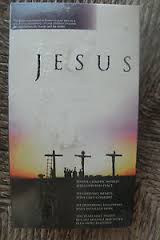
In 2002, we participated heavily in the JESUS video project. We were part of a coalition of churches that mailed a VHS copy of the Jesus video to every single home in our county. Over 30,000 videos went into the mail.
This is artifact. I’m going to ask Lita if she would put this in the display case out there. With the old song books and the old communion ware. The VHS tape! Whatever that is.
Nowadays, you can stream that sort of thing over your phone.
But back then, it was a major undertaking to get this into everybody’s hands.
And we threw ourselves into that.
Why?
Because we loved lost people and wanted them to have what we have, the gospel of Jesus Christ and Him Crucified.
When we built the Ark Park out here, we called it, “An Evangelistic Playground.” Because we didn’t build it just for us. We built it for our community. Because we love them and because we wanted a place where folks would come, and we could talk to them about Jesus.
That’s supposed to be a gospel playground out there.
Do you get the picture?
I love how this church has historically thrown itself into evangelism.
We are not just focused inward on ourselves. On our worship, on our fellowship, on our own stuff.
This church has always had a heart for lost people and a commitment to do whatever it takes to reach them.
And in that, this church has reflected the very heart of God.
Luke chapter 15 is about the heart of God.
What God cares about. And how strongly God cares about the lost.
Luke 15 is one of the most famous and familiar chapters in the whole Bible because it contains 3 of Jesus’ most famous parables. I wish I had time to give you all three, but we’re only going to look at the first two today. The third one is the one that you know the best, so you can read this afternoon.
All three stories are very similar, and they are all trying to make the same point.
There’s a pattern:
Something becomes lost.
Someone conducts a desperate search for the lost item.
And when it’s found, there is a party. There is a celebration.
“Lost and found.”
Something becomes lost.
Someone searches.
Then there is a celebration.
And all of this is to show us how the Lord cares about the lost.
The lost sheep, the lost coin, and (if you read on) the lost son.
Awesome parables from the Lord Jesus Christ.
Now, the biggest mistake that people make when they are interpreting these parables is to miss verses 1 and 2.
Verses and 1 and 2 tell us who was present when Jesus told these stories.
And it’s easy to over look them. I have just skimmed past them many times on my way to good stuff–the stories.
But verses 1 and 2 tell us not just who was present when Jesus told these stories, gave this teaching, but they tell us WHY Jesus told these parables.
Verses and 1 and 2 are very important. They set the stage for the whole chapter.
Let’s look at them again.
“Now the tax collectors and ‘sinners’ were all gathering around to hear him. But the Pharisees and the teachers of the law muttered, ‘This man welcomes sinners and eats with them.’”
Now, who was present at this moment? There were two groups of people.
In the eyes of the culture of that day, there were the bad people and the good people. The bad people and good people. The black hats and the white hats.
Do you see that? Who were the black hats?
The tax collectors and the sinners. These were bad guys.
The tax collectors were basically the legalized thieves of the Roman world. They were turncoat Jews who were empowered by the Romans to not only take the legal taxes for the government, but to take as much more as they could get away with from every taxpayer.
This was not the IRS.This was like the mob being deputized by the IRS to collect your taxes and look the other way while they took your money.
Nobody liked tax collectors. They were despised.
And the rest of the black hats were just called the “sinners.” How would you like that name to describe you in public? “There go the sinners!”
These folks were notorious for not following the Law. Either Jewish law or Roman law. They were unclean, they were rebellious, they were outsiders.They were considered scum.
But catch this–they were the ones attracted to Jesus.
They were all (v.1) “gathering around the hear him.” And more than that, Jesus was attracted to them.
He ate with them. He had table fellowship with them.
Jesus seems to like them!
And that bothers the other group that’s here. Who are they?
They are the guys with white hats.
The Pharisees–who separated themselves from everything that was unholy.
And the teachers of the Law. That is the Bible professors.
These are supposed to be the good guys. These are straight-laced guys who keep their noses clean. They are on the right side of the law.
Law abiding citizens. The white hats.
And they are scandalized by how Jesus is acting. V.2
“But the Pharisees and the teachers of the law muttered, ‘This man welcomes sinners and eats with them.’”
They can’t even say, “sinners” without spitting, and Jesus is eating with them? Yuck! Eww! With the scum of the Earth!
Now, remember that. Remember who is listening as Jesus tells His three stories.
Got it?
The first story is the story of the lost sheep. V.3
“Then Jesus told them this parable: ‘Suppose one of you has a hundred sheep and loses one of them. Does he not leave the ninety-nine in the open country and go after the lost sheep until he finds it? And when he finds it, he joyfully puts it on his shoulders and goes home. Then he calls his friends and neighbors together and says, 'Rejoice with me; I have found my lost sheep.'” Stop there for a second.
Notice the pattern?
Something becomes lost. What is it? It’s a sheep.
Is that valuable? To this shepherd it is. Valuable enough to go searching.
Someone conducts a search. Who is that? The shepherd. He leaves the 99 where they should be safe in the open country and then goes to find the lost one.
What a great picture. Can you see him hunting that lost sheep in your mind’s eye?
Going all of the places where that sheep could possibly be.
Risky, sacrificing, searching to rescue that sheep.
And, then, he finds it. And he (v.5), “joyfully puts it on his shoulders and goes home.”
That’s quite an image, too, isn’t it? A happy shepherd with a found sheep over his shoulders.
What’s next? Partay! Right? V.6
“Then he calls his friends and neighbors together and says, 'Rejoice with me; I have found my lost sheep.'”
Let’s have a party! Let’s celebrate.
“Rejoice with me! I’ve found my lost sheep.”
And then, Jesus gives us the point. V.7
“I tell you that in the same way there will be more rejoicing in heaven over one sinner who repents than over ninety-nine righteous persons who do not need to repent.”
Remember to whom Jesus is talking.
Who is the shepherd like? He’s like the Lord.
“There will be more rejoicing in heaven over one sinner who repents” (one lost sheep) “than over ninety-nine (unlost sheep, so-called) “righteous persons” who do not need to “repent.”
Who is He talking about?
Who are these sinner-sheep? They are the bad guys who are attracted to Jesus.
There will be a party in heaven if a bad guys repents. If a black hat guy turns himself in. Celebration!
More rejoicing than if a so-called white hat guy doesn’t ever go anywhere.
Jesus doesn’t mean that the Pharisees and the teachers of the law didn’t really need repentance or were really righteous. That’s just how they saw themselves.
And there is no rejoicing in heaven over self-righteousness. Even when its cleaned up pretty good!
Jesus says, “So, you want to know why I eat with sinners and welcome them?”
It’s because that’s the priority of heaven.
That’s the passion of God’s heart.
The Lord loves the lost.
But, just in case they didn’t get it, Jesus tells another story. A very similar one.
The story of the lost coin. V.8
“Or suppose a woman has ten silver coins and loses one. Does she not light a lamp, sweep the house and search carefully until she finds it? And when she finds it, she calls her friends and neighbors together and says, 'Rejoice with me; I have found my lost coin.”
Here’s the pattern again:
Something is lost. What is it? A coin.
In Greek, it’s a drachma, about a day’s wages.
How many did this woman own? She only owns 10. She loses 10% of her wealth.
So someone conducts a desperate search!
She turns the house upside down.
Have you ever lost anything like that?
A couple of weeks ago, Heather lost something at home, and we turned the house upside down looking for it.
What if it were 10% of all of your possessions?
I remember once, one of my little nephews lost a tiny little toy he had just bought with his own money at a playground.
It was a playground like ours out there except that it was full of little rocks, you know, like a beach of rocks, and he had buried his toy under the rocks for safe keeping! And then forgotten where he’d put it.
Could we have found that toy if we tried hard enough?
Yeah, we could have. We would have had to turn over a lot of rocks, though. It was lost.
But if we had been desperate enough, like this woman, if we had really cared about it, we could have searched until it was found. She goes to great lengths to find it.
And what happens when the item is found? Party time! V.9
“She calls her friends and neighbors together and says, ‘Rejoice with me; I have found my lost coin.’”
And then Jesus makes sure we get the point. V.10
“In the same way, I tell you, there is rejoicing in the presence of the angels of God over one sinner who repents.”
I love that phrase, “in the presence of the angels of God.”
Does that mean that the angels are rejoicing over the repentant sinner?
The lost coin found?
I’m sure they are. But I don’t think that’s what Jesus is saying.
Who is in the presence of the angels of God?
God Himself.
I think this is a way around way of saying that God rejoices over one sinner who repents.
There is a party in heaven over one sinner who repents.
If the kingdom of God is a party (and that’s one of the things Jesus says it is!), then the theme of that party is joy in repentant sinners.
That’s why Jesus welcomes them.
Because that’s the heart of God!
Now you can see that pattern repeated again in the parable of the lost son (or lost sons) read it this afternoon and track how it’s like these other two parables and how it has a few more twists that really bring it home.
But we’re going stop with just these 2 stories today and apply them to our church and our lives today.
Here’s how we’re going to do it.
We’re going to put ourselves into these stories.
Where are you and I in these stories?
Three points of application.
#1. REPENT.
Where are you in this story?
Well, we all start out as something that is lost.
We are the black-hats in this story.
We are the lost sheep. We are the lost coin.
Because the Bible says that we are all sinners.
“All have sinned and fallen short of the glory of God.”
And God, in His mercy, has been searching for us.
He sent His own Son to seek and to save that which was lost.
That’s us.
And if we want to be found, we need to do what v.7 and v.10 says.
We need to repent.
To repent means to turn.
To turn in our hearts and with our lives away from sin and to the Savior.
To turn to Jesus and put our trust in Him.
Notice that sinners and the tax-collectors still needed to repent.
It’s not enough that they were attracted to Jesus and listening to Him.
They had to respond.
In our home, when each of our children made their first profession of faith in Jesus, we began to call them, “Found Sheep.” And each one of them was given a little stuffed lamb to mark that response of their hearts to the gospel.
Jesus died for lost sheep. And lost sheep are found when they repent.
Are you still a lost sheep?
Turn from your sin and put your trust in the Savior. Repent.
It might be hard for you to identify yourself with the scum in this story.
You might see yourself as a pretty good guy or a pretty good gal.
But every one of us is a sinner and needs the Savior.
There will only be rejoicing in heaven for you if you repent.
I invite you to do it right now.
In your heart, pray to the Lord. Tell Him that you need Him and that you are turning from your sin, asking for His forgiveness, and trusting in Jesus’ sacrifice for you.
The Lord promises for all who come to Him, all who call upon the name of the Lord, they will be saved.
Maybe that happened for you because of a bus ministry or a Wild West Day or a Jesus Video Project or some other ministry of this church:
A Good News Cruise
A Family Bible Week
A Kids for Christ
A Wild Game Dinner
Or maybe it was far away from here and unrelated.
But if it hasn’t happened yet, it’s past time.
Repent.
That’s where it starts.
#2. RECOVER.
And by this, I mean, join the search party for lost people.
Put yourself in the shoes of the white-hats for a second.
Did they care about those who were lost?
No, they only cared about themselves and their good works and their clean reputations.
Jesus told this story to both convict them and to change them.
He wants us to join the search party for lost people.
Do you and I care about lost people?
And I mean do we care about lost people?!
Not do we say we care about lost people, but do we do it?
Do we do anything about it?
This shepherd left the 99 and went after the lost sheep.
This woman lit the lamp and swept the house clean to find the lost coin.
God is recovering lost people.
Are we a part of that search or are we just standing on the sidelines?
Who are you helping to recover?
What lost people are you praying for?
What lost people are you talking to about Jesus?
Let me give you three steps here.
Care, Prayer, and Share.
First we have to care. We have to cultivate a love for those people whom God loves.
This church has been really good at that for 125 years.
And I am so proud of our church family when I see it.
I love to tell the story about my first Summer here as your pastor. I was writing the sermons on Saturday nights (which I still often do!), and there were gangs of young people out here on the parking lot on Saturday nights.
Before we had a nice paved parking lot.
This was the meeting spot. They’d be out here doing donuts in the field. Smoking, talking, hanging out.
And I told the elder board about that. It was Wally and George and Blair and Bruce and Charlie and those guys. And I told them about what was going on in our parking lot, and asked if we needed to have the police drop.
And they said to me, “We’re glad they are here on our land, I wonder what we can do to reach out to them and tell them that Jesus loves them.”
I knew then that this church was a keeper.
Who have you cared enough about to invite to the Wild Game Dinner?
I promise you that Zeke Pipher will make the gospel clear to them.
But people don’t care what you know until they know that you care.
Does somebody know that you care about them and are going to bring them to hear Zeke on Saturday?
Our Louisiana Team is down South this week serving in the name of Jesus Christ, showing those folks down there that we care.
Thank you for sending them.
I’m proud of you for sending them.
I’m proud of them for going.
It shows that we care.
We’ve got to keep the gospel as our middle name.
The second step is prayer.
We have to continue to pray for the lost to be found.
Remember this artifact from our history?
Back in 2007, we filled up this fishbowl with the names of people for whom we are praying to come to know Jesus. And we fasted and prayed over those names.
And some of those names are names of people who are today trusting Jesus Christ as their Savior, in part because we prayed!
Who are you praying for right now to get found?
Who are you praying for to come to the Wild Game Dinner?
Or to come to church next Sunday and hear Zeke preach here?
Or come on Resurrection Sunday and hear the gospel?
That’s what our Harvest Prayer Time is all about.
Who is on your prayer list?
And the third step is to share.
It’s not enough to just want them to know Jesus, we have to introduce them to Jesus.
It takes words. It takes the gospel.
If we truly care, we will dare to share.
The Holy Spirit will give us the power.

Our friend Matt Modzel just recently shared with a group of teenagers at the FCA Badminton Tournament last Friday night.
He didn’t know I was taking his picture.
And he doesn’t know that I’m going to put it here today.
But I’m proud of him. Because he overcame his nervousness and got up on his hind legs and shared his testimony and the good news about how God so loved the world.
When Matt’s nervous his face goes all red. It was as red as those mats against the wall there. But that didn’t stop him for sharing.
We need to join the search and rescue recovery team.
And that requires faith and boldness.
Are we talking to the lost people about Jesus?
Or are we just content to mutter, “This man welcomes sinners and eats with them.”
Do we eat with sinners?
I don’t want to be like the so-called “white hat” people in this story.
If I have to choose sides, then put me with the black hats.
Because that’s where Jesus is.
Let me say something about our culture right now and what Christians need to be doing in it.
I hear a lot of talk about the two M’s–Muslims and Mexicans.
Those two kinds of people are in the news a lot.
And I hear a lot of people being very negative about both of them.
Very against Muslims and Mexicans.
It’s like they are the black hats or something.
And I understand that there legitimate questions for our leaders to sort out in terms of immigration and national security. We need good people to come up with good policies and practices on those.
But I what I am concerned about is how much muttering I hear, even among Christians. I hear hate and fear and anger.
And I don’t hear enough about this question:
How can we reach Muslims with the gospel of Jesus Christ? Those that are coming here, and how can we go to them?
How can we reach immigrants (with or without the proper documents!) with the hope of salvation in Jesus Christ?
Because they are lost without Him.
And he cares. He desperately cares. He’s turning the house upside down to find them.
Jesus says what God cares about the most is not our national security or our economy or jobs for Americans or even the rule of law.
What God cares about most is finding lost people. He’s after the black hats.
Are we a part of God’s desperate search party?
Or are we just standing around muttering?
Let’s get personal for a second.
Who do you and I need to talk to this week?
Who do we need to pray for the next 7 days and then to bring up Jesus in conversation?
Who is the one sheep out of the 100 in our life that is lost that we need to care about?
Who is the one drachma that is lost in the house that we need to sweep for with the Lord?
Let’s go searching, friends. Let’s go searching.
That’s what this church is all about.
#3. REJOICE!
You knew that would be point #3, didn’t you?
Let’s pretend that we’re the friends in these two stories.
We’re the neighbors.
What does the shepherd say, “Rejoice with me!”
What does the woman say, “Rejoice with me!”
What does God say? “There is rejoicing in the presence of the angels of God over one sinner who repents!”
Rejoice!
Every time a sinner comes in, we should rejoice.
Every time a sinner gets baptized, we should rejoice.
Every time a decision is made for Christ, we should rejoice.
And we should rejoice for ourselves that our names are written in the Lamb’s book of life!
There is a party in heaven.
There should be one here, too.
My prayer is that we, as a church, will see a greater harvest and have a greater party in the next few months and years than we ever have before.
But the gospel has to stay our middle name.
We can’t lose sight of this driving value of our church to reach out to the lost with the good news of Jesus Christ.
***
Previous Messages in This Series:
01. Jesus Christ and Him Crucified
02. Sing!