
Ellie Baker's Blog, page 6
January 28, 2015
Marriage communication and picking plums

 How can picking plums help your marriage as a migrant or someone in a transnational relationship? Find out by reading the latest newsletter. The tip given here will help any form of communication. Read this and more in the latest newsletter. Link here.


December 16, 2014
Ten tips for easier goodbyes part 1

"The truth is that goodbyes never get easier, no matter how many times you rehearse them. And expat life guarantees an assault course of farewells, demanding a strong constitution, nerves of steel and significant emotional muscle." Says Victoria Scott.
This is the first of a series of posts on goodbyes. there will be stories and tips on lessening the fear of goodbyes. Emigration can give you possibly your hardest goodbye. Unfortunately, it is not your last.
 Once you have emigrated, there will be more goodbyes; the times you visit your loved ones and they visit you. Sometimes the fear of the goodbye starts before you have said hello. One of the immigrants interviewed in the book, The Emotional Challenges of Immigration, noted that as her mother was only visiting for two weeks, she felt there was always a feeling that there would have to be a goodbye soon. She said it left a cloud over whole the visit. I too have felt the dread of goodbyes before I start the visit. I now try to focus on hellos and making memories to carry me beyond the goodbye.
 Goodbyes are sad because of the love you feel for the person you are leaving. By acknowledging feeling sad at saying goodbye is part of the loving, you take the first step to feeling less negative about the goodbye.
My worst goodbye as an immigrant was the most fumbled too.

 2001 we all went to visit my family for Christmas. Mid-January four children under nine and I were at Heathrow Airport checking in to fly back to New Zealand. My husband had left a week before. A dozen extended family members were also there to see us off. Five check-in bags were bulging with Christmas presents. I had been worried about the weight of the bags until I was asked whether there were any batteries inside them. I had no idea where Buzzlightyear or other possible battery toys were. I wasn't even sure which toys made it into the bags. My nephew came to the rescue as he organised family members to help search for the offending toys. I watched my children begin to melt as the cases and their toys were pulled apart. Perhaps I could cancel the departure? Apparently not. An airport escort with an empty wheelchair stood at our counter and called my name.
What would I have done differently? I could have been more assertive to my eager escort. I could have checked the fine print and known about battery toys. I could have acknowledged that it was neither the check-in staff nor the eager escort's fault that I was feeling so robbed. The reality was that saying goodbye I was going to feel bad anyway, even if it had all gone smoothly. However, it would have been soothing to relish the last embraces and absorb the loving sadness.
Making goodbyes easier:
Decide on what is best for you and the people you are leaving. Long goodbyes aren't necessarily easier. Overseas Emigration blog says,"A friend gave me great advice about leaving and going to the airport. They suggested I say goodbye to my family at home and then ask a best friend to take me to the airport; to say your goodbyes to close family members at the security gate is just too emotionally charged." Having been through many airport goodbyes, I now tend to limit the time at the airport to a cup of coffee, I have not been in the frame of mind to shop or browse with the people I am about to leave. If the goodbye has felt rushed and chaotic, if you are the one leaving, you have the privacy of a long plane journey to feel sad.
More tips to come in later posts.
Finally, this is one of my favourite farewell songs. I have sung it many times as I prepare for the departure. The song doesn't get sung at the moment of departure as there is usually a lump in my throat. Click on the caption to hear it.
 Goodbye Song
Do you have a goodbye story? Let us know your saddest, best and worst goodbyes. Do you have any tips to pass on? Be the first or last to comment in the space below.
More to come:
More of ten tips for making goodbyes easier
More goodbyesMeaning of goodbye
Quotes galore
Empty nesting and goodbyes
November 17, 2014
9 Strategies For A Happier Immigrant Christmas

Newsletter 8
Find help in the crazy holiday season. Why is Christmas hard for immigrants, what can you do to help? Find out what other people in the world do for the season, from an Ethiopian who took the emigrated to America to fellow-migrant to Pope Francis. A link to a website offering more help for people living abroad. All this and more in my latest newsletter. Follow the link.
Newsletter 8 - November 2014
Do you have any suggestions to add to help immigrants or the people they love during this time? What has made this season easier or harder for you? I would love to hear your comments.
October 7, 2014
Is this the best place to live?
 As an immigrant and particularly since launching my book, I have been asked, "Which is the best country to live in?"
This question still stalls me. However as it has been over 27 years since I moved countries, I have had time to think about the question and my possible answers.
Why are they asking? Often the person asking the question would like to hear that their country is the best country in the world. And why not? There are regular media articles listing, "The best country for happiness, education, health, wealth etc." An immigrant's opinion gives the questioner an opportunity to hear that the questioner's homeland is better than the immigrant's homeland. The questioner gets to hear that they are living in the world's best country. If I was to answer, "Yes! This is the best place," I may make the questioner happy, but I would be doing both myself a disservice and the other people I have witnessed in other countries having a great life.
 There are features that suit me. My answer is usually that there are many aspects of New Zealand I enjoy. I would list some of them: the low population density, beautiful scenery, indigenous culture, resourceful attitude. But I have seen people in other countries who are also having a great life, living among the features of the country that country suit them.
There are stages too. A country may be the best country for some people at some stage in their life. Young travellers or migrants may come to New Zealand for an appreciation of outdoor living, national parks and adventure tourism. Many return to their homeland for familiarity and the economic advantages of a larger population. Similarly many New Zealanders spend a couple of years overseas to enjoy the life a major city and larger population has to offer. They often earn higher wages than they could in New Zealand. However, when they have children, they may be inclined to return to the familiarity of their homeland to give their children the same childhood experiences they had.
 Loving your own garden
 Happiness in village life in Northern India It is what you know best. Someone who has been through emigration knows more than one place really well. They will often have two places they refer to as home. A non-immigrant is in the country they have lived in all their life, so perceives it to be the best place for them. My mother loves the rich culture of London, her friends and family, her beautiful garden. It is the place she knows best. Similarly, a family in India have happiness in their familiar surroundings, so they are likely to perceive it to be the best place for them.
 What do you like best? Which is the best place to live in is like asking what is your favorite colour or season, song, sport or idea of a holiday. It depends on your preferences. It depends on what gives you happiness.
If you want to test whether you are in the best place for you below are links to some fun quizzes to try. I tried three of them and was told I should live in NZ, the Virgin Islands and Sweden. On another day and in a different frame of mind I may come up with different ones again. Have fun with them.
playbuzz.com, selectsmart.com,gotoquiz.com
For a person who has a transnational perspective, answering whether they are in the best country is not straight forward. Feeling the country you are in is a great place to live will help you feel happier to be there, and that may be enough. If you have migrated, or moved to another country, even temporarily then I suggest you focus on what you can do to make the place you are living in, the best country for you at this stage. You may love some or all of the features of the country you are living in. Unfamiliar features may irritate you, especially at first. If you can acknowledge the differences and then learn ways to appreciate them, it will be a better place to live. You can read more about this in my book, The Emotional Challenges of Immigration. An excerpt from the chapter The Settling Process, starts here:
Acknowledge the differencesIf you can identify and acknowledge differences between your adopted country and your homeland, it can be easier to see these objectively – neither better nor worse, just different.
When I arrived in Auckland, most homes were single storey with a large garden. In London they were two storeys or more high, with a smaller garden, but there was always a public park and a pub within walking distance. The two ways of living were different. Each had advantages and disadvantages that could be discussed at great length depending on your point of view.
When Rebecca arrived as an immigrant, she looked for people similar to those with whom she identified in London – but they weren’t immediately obvious. ‘Male culture is more macho here: sports clubs and pubs, and nice sherry for the ladies. There are no North London Guardian-reading liberals.’ Her search for like-minded people was part of trying to find reference points so that she and her husband could avoid social blunders or offending people. Features such as the dress code could be confusing: ‘You go to a drinks thing, a barbecue, and the men are all casual in jeans and shorts and the women are really dressed up. Are you going to the same event? I find it quite strange.’
When you are a new immigrant, the differences are distinct and often jarring. As you become more familiar with your adopted country, you will find people you can identify with, but you may need to broaden the places you search for them.
Rachel knew she would initially feel and be considered different. ‘That’s what happens when you move.’ She said if she had stayed in Britain and moved to another district, she would still have been an outsider to those who had lived there all their lives. ‘I just moved on a macro scale … It doesn’t worry me being an outsider. I would never win Who wants to be a millionaire here, but I might in Britain. Even after fifteen years here, I still don’t know half the characters here and yet I know the British. I must have learnt it by osmosis.’
Rachel’s immigration involved changing from a city environment to a rural environment, and this has added to her ‘outsider’ experience. She was limited in conversation topics, as she found she was not fluent in rural-speak. ‘No, I haven’t made my chutney yet. I thought that was for grandmothers and people in the nineteen-fifties.’
From the first day Olivia immigrated to a seaside town in her adopted country, she felt like a ‘pampered American’ who did not fit in. The differences were too great for her to be comfortable. Then she and Stuart moved to a small city that was perfect for her. ‘More people my age, more opportunity of getting involved in the community and feeling you are part of something. Here, there are more ways to feel connected.’
If the differences are too much to live with, you may have to act as Olivia did and move.
When Jessica was a new immigrant, she struggled with the differences, but for a long time was unable to talk about how she was struggling. Two conversations within a short space of time made it clear to her what she needed to do. The first was with someone from her adopted country. ‘She suggested that I, being from America, must notice the difference [in living]. I was relieved that somebody finally understood that I was living a different world. But before I had time to reply, she said, “It is so much better here. That smog there is terrible. You must be pleased to be here.” It was a huge lesson for me. From her perspective, she didn’t really want to know what was different and she didn’t really want me to say whether it was better or worse. That was a real turning point for me. Even though I had only been here a few months, I knew I had to get on with it.’
Jessica’s second conversation was with someone from her homeland, which helped her move on. ‘A short while later I talked with a fellow American who said, “Don’t you just hate it?” I almost felt like bursting into tears. At last I was able to think, “Yes I do hate it” Since then I have been able to find things I canappreciate here.’
Assumptions are made that countries with the same language have similar cultures. New Zealand and England speak the same language, have a similar government structure and have four seasons, but are culturally very different. England has the influence of Europe and a history spanning thousands ofyears; New Zealand has had humans living here for seven hundred years, and is influenced by the Pacific Islands. They are on opposite sides of the world, and the people in each country often have very different ways of thinking.
Sophie has become used to people in her adopted country assuming she should think in the same way that they do. She was once asked, ‘Why don’t you think like we do?’ It was many years before she was confident enough to say what she thought.
You need tact when stating your own opinion. Hearing a tourist loudly criticising the country they are visiting is a bitter experience for someone from the host country. A criticising immigrant could be seen as that negative tourist who has stayed too long. If you can state your opinion in a way that points out the advantages and disadvantages of the differences, not only are you less likely to offend and more likely to be listened to, but you have mentally gone through the process of seeing and communicating the differences as neither better nor worse, just different. The more you can acknowledge that they aredifferences rather than one better or worse, the more you can appreciate what the differences have to offer.
Appreciate the differences Jenny: ‘Different, but I like the differences.’ Sylvia: ‘When they were young, we lived in a place which had a swimmingpool, beaches, safe rivers to play in. It was a lovely upbringing forthem. We felt that we had given them the best we could.’ Emma: ‘He loves fishing, barbecues, sitting outside, going to the beach, havinga meal [there]. My daughter walks around in bare feet. I think I’mmore relaxed here. I think I’m more giving here.’
When I was first in New Zealand, I enjoyed the differences in lifestyle and the freedom to be who I wanted to be. I did things I’d never thought of before, such as commuting along a beautiful coastline and sharing a house with a swimming pool, and I loved that I never needed a coat. I found myself going to woodwork classes and swimming in a river clean enough to drink, and I loved the fact that I could go on a four-day walk and not see a car.
Differences which are jarring at first often become acceptable once you realise the reasoning behind them, or their advantages. At first, Olivia was frustrated by the limited shopping hours in her adopted country. By the time her mother visited, Olivia could see the reasoning behind the shorter shopping hours. She explained to her mother that one of the benefits of limited shopping hours was more family time. In hearing herself, she noticed she was defending her adopted country. It was a pleasant surprise, and a revelation to Olivia that she was not only embracing the differences, but also forming a loyalty towards her adopted country.
When Elizabeth and her family decided to emigrate, her parents were not happy about them leaving. However, when Elizabeth became sick, her parents were surprised at the support she received and they could immediately see some advantages of their daughter’s adopted country. Elizabeth said, ‘I’m happier than I ever thought I would be. I am more settled; I can’t imagine being anywhere else.’
September 11, 2014
Book launch was great
 The launch was great. Have a look at the latest Newsletter for more highlights and thoughts on the launch, as well as information on double wedding ceremonies, and what does it cost to go to your homeland over 20+ years?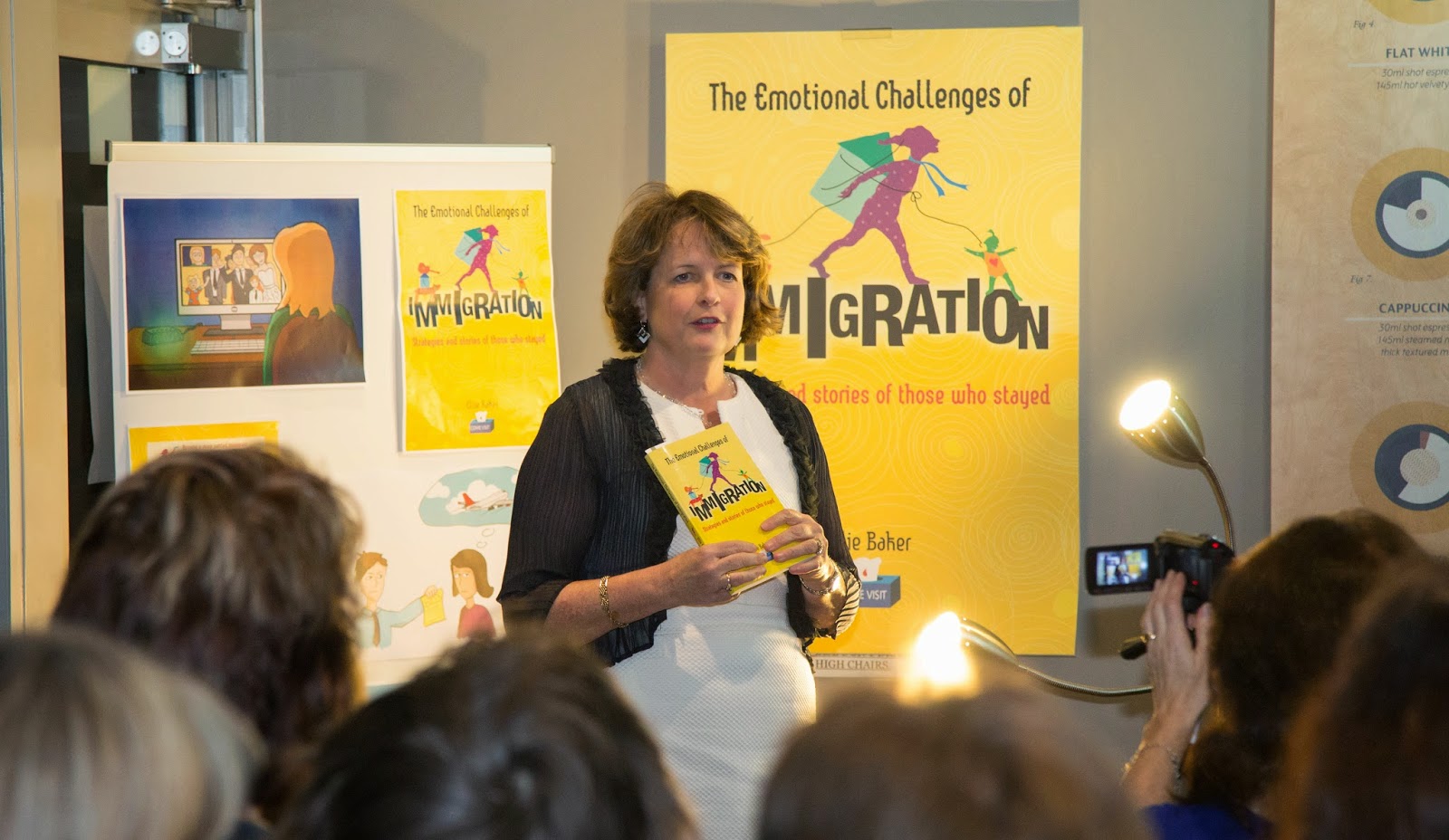
 If you want to see the whole launch speech click here.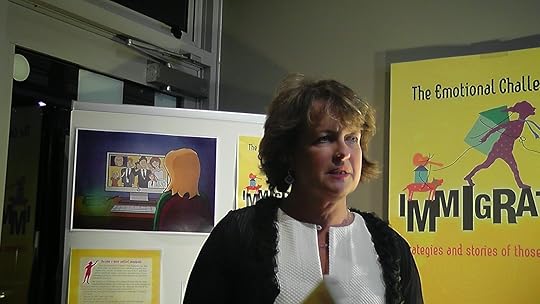
August 17, 2014
Books have arrived
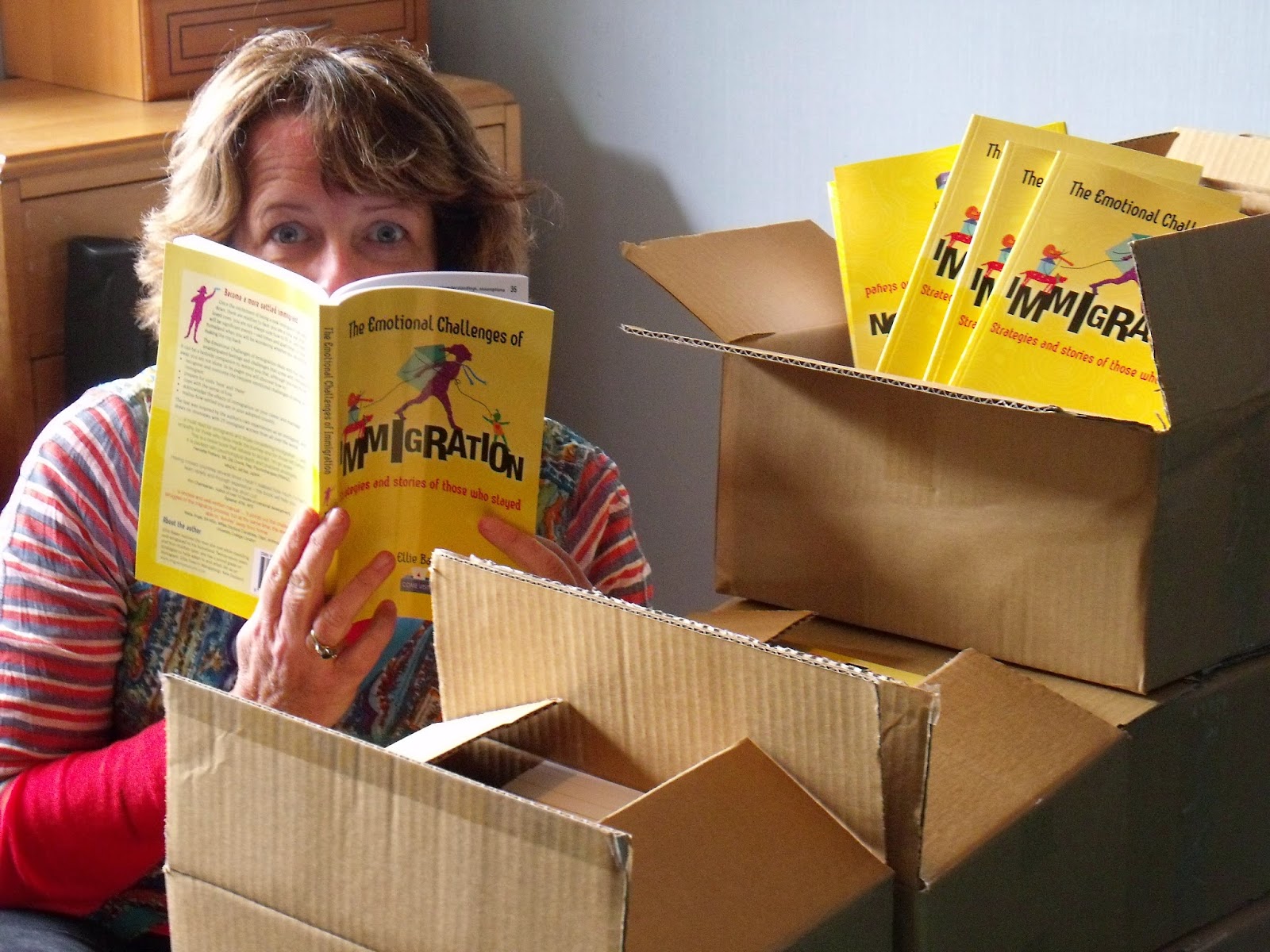
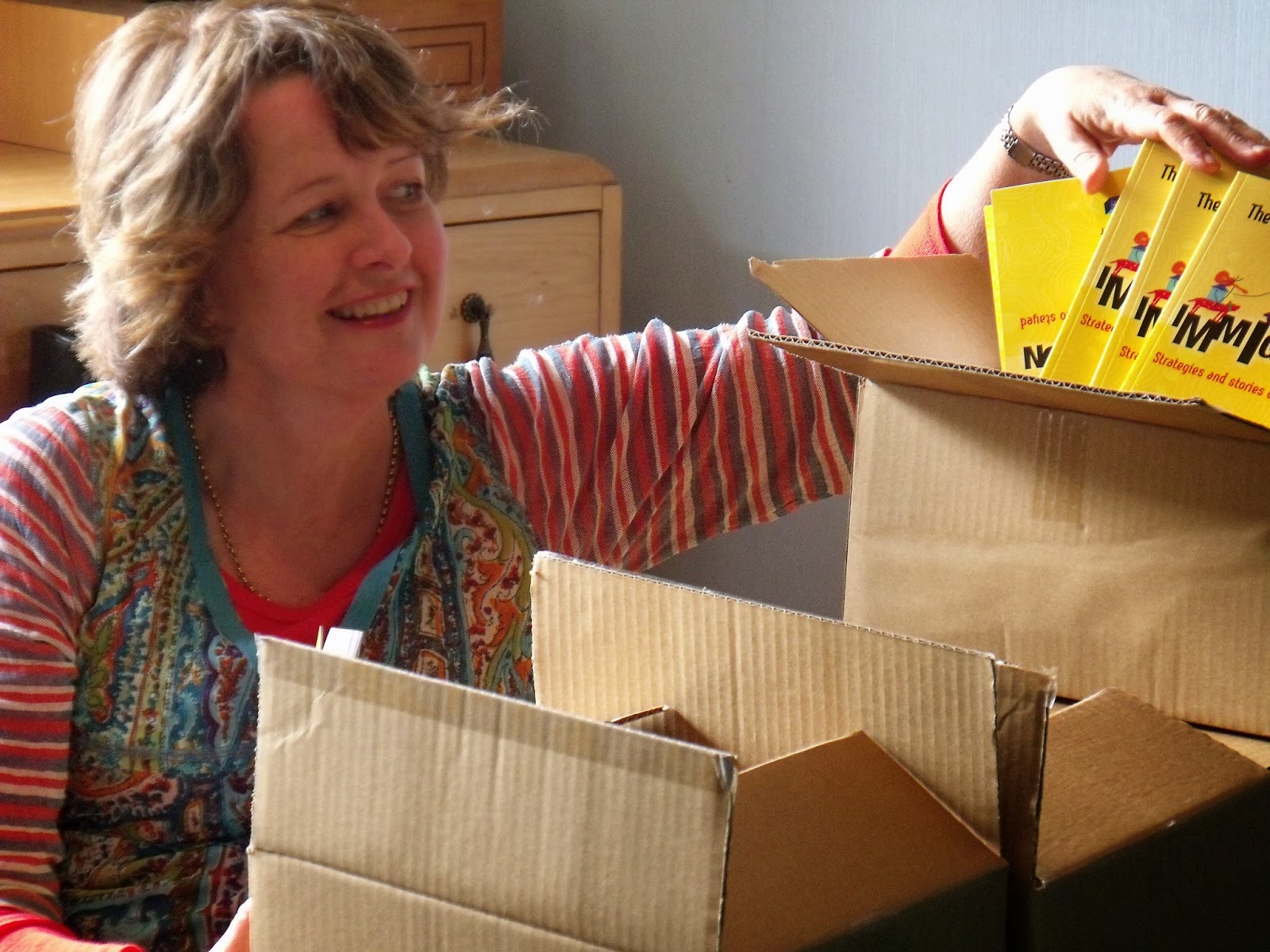 The finally waited for book is in my hot hands and yes it feels good.
I'm getting things sorted for the book launch, 8 days away as I write. I hope it will be as fun as gawking at and stroking the book has been.
This migrant is a happy one right now. I wouldn't have written this book if I hadn't been one. Its funny how life pans out.
The book is available on Amazon for Non-New Zealanders. New Zealand can buy it from Fishpond once the launch has happened or contact me through my email.More information go the the Book for Sale tab.
July 14, 2014
Book Launch
 Here is the proof the book is on its way!


