
Ellie Baker's Blog, page 2
April 4, 2018
Why is belonging so important?
Does a migrant need to have a sense of belonging? Yes. Here is why.
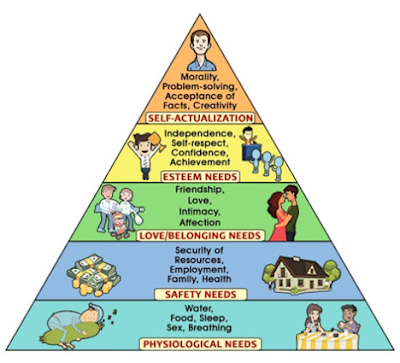
'Belongingness' is the human emotional need to be an accepted member of a group.
Maslow's hierarchy of needs rates it after food, water and safety. We are a sociable animal.
A feeling of belonging helps you to:Have a healthy self esteem. Being wanted and loved makes you feel valued.Have somewhere to go for help through your support network e.g. How do I find a doctor?Help others. Being needed helps our self esteem. In fact the motivation to help is so strong that even slaves set up a group help-fund to help each other. Every volunteer is satisfying the need to help others. "For it is in giving that we receive" St Francis of AssisiFeel a sense of identity. You are part of a group.Be more at ease about migrating. You are more rooted to the place around you.Make sense of the world around you. You have a group of people to share and compare your thoughts, opinions and concerns.Be more productive with a healthy self esteem and peace of mind.
When you do not feel you belong, you: Have isolation and mental health issues. Are less motivated (Stanford University Associate Professor of Psychology, Greg Walton's studies demonstrated that a sense of social belonging can affect motivation and continued persistence, even on impossible tasks. That is, if you don't feel like you belong, you are both less motivated and less likely to overcome obstacles.)Being less likely overcome obstacles, you may question your reason for migrating, you may consider returning to your country of origin when times get tough.Will feel lonely.
 Humans have an emotional need to be part of something that is greater than themselves. Migrants, who have left so much of their sense of belonging behind, have this same desire to want to be part of something.
In a migrant's initial years they will be clutching at ways to replace the sense of belonging they have left behind. Often the first group they may feel a sense of belonging with is other migrants with their experiences of migration. If these migrants are also from their country of origin, there may be a greater sense of belonging. Joining migrant cluster groups are best if the migrant doesn't rely on them solely. An interviewee from India in my book, said in her adopted country she and her husband, 'latched onto' an Indian community.
What else can a migrant do to help their sense of belonging?Be ready to give. A sense of belonging is about reaching out for friendship, and about being able to give back. If you are part of a group or community, you have talents that will be needed some day. When the opportunity comes, give! Volunteering is an excellent way to start. John O’Brien once said, “It is dispiriting to always be the needy one.” Our souls are deprived of the chance to make a difference to others.Try and identify what has made you feel you belong in the past? How can you make that happen again? David Pitonyak, The Importance of Belonging includes an exercise on creating more inclusive environments by examining what it feels like to be excluded, what it feels like to be included and identifying what can be done to help people feel more included and increase their sense of belonging.If making friends seems a problem, Susan Kurliak and Johanna Johnson have 101 suggestions in their book 101 Ways to Make Friends . Here are some samples.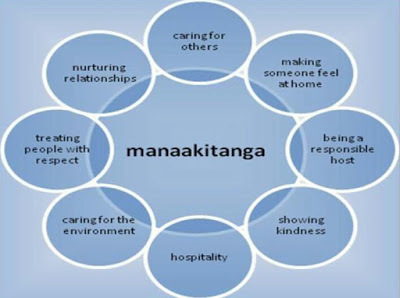
Maori, the New Zealand indigenous people have an expression, Manaakitanga. This is the Maori style of hospitality. Manaakitanga greeted early settlers to New Zealand. In an event to celebrate Chinese New Year, Chinese migrants who had been in New Zealand for over two decades were re-welcomed in a Powhiri (Maori welcome) in the spirit of Manaakitanga. The Chinese migrants said through this event they felt more of a sense of belonging to New Zealand than through two decades of being a migrant in New Zealand. The reasons for this extra sense of belonging could be put down to some spiritual similarities between Chinese and Maori, and or that the holistic and ceremonial welcoming supported the migrants'emotional need to belong more than a stamp in their passport.
Be proactive in welcoming migrants. Many countries have a welcoming communities operation running. By typing in welcoming and the country you are in you are likely to find web sites for your host country.Here are some examples.
There is more help on support networks in my book, The Emotional Challenges of Immigration Chapter 4 - Support Networks. Read it for free here.
Other useful linkshttp://www.saywhydoi.com/belonging-why-do-we-need-a-sense-of-belonging/
https://livelifegetactive.com/blog/sense-of-belonging/
https://www.psychologytoday.com/us/blog/between-cultures/201704/belonginghttps://barbarabray.net/2017/08/02/8-tips-to-foster-a-sense-of-belonging/
https://www.europelanguagejobs.com/blog/make-friends-abroad
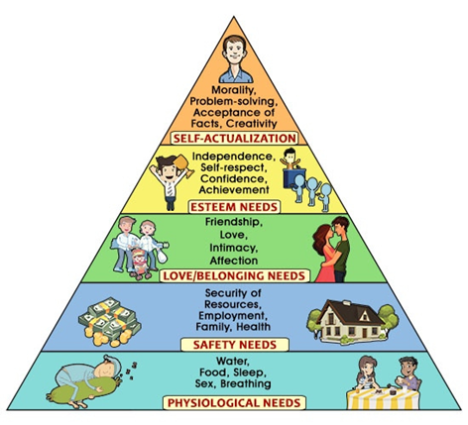
'Belongingness' is the human emotional need to be an accepted member of a group.
Maslow's hierarchy of needs rates it after food, water and safety. We are a sociable animal.
A feeling of belonging helps you to:Have a healthy self esteem. Being wanted and loved makes you feel valued.Have somewhere to go for help through your support network e.g. How do I find a doctor?Help others. Being needed helps our self esteem. In fact the motivation to help is so strong that even slaves set up a group help-fund to help each other. Every volunteer is satisfying the need to help others. "For it is in giving that we receive" St Francis of AssisiFeel a sense of identity. You are part of a group.Be more at ease about migrating. You are more rooted to the place around you.Make sense of the world around you. You have a group of people to share and compare your thoughts, opinions and concerns.Be more productive with a healthy self esteem and peace of mind.
When you do not feel you belong, you:
 Have isolation and mental health issues. Are less motivated (Stanford University Associate Professor of Psychology, Greg Walton's studies demonstrated that a sense of social belonging can affect motivation and continued persistence, even on impossible tasks. That is, if you don't feel like you belong, you are both less motivated and less likely to overcome obstacles.)Being less likely overcome obstacles, you may question your reason for migrating, you may consider returning to your country of origin when times get tough.Will feel lonely.
  Humans have an emotional need to be part of something that is greater than themselves. Migrants, who have left so much of their sense of belonging behind, have this same desire to want to be part of something.
In a migrant's initial years they will be clutching at ways to replace the sense of belonging they have left behind. Often the first group they may feel a sense of belonging with is other migrants with their experiences of migration. If these migrants are also from their country of origin, there may be a greater sense of belonging. Joining migrant cluster groups are best if the migrant doesn't rely on them solely. An interviewee from India in my book, said in her adopted country she and her husband, 'latched onto' an Indian community.
"I felt I had swapped one India for another." Not having any sense of belonging with her adopted country, she and her husband considered returning to India. A job offer in a different city came up and they decided to try again."We decided we wouldn't seek out Indian people, but would integrate with the society there. That was the winning thing, we actually got to know other people." At a later stage Nina's mother in law came to live with them. Her mother-in-law needed a slower pace to integrate, so Nina and her husband became involved in the Indian community too. "This way we now have two groups of friends and it works well."Other interviewees have recommended, going to the library, joining more than one group in case the group you have chosen folds.
What else can a migrant do to help their sense of belonging?Be ready to give. A sense of belonging is about reaching out for friendship, and about being able to give back. If you are part of a group or community, you have talents that will be needed some day. When the opportunity comes, give! Volunteering is an excellent way to start. John O’Brien once said, “It is dispiriting to always be the needy one.” Our souls are deprived of the chance to make a difference to others.Try and identify what has made you feel you belong in the past? How can you make that happen again? David Pitonyak, The Importance of Belonging includes an exercise on creating more inclusive environments by examining what it feels like to be excluded, what it feels like to be included and identifying what can be done to help people feel more included and increase their sense of belonging.If making friends seems a problem, Susan Kurliak and Johanna Johnson have 101 suggestions in their book 101 Ways to Make Friends . Here are some samples.
#37 Have one good joke you can tell. Practice it so you’re ready when there’s a gap in the conversation — be known as the one who made everyone feel comfortable.What can people, organisations, and countries do to increase sense of belonging?
#75 Collect something, and talk to others who share your passion...coins, hats, ceramic elephants, Elvis memorabilia…
#82 Give yourself permission to miss the mark. Nothing is going to be perfect the first time — to make one friend we need to meet a whole lot of people who won’t be our friends. Just keep trying.

Maori, the New Zealand indigenous people have an expression, Manaakitanga. This is the Maori style of hospitality. Manaakitanga greeted early settlers to New Zealand. In an event to celebrate Chinese New Year, Chinese migrants who had been in New Zealand for over two decades were re-welcomed in a Powhiri (Maori welcome) in the spirit of Manaakitanga. The Chinese migrants said through this event they felt more of a sense of belonging to New Zealand than through two decades of being a migrant in New Zealand. The reasons for this extra sense of belonging could be put down to some spiritual similarities between Chinese and Maori, and or that the holistic and ceremonial welcoming supported the migrants'emotional need to belong more than a stamp in their passport.
Be proactive in welcoming migrants. Many countries have a welcoming communities operation running. By typing in welcoming and the country you are in you are likely to find web sites for your host country.Here are some examples.
Welcoming Communities NZ
Newcomers Network NZ
https://welcomingcities.org.au/
https://www.welcomingamerica.org/programs/member-municipalities
There is more help on support networks in my book, The Emotional Challenges of Immigration Chapter 4 - Support Networks. Read it for free here.
Other useful linkshttp://www.saywhydoi.com/belonging-why-do-we-need-a-sense-of-belonging/
https://livelifegetactive.com/blog/sense-of-belonging/
https://www.psychologytoday.com/us/blog/between-cultures/201704/belonginghttps://barbarabray.net/2017/08/02/8-tips-to-foster-a-sense-of-belonging/
https://www.europelanguagejobs.com/blog/make-friends-abroad


March 6, 2018
Give Nothing to Racism
Taka Waititi, a New Zealand film director, actor, comedian has put his name to a wonderful new campaign, Give Nothing to Racism. I hope you enjoy it.
February 11, 2018
Three Painful Questions for Migrants
Where are you from? Do you like it here? Do you like it there?
These questions said with the best intentions, often as a conversation opener, repeated often enough can eat away at migrants and make them feel isolated.
Where are you from?Accent, appearance, language, make it obvious a migrant is different to the native born. The question 'Where are your from?' although may be said with the best intentions, is a reminder to the migrant that they are not from here. In Sapiens: A Brief History of Humankind by Yuval Noah Harari, Harari suggests Homo sapiens default to an 'Us and them' social structure. You are with us or not. He points out that in many cultures the word used to describe any one not born in the area or country to being similar to a description of non-people. 'Where are you from?' can be taken as you don't belong as much as me. Other perils of the question where are you from is discussed more in an earlier blog. Read more here.
Do you like it here?
 When this question is asked the migrant is doomed. By the fact the migrant has lived in two countries, they have a comparative point of view. Transport networks, climate, housing. they have experienced both and can see the advantages and disadvantages of each.
If the migrant is honest, and some cultures are more honest than others, he/she may say something like, I love the climate, culture and people, but I think the transport system or lack of it is frustrating. The criticism sticks out. Even such a cushioned honest reply from the migrant may cause the native born to think or say, 'Why don't you go back home then? '
Why is criticism not taken well? Because the migrant can be likened to a guest, and guests don't insult their hosts. Imagine you are invited to dinner, your host asks you whether you enjoyed the meal. If you reply that it was lovely except the main course was a little underdone, there will be unease. A guest has expected behaviour. Often migrants have to accentuate the positive. And until they find someone who can receive the migrant's honest observations or criticism, they may have to bottle up any negative feelings about the country they have chosen to live in. A migrant, you are a guest in your host country.
Do you like it there?
 When a migrant visits their homeland, they may yearn to be honest with their loved ones. Again they have a comparative opinion, and they have chosen to 'give up' their homeland. One of my sisters once said to me, "Where you are living better be a great place, because you have given up so much to be there."
The question 'Do you like it there?' should be treated with caution. Every positive of your host country is a negative score for your homeland. If you point out all the host country negatives that you can't share with native born of your host country, your loved one may wonder why you are still there. It can be safer to accentuate the positives of the things you miss in your homeland, and even be prepared to be told it is not like that any more. As a migrant, you may have to behave as a guest in your homeland.

These questions are a constant reminder that you are don't belong, and although you have a comparative opinion, it is not always welcome.You are a guest in two homes.
What can you do?Talk to other migrants, as they are unlikely to take offense when you are making comparisons.
 Accept that like a permanent traveller, you will always be reporting on the positives.If you are never able to speak your mind, seek someone who you can offload to. I have come across two women who bottled up their grievances for over twenty years, so much so that they became sick.Journal your observations.Research on line for other migrants. There are often country specific blogs that you can post your feelings on and feel you are heard.Reviews and comments about my book have focused on the relief a migrant has felt in knowing other migrants felt the same way.
 November 20, 2017
Overqualified migrants. What are the impacts? What can help?
This post will review the:
The negative effects of overqualified or underemployed migrants for the host country.What can help migrants who are overqualified?The previous post Why are migrant doctors driving taxis? looked at:Reasons behind migrants being overqualifiedHow does overqualification affect migrants?The negative effects of overqualified or underemployed migrants for the host country. 1. Migrants employed in low skilled jobs with a low esteem may decrease productivity.
2. The host country becomes over-reliant on skilled labour at a low rate. This cheap labour may not be sustainable. When an English person was asked what she thought after Brexit was voted for, they said,
3. The migrant, dissatisfied and unable to live the dream, repatriates. The host country’s immigration department investment in that person is lost. As the migrant goes ‘home’ and describes their experience, the country loses out on other potential migrants. According to Helpscout, it takes twelve positive experiences to make up for one negative experience. An article in the NZ Herald in September 2017 headlined “Don’t come to New Zealand British teachers warned colleagues back home” highlighted that the process of qualification recognition was costly and in some cases unrealistic.
4. Losing labour when immigration policies change. NZ recently announced a salary of $48,000 to determine whether a migrant is skilled. A salary below $48,000 meant that you were unskilled.
5. Marginalised migrants gather and take solace in clusters. These clusters or ‘ethnic groups’ can create friction with the native born as the group increases in number, strength and unity. Immigrants become perceived in stereotypes rather than as individuals. The groups are harder to integrate into the community.

What can help overqualified migrants?Be well-researched on the requirements of the country.Accept that unless you have been headhunted for a position, being underemployed for a while may help you have the energy to get to know the country you are in.Have your qualifications recognised by an international standard before you migrate.Improve your language of the host country.Make connections with people in the host country so that when an opportunity comes up, you can take it.Re-evaluate why you wanted to migrate. Was it employment prospects, lifestyle or other reasons?Seek out other migrants who feel similarly. Support each other and campaign for greater recognition of workplace diversity and reduction of discrimination.
Below are two websites that are helping migrants to become fully employed. Hopefully internet searching for professional migrant help in your host country will help you find ways to reach your full potential when you ready.
Skilled Professional Migrants Program (SPMP) AustraliaSkilled Migrant Programme New Zealand
The negative effects of overqualified or underemployed migrants for the host country.What can help migrants who are overqualified?The previous post Why are migrant doctors driving taxis? looked at:Reasons behind migrants being overqualifiedHow does overqualification affect migrants?The negative effects of overqualified or underemployed migrants for the host country.
 1. Migrants employed in low skilled jobs with a low esteem may decrease productivity.
 2. The host country becomes over-reliant on skilled labour at a low rate. This cheap labour may not be sustainable. When an English person was asked what she thought after Brexit was voted for, they said,
“Get rid of the migrants, but not my Polish plumber. He is so skilled and cheap.”Other examples of over-reliance on cheaper immigrant labour are in aged care places, where migrants often qualified nurses are low-paid carers, or the dairy industry in NZ, which has become reliant on Filipino workers.
3. The migrant, dissatisfied and unable to live the dream, repatriates. The host country’s immigration department investment in that person is lost. As the migrant goes ‘home’ and describes their experience, the country loses out on other potential migrants. According to Helpscout, it takes twelve positive experiences to make up for one negative experience. An article in the NZ Herald in September 2017 headlined “Don’t come to New Zealand British teachers warned colleagues back home” highlighted that the process of qualification recognition was costly and in some cases unrealistic.
4. Losing labour when immigration policies change. NZ recently announced a salary of $48,000 to determine whether a migrant is skilled. A salary below $48,000 meant that you were unskilled.
“The rules were due to come into effect next month, and included a minimum annual income of $48,000 for jobs currently considered skilled. It would force immigrants to leave for at least 12 months after three years of working here.” Radio NZ
5. Marginalised migrants gather and take solace in clusters. These clusters or ‘ethnic groups’ can create friction with the native born as the group increases in number, strength and unity. Immigrants become perceived in stereotypes rather than as individuals. The groups are harder to integrate into the community.
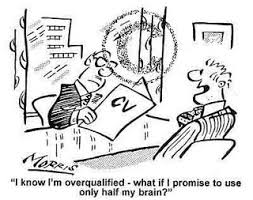
What can help overqualified migrants?Be well-researched on the requirements of the country.Accept that unless you have been headhunted for a position, being underemployed for a while may help you have the energy to get to know the country you are in.Have your qualifications recognised by an international standard before you migrate.Improve your language of the host country.Make connections with people in the host country so that when an opportunity comes up, you can take it.Re-evaluate why you wanted to migrate. Was it employment prospects, lifestyle or other reasons?Seek out other migrants who feel similarly. Support each other and campaign for greater recognition of workplace diversity and reduction of discrimination.
Below are two websites that are helping migrants to become fully employed. Hopefully internet searching for professional migrant help in your host country will help you find ways to reach your full potential when you ready.

Skilled Professional Migrants Program (SPMP) AustraliaSkilled Migrant Programme New Zealand
October 5, 2017
Why are migrant doctors driving taxis?
“On average across OECD countries, 28.3% of highly educated immigrants are formally overqualified for the job they hold compared with less than 17.6% for the native-born.” Settling In: OECD Indicators of Immigrant Integration 2012


Cleaners who are professors, road workers who are engineers, farm workers who are vets and doctors who drive taxis; why are so many migrants are overqualified? This blog is in two parts and will consider the following:Reasons behind migrants being overqualifiedHow does overqualification affect migrants?The negative effects of overqualified or underemployed migrants for the host country.What will help migrants who are overqualified?Reasons behind migrants being overqualified1. Migrant qualifications may not be recognised in their host country. Professionals (engineers, doctors, nurses, professors) often must go through a registration process or assimilation process to bring them ‘up to standard.’ This registration process is often time- and money-consuming and may not be the highest priority for the migrant when they first arrive.
2. Migrant education may not be recognised. Data from the Office of National Statistics on immigration of Eastern Europeans in the UK showed,
“A full 40% of EU8 workers in the survey were over-qualified for the job they were doing, due to the impossibility of converting their home academic titles into a same-level UK one.” International Business Times
3. The primary reason for migration was not to use their skill set. The migrant did not migrate expecting to use their skills, although they might like to. Not expecting to use their skills, may be due to:
a. A migrant may have migrated to be with their spouse or family member whose skill set had been in demand.
b. They were an ‘economic migrant.’ Countries offer immigration if the migrant invests in the host country.
c. Humanitarian reasons, political asylum or refugee.
4. The host country may have a drive for labour in an industry, for example the dairy industry in NZ.
“Dairy farms employ hundreds of migrant workers. It's estimated that 15 per cent of all dairy farm employees aren't New Zealand citizens or permanent residents. “ NZ Farmer.co.nz
These employees are on work visas, their qualifications and experience may not match the work they are doing, but the hope of becoming permanent residents is enough for them to work even if they are underemployed.
5. The language differences may cause a lack of confidence in communicating or promoting themselves at a professional level.
6. Migrants are discriminated against. Mai Chen said,
"Discrimination is actually preventing New Zealand from fulfilling its full potential."
7. Skilled workers often choose or resort to being self-employed as an attractive alternative to employment. A restaurant or food provider, a stall or a ‘two dollar shop’ or franchise can be a preferable means of employment due to:
a. Fulfilling the immigration requirement in its economic form such as a business visa, where the migrant must show that they can manage a business with staff and budgets etc.
b. Being self-employed can limit being marginalised. In a large organisation a migrant runs the risk of being marginalised, through their accent, their language, their appearance or the fact that they are more qualified than their peers or superiors.
How does overqualification affect migrants?
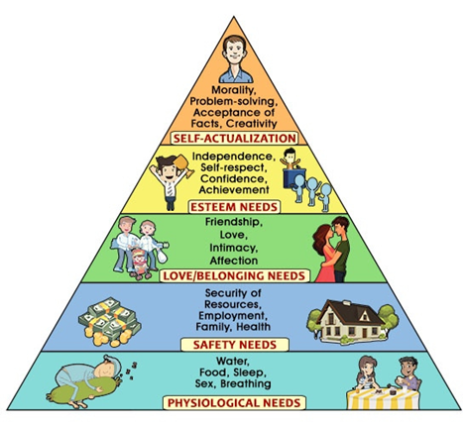 [image error]1.Survival first. A conversation recently with a Russian migrant to New Zealand reminded me that initially a migrant’s need is survival. Moving to a new country there are so many changes for their brain to get used to (culture shock) that adapting to those changes consumes energy. On Maslow’s hierarchy of needs, a new migrant’s immediate needs are at the bottom of the pyramid, the physiological and safety level. At this early stage of migration, underemployment can be perceived to be acceptable, even desirable. Later, and this may be a few years or decades, the underemployment may have a detrimental effect.
 2. Undervalued. A migrant being unable to put their experience and qualifications to use, or not being valued or recognised for their full potential, can cause anger and frustration.
3. Isolation. A migrant can feel isolated because their co-workers feel too different to them. Having a higher qualification can be added to the reasons their co-workers feel different to them, such as accent, language and appearance.
4. High expectations on their children. Second generation migrants often achieve a higher level of employment than their parents. The second generation doesn’t have to familiarise themselves with education or the idiosyncrasies of a different country. The children of migrants may feel extra pressure to succeed in a way that their parents couldn’t.
5. Poverty, as you are not meeting the needs of your family in your host country, and/or your remittance expectations to your country of origin.
My next post will continue this subject with:The negative effects of overqualified or underemployed migrants for the host country.What can help overqualified migrants?I would love to hear your experiences and comments. Post them below.
August 26, 2017
Do you live in the best country?
Are you living in the best place? Migrants chose a country to move to based on their needs at that time. Needs will differ depending on the migrant's situation and personality. They may chose a country that offers either more prosperity, safety, or is environmentally friendly. A migrant may look for a county that makes integration of migrants a high priority.
Hopefully once you have moved and become a migrant, you feel that your adopted country s a great place to be for you. Would you feel better if your country was in the top ten countries of the world? Have a look at the three videos from The Daily Conversation below to see where your adopted country ranks.
The Top Ten Countries That Recycle The Most
World's 10 Most Prosperous Countries
There isn't a top ten for best country for integrating migrants, but it seems that Canada is a leader with, Multiculturalism is more important to Canadians' national identity than hockey. In this chapter, Prof. Dr Irene Bloemraad notes how multiculturalism is embraced in Canada. The video is part of a free course from Iveristy.org, 'Rethinking 'Us' & 'Them': Integration and Diversity in Europe'. The course is made up of 5 minute videos. I recommend it.
Did your country of choice come into the top ten? Did it make you feel better knowing so? The ranking is a nice to know for many. More important is that you appreciate the advantages your adopted country has on offer.
Are you making the most of the country you are in?
Whether your country is in the top ten or not, it is important to check whether you are making the most of the country you are in, especially if you are feeling unsettled. Maybe you need to put more effort into the country you are living in. Have you looked into or experienced the highlights of your adopted country? Have you become involved in the community around you? Have you been over-relying on your phone or computer for stimulation and connection?
New Zealand is known for its natural beauty. In New Zealand I have walked around volcanoes, attended a hangi, been for bush walks, felt the youth of the country under my feet. I have played in the waves on empty beaches and swam in clean rivers, and before I had children, joining an evening class helped me get to know New Zealanders outside of work. As a family we have continued with enjoying beaches and bush walks. Our children have become involved in sport and both my husband and I became involved in local voluntary work.
If you are unsettled, bored or dissatisfied, you may resort to your phone for connection. David Livermore CQ (cultural intelligence) specialist, highlights that with our smartphones we are continually being connected elsewhere,
“..several of the security officers were leaning against the wall scrolling through their phones every time I walked by them.”
Smartphones may have wiped out boredom from idle moments, but it has also stopped us looking at what is around us. If you feel unsettled because the country you chose to live in has not worked out the way you thought, leave the virtual world, and look for new experiences in your new environment. Below is a couple of videos that remind us how easy it is to overuse our phones.
Look up
Madness of Humans
I would love to know your comments.
July 29, 2017
Surrogate Grandparents
 I have previously written about the importance of grandparent/grandchild relationships. As a mother, I missed my children having both of their sets of grandparents around. I have heard adults including my grown children say they feel they missed out from not having both sets of grandparents nearby. Friends, now grandparents themselves have described how they have missed having their grandchild close. It doesn't matter how many toys the grandparents send, and jumpers they knit, not having their grandchildren around is a void in their lives.
Surrogate grand parenting is one way to alleviate the missing for both generations. Succinctly put by a blog in grandparents.com“If grandparents did not exist, children would surely invent them.”
...a line from the book Grandparents/Grandchildren: The Vital Connection (Doubleday) that my husband, Ken Woodward, and Arthur Kornhaber, M.D., wrote more than two decades ago.
"They’re not our grandkids. And we don’t take the place of their grandparents. But we share a very special bond that only these two generations can really understand. It allows us to pour out some grandparenting love and savvy on two adorable kids who really appreciate it.
My grandkids don’t have the need for a substitute grandparent, as they live in cities where they have the real McCoy. And while I know what a help this is to the parents and how much fun it is for the grandkids, there are times when I can’t help but feeling jealous. Especially when they call to tell us about a trip to the aquarium or an overnight with their local grandparents. So this across-the-street relationship we have built with these youngsters is as nice for us as it is for them."
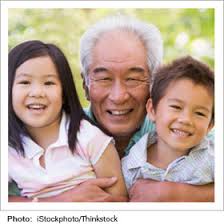
If you are interested in becoming a surrogate grandparents,there are websites that can arrange the connection. By searching in facebook for Surrogate Grandparents in your country or area, you are likely to find a match. Here are some other links that I have found:
http://volunteergrandparents.ca/
http://www.findagrandparent.org.au/faq.asp
http://www.aarp.org/home-family/friends-family/info-2017/surrogate-grandparents-benefits-fd.html
http://www.bodyandsoul.com.au/sex-relationships/relationships/surrogate-grandparents-scheme/news-story/f1eba1efc48fd582b0fc8f36766ffe77
 https://www.surrogategrandparents.org.nz/
On the subject of grandparents, in case you haven't seen this post already...
11+ Ways to improve thegrandparent grandchild relationship
Let us know about how you have overcome missing your grandparents, your children's grandparents or if you are a grandparent, your grandchildren, by writing in the comments below.
June 12, 2017
Surprise Visits
What would a surprise visit be like? I have never been part of one. In the Visits Home chapter of my book, three women describe their surprise visits. You can read about them here in the free download.
 I was inspired to write about surprise visits as a friend recently had a surprise visit set up for her. Uber had an ad campaign planned for Mothers Day in the northern hemisphere (March). Annie from England, but living in Australia has a daughter, Lily working in England. Lily's friend asked Annie if she wanted to be part of the ad. Within forty eight hours Annie had crossed the world without telling anyone. A logistical and mental challenge but definitely worth it. Here is the result, enjoy the ride, and keep a hanky nearby. Mothers surprise their children.
If anyone would like to share their surprise visits experiences, I would love to hear about them. Post a comment below and I can contact you.
 I was inspired to write about surprise visits as a friend recently had a surprise visit set up for her. Uber had an ad campaign planned for Mothers Day in the northern hemisphere (March). Annie from England, but living in Australia has a daughter, Lily working in England. Lily's friend asked Annie if she wanted to be part of the ad. Within forty eight hours Annie had crossed the world without telling anyone. A logistical and mental challenge but definitely worth it. Here is the result, enjoy the ride, and keep a hanky nearby. Mothers surprise their children.
If anyone would like to share their surprise visits experiences, I would love to hear about them. Post a comment below and I can contact you.
April 21, 2017
Are people with brown eyes are more intelligent?
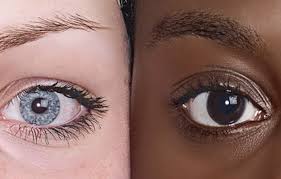 My daughter recommended I watch a documentary "How Racist Are You. Jane Elliots Brown Eye/Blue Eye Excercise." The documentary captured me. I was disappointed that so many of the 'blue eyed/white folk' didn't get or worse, didn't allow the exercise to be completed. The exercise was a chance for the blue eyed people to experience what life was like in a brown eyed world. Many of the participants missed an opportunity of learning and empathising. The video is worth watching, even to see how the group dynamics play out. This particular clip was an experiment carried out in England, if you look on youtube you can find versions of the same exercise in other countries.
I was so intrigued by Jane Elliot's work that I watched more youtube clips. Oprah had Jane as a guest on her show, 'The Racism Discussion 1992'. The dated clothes, hairstyles, and some attitudes aside, the programme is also recommended watching, Three minutes into the clip a guest asks what proof Jane Elliot has that brown eyed people are more intelligent than blue eyed people. Jane Elliot brings to our attention that brown eyed people, people of colour, brought our civilisation the alphabet, our numerical system, our electricity and every major religion on the earth. Jane Elliot went on to say, "we are educated by a racist school system that only teaches us about white contribution."
If you watch any youtube clips of Jane Elliot, you will see that she is not a voice of gentle persuasion. I admire her determination in making us reflect on how racist we can be, even though racism may not be our intention. As Jane said in Part 2 of The Racism Discussion, racism is a learned response and it can be unlearned, but to unlearn such a response will take a conscious effort.
Maybe people with brown eyes are more intelligent. The issue is not intelligence, but the treatment of others. I have blue eyes. I have been brought up in a country where whites had more advantages. I am living in a country where whites have more advantages. The Jane Elliot youtube clips I watched made me more aware of how presumptuous I have been. I may have thought I knew how it was for people with brown eyes, but I became aware that I hadn't spent much time thinking how it was for people with brown eyes. I hope I can be open minded and aware of the racism I have. I hope I can keep working on neutralising it. I hope others will too.
Let me know your reaction to this blog or the brown eye/blue eye exercise?
March 13, 2017
Time for a laugh. Why migrant comedians get us thinking and laughing.
 Laughing is healthy and fun. I have been to many standup comedy shows. I'm sure the comedians are nervous before they come on stage, I know I am tense as part of the audience. Will I find this funny? Will my fellow guests laugh out loud? I hope so. I dread the comedian 'bombing,' and I hope they are resilient enough to laugh a bad night off. I am eager to laugh with them because I have come to the venue for a laugh, and because I admire their bravery.
Why would migrants make good comedians? With all jokes, the humour comes from 'laughing at someone else's expense.' Much of the humour from migrants is based on their experiences. They are laughing at what has happened to them, and or ridiculing the circumstances responsible for those laughable situations.
Migrants can observe because they have two perspectives of the country or society they are living in. In a previous post, some of the 12 reasons why migrants make good artists are also valid for comedians. For example, show host and comedian Graham Norton said that being an outsider, helped him to be an observer asking the questions, rather than having to be included in the group.
Comedy may be described as mocking the weak. The person laughing feels momentarily superior. They have a feeling of elation due to someone else's weaknesses or perhaps their own. An immigrant who looks or sounds different to the crowd can be perceived as inferior, vulnerable, weak. The audience already feels superior to them and willing to laugh. Comedian and writer Sami Shah says, "As an immigrant, you have to warm up the audience to who you are."
Perhaps once you explain that you are different, it gives the audience licence to laugh at the differences in that comedy-show setting. A comedian also has a licence to make fun of the audience or the challenges the comedian has had due to the audience's individual or societal weaknesses.
Being a migrant comedian: 1. Gives migrants a voice
"Humor is a rubber sword – it allows you to make a point without drawing blood.” -Mary Hirsch, Humorist
 Shazia MirzaFor Farhoud, the very point of comedy is to push people up against what makes them uncomfortable: “Television and a lot of performing arts are censored, but comedy is raw. As long as it’s funny, it will get people thinking about things they wouldn’t otherwise think about.”
Cristela Alonzo has been described as opinionated. Through humour, she can get her message across: "In election years, everyone talks about the good old days—but they never tell you when the good old days were. I’m a person of color. When were my good old days?"
See her perform here.
Shazia Mirza makes humour from the challenges of being a Muslim woman in a western society. Click here to watch. 2. Helps migrants face their challenges"Most standup comedians started in the playground when they were bullied. It starts off as a defence mechanism and ends up as empowerment. That's why it can be a force for good." Roger Clegg
The process of writing a comedy sketch would start with identifying poignant experiences. Then you work out how those experiences can be retold in a humorous way. Even if you are the subject of mockery, by laughing at the situation, or finding humour in it, you take ownership or control of the situation and literally make it laughable.3. It helps self-esteemNot only are you brave enough to laugh at your own misfortunes, but you are brave enough to do it in a public setting. It must be empowering. 'This is me. This is how life is for me. If you are uncomfortable with what I am saying then perhaps you should think why.'
Time for a laughAs we all like to laugh, here are some clips of migrant comedians' performances. Warning - there are a few words or phrases that maybe offensive.
Shappi Khorsandi shares anecdotes of misunderstandings of being an Iranian woman in England.
Nazeem Hussain and Amaer Rahman talk about their experiences as comedians for the Immigration Museum Victoria, Australia. My favorite joke clip: "If you ever wake up in hospital and there is not one brown or Asian doctor in that hospital, you should probably get the hell out of there. Coz, you’re not actually in a hospital, you’re just on the set of a mediocre but well loved Australian TV series."And for more information, Sami Shah talks on his Laughing Dead program to immigrant comedians, Dilruk Jayasinha and Ivan Aristeguieta. Click here to listen.

This post was originally from our February newsletter. Click here to subscribe


