Ellie Baker's Blog, page 3
February 13, 2017
Dual citizenship issues
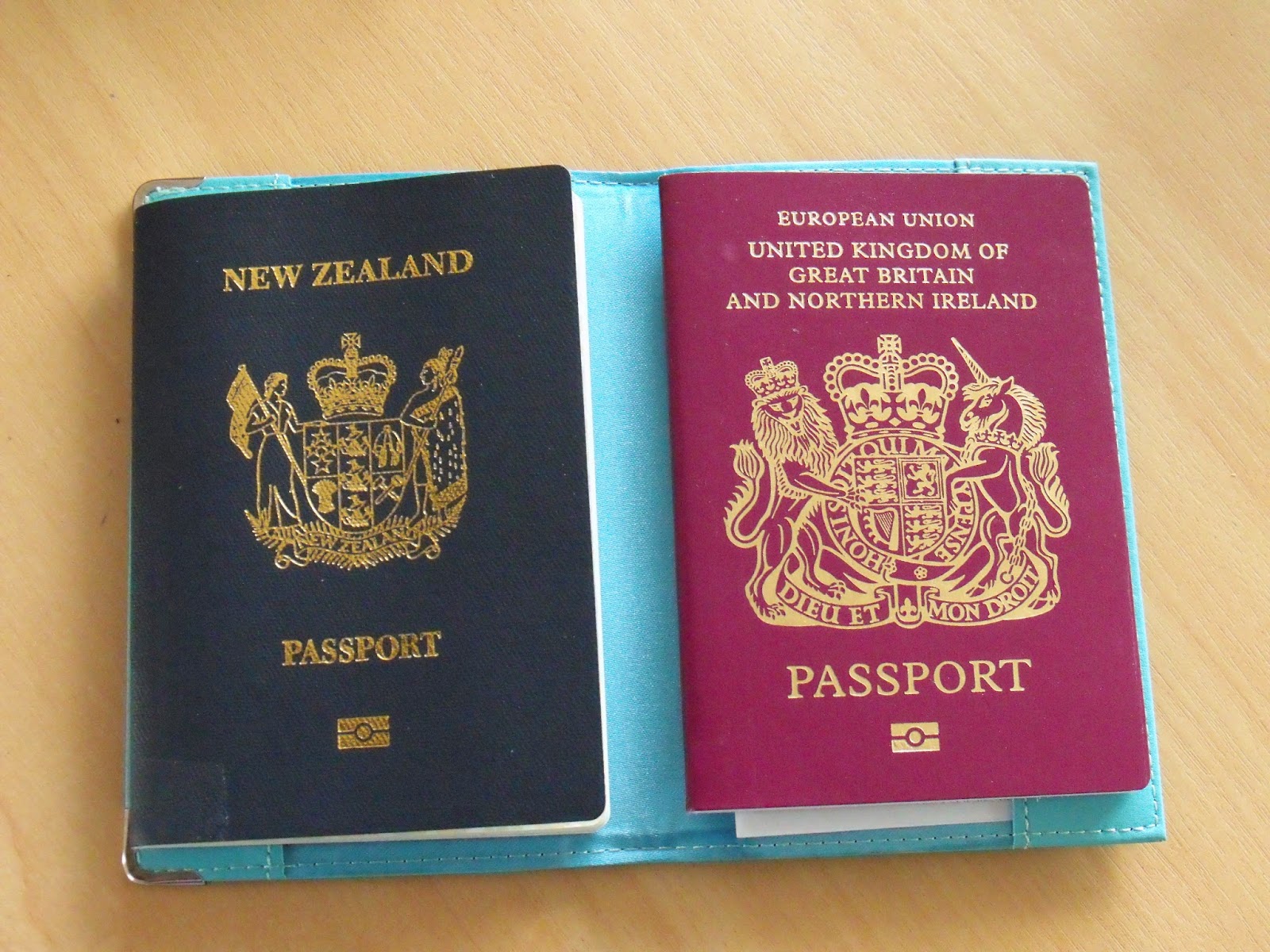 The recent ban by Trump on the travel of migrants with dual citizenship of seven countries has highlighted one of the pitfalls of having dual citizenship status. By living in a country and maintaining 'ownership' of another country, you subject yourself to issues of both your country of origin and your host country.
I feel for all the migrants of the seven countries 'travel ban.' Migrants will have to put on hold, cancel or adjust trips home to visit, and visiting sick parents. The ban has caused a worldwide gasp. It has inspired many people to increase their knowledge of world politics, from having zero political interest to some, or from some to taking action such as protesting.
The melting pot of the world certainly seems to have been stirred and heated up. I hope the suddenness of this ban continues to be considered as unreasonable, and that action continues to stop the ban. I hope that the outcome is that migrants and refugees are perceived more as individuals motivated to have the best life they can. The article below tells the story of two individuals.
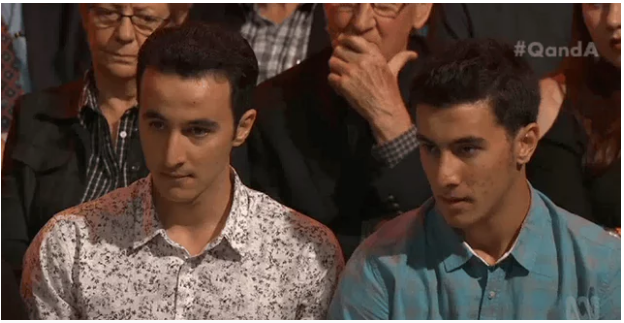 “Australia has kindly given us a new life and after only two years of learning English, my brother has recently made the news when graduating as a dux of his school and currently studying to be a doctor. I am also halfway through my business degree. Why would someone ban people like us from being citizens of this country?”
Q&A: refugees put a human face on debate over Trump's travel banMore on Dual Citizenship from a previous Newsletter (March 2014.) Read more here.
 There is a great real-life story in there too of what can happen when you lose your passport.

January 7, 2017
101 support for migrants
Support networks can help make staying easier.
 Last year I spoke to an immigrant cluster support network group, Wings. Wings has been running for nearly ten years and is a great example of a support network for immigrants, especially new immigrants and people new to the district. The group stood out as being warm, welcoming and with a variety of activities at different times of the day, caters for an extensive pool of interests. I spoke to this support group about the lifecycle of an immigrant and touched on some emotional challenges of immigration. Issues such as the difficulties when your loved ones are elderly or sick seemed timely to discuss, because before the talk one member had related that she had just returned from four months in California looking after her sick father. She was now on “stand by” waiting to hear of news that would need decisions and action. Another member related that she had just found out that her brother-in-law had died that day. Tears exuded her fragility and I thought of the frustration she would probably be feeling from not being among those who loved him and so be able to share the grief together.
In the question time, we talked abut connection with grandchildren or lack of it. One woman said, “You come here. You learn English. You let English be your main language at home so that your children will get the best out of school. Then when your parents come over, your children can’t communicate with their grandparents because they don’t have the same first language.” The comment reminded me that language differences are a strong barrier when trying to keep connected with your loved ones and those in your adopted country. It was good to know that there was a place where these immigrants had a place to air their frustrations and challenges. Well done Wings.
 There are times when you need helpYou can read more about support networks from the free pdf chapter of my book, The Emotional Challenges of Immigration, download the chapter by clicking here.
Last year I spoke to an immigrant cluster support network group, Wings. Wings has been running for nearly ten years and is a great example of a support network for immigrants, especially new immigrants and people new to the district. The group stood out as being warm, welcoming and with a variety of activities at different times of the day, caters for an extensive pool of interests. I spoke to this support group about the lifecycle of an immigrant and touched on some emotional challenges of immigration. Issues such as the difficulties when your loved ones are elderly or sick seemed timely to discuss, because before the talk one member had related that she had just returned from four months in California looking after her sick father. She was now on “stand by” waiting to hear of news that would need decisions and action. Another member related that she had just found out that her brother-in-law had died that day. Tears exuded her fragility and I thought of the frustration she would probably be feeling from not being among those who loved him and so be able to share the grief together.In the question time, we talked abut connection with grandchildren or lack of it. One woman said, “You come here. You learn English. You let English be your main language at home so that your children will get the best out of school. Then when your parents come over, your children can’t communicate with their grandparents because they don’t have the same first language.” The comment reminded me that language differences are a strong barrier when trying to keep connected with your loved ones and those in your adopted country. It was good to know that there was a place where these immigrants had a place to air their frustrations and challenges. Well done Wings.
 There are times when you need helpYou can read more about support networks from the free pdf chapter of my book, The Emotional Challenges of Immigration, download the chapter by clicking here.
December 17, 2016
Migrant Emotions: Christmas help
Migrant Emotions: Christmas help: Celebration time in some parts of the world. Holiday time in others. Here is a useful resource from my book , chapter 14 on Surviving Christ...
December 16, 2016
Christmas help
Celebration time in some parts of the world. Holiday time in others. Here is a useful resource from my book, chapter 14 on Surviving Christmas and other cultural celebrations. Read the chapter as a PDF here.
Here are some of my previous blogs for help with Christmas
 Nine Strategies for a happier Christmas
If you are about to fly with children, you may find this useful
How to reduce fear of flying with children
And if that isn't enough here are another couple of helpful links from other bloggers.
http://expatchild.com/keep-calm-its-christmas/
http://expatchild.com/christmas-abroad/
Wishing you a wonderful festive season with love laughter and hope for a great year ahead.
Here are some of my previous blogs for help with Christmas
Nine Strategies for a happier Christmas
If you are about to fly with children, you may find this useful
How to reduce fear of flying with children
And if that isn't enough here are another couple of helpful links from other bloggers.
http://expatchild.com/keep-calm-its-christmas/
http://expatchild.com/christmas-abroad/
Wishing you a wonderful festive season with love laughter and hope for a great year ahead.
November 30, 2016
Underwear-undercover familiarity
This is not a knicker fetish
This was originally posted on my newsletter. I thought it worth posting on my blog. Why do I keep buying M&S knickers?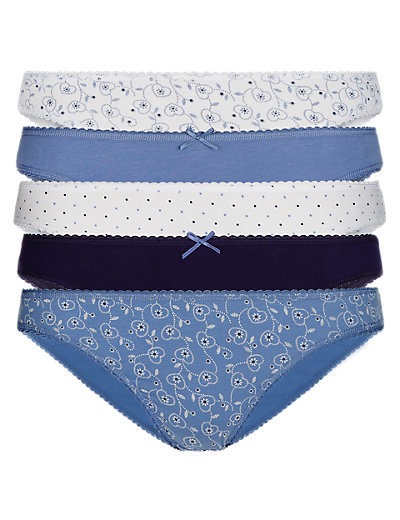 I don’t have an underwear fetish, but as my lingerie drawer contents is looking more like ‘lingertoolong’ underwear, my thought process jumps to - need more M&S knickers, about time I went to M&S, England. I hear you cry, ‘Why not buy online!’ I have done previously, but there comes a time when the sad knickers are a daily reminder that it has been too long since I have been to England to see family, friends and (stock up on knickers.) There is more to underwear than meets the eye. Yes, I can buy them online, but then buying them will allow me to put off making decisions for a trip that I know I need to do anyway.My underwear may not be the dictator of my homeland trip but it is definitely a mark in time. It's been long enough since the last visit. But why do I need to revert to M&S knickers when there are perfectly adequate ones here in New Zealand? Before I start to theorise, I take comfort in that I am not alone. A New Zealander once said that although they have loved working in London for the last few years, when they visit family in NZ, restocking on Bendon, their favourite brand of NZ underwear is a high priority. So why is familiar underwear so precious to us? We are creatures of habit, intrepid explorers, prepared to give up friends, family and familiarity of our homeland, but when it comes to the garments most intimate with us, only the most familiar will do. Perhaps as migrants we feel we have changed and adapted enough, that having to find another underwear that fits and is comfortable is just one change too many. Fashion gurus, stylists and underwear salespeople will tell you that with great underwear, you will feel great. So maybe with familiar underwear, the underwear of our formative years, we can feel a familiarity. Outwardly we appear to be fully acclimatised to our new environment, whereas secretly in an undercover-underwear kind of way we are holding onto a piece of our previous life. On a daily basis the underclothes give us secret comfort. Be ready M&S a bulk purchase is coming up.
This was originally posted on my newsletter. I thought it worth posting on my blog. Why do I keep buying M&S knickers?
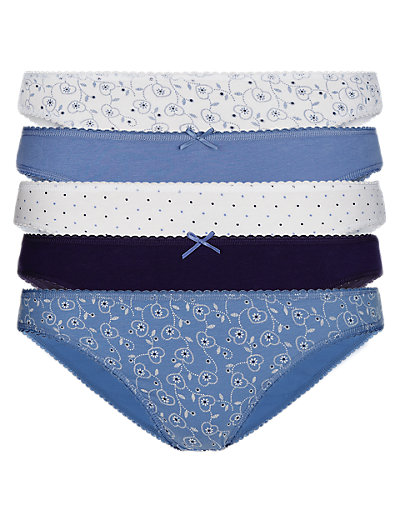 I don’t have an underwear fetish, but as my lingerie drawer contents is looking more like ‘lingertoolong’ underwear, my thought process jumps to - need more M&S knickers, about time I went to M&S, England. I hear you cry, ‘Why not buy online!’ I have done previously, but there comes a time when the sad knickers are a daily reminder that it has been too long since I have been to England to see family, friends and (stock up on knickers.) There is more to underwear than meets the eye. Yes, I can buy them online, but then buying them will allow me to put off making decisions for a trip that I know I need to do anyway.My underwear may not be the dictator of my homeland trip but it is definitely a mark in time. It's been long enough since the last visit. But why do I need to revert to M&S knickers when there are perfectly adequate ones here in New Zealand? Before I start to theorise, I take comfort in that I am not alone. A New Zealander once said that although they have loved working in London for the last few years, when they visit family in NZ, restocking on Bendon, their favourite brand of NZ underwear is a high priority. So why is familiar underwear so precious to us? We are creatures of habit, intrepid explorers, prepared to give up friends, family and familiarity of our homeland, but when it comes to the garments most intimate with us, only the most familiar will do. Perhaps as migrants we feel we have changed and adapted enough, that having to find another underwear that fits and is comfortable is just one change too many. Fashion gurus, stylists and underwear salespeople will tell you that with great underwear, you will feel great. So maybe with familiar underwear, the underwear of our formative years, we can feel a familiarity. Outwardly we appear to be fully acclimatised to our new environment, whereas secretly in an undercover-underwear kind of way we are holding onto a piece of our previous life. On a daily basis the underclothes give us secret comfort. Be ready M&S a bulk purchase is coming up.
October 28, 2016
12 reasons why migrants make good artists.
 I have come across interesting books, talks, artists, singers, generally great creative people who are migrants. A quick search reveals some of the famous migrant artists or creative people.
In 20 famous migrants to the UK, migrant artists/creatives include Handel, Karl Marx, Sigmund Fred, Marks and Spencer originators. In the United States of America famous migrant artists include Einstein, Bruce Willis, Joni Mitchell, Isabell Allende, Charlize Theron.
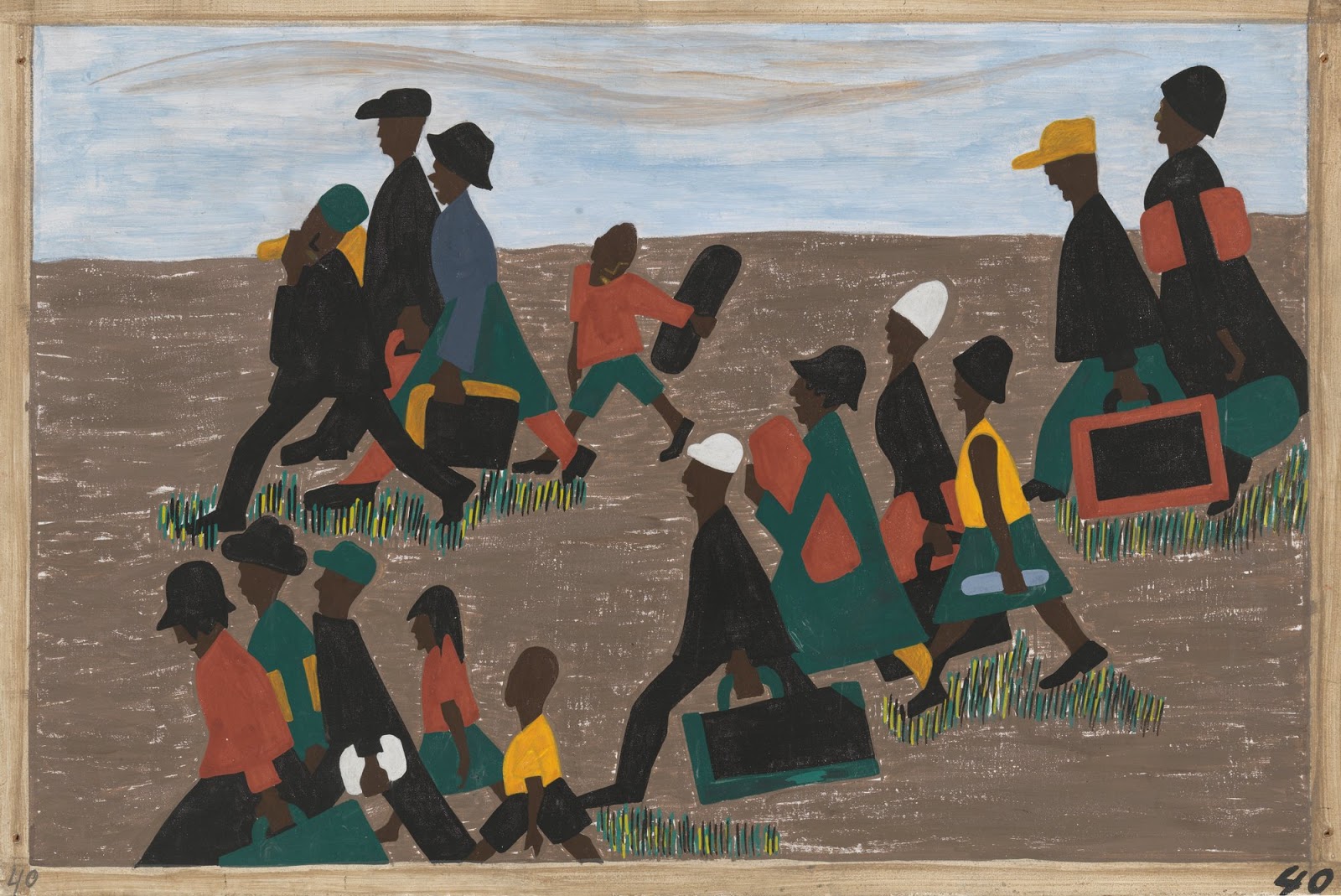 Jacob Lawrence Migration Series The list of migrant artists is endless. Have a search for migrant artists in the country you live in.
The twelve reasons migrants make good artists could be expanded. Should you have some more to add then type away in the comments below.
Migrant art offers a fresh perspective. The combination of the artist's countries produces art that keeps us stimulated. The differences are what makes the art attractive or interesting.
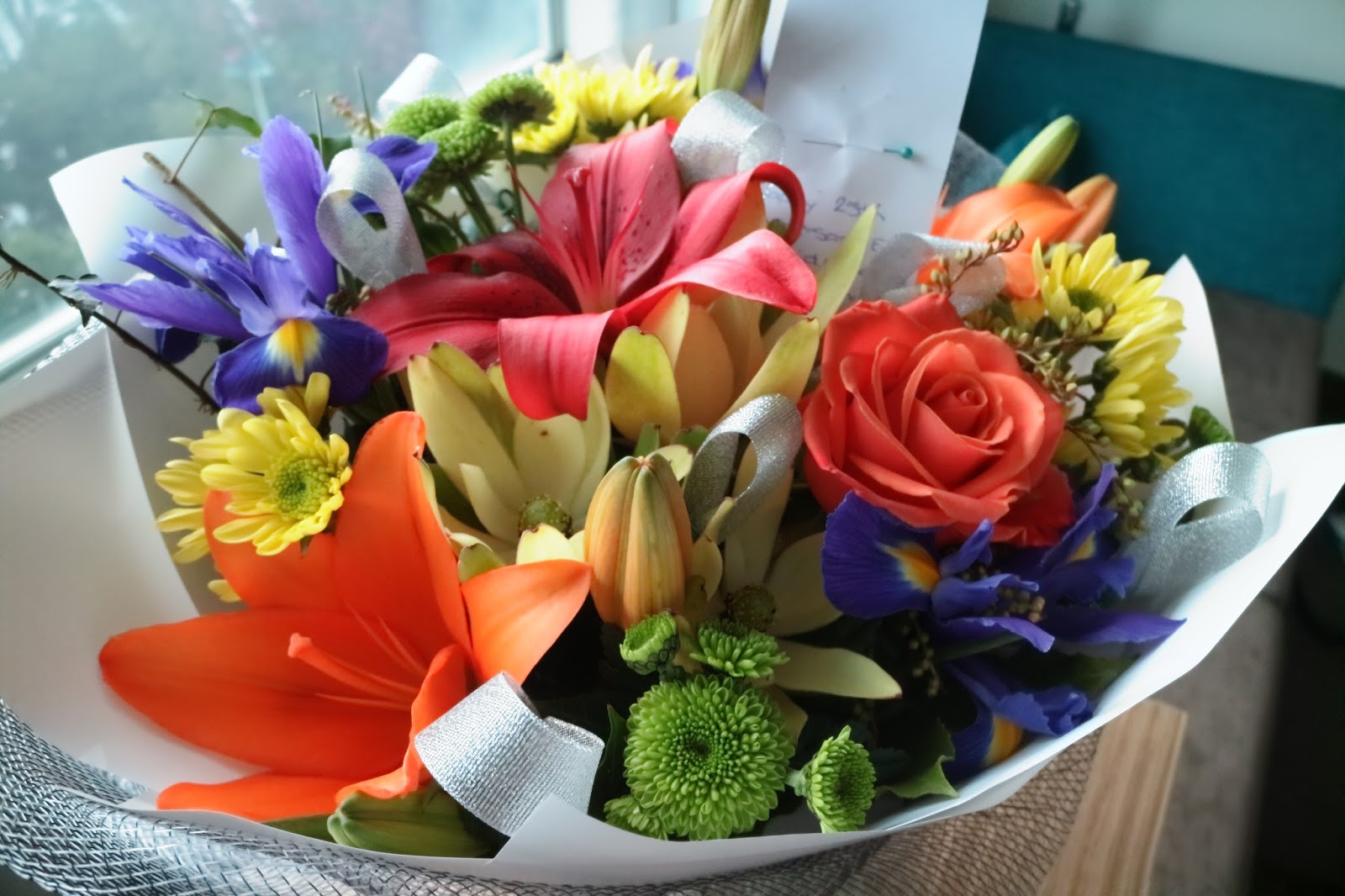 "A lot of flowers make a bouquet." Muslim origin
12 reasons migrants make good artists.
Migrants are familiar with being an outsider, criticised and or judged. Migrants are different in accent, appearance or actions. Because of these differences, migrants are continually developing their feeling of being integrated.Migrants are motivated people. They are familiar with change, and open to non-conformity.Your formative years' environment and support network influences how you live as an adult. You have preconceived ideas about what is normality. By changing countries you can literally shed any preconceived ideas and reinvent yourself. A migrant can consider themselves to be like a blank canvas.Migrants are able to be objective about what they see around them. A traveler appreciates characteristics of the country they were brought up in when they are away from it. The distance helps the traveler create objective opinions. Similarly the migrant artist's objectivity helps create art. This art introduces a new perspective to the migrant's host country. The migrant artist has the perspective of two countries to create art. Migrants have a start with no reputation to lose or spoil.Migrants are practiced at being observers. They have lingered in the background as they have discerned what is offensive and what is not. Comedian and show host Graham Norton has said that being brought up as a Protestant in a Catholic country made him feel an outsider. In an article by Telegraph Group Ltd he said being an outsider gave him the skills to be a successful show host. He is happy to observe, ask the questions rather than feel he has to be one of the group answering the questions. A comedian will use their observations to gain the most laughs. An artist can use their observations to help create their art.Migrants have had their sense of belonging disturbed, disconnected and reconnected. This uprooting is emotive. Creative expression can help the artist work through the transition of identifying which connections they want to keep and which the migrant is happy to let go. A desire to share the trauma of disconnection can be strong enough not only to create, but to communicate. Telling people about your struggles as a migrant is not always well received. But showing them a piece of art, prose, play, song or joke communicates the message in a less confrontational way. The art is an opinion the artist has made public. It's not so much, 'Let's have a dialogue about this' rather, 'This is a piece of art. Dwell on it and if you feel moved, tell me what it made you think.'Author Edwidge Danticat's blog, "All immigrants are artists" suggested, before a migrant thinks about creating a piece of art, they already have lived art creation.
"Trying to start a life in a strange land is an artistic feat of the highest order, one that ranks with (or perhaps above) our greatest cultural achievements."
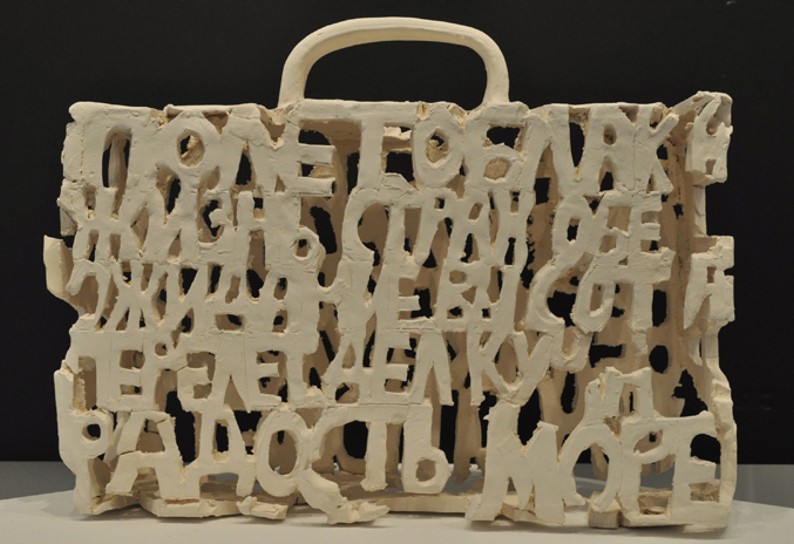 Human Migration
If you would like to browse through some migrant works, I have found these:
Immigrant plays
Immigrant songs
Immigrant books
Japanese New York: Migrant Artists and Self-reinvention on the World Stage
The Emotional Challenges of Immigration
Immigrant actors
September 6, 2016
Ten tips to make a great first impression
Ten tips to make a great first impression
First ImpressionsFirst impressions are influential, you don’t get a second chance. What do first impressions mean for an immigrant? This was part of Newsletter 12, but as it was so popular, I thought it worth its own blog. This blog will look at:
First impressions of the place you have chosen to live.My first impression of New ZealandFirst impressions of people you see in that place. First impressions of how people see you.How migrants can make a great first impression. The initial weeks or months in a new country will be an assault on your senses. There is so much to take in. As you process the differences and live through the culture shock, you will be forming your first impressions. These first impressions are likely to still be vivid years later. There are resources online to help new immigrants. Some share stories and videos of immigrants’ first impressions. Have a look at the links below. I love the comment about fruit on steroids! One of my first impressions of New Zealand was either a distortion or a quick introduction to the fundamental characteristics of the country.
My first impression of New Zealand
I had been in NZ a week. A school friend had lent me her car while she holidayed in Bali. Saturday afternoon I swiftly exited Auckland city and headed for a youth hostel in the “Jewel of New Zealand,” the Coromandel Peninsula. I was on my first mission to explore New Zealand. My first impression; there was no one around. I mean no one on the country roads or outside the houses, and yet I was less than an hour out of the biggest New Zealand city. I knew New Zealand had a tenth the population of the UK, but to see no car or person for an hour was weird. especially as I was on a main road (the big signs told me so.) On the way I stopped at a shop with a cream cone sign on top of it. It sold basic groceries as well, useful as I needed some bread. The display offered unfamiliar ice cream flavours; Hokey Pokey, Orange Chocolate chip, and then the more familiar, Rum and Raisin, and Vanilla. The shop was empty. I pondered over choosing a new flavour or sticking with a familiar one. Once I had decided, I coughed and hummed and whistled, but no-one appeared even though I could hear a TV in the background. Bored of waiting I thought of leaving, but the idea of Rum and Raisin had made me salivate, and I wanted to buy bread. “Hello…Hello? I’d like to buy an ice cream.” A chair scraped and there was the sound of a door being tugged open. A deep scowl preceded the vision of a woman large enough to fill the door frame. Her eyes were large and round and her head shook a little. (Similar to the Maori Challenge expression, I was later to find out.) “May I have a Rum and Raisin ice cream please? One scoop.” “Tourist.” Pretty obvious with my accent, I thought. However I do like to think of myself as a traveler, an inquisitive traveler, ready to engage with the people of the country I'm in. “Quiet today, isn’t it?” “Well everyone is watching the game.” “The game? I’m afraid I don’t watch much sport.” She lifted her head momentarily. Through the ice cream display I watched her eyebrows knit together and reach towards her hairline. She said, “The World Cup!” "Oh, okay." I replied. Before she finished scooping she announced, “a dollar.” Exchanging ice cream for dollar, she took the note with her as she disappeared through the door frame to continue watching 'The game.' Perhaps I won’t buy some bread here after all, I thought. Back on the road, the absence of humans still didn’t make sense. World Cup this and that came and went in London without me batting an eyelid. There were always people around. This was in New Zealand though. What I didn’t know at that time of 3.30pm on Saturday 19th June 1987, was that this was the day for New Zealand. It was the day NZ won the Rugby World Cup at home for the first time. Go the All Blacks! The whole of New Zealand (except me apparently) was watching the game. Now I have lived in New Zealand for nearly three decades I can appreciate that this experience was an apt first impression of the place. The whole country often stops everything for sport. However they also are on the move a lot, especially to their favorite places such as the Coromandel Peninsula, and they like ice creams. It was only another hour before I found the youth hostel. It was in the most beautiful and peaceful places I had ever been to. It was during that stay that I fell in love with New Zealand. My impressive first impression.First Impressions of people
 Hopefully you will be exposed to a variety of people in your adopted country to gain your first impression. Most non-migrants are flattered that you have left your homeland to live in theirs. Watch them and learn their ways of life, their culture. My first impression of New Zealanders were people who were friendly, and proud of their country. Good or bad experiences with one or two individuals will not necessarily be how all people of that nation are. Focus on the positive experiences. If you find that during your first impressions there are characteristics that you are not comfortable with, give it time. Often when we are faced with new features we are uncomfortable -the idea of having to learn Microsoft 10 fills me with dread. However, once we have become used to the new, we can appreciate and enjoy what the new or different can offer.First impressions of how people see you
 Whether an immigrant or not, the impression you make on others will depend on the other's preconceptions of ethnicity, racism and prejudice. The impression will also depend on the context within which you meet people.
As an immigrant, your appearance, ethnicity and/or your accent will show you are 'not from here'. You may have encounters where you are made to feel unwelcome or are reminded that you are an outsider. You have to toughen up. You are an outsider until you have shared experiences. Be patient. Shared experiences will give you a sense of connection. These may be as small as a conversation on a bus ride, or at work where you share a lunch break or task together. Immigrants have to have patience. Fortunatelymost migrants are motivated to do all they can to have a better life and they are prepared to wait.
What else can you do?How migrants can make a great first impression Most of the information available on how to make a good first impression is generated for interviews or romance. The principles, such as shown on the Mind Tools blog on making a good impression, are the same for migrants, with a few additions. Here are my suggestions:
As a migrant your accent or your appearance will give you away. Be proud of yourself.Be open minded and welcoming yourself.Find out the appropriate way to greet people in the culture you are in. Read more here. Consider yourself a guest in the country in which you have chosen to live. Until you become more established, you will probably feel like a guest anyway. A guest is conscious of using their best manners.Respect the cultural norms. If you don’t know them, find them out by asking or research. Brought up in England, I was often told that you don’t talk about money, politics or religion. In other countries, talking about money may be the norm. When you greet with a smile, make sure the smile is a genuine one.If you make mistakes, apologise if necessary and/or laugh them off.If you don't make a good first impression, take time out to analyse what it went wrong. Don’t set yourself up for failure. As a migrant you have to go out and meet people, make connections. Sometimes you are more in the mood than other times. If you in the mood, great. If not, don’t force it. Being a new immigrant can be exhausting because you are continually processing new information. Pace yourself. If you are not in the mood to meet people, either don’t, or get yourself in the mood by watching humorous You Tube videos.Realise that your first impressions, those you receive and give, are not the only impression. Keep working on making the best impression you can.More linksRussian-speaking migrants' first impressions of Seattle. Including the steroid oranges. Link hereCanada's perspective on all countries is a great introduction to cultural norms. Link here10 Cultural dos and taboos here15 immigrants give their first impression of America. Link hereA month studying Spanish in Costa Rica. Link hereTopics of conversation that are considered taboo in America and why. Link hereMaking a great first impression from Mind Tools. Link hereForbes Idea of ways to make a great first impression. link hereA reminder on racism and jokes. Link hereFinally, your first impressions may be wrong. Link here
First ImpressionsFirst impressions are influential, you don’t get a second chance. What do first impressions mean for an immigrant? This was part of Newsletter 12, but as it was so popular, I thought it worth its own blog. This blog will look at:
First impressions of the place you have chosen to live.My first impression of New ZealandFirst impressions of people you see in that place. First impressions of how people see you.How migrants can make a great first impression. The initial weeks or months in a new country will be an assault on your senses. There is so much to take in. As you process the differences and live through the culture shock, you will be forming your first impressions. These first impressions are likely to still be vivid years later. There are resources online to help new immigrants. Some share stories and videos of immigrants’ first impressions. Have a look at the links below. I love the comment about fruit on steroids! One of my first impressions of New Zealand was either a distortion or a quick introduction to the fundamental characteristics of the country.
My first impression of New Zealand
I had been in NZ a week. A school friend had lent me her car while she holidayed in Bali. Saturday afternoon I swiftly exited Auckland city and headed for a youth hostel in the “Jewel of New Zealand,” the Coromandel Peninsula. I was on my first mission to explore New Zealand. My first impression; there was no one around. I mean no one on the country roads or outside the houses, and yet I was less than an hour out of the biggest New Zealand city. I knew New Zealand had a tenth the population of the UK, but to see no car or person for an hour was weird. especially as I was on a main road (the big signs told me so.) On the way I stopped at a shop with a cream cone sign on top of it. It sold basic groceries as well, useful as I needed some bread. The display offered unfamiliar ice cream flavours; Hokey Pokey, Orange Chocolate chip, and then the more familiar, Rum and Raisin, and Vanilla.
The shop was empty. I pondered over choosing a new flavour or sticking with a familiar one. Once I had decided, I coughed and hummed and whistled, but no-one appeared even though I could hear a TV in the background. Bored of waiting I thought of leaving, but the idea of Rum and Raisin had made me salivate, and I wanted to buy bread. “Hello…Hello? I’d like to buy an ice cream.” A chair scraped and there was the sound of a door being tugged open. A deep scowl preceded the vision of a woman large enough to fill the door frame. Her eyes were large and round and her head shook a little. (Similar to the Maori Challenge expression, I was later to find out.) “May I have a Rum and Raisin ice cream please? One scoop.” “Tourist.” Pretty obvious with my accent, I thought. However I do like to think of myself as a traveler, an inquisitive traveler, ready to engage with the people of the country I'm in. “Quiet today, isn’t it?” “Well everyone is watching the game.” “The game? I’m afraid I don’t watch much sport.” She lifted her head momentarily. Through the ice cream display I watched her eyebrows knit together and reach towards her hairline. She said, “The World Cup!” "Oh, okay." I replied. Before she finished scooping she announced, “a dollar.” Exchanging ice cream for dollar, she took the note with her as she disappeared through the door frame to continue watching 'The game.' Perhaps I won’t buy some bread here after all, I thought. Back on the road, the absence of humans still didn’t make sense. World Cup this and that came and went in London without me batting an eyelid. There were always people around. This was in New Zealand though. What I didn’t know at that time of 3.30pm on Saturday 19th June 1987, was that this was the day for New Zealand. It was the day NZ won the Rugby World Cup at home for the first time. Go the All Blacks! The whole of New Zealand (except me apparently) was watching the game. Now I have lived in New Zealand for nearly three decades I can appreciate that this experience was an apt first impression of the place. The whole country often stops everything for sport. However they also are on the move a lot, especially to their favorite places such as the Coromandel Peninsula, and they like ice creams. It was only another hour before I found the youth hostel. It was in the most beautiful and peaceful places I had ever been to. It was during that stay that I fell in love with New Zealand. My impressive first impression.First Impressions of people
Hopefully you will be exposed to a variety of people in your adopted country to gain your first impression. Most non-migrants are flattered that you have left your homeland to live in theirs. Watch them and learn their ways of life, their culture. My first impression of New Zealanders were people who were friendly, and proud of their country. Good or bad experiences with one or two individuals will not necessarily be how all people of that nation are. Focus on the positive experiences. If you find that during your first impressions there are characteristics that you are not comfortable with, give it time. Often when we are faced with new features we are uncomfortable -the idea of having to learn Microsoft 10 fills me with dread. However, once we have become used to the new, we can appreciate and enjoy what the new or different can offer.First impressions of how people see you
Whether an immigrant or not, the impression you make on others will depend on the other's preconceptions of ethnicity, racism and prejudice. The impression will also depend on the context within which you meet people.As an immigrant, your appearance, ethnicity and/or your accent will show you are 'not from here'. You may have encounters where you are made to feel unwelcome or are reminded that you are an outsider. You have to toughen up. You are an outsider until you have shared experiences. Be patient. Shared experiences will give you a sense of connection. These may be as small as a conversation on a bus ride, or at work where you share a lunch break or task together. Immigrants have to have patience. Fortunatelymost migrants are motivated to do all they can to have a better life and they are prepared to wait.
What else can you do?How migrants can make a great first impression Most of the information available on how to make a good first impression is generated for interviews or romance. The principles, such as shown on the Mind Tools blog on making a good impression, are the same for migrants, with a few additions. Here are my suggestions:
As a migrant your accent or your appearance will give you away. Be proud of yourself.Be open minded and welcoming yourself.Find out the appropriate way to greet people in the culture you are in. Read more here. Consider yourself a guest in the country in which you have chosen to live. Until you become more established, you will probably feel like a guest anyway. A guest is conscious of using their best manners.Respect the cultural norms. If you don’t know them, find them out by asking or research. Brought up in England, I was often told that you don’t talk about money, politics or religion. In other countries, talking about money may be the norm. When you greet with a smile, make sure the smile is a genuine one.If you make mistakes, apologise if necessary and/or laugh them off.If you don't make a good first impression, take time out to analyse what it went wrong. Don’t set yourself up for failure. As a migrant you have to go out and meet people, make connections. Sometimes you are more in the mood than other times. If you in the mood, great. If not, don’t force it. Being a new immigrant can be exhausting because you are continually processing new information. Pace yourself. If you are not in the mood to meet people, either don’t, or get yourself in the mood by watching humorous You Tube videos.Realise that your first impressions, those you receive and give, are not the only impression. Keep working on making the best impression you can.More linksRussian-speaking migrants' first impressions of Seattle. Including the steroid oranges. Link hereCanada's perspective on all countries is a great introduction to cultural norms. Link here10 Cultural dos and taboos here15 immigrants give their first impression of America. Link hereA month studying Spanish in Costa Rica. Link hereTopics of conversation that are considered taboo in America and why. Link hereMaking a great first impression from Mind Tools. Link hereForbes Idea of ways to make a great first impression. link hereA reminder on racism and jokes. Link hereFinally, your first impressions may be wrong. Link here
August 29, 2016
Where are you from or where are you local?
Taiye Selasi, in her Ted talk, suggests that rather than ask where we are from, we should ask where we are local? Based on the idea that it is our experiences that shape us, we should discard the concept of a country identity, countries change in name and borders, and instead look at what are our rituals, relationships and restrictions. (The below quotes are taken from the transcript of her Ted talk.) During her talk she suggested:
"First, think of your daily rituals, whatever they may be: making your coffee, driving to work, harvesting your crops, saying your prayers. What kind of rituals are these? Where do they occur? In what city or cities in the world do shopkeepers know your face? As a child, I carried out fairly standard suburban rituals in Boston, with adjustments made for the rituals my mother brought from London and Lagos. We took off our shoes in theMy daily rituals involve drinking a lot of tea, working from home, walking on a local farm, talking with my husband (whom I work with,) and having a home grown and home cooked meal at the table. The meal is preceded by a grace, which as we only have one child at home now, feels both superfluous and worthwhile. It is a way of appreciating all we have (and making sure the cook, not always me, is thanked.) The words are at the bottom of this blog. It was taught to us by my tuneful nephew Philip. Sadly my husband and children took up the tuneless version, which I guess keeps it light hearted.
My relationships that matter on a daily basis are my husband, my children, my good friends, my siblings.Restrictions for me are mainly self-imposed. I feel a privileged woman, well educated and with a solid roof over my head and no shortage of food. I have dual passports and in my travels, I haven't come across a country I haven’t been allowed to go to. I am restricted by the mixture of my perceptions and my immediate societies perception of what I should be doing; keep looking young, exercise, keep working full time, be busy. Self-imposed restrictions are perhaps due to an upbringing where service to others before yourself was encouraged.
Where am I local? I am local in a rural community where there is co-operation rather than competition. Where a woman is expected to work, manage the house and family, and be healthy. Where there is a tolerance but not a promotion of faith. Where there is an emphasis on family time and friends gathering for meals. Where I can be near enough to a city to tap into its culture, education and entertainment. Where there is a culture of honesty, integrity and a willingness to contribute to society. Many of these aspects are true of North London where I was brought up and rural New Zealand, where I live now.
By considering where I am local, we can identify an individual better. We can match people's rituals, relationships,and restrictions. If I have the same three R’s as someone in North London, France, Japan or Brazil, then is it is likely we would have shared interests. So is it true to label us as different or diverse? This leads me to the next point from Taiye Selasi's speech, the false claim on diversity."Taking this where are you local another step, “scholar William Deresiewicz's writing of elite American colleges. "Students think that their environment is diverse if one comes from Missouri and another from Pakistan -- never mind that all of their parents are doctors or bankers.""I'm with him. To call one student American, another Pakistani, then triumphantly claim student body diversity ignores the fact that these students are locals of the same milieu. The same holds true on the other end of the economic spectrum. A Mexican gardener in Los Angeles and a Nepali housekeeper in Delhi have more in common in terms of rituals and restrictions than nationality implies."Auckland New Zealand now claims to be the most diverse city in the world, with more than 200 ethnic groups. However, if we looked at the values and the experiences of the different migrants and asked them where they were local, then the diversity is likely to drastically reduce.
Where are you from?There is no harm in asking this question. It worth considering how you would answer it. What are they really asking is discussed in my last blog. Is it enough to say from Japan/ UK? Would it reveal more to say from a rural community? The asker may want to know whether they are superior to you, or whether you are worth committing an effort to their country. How you feel about yourself and what you like about your new country is probably more important and will come across in your answers.
Spend some time working out where you are local, it may help you identify why you feel uncomfortable/comfortable in the country you live in.
Mealtime moment of thanks:
Bless us O Lord as we sit together, bless the food we eat today, bless the hands that prepare the food, bless us O Lord, Amen.
"Bless us O Lord" could be replaced by your words, for example, We are grateful/we give thanks as we sit together, and/or incuding the name of your choice of higher power.



Where are you from? What are they really asking?
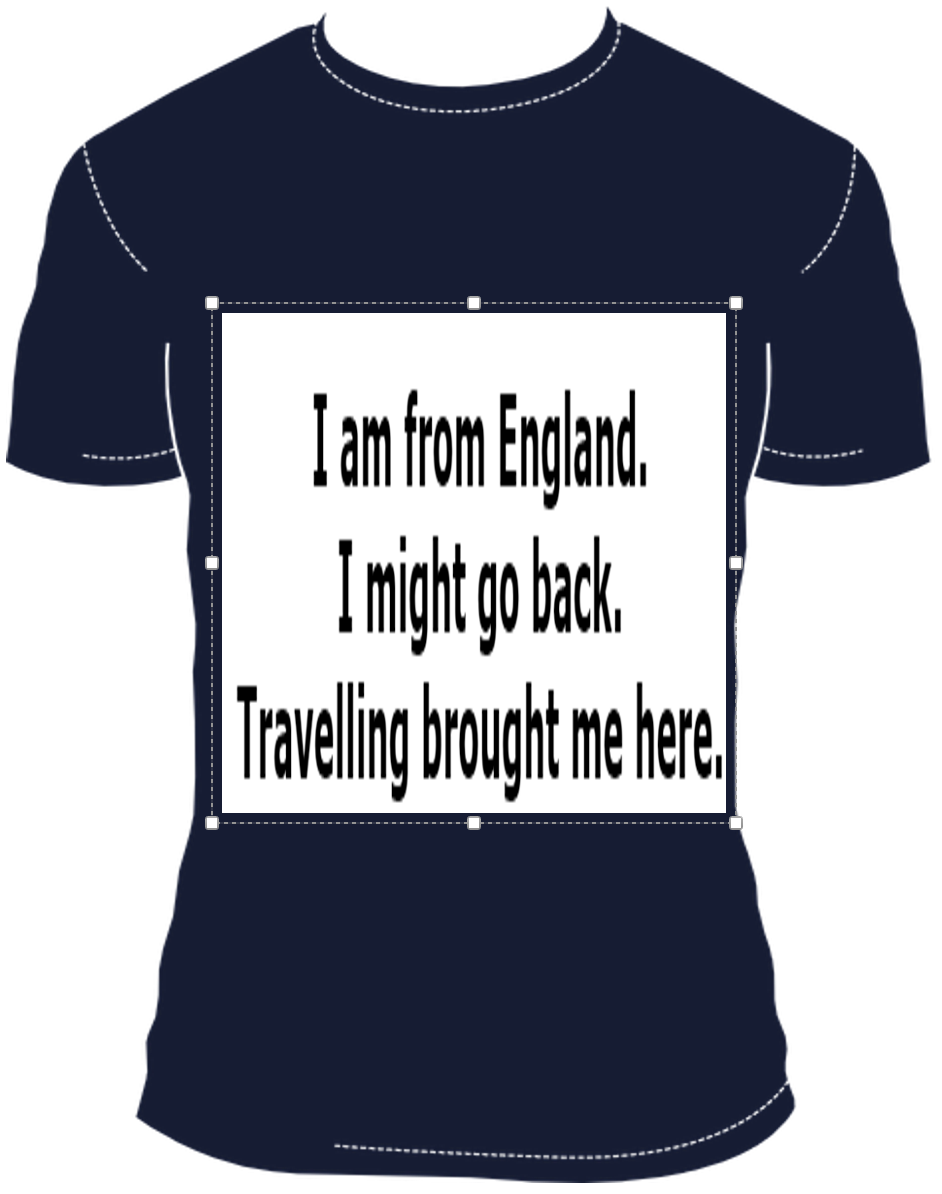 Where are you from?Would you go back?What brought you here?
These questions are so frequently asked for most migrants. When I was first a migrant, I often wished I had a t-shirt with the answers printed on them. I’m sure the questioner’s intentions are genuine and kind, but I now find myself pausing prior to answering. What do they want to hear? How do I answer?
‘Where are you from’I am from England. Images of tea-drinking- weather-obsessed- whinging-poms living in Downton Abbey or Coronation Street appear between me and the questioner. I am not that. If I answer I am from London stereotypes of Camden Market punks, opera and Eastenders pop up. I am not that either. My mother did come from East Ham, and I do drink a lot of tea, but there the stereotypes stop.
I often wonder, when asking where are you from, what are they really asking? It could be:
From this can we determine who is the superior based on the hierarchy of countries. Presumptuous and yet true. Is a degree from UK always better than a degree from NZ? Migrant professionals often have to spend many months and dollars to register as a professional in their host country. I appreciate countries have different ideas of minimum standards, but I speculate that more powerful countries overdo the registration requirements as it both sustains their place in the power hierarchy, and gives the host country income from the registration process.
Taiye Selasi suggests that rather than ask where we are from, we should ask, Where are you local? This is discussed in the next blog, Where are you from or where are you local? To find out where you are local consider rituals relationships and restrictions.
 When I am asked, "Where are you from?" I often say, 'I'm from Enfield, famous for the Scrabble factory.' This tells them little. I have avoided revealing my country of origin. I may go on to say Enfield is in north London, about 5 miles before the green belt. Most, not all, know where London is and so the enquirer gets their country answer. This 'Enfield plus' answer tells them that I am not living inner city nor necessarily rural. It suggests that the questioner may have to dig deeper to find out about me, which is good. I feel this tells them enough for now. If I were to apply the 'where are you local?' I would say a rural community with access to the city.
Would you ever go back?
 What is really being asked? Perhaps it is:Are you here forever or for an extended trip? How committed are you to this country? Is it worth me spending time getting to know you more?I find it hard to answer this, mainly because I can't predict how I will feel in the future. By saying I would never go back, brings up mixed feelings; I am downgrading the country I was brought up in, dismissing the people and positive experiences of my formative years. I don't like this feeling of disloyalty. Also by saying I would never go back, you may hear your place of birth is the best place to live. It is different rather than better. The differences suit me, but that does not mean it is an overall better pace to live for everyone all the time. So my response is usually, I would never say I would never go back.
What brought you here?What is really being asked? Perhaps is is:Why are you here? What is wrong with your country or origin or right with my country?Is the problem with you or the country you came from? What have you got to offer my country?There are many reasons migrants migrate. The interviewees in my book talk about a sense of adventure, better lifestyle, and marriage as being some of the reasons for migrating. For me it was visiting here, liking it enough to stay a bit longer. I didn't make a conscious decision to migrate, whether that was a help or not feels irrelevant now. I have a good life here. I probably would have had a good life in England, but right now I'm don't want change countries. Each country has advantages and disadvantages (also discussed in my book.) I have met migrants who have moved back to their country of origin and migrated again, in a search for their perception of a perfect place to live. I have also met migrants positive about their migration who see no reason to dwell on their country of origin. Migrants are motivated. It takes an effort to change countries. Migrants are usually employed. There are many stories of migrants being employed below their skill level. Migrants are often keen to share their culture. They offer diversity, new ideas, and new insights. A successful migrant was defined by NZ Immigration to be someone who contributes to country (paying taxes) and community (voluntary work or sharing of culture.) If that is the definition of a successful migrant, I do believe many migrants including myself can consider themselves to be successful migrants.
In answering where are you from, would you ever go back, and what brought you here, migrants are challenged on their reason for being here. It is not always easy to answer these questions generously. Migrants are often targeted as being the reason for a country's problem. They will feel judged and measured against the native born. In spite of all of this, migrants usually answer the questions politely, often like a guest, focusing on what the questioner wants to hear rather than what they would like to say. (Benefits of migrant groups, where they can discuss their feeling more openly.) For migrants, keep up the diplomacy and try to thread some truths into those that are ready to hear.
Finally I can't omit one of my favourite you tube clips to show how 'Where are you from?' can be so irrelevant. Thanks Ken Tanaka.
Are there any other questions you get asked? I would love to hear your comments.
July 5, 2016
12 Ways To Overcome Homesickness
Homesickness
 The feeling of longing for a connection with home. People have reported homesickness after moving house, even just around the corner. I heard of a man, happy as an immigrant in his adopted country for sixty years, felt that he 'just wanted to go home' when he reached his eighties.
Even with a fulfilling life in a different place from your original home, you may still feel a desire to be connected to your past home. You are homesick.
Homesickness can take many forms and affect people in different ways.
Although the hazards of homesickness were acknowledged at that time, since the twentieth century we have encouraged people to move for career or other opportunities. Homesickness was not allowed to be an obstacle to your potential future options. IBM, the computer corporate of the 1980's became known as I've Been Moved. Susan Matt's engaging Ted Talk, A History of Homesickness reveals home truths about homesickness. Is homesickness perceived as a sign of weakness? I think so. It's not always a well-received topic of conversation.
For me, homesickness is about not having access to my family, friends and the familiar. However, I have been an immigrant for a quarter of a century. The feelings of homesickness have become less frequent, less distressing and easier to accept. I still miss the people but New Zealand is familiar to me and I have people and places I love here. I have a routine and a sense of belonging. New Zealand is another home for me and no doubt if I returned to England, I would be homesick for New Zealand.
For those who have been away from home for less than a quarter of a century, reassure yourself that homesickness affects all walks of life, even those with successful careers. Footballer Jesus Navas "rejected a move to Chelsea because he thought he'd be homesick." Read more about him and other people's experience of homesickness.
A Touch of Trivia: Nostalgia was the original term for homesickness. It was conceived by Johannes Hofer in 1688 word It is made from the Greek nóstos , meaning "homecoming", álgos, meaning "pain, ache."
12 Ways To Overcome Homesickness
Admit that you are feeling homesick. Don't see it as a feeling of weakness but as a recognition of the sense of belonging and loving you once had nearby. Look at homesickness as a signal to make some changes. Bear in mind homesickness hits hardest when you are struggling or during holiday or festival times. Make the area around you a place where you are happy to be in, your bedroom or your desk. Decorate it with mementos of home or pictures that you like. Seek the familiar. This could be your favourite food from your homeland, (for me its bangers, beans and mashed potatoes) or a piece of art, music TV show.Create the familiar. Establish routines and practices that become familiar to you. This may be rejoining a sports, cultural or spiritual activity. If you were doing these activities in your other home, then start them up again. Try new activities. They could be as simple as a daily walk, visit a market, going to the movies. By developing your own new routines, you can create familiarity. Build up a support network. invite a neighbour for a coffee. A support network is good for emergencies and a sense of belonging.Look after yourself physically and mentally. You are precious.Be ready to make new friends, it may take a while. When you go to a group activity, be prepared to arrive early or stay a bit later so you can talk to people. A shared interest is the basis of friendship. You already have a shared interest, the group.Make contact with family and friends that you miss. Call them, skype them, surprise them with snail mail. Be aware that when making contact with 'home' there is a fine line between helping or hindering your homesickness. Sometimes too much contact can lessen or stop you having the desire to appreciate your new environment.Explore the place you are living in. On your days off, be a tourist. Find groups where you can meet people. Go to the library or community centres. Groups on line such asInternations which offer places to meet and opportunities to contact people of the same nationality or in a similar situation.