Dory Codington's Blog, page 6
May 18, 2013
The Mysterious Stranger in Massachusetts History
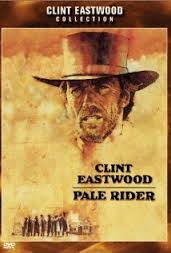
The Mysterious Stranger
The idea that there is someone out there to save us is as old as humanity. But there is something specifically American in the idea that our savior has A. one name; B. speaks little, if at all; C. comes from the east and moves on to the west; D. fights not one individual but entire gangs of bad guys or invaders. You get the idea, and by now you have identified the Lone Ranger and the original Sprint UPS guy who first made the world safe for cellular.
Because this stranger, is unknown to the community which he comes to save prior to his arrival, he is known to folklorists as the “mysterious stranger.” He sits among the great icons of folktales along with the trickster and the maiden in distress. But unlike our maiden who is saved by a gallant who stays to court and marry her, or the trickster who lives to deceive another day, the mysterious stranger must disappear and not become part of the community, unless he gives up the m.h. identity. (Lassiter in Zane Grey’s, Riders of the Purple Sage, stays with the girl, but he gives up his bad-guy hunting.) Like many folk images, the m.h. has been used effectively in literature, mostly pop, and films such a Shane and the excellent remake, Pale Rider, notice these characters have no back story, only rumors.
This legend traveled across America with the westward moving frontier. Although in literature and film we only meet him in the far west of the late nineteenth and early twentieth centuries, he first appeared in a Massachusetts in 1675. Hadley and other towns in the Connecticut Valley had been designated frontier towns by the General Court (Mass. Legislature) during King Phillips War. They had petitioned for that designation to get tax relief and be able to pay for their own defense.
The story of the stranger at Hadley in an Indian attack does not actually begin there. Like so much else in early American history it begins in England. (Twice)
(This story is from East Anglia, the section of England where most of the settlers in Massachusetts had their origins.) The tale is about an attack in East Anglia by Danish invaders in 1014, just three years prior to Danish Rule of the nation from 1017-1066. King Edmund, known at Saint Edmund for his chaste life, had fought and been martyred in a previous attack. During that battle he was beheaded. According to legend, in the attack which occurred in 1014, an old man with a scarf around his neck rose and rallied the town against the invasion and saved the town. Here is the tale. — Riley’s Roger de Hoveden’s Annals. 1014? J. Varden, East Anglican Handbook Edwin Sidney Hartland, County Folklore printed extracts number 1. Gloucestershire and East Anglia. (Gloucester: Davies and Son, 1892), 75-77.
The Martyrdom of Saint Edmund
To offer the utmost indignity to the martyred king, the Pagans [Danes] cast his severed head and body into the thickest part of the woods at Eglesdene. When the departure of the Danes removed the terror which their presence had inspired, the East Anglians, prompted by affection for the late Sovereign, assembled, in considerable numbers, to pay his corpse the last duties of attachment. After a sorrowful search the body was discovered, conveyed to the neighboring village, Hoxne, and there interred; but the head could not be found. These zealous and dutiful subjects, therefore, divided themselves into small parties and searched the wood. Terrified by its thickness and obscurity, some of them cried out to their companions, “Where are you?” A voice answered, “Here, here, here!” They hastened to the place where the sound proceeded, and found the long sought head guarded by a wolf, “an unkouth thyng and strange agwn nature.” The people almost overpowered with joy, with all possible veneration, took the holy head, which its guardian quietly surrendered to them, and carried it to the body. The friendly wolf joined in the procession, and after seeing “the precious treasure,” that he had with so much care protected, deposited with the body, returned to the woods with doleful mourning. The head was some time after observed to have united with the body; and the mark of separation appeared round the neck like a “purpil thread.”
In the year 1014 the tyrant Sweyn, after innumerable and cruel misdeeds, which he had been guilty of either in England or in other countries, to complete his own damnation, dared to exact a heavy tribute from the town where lies interred the uncorrupted body of the royal martyr Edmund, a thing that no one had dared to do before, from the time the town was given to the Church of the above named Saint. He repeatedly threatened, also, that if it was not quickly paid, beyond a doubt, he would destroy the Church of the martyr himself, and torment the clergy with various tortures. In addition to this he even dared to speak slightingly of the saint himself and to say that he was no saint at all… in a general council he held at a place called Geagnesburt (Gainsborough), he had again repeated these threats, while surrounded with most numerous crowds of Danes, he alone beheld Saint Edmund coming armed towards him; on seeing whom he was terrified, and began to cry out with loud shrieks, exclaiming, “fellow soldiers, to the rescue, to the rescue! Behold St. Edmund has come to slay me;” after saying which, being pierced by the Saint with a spear, he fell from the throne upon which he was sitting, and suffering great torments until nightfall, on the third day before the mones of February, terminated his life by a shocking death.
The second point of origin is at the beheading of Charles I in 1650 and the restitution of the monarchy with the coronation of Charles II in1660. Charles II was of course unhappy over the regicide of his father and sent his soldiers to find, try and execute those responsible. This was accomplished messily but easily in England, but it was harder in America where colonists, Puritan and sympathetic to Cromwell and the Parliamentarians hid two of the regicidal judges in Boston, New Haven and up the Connecticut Valley to Hadley, Mass. Because the agents of the King might be anywhere, the judges Gen. Whalley and Gen. Goffe, both soldiers who had served in Cromwell’s army, were kept in basements and regularly moved between towns.
This story was collected and retold many times. Here is one from: Charles M. Skinner, Myths and Legends of Our Own Land vol. 2. (Philadelphia: J.B. Lippincott Company, 1896), 16.
The Unknown Champion
There was that in the air of the New World that made the Pilgrims revolt against priest and kings. The revolution was long-a-breeding before shots were fired at Lexington. Stout old Endicott, having conceived a dislike to the British flag because to his mind the cross was a relic of popery, paraded his soldiers and with his sword ripped out the offending emblem in their presence. There was a faint cry of “treason!” but he answered, “I will avouch the deed before God and man. Beat a flourish drummer. Shout for the ensign of New England. Pope nor tyrant hath part in it now.” And a shout of huzza of independence went forth.
With this sentiment confirmed among the people, it is not surprising that the judges who had condemned a papist king- Charles I- to the block should find welcome in this land. For months at a time they lived in cellars and garrets in various parts of New England, their hiding places kept secret from the royal sheriffs who were seeking them. For a time they had shelter in West Rock, New Haven, and once in that town they were crouching beneath the bridge that a pursuing party crosses in search of them. In Ipswich the house is pointed out where they were concealed in the cellar and the superstitious believed that, as a penalty for their regicidal decision, they are doomed to stay there, crying vainly for deliverance. Philip, the Naragansett chief, had declared war on the people of New England, and was waging it with a persistence and fury that spread terror through the country. It was a struggle against manifest destiny, such as must needs be repeated whenever civilization comes to dispute a place in new lands with savagery, and which had been continued, more and more feebly, to our own day. The war was bloody, and for a long time the issue hung in the balance. At last the Indian king was driven westward. The Nipmucks joined him in the Connecticut Valley, and he laid siege to the lonely settlements of Brookfield, Northfield, Deerfield, and Springfield, killing scalping and burning without mercy.
On the 1st of September 1675, he attacked Hadley while its people were at church, the war-yelp interrupting a prayer of the pastor. All the men of the congregation sallied out with pikes and guns and engaged the foe, but so closely were they pressed that a retreat was called, when suddenly there appeared among them a tall man, of venerable and commanding aspect, clad in leather, and armed with a sword and gun.
His hair and beard were long and white, but his eye was dark and resolute, and his voice was strong. “Why sink your hearts?” he cried. “Fear ye that God will give you up to yonder heathen dogs? Follow me and ye shall see that this day there is a champion in Israel.” Posting half the force at his command to sustain the fight, he led the others quickly by a detour to the rear of the Indians, on whom he fell with such energy that the savages, believing themselves overtaken by reinforcements newly come, fled in confusion. When the victors returned to the village the unknown champion signed to the company to fall to their knees while he offered thanks and prayer. Then he was silent for a little, and when they looked up he was gone.
They believed him to be an angel sent for their deliverance, nor till he had gone to his account did they know that their captain in that crisis was Colonel William Goffe, one of the regicidal judges, who, with his associate Whalley was hiding from the vengeance of the son of the king they had rebelled against. After leaving their cave in new Haven, being in peril from beasts and human hunters, they went up the Connecticut Valley to Hadley, where the clergyman of the place, Rev. John Russell, gave them shelter for fifteen years. Few were aware of their existence, and when Goffe, pale with seclusion from the light, appeared among the people near whom he had long been living, it is no wonder that they regarded him with awe.
Whalley died in the ministers house and was buried in a crypt outside of the cellar-wall, while Goffe kept very much abroad, stopping in many places and under various disguises until his death, which occurred soon after that of his associate. He was buried in New Haven.
Stories of the “Regicidal Judges” became part of American romantic lore during and after the American Revolution, and were especially popular during the nationalism that followed the War of 1812. Nathaniel Hawthorne’s The Gray Champion, first published in 1823, is a story in which a regicidal judge appeared in the guise of a gray and very old man. The venerable man materialized in 1689, in the center of a crowd that had gathered in front of the Old State House in Boston, to confront Governor Andros. Andros did not know what the old man knew, that the reign of the James II, had ended and that the Protestants William and Mary had ascended to the throne of England. His presence frightened Andros and his soldiers, so that they did not descend on the crowd. As soon as the soldiers backed away, the crowd turned to speak to the old man, but he had vanished. Hawthorne ended his story with the prophecy that “whenever the decedents of the Puritans are to show the spirit of their sires, the old man will return again.” Hawthorne’s version can be found in Twice Told Tales at a library or e-book. http://www.gutenberg.org/ebooks/508
The legend moved on and the frontier with it, but it is interesting to find that the most developed and inhabited areas were not only, once wild, but really considered themselves the frontier, one that needed a mysterious stranger in times of great danger.


April 20, 2013
The Town: A bit about government in colonial and modern Massachusetts
 This is a little historic schoolhouse in Cedarville, Massachusette, taken by John Phelan
Some thoughts on the origins of Massachusetts government. 1. Recently I visited a small city in another state that had changed its city border at one time, so that it would not need to supply water, or power to the residents in what then became an unincorporated area, part of the county system. 2. A few months ago, an old friend mentioned unincorporated areas in relation to home values there, in yet another state. And 3. just this past week someone else asked me, why every town and city in Massachusetts has it’s own schools and police department?
There is an answer, and it lies in the organization of settlements and towns beginning with settlement in 1630, and unique to the New England states. Towns were set up by the Massachusetts Legislature, known as the Great and General Court, every town that now exists was at one time created from another town. (That is except the first three or four which were created out of the wilderness This means that there was never open, unincorporated county land outside, within or between the towns. Every inch of every town in Massachusetts used to be part of a town, even if it was a different one.
The first towns of Newtown, today’s Cambridge, Dedham and Concord were set up and settled beginning in 1635. The town of Dedham, for instance ran from Boston to the Rhode Island line, some two hundred square miles. All the towns within that area used to be Dedham, not Norfolk, or Bristol County. (Towns are within county limits, but no one lives outside a town or city.) As the towns grew, people within the towns, who did not live in the original settlement, petitioned the General Court to establish their own church. From there, they petitioned the Court to set up a new town, with its own town meeting. (In the 1600′s the right to vote was extended ‘only’ to male church members, about 70% of men. This was the greatest suffrage in the world at the time.)
The Town: Unlike New York or Philadelphia which were called ‘city’ from their founding, all cities in Massachusetts used to be towns. Boston was first when it became a city in 1822, Worcester 1848, and Springfield, 1852. (I just looked at a yahoo site that listed biggest cities in Massachusetts, many of them are incorporated as towns, and intend to remain so.) This is a minor difference to many, obviously to yahoo, but it has to do with control, who decides what happens where you live. Town Meeting is the rawest, most basic form of democratic local government in the world.
At the town meeting every eligible voter can attend, propose bills, (still called warrants), and vote the town’s business. Over time many towns have developed layers, such as selectmen who conduct the town’s business, but the citizens still hold yearly or bi-yearly meetings. At one time some towns in Vermont voted to end the Viet Nam War, and last year town meeting in Concord, MA voted to ban bottled water. Those are only two examples of how intimate the proposals and voting in a town meeting can be. Mostly it meets for things like appropriating money for repairing pot-holes and the school budget.
Which gets us to schools, fire departments and such: Towns do share high schools, snow plowing equipment and material buying, but even in towns with regional high schools, each town maintains a school board. That is local control. In a state with no county government in civic matters, (criminal only) no county roads, (state and city/town only) and town control over water bottles; control over land and schools it to be expected.
FAQ’s about towns from the Secretary of State, William Galvin, for those who don’t live in one:
What is a Town Meeting?
A Town Meeting is both an event and an entity. As an event, it is a gathering of a town’s eligible voters, and is referred to as “the Town Meeting.” As an entity, it is the legislative body for towns in Massachusetts, and is referred to simply as “Town Meeting.” So you may say, “I went to the Town Meeting. Town Meeting approved the budget.”
Do cities have Town Meetings?
No. A city’s legislative body is called a city council or a board of aldermen. Citizens do not govern a city directly.
What’s the difference between cities and towns? Size?
Municipalities decide whether to have a city or town form of government. Size is one factor in the decision. Towns with less than 12,000 inhabitants cannot adopt a city form of government.
Do all towns have Town Meetings?
Most but not all towns have Town Meetings. A few towns are governed by town councils. In sum, no cities have Town Meetings and most towns do have Town Meetings.
What does Town Meeting decide?
Town Meeting decides three major things:
1.It sets the salaries for the elected officials.
2.It votes to appropriate money to run the town.
3.It votes on the town’s local statutes, which are called by-laws.
Open Town Meetings and Representative Town Meetings:
What’s an open Town Meeting?
An open Town Meeting means that all of the town’s voters may vote on all matters.
What’s a representative Town Meeting?
In a representative Town Meeting, also called a limited Town Meeting, all of the town’s voters may vote for what are called Town Meeting Members. After the voters elect the Town Meeting Members, the Town Meeting Members conduct and vote on the rest of the Town Meeting’s business.
Other than who may vote, do open Town Meetings basically operate the same way as representative Town Meetings?
Yes.
How many Town Meeting Members does a representative Town Meeting have?
Apportionment of a precinct is based on Massachusetts General Law, town charter or a special act. The total elected representative Town Meeting membership can be as few as 45 or as many as 240. The actual number of the membership is calculated in approximate proportion to the number of inhabitants in each precinct to the total number of inhabitants in the town.
How is it determined whether a town has an open Town Meeting or a representative Town Meeting?
Towns with fewer than 6,000 inhabitants must have an open Town Meeting. Towns with more than 6,000 inhabitants may adopt either form of Town Meeting at their discretion.
How are Town Meeting Members elected?
Town Meeting members are elected within precincts by ballot at the Annual Town Election.
One-third of the Town Meeting Members are elected for 3 years, one-third is elected for 2 years and one-third is elected for 1 year at first election after adopting a representative Town Meeting or re-districting. Thereafter each member is elected for a 3 year term.
Anything else I invite you to read the website itself.
April 3, 2013
Buy The Books From Dory Cardinal Points
As of April 3, 2013 I have set up an account pay site called GumRoad. This is like paypal, but for small time artists and creators. (They eat less of the sale.)
My link for Cardinal Points is above. I will try to put this button elsewhere too. The price is 17.73 (the year of the destruction of the tea.) http://gum.co/cardinalpoints