Dory Codington's Blog, page 3
December 17, 2014
Romantic Christmas 1777
 Christmas during wartime had become a habit he had never grown used to. No matter where one was, there were always parties and dancing with officer’s wives and the daughters of magistrates and potentates. He would love to spend the season decorating with green boughs and attending church at midnight as he did growing up. But army life did not allow for personal extravagances such as those.
Simm made sure he was away from the farm most evenings, busy with meetings or social affairs. When he was at home it was almost never at regular hours, so he had not seen Rebecca for more than a moment in days. The few minutes he grabbed at the farm were precious. He loved the pleasant, homemade decorations and greens. He pretended Rebecca was doing the decorating for him, and that she was missing him as he was her. He also prayed that her anger would dissipate if he were gone.
Where Rebecca’s home seemed to get warmer, with the pine boughs and holly on tabletops and mantles. Amalia had transformed hers completely. Even from the top floors it was hard to miss the beautiful greens being brought in to decorate the house for Christmas. Simm supposed that even with farms completely surrounding the City, there was still enough woodland to satisfy Amalia’s demands for ivy and mistletoe, and in a few days’ time, Amalia’s main rooms were transformed from sheer elegance into Christmas magnificence.
Christmas morning foretold a chilly rainy day. Rebecca left the household asleep as she finished the morning chores, changed her gown, and walked in the constant drizzle down the familiar path to her family church. As always she was torn between her father’s tradition of a joyous day with gifts and too much feasting, and her mother’s. A solemn approach to the day. Bostonians had banned special worship on Christmas during her mother’s childhood, Cotton Mather wrote that every day belonged to Christ, not the one day called his birthday. Still, even her mother had enjoyed the happiness and the decorations in the houses of her husband’s family.
Memories of her parents, and her childhood swirled in her head as she trod through the muddy road toward the Presbyterian Church. Happy and wet people rushed in from carriages and on foot, shaking water onto the floor, and shaking hands and hugging. Rebecca felt peaceful as she entered the empty family pew. That solitude was broken seconds later as she was surrounded by nieces and nephews, brothers, and sisters- in-law.
Simm’s eyes followed Rebecca as she walked forward in the plain white church. He had risen early to find some solace and solitude in the day. This year, more than others, he wanted more from Christmas than a series of fancy parties given out of meaningless duty, thousands of miles from home. The empty church was already illuminated and welcoming as he found a seat in the far back, away from the central aisle. The clear windows glowed with flickering candlelight against the wet, gray morning sky.
The white clapboard church with its high box pews brought back memories of Christmas in Boston. Although he recalled that the Puritans had banned the holiday, it had become a day of fasting and feast by the time of the occupation. The soldiers quartered in the town had gathered what greens they could find to decorate their barracks, and the day was spent with song and food. As Simm sat in the little church, watching the rain against the windows. He thought of another occupation of a very different sort of American town.
He recalled the High Anglican Mass they had celebrated at King’s Chapel with the other officers and wealthy loyalists, who had migrated into the protected town. The beautiful stone church near the top of Queen Street, had stayed alive. This was in sharp contrast with the Old South Church, the Third Meetinghouse, that the first group of soldiers sent into Boston in 1774 had turned into a riding stable to punish the town for destroying the tea. He looked around this Meeting House, holy with Christmas and joyous families, and mourned the destruction of the other.
He watched Rebecca enter the empty a box near the front of the church and sit. In seconds he heard giggling and saw little feet flying down the aisle. Two small girls, the first no more than two years, and the other around four, ran down the center aisle, effectively dodging between the legs of the more sedate church goers singing “Bay-Ca, Bey- Ca.” A song he could only assume meant Rebecca. The small girls were trailed by a number of adults and various older children, all of whom crowded into the box where Rebecca sat. He was glad to see his lonely beauty surrounded by her family.
The service was lovely, and perhaps not long enough for a man so far from home; he sat in the pew lost in thought as the congregation moved out into the rain behind him.
“John?” He heard Rebecca’s voice through the happy voices of the crowd.
“Miss Willent,” he answered “A lovely service wasn’t it?”
“Yes, Major, it was. Well, uh excuse me.” Rebecca turned to her family who were watching her conversation with the strange man.
“Well Becky, aren’t you going to introduce us?” That from someone who must be her older brother.
“Oh, don’t bother,” A woman not much older than Rebecca spoke up. “I’m Jane, the kids are Abby and Mary, the baby is Hackett, but he doesn’t answer to anything yet.” She pointed to a very small bundle currently being held by the larger Hackett. The rest of the herd just left, but if you’re a friend of Becky’s why don’t you follow us to our farm for some dinner? It’s just family, we’ll be eating around two o’clock.”
“ Jane, Hackett, family,” Rebecca jumped in to try to stem the tide before more family was introduced, may I present Major John FitzSimmon, one of the men who has been quartered at the farm. It’s lovely to see you, Major, yes do come for dinner, Jane’s mother stayed home to cook. That is unless you have other dinner plans?” Rebecca almost added, ‘other than the cold ham, bread and Christmas biscuits I left on the side board’?
To have shown reluctance, Rebecca felt, would have revealed too much to her family, and would have been outright rude to Simm. She had been that too often.
He noticed her squirm at Jane’s invitation. He smiled encouragement that only she would notice, and made silently promised that he would not stay past dinner. “No Mistress Willent, no particular plans, but I did promise the men I’d be back in the late afternoon.” He answered both Jane and Rebecca.
Simm liked Jane Willent. She was a woman who did not let life’s larger issues get in the way of raising her family. She continued the informal introductions, while trying to grab the hands of her daughters and push them into their cloaks. She kept up the commentary as they moved toward the exit, partially to marshal her large group out of the church and out into the rain, and Simm was sure, to keep him from feeling left out.
They found the carriage and crowded into it. Simm was pushed in with the crowd, and ended up sitting between Jane and her daughters. Abby clambered over one adult after another trying out laps. Finally she turned and settled onto Simm, finding the thick wool of his cloak and the velvet of his fine suit just right. Soon the child was sleep on his shoulder. Jane made to reach for her sleeping daughter, but Simm waved her off. He adored his nieces and nephews and missed them terribly. It felt very nice having such a trusting fellow human resting in the crook of his shoulder. The child smelled of fresh soap and that special sweet scent that children have.
Nat followed the family to Hackett’s farm on Comet. He laughed, enjoying the fact that the haughty FitzSimmon was stuck in the crowded coach with the babies. Simm and Nat had recognized each other immediately as the family gathered in the vestibule. They had both been involved in military negotiations. The project was a private enterprise between the Continental Congress and Parliament, secret even from their own battalions. It was impossible to explain to the family that they had met before, many times.
The first meeting had been two years before during 1775, before Charlestown and Saratoga, before it became clear that war would need to be fought through to its ultimate finish. Nat found Simm efficient and organized. The Englishman always seemed to know what was expected of each meeting; as though he could see the outcome before the negotiations began. To the less experienced and worldly Nat Willent, all that efficiency was a form of British aristocratic arrogance. He did not understand that experience and careful observation made Simm able to the see the outcome, as each meeting unfolded.
Nat rode the bay into the barn, as his brother, walking the team which was now harnessed to an empty coach, followed. “That FitzSimmon put up a fuss about being crowded in with a bunch of babies?”
“Nope, seemed to settle right in. Carried Abby into the house just now. Like as not, good with kids. Likes ‘em, far as I can tell. You have some sort of problem with him being here? Nat, it’s Christmas.” Hackett half reprimanded and pleaded with his younger brother to stay and behave like one of the family. “We are lucky that you are so close you can get leave to come for dinner. Nat, don’t make me ask ‘the stranger’ to leave the table – at Christmas.” With that said, and the horses cared for, Hackett turned and went out the barn door into the rain, pulling the collar of his great coat over his head.
Nat contemplated leaving, but decided a warm kitchen and good food outweighed any personal animus he felt for John FitzSimmon.
Simm hadn’t been at a family Christmas celebration since he left for the army when he was sixteen. He had visited his family many times, but had been away at the holidays. Now he sat at the roaring fire waiting for a roast goose to be served. He could smell dinner cooking three rooms away. He sat nearly motionless, enjoying the family chaos, but feeling very alone in an alien world.
Soon the children were seated in the kitchen, and mulled wines and ciders were served to the adults. People moved to the table to eat. The five course dinner was an extravagant one for farmers in wartime, of that he was sure, and he tried to eat sparingly so the family would enjoy more days of the wonderful, well cooked meal.
Not feeling comfortable enough to enter into natural conversation, Simm watched the family interact. They were happy to be together, even Jasper Willent was not the angry patriarch he’d been when he visited Rebecca. Nat, home on leave from his unit at Valley Forge, glared at Simm, and ate as much of the good food as he could fit. Simm could not help noting the twist of fate that had him living in Nat’s house, eating well each day, while Nat’s army, the opposing army, was nearly starving not thirty miles away.
Hackett and Jane were devoted to home, family and each other. It was nice to be around such pleasant people, but he wanted to move to the children’s table in the kitchen. He puzzled that, and realized that the last Christmas dinner he had attended had been spent at the children’s table. Again he decided, he needed to leave as soon as it would be polite to do so.
Rebecca, the youngest adult in the family and the only unmarried woman, was busy serving and helping the children in the kitchen as often as she sat down. It was she who allowed Jane and her mother, to enjoy their dinners without hopping up to get the succeeding courses. He wanted to help her, but that would have seen as bizarre, he let the feeling pass. He thought about his brother’s advice and started to consider how he could connect with her so as to prevent himself from falling into some form of insanity.
After dinner, drinks and desserts were served in the parlor so the table could be cleared. Simm sat for a minute, excused himself to go to the privy, then made his thanks and good-byes to his generous host and hostess. The steady rain of the afternoon had turned, with dusk, to sleet. It made the road slick with bouncing ice balls, dancing as they hit the quickly freezing ground. Simm chose the less slippery path, and made his way over the brown fields instead of the rutted road, back to the stone farmhouse. Off the main road, his collar and hood over his head against the weather, he watched others riding and walking to and from their Christmas’ dinners. It all seemed so normal, calm and healthy.
These thoughts were dragging him away from the tight focus he tried so hard to maintain. Maudlin thinking had no place anywhere near a battlefield. Maybe seeing Nat Willent had brought it home, he felt done with the whole project. The months with hard-line Clinton in New York wouldn’t make it better, but it might prove distracting.
Politically he was coming to agree with his brothers’, Robert and Stephen’s, support of the American cause, and was finding it harder to accept the majority position of Parliament. This was perhaps what comes of living too close to real Philadelphians, or maybe because he also had read Mr. Paine’s Common Sense. On top those thoughts, Simm could not get the image of Rebecca laughing with her nieces and nephews, out of his mind. The sight of her holding tiny Hackett in her arms as she politely said good-bye and Merry Christmas at the door, nearly had him breathless with desire. He could not want to destroy any of that, but too often war tore families apart.
The distance to the farm was short and Simm was in the empty, cold kitchen too soon. The other men were out, the fires long cold. Simm set the kitchen fire and coaxed it back to life, then he put a kettle over the flames, to boil water for tea. He sat, alone on a hard wooden chair, eating wondrous shortbread and thinking of soft skin and silky hair. So sweet, so beautiful. His Rebecca was Nat Willent’s baby sister. Had Nat not been told that Simm was one of the men living in her house? He couldn’t like that. If it had been legal, he was sure the young lieutenant would have challenged him to a duel just for being at his family’s Christmas dinner. Honestly, if either Anne or Janet had a strange man, known only as a military adversary, home for Christmas dinner, he might challenge him as well.
He finished his tea and another shortbread upstairs in his room. Then he replenished the wood and kindling in his and Rebecca’s rooms. In time a few of the other soldiers came back and sat in the parlor telling sad stories and drinking brandy. Simm was tempted to go down and join the self pity of soldiers far from their homes on Christmas evening. Instead, his thoughts fell to the future. Something hopeful he could only dream of. Lying on his back staring at the ceiling, he built a dream of a beautiful, caring, wife with blond hair, and smokey blue eyes, his Becky. And children, their children, happy bright haired children. All of them living away from here. Far away from war and the things that would drag them back into war.
Simm had gotten a glimpse of his future in the front pews of the church. He could do something to achieve it, or let it lie fallow and die. He went down to say happy Christmas to the men, but excused himself after a few minutes, and went back upstairs to write letters to his mother and father.
“Simm!” Ellerby called from the front room, “when will ‘Becca get home tonight?” His voice was slightly slurred and it was clear the men had not finished drinking.
“Not till late, Ellerby, I told her I’d do the milking and fires,” John lied, but considered that doing Rebecca’s chores would be a Christmas gift.
“Ish too bad, I have a preshent for her.”
“Lets all do Christmas gifts tomorrow at dinner, Ellerby, when we’re not in our cups.”
“Dash a good idea.”
“Happy Christmas Ellerby.”
“Happ’ Chrishmas, FitzShimmon. Ellerby went back to the others. Simm went to the barn to see if he remembered what the milkmaid said when she taught him how to milk a cow.
Later, while the women were drying the last of the dishes, Jane gave Rebecca a look that said it was time to talk. “Becky, what’s wrong, you are so tightly wound I fear you will break? I’ve never seen you rush around so at a dinner. You know we all share the chores. There was no reason for such.”
“Jane, dear, I know you’re right, I am sorry. Nat and FitzSimmon were making me nervous, or rather, Nat was. He sat there so stiff.”
“He’s still here, Becky, why don’t you ask him why. Maybe it was sharing bread with his enemy. You know we are used to it here, having the soldiers all over the place, it might be harder for him?”
Rebecca thought over Jane’s words. She suspected it was deeper than that, but it would be interesting to hear what Nat had to say. She headed to the parlor, but stopped at the door to listen to the men talking. She learned that Nat had been involved with political missions. Ones that he was glad had failed. That barely answered her questions, unless he and Simm had known each other through those negotiations. As unlikely as another coincidence would be – it would explain why they seemed to know one another. She spent some time reading with the little girls. When at last they were ready for sleep she said her good-byes.
“Beck- you need someone to walk with you. It’s very dark and late.” Her brother Nat asked as she grabbed her cloak from the peg in the hall.
“Nat, you’re as likely to land face down in the ice as not. I know you need to get a good night’s sleep when you have a chance. Besides, you don’t want to see the men at the farm. I’ll find my way home, and I’ll be fine, see the moon is out.” And indeed the storm had cleared to an icy clean night, with a nimbus moon.
Rebecca walked through the barn on her way into the house to see what chores she could put off till morning. She found the cows milked, sheep penned and chickens fed. Pleased and surprised, she walked into the kitchen to find the kitchen fire banked and the floors swept. She peeked into the parlor and sitting room and found most of the men contentedly drowsy or asleep beside a dying fire. Quietly, she put a thick log on the coals, knowing that when house got too cold, the men would find their beds. Carrying her shoes, she tiptoed through the dining room back through the kitchen. She climbed the stairs to the first landing. Simm’s door was ajar and a lanthorn was lit. She could just make out that he was sitting at his desk working. Rebecca continued up to the attic. She lit a candle and covered it with the glass, carefully placing the light on the floor. She went to the large chest that took up most of the wall under the window. It was where she stored her things, since her removal to the attic.
She lifted the lid and rummaged inside the wooden chest until she found a package wrapped in flax homespun in a pile of cedar shavings. She pulled off the wrapping and examined the contents. Inside was a bolt of fabric, about the size of a small blanket. She had woven it a year ago during the fall and into the winter. Everything had felt different then, for although the war was on and her world was upside down, there had still been time to dye and spin. A year ago, there had been space to assemble her loom and sit and weave the tartan she would never look at again, certainly never give away.
Rebecca refolded the soft wool, pushed her feet into a pair of warm shearling leather slippers and went down one flight. “Knock, knock,” Rebecca called hesitantly into the open door. “Major, may I disturb you a minute?”
“Yes, Miss Willent,” Simm jumped at the unexpected and welcome interruption. “Yes. Of course, can I help you?” He looked up, Rebecca was holding a blue and green piece of wool fabric.
“No, I don’t need help. I’m sorry. I won’t interrupt your work.” She made as if to turn.
Simm felt desperate to stop her from leaving, short of screaming. He simply barked an order. He tried to do it quietly.“Stop, please. You’re not bothering me. Let me start over. Miss Willent, to what do I owe this unexpected visit?”
“I’m afraid this,” she held out the limp wool. “It isn’t what I would have chosen – this year, I didn’t make it recently. I didn’t have time or I would have made something more… more formal, a fine linen cravat or something.” Suddenly feeling like she did want to run away and abandon this effort, she made herself finish a bit defiantly.
“You had mentioned that your mother was a Douglass.”
“Yes, her mother’s father was a Scottish Douglass, the clan is dissolved now.”
“You see,” Rebecca took a deep breath and steeled herself to tell her story. “I started this that fall, you remember?” She let that memory hang in the air. “I didn’t have a reason. I never thought to give it to you, I suppose I made it for myself, to remember you while I wove it. Now, I think you should have it.” Embarrassed, Rebecca turned away.
“Becky?” John spoke softly. She turned back to the room and handed John the soft wool weaving. He took it in his right hand, while with his left he reached behind him to grab something on a shelf. He handed her a four inch by four inch by four inch wooden box that rattled as he moved it. “Similarly, I had no reason to write my mother about a girl that I had met. A girl who explained the entire geopolitical industrial history of colonial America by explaining the lack of hairpins, but I did. Mother sent this last year. Jason brought it. I remember writing her about my trip through America. I tried to keep my stories bland, informational. I think I might not have been bland. Mother and my niece, another Elizabeth, went hunting for pins throughout London and Paris. She told Jason to give me this box, that you would want it. I assume, Mother was right?”
Rebecca reached for the box as Simm reached for the cloth. She sat on the floor in front of his warm fire and slid open the lid of the little wooden box. Inside, there were long thick straight pins for closing heavy coats and capes, long thin ones for hats, there were curved decorative pins with dulled ends for hair, even a large set to be used for utilitarian things such as sewing and diapers.
Simm fingered the soft wool. He’d penned these very sheep. He imagined Rebecca shearing, carding, spinning and dying the yarns before she wove the lovely tartan. He ached for her as he imagined those happy, bright haired children sleeping in their cradles, covered with this warm soft cloth.
He thanked her. She nodded and went back to her attic room.


December 10, 2014
Romantic Christmas 1775

As I said last week, there are very few romances that take place at Christmas. This is Alex in 1775, alone in Boston, acting as eyes for George Washington in the British occupied town. On top of that he has decided to read Seneca.
Early in the day Alex had accompanied his friends, the young sons of families with connections to the previous governor, and officers who had the bad luck to be stuck in Boston on Christmas Day, to church. Although the soldiers and residents might have wanted to celebrate the birth of the lord, the town did not have a festive feel. Not only was it warm enough for snow to turn to mud, few homes had bothered to so much as hang a pine bough in the window.
Before the occupation and naval blockade, the townspeople of Boston had begun to enjoy the celebrations around December the twenty-fifth, but it was always complicated for them. First the Puritan edicts ran contrary to celebrating just one day for the birth of Christ. Cotton Mather, called one of the great lights of Puritan thought, had said that every day was cause for the celebration of Christ, not one day a year.
Further complicating the holiday in the minds of New Englanders, was the Saturnalia. The Roman celebration of the new year. It was traditionally Pagan and raucous. Some traditionalists argued that any celebration around the winter solstice was Popery or even paganism. Others understood that it was important to celebrate the birth of Christ, even if the day had not been a significant holiday in the previous century. Everyone it seemed, had begun to realize that it was unkind, in this cold, dark place, not to have some celebration at the end of the year.
Now however, the occupied town was dreary and sad on the best days. Roads had not been groomed or cleaned, wooden walks had not been repaired, and lights that were scheduled to be hung near the market, had either already broken or had never been set up.
Alex spent as much time as he could, in forced jollity with these men. If he could have attended a service at the nearby New South Meetinghouse, the day would have had some meaning, but to have gone to New South would have attracted attention, the wrong kind of attention. He had worked very hard to be the man everyone liked, but nobody noticed. It wouldn’t do to have notice made of him now.
Ruefully, he acknowledged that this life was exhausting him. He lied so often about who he was and what he was doing, that he had lost his energy. His life had no zest. Every night he dressed and went to whichever club was next was on his list, living the charade of the well heeled Tory looking to entertain himself until his army won back the colonies. He played this role so well, that he had been invited by the young officers to spend time at the Province House drinking with them and their superiors, officers of highest ranks. Lots of inadvertent information had started coming his way. Now was not a good time to be noticed in any capacity, certainly not for the stupid mistake of going to the wrong church.
Christmas morning he had left his fellows’ company as early as was polite, and gone home. Once he was as warm and comfortable as possible, he set a bottle fine cognac next to him on the table and began pouring the warm wine into a crystal glass. He had a copy of Seneca open on his lap, but the wine was more interesting than Stoicism. It was not that the Stoics weren’t compelling, it just seemed redundant to him when what he needed was to get very drunk.
He remembered Christmas a year ago. It had been his first in America after being in Italy the winter before. Music ringing from the churches and halls echoed in his memory. He never expected his New England homeland to celebrate with the elegance of Florence or the abandon of Rome, or even the bells of London, but he had put holly and mistletoe in his parlor, and a candle in his window. Now there was nothing.
Alex looked at his glass and realized that it, and the bottle on the table were empty. He had been making up for an afternoon of staying judiciously sober. He tried to stand, to find another bottle of wine, but he sat back hard when he heard footsteps on the stairs. Pushing himself up, and trying to throw off his despond before the door opened and he was asked to go out to a another boring evening. He had just grabbed a second bottle and sat back down, when the visitor retreated, steps echoing in the hall as they moved down the stairs.
He heard some rustling outside his door, and almost went to look, but the effort did not seem worth it. A minute later, he heard footfalls again. He had no interest in leaving his cognac or his chair, and hoped there was no one there who needed anything from him. The steps came up a third time and knocked on the door. He had achieved the perfect state of inebriation and did not want to alter it, he grunted “enter.”
The door opened and boxes of firewood and food were pushed from the hallway through the door by a lady’s foot in dark burgundy boots. Even in boots, she had a lovely ankle. Very pretty legs from what he could see. Alex sat back, if this was a drunken hallucination, or a fabulous dream. He would do nothing to change it. Ladies with nice legs who brought food and firewood, could only exist in dreams.
Alex smelled the food. The lady was surely a hallucination. She unpacked roast turkey and cranberries, Indian bread and pumpkin pie. Food that shouldn’t be here, he swallowed deeply from his glass. The lady with the pretty burgundy boots, threw off a matching cloak and revealed a green gown with a purple striped petticoat. The gown was silk and low cut. It revealed more than it should have to a man as drunk as he. He reached for his glass to prolong the hallucination.
In this dream, Nina was putting wood on his tiny fire, building it to real warmth. Other boxes of firewood were lined up near the door. She moved nearer, and leaned over. He blinked at a lovely neckline, and the tops of full breasts. He did not move or speak, careful not to wake himself or shake the apparition away.
Nina knew when a man was drunk. She took her tin camp kettle and unpacked it on a small table near the fire, setting up a plate of turkey, stuffing and cranberries. She put it on the small table next to his wine, and sat on the floor at his feet. Nina handed Alex a piece of turkey on a fork. “You need food, eat.” He blinked at the plate of good food at his elbow and the fork. Obediently he took the fork and ate the food. When the plate was nearly empty he blinked again. He reached for his wine. Nina replaced the glass in his hand with a tankard of ale.
“It doesn’t seem right to eat. I have made a policy of not eating.” Alex sat back in his chair, he took a long drink of Nina’s ale. He could feel his head shrink and mind clear.
“Why don’t you eat? You are very thin.” All sorts of panicked worries began swimming around Nina’s head. Terrible things happened to people when they began to starve. She wished she could drag Alex home to care for him, but he would not want that.
“There is little food. Most townspeople are here because they have nowhere to go, the redcoats are only holding warehouse goods here, not people, they are free to leave. I don’t mean the Tories, the refugees, as they call themselves. But the locals. Food is smuggled in for them. I don’t deserve their food. I eat with the Tories, but I can’t eat much.”
It was nonsense, and yet Nina understood. She would never fault Alex for a lack of discipline, or of lacking clear sense, of doing what he believed. It would foolish to try to change his mind on such matters. “Seneca?” She picked up his book from where he had dropped it. “Don’t you think this ascetic life is punishment enough?”
“Punishment? I am not being punished. I am performing a necessary task.”
“Yes, I know.” She turned through the pages of the book.
Alex relaxed back into his drunk. The food was nice, and it was very good to be warm. Having Nina, or her apparition, here was good. He would wake in the morning, cold, hungry and with a terrible hangover. But it was nice, this dream.
It was odd to have the taste of ale in his mouth. He wasn’t sure he could conjure up the taste of Nina’s ale. It had been a long time since he had drunk good ale. The false Alex Peele had completely stopped drinking beer. His apparition was talking to him. He fought to focus.
“Deborah Revere said I should come to town. No, that’s not the truth.” Nina fumbled, trying to find words that would not embarrass.
Alex poured some cognac into his empty tankard and handed Nina a glass of the wine. He rested his other hand in her hair as she sat close to him, still on the rug near the fire. “Start at the beginning. Nina, I’m afraid I can’t focus, but I will try.” His slight laugh gave her courage.
“It was the night of that dinner party. I tried to tell you – after – when we were on Thorne.”
Alex remembered being afraid for Nina’s life, afraid there would be no reason to carry on with his own life. Was there a way to explain all that? “I remember a terrible need to shoot the bastard who held you hostage in the road. I recall you trying to tell me something. I know that gunshots interfered.”
“Yes they did.” Nina took a deep breath. Sitting very straight, she put her hands in her lap. “The next week I made a confession at meeting. They voted. I’m a member of the First Church now.”
“Yes, congratulations. I know your family must be relieved. But, I am sorry. What does that have to do with – what you need to tell me?”
“My confession was that I had stayed angry with Johnny for ten years. I confessed that I had never forgiven him for hurting me, leaving me, and dying before we could make a marriage. Then I told the elders that someone had come into my life. And that I had asked God to help me forgive Johnny. I needed to make room in my heart to love this person.”
Alex held his breath. He had been present at many confessions. Some people had begun to take them lightly, but Nina wouldn’t. Such public confessions were required in the Old Light tradition for church membership. Dr. Tyrie was strictly Old Light. Confessing a sexual love was unusual, but nothing was unheard of.
She looked at her hands and continued. “It happened on the way to the dinner party. I had been screaming – howling even louder than the wind – at the unfairness of my life, at Johnny. I guess I was screaming at God. Suddenly, I felt all my anger leave me. I cried for a while, and then I wasn’t scared anymore.
“When I finished my story, the ladies in the Congregation started to cry, their husbands looked a little uncomfortable. But the wives all ran to hug me. Alex I am not afraid anymore. It may be wrong to say, but after that night I feel reborn.”
Alex pulled himself out of his chair and walked the few short step to the window. He pushed his head against the cold glass and looked at the growing dark of the late afternoon. Clouds blocked the moon making the evening as dreary as the day had been, until now. He thanked the gracious God for bringing Nina here, bringing her, just for a moment, into his complicated life.
But he couldn’t, wouldn’t do it. The false Alex Peele could not be here with this newly reborn and wonderful Nina. He put he head against the cold window. There was only one way he could refuse her generous offer where she would not feel rejected. Dishonestly was his middle name, he would be a sloppy drunk.
“Darling,” he carefully slurred his words, “you may be sure. But I am afraid that you find me in a bit of incapacitation.” He that was a hard one, and he made the most of it. His gait wobbled as he sat next to Nina on the warm rug. He didn’t need to fake that, or his swooning head. Her kiss was very sweet, his mouth must take like cognac. He took a minute and closed his eyes.
Nina stood up and away from him. She began to explore the room. Just behind where they sat, was a short corridor to Alex’s bedroom. She went in. The room was very cold. It was likely he had never had a fire here, she knelt and set a fire. Again she wanted nothing so much as to drag Alex back to the Wheel and Hammer, feed him well, and let him rest. She could see the weariness in his eyes. Even the fact he was long in his cups couldn’t hide the profound tired.
It felt good to have Nina here. Good to have that recurring nightmare over. The one in which watched Nina dragged away and held at gunpoint, while he, so afraid to expose his identity, did nothing to save her. He hated himself in those dreams. If there were any way he could give up this false world, he would. That simple kiss in Nina’s kitchen had nearly cost Washington his eyes in Boston. Only saved by Jack walking in the kitchen door. For all he knew, young Jack saved the American cause that morning.
He had lost his heart that morning, though it had taken some time to acknowledge it. Lost, just as Carlotta had seen in the strange way of hers, to a woman with aquamarine eyes. He remembered when she had given him the bezel and told him to give it to the lady whose eyes matched the stone. The one who would own his heart. Carlotta should be hanged as a witch.
He could see Nina through the door. She had shed her shawl and looked magnificent in the green and violet gown, the colors complimenting each other, and her. Like a spring tulip. He summoned energy to bank the fire, and put the screen in front of the hearth. He half crawled into his room and climbed onto the bed. He let his head fall back into the soft pillows, his eyes closed. These pillows were the one extravagance he had allowed himself in this strange, false life. It was his one delicious moment per day, letting his head sink into softness. The room was warm, which was a pleasant shock. Through his drunken haze he watched his Nina taking off her boots and socks in front of the fire.
The simple act was breathtaking. He had seen the veil dancers in Istanbul, and sat in the salons of courtesans in Paris. Nothing he had seen on his travels compared to watching Nina step out of thick boots, warm socks and thick, quilted petticoats. He swallowed. He willed his body to be hopelessly drunk, as inebriated as he needed it to be.
Nina fiddled with the strings and hooks of her gown. Her heart pounded in her ears. She wished it was with excitement, but she knew that she was afraid. She hated to retreat. She was afraid of hurting Alex’s feelings, more than of anything else. She told herself it would be perfect, she would not curl into a frightened little ball. Her heavy quilted petticoats fell to her feet. She stepped out of them, and turned to the bed.
Alex was soundly asleep, his head deep in the nest of pillows a smile on his lips. She had felt him watching her until just a minute before. Quietly Nina tiptoed around the two rooms. She pulled the blankets over him, making sure he was comfortable. She snuffed the candles and checked hearths, banking coals so that they would be alive in the morning. She washed her teeth in some clean water and braided her hair. Then she pulled back the covers on Alex’s warm soft bed and climbed in next to him, snuggling close against his hard back. She put her arms around him and drew him to her, breathing his scent deep into her lungs. It felt familiar, at the same time she felt a warm, a tingly sensation that had nothing to do with the temperature in the room. She had not expected to feel so physically connected although she had realized that what she felt for him must be love. Nina sighed with contentment, Alex slept deeply and seemed oblivious to all.
Before dawn Alex woke to Nina, as she gently, almost silently climbed out of bed. He remembered just enough of the night, what had happened, and what had not happened. And why. He got up and Alex fixed the fire in his parlor and set water on the hearth, while Nina dressed in the other room. He ran out to the privy, only slightly surprised to see Nina’s Suffolks, already harnessed and ready to leave. He greeted the horses and wished them a good new year, then he pushed a leather pouch under the wagon bench and went back into the house. He climbed back into his warm bed, his head splitting.
“I have to leave.” Nina, dressed in a warm wool gown, leaned over to kiss him good-bye. Alex pulled her down and into his arms. He rolled her beneath him and covered her mouth with his. Deepening the kiss when he felt Nina fingers dig into his back and run through his hair.
Nina opened her lips as Alex demanded. Lost in the whirlwind of sensation, his fabulous hair loose in her fingers. He feet struck the floor as clock struck its second charm. Alex let her go, picking up her fingers and kissing them one by one, and letting them go, letting her go.
Weakly, he waved good-bye.
December 3, 2014
Romantic Christmas 1773.
Recently, on a romance blog, someone asked about romance at Christmas. There are actually very few romance novels set at Christmas, but all three of mine include an important Christmas scene. Beginning tonight, I will be posting one of those a week. This is the first from Cardinal Points. Christmas in 1773 occurred one week after the men dumped the tea in the harbor, but I bet everyone wanted to pretend life would go on as normal. 
Oona sat in a public pew in the small wooden church. Her mind wandered from the minister’s words, and she stared out the clear windows at the clear winter light. It always served to clear whatever confusion she suffered in her life. But this morning her mind was full of other things. Oona shivered against the cold, glad of hot coals in her small foot warmer.
-
She continued her prayers begun the evening before, asking for guidance on the new path she would have to follow. As the minister talked of things that meant little to her, she found her mind wandering and she began to think about Jason FitzSimmon. Not all her musings were pleasant, and she kept asking herself why Jason, son of a duke, with a title and a family that would catch any American heiress, would waste his time with a maid who had nothing. Of course he wouldn’t. She had nothing to offer, no dowry, no family name, no family. What would he want from her but what every man wanted, and that she would not give him, even if that was what she wanted too.
-
She stopped her wandering thoughts, and pulled her mind back to the service just as it ended. She pulled on her cloak and grabbed her small brazier. Many people would return to the meeting house after lunch for an afternoon of prayer and instruction, but ministers understood that servants had obligations to their earthly mistresses and masters. So when the minister wished them a good meal, Oona thanked him and made her way back over the hill. New South’s service was longer than the Goodiel’s at King’s Chapel, so she hurried home and went right to work in the kitchen helping Mrs. Prince knead pastry dough for the fancy dinner that evening.
-
That was where Anne found her an hour later. “Oona, when you are done here, could you mind the girls? They need to dress for the party and so do you. Nanny has the night off. Suzie and Darcie are here, so don’t worry about being needed to serve. I think you should wear the red. I haven’t seen it, but if you’ve finished it – I believe the color should suit you.” The woman rushed on, not leaving Oona space to agree, comment, or disagree. Anne Goodiel called back at her “…and Oona? I need you to come to church with us next weekend. It’s Christmas and I think the household should be seen together.”
-
Finally given a chance to speak, Oona muttered a “yes, Ma’am.” She went up to the girls’ room, where she found nurse putting on her cloak and hood, getting ready to leave. The children curtseyed to her as she left.
-
Oona dressed Mary and Willie and sent them off to help Darcie, and to tell Suzie to come upstairs to help her dress. She went up to her room to find the red gown Anne Goodiel had requested she wear. Originally it had been a deep red augmented with the rust-colored trim that would bring out Anne Goodiels red highlights. It was a lovely, light wool, made in a split skirt and split sleeves with the dark rust silk used for the petticoat and undersleeves. Oona’s re-creation of it was more daring. She had closed the split skirt and removed the silk in the sleeve, replacing it with a white, ethereal lace. She had changed the neckline too. Lowering it and changing the bodice so that with the proper stays, her breasts were pushed right to the edge of the top of the bodice, waiting to spill over. She was tempted to hide her neckline under a warm shawl or fichu, but she knew that was just cowardice, and she had vowed to be brave on her new path.
Jason approached the well-lit house with some anxiety. He had gone to church at the Christ Church in the North End that morning. It was a church whose architecture appealed to seamen since it was built by shipwrights as an upside down ship. He liked its tall steeple and the clear windows that let in the cold early winter light. It was generally expected that everyone would go to one church or another on a Sunday morning, but that seriousness ended at lunch and he’d spent the early afternoon with friends eating good food and listening to tales.
-
Although he had gone to sea before his fifteenth birthday, spending another Christmas away from his family left Jason feeling very far from home. He would like nothing more than to find a way to create a home, somewhere in the world, but an evening spent among Boston’s elite merchant class, did not feel like the best way to realize his dream.
-
A knock with the fox-head brought immediate attention, with little Willie doing the honors, overseen by her sister Mary. The little girls looked up at Jason, and not recognizing him, ran for their mother. Anne Goodiel returned a moment later with her small daughters in tow and took his coat to hang. She offered the rest room, a small room off the main hall he had noticed on an earlier visit. There were guests in there – fixing their clothing and applying powder to hair and face. But, since he had traveled no more than three blocks from his home to the Goodiel’s dinner party, he thanked her and shook his head no.
-
Anne chased her daughters toward the young maid who came to collect them, and showed him into the great room. There were tables covered with cheeses, fruits, and bowls of various flavors of punch, and everywhere boughs and hangings of pine and fir. Jason thanked his hostess, and helped himself to food and drink.
He realized that he was the stranger in the midst of merchants, captains, their wives and their families. These men and women had known each other their whole lives, grown up together, married into each other’s families and gone into business together. He thought he might know a few of the men who sailed for Matthew Goodiel on other ships, but they were probably at sea, or home with their own families.
-
The crowd was relaxed, even boisterous. Talk often veered to the tea’s destruction only a few days before. Curiosity, but not real worry as to what Parliament’s reaction would be, ran high. Jason assumed by the talk that most of the Goodiel’s guests were loyalists, with the caveat that they be left alone to earn their fortunes. Jason sympathized with that attitude, it was one he had always harbored toward his aristocratic and autocratic family, and secretly, toward the monarchy as well.
There were people dancing. Jason watched a set and realized that although he had not set foot at any sort of assembly or party for many years, he remembered most of the dances. He turned to a group of young ladies waiting to be asked to dance. He had seen these same girls with their parents only minutes before. Now they had coalesced into a giggling group, leaving their mamas and papas on the other side of the room, but it was obvious they were the daughters of merchant and ship owning families. Jason asked one young lady to dance. She smiled a polite yes, and he escorted her into their place in line. The dance was a reel, and although some couples danced far better, and some far worse, Jason enjoyed moving around the floor with his partner.
-
He tried to push the thoughts of Oona away, the day they had spent pouring over charts in these very rooms, but he could not help looking to see if she were serving punch or dancing with one of the men. It was toward the end of the first set that he noticed a group of young children dancing and patiently being instructed by Oona and one of the other girls. The children were doing a good job of keeping up with their teachers, and the whole group was obviously having fun. He could not help but be envious of the children who had the undivided attention of the pretty maid. But it was not his place to abandon the young ladies who expected Goodiel’s new mate to partner them in the coming dances.
-
Oona lifted her head from teaching little Jimmy Russell the steps to a gavotte. As she looked across the hall she recognized many of the guests, and felt comfortable. She had spent the day rehearsing her new outlook. It was good, she thought, to understand the world in which she lived. Even if one did not quite fit in, yet.
Scanning the small crowd, she spotted Jason. He was dancing with a very pretty girl. Cordelia Bonnel, a rich captain’s daughter. Oona knew her and their household. She was precisely the sort of young woman Jason should marry. Her father had the connections that would aid Jason in his work, and her dowry would propel him forward. In no time he would be the captain of a fine vessel himself. She swallowed her sorrow, and worked at being delighted for him.
-
She turned back to her small charges, but after the next dance they were ushered off to an early dinner, then games and sleep in the nursery while their parents ate and danced. Anne Goodiel had asked Oona to attend the party as a member of the household, so as much as she might want to, she could not go off and hide with the children. She got herself something to eat and drink and set to watching the dancers for a while. She didn’t know if she was delighted for herself or disappointed for Jason as he walked away from the charming Cordelia. The girl made no effort to tie him into another dance. In fact, she barely looked back and walked away not looking at all smitten or wistful. She watched as he next asked Natalie Rowe to dance. Her cousins were the powerful merchant Rowes. Her father was a lawyer. Another good match for him. Natalie was pretty and lively. She smiled and flirted with Jason as they danced. The reel was not one in which partners spent a great time together, and both Jason and Natalie seemed to smile and flirt with all their partners equally. Oona fixed the girl with Jason in her imagination, she remembered that she was a skilled artist and a good musician. She would make a fine wife; her connections and money would help Jason in untold ways. Oona scolded herself that Jason would be happy with these girls or others just like them.
-
She watched as he took his farewell from Natalie just as he had Cordelia. He kissed the girl’s knuckles very politely, and he smiled pleasantly but blandly into his partner’s eyes. Oona watched Jason’s eyes as he moved from one dance partner to the other. Yes, he’d gazed appreciatively, and smiled gently into their eyes. His eyes lacked intensity. She was sure she would have noticed that yellow eyed glow his eyes had when he looked at her. The gleam that she could only describe as wolfish. She smiled a self-satisfied smile, and hummed silently as the small orchestra began their next piece.
-
Oona was asked to dance by a merchant’s son, nephew of Dr. Church. Peter Church was a well known dandy and man about town. He was also a fantastic dancer. They spun around the floor, always ending where they should, Peter’s skill making her feel lovely and light. Oona smiled her thanks as Peter leaned over to kiss her hand. He stared into her eyes just a second too long. Oona felt uncomfortable and turned away to stifle a nervous giggle. There was something odd about the man. On the dance floor he was tremendously skilled, but off, he was like a fish out of water. Maybe, Oona held up a linen handkerchief to her hide her smiling lips, his natural domain was the dance floor, just as a fish’s was the ocean. In seconds another young man asked her to dance. And she left Peter Church and images of his floundering on dry land, behind.
-
Jason watched Oona laughing and swirling with the eligible young men of Boston. These really were the men she should hope for. As the Goodiels seemed to be sponsoring her, maybe this evening was her entre of sorts. He fisted his hands in frustration, knowing he would never be considered eligible. Certainly he had his youth and lack of funds working against him. He stood in the shadows and watched Oona fly around the floor. As the set ended, he saw Anne Goodiel hurry over to speak to her young charge.
-
Oona thanked her latest partner and leaned against a tall chair for support as she caught her breath. She was having a very good time. She was surprised that Mrs. Goodiel had asked her to attend. She had the thought that maybe now, with her indenture nearly ended, her mistress wanted to secure her entre into local society. Oona hadn’t considered that she ever would, but this evening was an unexpected treat.
“Oona! Could you see to a small problem we have at the punch bowl?”
-
“A problem at the punch bowl? She followed Anne’s gaze to the other side of the room and a large puddle of punch spreading on the floor.
-
“Yes, Ma’am.” Oona muttered dutifully her lovely bubble bursting, just as she was so enjoying the evening.
-
She had stashed a bucket and rags behind the cloth that covered the punch table. She had also pointed out the location of the cleaning supplies to the staff who were hired to work the party, so it had not been necessary to ask her to deal with the sticky floor. Oona understood Anne’s message very clearly, as she got on her hands and knees in her fine red wool gown to mop up the spill. She just didn’t understand why the woman wanted her at the party after the children had left. Oona wished she could wipe so hard a hole would open in the wooden floor and she could fall into it.
-
Jason was shocked and disgusted as he watched Anne Goodiel send Oona to mop up a spill at the punch table. He hastened over to that table, striking up conversations with the gentlemen and ladies in the area. He hoped to be so distracting they did not notice the dark-haired girl in the beautiful red gown mopping the floor. As he heard her shove the bucket and rags back under the table, he turned to offer his hand and help her rise.
“Miss Oona, may I have this next dance.” Jason spoke in his most elegant tones, thinking his oldest brother, the duke in training, had nothing on him at this moment.
-
“Oh yes, that would be lovely.” Oona was only barely aware of Anne Goodiel glaring at her from nearby, as she put her cold, slightly damp hand into Jason’s warm, safe one. She looked into those brown, wolfish eyes with their intense light. She felt a tingle of something more than simple pleasure as he tightened his grip ever so slightly, and lifted her up – as if out of a deep court curtsey.
-
Time stopped. Jason whirled her into the dance. Oona paid no attention to her feet which instinctively followed Jason’s every step, instead she looked into his deep brown eyes. Those canine streaks that had been lacking as he danced with the merchants’ daughters, had reappeared, and her heartbeat sped up more than the jig’s speed required. She recognized the signals of a man’s interest, but Jason’s fascination exceeded that. She understood that she was being hunted. She also knew that she should drop her gaze coquettishly as other girls would. She couldn’t, instead she continued to accept his direct gaze. She held her chin high as that same gaze moved approvingly over her body and gown.
-
As the dance ended, she curtseyed to him as he bowed. She watched the dancers move off to the dinner room – no one bothered looking in her direction. She took a moment to catch her breath before politely thanking Jason and moving away. He made no move to leave her side, instead he seemed to be scanning the room, seeking something. He turned back to her and smiled, and she smiled back, in what she hoped was appropriately genteel way. She took a step away, as if to do something elsewhere. Jason touched her arm to stop her going. They stood together, each looking out into the room as though they were each looking to move on. Oona felt Jason’s hand on her back. He moved his fingers slowly and teasingly up back to play with the soft hairs at the base of her neck. He had angled them so that his arm and her back were successfully out of the view of anyone still in the room.
-
Before that dance with Oona, Jason’d had enough of the Goodiel’s party. He could not leave early – his new post on Goodiel’s ship, and a long ingrained politeness, prevented him from grabbing his coat and storming out of the house, but he could not dance with any more town lovelies. It was just as well Mrs. Goodiel had tried to humiliate her pretty maid before the crowd, it distracted him, given him something to do.
-
He whispered something in her ear, then he moved off toward the dinner room with the rest of the stragglers. Oona walked the room, looking for broken glass and tipping candlesticks. She kept busy with the normal mess left behind by a successful party. The bayberry candles she had helped Mary and Willie put around the room, had burned to stubs, and many were already out. The dancing was over and the musicians had gone home, so there was no need to find replacements. Oona cleaned up the stubs, putting them aside for the candlemaker to reuse. Then she gazed over the room simply enjoying the quiet and privacy of the darkened, empty room.
-
In a few minutes she stepped behind the heavy winter drapes into the cold, bowed window. She summoned her courage, telling herself that this was a necessary step in becoming her new self, but a part of her knew that she was simply giving into delightful temptation. Footsteps sounded in the empty room and came toward her hiding place. She felt the shiver of something she barely recognized as excitement, from her toes to her chin. She moved back into the darkest shadows of the alcove and looked down. Black shiny boots stood still, just on the other side of the heavy drapes. In one step they were through.
-
Oona stared at the shiny leather, and then slowly moved her eyes from the fine boots up to the face of the man who had suggested their meeting. As her eyes found Jason’s, she didn’t know if she was delighted to see her new friend, or frightened by the look of conquest in his eyes. She was just realizing that the smart thing would be to push herself away from him. Flee upstairs to the lonely safety of her cold room on the third floor. But instead she pushed herself closer to him. Almost without movement he gently compelled them into the deepest shadows of the alcove and out of the direct draft of the cold glass. He leaned into her, pulling her to him at the same time. He very gently brushed her lips with one hand, while the other wound escaped tendrils of soft dark hair around his fingers at the back of her neck. As he feathered her lips, he traced her delicious neckline slowly with one finger, not upsetting the elegant gown or its wearer.
He kissed her gently, deepening it and holding her close but not intimately, while waiting for her response – positive or negative.
November 25, 2014
An Old Fashioned Thanksgiving in 1848
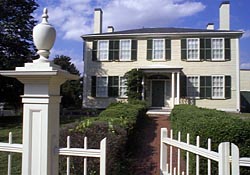
Jackson Homestead Newton, Massachusetts. Now home of the Newton History Museum
This is a small essay that was written, or perhaps typed from notes in 1953. The essay is available in three places worldwide: at the Newton Free Library, the Boston Athenæum and the library of the Massachusetts Historical Society. I encountered “An Old Fashioned Thanksgiving” when I was doing a project in the Newton Room at the library, the special collection room and was charmed. As Thanksgiving approached this year I remembered that I had read it, and searched on the internet for a google book or something. None exists. I thought that was a shame, so I went to the library and photographed the pages. Below is a mildly edited, (only a comma and a word or two has been altered) version of the 1953 typed edition of this story from 1848. Unfortunately I don’t know who did the 1953 edition, but the 1848 was written in adulthood by Sallie D. Gilbert who was one of the “Little Ones” in the story.
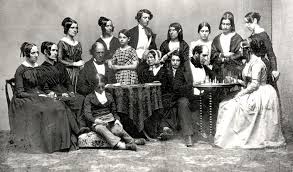
Jacksons of Newton
An Old Fashioned Thanksgiving in 1848
Jackson Homestead, Newton, Massachusetts
By Sallie D. Gilbert
Dear Children, I wish you could look back with me into the dear old Kitchen Thanksgiving week, Grandmother and “The Girls” hadn’t a minute to spare then. “The Girls” were Aunt Ree, (Lucretia), Aunt Cutty, (Caroline), Aunt Peli, (Eileen) and Aunt Frank, (Frances).
Aunt Mouse was too young to be trusted with much, but she could pick raisins off the stem.
How gladly we all would have had a hand in the wonderful doings. As it was, we could only open the doors a little way and peep through the cracks, and then should run back to the rest of the children, “oh my! The pies are going into the oven,” and then every child would strain to look through the door, I think Grandmother would have let the whole horde of us rush in, for we’re never in Grandmother’s way; but this “getting ready” was mighty business to “The Girls,” and they could not have us under their feet. There was the meat to chop, and the apples to chop, the raisins to boil and then to chop; the citron to chop; and all to be mixed and seasoned. O, the good things that went into that seasoning:
Grandmother would taste.
“A little more salt,”
“Luck would taste,
“I think it ought to be sweeter.”
Peli would dip a spoon in, and taste, and Frank would taste, and each would suggest, but say,
“My! Isn’t it good!”
O, if we children could only taste, too, but our good time was coming. Grandmother would see to that. When every pie was filled, then we might draw a finger all around the inside of the great red earthen pan and then lap our fingers with a gusto; and how the boy would gloat over his luck if he could scrape a “bit lot” onto his finger; but this was after the pies were in the big brick oven. Then, and only then, could “The Girls” breathe content.
Aunt Cutty would put a pie on the shovel and push that by the long handle away to the back of the oven; then another pie and other till there was no more room. As I remember, the great oven was expected to back forty pies at a time. I know it seemed immense and mysterious.
The mince pies – forty in all – were made early in the week, the cranberry, whenever they could be. How beautiful they were, with no top crust, but the rich crimson color showing out between the diamonds and the scrolls that Duck made with delicate strips of crust. We children looked at those pies with wonder and admiration. Thorwaldson, with his moldings of clay, could not have commanded more adoration than we had for our Genius. By Wednesday night all the apple and squash pies must be done, for Thursday morning was hurrying time for the great dinner, which must be served by two.
That was a dreadfully late time for dinner but Mr. Gilbert must preach at West Newton and all his family take the sleigh after church. We little Gilbert girls were allowed to carry our dolls to meeting under our cloaks, and O! The trembling of joy of walking up the long aisle to the minister’s pew, and feeling if people only knew what we had under our coats! Of course, the dolls must go to Thanksgiving at Grandmother’s.
Then Uncle Lewis Hall was in the choir of his church, and he and his family must have a long time to drive way up from East Cambridge. The dinner must be late. All men folk went to church; but of course the women, i.e., those who were to have guests, could not go on any account.
The old pantry then was a good sight to see. Everything had been shoved aside to make room for pies and pies and pies. Every shelf – reachable – was covered with rows of them. We children would flock into the pantry, and gaze in admiration, and count them over and over – - so many mince (they were the royal pies), so many cranberry, so many apple, and so many golden squash.
Thanksgiving morning that dear old kitchen was a hall of plenty. Always through the winter a line across the room with hung with “crooked neck” squashes, and their golden color made them a gorgeous decoration, but on Thanksgiving morning everything was color. There were tables of pies in array already for serving, the pudding Grandmother was making at another table with no sparing of good things, “The Girls” were preparing the turkey and making ready the vegetables. Plenty everywhere. Plenteousness was necessary to call forth the true Thanksgiving spirit, which on this day was full of thankfulness for the abundance with which God had blessed our dear land.
Frank might be beating the butter and sugar together for pudding sauce to complete the glory of Grandmother’s masterpiece. It could not be beaten too much. Mouse could chop the heart and gizzards for giblet gravy, and I think Bill would even assist at that, though he was now too much a man to join us “children” in most things – - i.e. in our plays. He must have been quite seventeen on this Thanksgiving day of which I am especially reminded.
Cranberries had been stewed the day before, but there was bread to be cut, tables to set, pickles – Grandmother’s special stuffed mangoes- ouster sauce for the boiled turkey – so many things and so much to do. Every grown person was hurrying to and fro, and gradually order was evolved, and O, with what beautiful results. Of course, I was not an eye witness to all this, but keen reporters were on hand.
O, the ecstatic glow when our sleigh whirled into the yard. The horse himself knew it was a festive time and pranced gaily up to the door, sleigh bells tingling, and then what a greeting! All the household rushed to the door and shouted welcome. That we did for each new arrival. Uncle Tim and his family had long been on hand. They only had to come from over the way, but the Fullers were coming with Uncle Henry’s handsome horse. His horses were always fine creatures.
Aunt Sarah had been to Eliot church, so she made an early appearance at the Homestead, and the Halls earlier than you would have thought possible from so far away; but a sleigh-load of lively people might made any horse do his best. Soon all had arrived, and then what merry laughing and talking there was from that time on. I think the old walls must still be holding some of that merriment, for they still inspire “Good times.”
Then came the procession to the dining room and no royal progress ever commanded more rapturous attention than we children with open eyes gave the incoming troop.
Uncle Ed Triumphantly bore the huge turkey aloft. That was the roast one, Uncle Bill brought in the boiled one, another one came baring the steaming chicken pie. “The Girls,” one after another, carried potatoes, squash, turnips, cranberry sauce, giblet gravy and oyster sauce. Celery was already ornamenting the tables. Truly those tables groaned with abundance. It was easy to be thankful.
There was one long table in the old sitting room made festive enough, one would think, by the windows filled with blooming plants through which the sunbeams were playing, and there were, besides, two square tables, the one in the front corner for the “Young Folks” and the other by the secretary, surrounded by the “little things” whose mothers had made them as pretty as possible. Indeed, we granddaughters all had new gowns that gave us an undertone of proud happiness with all the gaiety.
“The Old Folks” i.e. Grandfather in the center, and Grandmother opposite with their children and their children’s consorts round about the board – were at the long table. On this particular Thanksgiving Day the newly engaged couples “Key” and Henry B. William, and Aunt Mary and Charles Curtis – were not expected to do any serving, but to be served with honor. How ancient they at the long table seemed to us “Young Folks,” yet they joked just as much as we did and every joke brought a merry shout. What was wanting in wit was made up in laughter, but, indeed, the wit was no mean affair. It could not be where Uncle Tim was; and Bill and others had often spicy speech. They were bright people about that table, and Grandfather looked proudly around on his family, forty-two of us were gathered in that room.
Ah! After the reverent grace, you should have seen our grandsire when he stood up to carve the mighty turkey. He sharpened his knife anew, and then went to work with a will. He was a masterly carver. He cut off the wings; he slashed off the drumsticks, and divided the joints; carved slices from the breast, and slit off the wishbone; parted the neck (that was always Uncle Tim’s choice), easily separated the side bones with their delicate dark meat; spooned out the stuffing; “broke the back” and then in no time delivered light or dark meat, drumsticks or wings on a plates ranged around, passing each in turn to Grandmother, saying “There, Mother,” and she heaped upon it all the vegetables and cranberry sauce, while married daughters lent their aid in helping to gravies.
Uncle Tim sat at one end of the table and helped from the huge chicken pie and some son-in-law carved the boiled turkey.
Everyone ate all he could, and then would say, “I must have a little of that boiled turkey. It looks too tempting to leave.”
“Well, I can’t go through Thanksgiving without tasting Mother’s chicken pie.”
“My! Mother but this beats any yet!”
There was much laughing when little Mary Gilbert passed her plate the third time for squash, and would eat nothing else. Her dinner was finished, older people were not so wise.
At length, all declared that they could really eat no more, for Grandmother’s smoking pudding had been brought in on a lordly dish, amid unbounded applause, and of course, everyone had taken a piece of that, and, so to speak, smacked his lips over it, and then “The Girls” brought in four kinds of pie and flanked the plum pudding with the tempting things; so that one said, “Well Mother, I’m full, but give me a sliver of that mince pie, and you might add a mouthful of that squash,” And others followed suit.
The little ones were soon through and playing in the entry. Aunt Frank, looking so pretty, had seen to their wants.
Next, the young folks left in haste to play “Old Bear” on the stairs, and at last the elders could do no more. Some adjourned for a run to help digestion; Grandfather and the older men, to tell stories around the parlor fire. “The Married Girls” cleared the table and washed the dishes, while “The Unmarried” ate their long-delayed dinner. It had been a hard working day for them. Grandmother rested.
Great was the shouting in the halls. Full liberty reigned on this day, and no child was hushed.
“Old Bear” was our special Thanksgiving game. The old bear would hide in the back upstairs entry, or in one of the four small chambers – all pitch dark; and we children, gathered in Grandmother’s room would creep down the stairs warily into the darkness of the back-hall. I remember well how I thrilled over the bravery of Steve and Will Gilbert as they heroically pressed forward to meet the enemy, while I, trembling, stood on one foot in the rear ready to run the moment we heard a growl and the bear sprang out and caught the first one he could, while the escaping ones fled to the light. The one who was caught became the bear in the next raid. I was always glad to be the bear, for it was better to be alone in the dark, than to be sprung on and startled. The “Rag Closet” (now the Box Closet) was a favorite hiding place for the bear. These were the days when the tin-peddler’s cart came around at regular times, and rags – sold by the pound – were exchanged for bright tin-ware. Then, the rags in the household were carefully saved, and assorted into white and colored. Just before the time for the coming of the peddler there would be a high pile of rags in the closet, and we would bury ourselves in those rags; and so, finely hidden from view, we could wait for our best chance to pounce on the victim.
One Thanksgiving Day, late in the afternoon, we were all summoned to the parlor. Grandfather and Grandmother occupied seats of honor, while others sat anywhere, or stood in the doorways.
I wondered when I saw my mother and Aunt Sarah sitting side by side, near the fireplace, for Mother was blushing, and Aunt Sarah was holding a written sheet of paper in her hand. Nearby, and no one was allowed to sit in it, stood Grandmother’s great grandfather’s chair. It was usually placed by the wall.
Aunt Sarah read aloud “The Old Armchair,” which you all know now, but it was a surprise to me. I looked at Mother with astonishment and pride, and said to myself,
“She is a poet! Wonderful!
Truly, I think Grandfather was as proud for shortly afterwards he had poem printed and gave it around to his friends and relatives.
The next year, the scene was almost repeated, for then Mother had written “the Daguerreotype,” and that was read.
I think this reading quieted us all, for soon we said goodby and drove away to our homes. Sighing to think we must wait a whole year before such a glorious day would come again.
Arriving at home we could eat so supper, for, truth to tell, we had hied to the storeroom from time to time just for ‘a taste” of those “splendid pies;” not that were hungry, but we could not neglect such a wonderful privileges as were allowed on this day of days. We might delve right into the midst of the finest pie there, and just think – - we need not eat the crust, if we did not want to; though why it could be a privilege not to eat that delicious flaky crust, none could tell.
I have neglected to say that Grandmother made a hundred pies, that she might have wherewith to give liberally to all – the poor and lonely – as a token of fellowship and love. The day before, the children were sent forth as almoners, in all directions, to carry the baskets heaped with good things.
One year, Grandfather loaded his sleigh with a full Thanksgiving dinner and drove to the Poor House. There he dined with the inmates and by merry jests and genial conversation brightened their day; then came back home to enjoy his home festival with his children.
That was before the days of the great immigration, and there were but seventeen inmates at the Poor House. They were of feeble mind or “Wanting” as the expression went, and victims of intemperance.
Since great benevolent societies are of recent birth, that benevolence was unpracticed and unknown to our forefathers – - or so the present generation is apt to think; but in those days every man knew his neighbor, and no one was allowed to suffer want.
In later years, Grandmother had a tree with presents on it for the grandchildren on Thanksgiving afternoon, and placed it between the nursery door and the fireplace.
1953!
Those of you who read this tale of Thanksgiving long ago – - whether you be “Old Folks,” “Young Folks” or “little things” – - please remember that the Old Homestead still stands to welcome you, as of old, through its front door. Its walls are still rich with memories of the laughter, the heroism, and the kindness that graced it for centuries.
Will you not visit us and see the great kitchen fireplace, and the old brick oven where Grandmother baked her mince pies – - forty at a time – - the dining room where forty-two sat at a sitting; the spacious halls where the children merrily played “Old Bear”, the parlor where the family poems were read; and the yard into which the horses pranced with their sleigh loads of Thanksgiving joy.
We will welcome you there!
September 20, 2014


August 31, 2014
A Red Haired Libby Enters the World
When Fate and Fair Winds was published I edited out the last chapter and wrote a series of letters from Rebecca to her Aunt Amalia to sum up the action in that chapter. A good friend of mine is having her first child this weekend, so I am posting this short story in here.
December 27, 1778
The days before Christmas had been busy. The new house was finished; the furniture was in place, and the chimneys drew as expected. Rebecca had packed her things from Claire Daggette’s – with the agreement that the herbs’ seedlings would be collected in the spring. In payment for her cleaning out so well and more quickly than his mother had expected, he’d offered to drive a cart with her and her things over to Ipswich. He’d waved happily as he turned the team.
Rebecca walked into her new house. The walls were painted a golden yellow, with stark white trim around ceilings, walls and doors. It was a color she had not expected to like, but the silent gray skies of the early afternoon made her pleased with her choice. She had surprised Simm by stenciling a pattern onto the walls of each room. And he had been pleased with the results. She reminded herself not to work so hard, but the stencils were now the fashion and it was a wonderful way to you her talents. It had only taken a few weeks, and as the workers were finishing the last details on the house, she worked in rooms they had already completed.
The stenciling had been fun. By Christmas day she had finished all the upstairs bedrooms and was almost finished with the rooms downstairs. The stencils were of animals and flowers for some of the patterns and an eagle design for the edging in the dining room. The front rooms of the house required something extra and Rebecca spent the morning drawing and cutting out a new stencil, with flowers and leaves in a wreath design.
The sun was still high in the sky as she painted, glad to be using the natural light through the unclothed windows. Standing on a low stool, she was just finishing the wreaths around the front windows in the parlor and was ready to bring her brushes into the kitchen for cleaning when she noticed a puddle on the floor. Rebecca looked around to see if her paints or paint water had spilled, but everything was as it should be. She started to walk toward the back with her supplies to grab a towel from the closet when she doubled over in pain. She sat down hard on the floor to catch her breath and think of what to do.
The house was empty and John was not due back till after a meeting with Captain Crowinshield after lunch. Between the pains she looked around for paper and pen. If there were some in the near empty house, there was none available to her, so Rebecca took a brush and the spring green she had mixed for the leaves of the stencil and painted a note on the floor near the front door.
J., Baby coming, gone to Trask’s. R.
Rebecca grabbed her heavy cloak and then waited between pains to pull on her warm shoes. The snow was not deep, but the house was set back from the road and she dared not pretend she would find someone nearby. She breathed deeply and walked out toward the main road. The day had turned, and new snow was beginning to fall. It was not falling heavily and she pushed her worries away as she trudged through the icy drifts. Again and again she paused to let the labor pains pass, but they were not yet unbearable and she kept the goal in sight.
By the time she reached the Post Road the snow was coming down hard. It was getting hard to see through the storm and pain. She stood at the juncture of her drive and the road trying to get her bearings. Luckily, Mrs. Cummings her neighbor who lived on the main road was just on her way home from the shops.
“Mrs. FitzSimmon are you a’right? Come here girl, let’s get you inside.” Mrs. Cummings ushered the near frozen Rebecca into her small house, still beautifully decorated with greens and candles for the season.
“Mrs. Cummings, the baby.” Rebecca rubbed her belly as it tightened. “Mrs. Trask.”
“Susan Trask? Oh that’s right. Who can I send? But you, let’s get you settled.” The old woman was barely able to care for herself, but she helped Rebecca out of her wet cloak and took off her stiff, frozen boots. The house had only two rooms, a great room with fire place for warmth and cooking, and a back room for sleeping. Rebecca looked around, if she labored here it would deprive this sweet old women of her comfort, but she could not force herself out of the chair, certainly not back into the storm.
When Rebecca was settled with a warm brick at her feet, Mrs. Cummings left her little house to find someone who could take a message to Susan Trask. To Rebecca it seemed to be a miracle that Mrs. Trask arrived not thirty minutes later.
Susan Trask knew once the storm moved in, that one of her girls would foal that night. She’d ordered her family to be ready and packed her things, waiting for a messenger or an arrival. The boy had come in breathless, and near dead with cold with the message that Rebecca was down on the Post Road at Emily Cummings cottage. She set her girls to revive the young messenger with hot chocolate and biscuits. She ran to the yard to find to find Tom and the harnessed draft horses.
“Tom, Rebecca FitzSimmon is at old Mrs. Cummings. I don’t how that happened, but the boy who helps her just ran up with the news.”
“I best come with you. Should I collect the boy and bring him back to his mother in town?”
“Yes, They’ll be time. First babies are never quick.”
Tom Trask went into the house to bring the young messenger and ferry him back down to town in the cart. Then with his passengers buried skins and wool blankets. He skillfully drove his team of sure-footed draft horses, through the blizzard into the town. The boy jumped off at his own home with grateful thanks to be out of the storm. The Trasks then rode the short distance to the Cummings house.
“Sue, I’ll wait with the horses till you come out and tell me what you intend to do.”
Susan climbed out from her covers looking like a monster awakening in his cave. “Oh damn, Tom, I should have brought Marigold, well husband, I guess you will have to do for an assistant.” And with that she strode to the front door of the little house, not quite sure what she would find. She rarely did.
Through the daze of pain and worry, Rebecca heard knocking and felt a cold blast of wind, as Susan Trask walked into the room and took over. She had worked hard to be unobtrusive and not make a nuisance of herself, and Mrs. Cummings was very kind, but had no idea what to do. No one had ever looked as welcome as Susan did walking into that room.
Rebecca, who had been stoic enough to get down the road in the burgeoning blizzard burst into tears as soon as Susan walked into the room. Mrs. Trask summed up the situation in a second, the small room, Emily Cummings and a new mother alone here in the storm. It was not going to do.
“Becky, we have to move you. How often are the pains.”
“I don’t know, I haven’t been counting, but not too bad, I can talk between.” She caught her breath and waited out the hard cramp, not wanting to scream or cry in front of sweet Mrs. Cummings.
“Okay,” Susan continued talking soothingly as she put Rebecca’s feet back into her nearly dry boots and wrapped her in the heavy blue cloak. She helped Rebecca stand and walked her to the front door. She called to Tom at the road. The foreman came over and picked Rebecca into his arms and put her into the back of the cart. Susan climbed in after and covered her, murmuring how everything was going to be just fine.
“Tom, she called over the wind. “I don’t like this. Let’s get her back to the FitzSimmon house. I don’t know what’s set up there, but it’s closest and this storm is not letting up.”
Tom turned the big horses down the drive toward the new house. The building was dark against the white snow of the fading afternoon light. The horse cart took no time getting back to the house and the door was open to their entrance.
“Tom, light, fires, heat, hot water.” Susan shivered in the cold empty house. “then take care of the horses.”
“Yes’m” Tom Trask knew better than to second-guess Susan when she was working.
Susan Trask helped Rebecca up the front stairs to the best bedroom. The bed was made with warm blankets and clean sheets, the fire was laid and the wood box was full. Susan started a fire while Rebecca took off her boots again, and sat on a step stool as the next pain over took her.
The two women could hear the clang of pots and fire starting coming from the kitchen below as Susan helped Rebecca off with her cloak, gown and undergarments leaving her wearing only a warm shift and wool socks.
“Now, you’re comfy, we wait. Just breathe, Becky.” Susan climbed onto the bed behind her to rub her back for a while, then fixed pillows for the young woman to lie back on between pains. Between times, relaxed and warm, comforted by the presence of Susan Trask, Rebecca slept, willing herself not to worry about Simm out in the blizzarding cold.
Simm had left the meeting pleased with the work the men had done in planning the new bridge at Beverly Harbor. He pulled his great coat closer and rebuttoned the collar over his tricorn. The storm had already dropped nearly an inch onto the ground, but it did not concern him as he turned Sisyphus north.
The road was fine for the first part of the trip, but as he near his own home the ground became too slippery for the young stallion. Simm dismounted and walked the horse over the dunes toward his stable and home. The dark cloaked man and the black horse made a moving shadow in the ever whitening afternoon to anyone who was out and cared to look.
He arrived at the yellow house from the rear and stabled the horse. Simm took his time in the dry barn. He toweled the stallion and found his warmest blanket. He checked food and water and spent a minute feeding an apple to Artemis. He enjoyed the peace of the icy snow hitting the roof of the well-made stable, and with both horses warm and fed he walked back out into the storm to find his wife.
Simm entered the house by the kitchen door. The house was cold and no candles were lit. He found a lantern and lit the wick. He carried the light though the near empty house wondered where Rebecca could be in this storm. He smiled at the stenciling and paintings on plaster she had done in the main rooms of the house, pleased as always that they would not be visually burdened with the stylish, heavy wallpapers and their scenes of faraway places. In the front room he stopped and stared at the nearly frozen puddle of water on the floor, confused he went to fetch towels and started to wipe the floor. He left the towels on the floor more worried that Rebecca might be upstairs asleep. He nearly missed the green paint on the floor.
The paint was wet with ice crystals beginning to form at the edges. Damn the house was cold. He went back to the parlor to collect his rags to wipe up the green before it froze or dried in place. Walking back into the hall, he placed the lantern on the floor and went on his knees ready to clean.
J., Baby coming, gone to Trask’s. R.
Simm was relieved Rebecca was with Susan Trask. He grabbed his heaviest woolen cloak and a fisherman’s cap, and went out into the storm. He trudged down the long drive hoping to see Rebecca. He pushed down his panic that she was in a snowbank somewhere on the way to the Trask’s, but the fear would not let up. He called to her at each tree and wall hoping she would hear him over the howl of the wind. At the main road he turned toward the Trask’s and his shipyard. Travelers heading into town passed him, but he paid them no mind as he was determined to get to the Trask’s and find Rebecca.
Simm ran the last rise to the house on the hill. He was tired, wet and near frozen from the storm. His feet had not thawed from his walk with Sisyphus from Beverly, and now the wet and deep snow slowed his journey. This only made Simm more anxious for Rebecca, he pounded on the Trask’s door, demanding that someone let him in.
Tom junior opened the door and jumped as the wind – straight off the ocean – hit with a full blast.
“Tom, don’t be afraid, it’s me, John FitzSimmon. Is Rebecca, I mean Mrs. FitzSimmon here?”
“No, Mr. FitzSimmon. My Ma and Pa left with Joseph Grimley a while ago. I don’t know where they went.”
“Damn! Sorry Tom I didn’t mean to swear. The team isn’t here, is it?”
“No, Sorry. I saw Pa driving them when he took Ma and the boy to town.”
“Thanks, son, I’m sure everything will be fine, thanks.” And Simm turned back into the storm for the walk back to town. “I assume the first stop should be the Grimley’s to see if everyone is there.”
It took the better part of an hour, but Simm discovered that little Joe Grimley had been sent by Mrs. Cummings to find the Trasks, and that they had driven him back into town. Simm was sorry to pull Mrs. Cummings away from her warm fire, but there he learned that the Trasks had been there. Mrs. Cummings had been asleep and not offered further information, but he assumed that with the powerful storm moving in they had all gone back to his house since it was nearest. He must have missed them coming down the hill.
Simm went out into the wind and snow again. This time he retraced his steps from the main road down his long drive. The wind was causing almost immediate drifting but it had not quite covered the hoof prints and cart tracks left by Tom Trask’s powerful Suffolks. This time, there was smoke rising welcomingly from his chimneys. Simm climbed his front steps and entered a warm house with Tom Trask boiling water and folding clean towels and blankets in the kitchen.
“Well, man it’s good to see you. From what I hear little Becky’s been a bit worried about you out in this storm.” Tom welcomed him with a friendly wave. “Good pull on the chimneys Simm, nicely built, house. Congratulations are going to be in order all around.”
“The baby? Rebecca? Tom where are they?”
“Calm down, Johnny. Susan has delivered hundreds of bairns. Take off your wet clothes and shoes. The party is in your room, so changing is out of the question. But sit here in the kitchen and warm up after you tell the ladies you’re in out of the storm, of course.”
“Thanks, Tom, you are a good friend, I’ll just go up now.”
Simm climbed the stairs two at a time, Before he reached the second floor of the house he called out, “Ladies, I’m here and I’m just fine. Susan,” he asked, “how is Rebecca?” he opened the door a crack to wave at the two women in the room.
“Jack, now she is fine. This is no place for a man, now you go get some warm tea into you in the kitchen and I’ll find you later.” Susan shooed him out of the room.
He had been a leader of troops in the field. He had grown up on a busy estate with animals and people having babies around him all the time. He had observed a thing or two in all those years. One was that Susan Trask was more harried and worried than she was trying to let on, and the other, which might explain the first, was that all the births he had observed had been communal experiences. There had always been young girls helping with food, and the older women helping the mother. His Rebecca was doing this with only one other woman. Susan Trask was the most competent midwife, but even she helpers. And right now she needed someone to help Rebecca, and get this job done. He obediently went down to warm in front of the fire, but as soon as he found warm wash water to clean his hands and face he bounded up the stairs.
“Susan,” he knocked forcefully on the door, “you cannot keep me out of this room. I am not just a ship builder. I am a soldier. I while I may not have delivered the hundreds of babies you have, I have delivered my share. The wives who follow the drum always assume commanding officers can do anything, we rise to all occasions. I am coming into that room. And I need warm socks.” Simm paced in front of the closed door, taking turns yelling and mumbling depending on the level of noise from within.
He counted to fifty and then opened the door. Rebecca was sitting up on the bed with Susan Trask’s head under the covers telling her to push. Simm closed the door behind him. He smiled at his wife who was weakly trying to sit up among soft pillows, leaning back against the headboard of the bed. Simm was barefoot as he sat on the edge of the bed and pulled warm socks over his chilly feet. He heard Rebecca moan a laugh as Susan chastised him to get out of the room.
One look at his wife told him she was exhausted. That walk to Mrs. Cummings must have sapped whatever strength she had. They did not call birth labor because it was easy. That look told him everything, Rebecca’s hair was still wet from the snow, and now sweat was running down her beautiful but drawn, weary face. “Susan, you don’t have to tell them at the midwives’ guild meetings, but I am staying.”
Rebecca had been trying. Lying down had hurt during the pains, and had produced weak pushes so she had tried to sit up, and for a while Susan had been behind her helping. But now Susan needed to be there to catch the baby and she was on her own. She could barely sit up, let alone push again. She heard John’s voice coming from the hall outside the bedroom. She wanted him to just go away and not to see her in this mess. Then like the man he was, he walked into the room to get dry socks.
The next pains swept her away. She lost track of John till she heard Susan tell him again to leave the room. She heard someone swear and then there were strong, familiar arms holding her up. She leaned backwards onto his hard chest, breathing when he breathed, drawing strength from him. She heard Simm’s voice in her ears telling her to push and in between the pains she heard him telling her to lean back onto him. She followed Susan’s directions with new strength. So cradled in Simm’s strong arms and with his strength willing her to continue, Rebecca pushed those final times until she heard the wail of a healthy baby.
Susan Trask told her sister later, she hadn’t been certain that Rebecca had the energy to finish her labor. She was that worried that she was going to lose her first mother. But the girl’s reaction to Jackie was immediate and powerful. Maybe we should let fathers in? Susan asked her sister; both women laughed.
Susan Trask sent Simm down to the kitchen to get some of the water and towels that Tom had prepared. “Well Jackie,” she started as she took the warm water and started cleaning the tiny girl, swaddled her and handed her off to Simm, moved on to help Rebecca wash and change into a clean dry night rail, “you were right that we needed more people around for a birth, it was good that everyone we had was an expert.” She kissed Simm on the cheek and went down to the kitchen to get herself a cup of tea, leaving the new parents alone with their daughter.
Simm added a few logs to the fire and turned to look at Rebecca and the baby. She glowed with success and joy. The little girl suckled like she had the situation in hand, her fuzz of red hair creating a halo around her head. “FitzSimmon, I love you.” She tussled the child’s silky hair. “And, I won’t say I wasn’t warned. I remember what you said about eldest girls in your family. And although she doesn’t have much hair, I believe it will be safe to call her Elisabeth.”
Simm climbed onto the bed and put his arms around the two beautiful women in his life, and vowed that he would never leave either alone to face the cruel winds of fate or weather.“Rebecca, I think we need to discuss that. I like the nickname Libby for Elizabeth, but I think we both know this little one’s name is Liberty.”
If you liked this story find the rest in the book: Fate and Fair Winds in e-book and paperback.
American Georgians: Novels in the time of George III and George Washington
 Readers prefer Regencies. I write American Georgians. (An open letter to author Jo Beverley)
Dear Readers,
Recently I read an interview with an author of Medieval romances. She spoke of the era as lawless, and that the lack of social rules made some readers shy away from that genre, but she liked writing in a period that allowed a man and a woman to be discovered in a room together without scandal or forced marriage. That was just one of many reasons she liked this relatively chaotic world where the only law was the King’s word and he and his armies were largely absent. I agree that such times open up areas of romance and relationships to an author, that the rigid rules of the Regency cannot allow.
A few years ago I began writing about another chaotic, lawless era. Not lawless because the law was absent, though often it was, but because the known world was changing so quickly that rules seemed suspended. This is a short essay on how I began writing my Edge of Empire / World Turned Upside Down Series or the American Georgians, if you will. (George III and George Washington.) The novels take place during the American Revolution 1773-1780 plus or minus a plot point.
It all began when Jo Beverley’s Rothgar, mentioned ‘trouble in the colonies’ in conversation with his younger brother. Being an American historian with a deep love for, not only British history, but British historical romances, my antennae went up and I matched the “trouble” to the stamp crisis in Boston. Then Chastity discovered Cyn’s tomahawk-scar from an attack during in the Seven Years War in Canada or perhaps Massachusetts or New York. That is a war we in America call the French and Indian War. For us, this war began with Indian attack in 1675 and didn’t end until the treaty of Paris in 1765. Even then, there were attacks from Canada into western New York for another year. In those years, Americans were British, and army and militia fought together against the French and the Canadian Indians.
No non-fictional family explains the emotional conflict the American Revolution presented to the British aristocracy better than the Howes. Cousins of King George III, (their mother was an avowed illegitimate daughter of George I), three Howe brothers served in America during the French and Indian War. The oldest, General George Howe, led forces in New York, and died at Ticonderoga in 1758. He is buried near Albany, New York. George was greatly adored on both sides of the Atlantic and after his death the Province of Massachusetts paid for a commemorative plaque in his honor to be placed in Westminster Abbey.
In 1774, as the next crisis in the colonies heated up, George III asked General William and Admiral Richard Howe to go back to America to lead the Army and the Naval forces there. They agreed to go only if they would be allowed to seek reconciliation with the colonies. The King agreed, but he and his secretaries gave them no support.
With the inspiration of Ms. Beverley’s Malloren novels, and the fighting of the pro and anti Americanists in Parliament as background, I constructed a fictional aristocratic family, and the fictional Duchy of Chardon. The FitzSimmons are a large loving family with too many sons, two of whom I quite rudely remove from Britain, and place in America at the time of this conflict. One is a merchant seaman who lands in Boston the week of the “Tea Party” the other is a lieutenant on General Howe’s staff. There is a younger brother who will come to visit as soon as he finishes school.
Their mother, Elizabeth FitzSimmon, Duchess of Chardon, is an energetic redhead who has been involved in the raising of her children from their birth, and running all aspects of her household. She argues politics with anyone who will listen, and writes to the newspapers as Queen Bess. She visited family in America, some time in the past, and loved the land and its people. She is a cousin of General John Burgoyne. The same John Burgoyne who landed in Boston with William Howe in the spring of 1775. Elizabeth and her ilk are not shy in telling him he is a buffoon when he does not believe the Americans on the frontier will fight hard and well. She is proved correct.
The two oldest brothers, Robert and Stephan sit in Parliament. Robert takes his father’s seat in Lords, because the Duke won’t travel anymore, and Stephan was elected as an MP for the district. Both men are sympathetic to the American cause, as were many others to greater and lesser degrees. Historian, David Hackett Fischer refers to this as the King in Parliament Whigs, (the British), vs. the no King in Parliament Whigs, (the Americans), the two sides agreed on almost everything except that one thing, and it was insurmountable!
In my stories, three family members: Stephan; Thomas, the third brother; and the husband of their older sister, Elizabeth, own a shipping company named after the family. Jason, the fourth son, has been in the employ of this company as first mate on the Chardon. Cardinal Points begins as Jason makes landfall at Boston, Massachusetts, in December 1773, simultaneous to the treasonous events of the night. He decides to leave his brothers’ employ and strike out on his own.
John’s story In Fate and Fair Winds, begins during his travels. He had been tasked by General William Howe to come to an understanding of the Americans. This was part of the efforts of the Howes, William and Admiral Richard, at reconciliation with the Americans. John lands in Philadelphia at the time of the signing of the Declaration of Independence. He is fiercely loyal to the King and the notion of nationhood, but he grows to believe that Parliament has betrayed the English ideal of representative government with their intransigence toward the Americans.
So, mine are the stories of the extra sons as a new world unfolds before them. Each man meets an American girl. Each eventually finds love in a topsy-turvy world.
What I have tried to do in these books, beside giving the reader a fun story with adventure and romance, is to complicate the narrative of the American Revolution. To tell stories, not through military victories and losses, but through the eyes men and women finding love in the midst of rhetoric and revolution.
When General Charles Cornwallis surrendered to General George Washington in October 1781, he had his band play a tune called “World Turned Upside Down.” For an Enlightenment Englishman of that time, losing the colonies was not simply the loss of valuable real-estate, but an alteration of the way things should be in an ordered world. Quite literally, the known world had ended.
As I say on my book covers: In a world turned upside down, the only right – may be love.
Most Humble, &c.
July 1, 2014
E-Book Giveaway
 The E-Book Giveaway at Smashwords has begun. Both Cardinal Points and Fate and Fair Winds are included. The Giveaway will last through the weekend, then change. If you want summer reading for free, for any reader, follow the Link. to smashwords.
June 24, 2014
In honor of this years July 4th holiday I will be having ...
In honor of this years July 4th holiday I will be having a e-book give-away at smashwords.com. Right now Cardinal Points is there for only $2.99 in any format you’d want, and Fate and Fair Winds will be there soon. River’s Turn will be there for pre-order, available in late summer or early fall.
May 23, 2014
Cooleewahee Shout: a song from the deep South
 Not long ago I talked to an old friend about my work. I promised her that once in a while I would include something from or about the south. Well, after a recent trip to Georgia I got inspired to rework a book I wrote thirty years ago about my grandmother, Kate Fort Codington. I include here a story about her childhood on a plantation near Albany, GA. Her father John Porter Fort had bought the land before his marriage, in 1881. (More about him later.)
The six Fort children loved this land of cotton and deep swamp, they named it Cooleewahee after call of the wood thrush.
My Aunt Catherine wrote this for me in 1979:
It was Brooks Locket, the family butler and driver of John Fort’s two white Kentucky thoroughbreds, who taught Mother this song, and who at one time saved her from certain death, after he followed little Kate through the open door of the ginhouse. He saw her, a joyous little tomboy of about four, climb up on a piece of machinery and dive headfirst into a deep, fluffy pile of unbaled cotton. She was immediately unable to move or to breathe and would have suffocated if the horror-stricken Brooks had not extricated her. “Miss Katie, Don’t you never do dat again!”
The dance is called a “shout”, the feet are moved somewhat like a Charleston, the dancer leans over from the waist. It begins with shouting out ‘oly man or ‘oly woman, and then continues:
You better live ‘umble
You better live mild.
You better live like-a dat heabenly chile.
When I gets to heab’n I spects to stop,
Choose my seat and den sit down,
argue wid do Father, chatter wid de Son,
Talk about de worl’ dat I jus’ come from,
Talk about the green tree die as well as de dry-a
De green tree die jus’ as well as de dry-a –
O Lawdy!
Walk steady chillun, study yo’selves-a
Jus lemme tell you ‘bout God Himself-a,
When He was a-walkin’ here below
Betwixt de eart’ and den de sky,somethin’ like a Jericho-a
Eatin’ of de honey and drinkin’ of de wine…
O Lawdy!
Simon Cyrene gwine dig my grave,
Angel Gab’l gwine hol’ me down,
Hol’ me down with a golden chain –
O Lawdy!