Saaz Aggarwal's Blog, page 2
December 4, 2022
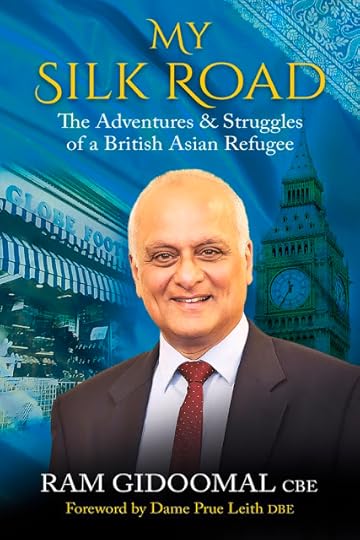
Review of My Silk Road by Ram Gidoomal for thewire.in
The most striking – the most intense – experienceRam Gidoomal describes in his memoirs is the feeling that overwhelmed him whenhe arrived in Bombay at the age of 14. Suddenly, unexpectedly, for the firsttime in his life, he knew what it felt to fit in. It brought home the paradoxof “home” for an immigrant: on one side homesickness for the country of origin,a sense of cultural belonging, allies in appearance, and the freedom from fearthese bring. And on the other, the cords of daily life that tie one to thebirthplace and local community.
Ram’s family endured the transition fromcitizen to refugee twice. Displaced both times by political whim, theyexperienced a harsh wrenching from community, culture, status and education, andwere summarily swept from wealth and comfort to situations of continued struggle– twice. Once as refugees when the Indian subcontinent was partitioned andPakistan was formed, and the second when his family was removed from Kenya. Asa teenager he would discover, in immigration queues, that he was an “alien”.And, despite his academic brilliance and significant contribution to earlyworkplaces, he would remain painfully conscious that he was different.
In this book about his life, Gidoomal beginsby describing his happy childhood in Kenya, followed by the challenges of adaptingto Britain in the late 1960s – unwelcoming, and one where this family with amultinational trading operation begins afresh with a corner shop – and yet anobvious choice for the time.
There are intimate glimpses into a familyof large and complex but congenial groups, and the poignancy of familytragedies including the loss of his birth father and then of his father-figureuncle who brought him up; precious memories handed down from the past,including those of links to the lost homeland of Sindh. There are fascinatingpeeps into business practices and secret codes. Later, during his blissful dayswith a young family in Switzerland, he was that role-model father who changedhis working hours so that he could spend time with his children, returning tooffice after they went to bed. As the years passed, Ram moved from his life inthe corporate world to one centred on social issues and philanthropy, using hisbusiness skills to transform others’ lives. His contribution earned him a CBE,Commander of the British Empire, from the Queen of England in 1998.
In between comes a huge, surprising transformation:“By my early twenties, I had lost two fathers but gained a heavenly one inGod.”
This wholehearted embracing of Jesus isdisconcerting, coming from one whose community sacrificed all they had toescape conversion. As a child in a Sindhi family, Ram grew up Hindu with Sikhinfluences. At the Aga Khan School in Mombasa, he absorbed Islamic teachings. Thechoice he later made, with the backdrop of his exceptional intelligence andcrystal-clear rationality, resulted from the pull of faith. Succumbing to thewarmth of its embrace, he selected a life of devotion to the Church.
Through it all, his Sindhiness remainedintact. He writes of his feeling of comfort on reading Matthew chapter 27 verse59, about Joseph of Arimathea wrapping the body of Jesus in cloth: “The Greekword for this cloth is Sindhon, a cloth from Sindh. A cloth created in my homeland,holding the body of Christ.”
Indeed, the Sindhiness pervades his life:English was the language of instruction but Sindhi was the language his motherspoke to him in, the language the old men swore in, the language he was scoldedin. When he fell in love, it was to a highly eligible Sindhi girl – one who,however, was initially forbidden to him as she was of another “caste”. Sunitawas from a progressive Amil family, too progressive to consider caste and perhapsjust worried about how she would adapt in his traditional Bhaiband family. Indeed,Ram Gidoomal observed with admiration that his father-in-law treated hisdaughters and sons equally, inspiring him to do the same with his own children.
One of the most prominent themes of thisbook is Ram Gidoomal’s tremendous network of relationships in every area oflife. As a young executive in the 1970s, his complacent and supercilious managersfailed to comprehend this tremendous asset which could have taken the bank intonew markets with valuable new customers. For Ram, the connections were simply away of life, partly the community and business networks inherited from hisfamily; partly his own aptitude to thrive on and develop relational networks – tiesof location as much as shared cultural traditions among the diaspora flungacross the continents. Working at Inlaks, a global company with a huge base inNigeria, he could speak in Sindhi with the senior executives who preferred todo so when communicating confidential commercial information.
This book has an elegant story-tellingstyle, weaving in humour, and creating a build-up of suspense as the plotunfolds. Despite being put together by a professional writer, Ram Gidoomal’s voicecomes through clearly and is the same as in his 1997 UK Maharajas whichwas also written by a professional. Throughthe book, Ram Gidoomal’s personal motto stands out clearly: “Don’t let what youcan’t do stop you from doing what you can.”
My Silk Road
The Adventures & Sturggles of a British Asian Refugee
Ram Gidoomal CBE
Pippa Rann books & media
MRP Rs799
270 pages
Review by Saaz Aggarwal
Published on 4 December 2022 https://thewire.in/books/ram-gidoomal...


November 10, 2022
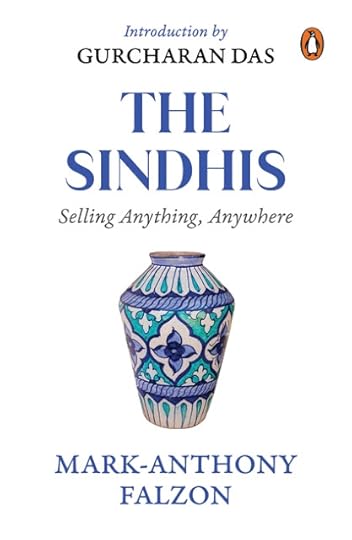
Interview: Mark-Anthony Falzon, author, The Sindhis; Selling Anything, Anywhere
By Saaz Aggarwal
How did you manage all this research during lockdown?
My first and most intensive period offieldwork was in 1999-2000, in London, Malta and Mumbai. I was at the Gatewayof India for the millennium celebrations, and remember watching the firstsunrise of the third millennium at the lakeside in Borivali. I have since beento India six more times, and the results of that work are contained in myscholarly writing. I also draw on them in this book, though SellingAnything, Anywhere is not aimed at the academic reader. I did intend tospend some months updating my notes in India in 2020-1, but had to resort toZoom. There was also a fair bit of desk research, which was unaffected byCovid.
2. Was it really the Sindhibusinessman Bhojoomal and his sons who founded Karachi?
If the memoirs of Seth Naomul Hotchand areanything to go by, then yes. Hotchand was a merchant who lived in Karachi inthe nineteenth century, and who wrote the history of his family. He wrote thathis ancestor Seth Bhojoomal (who originally hailed from Sehwan in Sindh)settled and established business in Kharrakbandar around 1720. The place,however, quickly silted up, and Seth Bhojoomal and his fellow Sindhi merchantsrelocated to a new place, later named Karachi, and developed it into a port ofconsiderable prominence.
3. Claude Markovitspublished his findings about the Sindhi global traders in 1999. Why did it takeso long for this centuries-old phenomenon, well known among the Sindhisthemselves and the local populations where they live, to be identified andwritten about?
The Sindhworki network goes back to the1850s, and involved traders from Hyderabad-Sindh who travelled quite literallyaround the world in search of potential markets (usually in port cities,especially in the earlier phase). That of the Shikarpuris goes back to at leastthe early eighteenth century, and involved men from Shikarpur who ran anelaborate banking trade in Central Asia. You’re right in saying that it tookscholars a long time to get the hint. Some early examples were Anita Chugani’s1995 MA thesis on Sindhworkis in Japan, my undergraduate thesis on Sindhworkisin Malta in 1996, Markovits’ benchmark book of 2000, and my book of 2005. Ithink the reason is that Sindhis are so adaptable and flexible in their ways,that they are easily overlooked as generic ‘Indians’. It took Markovitsconsiderable detective work to tease out the Shikarpuri presence in CentralAsia; and Sindhworkis can be even more difficult to identify as such. For alltheir globetrotting and business acumen, Sindhis tend to fly under theradar.
4. Why are there no womenin your book? There’s a brief indication of them as secret agents, and laterthe ones to prepare ‘poppadums’ and pickles which the men hawked. What aboutthe many who had the gene and the connections and used them, the entrepreneursand the captains of industry?
I do mention that in some contexts Sindhiwomen are increasingly directly involved in business, and that women played akey role in the circulation of information – crucial to business success – backin Shikarpur and Hyderabad, and that well-connected Sindhi women in India andelsewhere play an important part in the making of networks. Still, I think yourobservation is justified. Mine is a partial story that leaves room for manymore. Some have already been told by Rita Kothari, Subhadra Anand and yourself,and there’s a new breed of scholars (some are Sindhi women – TrishaLalchandani, Radhika Chakraborty and others) who are researching doctorates onvarious aspects of Sindhis, and there's Aruna Madnani’s ‘Doorway to Sindh’webinar series for her Sindhi Culture Foundation.
5. “Poppadums”? Seriously Mark?
It’s papad I had in mind – not least sinceI must have consumed hundreds in the course of my fieldwork. Sindhis can begood hosts. You’re quite right to say papad is iconic. In part that’s becauseof their unique peppery taste and blistered appearance (they always remind meof Neapolitan pizza dough). But as I mention in the book, the making andselling of papads and pickles is a defining episode in the story of how manySindhi refugees survived, and overcame, the economic hardships of Partition.
6. Why does your book notmention the Sindhi tradition of philanthropy? And why do you have mostly onlystories of plodders and small-time dealmakers - yes, the bell-curve people –but no representative of the huge population of rags-to-riches and the "mymother's blessings took me to where I am" people, who would have loved tobe mentioned by name?
This book does not cover every aspect ofSindhi business and culture. It was prescriptively intended as a short andreadable text, aimed at a popular audience. Besides, I cannot claim to haveworked with a mathematically representative sample of Sindhis. That's also whythis interview is welcome: it complements the contents.
Many Sindhis are in fact involved inphilanthropy. In the case of some of the big Sindhworki and other firms, thiscan be as prominent as full-scale hospitals. But I’ve met people of more modestmeans who funded and ran small homeopathic clinics, for example, in India andelsewhere. I think the point really is that, contrary to some of the more toxicstereotypes, Sindhis do not form isolated moneymaking enclaves; rather, theyare embedded in the societies they live in in various ways that include philanthropicgiving. Seth Naomul writes that on one auspicious occasion in 1805, hisancestors spent “large sums of money in charity and in feeding Brahmins andfakirs, and acquired such renown on account of their liberality that Bhats andBrahmans chanted their benevolence in songs especially composed”.
7. Did you observe culturaldifferences between the solidly Sindhi communities in Panama, Hong Kong, theCanaries (and other locations) through local influences?
You’ve put your finger on one of the mostfascinating parts of the Sindhi story. Simply put, Sindhis live in places.
The very first Sindhi I interviewed ran aretail business in Malta which had been in the family for many decades. In acorner of the shop was a little shelf, and on it photos of departed familymembers and figures of Ganesha, Lakshmi and the Virgin Mary. When I asked, hetold me he was ‘100% Hindu’ but also a follower of a number of Catholicdevotions.
In Indonesia today there are about 10,000Sindhis; many are businesspeople involved in many different lines. Perhaps thebest known is the production of sinetron (soap operas), which they have beenheavily invested in since the 1980s. The Sindhi producers even came up with aninnovative product, sinetron Ramadhan, which in turn evolved into a new genreof Indonesian television known as sinetron Islam (Islamic soap opera). Theseare two small examples of their linguistic, cultural, economic and social diversity.And yet, Sindhis retain a strong sense of a networked cultural affinity, whichmakes it possible for them to relocate should they wish or need to.
8. Priya Ramani sent me anindignant message about the title of this book and I realised that it could beseen as demeaning to the community. I told her I’d ask you.
There’s the joke about the Sindhi on themoon who approached Neil Armstrong and tried to sell him a flag – old andweary, but telling. Everywhere you look you will find pockets of Sindhisselling things as diverse as souvenirs, textiles, electronics and carpets;financing films and developing real estate; manufacturing industrial plasticsin West Africa and snack foods in Ulhasnagar, making bespoke suits in Hong Kongand running restaurants and hotels in dozens of locations worldwide. SellingAnything, Anywhere is my homage to a tremendous lifeforce of adventure andenterprise.
Published on 11 November 2022 in Hindustan Times
https://www.hindustantimes.com/books/...
July 10, 2021
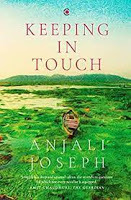
Keeping in Touch by Anjali Joseph

A writer's life
Her father, Mathai Joseph, is one of India’s earliest computer scientists. Her maternal grandfather, Principal Bannerjee of Elphinstone College, was one of the most revered educationists of his time. Anjali Joseph studied English at Trinity College, and completed PhD in Creative and Critical Writing at University of East Anglia. In 2010 she was listed by The Telegraph as one of the twenty best novelists under forty. Her books detail ordinary life, delving inner lives and familiar realms. A reader and a writer all her life, in her youth she may have experienced, as many of us do, the torturous periodic shedding and renewal of skin. The years passed – perhaps not (as she once wrote) as painlessly as that clause implies. She followed her whims and explored possibilities. Call them massive research projects, or immersion experiences, or the ashram life of renouncing this and that. And then out comes a novel, a space to lose yourself, experience new things, understand life in a different way – in the process, as she says, of becoming the person who wrote that novel.
1. What got you started with writing this book?
I was chatting to a friend in Norwich some time in around 2014 and she said she was terrible at keeping in touch. The phrase hovered in the air, illuminated for me, and I went home and wrote it down, convinced I’d write a book called Keeping in Touch. That was also the year I moved from Norwich to Guwahati in search of a new adventure, both at home and very much not at home, but fascinated by Assam. I had the character of Keteki in mind for a while as I was finishing The Living, and had even started writing about her, but Ved came along a little later, in 2015 when I wrote a short story that turned into the opening chapter of the book. The lightbulb called Everlasting Lucifer was a short story I’d begun writing when I was about eight years old, and not finished.
2. And the symbolism of that lightbulb?
Maybe it’s some form of the light that’s in everybody. Maybe a sort of objective correlative of something that is much bigger. Besides, each of us wants to light up. But maybe the prospect is also a little threatening. What would really happen if that light were seen?
I don’t know where the name came from. I was reading a lot of F Scott Fitzgerald at the time, The Diamond as Big as the Ritz and several other of his stories. I must have at that time or sometime earlier learnt that Lucifer meant ‘light bearer’ or read about the story of how Lucifer was the fallen angel, but that it’s not necessarily a pejorative name. It was there as one of those ideas and half-ideas, some of which you write down and some that remain at the back of your mind.
3. Did your characters change as you wrote?
Well, they meet at a time in their lives when they are ready for change. Their encounter is the catalyst that makes them step outside the comfortable shells they have created.
Both of them evolved as characters in the way I wanted to show them. My friend, the wonderful writer Tim Pears, was kind enough to read a draft and from his responses, I realised that the initial iteration of Ved was too off-putting, and Keteki a little too oblique.
At the opening of the book, Ved is a toxic bachelor, but he’s also in coming to the end of a time of getting over his earlier geekier self. He’s enjoying a period of his life when he feels he can be in control. But obviously he’s also still at least in a latent way open to the possibility of more. And then he falls for her. And Keteki – I had to say more about her in subsequent drafts; initially I wanted to show her mainly through the effect she had on other people.
4. Your books have always run quite close to your own life adventures.
When a child growing up in a provincial English town I was waiting to start my life, the fiction that I read was about all sort of things and these novels almost seemed to be carrying messages, telling me, maybe your life will be like this! Or maybe it will be like that! I drank it all in. In a way, reading fiction is a way of thinking about how to live.
Now I get interested in one thing after another, and sometimes that’s what my next novel will be about. Maybe the other things that I’m learning around that time also become relevant. But I wouldn’t say most of my life goes into my novels. There are lots of things I do and read about that don’t directly feed into what I write.
I suppose for me, writing a novel is partly about finding out more about the characters and place I’ve decided are interesting. But it’s also a process of becoming the person who will have written the novel I’m writing. It’s something that gets revealed as I go along. Each individual step is in the dark, but there is a kind of feeling of what the next thing is.
5. Why Assam?
When I went to live in Guwahati in 2014, Assam was a new place for me. I started learning Assamese, a beautiful and elliptical language. I think there might be a flavour of that in the book. After a while of studying, I realised that being able to say what you mean in Assamese hardly means you can speak it. That is not how Assamese is used. As I wrote in an essay for Unbound, most people say something indirectly related to what they mean; the person they are talking to then responds by saying something indirectly related to the first thing.
I had two lovely teachers of Assamese, Dimpy Deka and my friend and neighbour Babu’s grandmother, Bimal Rajkhowa, herself a writer and lyricist. My Assamese remains halting but I can read and write, and some of my learning comprised reading aloud books in Assamese and asking about the phrases or words I didn’t know. It was a beautiful introduction to a sensibility as well as a language. The culture of Assam has so much depth, so many layers. There is a certain way of seeing life. It was just lovely to live there. And in Assam, everyone is a reader, it’s a place where people understand books and literature. In Bombay or Bangalore or Delhi if you say you’re a writer people will ask whether you know this writer or that writer, or if you’ve written for films, things like that. But in Assam people will want to tell you about what they’ve been reading. I’ve had conversations like that with a taxi driver, the man who works in the gas agency. Everybody is excited about reading, and for a writer that is truly special.
6. And your book has such a strong yoga component too!
Well, I had a scientific, post-enlightenment sort of upbringing. In my family, there was not much ritual or religious observance. Still, as a child I was fascinated by religion, magic, and wonder. I’d read a storybook and hark back to the missing word in a spell, thinking, one day I’ll find out what that word is! And then I’ll be able to be invisible or do whatever the spell was for. That interest in spirituality found its expression much later, in my thirties, when I did a yoga teacher training. And there we studied Vedanta and some yoga philosophy: that was the first time I felt, here is a description of the world that makes intuitive sense to me.
Yoga training, then learning about tantra, were ways into these systems of thought. It was kind of liberating. And of course, if you are a fiction writer, you can use that fiction to offer people the idea that reality might not be quite as monolithic and quite mechanically materialist as we – certainly my generation – were told when we were young. The idea is important to me and the book is sort of soaked in that.
7. The uses of a novel, then?
I believe in the novel as a machine that can re-configure a reader’s way of being in some way, perhaps for more lightness, or just more joy. Imagination can bring us back to ourselves, and that’s something I’m always aiming to do. Here I wanted to take the reader, while reading about Ved and Keteki, through the idea that in some ways the past is imaginary, and its weight that we have been carrying can be exploded into lightness. I don’t necessarily see ‘enlightening’ as a one-off process after which one transcends and everything is bunnies and angels. I think it’s part of human experience that there is an intermittence to keeping in touch with that real self inside, as well as with others and the way we really feel for them. It doesn’t matter that this awareness drops; we can pick it up again, and that’s the process of keeping in touch which also enables compassion, for ourselves, and for others.
8. Your life has centred around writing since a very young age but in your books you come through as someone who has led many lives through others. Knowing what you know now, would you have chosen another path?
I didn’t really choose writing; I just always knew that was what I would do. And as you say, in a way through writing I can do anything else I like.
First appeared in the Hindustan Times books page on 10 July 2021

July 3, 2021
Colaba The Diamond at the Tip of Mumbai by Shabnam Minwalla
Shabnam's vale of serendipity
 It was an online talk in which the author presented some of its intriguing photos, experiences and learnings, that led me to this book. Her discoveries, couched in the easy wit and bubbling energy so compelling in the talk, were just as much of a pleasure to read.
 “What Colaba doesn’t have is easy to list. What Colaba does have, is not. Its qualities are concealed by voluminous skirts and peeling paint,” writes Shabnam Minwalla, and proceeds to treat the reader to a comprehensive expose, weaving personal experiences from a range of people interviewed, with widely diverse secondary sources.
The latter include facts and administrative data from Gazetteers; iffy maps and exaggerations from travellers’ accounts; colourful descriptions from novels; even gravestone epitaphs (“doleful postcards from the past”). The one I enjoyed most was an August 2002 Busybee column which lampoons the Arabs who for decades holidayed in Colaba to revel in rain, a novelty rendered anachronistic by global weirding. The exuberant snippets provide information, they create atmosphere, and their depth and diversity well represents contemporary Colaba, a place whose character transforms from corner to corner, sometimes quite dramatically.
As for the people interviewed, most are long-term residents and colourful neighbourhood characters. The best stories come from the author herself, memories of Colaba haunted houses, lingerie shops that date back to before the word lingerie arrived in Colaba, glimpses of a prim schoolgirl, one of a horde, who transformed into hoydens tumbling down the staircase the instant the evening bell rang, only to be harangued on the way home by the fierce battleaxes of Cusrow Baug. Biographical details are introduced not in a self-congratulatory or coy manner or even in bland lists, but in a festive jumping-about that interweaves energetic adjectives, provides vivid pictures, and sometimes has you laughing aloud. The creative happiness is impressively balanced with deep, fault-finding, nit-picking research into this unabashedly grimy district of India’s financial capital.
Colaba has no medieval fortresses, tales of tragic queens, or echoes of bloody battles. Just two hundred years ago it was a jackal-infested island – fine-grained diorite, composed of feldspar and hornblende! – separated from the emerging metropolis by a temperamental creek, ghastly shipwrecks, and a cemetery greedy for colonizers. When a causeway was built, the inconvenient outpost transformed into a place of buzzing industry, and the malodorous creek with mosquito-riddled mangroves and criminal-infested bays was eventually replaced by traffic-choked streets lined with art galleries, cakeshops, and more. Who doesn’t love Colaba for its street shopping – those cool, billowing cottons, coolly-replicated designerware? Amidst the thronging crowds, familiar faces pop up and cheery “Hieee!”s ring out in Shabnam’s vale of serendipity, the place of which one well-known resident (read the book to know who) is reported as having instructed, “When you go shopping down Colaba, Ma, don’t forget to give everybody my love.”
Besides the extraordinary energy of the haphazard streets of the southernmost tip of a city rapidly sprinting northwards, this book also documents nooks and structures: Colaba Lunatic Asylum, Royal Alfred Sailor’s Home, the garden of a Mrs Hough and its magical mango tree which fruited twice a year; the reincarnation of Buckley Court from a haunted Indo-Saracenic mansion to a guesthouse packed with fascinating residents to a ‘luxury skyscraper’; dragonflies fluttering by enroute to East Africa. And the fascinating stone which clarifies the boundaries between Colaba and Old Woman’s Island of yore – inside a residence encroaching into, of all places, the trendy and laidback Colaba Police Station.
When I called Shabnam Minwalla to tell her how much I had enjoyed her book, we naturally compared notes and, though we’ve never met, and even claim different territories of Colaba, found much to celebrate.
Colaba is still somewhat in the nature of ‘native place’ to me, the venue of childhood winter vacations escaped to from bone-chilling frost, sultry evenings strolling on the Cuffe Parade promenade, playing in the piles of rubble waiting to take their place in swanky buildings, snacking on peanuts and sometimes even illicit bhel (because typhoid). “Which building?” Shabnam asked and when I replied, she knew exactly which one, and together we moaned the decaying grandeur and eventual demise of the townhouse with its authentic stained-glass windows, Minton tiles, sagging wooden staircase and unpolished banisters, residence of former presidency magistrate KJ Bijlani for nearly fifty years.
Every chapter of this book ends with a pithy ‘Colaba lesson for life’, and the one I’ve picked to pass on here, one that sears me with regret, instructs: “Quick! Talk to your grandparents before it’s too late.”
First appeared in Hindustan Times books page on 2 July 2021
June 15, 2021
Wall Paintings of Sindh by Zulfiqar Ali Kalhoro
 In India, Sindhis are most often seen as a mercantile community – hardworking and enterprising, but almost entirely focussed on material gain and pursuits, with limited interest in art and culture. Sindh itself, the ancestral homeland which the Hindus left after Partition took place in 1947 and to which they have almost no access today, is seen as a hot and dusty place of limited opportunity. So this book is a real eye-opener which showcases a very unexpected dimension for Indian Sindhis to understand something about their lost heritage.
In 1998, early in anthropologist Zulfiqar Ali Kalhoro’s career, a field visit took him to the necropolis of Mian Nasir Muhammad Kalhoro, where he saw many beautiful paintings on the exterior and interior walls of its monuments. He could see that they were crumbling and in urgent need of restoration. Feeling overwhelmed by the beauty of the art around him, feeling equally disturbed that it would all soon be lost, Zulfiqar resolved that he was going to travel all across Sindh to seek out every other similar site he could find, and record whatever he saw in them. This book is a result of many fulfilling journeys the author made over more than 20 years, to do so – and a great gift to people who are interested in the history of art, and in particular the history of the art of Sindh.

What I learnt from this book is that Sindh is strewn with monuments of many kinds and these include tombs, places of worship, and palaces. Most of these are filled with works of art, and besides architectural flourishes, ceramic embellishments and tiling, many of the walls are covered with paintings too.

In many places, Zulfiqar Ali Kalhoro noticed that in the process of maintenance of the tombs by their followers, they were whitewashed on the inside, and the paintings were damaged. For example, in the tomb of Mian Yar Muhammad Kalhoro in Khudabad, Zulfiqar found it all whitewashed except for some paintings which may have required too much effort to reach. From these traces, he deduces that
“the whole interior of the tomb was adorned with stylized flower vases, fruit dishes and a variety of flowers covering every panel, soffit, niche, squinch and arch recess of the tomb.”
His research indicates that the art was a tradition of long-standing, but very little of what was created before the seventeenth century remains and this book largely covers art of the Kalhora, Talpur and British periods of Sindh’s history. Many of the previous era, glimpses of which sometimes pop up in historical records, no longer exist.

Zulfiqar has covered tombs of rulers and tribal chiefs, as well as the tombs of Sufi saints, and the book has excellent illustrations of the structures as well as of the art inside them.
Royal tombs, Zulfiqar points out, are not embellished with figural motifs, except for birds. They carry gilded Quranic verses in striking calligraphy; traditional geometric patterns; and floral, vegetal, plant and tree motifs. The lily flower, Zulfiqar points out, is a favourite motif of the Kalhora artists in both paintings and glazed tiles. Zulfiqar also explains the symbolism of other favoured motifs such as the cypress tree, and varieties of birds and flowers. Monuments of other rulers and saints, however, carry all kinds of figural depictions including scenes of a bird feeding its offspring, rooster fight, mourning scene in a tomb, action-packed animal fight scenes, hunting scenes and battle scenes, as well as representations of cultural activities, such as dance, music and sports, and many romantic folk scenes. In all, they provide a rich illustration of the social and political life of Sindh. There are even tombs which also show domestic activities such as dancing, cooking and churning, such as the tomb of Othwal Faqir, located south of Mian Nasir Muhammad Kalhoro’s shrine. In fact, locations of each monument have been meticulously provided – a poignant resource for the many who may want to visit but are unlikely to ever be able to do so.
 Through Zulfiqar’s commentary, and through the rich colour schemes of the illustrations, we get a sense of the people of Sindh and their daily occupations through history. He has also linked these paintings with recognized schools of other neighbouring regions, and compares their features. All these give us a rich visualisation of various historical events as well as folk stories and together they bring alive folk romances, battle scenes, and a broad spectrum of social life in eighteenth-century Sindh.

Zulfiqar has detoured with extensive coverage of the folk tales he found illustrated, sometimes two or three adjacent inside a single monument. Along with the commentary and symbolism, he has also recounted some of the most loved folk tales to accompany the illustrations, and these add depth to his book.

We also learn from this book that Mihrab, the arched niche on the qibla wall that indicates the direction of prayer in every mosque, is also seen in the monuments of Sindh. It was a common feature in the tombs, and evolved into the depiction of actual mosques. Many tombs carry these and most tombs built during the Kalhora, Talpur and British periods also depict Makkah and Medina.

I was also intrigued to observe the presence of Khudabadi on some of the monuments, because this was a script thought to have been developed and used by the Hindu traders of the province.
Most of these art treasures, Zulfiqar Ali Kalhoro reports, are in sad repair. In the twenty years of his quest, he has seen them decay before his eyes, under the ravages of extreme climate. It is sad to think that in the decades to come, most will vanish, unrestored, and live on only in the pages of this book. It’s not just the government which is responsible for the neglect – but who can blame needy peasants who till the protected land close the beautiful monuments to fulfil their simple needs?
What I learnt from this book moved me deeply. What I saw and read made me feel connected with a precious and distinctive heritage which has been frittered away and is only saved from complete obliteration by books like this one.


December 19, 2020
BEYOND THE CARICATURE by Rajesh Pant
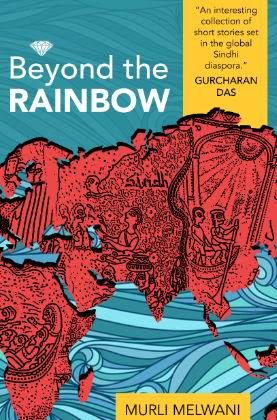 Many years ago, as a child in class three, I saw something amazing. A tall for his age boy, a classmate, proudly walked up to the Maths teacher and presented him a cake. “It’s my birthday”. The Master who was about to read the results of a quiz, stopped him; read out his marks. He had failed the boy. Then in a rage he threw the cake on the ground, kicked it out the door and roared “don’t try and bribe me you dirty Sindhi”. (Those were the days of course, where Teachers were forgiven for being impolitic!)After class, the boy went out, quietly picked up the cake, and took the first bite himself and shared it with us saying his mother had baked it, why waste it? The memory of the incident has not left me because it was the first time I had heard a Teacher being abusive and the first time I had heard of someone being called a Sindhi. Before that I only knew that the boy’s name was Pooran. The ‘Sindhi’ caricature of a scroogish person who accumulates cash and real estate while constantly prattling ‘vari sai’ is widespread; egged on by actors playing bit stereotypes of Sindhis in yesterday’s Hindi films. And thereby hangs a tale.Caricatures are an unfortunate sociological phenomenon, particularly in our country; we draw upon them and use them very matter of factly mostly disrespectfully. This in turn causes diminution of our strength as a society. Constant usage somehow cements these social and untruthful caricatures till they becomes part of our believed folklore – said by elders, repeated by the young who will ape anything. And so it will go till we mature as a Society.Murli Melwani's collection of short stories ‘Beyond the Rainbow* goes a ways in breaking the caricature. It is a melange of colourful people, exotic locales and some adventure. All characters and events are supposedly fictional. But I suspect, very strongly, each story is true or at least has a broad element of truth. It is said that a people whose homeland is sparse – or who have no homeland at all - causes them to move to far and foreign lands. To make their living or ply their trade. True of Marwaris, Jews and Scots and certainly Sindhis. The sweep of the locations of the people and stories is ample evidence of the truly international spread of this group of people.Stereotypically Sindhis have settled in Haang Kaang and have shops in Chunking Arcade! Melwani’s book serves us a different and exotic cocktail – Curacao, Toronto, Taipei, Bangkok, Bombay, New York, Honduras, Darjeeling and of course HK and Ulhasnagar. He paints a picture of their fads, foibles, beliefs, customs, strengths, weaknesses. These stories illustrate the ease with which they adapt to (or do not) to stressful, and strange situations.In one of the longer short stories – the protagonist is called to the Holiday Inn in HK for an interview. This took me years back on my own first trip overseas and to HK; I stayed at the Holiday Inn in Kowloon and was amazed to see a small statue of Lord Shiva near the entrance with a ‘fountainette’ from his locks depicting the source of the Ganges. I was told that the property was owned by the Harilela’s. “Sindhi, you know, flom your contly” – the Receptionist informed me Though I believe they are Hongkongers stretching back a century. Coming back to the tale, ‘Head of a Chicken’ is a textbook narrative of poor boy, with remarkable insights “…but, a Sindhi would not ask a question without a motive…” he is economical with ethics, makes good and then faces the same situation he had left his earlier employer. An interesting take on ethics and business, a motif which runs through a some of the other stories.Another facet about Melwani’s writing is the simplicity and honesty. In one of his stories he writes “there’s a writer in each one of us”. He does not use artifice; the story is what the story is – and that is where the writer’s true craft comes in. It is very complex to keep a narrative simple. This is exemplified when he writes a commentary on one of the most intricate machinations of our society, almost like a Rube Goldberg contraption – the fixing of a marriage, narrated by the Marriage Broker. It is mirth and thought provoking in equal proportions. Explaining it is like instructing a Martian the process of lacing-up shoes and knotting them. ‘The Bhorwani Marriage’ is a treat. Having made a fair amount of money in the transaction, which is what arranged marriages generally are, the Broker adds his punch line “One must be grateful for the crumbs that life throws one’s way”.Sex is is not taboo. This is refreshing because our public posturing is prudish and fairly Victorian. So when a well off and retired businessman has a romp with a Bar girl; it does not seem shocking. The twist is later in the tale like in the thought process of a man in another story, watching a call girl undress. And more – a Father who can shoot to kill – to dictate a marriage in his family. As they say - you can take a man out of the home but you can take the home out of the man.Like all those who have spread across the globe and settled; names soon change to suit or accommodate or better still to merge with the chosen country of abode. Meaning we are here to stay and be a part of you. An endearing quality which makes Jetharam convert to Jimmy and Metharam change to a more suitable Mike. A subtle change of status too? Which brings me to another story.Years ago in the middle eighties, my Boss called me to substitute for him and make an unscheduled presentation to two gentleman sitting in the Conference room. The object was to present India, as a country full of promise yet not hide the pitfalls. The two were obviously ‘from overseas’. Post the presentation I introduced myself and the young guy stuck out his hand saying “Tommy, Tommy Hilfiger. I’ve just started a line back home with him and this guy brought me here because he’s very hot on India though he’s never lived here.” The other gentleman’s calling card was a folded affair. The top read Gloria Vanderbilt and the card opened to reveal his name ‘Mike’ Murjani.Rajesh PantPune, December 2020*Beyond the Rainbow. Murli Melwani. Published by Black-and-white Fountain.
August 6, 2020
Learning to read all over again
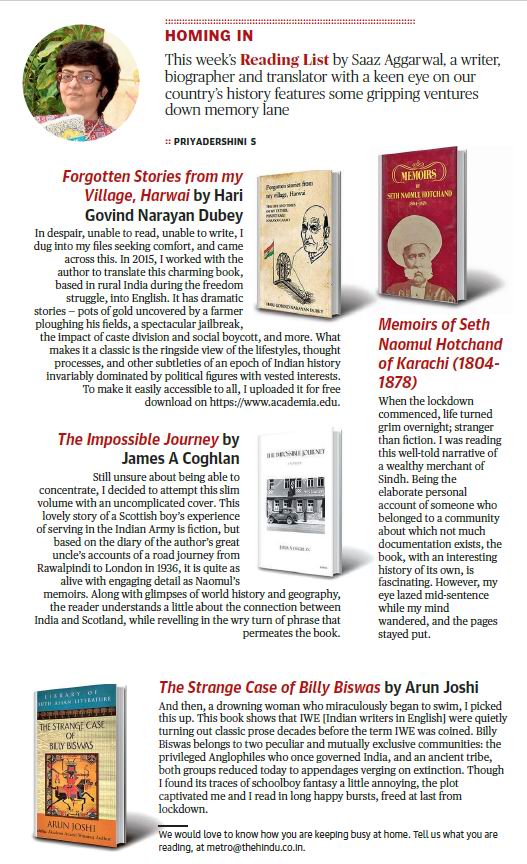 When the lockdown commenced, life turned grim overnight; stranger than fiction. I was reading the Memoirs of Seth Naomal Hotchand of Karachi (1804-1878), a well-told narrative of a wealthy merchant of Sindh. Being the elaborate personal account of someone who belonged to a community about which not much documentation exists, the book, with an interesting history of its own, is fascinating. However, my eye lazed mid-sentence while my mind wandered, and the pages stayed put.
In despair, unable to read, unable to write, I dug into my files seeking comfort, and came across Forgotten Stories from my Village, Harwai by Hari Govind Narayan Dubey. In 2015, I worked with the author to translate this charming book, based in rural India during the freedom struggle, into English. It has dramatic stories – pots of gold uncovered by a farmer ploughing his fields, a spectacular jailbreak, the impact of caste division and social boycott, and more. What makes it a classic is the ringside view of the lifestyles, thought processes, and other subtleties of an epoch of Indian history invariably dominated by political figures with vested interests. To make it easily accessible to all, I uploaded it for free download on this link .
Still unsure about being able to concentrate, I decided to attempt a slim volume with an uncomplicated cover: The Impossible Journey by James A Coghlan. This lovely story of a Scottish boy’s experience of serving in the Indian army is fiction, but, based on the diary of the author’s great uncle’s accounts of a road journey from Rawalpindi to London in 1936, is quite as alive with engaging detail as Naomul’s memoirs. Along with glimpses of world history and geography, the reader understands a little about the connection between India and Scotland, while revelling in the wry turn of phrase that permeates the book.
And then, a drowning woman who miraculously began to swim, I picked up The Strange Case of Billy Biswas by Arun Joshi. This book shows that IWE were quietly turning out classic prose decades before the term IWE was coined. Billy Biswas belongs to two peculiar and mutually exclusive communities: the privileged anglophiles who once governed India, and an ancient tribe, both groups reduced today to appendages verging on extinction. Though I found its traces of schoolboy fantasy a little annoying, the plot captivated me and I read in long happy bursts, freed at last from lockdown.
This column was written for The Hindu and appeared on Monday 3 August 2020
November 30, 2019
Circus Folk and Village Freaks by Aparna Upadhyaya Sanyal
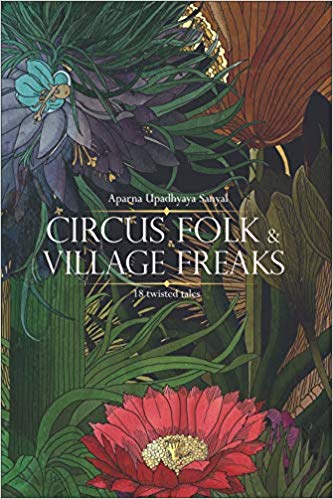
There are organs and organs This attractive-looking hardcover book turned out to be a surprising treat. Each of its eighteen stories, all written in verse, are about people who are different. Not just different but significantly so, some quite peculiar, and the stories deal with different aspects of how the difference arose, how it was dealt with, and what happened in the end. Along the way, each story has earthy overtones. It starts quite naturally – I was surprised at first and then admiring, but as it went on and the bonking got more intense, I wondered whether it wasn’t just to say that people who are different are actually like everyone else – or that by virtue of their difference they are more highly sexed. Though the question occurred to me while reading, I forgot to ask it to the author when I had the chance. The former, I suppose, based on what she revealed of herself and her book through the discussion. Aparna told us that she woke one day about a year and a half ago, with a strong vision of a character. “It was about 5 in the morning,” she said. “I tapped my husband on the shoulder and I said, ‘Subramanyam’. So he said, ‘No, darling, it’s Abhijeet,’ and he turned around and went back to sleep.” The Strange Case of Subramaniam the Crocodile Man was forming rapidly in her mind. Noyon, their son, was not yet four and though Subramaniam was clamouring to be let out, Aparna was a busy mommie and did everything she had to do until finally, at the end of the day, she could sit down at her computer and write down the story.
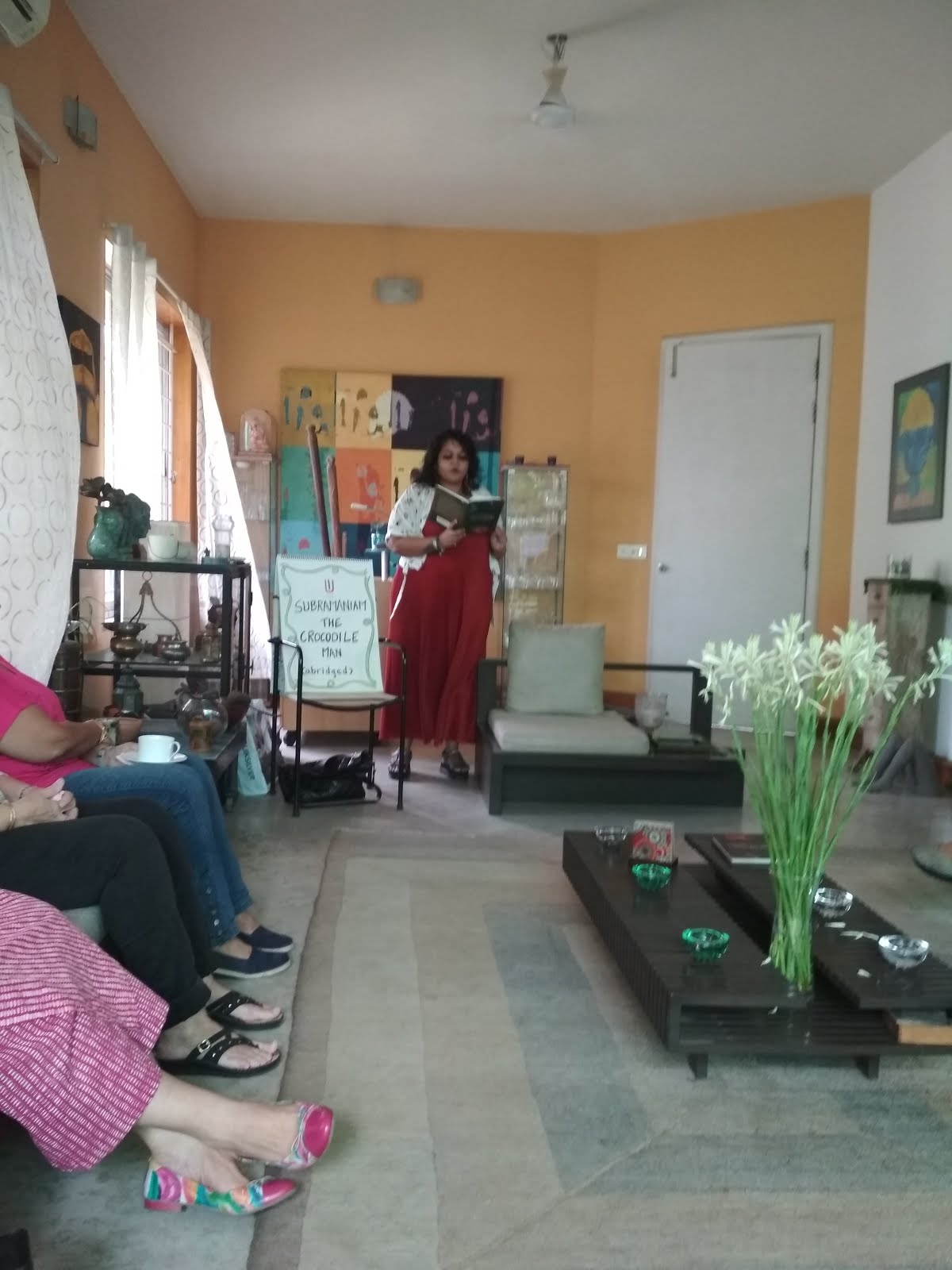 Over the next three weeks, she had written eighteen stories, waking every morning with new circus people and village freaks performing various antics through which they conveyed meaningful messages about human beings and the way we lead our lives. After a rapid, fully-charged run, Aparna stopped and only looked at her stories two months later: “The first thing I said to myself is, ‘You are sick!’ I could not believe I wrote these stories.” (And her mother would moan, “Where did I go wrong, was it I who filled such nonsense in your head?”) For Subramaniam had turned out to be a ‘Crocodile Man’, a source of income but unable to gratify his wife, who had to make her own arrangements. Pablo the Clown had a ‘foot-long schlong’ which women thronged to view and engage with. Vishu, the Village Exterminator, came between a husband and wife in an unusual way. Urvasi, the Devadasi, developed culinary skills that threatened to make the entire village and its surroundings obese. Miss Rita, born a bonny, baby girl, developed a ‘fertile chinny-chin-chin’ which sprouted a thick crop of hair. Murali, the Metal Eater, is a reverse-Midas who eats and coolly digests metal:
 Sweet Murali, with a whistling throat and surreal digestion within –Never ate a bit of meat or gran, but gorged himself on mountains of tinMiss Luxmi, The Daredevil Dart Thrower, highbred, born wealthy and fancy free, happened to be too dusky-toned to attract any good Brahmin boy.
Of Sita and Gita, the Siamese Twins,Twisted passions, lustful charity, drunken brutality, servitude and fawning delight, accommodating girl, dumbstruck wife, furiously praying, gilded cage – these are a few themes; they are also phrases picked at random from these tales – or fable, allegory, parody, if you will.People close to Aparna told her that the book reads like an autobiography: “I grew up feeling like an outsider. I dealt with mental health issues for a very long time. I have major recurrent depressive disorder, and it took me a very long time to find a kind and compassionate neuropsychiatrist. Growing up, I felt like a square cog in a round hole. So the book addresses a lot of issues to do with a person not fitting in – a freak, as it were. I grew up in a conservative town and people would look at me and say, ‘What is this?’ So I guess this reflects my experiences. Issues are important to me, whether the LGBTQ community, caste, physical appearance or others.” Aparna’s stories veer towards South Indian motifs including names, features and other hints, and this Aparna explained by saying while she had tried to be geographically neutral, she had grown up with the work of RK Narayan and when constructing this world, the visuals that came to her said, “Malgudi”. While each one had turned out pretty much whole in terms of its theme and content, the rhyme in which it manifested was lacking. Aparna said that her work had been published in international journals like Pen Review and others, but more abstruse and in free verse. She now began a rigorous study of metre with the help of a mentor, Shantanu Anand, and every syllable in the book was read and re-read at least eight times to put it into the exact metre. Still, these eighteen pieces do not follow a satisfactory structure. They are not in the same metre; some verses change metre in the course of the verse; in some, I was unable to stretch them to fit a metre at all. Aparna is not, she said, a master like Vikram Seth who wrote Beastly Tales from Here and There, and maybe one day would be skilled enough to write in a particular metre. Meanwhile, her next book is short-form prose and is on the theme of variations in ways people torture each other.
Who separated themselves in a bid to winLove, and for half a heart each, a home –
Instead, lost it all and grew old alone.
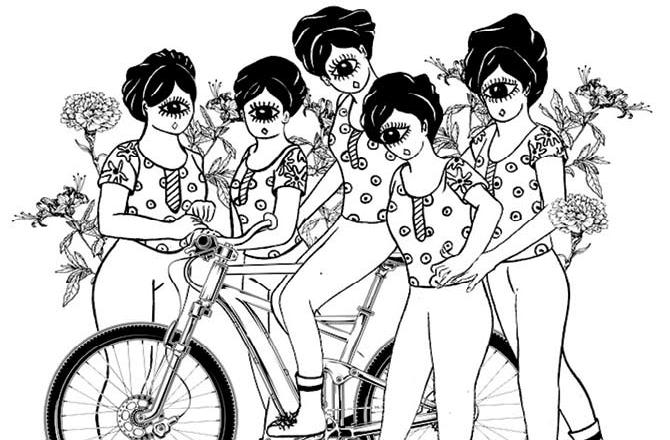 This book is hugely amusing but it’s also strewn with pathos. Its plots are inventive, and the illustrations by Rachna Ravi, aesthetically pleasing, are a great lead-in to each story. Most interesting, a stroke of genius I felt, was that while the male organ is bandied about quite lasciviously, when female organs are brought to the page, they turn out to be brain, lungs, liver and heart. This review was written for
Hindustan Times
and appeared on Saturday 30 November 2019 https://www.hindustantimes.com/books/review-circus-folk-and-village-freaks-by-aparna-upadhyaya-sanyal/story-UEhVmc2zxnu0PBxPCIolaM.html
This book is hugely amusing but it’s also strewn with pathos. Its plots are inventive, and the illustrations by Rachna Ravi, aesthetically pleasing, are a great lead-in to each story. Most interesting, a stroke of genius I felt, was that while the male organ is bandied about quite lasciviously, when female organs are brought to the page, they turn out to be brain, lungs, liver and heart. This review was written for
Hindustan Times
and appeared on Saturday 30 November 2019 https://www.hindustantimes.com/books/review-circus-folk-and-village-freaks-by-aparna-upadhyaya-sanyal/story-UEhVmc2zxnu0PBxPCIolaM.html
August 8, 2019
Why do some stories seem more important than others?
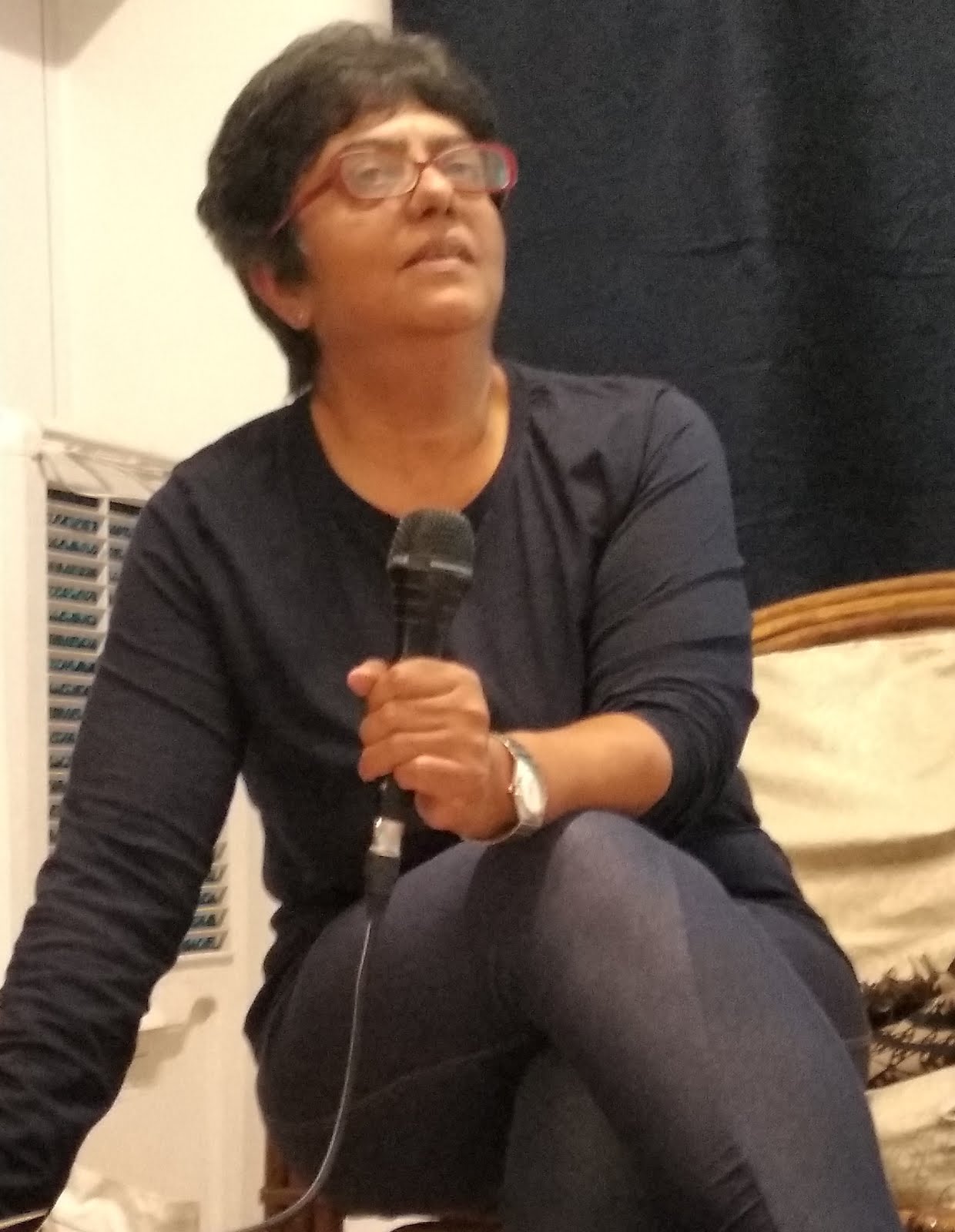 Saaz Aggarwal speaking at
 the Book Club, Gyaan Adab
on 7 August 2019While preparing the talk, I remembered that my very first foray into this subject had been on facebook. It was 14 August 2011, and I posted that I intended to spend Independence Day thinking about my grandparents who lost their homeland when Independence took place in 1947. I was bemused when some of the responses were argumentative if not actually hostile. I also received a private message:
Saaz, with all due respect, time we forgot those memories. They don’t let us go forward. It’s time we buried hate which is redundant.This message I found quite annoying (if well-meaning). I hadn’t said a word about hatred or indicated anything like that – all I was doing was speaking with affection and admiration of my grandparents and thinking about a difficult time in their lives which they had faced with courage. It seemed clear that referring to Partition could get you into trouble. I’m not sure if this was the spark that actually set me off on my journey, but it certainly did give me an important insight.
I also looked through my books to see what I could refer to for the talk at Gyaan Adab, and found that they all seemed to have been written by people who had witnessed the horrors of Partition themselves. Some of them were personal accounts of trauma and tragedy. Along with this were indications that the accounts were not welcome by others: someone had even filed a petition to prevent the screening of the TV serial based on Bhisham Sahni’s Sahitya Akademi Award winning Tamas. It was 1988, more than forty years after Partition. The Supreme Court rejected the petition, and the serial ran. The Bombay High Court judgement said:
Tamas takes us to a historical past – unpleasant times, when a human tragedy of great dimension took place in this subcontinent … Naked truth in all times will not be beneficial but truth in its proper light indicating the evils and the consequences of those evils is constructive and that message is there in Tamas*.Even Manto, so beloved by lovers of literature today, was badly reviled in his time, twice prosecuted for obscenity, and once accused by a critic that he had “desecrated the dead and robbed them of their personal possessions to build a collection**.”
The stories I have collected about Partition do have trauma and tragedies but, being based on extensive interviews of people so many decades after the event, they give a more balanced view of what life was like before Partition, what happened during Partition, and the story after that. The most remarkable thing about these stories is not the horror of the event but the heroic rebuilding of lives that were disrupted. We have not done justice to these marvellous stories or given the people who lived them the appreciation they deserve. I feel very privileged to have interviewed so many of these exceptional people and heard about their lives, and they will always be role models to me on how to deal with adversity.
Since a very large majority of the people I have interviewed are Sindhis, a little more than half my talk presented aspects of the Sindh Partition story, including:
how they put aside their grief and confusion and worked hard to adapt to new places and succeed,how this approach caused them to blend into new communities so seamlessly that nobody noticed that they were a people who had lost their land, their language, their culture and their past,that they themselves did not really think they had a story worth telling,and so many more that, towards the end of the interesting discussion that had ensued after my talk, someone stood up and said, a little puzzled, “but this talk was not about the REAL Partition”.
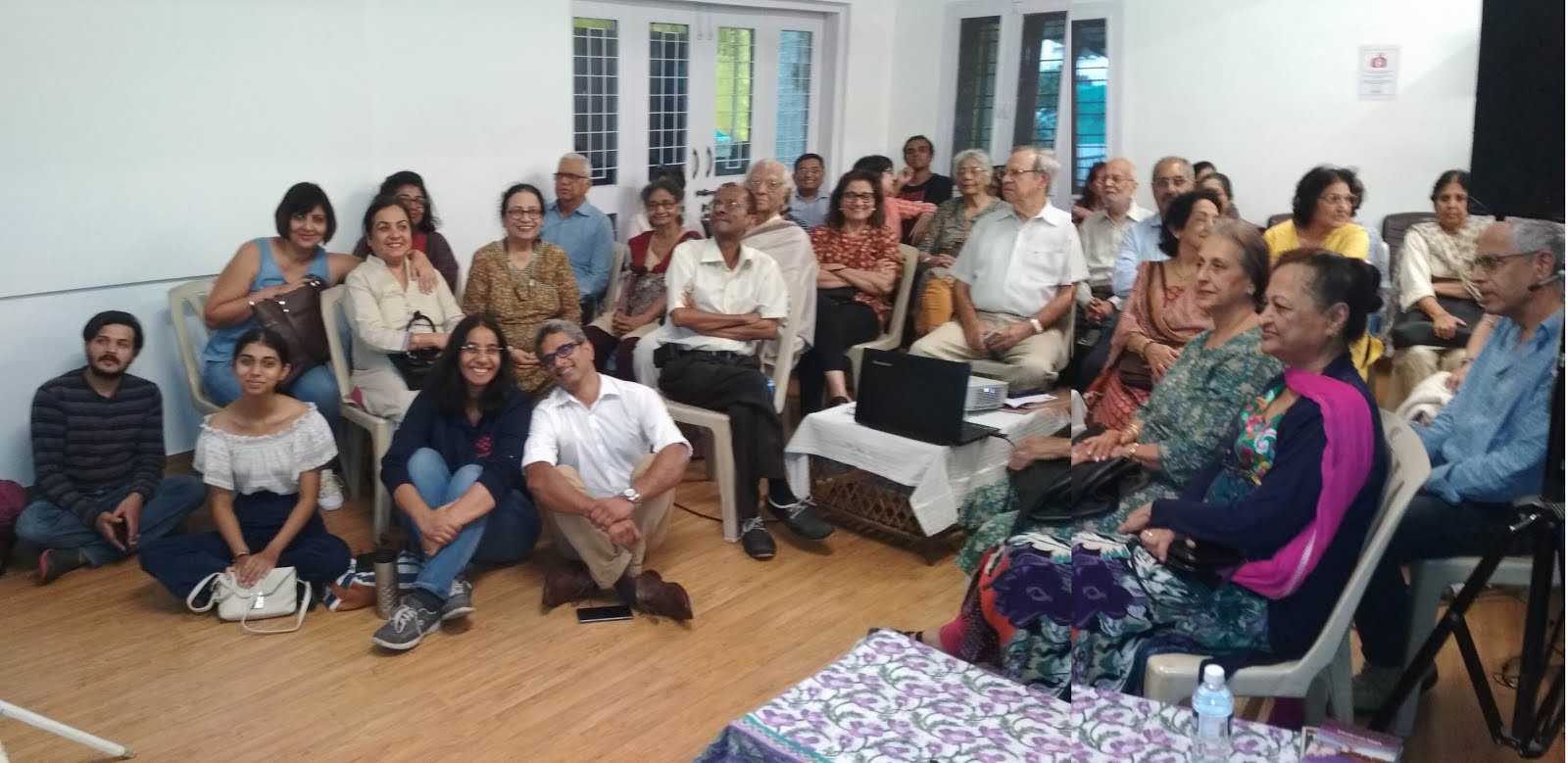 An audience of the book club regulars that dayI found it interesting to experience at first hand how it can sometimes be difficult to convey subtle messages; to change perspectives. It reminded me of something I’d spoken about earlier, in the course of that evening's talk, one of the most terrible things that happened during Partition. A huge number of women suffered rape, abduction, separation from their children, being used as instruments of torture, being forced to jump into wells to supposedly save the family ‘honour’ and more. And then, many who were rescued and returned to their families were rejected by their families. These things had been known all along but not considered significant. The first major work on this extremely important human history was The Other Side of Silence by Urvashi Butalia – in 1998, a full FIFTY years after it took place.
It has taken even longer for the Sindhi story to gradually emerge but even now, seventy-two years later, there are some who don’t think it is about ‘real’ Partition.
Saaz Aggarwal
*India Partitioned edited by Mushirul Hasan Vol 1 Roli Books p114
**India Partitioned edited by Mushirul Hasan Vol 1 Roli Books p88

July 21, 2019
Afghan Hindus and Sikhs by Inderjeet Singh
 A plea for recognitionCan a Hindu or a Sikh be a real Afghan? Or could it be possible that people left their homes in India to settle in a country where they would always lead challenging lives because of their religion?
This book is a systematic and earnest compiling of a wide range of information about the origin of this once strong and mainstream, but over the last few decades blighted, community. It is clearly structured, written in simple language and, an earnest and poignant plea for recognition, aims to prove once and for all that Afghan Hindus and Sikhs are an indigenous people and not recent settlers. A superficial and prejudiced understanding denies native origin to Afghan Sikhs and Hindus by claiming that they were brought to Afghanistan as slaves by Mahmud Ghaznavi in the 11th century, or later when they fled Babur’s territory in the 13th century – or even to the influx of Sikh and Hindu traders in the 17th, 18th and 19th centuries. Inderjeet Singh disputes this with a large number of written records, starting from the rule of Kabul by the Hindu Shahi kings which ended in the 10thcentury, all the way to the present. From his citing of these, the reader learns that Hindus worked in responsible positions under the Ghaznavi rulers in the 11th and 12th centuries, serving as physicians, important court officials, and even army generals. He exposes a trite understanding of history by underlining that Genghis Khan’s 75-year rule was the rule of an infidel: his name was Khan but he was not a Muslim. In fact, his was a period that introduced unfamiliar religious traditions along with non-Sharia taxation, non-Muslim personnel in high office and a liberal approach to all religious practice which reduced the status of Islam in the area. The book also has descriptions of Hindus during Timur’s 35-year rule. Then, in the 16th century, the Sikh religion emerged and spread as Guru Nanak travelled and preached, and the community developed in the area. Through the 17thand 18th centuries, the migrations continued, supplementing the indigenous population. Lifestyles are seen through the eyes of the many travellers across this region. Inderjeet Singh also documents the gurudwaras of Afghanistan, providing important historical information and their present depleted condition. Some have proof of antiquity with dates on handwritten copies of the Guru Granth Sahib.Through the 19th and 20th centuries, as the beautiful landlocked country developed into a battlefield of international intrigue, the Hindu-Sikh community became a victim of internal as well as external attacks – denied of the freedom to eat, drink and perform their religious rituals; facing violent processions when they tried to cremate their dead; their real estate in peril; their children mocked in school and told to go ‘home’. This book is largely a clean read, with little slips that a sharper proofreading eye could have caught. To extend the whines, I could also point out that it did not give me a sense of the difference between Afghan Hindus and Afghan Sikhs. I asked Inderjeet, and he said that in a way Afghan Hindus are similar to Sindhi Hindus. (Most Sindhi Hindus observe the tenets of Sikhism, their prayers are largely from the Guru Granth Sahib and their ceremonies at the gurudwara. However, mainstream Sikhs generally disapprove of their easy affinity with Hindu ways; neither do they classify themselves as Sikh.) Inderjeet specified that Hindu places of worship in Afghanistan do not keep Guru Granth Sahib; that Hindu and Sikh attend each other functions; that their numbers are approximately 2:3.On 22 June 2019, when India played against Afghanistan in the World Cup Cricket match at Southampton, the stadium was packed with fans cheering loudly for India (and against Pakistan, not Afghanistan). There were Afghan fans too, and I was intrigued to see one box of Sikhs with flags of both countries. I messaged Inderjeet Singh asking if he was in the stadium. Silly question. He replied confirming that they must be Afghan Sikhs, of whom there were 10,000 in London. And 20,000 in Delhi – in contrast to just 8000 in Peshawar today, depleted to half over five years by kidnapping, extortion, and the murder of prominent Sikhs, which caused many to flee their homeland.This review was written for Hindustan Times and appeared on Saturday 23 March 2018 on https://m.hindustantimes.com/books/review-afghan-hindus-and-sikhs-by-inderjeet-singh/story-UOkRikj52eraPFPHbTivbK_amp.html